Select Page

Lamborghini Debuts New Dealership Design Aesthetic In San Diego

Lamborghini Debuts New Dealership Design Aesthetic In San Diego

Lamborghini Americas CEO Andrea Baldi attends Sept. 7 and 8 ribbon cutting for the redesigned Lamborghini San Diego showroom 

An exterior view of the Lamborghini San Diego dealership

Lamborghini debuted the new corporate identity and brand environment at Lamborghini San Diego, at 7440 La Jolla Blvd., La Jolla, Calif. (Lamborghini photo) 

VIP event follows record half-year sales for 2022

BY MARK MAYNARD

Lamborghini Americas CEO Andrea Baldi was in San Diego on Sept. 7 and 8 for the ribbon cutting of the redesigned Lamborghini San Diego showroom (O’Gara Coach) in La Jolla, Calif.

The new design aesthetic “affirms the brand’s commitment to its customers and new design direction for the future,” Lamborghini said in a statement.

The 4,430 square-foot retail space is more boutique than a typical automotive showroom, but Lamborghini’s presence is unmistakable. Like all Lamborghini models, the architectural treatment is thoroughly modern with polygonal geometric shapes, sharp forms, and diffused light and color.

Guests enjoying the dealership grand opening

The 4,430-square-foot retail space has a 360-degree client experience. (Mark Maynard photo)

Corporate Identity

The design treatment is in accordance with Lamborghini’s corporate identity, said San Diego Lamborghini General Manager Joe DeSantis. “All the U.S. dealers will have a similar look with consistent styling aspects.”

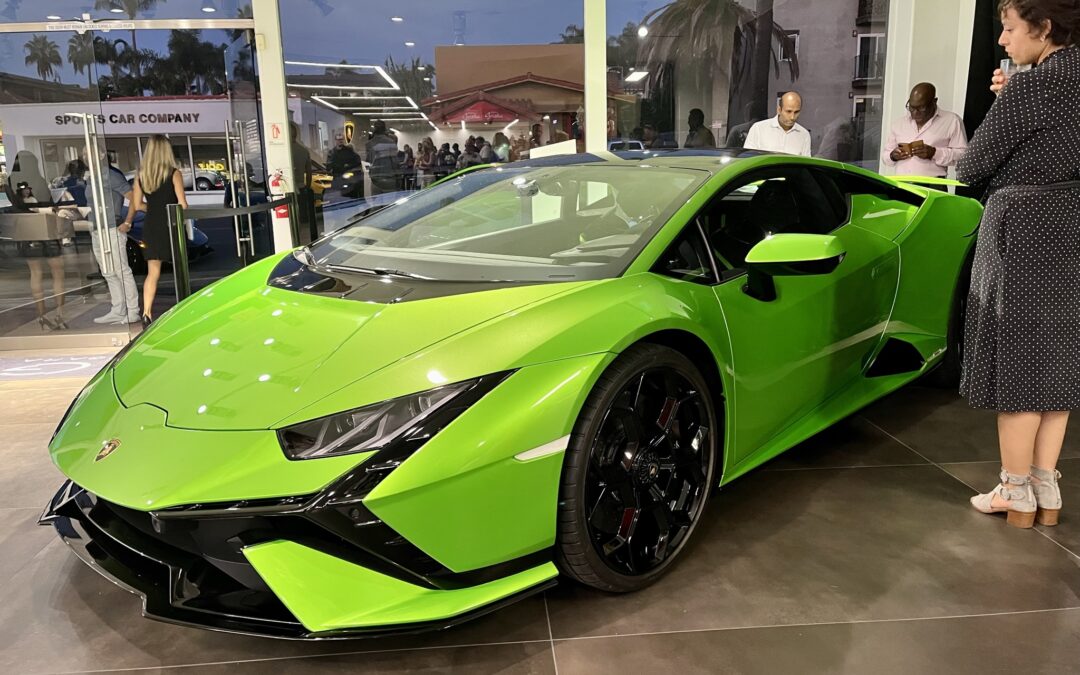
The exclusive event by VIP invitation drew around 120 potential intenders and showcased several special models. The new Urus Performante was displayed following its global debut last month at Monterey Car Week. Also showcased was the Pikes Peak record-breaking Urus in orange-and-black camo paint, still in its as-raced condition since the 100th mountain run in late June. Also on view were a Huracán Tecnica, in the electric green paint of Verde Selvan, and a Huracan STO (Super Trofeo Omologata), a street-drivable race car in a lighter shade of Verde Aries. Details below.

A display of fashion items and Lamborghini lifestyle accessories

The showroom includes an array of lifestyle accessories. (Mark Maynard photo)

Also open for perusing was the Ad Personam customization room. The space features bespoke options for paint colors, leathers, wheels, and carbon fiber accents. The idea is to have car buyers physically touch and play with combinations of colors and materials.

In the main show space are Lamborghini’s Collezione and Accessori Originali fashion offerings. Anyone can shop for clothing, lifestyle accessories, luggage, and collectibles like diecast Lamborghini models.

Introducing CEO Andrea Baldi

Andrea Baldi, 46, almost 47, was appointed last August as CEO of Automobili Lamborghini Americas. He is responsible for the company’s commercial operations in the U.S., Canada, and Latin America. Among the region, there are 48 Lamborghini dealers.

He lives in Maryland within distance of the VW Group headquarters in Herndon, Va., and Washington, D.C. He is married with two daughters, ages 17 and 9. Baldi grew up in Bologna, Italy, near Lamborghini and Ducati manufacturing in Sant’Agata Bolognese.

Lamborghini Americas CEO Andrea Baldi at Lamborghini San Diego

Lamborghini Americas CEO Andrea Baldi. (Mark Maynard photo)

He began his career with Ducati (a VW Group subsidiary) and has had work stints in New York and at Ducati’s U.S. headquarters in Cupertino, Calif., per an interview in Robb Report

He moved with his family to Shanghai, China, in 2008, where he was responsible for sales in the Asia Pacific market.

Baldi joined Lamborghini in 2010 and relocated to Singapore and then Beijing as the general manager for mainland China and, soon, all of Asia Pacific. In 2018, his career with Lamborghini advanced, managing a second region, Europe, the Middle East, and Africa.

Supply Chain Shortages

“I’ve been extremely lucky,” Baldi said. “Demand is above supply, and it is demand we have never seen.”

His biggest challenge today is keeping customers engaged until new Lamborghinis become available.

The United States continues as Lamborghini’s No. 1 market globally, with 1,521 vehicles delivered in the first half of 2022. Within the brand’s top region, California is the best performing market, representing 23 percent of total U.S. sales, followed by Florida at 15 percent.

But will the momentum continue? At this time, there are no new Lamborghinis for sale in any dealership in the U.S., Baldi said in an interview at the San Diego dealership opening. And worse, the shortage of new Lamborghinis is expected to last for the next 1 ½ to 2 years. Dealerships are buying up preowned vehicles to resell.

The lack of available new models has less to do with the microchip shortage and has more to due with the demand being so high, said dealership GM DeSantis in an email. “The Lamborghini models are in such high demand that our current waitlist for new vehicles is anywhere from 1-2 years, depending on the model.”

An image with Lamborghini San Diego General Manager Joe DeSantis receives a grand-opening silhouette model from Lamborghini CEO Americas Andrea Baldi and signed by Lamborghini CEO Stephan Winkelmann.

Lamborghini San Diego General Manager Joe DeSantis receives a grand-opening silhouette model from Lamborghini CEO Americas Andrea Baldi and signed by Lamborghini CEO Stephan Winkelmann. (Mark Maynard photo)

Lamborghini Electrification

The Italian manufacturer of supercars is at a shift point of change. Baldi said that the company is in its last year of selling only pure combustion engines in its sports cars. According to Automotive News, Lamborghini has allocated $1.7 billion for the shift to plug-in hybrids.

The iconic brand of super sports cars will launch its first hybrid model, possibly a plug-in, in 2023 as it moves to electrify its entire lineup by 2025. And with that electrification, Baldi said there would be a full battery-electric Urus SUV by 2028.

While Lamborghini is hybridizing its lineup, the company is celebrating the combustion engine to its end, Baldi said: “For a Lamborghini buyer, it is less about the price and more about value.”

New Lamborghini Models

Huracán Tecnica

The Huracan Tecnica, in Verde Aries paint.

The Huracan Tecnica, in Verde Aries paint. (Mark Maynard photo)

The Tecnica is the latest evolution of the V10-powered Huracan since the nameplate debuted in 2014. The 640-hp, rear-wheel drive car with rear-wheel steering can accelerate to 62 mph in 3.2 seconds. Pricing starts at $239,000.

Huracan STO

a Huracan STO (Super Trofeo Omologata), a street-drivable race car in a lighter shade of Verde Aries

a Huracan STO (Super Trofeo Omologata), a street-drivable race car in a lighter shade of Verde Aries. (Mark Maynard photo)

Beneath its somewhat familiar exterior is an all-new street-homologated race car. The Lamborghini Huracán STO — Super Trofeo Omologata — is a collaboration with Lamborghini Squadra Corse’s one-make race series with Huracán Super Trofeo EVO. It has technical features of rear-wheel drive, rear-wheel steering, a wider wheel track, and Lamborghini’s MagneRide 2.0 suspension.

Its 5.2-liter V-10 engine produces 640 horsepower and 417 foot-pounds of peak torque at 6,500 rpm. Lamborghini says that the Huracan STO will accelerate to 62 mph in 3 seconds.

With an aluminum and carbon fiber body, the Huracan STO has a dry curb weight of 2,951 pounds. (Carbon fiber is used in more than 75 percent of its exterior panels, Lamborghini says.) Pricing starts at $327,838.

Urus Performante

The Lamborghini urus that raced Pikes Peak

The Pikes Peak record-breaking Lamborghini Urus, still in its as-raced condition since the 100th mountain run in late June. (Mark Maynard photo)

Lamborghini’s big SUV recently tackled the 156 bends of Pikes Peak in 10:32.064, beating the previous 2018 record set by the Bentley Bentayga (10:49.902) by 17.838 seconds. The Urus Performante is wider, lower, and almost 104 pounds lighter for competition. Some light-weighting comes from using a sophisticated steel suspension rather than the standard air suspension. And with a body comprised of aluminum and composite materials, including a lot of carbon fiber, the Performante has a dry weight of 4,739 pounds.

The Performante’s uprated, twin-turbocharged 4.0-liter V8 engine has 627 hp and 627 lb.-ft. torque from 2,300-4,500 rpm. With all-wheel drive and an eight-speed automatic transmission, Lamborghini cites 0-62 mph acceleration in 3 seconds. Pricing for the 2023 Lamborghini Urus Performante starts in the U.S. at $260,676, excluding the shipping fee and gas guzzler tax. However, Baldi said there is a 1 ½-year wait for Urus Performante, and its limited production will be sold in just a few weeks.

Learn more about Lamborghini here. Contact Lamborghini San Diego here. And read more Lamborghini reports in Maynard’s Garage.
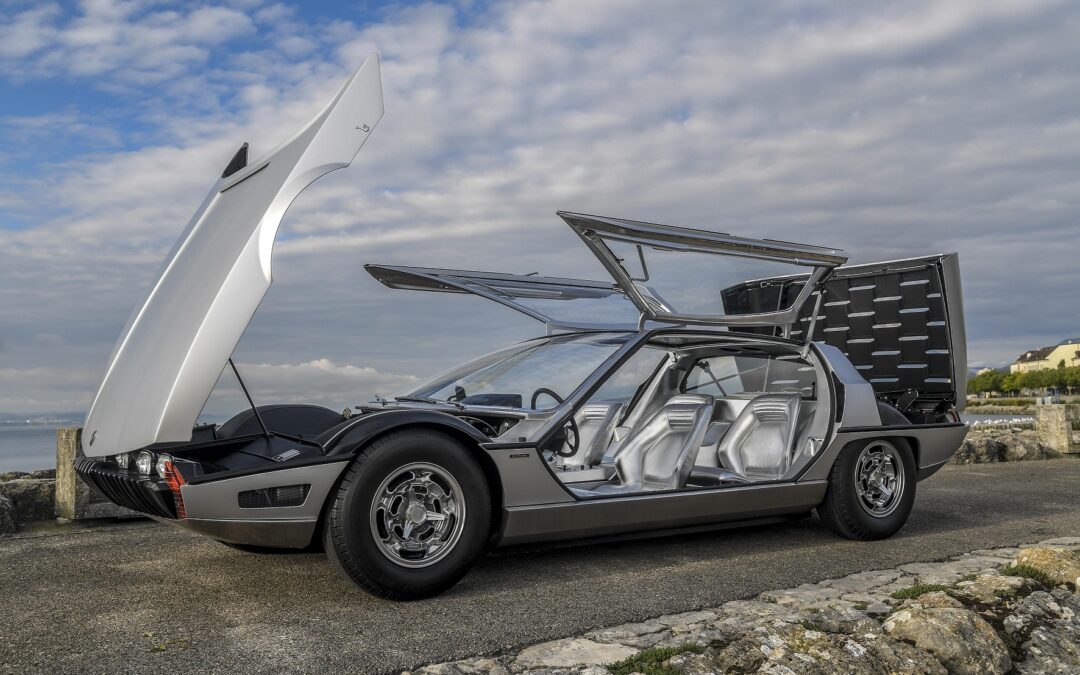
1967 Lamborghini Marzal Concept

1967 Lamborghini Marzal Concept

The 1967 Lamborghini Marzal concept car is distinctive for its expansive glass roof, spanning 48.4 square feet

The 1967 Marzal with doors open

The four-seat Lamborghini Marzal was created as a concept for a true four-seat grand-tourer. (Photos courtesy of Lamborghini)


BY MARK MAYNARD

The 1967 Lamborghini Marzal was a one-off show car that became a worldwide icon of style and design. The ultramodern four-seat Marzal was designed by Marcello Gandini for Carrozzeria Bertone https://en.wikipedia.org/wiki/Gruppo_Bertone
Among its many special design elements were:

  • An interior upholstered in silver-colored leather;
  • A hexagonal central design theme. The geometric shape was repeated in the dashboard, the rear window, and in the console cut-out;
  • 6 narrow S.E.V. Marchal headlamps in the thin, wedge-shaped nose;
  • The extensive glass surface covers 4.5 square meters, reaching from the gullwing doors to the roof.

Lamborghini calls the Marzal “a fully operational show car with the largest glass surface in history.”

The hexagonal design theme.

The central design theme for the Marzal centered around the hexagon.

4 Seat Grand Tourer

Lamborghini president Ferruccio Lamborghini had the Marzal created as a concept for a true four-seat grand touring car. In his lineup already were the 400GT 2+2 and the Miura.

The Marzal remained a one-off, though the general shape and many of the ideas would later be used in the Lamborghini Espada.
According to the Marzal page in Wikipedia, Ferruccio Lamborghini initially viewed the creation of the Marzal as advertising rather than a production model.

“The Marzal was not developed as a production car. If you present a car like the Marzal at automobile shows such as Geneva, Turin, and Frankfurt, all the magazines report on the first page about it. You would rather spend 100 million lire for building such an automobile which is still less expensive than paying for all the advertising. That would cost almost a billion lire. So it compensates in any case to build such a throwaway car.”

The silver leather interior

The Marzal interior is entirely upholstered in silver-colored leather.

Lamborghini Marzal Specifications

The rear-engine and rear-wheel-drive Marzal was a relative lightweight at 2,960 pounds on a 103.1-inch wheelbase. It was 14.6 feet long (175.2 inches) and stood 43.3 inches tall by 66.9 inches wide. The concept car shared a chassis, suspension, steering, and brakes with the Miura.

The Marzal is powered by half of the Lamborghini 4.0-liter V-12 engine. The 175-horsepower, 2.0-liter inline-six-cylinder engine produced peak torque of 132 foot-pounds at 4,600 rpm. Top speed was estimated at 118 miles per hour (190 kmh).

The Marzal from behind

Lamborghini President Ferruccio Lamborghini had the Marzal created as a concept for a true four-seat grand touring car.

Lamborghini Marzal History

The Lamborghini Marzal made its public debut at the 1967 Monaco Grand Prix. Prince Rainier III, accompanied by his wife, Princess Grace, drove the car on his traditional parade lap before the start of the race.

The car made a second public appearance at the 1996 Concorso Italiano in Monterey, Calif.,  in honor of Carrozzeria Bertone. The Bertone-designed Lamborghini Athon concept was also exhibited at the ’96 Concorso Italiano.

Later the Athon was driven by Prince Albert II during the opening ceremony of the 2018 Historic Grand Prix of Monaco.

The Marzal had been maintained in the Bertone Design Study Museum until it closed in 2014.  The Marzal was then sold at RM Sotheby’s Villa d’Este auction on May 21, 2011, for $1,750,449.96 (1,512,000 Euros) including buyer’s premium.

The Marzal on the track in 1967

The Lamborghini Marzal at the 1967 Monaco Grand Prix.

Lamborghini Marzal Lap of Honor

On May 7, 1967, shortly before the Monte Carlo Formula 1 Grand Prix, His Serene Highness Rainier III, Prince of Monaco, completed the lap of honor on the track in a legendary car: the Lamborghini Marzal. Its glazed gullwing doors provided an almost unimpeded view of the interior and the silver leather upholstery.

Princess Grace sat in the passenger seat, next to Prince Rainier. Photos of the couple in the Marzal traveled all around the world, turning this unique car into a legend.

Fifty-one years since its first track appearance, the Lamborghini Marzal was displayed at the Grand Prix de Monaco Historique. Lamborghini Polo Storico, celebrating its history with several laps on the same roads as in 1967.

On display at the 2018 Monaco Grand Prix historics.

The Lamborghini Marzal and Espada as displayed at the 2018 Grand Prix of Monaco.

2016 Lamborghini Huracan Review

2016 Lamborghini Huracan Review

The rear-wheel-drive Lamborghini Huracan LP 580-2 is new for 2016 and has a shared but unique architecture with the Audi R8

The Rosso Red Lamborghini Huracan

The 2016 Lamborghini Huracan 580-2 starts at $204,595. (Photography by Mark Maynard)

Table of Contents

Pricing
Powertrain
Ride and Handling
Interior Function
Why buy the Lamborghini Huracan?
Specifications

 BY MARK MAYNARD

The Lamborghini Huracan has a reputation as a social rave, but in truth, it is a masterpiece of engineering and a daily-driver supercar.

The Huracan is Lamborghini’s smaller sports car. The exotic two-seater replaced the Gallardo in mid-2014, and the new model is a righteous successor.

New for 2016 is the rear-wheel-drive Lamborghini Huracan LP 580-2. There’s also the all-wheel-drive Huracan LP 610-4 with about 602 horsepower.

There are coupe and convertible versions of the AWD model, but only a hardtop for the 2016 RWD model. A new setup for springs and stabilizer bars on a double-wishbone suspension improves torsional rigidity by 50 percent over its predecessor, the Gallardo LP 550-2.

With positive support from parent company Volkswagen Group, the Lamborghini Huracan is a shared architecture with the Audi R8. Comparable exotics include the Ferrari 458 and McLaren 650S. But there also are new and less expensive supercars, such as the Acura NSX, Aston Martin Vantage, and even the Corvette Z06.

The Huracan driver area

The leather-lined buckets are comfortably bolstered for performance driving.

Lamborghini Huracan Pricing

The starting price of $204,595 for the Huracan LP 580-2 is a reasonable entry point for a V-10 supercar. That pricing includes the $3,495 freight charge from Modena, Italy, and the $1,300 gas-guzzler tax.

The tester was $238,795 with just two options, including the transparent engine-bay cover, $7,000. One admiring look at this car in the bright Rosso Red paint ($2,500)  and the driver is immediately guilty until proved innocent.

Despite that V-10, the Huracan’s fuel economy is not terrible. The EPA cites 17 mpg city, 21 highway and 17 mpg combined on the recommended premium fuel. On a daylong drive, I managed 19.9 mpg. But the mileage drops precipitously when the right foot goes down. The 22-gallon tank allows around 366 miles of driving with restraint.

View the current lineup of Lamborghini models here.

Front passenger seat

The seats are surprisingly comfortable for an all-day drive.

Huracan LP 580-2 Powertrain

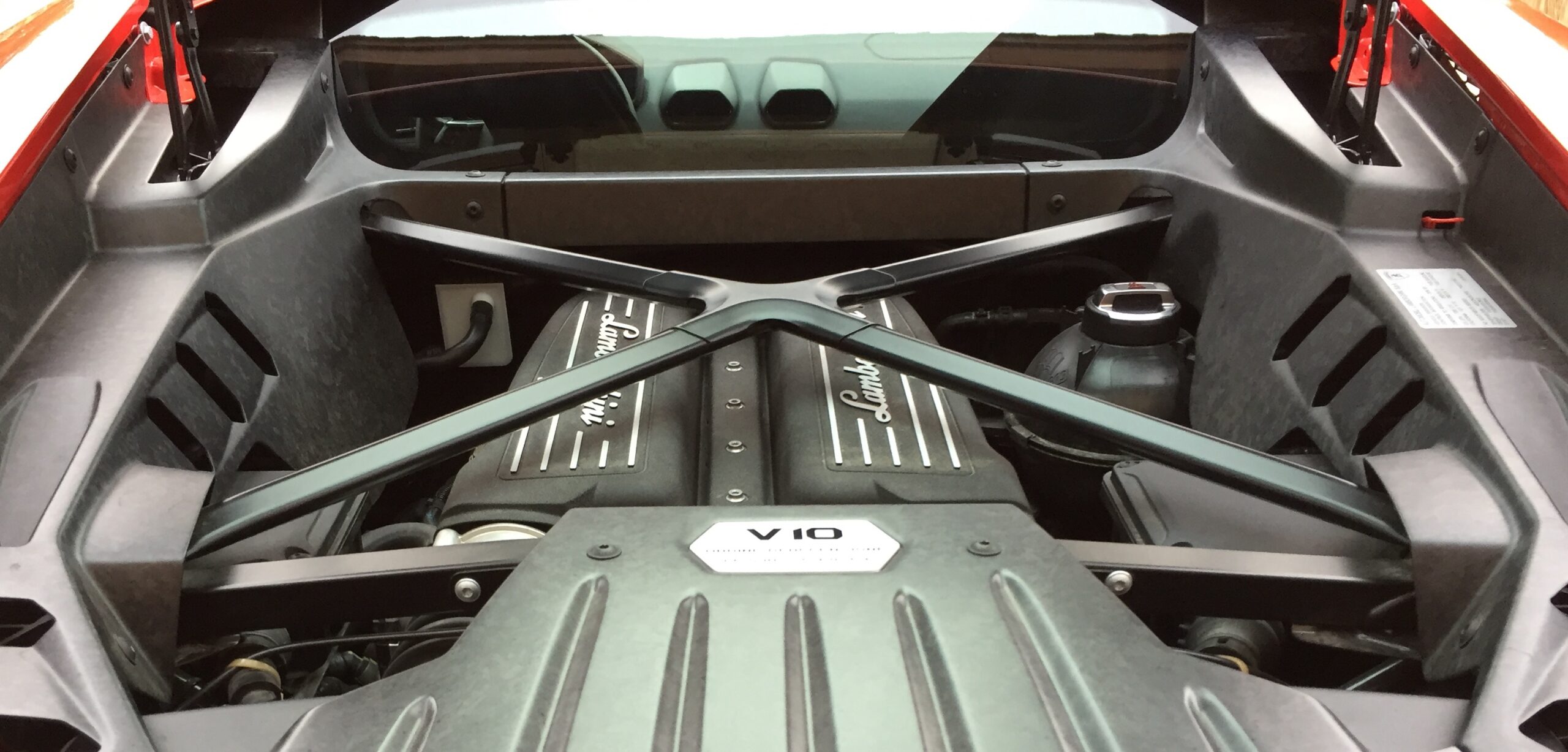
For the starting price, the owner gets a hybrid chassis of aluminum and carbon fiber. The naturally aspirated, 572-horsepower 5.2-liter V-10 has direct injection and cylinder deactivation. And with peak torque of 398 foot-pounds at 6,500 rpm, 75 percent of the torque is available at 1,000 rpm, Lamborghini says.

The seven-speed dual-clutch transmission gives such quick shifts in Sport mode that its speed would embarrass a lightning strike. There are automatic and manual driving options and performance choices of Strada (normal), Sport, and Corsa (track).

Lamborghini cites zero to 62 mph acceleration in 3.2 seconds and a top speed of 199 mph. The 14.6-foot-long, midengine car has a dry weight of 3,062 pounds. Lamborghini does not cite “wet” curb weight, such as when loaded with fuel, but figure another 122 pounds with a tankful.

The 572-hp V-10 engine

The 572-hp, naturally aspirated 5.2-liter V-10.

Huracan LP 580-2 Ride and Handling

Sport mode opens the pipes, sharpens the shift points, and gives hefty throttle blips on downshifts. In addition, the system loosens the reins of stability and traction controls for some slide through the corners.

A hard launch brings a howitzer blast of force without torque pull left or right. The experience is straight-ahead traction in a blazing chorus of cylinders.

19 inch Pirelli tires

Low profile, high grip 19-inchPirelli tires.

There is an absolute engagement of gears from the start off to flat out. Flooring the pedal at about 30 mph is a hold-on event as the Huracan lunges like a predator in pursuit.

The magnetic ride suspension shows its superiority with sensitive adjustments in milliseconds. After six hours on the road, there was no fanny fatigue or torqued necks. The steering is light, direct, and requires just minimal inputs to clip the apex.

The standard steel brakes have supercar dimensions. The ventilated and cross-drilled rotors are 14.37 inches at the front and 14 inches rear. The aluminum monoblock calipers have eight pistons at the front and four pistons rear. From 62 mph, the stopping distance takes just 104.7 feet, which is 3.6 feet shorter than the rear-drive Gallardo predecessor.

The steering wheel as command center

The driver’s command center.

Huracan Interior Function

Breathe deep the rich cabin aroma of leather and microsuede. The interior layout is efficient and easy to access, with some console controls by Audi. The foot-wide gauge array can be electronically changed into a full video screen with a large RPM gauge and other essentials.

The Huracan interior is cockpit-compact, but this is a wide car and there is wide shoulder room of almost 55 inches door to door. There is long legroom and headroom for a 6-foot-3 driver, and maybe even taller, which is also surprising for the car’s low 46-inch roof height. But the doors are not hugely broad (unlike a Corvette) and the tight turning circle makes maneuvering easy in close quarters.

The leather-lined buckets are bolstered for performance driving but surprisingly comfortable for an all-day drive. However, the seats are heatable there is no lumbar adjustment or seat ventilation.

The LP 580-2 has a weight distribution of 40 percent front and 60 percent rear.

Why buy the Lamborghini Huracan?

I’m not sure why this car costs nearly a quarter of a million dollars. But there will be few complaints about owning this daily-driving supercar.

Whatever the Lamborghini Huracan does not have or does not do, you do not need or will find a way to do without — and like it.

The red starter button

The red push-button ignition.

Huracan LP 580-2 Specifications

Body style: 2-seat, rear-wheel-drive coupe

Chassis: Hybrid aluminum and carbon fiber

Bodyshell: Aluminum and composite material outer skin

Suspension: Aluminum double-wishbone

Springs and dampers: Steel springs and hydraulic dampers. “MagneRide”
electromagnetic damper control available as an option

Engine: 572-hp, naturally aspirated 5.2-liter V-10 with direct injection and cylinder deactivation; 398 lb.-ft. of torque at 6,500 rpm

Transmission: 7-speed dual-clutch

Fuel economy: 17/21/17 mpg city/highway/combined; premium required

Fuel tank: 22 gallons

BY THE NUMBERS

Top speed: 198.8 mph

0-62 mph acceleration: 3.2 seconds

0-200 kmh (124.27 mph) acceleration: 10.1 seconds

Brakes: Specially contoured steel discs ventilated and cross-drilled; 14.3-inch front rotors with 8-piston calipers; rear,14-inch rotors with 4-piston calipers

Steering: Electromechanical; optional variable-ratio LDS (Lamborghini Dynamic Steering)

Tires: Pirelli 245/35 19-inch front, 305/35 R19 rear

Wheels: 8.5J x 19-inches front, 11J x 19 inches rear

Length/wheelbase: 175.5/103. in.

Width/height: 88*/45.9 in. *including side mirrors

Dry weight: 3,062.2 lbs.

Turning circle: 37.7 ft.

PRICING

Base price: $204,595, including $3,495 freight charge and $1,300 gas-guzzler tax; price as tested $238,795

Options on test vehicle: transparent engine-bay cover $7,000; Rosso Red paint $2,500

Where assembled: Modena, Italy

Warranty: 36-months/unlimited mileage covering everything from the powertrain to the seats

2019 Lamborghini Urus Review

2019 Lamborghini Urus Review

With 650 horsepower, the Lamborghini Urus super-SUV is all beef and pure bull

A side view of the Urus

The 2019 Lamborghini Urus starts at $203,995 and the tester was $259,284 with 25 packages or accessories. (Photography by Mark Maynard)

Table of Contents

Overview
Pricing
Performance
Ride and Handling
Interior Function
Why buy the Lamborghini Urus?
Specifications


BY MARK MAYNARD

Go bullish or get ignored is the driving force in the so-called super SUV segment. For the Lamborghini Urus it is all about the power and presence with equal parts prestige, pampering and privilege.

There are serious players in this group:

  • Bentley’s 626-horsepower Bentayga Speed ($235,000-plus);
  • Range Rover’s 557-hp SV Coupe (two-door; $295,000);
  • The 577-hp Mercedes-AMG G63 G-wagen ($148,000);
  • The 590-hp Maserati Levante Trofeo AWD ($170,000);
  • The 541-hp Porsche Cayenne Turbo Coupe, a $131,000 four-door.

And then there’s today’s tester, the Lamborghini Urus with 650-hp and a starting price of $203,995. As tested, the price came to almost $260,000.

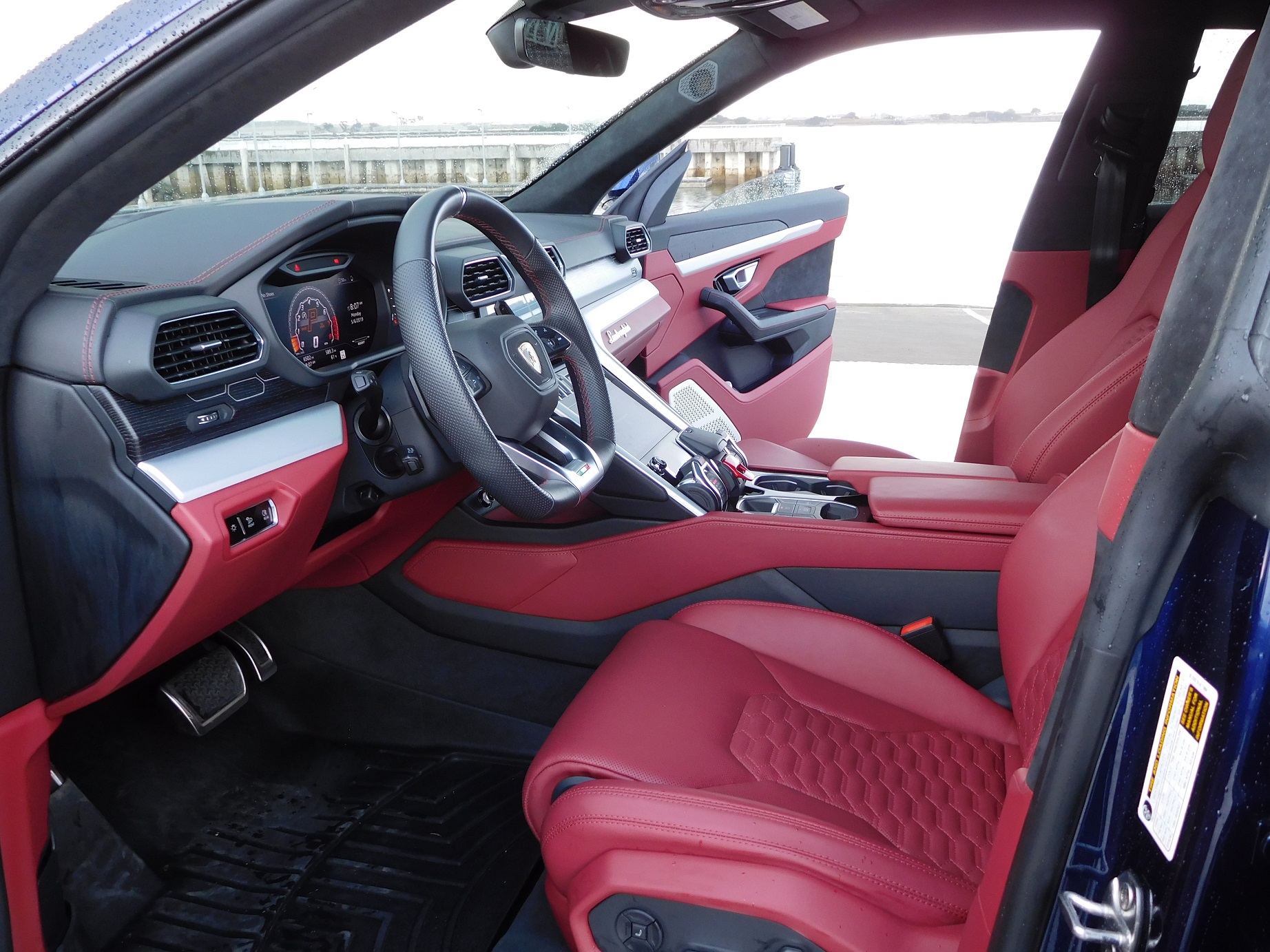
The red leather upholstery

Serious support in the sport seats.

Serious bolstering in the front seats.

Lamborghini Urus Overview

For Lamborghini, it is about having one of its Urus SUVs in the garage with one of the brand’s sports cars, and not parked next to an SUV by any other maker.

The Urus is Lamborghini’s second run at an SUV. Its first was the V-12 powered LM002 short-box pickup, aka “Rambo Lambo,” sold in the U.S. between 1986 and 1993.

The Lamborghini Urus shares nothing material with that truck. As a division of the global Volkswagen Group (including Bentley, Bugatti, Audi, Porsche, and Ducati motorcycles), the Urus takes a rib from the Audi Q7 SUV. It is an exemplary starting point well fortified with an advanced 4.0-liter V-8, eight-speed automatic, all-wheel drive, and a calm and functional cabin. And from there, the Lamborghini DNA takes hold to create a hooved beast for the track, trail, or town.

The driver area in the Urus

The driver area presents as a space-wars themed cockpit

2019 Lamborghini Urus Pricing

The tester’s sticker of $259,284 includes 25 packages or accessories, including the $3,995 freight charge from Sant’Agata Bolognese, Italy.

The add-ons ranged from a trailer hitch ($1,168) to ambient interior lighting ($3,036) to full leather upholstery ($3,157) with heated and cooled front seats ($631). The advanced driver assist system and Bang & Olufsen sound system were each $6,313.

Standard equipment includes permanent four-wheel drive with limited-slip rear differential and active torque vectoring, air suspension, full LED adaptive headlights and taillights, smart key locking and push-button ignition.

Choose your Urus here.

The steering wheel

A hands-on driving experience.

Urus Performance

Flip up the red bracket over the start-stop button on the center console and the engine fires with an open-pipe report then settles into a rumbling idle. But that gutsy V8 belts fire and brimstone with little provocation. And there are drive modes of Strada, Sport, Corsa, Sabbia, Terra and Neve (street, sport, track, sand, dirt and snow).

The twin-turbocharged, 650-horsepower V-8 with 627 foot-pounds of torque at 2,250 rpm will launch the Urus to 62 mph in a blaring 3.6 seconds. And that’s with a shaggy curb weight of 4,850 pounds.

It isn’t so much about how fast it will go, but how fast it gets to 30 mph, 60 mph, 90 mph. Be ready for the head-jerking jolt when the driver nails the throttle, even a little bit. The Urus jumps and kicks like a shock-rod to the flank of a rodeo bull. And unlike its rider trying to hold on, the controllability of the Urus makes its rider want to do it again — with respect, of course.

Fuel economy is not embarrassing at 12 mpg city, 17 highway and 14 mpg combined on the required premium fuel. I worked up to 20 mpg on a highway run while resisting Sport mode. But with a 19.8-gallon tank, there is much full-on Sport mode to be enjoyed.

 The twin-turbocharged, 650-horsepower V-8

The twin-turbocharged, 650-horsepower V-8.

Urus Ride and Handling

To handle stopping power from a top speed of 190 mph, Lamborghini says it built the world’s largest set of ventilated carbon-ceramic disc brakes for the Urus: 10-piston front calipers grip 17.3-inch rotors at the front and single-piston calipers for the rear 14.5-inch rotors.

Rear-wheel steering helps crimp the turning circle to 38.7 feet, making the Urus very urban friendly. The 360-degree camera system overcomes rear visibility issues at the small window.

The air suspension system can provide up to 9.8 inches of ground clearance for off-road use or drop the height for passenger loading. But this is the only Lambo that you will never have to remember to raise the nose when crossing a speed bump.

The 22-inch ZR-rated (street and competition) Pirelli P Zero tires are staggered, in sizes of 285/40 front and 325/35 rear. The rear rubber is nearly 13 inches wide, which benefits braking from 62 mph to zero in about 111 feet. That’s about 11 feet farther than Lamborghini’s Aventador coupe.

The big disc brakes on the Urus

The carbon-ceramic four-wheel-disc brakes are about the largest used on any car.

Urus Interior Function

Despite the competition-grade hardware, the Lamborghini Urus is a streamliner on the highway with no nervous twitching and it soars through cornering maneuvers. The cabin is well soundproofed, the steering is quick with good communication through the wheel.

The only driver element that I would change would be for steering-column-mounted shifters, rather than mounted on the steering wheel. As with other Lamborghinis, Drive is engaged by flipping the right-side paddle shifter. And when the wheel is turned, as when backing out of a driveway, the paddle is upside down on the wrong side.

The driver area presents as a space-wars themed cockpit with full electronic displays that are reasonably configured for touch-screen adjustment. The optional 18-way power-adjustable and massaging front seats are heated and cooled.

The back seat space is quite comfortable with long legroom and full climate controls. But the huge center tunnel detracts from the center-seat footroom. A two-seat “executive” option would be smart, but it’s easier to sell an SUV on the utility of five seats for a car that costs as much as a guest house.

Lamborghini doesn’t give interior dimensions but says there is front seat room to accommodate someone up to 6-feet-8 inches and someone 6-feet-2 inches should be comfortable in the back seat.

The open cargo area of the urus suv

Plenty of room for pro-league golf bags.

Why Buy the Lamborghini Urus?

The Lamborghini Urus might not be much of a rock climber. And I would cringe to throw bags of landscape materials in the back. But the Urus is the only five-seat Lamborghini with cargo room for luxury-class golf bags.

In this super-SUV segment, it isn’t so much a matter of cost but of value. And the Urus brings an easy quarter-million in value for its exclusivity, heritage, and prestige.

A rear view of the Lambo urus

The fuel economy is not embarrassing at 12 mpg city, 17 highway and 14 mpg combined .

2019 Lamborghini Urus Specifications

Body style: Full-size 5-seat, AWD SUV

Engine: 650-hp, twin-turbocharged 4.0-liter V-8; 627 lb.-ft. torque at 2,250 rpm

Transmission: 8-speed automatic with six drive modes

Fuel economy: 12/17/14 mpg city/hwy/combined; premium fuel

0-62 mph: 3.6 seconds

BY THE NUMBERS

Fuel tank: 19.8 gal.

Cargo space: 21.7 cu. ft. *behind back seat

Length/wheelbase: 201.2/118.2 in.

Width/height: 85.8/64.5 in. *width includes mirrors

Curb weight: 4,850 lbs.

Turning circle: 38.7 ft.

PRICING

Base price: $203,995, including $3,995 freight charge; price as tested $259,184

Where assembled: Sant’Agata Bolognese, Italy

Warranty: 3-years/36,000-miles including powertrain and roadside assistance

17 Years of the Lamborghini Countach

17 Years of the Lamborghini Countach

Automaker celebrates the 50th anniversary of the Lamborghini Countach in a series of four social-media videos

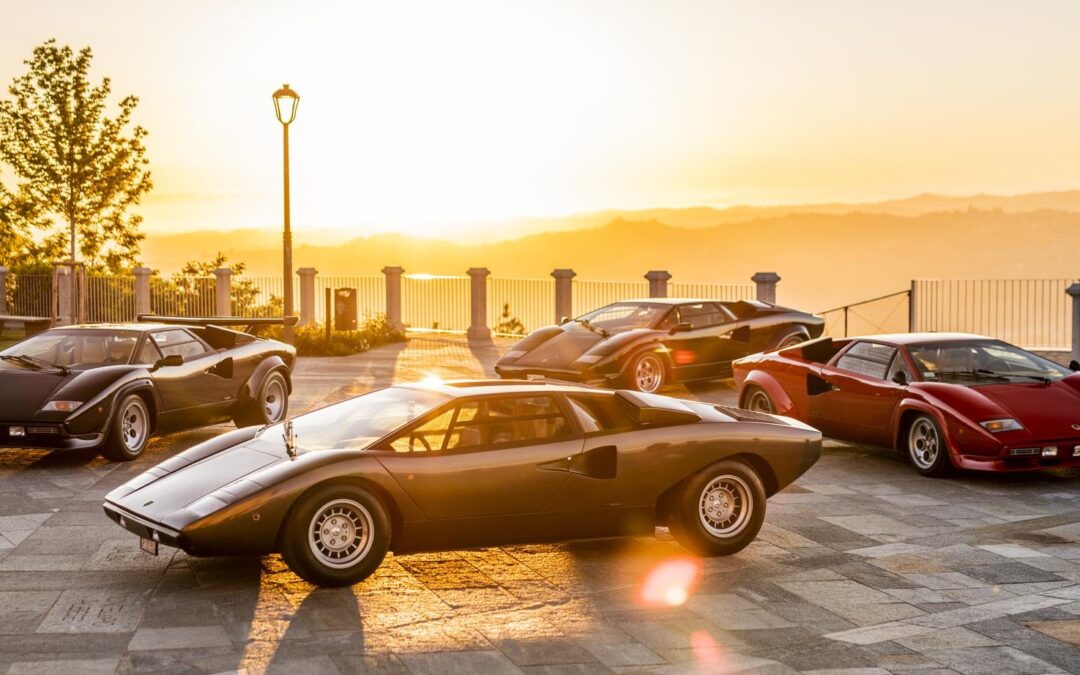
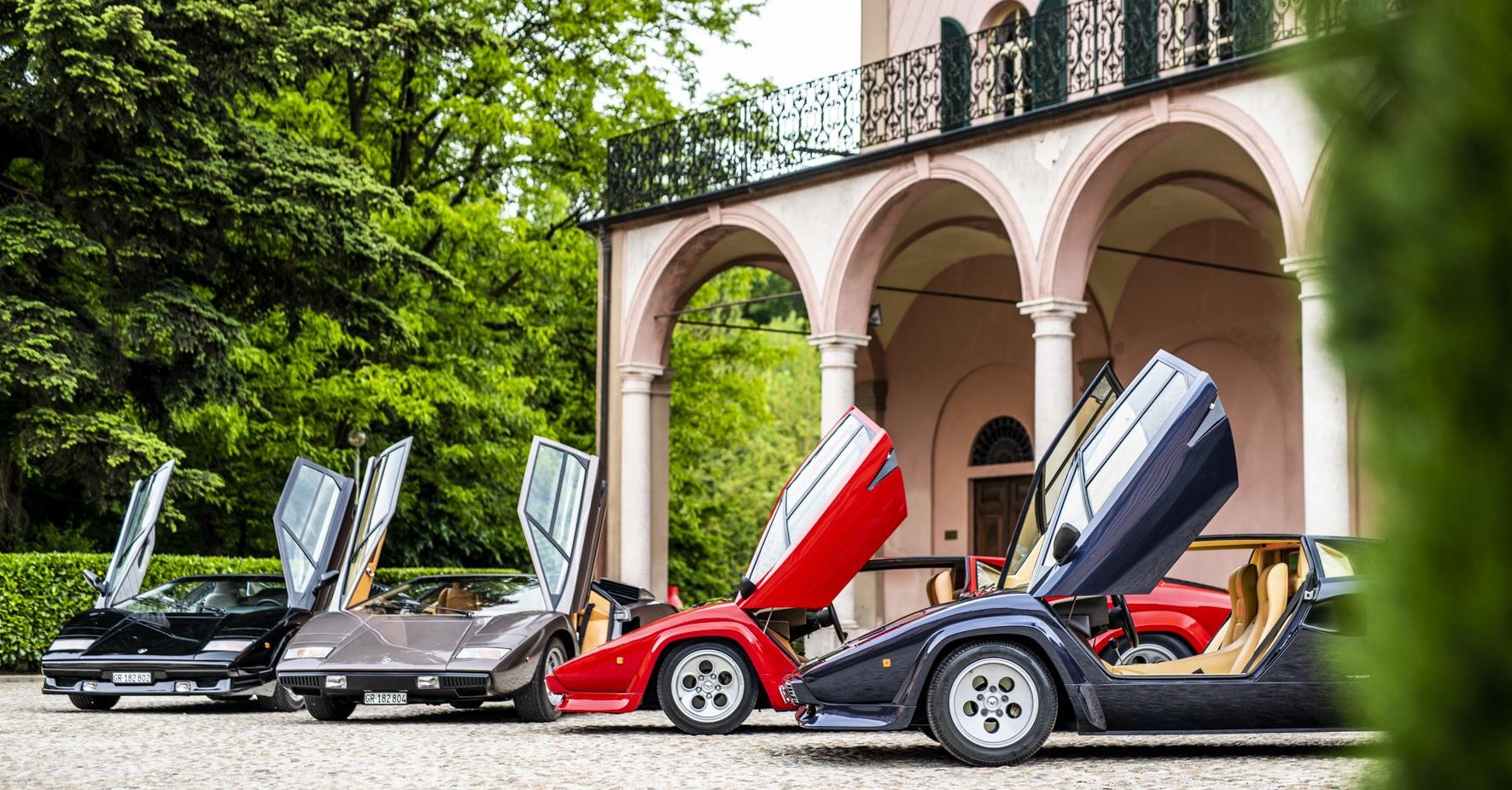
Five generations of the Lamborghini Countach.Five generations of the Lamborghini Countach. (Remi Dargegen)
BY MARK MAYNARD

To celebrate the 50th anniversary of the Lamborghini Countach supercar, Automobili Lamborghini is launching a series of four videos on its social media channels. Every Monday, the Italian carmaker will recount the legacy of the Lamborghini Countach, including interviews with significant personalities who shaped the car.

The first is Marcello Gandini, head of style at Carrozzeria Bertone. He sketched the futuristic lines of this supercar and added its now-iconic scissor doors.

The 1970s was one of ultimate creativity, Gandini says, and one of the important moments for design.

It was an era of individualism, the jet age, and the space race. And it embraced the geometric patterns of the period and the bright colors of fashion trends.

The Countach LP 5000 S badge.

(Remi Dargegen)

Lamborghini  Countach as style and performance icon

The Countach depicted much more than a commercial success. Images and posters of the supercar were on bedroom walls of an entire generation. The supercar also played a starring role in dozens of films.

The Lamborghini Countach fulfilled the role of style and performance icon. As a result, it rightfully won the title in the annals of world automotive history, Lamborghini says.

The Countach had a total production of 1,999 cars (not including the first LP 400 prototype).

Since the beginning of production, the Countach was exported to the U.S. But it was not until 1986, and the debut of the LP 5000 Quattrovalvole, that the Countach was officially approved for North America.

The word “Countach” is an exclamation of the Italian Piedmontese dialect that translates to astonishment and admiration for something.

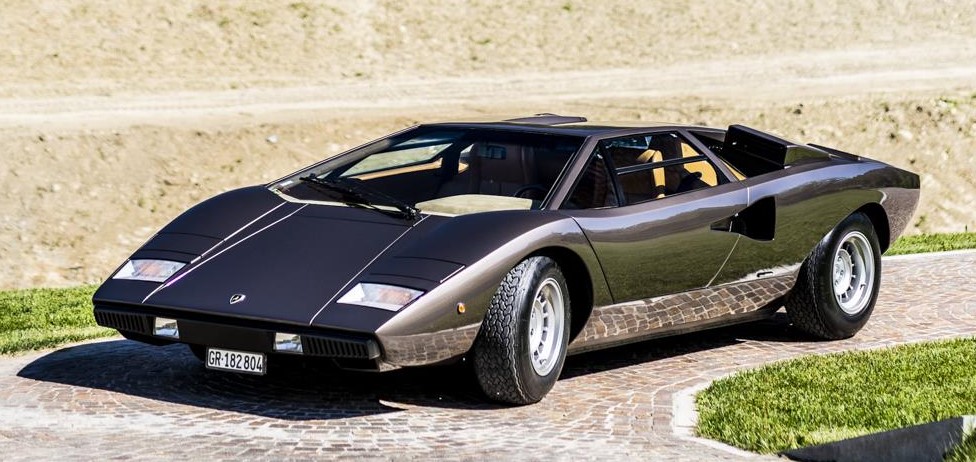
1971: Countach LP 500 ‘idea car’

Lamborghini Countach LP 500.

Lamborghini Countach LP 500. (Lamborghini)

In the summer of 1970, Ferruccio Lamborghini wanted a revolutionary car to succeed the Lamborghini Miura. The new car had to be technically advanced and faster. And it had to become the sports car symbolizing the 1970s.

The 12-cylinder engine remained but with a displacement increase from 4.0 to 5.0 liters. The engine also was repositioned from rear transverse to rear longitudinal. The five-speed synchromesh manual transmission was placed in front of the engine and practically abutted the seats.

1973: First-gen Lamborghini Countach LP 400

The Countach LP 400

Countach LP 400. (Remi Dargegen)

Early road tests of the 5.0-liter engine uncovered problems that would take more time to sort. So a quick fix was for the engineers to instead use the 4.0-liter engine.

The Countach LP 400 made its official debut at the Geneva Motor Show in March 1973. It was chassis No. 1120001 car. LP 400 was a prototype very similar to what would become the production car.

The LP 400 adopted a tubular trellis frame instead and aluminum was used for the body, not steel panels.

A front view of the Countach LP 400Countach LP 400. (Remi Dargegen)

The 4.0-liter (3929cc) engine used six Weber 45 DCOE twin-body carburetors. The engine developed 375 horsepower at 8,000 rpm and could reach a top speed or 186 mph or 300 kmh.

A red LP 400 was shown at the Geneva Motor Show. It was later repainted medium green for the 1973 motor shows in Frankfurt, Paris, and Earls Court, London.

The show car was sold to a buyer in Switzerland after the show and rediscovered in the early 2000s. Today LP 400 is owned by Automobili Lamborghini. It is now on display at the company museum, the MUDETEC.

The Countach LP 400 is the most sought-after version by collectors, Lamborghini says, with 152 units produced until 1977.

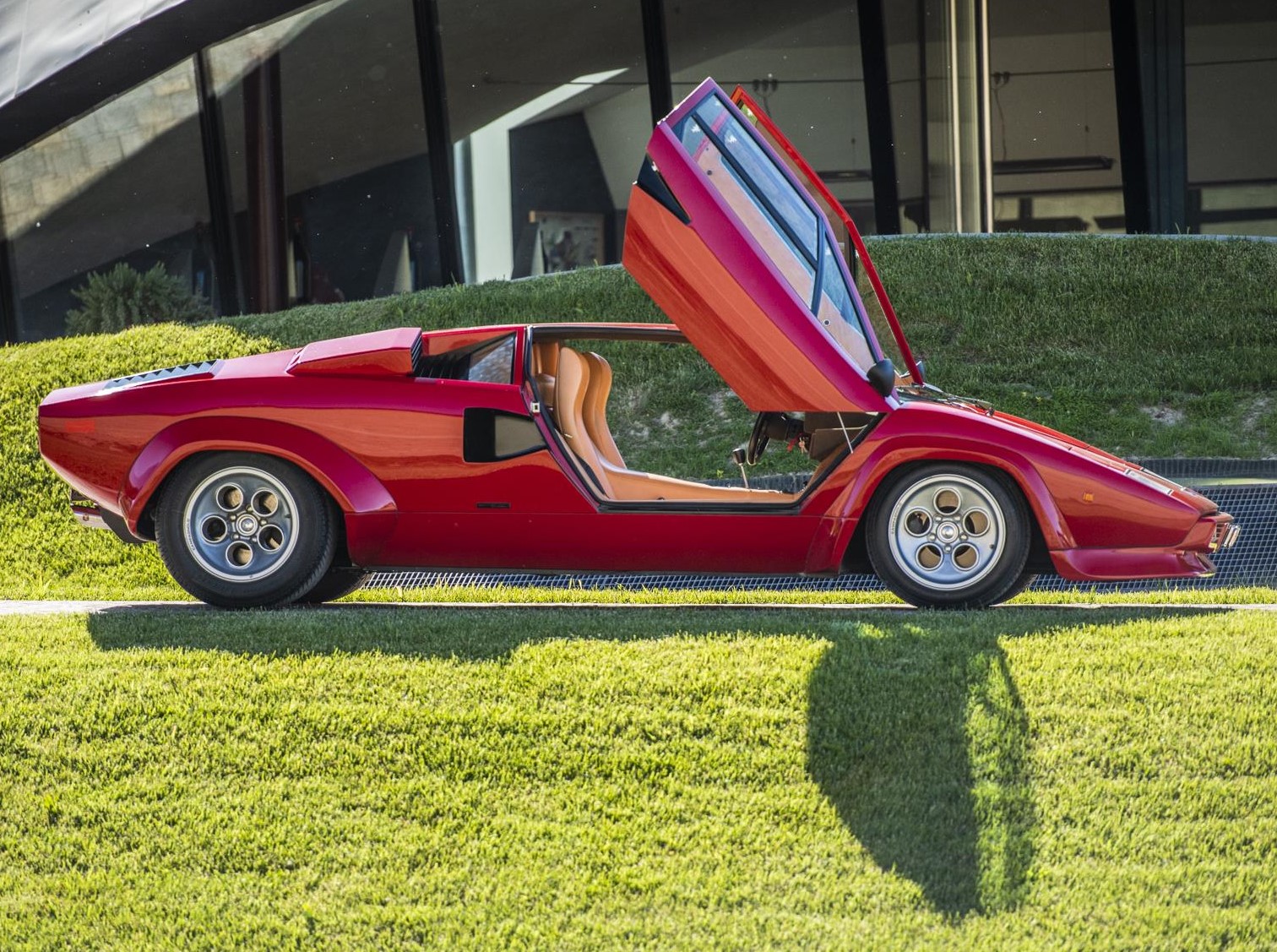
1978: Lamborghini Countach LP 400 S

A red Lamborghini Countach LP400S.

Countach LP 400 S. (Remi Dargegen)

The LP 400 was replaced in 1978 by the Countach LP 400 S.

It sported lower profile and wider Pirelli P7 tires. The staggered-width tires mounted on magnesium rims had sizes of 205/50 VR 15 on the front and 345/35 VR on the rear. Wheel-arch extensions were added to contain the larger tires.

The 375-hp, 4.0-liter V-12 engine in the Countach LP 400 S.

The 375-hp, 4.0-liter V-12 engine in the Countach LP 400 S. (Remi Dargegen)

Other updates include an optional ultra-low front spoiler and a rear wing. The wing would become one of the most distinctive features of the Countach.

Never before had a “normal” car with such a racing appearance been seen on the road, Lamborghini says. It was the source of inspiration for each of the subsequent Countach series. Production of the LP 400 S totaled 235 units.

1982: Lamborghini Countach LP 5000 S

An overhead shot of the Countach LP 5000 S.

Countach LP 5000 S. (Remi Dargegen)

The 1982 Lamborghini Countach had an engine upgrade to a 5.0-liter V-12. The new LP 5000 S debuted at the Geneva Motor Show in March 1982.

The new engine developed 375 hp at 7,000 rpm, and it retained the six Weber horizontal twin-body carburetors. After import to the U.S., some cars were retrofitted with the Bosch K-Jetronic electronic injection.

With 323 cars produced, this model was replaced by the LP 5000 Quattrovalvole. It debuted at the Geneva Motor Show in March 1985.

1985: Lamborghini Countach LP 5000 Quattrovalvole

The Countach LP 5000 Quattrovalvole.

Countach LP 5000 Quattrovalvole. (Remi Dargegen)

The technical evolution of the 5.0-liter V-12 added four valves per cylinder. The Quattrovalvole (QV) engine displacement increased to 5.2 liters and the six Weber carburetors were mounted vertically, not in the horizontal position.

Cars for the U.S. market were fitted with Bosch KE-Jetronic electronic injection and a catalytic converter. As a result, horsepower rose to 455 hp at 7,000 rpm.

Aesthetic alterations were few but included a new engine hood with a more prominent bulge to contain the vertical carburetors.

There were 631 Quattrovalvole models produced until 1988.

1988: Lamborghini Countach 25th Anniversary

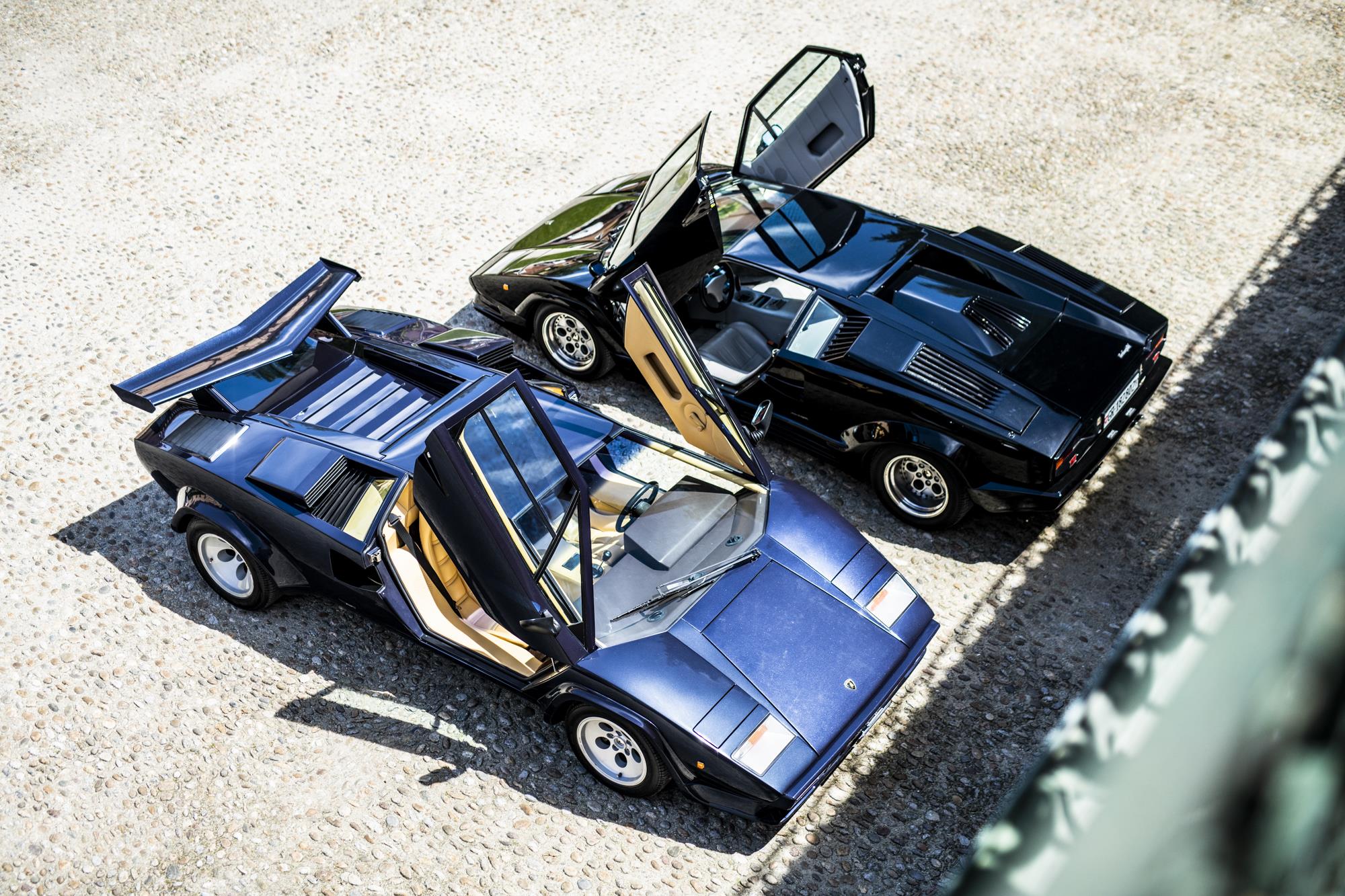
Countach 5000 S (left) and Countach 25th Anniversary (right).

Countach 5000 S (left) and Countach 25th Anniversary (right). (Remi Dargegen)

The Lamborghini Countach 25th Anniversary was the final evolution of the model. It debuted at the Paris Motor Show in September 1988.

The aesthetic updates were significant, but changes to the mechanics and chassis were minor. An improved cooling system updated the engine, and the chassis was modified to accommodate the new Pirelli P Zero tires. 

The Countach interior.

Countach interior. (Remi Dargegen)

The passenger compartment was updated with power windows and more comfortable power seats with less bolstering. In addition, the body style was decisively revised by young Horacio Pagani, who was working for Lamborghini at the time. He rounded the shapes and better integrated the wheel-arch extensions and the plates under the doors.

The Countach 25th Anniversary,

Countach 25th Anniversary, (Remi Dargegen)

The last Countach, a 25th Anniversary, was produced on July 4, 1990, with European specification. Its exterior was Argento Metallizzato (metallic silver) with a gray leather interior. It has not been sold and is still on display at the MUDETEC.