
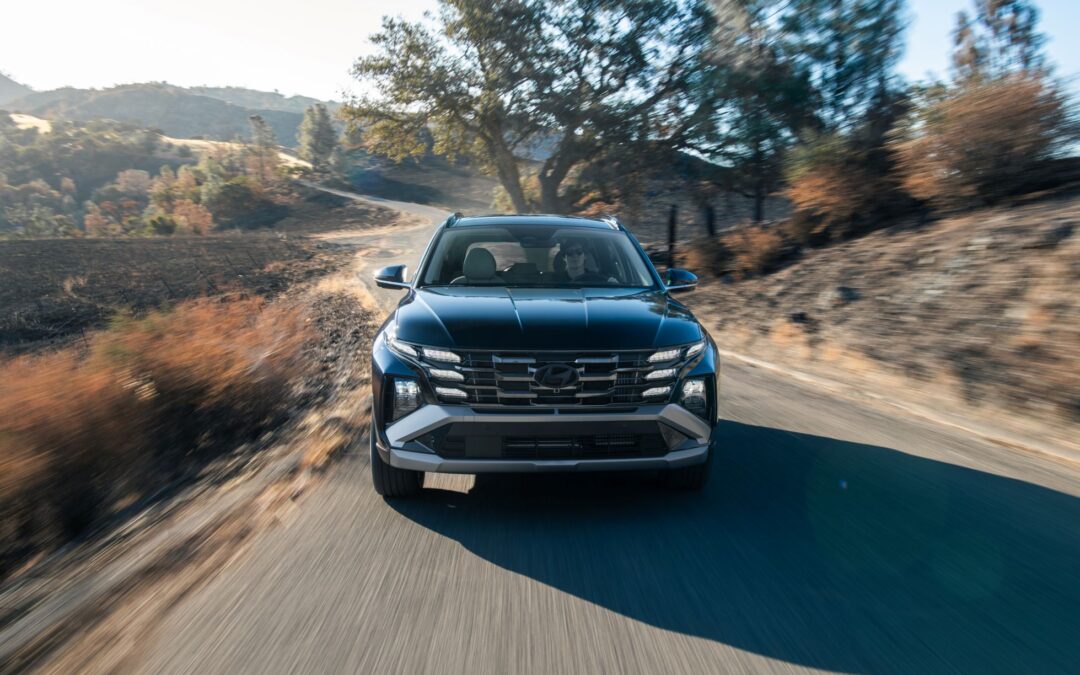
2026 Hyundai Tucson Hybrid takes a victory lap before 2027 redesign
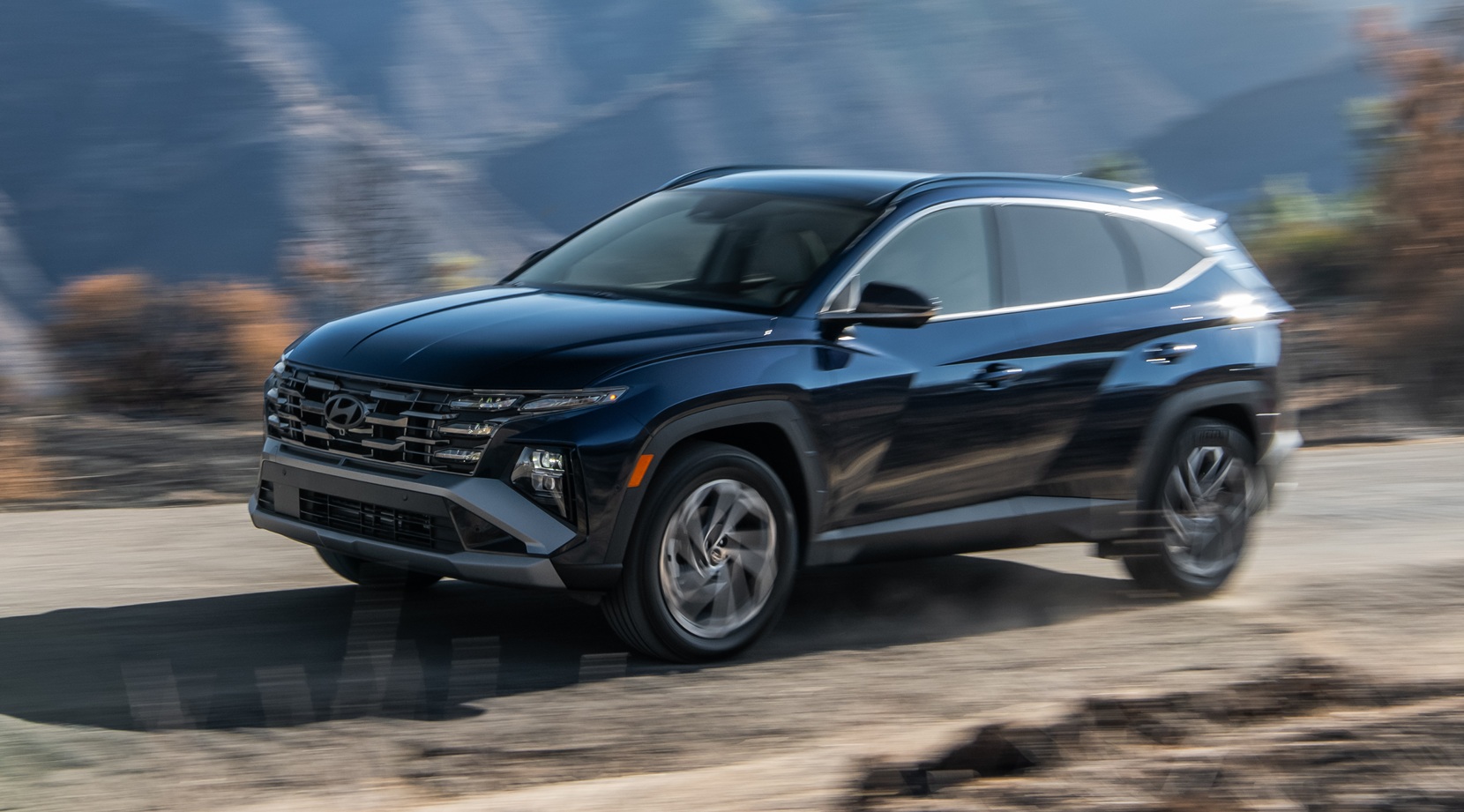
The fourth-generation 2026 Hyundai Tucson makes a value statement before a completely redesigned model debuts late this year for 2027. (Photography courtesy of Hyundai USA or as credited)
Jump To Special Features
Hyundai Tucson Separators
What’s New for 2026?
The Alphabet Soup of Safety
Hybrid Performance and Fuel Economy
If the 12-Volt Dies
2026 Hyundai Tucson Hybrid Pricing
Hybrid Warranty Protections
High Priority 2025-2026 Recalls
Why Buy the 2026 Hyundai Tucson Hybrid?
Specifications
The 2026 Hyundai Tucson is wrapping up its fourth generation, which launched in the U.S. in 2005. The compact SUV graduates to the fifth generation with a complete redesign for the 2027 model year, expected by late 2026.
There are more than 15 non-luxury compact SUVs on sale in 2026, but just a few offer hybrid powertrains. The Toyota RAV4 is the top-selling model, followed by the Honda CR-V, the Mazda CX-50, and Subaru Forester Hybrid. The Tucson tucks in at No. 5, while leveraging a value play for “standard features per dollar.”
Hyundai maintains a rapid update cadence for its vehicles, typically including a major “refresh” every two years. The 2025 Tucson had one of those major updates, giving it a strong competitive boost in its twilight years.
Hyundai Tucson Separators
A major differentiator for the Tucson Hybrid from its competitors is its attention to refined materials, including plastics, metals, and fabrics. Much thought has gone into creating a livable and accommodating space. I particularly appreciate the bridge treatment of the front center armrest console. It puts the phone charging pad and cup holders in easy reach, with open stash space below.
The body style provides an open interior atmosphere with clear sightlines front, side, and over the shoulder. The Limited model’s acoustic windshield and front side glass are luxury-class. However, there is still noticeable road harshness inside at highway speeds. The suspension will also give a strong jolt at speed bumps and considerable head toss when transitioning entries and driveways.
Interior quality and refinement are rewarding, and the top Limited model has near-luxury finesse. It is also set off by a three-tone interior color and texture scheme for a sophisticated style. Up front and commanding, a panoramic curved display links two high-resolution 12.3-inch displays. One covers the digital instrument cluster, the other presents a wide view for navigation. This screen also has a split-screen for 360-degree camera views. A return to hard buttons for volume, tuning, and climate controls helps keep eyes on the road when adjusting. But even the digital buttons are easy to navigate.
While Tucson’s exterior styling has some character bulges and upswept lines, they do not impede headroom or cargo capacity. A dual-level cargo floor is a welcome asset.
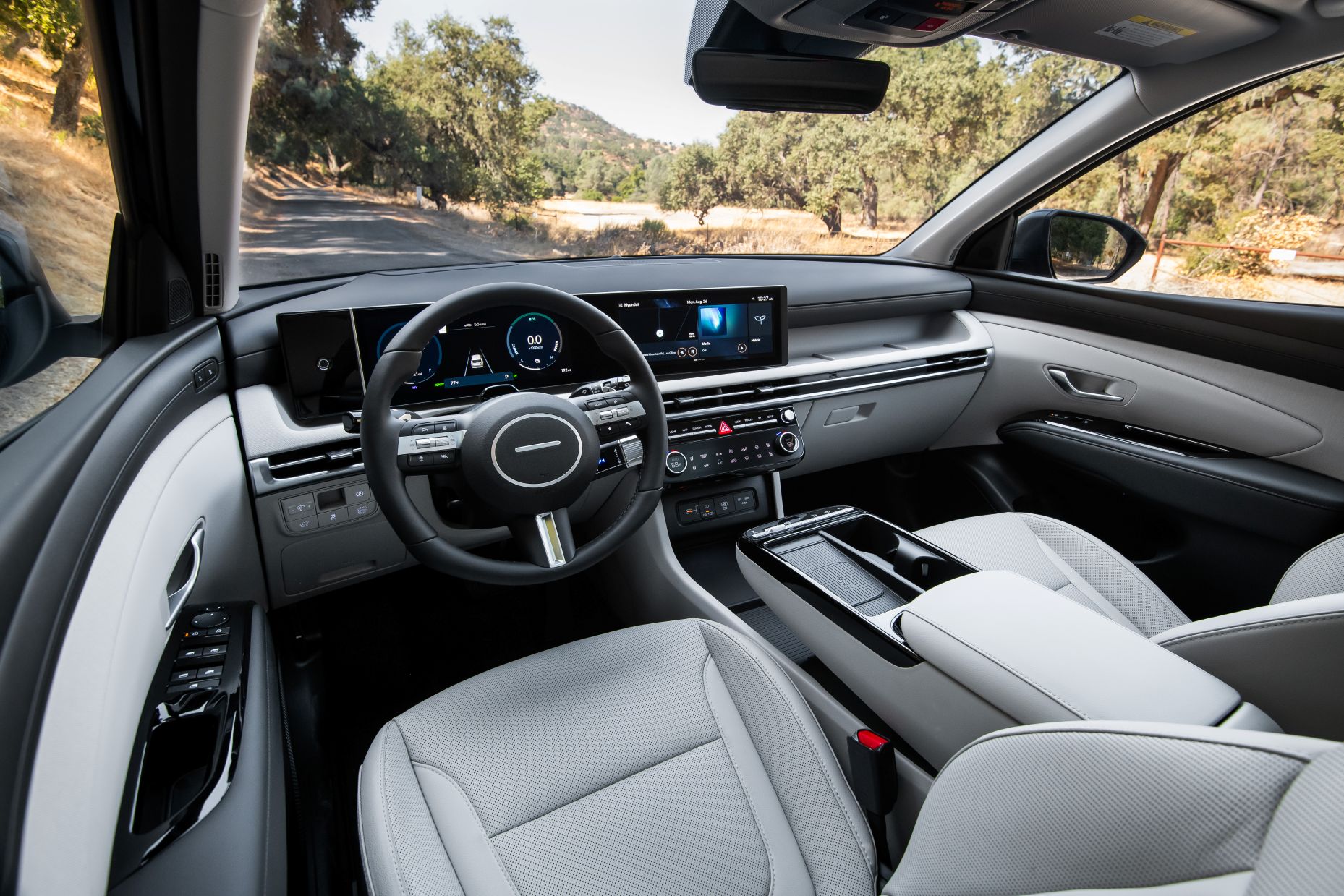
The Tucson cabin is designed around a “software-defined” architecture.
What’s New for 2026?
Hyundai has made several adjustments to the lineup to improve value and accessibility:
Free AWD: All trim levels have standard HTRAC all-wheel drive.
New Entry Trim: The Blue SE trim has been added as the new base model, lowering the starting price for a gasoline-electric hybrid.
Trim Renaming: The previous “Blue” trim is now the SEL; the “SEL Convenience” has been renamed SEL Premium (on some non-hybrid configurations). The renaming better reflects an upgraded feature set, Hyundai says.
Discontinued Trims: The sporty N-Line hybrid trim has been dropped for the 2026 model year. (But a new high-performance trim level could be added for 2027, keeping pace with the new Toyota RAV4.)
Tech Tweaks: Features such as Digital Key 2 (using your phone as a key) are now available across more trim levels. However, the fingerprint scanner used on earlier high-end models has been removed.
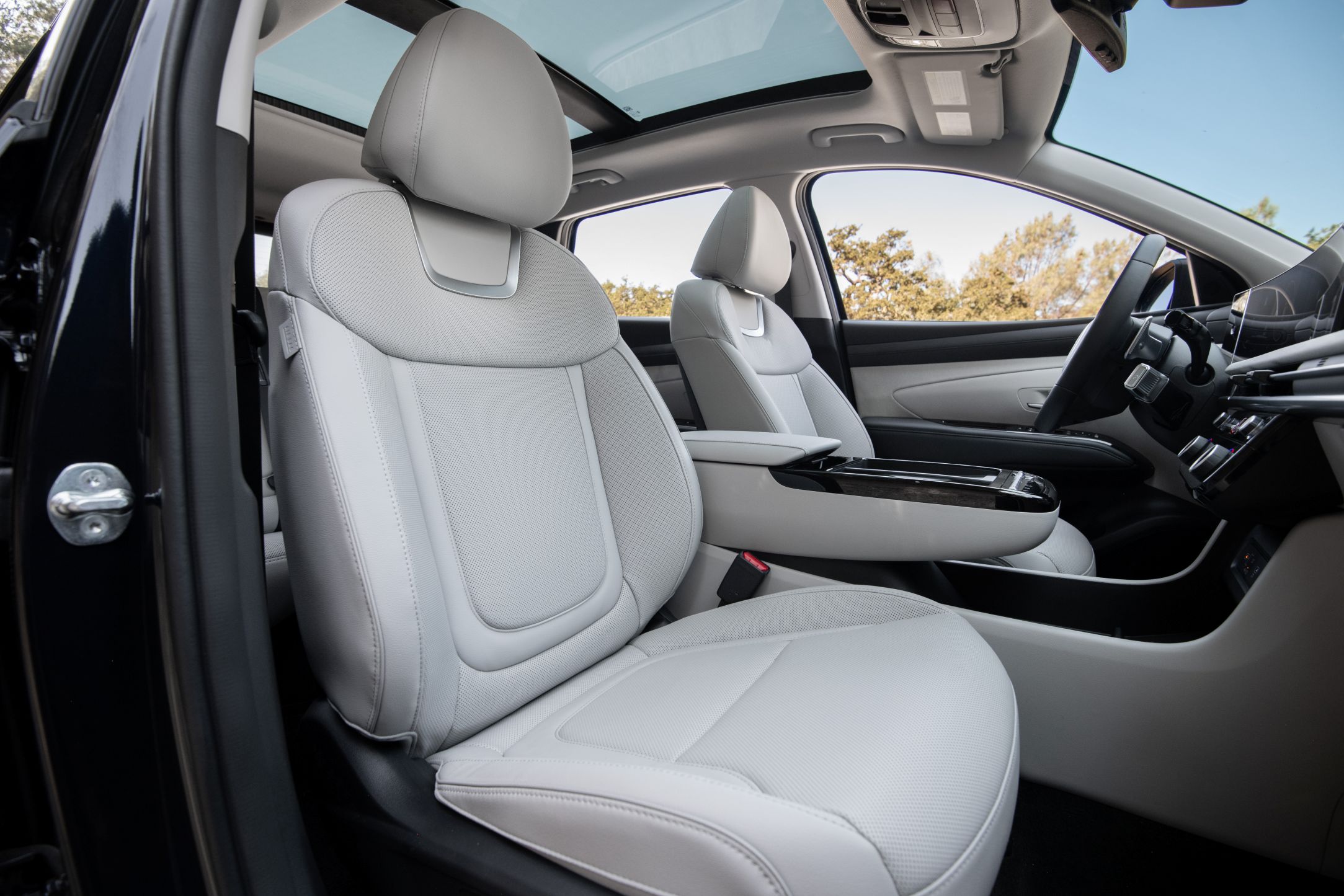
Eight-way power front passenger seat, too.
The Alphabet Soup of Safety
As much as Tucson is a value statement, it is a testament to advanced safety technologies. The 2025-26 Hyundai Tucson has earned the top IIHS Top Safety Pick+ rating and a five-star overall rating from the NHTSA.
The 2026 Hyundai Tucson standardizes an extensive safety suite, with infrared-based driver monitoring. The safety system, known as Hyundai SmartSense, uses a combination of radar, ultrasonic sensors, and cameras to provide 360-degree protection.
Among the updates:
Central Air Bag: Located between the front passengers, the bag is intended to prevent head-to-head contact during side-impact collisions.
Smart Cruise Control 2: An evolution of the standard system that now monitors driver responsiveness. If the driver is unresponsive, the system can bring the vehicle to a complete stop, activate hazard lights, and engage the electronic parking brake.
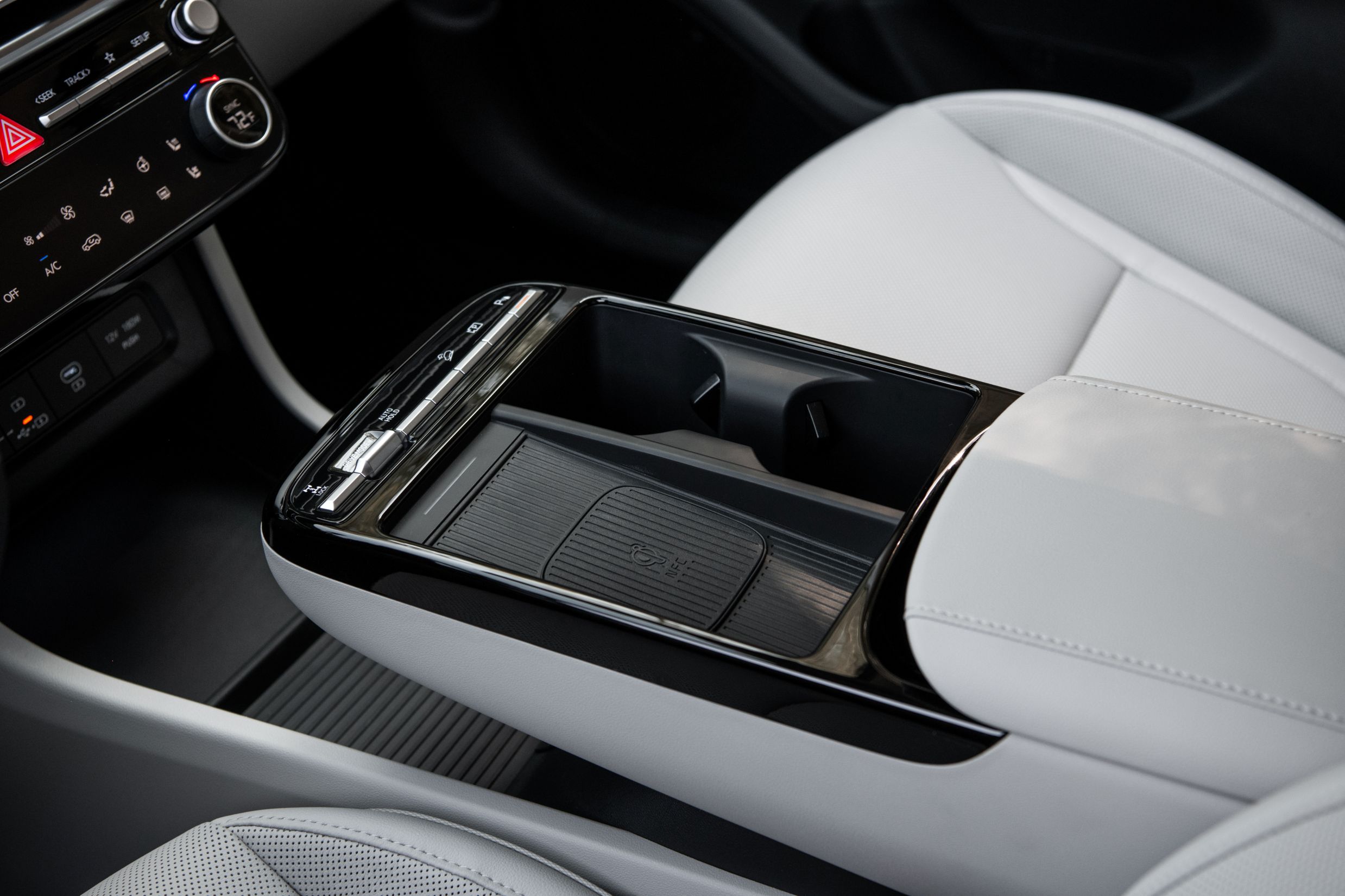
Wireless charging pad and cup holders in easy reach.
Driver Assistance Technologies
FAW — Forward Attention Warning: An infrared camera mounted on the steering column monitors the driver’s eye gaze and attention levels.
DAW — Driver Attention Warning: Monitors driving patterns for signs of drowsiness or distraction.
FCA — Forward Collision-Avoidance Assist: Now includes detection for pedestrians, cyclists, and Junction Turning. The system can apply the brakes if it detects an oncoming vehicle while you are making a left turn.
LKA and LFA — Lane Keeping Assist and Lane Following Assist: LKA prevents unintentional drifting, while LFA provides active steering input to keep the car centered in its lane.
BCW — Blind-Spot Collision Warning: Alerts the driver to vehicles in a blind spot and can intervene if attempting a lane change.
RCCA — Rear Cross-Traffic Collision-Avoidance Assist: Detects vehicles approaching from the side while reversing and can automatically apply the brakes.
ISLA — Intelligent Speed Limit Assist: Map-data-based and camera-based to display speed signage.
SEW — Safe Exit Warning: Alerts passengers if a vehicle is approaching from behind before they open their door.
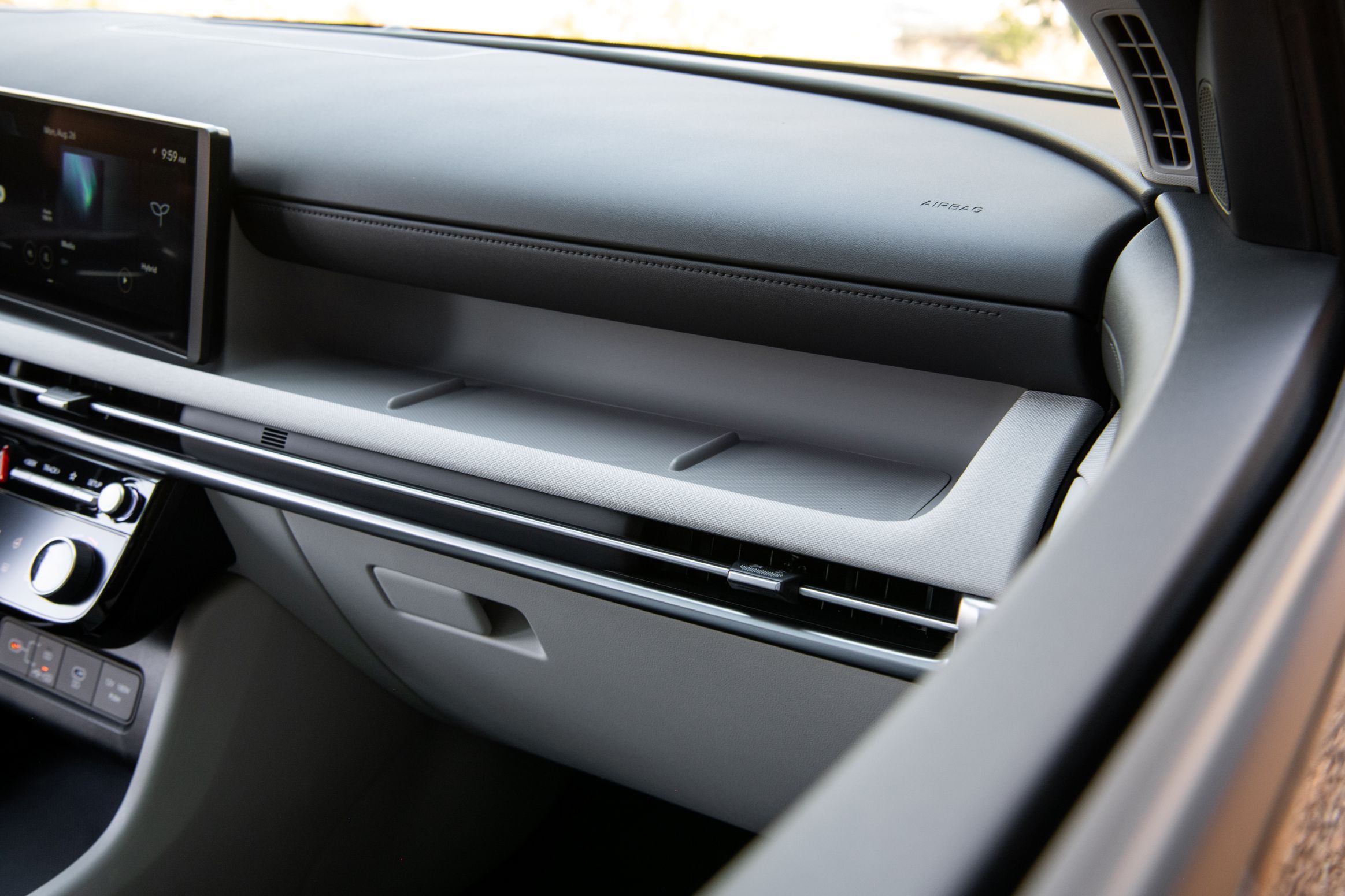
A useful design for passengers to lay a phone or other device.
Optional Safety Technologies
These features are typically found on higher trims like the Limited or as part of the SEL Convenience package:
HDA — Highway Driving Assist: A semi-autonomous system that combines Lane Following Assist and Smart Cruise Control to maintain speed and lane position on the highway.
RSPA — Remote Smart Parking Assist: While standing outside the car, the driver can move the vehicle into or out of a tight parking space using just the buttons on the key fob.
BVM — Blind-Spot View Monitor: Displays a live video feed of your blind spot in the digital instrument cluster when the turn signal is used.
SVM — Surround View Monitor: Provides a 360-degree bird’s-eye view of the vehicle to assist with parking and maneuvering.
PCA-R — Parking Collision-Avoidance Assist – Reverse: Specifically monitors for obstacles behind the car while backing into a spot and applies brakes if necessary.
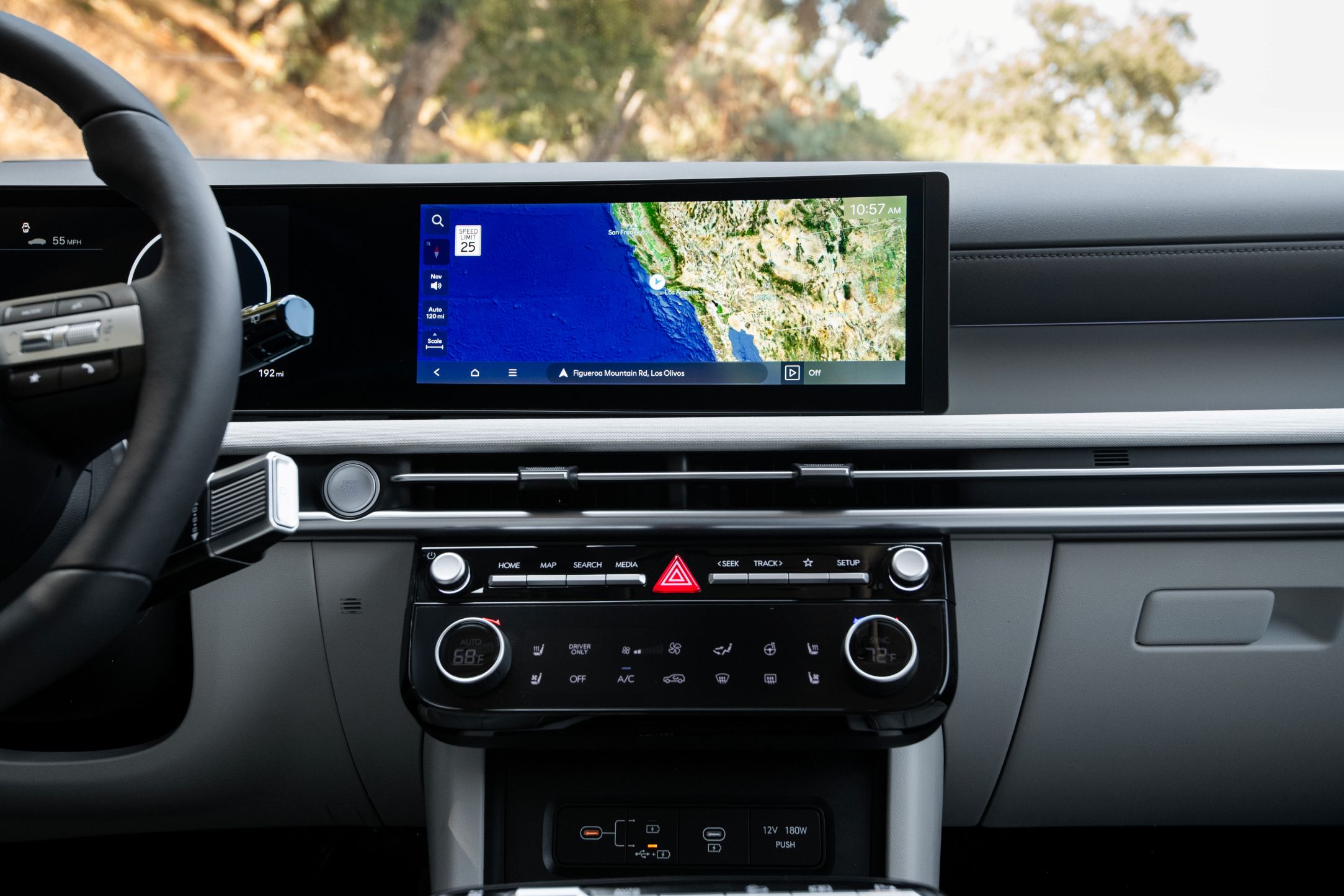
Wide views for navigation, and a split screen for 360-degree camera views.
Hyundai Bluelink+
Hyundai Bluelink+ is a connected vehicle system that links an owner’s smartphone or smartwatch to the vehicle. The service is free for the original owner with no expiration.
Key Features:
Remote Services: Start the engine, adjust climate control (heat or cool the cabin), lock/unlock doors, and flash lights or honk the horn to find your car in a parking lot;
Safety & Security: Automatic collision notification (calls for help if air bags deploy), SOS emergency assistance, and stolen vehicle recovery/slowdown;
Vehicle Health: Receive monthly diagnostic reports, maintenance reminders, and “on-demand” diagnostic checks via the car’s touchscreen;
Navigation and Guidance: Send a destination from your phone directly to the car’s navigation system and use voice commands to find points of interest;
EV Specifics: For electric models, the owner can set start/stop charging, set charging schedules for off-peak hours, and monitor battery range.
Tucson Hybrid Performance and Fuel Economy
Hyundai’s hybrid system in the 2026 Tucson features a 1.6-liter Smartstream turbocharged and direct-injected four-cylinder gasoline engine. It is paired with a 47.7 kW (64 hp) electric motor. Together, this hybrid system puts out 231 horsepower and 271 foot-pounds of torque.
A special feature of Hyundai’s hybrid powertrain is a six-speed automatic transmission rather than a mushy continuously variable automatic. Hyundai says the stepped six-speed better integrates with the electric motor. And those who enjoy driving will appreciate this transmission’s quicker acceleration.
I also appreciated that the 1.49 kWh lithium-ion battery allows considerable battery driving at low speeds. It pays green rewards for creeping through commuting traffic or tooling the mall parking lot.
New for the 2026 update is e-Motion torque vectoring. This system uses the electric motor to apply braking or torque to specific wheels to improve cornering and stability.
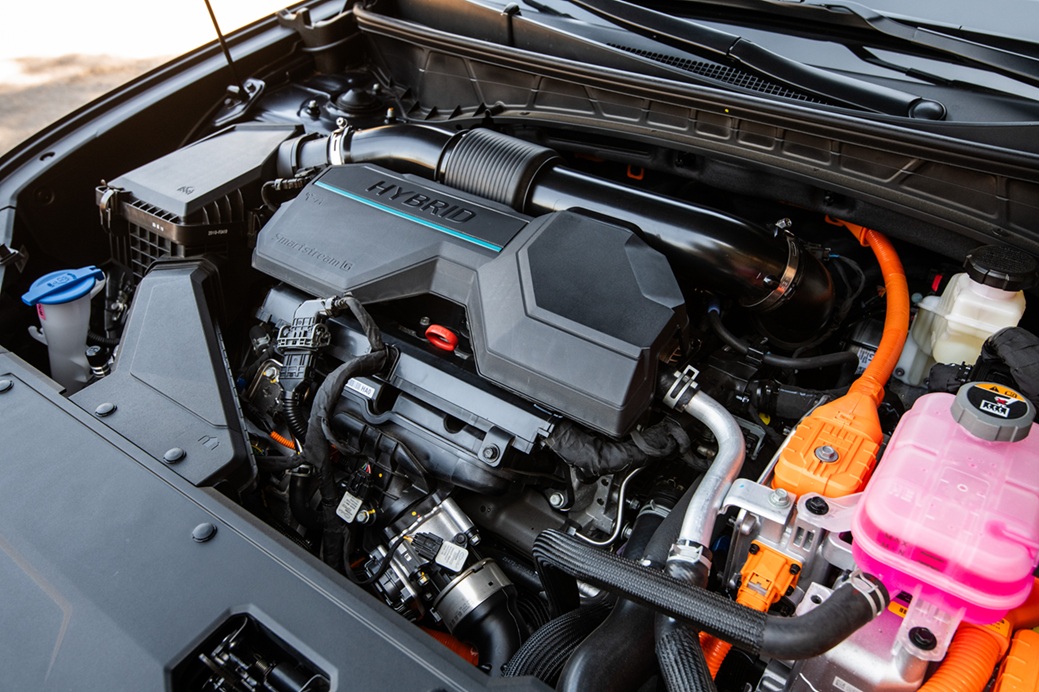
The Tucson Hybrid engine has fuel economy ratings of 36/37/36 mpg city/hwy/combined.
Hybrid Performance and Fuel Economy
Commuters seeking max fuel mileage should consider the Blue SE entry trim. It is the most fuel-efficient (and lightest) trim level, achieving an EPA-estimated 38 mpg combined. My Limited tester has mileage ratings of 36/37/36 mpg, using the recommended 87 octane fuel. On a highway drive with the cruise control set to 67 mph, the mileage climbed to 38.3 mpg. Around town, it was common to see mileage in the mid to high-20s.
Acceleration can be quite brisk, and it’s amplified in Sport mode. It gives a pronounced jump in throttle responsiveness, which I typically use when commuting to guard my line.
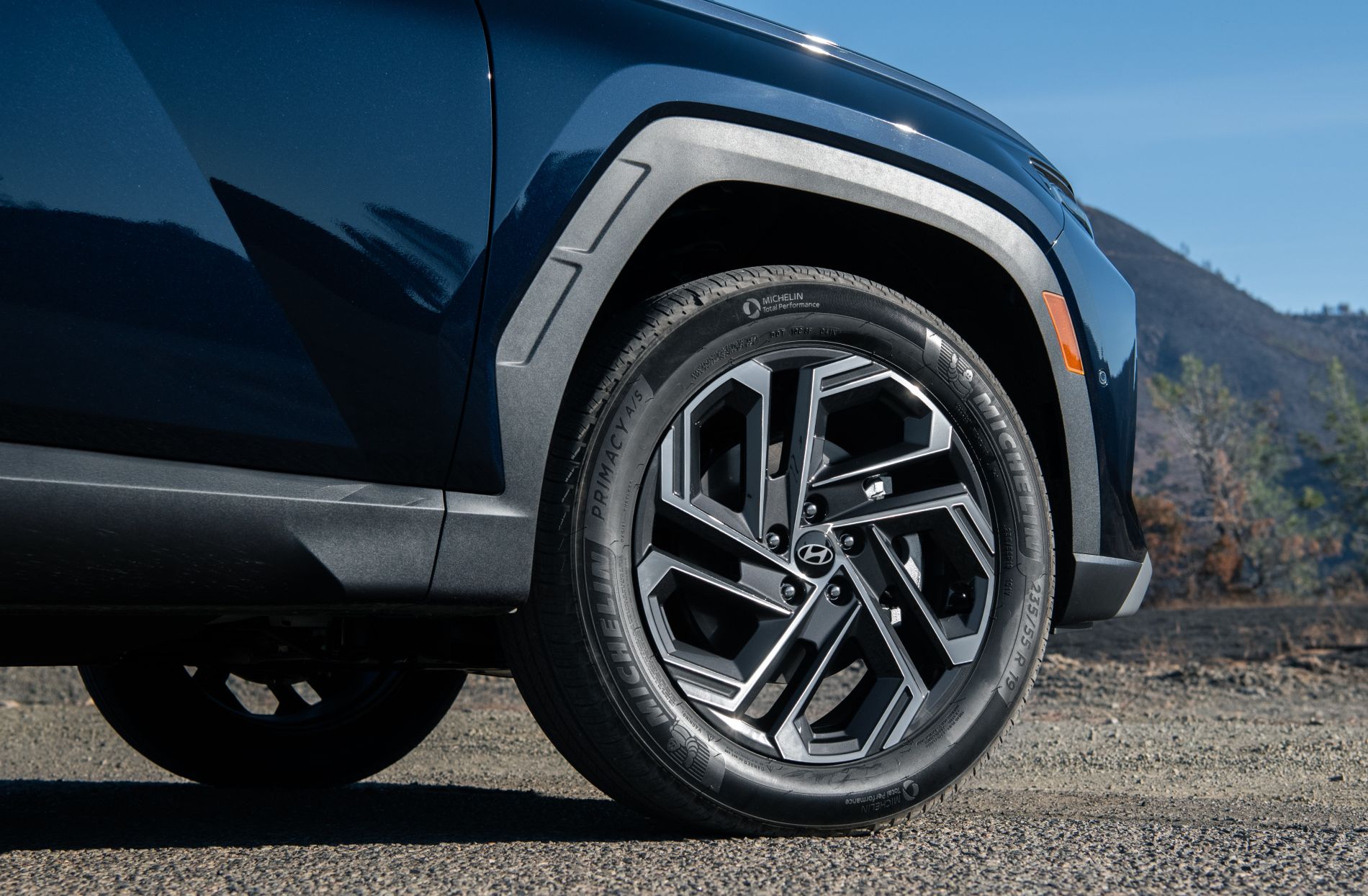
The Limited tester was fitted with 19-inch Michelin Primacy all-season tires.
If the 12-Volt Dies
Dead 12-volt batteries happen, and it is a special pain in a hybrid. With a dead 12-volt battery, there can be no cabin functions, such as unlocking doors or using interior lights. Hyundai simplifies charging a dead 12-volt with a battery reset button on the lower instrument panel. Rather than a separate 12-volt battery, Hyundai integrates a lithium-ion 12-volt battery with the high-voltage hybrid battery pack.
To protect this battery from draining completely (such as if a light is left on), the system will “disconnect” it. If the charge drops too low, making the car appear completely dead, it is a straightforward process to get started again.
How to Use It
1. Unlock the Car: If the battery is dead, use the mechanical key stowed inside the key fob to unlock the driver’s door.
2. Press the Reset Button: Once inside, press the 12V Battery Reset button. You may hear a “click” as the system reconnects.
3. Start the Engine: You have 15 seconds after pressing the button to start the vehicle.
4. Recharge: Once the car is in “Ready” mode, the high-voltage battery will automatically begin recharging the 12V system. The car should then be driven, or idled, for at least 30 minutes to ensure a full recharge.
Important Safety Note: If the car does not start after attempting a reset, it might need a traditional jump start using jumper cables. However, never use the 12V Battery Reset button while the vehicle is being jump-started; it could damage the electrical system.
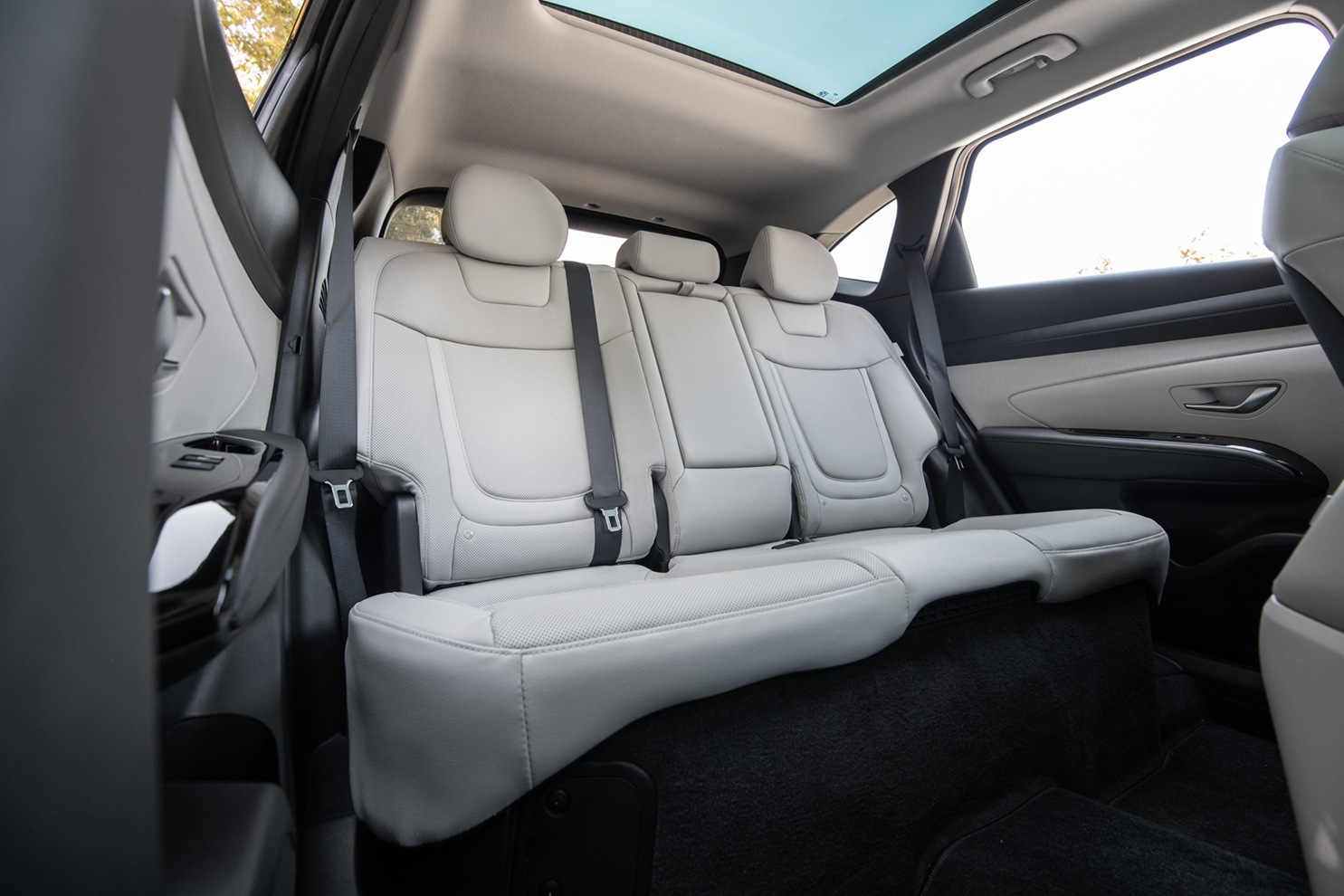
The hybrid battery is located under the rear passenger seat to maximize cargo space and lower the vehicle’s center of gravity.
Hybrid vs. Plug-in Hybrid
If you are looking for more power, the 2026 Tucson Plug-in Hybrid could be the answer. The PHEV has a more powerful 72 kW (97 hp) electric motor and a larger 13.8 kWh battery. The combination increases total output to 268 horsepower while maintaining the same 271 lb.-ft. torque. of torque.
Because the PHEV has a larger battery, it has an EPA-estimated driving range of 32 miles on battery power. When starting with a full charge and a full tank of gas, the total driving range is approximately 420 miles. The plug-in’s fuel tank is smaller than the hybrid’s at 11.1 gallons. (On a road trip, the Tucson Hybrid could approach 500 miles of range with careful acceleration.)
Tucson Plug-in Hybrid pricing starts at $50,650 for the Limited and $42,425 for the SEL trim.
2026 Hyundai Tucson Hybrid Pricing
The 2026 Hyundai Tucson Hybrid is sold in four trim levels, all with standard HTRAC all-wheel drive. Retail starting prices below include the $1,600 U.S. freight charge from Ulsan, Korea.
Blue SE: $34,050. Key features include 17-inch alloy wheels, 12.3-inch touchscreen, Smart Cruise Control;
SEL: $36,000, including heated front seats, hands-free power liftgate, wireless charging;
SEL Convenience: $37,000, including panoramic sunroof, navigation, 19-inch wheels;
Limited: $43,675, including Bose premium audio, ventilated seats, and a surround-view monitor. (An extended list of standard features is below in the specifications chart.) My Limited tester came to $43,665 with carpeted floor mats, $240, which appear to be of good quality. Most buyers will also want to opt for the roller cargo cover ($205) to shield from prying eyes.
Check current Hyundai pricing here. And look here for special offers and promotions.
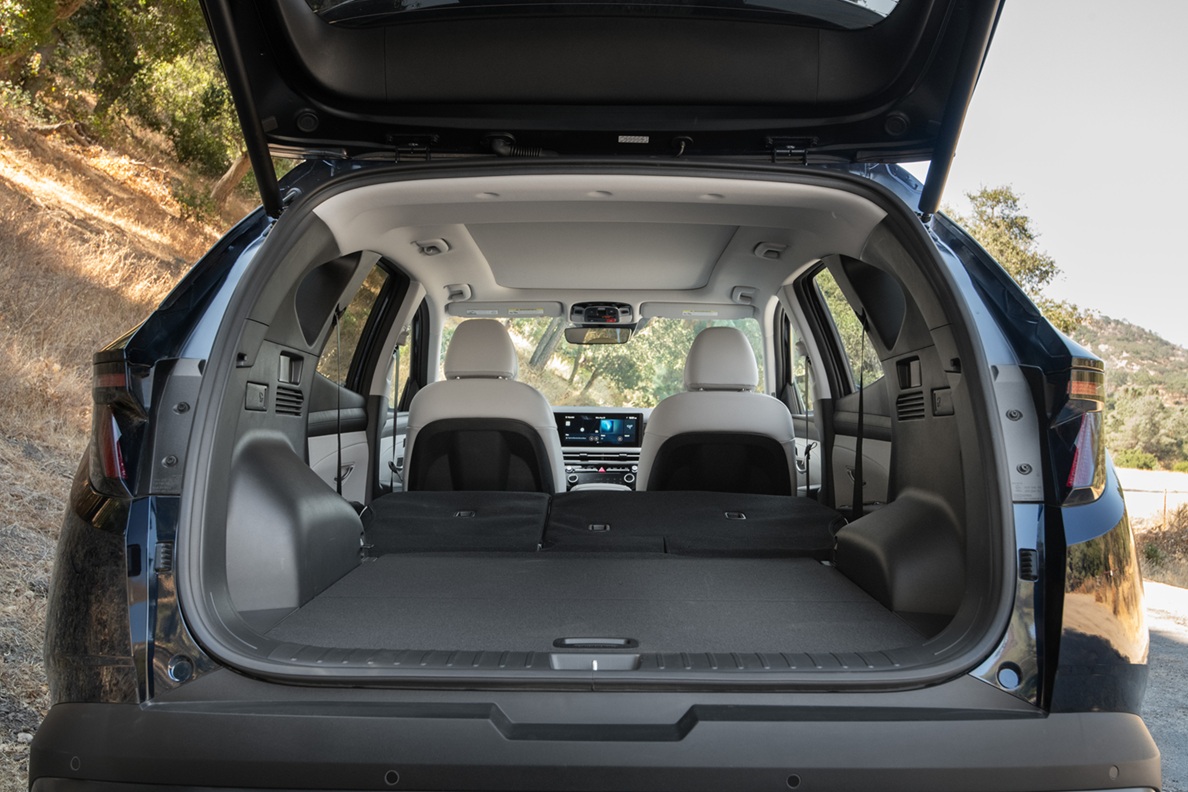
The Tucson’s cargo space is large and open, with a dual-level load floor.
Hyundai Warranty Coverages
Powertrain Limited Warranty: 10 years or 100,000 miles (for original owners only). This covers the major mechanical components, such as the engine, transmission, and drivetrain.
New Vehicle Limited Warranty (bumper to bumper): 5 years or 60,000 miles. It covers nearly all major systems, including electronics, climate control, and suspension, against manufacturing defects.
Anti-Perforation: 7 years and unlimited miles. This specifically protects against rust that perforates body panels from the inside out.
Hybrid Warranty Protections
Hybrid/EV Battery: 10 years or 100,000 miles. This covers the high-voltage battery and related defects.
Hybrid System Components: 10 years or 100,000 miles; coverage includes such items as the hybrid starter, generator, and power control unit.
Capacity Guarantee: Hyundai guarantees the hybrid battery will not degrade below 70 percent of its original capacity during the 10-year/100,000-mile period.
Additional Benefits
24/7 Roadside Assistance: 5 years and unlimited miles. Services include towing to the nearest dealer, battery jump-starts, flat tire changes, and gas delivery.
Emissions: 12-month/12,000-mile replacement parts coverage and an 8-year/80,000-mile federal emission performance warranty.
Note on Ownership: The 10-year/100,000-mile powertrain warranty is typically only available to the original owner. If the vehicle is sold, subsequent owners usually receive the remaining balance of the 5-year/60,000-mile limited warranty for powertrain issues.
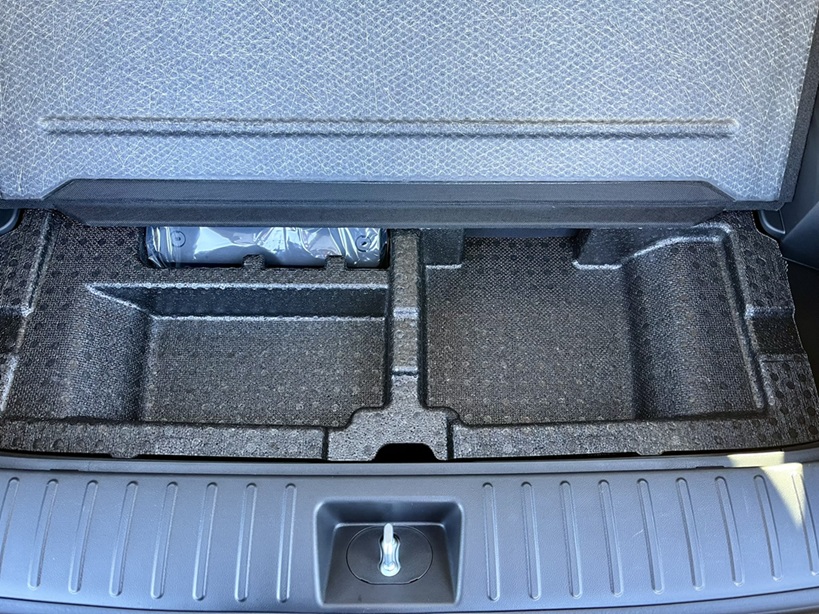
There is no spare tire but an inflator system, tucked under the cargo floor. (Mark Maynard)
High Priority 2025-2026 Recalls
The Hyundai Tucson Hybrid with 1.6L SmartStream turbo engine is generally considered more reliable than older Hyundai models. However, there are a few “growing pains” and technical issues to consider:
Engine Connecting Rods: In late 2025, Hyundai recalled a small number of 2025-2026 Tucson Hybrids due to improperly tightened connecting rod bolts. If these come loose, they can cause a sudden loss of power, engine knocking, or even a fire due to oil leaks. Hyundai’s fix is a complete engine replacement. Be sure to keep all dealership records when having this problem evaluated.
Instrument Cluster Software: A 2026 recall affects the digital dash, which may go blank while driving, preventing you from seeing your speed or warning lights.
Common Engine and Mechanical Issues
The 1.6L Turbo engine in the Tucson Hybrid is newer than the older “Theta” engines, which were notorious for fires. However, owners have reported:
“Check Hybrid System” Warning: Some owners have experienced a sudden loss of power accompanied by this warning. This is often linked to software glitches or sensors in the hybrid powertrain rather than a mechanical engine malfunction.
Carbon Buildup: Because this is a gasoline direct injection (GDI) engine, carbon can accumulate on the intake valves, typically after 60,000 miles. When this occurs, drivers will notice a rough idle or reduced fuel economy.
Oil Dilution: Like many small turbo engines used for short trips, fuel can sometimes mix with the engine oil. It is highly recommended to change the oil every 5,000 miles rather than the longer intervals the manual might suggest.
Jerky Shifting: Some drivers report “hunting” for gears or a jerky feeling at low speeds. The hybrid uses a traditional six-speed automatic rather than the dual-clutch found in the gas-only turbo. The six-speed is generally more durable but can still feel “clunky” if the software isn’t updated.
For more information on government recalls, visit NHTSA.gov/recalls.
Why Buy the 2026 Hyundai Tucson Hybrid?
In its last four years of production, the 2026 Hyundai Tucson is as good as it gets. And what has been learned and evolved for the 2026 model will carry over to the 2027 model.
The Tucson Hybrid will impress with its very well-soundproofed cabin and refined interior materials that feel near-luxury.
Whether buying a certified pre-owned 2025 model or a new 2026 model, ensure all engine and drivetrain updates have been completed. To be safe, consider one of Hyundai’s extended warranty plans. Learn more here.
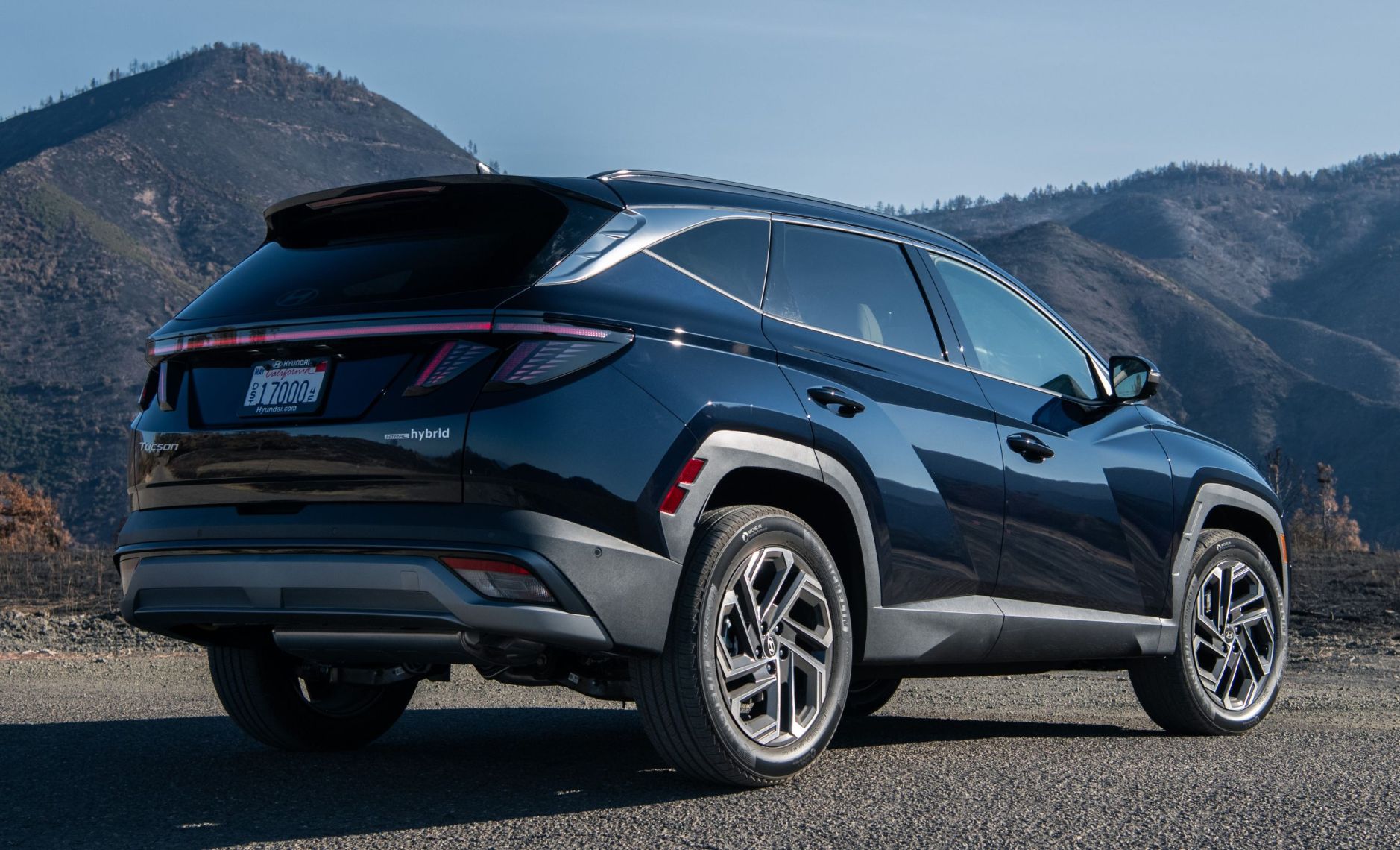
All trim levels of the 2026 Hyundai Tucson include standard HTRAC all-wheel drive.
2026 Hyundai Tucson Hybrid Specifications
Body style: compact class 5-door, 5-seat AWD SUV
Engine: 178-hp, 1.6-liter turbocharged and direct-injected, DOHC 16-valve inline 4-cylinder; 195 lb.-ft. torque from 1,500-4,500 rpm
Electric motor: Permanent magnet synchronous motor; 47.7 kW (64 hp) from 1,800–2,100 rpm; 195 lb.-ft. at 1,700 rpm
Combined hp and torque: 231 hp/271 lb.ft. torque
Hybrid battery: lithium-ion, 64 kW, 270 volts
Transmission: 6-speed automatic torque converter, active on-demand HTRAC AWD; steering-wheel paddle shift levers
Fuel economy: 36/37/36 mpg city/hwy/combined, 87 octane recommended
Towing capacity: 2,000 pounds, with a braked trailer
Coefficient of drag: 0.33 Cd
BY THE NUMBERS
Fuel tank: 13.7 gallons
Cargo space: 31.9-66.3 cubic feet (stacked floor to headliner)
Front head/leg room: 38.1*/41.4 inches *40.1 in. w/o sunroof
Rear head/leg room: 38.76/41.3 inches
Length/wheelbase: 182.7/108.5 inches
Curb weight: 3,920 pounds
Turning circle: 38.5 feet
STANDARD LIMITED FEATURES
Limited equipment includes: smart key locking and push-button start,12.3-inch color navigation touchscreen, 4.2-inch driver info display, smart cruise control with stop and go, wireless phone charging, heated tilt-telescopic steering wheel, 8-speaker Bose audio system, wireless Apple CarPlay and Android Auto, 3-month satellite radio subscription, OTA map and multimedia updates, leather-trimmed upholstery, heated and ventilated power front seats, 8-way power driver and front passenger seats (w/2 position driver seat presets), panoramic sunroof with one-touch open and rear sunshade, ambient lighting, dual front USB Type-C data-charge ports, dual rear charging ports, 60/40 split folding back seat, reclining rear seatback, seatback bag hook, roof side rails, full LED lighting with bi-LED headlights (high and low beams), automatic with high-beam assist (dimming), acoustic laminated windshield and front side glass, solar glass windshield and front doors,
CHASSIS COMPONENTS
Brakes: 4-wheel discs, 12.8-inch vented front rotors; rear 12-inch solid rotors; with 4-wheel ABS and electronic brake-force distribution; with driver-selectable downhill brake control (DBC), hill-start assist (HAC), brake assist; electric parking brake
Steering: motor-driver power assist rack and pinion; 38.5-foot turning circle
Tires-wheels: 19-inch alloy wheels and 235/55 19-inch all-season tires, with tire-mobility kit
Suspension: Front MacPherson struts with coil springs, stabilizer bar, and gas-pressurized shock absorbers; rear multilink with gas shocks and stabilizer bar
PRICING
Limited base price: $43,425, including $1,600 freight charge; price as tested $43,665
Options on test vehicle: Carpeted floor mats $240
Where assembled: Ulsan, Korea
