Select Page

2026 Toyota RAV4 GR Sport

2026 Toyota RAV4 GR Sport

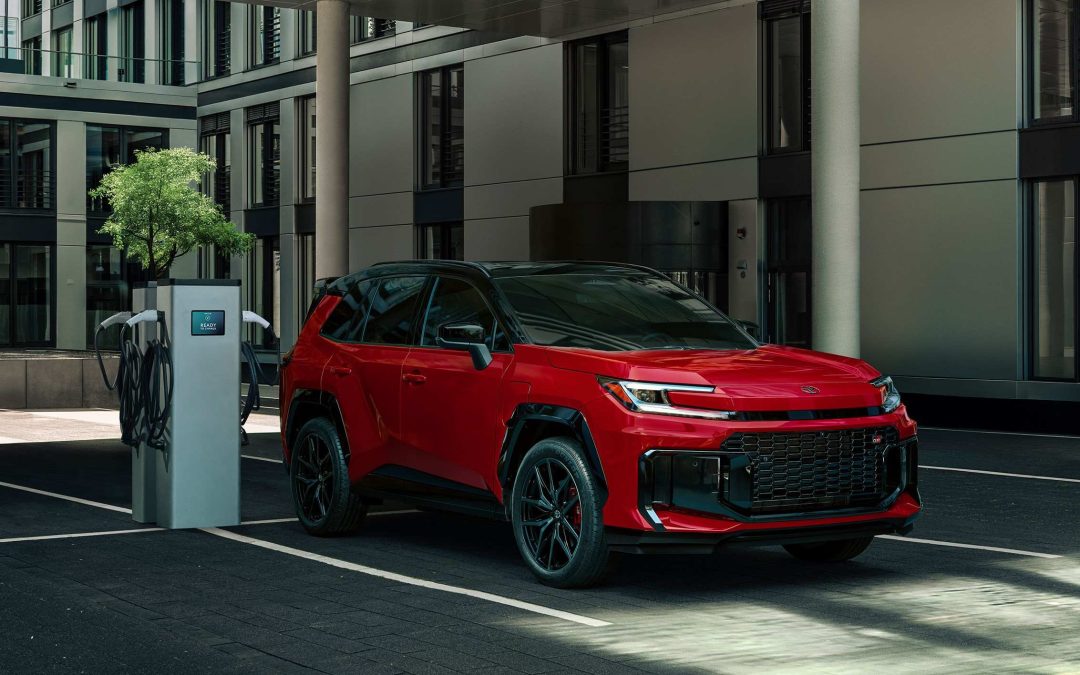
The all-wheel-drive, 324-hp 2026 RAV4 GR Sport is excessive, aggressive, exclusive, and over the top.

But where’s the boost in power?

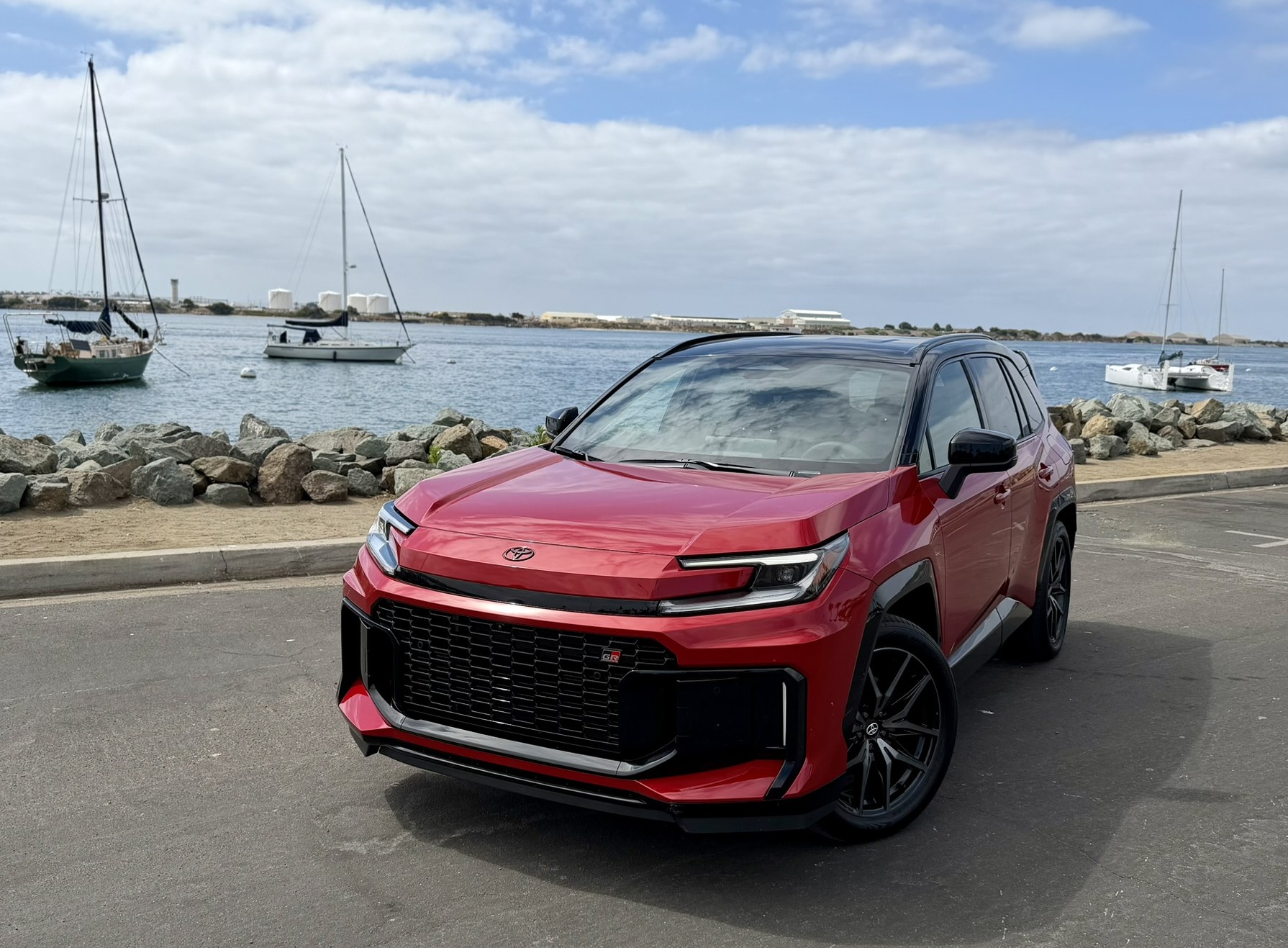
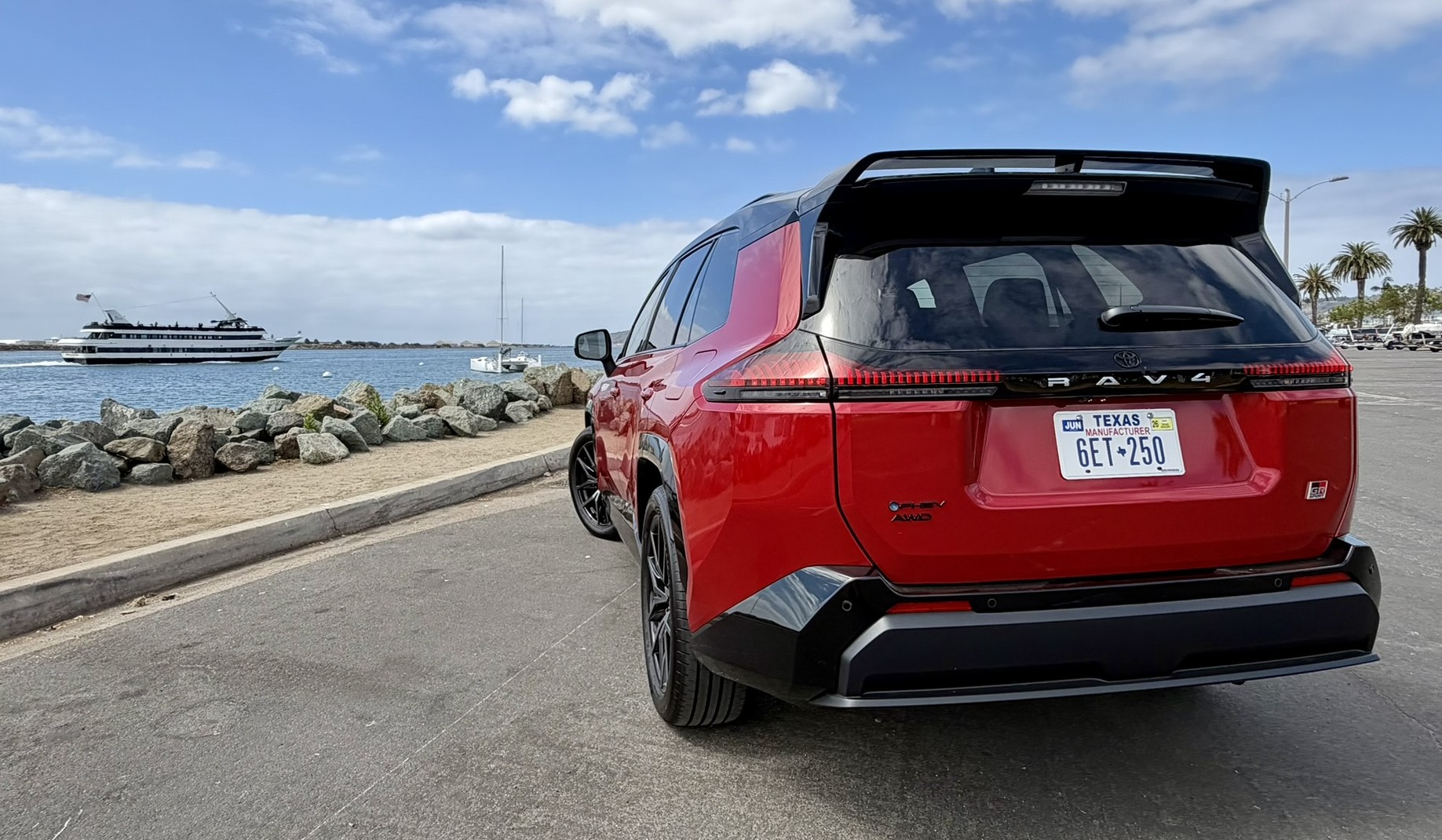
A two tone red and black RAV4 GR Sport is photographed next to the Shelter Island marine

The 2026 Toyota RAV4 GR Sport is practical, measured, and rewarding without consequences. (Photography by Mark Maynard or as credited)

Jump To Special Features

GR Sport vs. GR Line 
GR Sport Performance Tuning
The Gazoo Racing Influence
Plug-In Power and Fuel Economy
2026 RAV4 Plug-in Hybrid Pricing
Observations and Considerations
2026 Toyota RAV4 Limited AWD Specifications

BY MARK MAYNARD

The Toyota RAV4 GR Sport is a little devil with a halo. With all-wheel drive and a combined 324 horsepower, the plug-in hybrid GR Sport gets some trick engineering from Toyota Gazoo Racing. It’s a halo model because it is the top-line trim among the umpteen grades of the all-hybrid 2026 RAV4 lineup.

I don’t know who asked for a high-performance RAV4, but their wish is granted. Currently, the GR Sport is a loner in the mainstream compact SUV group. Most makers offer a sport trim, but nothing with motorsports DNA.

The GR performance icon traces its roots to Toyota Chair Akio Toyoda’s participation in the 24 Hours of Nürburgring. For a road-going SUV, GR engineers built on the endurance experience with hardware, lightweighting, and finesse.

More than an aesthetic package, the RAV4 GR Sport brings genuine mechanical enhancements to sharpen handling and driving dynamics. However, there is no performance lift! Its powertrain is the same as all 2026 plug-in RAV4s.

With 324 hp, the GR Sport achieves a manufacturer-estimated 37 mpg combined rating and an all-electric driving range of 42 to 48 miles. In my test week, I saw 48.3 mpg combined.

While its acceleration is brisk, it is not blistering. And I did anticipate more of that kickass fun as I experienced in the Toyota GR Corolla. Toyota cites a 0-60 mph acceleration time of 5.4 seconds in combined hybrid-EV mode. Professional tests by major automotive outlets have clocked 5.0-5.6 seconds.

GR Sport vs. GR Line

Toyota has few reservations about creating powerful sports cars, but the GR Sport line is a lower-tier performance option.

“The GR SPORT line is intended as a performance-focused trim within the RAV4 line,” a spokesman wrote in an email. “It received the input and collaboration from Toyota’s GAZOO Racing division for dynamic handling and passionate design.”

The RAV4 GR Sport differs from a GR model. A full-throated GR model is intended to be a standalone performance vehicle.

While the RAV4 GR Sport is the first use of the name in the U.S., there are many choices in other parts of the world. Below is a selection of the nameplates:

  • Corolla Cross GR Sport (Europe, Japan, Australia, Southeast Asia, South America)
  • C-HR GR Sport (Europe, Australia)
  • Yaris Cross GR Sport (Japan, Europe, Australia, New Zealand)
  • Land Cruiser 300 GR Sport (Japan, Middle East, Australia, South America, South Africa)

2026 U.S. Spec GR Models

Currently, there are three GR-engineered Toyotas in the U.S., with more on the way:

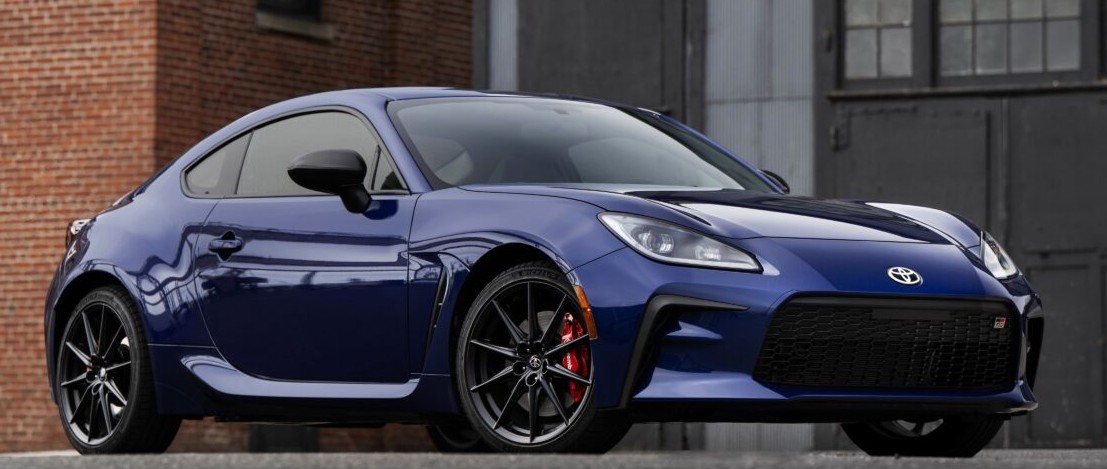
GR86 — $33,170 to $37,660, with a 228-hp 2.4-liter four-cylinder “boxer” engine; front-wheel drive.

A blue 2027 Toyota GR*^

A 2027 Toyota GR86. (Toyota USA)

GR Corolla — $41,815 to $47,860, with 300-hp 1.6-liter three-cylinder engine; all-wheel drive with automatic or manual transmission.

GRMN Corolla —  “Gazoo Racing tuned by Meister of Nürburgring” (“Gazoo Racing: Masters of Nürburgring). Available late summer 2026 with a starting price of $64,360, and limited to 730 cars worldwide; 300-hp G16E-GTS 1.6-liter, turbocharged and port-injected three-cylinder engine; all-wheel drive. Purchase includes a one-year driving program membership and performance-driving instruction.

2026 GR Supra MkV Final Edition — $59,595 to $70,645, with 382-hp 3.0-liter inline six-cylinder engine and manual or automatic transmissions. The GR Supra was codeveloped with the BMW Z4, which was discontinued due to slow sales.

More GAZOO Racing News

Next up from GAZOO Racing will be the V8-powered GR GT, a road-legal version of the GR GT3 race car. Official details are limited at this time, but the GR GT will be a two-seat, front-engine, rear-wheel-drive sports car “developed around a driver-first mission.” It will be powered by a 640-hp, 4.0-liter twin-turbo V-8, a single E-motor hybrid. Its eight-speed automatic transmission is rear-mounted. Pricing estimates place it around $300,000, and, curiously, this Toyota will be sold through Lexus dealers.

More GR GT information is here and here.

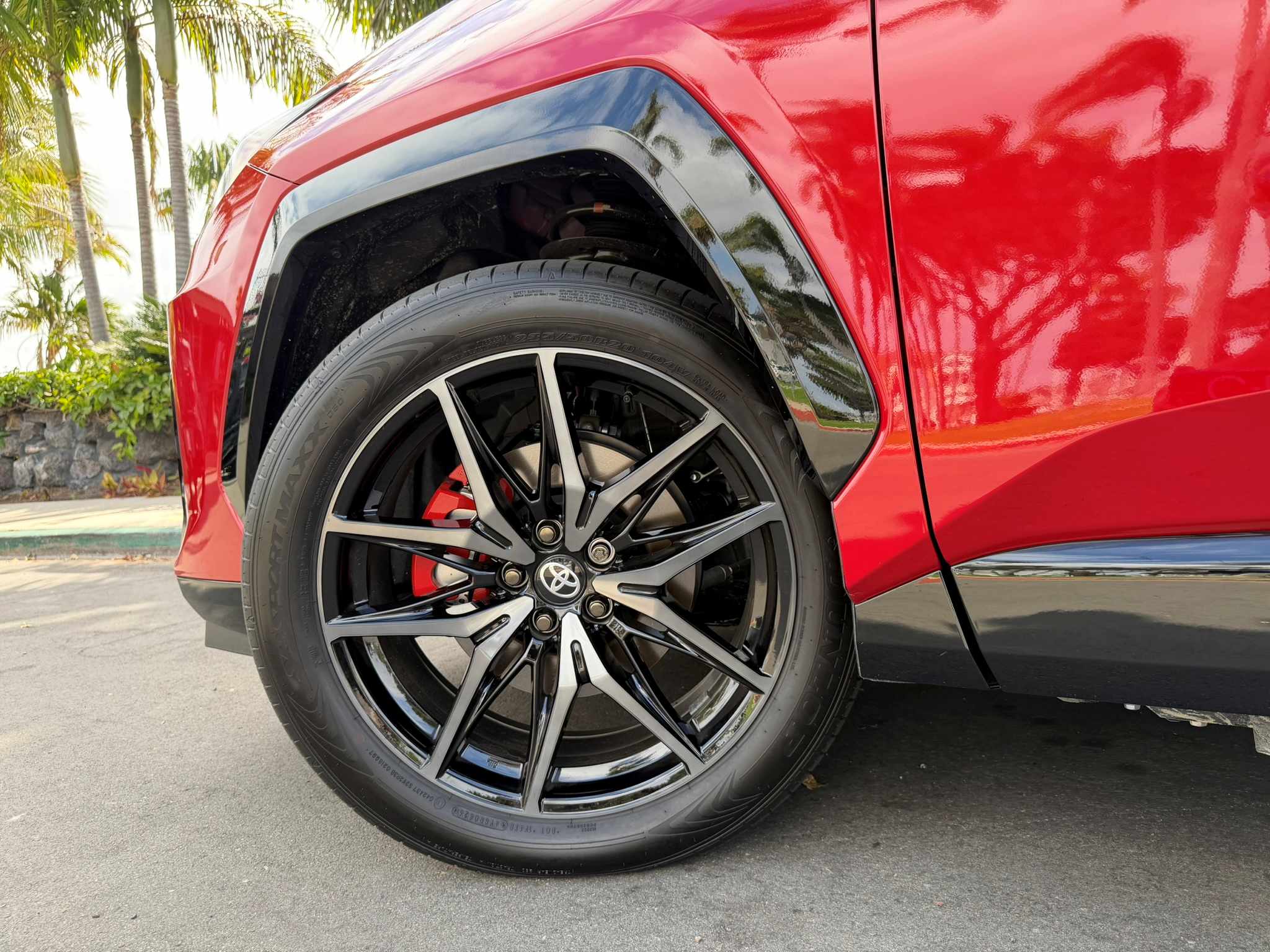
Looking at the driver side front tire. 20-inch wheels with Dunlop Sportmaxx summer performance tires.

The GR Sport rides on 20-inch wheels with Dunlop Sportmaxx summer performance tires.

GR Sport Performance Tuning

Key mechanical updates include:

Tuned Suspension: Special damper tuning, stiffer coil springs, and a front performance damper. I smiled as I drove at speed through lumpy four-way intersections with no bottoming out or unsettling rebound. The grippy 20-inch Dunlops tool through turns with no whining or squeal. For its sporty tuning, the GR Sport’s ride quality is very compliant and forgiving for occupants. And there is minimal head toss when transitioning speed humps and driveway turn-ins. Even the daily interstate commute is without monotonous drone, jiggle, or harshness.

Lower Center of Gravity: The ride height has been lowered by 0.59 inch, resulting in 7.5 inches of ground clearance. Also, placing the hybrid battery under the cargo area contributes to on-road stability. The electric power steering is tight and rewarding as the wheel unwinds, and it is the same on all RAV plug-ins.

Reinforced Frame: The rear suspension cross-member is reinforced to stiffen the chassis;

Performance Tires: The GR Sport rides on offset 20-inch wheels with Dunlop Sportmaxx summer performance tires. The lightweight wheels are approximately 4.8 pounds lighter than those on the standard RAV4 XSE model.

Braking Innovation: A new electronically controlled brake system and Vehicle Braking Posture Control (VBPC) reduce body roll during cornering. Pedal touch and feel is uncommonly refined in a mainstream vehicle, let alone a GR-tuned SUV.

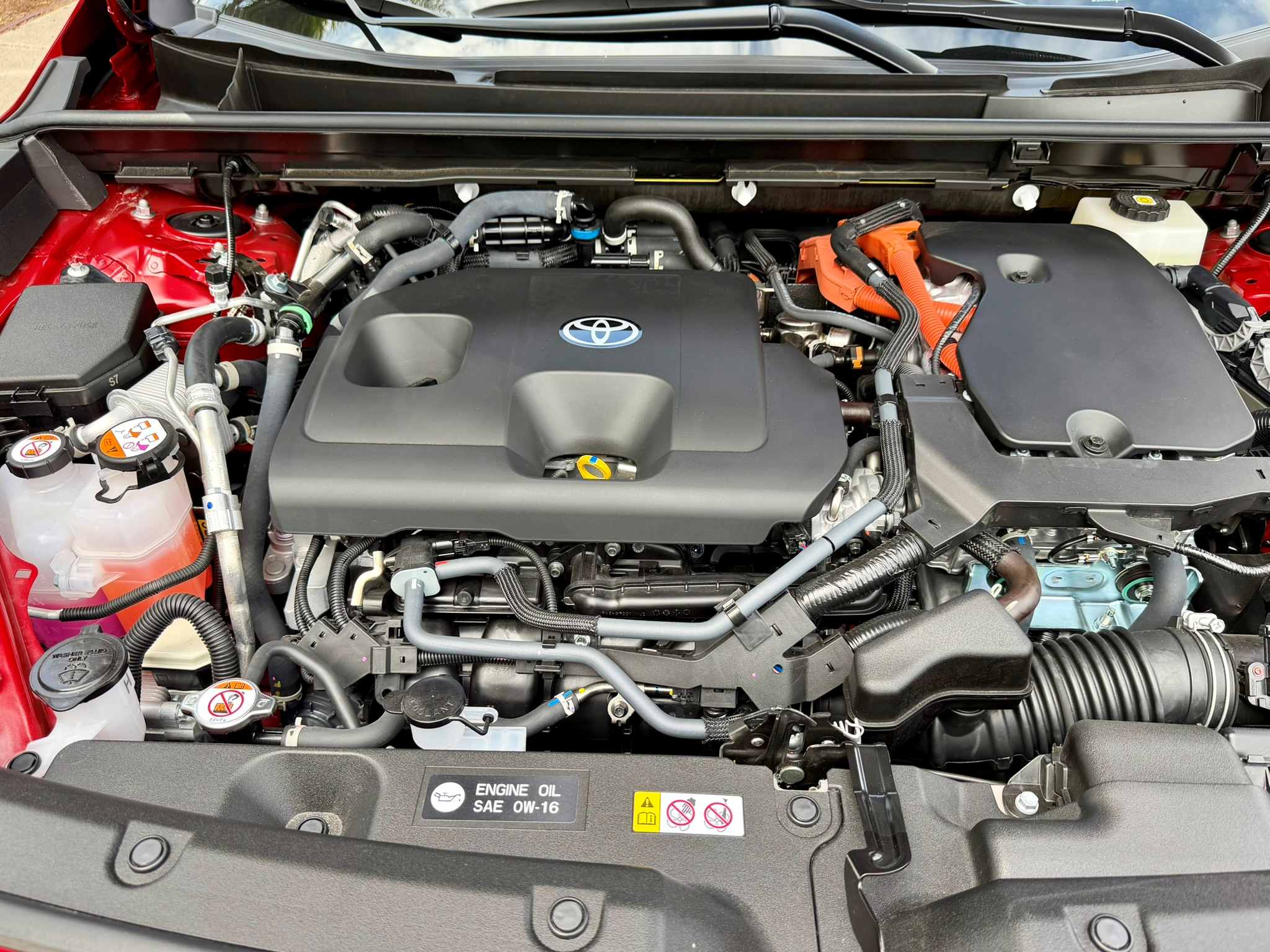
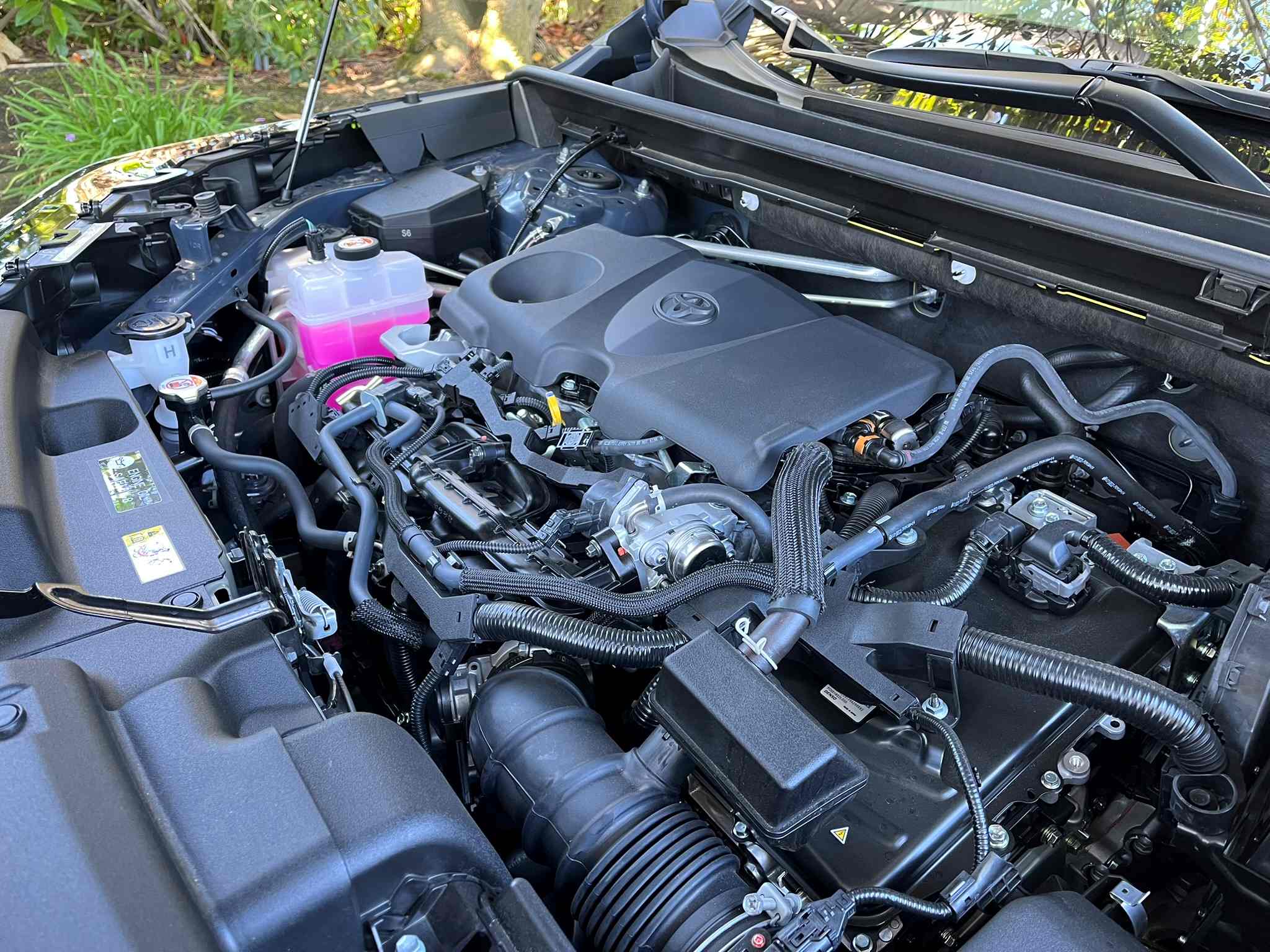
Looking into the engine bay at the RAV PHEV engine.

The plug-in hybrid engine in the GR Sport produces a net combined output of 324 horsepower. The system delivers 48 miles of EV range and 37 mpg combined.

RAV4 GR Sport Lightweighting

With the Gazoo Racing add-ons, the RAV4 GR Sport has the second lightest curb weight of the four trims:

SE: 4,435 lbs.

GR Sport: 4,430 lbs.

Woodland: 4,500 lbs.

XSE: 4,540 lbs.

On-Demand AWD

Rather than heavy mechanical driveshafts, the electronic on-demand all-wheel drive system uses a high-output Interior Permanent Magnet (IPM) electric motor.

Intelligent Torque Distribution

Toyota’s so-called Intelligent Torque Distribution system is proactive rather than reactive. Using data from wheel speed sensors, steering inputs, and throttle position, the system preemptively distributes torque to the rear axle.

According to Toyota, the system provides precise electronic control of front-to-rear torque distribution. Doing so allows the RAV4 to adapt to slippery road conditions or spirited driving without driver intervention.

GR Sport Functional Aerodynamics

The exterior design treatment is functional rather than purely cosmetic, Toyota says. The front fascia features a “GR Functional Matrix Grille” with active cooling ducts to manage airflow. A front lip spoiler, rear wing spoiler, and rear diffuser all help to balance downforce and reduce drag, Toyota says. The vehicle’s track is slightly wider due to aggressive fender flares, adding an inch to the overall width.

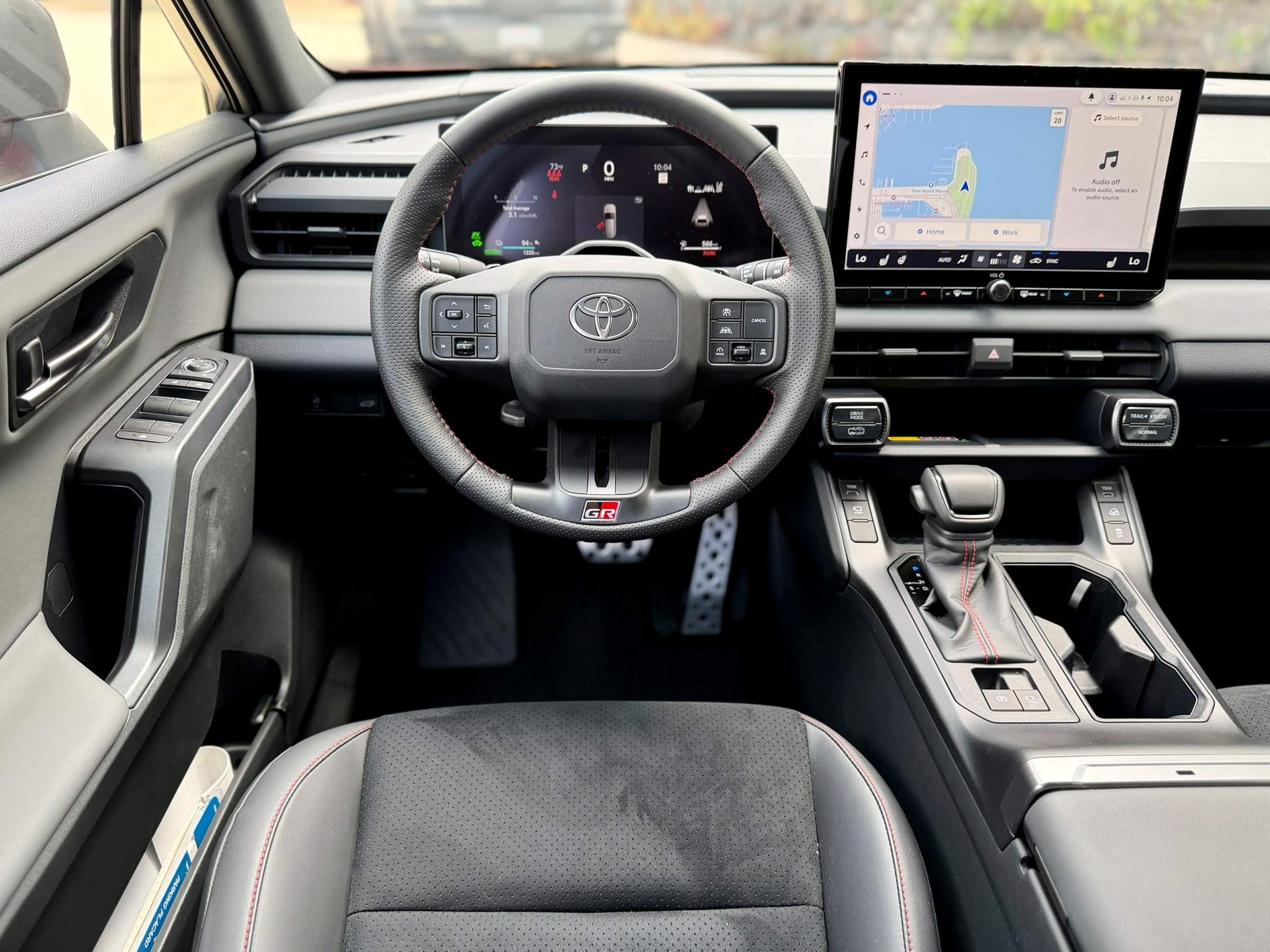
Looking at the driver area of the GR Sport

The leather-wrapped steering wheel includes sport paddle shifters.

The GR Influence

  • GR-designed rear bumper in piano black with sporty lower rear bumper valance;
  • Exclusive wide piano-black over-fenders;
  • Aggressive GR-designed front bumper with piano-black sport grille and active sport ducts;
  • GR-designed functional rear spoiler in piano black with piano-black sides;
  • Piano-black heated power outside mirrors with turn signal and blind spot warning indicators, and puddle lights. (also on the XSE);
  • Vertical LED front bumper accent lights (also on the XSE);
  • Red-painted brake calipers with GR logo;
  • 20-inch black alloy wheels with black pearl-machined finish and increased offset with black lug nuts;
  • Sport paddle shifters. (optional on XSE);
  • White ambient illumination for in-dash shelves (also on XSE);
  • Leather heated steering wheel with GR logo;
  • Leather shift boot w/red stitching with sequential mode;
  • Microsuede and SofTex-trimmed seats, heated (high-low) with lumbar support; 8-way power driver seat; 6-way manual front passenger seat with seatback pocket;
  • Aluminum sport pedals;
  • GR-branded front door scuff plates, front headrests, and interior elements.
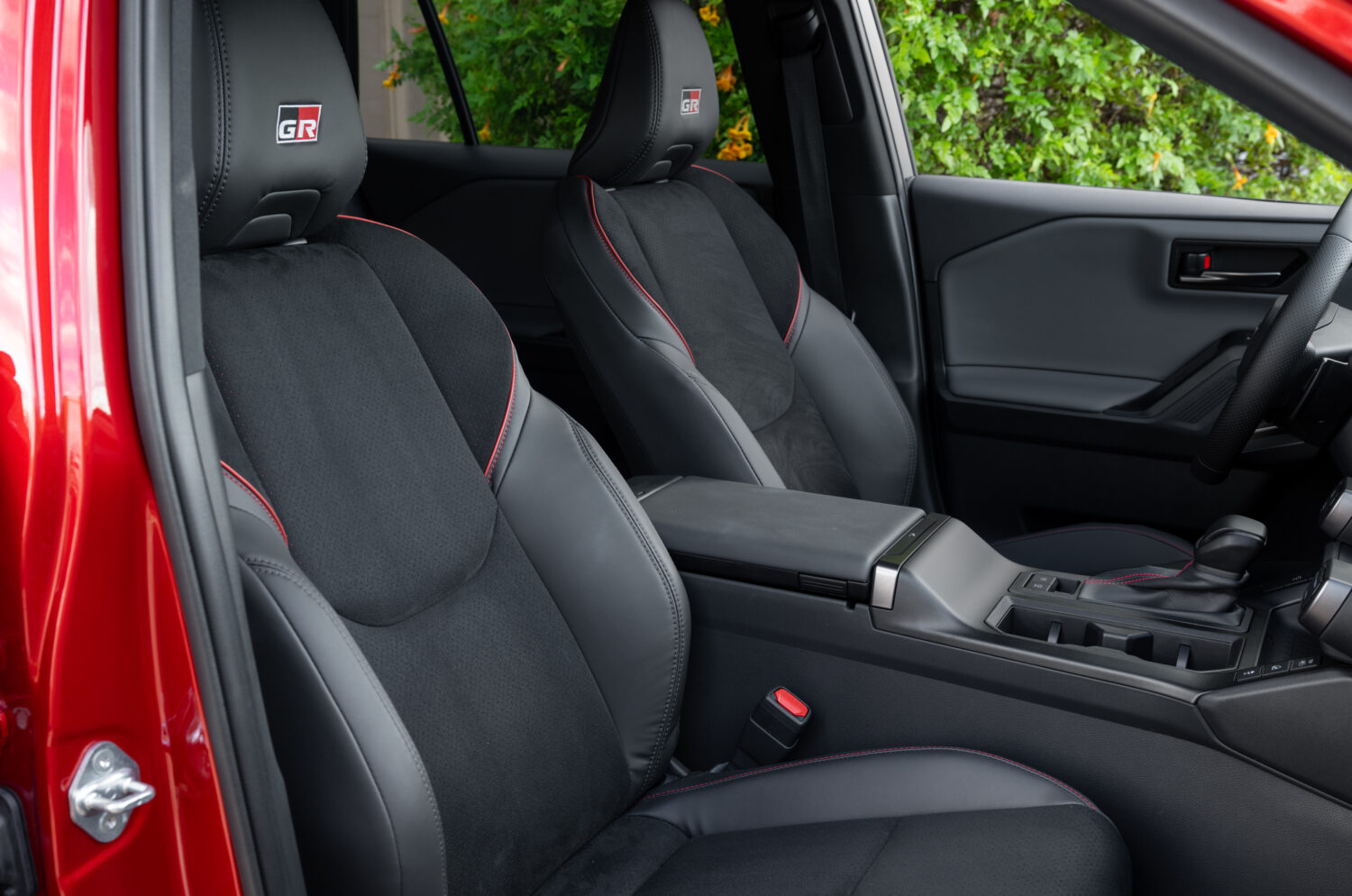
The GR Sport interior has “Brin Naub” synthetic suede and SofTex sport seats.

“Brin Naub” synthetic suede and SofTex sport seats. (Toyota USA)

GR Sport Interior Appointments

Inside, the sport seats are upholstered in “Brin Naub” synthetic suede and SofTex. The seats have wider (but not intrusive) bolsters to hold occupants in place during a backcountry run. The front seats are heated, and the driver has eight-way power adjustment. The front passenger seat has a manual height adjuster.

A 12.3-inch digital gauge cluster engages with a GR start-up screen. The six-speaker multimedia audio system has wireless Apple CarPlay and Android Auto capability. There is a single wireless charging pad (vs. dual pads in some hybrid RAVs) and five USB-C ports. The leather-wrapped steering wheel includes sport paddle shifters. Smart key locking includes push-button start.

Ride quality and cabin quiet are not as refined as in the RAV4 Limited. But the cabin noise level remains comfortable for easy conversation at highway speeds.

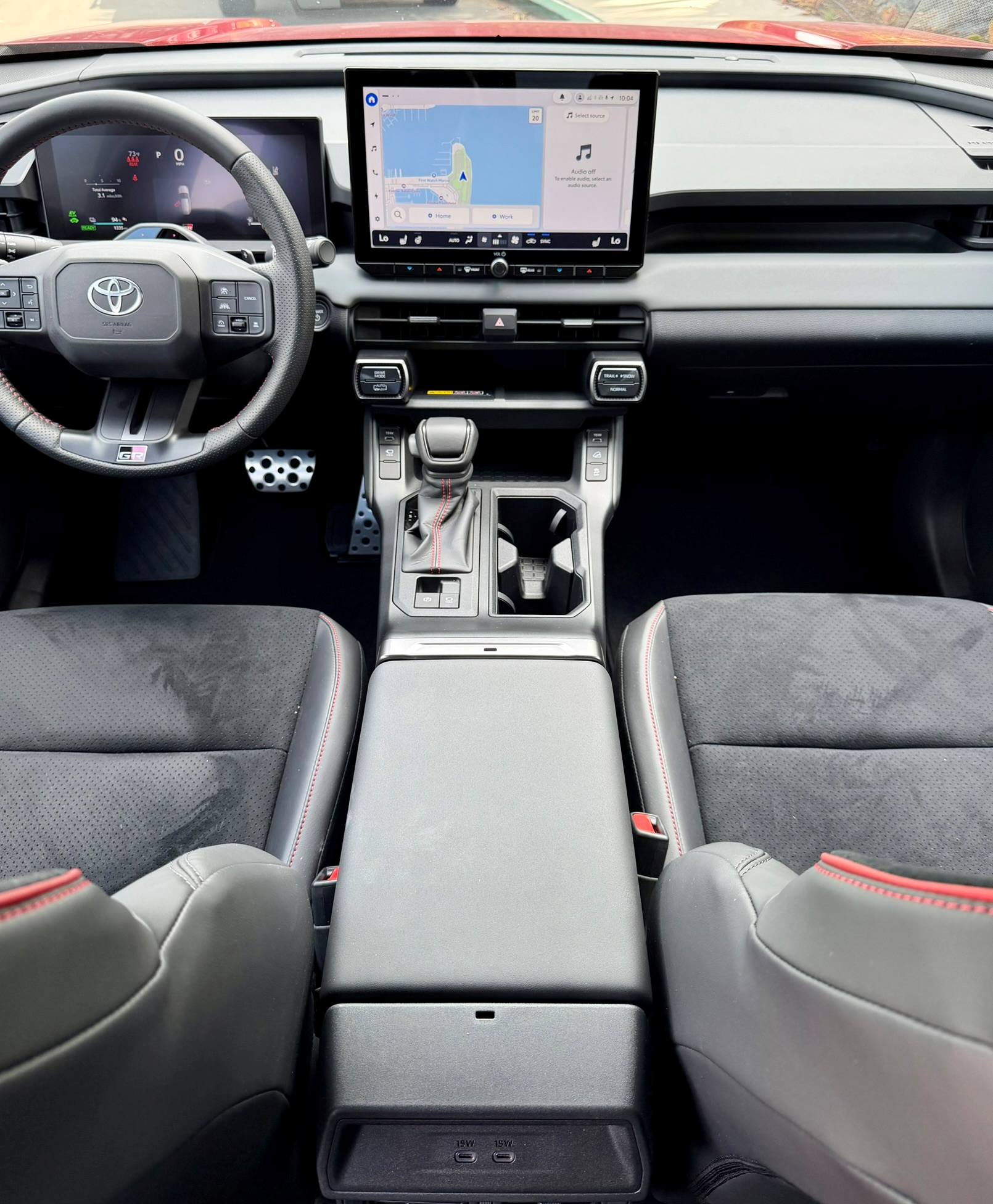
Looking at the Center console from back seat.

Wider bolsters hold occupants in place during a backcountry run.

Other RAV4 GR Sport Standard Features

  • Auto-dimming rearview mirror with HomeLink garage door opener;
  • 7 kW onboard charger. (Also on SE);
  • Heated leather-trimmed tilt-telescopic three-spoke steering wheel with silver accents.  Redundant steering wheel controls can be used to access the gauge array (or Multi-Information Display), Bluetooth hands-free phone, voice-command, Dynamic Radar Cruise Control,  Lane Departure Alert,  and Lane Trace Assist;
  • Rain-sensing variable intermittent windshield wipers with de-icer function and intermittent rear window wipe;
  • 12.9-inch Toyota Audio Multimedia with six speakers, wireless Apple CarPlay and Android Auto compatibility, and a 3-month SiriusXM 360L trial subscription. See toyota.com/connected-services for details. (Also on the XSE)
  • Smart Key System on front doors and liftgate with push-button start; remote keyless entry system with lock, unlock, and panic functions; power liftgate; and remote-illuminated entry.
  • Of interest is the new built-in drive recorder (on all RAV4 grades), which captures video from exterior cameras. No more having to buy the optional CarMate camera systems, saving up to $570.
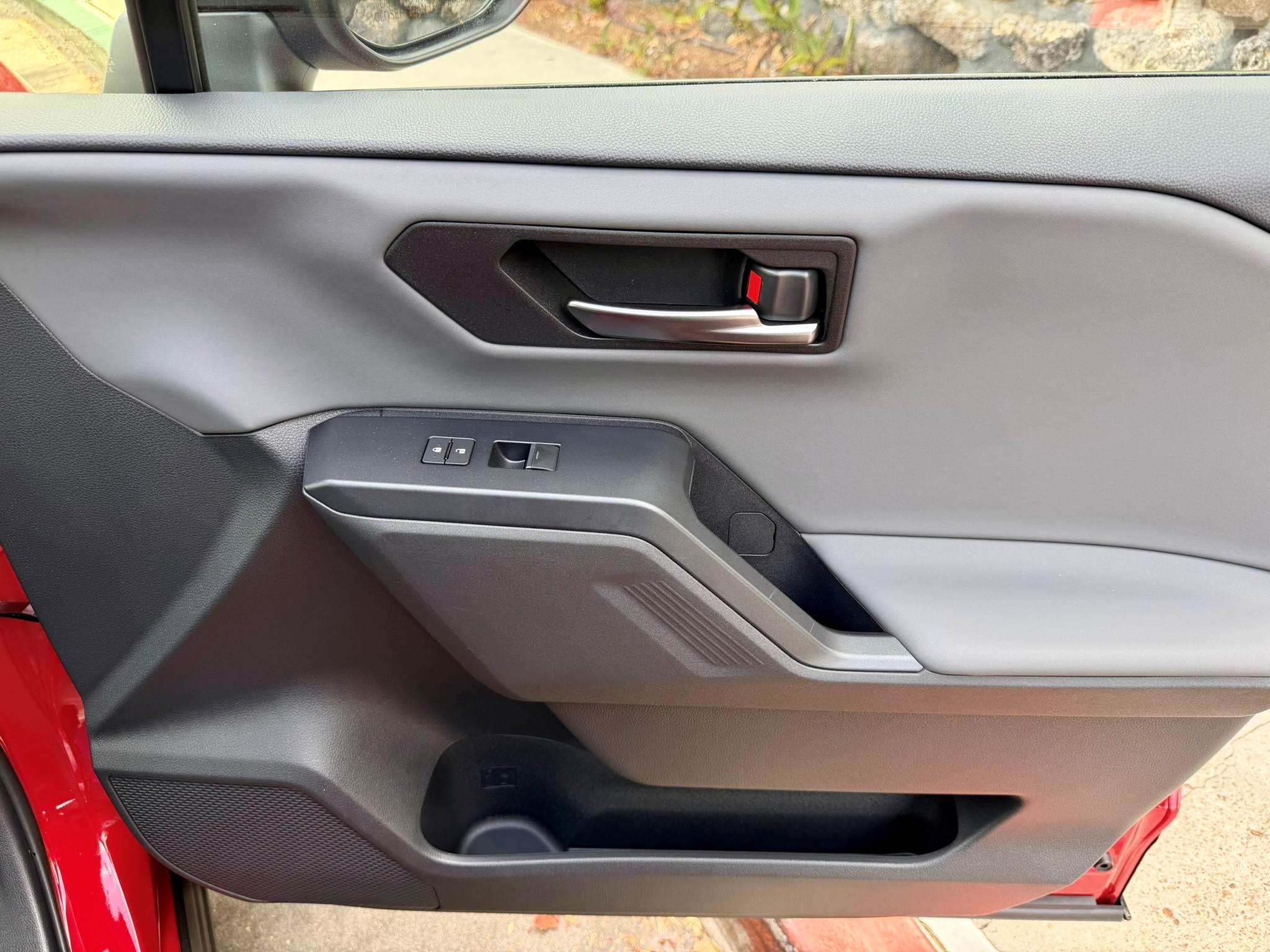
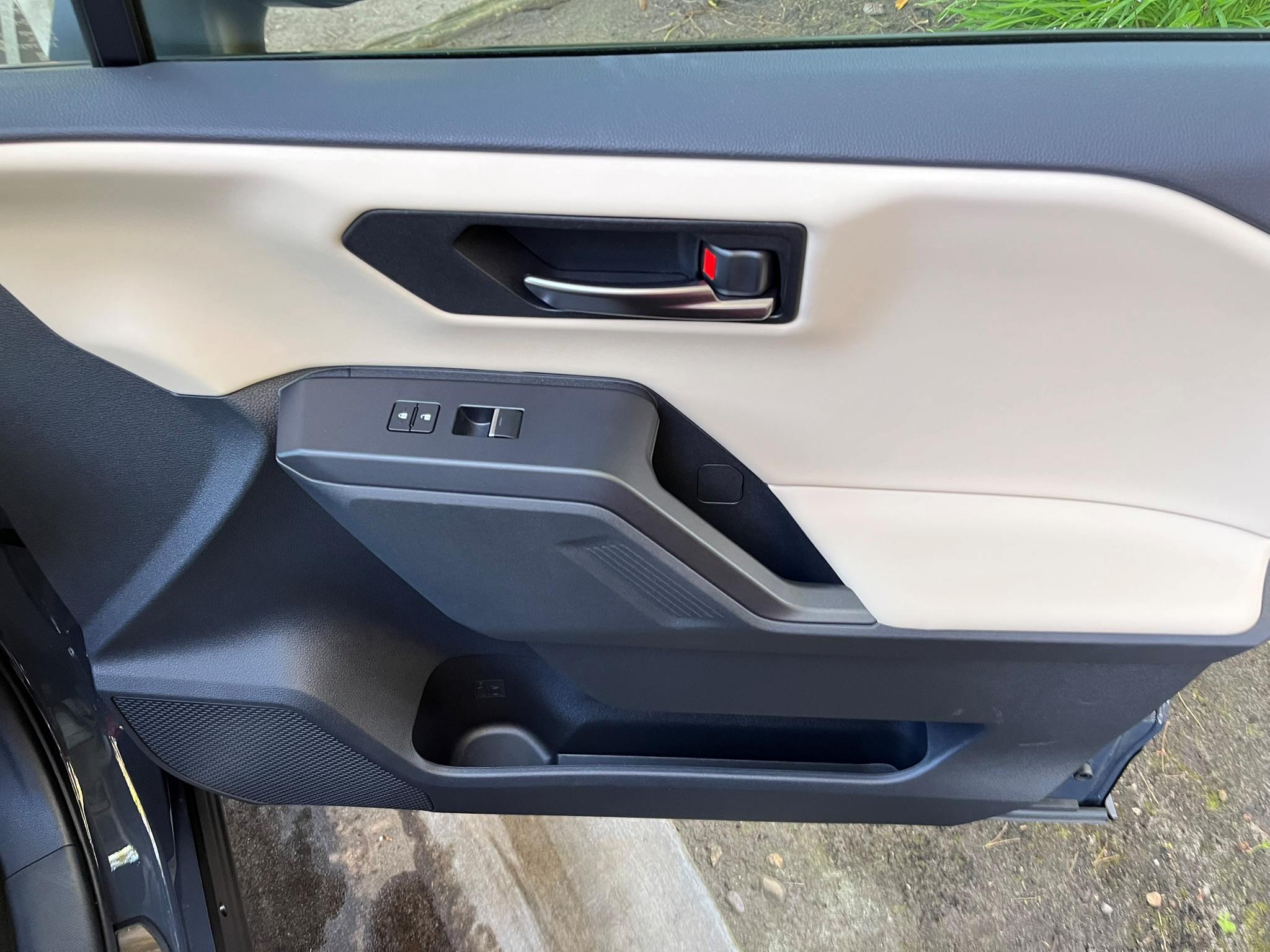
Looking at the front passenger side door panel with a strong grab handle and storage

The door grab is at a smart and convenient leverage point.

Plug-In Power and Fuel Economy

The heart of the plug-in hybrid system is the 2.5-liter four-cylinder engine, two front electric motors, and a rear motor. The result is a net combined 324 horsepower. The electric drive motor (MG2) contributes 203 horsepower and 201 foot-pounds of torque; the rear motor adds another 91 lb.-ft. To support the added power and torque, Toyota uses silicon carbide semiconductors in the front axle. This bit of technology is used to miniaturize components and reduce energy loss.

All RAV4 PHEV models have the same powertrain. But, oddly, the plug-ins have no dedicated braking-regeneration mode, but the hybrid models do.

Performance: 324 net combined hp is a 22-hp increase, with 315 foot-pounds of torque. However, Toyota does not specify the rpm at which torque peaks, and low-end torque provides the launch for the 0-60 time.

EV-Driving Range: The performance-tuned GR Sport delivers 42-48 miles of EV range. When the battery range is used up, the engine switches to hybrid mode with no discernible loss of performance.

Mileage: Up to 41 mpg combined in hybrid mode, using 87 or higher octane fuel.

Hybrid Performance Modes

Every RAV4 has selectable drive modes, whether hybrid or plug-in hybrid:

NORMAL: Factory default. All systems are calibrated for balanced, everyday driving;

ECO: Helps lower fuel consumption during trips that involve frequent acceleration and braking;

SPORT: Throttle and steering are more responsive, and transmission shifts at higher rpms;

CUSTOM: Adjusts vehicle systems to the driver’s preferred settings.

EV Mode: The RAV4 Hybrid EV mode enables battery-only driving for short distances at low speeds. How far depends on certain conditions, such as battery charge level. EV mode is useful for navigating parking lots and indoor parking garages, and for creeping along in commuter traffic.

PHEV DC Fast Charging

Perhaps the most significant 2026 upgrade is the introduction of DC fast charging, a feature uncommon in plug-in hybrids. Charging from 10 percent to 80 percent takes around 30 minutes, Toyota says. The RAV4 SE and GR Sport use a 7-kW charger with a standard J1772 port. However, the GR Sport is not wired for DC fast-charging, such as at a Level 3 fast charger. Level Two charging (240 volt) will take approximately 4 hours to reach 80 percent capacity.

All models include a dual-voltage charging cable compatible with standard 120v and 240v home outlets.

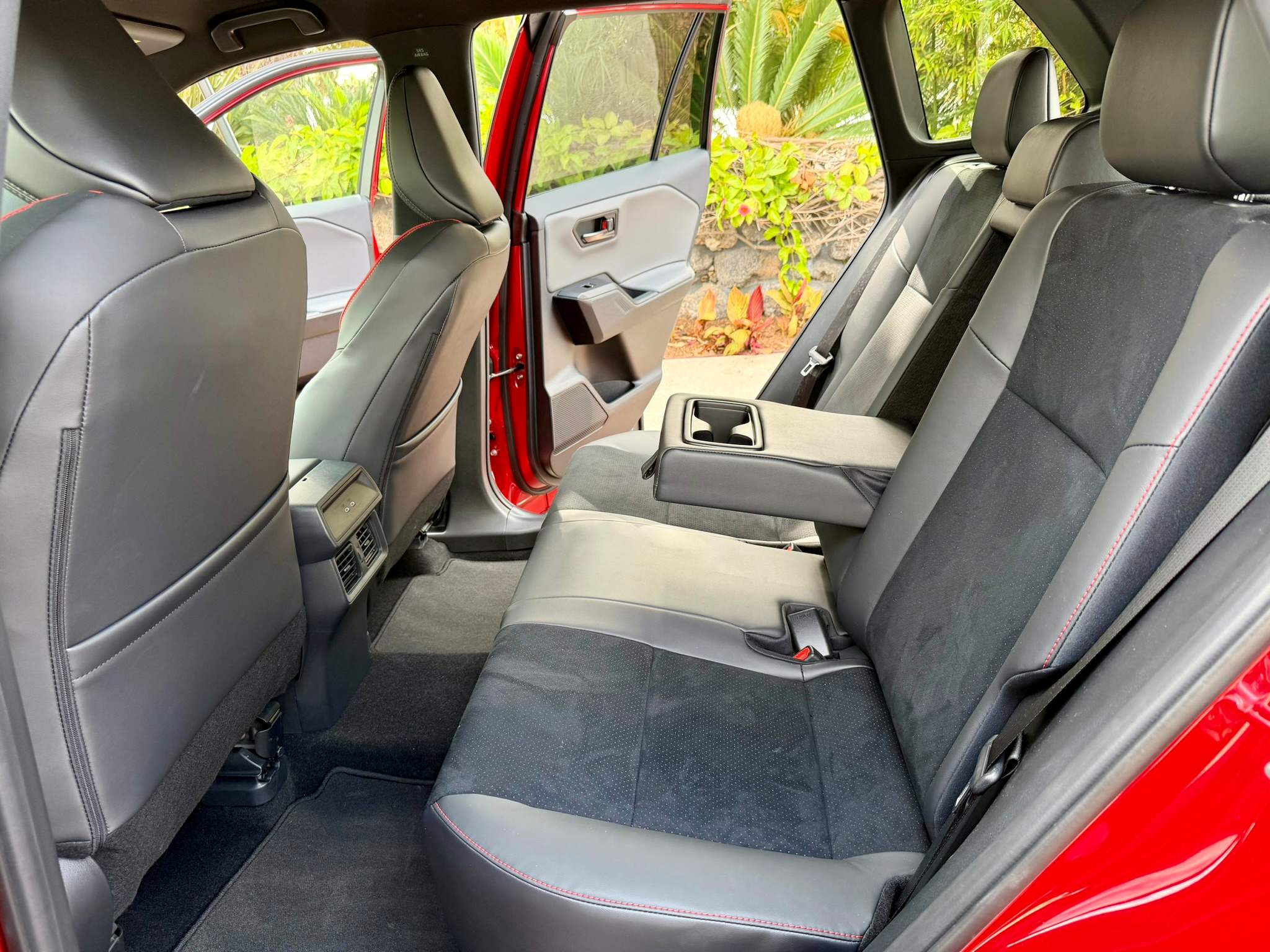
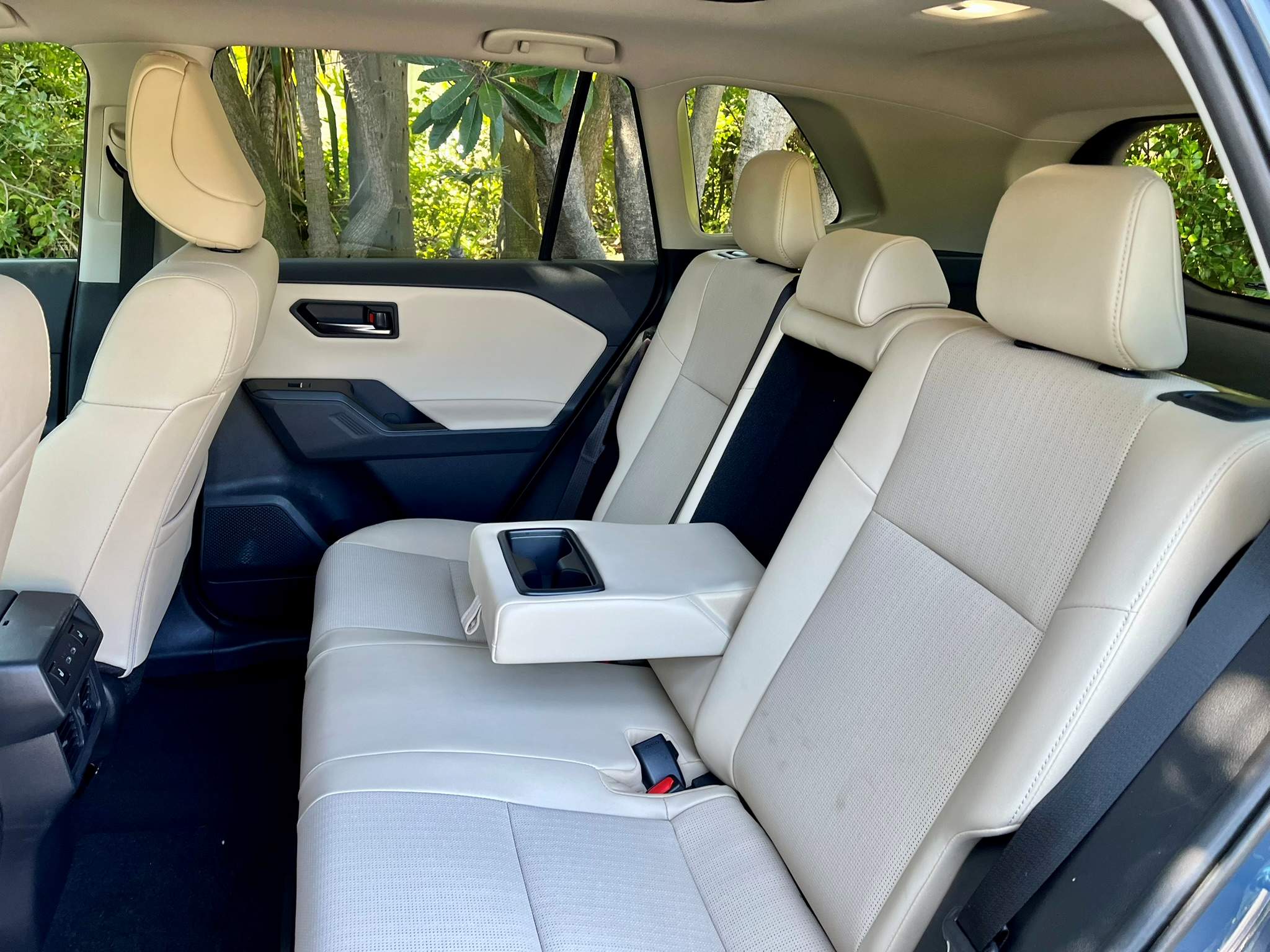
Back-seat legroom of 37.8 inches may be slightly shorter than that of some competing SUVs.

A flat floor and reclining seatbacks help back-seat legroom of 37.8 inches.

Back Seat Space

By the numbers, competing SUVs might have an inch or two more legroom, but is that finessed with a shorter bench? The GR Sport back seat has 37.8 inches of legroom, which is comfortable for adults, with good footroom under the front seats.

The seatbacks have a few inches of recline, and a low transmission-exhaust hump provides more footroom in the center position.

The square roofline provides good headroom of about 38 inches without a moonroof, which is unavailable on the GR Sport.

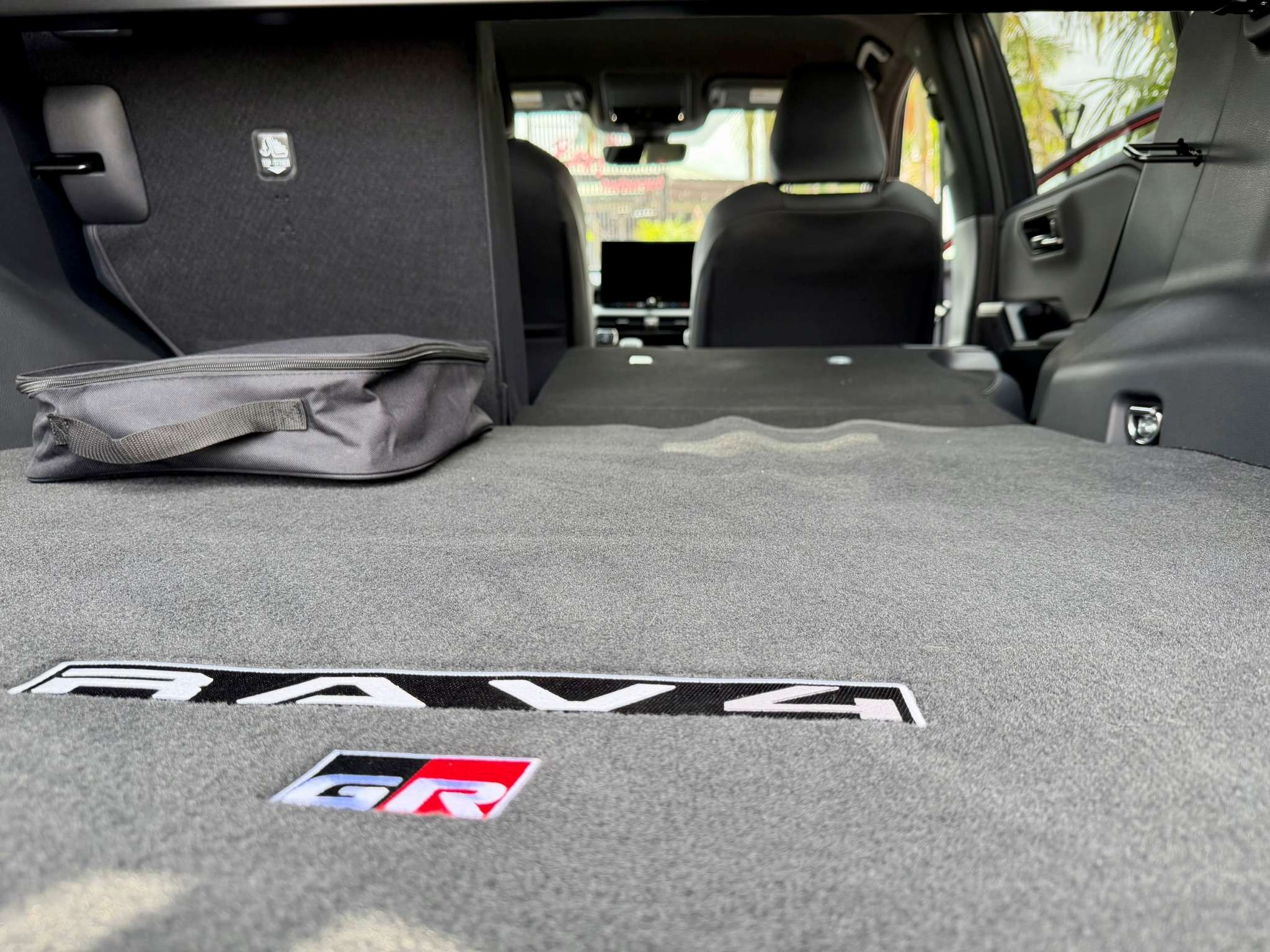
Looking into open cargo space from a low angle.

A newly designed rear seatback folds completely flat. There is up to 6 feet in length

Cargo Capacity

Despite the redesign and new hybrid components, the interior utility remains nearly identical. The cargo floor in the GR Sport is slightly higher than in the hybrid models, to accommodate the larger hybrid battery. Fold the seatback for 6 feet in length, and a wide 45 inches of width at the entry.

Toyota Safety Sense 4.0

In addition to eight air bags, every 2026 RAV4 is equipped with the latest Toyota Safety Sense (TSS 4.0) suite. The system was updated with hardware improvements and enhanced detection capabilities. TSS 4.0 technologies include:

PDA Proactive Driving Assist: Provides gentle braking and steering support for distance control in traffic;

PCS with PD — Pre-Collision System with Pedestrian Detection: Enhanced detection of vehicles, pedestrians, bicyclists, and motorcyclists;

DRCC Full-Speed Range Dynamic Radar Cruise Control: Adaptive cruise control capable of operating across the full speed range;

LTA — Lane Tracing Assist: To help keep the vehicle centered in its lane while using DRCC;

RSA — Road Sign Assist: Reads and displays road signs, such as speed limits.

Among other standard safety features are a blind-spot monitor with rear cross-traffic alert and a rear-seat reminder system.

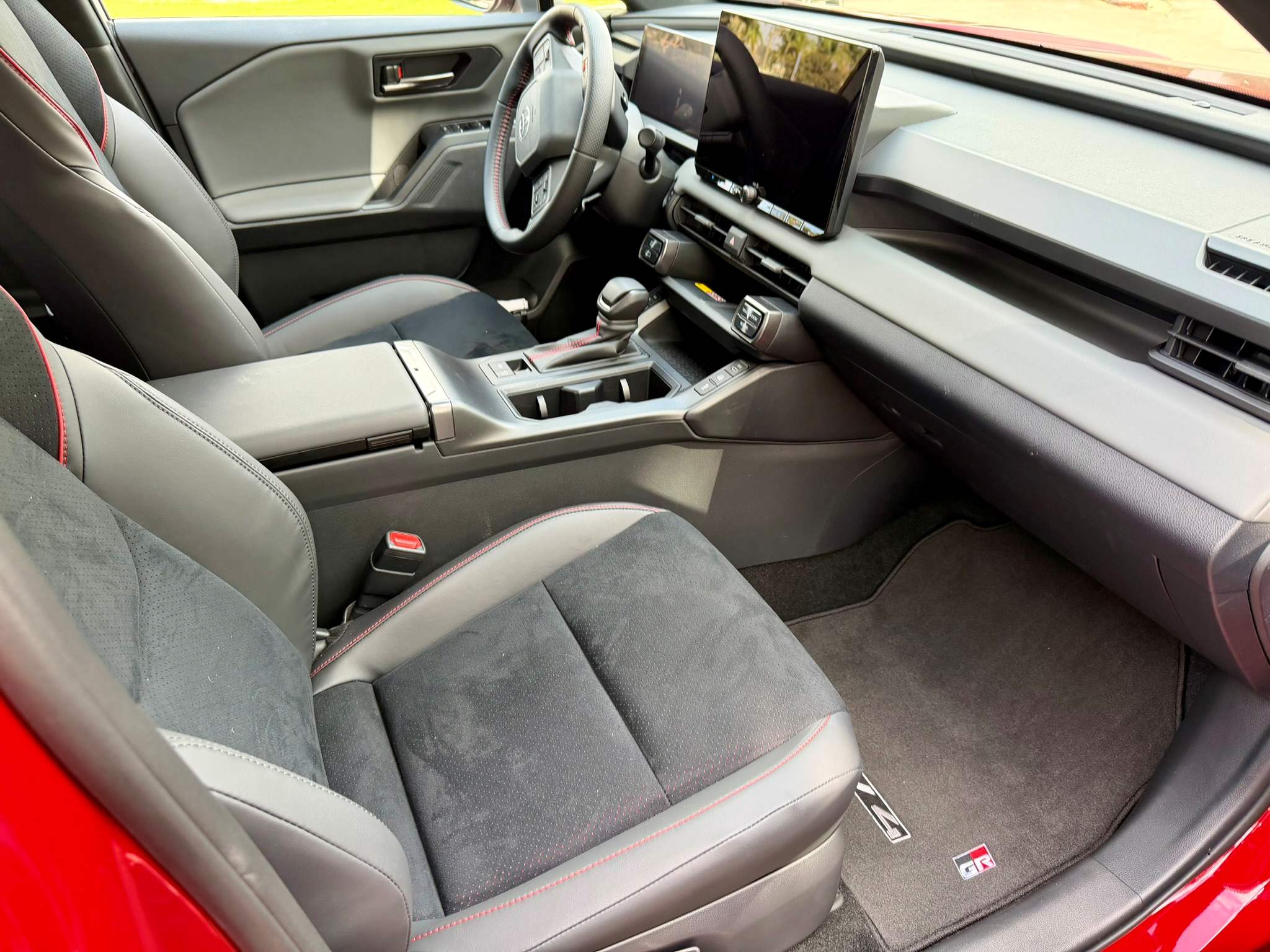
Looking into the passenger side front seats

While the driver’s seat has eight-way power adjustment, the passenger seat is manual with a lever pump for height.

2026 RAV4 Plug-in Hybrid Pricing

2026 RAV4 Plug-in Hybrid Starting Prices

There are four trim levels (grades) of 2026 RAV4 plug-in hybrids, all with standard all-wheel drive:

SE: $43,095

XSE: $48,795

Woodland: $46,895

GR Sport: $50,095.

Today’s GR Sport tester cost $51,160 with two options: two-tone Supersonic Red and Midnight Black paint ($975) and black chrome wheel locks ($90).

*Retail starting prices include the $1,595 freight charge from Aichi, Japan.

Check current pricing and options here.

Toyota Warranty Coverages

For the powertrain and key battery systems, Toyota’s limited warranty terms are extensive:

Hybrid Component Coverage: Coverage for hybrid components lasts up to 8 years or 100,000 miles, whichever comes first. This applies to repairs needed to correct defects in materials or workmanship.

Hybrid Battery Coverage: The core hybrid battery is covered for 10 years or 150,000 miles, whichever comes first. This coverage is transferable to subsequent owners.

Powertrain Coverage: The conventional powertrain warranty remains at 5 years or 60,000 miles.

Standard new-vehicle protection also applies:

Basic Warranty: 3-years/36,000-miles limited warranty covers all vehicle components other than normal wear and maintenance items.

Corrosion Warranty: 60 months with no mileage limitation.

ToyotaCare: Normal factory-scheduled maintenance is covered for 2 years/25,000 miles. Roadside assistance is included for 2 years and unlimited mileage.

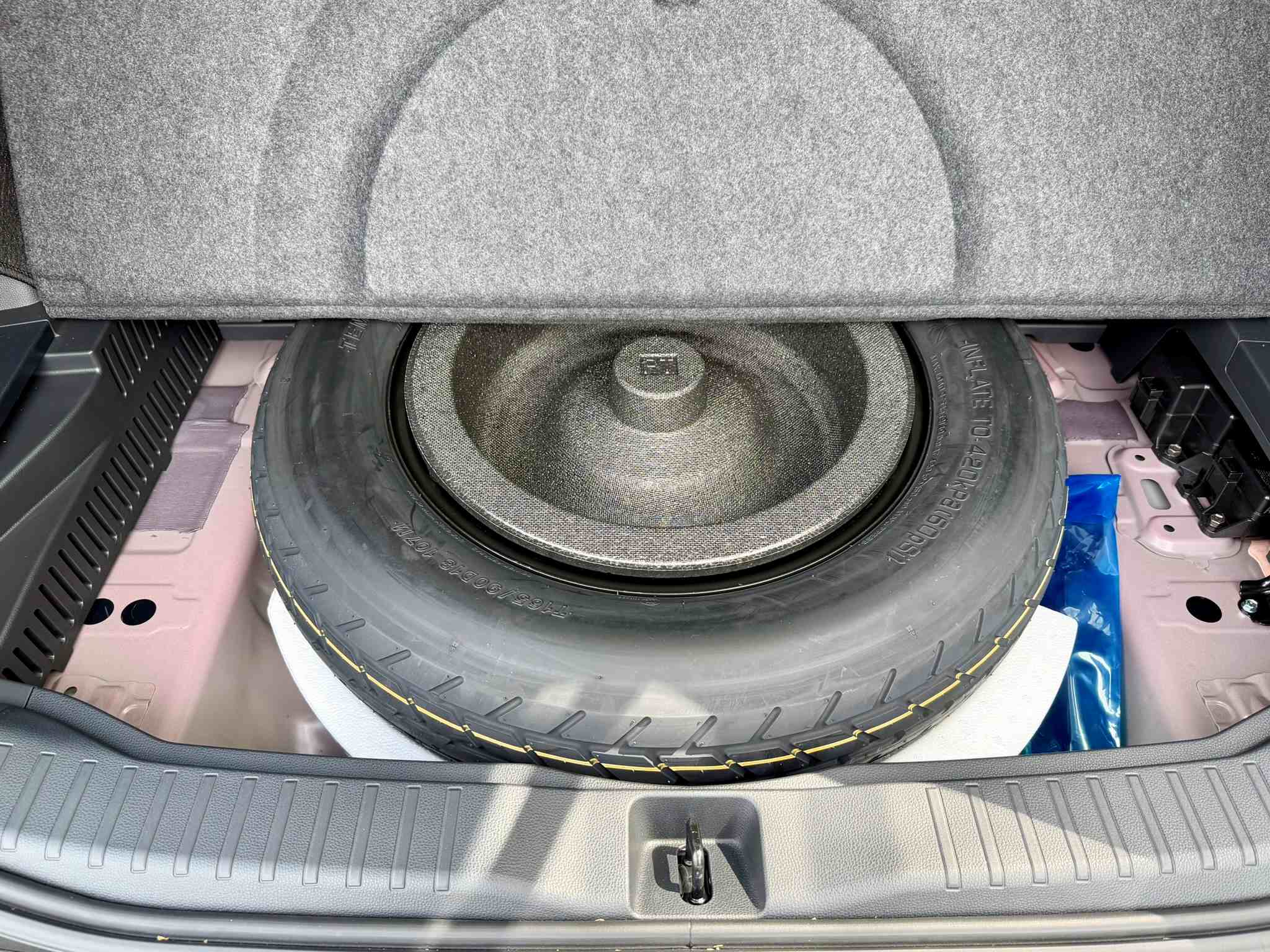
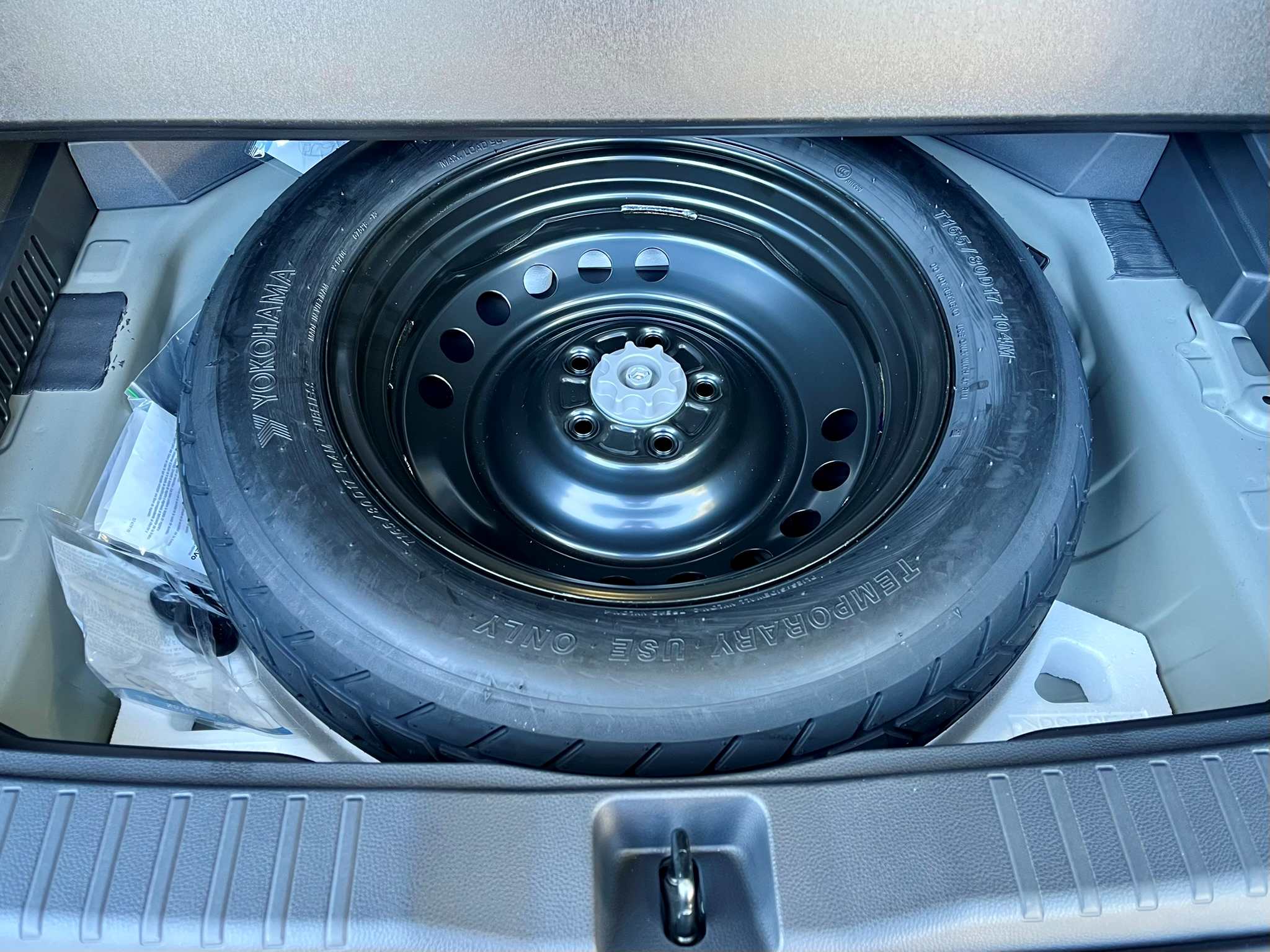
Looking at the temporary spare tire under the cargo floor

Behold, a temporary spare rather than an inflation system. However, the spare is 18 inches vs. 20-inch tires on the GR Sport.

Observations and Considerations

Toyota appears to have gone all in on the redesign and marketing of its 2026 RAV4, and for good reason. In the United States, 42 compact or subcompact SUV models were available for sale in 2025. The compact-class RAV4 is Toyota’s top-selling model. It was also the third-best-selling vehicle in the U.S. in 2025, behind the Ford F-150 (No. 1) and the Chevrolet Silverado.

Because the redesigned RAV is so well done, it makes an even better GR Sport.

Its equipment list is slightly toned down to meet an agreeable price point and lower curb weight. For example:

  • No memory presets for the driver’s seat;
  • No moonroof option;
  • No roof rail cross bars;
  • And just one wireless charging pad (though there are alternate USB charging ports).

I’m not sure if there is a certain buyer profile for the GR Sport. It seems a curious marketing choice not to add more horsepower, even at the cost of some fuel economy. Isn’t that expected of a GR model?

The 2026 RAV4 GR Sport is practical, measured, and rewarding, but it is not as exciting to drive as it is to look at.

For buyers who want plug-in performance, the RAV4 XSE plug-in might be more popular. At least until the Toyota Nation calls for a full-throated RAV4 GR!

Looking at a rear three quarter view of GR Sport parked along the marina with a sailboat in the background

The RAV’s wider, stouter rear end is accented by tech-forward LED taillights.

2026 Toyota RAV4 GR Sport Specifications

Body style: 5-door, 5-seat all-wheel drive compact SUV

BY THE NUMBERS

Fuel tank: 14.5 gallons

Cargo space: 33.5 cubic feet (behind back seat)

Front head/leg room: 37.7/41 inches

Rear head/leg room: 39.5/37.8 inches

Length/wheelbase: 181.8/105.9 inches

Width/height: 73*/65.4 inches (*with antenna)

Ground clearance: 7.5 inches

Curb weights: 4,430 lbs.

Turning circle: 37.4 feet

CHASSIS COMPONENTS

Brakes: front, 12.9-inch power-assisted ventilated discs; rear, 12.4-inch ventilated discs; electronic parking brake

Steering: rack-mounted parallel-type, electric power steering GR-tuned power steering; turning circle, 37.4 ft

Tires-wheels: Standard aluminum alloy wheels, 20-inch 235/50; 18-inch temporary spare

Suspension: Independent MacPherson strut front suspension with stabilizer bar; multi-link rear suspension with stabilizer bar; GR-tuned dynamic front performance crossmember dampening brace; GR-tuned reinforced rear suspension crossmember braces

PRICING

RAV4 GR Sport base price: $50,095, including $1,595 freight charge; price as configured $51,160

Options on test vehicle: two-tone Supersonic Red and Midnight Black paint, $975; black chrome wheel locks, $90

Where assembled: Aichi, Japan

2026 Toyota RAV4 Limited Review

2026 Toyota RAV4 Limited Review

 The 2026 Toyota RAV4 is a good, honest compact SUV that emphasizes function and utility with refinement to inspire pride of ownership

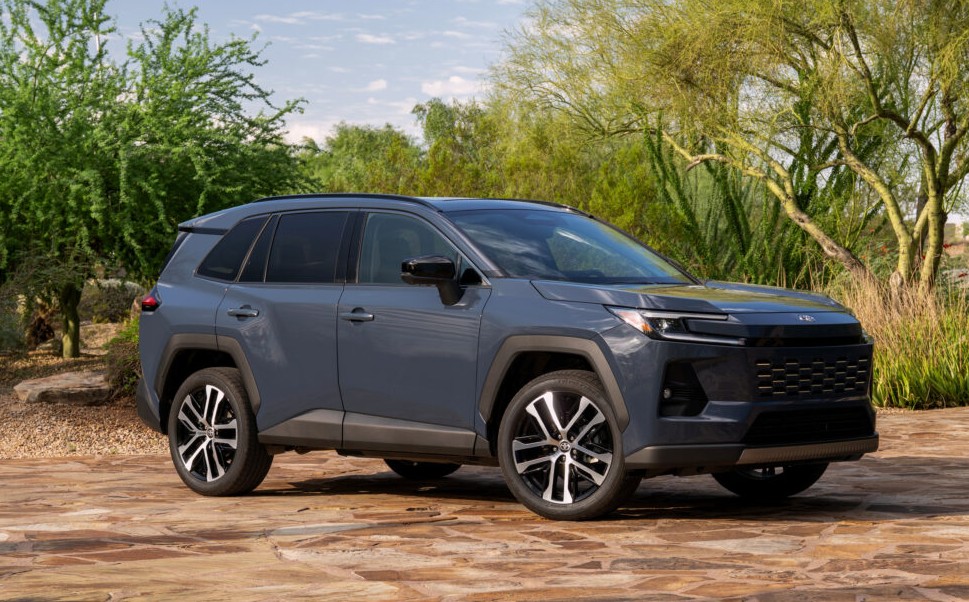
a 2026 RAV4 posed outside with trees in the background

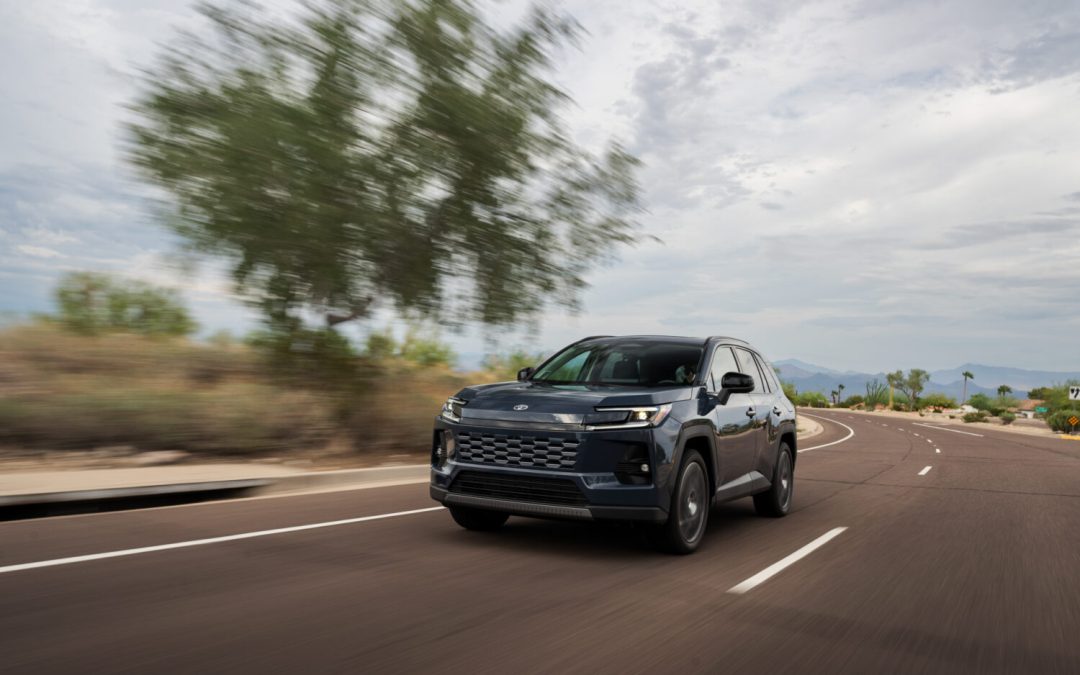
Far from its 1996 origins as a Corolla-based compact, the 2026 Toyota RAV4 is much evolved for its sixth generation. (Photography by Mark Maynard or Toyota USA)

Jump To Special Features

3 RAV4 Personalities
2026 RAV4 Pricing
Make Mine the Limited
10 Standout Features
Competing Hybrid Small SUVs
RAV4 Hybrid and New Vehicle Warranties
Observations and Considerations
2026 Toyota RAV4 Limited AWD Specifications

BY MARK MAYNARD

Forget everything you remember about the rattle-and-hum Toyota RAV4s of the past. As a former owner of a coarse-but-capable 2008 model, I expected the usual incremental updates for 2026. Instead, Toyota handed us a complete revolution: an all-hybrid lineup ranging from sensible daily drivers to a near-luxury cruiser and a rowdy-looking 324-horsepower GR Sport.

Perusing the press materials, the redesign would be an astounding improvement — from interior decor to drivability and ride quality. Too often, makers’ marketing perspectives do not always meet reality. However, for this sixth-gen RAV, the finished product shows complete communication among the various design and engineering groups. Their effort elevates the RAV4 to a level I was not expecting, and I am a past owner of a 2008 RAV4 — coarse but capable at best.

Far from its 1996 origins as a Corolla-based compact, the 2026 Toyota RAV4 is much evolved. Its exterior styling presents a solid stance, punching forward with what Toyota calls a “hammerhead” front end. To me, it is more of a robot face with sharp tuning-fork headlights. The side profile stands out with angular fenders and a low, contoured hood for improved driver sightlines. The rear end styling is creatively comprehensive and balanced. The broad spread of LED taillights set off the wider and stouter rear end.

3 RAV Personalities

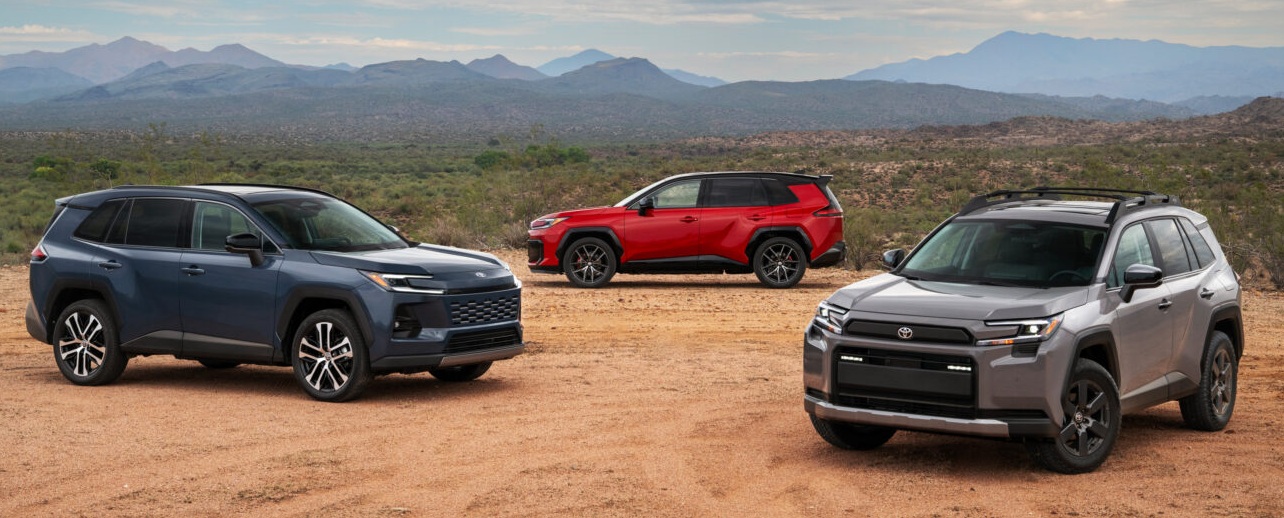
The 2026 Toyota RAV4 has 3 personalities: Core (left), Sport (center), and Rugged.

Three personalities for RAV4: Core (left), Sport (center), and Rugged. (Toyota USA)

For 2026, the RAV4 offers three exterior design treatments: Core, Rugged, and Sport. All are equipped with Toyota Safety Sense 4.0. And for the first time, all 2026 RAV4 Hybrid trims will be offered with front-wheel drive. Previously, the hybrid powertrain was paired with all-wheel drive in most configurations. Adding two-wheel drive boosts fuel economy and lowers the starting price.

Core: The family driver, in trim levels of LE, XLE Premium, and Limited.

Rugged: The new trail-themed Woodland has standard all-wheel drive and slightly raised ground clearance of 8.5 inches, a lift of 0.5 inch. Urban Rock is a new paint color.

Sport: Engineered for the look of performance; there is no power increase. This lineup includes the SE, XSE, and RAV4 GR Sport, which is only available as an AWD plug-in hybrid.

All models have the same basic powertrain: A 2.5-liter inline-four with two motor-generators, and a third motor for all-wheel drive.

2026 RAV4 Pricing

Toyota showed restraint in manufacturer retail pricing for the start of the 2026 model year. When freight is excluded, the 2026 RAV4 Hybrid LE FWD starts at the same price as the 2025: $31,900. However, the 2026 freight charge is now $1,595, up $145 from the start of 2026. With freight included, the cheapest trim is $33,475. Retail pricing below includes the $1,595 freight charge from Aichi, Japan.

There are six trim levels for the 2026 Toyota RAV4 hybrid. Starting prices range from $33,495 for front-wheel drive to $41,495 for the Woodland, and $44,895 for the Limited AWD.

Today’s Limited test cost $47,028 with three packages: head-up display $600; carpet floor mats and cargo mat $339; door-sill protectors $199; wheel locks $90; rear hatch cargo lamps $425; mudguards $160; low profile cross bars $320.

The plug-in RAV4 is sold in four trims with all-wheel drive. Starting prices range from $43,095 to $48,795, and up to $50,095 for the performance “themed” RAV4 GR Sport. And, of course, there are option packages. Among them are two-tone paint schemes ($500 to $975), a driver-assist package ($1,170), a panoramic moonroof ($700), and a JBL audio package ($620).

Retail pricing includes the $1,595 freight charge from Aichi, Japan. Check current pricing here.

Special Offers

Currently, there are two offers to finance a new 2026 RAV4 Hybrid or Plug-in Hybrid at 6.99 percent APR for 72 months. Excludes the GR Sport PHEV.  Find details here.

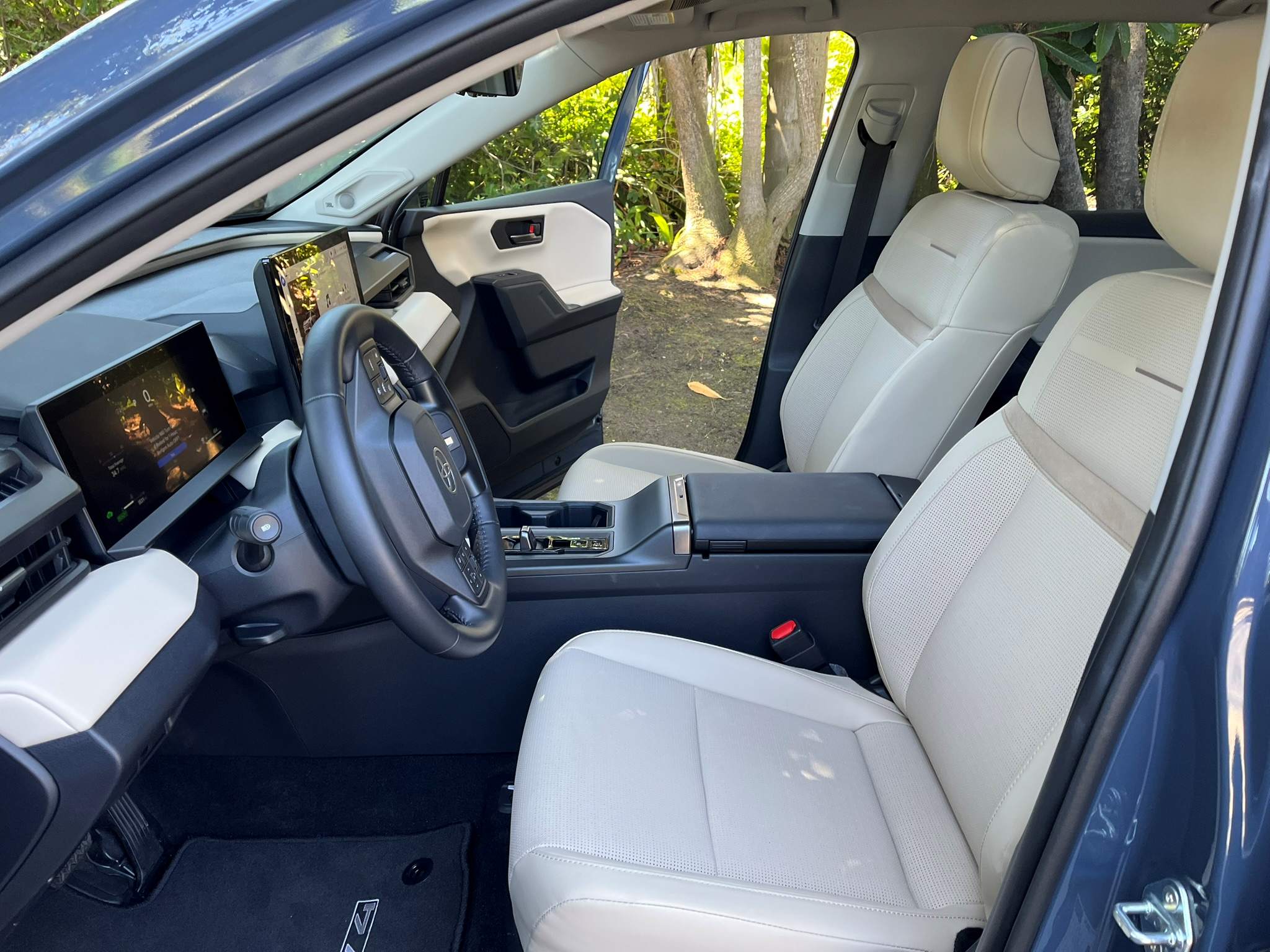
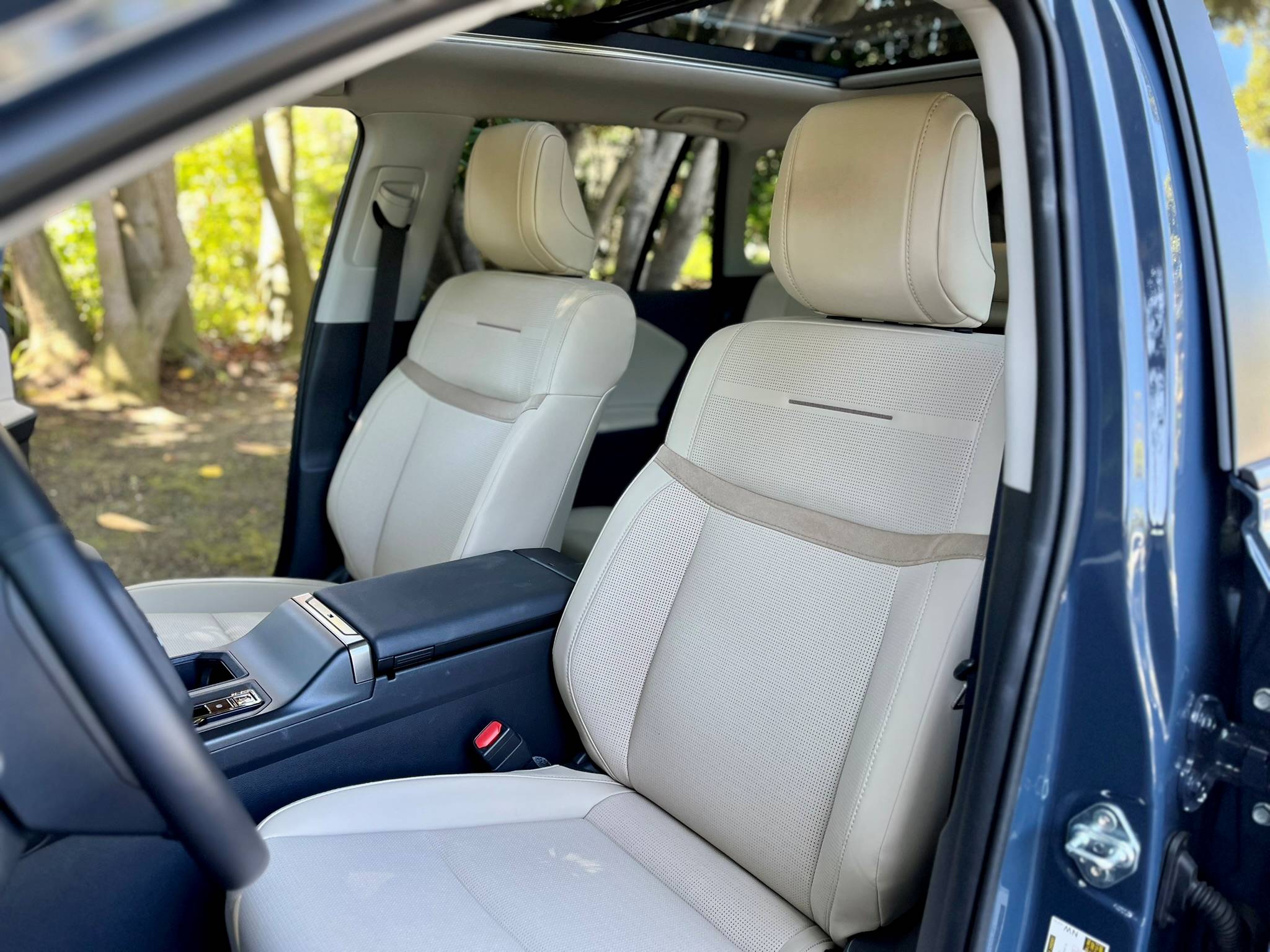
The Limited has SofTex-trimmed seats with eight-way power adjustment for the driver and passenger.

The Limited has SofTex-trimmed seats with eight-way power front seats.

Make Mine the Limited

The trim most desirable to me is the Limited, the top-line Core-grade model. While the lower trim levels are well appointed, the Limited and XSE have one feature the others do not: a power front passenger seat. Also somewhat unique among small hybrid SUVs is a temporary spare tire.

I have been shopping for a compact SUV to replace our 2008 Ford Escape Hybrid, which has a Toyota hybrid powertrain. At nearly 149,000 miles, it is time. It rides like a buckboard but has been relatively dependable.  I have replaced the hybrid battery and its cooling fans, costing more than $4,000.

At my stage in life, my next new vehicle could be my last. But that still leaves room for fun but-not-new cars.

For a few reasons, my pick of the 2026 RAV4 line would be the Limited grade in Wind Chill Pearl. The wife favors white cars. To keep happiness flowing, an eight-way power front passenger seat is mandatory for both of us. Power front seats are included with the Limited. Wind Chill Pearl paint for the Limited is $475, and with it I would select the Harvest Beige SofTex interior. (Neither of us is fond of gray or black interiors). I would also opt for the cargo mat package with four carpet floor mats, $339.

With standard AWD and freight, my Limited “build” came to $45,709.

The XSE could have been a contender, but its paint colors are no-cost black or three $975 two-tone schemes. And the final cost was $615 more to match the Limited’s content.

For more detailed specifications and improvements for the 2026 RAV4, see my overview here.

The Harvest Beige SofTex front seats

Harvest Beige SofTex interior.

10 Standout RAV4 Features

1: Suspension

Barely four blocks into my first drive, I knew the RAV suspension was a standout. It gracefully stepped through potholes and busted pavement with luxury-class smoothness. There is minimal head-toss when traversing speed humps and angled driveways.

Toyota says frame rigidity was significantly increased by reinforcing suspension mounting points, the front cowl, and the windshield pillars. Redesigned coil springs and shock absorbers provide a flatter, smoother ride.

Braking response has gentle pedal feel with smooth but absolute stopping force. A new electronically controlled brake system and Vehicle Braking Posture Control reduce body roll during cornering.

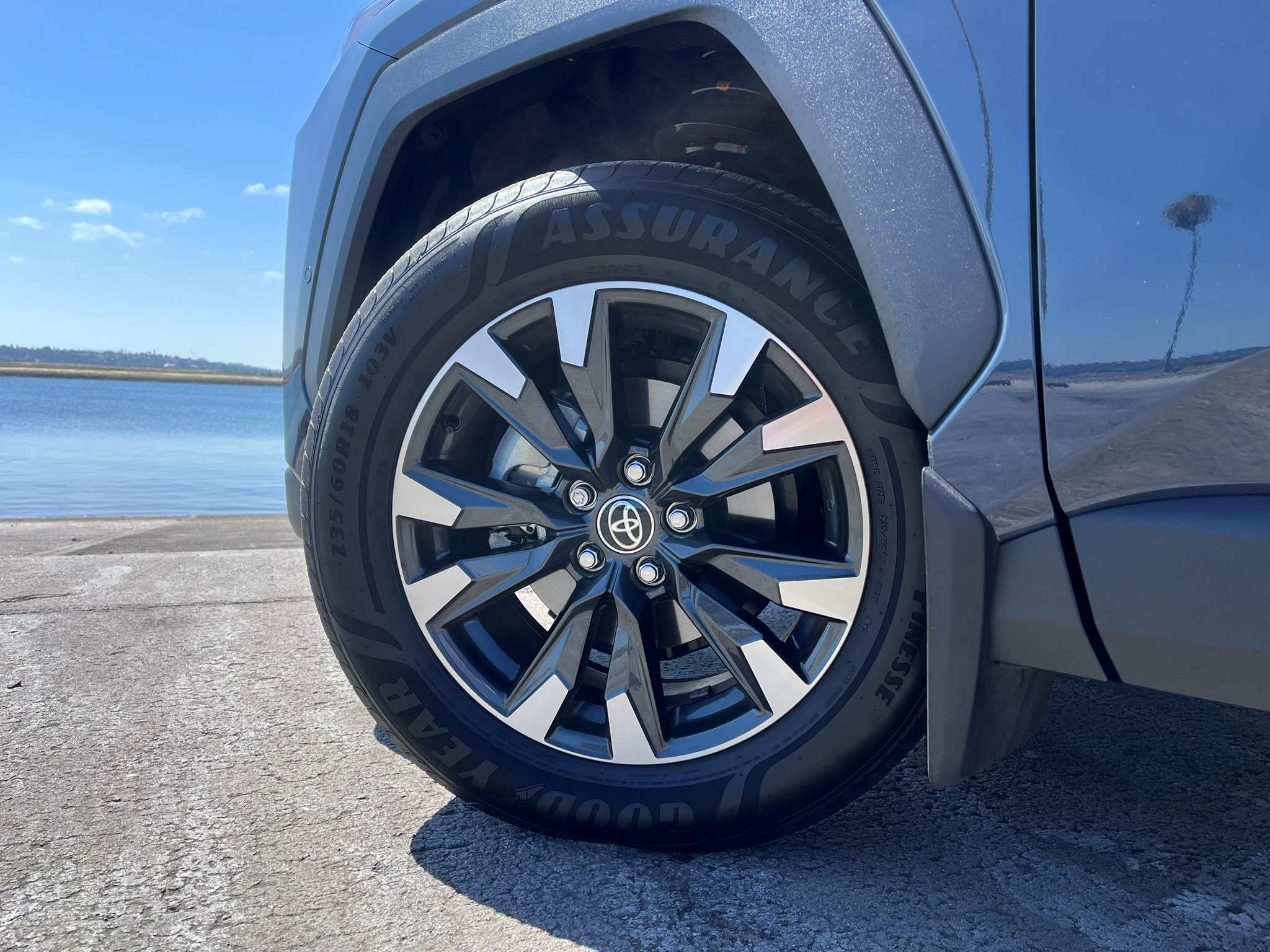
Looking at the 18-inch alloy RAV4 front left wheel with low rolling resistance Goodyear Assurance Finesse all-season tires

Goodyear Assurance Finesse all-season tires have a low-rolling-resistance compound.

2: Soundproofing

 The new RAV4 might have the quietest cabin of all mainstream competitors. And I surely did not expect the traffic-calmed space. The tester came with roof rack crossbars, which typically produce a lot of wind noise on the highway. Not on this RAV, however. On the highway, conversations front to rear can be enjoyed without raised voices. For those who wear hearing aids, this feature is a selling standout.

To reduce the transfer of noise and harshness into the cabin, Toyota applied high-damping adhesive to the footwells and wheelhouses. Side mirrors and door seals have been reshaped to reduce wind noise. And because the side mirrors are mounted on the body, they do not whip up turbulence. (Side mirrors mounted at the windshield pillar base are notorious for wind noise.)

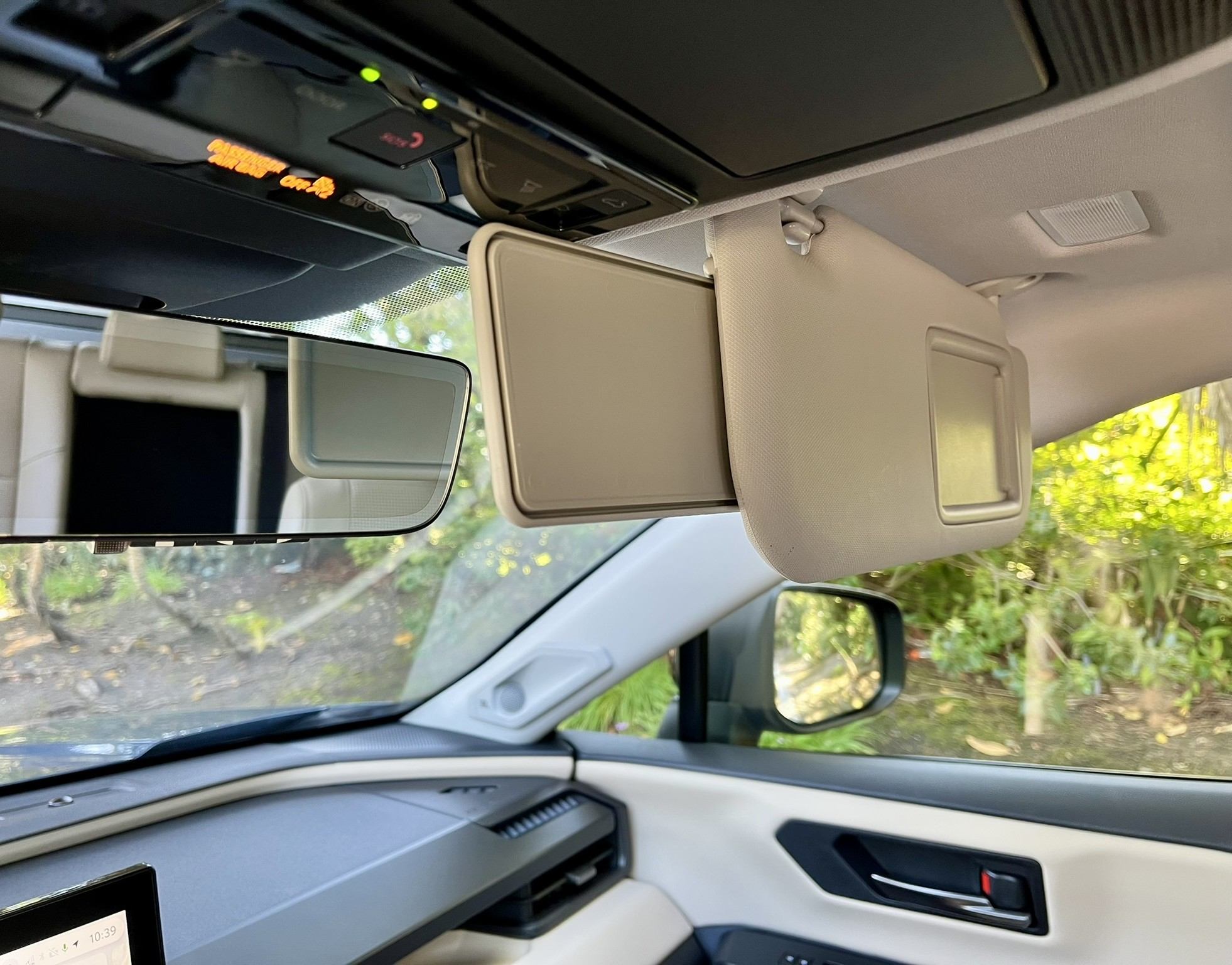
Visor extenders are a small but useful detail.

3:  Performance

 I like that Toyota gives the RAV a non-turbocharged 2.5-liter four-cylinder engine. It has enough displacement for rapid acceleration when needed. Hyundai and Kia use turbocharged, 231-hp, 1.6-liter four-cylinder in their Tucson and Sportage competitors. I have reservations about a small engine hefting an AWD 3,900-pound vehicle over the long term.

Toyota’s e-CVT is one of the better continuously variable transmissions. There is no sense of “rubberbanding” as the transmission catches up with throttle input. And performance in the standard drive mode was quick and responsive. Sport is my cheat code for commuting, keeping interlopers from messing with me.

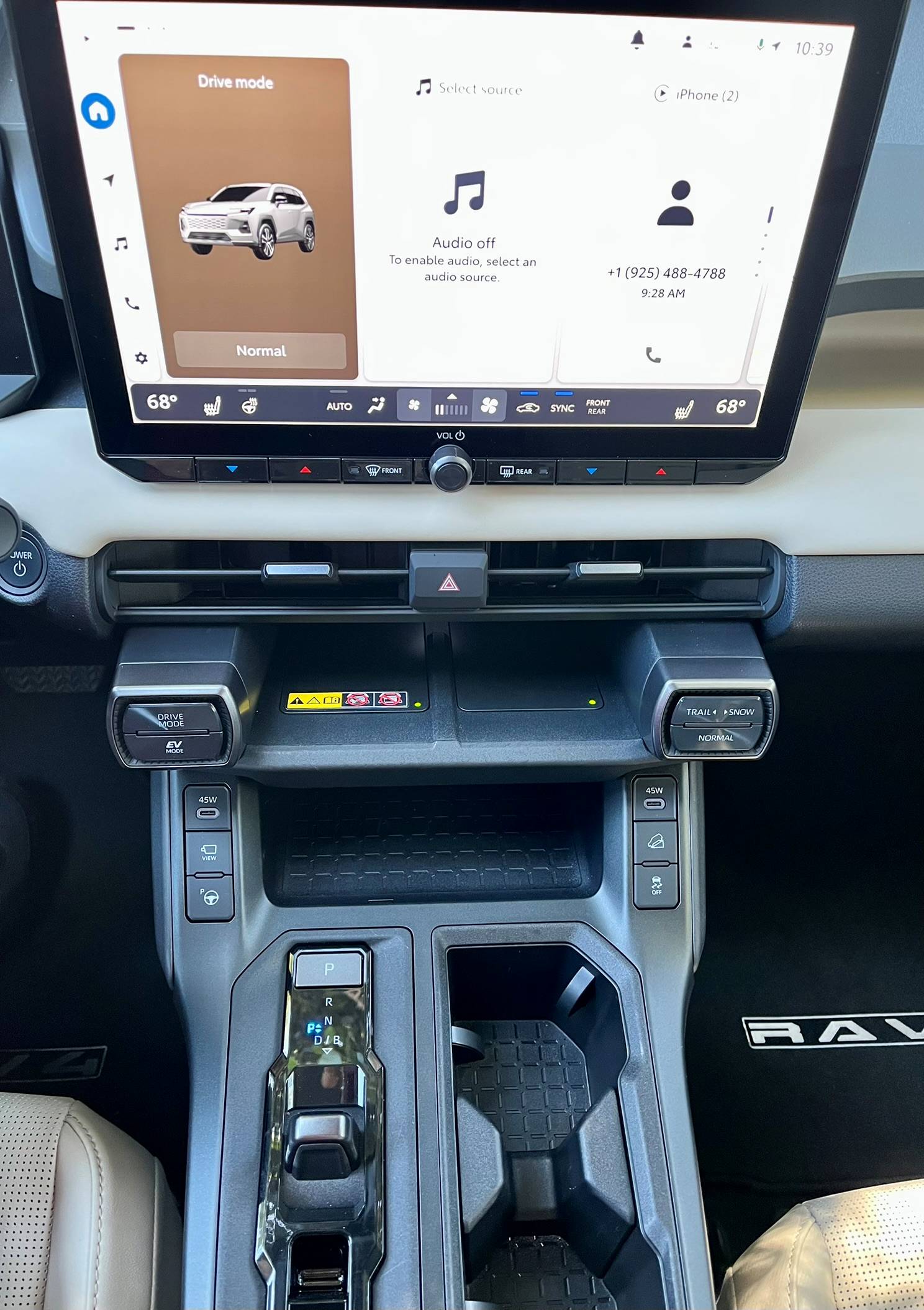
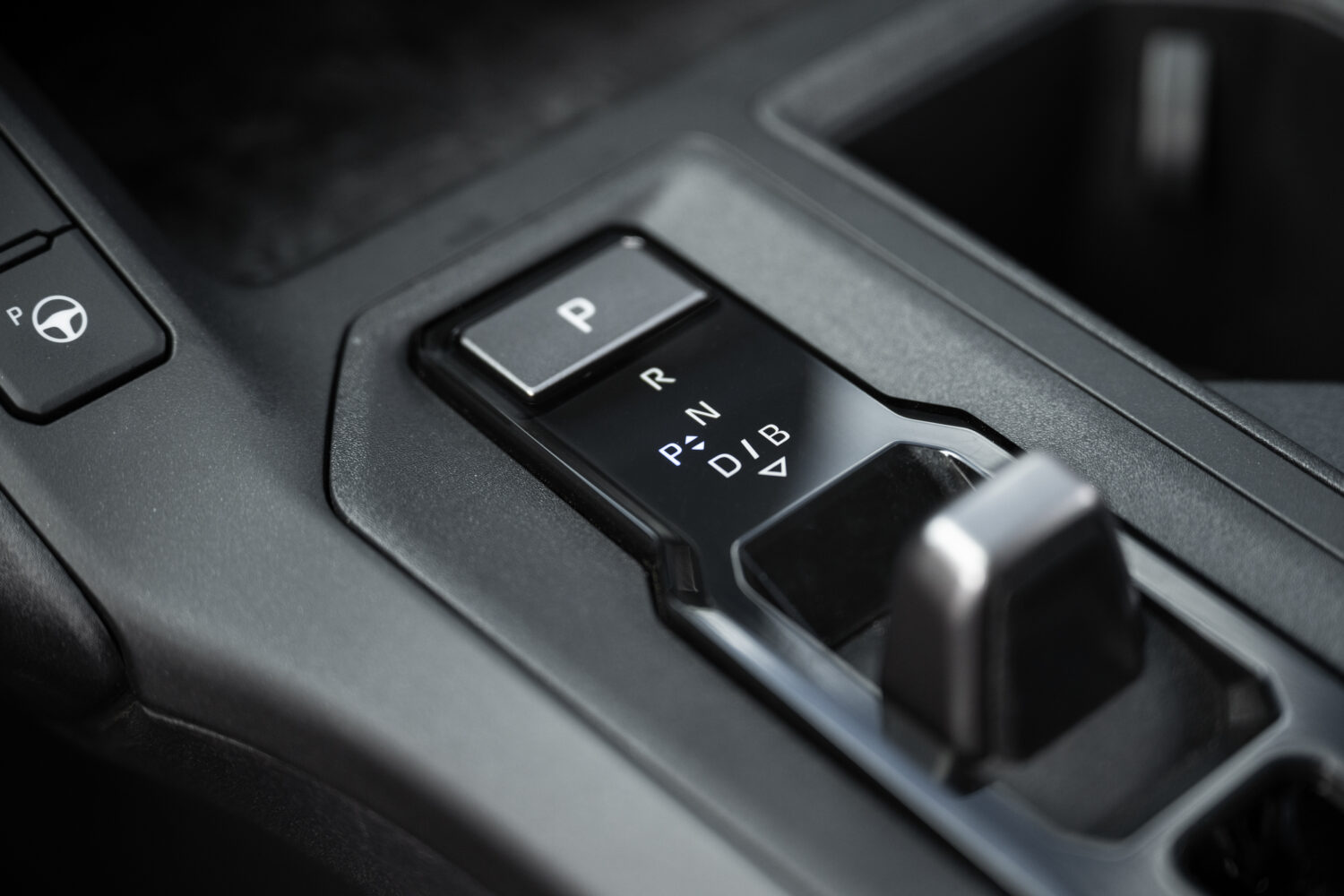
The gear selector is a new toggle shift-by-wire switch; however, lower Core grades use a traditional shift lever.

Goodyear Assurance Finesse all-season tires have a low-rolling-resistance compound and were quiet rolling, especially at highway speeds.

Looking at the engine bay of the hybrid RAV4

The 2026 RAV4 builds on the 5th Generation Hybrid (HEV) powertrain: a 2.5-liter inline-four gas engine with two motor-generators.

4: EV Mode

 The hybrid battery is a sealed lithium-ion (Li-ion) battery at 247.5 volts and 4.1 ampere-hours. There is sufficient power for the RAV4 Hybrid to be driven on battery power for short distances at low speeds. How far depends on certain conditions, such as battery charge level. EV mode is useful for navigating parking lots and indoor parking garages, and for creeping along in commuter traffic.

The RAV4 PHEV powertrain is capable of up to 52 miles of driving range on a charge. That is a 23 percent increase in all-electric driving, Toyota says.

5: Fuel Economy

 The Limited and XSE AWD models have mileage estimates of 43 mpg city, 37 highway, and 41 mpg combined. With those estimates, the 14.5-gallon tank should provide around 594 miles of range. My highway driving ticked up to 48.3 mpg, without using ECO mode.

6: On-Demand AWD

The electronic on-demand all-wheel drive system returns with updates to power the rear wheels. Rather than heavy mechanical driveshafts, the RAV4 Hybrid and PHEV models use a high-output Interior Permanent Magnet (IPM) electric motor.

7: Integrated Dashcam

Of special interest is the standard, built-in Drive Recorder. Dashcam cameras capture 20-second clips of manual or triggered events. Previously, owners could have bought the dashcam as an accessory costing $375 to $499.

The 12.9-inch Toyota Audio Multimedia screen is big screen for making selections, which is not prone to glare or obstruction of driver sightlines. The camera view is large with a split screen for an overhead view.

8: Digital, Not Bewildering

 Toyota’s next-gen multimedia and Arene software systems are easy enough to figure out. Previous RAV owners might lament that some buttons have been removed to make room for on-screen access. But there is a nice, big screen for making selections, which is not prone to glare or obstruction of driver sightlines. The camera view is large with a split screen for an overhead view.

The turn-by-turn navigation system can now display full-screen directions in the 12.3-inch-wide digital gauge cluster. And the software system allows Toyota to push over-the-air updates for safety features and infotainment features. Updates will keep coming even after the car has been sold.  The system uses a smartphone-like interface, with customizable widgets, and an enhanced “Hey Toyota” voice assistant. Toyota says commands are processed more quickly than before.

The Limited features a toggle, shift-by-wire gear selector on the shift console

The Limited features a toggle, shift-by-wire gear selector.

9: Interior Versatility

 Toyota says it prioritized cabin versatility through well-thought-out design. The door grabs, for example, are in the ideal position for leverage to pull the doors closed, front and rear. The front center armrest console has a unique top design that can be opened by either the driver or the passenger. And the console lid can be flipped over for a hard surface. A lockable glovebox is another detailed element missing from many competitors.

A redesigned rear seatback folds completely flat, maximizing cargo volume. (In the hybrid models, the battery is positioned under the back seat; the PHEV battery is under the cargo floor, which slightly trims cargo space.

Looking at the front inside passenger door of the RAV. The door grab is an ideal position for good leverage.

The door grab is an ideal position for good leverage.

10: A Spare Tire

 Every model of the new RAV gets an actual full-size temporary spare under the cargo floor. That is a standout among most of the competitors.

Looking at the 18-inch temporary spare tire under the cargo floor

Another welcome detail is the standard temporary spare tire.

Competing Hybrid Small SUVs

There are only five 2026 compact hybrid SUV models that are comparable to the 2026 RAV4; retail pricing includes the freight charge:

Honda CR-V Hybrid, in two- or four-wheel drive: $37,080 to $44,000;

Hyundai Tucson Hybrid and PHEV, FWD or no-cost 4WD: $34,050 to $43,675; PHEV $42,425 to $50,650;

Kia Sportage Hybrid and PHEV: $32,085 (FWD) to $42,185 AWD; PHEV, AWD $42,085 to $48,885;

Mazda CX-50 Hybrid: $36,840 to $42,540;

Subaru Forester Hybrid: $39,380 to $42,995.

 2026 RAV4 Warranties

Toyota’s warranty coverage emphasizes long-term protection for new hybrid and plug-in hybrid components. For the powertrain and key battery systems, the limited warranty terms are extensive:

Hybrid Component Coverage: Coverage for hybrid components lasts up to 8 years or 100,000 miles, whichever comes first. This applies to repairs needed to correct defects in materials or workmanship.

Hybrid Battery Coverage: The core hybrid battery receives even longer protection: 10 years or 150,000 miles, whichever comes first. This coverage is transferable to subsequent owners.

Powertrain Coverage: The conventional powertrain warranty remains at 60 months or 60,000 miles.

Standard new-vehicle protection also applies:

Basic Warranty: 3-years/36,000-miles limited warranty covers all vehicle components other than normal wear and maintenance items.

Corrosion Warranty: 60 months with no mileage limitation.

ToyotaCare: Normal factory-scheduled maintenance is covered for 2 years/25,000 miles. Roadside assistance is included for 2 years and unlimited mileage.

RAV4 Limited Standard Equipment

The 2026 RAV4 Limited focuses heavily on luxury and distinct styling. The exterior is dressed up with a color-keyed grille in Satin Chrome and silver-painted lower bumper valances (front and rear). A rear spoiler has piano black sides.

  • Upgraded LED headlamps have distinctive LED Daytime Running Lights with integrated turn signals. LED front fog lights are standard.
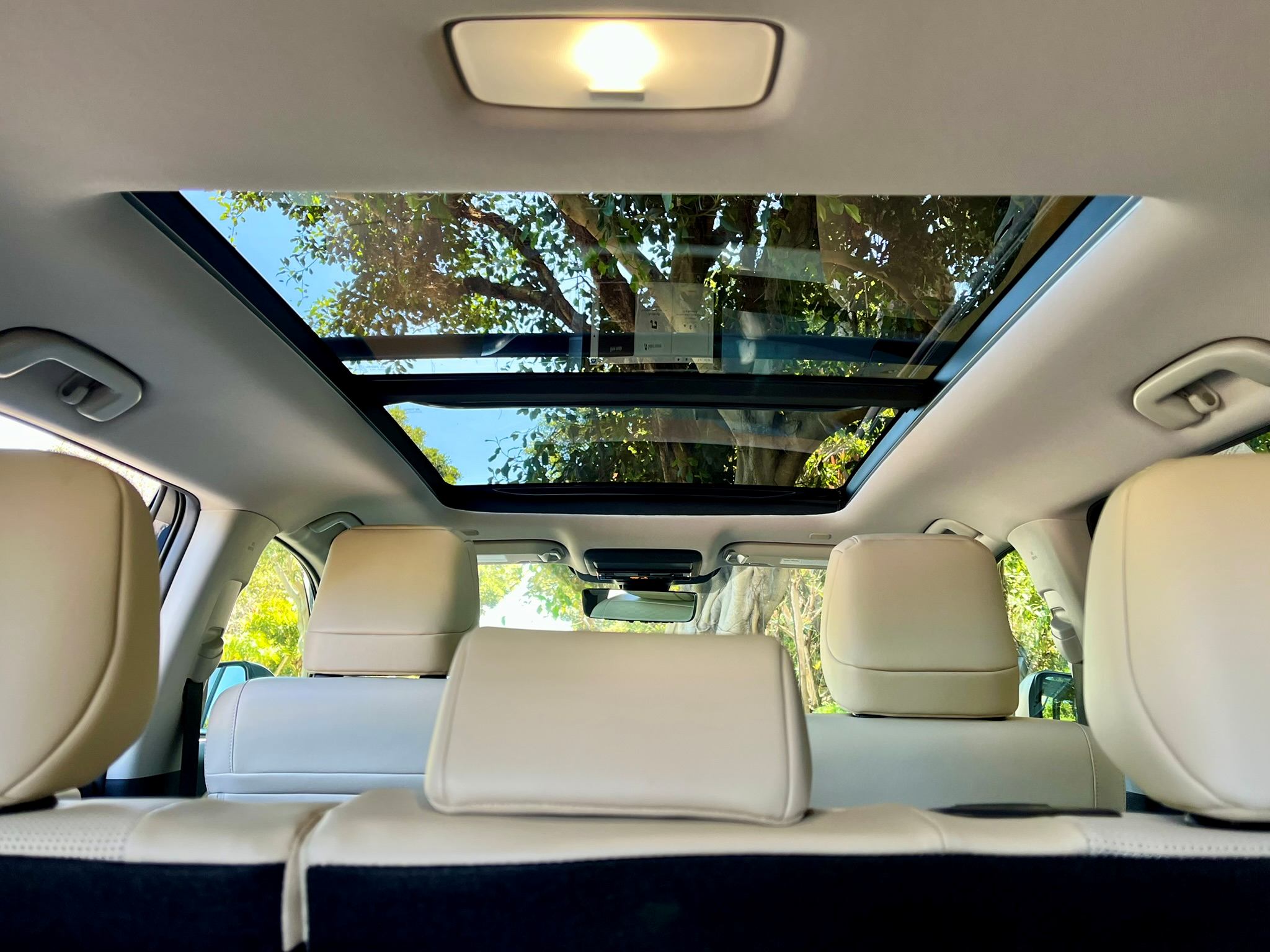
  • A standard power tilt and slide panoramic glass roof and a hands-free power liftgate.
  • Power side mirrors are upgraded with puddle lamps and camera functionality.

The Limited’s standard power-tilt-and-slide panoramic glass roof.

Limited Interior Features

  • SofTex-trimmed seats with power eight-way adjustable front seats for driver and passenger;
  • Heated and ventilated front seats;
  • 12.9-inch Toyota audio multimedia;
  • Nine-speaker JBL audio with amplifier and subwoofer;
  • Heated rear window seats;
  • Toggle switch shift-by-wire gear selector;
  • 18-inch machined five-spoke dark gray metallic wheels;
  • Leather-wrapped and heated three-spoke steering wheel;
  • Digital rearview mirror with HomeLink garage door opener;
  • 5 USB-C Ports: 2 front 45-watt USB-C charging ports, one center console media and charging port, and two rear 15-watt USB-C charging ports;
  • Dual Qi-compatible wireless phone charging pads;
  • Smart Key System on front doors and liftgate with push-button start; remote keyless entry system with lock, unlock, and panic functions; power liftgate; and remote-illuminated entry.

Toyota Safety Sense 4.0

In addition to eight air bags, every 2026 RAV4 is equipped with the updated Toyota Safety Sense (TSS 4.0) suite. The system was updated with hardware improvements and stronger detection capabilities. TSS 4.0 technologies include:

Proactive Driving Assist (PDA): Provides gentle braking and steering support for distance control in traffic;

Pre-Collision System with Pedestrian Detection (PCS w/PD): Enhanced detection of vehicles, pedestrians, bicyclists, and motorcyclists;

Full-Speed Range Dynamic Radar Cruise Control (DRCC): Adaptive cruise control capable of operating across the full speed range;

Lane Tracing Assist (LTA): To help keep the vehicle centered in its lane while using DRCC;

Road Sign Assist (RSA): Reads and displays road signs, such as speed limits.

Among other standard safety features are a blind-spot monitor with rear cross-traffic alert and a rear-seat reminder system. RAV4 options include a panoramic view monitor and front- and rear-parking assist with automatic braking.

Back seat legroom of 37.8 inches is reasonably comfortable for adults.

Back seat legroom of 37.8 inches is reasonably comfortable for adults.

Observations and Considerations

The 2026 Toyota RAV4 is a good, honest compact SUV: no glitz, no gimmicks, just genuine refinement to inspire pride in ownership.

Except for the GR Sport, the design treatment resists gimmicky swoops and compromised cargo space. The base RAV4 LE is still an economical choice for long-term reliability. Its features will be quite acceptable for many buyers, without feeling dumbed down. All-wheel drive can be added for $1,400.

2026 Toyota RAV4 Limited Specifications

Body style: 5-door, 5-seat compact, all-wheel drive SUV

BY THE NUMBERS

Fuel tank: 14.5 gallons

Cargo space: 37.8 cubic feet (behind back seat)

Front head/leg room: 37.9/41 inches

Rear head/leg room: 39.5/37.8 inches

Length/wheelbase: 181/105.9 inches

Width/height: 73/66.7 inches

Ground clearance: 8.1 inches

Curb weight: 3,920 lbs., Limited

Turning circle: 36.9 feet

Towing capacity: 3,500 pounds

CHASSIS COMPONENTS

Brakes: front, 12-inch power-assisted ventilated discs; rear, 11.1-inch solid discs; electronic parking brake

Steering: rack-mounted parallel-type, electric power steering (EPS); turning circle, 36.9 ft.

Tires-wheels: Standard aluminum alloy wheels; 235/60 18-inch (or optional 235/50R20) Goodyear Assurance Finesse low-rolling resistance; temporary spare

Suspension: Front, independent MacPherson strut front suspension with stabilizer bar; rear, multi-link with stabilizer bar

PRICING

Limited AWD base price: $44,895, including $1,595 freight charge; price as configured $47,028

Options on test vehicle: head-up display $600; carpet floor mats and cargo mat $339; door-sill protectors $199; wheel locks $90; rear hatch cargo lamps $425; mudguards $160; low profile cross bars $320

Where assembled: Aichi, Japan (hybrid models)

2026 Genesis GV80 3.5T Prestige AWD

2026 Genesis GV80 3.5T Prestige AWD

The 2026 Genesis GV80 might be the brand’s biggest SUV, but it has been curated with the talents of a fine luxury sedan

* New for 2026 is the GV80 2.5T rear-wheel drive, whereas previously all-wheel drive was standard.

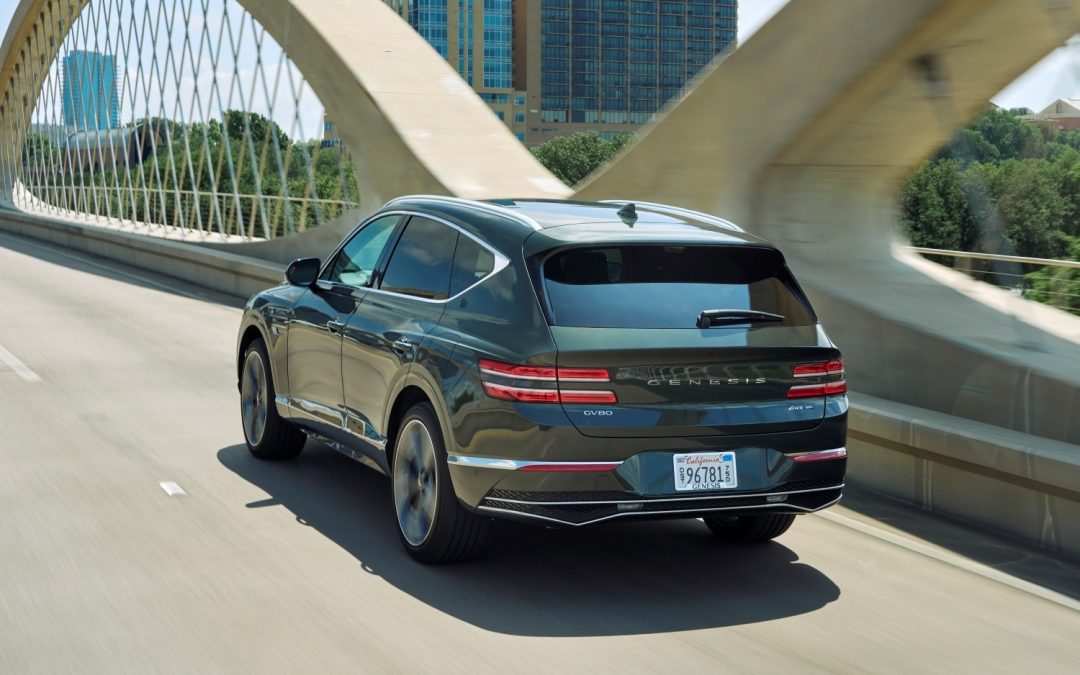
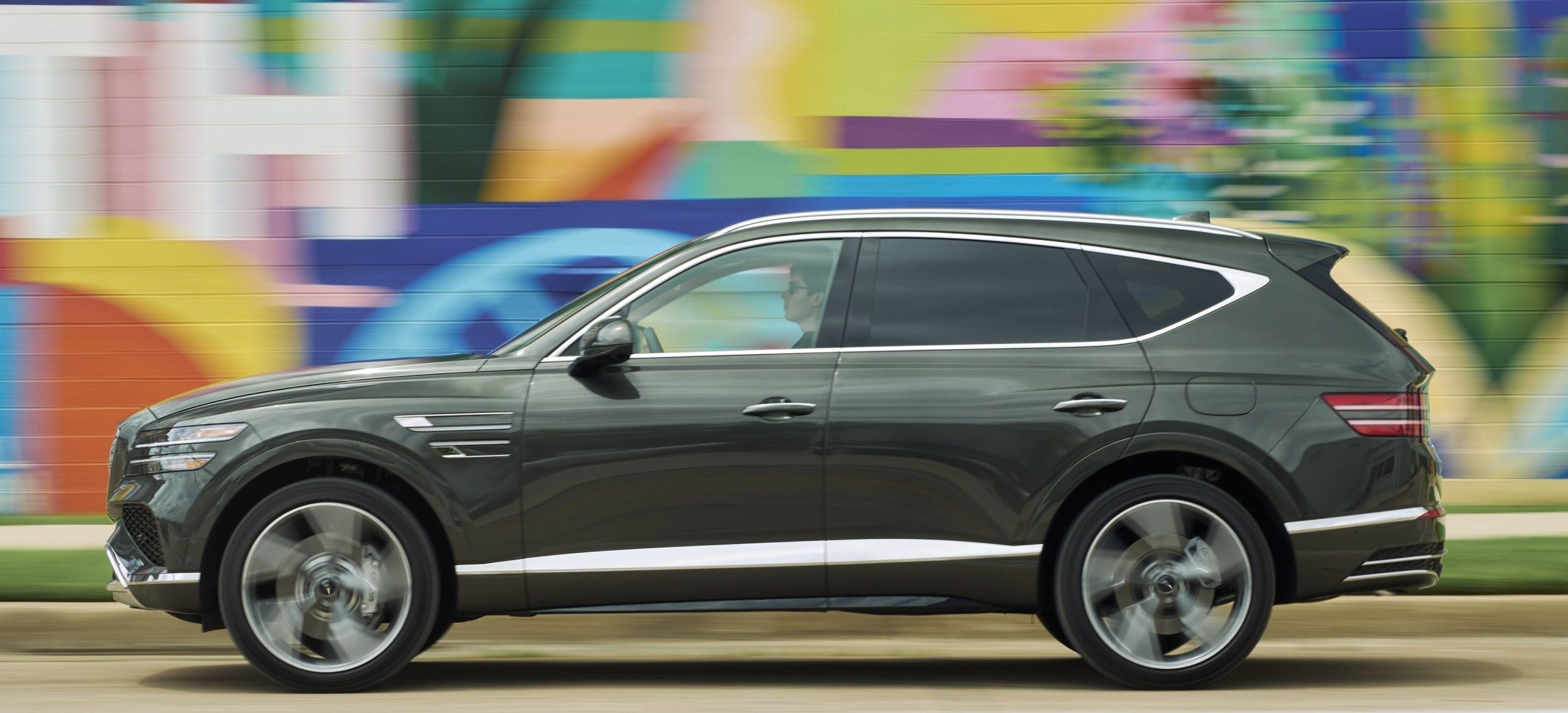
A very dark green (Storr Green) Genesis GV80 driving in front of a colorful wall

Today’s tester, a GV80 3.5T Prestige AWD, has a sticker of $84,475, with one option for Storr Green paint ($650. (Photography courtesy of Genesis USA )

Jump To Special Features

Summon the Mood Curator
The Sum of its Parts
Pricing and Leasing Deals
Genesis Warranties
GV80 Safety Technologies
GV80 Engine Choices
Why Buy the 2026 Genesis GV80?
Specifications

BY MARK MAYNARD

The Genesis GV80 is the great equalizer of potholes, the tenderizer of back sides, and the purveyor of driving pleasure. The GV80 might be the brand’s largest SUV, but it has been crafted with the refinement of a fine luxury sedan.

These are major expectations for a car, and the GV80 fulfills them without complaint and with great efficiency. Total up those benefits for a daily driver, and its $85,000 price begins to seem relevant.

With standard all-wheel drive, the top-line 2026 GV80 3.5T Prestige piles on the extras. Among its rewarding features:

  • Power door cinchers! (Nothing says Luxury like power closers.)
  • Back seat ceiling-integrated flip-down vanity mirrors, full temperature control, heated and ventilated window seats, and power seat recline.
  • Chauffeur-style fore-aft adjuster for more back-seat legroom when needed.
  • Rear acoustic laminated glass (new for 2.5T Prestige AWD and 3.5T Prestige AWD)
  • Full Nappa leather upholstery
  • 16-way power driver seat and 12-way power front passenger seat, both with four-way power lumbar
  • Power driver seat cushion extension, side bolster snugging, and massaging Ergo-Motion
  • Heated and ventilated front seats and ventilated second row window seats
  • Leatherette-wrapped upper instrument panel (which looks and feels like leather)
  • Microfiber suede headliner and interior roof pillars
  • Heated front console armrest
  • Power, heated tilt-telescoping steering wheel
  • Power rear side window sunshades and power-folding third row
  • Surround view monitor
  • Remote Smart Parking Assist. The GV80 can park itself while you stand outside the vehicle, even in spaces too narrow to open the door on exit.
  • Highway Driving Assist 2 (details below).
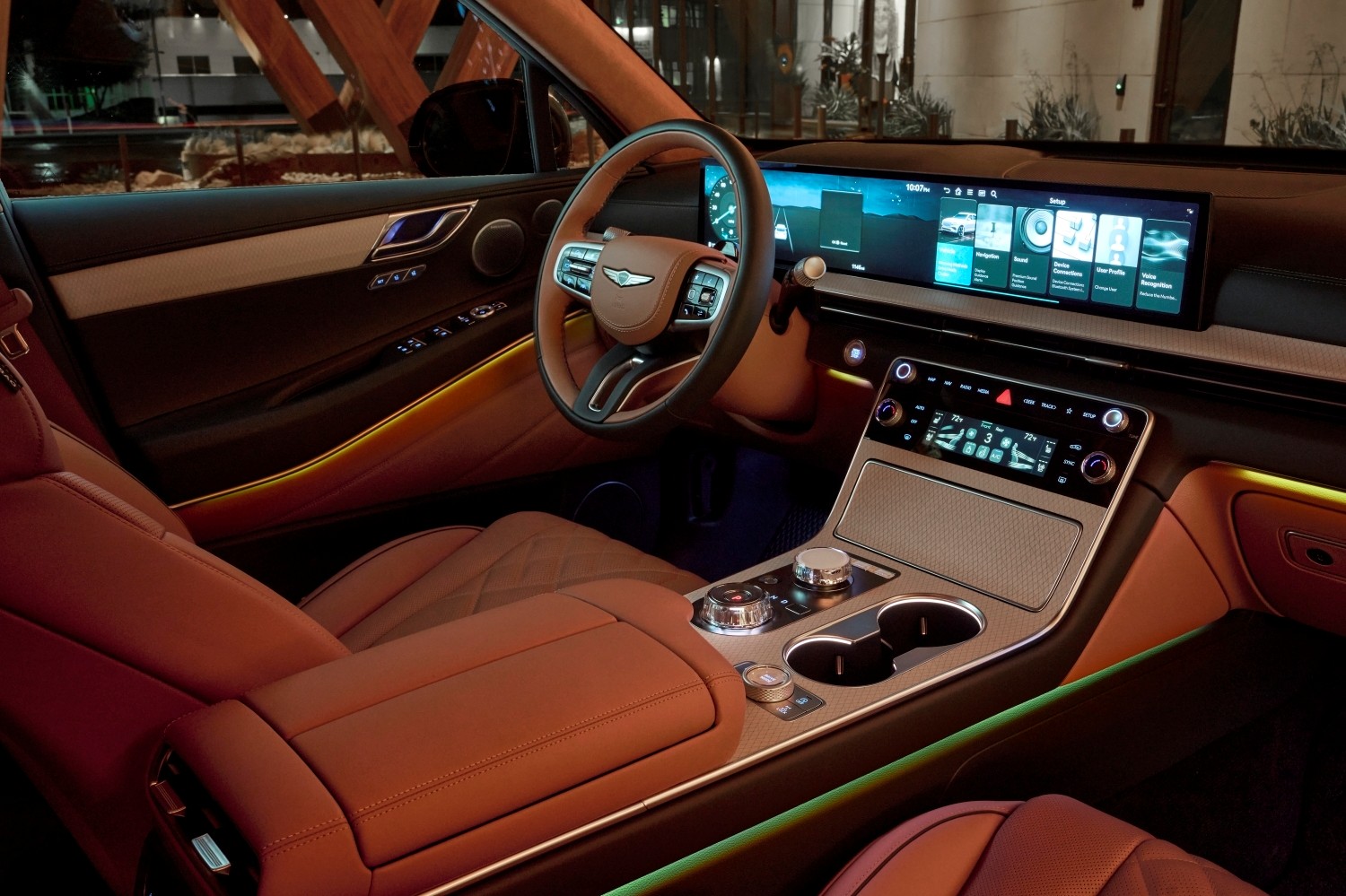
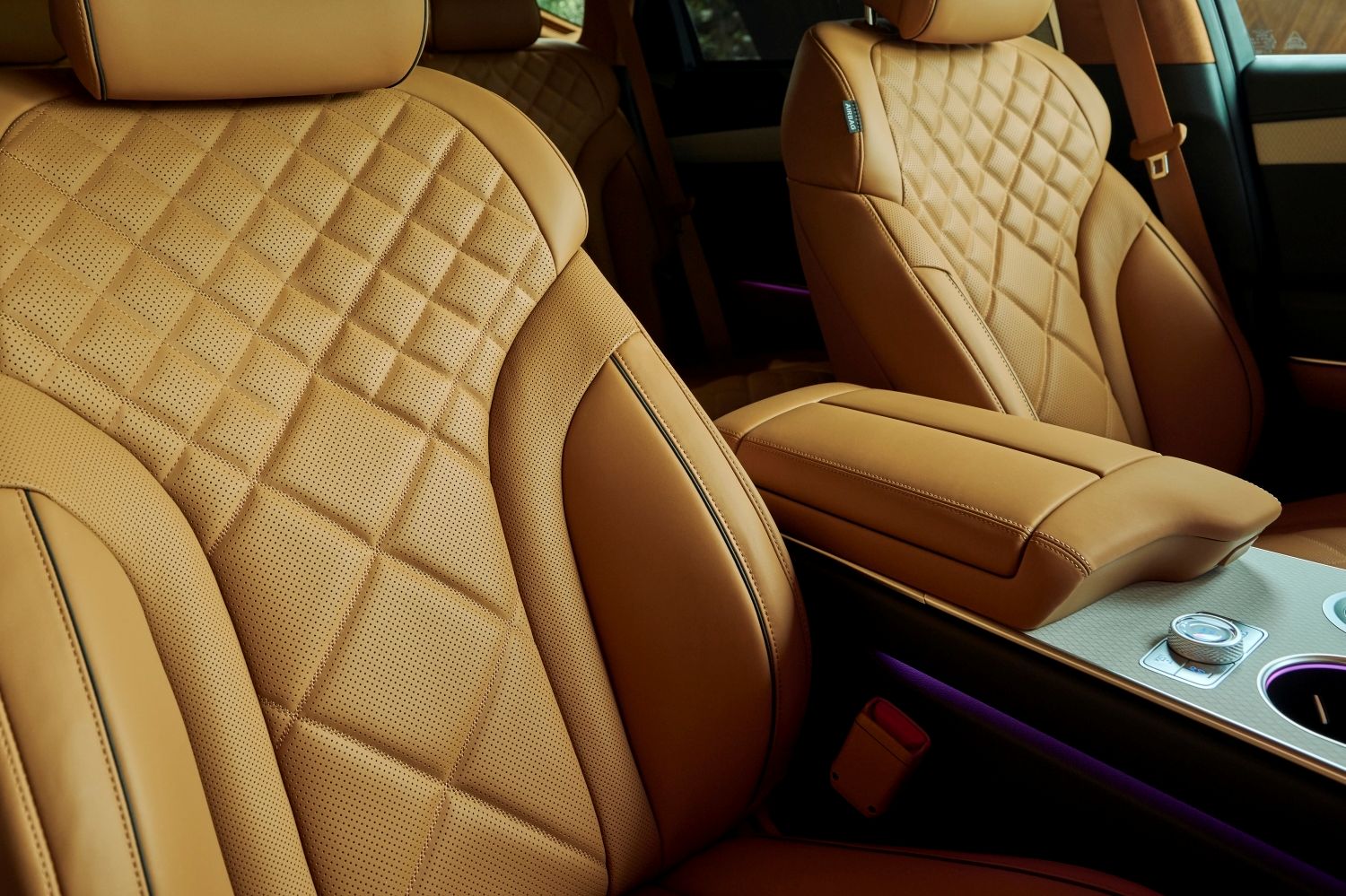
Looking at the tan Nappa leather upholstery of the driver area.

The digital cabin is wrapped in Nappa leather.

Summon the Mood Curator

A comfortable driver is a safe driver, able to concentrate on the job at hand. Boosting such driving awareness is the Mood Curator, which benefits drivers and passengers.

Genesis says its Mood Curator “synchronizes multiple sensory elements into single-tap presets designed to orchestrate a specific emotional environment.”

When activated via the 27-inch OLED infotainment display, the system coordinates five cabin elements:

Ambient Lighting: Shifting the interior LEDs to color palettes that match the selected theme.

Audio Atmosphere: Playing immersive soundscapes, acoustic melodies, or tailored music profiles, piped through the Prestige’s Bang & Olufsen sound system.

Scent Sensation: Activating the vehicle’s onboard fragrance diffuser to release subtle, custom aromas into the cabin.

Ergonomic Touch: Engaging the seat massage functions to help drivers relax or stay alert.

Cabin Enclosure: Automatically adjusting the power rear and side window shades to control natural light levels.

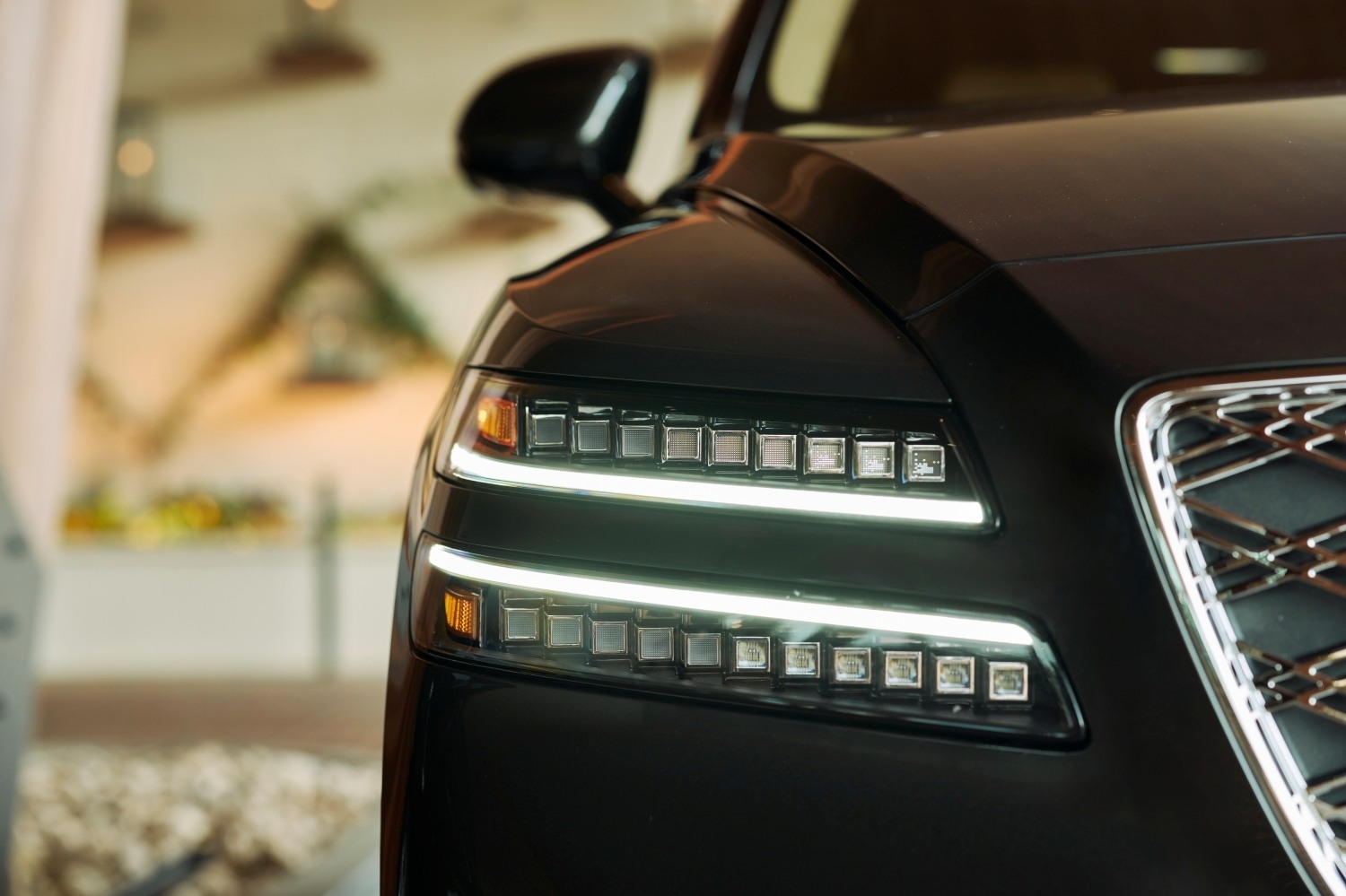
Genesis’ Two-Line LED headlights have Micro Lens Array (MLA) technology.

Genesis’ Two-Line LED headlights have Micro Lens Array technology.

Two-Line LED Headlights

The Genesis GV80 3.5T Prestige AWD features the brand’s signature Two-Line LED Headlights, with Micro Lens Array (MLA) technology.

Rather than using a single traditional projector bulb, this setup places hundreds of microscopic lenses into two slim, horizontal bands. The thin design increases light output and on-road precision, Genesis says.

The headlight assembly includes several integrated features:

Smart High-Beams (high beam assist): Automatically dims individual LEDs when oncoming traffic is detected.

Low-Profile Daytime Running Lights (DRLs): The twin horizontal bars stay illuminated during the day.

Sequential Turn Signals: When signaling for a turn, the two LED bars flash in a flowing, sequential pattern from the inside out.

The quilted Nappa leather is impressive and inviting to the touch.

The quilted Nappa leather is impressive and inviting to the touch.

The Sum of its Parts

There is an eye for beauty in the GV80’s exterior styling. The compelling design is lean, fit, and balanced. The chassis lowers the body and the center of gravity for a wider cabin and secure drivability. Its 16.2-foot-long architecture sits confidently on its wheels, which neatly fill the arches. There are no replicated kinks, gimmicky bulges, or Godfather jowls. Yet it is well adorned with chrome, an American staple.

Roof cross-members, transmission tunnel, front chassis extensions, and parts of the rear structure are made of ultra-high-strength steel. The cowl, floor panels, rear wheel housings, and other components are high-strength steel. For light-weighting, aluminum is used for the doors, hood, and rear decklid, saving 90 pounds. The top-line all-wheel-drive tester weighs 5,250 pounds.

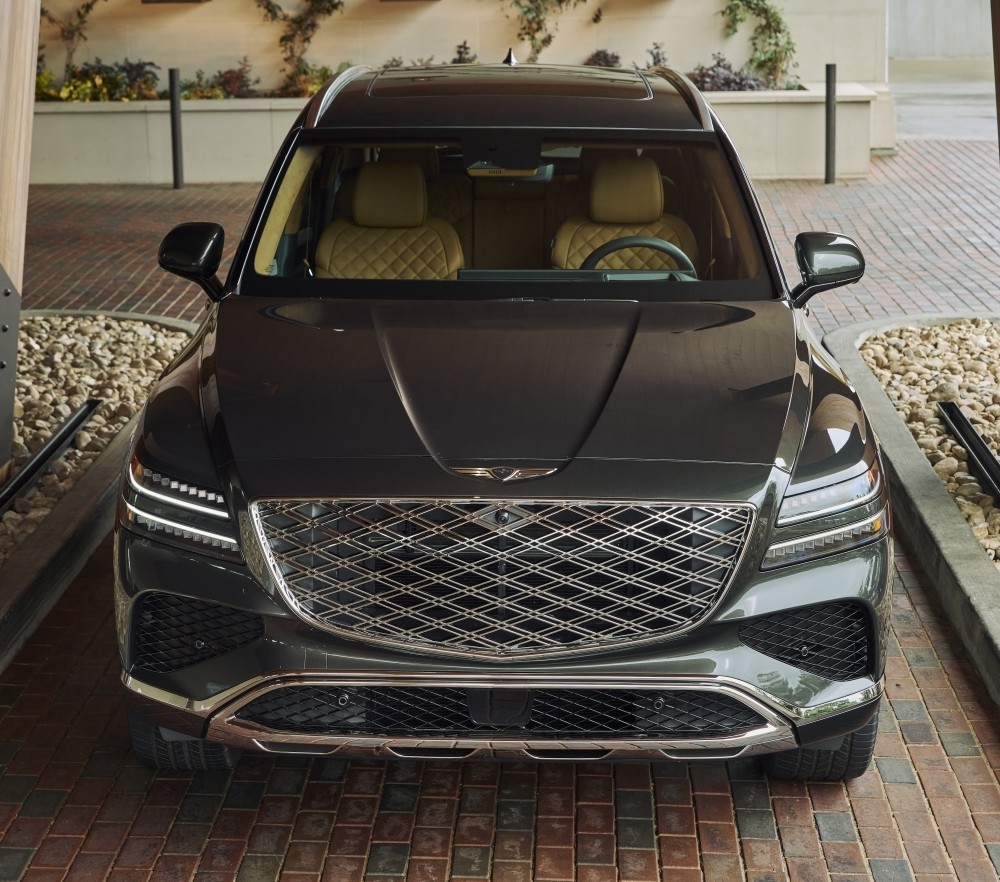
Genesis has upped its 2026 GV80 grille with a Double G-Matrix dual-mesh treatment.

Genesis has upped its 2026 GV80 grille with a Double G-Matrix dual-mesh treatment.

 GV80 Pricing and Leasing Deals

The 2026 Genesis GV80 is available in two body styles: a traditional long-roof or the sportier-looking GV80 Coupe. Its fastback roof gives it a sportier stance at the expense of cargo height. Only available with the 3.5-liter turbo V-6, the coupe is a little pricier than the long-roof GV80 3.5T. The coupe’s three trim levels, with standard AWD, range from $83,345 to $90,895 for the Prestige Black AWD.

New for 2026 is the 300-horsepower GV80 2.5T rear-wheel-drive model, when all-wheel drive was previously standard. The GV80 2.5T (RWD or AWD) is offered in three trim levels priced from $59,195 RWD to $74,995 AWD.

The long-roof Genesis GV80 has engine choices of a 2.5-liter turbocharged four-cylinder or a 375-hp twin-turbocharged 3.5-liter V-6, with standard AWD.

Both engines are paired with an eight-speed automatic transmission with paddle shifters. There are selectable driving modes: Comfort, Smart, Eco, Sport, and Custom.

The GV80 3.5T AWD is sold in four trim levels, with starting prices ranging from $77,445 to $85,395 for the Prestige Black.

Today’s tester, a GV80 3.5T Prestige AWD, was $84,475. It had one option for Storr Green paint ($650). The leather interior is dressed in a handsome Vanilla beige and smoky gray.

All manufacturer-suggested pricing includes the $1,495 freight charge from Ulsan, Korea.

Find current Genesis GV80 pricing here.

Featured Lease Offer

  • 2026 GV80 3.5T Prestige AWD

Lease Term: 24 months

Mileage: 12,000 miles

  • $5,999 due at lease signing,

Payment: $809 per month, with an excellent credit score of 740-850.

Other leasing terms

  • 24-, 36-, or 48-month terms.
  • $5,999 due at signing;
  • Actual miles driven per year: 10,000, 12,000, 15,000 miles.
  • Trade-ins considered.

Applicable Special Offers, for lease or financing, include:

  • $1,500 Competitive Owner for leaving BMW, Mercedes-Benz, Tesla, Mini, Toyota, and other brands.
  • $1,500 Loyalty Bonus (for current Genesis owners).

Special Programs

College graduate: $400;

Military $500: Active Duty, Reservists/National Guard, Veteran, or on Retired status; spouse included;

First Responders $500: Police, sheriffs and deputies, correctional officers, state troopers and federal law enforcement officers, firefighters, EMT/paramedics, and 911 dispatchers.

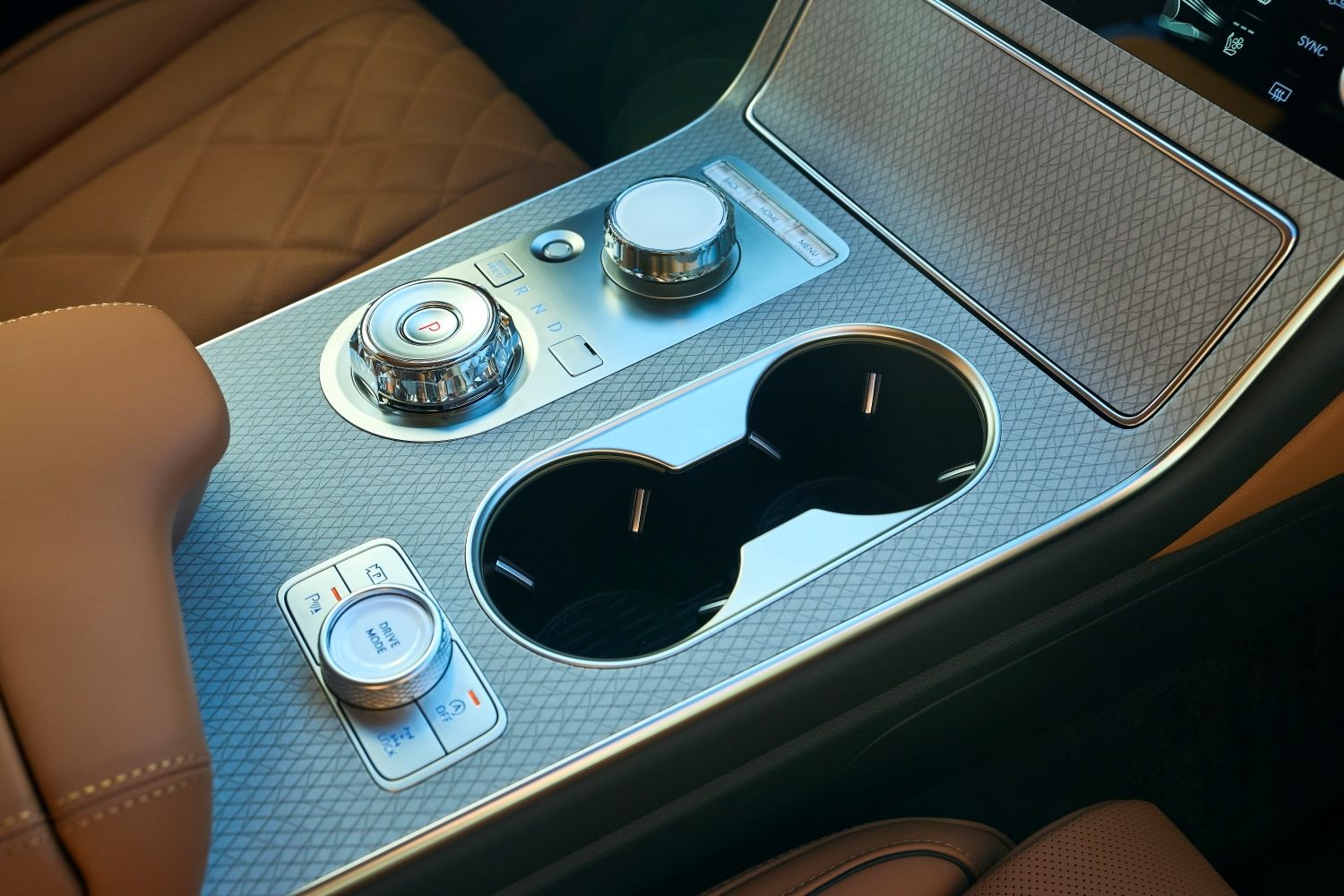
Looking at the center console with shifter dial and infotainment dial, with 2 cup holders

A place for everything and everything in its place on the center console.

Genesis Warranties

  • 10-years/100,000-miles powertrain with enhanced roadside assistance and concierge services;
  • 3-years/36,000-miles of scheduled maintenance;
  • 3-years/36,000-miles of complimentary Genesis Service Valet care;
  • 3 years of free Genesis connected services;
  • 3 months of free SiriusXM satellite radio all access;
  • 3 years of free annual multimedia and navigation updates and lifetime complimentary traffic data via HD+ Traffic radio.

And here’s the perk I would pay extra for: the free Genesis Service Valet for 3 years or 36,000 miles. The valet will perform a remote diagnostic check, pick up your vehicle, and leave a courtesy car. Upon your Genesis’s return, it will be cleaned and washed (at least by some dealerships).

GV80 Safety Technologies

Among the 10 air bags is a front center air bag, located between the driver’s seat and the center console. In a side collision, the center bag deploys to help prevent front-seat passengers from colliding. The feature is standard on all GV80 models.

Driver-Assist Technologies

Under the GV80’s shapely exterior is a brain trust of advanced safety and driver-assist technologies. The so-called “machine learning” technologies merge, refreshingly for the user, without a fearsome learning curve.

When Smart Cruise Control and Highway Driving Assist are engaged, the GV80 will steer, brake, corner, evade, and warn the driver.

Genesis’ highway steering-assist system delivers smooth, well-calibrated steering and accurate lane centering. Steering through sweeping corners, the GV80 held true to the arc — without crossing the Botts dots or white lines. The guidance gave no random shut-offs, such as in bright sunlight or on light-gray concrete interstates. Other such systems I have tested can get confused in these conditions.

Still, Highway Driving Assist is a hands-on system. Don’t think you can sit back and check texts.

Driver-assistance systems include:

Highway Driving Assist II: This second-gen system now provides assistance during lane-change maneuvers — when the turn signal is used — and when other vehicles merge in front of you.

Smart Cruise Control with Machine Learning: Genesis says it helps the car learn the driving characteristics of its driver and assist it.

Forward Collision-Avoidance Assist: This system is intended to automatically stop the vehicle in certain situations where there is a risk of collision. The system may also help detect potential pedestrian collision risks when near the vehicle while in motion.

Lane Side: LS helps prevent side collisions when merging into another lane with the ability to see two lanes over.

Blind-Spot Collision-Avoidance Assist: BCA is a Blind Spot Monitor that can alert if a vehicle is detected in the driver’s blind spot.

Lane Follow Assist: LFA helps maintain the vehicle position in the center of its lane by recognizing both lane markers and vehicles traveling ahead.

Lane-Change Oncoming: The so-called LO helps prevent collisions with vehicles in opposing lanes on non-divided highways or roads.

Junction Turning: Applies the brakes if an oncoming vehicle is detected in the opposite lane when making a left turn.

Junction Crossing: Applies the brakes if a vehicle crossing from the left or the right is detected when entering an intersection.

Evasive Steering Torque Assist: Assists with avoidance maneuvers by applying steering torque after the driver initiates steering input.

Rear Cross-Traffic Collision Avoidance-Assist: Warns of vehicles coming from the left or right while backing up. The system automatically applies the brakes if a collision seems imminent.

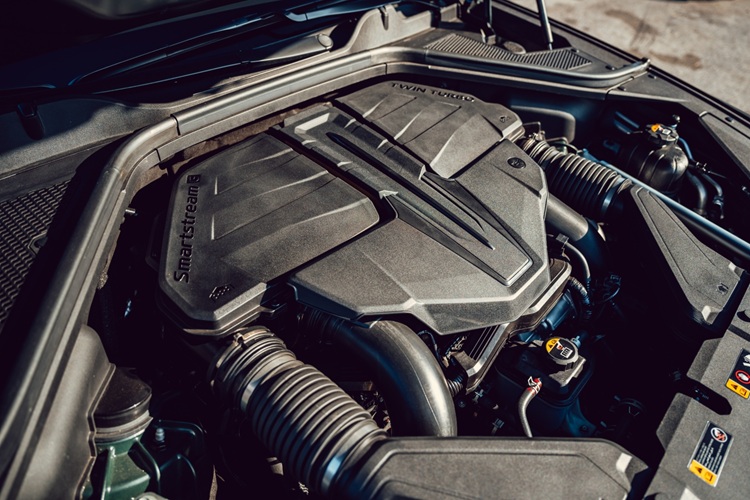
Looking at the 375-hp, twin-turbocharged 3.5-liter V-6 is paired with an eight-speed automatic transmission.

The 375-hp, twin-turbocharged 3.5-liter V-6 is paired with an eight-speed transmission.

GV80 Engine Choices

Powering the GV80 3.5T AWD is a 375-horsepower, direct-injected, twin-turbocharged 3.5-liter V-6. Sophisticated engineering includes hydraulic (“hydro”) motor mounts to damp noise, vibration, and harshness. The hydro mounts stabilize the engine while absorbing engine vibrations before they reach the chassis and the cabin.

This engine is not a hybrid, but it does use “mild” hybrid technology, such as for auto stop-start at idle.

Fuel-economy ratings for the 5,250-pound GV80 3.5T AWD are 16/22/19 mpg city/highway/combined. My driving averaged 14 to 17 mpg in town, and the onboard computer indicated 28.2 mpg on extended highway driving. With the 21.1-gallon tank, there should be a cruising range of around 525 miles.

The mileage ratings are competitive with comparable versions of the Audi Q7, BMW X5, and Mercedes-Benz GLE. But the Bimmer and Benz squeeze out two to three more mpgs per category, and they have slightly larger fuel tanks.

For 2026, Genesis introduced an entry-level 2.5T RWD GV80. The 300-hp engine has 311 lb.-ft. torque from 1,650-4,000 rpm. It offers slightly better fuel economy than the 2.5T AWD, 20/26/22 mpg city, highway, and combined. The 2.5T AWD has EPA-estimated fuel economy ratings of 19/24/21 mpg.

Premium fuel is recommended but not required for either engine.

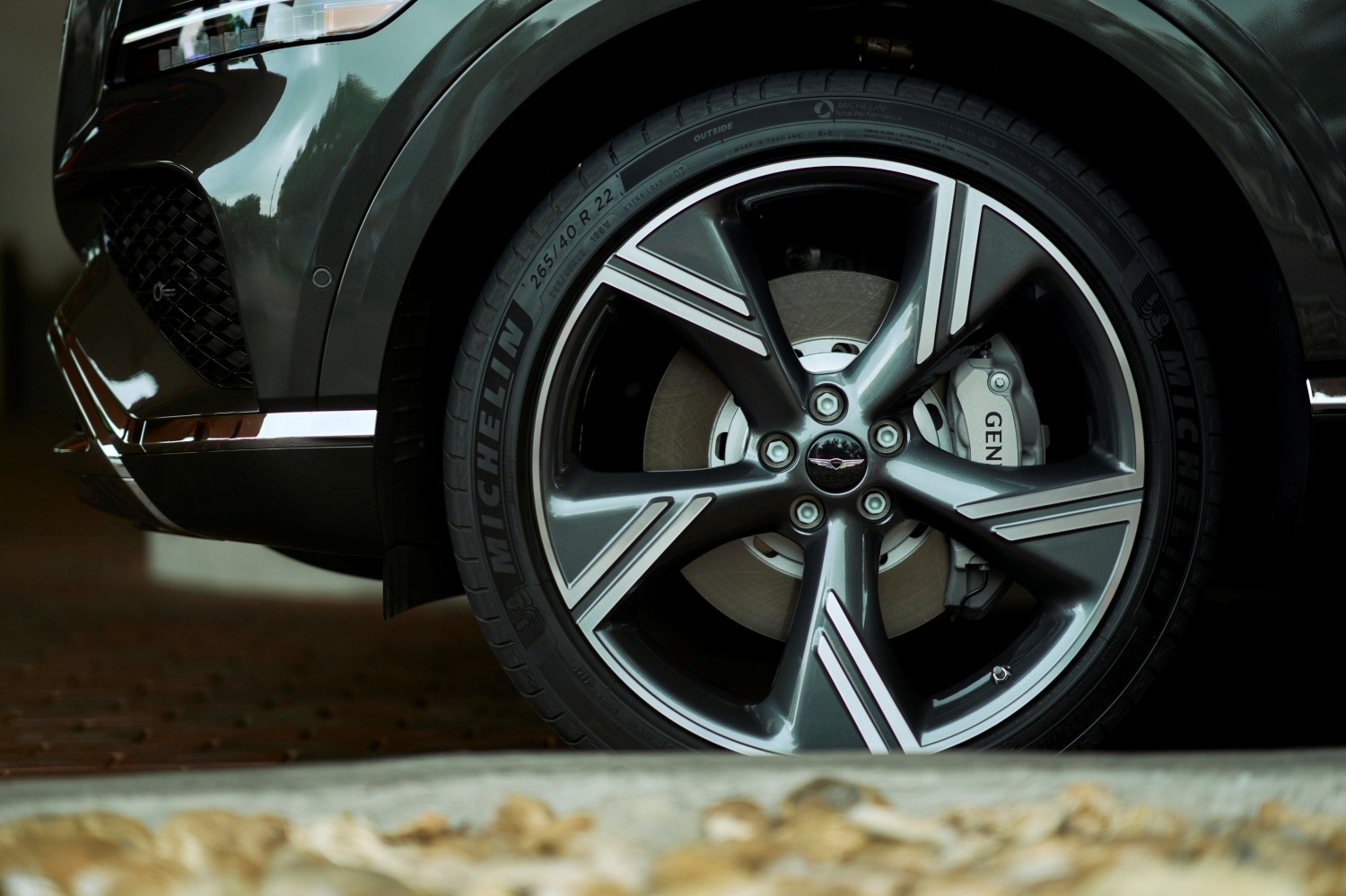
Looking at a 22-inch Michelin tire and wheel of the GV80

The GV80’s traffic-calmed ride quality is delivered by the broad contact patch of the 22-inch Michelin Primacy touring tires.

Ride and Handling

This substantial SUV is comfortable with its weight, pulling through big cornering maneuvers without heave and recoil. The steering weight is light and steady but controlled at high speed. Responses are flat and calculated, with no complaining from the 22-inch Michelins. The turning circle of 39.3 feet is wide but not unwieldy when tooling the shopping mall.

Acceleration uptake in Normal mode is smooth and measured. Sport mode opens the pipes, tightens the suspension, and sharpens throttle response.

A standout feature of the suspension is the electronically controlled system. It automatically adjusts to trim body movement and prevent harsh hits to the tires and wheels. A Road Preview feature uses the front-facing camera to anticipate speed bumps and potholes.

The traffic-calmed ride quality is enhanced by the broad contact patch of the 22-inch Michelin Primacy (265/40) all-season touring tires.

Head-toss is low over chunks and bumps. However, because of the ride height and heft, it is not as svelte as a large luxury sedan.

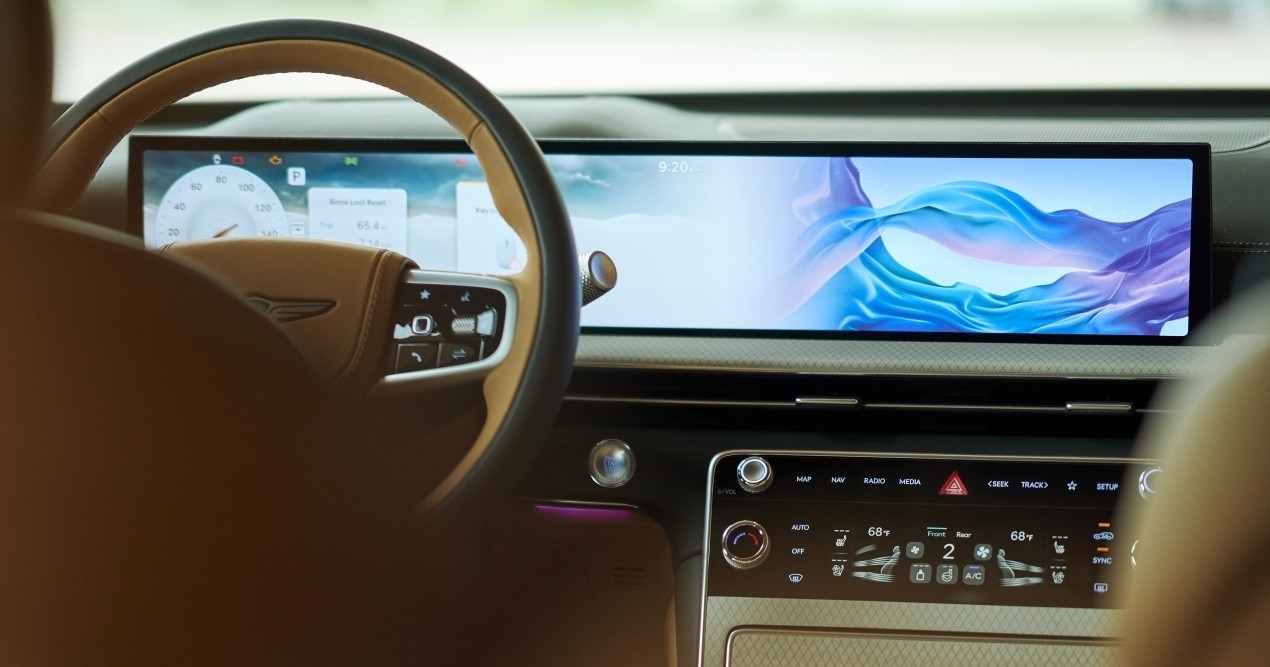
The GV80’s expansive 27-inch OLED screen infotainment display. The system coordinates five specific cabin elements.

The GV80’s expansive 27-inch OLED infotainment display.

GV80 Interior Function

Cabin specifications are a comfortable fit for the big-and-tall driver. There is almost 40 inches of front headroom and 41.6 inches of legroom. The driver’s seat is 16-way power-adjustable with Ergo Motion massaging, adjustable side bolsters, and cushion extension. The passenger has a 12-way power seat. Both front seats have four-way power lumbar and are heated and ventilated. There is even a heated center console lid.

The large-midsize cabin has plenty of real estate for controls and storage. The broad center-shift console features a large, knurled shifter dial and a smaller flat dial for infotainment. It is easy to spin through audio and navigation selections without taking eyes off the road. A generous e-bin with a sliding cover includes a wireless charging pad and a pair of USB charging ports.

A 27-inch OLED screen spans the instrument cluster and navigation screen. Dual blind-spot-view monitors trigger a rearview image in the speedometer or tachometer dials for left or right turns. The surround-view monitor provides front and overhead views, which are especially useful when threading the lines of tight parking.

Driver sightlines are open over the shoulder and at the front corners, conveniently provided by small corner glass at the base of the windshield pillars.

The GV80’s cabin is a soft-touch environment. Full Nappa leather, quilted and meticulously stitched, is impressive and inviting to the touch. Microsuede is used extensively from the headliner to the roof pillars and beyond. And there are progressive treatments for wood-like graining and metallic trim elements. The well-soundproofed cabin accentuates the 18-speaker Bang & Olufsen audio system.

The second row has full temperature control, heated-ventilated window seats, and power recline.

The second row has full temperature control, heated-ventilated window seats, and power recline. A 2021 Genesis GV80 is shown (Mark Maynard)

GV80 Second Row

Seating in the second row might be slightly more compact than that of some competitors. But it is a gorgeous space in the Prestige tester, with power-seat recline. Some of the features include flip-down ceiling vanity mirrors, electronic temperature-vent control, and heated and ventilated window seats. There’s also a chauffeur-style power fore-aft front seat adjuster for more legroom when needed.

The third row is on-demand seating for the school carpool, with 30.3 inches of knee-crunching legroom. But the seats power-fold flat from the driver’s area or the cargo area. And there are second- and third-row electronic air vents.

GV80 Cargo

There is plenty of cargo room for the long road trip. Fold a section of the 40/20/40 seatbacks for about 6 ½ feet of board space. The opening is 45 inches wide by 43 inches high with the back seat in position, and 30 inches to the headliner. The roller cover stows neatly in its own compartment under the cargo floor.

Why Buy the 2026 Genesis GV80?

Luxury should not be an IQ test just to figure out how to drive a vehicle. Some of the other highly electronic luxury SUVs are digitally intimidating to learn. Genesis smooths those learning curves with a glossy coat of empowering polish.

All of the GV80’s sophisticated displays, assist features, and drivability work together to lift the driver’s ownership experience.

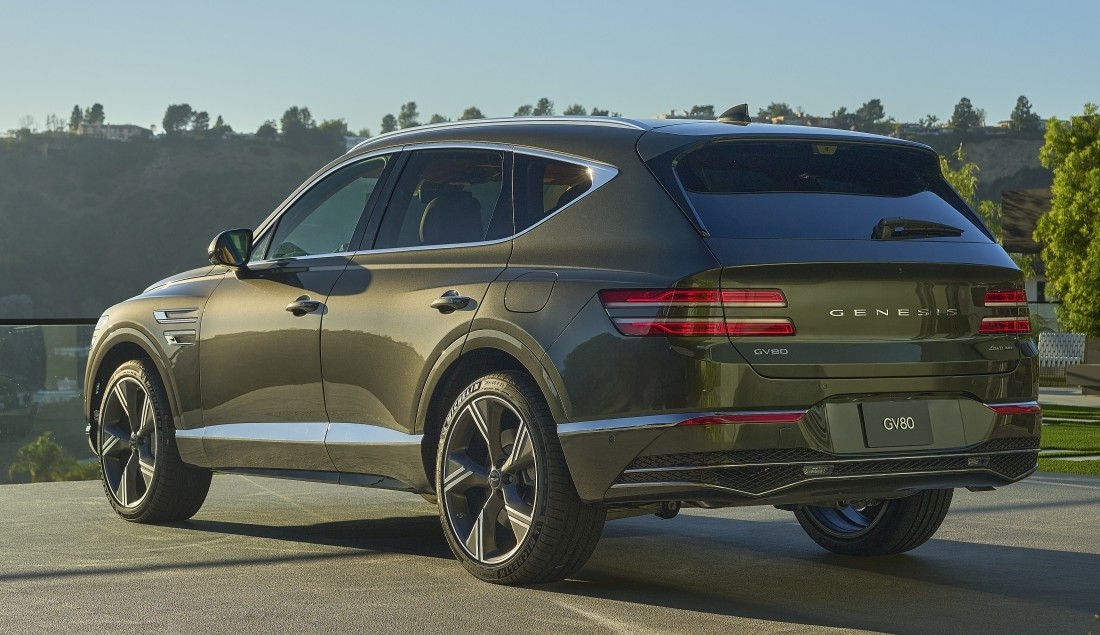
A stationary view of the Storr Green G80 rear end.

The GV80’s 16.2-foot-long body sits confidently on its wheels, which neatly fill the arches.

2026 Genesis GV80 3.5T Prestige Specifications

Body style: 5-passenger large luxury SUV; composed primarily of advanced high-strength steel

Engine: 375-hp 3.5-liter direct-injected and twin-turbocharged V-6, 391 lb.-ft. torque from 1,300-4,500 rpm, with idle stop-start

Transmission: 8-speed shiftable automatic with terrain-mode select all-wheel drive for snow, mud, sand

Fuel economy: 16/22/19 mpg city/hwy/combined; premium fuel recommended but not required

BY THE NUMBERS

Coefficient of drag: 0.33 Cd

Fuel tank: 21.1 gallons

Front head/leg room: 40.2/41.6 inches

2nd row head/leg room: 38.4/38.4 inches

3rd row head/leg room: 34.3/30 inches

Cargo space: 11.6 cubic feet behind third row; 34.9 cu.ft. behind 2nd row

Length/wheelbase: 194.7 /116.3 inches

Width/height: 77.8*/67.5 inches *not including side mirrors

Curb weight: 5,250 pounds (w/22-inch tires-wheels)

Turning circle: 39.3 feet, with 22-inch tires

Towing capacity: 6,000 pounds with trailer brakes

CHASSIS COMPONENTS

Brakes: Front 14.9-inch ventilated rotors with four-piston calipers; rear, single-piston calipers with a 14.2-inch rotor

Steering: Motor-driven power-assisted rack-and-pinion with variable gear ratio; turning circle, 39.3 feet (for both powertrains)

Tires-wheels: 22-inch alloy wheels with all-season tires; 265/40R22; temporary spare and tire-inflator

Suspension: Electronically controlled four-wheel multilink with Road Preview ( predictive technology that prepares for road imperfections before the car hits them); high-performance gas shock absorbers front and rear; electronic limited-slip differential

PRICING

GV80 Prestige 3.5T AWD: $83,825, including $1,495 freight charge; price as tested: $84,475, with Storr Green paint ($650)

Where assembled: Ulsan, South Korea

Warranty: 3-years/36,000-miles complimentary maintenance and service valet; 3-year map updates; free Genesis Connected Services; 5-years/60,000-miles bumper to bumper; 10-years/100,000-miles powertrain

2026 Corvette ZR1X Hybrid Hypercar

2026 Corvette ZR1X Hybrid Hypercar

Corvette and Indy 500 fans can build a realistic re-creation of the 2026 Corvette ZR1X Pace Car

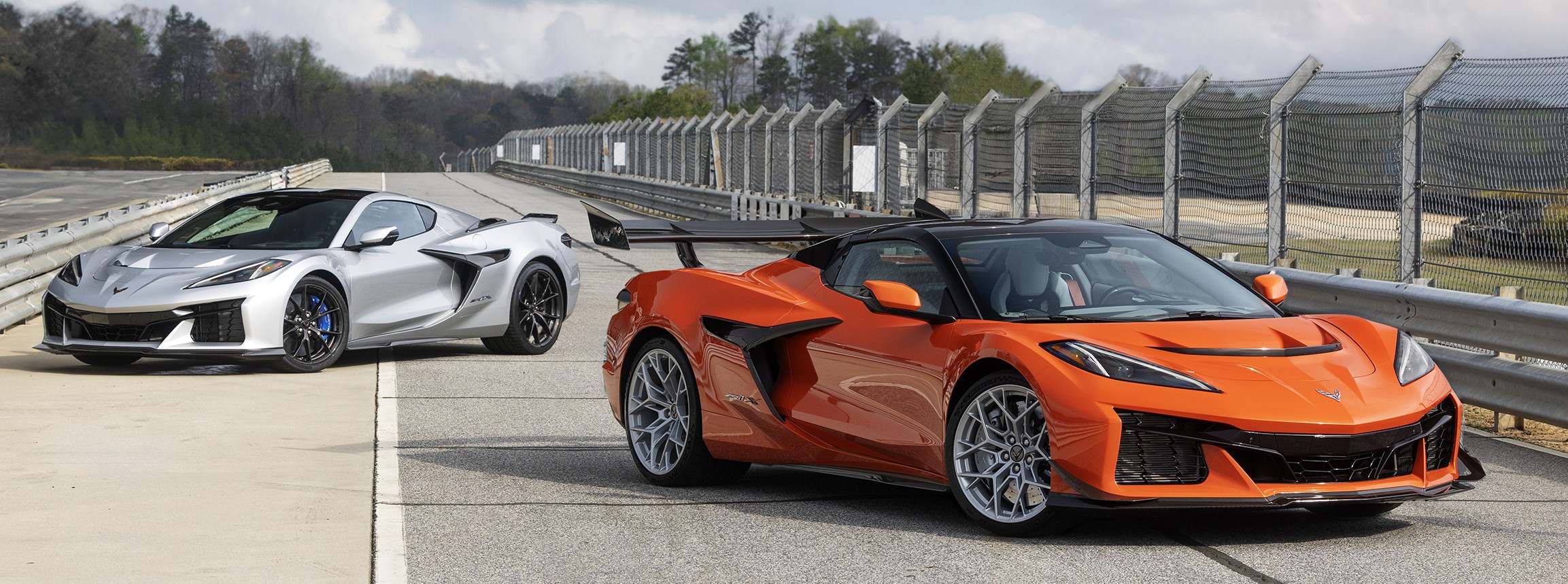
2 Corvette ZR1x models posed on a rack track, one car is orange, the other is silver

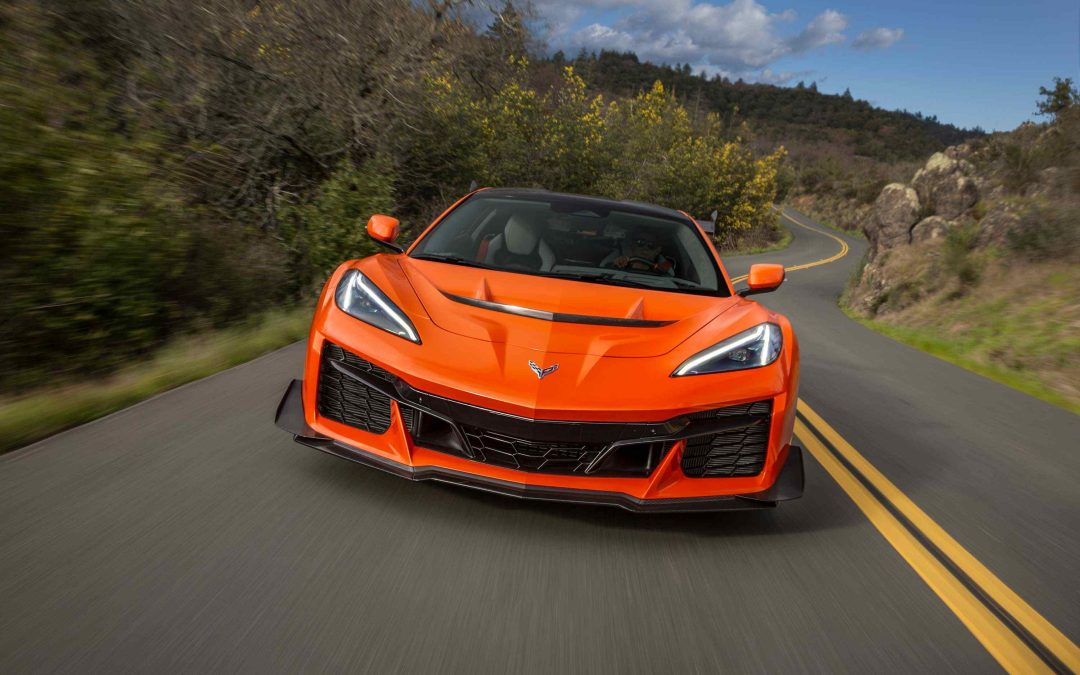
The all-wheel-drive ZR1X hybrid hypercar spools up a combined 1,250 horsepower. The powertrain uses a 186 hp electric motor on the front axle, integrated with a hand-assembled 5.5-liter twin-turbo V-8. (Photography courtesy of Chevrolet)

BY MARK MAYNARD

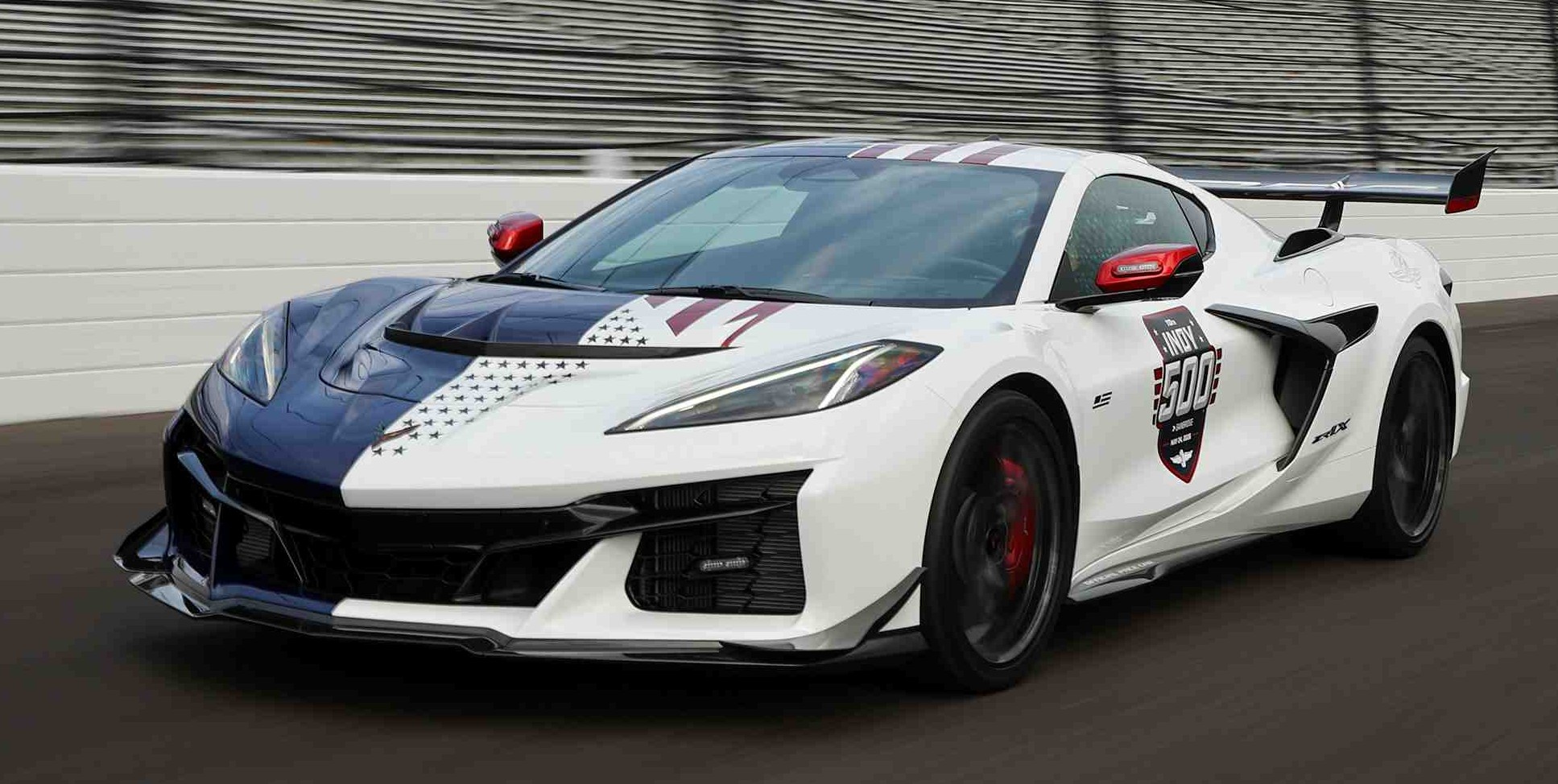
Corvette and Indy 500 fans can build a realistic re-creation of the 2026 Corvette ZR1X Pace Car. The hybrid hypercar has a 186 hp electric motor on the front axle. It also features a hand-assembled 5.5-liter twin-turbo V-8. Combined, the car delivers 1,250 hp and 828 foot-pounds of torque at 6,000 rpm.

Fans watching the Indy 500 will see the Corvette Pace Car in its slashing red, white, and blue livery. The graphics are a tribute to America’s 250th birthday celebration on July 4.

While that same paint scheme isn’t available to consumers, the powertrain package remains identical.

Production versions of the 2026 Corvette ZR1X come in coupe and convertible body styles. Pricing for the Coupe 3LZ with all-wheel drive starts at $223,195. This includes the $2,495 freight charge and $2,600 gas-guzzler tax. All Corvettes are built in Bowling Green, Ky.

Similarly, the ZR1X convertible starts at $233,195, including freight and GGT.

When fully loaded with choice options (see below), the total remains under a quarter million at $243,190.

  • Red Mist Metallic Tintcoat ($995);
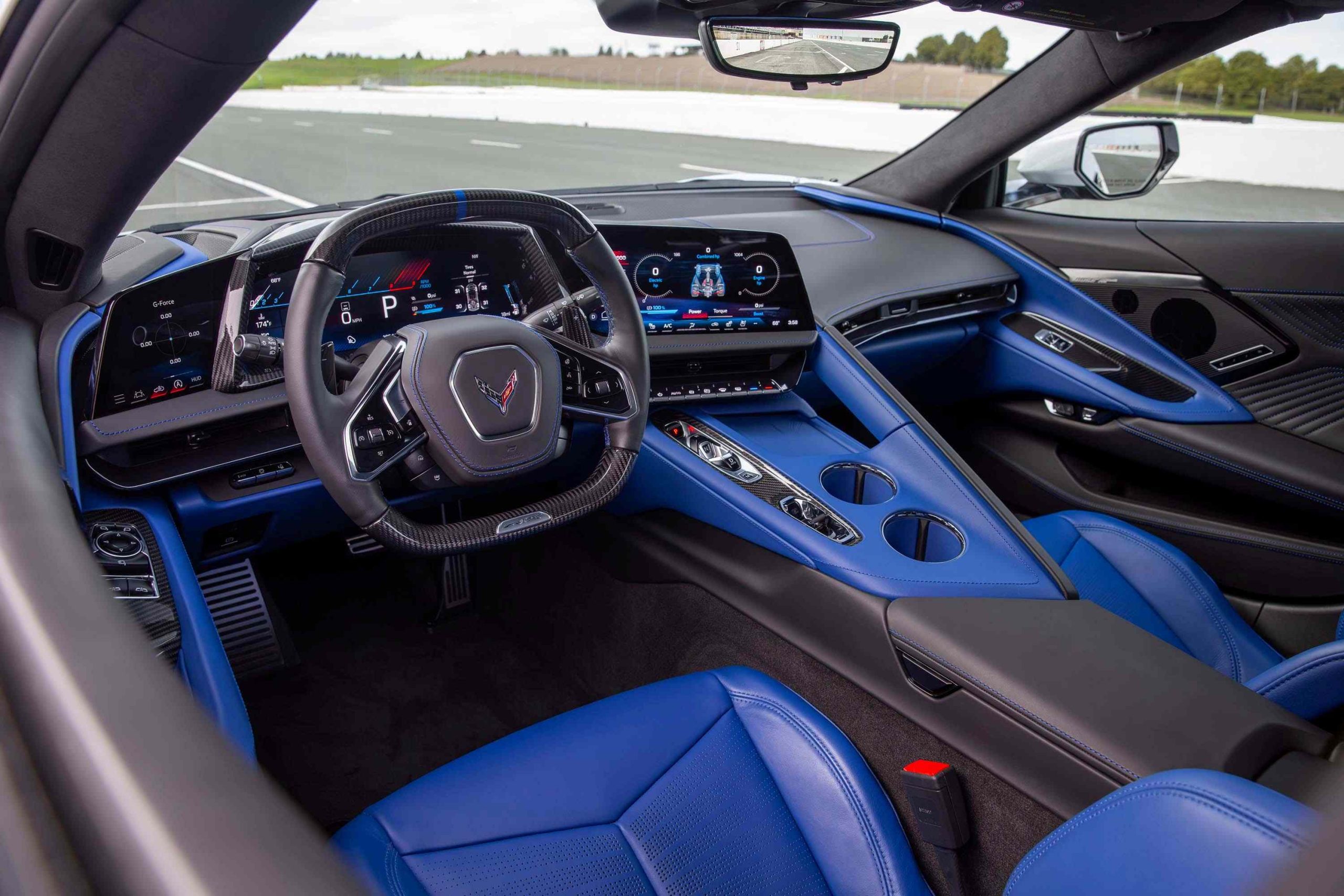
  •  No-cost Santorini Blue interior with Nappa leather upholstery with perforated inserts;
  • Stars & Steel Limited Edition ($9,995);
  • ZTK Track Performance Package ($1,500);
  • ZR1/ZR1X Carbon Fiber Aero Package, $10,495 (with a tire upgrade)
The 2026 Corvette ZR1X Pace Car.

The 2026 Corvette ZR1X Pace Car.

A Streetable Hypercar

The ZR1X is designed for the track, yet includes numerous comfort and convenience features for everyday driving.

Standard 3LZ features include:

  • Bose Performance Series 14-speaker audio system with stainless steel speaker grilles;
  • GT2 bucket seats with carbon fiber trim.
  • Sueded microfiber-wrapped upper interior trim package includes headliner (the material on the interior roof), visors, A-pillar trim (the trim around the windshield), and trim above the windshield and rear window.
  • Memory driver and passenger convenience package includes recall settings for the steering wheel and outside mirrors. It also saves seat positions for the driver and passenger, allows easy exit seat movement, and is key fob- or door-button-activated.
    • Side Blind Zone Alert adds visual side-mirror alerts when a moving vehicle is detected in the driver’s side blind zone.
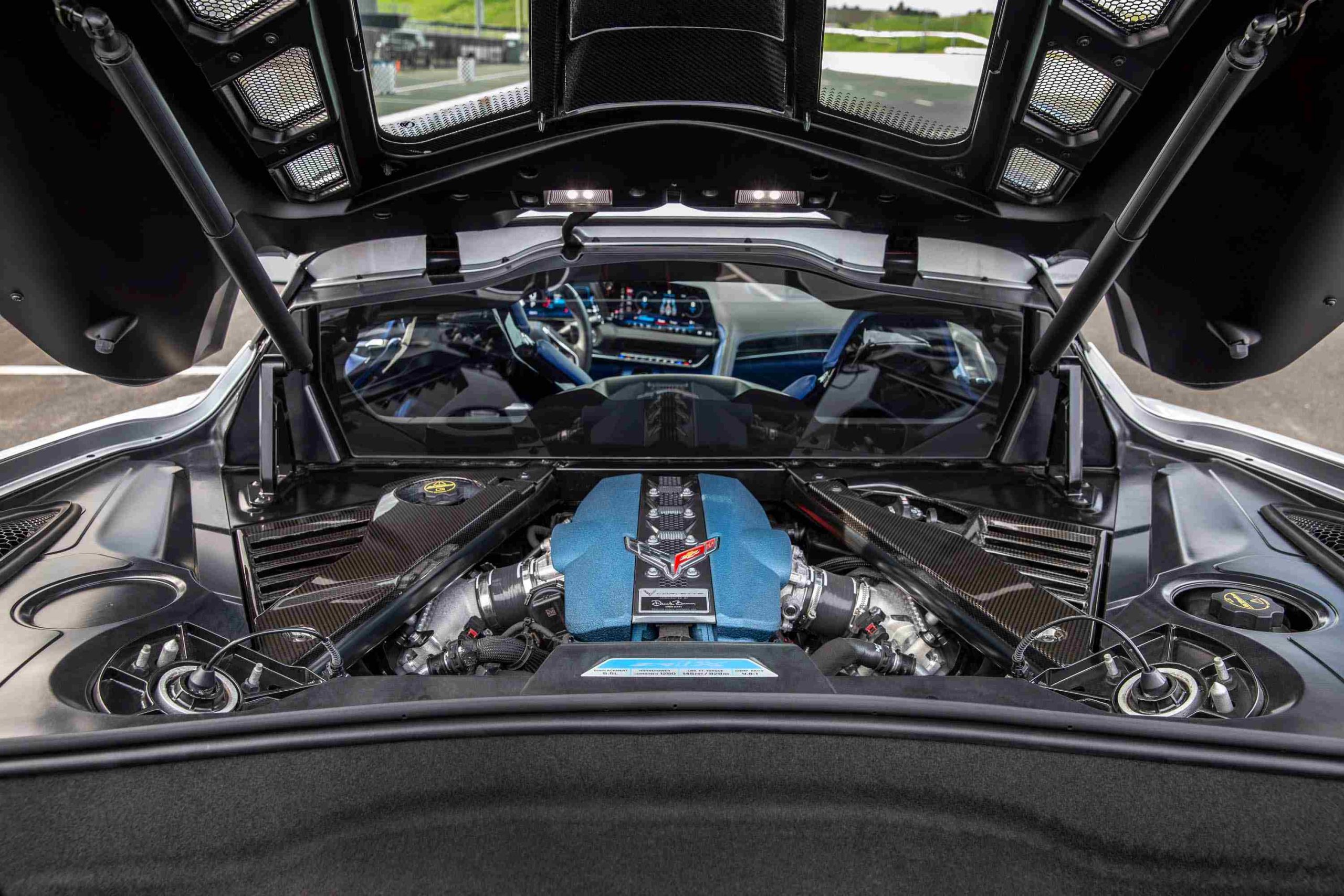
  • The engine appearance package includes decorative carbon fiber panels on each side of the engine (known as closeout panels), LED lighting in the engine bay, and a plaque displaying engine specifications.
  •  Visible carbon-fiber roof panel with body-color surround.And options are plentiful. Among them:
  • Racing stripes and graphics in several styles: $1,195.
  • Painted calipers in colors of red, yellow, orange, blue, and bronze: 695.
  • Jake logo and Corvette racing script wheel center caps, $250.
  • Carbon fiber and sueded microfiber-wrapped steering wheel, $695.
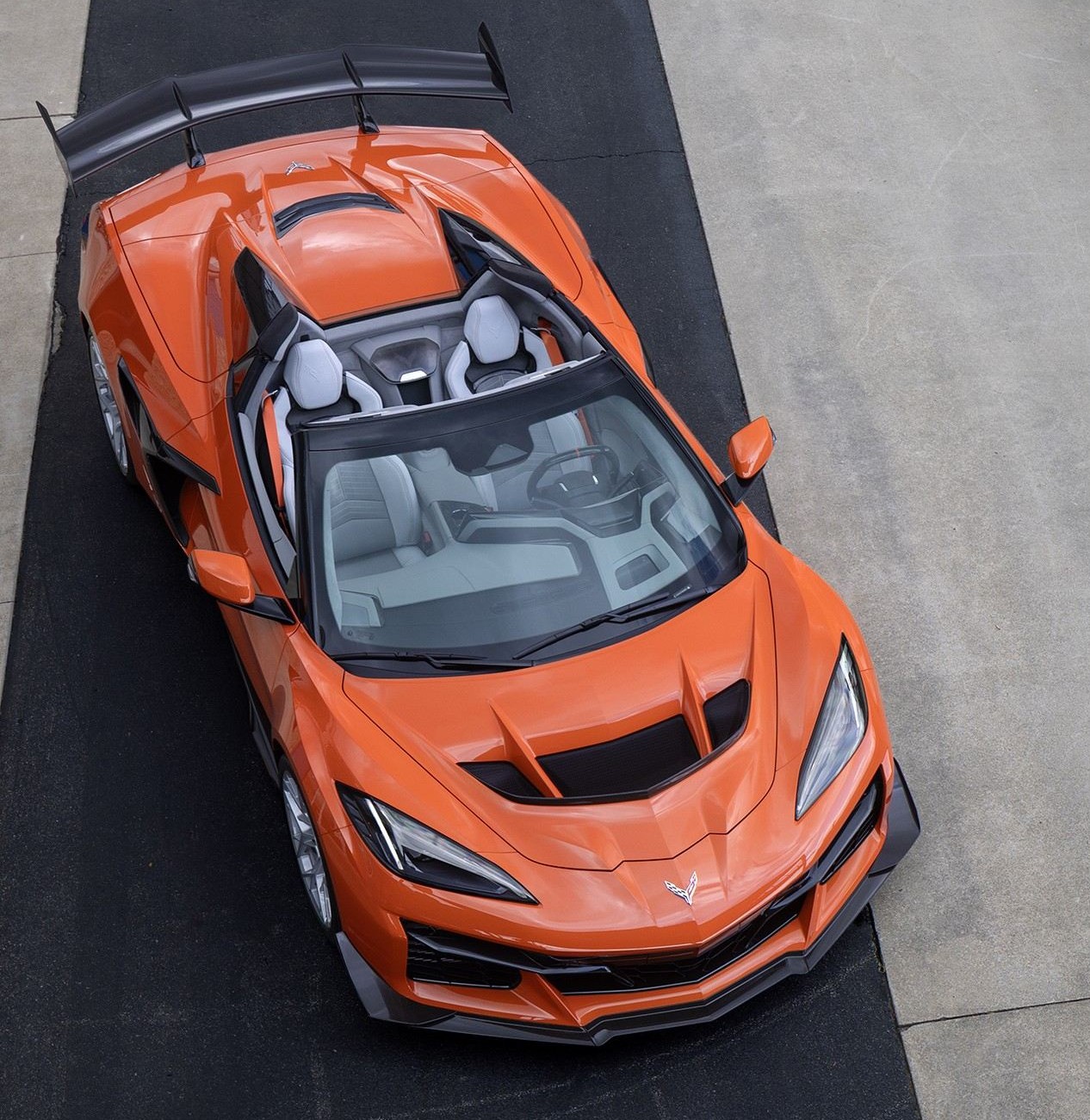
n overhead view of an orange ZR1X on the side of a race track

Corvette ZR1X convertible with ZTK Performance Package in Sebring Orange Tintcoat, $995.

2026 Corvette ZR1X Specifications include:

Engine: 5.5-liter twin turbocharged and direct-injected V-8, with high-output flat plane crank and 8,000 rpm redline.

Peak horsepower: 1,250 total combined hp. Of that power, 186 hp comes from the eAWD (electric drive unit). The car has 828 lb.-ft. torque at 6,000 rpm.

Performance: The top speed is 233 mph on the track. The car accelerates 0-60 in 1.89 seconds with the ZTK Performance Package ($1,500).

Transmission: 8-speed dual clutch automated manual. The double paddle declutch works by holding both paddles.

Wheels: 20-spoke Sterling Silver-painted forged aluminum wheels; front wheels: 20 by 10 inches; rear wheels: 21 by 13 inches.

Tires: High-performance, run-flat summer-only tires: Michelin Pilot Sport 4S 275/30ZR20 front and 345/25ZR21 rear.

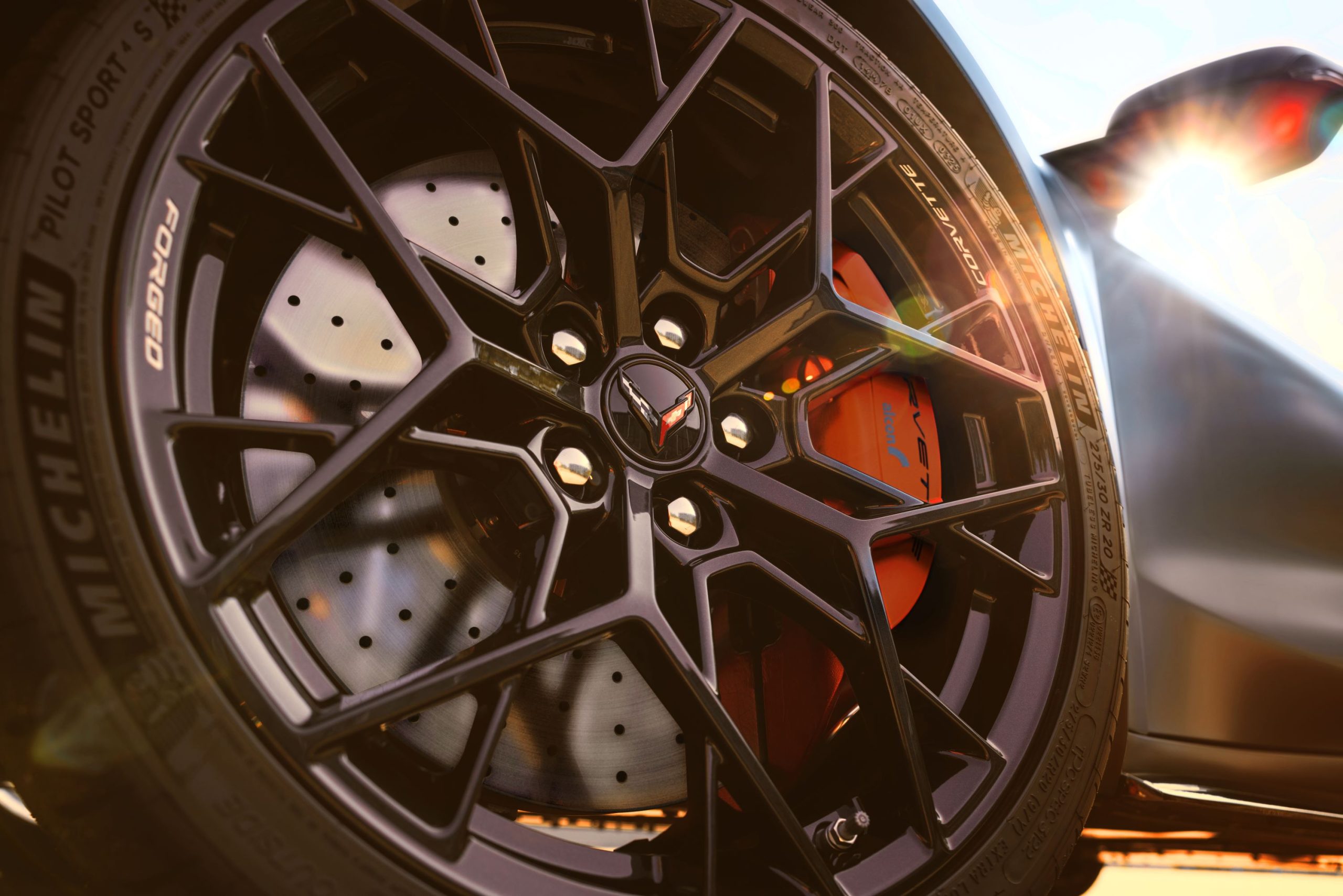
Orange painted calipers on 2026 Chevrolet Corvette ZR1X Quail Silver Limited Edition.

Orange painted calipers on 2026 Chevrolet Corvette ZR1X Quail Silver Limited Edition.

Braking: Alcon 10-piston front and 6-piston rear calipers are mated to 16.5-inch rotors, front and rear. These are the largest-diameter rotors ever offered for the Corvette. The rotors are carbon-ceramic and constructed from continuously woven carbon fiber threads.

The 5.5-liter twin turbocharged and direct-injected V-8, with engine dress-up kit.

The 5.5-liter twin turbocharged and direct-injected V-8, with engine dress-up kit.

ZR1X Competitors

The 2026 Corvette ZR1X delivers apex-predator engineering at a fraction of the cost of its European counterparts. Below are just a few competitors to the ZR1X:

  • 518-hp Porsche 911 GT3 RS (992), 0-60 mph in 3 seconds: Starts around $250,000
  • 970-hp Lamborghini Temerario, 0-60 in 2.7 seconds: $613,885
  • 690-hp/740-hp McLaren Artura Spider / 750S: 0-62 mph 3.0 seconds (Spider), 2.7 seconds (750S): $260,400 to $365,100 (750S),
  • 1,001-hp Lamborghini Revuelto AWD, 0-60 in less than 2.3 seconds: Starts at $608,358
  • 1,016-hp PHEV Ferrari SF90 XX Stradale AWD, 0-60 in less than 2.3 seconds: Starts at $844,000

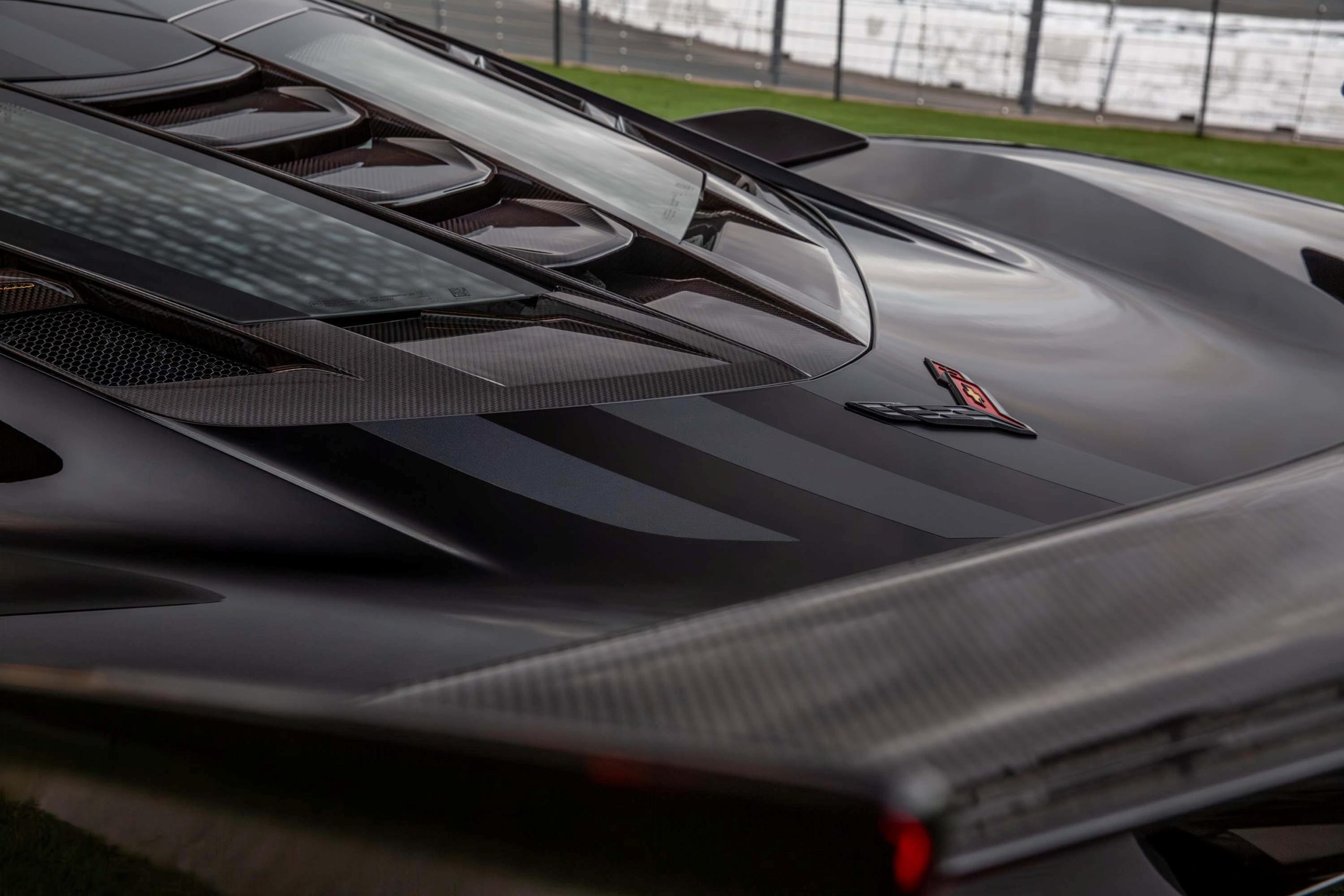
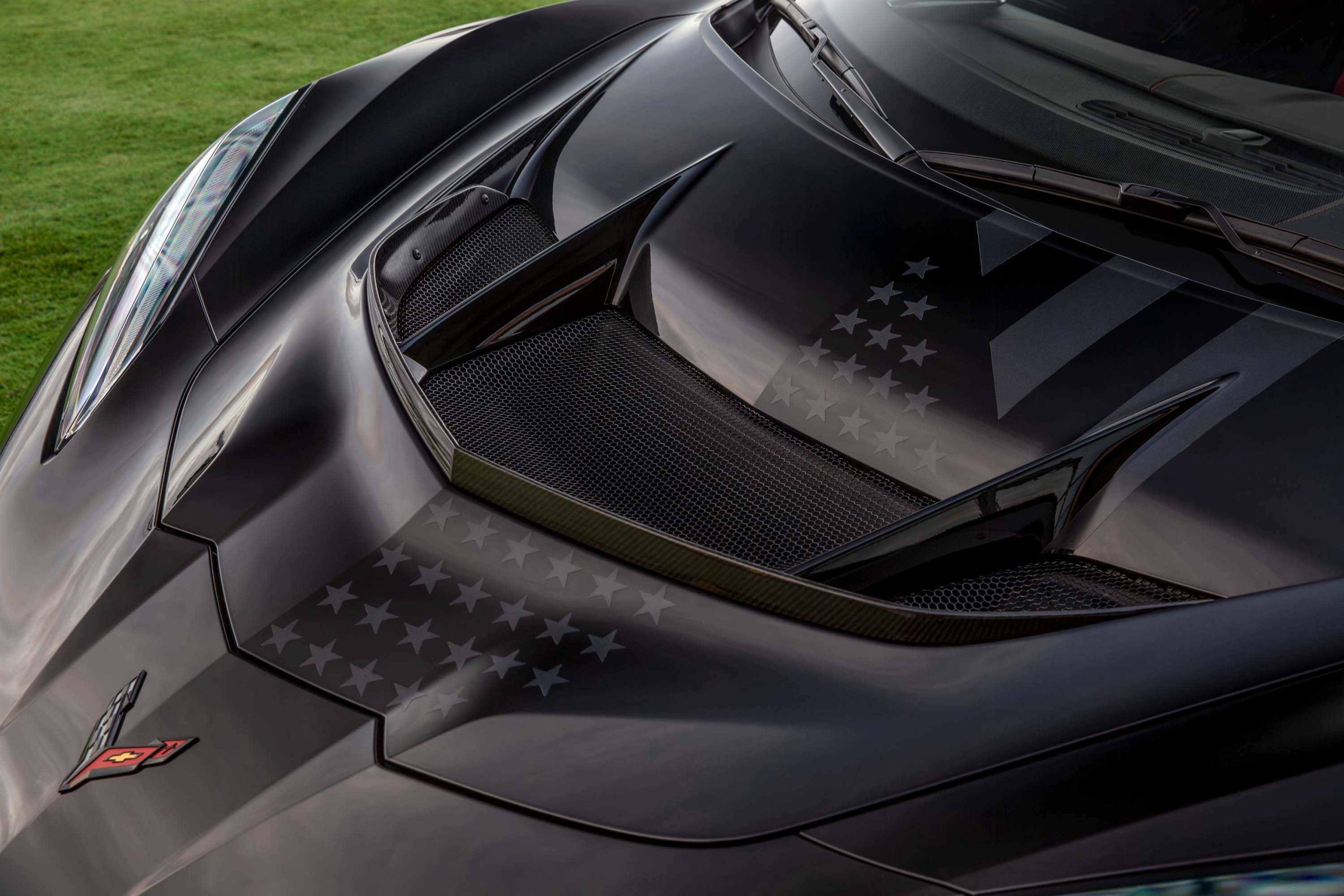
Stars & Steel Limited Edition, $9,995:

Black carbon fiber and graphics on the rear deck

The Stars and Steel Collection features dark metallic finishes and celestial accents.

This package is inspired by the pace car design and is recommended for an authentic re-creation. The Stars and Steel Collection features dark metallic finishes and celestial accents. The package is not made of steel. Included are:

  • American-flag-inspired full-length stripes and commemorative details.
  • Available in Arctic White exterior with Satin Silver stripes and commemorative details with Santorini Blue interior or Black exterior with Satin Black stripes and commemorative details with Adrenaline Red interior.
  • Special door sill plates.
  • Exclusive interior plaque with build sequence.
  • Torch Red seat belts.
  • Premium floor mats with Red stitching.
  • Gloss Black or Midnight Gray wheels with a red stripe are available for the Stingray. Gloss Black, Satin Graphite with Red stripe, or carbon fiber with Red stripe wheels are for the Z06. Gloss Black or carbon fiber with Red stripe wheels are for the E-Ray. Carbon Flash-painted or available carbon fiber wheels are for the ZR1 and ZR1X.
  • Black lug nuts.
  • Black exhaust tips.
  • Edge Red brake calipers and engine cover; coupe models also include engine lighting.
  • Stingray also includes a low-profile rear spoiler, front splitter, and Black rockers.
  • E-Ray also includes Carbon Flash exterior accents.
  • ZR1 and ZR1X coupes include a body-color roof panel.
  • ZR1 and ZR1X convertibles include a body-color convertible top.

Some options for the Stars & Steel package might require additional optional equipment.

Looking at a closeup of the hood with black graphics of the The Stars and Steel Collection

More carbon fiber and black graphics.

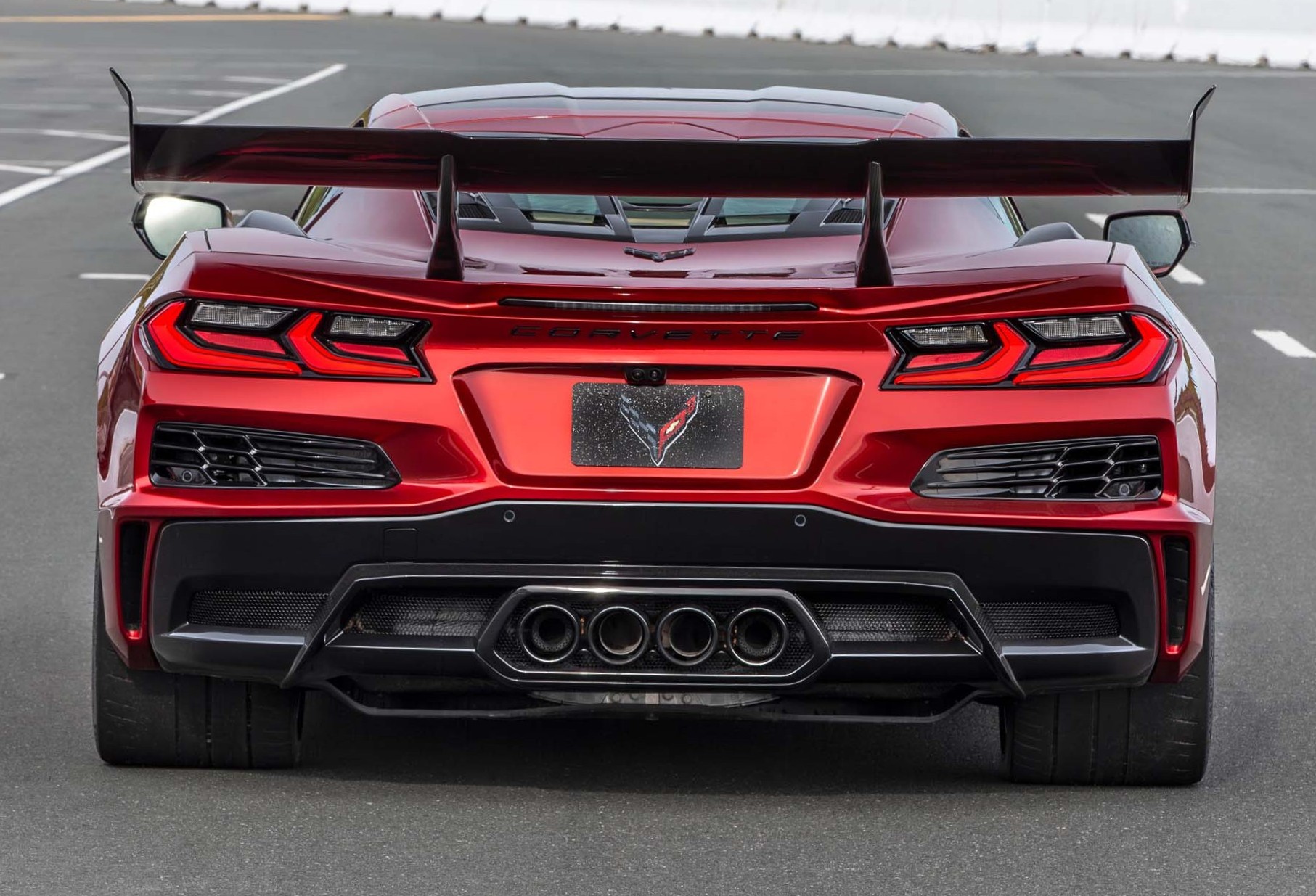
ZR1/ZR1X Carbon Fiber Aero Package, $10,495

  • ZR1/ZR1X-specific high-wing spoiler
  • Dive planes
  • Tall hood spoiler
  •  ZTK Track Performance Package, $1,500; adds Magnetic Selective Ride Control (an adaptive suspension system that adjusts shock absorbers for optimal comfort and handling), Michelin Pilot Sport Cup 2R ultra-performance, run-flat, summer-only tires, sized 275/30ZR20 in the front and 345/25ZR21 in the rear.
Looking at the rear end of a Torch Red ZR1X with quad black exhaust tips

Looking badass in Torch Red paint and black exhaust tips.

2026 Corvette ZR1

Corvette enthusiasts can save around $25,000 by opting for the non-hybrid, rear-wheel-drive ZR1. The convertible body style starts at $208,495, including a $2,495 freight charge and $3,000 gas-guzzler tax. The coupe starts at $198,495, freight and GGT included.

While not as quick to 60 as the ZR1X, it is a bargain supercar. The ZR1 shares the same ZR1X engine foundation: a 5.5-liter twin-turbocharged and direct-injected V-8 with a high-output flat-plane crank and an 8,000-rpm redline. The eight cylinders produce 1,064 hp and 828 foot-pounds of torque at 6,000 rpm. Top track speed is 233 mph. Acceleration from 0-60 is 2.3 seconds with the ZTK Performance Package ($1,500). By comparison, the ZR1X does 0-60 in 1.89 seconds.

Chevrolet says the Corvette ZR1 is unrivaled by any current production car priced under $1 million.

The no-cost Santorini Blue interior with Nappa leather upholstery.

The no-cost Santorini Blue interior with Nappa leather upholstery.

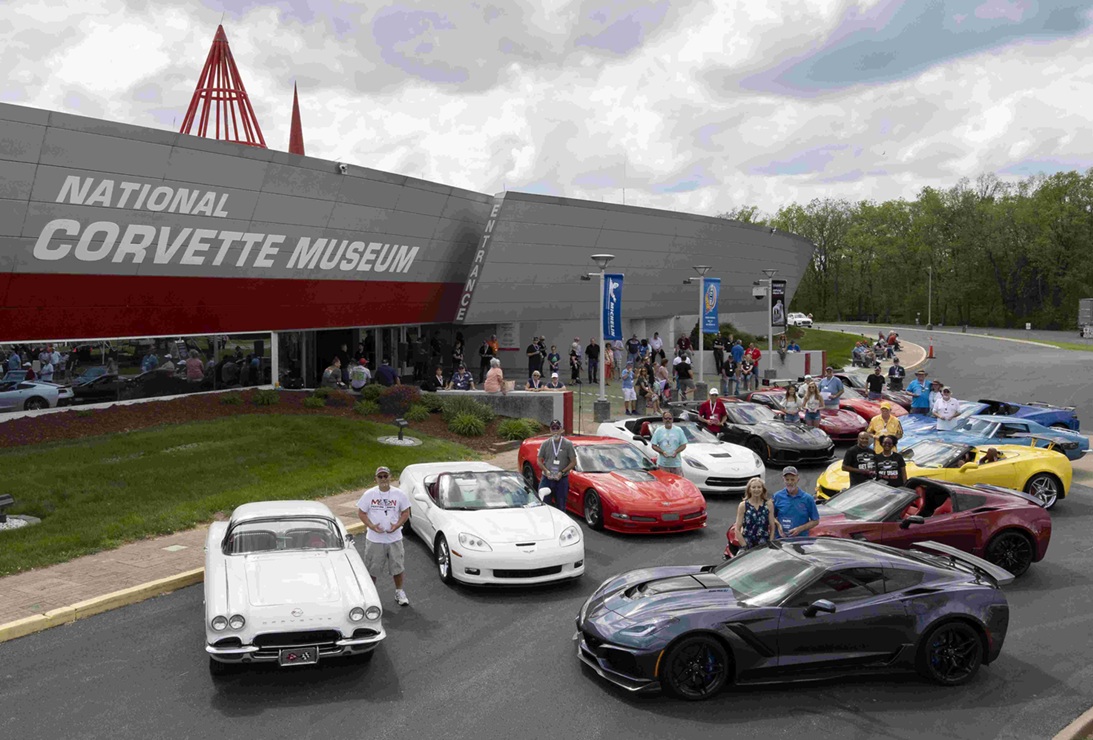
Corvette Museum Delivery, $1,495

The Corvette ZR1 and ZR1X, and all Corvettes, are built at General Motors’ Bowling Green Assembly Plant in Kentucky.

The museum-delivery package includes:

  • Your new Corvette will be delivered at the National Corvette Museum in Bowling Green, Ky. The NCM will contact you to schedule your museum delivery appointment. They will also provide information about the required documents.
  • The new owner and up to three guests will receive a VIP tour of the museum, including a viewing of your new Corvette on display.
  •  Delivery presentation, followed by a drive-off ceremony.
  • Personalized interior plaque with your name, VIN, and the NCM logo, commemorating the Museum Delivery (replaces the standard plaque).

Visit CorvetteMuseum.org for further details on the NCM Delivery Program and other unique programs. Available on sold orders only, not available with accessory wheels.

A group of Corvette owners displays a lot of cars out front of the National Corvette Museum in Bowling Green, Ky.

Owners gather outside the museum.

How Much Do You Want To Spend?

Configure your 2026 Corvette ZR1 at the Chevrolet consumer website.

And build your ZR1X here.


“See the USA in Your Chevrolet” Advertising Campaign

“See the USA in Your Chevrolet” Advertising Campaign

 A year of special Chevrolet promotions will honor America’s 250th anniversary and American culture.

  •  First up is the collaboration with country artist Brooke Lee singing (fearlessly?) atop Castle Rock in Utah.

the 1,400-foot peak of Castle Rock, Utah, with a helicopter hoisting a silverado pickup to the top

Chevrolet hoists a 2026 Silverado pickup to the peak of Castle Rock for its new “See the USA in Your Chevrolet” ad campaign. (Photos courtesy of Chevrolet)

BY MARK MAYNARD

Chevrolet has pulled from its archive of advertising ditties a re-energized version of “See the USA in Your Chevrolet.”

Reverberating in the echo of the 1951 rendition by Dinah Shore, country music star Brooke Lee sings a modern interpretation. Her passionate singing resonates almost as much as the setting. Castleton Tower at Castle Rock, Utah, is about 20 minutes from Moab.

The ad campaign is Chevrolet’s tribute to America’s 250th anniversary and a celebration of motoring in the USA.

Just as it did in the 1950s, the catchy melody seeps into your brain and won’t let go. Singing 1,400 feet up from the tailgate of a 2026 Chevrolet Silverado ZR2, Lee appears to shrug off the freaky-scary setting.

Rising country music artist Brooke Lee on the tailgate of the Chevrolet Silverado ZR2 on top of Castleton Tower.

Rising country music artist Brooke Lee on the tailgate of the Chevrolet Silverado ZR2 on top of Castleton Tower.

Trailblazing Dinah Shore

Those of a certain maturity will remember the original songstress Dinah Shore. Her heartfelt rendition debuted in 1951 during her prime-time TV show, “The Dinah Shore Show.” She closed the show by singing the “See the USA” anthem.

Shore is said to be the first woman to host her own TV show. Her musical variety show evolved from her earlier 15-minute programs, primarily on radio in the 1940s. Her hourlong TV show, “The Dinah Shore Chevy Show” (1956-1963), was the first major series broadcast in “Living Color” on NBC.

Her TV program established her iconic “See the U.S.A. In Your Chevrolet” theme and her signature “Mwah!” farewell kiss to the audience.

Shore had sung “See the USA” since the early 1950s, and the song was used in Chevrolet advertising after Shore’s show ended in 1963.

Singer and TV host Dinah Shore poses with the 1954 Chevrolet Corvette Corvair concept.

Singer and TV host Dinah Shore poses with the 1954 Chevrolet Corvette Corvair concept.

Towering Heights

Chevrolet’s ambition for the dramatic in advertising used the 1,400-foot Castle Rock location in 1964 and 1973. Then, as now, the ad team airlifted a Chevy Impala atop the towering precipice for TV and print advertisements.

View behind-the-scenes videos during the filming of the Stars and Steel campaign, special merch and apparel, and vehicle pricing here.

Singer Brooke Lee sitting on the tailgate of a 2026 blue Silverado pickup on Castle Rock

Country singer Brooke Lee atop the 1,400-foot Castle Rock peak,

2026 Chevrolet Stars & Steel Collection

The Brooke Lee commercial is part of a broader campaign to honor America’s semi-quincentennial. Chevrolet’s Stars & Steel Collection features modernized design elements, including the American flag and logos of the 250th.

The package, which goes on sale in spring 2026, will be available on five models in the 2026 Chevy lineup: Corvette, Silverado EV, Silverado LD, Silverado HD, and Colorado. Package pricing is to be announced closer to the on-sale date.

For every Stars & Steel vehicle sold, Chevrolet will donate $250 to nonprofits that support the veteran community.

Chevrolet’s Stars & Steel Special Collection will be available on five models in the 2026 Chevy lineup: Corvette, Silverado EV, Silverado LD, Silverado HD, and Colorado. Package pricing will be announced closer to the on-sale date.

Chevrolet’s Stars & Steel Special Collection will be available on five models in the 2026 Chevy lineup: Corvette, Silverado EV, Silverado LD, Silverado HD, and Colorado. Package pricing will be announced closer to the on-sale date.

Stars & Steel Appearance Packages

Chevrolet Corvette

The Corvette Stars & Steel Limited Edition will be an exclusive run of just 250 total units. It will be available on all models from Stingray to ZR1X, in coupe or convertible on 3LT and 3LZ trims only. Only the Corvette lineup will be limited to 250. Stingray 3LT to ZR1X 3LZ (AWD) coupe starting prices range from $84,245 to $223,195; convertible pricing ranges from $92,240 to $233,195. Retail prices include the $2,495 freight charge from Bowling Green, Ky.

The 2026 Corvette with rear spoiler showing in red the 250th logos

Black and “250” flag graphics on Corvette doors and spoiler ends.

Paint and interior choices will be Arctic White with a Santorini Blue interior or Black with an Adrenaline Red interior.

Each limited edition includes:

  • American Flag-inspired full-length stripes in Satin Silver or Satin
  • Black and “250” flag graphics on doors and spoiler ends
  • Unique sill plates and interior plaque featuring the build sequence number
  • Black Gloss, Carbon-Flash, or optional carbon fiber wheels (depending on model)
  • Red accents: Edge Red Calipers, Red Seat belts, Floor Mats with Red Stitching, and Edge Red Engine Cover on select models
  • Black exhaust tips and select accessories by model.

Chevrolet Silverado EV

The Silverado EV Stars & Steel Special Edition will be available on the RST Crew Cab trim. It features a Summit White or Black exterior colors, and a Sky Cool Gray interior with bucket seats.

Each special edition includes:

  • American Flag-inspired stripes in Satin Silver or Satin Black and “250” flag graphics
  • 24-inch high-gloss black wheels
  • Brembo heavy-duty brake system with red six-piston front calipers and larger 15.7-inch brake discs
  • Black nameplates.

Silverado Light Duty

The silver-gray hood decal on the 2026 Silverado Stars & Steel collection.

The hood decal on the 2026 Silverado Stars & Steel collection.

The Silverado LD Stars & Steel Special Edition is available on the RST Crew Cab Short Box 4WD. It pairs a 6.2-liter V-8 engine in Summit White or Black paint and a Jet Black interior.

Each special edition includes:

  • American Flag-inspired stripes in Satin Silver or Satin Black and “250” flag graphics
  • 22-inch high-gloss black wheels
  • Brembo performance brake system with red six-piston front calipers
  • Black exhaust tips
  • Performance air intake
  • 6-inch black rectangular assist steps
  • Protection Package including spray-on bedliner and wheelhouse liners
  • Dark Essentials blacked-out badging
  • Soft roll bed cover with logo
  • Convenience Package II and sunroof.

Silverado Heavy Duty

The Silverado HD Stars & Steel Special Edition is available on the LTZ Crew Cab Trail Boss 4WD. It pairs a 6.6-liter Duramax Diesel V-8 with Summit White or Black paint and a black interior with bucket seats.

A 2026 Chevy Silverado HD with flag hood graphic

The 2026 Silverado HD with hood flag graphic.

Each special edition includes:

  • American Flag-inspired stripes in Satin Silver or Satin Black and “250” flag graphics
  • Trail Boss Package w/ Spray In Bedliner
  • 20-inch high-gloss black wheels
  • Z71 Off-Road Package
  • LTZ Convenience Package II
  • Off-road high clearance assist steps
  • LTZ Plus Package
  • Power sunroof
  • Max trailering package
  • Gooseneck and fifth-wheel prep package
  • Soft roll bed cover
  • Floor liner package

Chevrolet Colorado

The Colorado Stars & Steel Special Edition is available on the Trail Boss Crew Cab. It pairs a 2.7-liter V-8, 4WD, and Summit White or Black paint with a black interior and bucket seats.

A Chevrolet Colorado showing the Dark Essentials badging

The America 250 logo on the 2026 Colorado Stars & Steel Special Edition.

Each special edition includes:

  • American Flag-inspired stripes in Satin Silver or Satin Black and “250” flag graphics
  • Midnight Package with sport bar and light bar
  • Dark Essentials badging
  • 20-inch high gloss black wheels
  • Convenience Package 2
  • Technology Package
  • Skid Plate Package
  • Black exhaust tip
  • Red tow hooks
  • Black rocker protectors
  • Spray-on bedliner
  • Soft roll bed cover
  • Floor liners.

Hyundai Tucson Hybrid Review

Hyundai Tucson Hybrid Review

2026 Hyundai Tucson Hybrid takes a victory lap before 2027 redesign
The fourth-generation 2026 Hyundai Tucson makes a value statement before a completely redesigned model debuts late this year for 2027.

The fourth-generation 2026 Hyundai Tucson makes a value statement before a completely redesigned model debuts late this year for 2027. (Photography courtesy of Hyundai USA or as credited)

Jump To Special Features

Hyundai Tucson Separators
What’s New for 2026?
The Alphabet Soup of Safety
Hybrid Performance and Fuel Economy
If the 12-Volt Dies
2026 Hyundai Tucson Hybrid Pricing
Hybrid Warranty Protections
High Priority 2025-2026 Recalls
Why Buy the 2026 Hyundai Tucson Hybrid?
Specifications

BY MARK MAYNARD

The 2026 Hyundai Tucson is wrapping up its fourth generation, which launched in the U.S. in 2005. The compact SUV graduates to the fifth generation with a complete redesign for the 2027 model year, expected by late 2026.

There are more than 15 non-luxury compact SUVs on sale in 2026, but just a few offer hybrid powertrains. The Toyota RAV4 is the top-selling model, followed by the Honda CR-V, the Mazda CX-50, and Subaru Forester Hybrid. The Tucson tucks in at No. 5, while leveraging a value play for “standard features per dollar.”

Hyundai maintains a rapid update cadence for its vehicles, typically including a major “refresh” every two years. The 2025 Tucson had one of those major updates, giving it a strong competitive boost in its twilight years.

Hyundai Tucson Separators

A major differentiator for the Tucson Hybrid from its competitors is its attention to refined materials, including plastics, metals, and fabrics. Much thought has gone into creating a livable and accommodating space. I particularly appreciate the bridge treatment of the front center armrest console. It puts the phone charging pad and cup holders in easy reach, with open stash space below.

The body style provides an open interior atmosphere with clear sightlines front, side, and over the shoulder. The Limited model’s acoustic windshield and front side glass are luxury-class. However, there is still noticeable road harshness inside at highway speeds. The suspension will also give a strong jolt at speed bumps and considerable head toss when transitioning entries and driveways.

Interior quality and refinement are rewarding, and the top Limited model has near-luxury finesse. It is also set off by a three-tone interior color and texture scheme for a sophisticated style. Up front and commanding, a panoramic curved display links two high-resolution 12.3-inch displays. One covers the digital instrument cluster, the other presents a wide view for navigation. This screen also has a split-screen for 360-degree camera views. A return to hard buttons for volume, tuning, and climate controls helps keep eyes on the road when adjusting. But even the digital buttons are easy to navigate.

While Tucson’s exterior styling has some character bulges and upswept lines, they do not impede headroom or cargo capacity. A dual-level cargo floor is a welcome asset.
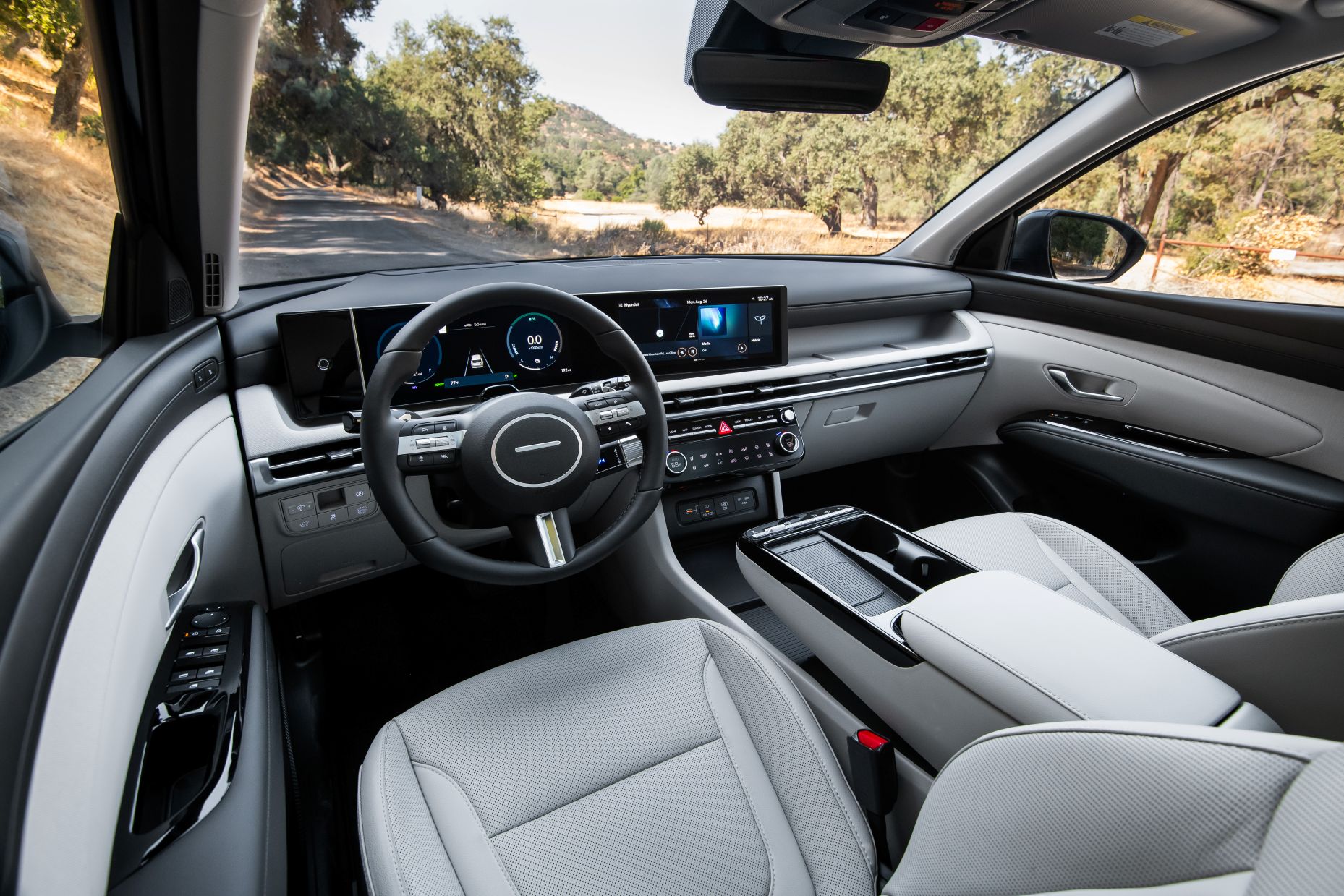
Looking at the light gray and black front seat area

The Tucson cabin is designed around a “software-defined” architecture.

What’s New for 2026?

Hyundai has made several adjustments to the lineup to improve value and accessibility:

Free AWD: All trim levels have standard HTRAC all-wheel drive.

New Entry Trim: The Blue SE trim has been added as the new base model, lowering the starting price for a gasoline-electric hybrid.

Trim Renaming: The previous “Blue” trim is now the SEL; the “SEL Convenience” has been renamed SEL Premium (on some non-hybrid configurations). The renaming better reflects an upgraded feature set, Hyundai says.

Discontinued Trims: The sporty N-Line hybrid trim has been dropped for the 2026 model year. (But a new high-performance trim level could be added for 2027, keeping pace with the new Toyota RAV4.)

Tech Tweaks: Features such as Digital Key 2 (using your phone as a key) are now available across more trim levels. However, the fingerprint scanner used on earlier high-end models has been removed.
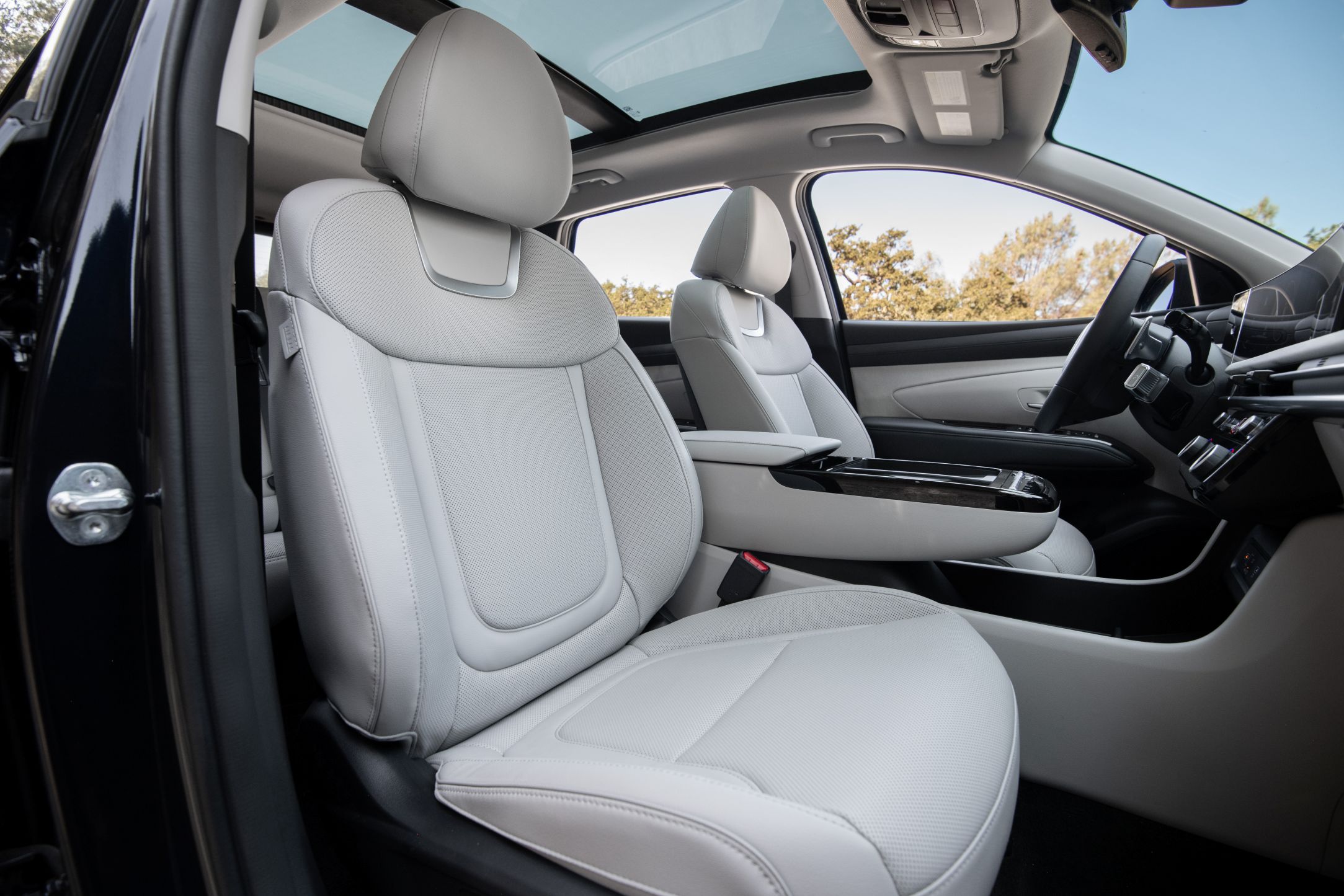
Looking into the passenger door of the Tucson hybrid at the neatly leather-trimmed seat

Eight-way power front passenger seat, too.

The Alphabet Soup of Safety

As much as Tucson is a value statement, it is a testament to advanced safety technologies. The 2025-26 Hyundai Tucson has earned the top IIHS Top Safety Pick+ rating and a five-star overall rating from the NHTSA.

The 2026 Hyundai Tucson standardizes an extensive safety suite, with infrared-based driver monitoring. The safety system, known as Hyundai SmartSense, uses a combination of radar, ultrasonic sensors, and cameras to provide 360-degree protection.

Among the updates:

Central Air Bag: Located between the front passengers, the bag is intended to prevent head-to-head contact during side-impact collisions.

Smart Cruise Control 2: An evolution of the standard system that now monitors driver responsiveness. If the driver is unresponsive, the system can bring the vehicle to a complete stop, activate hazard lights, and engage the electronic parking brake.
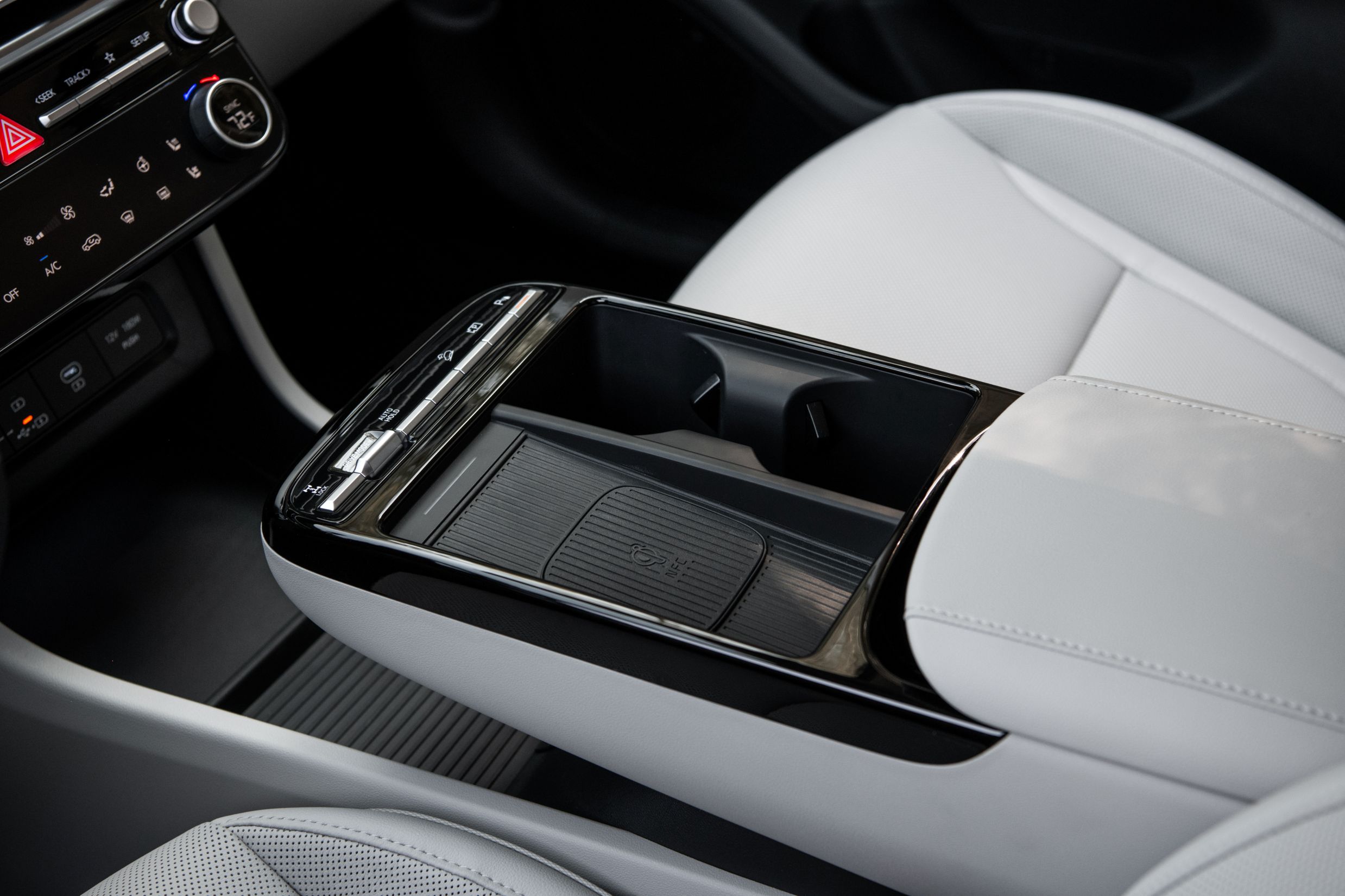
Looking down at the front center bridge console with wireless charging pad

Wireless charging pad and cup holders in easy reach.

Driver Assistance Technologies

FAW — Forward Attention Warning: An infrared camera mounted on the steering column monitors the driver’s eye gaze and attention levels.

DAW — Driver Attention Warning: Monitors driving patterns for signs of drowsiness or distraction.

FCA — Forward Collision-Avoidance Assist: Now includes detection for pedestrians, cyclists, and Junction Turning. The system can apply the brakes if it detects an oncoming vehicle while you are making a left turn.

LKA and LFA — Lane Keeping Assist and Lane Following Assist: LKA prevents unintentional drifting, while LFA provides active steering input to keep the car centered in its lane.

BCW — Blind-Spot Collision Warning: Alerts the driver to vehicles in a blind spot and can intervene if attempting a lane change.

RCCA — Rear Cross-Traffic Collision-Avoidance Assist: Detects vehicles approaching from the side while reversing and can automatically apply the brakes.

ISLA — Intelligent Speed Limit Assist: Map-data-based and camera-based to display speed signage.

SEW — Safe Exit Warning: Alerts passengers if a vehicle is approaching from behind before they open their door.
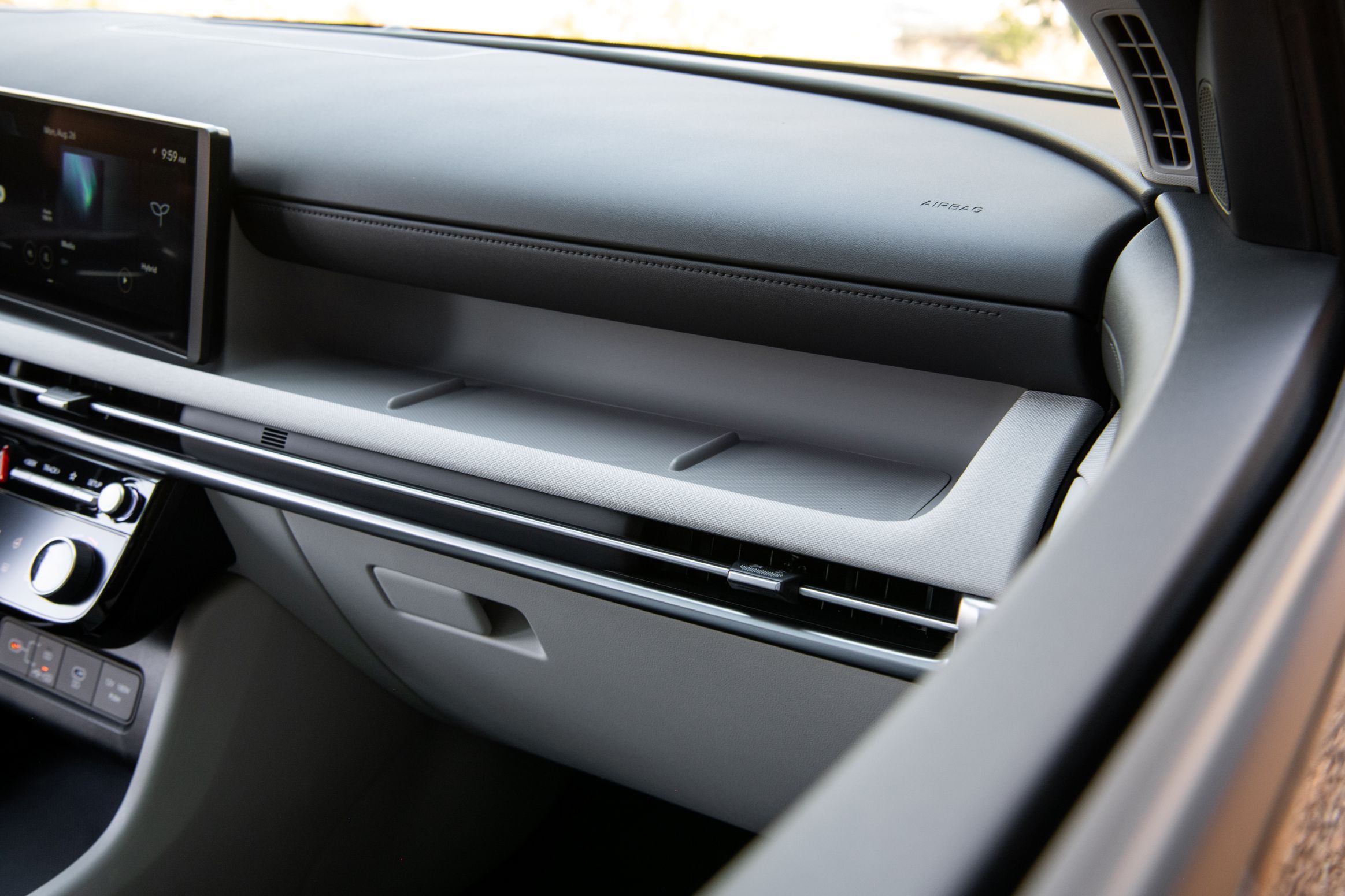
A segment shelf in the Tucson's instrument panel where a passenger could lay a phone

A useful design for passengers to lay a phone or other device.

Optional Safety Technologies

These features are typically found on higher trims like the Limited or as part of the SEL Convenience package:

HDA — Highway Driving Assist: A semi-autonomous system that combines Lane Following Assist and Smart Cruise Control to maintain speed and lane position on the highway.

RSPA — Remote Smart Parking Assist: While standing outside the car, the driver can move the vehicle into or out of a tight parking space using just the buttons on the key fob.

BVM — Blind-Spot View Monitor: Displays a live video feed of your blind spot in the digital instrument cluster when the turn signal is used.

SVM — Surround View Monitor: Provides a 360-degree bird’s-eye view of the vehicle to assist with parking and maneuvering.

PCA-R — Parking Collision-Avoidance Assist – Reverse: Specifically monitors for obstacles behind the car while backing into a spot and applies brakes if necessary.
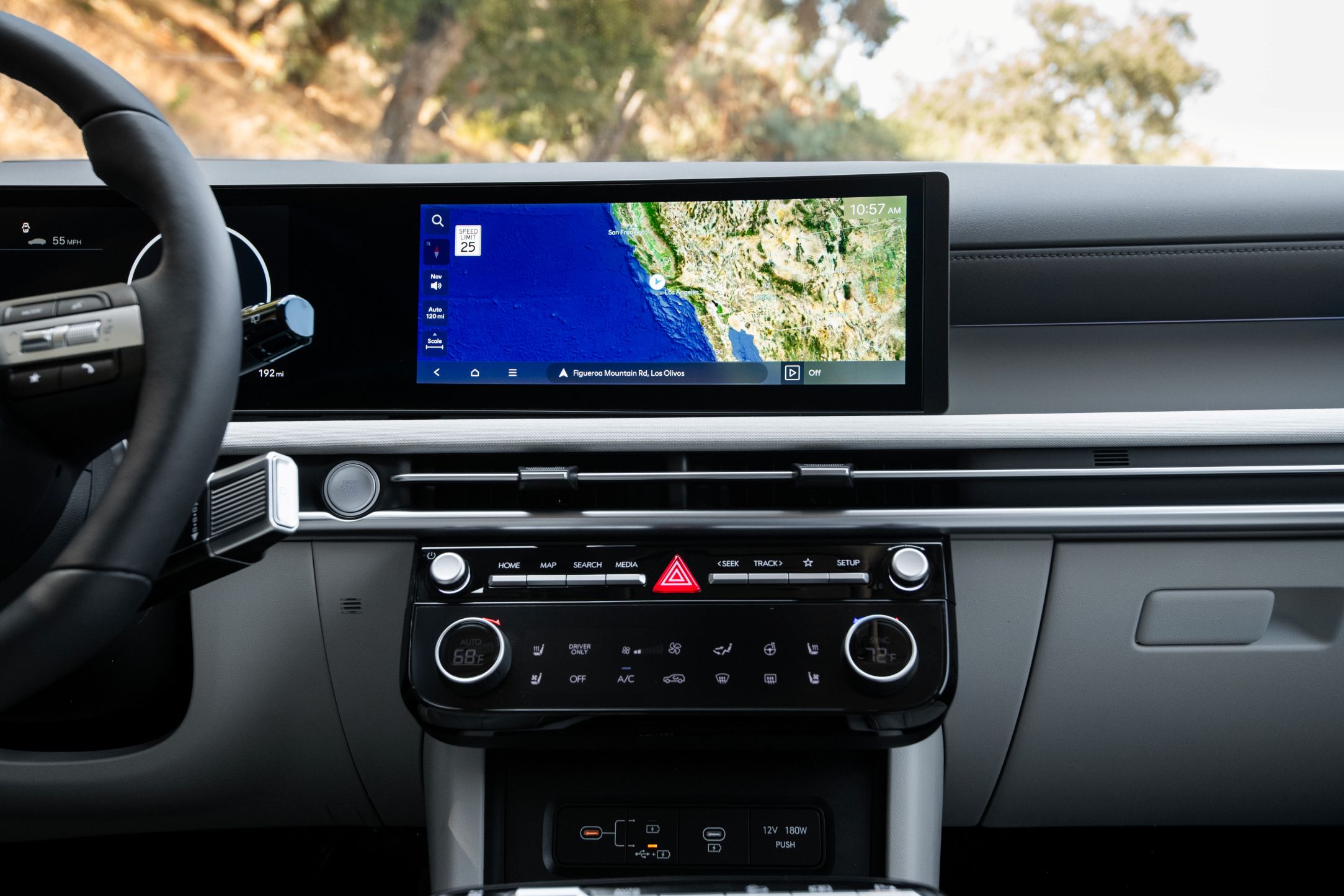
Looking at the wide navigation screen

Wide views for navigation, and a split screen for 360-degree camera views.

Hyundai Bluelink+

Hyundai Bluelink+ is a connected vehicle system that links an owner’s smartphone or smartwatch to the vehicle. The service is free for the original owner with no expiration.

Key Features:

Remote Services: Start the engine, adjust climate control (heat or cool the cabin), lock/unlock doors, and flash lights or honk the horn to find your car in a parking lot;

Safety & Security: Automatic collision notification (calls for help if air bags deploy), SOS emergency assistance, and stolen vehicle recovery/slowdown;

Vehicle Health: Receive monthly diagnostic reports, maintenance reminders, and “on-demand” diagnostic checks via the car’s touchscreen;

Navigation and Guidance: Send a destination from your phone directly to the car’s navigation system and use voice commands to find points of interest;

EV Specifics: For electric models, the owner can set start/stop charging, set charging schedules for off-peak hours, and monitor battery range.

 Tucson Hybrid Performance and Fuel Economy

Hyundai’s hybrid system in the 2026 Tucson features a 1.6-liter Smartstream turbocharged and direct-injected four-cylinder gasoline engine. It is paired with a 47.7 kW (64 hp) electric motor. Together, this hybrid system puts out 231 horsepower and 271 foot-pounds of torque.

A special feature of Hyundai’s hybrid powertrain is a six-speed automatic transmission rather than a mushy continuously variable automatic. Hyundai says the stepped six-speed better integrates with the electric motor. And those who enjoy driving will appreciate this transmission’s quicker acceleration.

I also appreciated that the 1.49 kWh lithium-ion battery allows considerable battery driving at low speeds. It pays green rewards for creeping through commuting traffic or tooling the mall parking lot.

New for the 2026 update is e-Motion torque vectoring. This system uses the electric motor to apply braking or torque to specific wheels to improve cornering and stability.
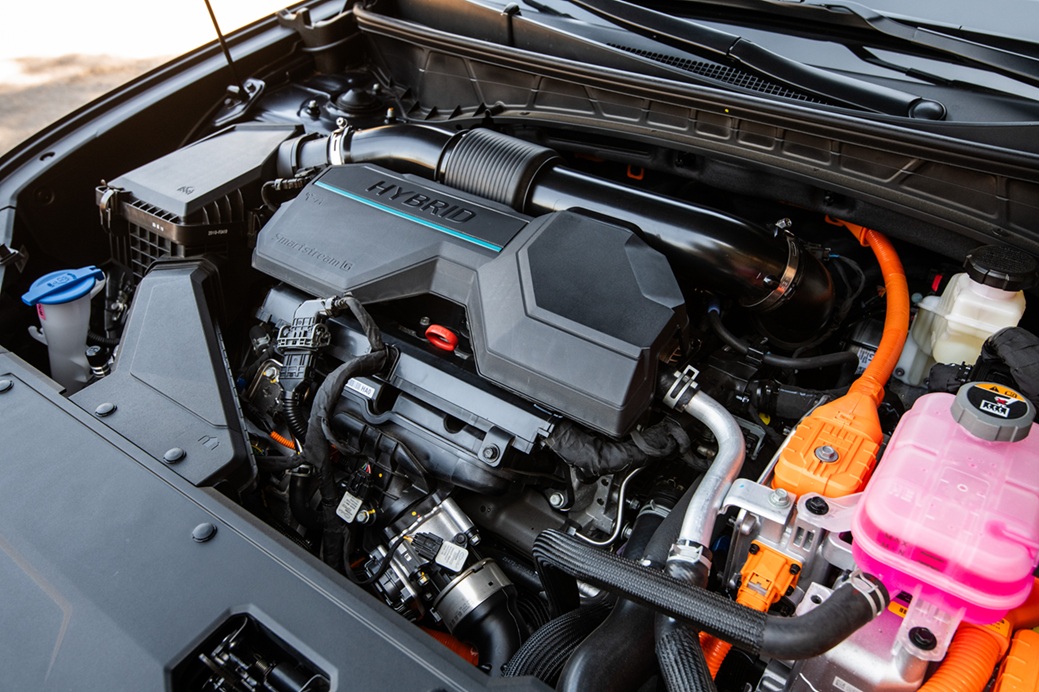
Looking at the engine bay and the tucson's hybrid engine

The Tucson Hybrid engine has fuel economy ratings of 36/37/36 mpg city/hwy/combined.

Hybrid Performance and Fuel Economy

Commuters seeking max fuel mileage should consider the Blue SE entry trim. It is the most fuel-efficient (and lightest) trim level, achieving an EPA-estimated 38 mpg combined. My Limited tester has mileage ratings of 36/37/36 mpg, using the recommended 87 octane fuel. On a highway drive with the cruise control set to 67 mph, the mileage climbed to 38.3 mpg. Around town, it was common to see mileage in the mid to high-20s.

Acceleration can be quite brisk, and it’s amplified in Sport mode. It gives a pronounced jump in throttle responsiveness, which I typically use when commuting to guard my line.
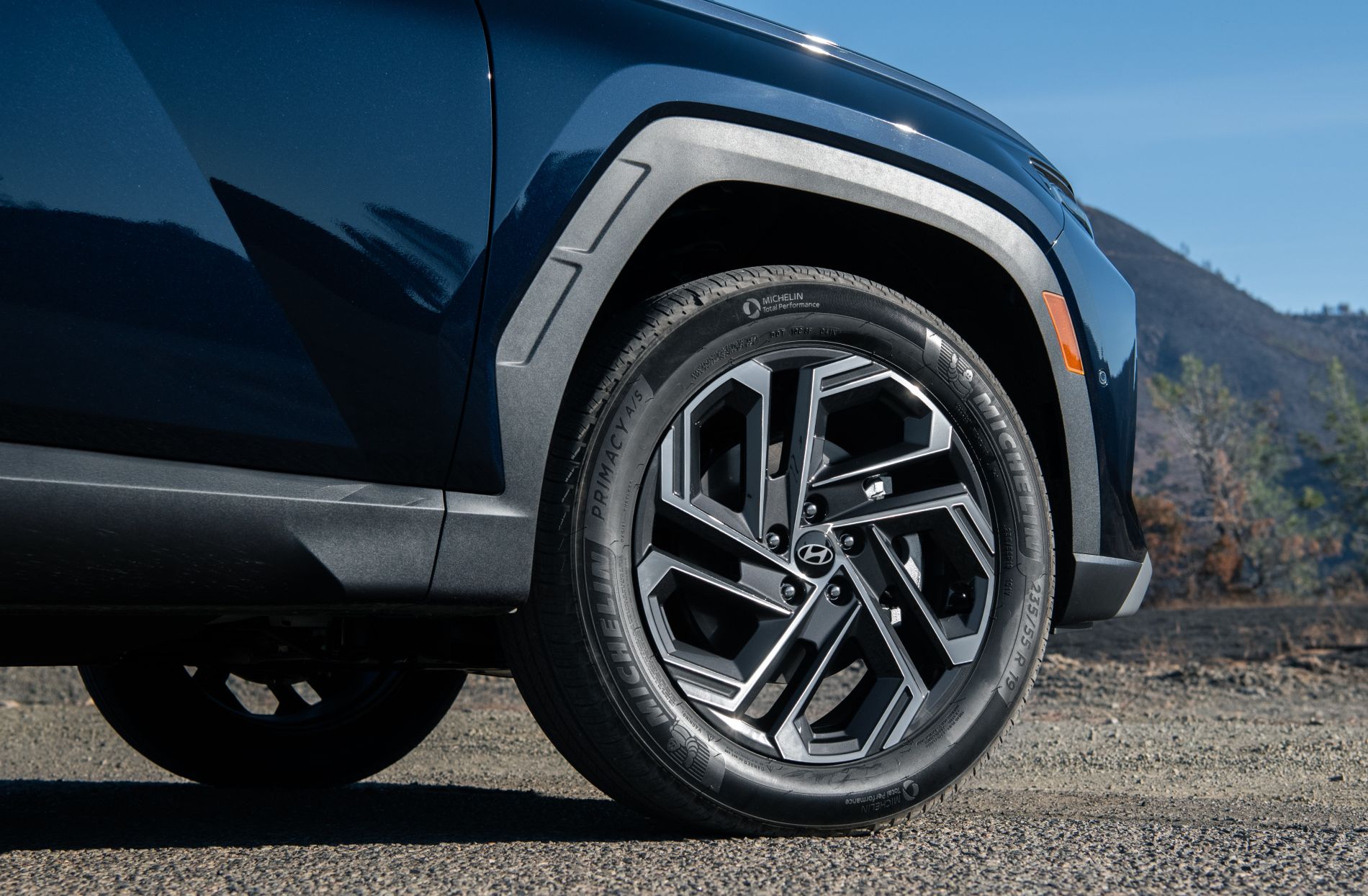
Looking at the right front tire and wheel of the Tucson hybrid

The Limited tester was fitted with 19-inch Michelin Primacy all-season tires.

If the 12-Volt Dies

Dead 12-volt batteries happen, and it is a special pain in a hybrid. With a dead 12-volt battery, there can be no cabin functions, such as unlocking doors or using interior lights. Hyundai simplifies charging a dead 12-volt with a battery reset button on the lower instrument panel. Rather than a separate 12-volt battery, Hyundai integrates a lithium-ion 12-volt battery with the high-voltage hybrid battery pack.

To protect this battery from draining completely (such as if a light is left on), the system will “disconnect” it. If the charge drops too low, making the car appear completely dead, it is a straightforward process to get started again.

How to Use It

1. Unlock the Car: If the battery is dead, use the mechanical key stowed inside the key fob to unlock the driver’s door.

2. Press the Reset Button: Once inside, press the 12V Battery Reset button. You may hear a “click” as the system reconnects.

3. Start the Engine: You have 15 seconds after pressing the button to start the vehicle.

4. Recharge: Once the car is in “Ready” mode, the high-voltage battery will automatically begin recharging the 12V system. The car should then be driven, or idled, for at least 30 minutes to ensure a full recharge.

Important Safety Note: If the car does not start after attempting a reset, it might need a traditional jump start using jumper cables. However, never use the 12V Battery Reset button while the vehicle is being jump-started; it could damage the electrical system.
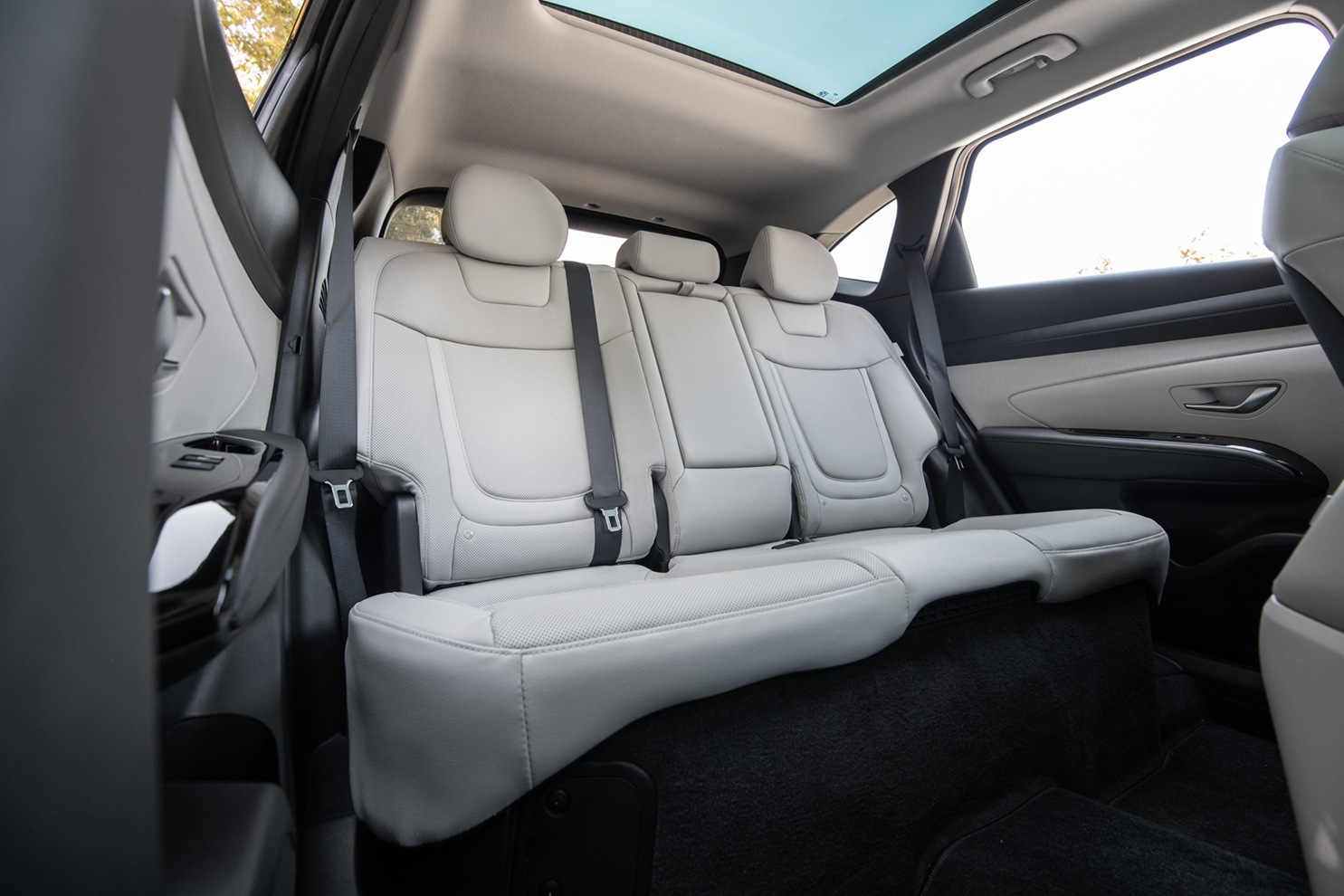
The three position back seat

The hybrid battery is located under the rear passenger seat to maximize cargo space and lower the vehicle’s center of gravity.

Hybrid vs. Plug-in Hybrid

If you are looking for more power, the 2026 Tucson Plug-in Hybrid could be the answer. The PHEV has a more powerful 72 kW (97 hp) electric motor and a larger 13.8 kWh battery. The combination increases total output to 268 horsepower while maintaining the same 271 lb.-ft. torque. of torque.

Because the PHEV has a larger battery, it has an EPA-estimated driving range of 32 miles on battery power. When starting with a full charge and a full tank of gas, the total driving range is approximately 420 miles. The plug-in’s fuel tank is smaller than the hybrid’s at 11.1 gallons. (On a road trip, the Tucson Hybrid could approach 500 miles of range with careful acceleration.)

Tucson Plug-in Hybrid pricing starts at $50,650 for the Limited and $42,425 for the SEL trim.

2026 Hyundai Tucson Hybrid Pricing

The 2026 Hyundai Tucson Hybrid is sold in four trim levels, all with standard HTRAC all-wheel drive. Retail starting prices below include the $1,600 U.S. freight charge from Ulsan, Korea.

Blue SE: $34,050. Key features include 17-inch alloy wheels, 12.3-inch touchscreen, Smart Cruise Control;

SEL: $36,000, including heated front seats, hands-free power liftgate, wireless charging;

SEL Convenience: $37,000, including panoramic sunroof, navigation, 19-inch wheels;

Limited: $43,675, including Bose premium audio, ventilated seats, and a surround-view monitor. (An extended list of standard features is below in the specifications chart.) My Limited tester came to $43,665 with carpeted floor mats, $240, which appear to be of good quality. Most buyers will also want to opt for the roller cargo cover ($205) to shield from prying eyes.

Check current Hyundai pricing here. And look here for special offers and promotions.
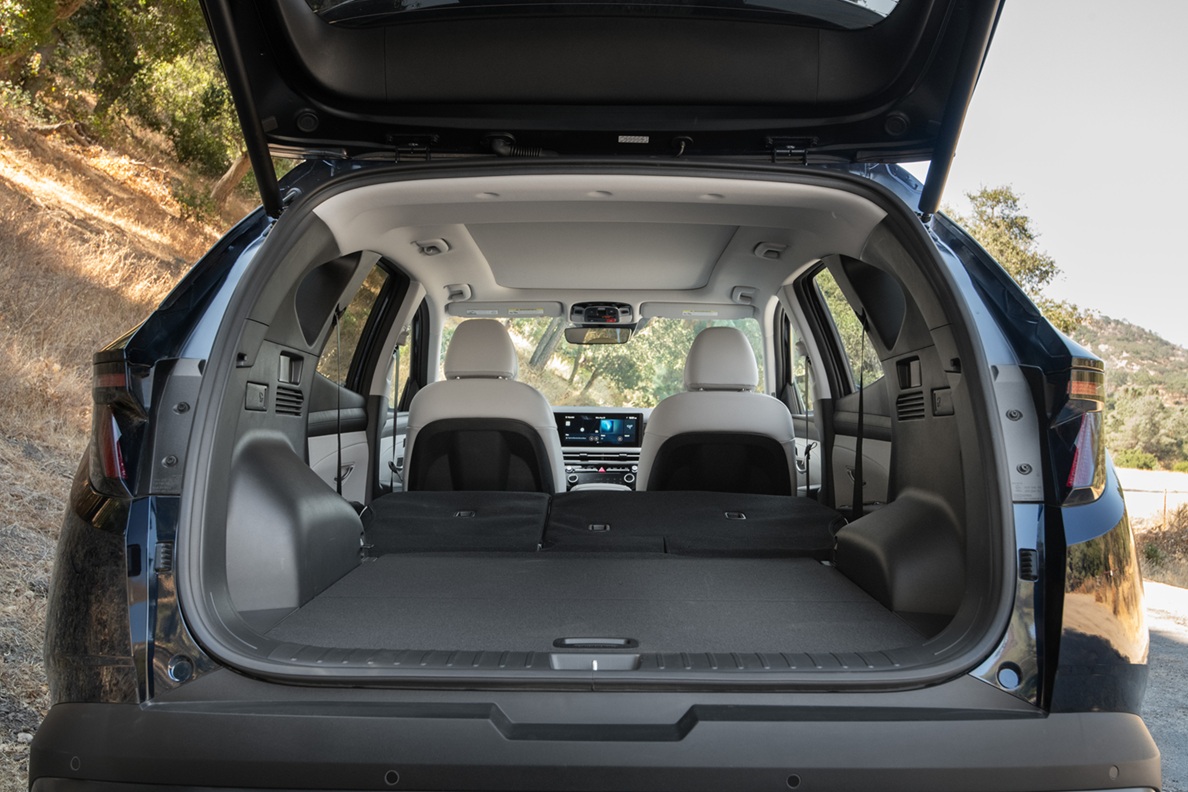
Looking into the tucson's cargo area with the back seat folded

The Tucson’s cargo space is large and open, with a dual-level load floor.

Hyundai Warranty Coverages

Powertrain Limited Warranty: 10 years or 100,000 miles (for original owners only). This covers the major mechanical components, such as the engine, transmission, and drivetrain.

New Vehicle Limited Warranty (bumper to bumper): 5 years or 60,000 miles. It covers nearly all major systems, including electronics, climate control, and suspension, against manufacturing defects.

Anti-Perforation: 7 years and unlimited miles. This specifically protects against rust that perforates body panels from the inside out.

Hybrid Warranty Protections

Hybrid/EV Battery: 10 years or 100,000 miles. This covers the high-voltage battery and related defects.

Hybrid System Components: 10 years or 100,000 miles; coverage includes such items as the hybrid starter, generator, and power control unit.

Capacity Guarantee: Hyundai guarantees the hybrid battery will not degrade below 70 percent of its original capacity during the 10-year/100,000-mile period.

Additional Benefits

24/7 Roadside Assistance: 5 years and unlimited miles. Services include towing to the nearest dealer, battery jump-starts, flat tire changes, and gas delivery.

Emissions: 12-month/12,000-mile replacement parts coverage and an 8-year/80,000-mile federal emission performance warranty.

Note on Ownership: The 10-year/100,000-mile powertrain warranty is typically only available to the original owner. If the vehicle is sold, subsequent owners usually receive the remaining balance of the 5-year/60,000-mile limited warranty for powertrain issues.
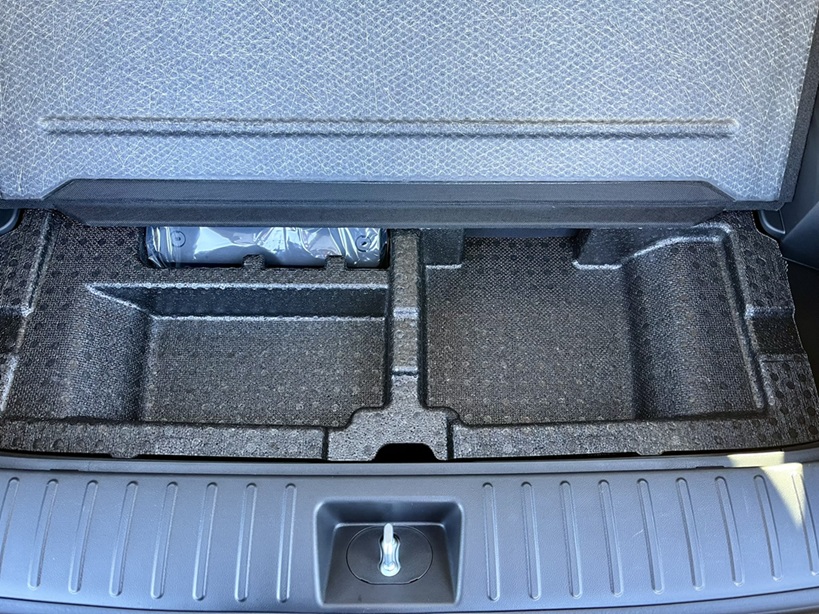
Looking at he space under the cargo floor where the spare tire inflation system is stored until needed

There is no spare tire but an inflator system, tucked under the cargo floor. (Mark Maynard)

High Priority 2025-2026 Recalls

The Hyundai Tucson Hybrid with 1.6L SmartStream turbo engine is generally considered more reliable than older Hyundai models. However, there are a few “growing pains” and technical issues to consider:

Engine Connecting Rods: In late 2025, Hyundai recalled a small number of 2025-2026 Tucson Hybrids due to improperly tightened connecting rod bolts. If these come loose, they can cause a sudden loss of power, engine knocking, or even a fire due to oil leaks. Hyundai’s fix is a complete engine replacement. Be sure to keep all dealership records when having this problem evaluated.

Instrument Cluster Software: A 2026 recall affects the digital dash, which may go blank while driving, preventing you from seeing your speed or warning lights.

Common Engine and Mechanical Issues

The 1.6L Turbo engine in the Tucson Hybrid is newer than the older “Theta” engines, which were notorious for fires. However, owners have reported:

“Check Hybrid System” Warning: Some owners have experienced a sudden loss of power accompanied by this warning. This is often linked to software glitches or sensors in the hybrid powertrain rather than a mechanical engine malfunction.

Carbon Buildup: Because this is a gasoline direct injection (GDI) engine, carbon can accumulate on the intake valves, typically after 60,000 miles. When this occurs, drivers will notice a rough idle or reduced fuel economy.

Oil Dilution: Like many small turbo engines used for short trips, fuel can sometimes mix with the engine oil. It is highly recommended to change the oil every 5,000 miles rather than the longer intervals the manual might suggest.

Jerky Shifting: Some drivers report “hunting” for gears or a jerky feeling at low speeds. The hybrid uses a traditional six-speed automatic rather than the dual-clutch found in the gas-only turbo. The six-speed is generally more durable but can still feel “clunky” if the software isn’t updated.

For more information on government recalls, visit NHTSA.gov/recalls.

Why Buy the 2026 Hyundai Tucson Hybrid?

In its last four years of production, the 2026 Hyundai Tucson is as good as it gets. And what has been learned and evolved for the 2026 model will carry over to the 2027 model.

The Tucson Hybrid will impress with its very well-soundproofed cabin and refined interior materials that feel near-luxury.

Whether buying a certified pre-owned 2025 model or a new 2026 model, ensure all engine and drivetrain updates have been completed. To be safe, consider one of Hyundai’s extended warranty plans. Learn more here.
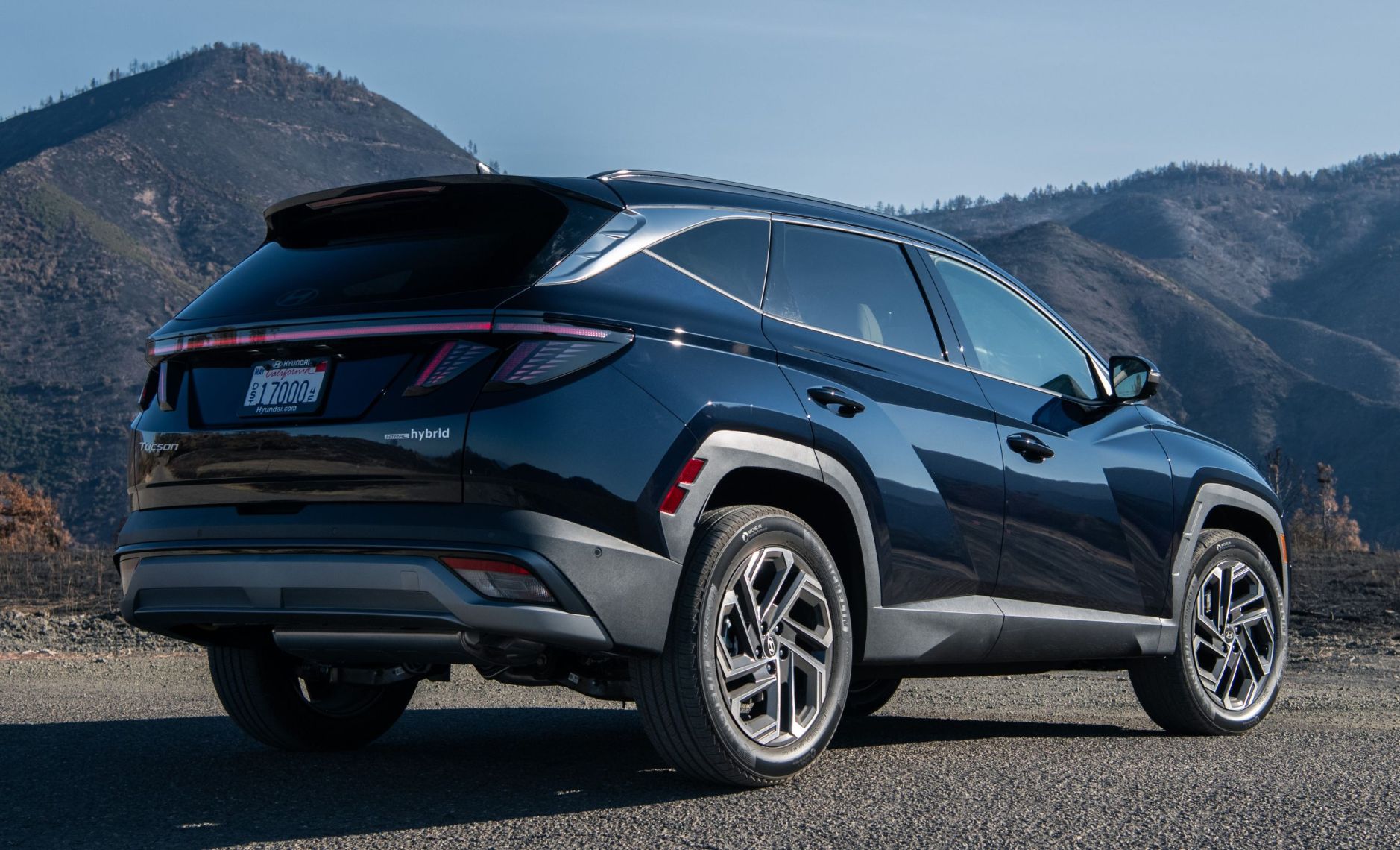
A rear view of a black Tucson Hybrod SUV
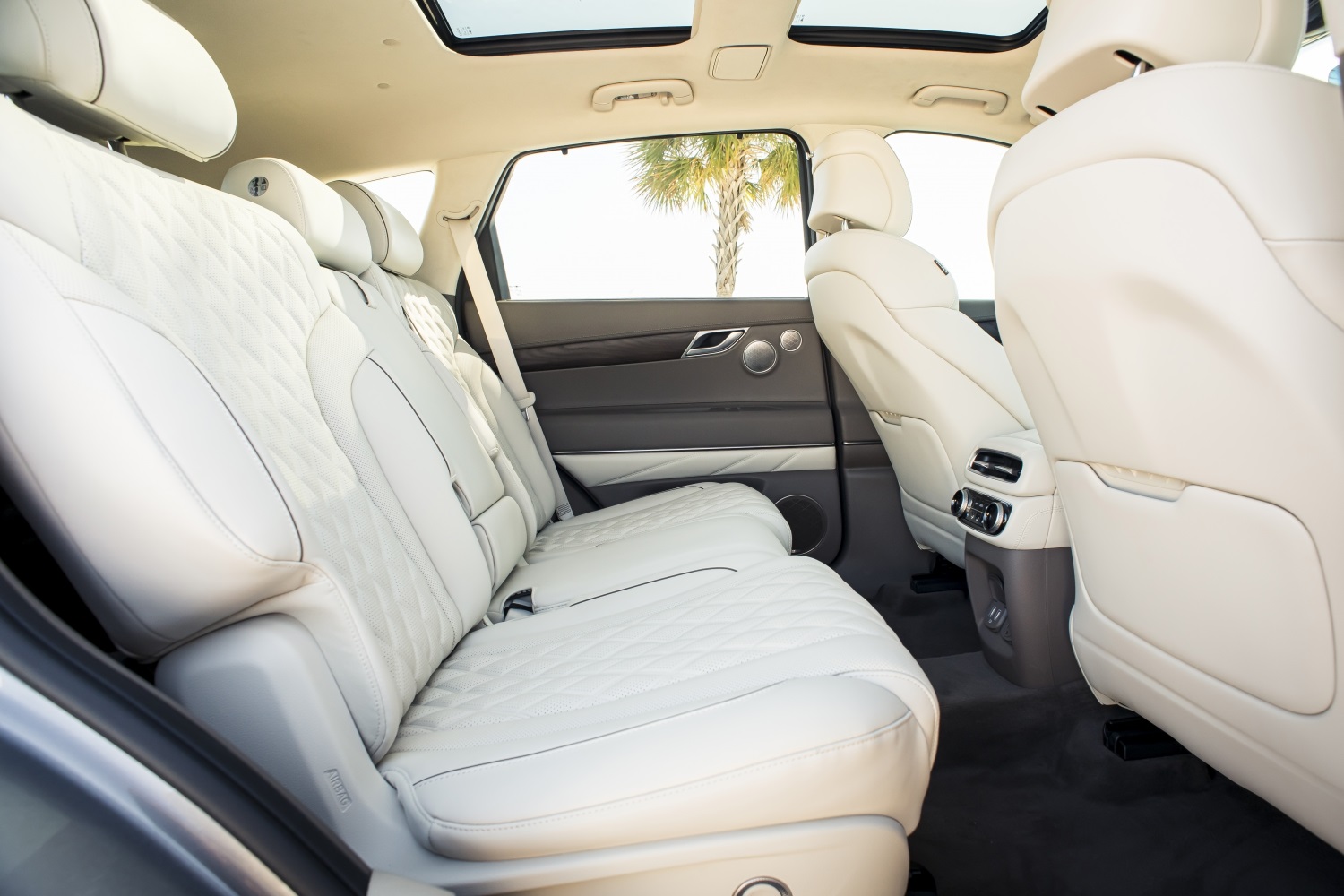
All trim levels of the 2026 Hyundai Tucson include standard HTRAC all-wheel drive.

2026 Hyundai Tucson Hybrid Specifications

Body style: compact class 5-door, 5-seat AWD SUV

Engine: 178-hp, 1.6-liter turbocharged and direct-injected, DOHC 16-valve inline 4-cylinder; 195 lb.-ft. torque from 1,500-4,500 rpm

Electric motor: Permanent magnet synchronous motor; 47.7 kW (64 hp) from 1,800–2,100 rpm; 195 lb.-ft. at 1,700 rpm

Combined hp and torque: 231 hp/271 lb.ft. torque

Hybrid battery: lithium-ion, 64 kW, 270 volts

Transmission: 6-speed automatic torque converter, active on-demand HTRAC AWD; steering-wheel paddle shift levers

Fuel economy: 36/37/36 mpg city/hwy/combined, 87 octane recommended

Towing capacity: 2,000 pounds, with a braked trailer

Coefficient of drag: 0.33 Cd

BY THE NUMBERS

Fuel tank: 13.7 gallons

Cargo space: 31.9-66.3 cubic feet (stacked floor to headliner)

Front head/leg room: 38.1*/41.4 inches *40.1 in. w/o sunroof

Rear head/leg room: 38.76/41.3 inches

Length/wheelbase: 182.7/108.5 inches

Curb weight: 3,920 pounds

Turning circle: 38.5 feet

STANDARD LIMITED FEATURES

Limited equipment includes: smart key locking and push-button start,12.3-inch color navigation touchscreen, 4.2-inch driver info display, smart cruise control with stop and go, wireless phone charging, heated tilt-telescopic steering wheel, 8-speaker Bose audio system, wireless Apple CarPlay and Android Auto, 3-month satellite radio subscription, OTA map and multimedia updates, leather-trimmed upholstery, heated and ventilated power front seats, 8-way power driver and front passenger seats (w/2 position driver seat presets), panoramic sunroof with one-touch open and rear sunshade, ambient lighting, dual front USB Type-C data-charge ports, dual rear charging ports, 60/40 split folding back seat, reclining rear seatback, seatback bag hook, roof side rails, full LED lighting with bi-LED headlights (high and low beams), automatic with high-beam assist (dimming), acoustic laminated windshield and front side glass, solar glass windshield and front doors,

CHASSIS COMPONENTS

Brakes: 4-wheel discs, 12.8-inch vented front rotors; rear 12-inch solid rotors; with 4-wheel ABS and electronic brake-force distribution; with driver-selectable downhill brake control (DBC), hill-start assist (HAC), brake assist; electric parking brake

Steering: motor-driver power assist rack and pinion; 38.5-foot turning circle

Tires-wheels: 19-inch alloy wheels and 235/55 19-inch all-season tires, with tire-mobility kit

Suspension: Front MacPherson struts with coil springs, stabilizer bar, and gas-pressurized shock absorbers; rear multilink with gas shocks and stabilizer bar

PRICING

Limited base price: $43,425, including $1,600 freight charge; price as tested $43,665

Options on test vehicle: Carpeted floor mats $240

Where assembled: Ulsan, Korea