
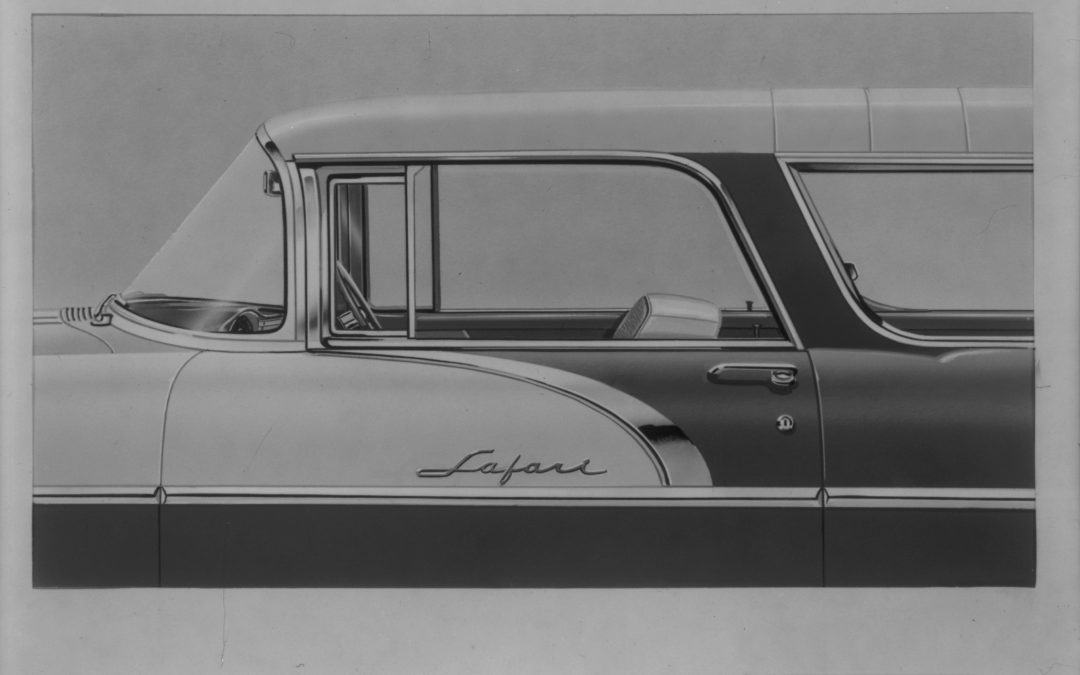
The 1955 Pontiac Star Chief Custom Safari arrived at the high-society GM Motorama, a choreographed display of “Jet Age” wealth
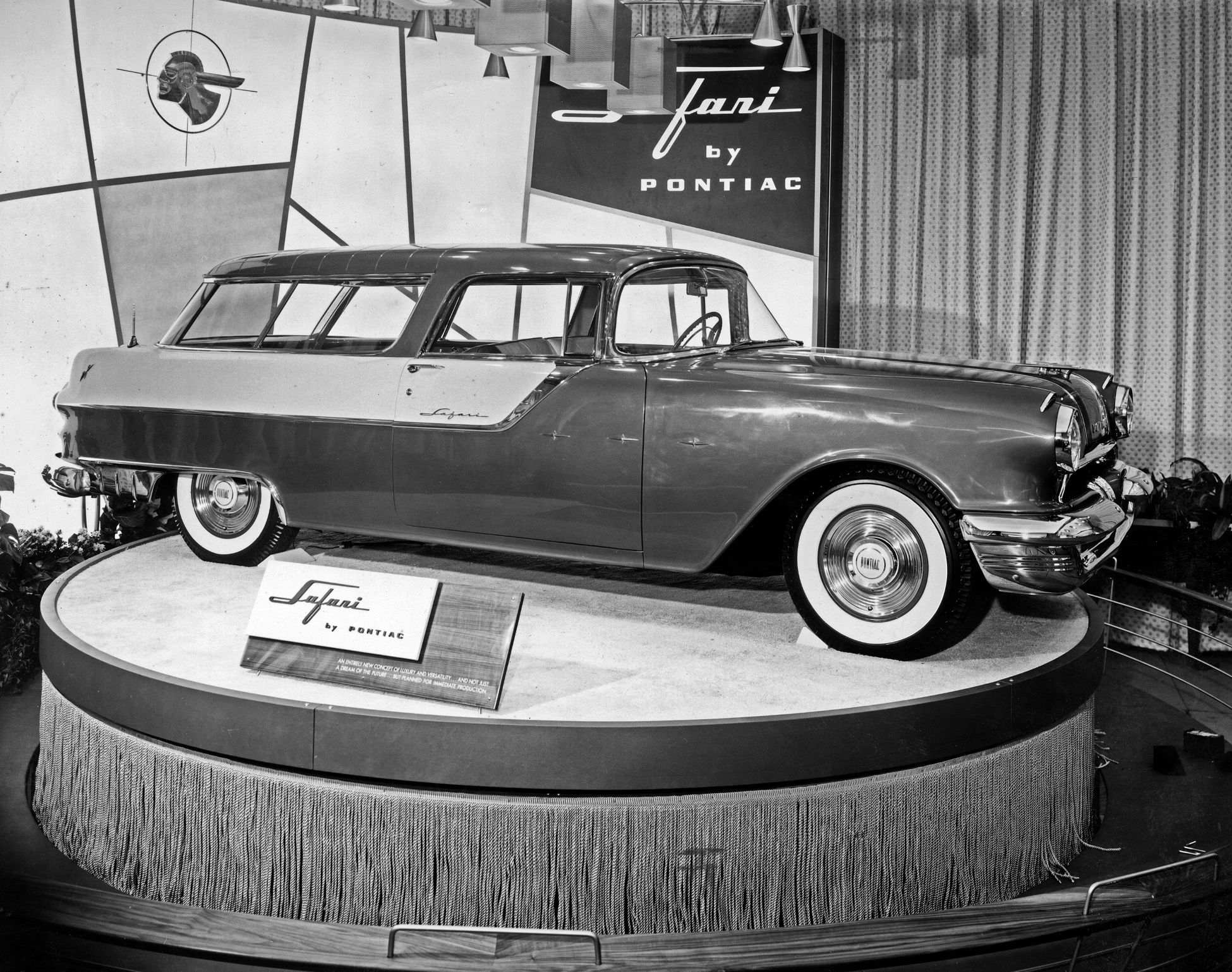
The story of the 1955-1957 Pontiac Safari is one of jet-age ambition, “Motorama” dream cars, and the birth of the luxury sport wagon. (Photography courtesy of GM Media Archives )
Jump To Special Features
What’s In A Name?
Birth of a Dream: the 1955 Safari
Price of Prestige
Safari-Nomad Separators
Pontiac Safari By Model Year
The Rare Safari Transcontinental
Boutique Assembly
Current Pontiac Safari Valuations
A Safari Owner’s Love
The story of the 1955 to 1957 Pontiac Safari is one of jet-age ambition. While the Chevrolet Nomad is the more famous platform partner, the Safari stands as the more exclusive, more expensive, and more powerful elite of the General Motors family. As we look at how the Safari emerged, it’s important to consider its arrival in the context of the GM Motorama, which set the stage for its opulent debut.
The two-door 1955 Pontiac Star Chief Custom Safari arrived at the high-society GM Motorama. It was a choreographed display of “Jet Age” wealth.
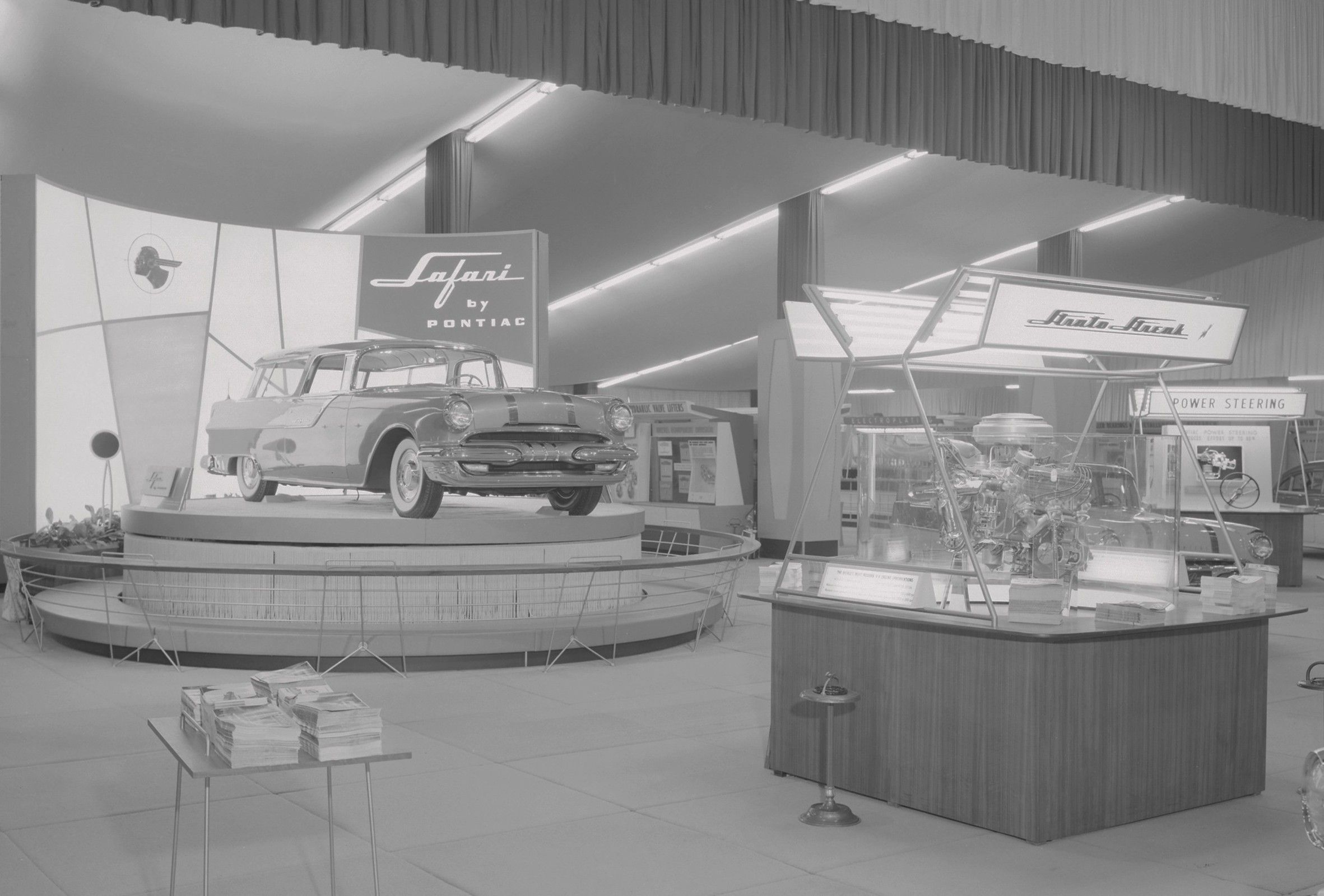
A 1955 auto show display for the Custom Safari Station Wagon and the new Strato-Streak V-8.
Building on its dramatic introduction, the Safari proved that you could have the utility of a wagon without sacrificing the prestige of a Cadillac. It was the defining “stealth wealth” vehicle of the mid-1950s — a car for the person who had a country estate but still wanted to win a stoplight drag race on the way there.
Reinforcing its luxury image, General Motors’ marketing and the automotive press often referred to the Safari as the “limousine of station wagons.”
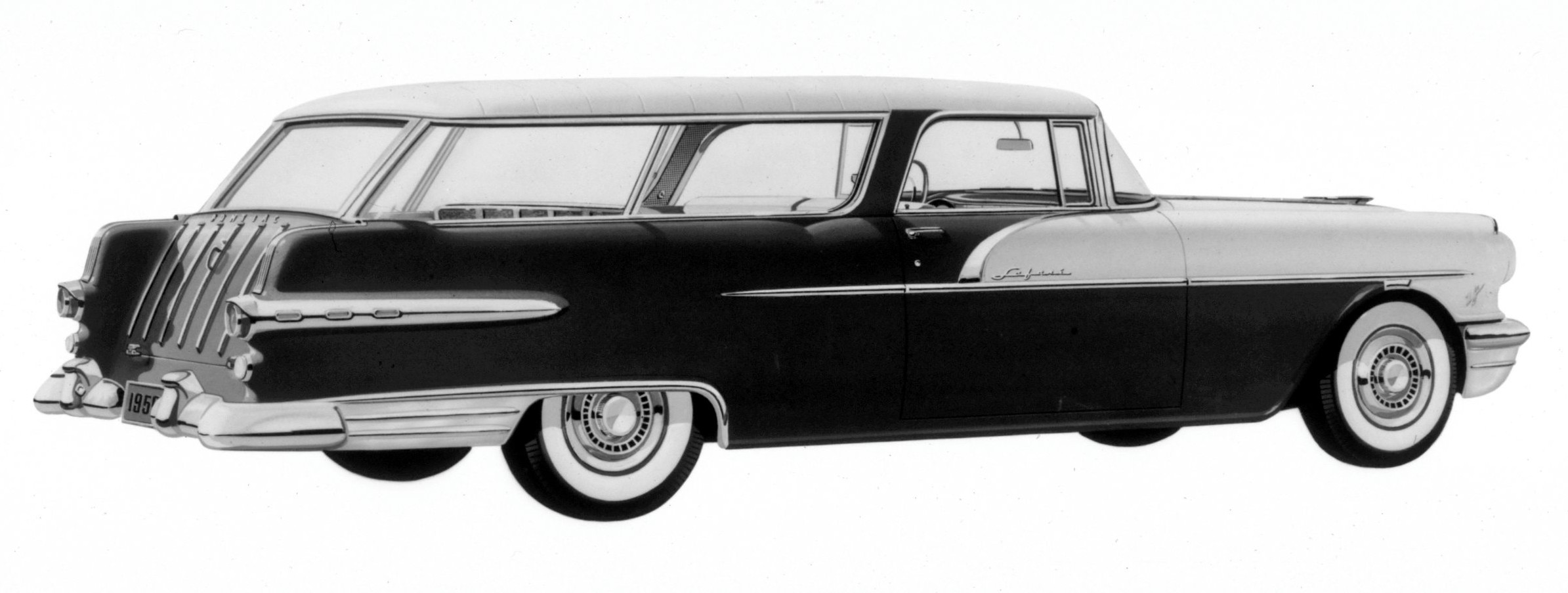
In 1955, the Safari was the most expensive vehicle in the Pontiac lineup at $2,962 (about $35,500 today).
In 1955, the Safari was the most expensive vehicle in the Pontiac lineup at $2,962 (about $35,500 today), making it about $400–$500 more than the Chevrolet Nomad, which started at $2,571. This significant price premium highlights the Safari’s exclusive appeal.
Understanding why the Safari commanded such a premium helps clarify its position in the marketplace.
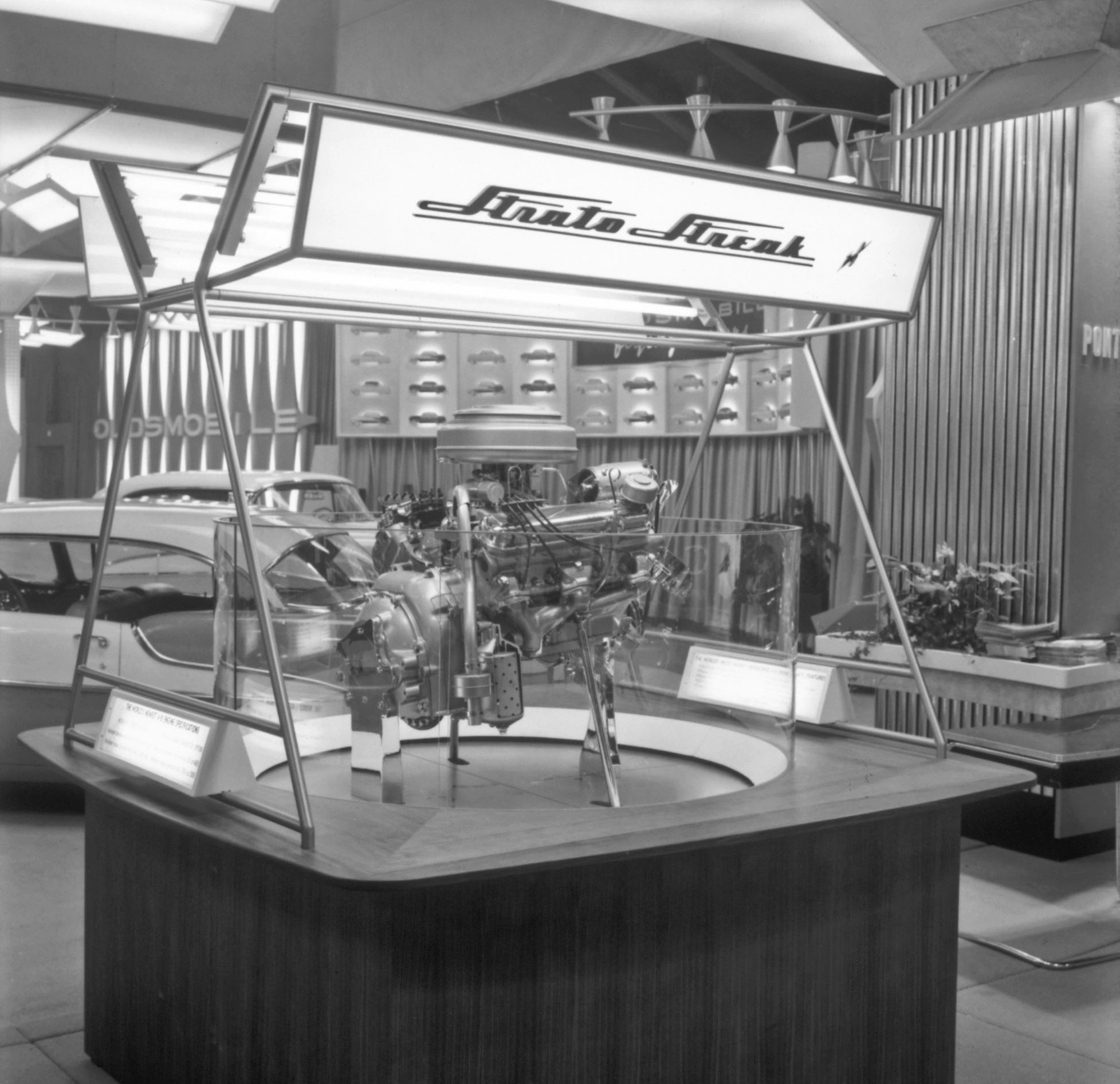
A Strato Streak V-8 auto show engine display.
Seeing a Pontiac Safari in 1955 was rare. In its first year, just 3,760 examples were produced, compared to around 8,386 for the Nomad. This rarity further underscored the exclusivity established by its high price.
Luxe Content
The Safari’s premium cost was justified by several high-end standard features that were often optional or unavailable on other wagons of the era. Understanding these features helps explain the Safari’s unique market position.
Standard V-8 Power: It came equipped with the 287 cubic-inch “Strato-Streak” V-8 engine, producing 180 horsepower;
Luxury Interior: Unlike most wagons that used fabric or vinyl, the Safari featured genuine leather upholstery as standard;
Larger Chassis: While the Nomad was built on a 115-inch wheelbase, the Safari utilized Pontiac’s 122-inch wheelbase, providing a smoother, more limousine-like ride.
Exclusive Trim Elements: It borrowed the heavy chrome “Silver Streak” styling and deluxe interior accents from the flagship Pontiac Star Chief sedan.
What’s In A Name?
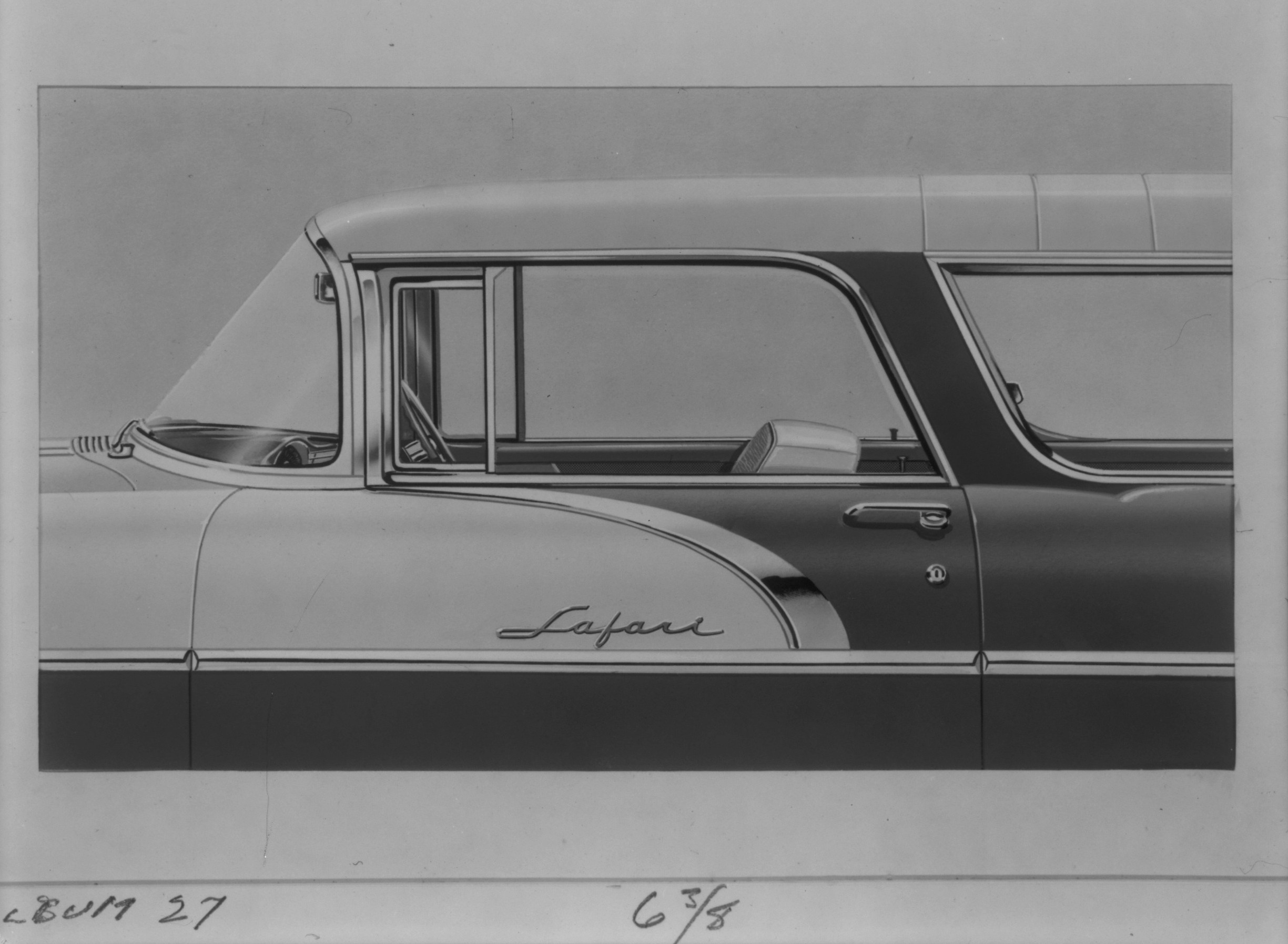
The nameplate “safari” derives from the Swahili word safari, meaning “journey.”
Birth of a Dream: the 1955 Safari
The Pontiac Safari’s journey began on the rotating pedestals of the 1955 GM Motorama. Inspired by the Chevrolet Corvette Nomad concept, GM executives decided to bring the two-door “sport wagon” body style to production. To justify the high tooling costs for the unique roofline and wrap-around glass, the design was shared between Pontiac and Chevrolet.
Introduced on Jan. 31, 1955, the Star Chief Custom Safari (Series 27) was an immediate sensation. Unlike the “workhorse” wagons of the era, the Safari was built on a shorter 122-inch A-body chassis. Its athletic stance, forward-leaning B-pillars, and wraparound glass made it look as if it were in motion even when parked.
While there were other choices for two- (or four-door) Pontiac wagons, the Star Chief Custom Safari was the halo.
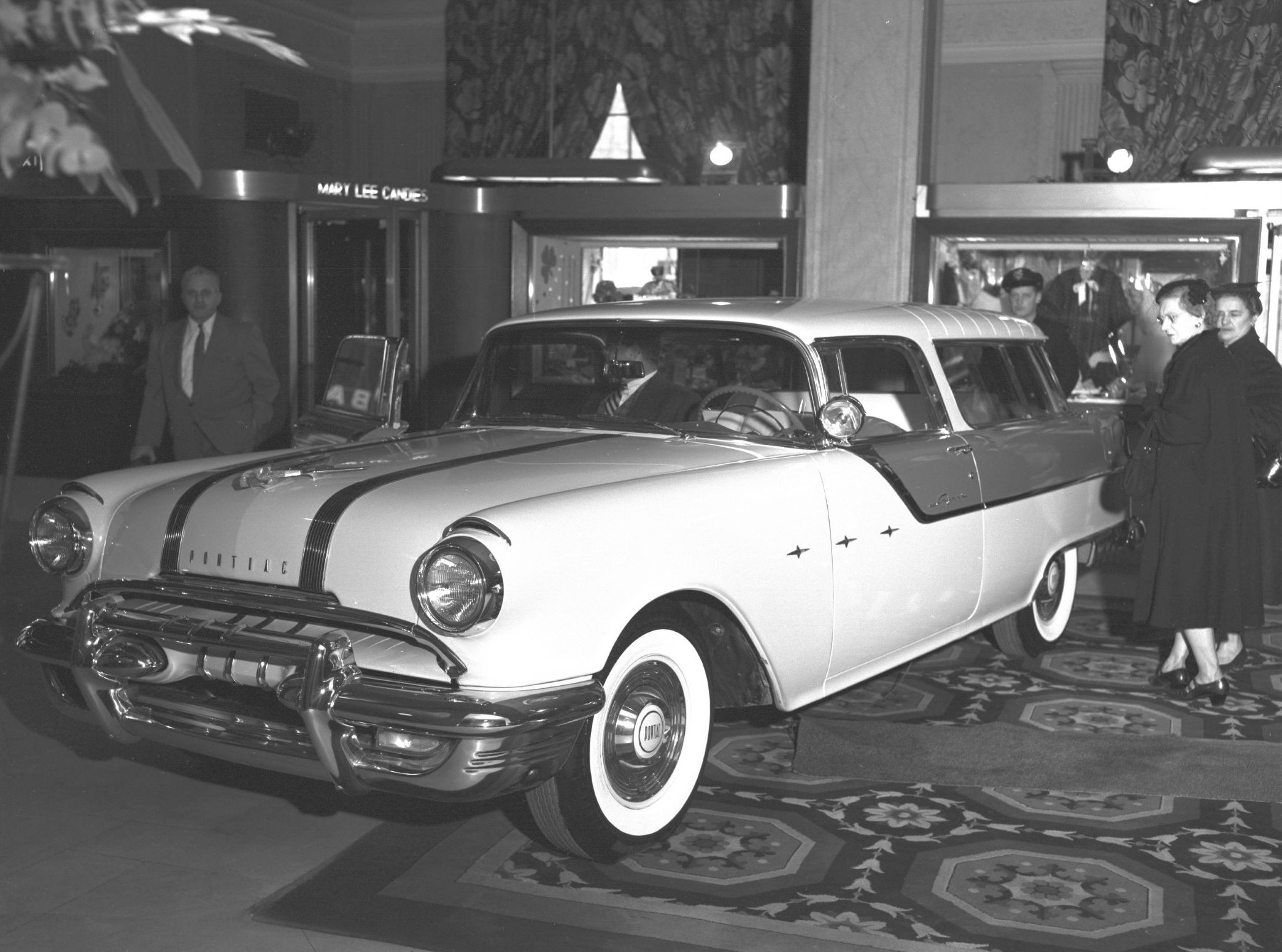
Introduced on Jan. 31, 1955, the Star Chief Custom Safari was an immediate sensation.
Price of Prestige
The Pontiac Safari and Chevrolet Nomad shared the same sport wagon body, but they were marketed for very different audiences. While the Nomad was the flagship Chevrolet, the Safari was the more exclusive luxury version of the concept. A high level of interior craftsmanship contributed to the Safari’s significantly higher price tag.
This premium positioning made the Safari a true “gentleman’s wagon.” It was advertised for its wagon utility paired with executive-level luxury, reflecting the status of a top-tier sedan.
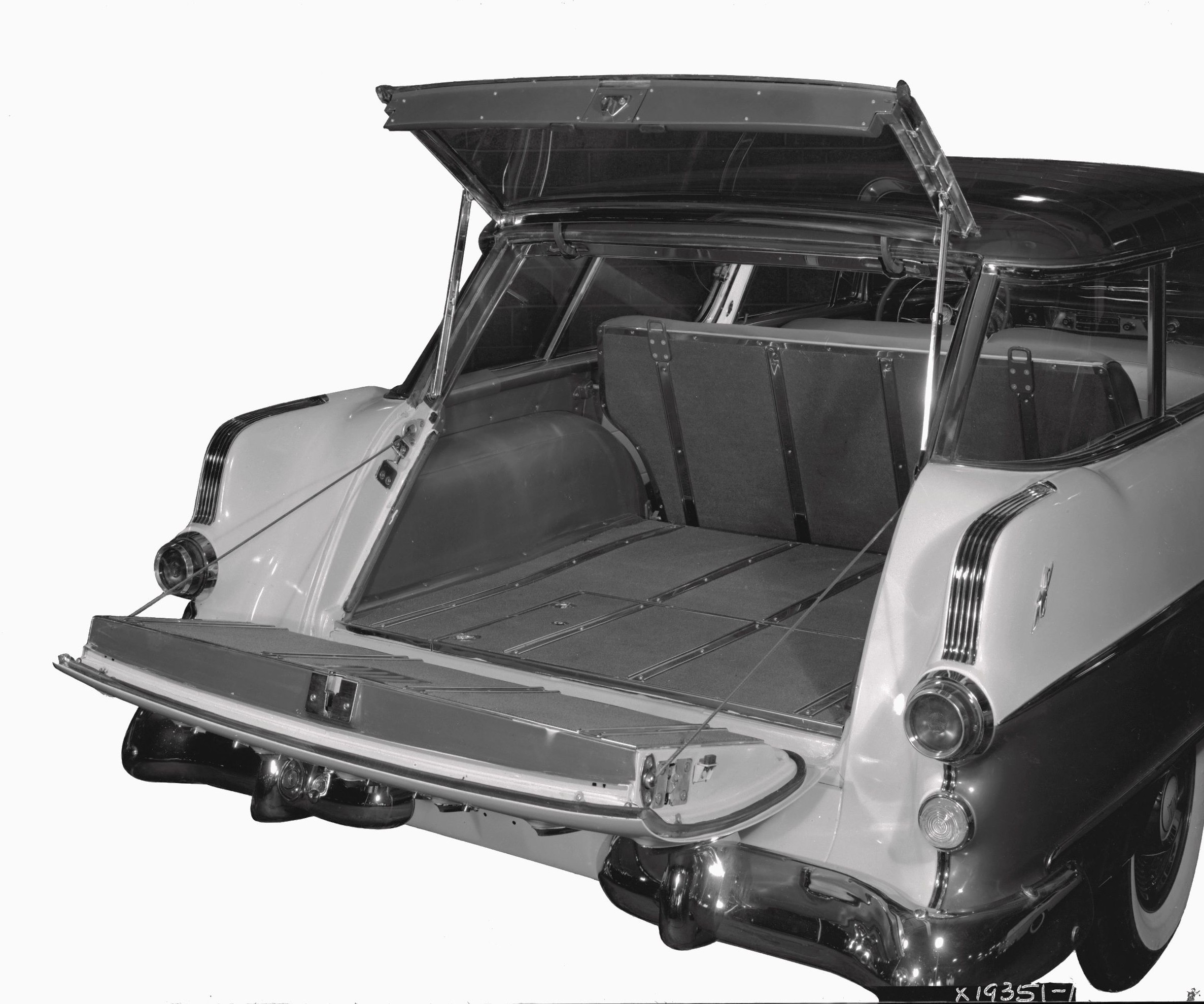
Premium features of the Pontiac Star Chief Custom Safari included deep-pile carpeting that extended into the cargo area and onto the lower door panels.
Purchasing a Safari in 1955 was a discretionary luxury for buyers with incomes well above the median. On average, the cost accounted for approximately 67 percent of a typical family’s annual income.
In 1955, the median annual family income in the U.S. was $4,418. The average price of a new house was $18,400, and a gallon of gasoline cost 23 cents.
(Source: census.gov)
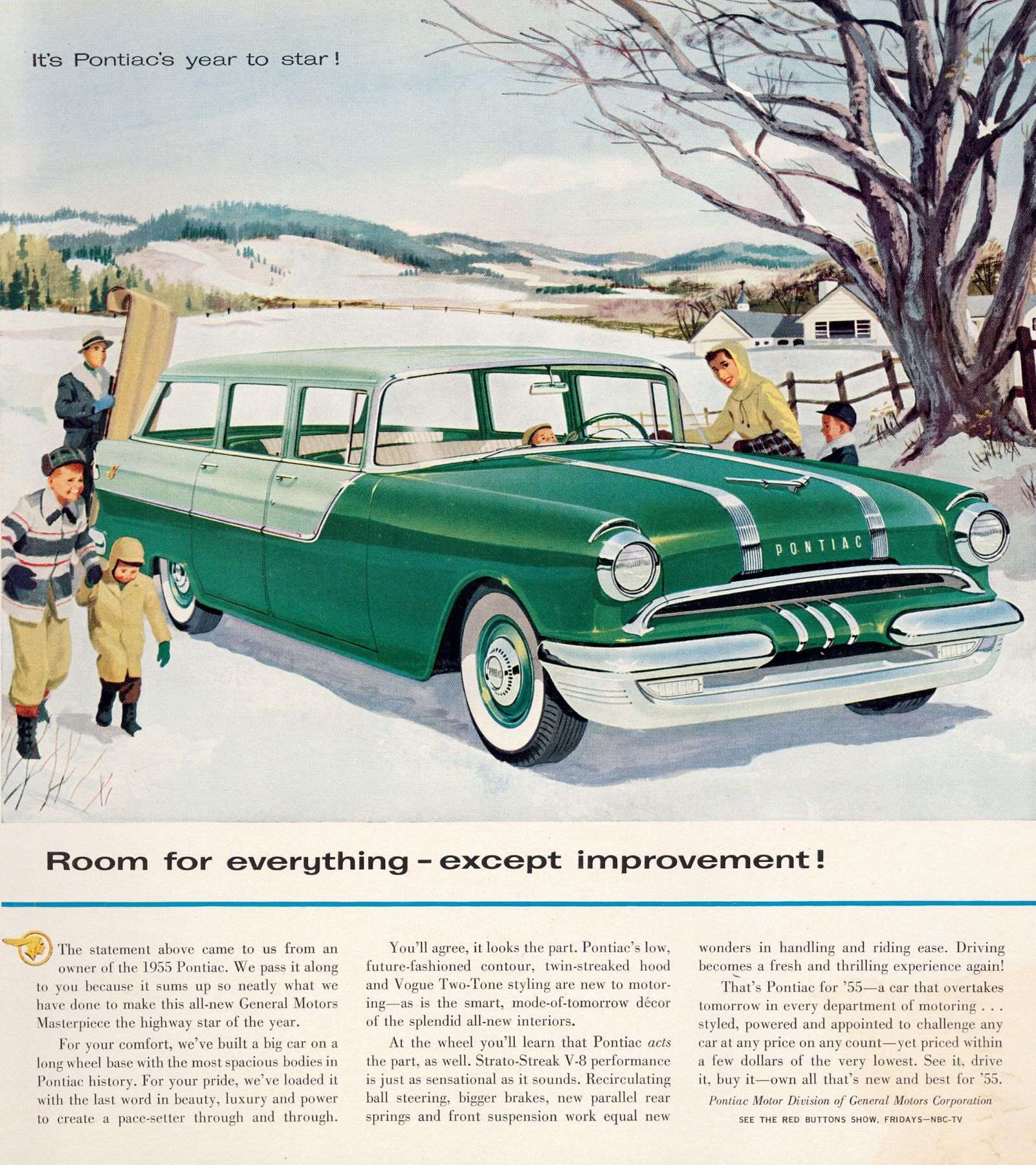
A 1955 print ad for the new four-door Pontiac Safari: “Room for Everything Except Improvement.”
Safari-Nomad Separators
While they shared the same roofline and glass, the Pontiac Safari and Chevrolet Nomad were not “badge engineered.” The cars’ “face” and “tail” were brand-specific to distinguish the A-body siblings.
Exterior Safari Styling
Front Fascia: The Safari used the Pontiac Chieftain front end, characterized by the famous “Silver Streak” dual chrome bands running along the hood.
Tailgate Ribs: The Nomad features seven vertical chrome ribs on the tailgate; the Safari has seven, which are wider and more robust.
Rear Lighting: The Nomad utilized Chevrolet’s standard taillight housings, whereas the Safari featured model-specific rear taillamps.
Trim and Brightwork: The Safari Star Chief Custom was treated to the highest amount of chrome trim Pontiac offered. Its brightwork included unique side moldings that differed from the Nomad’s Bel Air-style trim.
Paint: While the Chevrolet Nomad was often seen in solid colors, the 1956 and 1957 Safari listed two-tone paint as a standard feature for the model line.
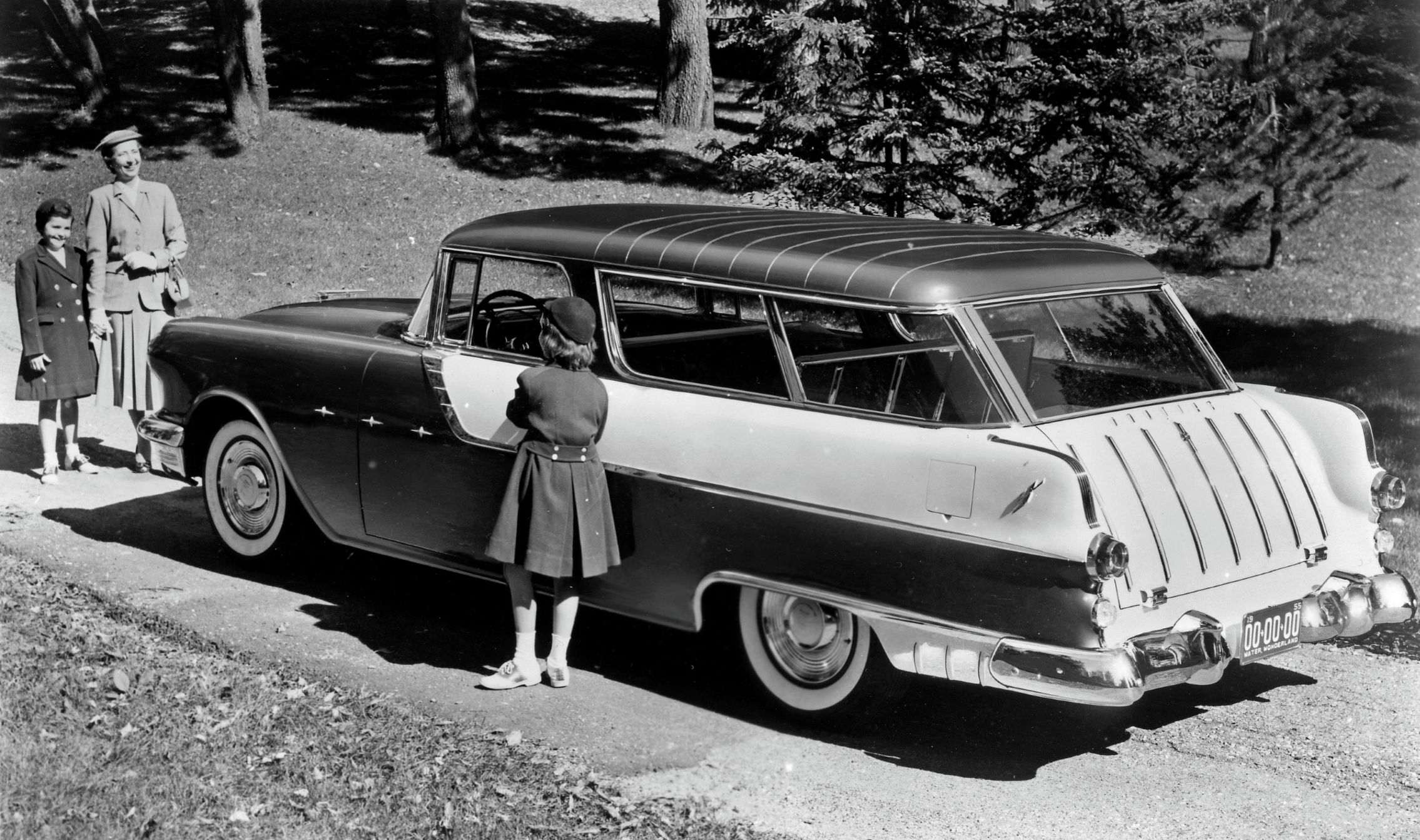
The 1955 Pontiac Safari Chief Custom two-door.
Interior Luxury
The Materials: The Safari came standard with two-tone genuine leather upholstery. While customers could order nylon-faced fabrics, the leather interior was the model’s hallmark.
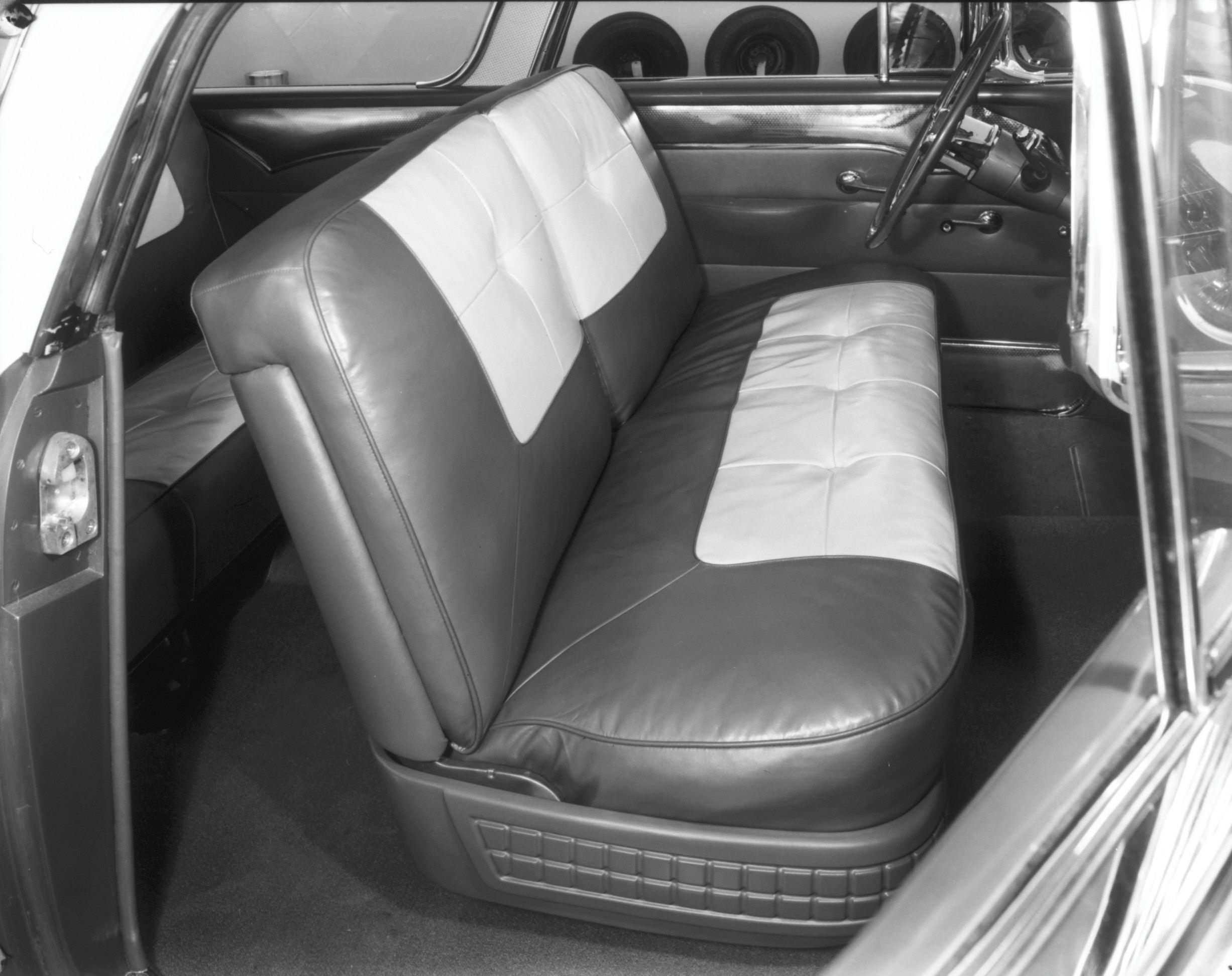
A 1955 Pontiac Star Chief Custom Safari with leather upholstery.
The “Star Chief” Connection: Because the Safari was part of the high-end Star Chief line, it inherited the most premium appointments Pontiac offered. This included deep-pile carpeting that extended even into the cargo area and onto the lower door panels.
“Morrokide” Blend: Pontiac’s proprietary Morrokide vinyl was often used for the headliner, side panels, and seat bolsters for durability in high-wear areas. Other General Motors divisions had unique names for this material — Buick called it Cordaveen and Oldsmobile called it Morocceen. It was essentially premium Naugahyde, a synthetic leather-like material made of a PVC coating over a knit fabric backing.
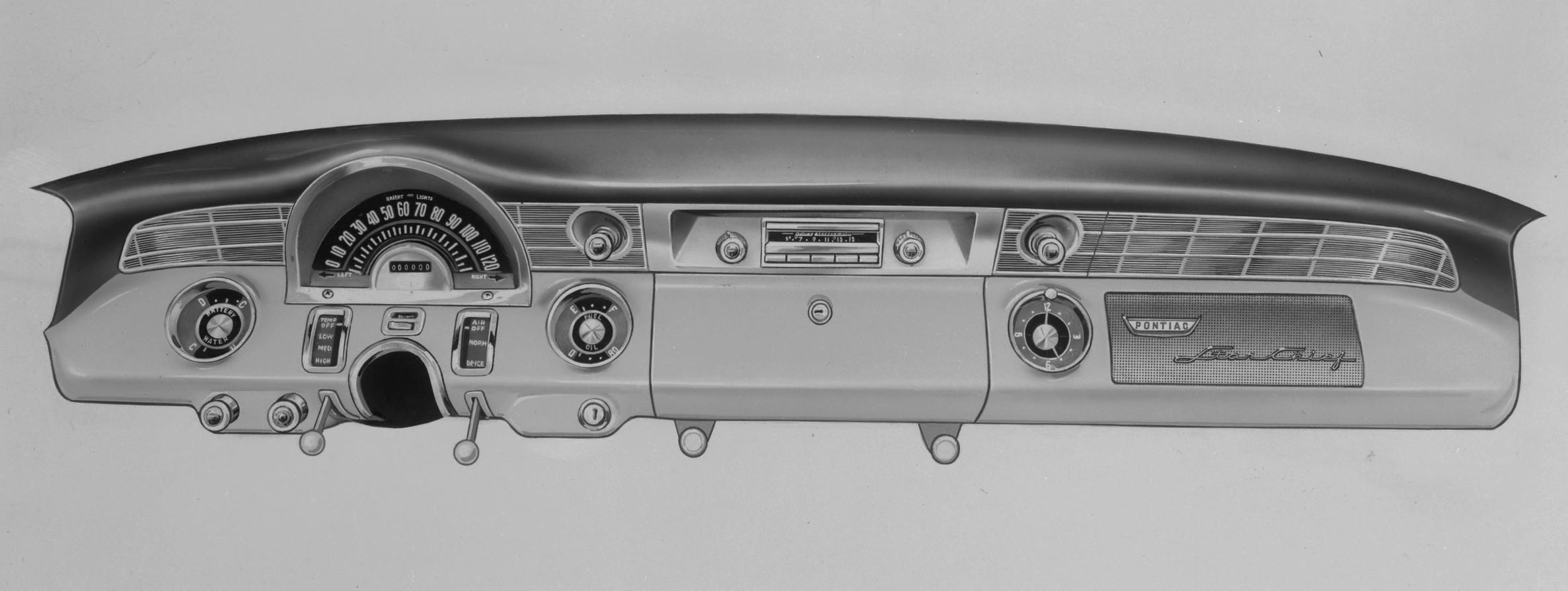
The 1956 Pontiac Star Chief Custom Safari dashboard.
Dashboard and instrument panel (IP): The 1955 Pontiac Safari was a masterpiece of “Jet Age” design. Its dashboard was significantly more ornate than the standard Chieftain or the Chevrolet Nomad. The Pontiac styling was intended to make the driver feel as if they were piloting a high-end aircraft.
Padded dash: While most cars of the era had bare metal dashboards, the Safari could be ordered with a padded dash. It was an uncommon safety feature for 1955.
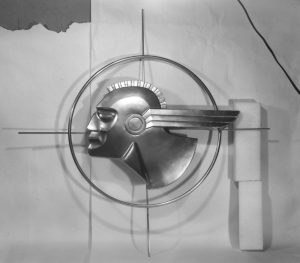
A studio view of Pontiac’s Indian head emblem.
Wonder Bar radio: The optional Wonder Bar AM radio was centered atop the dashboard. Its signal-seeking bar automatically “found” the next clear station—the height of mid-’50s tech.
“Chief” emblem: A stunning red and gold Indian Head “Chief” emblem was often inset into the center of the steering wheel hub, to remind of the car’s elite status.
Headliner: Safari and Nomad featured chrome-plated roof bows, but the Pontiac’s headliner materials were generally more premium.
Command Center Driver Area
The gauge cluster: The driver faced a wide, sweeping instrument cluster housed in a chrome-heavy bezel. The speedometer was a prominent, easy-to-read horizontal scale, often accompanied by secondary gauges for fuel, temperature, oil pressure, and amperes. (The Nomad’s IP was a “twin-hump” design.)
“Silver Streak” Influence: Just as the exterior featured “Silver Streaks” on the hood, the dashboard echoed this theme. Linear stainless steel or chrome trim spanned the width of the cockpit.
Color-keyed design: The top of the dash was typically painted to match the car’s primary exterior color (such as Firegold or Turquoise Blue), while the lower half might be finished in a contrasting tone or polished metal.
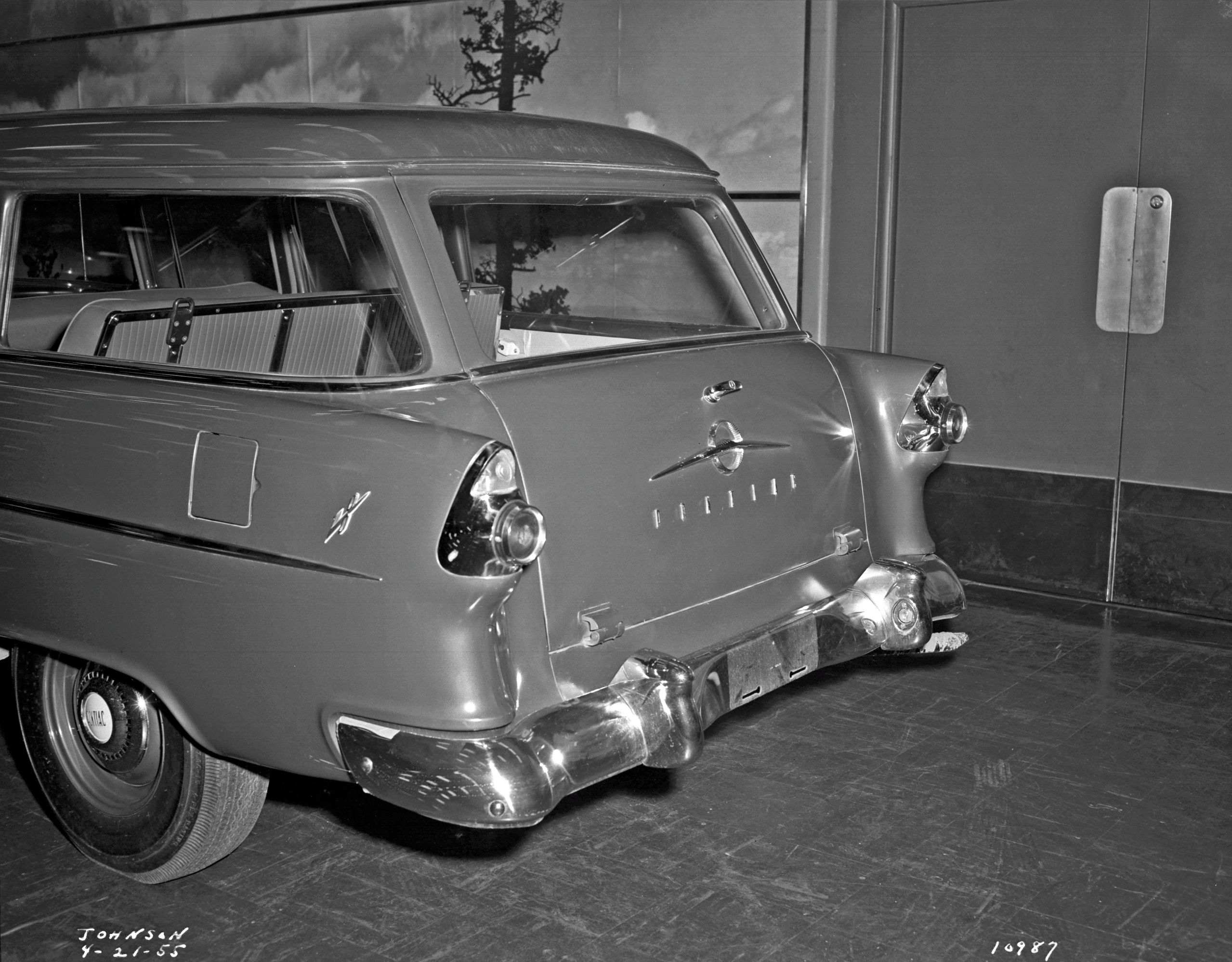
The 1955 Pontiac Chieftain four-door wagon with the standard tailgate design.
Key Features and Controls
Ivory-look knobs: The control knobs for the lights, wipers, and heater were often made of a high-quality ivory-colored or translucent plastic, giving the IP a sophisticated, jewel-like appearance.
Hydra-matic selector: If equipped with the Dual-Range Hydra-Matic transmission, the gear selector was located on the steering column. Early models featured a unique shift pattern of N Δ Dr Δ Lo R, without a “Park” position. Instead, drivers engaged a parking pawl by shifting into Reverse after turning off the engine. The P position was added later.
Cane-handle parking brake: Tucked under the left side of the dash was a distinctive “T-handle” or cane-handle parking brake. It was a tactile throwback that owners used religiously because there was no “Park” gear.
Other extras included: illuminated glove box, Autronic Eye automatic headlight dimmer, power windows, power steering, and air conditioning.
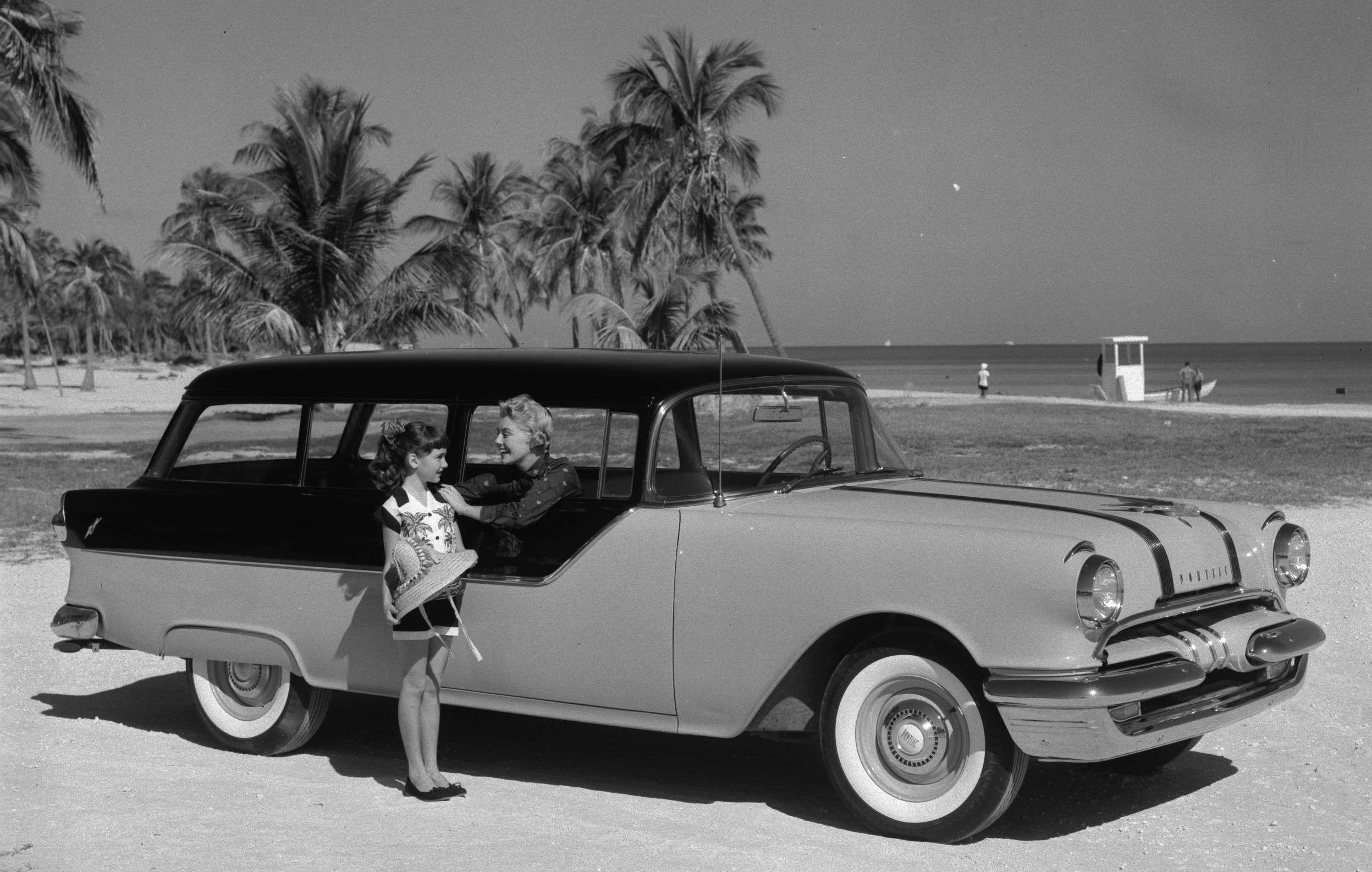
The 1955 Safari as beach cruiser.
The Two-Tone Safari Standard
1955: Two-tone was an extremely popular option, but solid colors like Firegold (copper) or Turquoise Blue were still available.
1956: Two-tone paint became standard for the Safari. This year introduced a specific styling shift, with the roof painted in the accent color to contrast the rest of the body. A popular color scheme was Sun Beige and Sandstone White.
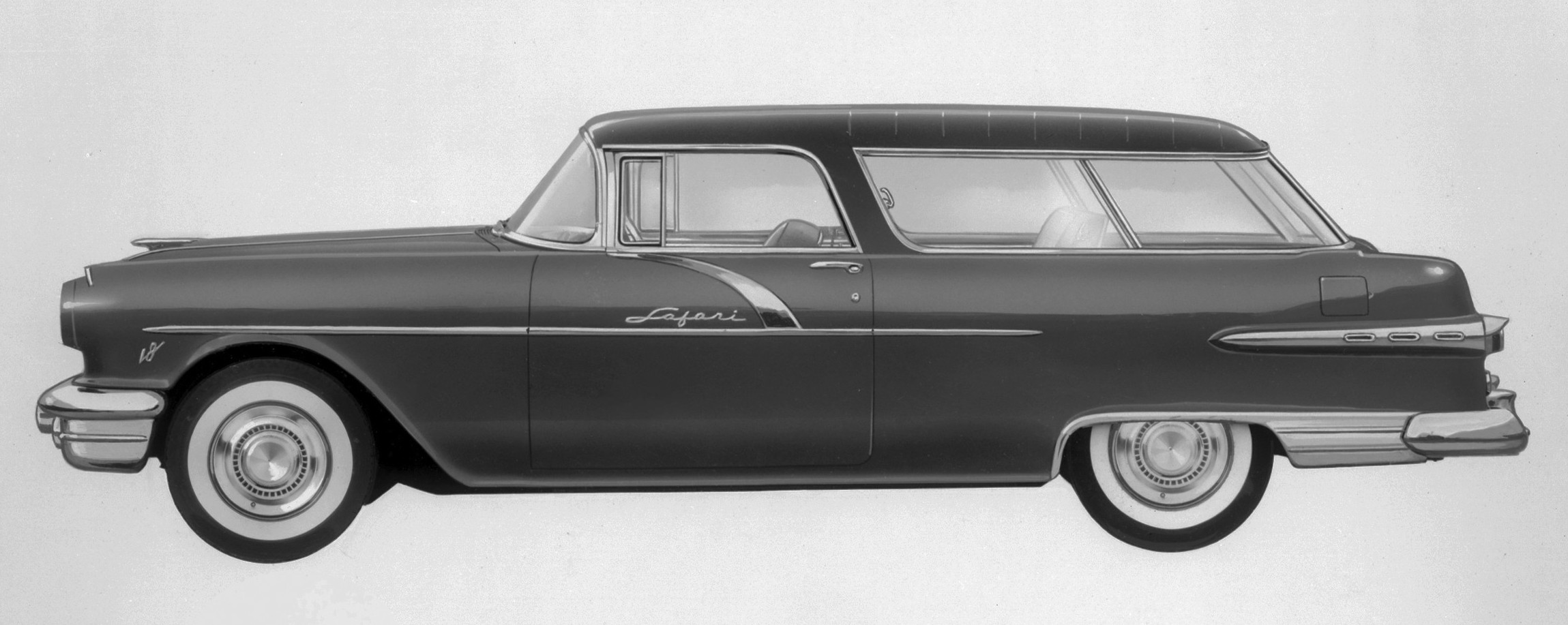
A 1956 Pontiac Safari rendering. A facelift included a more elaborate bumper-grille and the new “Strato-Flight” Hydra-Matic transmission.
1957: The two-tone look remained the standard configuration. Even rare models were typically delivered in combinations such as Charcoal Grey with a Silver Beige roof and side “insert.” Cordova Red and Kenya Ivory showed a deep metallic red with a creamy white roof and side insert.
In the Spring of 1957, Pontiac released a set of “Spring Colors” (such as Carib Coral or Limefire Green). These were often paired with Kenya Ivory.
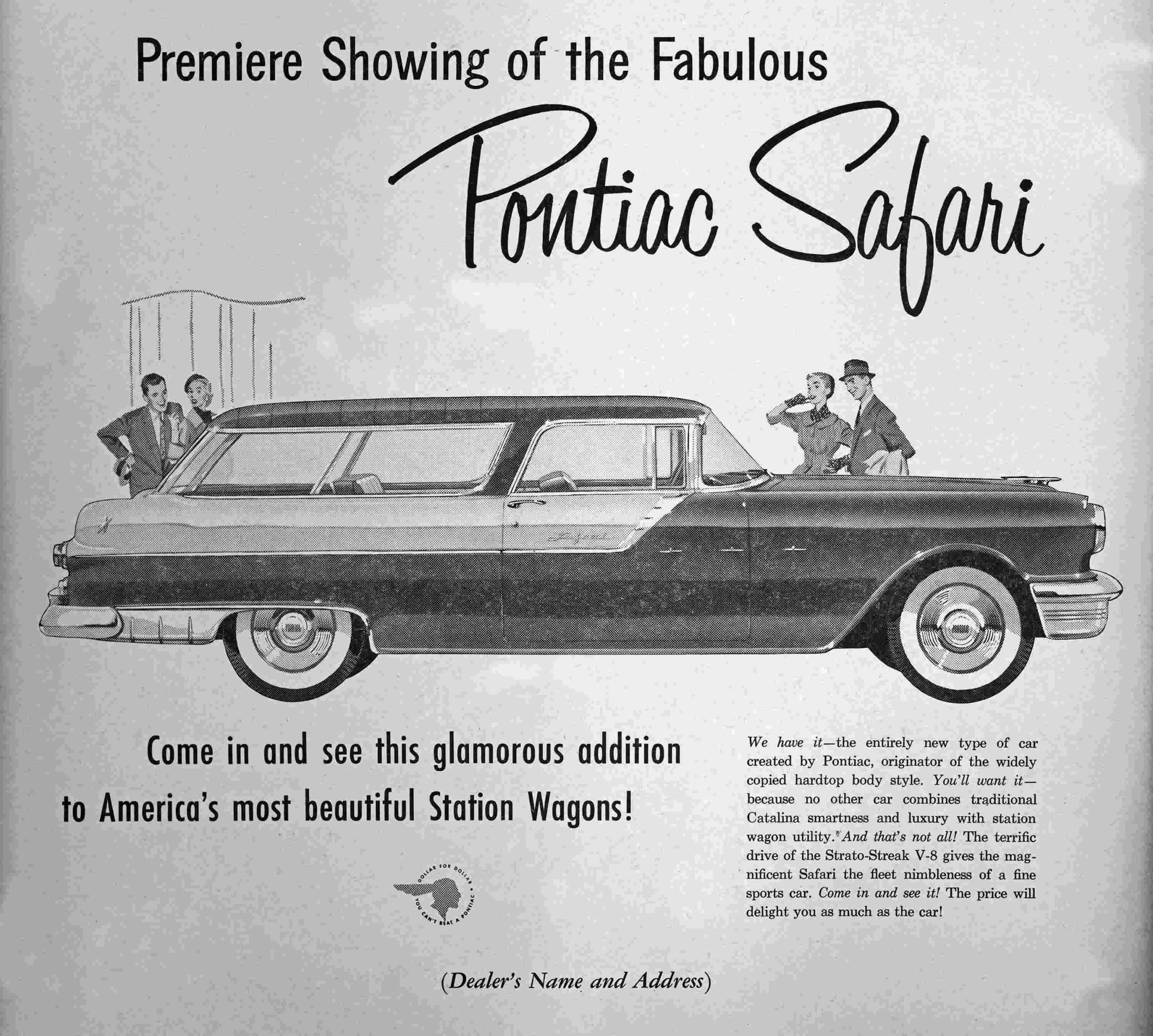
A dealer-specific newspaper print ad promoting “A Premiere Showing. “We have it …”You’ll Want It.”
Pontiac Safari By Model Year
1955: The Star Chief Custom Safari was launched midyear. It featured the high-end trim of the Star Chief line but was built on the shorter 122-inch Chieftain chassis. Pricing started at $2,962, including the standard “Strato-Streak” V-8.
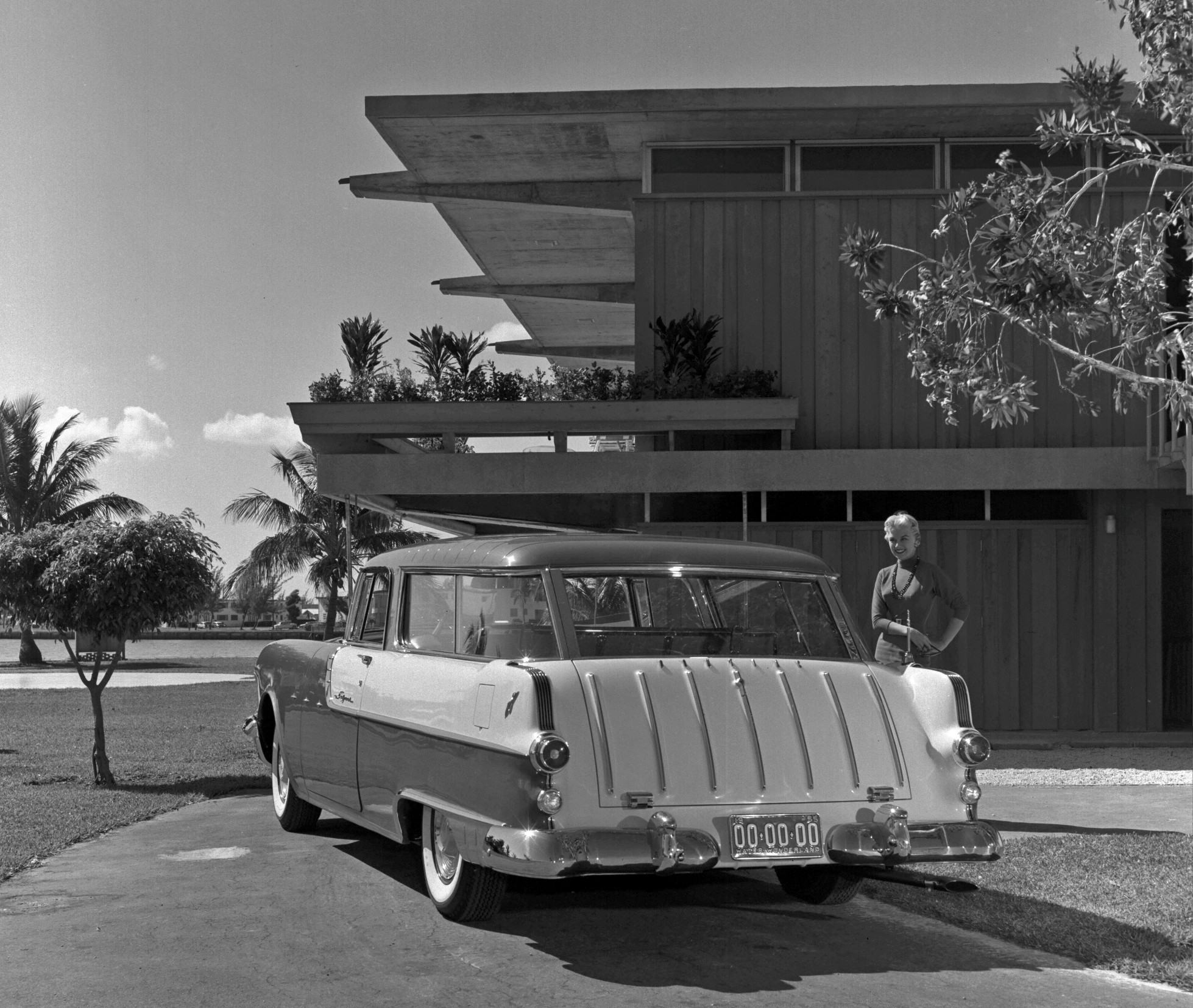
1955 Pontiac Star Chief Custom: Midcentury modern.
1956: A facelift included a more elaborate bumper-grille and the new “Strato-Flight” Hydra-Matic transmission. By 1956, the Safari was cementing its status as the “limousine of station wagons.” This year saw a major engine upgrade to the 316.6 cubic-inch V-8. Horsepower jumped as high as 285 hp in the dual four-barrel carburetor configuration.
- Styling became even bolder with the introduction of new two-tone paint schemes, in which the accent color was carried over the roof.
- Pricing started at $3,124. Despite being the brand’s flagship, the 1955 Safari remained a boutique item, with only 4,042 units produced.

A 1956 print ad for the four-door model: “Reset Your Sight-seeing Sights.”
1957: The final year of the specialized two-door body. Pontiac began using the “Safari” name for all its wagons this year. The two-door was renamed the Custom Safari to distinguish it from the standard four-door Chieftain and Super Chief Safaris.
The 1957 Star Chief Custom Safari represents the pinnacle of the original two-door design. It featured the 347 cubic-inch V-8, capable of up to 290 hp. However, 1957 was also a year of transition. Pontiac began expanding the “Safari” name to other wagons in the lineup, including the four-door Safari Transcontinental. This dilution of the name, combined with changing consumer tastes, led to the original two-door sport wagon’s departure.
Pricing for the 1957 Safari started at $3,481. Only about 1,294 two-door Custom Safaris were built in 1957, making them among the most sought-after collector cars today.
The 1957 model year was the last of the three-year production run for this specific two-door Safari body style. It had a total production of 9,094 units over its lifespan.
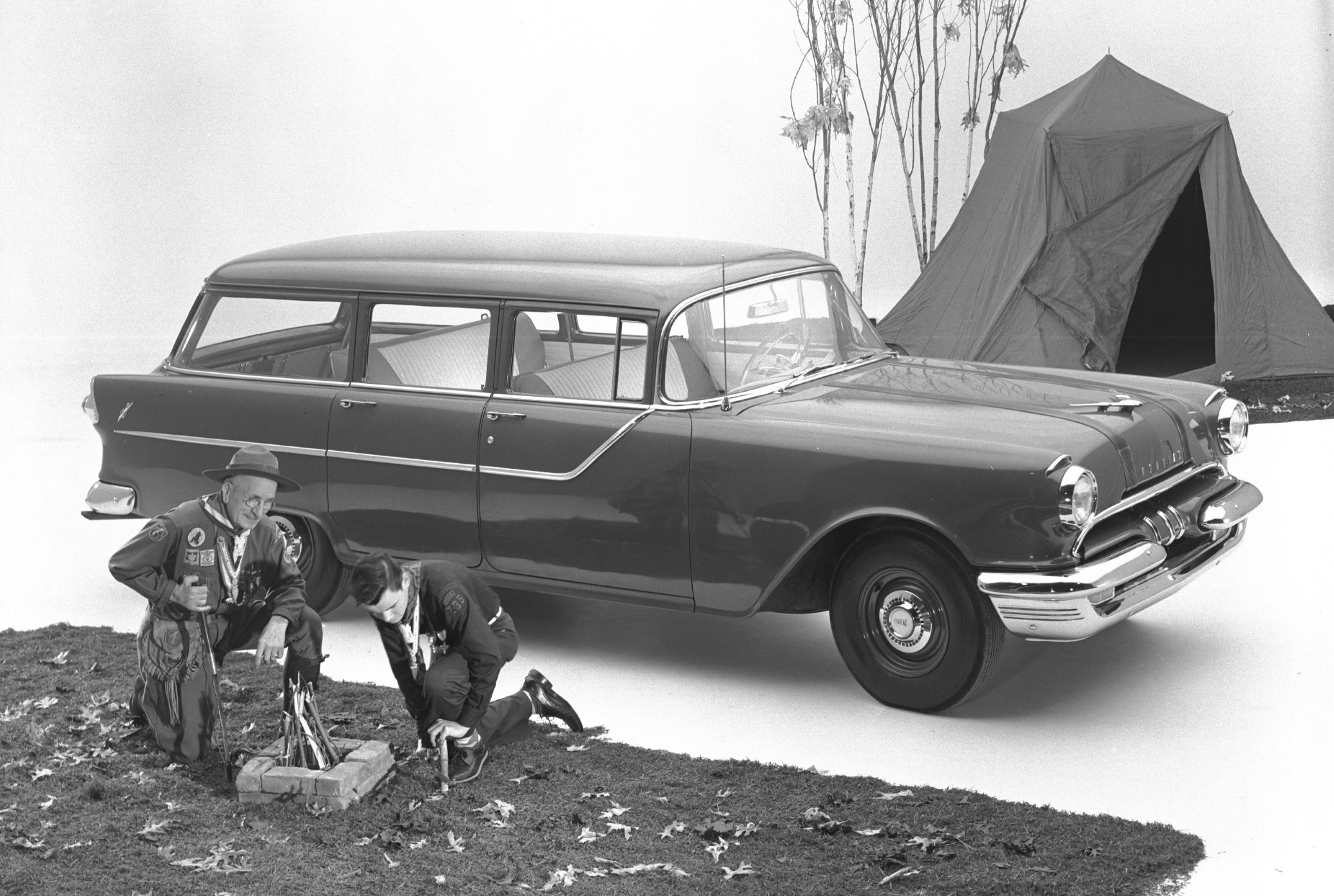
Before the SUV, the Pontiac Safari was touted for backcountry travel.
The Rare 1957 Safari Transcontinental
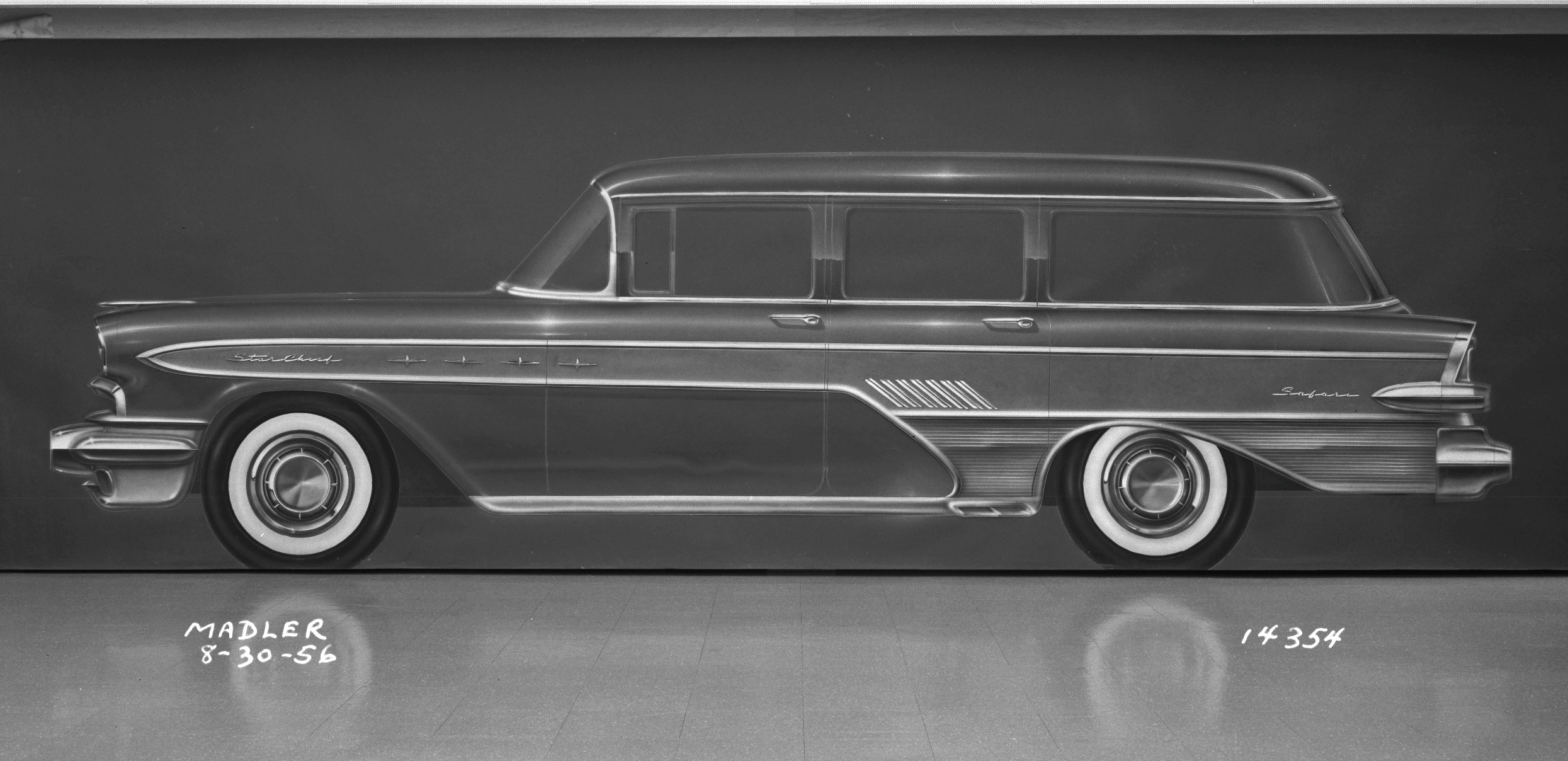
A blackboard rendering of a prototype 1957 Safari Transcontinental four-door wagon.
The 1957 Pontiac Transcontinental Safari was a one-year wonder. It was a much rarer, mid-year entry added to the Star Chief Custom line. The four-door, six-passenger luxury wagon was the four-door sibling to the high-end Bonneville.
While all 1957 Pontiac wagons were branded as “Safaris,” the Transcontinental was the ultimate expression of the nameplate. It was designed to bridge the gap between a family hauler and a luxury cruiser.
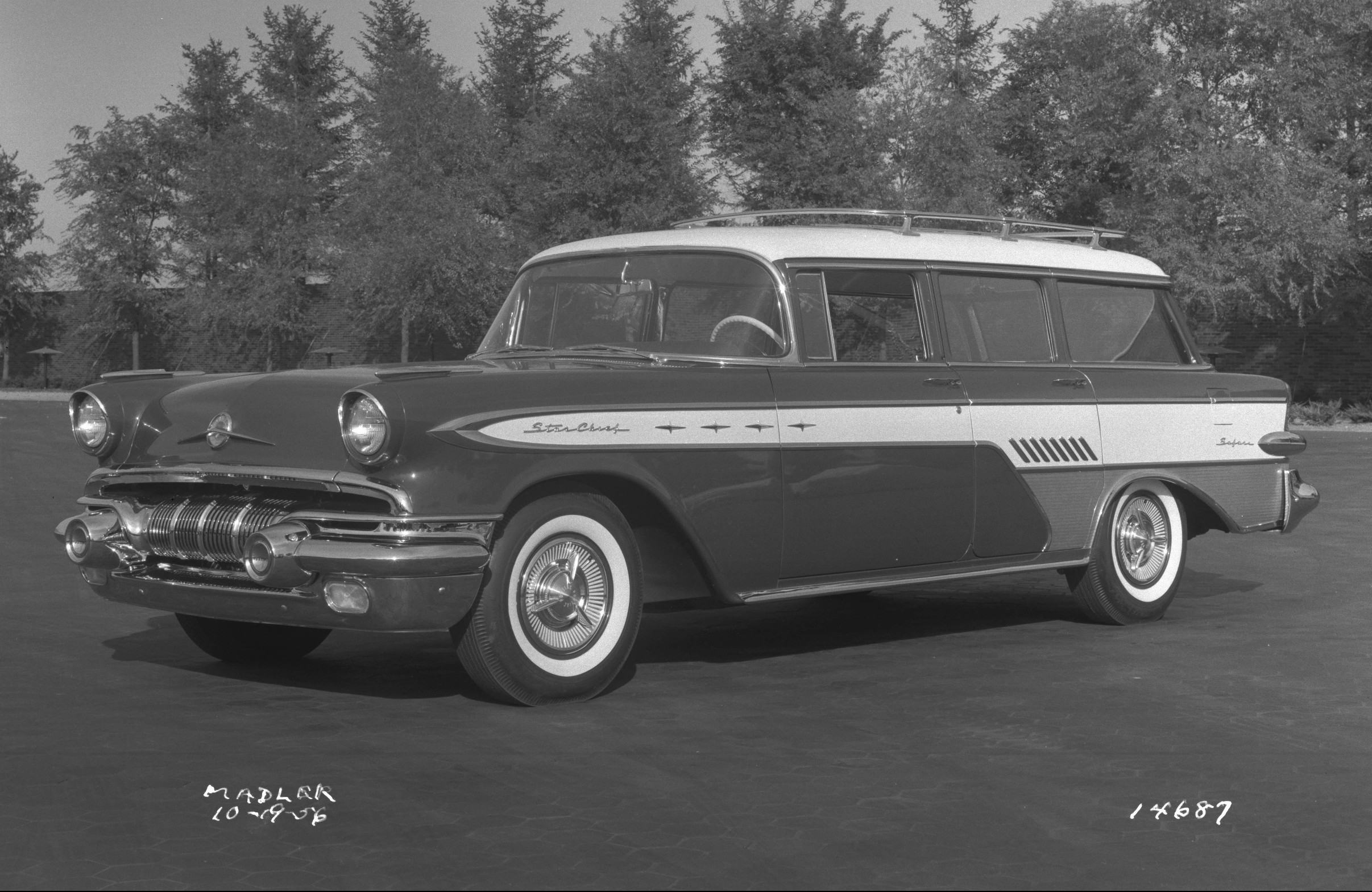
In mid-1957, Pontiac introduced the four-door Safari Transcontinental. It featured unique side trim and a standard roof luggage rack.
It was distinguished by several high-end visual cues:
Four-Star Side Spear: While Star Chief models featured three chrome stars on the rear fender, the Transcontinental added a fourth star.
Anodized Aluminum Panels: The anodized aluminum trim panel below the side spear is a feature exclusive to the ultra-exclusive 1957 Bonneville convertible.
Standard Roof Rack: Every Transcontinental came factory-equipped with a chrome roof luggage rack, a rarity for the time.
Luxury Interior: The cabin was outfitted in genuine leather with a unique 70/30 split front seat. The passenger side is wider and often features a headrest—a very forward-thinking comfort feature.
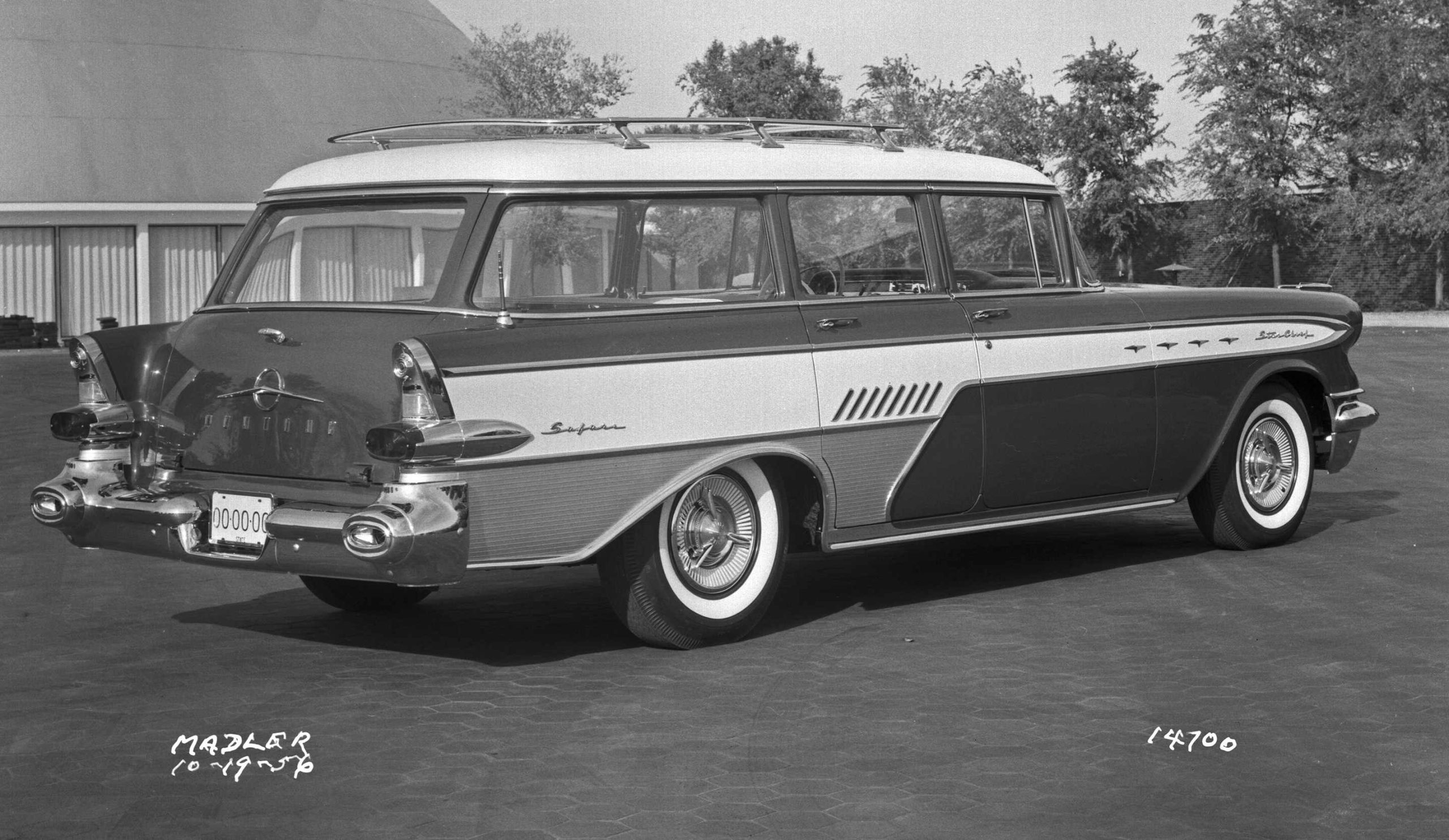
The 1957 model is easily identified by its massive “Star Flight” kontur-styled rear fins.
Transcontinental Powertrains
Under the hood of the Transcontinental was a 347-cubic-inch Strato-Streak V-8, which had been enlarged from the previous year’s 316.
The engine had three performance levels:
Standard 4-barrel 270-hp, standard for Star Chief Custom models.
Optional 290-hp Tri-Power (3×2-barrel), featuring three Rochester carburetors.
315-hp Rochester Fuel Injection V-8. The 315-hp “fuelie” option was the pinnacle of Pontiac performance in 1957 and was standard on the 1957 Bonneville convertible. The uprated engine was technically a “special order” option (around $500) for the Transcontinental Safari and other Star Chief models.
The fuel-injected engine achieved its impressive output by replacing traditional carburetors with a continuous-flow mechanical fuel injection system. It was developed by GM’s Rochester division.
- Horsepower: 315 hp at 4,800 rpm
- Torque: 400 foot-pounds at 3,200 rpm
- Compression Ratio: 10.25:1
- Induction: Rochester mechanical fuel injection with a high-lift camshaft.
Most Transcontinentals were equipped with the optional Strato-Flight Hydra-Matic automatic transmission ($231). Few buyers opted for the three-speed synchromesh manual with column shift.
Size Matters
With a wheelbase of 122 inches, the four-door Transcontinental is more than 7 inches longer than the two-door Custom Safari. The standard Safari was built on the shorter 115-inch Chieftain and Super Chief wheelbase. With the Strato-Flight Hydra-Matic transmission, the Transcontinental weighed a substantial 3,955 pounds.
The Transcontinental came with a high price tag of $3,636, making it more expensive than any other Pontiac except the Bonneville. Because it was a mid-year release with such a high cost, production was limited. Only 1,894 units were built.
Because the Transcontinental did not share the “pillarless” two-door Safari’s sport body, it is often overlooked by enthusiasts. Consequently, the Transcontinental is one of the rarest and most sought-after wagons for Pontiac enthusiasts today.
The two-door Safari is rarer by the numbers; the Transcontinental is often harder to find in original condition. Many were used as family wagons, whereas the two-door models were more frequently preserved as halo cars. If you are seeking a survivor, you can verify its authenticity via the cowl tag. The style number for a Transcontinental Safari is 2762SDF.
Neither the two-door Safari nor the Transcontinental returned for 1958. Pontiac had shifted its focus toward the wider, lower styling of the upcoming “Wide Track” era.
Sources: “Standard Catalog of American Cars, 1946-1975”; OldCarsWeekly; PontiacSafari.com
Boutique Assembly
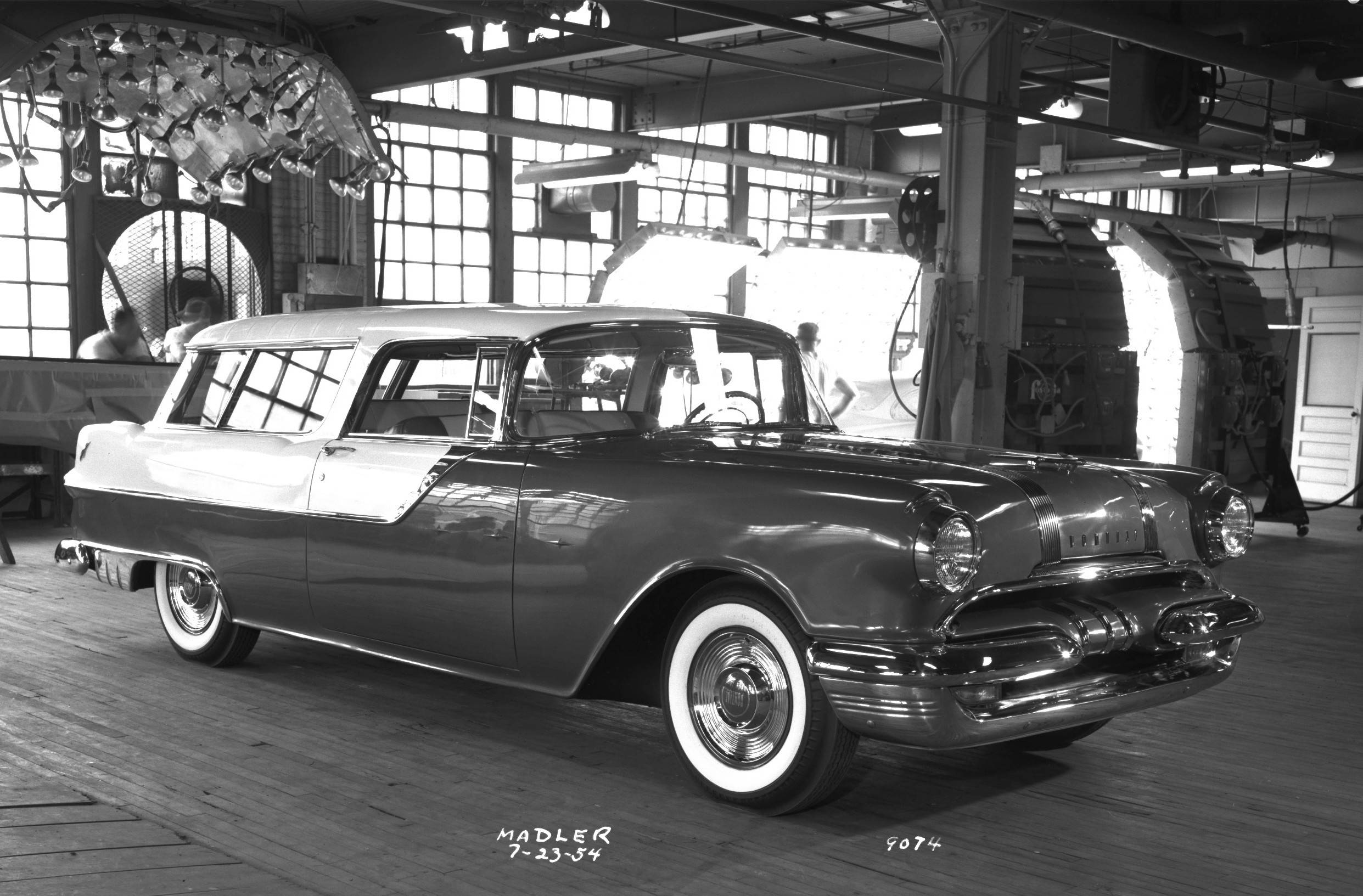
The Pontiac Safari and Nomad bodies were built in the same Fisher Body plant in Euclid, Ohio.
To split tooling costs, the Pontiac Safari and Nomad bodies were built in the same Fisher Body plant in Euclid, Ohio. Both models are the same above the beltline — roof, windshield, windows, and liftgate. They use the same doors, tailgate, and seats.
Production for both models was a multi-stage process. Their low-production body style required specialized work that the standard high-volume Pontiac lines were not equipped to handle.
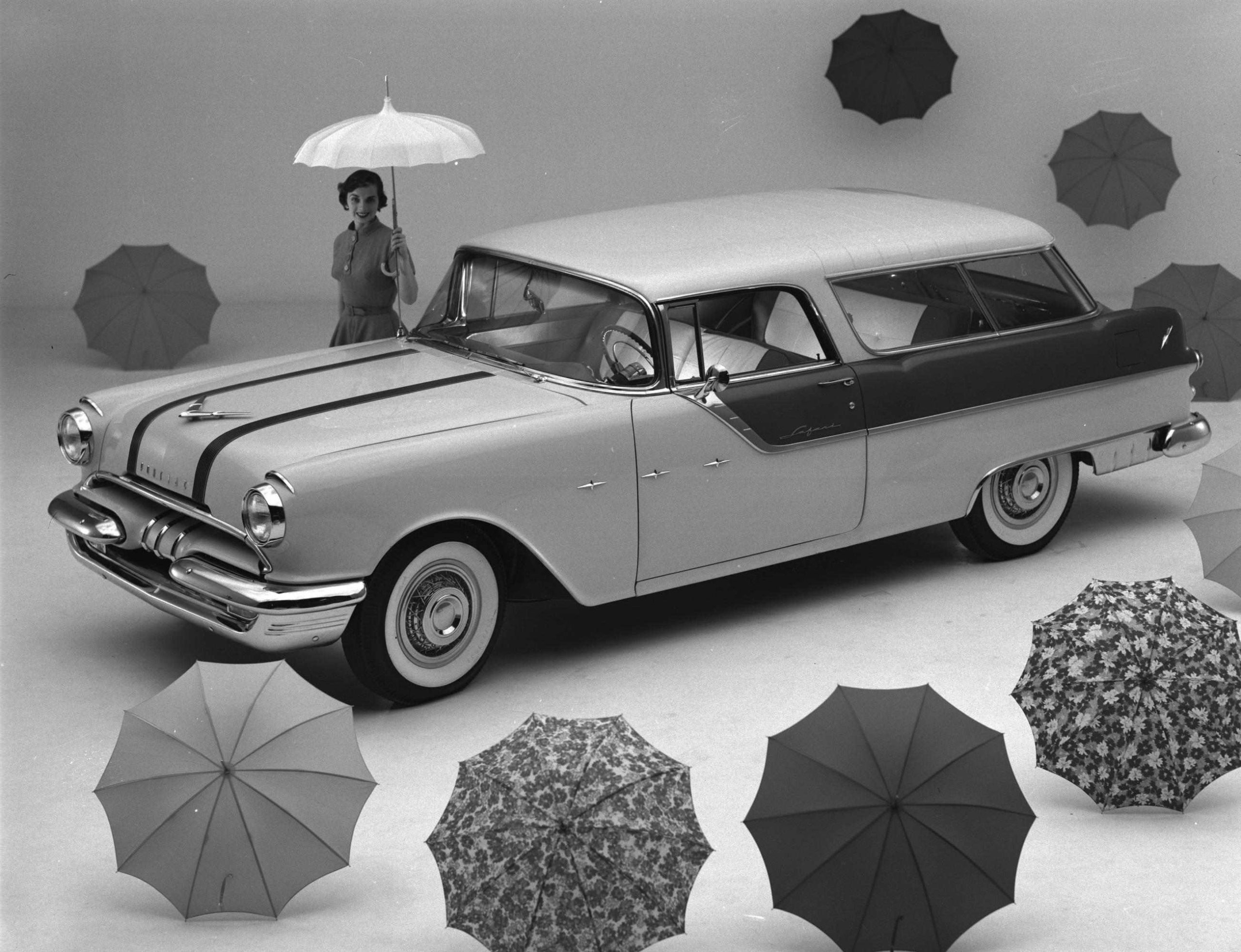
A studio PR image with cutesy umbrellas.
Once the Safari bodies were completed, they were shipped by rail to various General Motors assembly plants. There, they would be mated with their Pontiac chassis, engines, and trim. The primary assembly locations included:
- Pontiac, Mich.: The main Pontiac assembly plant;
- South Gate, Calif. (Los Angeles): For the West Coast market;
- Kansas City, Kan.: Fairfax Assembly;
- Atlanta, Ga.: Lakewood Assembly;
- Linden, N.J.: Linden Assembly;
- Wilmington, Del.: Wilmington Assembly;
- Arlington, Texas: Arlington Assembly;
- Framingham, Mass.: Framingham Assembly.
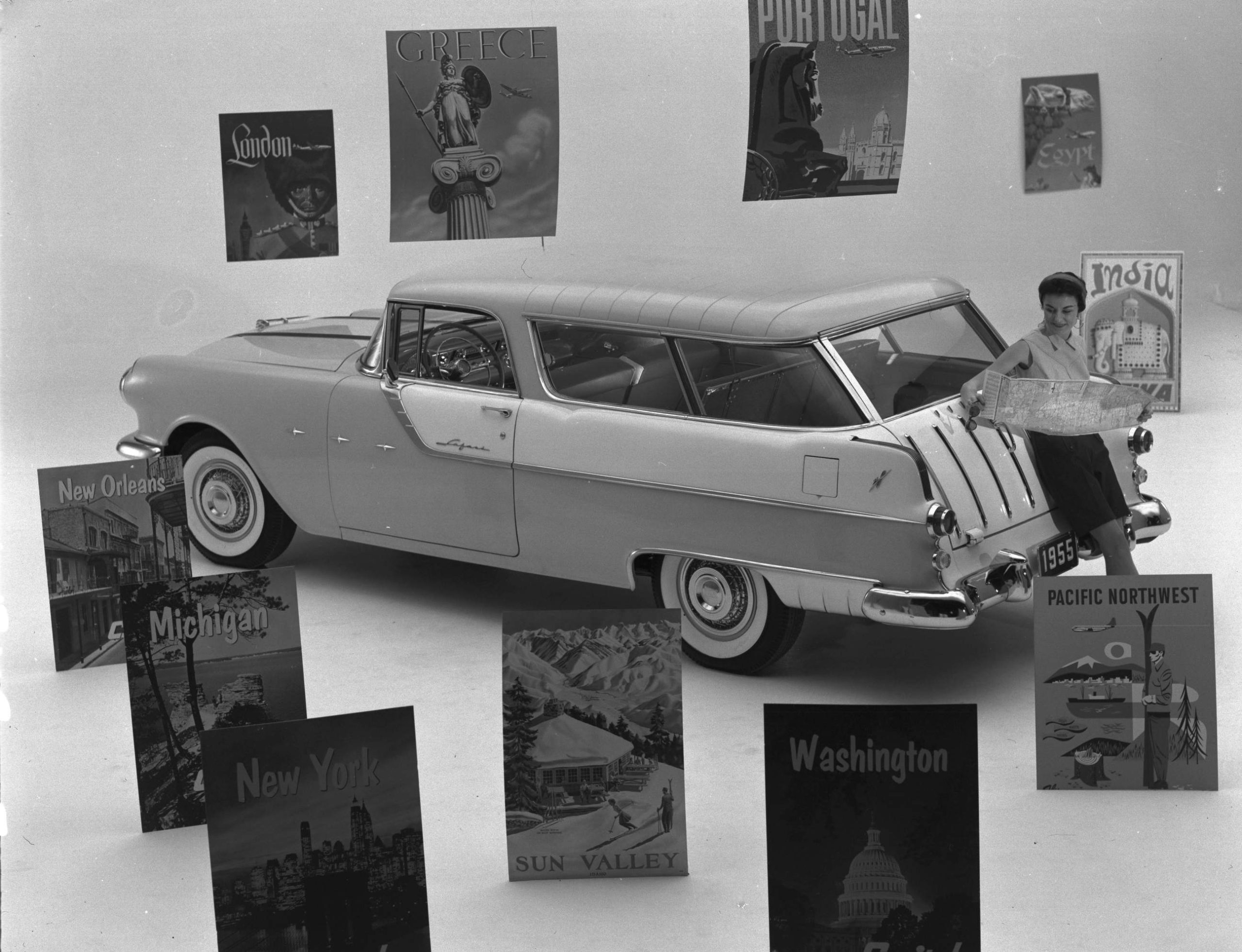
Or the Safari as savvy traveler.
The Canadian ‘Unicorn’
Interestingly, a small number of Safaris were also built in Canada specifically for the Canadian market. These were unique because they were often built on GMC truck frames and used different powertrains than their American counterparts.
Sources: Wikipedia, PontiacSafari.com
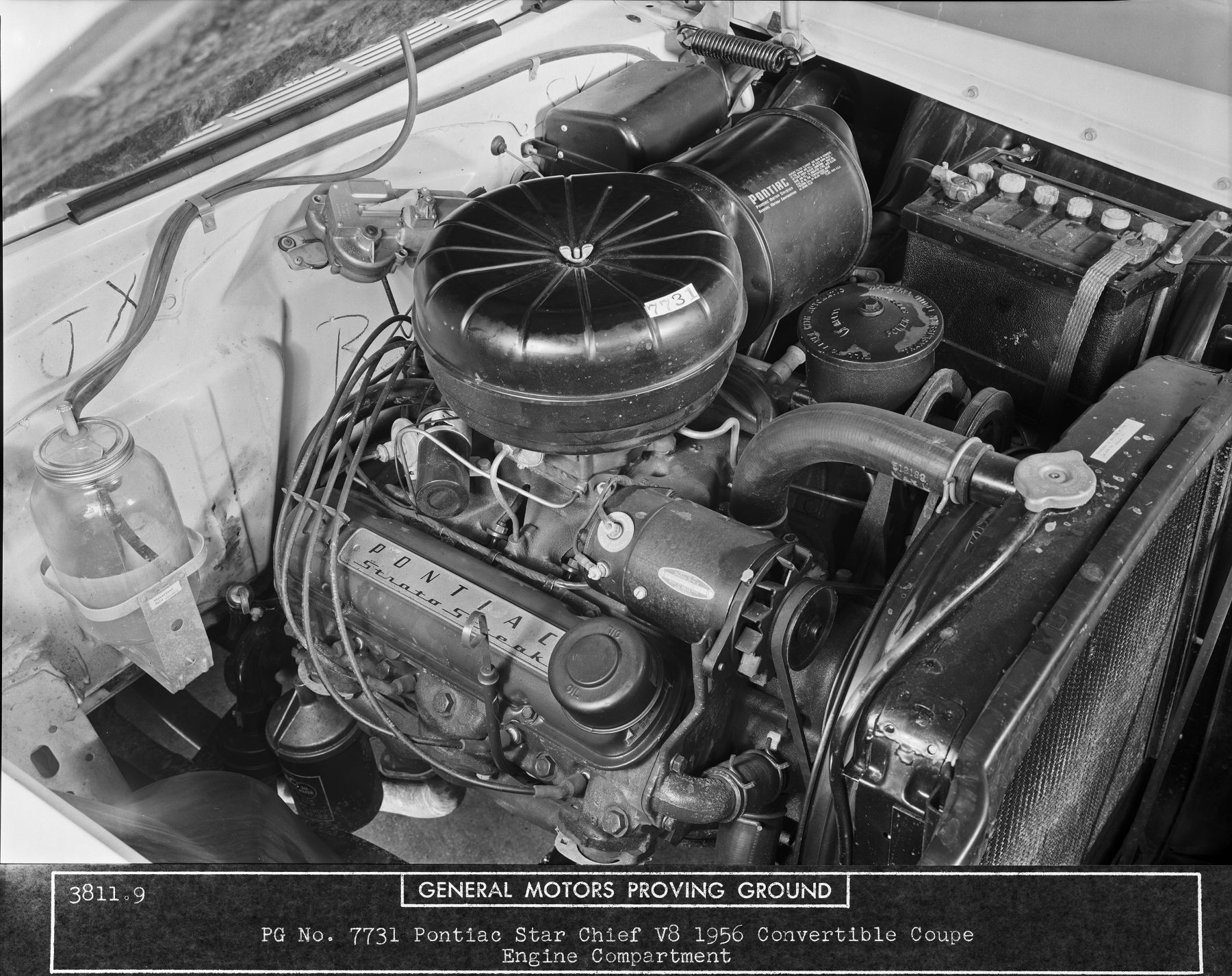
The 1956 Pontiac Star Chief 317 cubic inch Strato Streak V-8 engine
Current Pontiac Safari Valuations
The collector market for the two-door Pontiac Star Chief Custom Safari remains strong. It is often positioned as a more exclusive alternative to the ubiquitous Chevrolet Nomad. While the Safari is significantly rarer than the Nomad, it typically trades at a slight discount, making it a highly sought-after halo wagon for Pontiac enthusiasts.
Recent auction data and valuation guides show a wide range of pricing for classic Safaris. It all depends on the specific year and engine configuration (such as the coveted “Tri-Power” setup):
#1 Concours (Pristine): $120,000-$190,000+
#2 Excellent (Show Quality): $75,000-$115,000
#3 Good (Driver Quality): $35,000-$65,000
#4 Fair (Restorable/Project): $15,000-$30,000
A Safari Owner’s Love
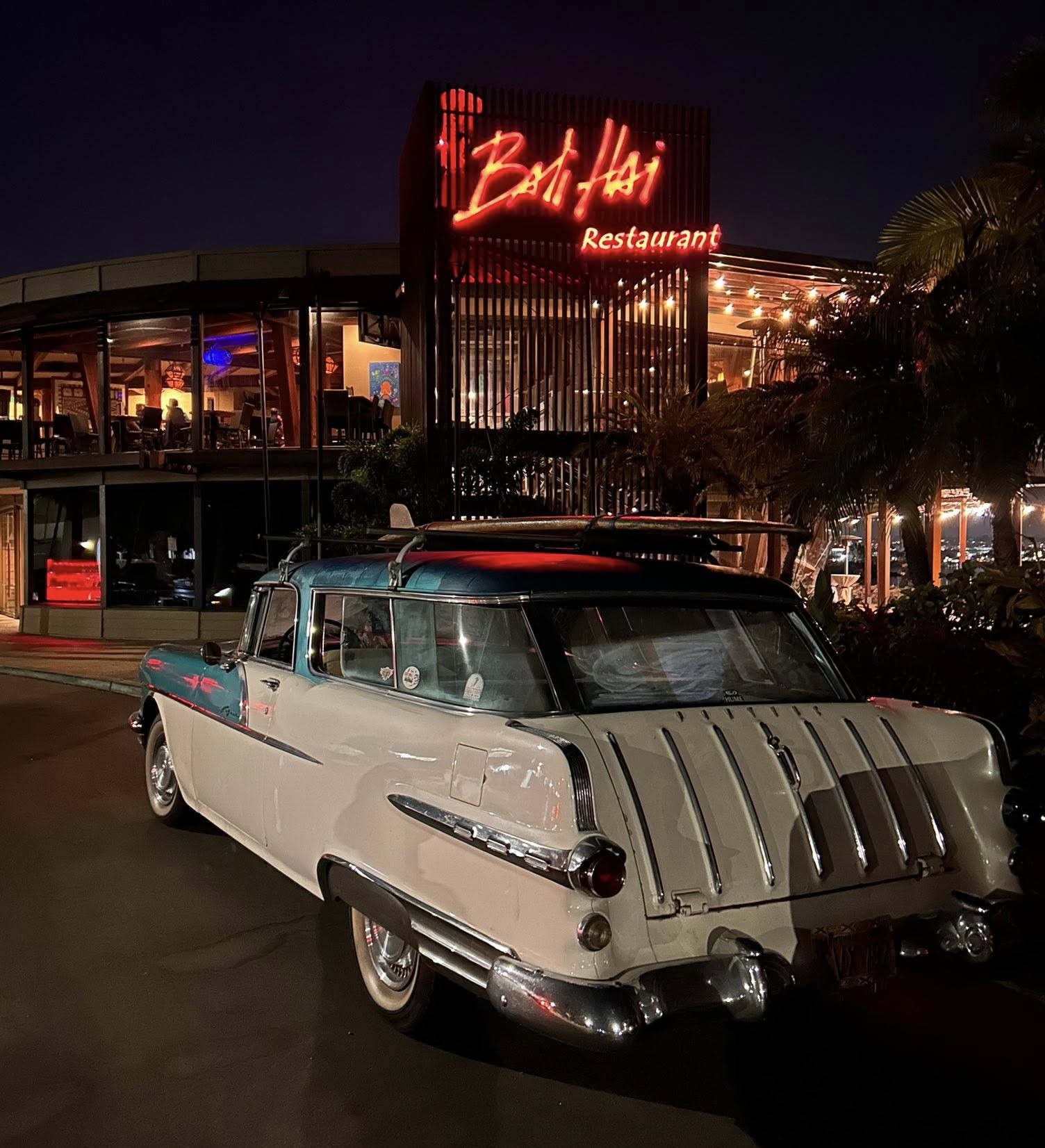
Norm Daniels calls his 1956 Vista Turquoise and Nimbus White wagon the “Safari Tiki Wagon O Fun.” (Norm Daniels photo)
San Diego, Calif., car enthusiast Norm Daniels has owned his 1956 Pontiac Safari for about 12 years. He calls his Vista Turquoise and Nimbus White wagon the “Safari Tiki Wagon O Fun.”
This passion for cars started early in his life.
“My first car was a ’57 Bel Air hardtop, yellow and white. Sold her to buy a 1967 VW bus. Loved that slowpoke,” he wrote via Facebook Messenger.
He owned many VWs off and on. Later, he wanted a V-8 again, and then “along came my Safari Tiki Wagon O Fun.”
It was a matter of the “Car Distribution System.”
“She chose me,” he wrote. “Actually, I’d been looking for a Nomad, but they were too expensive. My buddy, Scott, owned this Safari, and he knew I liked it, so he made me a fair offer. That was about 12 years ago. So glad to have her instead of the Chevy, but parts are not as easy to locate.”
Some of his favorite features of his Safari include the lighted hood ornament, curved windshield glass, the stylish trim, and, most of all, the cool people he meets every time he goes out.
“I’m an enthusiast of beauty,” Daniels wrote. “And she’s a beauty!”
Collector market sources:
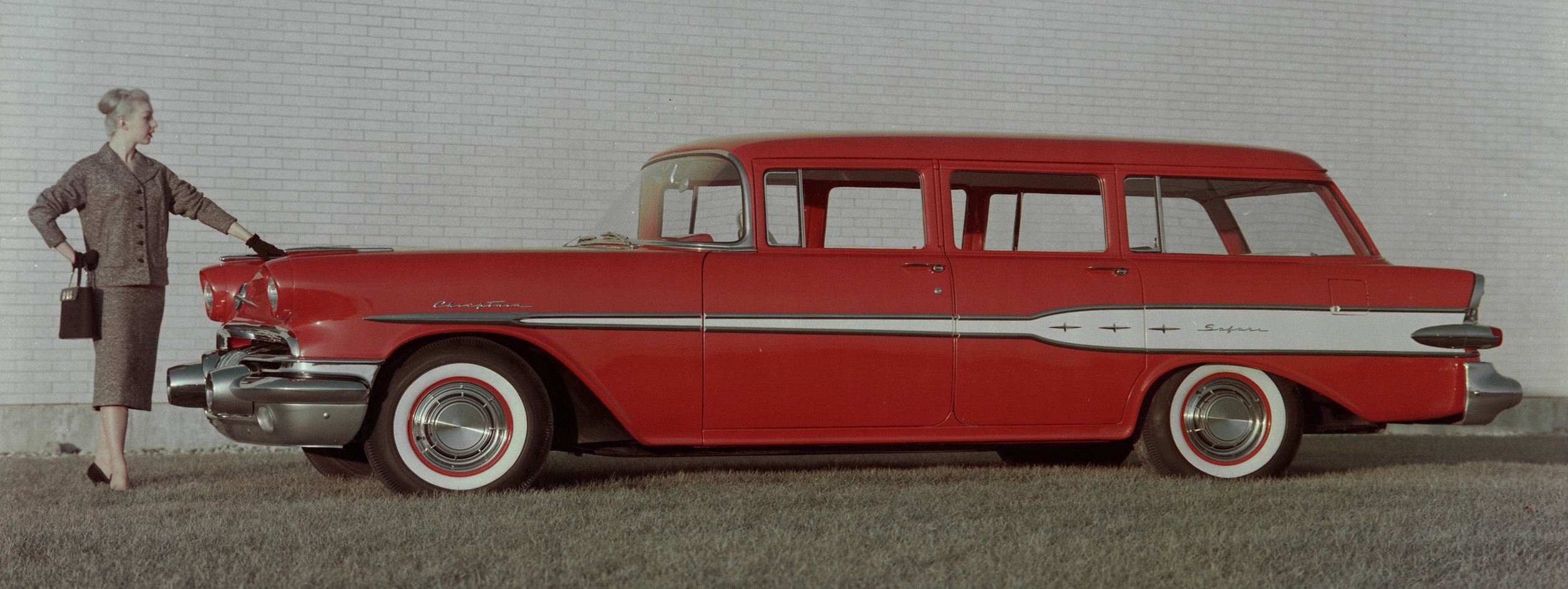
The 1957 Pontiac Safari Chieftain four-door, six-passenger. 1957 was the year Pontiac expanded the name to include all of its station wagons across different trim levels.
