Select Page

1959 Ford Country Squire with Push Button’ Station Wagon Living’ equipment

1959 Ford Country Squire with Push Button’ Station Wagon Living’ equipment

The Country Squire wagon concept packaged the car-camping essentials, including the boat and kitchen sink

The Country Squire concept packaged such camping essentials as a car-top tent with a double bed, an electric refrigerator, and a shower. (Ford)

BY MARK MAYNARD

Ford Motor cast a line for 1959 to test the waters of consumer interest for a car-camping concept based on a 1959 Ford Country Squire. The rig would provide push-button station wagon living with all the gear, including the kitchen sink.

According to Wikipedia, the U.S. and the world were emerging from the “Recession of 1958.”  And Ford marketers might have felt that consumers were ready to get out and enjoy the freedom of car camping.

That might have been so, but not so much for this outrageously sophisticated concept. I came across these two photos at the Ford media site, but there were no other details.

In this era before the modern SUV, the big Ford Squire wagon was a good starting place. Built on a bigger platform for 1959, the Country Squire body was 5 inches longer and the new 118-inch wheelbase was 2 inches longer than the 1958 model. In addition, the second and third rows were re-engineered to fold flat.

The 1959 Ford Country Squire wagon concept with Push Button ‘Station Wagon Living’ equipment and rooftop boat

The rooftop boat neatly contained the concept’s camping essentials. (Ford)

Country Squire Concept

An online search for information on this concept car brought up Shorpy.com, an American historical photo archive.

Shorpy has a news item from the Washington Post of July 3, 1958, highlighting the details.

“Travelers and sportsmen who would like to park their cars after a day’s drive and set up camp by pushing a few magic buttons may be able one day to do just that.

“With the ‘pushbutton camper,’ a specially equipped experimental Ford station wagon, a traveling couple could pull into a parking area, lower a boat from the roof top, pitch their tent and set up a kitchen unit protected by an overhead awning — almost without getting out of the car.

“One push button lifts the boat and swings it over the side so it can be easily removed for launching. A car-top tent, containing a full-sized double bed, already made up and equipped with a reading lamp, is erected by another button.

“After the tailgate is opened, a third button slides out the compact kitchen unit complete with an electric refrigerator and two-burner stove, a work table and meat cutting block, and a sink with hot and cold running water.

“The roof compartment also houses a shower head, complete with curtain. Ford has no definite plans for mass producing such a vehicle.

“If consumer demand warranted it, a company official said, the automatic equipment could be produced by independent suppliers and installed by a Ford dealer.”

‘Louie Mattar’s Fabulous Car’

The Country Squire wagon concept was a feat of engineering finesse, but it was not the first such example.

I give that credit to Louie Mattar who upfitted a 1947 Cadillac with all the comforts of home. Then, in 1952, he and two other men established a cross-country endurance record. They drove the Cadillac from San Diego to New York and back without stopping. Their trip totaled 6,320 miles and required refueling from a moving gas truck three times.

“Louie Mattar’s Fabulous Car” is on view at the San Diego Automotive Museum.

The mini McLaren GT supercar for budding enthusiasts

The mini McLaren GT supercar for budding enthusiasts

Right-sized for youngsters aged 3 to 6 years, the battery-powered McLaren GT Ride-On is based on the full-size supercar

BY MARK MAYNARD

Train up a child in the way he [or she] should go — and get her or him on a McLaren GT Ride-On battery-powered minicar.

Budding enthusiasts from 3 to 6 years old can experience their very own McLaren GT in miniature. The just-announced McLaren GT Ride-On is based on the lightest and quickest accelerating vehicle in its class, the company says. See the GT here.

McLaren GT Ride-On front

The GT Ride-On is sold in six McLaren colors, including Amaranth Red. (Photos courtesy of McLaren)

The McLaren GT Ride-On is the fourth car in McLaren’s range of children’s toys. It follows the P1, 720S, and McLaren Senna.

The minicar has a functioning dashboard.

The minicar has a functioning dashboard.

‘’At McLaren Automotive, we aim to inspire the future generation of supercar enthusiasts,” Hayley Robinson, Merchandise, Licensing & Partnerships Manager, McLaren Automotive, said in a release.

“We’re proud to develop and encourage younger minds and seek to create the next generation of drivers, engineers, and automotive designers,’’ she said.

A side view of the McLaren GT minicar

The battery-powered mini McLaren is suitable for supercar enthusiasts aged 3 to 6.

Functional features

The new Ride-On has an impressive list of standard features and detailed design. The little car’s working dihedral (scissor) doors make for the ultimate entrance and getaway. In addition, the trunk with a functional lid has room for junior driving essentials.

The trunk on the GT Ride-On

The trunk has a functioning lid.

Like the real thing, the GT Ride-On has working dashboard controls including a key start. Twist the key and the car fires up with McLaren engine sounds. There also are functioning brake lights.

Youngsters can hook up their playlist through an infotainment system. It can access files from a USB device or SD card with the optional MP4 display screen.

The McLaren GT Ride-On is 42.5 inches long,  23.6 inches wide, and 16.9 inches tall. It is available in six McLaren colors of Burnished Copper, Silica White, Onyx Black, McLaren Orange, Amaranth Red, and Burton Blue.

Ride-On pricing

The McLaren GT Ride-On is sold in two rechargeable battery choices of $230 and $330. Options include an MP4 display screen and a black leather seat trimmed in red and yellow.

The GT Ride-On is available to order from select global toy retailers.

Go here for other McLaren merch.

17 Years of the Lamborghini Countach

17 Years of the Lamborghini Countach

Automaker celebrates the 50th anniversary of the Lamborghini Countach in a series of four social-media videos
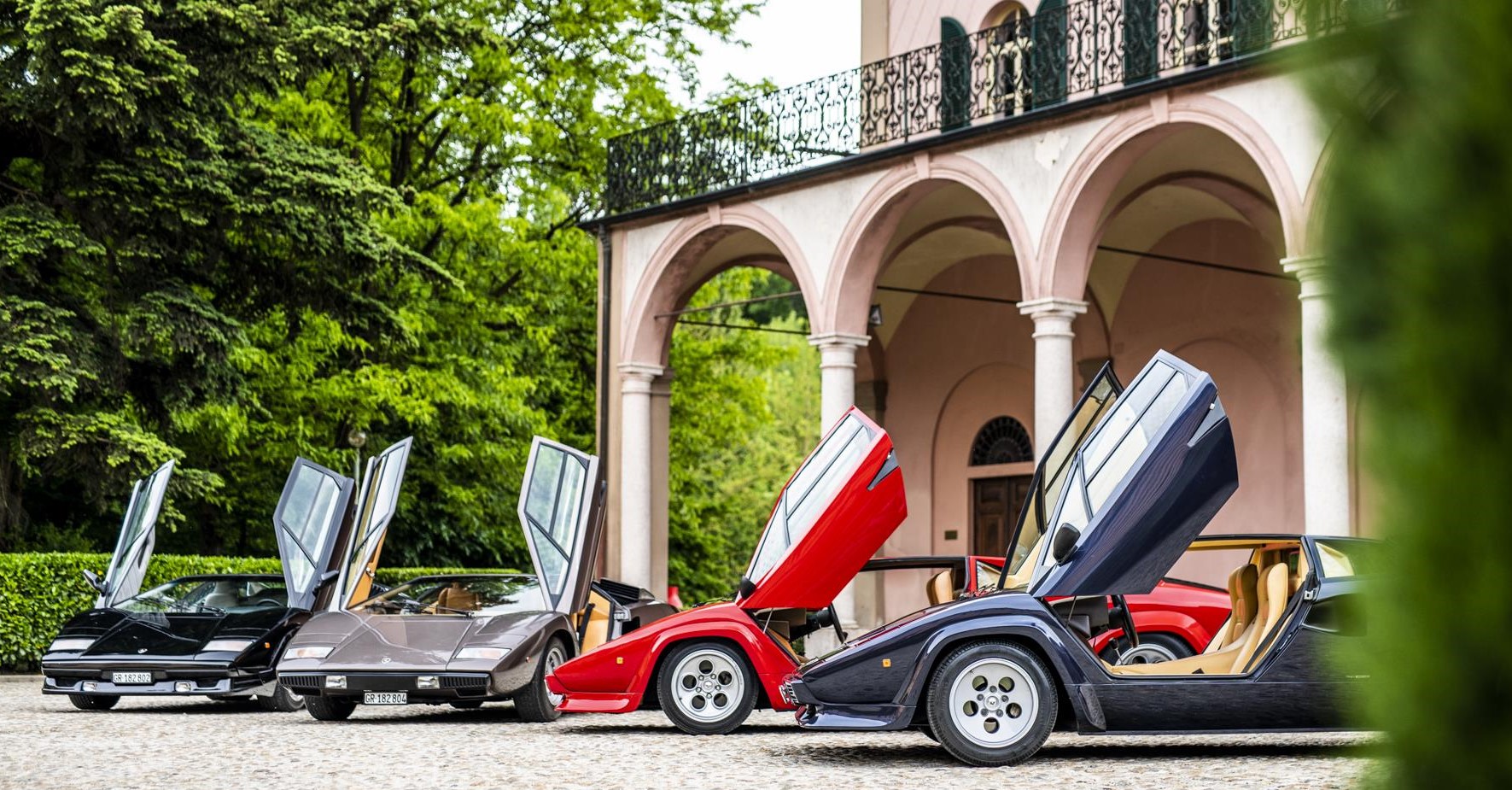
Five generations of the Lamborghini Countach.Five generations of the Lamborghini Countach. (Remi Dargegen)

BY MARK MAYNARD

To celebrate the 50th anniversary of the Lamborghini Countach supercar, Automobili Lamborghini is launching a series of four videos on its social media channels. Every Monday, the Italian carmaker will recount the legacy of the Lamborghini Countach, including interviews with significant personalities who shaped the car.

The first is Marcello Gandini, head of style at Carrozzeria Bertone. He sketched the futuristic lines of this supercar and added its now-iconic scissor doors.

The 1970s was one of ultimate creativity, Gandini says, and one of the important moments for design.

It was an era of individualism, the jet age, and the space race. And it embraced the geometric patterns of the period and the bright colors of fashion trends.
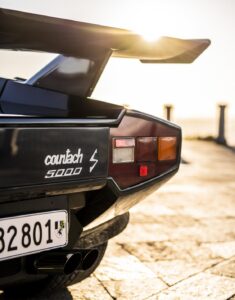
The Countach LP 5000 S badge.

(Remi Dargegen)

Lamborghini  Countach as style and performance icon

The Countach depicted much more than a commercial success. Images and posters of the supercar were on bedroom walls of an entire generation. The supercar also played a starring role in dozens of films.

The Lamborghini Countach fulfilled the role of style and performance icon. As a result, it rightfully won the title in the annals of world automotive history, Lamborghini says.

The Countach had a total production of 1,999 cars (not including the first LP 400 prototype).

Since the beginning of production, the Countach was exported to the U.S. But it was not until 1986, and the debut of the LP 5000 Quattrovalvole, that the Countach was officially approved for North America.

The word “Countach” is an exclamation of the Italian Piedmontese dialect that translates to astonishment and admiration for something.

1971: Countach LP 500 ‘idea car’

Lamborghini Countach LP 500.

Lamborghini Countach LP 500. (Lamborghini)

In the summer of 1970, Ferruccio Lamborghini wanted a revolutionary car to succeed the Lamborghini Miura. The new car had to be technically advanced and faster. And it had to become the sports car symbolizing the 1970s.

The 12-cylinder engine remained but with a displacement increase from 4.0 to 5.0 liters. The engine also was repositioned from rear transverse to rear longitudinal. The five-speed synchromesh manual transmission was placed in front of the engine and practically abutted the seats.

1973: First-gen Lamborghini Countach LP 400
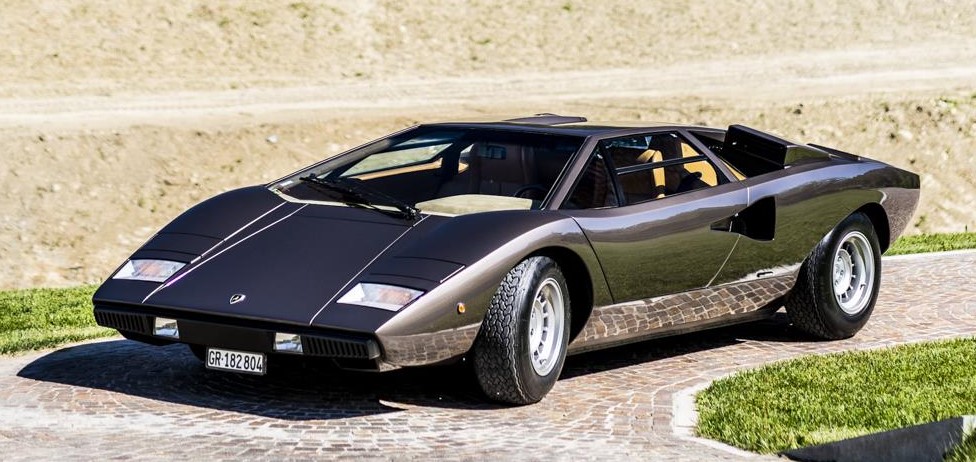
The Countach LP 400

Countach LP 400. (Remi Dargegen)

Early road tests of the 5.0-liter engine uncovered problems that would take more time to sort. So a quick fix was for the engineers to instead use the 4.0-liter engine.

The Countach LP 400 made its official debut at the Geneva Motor Show in March 1973. It was chassis No. 1120001 car. LP 400 was a prototype very similar to what would become the production car.

The LP 400 adopted a tubular trellis frame instead and aluminum was used for the body, not steel panels.

A front view of the Countach LP 400Countach LP 400. (Remi Dargegen)

The 4.0-liter (3929cc) engine used six Weber 45 DCOE twin-body carburetors. The engine developed 375 horsepower at 8,000 rpm and could reach a top speed or 186 mph or 300 kmh.

A red LP 400 was shown at the Geneva Motor Show. It was later repainted medium green for the 1973 motor shows in Frankfurt, Paris, and Earls Court, London.

The show car was sold to a buyer in Switzerland after the show and rediscovered in the early 2000s. Today LP 400 is owned by Automobili Lamborghini. It is now on display at the company museum, the MUDETEC.

The Countach LP 400 is the most sought-after version by collectors, Lamborghini says, with 152 units produced until 1977.

1978: Lamborghini Countach LP 400 S
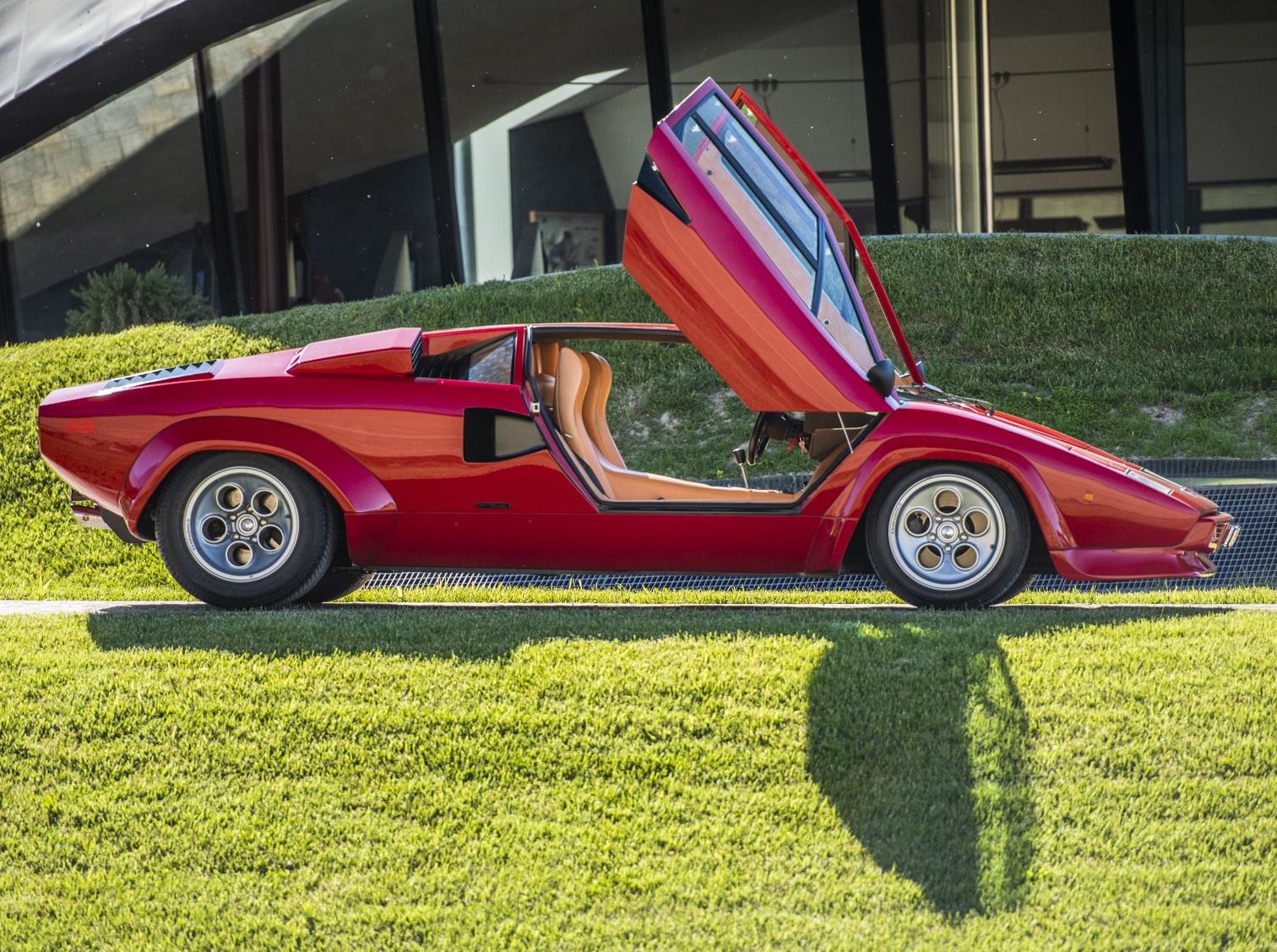
A red Lamborghini Countach LP400S.

Countach LP 400 S. (Remi Dargegen)

The LP 400 was replaced in 1978 by the Countach LP 400 S.

It sported lower profile and wider Pirelli P7 tires. The staggered-width tires mounted on magnesium rims had sizes of 205/50 VR 15 on the front and 345/35 VR on the rear. Wheel-arch extensions were added to contain the larger tires.

The 375-hp, 4.0-liter V-12 engine in the Countach LP 400 S.

The 375-hp, 4.0-liter V-12 engine in the Countach LP 400 S. (Remi Dargegen)

Other updates include an optional ultra-low front spoiler and a rear wing. The wing would become one of the most distinctive features of the Countach.

Never before had a “normal” car with such a racing appearance been seen on the road, Lamborghini says. It was the source of inspiration for each of the subsequent Countach series. Production of the LP 400 S totaled 235 units.

1982: Lamborghini Countach LP 5000 S

An overhead shot of the Countach LP 5000 S.

Countach LP 5000 S. (Remi Dargegen)

The 1982 Lamborghini Countach had an engine upgrade to a 5.0-liter V-12. The new LP 5000 S debuted at the Geneva Motor Show in March 1982.

The new engine developed 375 hp at 7,000 rpm, and it retained the six Weber horizontal twin-body carburetors. After import to the U.S., some cars were retrofitted with the Bosch K-Jetronic electronic injection.

With 323 cars produced, this model was replaced by the LP 5000 Quattrovalvole. It debuted at the Geneva Motor Show in March 1985.

1985: Lamborghini Countach LP 5000 Quattrovalvole

The Countach LP 5000 Quattrovalvole.

Countach LP 5000 Quattrovalvole. (Remi Dargegen)

The technical evolution of the 5.0-liter V-12 added four valves per cylinder. The Quattrovalvole (QV) engine displacement increased to 5.2 liters and the six Weber carburetors were mounted vertically, not in the horizontal position.

Cars for the U.S. market were fitted with Bosch KE-Jetronic electronic injection and a catalytic converter. As a result, horsepower rose to 455 hp at 7,000 rpm.

Aesthetic alterations were few but included a new engine hood with a more prominent bulge to contain the vertical carburetors.

There were 631 Quattrovalvole models produced until 1988.

1988: Lamborghini Countach 25th Anniversary
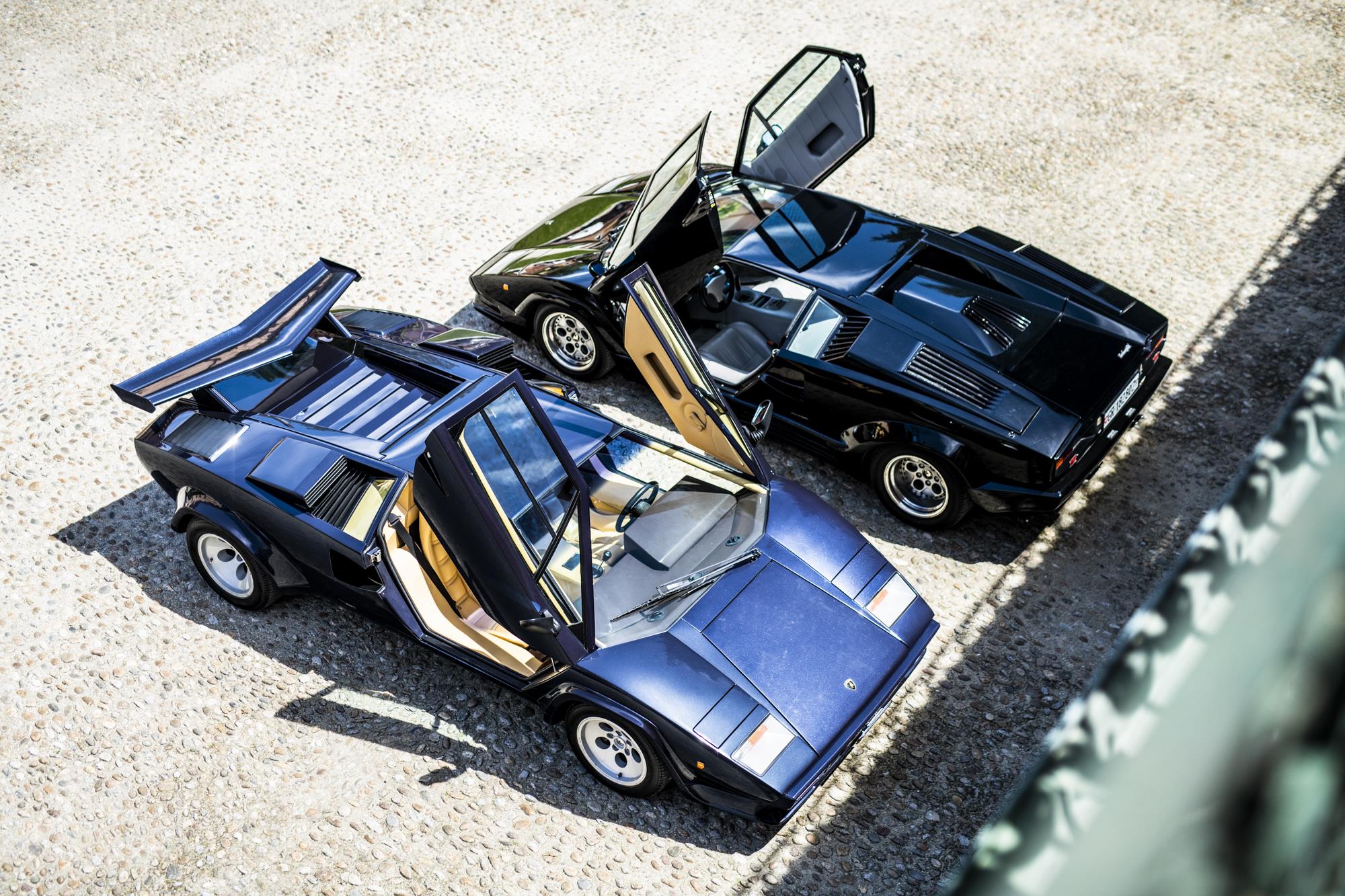
Countach 5000 S (left) and Countach 25th Anniversary (right).

Countach 5000 S (left) and Countach 25th Anniversary (right). (Remi Dargegen)

The Lamborghini Countach 25th Anniversary was the final evolution of the model. It debuted at the Paris Motor Show in September 1988.

The aesthetic updates were significant, but changes to the mechanics and chassis were minor. An improved cooling system updated the engine, and the chassis was modified to accommodate the new Pirelli P Zero tires. 

The Countach interior.

Countach interior. (Remi Dargegen)

The passenger compartment was updated with power windows and more comfortable power seats with less bolstering. In addition, the body style was decisively revised by young Horacio Pagani, who was working for Lamborghini at the time. He rounded the shapes and better integrated the wheel-arch extensions and the plates under the doors.

The Countach 25th Anniversary,

Countach 25th Anniversary, (Remi Dargegen)

The last Countach, a 25th Anniversary, was produced on July 4, 1990, with European specification. Its exterior was Argento Metallizzato (metallic silver) with a gray leather interior. It has not been sold and is still on display at the MUDETEC.

Volkswagen to end U.S. Passat production in 2022

Volkswagen to end U.S. Passat production in 2022

Legacy of the VW Passat in the U.S. will be celebrated with a special run of 1,973 cars

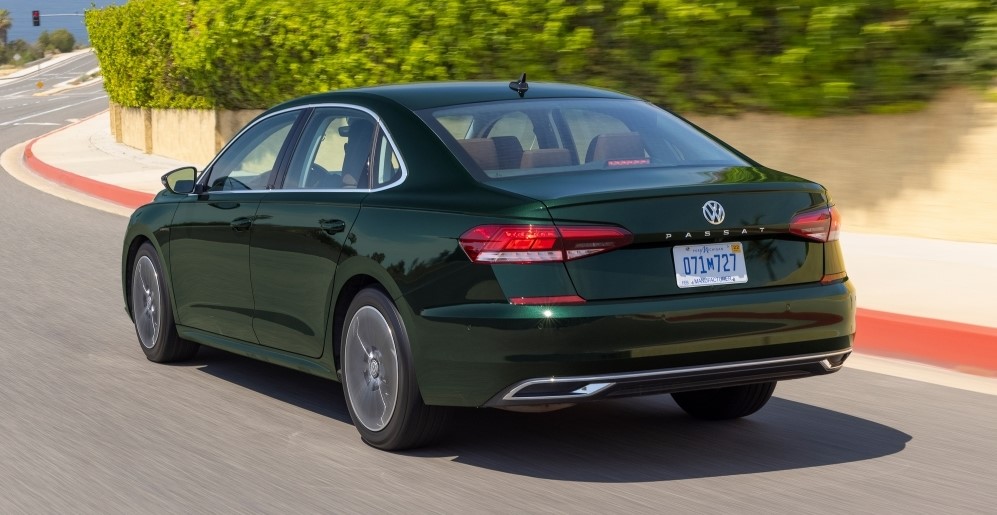
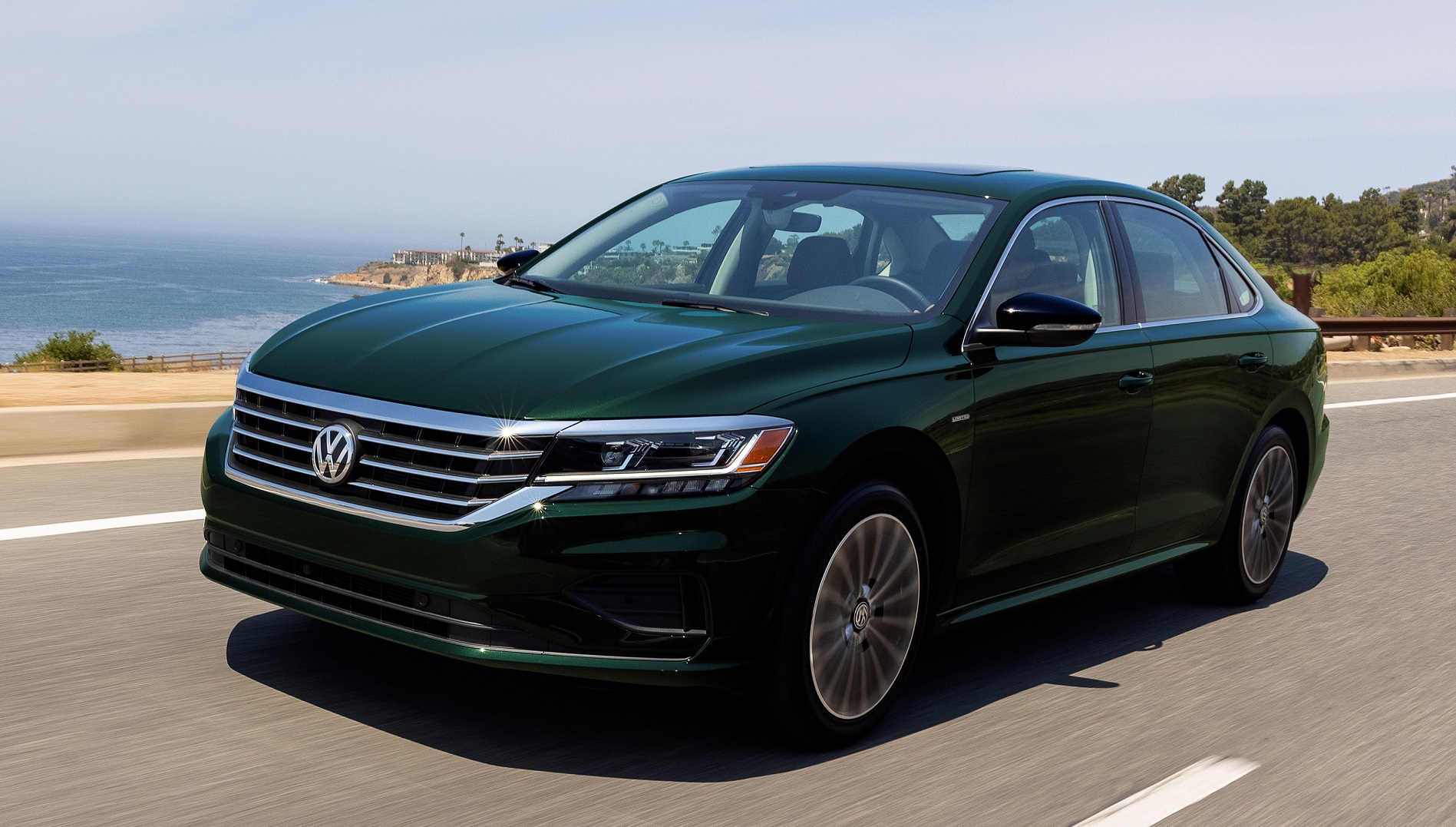
Limited Edition Passat sedan

The 2022 Passat Limited Edition will be available in four colors, with the number of each paying homage to an aspect of the vehicle’s past. (Photos courtesy of VW)

BY MARK MAYNARD

Volkswagen of America, Inc. announced today, July 19, that it will stop building the Passat sedan in Chattanooga with model-year 2022. The move is part of the plant’s transformation to build electric vehicles, VW said in a statement. The German carmaker now offers five SUV crossovers, including the just-released subcompact Taos and electric ID.4.

VW has sold some version of the Passat for nearly 50 years, Scott Keogh, President and CEO, Volkswagen Group of America, Inc,., said in a statement.

“With the Atlas and Atlas Cross Sport in high demand, and the North American production launch of the all-electric ID.4 SUV next year, our future in Chattanooga looks brighter than ever,” Keogh said.

The legacy of the VW Passat in the U.S. will be celebrated with a limited-edition run of 1,973 cars with Chattanooga-inspired details.

VW Passat History

The 1974 VW Dasher

The 1974 VW Dasher, also known as Passat B1 for the first generation.

The Passat went on sale in 1973, a year before the Golf in Europe and was based on the Audi 80. The Passat was initially sold in body styles of two- and four-door fastback sedan and three- and five-door hatchback. A wagon would be added one year later.

The Passat was marketed as the Dasher in the U.S. and sold in all three body styles from 1974. More than 222,000 were sold. The next-generation model was marketed as the Quantum. The Passat name was first used for the U.S. in 1990 and has remained ever since.

It was 2011 when Volkswagen started building the Passat for the North American market at its plant in Chattanooga, Tenn. The U.S.-market car was larger inside and out than the eighth-generation European car that debuted in 2014. The current U.S. Passat has been given two updates since first going on sale.

It has been exported to Canada, Mexico, South Korea, and Middle Eastern markets. A version of the car has also been assembled in China, alongside the Passat Lingyu and Magotan.

2022 VW Passat Limited Edition

The 2022 Passat Limited Edition is a tribute to the model’s history and recognizes the contributions of the employees who built Passat.
A run of 1,973 Limited Edition models recognizes the year the first Passat was launched in Germany.

Special cup holder mats for the 2022 Passat Limited Edition

Special cup holder mats will feature aerial maps of the city and an aerial line drawing of the Chattanooga factory.

The 2022 Passat Limited Edition will be available in four color combinations, with the number of each paying homage to an aspect of the vehicle’s past.

Aurora Red Metallic models with Titan Black interior will number 411 units that represent the original vehicle production code.

Racing Green Metallic models with Mauro Brown interior will be number 423 for the telephone area code of Chattanooga, Tenn.

Pure White models with Mauro Brown interior will number 524 units in tribute to the opening of the Chattanooga Plant on May 24, 2011.

And there will be 615 Platinum Grey Metallic models with Titan Black interior that represent six generations of imported Passats, one generation assembled in Chattanooga, and five decades of U.S. sales.

The interior of the VW Passat Limited Edition

Limited Edition models will have leather-trimmed sport seats with perforated surfaces.

Special Exterior Features

VW Passat alloy wheels and tires.

Fifteen-spoke 18-inch aluminum-alloy wheels.

Fifteen-spoke 18-inch aluminum-alloy wheels are standard, along with black mirror caps for the power-folding mirrors with memory.

Limited Edition models also feature LED headlights with the Advanced Front-lighting System and an easy-open trunk.

Special Interior Features

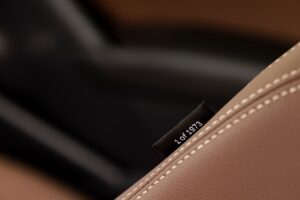
Limited Edition models will have unique seat tags featuring “1 of 1973” on one side and “Chattanooga 2011” on the other. In addition, special cup holder mats are imprinted with aerial maps of the city and a line drawing of the Chattanooga factory.

Special seat tags identify the 2022 Passat Limited Edition

Limited Edition models will have unique seat tags featuring “1 of 1973” on one side and “Chattanooga 2011” on the other.

Also standard will be leather-trimmed sport seats with perforated Vienna surfaces and driver seat memory. Other extras include a power passenger seat and heated front and rear seats. Infotainment features include Discover Media with navigation and a Fender premium audio system. Driver-assist features include Park Assist with front and rear Park Distance Control, and high-beam assist.

The 2022 Passat Limited Edition has a starting price of $31,290, including the freight charge of $995. Add $395 for Aurora Red Metallic paint.

Special VW Pricing Offers

There are a couple of competitive incentives for a 2021 Passat 2.0T S. A zero percent APR financing offer is available for 60 months or $299 a month for 39 months.

Highly qualified customers can opt for VW financing of zero percent APR for 36 months.

Find pricing incentives here.

The U.S.-assembled Passat has been exported to Canada, South Korea, and the Middle East.

Read more about the history of the Passat here.

Meguiar’s Hybrid Ceramic Wash & Wax

Meguiar’s Hybrid Ceramic Wash & Wax

Here’s how to get the ultimate shine and extreme water-beading protection from Meguiar’s Hybrid Ceramic Wash & Wax 2-part system


BY MARK MAYNARD

Ceramic paint protection is the burgeoning new force in automotive-care products. And now, after 10 years on the market as a pricey professionally applied option, the chemistry has moved into the retail DIY market With fresh products by Meguiar’s and other renowned car-care makers. The “hybrid ceramic” derivatives are not as potent or durable for long-term protection, but they are much less expensive. And anybody can use the products to get an award-winning shine.

Meguiar’s Hybrid Ceramic Wash & Wax

Meguiar’s Hybrid Ceramic Wash & Wax is a two-stage system. (Meguiar’s)

The chemicals in these hybrid-ceramic products do not require an electric polisher for the best results — but a polisher could make the job go faster. And for heavier paint-damage correction, a polisher will be necessary. 

Vehicle prep

 An authentic ceramic coating requires a professional application and will cost around $1,400 for a small car. Such a ceramic coating is low maintenance and long-lasting. Most will have a guarantee for one year and up to 10 years, depending on the product.

The do-it-yourself hybrid ceramic products are a short step into the chemical technology. However, the ease of application, the water beading, and the slick shine will astound first-time users.

 To get the best results from the ceramic products, including those by Meguiar’s, will require some paint-prep work.

“If there already is a wax product on their car, it must be stripped to get the benefit of the new product,” said Mel Craig of The Detailing Pros in Huntington Beach, Calif.

To prepare a vehicle for a new wax or paint treatment, Craig recommends that the car be polished to remove old product layers and then rub down thoroughly with alcohol.

“Ninety percent of a user’s disappointment in the finish is on the user, not the product,” said Craig, who is well known as the car-care expert on the “Wheeler Dealers” on the Discovery channel. 

“Everything that is on the car [old wax products] will dilute the performance of the new product,” Craig said.

I’ve tested four of Meguiar’s hybrid-ceramic products, including the new HybridCeramic Wash & Wax.  

Meguiar’s Hybrid Ceramic Wash & Wax

The Hybrid Ceramic Wash & Wax is a two-step system of two separate liquids: a Hybrid Ceramic Wash and a Hybrid CeramicSiO2 Boost. Meguiar’s explains SiO2 as a polymer matrix of silicon carbide, silicon dioxide, and silicon nitride. The SiO2 Boost additive creates instant and extreme water beading protection, Meguiar’s says. 

To use, mix the two components in a standard bucket. During washing, the foaming action of the ceramic wash works to lift dirt for gentle cleaning, Meguiar’s says. The result is a slick finish on the paint. 

Hybrid Ceramic Wash & Wax works with other Meguiar’s products, but it was formulated to be used with Meguiar’s Hybrid Ceramic products. The product line includes those below and the Hybrid Ceramic Quik Clay Kit, $23. 

Meguiar’s Hybrid Ceramic Wash & Wax, $19.99, comes with 48 ounces of Hybrid Ceramic Wash and 8 ounces of Hybrid Ceramic SiO2 Boost. That is enough product for approximately 16 washes, Meguiar’s says. Also recommended is its specially engineered Hybrid Wash Mitt, $8.

Meguiar’s Hybrid Ceramic Products

Hybrid Ceramic Detailer — $17 for a 26-ounce bottle. The spray-and-wipe formula helps remove light contaminants on the paint. Use this detailer to maintain a finish on a previously applied ceramic coating, Meguiar’s says, or to strengthen any wax or sealant. 

For older vehicles with an unprotected paint finish, clay the paint with Meguiar’s Hybrid Ceramic Quik Clay Kit, $30. The kit includes an 18-ounce spray bottle of detailer, a synthetic clay pad, and a Supreme Shine Microfiber Towel.

Test your vehicle’s paint with the fingertip test on the hood. Little bumps indicate airborne deposits of sap, metallic particles from industrial pollution, and bird fallout. A bumpy surface will not properly reflect a bright shine. To correct, spray a panel with the detailer and follow with the clay pad. Use circular motions and keep the area wet with the detailer. It doesn’t take too many passes for the pad to erase the bumps and buildup.

Hybrid Ceramic Liquid Wax — $22 for a 26-ounce bottle. As for any liquid car wax, use a clean applicator pad with a thin amount of product to treat one panel at a time. Let the wax cure for 3 to 5 minutes, and then wipe off with a microfiber towel. Meguiar’s sells a Supreme Shine Microfiber Towel three-pack of 16-by-24-inch towels for $8. Because the wax does not haze when dry, it won’t discolor rubber gaskets or plastic trim.

Meguiar’s Hybrid Ceramic Wax — $15 for a 26-ounce spray bottle. After washing and rinsing the vehicle, spray on the Hybrid Ceramic Wax. Follow with a second rinse to help lay down the wax. Next, dry the vehicle as you normally would with a microfiber towel. Meguiar’s recommends its waffle texture Microfiber Water Magnet Drying Towel, $9. 

Buy Meguiar’s products at auto stores, online merchants and Meguiars.com