Select Page

2020 Mercedes-Benz GLB 250: Charmed and ready

2020 Mercedes-Benz GLB 250: Charmed and ready
The GLB is sold in front- or all-wheel drive with a turbocharged 2.0-liter four-cylinder engine and eight-speed dual-clutch, automated-manual transmission. (M-B)

More utilitarian in its mission, the GLB introduces a different style from what might be expected of a Mercedes-Benz

Mercedes-Benz is working its way through the alphabet for its lineup of SUVS, with nameplates of GLA, GLB, GLC, GLE, GLS and the mighty G-Class. Including the so-called “coupe” body-style variants, there are eight SUVs in the lineup, from subcompact to compact, midsize, full-size and full-size plus. Globally, one in three Mercedes-Benz cars is now an SUV, and one in four is a compact model.

The company is following the trend of SUVs as a preferred body style, particularly in the U.S., where there is growing demand for vehicles that can tote six or more passengers.

In the last year, Mercedes-Benz has refreshed its entire SUV lineup — and added its latest delivery, the compact-class GLB, today’s tester. It is sold as a five- or seven-seater, which is just an $850 option for the pair of 50/50 third-row folding seats.
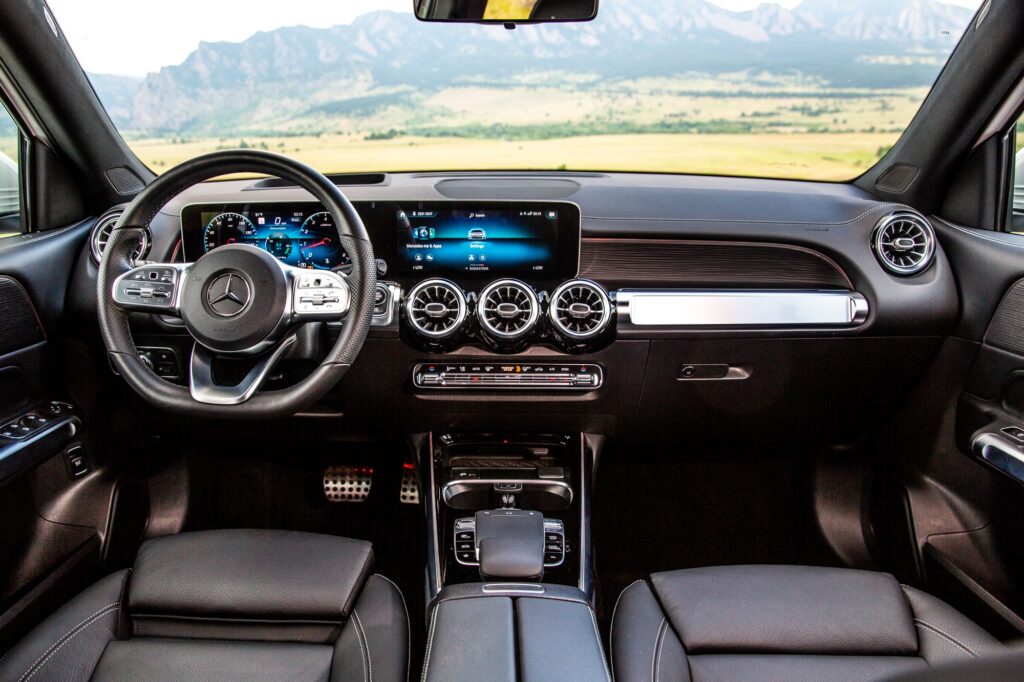
The M-B Tex upholstery looks leatherlike but without the tenderness of the real thing. The seats are European-firm and might feel hard to some after a couple hours on the road. (M-B)

Pricing

The GLB is sold in front- or all-wheel drive with a 221-horsepower, turbocharged 2.0-liter four-cylinder engine and eight-speed dual-clutch automated manual transmission.

Expected later this year will be a higher-performance Mercedes-AMG GLB 35, with 302-hp version of the turbocharged 2.0-liter engine. Follow its progress here. https://www.mbusa.com/en/future-vehicles/2021-glb-35

The front-drive GLB 250 starts at $37,595, including $995 freight charge from Aguascalientes, Mexico. The GLB 250 4Matic starts at $39,595.

With options, the front-drive tester came to $49,050 and was equipped with several AMG-line style elements, such as the sport steering wheel ($360), 20-inch alloy wheels ($1,050) and a body kit of a front air dam, flared side sills and deep rear valance with a diamond-block grille, perforated front disc brakes with M-B lettering.

Check current pricing incentives here.
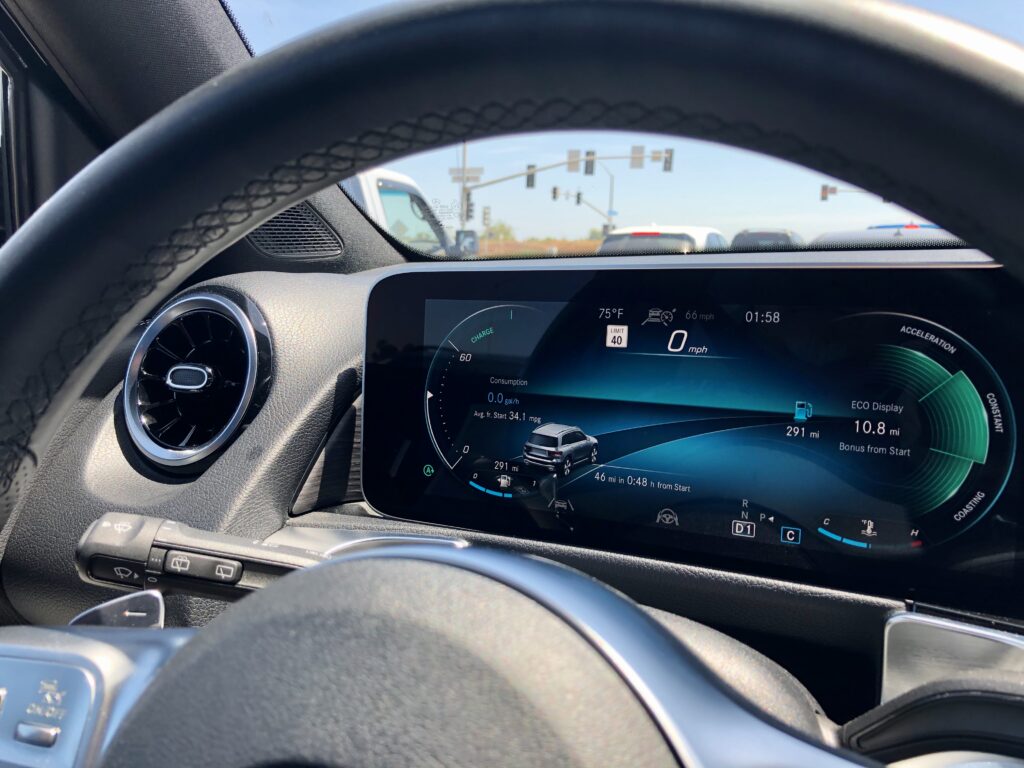
The optional dual 10.25-in high-resolution screens are an easy visual presentation of features, settings and themes. (Kristine Higgins)

Not the usual

The GLB is different from what might be expected of Mercedes-Benz as the purveyor of luxurious finery. While the GLB has the credibility of Mercedes engineering and solid quality, it is more utilitarian in its mission, which is appropriate for this class of small SUV. It is less pretentious in presence and function.

It is an upright body style, which maximizes interior room for people or cargo. But because of its more-blunt shape and roof rails, punching through the air at highway speeds isn’t as quiet in the cabin as might be expected of a Mercedes. The chassis, however, feels very solid, almost over-engineered, for potential off-road durability.

At 111.4 inches, the GLB’s wheelbase is 5.1 inches longer than the GLA and 1.7
inches shorter than the GLC. Headroom is quite tall for a compact vehicle at almost 41 inches (with the sunroof) with front-seat legroom of 41.4 inches, typical for the segment.
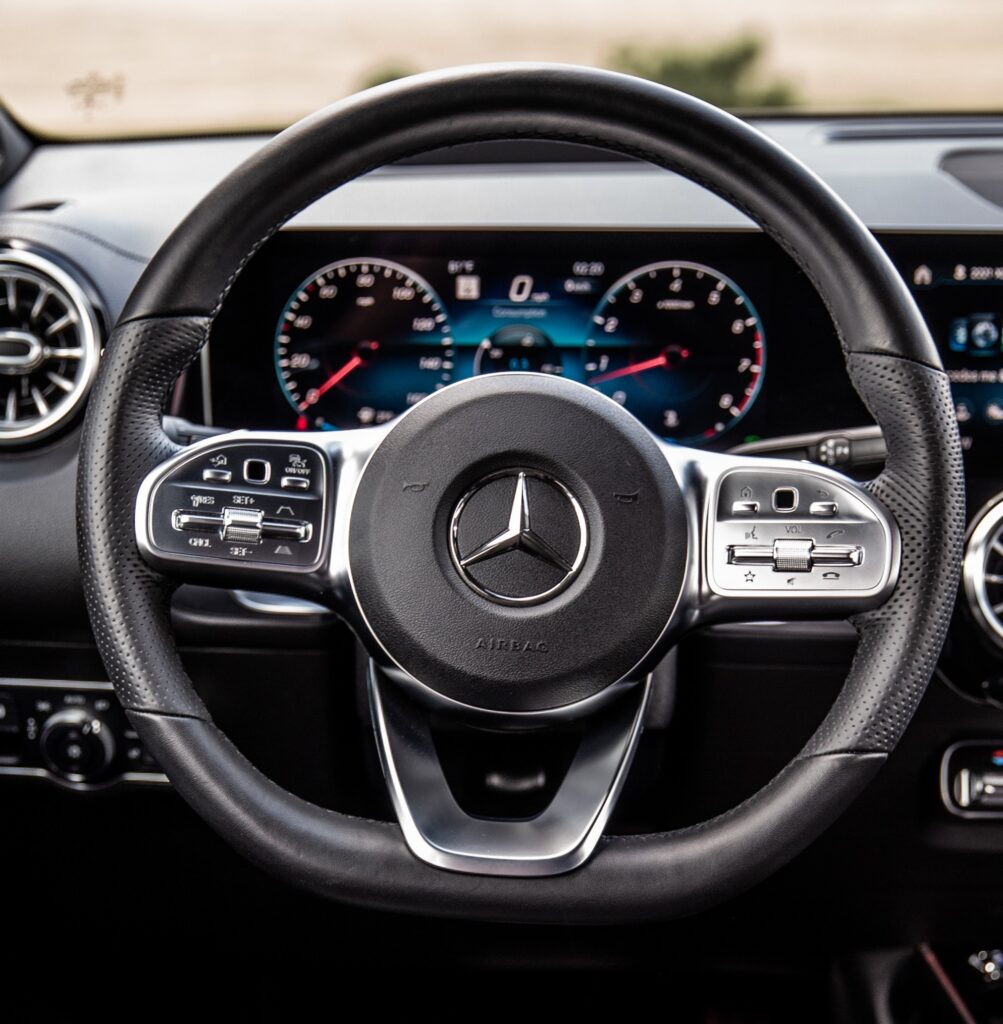
The AMG sport steering wheel ($360) is worth the cost for its reassuring and comfortable fit. (M-B)

As a seven-seater, the third-row provides occasional use for small people with a snug 29.1 inches of legroom and 34.8 inches of headroom (The option is likely an incentive for global customers.). But the second-row seats have an easy-entry function for access to the pair of third-row seats, which include a pair of cup holders between the seats and two storage compartments, each with a USB-C port.

The second-row seats have fore-aft slide up to 3.5 inches or up to 8.7 inches with the third row. It is useful space flexibility for more legroom or more cargo space.

The second-row is raised with a smallish exhaust tunnel and a generous 38 inches of legroom and good footroom under the front seats. The seatbacks have nine settings of seatback recline, to help accommodate large adults or sleeping youngsters. A side window air bag protects the passengers in the third row.
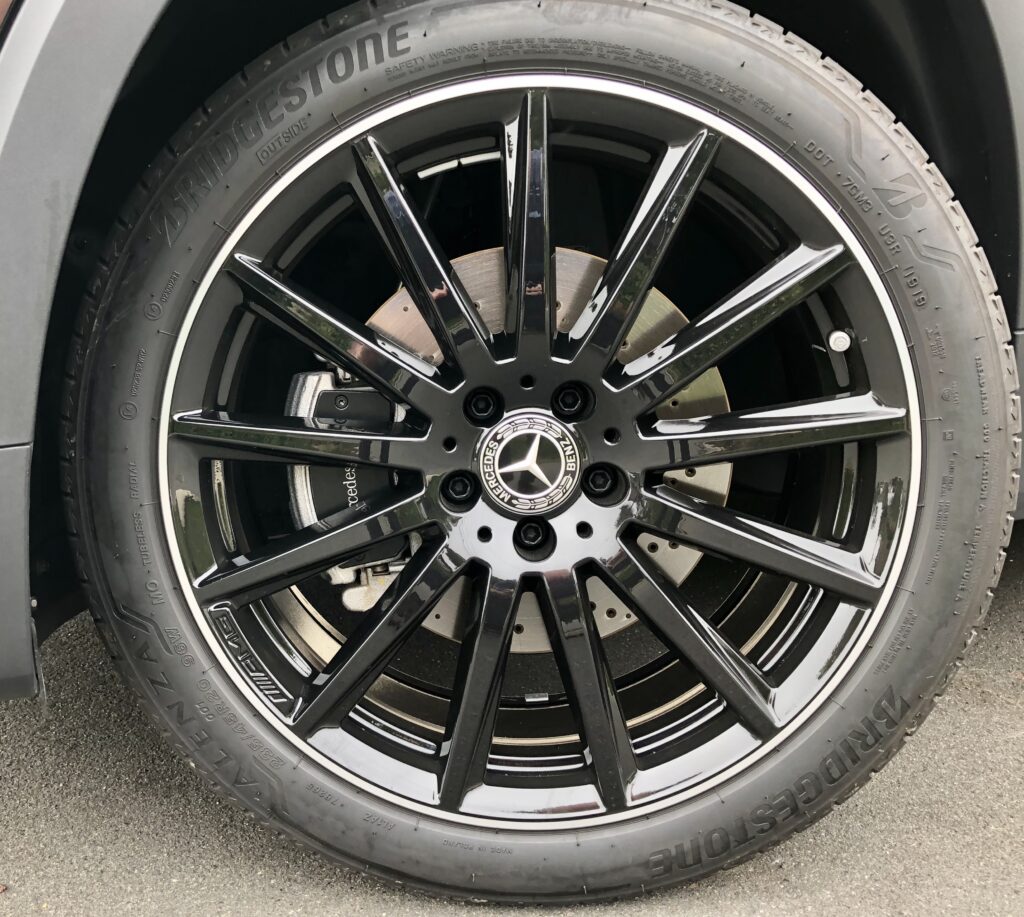
20-inch wheels are set off by AMG Line perforated front discs. (Mark Maynard)

Functional style

It is a digital world inside, but not threateningly so for an analog type of driver. The optional “digital cockpit” is two 10.25-inch high-resolution screens with configurable displays and multimedia visuals. The central, horizontal touch-screen display is a finger’s reach from the steering wheel not complicated to access features, but changing settings and customizing themes should be done while parked.

The horizontal screen — rather than a deep vertical tablet — allows generous air flow from the three turbine-like vents below. The floor console (not a shift console) packages an e-bin and shelf for a wireless charging pad, cup holders and a wrist-rest to access the central controller for such functions as vehicle settings, navigation, phone and performance modes. The shift “lever” is a stalk on the steering wheel to electronically engage gears.
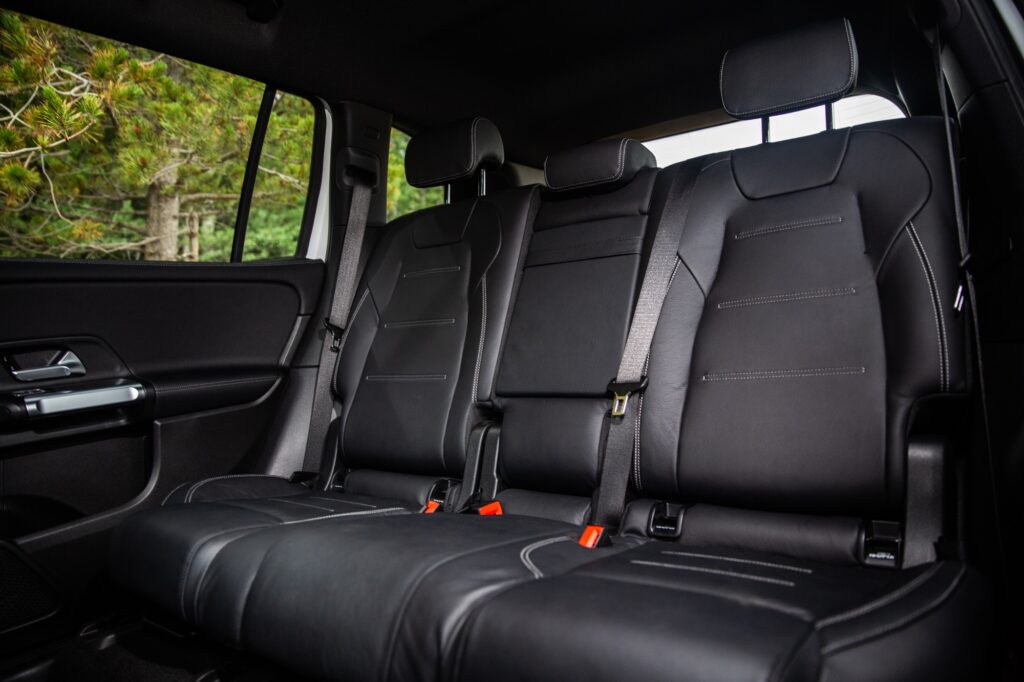
A side window air bag protects the passengers in the third row. (M-B)

Sightlines from the driver’s seat are open at the side mirrors and over the shoulder. The large back glass provides more visibility than some swoopier SUVs in this segment, which include the Audi Q3, BMW X1, VW Tiguan and Volvo XC40.

Shoulder room is fairly wide at 55.9 inches window to window and the entire interior space feels larger than a compact-class cabin.
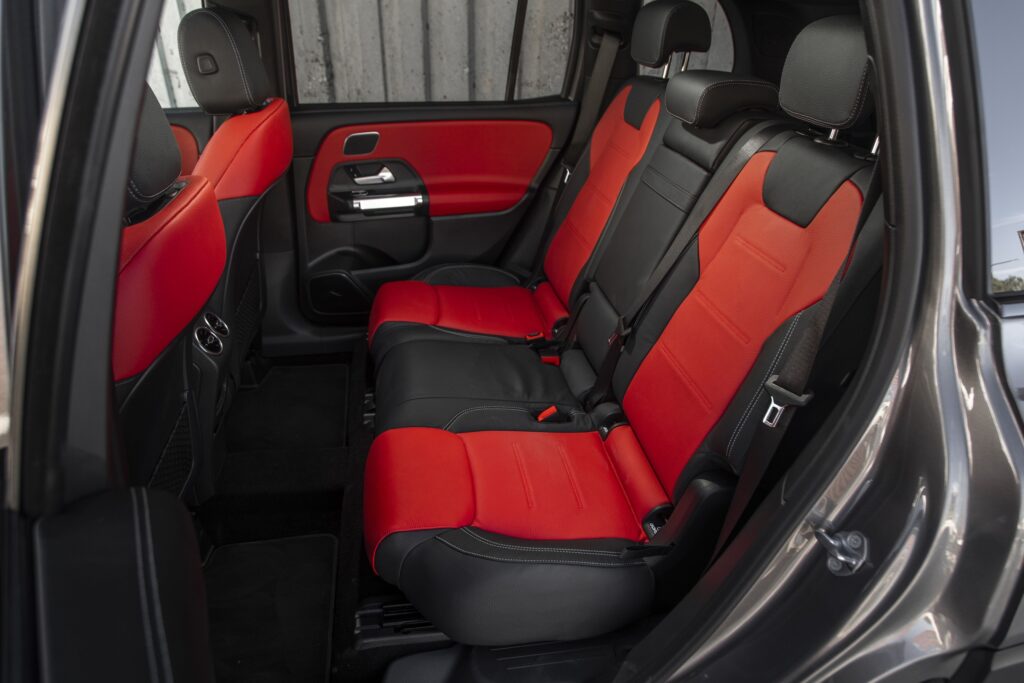
The second-row is raised with a smallish exhaust tunnel and a generous 38 inches of legroom and good footroom under the front seats. (M-B)

There are number of areas for small-item storage, door-panel bottle holders and a large, locking glove box — and that’s not always easy to provide in compact space. But the visors are of modest depth, do not slide and leave gaps at the windshield pillars where morning and evening sun can glint through.

The M-B Tex upholstery looks leatherlike but without the tenderness of the real thing. The seats are European-firm and might feel hard to some after a couple hours on the road.

A smart design for the door skins extends over the door sills to prevent dirty scuffs on slacks or legs.

For almost $50,000, the tester didn’t include wireless charging, available for $200. But there are five USB-C charging and data ports.

But the adjustable suspension, $900, is worth it for the its adaptive damping, providing a truly comfortable ride, for a German-engineered car. Sport firms up the ride quality, but it is not harsh. And for $360 the flat-bottom AMG steering wheel will return years of pleasurable fit and feel.

In the last year, Mercedes-Benz has refreshed its entire SUV lineup — and added its latest delivery, the compact-class GLB. (M-B)

Powertrain

The 2.0-liter engine in the GLB 250 feels more powerful than is expected from a four cylinder. With 258 foot-pounds of torque pulling from 1,800-4,000 rpm, the engine fills big shoes. The transmission in standard mode gives mileage-calmed shifting, but sport mode removes any hesitance.

Mercedes’ engineering capably cancels the typical turbo lag and even the time-stealing launch of the dual-clutch automated manual transmission. The auto stop-start at idle function can be switched off, but the immediate response of the engine-restart makes it mostly unnecessary to do so.

Official fuel economy estimates are 23 mpg city, 30 highway and 26 mpg combined, on the recommended premium fuel. (4Matic mileage is 23/31/26 mpg.) In the front-drive tester, I worked up to 34.1 mpg on the highway and had an overall average of 26.4 mpg, according to the onboard computer. The 15.9-gallon fuel tank gives a wide cruising radius.
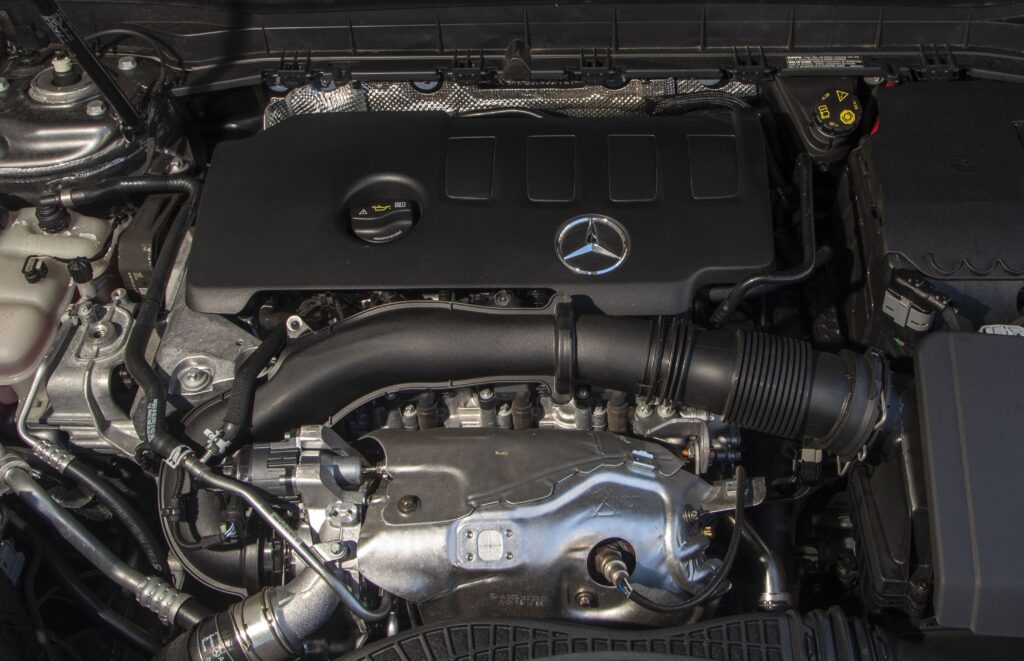
Official fuel economy estimates are 23 mpg city, 30 highway and 26 mpg combined, on the recommended premium fuel. In the front-drive tester, I worked up to 34.1 mpg on the highway and had an overall average of 26.4 mpg, according to the onboard computer. (M-B)

Electronic oil-level check

It’s also interesting that the engine design has no dipstick to manually check the oil. The oil level is checked electronically through the vehicle’s onboard computer. The results are viewed in the multifunction display (in the gauges) of the digital cockpit. After the engine has warmed up for 30 minutes the system will respond with several messages including that the oil level is OK or if it is below minimum and how much oil to add or if the oil level is too full.

The large four-wheel disc brakes have 13-inch front rotors and 12.6-inch rotors rear. Towing is not recommended for the GLB.

Driver assists

The autonomous drive calibrations keep the car well centered in the lane with only occasional crossing of the Botts dots or white lines. And when it does, the system flashes a red steering-wheel warning light that somehow feels like an admonishment for me not paying attention when it was its own “hand” that crossed the line.

Overall, the support-assist is subtle and without alarming alerts but it will be made clear when driver takeover of steering is necessary.
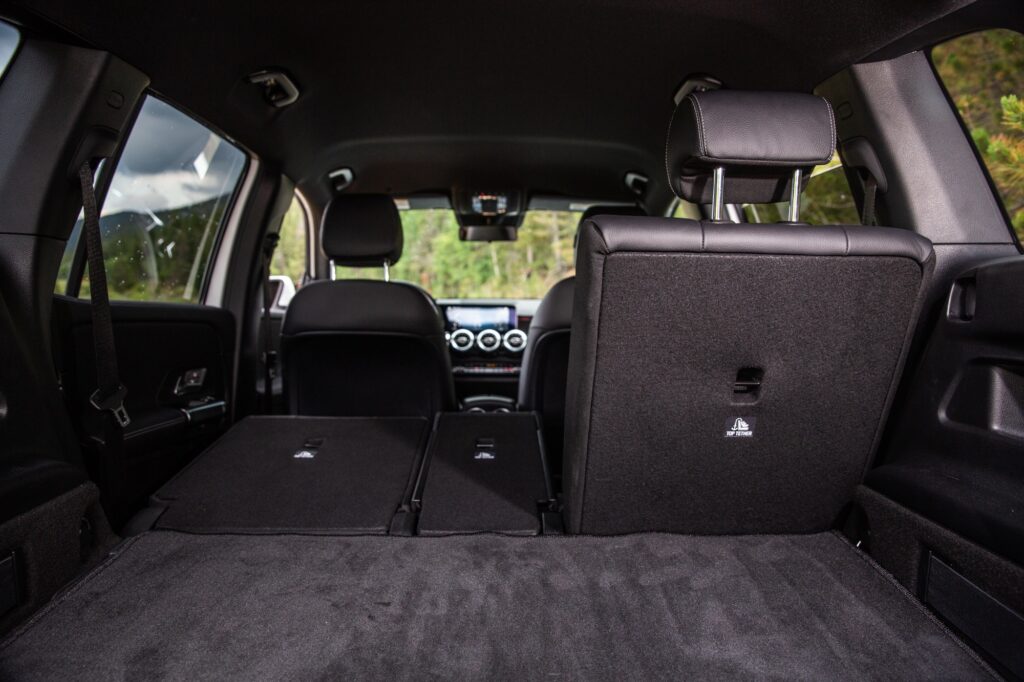
The two-level floor can be moved to the lower slot for another 4 inches of load height. (M-B)

Cargo

The rear quarters are cargo ready with a wide opening (42 ½ inches) and a low load-floor height. The two-level floor can be manually moved to the lower slot, which gives another 4 inches of load height. Or fold the back seat for about 6 feet of length.

Or in the floor’s upper position, the back seats can be folded flat fort 6 feet of length. (M-B)

Why GLB?

Compact SUVs are available from every manufacturer from mainstream to luxury. Pricing starts in the mid- to low-$30,000s for a very competent mainstream vehicle. But the difference between $50K and $25K is a lot of rewarding details. Among them, auto lock-unlock sensors for the back doors, not just the front; more meticulous engineering of door hinges for wider opening, nearly to right angles; a carpet-smooth ride; and uncompromising engine technology that transforms a 2.0-liter four-cylinder into a V-6.

The GLB shrugs off a precious luxury label and doubles up on everyday function as a fairly priced family vehicle — welcoming a new generation to the brand.

MarkMaynard@cox.net

The GLB is all about versatility, Mercedes-Benz says, whether for young families or people with an active lifestyle. (M-B)

2020 Mercedes-Benz GLB 250

Body style: compact, 5- or 7-seat, five-door SUV, in front or all-wheel drive
Engine: 221-hp, turbocharged 2.0-liter 4-cylinder w/auto stop-start at idle; 258 lb.-ft. torque from 1,800-4,000 rpm
Transmission: 8-speed DCT (dual clutch)
Fuel economy: 23/30/26 mpg city/hwy/combined; premium fuel recommended

SPECIFICATIONS
Fuel tank: 15.9 gal.
Cargo space: 24-62 cu. ft. (5.1 cu. ft. w/third row)
Front head/leg room: 40.7/41.4 in.
Rear head/leg room: 39.3/38.1 in.
Length/wheelbase: 182.4/111.4 in.
Curb weight: 3,638 lbs. *7-seat FWD, 3,759 lbs.
Turning circle: 38.4 ft.

FEATURES
Standard equipment includes: Keyless-start with push-button ignition, M-B Tex leatherette upholstery, rearview camera, power front seats w/lumbar and 3 memory presets, electric parking brake, 40/20/40 folding back seat, power liftgate, LED headlights-taillights and running lights, 5 USB-C ports, 7-inch Mercedes-Benz User Experience infotainment touch screen, touch-pad controller, Apple CarPlay or Android Auto apps, aluminum roof rails
Safety features include: 7 air bags, active brake assist, adaptive braking, crosswind assist, attention assist, predictive brake priming, automatic brake drying, hill-start assist, brake hold, electronic stability and traction controls, front fog lights

PRICING
Base price: $37,595, including $995 freight charge; price as tested $49,050
Options on test vehicle: Natural grain black Linden wood trim $325; AMG Line sport steering wheel $360; 20-inch AMG wheels $1,050; adaptive suspension $990; satellite radio trial $460; heated front seats $580; Driver assistance package, $2,250, includes active brake assist with cross-traffic function, active distance assist Distronic, active steering assist, active blind spot assist, active speed limit assist, active emergency stop assist, evasive steering assist, Pre-Safe Plus, route-based speed adaptation, extended restart in stop-and-go traffic; Multimedia package, $1,150, includes navigation with map updates for 3 years, MBUX augmented reality for navigation, speed-limit assist; Night package, $400, includes high gloss back grille, mirror covers and window trim; AMG Line body styling, $2,240, includes perforated front disc brakes and M-B lettering and diamond-block grille; Premium package, $1,650, 10.25-inch center touch screen display and 10.25-inch digital instrument panel, Keyless-Go package, auto-dimming rearview mirror and (folding) driver’s side mirrors
Where assembled: Aguascalientes, Mexico
Warranty: 4-years/50,000-miles bumper to bumper with roadside assistance; and 3 years of Mercedes Me connect services via smartphone app and over-the-air software updates and free map updates for 3 years
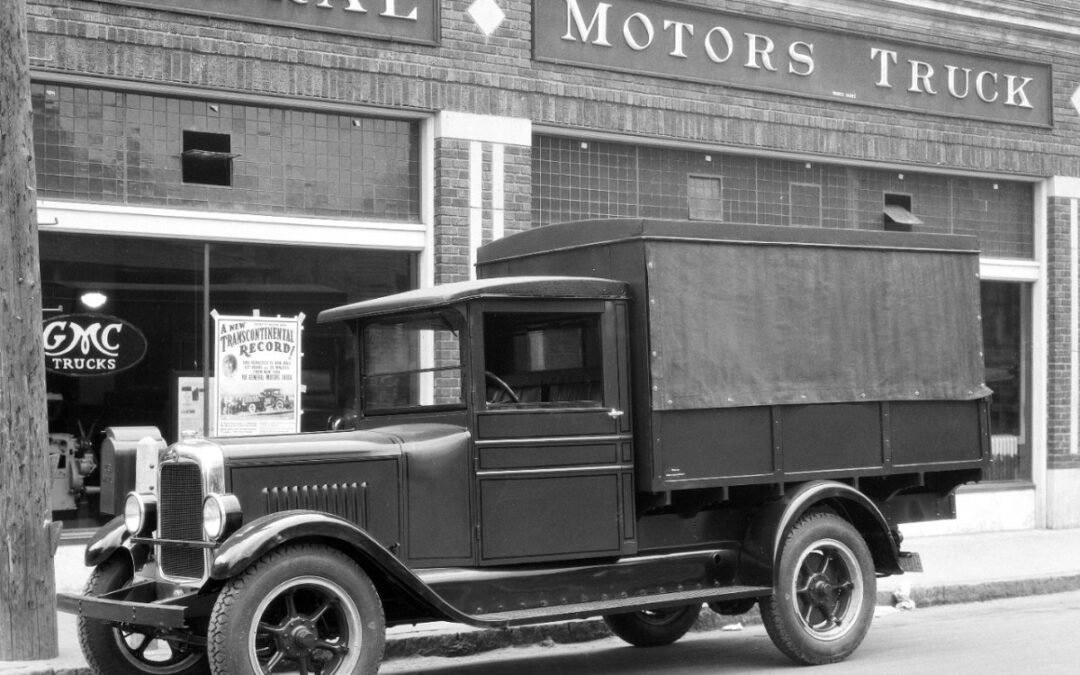
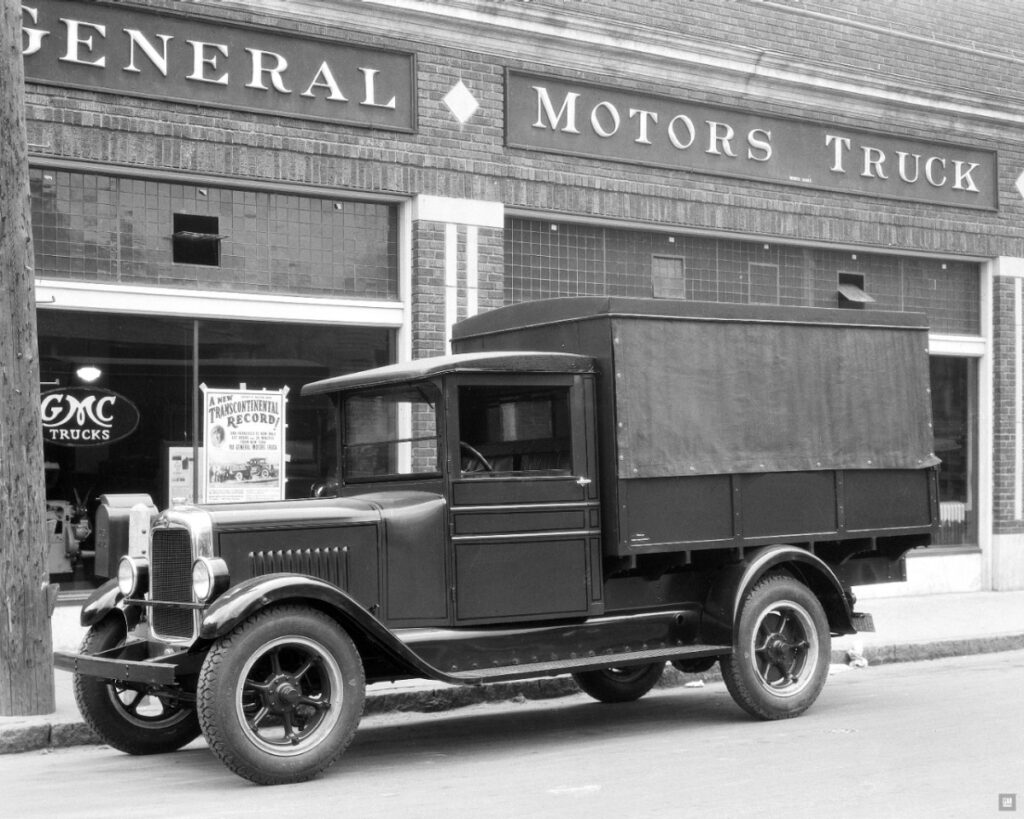
1928 GMC T-11 Canopy Express

1928 GMC T-11 Canopy Express
a 1928 GMC Canopy Express

The 1928 GMC Canopy Express used a Pontiac six-cylinder engine. (GM PR archives)

BY MARK MAYNARD

Beginning in 1920, GMC and Chevrolet trucks became largely similar, built as variants of the same platform, sharing much the same body sheet work, except for nameplates and grilles — though their differences, especially engines, have varied over the years, according to Wikipedia.

GMC advertising marketed its trucks to commercial buyers and businesses, whereas Chevrolet’s advertising was directed toward private owners.

Beginning in 1928, GMCs used Pontiac’s 186 cubic-inch six-cylinder engines in their lighter trucks. Medium-duty trucks relied on Buick engines, while the heaviest trucks used GMC’s own “standard Big Brute” engine.

From 1939 to 1974 GMC had its own line of six-cylinder engines, first the inline sixes known as “Jimmy’s” from 1939 to 1959, and then their own V-6 from 1960 until 1974, of which a V-8 and a V-12 version also existed. Additionally, from 1955 through 1959, the less than 2-ton, domestic GMC gasoline trucks were equipped with Pontiac, Buick, and Oldsmobile V-8s — whereas the Canadian models used Chevrolet engines.

Learn more about GMC truck history here.

Ford Mustang Mach-E: galloping to the finish line

Ford Mustang Mach-E: galloping to the finish line
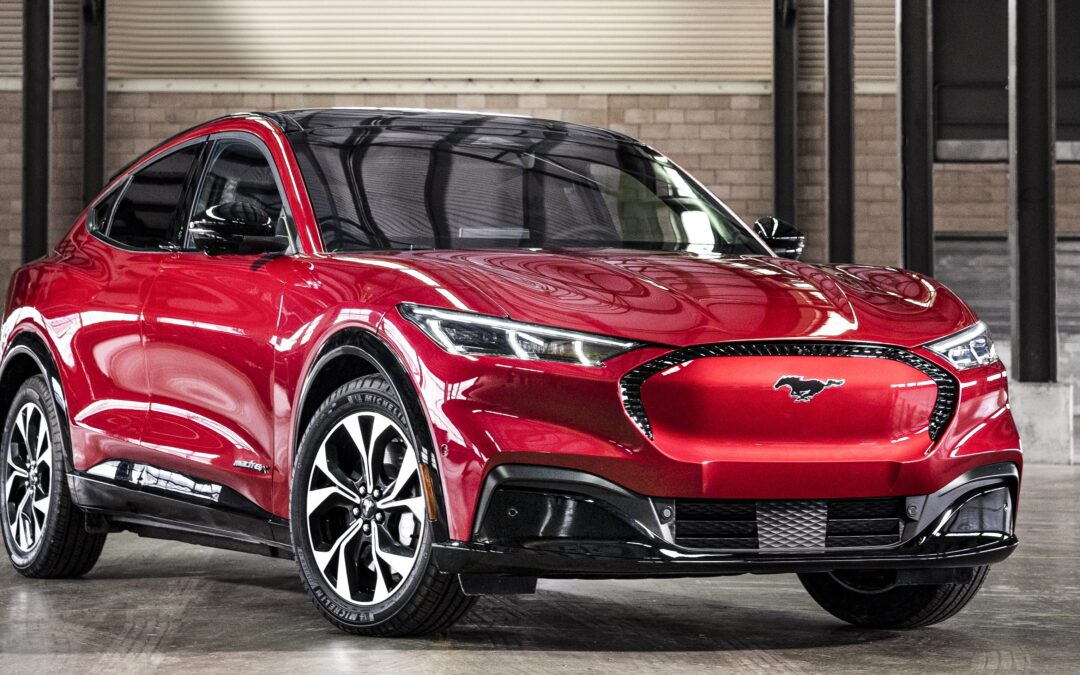
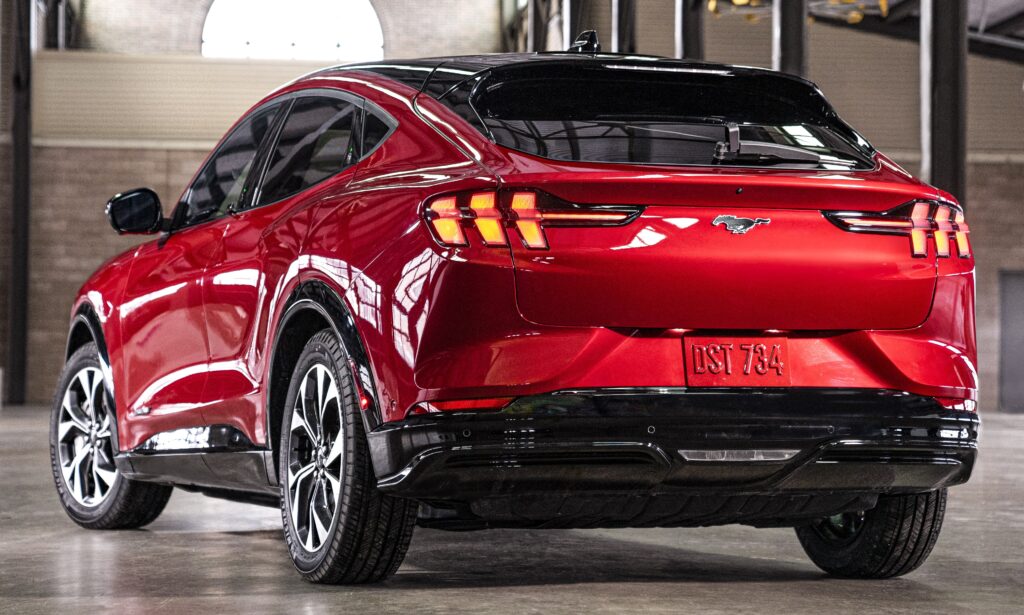
The battery-electric Mach-E will be sold in four trim levels in rear- or all-wheel drive with an option for an extended-range battery. Starting prices range from $44,895-$61,500. (Ford)

Deliveries of first model expected by year-end

Despite a global pandemic, low gasoline prices, financial instability for many consumers and production challenges in the U.S. and Mexico, Ford’s 2021 Mach-E electric coupe is still on target for sales to begin late this year, according to the automaker’s Global Director of Electrification Mark Kaufman.

East and West Coast video conferences were held May 27 to update journalists on the purpose-built electric SUV coupe and to discuss the business plan for EVs, the charging infrastructure and capabilities and some of the car’s features. It was the most information released to date, including most specifications.

Kaufman, who led the video presentation from his home, has been with Ford since 1989 in senior roles on five continents with much electrification experience.

“All the different barriers to EV adoption are beginning to come down,” Kaufman, 52, said. “Customer expectations for a 300-mile driving range are becoming more affordable and the public charging infrastructure will be easier to access, all of which will lead to more demand from consumers.”


Global Director of Electrification Mark Kaufman: “Speed is twofold, there’s 0-60 and in how quickly the human interface performs.” (Ford)

And he has no concern about the current low price of fuel that could blunt demand. “We have not backed off one second on our cycle plan. The cost of ownership could be an issue, but the other values of the car will outweigh the price of fuel.”

The Mach-E will be the first Mustang SUV crossover, the first all-wheel drive Mustang and the first Mustang with five seats rather than the traditional 2+2 format. The five-door Mach-E will pick up where the coupe leaves off with an extra seat and more cargo space, Kaufman said.

Depending on configuration, the Mach-E has driving ranges of 210-300 miles. Its basic body structure is a unitized steel frame with high strength steels (boron and welded blanks) with aluminum hood and fenders. The rear hatch is plastic.

Mach-E will be sold in four trim levels — Select, Premium, California Route 1 Edition and GT — in rear- or all-wheel drive with an option for an extended-range battery. Starting prices range from $44,895-$61,500, including the $1,000 freight charge from Cuautitlan Izcalli, Mexico. New owners will be able to deduct up to $7,500 with the federal electric-drive vehicle credit and there are additional state rebates for buying a battery-electric vehicle; California offers $2,000 through its Clean Vehicle Rebate. F And learn about federal tax incentives here.

Deliveries are on track for late this year, starting with the Premium edition. Others will follow soon after with the GT next summer. European deliveries will start in 2021, due to longer transportation time from the plant.

A Mach-E First Edition, $61,000, sold out in December, but here are some bullet points of what was learned:
• Carbonized Gray is the most popular choice with 38 percent choosing it, with Grabber Blue Metallic 35 percent and Rapid Red 27 percent
• More than 80 percent of U.S. customers are upgrading to the extended range battery
• About 55 percent are opting for all-wheel drive
• Almost 30 percent of U.S. customers are choosing the Mach-E GT
• More than a quarter of all reservations are coming from California

EV adoption in California is ahead of the rest of the U.S., Kaufman said, with a 4 percent share of the EV market, compared to 1 percent elsewhere. Nearly three in four customers in the Northeast reserving a Mustang Mach-E have so far opted for an all-wheel drive model, Kaufman said. “In states such as Connecticut, Maine, Massachusetts and New Hampshire, that number climbs to more than 9 in 10.”

Online reservations can be made now.

The Mach-E will be the first Mustang SUV crossover, the first all-wheel drive Mustang and the first Mustang with five seats rather than the traditional 2+2 format. (Ford)

Mustang DNA

The Mach-E had to live up to Mustang performance expectations but also have long-range driveability, Kaufman said. The challenge to provide range versus performance was handled by offering two battery sizes, 75.7 kWh and the 98.8 kWh extended range. Standard rear-wheel-drive models will have estimated ranges of 230 miles and up to 300 miles (or possibly more) with the extended-range battery. All-wheel drive drops the range to 210 and 270 miles, standard/extended.

The high-performance, dual-motor GT AWD will have blazing-quick acceleration to 60 mph in 3.5 seconds but with a range of 235 miles.

“We’ve really tried to lean into the Mustang DNA, Kaufman said, “by offering three performance modes, including “Whisper” and “Unbridled.”

With a tow rating of about 1,650 pounds (750kg), the car’s four-wheel disc brakes are huge: 18-inch vented discs front and solid 17-inch discs rear. And the GT gets 19-inch discs front and rear. The stopping power should be plenty for towing or to manage the curb weight, which has not been released. (The Jaguar iPace weighs about 4,800 pounds and the Audi e-tron 5,754 lbs.)

It appears to be a roomier cabin than the Mustang with 38.8 inches of headroom or 40.4 inches with the optional panoramic glass roof. Front legroom of 41.9 inches compares to 45.1 inches in the Mustang but shoulder room is 1.3 inches wider at 57.6 inches.

Back seat headroom is 38.3 inches (39.2 in. with the panoramic roof) with long legroom of 38.1 inches.

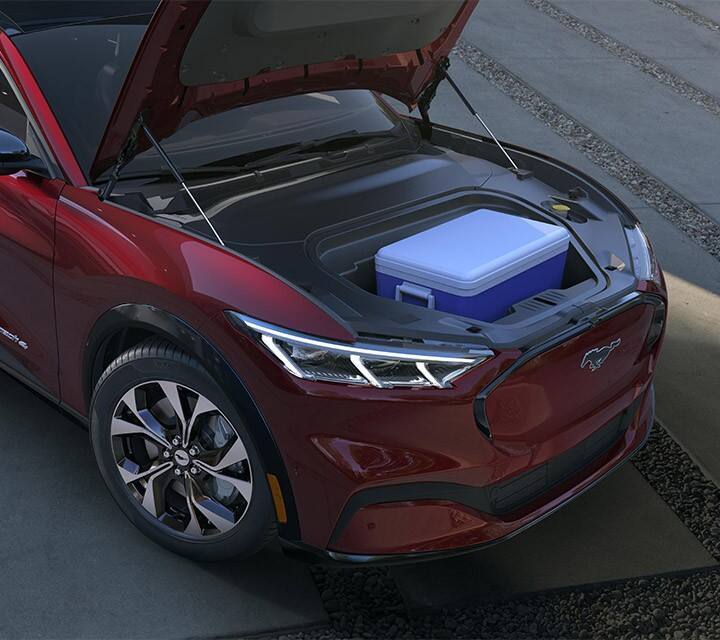
Cargo space is functional with a front trunk of 4.7 cubic feet and 29 cu.ft. behind the back seat or 59.6 cu.ft. with the back seat folded. The “frunk” is water-resistant and can be hosed out for tailgating, camping and toting muddy gear.

Mach-E front headroom is tall at 38.8 inches of headroom or 40.4 inches with the optional panoramic glass roof. (Ford)

Electrification

The liquid-cooled batteries are coming from South Korea-based LG Chem then assembled in the U.S. The standard-range battery pack has 288 cells and 376 for the extended-range pack. Electric-drive units are outsourced, but Ford writes all its own battery control and propulsion software.

The permanent magnet motor has various power ratings depending on model:
• The Select battery has 190 kW of power or 255 hp with 306 foot-pounds of torque; AWD raises torque to 417 lb.-ft.
• The Premium model with extended range battery has kilowatt power ratings of 210 and 248 for standard/extended range, with 305 lb.-ft. torque; AWD has 248 kW and 332 hp and 417 lb.-ft. torque;
• California Route 1 (rear-drive only) has ratings of 210 kW/282 hp and 306 lb.-ft. torque.
• And the GT has 342 kW of power, which translates to 459 horsepower 612 foot-pounds of torque.

A need to accelerate EV efforts

Ford saw a need to accelerate its EV efforts, citing a current sales forecast projecting that by 2025 more than 100 EVs are expected to go on sale in the U.S., 250 in Europe and 350 in China, he said. The Mach-E is part of the automaker’s $11.5 billion investment in electrified vehicles through 2022. Ford is expected to introduce 40 models over that period, including 16 battery-electric vehicles, according to industry reports.

An all-electric F-150 “is coming in a few years,” Ford says, “as well as the all-electric Transit van” under development for 2022. Ford has plans for hybrid-electrics on high-volume, profitable vehicles, including the Explorer and Escape hybrids launched last year and a new F-150 hybrid this year.

Soul of a Mustang, with tradeoffs

To build a foundation for long-term success in full-battery electrics, Ford would have to build a great product and “to play to our strengths, Kaufman said. “Exciting and capable fully electric vehicles are key to the success.”

Mustang is an iconic nameplate and has tremendous global appeal, Kaufman said, which will be an important asset to help generate interest in the car. That’s why the Mustang name was chosen with Mach-E, recalling the 1970s Mach I version of the muscle car — and which will be applied again this year to a new high-performance model of Mustang.

“Mach-E will be a great step forward for us,” he said. The electrification and body style were developed hand-in-hand to live up to Mustang performance expectations, he said. “The styling has a strong face with a long hood and sharp nose — or like a fist punching through the wall,” Kaufman said. But there were tradeoffs, he said. “The front fascia design gives up some aero, but it was actually critical to get the design DNA right.

4.8 cubic feet of space in the ‘frunk.’ (Ford)

Tesla benchmark

To leverage technology, Ford benchmarked the world’s most popular plug-in electric vehicle, the Tesla Model 3, with worldwide sales of more than 300,000 in 2019. In preparation, an industry source told me that Ford had bought 20 Tesla Model 3s to tear apart and learn. (Tesla’s upcoming Model Y compact crossover will compete directly with the Mach-E.)

With a new architecture came the opportunity to “take advantage of not having a motor and what you can do with that space,” Kaufman said. His team had to determine how to use that space in ways customers will find value and how to keep the vehicle relevant, including over-the-air updates, which were challenging to prevent cyberhacks. There had to be a high level of coordination to download software in a way that won’t screw up other systems that are functioning, Kaufman said.

Appeal for younger buyers won’t be just for propulsion and motors but connectivity and “Gotta have-it new experiences,” he said. “Speed is twofold, there’s 0-60 and in how quickly the human-interface performs.”

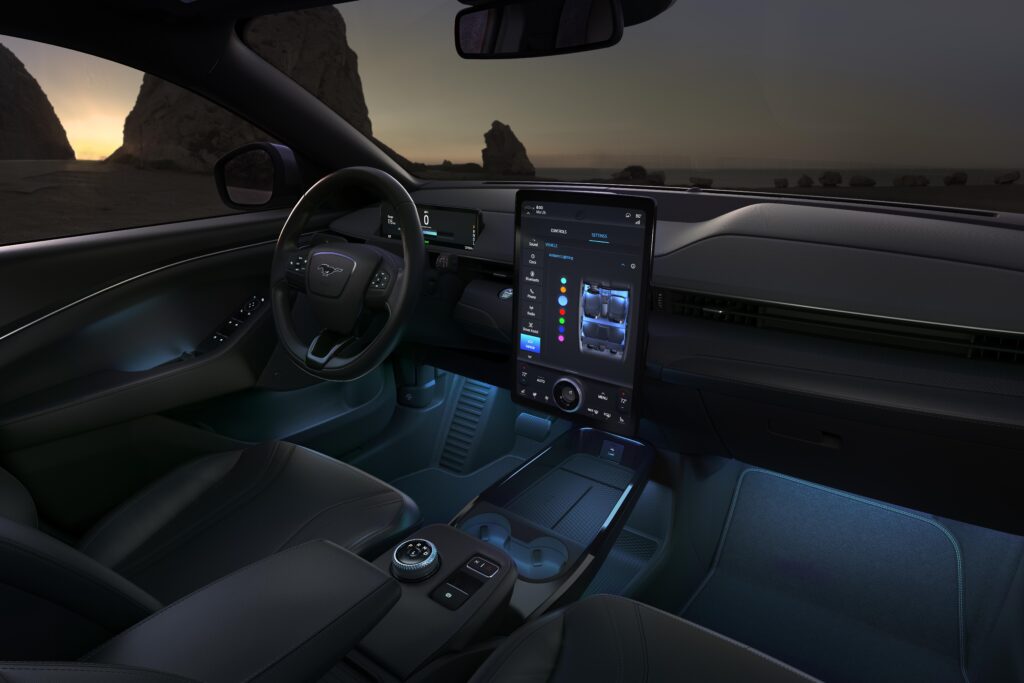
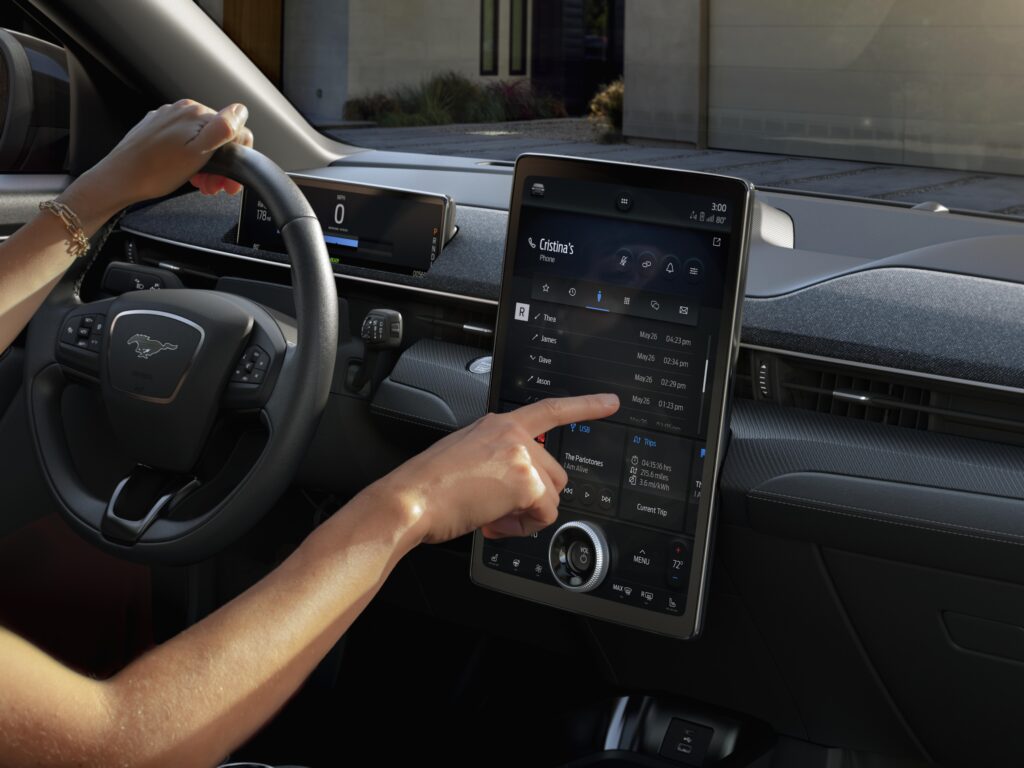
Like the Model 3, the Mach-E has a large vertical tablet display (15-inches) to access various car features and apps. But, with input from customer focus groups, Ford added a dial at the bottom for audio volume and tuning. (In planning meetings, an engineer used a Keurig cup to quickly show size and functionality, and the style stayed very similar in the production model.)

The vertical tablet display, 15.5-inches tall, will access various car features and apps. But, a dial at the bottom of the screen was added for easy audio volume and tuning. (Ford)

Standard features will include next generation SYNC infotainment with connected navigation, Phone as a Key, wireless charging pad, rearview camera, two-way manually adjusted front seats, power and heated side mirrors, 10.2-inch digital cluster and 15.5-inch touch screen, six air bags, Ford Co-Pilot360 2.0 and Co-Pilot 360 Assist 2.0, LED Lights and sequential rear turn signals and 18-inch aluminum wheels.

Standard driver-assist technologies in the Ford Co-Pilot360 2.0 include reverse brake assist and reverse sensing system, post-impact braking, blind spot information with cross traffic alert, pre-collision assist with automatic emergency braking, lane keeping system. Co-Pilot360 Assist 2.0 adds intelligent adaptive cruise control with stop and go, evasive steering assist, lane centering and speed-sign recognition.

Charging

One of the biggest gripes for Tesla owners is the availability of a plugs along its Supercharger network of 1,870 stations with 16,585 Superchargers (plugs).

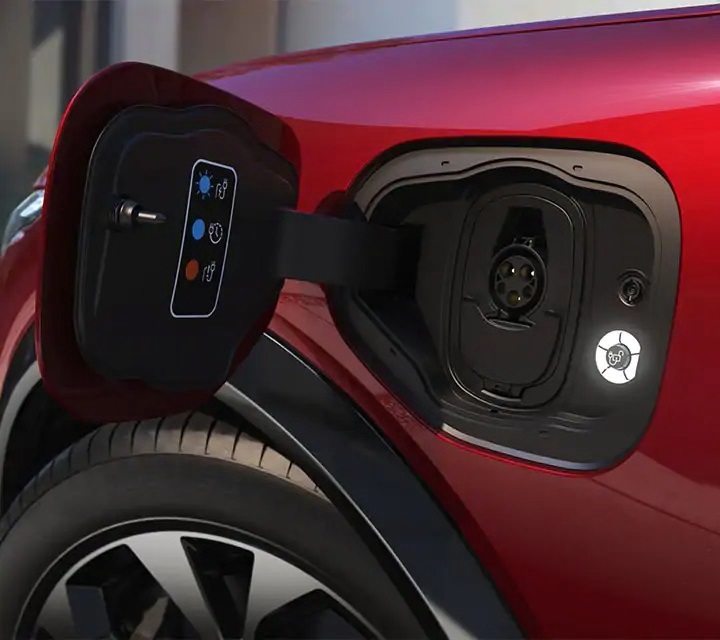
Early on Ford partnered with Volkswagen AG and its Electrify America and its DC fast charging and Level 2 stations. It also works with Amazon.com for installation of smart-connected home chargers. Eighty to 90 percent of charging is at home, but longer trips will require access to an extended charging network.

To date, the FordPass Connect charging network has 13,500 charging stations and 40,000 plugs. Ford says a depleted battery can be charged in 40 to 45 minutes at a DC fast charger with a peak charging rate of 150kW. A rear-drive model with extended battery could add about 47 miles of range in approximately 10 minutes. A standard range model could take a 10 percent to 80 percent charge in approximately 38 minutes.

Fast chargers are limited, but for home charging there is a 48-amp Ford Connected charge station that will recharge a depleted battery in 10.1 hours or 30 miles per charging hour.

And all Ford all-electric vehicles will have an onboard charger for household, 120-volt current or a higher-voltage 240-volt outlet. With the higher-power outlet, a rear-drive Mach-E with extended-range battery can be fully charged in approximately 14 hours, or about three miles of range per charging hour, Ford says.

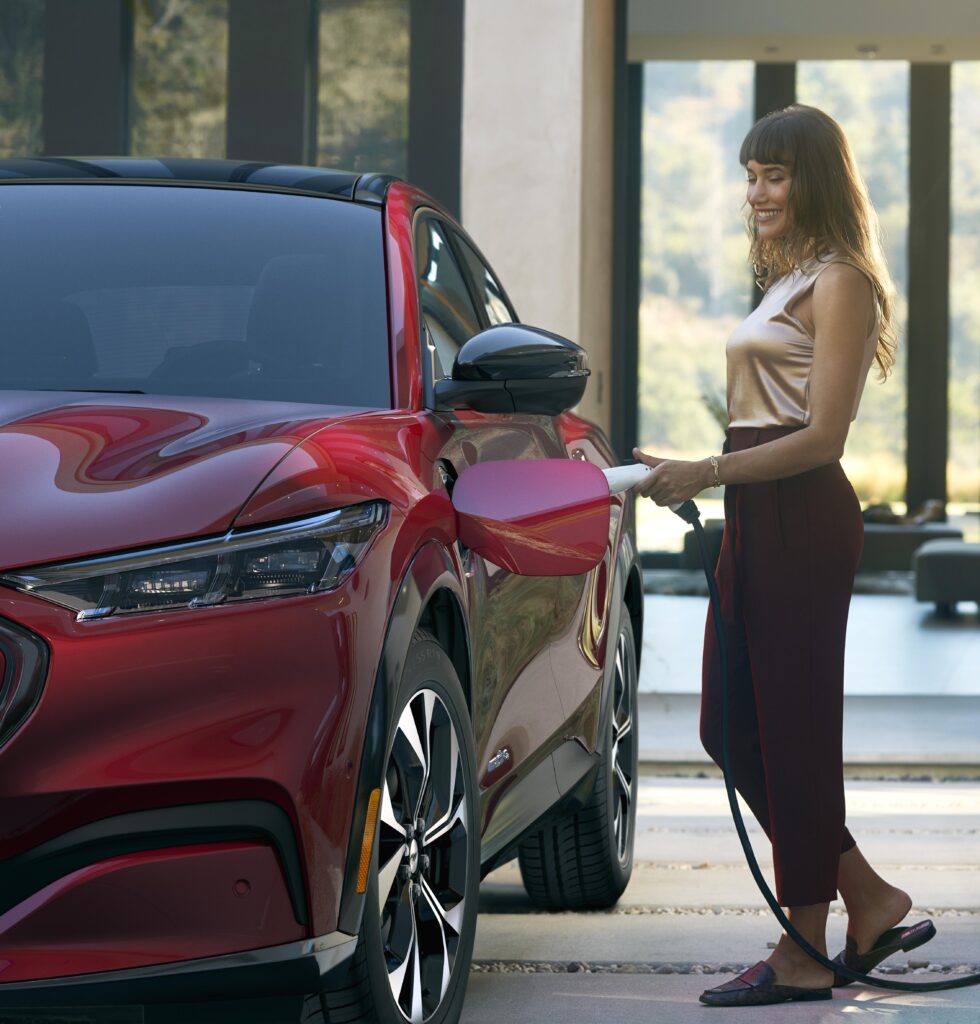
A depleted battery can be charged in 40 to 45 minutes at a DC fast charger with a peak charging rate of 150kW. But most owners will opt for a 240-volt home-charging unit. (Ford)

Dealers

Ford has been working with dealers for three years to be able to educate customers. Buyers will be able to shop online or go to the dealership. “There are a low number of build combinations so buyers can get the Mach-E they want in a short time,” Kaufman said. And that also helps hold down pricing.

Out of Ford’s 3,000 dealers, 2,100-plus are certified to work on high-voltage systems with 9,500 technicians trained on EV service; 95 percent of service can be handled by 3,000 dealers and 95 percent of parts can be delivered the next day, Kaufman said.

The Mach-E is part of the automaker’s $11 billion investment in electrified vehicles through 2022. (Ford)

MarkMaynard@cox.net

Hyundai Scores WeatherTech Raceway Title position for IMSA weekend

Hyundai Scores WeatherTech Raceway Title position for IMSA weekend
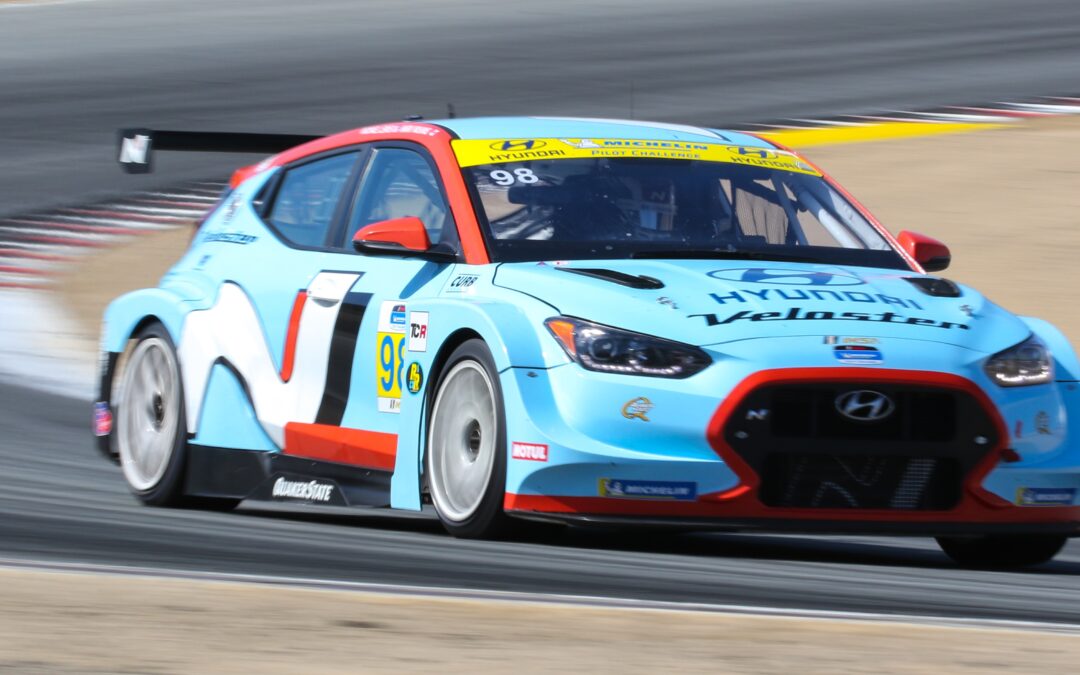
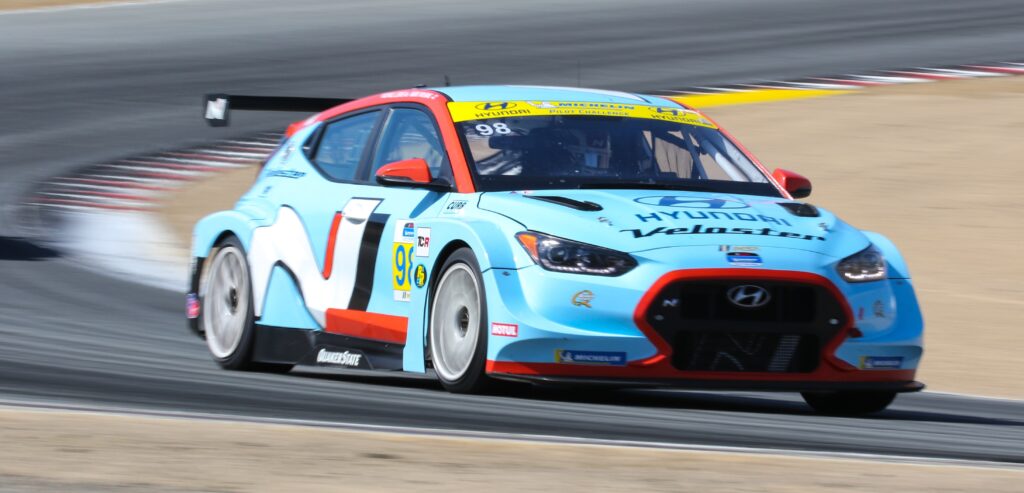
Hyundai plans to mount an all-out assault with three Veloster N TCR cars. (Hyundai)

Hyundai announced May 28, 2022, that its high-performance N Brand will be the title sponsor of the International Motor Sports Association (IMSA) race weekend at the WeatherTech Raceway Laguna Seca Sept. 4-6, in Monterey, Calif. This year’s IMSA Race Weekend will be the Hyundai Monterey Sports Car Championship.

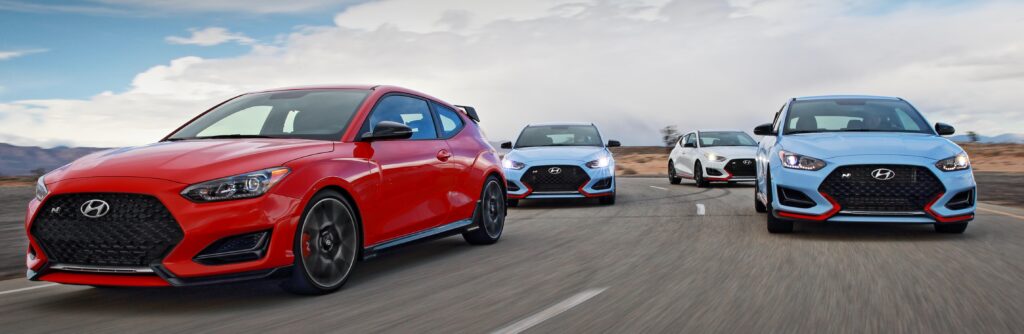
Hyundai will provide N Brand experiences to fans throughout the weekend. The title sponsorship is intended to enhance Hyundai’s growing N and N Line portfolio of vehicles that includes: the Veloster N, Elantra N Line and Sonata N Line. Hyundai also will be the broadcast title sponsor when the race airs on NBCSN.

Hyundai says its N Brand is a match for the IMSA series and the 11-turn, 2.238-mile road course that includes the famous “Corkscrew” turn.

“Seeing Hyundai and their N performance brand combine with one of my all-time favorite venues is fantastic news,” said Bryan Herta, co-owner of Bryan Herta Autosport.

Hyundai said it will mount an all-out assault to win the 2020 Laguna Seca race and the IMSA Michelin Pilot Challenge championship with three Veloster N TCR cars and six drivers.

Mark Wilkins and Michael Lewis who co-drove the #98 Veloster N TCR to the 2019 IMPC Drivers championship will be split up for 2020. Michael Lewis will remain in the #98, now with Mason Filippi and Mark Wilkins will co-drive with Harry Gottsacker in the #21. The new third entry, the #33 Veloster N TCR, will be driven by open wheel standouts Gabby Chaves and Ryan Norman.

Hyundai’s N Brand lineup.

Mustang Mach 1 returning for 2021 model year

Mustang Mach 1 returning for 2021 model year
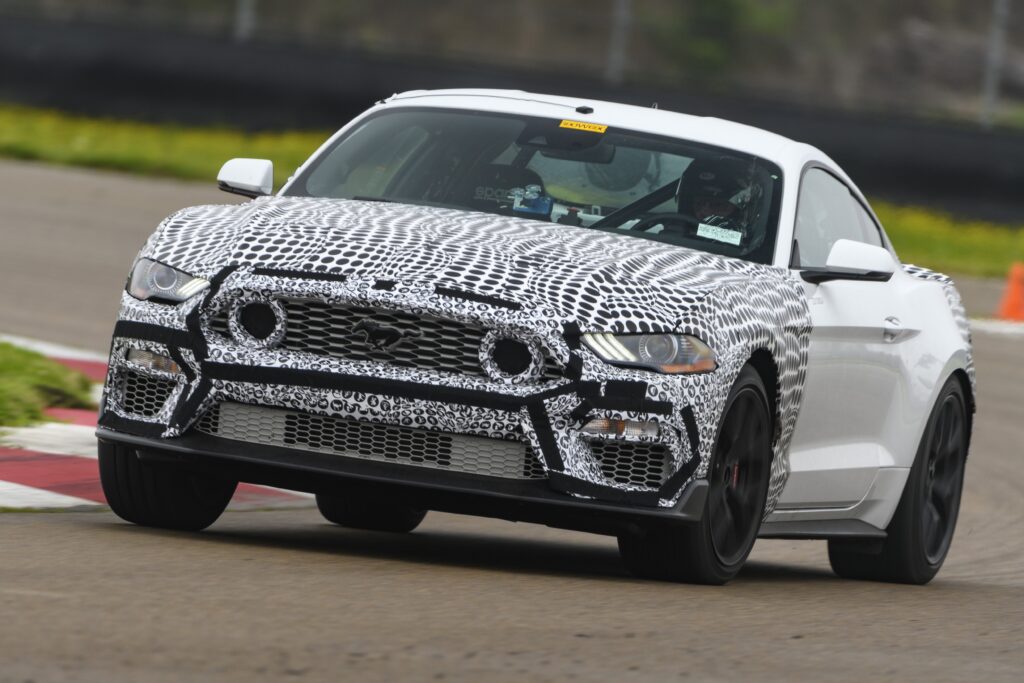
With speed, style and a name that embodies both, Ford today announces the Mustang Mach 1 is roaring back to life this year, with its debut coming this spring.

Big muscle from its 5.0-liter V-8 will become top performing Mustang

From the golden age of muscle cars in the late 1960s to the golden age of power, Ford announced today that the Mustang Mach 1 is roaring back to life with a debut expected this spring. And that should mean soon, with the official start of summer on June 20.

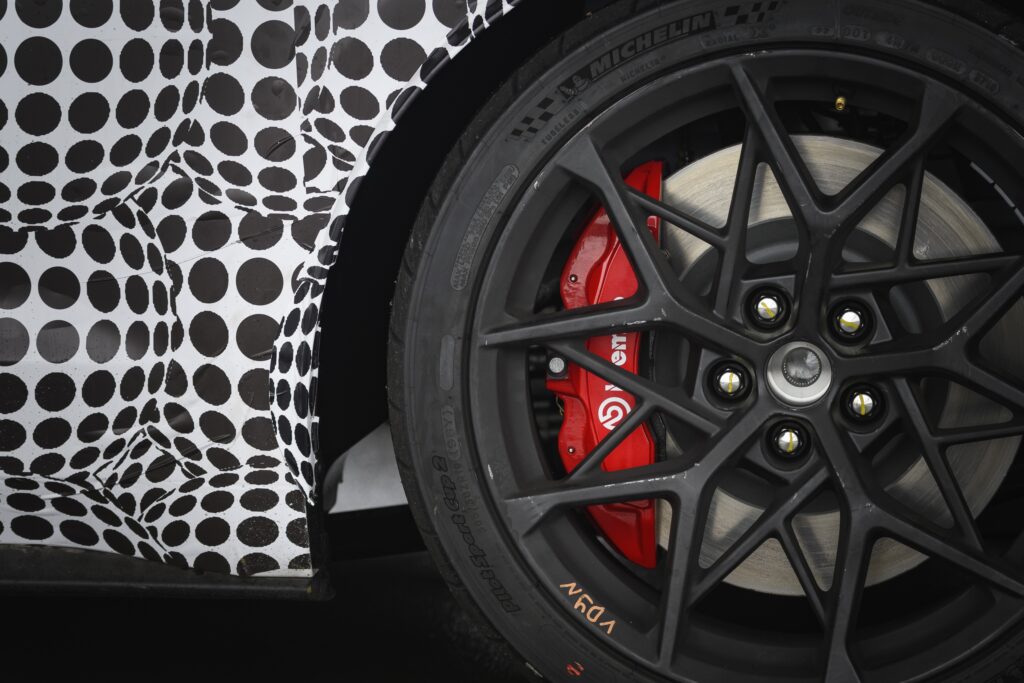
No specifics were shared, except that it will have a naturally aspirated 5.0-liter V-8 and be more track-ready. Photos of a tire and wheel show some big Brembo binders and Michelin Pilot Sport 2 tires.

The Mach I will move into the role as the most potent production variant, possibly with 500 horsepower. And a manual transmission, we hope.

“Mach 1 has a special place in Mustang history, and it’s time for this special edition to claim the top spot in our 5.0-liter V8 performance lineup and reward our most hardcore Mustang enthusiasts who demand that next level of power, precision and collectability,” said Dave Pericak, director, Ford Icons. “Like the original, the all-new Mustang Mach 1 will be true to its heritage, delivering great looks and as the most track-capable 5.0-liter Mustang ever.”

No specifics were shared, but this Ford photo shows some big Brembo binders and Michelin Pilot Sport 2 tires.

That’s all good for Mustang fans, but will it be quicker than the electric Mustang Mach-E GT, which is claimed to have 0-60 mph acceleration in 3.5 seconds?

The original Mach 1 debuted for the 1969 model year and delivered performance and improved dynamics with its GT handling suspension, Ford said in a statement. In the years that followed, Mach 1 saw improved performance versus Mustang GT and was more attainable than the Shelby and Boss variants.

“Mach 1 has always been that bridge between base Mustangs and the Shelby models,” said Ted Ryan, heritage brand manager, Ford Archives. “From a style and handling perspective, the original Mach 1 managed to stand out as unique, even in the Mustang lineup — and as the name implies, it could really move.”

Two years after its debut, Mach 1 with its competition suspension hit the streets in 1971 longer and larger than the original, with an assortment of powerful engine options.

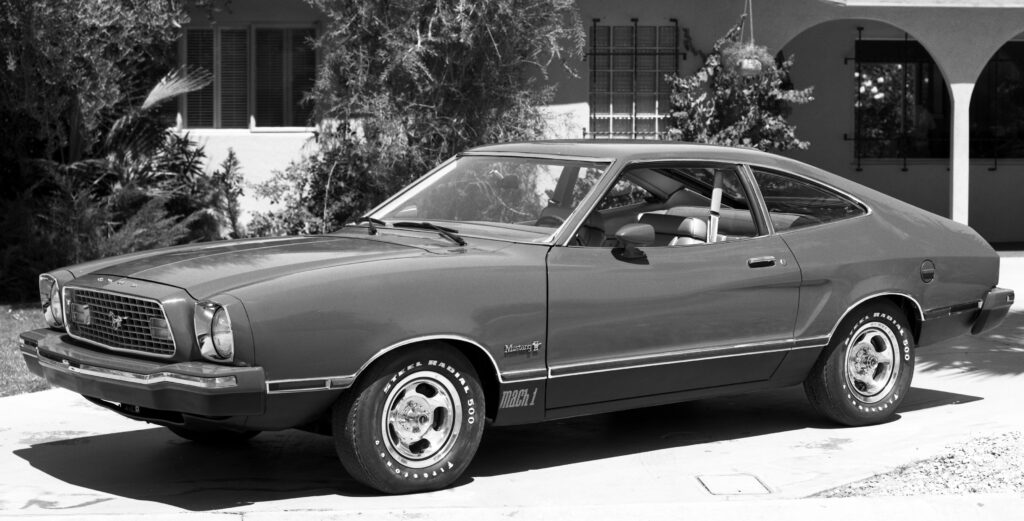
But the second-generation model that debuted in 1974 (shown below) was downsized and built on the Pinto hatchback platform with power restrained due to the gasoline crisis. The 302 Windsor V-8 was added in 1975, with anemic power ratings of 140 hp and 240 foot-pounds of torque, according to Wikipedia. The Mach 1 remained mostly unchanged in 1976, as a new performance model — the Cobra II — was introduced alongside. 1977 proved to be the weakest sales year of the Mach 1 to date, selling only 6,719 units.

1974 Ford Mustang Mach I. (Ford)

The nameplate remained for one more year, upon when it was discontinued with the advent of the third-generation Mustang in 1979.
The Mach 1 nameplate returned for the 2003 and 2004 model years, blending modern power with the nostalgia of 1970s-era Mach 1 design elements. Its Mach 1 handling suspension with larger Brembo front-disc brakes improved on-road performance, while its matte black spoiler and hood stripe helped the coupe standout.

Seventeen years later, the all-new 2021 Mustang Mach 1 is set to return as the most track-ready 5.0-liter Mustang ever, once again delivering design magic while adding to its performance legacy.