Select Page

Tesla Model 3 Review: Don’t stop thinking about tomorrow

Tesla Model 3 Review: Don’t stop thinking about tomorrow
The Tesla Model 3 from a rear three quarter view

The entry model has battery power of “just over 50 kWh,” which is rated for 220 miles of range, and about 75 kWh for the “long range” version, which Tesla claims can enable 310 miles of range. (Photography courtesy of Tesla)


BY MARK MAYNARD

Tesla is complicated, but its cars are not. A recent week in a new Model 3, the compact electric sedan, is a rethinking of car ownership. It’s as much lifestyle choice as transportation.

There is much awareness of this new car and brand — and some attitude. A driver in an Audi A4 tried a stoplight drag race and a few other drivers were not hospitable in yielding the right of way, which was quite deliberate.

The fledgling Model 3 has emerged as a tattletale of all that appears wrong with the company. Its CEO leader Elon Musk is an admitted tech nerd — part visionary, part capricious micromanaging control freak. But he has the capital to indulge his whims, which includes building big space rockets and tunnels, colonizing mars, creating home battery storage systems and a factory to build those batteries, plus a nationwide link of 11,200 “supercharging” stations for the owners of his electric cars.

To skeptics and critics, Musk has been showing mental signs of cracking from the workload. But there were no cracks in the Model 3, I tested. There were two slightly misaligned corners at the front fascia, which could be attributed to the much-reported teething problems during early production at the Fremont, Calif., factory.  The rest of the car was a proud statement of perseverance from a leader who will do it his way, even if that means working the line and sleeping on the shop floor.

Tesla model 3 front seat area

The cabin design is lean and uncluttered with unique synthetic fabrics, headliner and plastics.

2018 Tesla 3 Pricing and Range

Three versions of Model 3 are currently available in the U.S., with three levels of lithium-ion batteries and a second-motor option for all-wheel drive: Midrange rear-wheel drive, $46,200, 260 miles; long range rear-wheel, $50,200, 310 miles; long range dual-motor AWD, $56,200 and Performance AWD, $65,200, both EPA-rated for 310 miles. Pricing includes the $1,200 freight charge.

The mid-range battery option uses the long-range battery, but contains fewer cells, Tesla says. The Mid-Range model also can be upgraded with the premium black and white interior ($1,500) which had been available only with the dual-motor variants.

A single-battery option, with a 220-mile range, will be available in four to six months, Tesla says, which will drop the starting price to $37,120 for the rear-drive model.

Tesla also cut the price of the Dual-Motor All-Wheel Drive option to $5,000, from $29,000.

My top-line extended-range Performance tester was $78,200 with dual-motor AWD and performance upgrades. The EPA gives it e-mpg ratings of 120/112/116 mpg city/highway/combined. That translates to about 319 miles city, 296 miles highway and 308 miles combined.

Pricing is before a $7,500 federal tax credit and $2,500 California incentive, but time is running out. The federal tax credit (incentive) was allowed for the first 200,000 such vehicles sold by an automaker and Tesla passed that milestone in July. But buyers taking delivery by the end of the year will get the full credit, Tesla says. After that, the tax credit will be reduced by 50 percent every six months until it phases out in 2020.

Tesla’s vehicle designs are a complete rethinking of space. All ye who enter the cabin must do so with an open mind.

The view rearward from the front seats through the panoramic roof

The roomy cabin has 40.3 inches of front headroom with the glass roof or 39.6 inches with a metal roof.

Midsize Cabin

While the Model 3 is Tesla’s smallest sedan it is close in footprint to the midsize Mercedes-Benz C300 or Audi A4. But the Tesla’s wheelbase of 113.2 inches is at least 2 inches longer. The stretch of space allows a roomy interior but it also adds to the width of the turning circle, which I’d guess to be about 40 feet with 20-inch tires, when others in the size class can range from 36 to 40 feet.

The Tesla app turned my iPhone into the key to open the car and there also are key cards (like a hotel room card). The driver can create a profile for his or her preferences of driving.

It’s a bit of a culture shock to not use a key fob, to not push an ignition button to start or shut off the car, to not set the parking brake and then just walk away and let the car lock itself, and then remind you where it is an how much fuel remains.

The cabin design is lean and uncluttered with unique and appealing synthetic fabrics, headliner and plastics. Nearly all cabin and driving controls are made through a 15-inch, clipboard-sized iPad-like touch screen turned on its side in the center of the instrument panel. But the screen is prone to glare and reflections in sunlight and finger smudges can be annoying. The access and activation work quite well — once you learn the levels to find what you need. And some features can be voice activated.

Because there is no engine or transmission to work around, there is uncharted capacity in its center console that reaches from the base of the instrument panel to between the front seats, with a charging bin and clever connectors for an iPhone or Android, good cup holders and deep, two-level armrest storage.

Sightlines are unobstructed over the hood and over the shoulder. The roomy cabin has 40.3 inches of front headroom with the glass roof or 39.6 inches with a metal roof. The Model 3 body is made of aluminum and steel. Tesla also designs or makes many of the elements that go on or with the car, including the seat design and synthetic upholstery.

The front trunk has a usable 3 cubic feet of space with another 12 cubic feet in the rear trunk. The 60/40 back seat folds and there is a deep well under the cargo floor to corral grocery bags or other gear.

The Tesla keycard to unlock doors

The Tesla app turned my iPhone into the key to open the car and there also are key cards.

Power

I don’t need 450-hp, but 0-60 mph in 3.5 seconds is fortifying on those occasional full-on pedal-down power plays. With that kind of power, there will be no more pink red-traffic lights and you’ll be able to scoot away from most muscle cars.

The enhanced autopilot will be good to have when the system can be upgraded to Level 3, which will include city-safe driving features. But the current Level 2 semi-autonomous system, in which drivers much keep a finger’s weight on the wheel, still requires much driver vigilance. It is most helpful in bumper-to-bumper traffic as an omniscient guardian on 360-degree watch.

The Performance model’s 450-hp is compelling, but at 4,072 pounds the weight is felt at high speed. It is not overly sporty to drive, but it didn’t unravel when pushed. Around town, the acceleration is moderate and the ride quality settled and well soundproofed. But there is road harshness at Interstate speeds, which might be from the high tire pressure of 42 psi.

Model 3 achieved a perfect 5-star safety rating in every category and sub-category, and NHTSA’s tests also show that it has the lowest probability of injury of all cars the safety agency has ever tested.

Looking at the front center console from the passenger's seat

The center console between the front seats has a charging bin and clever connectors for an iPhone or Android.

Battery Charging

With 300 miles of range, I had no range anxiety. Charging at home on the 240-volt system (which requires buying the charger and installation costs for around $3,000) is good for 37 miles of range an hour. Visiting a supercharger station will add 170 miles of range per 30 minutes. Or figure 24 hours on household current; Tesla provides a 20-foot charging cable for home and 240-volt charging.

Tesla’ Supercharger system is available pretty much nationwide and the stations are often positioned in shopping areas. But just a bare charging station is a far more pleasant experience than plugging in at public charging station in parking lots of Walmart, grocery stores and urban attractions. Tesla says it is adding six charging stations a week.

Looking from the back seat through the front windshield and instrument panel

Nearly all cabin and driving controls are made through a 15-inch horizontal clipboard-sized iPad-like touch screen.

 There is nothing traditional about the marketing or maintenance of a Tesla, either. Cars are ordered online or sourced through the closest boutique (often in shopping malls) and then picked up at a delivery center. When a Tesla needs maintenance, the problem can be diagnosed remotely and then a service truck can be dispatched to make repairs wherever. Scheduled maintenance does not mean time off work — the technician can unlock and lock your car electronically.  The new-vehicle warranty is for 4-years/50,000-miles with battery coverage of 8-years/100,000-miles (120,000 mile with long range battery).

Buying a Tesla isn’t just owning a car, it’s buying into a lifestyle. It’s not a lifestyle for everybody, but it will make many converts.

2018 Tesla Model 3 Lineup

Three long-range versions of the Model 3 are on sale now, with the standard-range model due in three to six months. Pricing includes the $1,200 freight charge from Fremont, Calif. 

 Model 3 Long Range Rear-Wheel Drive

  • Power: 271 hp with 307 ft.-lb. torque
  • Top Speed: 140
  • 0-60 time: 5.1 seconds
  • Range: 310 miles EPA
  • Price: $50,200

Model 3 Long Range Dual-Motor

  • Power: 346 hp with 376 ft.-lb. torque
  • Top Speed: 145
  • 0-60 time: 4.5 seconds
  • Range: 310 miles EPA
  • Price: $56,200

Model 3 Performance

  • Power: 450 hp with 471 ft.-lb. torque
  • Top Speed: 155
  • 0-60 time: 3.5 seconds
  • Range: 310 miles EPA
  • Price: $64,000

Model 3 Mid Range Rear-Wheel Drive

  • Range: 260 miles (EPA estimate)
  • 0-60 mph: 5.6 seconds
  • Top Speed: 125 mph
  • Choice of Premium Black Interior or Premium Black and White Interior
  • Price: $45,000 before incentives (as low as $30,700 after incentives)
Looking at the exterior of the red Model 3 from a low angle at three quarter view

Three versions of the 2018 Model 3 are currently available in the U.S.: Long range rear-wheel, $50,200; long range dual motor, $56,200 and Performance, $65,200 (also on the dual motor platform.)

2018 Tesla Model 3 Performance Specifications

Body style: compact-midsize, 5-passenger sedan

Motors: 450-hp with 471 ft.-lb. torque, total power; permanent magnet motor front, induction AC motor rear

Batteries: 50 and 75 kWh lithium-ion

Driving range: 310 miles

E-Fuel economy:  120/112/116 mpg-e

0-60 acceleration: 3.5 seconds; top speed 155 mph

Transmission: 1-speed automatic

Drag coefficient: 0.23

BY THE NUMBERS

Trunk space: 12 cu. ft. rear, 3 cu. ft. front

Front head/leg room: 40.3*/42.7 in. *39.6 w/metal roof

Rear head/leg room: 37.7/35.2 in.

Length/wheelbase: 184.8/113.2 in.

Curb weight: 4,072 lbs. *3,549 lbs.

Turning circle: NA ft.

FEATURES

Standard equipment includes: 15-inch capacitive touch screen, maps and navigation, W-Fi and mobile connectivity, streaming audio and phone, voice-activated controls, high-definition camera system, 2 USBs nd12-volt plug, full LED lighting, 20-foot charging cable (for 120, 220-volt),

Safety features include: 8 air bags, stability and traction controls, seven cameras, forward radar and 12 ultrasonic sensors

2018 TESLA MODEL 3 PRICING

Base price: $65,200, including $1,200 freight charge; price as tested $78,200

Options on test vehicle: Performance dual motor AWD $29,000; silver metallic paint $1,500; white upholstery $1,500; enhanced autopilot $5,000; Performance upgrade $5,000

Where assembled: Fremont, Calif.

Warranty: 4-years/50,000-miles bumper to bumper; battery 8-years/100,000-miles (120,000 mile with long range battery)

Drive A Tank for a new Thanksgiving tradition

Drive A Tank for a new Thanksgiving tradition

The 60-acre Drive-a-Tank facility in the Minnesota woods offers quasi-military adventures with nine authentic military tanks and several military vehicles that have been used in actual combat.

I grew up in the rural Midwest where it was a common tradition to hunt rabbits and other game on Thanksgiving morning. I was never much of a hunter or even a good shot to bring home dinner. But I might have better luck driving a Sherman tank and hunting other armored vehicles at Drive A Tank, in rural Kasota, Minn. This map dot is about halfway between the cities of Mankato and St. Peter on the eastern side of the Minnesota River.

In business since 2009, the 60-acre facility in the Minnesota woods offers quasi-military adventures with nine authentic military tanks and several military vehicles that have been used in actual combat. Participants can drive a tank in a combat scenario and run over just about anything that gets in the way, including cars and mobile homes.

For Thanksgiving, Drive A Tank is offered a new holiday tradition it calls Tanks-giving on Saturday, Nov. 24, 2018. Engines fired up at 10 a.m. with dinner served around 4 p.m. (Expect about the same timing for 2019.)

There are several tank-driving options, including three-, four- and five-star General packages ranging in price from $299-$2,599. (Drive A Tank)

Participants will be able to experience an armored combat mission to hunt armored vehicles and engage them with the Sherman Tank’s main gun, using proprietary combat-training ammo. There also will be many authentic WWII-era machine guns to shoot.

After a day of target practice and piloting tons of steel, owner Tony Borglum and the crew at Drive A Tank will have a Thanksgiving meal and beverage waiting.

“This isn’t your run-of-the-mill Thanksgiving festivity,” said Borglum. Thanksgiving holidays blend together because year after year, they aren’t ever different. If you come to our Tanks-giving, I guarantee, you will never forget it.”

There are several tank-driving options, including three-, four- and five-star General packages ranging in price from $299-$2,599. New this year is the $1,599 Sherman Driver Experience. The Tanks-giving turkey shoot is offered with a 10 percent discount toward any program and includes the Thanksgiving meal.

Add-ons include driving a 60-ton Chieftain battle tank over a car, $549 — or mash two cars for $749. And there are options to drive a tank through a mobile home ($3,495, total package cost).

Also on site is an indoor shooting range with historic military firearms.

Info: (507) 931-7385 or Driveatank.com.

The Tanks-giving turkey shoot is offered with a 10 percent discount toward any program and includes the Thanksgiving meal. Add-ons include driving a 60-ton Chieftain battle tank over a car, $549 — or mash two cars for $749. (Drive A Tank)

2019 Infiniti QX50: More luxury, more sophistication, more complexity

2019 Infiniti QX50: More luxury, more sophistication, more complexity

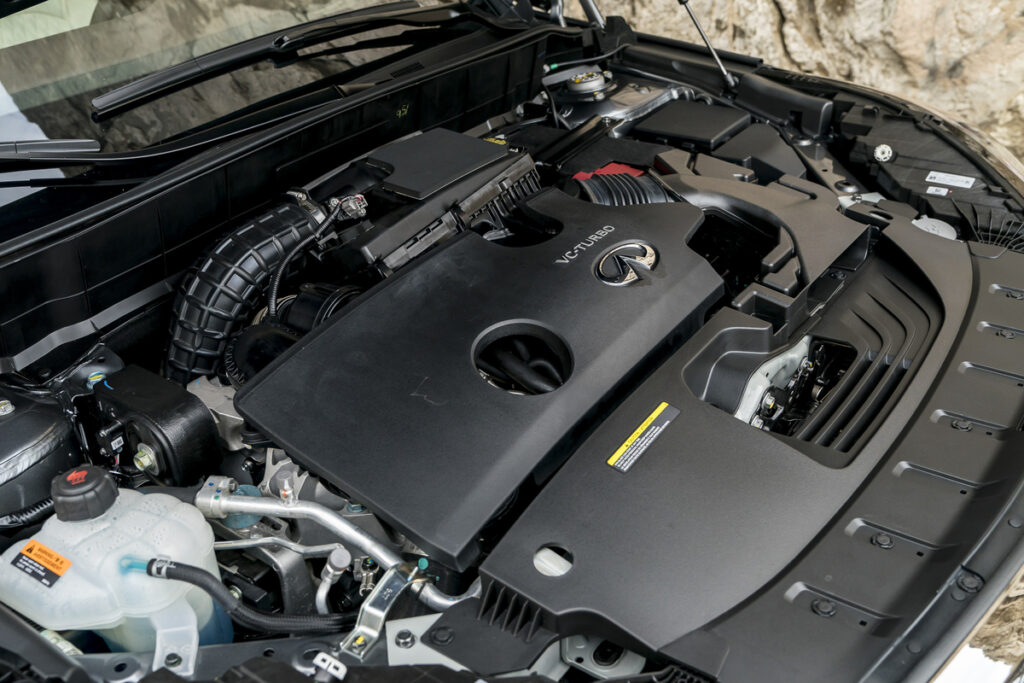
The QX50’s new 2.0-liter VC-Turbo four-cylinder engine is getting much attention in advertising and in road-test evaluations, but not all of it is progressive.

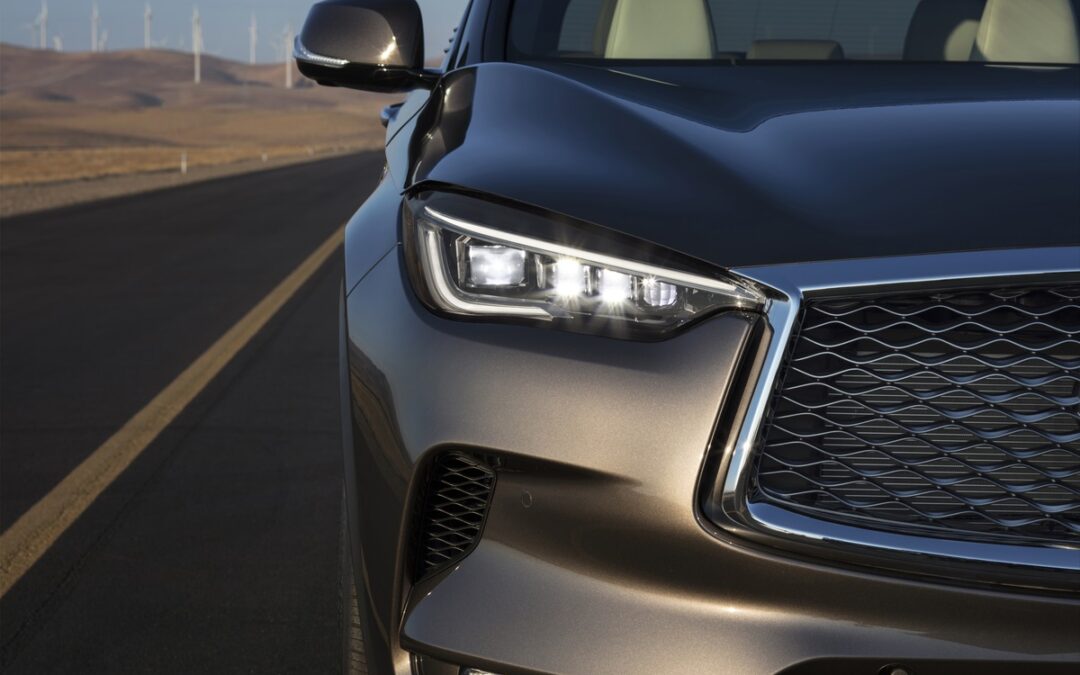
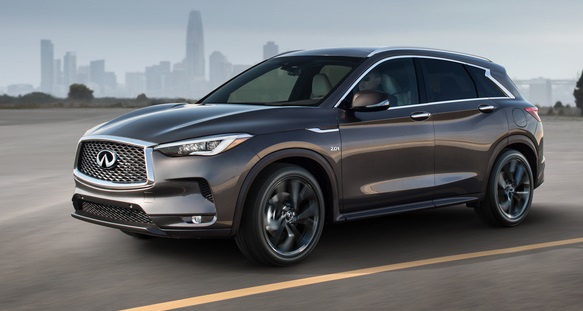
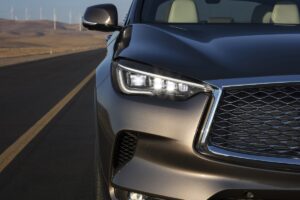
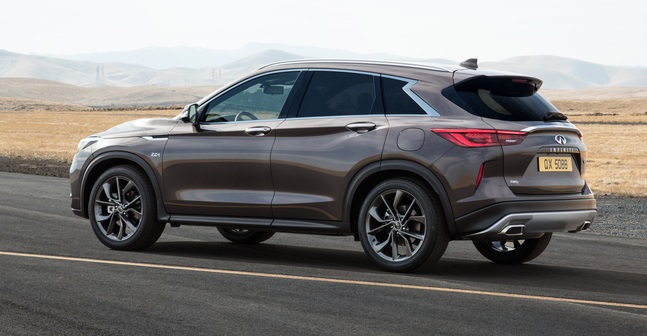
The 2019 Infiniti QX50 is fresh start with striking exterior styling, a more luxurious presentation, Level 2 semi-autonomous driving and a first-of-its-kind engine with variable compression.

There are a lot of moving parts to the redesigned QX50, the brand’s midsize five-passenger SUV crossover. Its new 2.0-liter VC-Turbo four-cylinder engine is getting much attention in advertising and in road-test evaluations, but not all of it is progressive.

Infiniti says the engine’s variable compression ratio technology is a breakthrough in combustion-engine design. But it is a complex engineering design that took about 20 years to exorcise the demons for mainstream application.

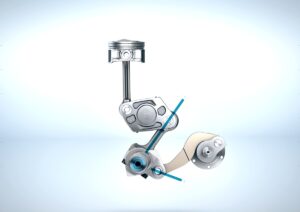
The once-simple engine piston gets sophisticated bottom-end internals, with a multi-link connector at the crankshaft that connects with another control shaft then an actuator arm and an electric motor-controlled rotating unit called the Harmonic Drive.

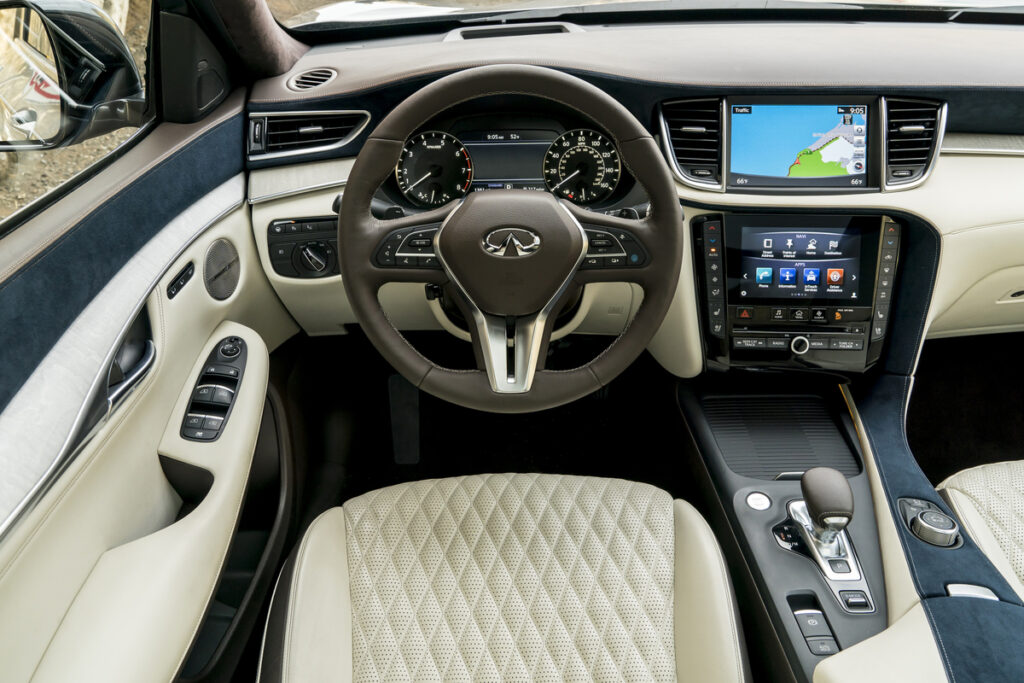
Cabin materials are immaculate, but the traditional cabin layout does not set any new standards for functionality or creativity.

The movement is robotic-like syncopation to continually adjust the engine’s compression ratio by raising or lowering the reach of the pistons. The consumer benefit is more power and fuel efficiency from a four-cylinder engine — and it does have impressive power numbers.

The 2.0-liter VC-Turbo replaces a 3.7-liter V-6 with 325-hp and 267 foot-pounds of torque at 5,200 rpm. With a seven-speed transmission, it had mileage of 17/24/20 mpg city/hwy/combined.

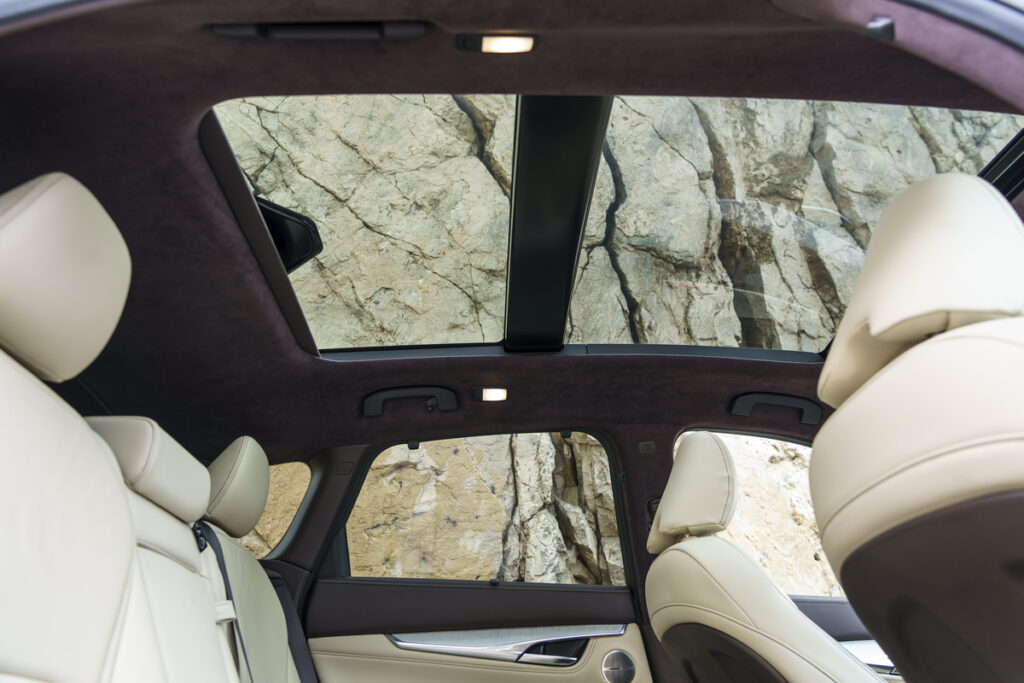
Headroom is tall at 40 inches — with the panoramic roof — and driver controls are reasonably intuitive.

The VC-Turbo, with direct-and-port injection, has 268 horsepower and 280 lb.-ft.  torque from 1,600-4,800 rpm. All-wheel-drive fuel economy ratings are 24 mpg city, 30 highway and 26 mpg combined on the recommended premium fuel. I was averaging just 16.9 mpg in a week with little freeway driving and much use of Sport mode. Oddly, there was no auto stop-start at idle, but I don’t think there’s much mileage benefit for the driver with that feature.

The panoramic roof is wide and long.

The efficiency gains are apparent on paper, but my driving experience was variable and made somewhat annoying by the continuously variable automatic transmission. At times the power delivery was quick and assertive, mostly around town, and at times the spooling of the turbo (as the engine reached 1,600 rpm) and the rubberbanding uptake of the CVT had the feel of a small powertrain trying to move a heavy vehicle. But the QX50 is not heavy at 3,857 pounds. At speed, the engine response is quicker and almost frenzied.

Only AWD models are recommended for towing and have a 3,000-pound rating.

The steering weight is very light, which I like when tooling the city, and the overall drivability is comfortable, not sporty, particularly with the Bridgestone Ecopia 19-inch runflat tires. There is noticeable road noise on concrete Interstate despite a well-soundproofed cabin.

The VC-Turbo, with direct-and-port injection, has 268 horsepower and 280 foot-pounds of torque from 1,600-4,800 rpm.

The QX50 is sold in three trim levels with front- or all-wheel drive. Pricing starts at $38,540 and ranges to $46,145 for the top-line Essential AWD; pricing includes the $995 freight charge from Aguascalientes, Mexico. The Essential tester was $59,585 with four major packages and three stand-alone options for premium paint ($500); illuminated kick plates ($465); and welcome lighting ($425), which shines at the ground from below the door opening.

The once-simple engine piston gets sophisticated bottom-end internals. The electronics of the variable compression ratio engine can detect the car’s driving condition and driver inputs, and seamlessly select the most suitable compression ratio, Infiniti says. The engine is able to offer any compression ratio between 8:1 (for high performance) and 14:1 (for high efficiency).

Competitors include the Acura RDX, Audi Q5, BMW X3, Cadillac XT5 or XT4, Lexus NX, Mercedes-Benz GLC and Porsche Macan.

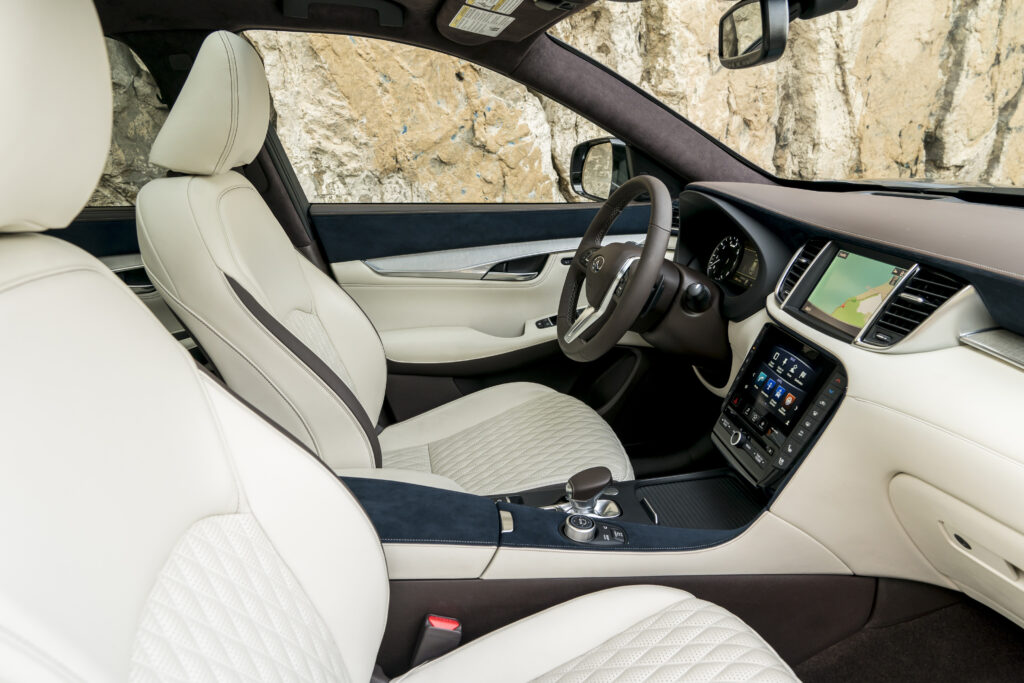
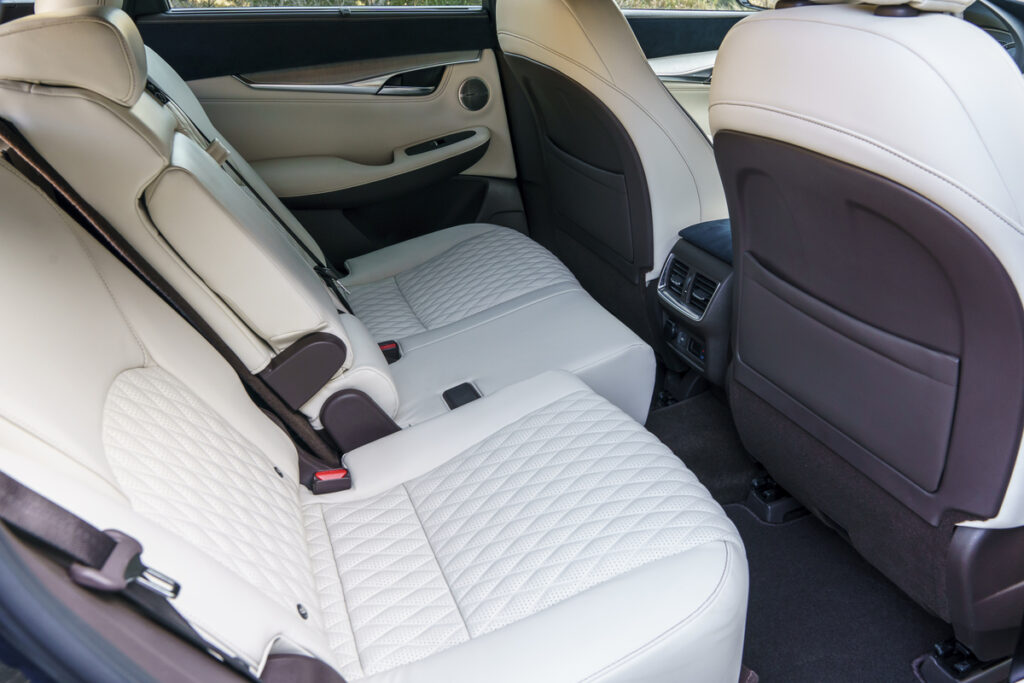
The traditional cabin layout does not set any new standards for functionality or creativity, but Infiniti is a master tailor at high-luxury interiors. The tester’s three-tone cabin was neatly dressed in white perforated and quilted leather upholstery, etched metallic trim and a brown Ultrasuede headliner with accent swaths of blue Ultrasuede across the instrument panel and upper doors. All of the plastic pieces felt sturdy with spot-on panel fit.

The tight turning circle of 36.4 feet is empowering, as is the around-view monitor, which shows all sides of the vehicle. Braking is confident with light pedal pressure from vented four-wheel disc brakes, 13-inch discs front and 12.1-inch rear.

The ride height is ideal for command of road visibility without a big step-up to the cabin. Sightlines are open over the shoulder, but the wide base of the windshield pillars at the side mirrors can block views of pedestrians in crosswalks. Eight-way power front seats are firmly supportive and not overly bolstered; but only the driver gets two-way lumbar adjustment.

The back seat is quite functional with fore-aft slide and a reclining seatback.

Headroom is tall at 40 inches with the panoramic roof. Driver controls are reasonably intuitive, but the dual stacked screens in the center console are low and not conducive for parallel eye movement from screen to road. The 8.8-inch navigation screen is at the top but there is no ability to swap the screen functions to have the more used 7-inch infotainment screen in the upper position.

The back seat is quite functional with fore-aft slide and a reclining seatback. There is almost adult-class thigh support and the low center exhaust tunnel improves center-seat footroom. Extra features include temperature control (but no fan speed), a charging USB and 12-volt plug and a fold-down padded center armrest with cup holders.

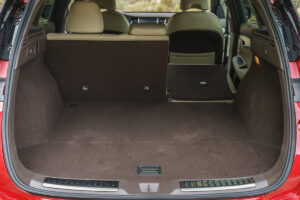
The cargo area is deep and wide with room for three golf bags, Infiniti says.

The cargo area is deep and wide with 31.1 cubic feet of storage that will fit three golf bags. Or fold the seats for about six feet of length and up to 64.4 cubic feet. Extras include usable basement storage, two lights, dual seatback releases and a bag hook.

The QX50 has glints of engineering brilliance in a setting rich in luxury. The next evolution should include a brilliant transmission.

2019 Infiniti QX70 Essential AWD 

  • Body style: midsize, 5-passenger, AWD SUV crossover
  • Engine: 268-hp, turbocharged and direct-and-port injection 2.0-liter 4-cylinder; 280 lb.-ft. torque from 1,600-4,800 rpm
  • Transmission: CVT w/manual shift mode and rev-matching downshifts
  • Fuel economy:  24/30/26 city/hwy/combined; premium fuel
  • 0-60 mph: 6.2 secs

SPECIFICATIONS

  • Fuel tank: 16 gal.
  • Cargo space: 31.4-65.1 cu. ft.
  • Front head/leg room: 40*/39.6 in. *41 in. w/o moonroof
  • Rear head/leg room: 38.4/38.7 in.
  • Length/wheelbase: 184.7/110.2 in.
  • Curb weight: 3,857 lbs.
  • Turning circle: 36.4 ft.

FEATURES

  • Standard equipment includes: smartkey locking and push-button ignition, around-view monitor, power panoramic roof with sunshade, LED headlights, leather-trimmed upholstery, 8-way power adjustable front seats, 2-way power lumbar for driver, electric parking brake, around-view camera, navigation and infotainment apps, 4 USB ports, 19-inch runflat Bridgestone Ecopia tires
  • Safety features include: 8 air bags, forward collision warning, forward emergency braking with pedestrian detection, blind-spot warning, hill-start assist 

    The 2019 Infiniti QX50 is fresh start with striking exterior styling, a more luxurious presentation, Level 2 semi-autonomous driving and a first-of-its-kind engine with variable compression.

  • PRICING
  • Base price: $46,145, including $995 freight charge; price as tested $59,585
  • Options on test vehicle: lighted kick plates $465; premium paint $500; welcome lighting $425; ProASSIST package, $550, includes backup collision Intervention, distance control assist, intelligent cruise control, rear cross traffic alert;

ProASSIST Package, $2,000, adds ProPILOT Assist with steering assist and intelligent cruise control with full-speed range, blind-spot intervention, lane departure warning, lane departure prevention, high-beam control;

Autograph package, $2,000, adds, white, quilted semi-aniline leather upholstery, blue Ultrasuede upper door, upper instrument panel and center console lid accents, seat quilting stitch; blue piping between white leather and blue Ultrasuede;

Sensory package, $7,500, adds 20-inch dark painted wheels with 255/45R20 all-season run-flat tires, climate-control seats; 2-way passenger power lumbar, motion-activated liftgate, rear side window sunshades, advanced climate control system, cube design LED headlamps (LED high-low beam), adaptive front lighting system, open pore maple wood trim, black Ultrasuede upper door, upper instrument panel and center console lid accents, Ultrasuede headliner, metallic cargo-area finishers

  • Where assembled: Aguascalientes, Mexico
  • Warranty: 4-years/60,000-miles bumper to bumper with roadside service and a free loaner car for scheduled service;6-years/70,000-miles powertrain

With a 3,857 pound curb weight, the QX50 feels heavy when leaving the stoptlight until power builds.

Kia Forte S Review

Kia Forte S Review

The 2019 Kia Forte has a more efficient four-cylinder engine, a new continuously variable transmission, and a considerable bite of Stinger styling

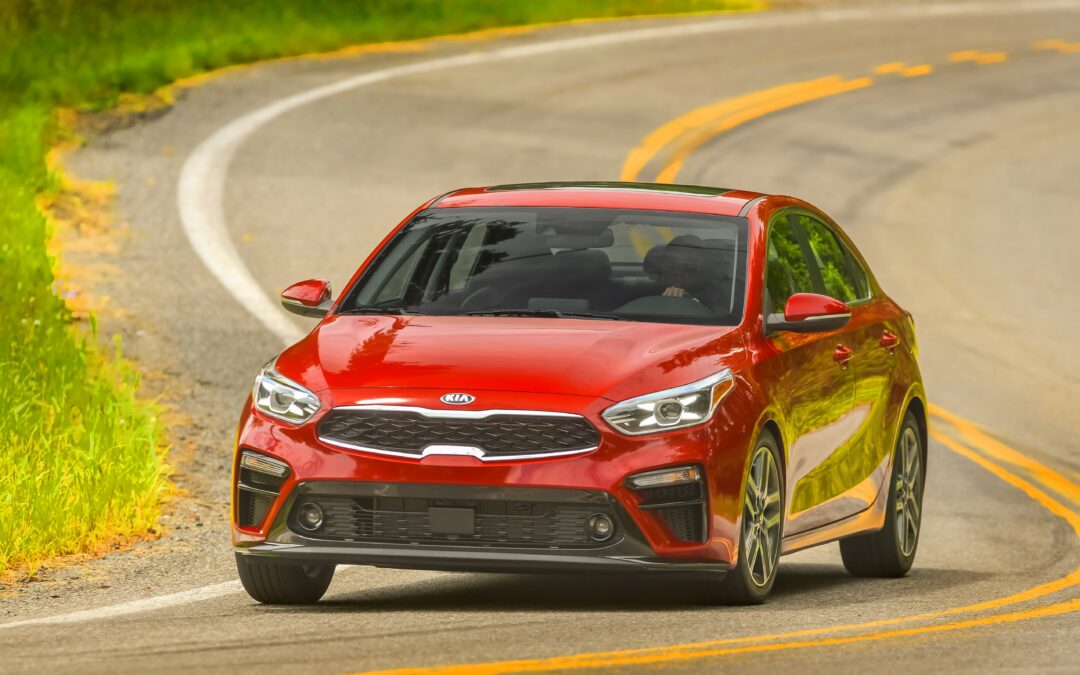
A front view of the 2019 Kia Forte on a winding two-lane roadd

Pricing for the redesigned 2019 Kia Forte starts at $18,585. (Photos courtesy of Kia America)

BY MARK MAYNARD

Starting the morning with a fuel readout of 411 miles till empty is a happy start to any commuter’s day. That message greeted me in my first drive of the redesigned 2019 Kia Forte sedan, which has a highway fuel-economy rating of 40 mpg.

But Kia is adamant that its Stinger-influenced Forte is more than “just a commuter car.” It is, but with a more efficient four-cylinder engine, a new continuously variable transmission engineered by Kia-Hyundai and a 14-gallon tank with a possible driving range of more than 500 miles. So forgive those with hypermiling commuters who seek Forte’s mpgs, range, looong new-vehicle warranty and at a tempting price.

The trouble with sedans, large or small — and no matter how well done — is that four-door cars are being bypassed for SUVs, small ones or large. No matter that a small SUV costs more than a comparably sized sedan. According to the latest tally by Kelley Blue Book, the average price of a new compact car is about $20,500 and the average price of a compact SUV crossover — is $28,409.

The front seats of the Kia Forte

Much design effort went into creating a heads-up driver area.

Kia Niro Pricing

The 2019 Forte is sold in four, front-wheel-drive trim levels with automatic or manual transmissions. Starting prices range from $18,585 for the entry FE with six-speed manual to $22,885 for the EX with CVT, leatherette upholstery and smartkey locking and push-button ignition. Pricing includes the $895 freight charge from Pesqueria, Mexico.

The warranty is for 5-years/60,000-miles bumper to bumper with roadside assistance and 10-years/100,000-miles for the engine powertrain.

The midrange Forte S tester ($21,085) was $22,410 with two options: carpeted floor mats, $125, and the S Premium package, $1,200, which adds a power sunroof and LED interior lighting and LED headlights with high-beam assist.

Check current Kia Niro pricing here.

Cabin controls in the Kia Forte

The shifter console has an accommodating e-bin.

The Forte Redesign

Kia did a good job in re-creating the third-generation Forte with its Stinger-infused styling elements — Stinger is Kia’s performance-tuned five-door coupe hatchback that has gotten rave reviews but not big sales numbers.

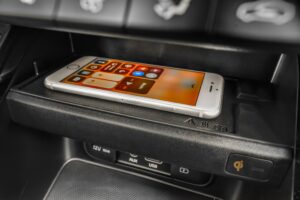
The wireless charging pad

The shifter console has an accommodating e-bin with charging pad.

But the Kia Forte is a functional family car and an ideal ride-hailing car. The redesign increased its length by 3.2 inches, which went toward more rear legroom and trunk space, now at 15.3 cubic feet — and larger than many full-size sedans. While the wheelbase stayed the same at 106.3 inches, the car is about three-quarters of an inch wider, a bit taller and about 93 pounds lighter.

Much design effort went into creating a heads-up driver area for eyes on the road. The 8-inch center touch screen in the instrument panel is about parallel with the gauge array facing the driver. Eyes move easily left to right and back. Sightlines are reasonably open but the outstretched windshield pillars have a wide base at the side mirrors that can block clear views of pedestrians in crosswalks. The plastics, fabric and headliner are of premium materials and appearance. Nothing looks or feels cheap.

The firm fabric seats are comfortably bolstered, but those on the long haul might wish for more lower-back support or adjustable lumbar. The shifter console has an accommodating e-bin with USB, audio aux-in and two 180-watt 12-volt plugs, plus a tray to rest a phone, which can be optioned for wireless charging. (But there are no back-seat charging ports on the S model.)

The Forte engine

The 147-hp, Atkinson-cycle 2.0-liter engine has fuel economy ratings of 30 mpg city, 40 highway and 34 mpg combined, on 87 octane.

The cabin has more soundproofing and the ride quality is comfortable. The rear torsion-beam suspension is a budget choice, but it allows an improved and flatter trunk space.

There are just enough electronic technologies to the Sport model to enhance without overwhelming the driver. Standard equipment includes remote locking, projection headlights, fog lights, LED taillights and running lights, rearview camera, AndroidAuto or Apple CarPlay infotainment systems, manual height-adjustable driver’s seat, 60/40 folding back seat, and steering wheel controls for Bluetooth, audio and cruise.

The Forte back seat

Back seat legroom is long, with a max of almost 35 ½ inches.

The new body has 54 percent more high-strength steel and is 16 percent stiffer, which always helps durability way down the road. Safety features are substantial for an economy car, including forward collision avoidance warning and assist, lane-departure warning and driver attention warning.

Stopping power is confident from four-wheel disc brakes with 11-inch vented front rotors and 10-inch solid rotors rear. The 34.8-foot turning circle is urban-friendly.

Kia Forte Powertrain

The much-revised, Atkinson-cycle 2.0-liter engine has the same power ratings as before but better fuel economy. The Atkinson-cycle technology is frequently used with gasoline-electric hybrids. It uses less fuel and generates lower horsepower but higher mileage ratings. And that’s pretty much how the 147-horsepower engine performs, mileage over muscle. But, oddly, there is no auto stop-start at idle (It is under study, Kia said).

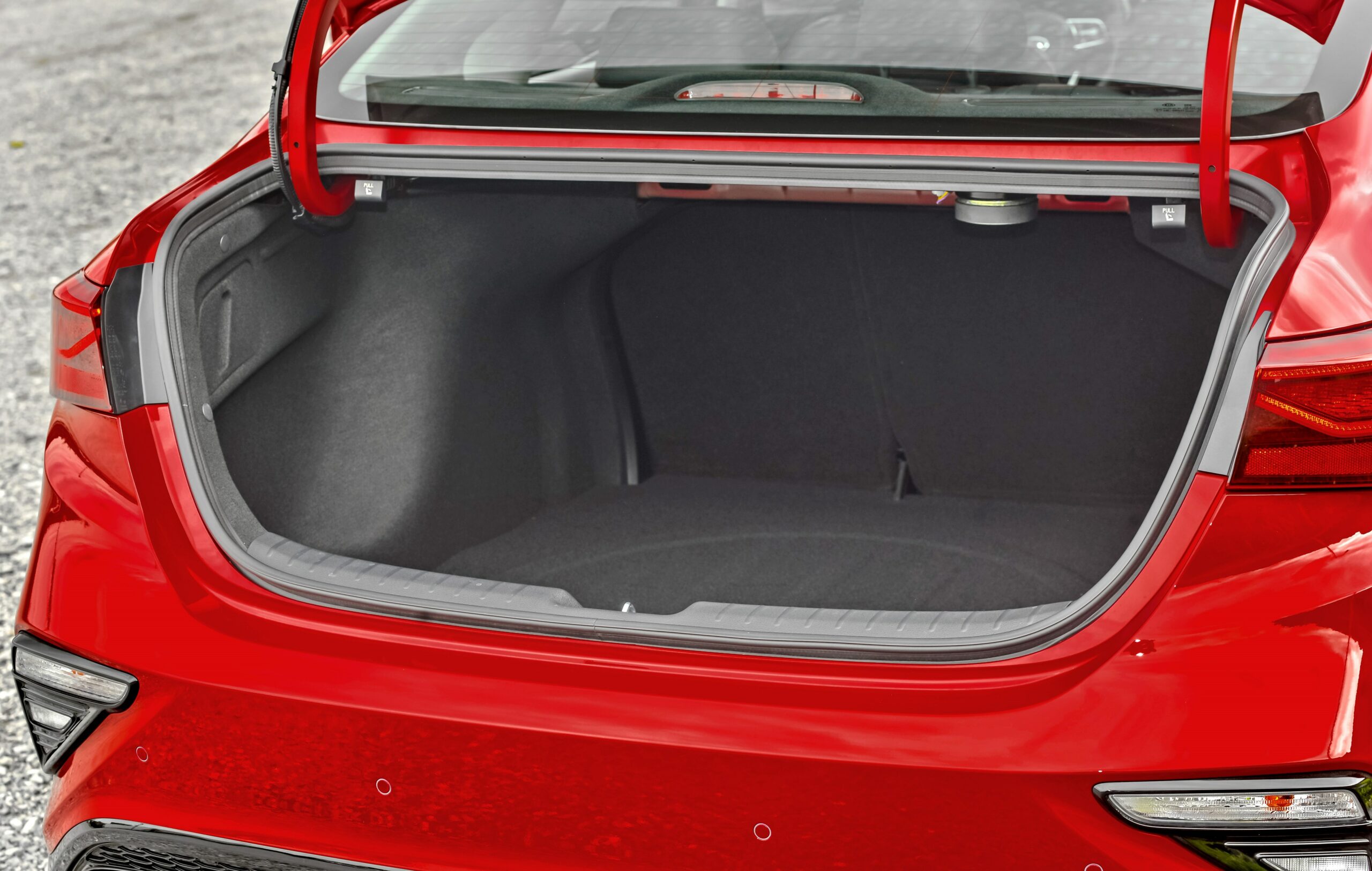
An open truck of the Kia Forte

Trunk space of 15.3 cubic feet is larger than in many full-size sedans.

Power delivery gets an assist from the re-engineered CVT automatic transmission, which Kia calls Intelligent Variable Transmission. The revisions were to take away the wail and the uneven rubberbanding of acceleration common to most CVTs. The initial start out has a quicker response, but there’s no denying it’s a CVT. Its standard drive mode is for maximum mileage, but punching up the Sport mode adds just enough urgency to guard your line in the commute. Kia says the engine and IVT are “Smart Stream” powertrains that will make their way into the Kia lineup in the future.

Forte’s curb weight is trim at 2,762 pounds, to benefit mileage. Fuel economy ratings with the CVT are strong at 30 mpg city, 40 highway and 34 mpg combined, on 87 octane. I was averaging 24.8 to 32 mpg with limited highway driving and mostly in Sport mode.

The base FE model can be ordered with a six-speed manual with 15-inch wheels. Its fuel economy is 27/37/31 mpg, so I’m not sure what incentive there is to go manual.

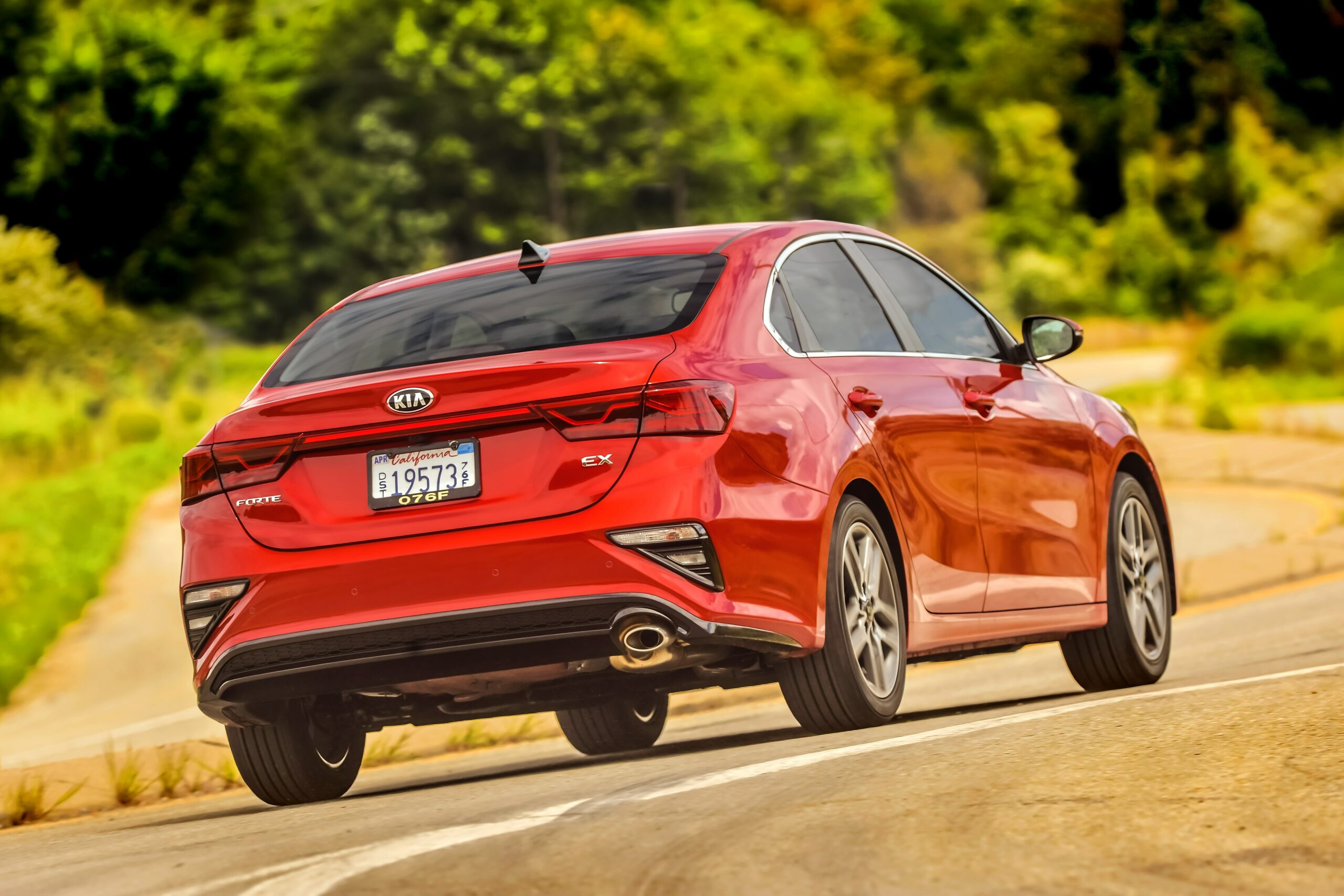
A rear view of the Kia Forte

The redesigned 2019 Kia Forte is an attractive car at a reasonable price.

Back Seat and Trunk Space

Whether picking up paying passengers or in the school carpool, the back seat legroom is long, almost 35 ½ inches, with tall headroom (37.5 inches). The bench seat has adult-class thigh support and a relaxed seatback angle. Extras include a well-padded center armrest, overhead lights and grab handles, but no USB or 12-volt charging ports.

The trunk has useful storage under the floor — because there is no spare tire, just a flat-tire inflating system.

You can’t always get the SUV you want for $22,000. But the Forte’s complete remodel makes a competent, comfortable and attractive car, whether as commuter, family sedan or ride-hailer.

2019 Kia Forte S Specifications

Body style: compact, 5-seat, front-drive sedan

Engine: 147-hp, 2.0-liter Atkinson-cycle 4-cylinder; 132 lb.-ft. torque at 4,500 rpm

Transmission: CVT

Fuel economy: 30/40/34 mph city/hwy/combined; 87 octane or higher fuel

BY THE NUMBERS

Fuel tank: 14 gallons

Trunk space: 15.3 cu. ft.

Front head/leg room: 38.8/42.2 in.

Rear head/leg room: 37.5/35.7 in.

Length/wheelbase: 182.7/106.3 in.

Curb weight: 2,762 lbs.

Turning circle: 34.8 ft.

FEATURES

Standard equipment includes: remote locking, projection headlights, fog lights, LED taillights and running lights, 8-inch touch screen, rearview camera, AndroidAuto or Apple CarPlay, manual height-adjustable driver’s seat, fog lights, LED taillights and running lights, 60/40 folding back seat, steering wheel controls (Bluetooth, audio, cruise)

Safety features include: 6 air bags, forward collision avoidance warning and assist, lane-departure warning, stability and traction controls, hill-start assist, driver attention warning

PRICING

Niro Base price: $21,085, including $895 freight charge; price as tested $22,410

Options on test vehicle: S Premium package, $1,200, includes power sunroof, LED overhead interior lighting and LED headlights with high-beam assist; carpeted floor mats $125

Where assembled: Pesqueria, Mexico

Warranty: 5-years/60,000-miles bumper to bumper with roadside assistance; 10-years/100,000-miles powertrain

1968 Mustang GT “Bullitt” movie car

1968 Mustang GT “Bullitt” movie car

Long-lost Mustang Bullitt to be shown in San Diego, Nov. 4-19

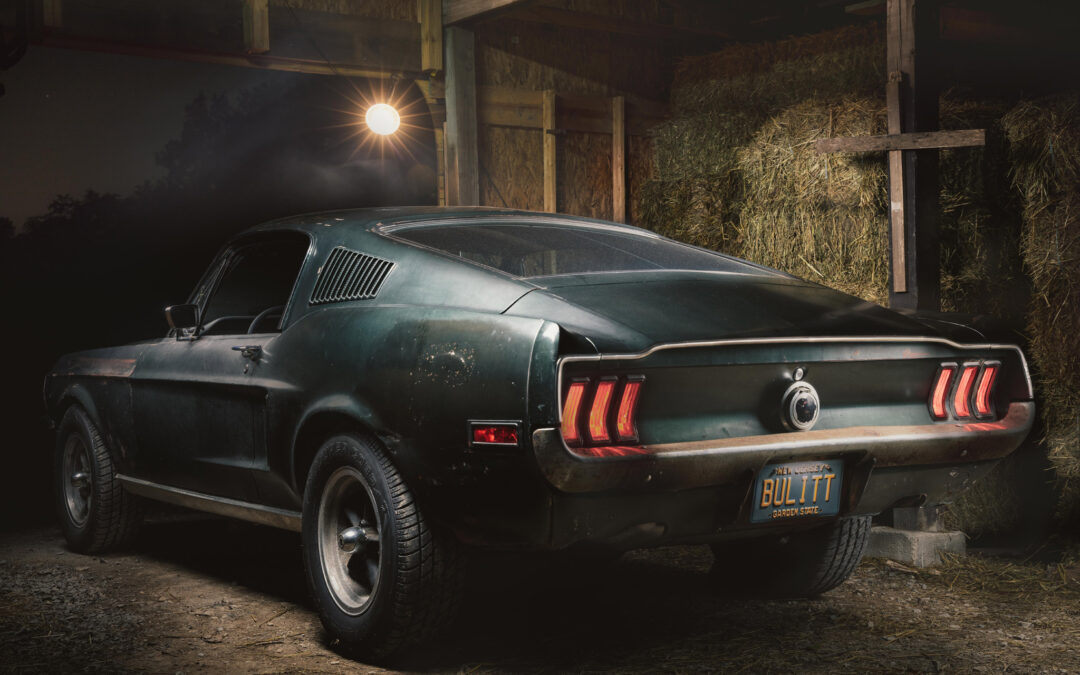
The 1968 Bullitt Mustang movie car as found in Nashville, Tenn. A second car was used as the “jumper” and was found last year in Baja California.

BY MARK MAYNARD

There has been a lot of “Bullitt” engine-revving around the fastback’s 50th anniversary on Oct. 17. The hard-knuckled 1968 film centers on San Francisco PD Lt. Frank Bullitt (Steve McQueen) who was tasked with protecting a Chicago mobster who was about to sing his guts out. It is a gear-jamming 48-hour weekend of chasing the hitmen.

Good-guy McQueen drove a 1968 Ford Mustang 390 GT 2+2 Fastback. The bad guys drove a 1968 Dodge Charger 440 Magnum. The famous car chase lasted just 10 minutes and 53 seconds, but it lives in infamy.

Two identical 1968 Mustang GT fastbacks were used in the Warner Bros. movie. After filming, the cars went their separate ways: the hero vehicle driven by McQueen in the movie was sold by Warner Bros. to a private buyer, and the other — used in many of the jumps during the famous chase scene — was sent to a salvage yard. The jumper car resurfaced in Baja California in early 2017, but the other was lost to history. Until this year.

A Kiernan family collage with the famous Mustang.

Sean Kiernan, owner of the hero vehicle, inherited the car in 2014 from his late father, Robert, who had purchased the Mustang in 1974. To fulfill his family’s lifelong dream, Sean contacted Ford and the two parties worked together to reveal his movie star car alongside the new 2019 Mustang Bullitt at last year’s Detroit auto show.

“You know, it was never our intention to keep this car a secret from everybody,” Kiernan said in a release. “It just kind of happened with life. I’m just completely buzzing to join with Ford and the new Bullitt and show this car to the world on one of the biggest stages there is.”

Kiernan has followed through on his commitment to show the car and will display it — in its barn-find condition — at SEMA until Nov. 3. After the big aftermarket trade show, the car will be trailered to San Diego where it will be on display at the San Diego Air & Space Museum, in Balboa Park, from Nov. 4-19. Find it in the museum’s special display space, “SPEED: Science in Motion.”

But before being loaded into the museum, the famous Mustang will make a KUSI-TV appearance next Sunday morning.

The museum also will have a special VIP reception with Kiernan and the Bullitt on Nov. 15.

The San Diego Air & Space Museum is open from 10 a.m. to 5 p.m. daily (last admission at 4:30 p.m.), at 2001 Pan American Plaza, Balboa Park. Museum admission is $19.75, plus $5 for the “SPEED” exhibit.

 Infosandiegoairandspace.org/

The original 1968 “Bullitt” Mustang 390 GT 2+2 fastback with the 2019 tribute Mustang.

BULLITT50 Chronograph raffle

If you are a “Bullitt” aficionado who can recite movie quotes and specs about the cars and stars, this charitable raffle might be worth a ticket or 10.

Robert E. Kiernan Jr., owner of the original and recently re-discovered 1968 Bullitt Mustang, succumbed to Parkinson’s in 2014. In his honor, Drive Toward a Cure for Parkinson’s Disease has arranged a special tribute, with the support of Ford Motor Co., Warner Bros Studios and Chad McQueen.

For the fundraiser, BRM Chronographe and automotive artist Nicolas Hunziker have created a “one-of-one” hand-painted chronograph watch — valued at more than $35,000.

The watch, which includes a 1-gram paint chip from the car, will benefit Parkinson’s disease through the one-time raffle. Drive Toward a Cure will donate all raffle proceeds to the Michael J. Fox Foundation in his name.

Raffle tickets are $25 each and can be purchased as a direct donation to Drive Toward a Cure online at drivetowardacure.org. Just 1,968 tickets will be sold.

Robert’s son and current Bullitt caretaker Sean Kiernan will announce the winner of the BULLITT50 Chronograph at the Grand National Roadster Show in Pomona, Calif., on Jan. 27, 2019. The Highland Green Mustang, still with barn-find patina, also will be on view.