Select Page

Cadillac Debuts Hydra-Matic Drive for 1940

Cadillac Debuts Hydra-Matic Drive for 1940

Advertising in 1940 proclaimed GM’s Hydra-Matic Drive Transmission as “the greatest advancement since the self-starter”

A black-and-white PR photo of a Cadillac Sixty-One coupe.

The1941 Cadillac Sixty-One five-passenger coupe was touted as ‘the mightiest, thriftiest, lowest-priced Cadillac V-8 ever built.’ (GM Media Archive)

BY MARK MAYNARD

In 1939, General Motors’ Cadillac and Oldsmobile divisions introduced breakthrough technology in the fully automatic Hydra-Matic Drive transmission. The transmission debuted for the 1940 model year.

“The Hydramatic was the first mass-produced fully-automatic transmission developed for passenger automobile use,” according to its page in Wikipedia.

Shiftless transmissions had been a focus during the 1930s. Then, as now, shifting a manual gearbox required more effort than most drivers cared to exert.

According to the Wiki story, automakers were in the fast lane to develop a transmission that reduces or eliminates the need to shift gears.

“At the time, synchronized gear shifting was still a novelty (typically only for higher gears). The exception was Cadillac’s breakthrough synchromesh fully synchronized manual transmission.”

The synchromesh transmission was designed by Cadillac engineer Earl A. Thompson and introduced in the fall of 1928.

Developing a Shiftless Transmission

By the early 1930s, Thompson had begun work on a “shiftless” transmission. His pioneering work led to creating a new department within Cadillac Engineering. Headed by Thompson, the transmission group included engineers Ernest Seaholm, Ed Cole, Owen Nacker, and Oliver Kelley.

“During 1934, the Cadillac transmission group had developed a step-ratio gearbox that would shift automatically under full torque,” according to Wikipedia. “This group of engineers was then moved into the General Motors Research Laboratory, building pilot transmission units during 1935-36. The transmission then went to Oldsmobile for testing.

a 1940 color print ad for General Motors' new Hydra Matic fully automatic transmission

All Cadillac models for 1941 could be optioned with the Hydra-Matic. (GM Media Archive)

The group effort led to the so-called Automatic Safety Transmission. The AST was a semi-automatic transmission using planetary gears and a conventional friction clutch. Drivers were still required to use the clutch to shift into or out of gear, but not between the two forward gears.

Oldsmobile offered the AST from 1937-1939, while Buick offered it only in 1938.

The next step was the Hydra-Matic. It combined the hydraulic operation of a planetary gearbox (for the automation of shifting) with a fluid coupling instead of a friction clutch, eliminating the need for de-clutching. The transmission would have four forward speeds plus reverse.

The transmission was named “Hydra-Matic Drive” and went into production in May 1939 for the 1940 model year.

Start of Hydra-Matic Production

The first Oldsmobiles so equipped were shipped in October 1939 in the Oldsmobile Series 60 and the Oldsmobile Series 70.

Oldsmobile was chosen to introduce the Hydra-Matic for two reasons:

  • Economies of scale — Oldsmobile produced more cars than Cadillac and Buick at the time, thus providing a better test base;
  • And to protect the reputation of Cadillac and Buick in case of a market failure of the new transmission. Advertising proclaimed it “the greatest advancement since the self-starter.”

In 1940, the Hydra-Matic was a $57 option (around $1,102 today). The price almost doubled for 1941, to $100 (or about $1,842 today). For the 1941 Cadillacs, the Hydra-Matic cost $125.

The transmission was a popular upgrade. Almost 200,000 cars had been optioned with the transmission by the time passenger car production was halted for wartime production in February 1942.

1964 Dodge 330 HEMI Lightweight?

1964 Dodge 330 HEMI Lightweight?
A B&W image from Stellantis PR archives of the production line for “Historical Mopar 1964 Package Car Production.”

“Historical Mopar 1964 Package Car Production,” from the Stellantis PR archives.

BY MARK MAYNARD

This photo from the Stellantis PR vehicle archives shows “Historical Mopar 1964 Package Car Production.” The car being assembled is not identified in the caption, but it appears to be a 1964 Dodge 330 HEMI Lightweight. Built for speed, it was a privateer’s super stock drag car.

Note the skinny front tires with magnesium wheels (not steelies with dog-dish nut covers). Also unique are the hood pins and the grille with single headlights because we don’t need no turn signals on a race track.

A car similar to this factory image sold at Bonham’s 2021 Amelia Island Auction. According to the auction report, the 1964 Dodge 330 Hemi Lightweight on offer was “One of 55 A864 lightweight cars for the model year.” And it was built with aluminum and magnesium parts from the factory.

How Much?

There is a fine example for sale now through Hemmings. Asking price: $159,000.

According to a report in ConceptCarz.com, the Dodge 330 Lightweight was identified by the Hemi engine code A864. The engine denoted the cross-ram-equipped race Hemi drag engine.

“For 1964, the Hemi package had an aluminum intake, offset dual Holley carburetors, 12.5:1 compression, and chrome valve covers,” according to the ConceptCarz report.

“The exhaust system used factory cutouts, one transverse-mounted muffler, and a single exhaust exit.

“The Hemi models used light aluminum components wherever possible, including the fenders, hood, scoop, front bumper, and doors.

“The battery was moved to the trunk and the rear seat was deleted. The engines were backed by the A727 TorqueFlite transmission operated by pushbuttons in the dash.

“Interiors included factory lightweight A100 bucket seats with lightweight brackets, red carpeting, and radio- and heater-delete plates.

“The side windows were made from thin plastic and the rear window was from lightweight Plexiglas. Magnesium wheels were at the front.”

Bonham’s Auction Report

In Bonham’s auction report, the red 1964 Dodge 330 HEMI Lightweight on offer was “Stored & unused from 1966 – 2006.” And its authenticity was documented by Mopar expert Galen Govier. The car was sold new at Mr. Norm’s Grand Spaulding Dodge . “Mr. Norm” was the legendary purveyor of high-performance Mopar muscle, beginning in 1962 at his Chicago dealership.

The car in the Bonham’s auction did not sell at the time, and it likely would have taken $150,000 or more.

Bonham’s car had these specs for chassis no. 6142229092:

  • 426ci Hemi V8 Engine
  • Dual Offset Holley Carburetors
  • 425bhp
  • 3-Speed 727 Torqueflite Racing Automatic Transmission
  • Independent Front with Live Rear Axle
  • 4-Wheel Hydraulic Drum Brakes

Rolls-Royce Owners’ Club 70th Annual Meet

Rolls-Royce Owners’ Club 70th Annual Meet

Rolls-Royce Owners’ Club event in San Diego gathered 130 vintage and modern Rolls-Royce and Bentley cars

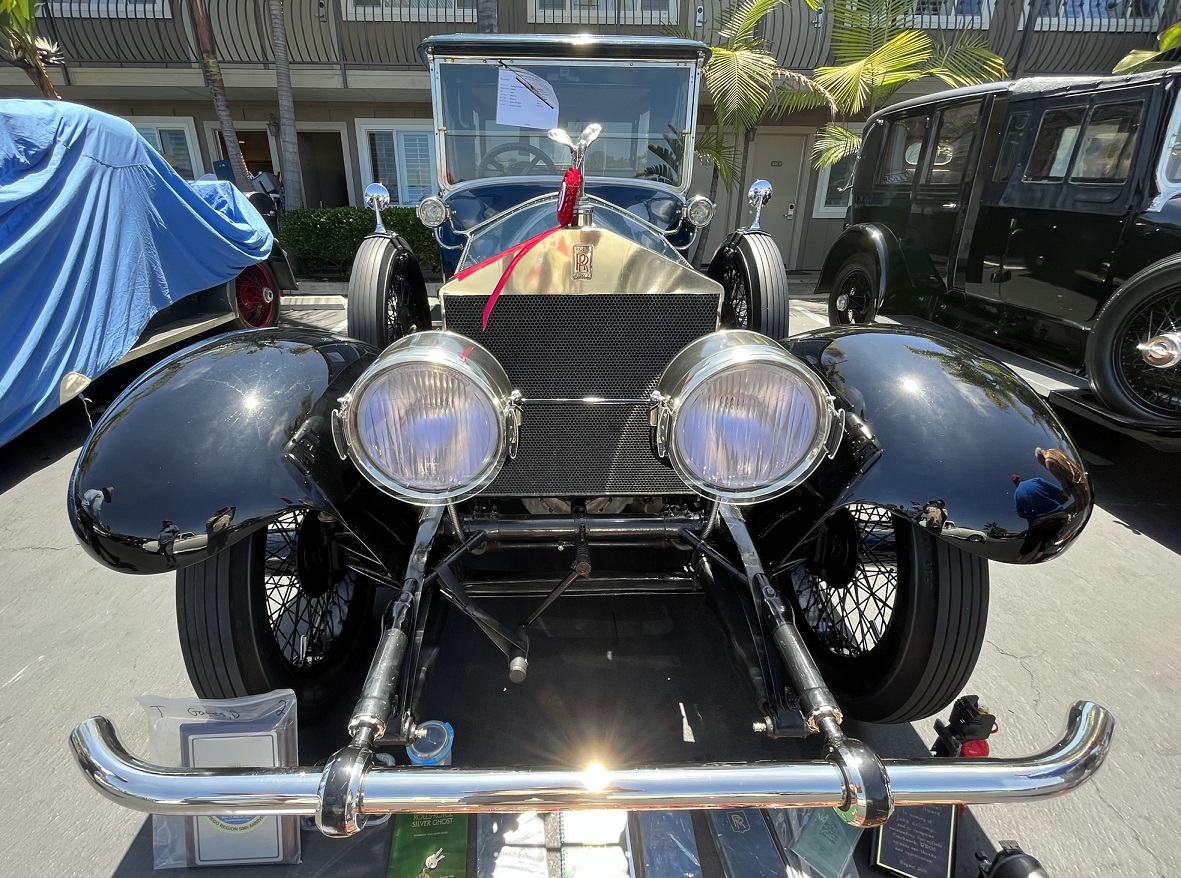
A chassis of a 1921 Silver Ghost

This 1921 Rolls-Royce Silver Ghost has never been fitted with a coach body. (Photo courtesy of Brad Zemcik)

BY MARK MAYNARD

More than 130 classic and modern Rolls-Royce and Bentley automobiles were on view at the 70th annual meet of the Rolls-Royce Owners’ Club, held at the Dana Resort on Mission Bay.

The Spirit of Ecstasy radiator top

The Spirit of Ecstasy.

The four-day event, held June 21-24, had registered owners from across the U.S. and enthusiasts from as far away as England, Australia, Germany, and Canada.

Throughout the week (and another three days of free time afterward), owners took advantage of backcountry tours of San Diego County, technical sessions, seminars, silent auctions, and vendor booths. There also were exclusive tours of some fabled San Diego car collections.

Event Planning

Much planning for the 70th annual meet fell to the San Diego chapter of the Rolls-Royce Owners’ Club and its members. Meet chairs Brad and Michele Zemcik and club members had much heavy lifting to do. There had not been an official Rolls-Royce Owners Club show in San Diego since 1983.

The Zemcik’s got started with the planning in 2018.

“Things were moving along, and then Covid hit in 2020,” said Brad Zemcik. “For months, nobody would talk to us, but fortunately, I had secured the hotel. At the start of 2021, we started pouring on the gas.”

Brad Zemcik has been a Rolls-Royce enthusiast for 53 years. He acquired his first Rolls-Royce, a 1939 Wraith, when he was 20. Over the years, he has owned three others including a 1920 Rolls-Royce Silver Ghost Tourer and a Bentley Mark VI (6). Currently, he owns a 1957 Rolls-Royce Silver Cloud, which was at the show.

“Rolls-Royce owners believe their cars should be driven,” Zemcik said in a phone interview. And at least two cars in the San Diego meet were long-distance travelers. A couple from North Carolina took a few weeks to drive their Silver Ghost to San Diego after attending a five-day Silver Ghost tour event and driving hundreds of miles in Utah.

A front view of a 1950 Bentley Mark VI that was driven to San Diego from Oregon

This 1950 Bentley Mk VI SSS (standard steel production) was driven to the meet from Oregon. But along the way, the owner had to stop to have a pacemaker inserted!

An Oregon owner traveling to San Diego in his 1950 Bentley 1950 Mk VI had an unexpected stop along the way. It wasn’t a problem with his Bentley. He had a medical emergency and had a pacemaker installed, er, inserted.

Classic Rolls-Royce and Bentleys in a lineup for a photo shoot

In line for the official photo session.

21 Judged Classes

There were 21 judged classes, including Senior and Preservation.

In all, the meet had “130 cars plus or minus,” Zemcik said, ranging in age from 1909 to 2017. “Some who registered did not show up, or others came just for the day.” And there were many local cars on view.

A 1952 Silver Wraith saloon in the Preservation group still wore its original dark Velvet Green paint. It still shined but was showing a gentle patina. The Silver Wraith owner from Long Beach, Calif., said the car was originally purchased by the Viscountess of Shropshire County, England. It was for chauffeured drives to and from the House of Lords in London and her local rounds as the Member of Parliament for the district she represented.

A dark green 1952 Silver Wraith sedan

Upright and bold front styling for the 1952 Silver Wraith.

Side doors open on 1952 Silver Wraith

This 1952 Silver Wraith was originally purchased by the Viscountess of Shropshire, England. Note the Mulliner plate at the driver seat.

Because the Wraith was a personal vehicle, there is no partition between the front and back seat, the owner explained. The only built-in cabinetry is the fold-out tray tables, and a lot of legroom, he said. The stately Silver Wraith, with a beige leather interior, was chauffeur-maintained by the Viscountess until 1977. The owner now drives the car at least twice a month.

The highly patinated 1921 Silver ghost tourer

The highly patinated 1921 Silver Ghost tourer.

A 1921 Silver Ghost tourer looked like a barn find, showing its heavily patinated red paint. Its aluminum fenders were scoured of paint, and a heavily crinkled red color still showed through other body parts. The car is actually well preserved, Zemcik said, and first saw duty as a fire truck in Sweden, noted by the heraldry on the door.

Hooper body Rolls Royce

The Hooper bodied 1921 Rolls-Royce Silver Cloud.
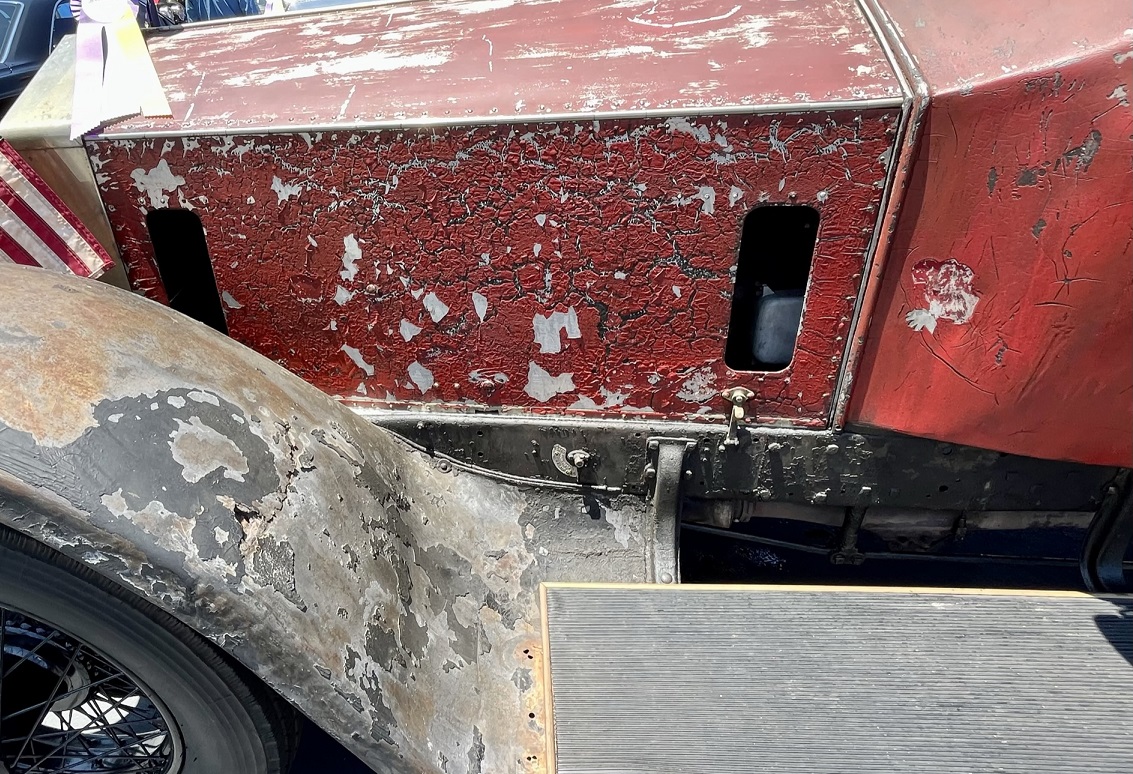
The red, crusty hood of the 1921 Silver CloudWhat might be called a unicorn was a 1921 Silver Ghost that had never been bodied. It was just the chassis and driveline, as it was when it left the factory. It has had several owners, Zemcik said, but was never bodied.

Friday was the concours show and judging, with class categories organized among the hotel parking areas. Later, awards were presented on the flight deck of the USS Midway aircraft carrier museum at Navy Pier along San Diego Bay.

Next year’s 71st annual meet for the RROC will be in Gettysburg, Pa., in mid to late June, 2023.

Here’s a sampling of cars at the 70th annual meet of the Rolls-Royce Owners Club:

1909 Silver Ghost, Roi des Beiges body style (“King of the Belgians”).

A 1909 Rolls-Royce Silver Ghost

A mirror image of the 1909 Rolls-Royce Silver Ghost.
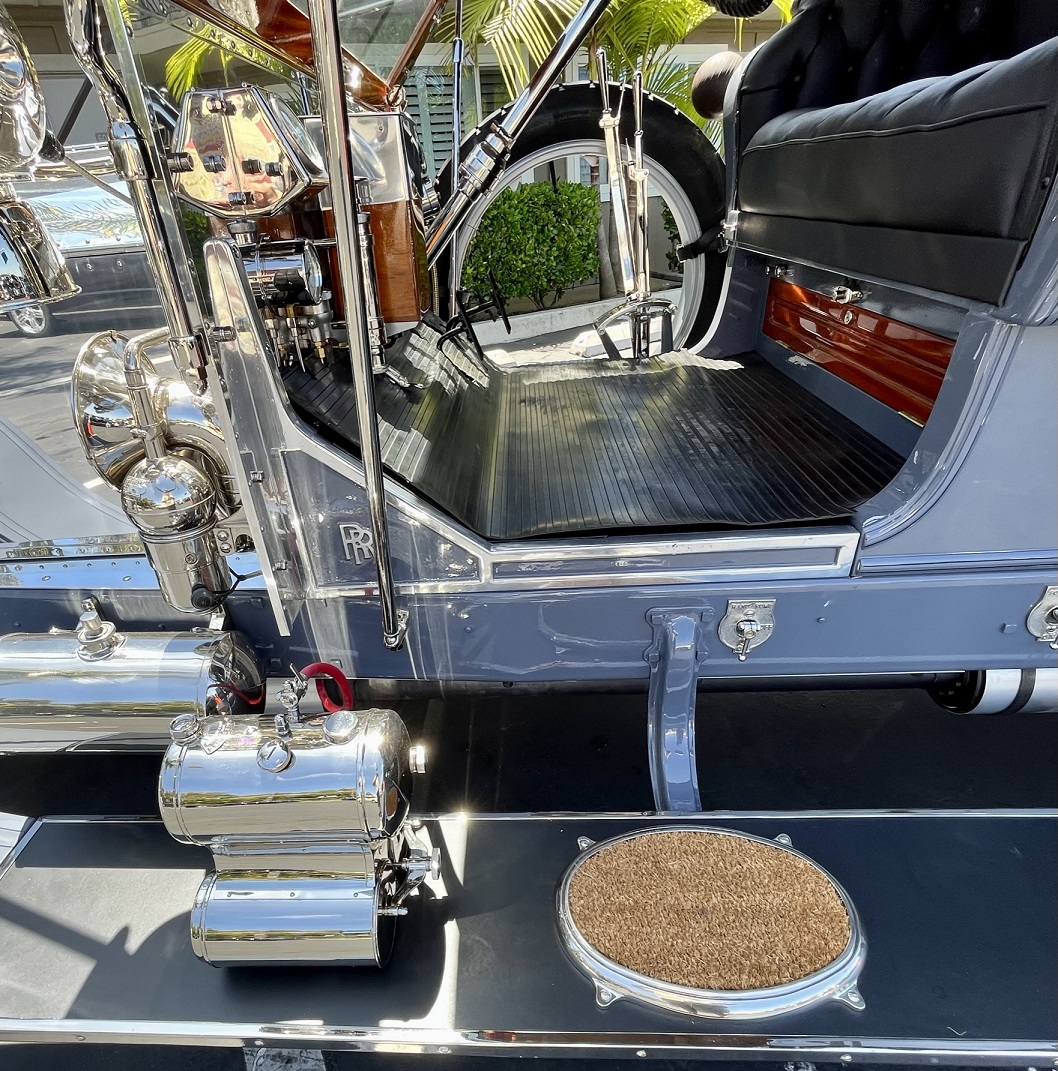
A scrub brush footstep on the 1909 Rolls-Royce

Clean shoes only, please.

1913-Silver Ghost Cann Torpedo, Side

1913 Silver Ghost Cann Torpedo. Locally owned.

The wood and metal trimmed side board of the 1913 Silver Ghost

Meticulous details on the 1913 Silver Ghost Cann Torpedo.

Driver area in the 1913 Rolls

Blue on blue 1913 Silver Ghost Cann Torpedo.
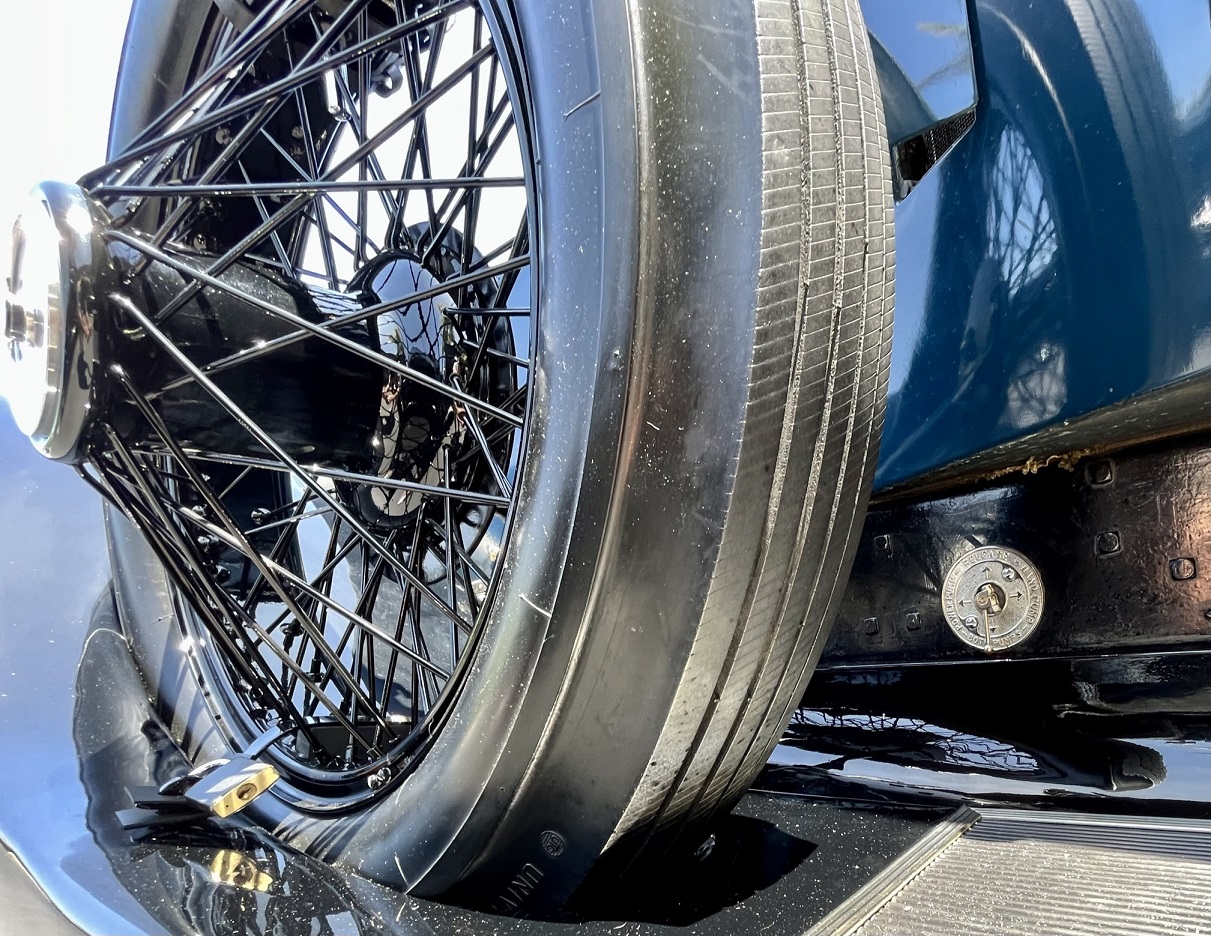
A tire on the 1913 Silver Ghost Cann.

A front view of a 1921 Springfield (Mass.) Rolls-Royce Silver Ghost; locally owned.

A locally owned 1921 Springfield (Mass.) Silver Ghost.

The tool roll for the 1921 Silver Ghost Springfield

Never leave home without the tool roll.

The back seat area of the 1921 Springfield (Mass.) Silver Ghost

Lots of legroom in this Silver Ghost, built in Springfield, Mass.

1922 Silver Ghost Skiff;

A most unusual 1922 Rolls-Royce Silver Ghost Skiff.

The wooden sides of the 1922 Silver Ghost Skiff

Skiff body by Olin J. Stephens and Co. LTD.

Driver area of the 1922 Skiff with much wood inlays

Wooden bodied, inside and out.

A front mug of a red 1924 Bentley.

A 1924 Bentley 3-liter tourer, with coachwork by Vanden Plas.

A front mug of a 1926 Bentley.

Ready for endurance racing at Le Mans.

A front three-quarter view of this 1926 Bentley in British Racing Green.

A locally owned 1929 Bentley 6 ½ liter Speed Six Le Mans-style tourer.

Red tape marks top-center of the steering wheel on this '26 Bentley Le Mans-styl

Red tape marks top-center in this ’26 Bentley Le Mans-style tourer.

The "B" fold-down foot step on this 1926 Bentley

Bentley branding.

The front mug of a A 1929 Springfield (Mass.) Silver Ghost Pall Mall.

A 1929 Springfield (Mass.) Silver Ghost Pall Mall. Coachwork by Merrimac, below.
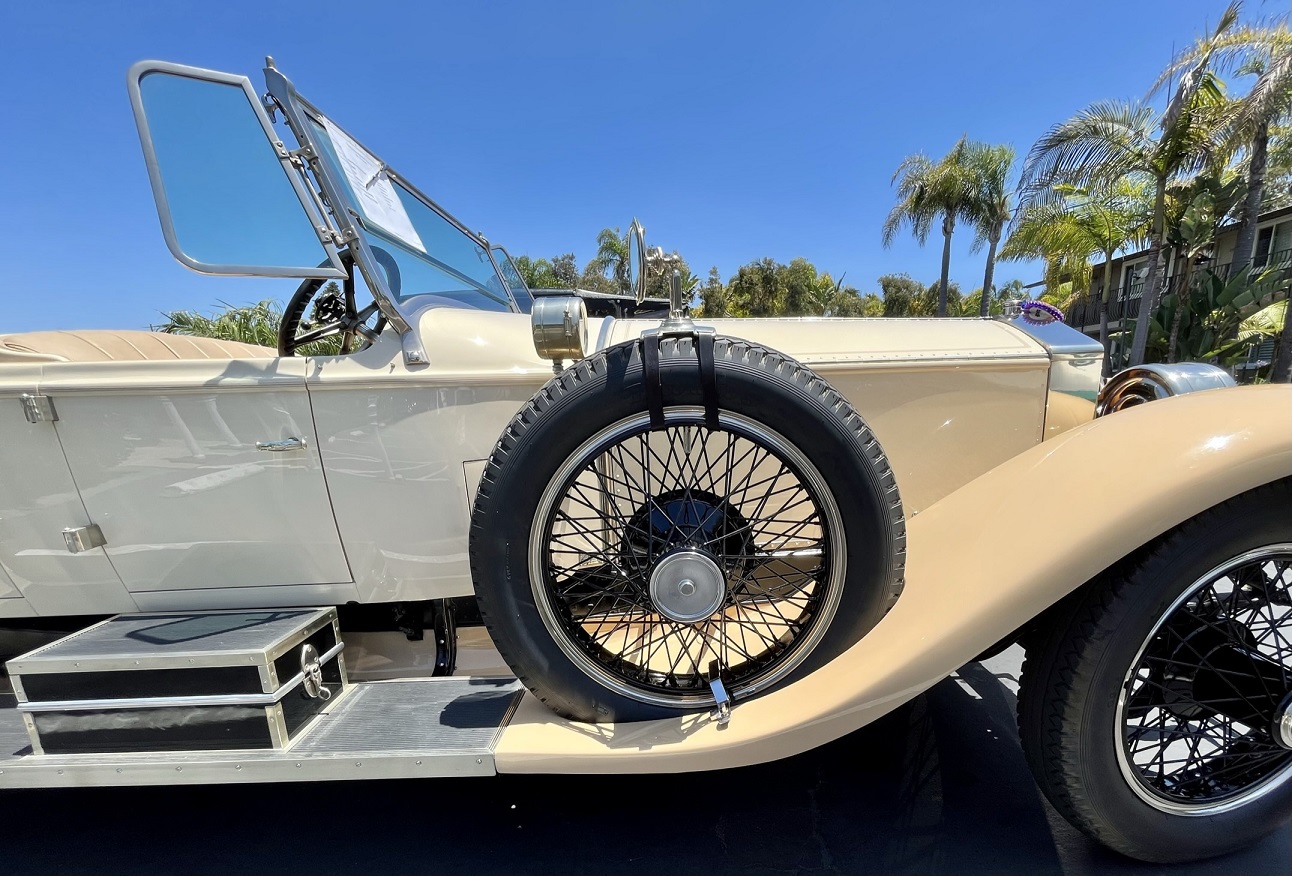
The tire-mounted side mirror on the 1929 Springfield Silver Ghost.

A 1933 Rolls-Royce 1933 Carlton roadster.

A 1933 Rolls-Royce 20/25 Carlton roadster. Below, note the distinct wheel weights used on all 1930’s era 20/25 Rolls-Royce and Bentley cars.

Spare tire on the 1933 Rolls-Royce Carlton

A mid-blue and silver 1933 Rolls-Royce Thrupp and Maberly limousine.

1933 Rolls-Royce Thrupp and Maberly limousine. And below, aero disc wheel covers.

Aero disc wheel covers on this '33 Rolls-Royce limousine.

934 Phantom II Hooper-bodied limousine

A 1934 Phantom II Hooper-bodied limousine.

The '34 Phantom's 7.7-liter straight-six engine.

The ’34 Phantom’s 7.7-liter straight-six engine.

Front seat area of the 1934 Phantom II

Nicely broken-in leather of this 1934 Phantom II Hooper-bodied limousine.

The royal blue front view of the 1935 Bentley 3 ½ liter saloon, body by Park Ward.
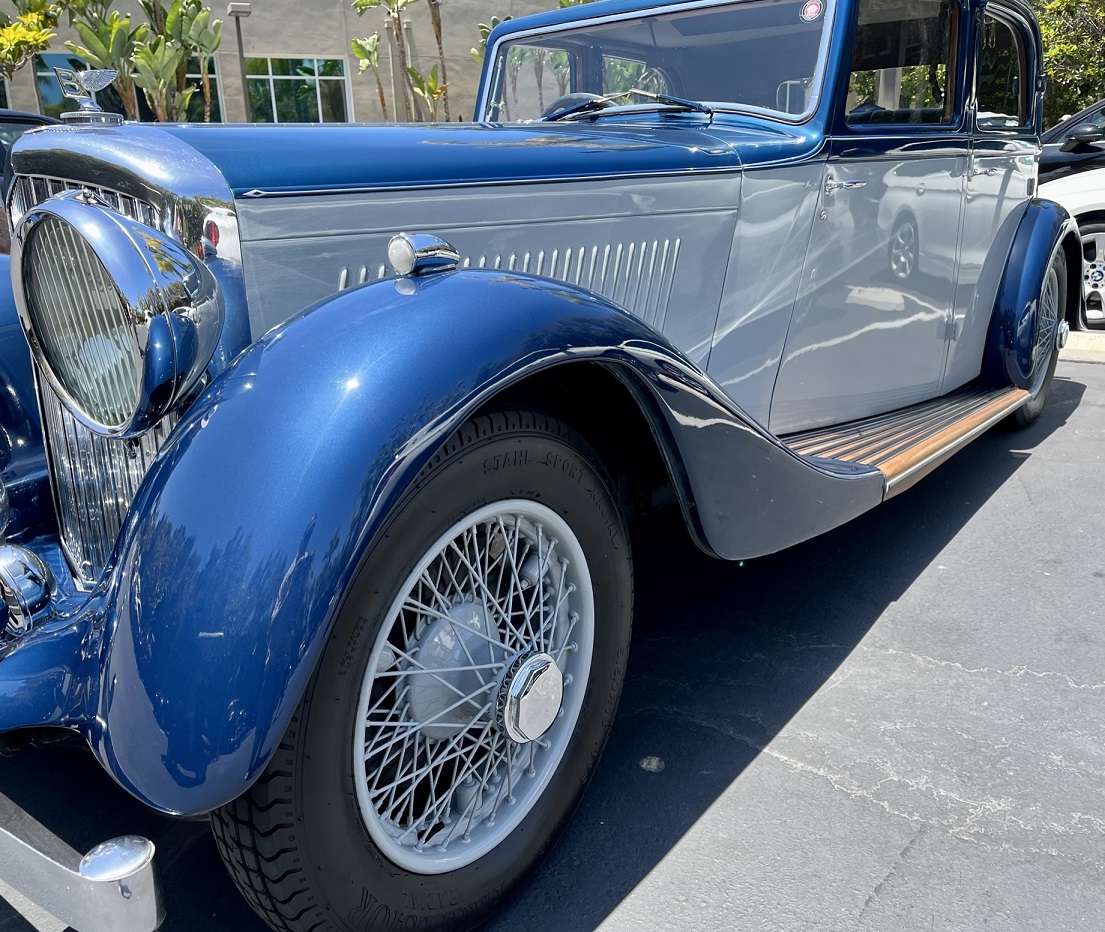
A 1935 Bentley 3 ½ liter saloon, body by Park Ward.

A royal blue 1935 Bentley 3 ½ liter Park Ward saloon

Sleek lines of this 1935 Bentley 3 ½ liter Park Ward saloon.

A front mug of the 1949 Silver Dawn

The 1949 license plate of this Silver Dawn was made by inmates at Folsom Prison. The left-hand driver is powered by a 4.25-liter 6-cylinder engine.

A silver colored A 1949 Silver Dawn. Claimed to be the 12th Rolls-Royce ever made; body and chassis produced by Rolls-Royce.

This 1949 Silver Dawn is claimed to be the 12th Rolls-Royce ever made. Its body and chassis were produced by Rolls-Royce.

The Silver Dawn interior

Lovely wood and hides in the 1949 Silver Dawn.

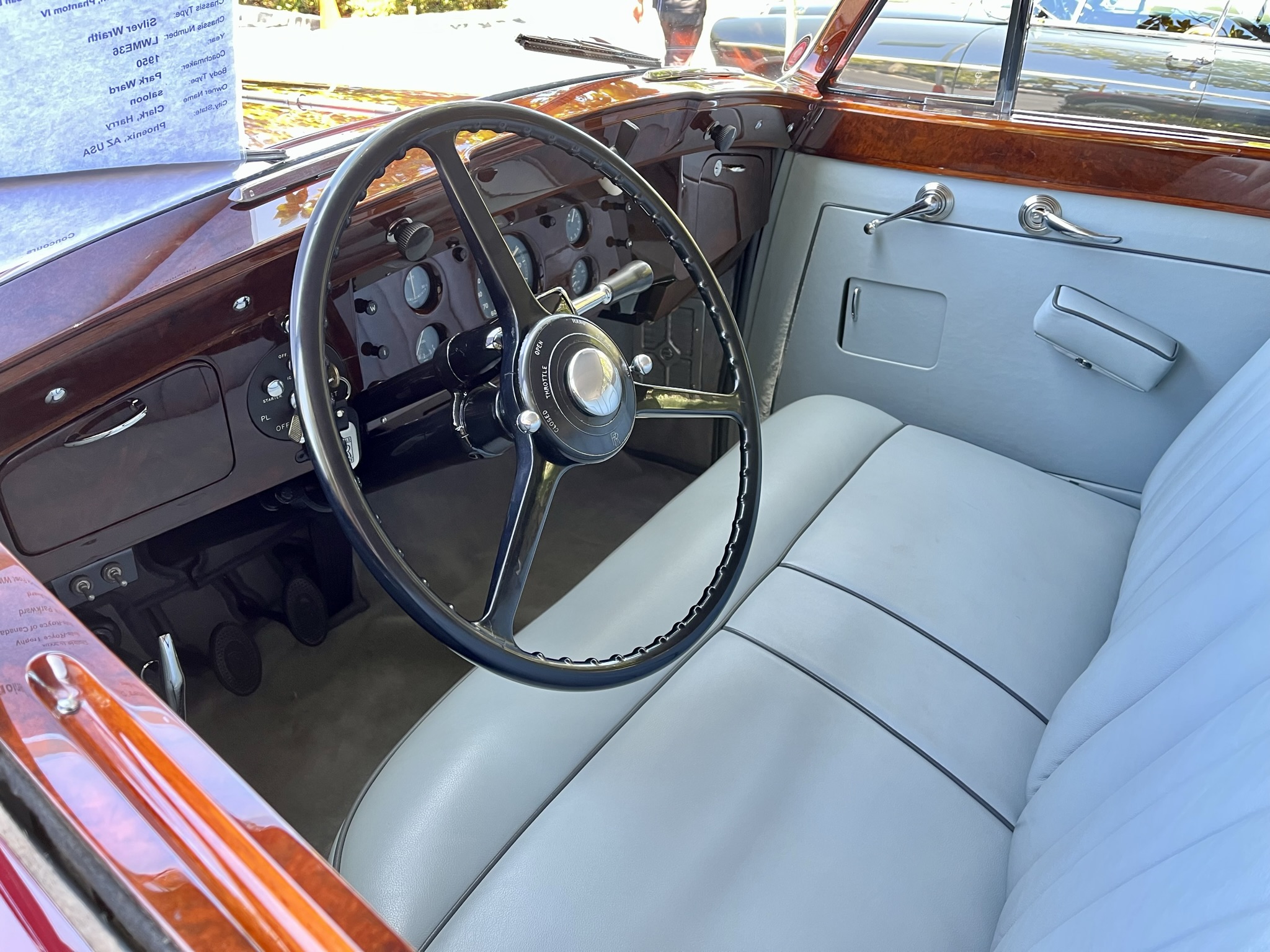
The tall chrome grille of the 1950 Rolls-Royce Silver Wraith

A 1950 Rolls-Royce Silver Wraith.

Bench seats in the A 1950 Rolls-Royce Silver Wraith.

Bench seats in the 1950 Silver Wraith.

The red interior of a1952 Silver Dawn

The red-on-red 1952 Silver Dawn.

The purple face of a 1952 Rolls-Royce Silver Wraith Limousine

A 1952 Silver Wraith Limousine, locally owned. Coach built by Freestone & Webb.

The tall chrome grill of the 1952 Silver Wraith

Bold and upright grille work of the Velvet Green 1952 Silver Wraith.
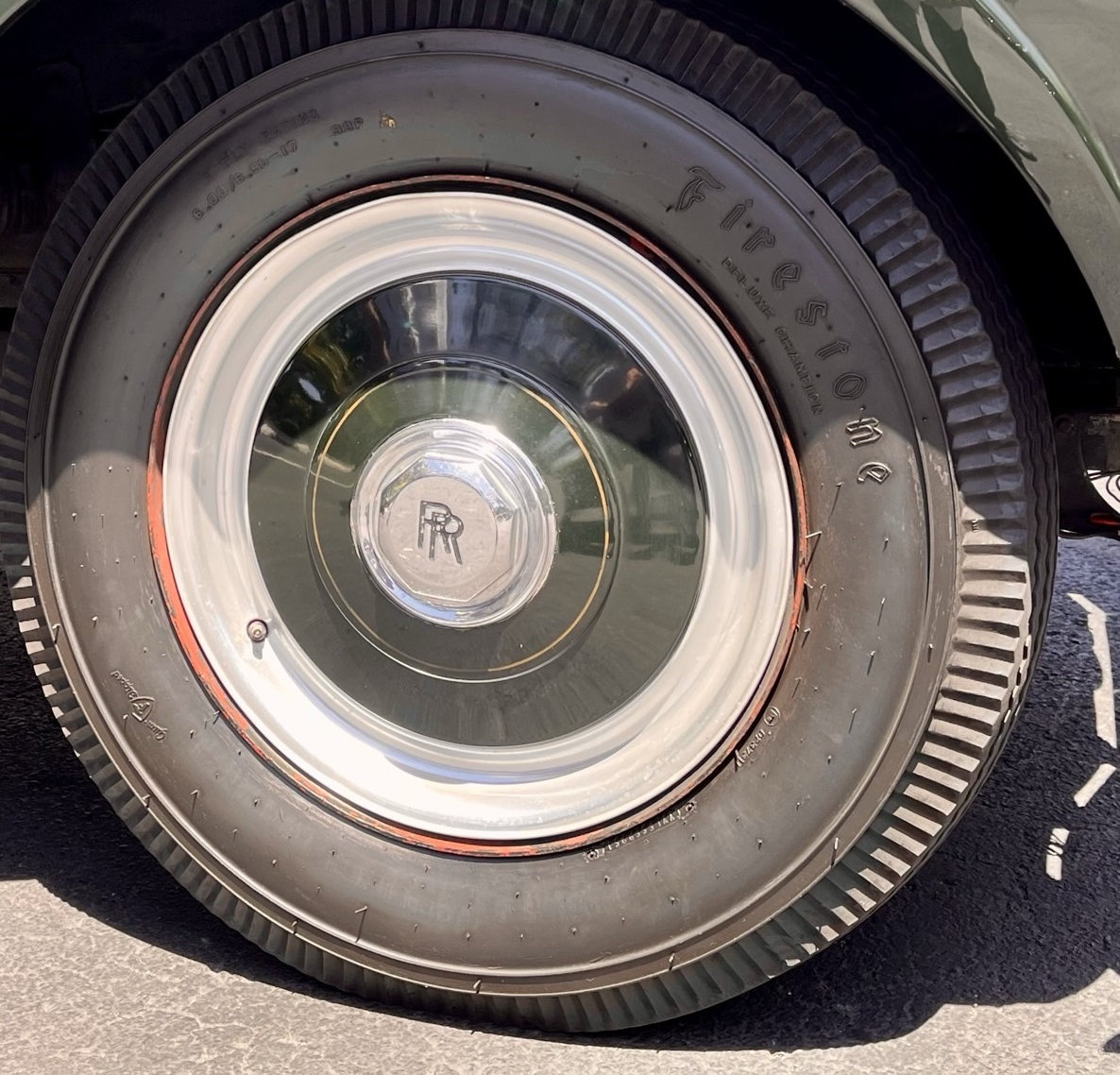
A tire on the 1952 Silver Wraith

A robust rubber of the 1952 Silver Wraith.

The handsome wood veneer on the interior of a1952 Silver Wraith saloon

Striking colors in the veneer of the 1952 Silver Wraith Saloon.
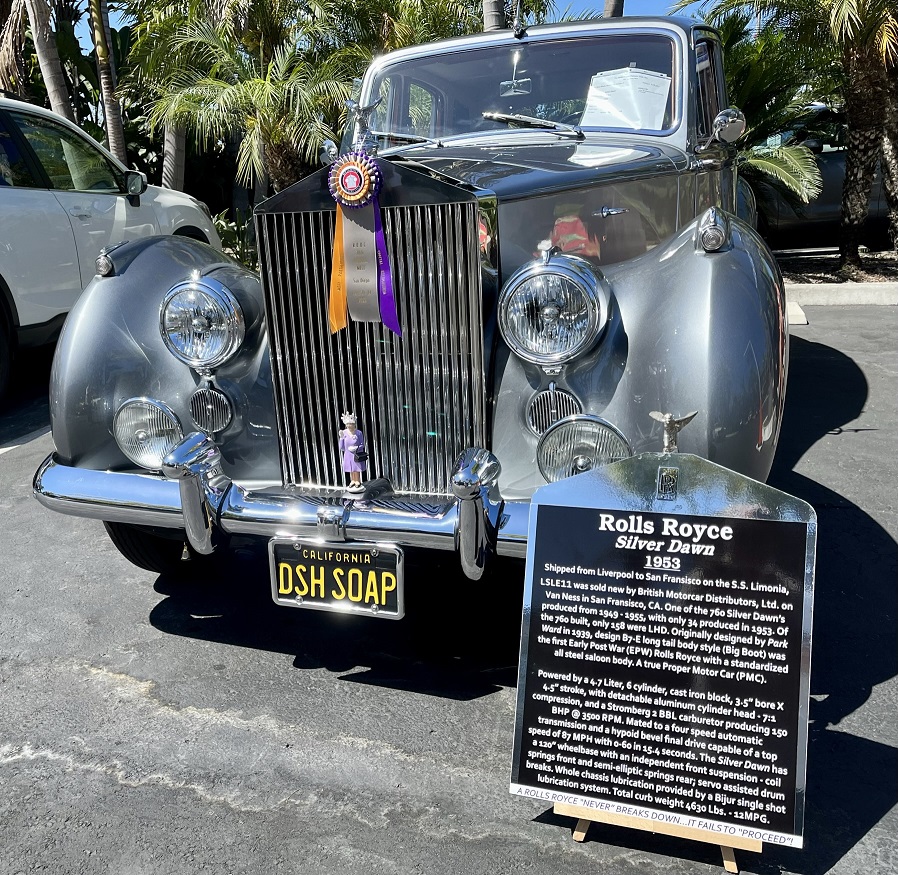
A 1953 Silver Dawn with a clever license plate "DSH SOAP"

A 1953 Silver Dawn with a clever license plate.

A keyed hood lock on the 1953 Silver Dawn.

The hood lock on the 1953 Silver dawn.

A 1957 Bentley S1 saloon.

A 1957 Bentley S1 saloon.

A frnt mug of a dark green 1965 Bentley S3 Continental.

1965 Bentley S3 Continental. (The owners also have in their collection a Bentley S1 and a Ferrari F12 Berlinetta.

The rear end of the 1965 Bentley Continental.

Sporting lines of the 1965 Bentley S3 Continental.

A 1967 Silver Shadow saloon.

A 1967 Silver Shadow saloon.

A front mug of a 969 Silver Shadow, from Canada.

The 1969 Silver Shadow, from Canada.

A tire and wheel cover of the 1969 Silver Shadow drophead coupe

Pinstriped body and wheel covers of the 1969 Silver Shadow

A side view of the blue 1971 Silver Shadow LWB saloon.

A 1971 Silver Shadow LWB saloon.

The stately chrome grille of a 1971 Silver Shadow LWB saloon.

The stately grille of the 1971 Silver Shadow LWB saloon.

A gold colored 1972 Corniche coupe; locally owned; body by Mulliner, Park Ward.

A 1972 Corniche coupe; locally owned; body by Mulliner, Park Ward.

Learn more tag for the 1972 Corniche

Learn more about this 1972 Corniche.


1972 Rolls-Royce Corniche front seats.

Burl veneer in the ’72 Corniche.

A dark green 1976 Silver Shadow saloon

1976 Silver Shadow saloon.

A 1976 Silver Shadow LWB saloon

A 1976 Silver Shadow LWB saloon; locally owned. Scots Pine paint with a beige Everflex coach top and tan Connelly leather. The car’s sticker price in 1976 was $44,225, while the average price of a single-family home in San Diego was $38,000.

Door handle and pinstriping

Complementing pinstriping to the paint color.

The matching pinstripes on the wheel and front fender of the 1976 Silver Shadow

Such delicate and tasteful pinstriping on this 1976 Silver Shadow.

A frone view of a 1991 Bentley Continental drophead coupe

1991 Bentley Continental drophead coupe.

The bold face of a 1991 Bentley Continental drophead coupe, with a red leather coach top and cream body color

A 1991 Bentley Continental drophead coupe. Body by Mulliner, Park Ward.
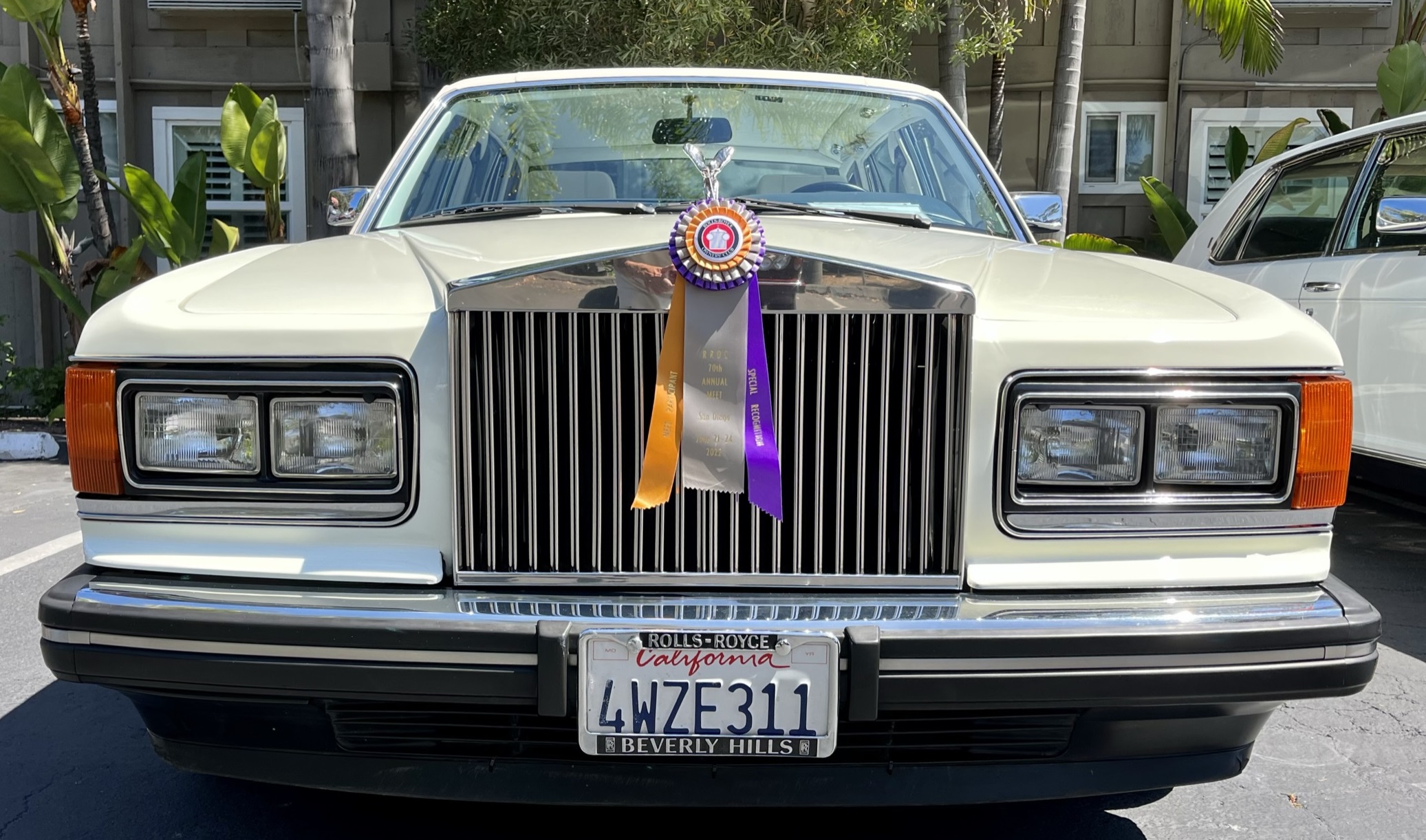
A locally owned 1991 Silver Spur II long wheelbase saloon.

A locally owned 1991 Silver Spur II long-wheelbase saloon.

A steel blue 2002 Rolls-Royce Silver Seraph

A 2002 Silver Seraph saloon from Las Vegas.

Tan front seats of the 2002 Rolls-Royce Silver Seraph

Sumptuous leather.

luxe back seat accommodations in the 2002 Silver Seraph

A well-padded back seat in the 2002 Silver Seraph.

back seat liquor bottles in the Rolls-Royce

And with crystal glassware.

The big front tire of a silver-blue 2002 Rolls-Royce Silver Seraph saloon

Robust rubber for a heavyweight Silver Seraph saloon.
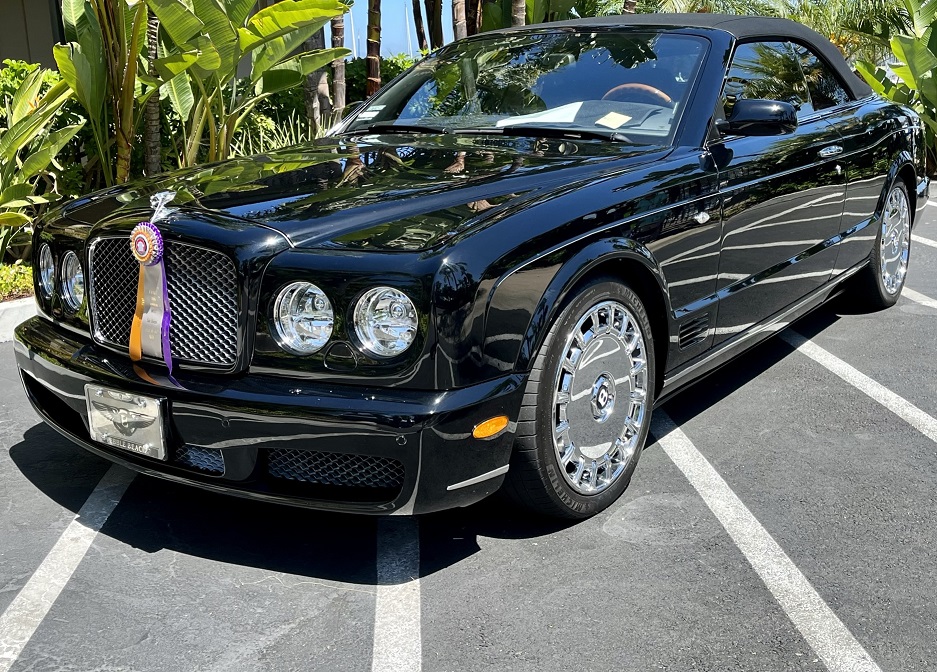
A black 2010 Bentley Azure T drophead coupe

2010 Bentley Azure T drophead coupe.

Maserati Boomerang Turns 50

Maserati Boomerang Turns 50
Maser Boomerang concept

The 1972 Maserati Boomerang concept conveyed an image of penetration, power and speed. (Photos courtesy of Maserati)

The Maserati Boomerang concept defined Maserati as a brand of iconic and avant-garde cars that  pioneered technology and style

BY MARK MAYNARD

A half century has passed since the Maserati Boomerang debuted at the Geneva Motor Show on March 9, 1972. It was a one-off concept created by the renowned Giorgetto Giugiaro and produced by Italdesign. Only one car was ever produced.

The Maserati Boomerang concept made an appearance at the 1971 Turin Motor Show.  And it was presented at the Geneva motor show in 1972 as a registered vehicle that ran perfectly, Maserati said in a release.

Italdesign started with the Maserati Bora for the Boomerang’s chassis and mechanics. The powertrain was a rear-mounted, 90-degree 4.7-liter V-8 engine. Channeled through a five-speed ZF manual gearbox, the 310-hp Bora would have a top speed of almost 186 mph (300 km/h).

A red Maserati Bora

The Maserati Bora.

The two-seat Maserati Boomerang sports coupé never went into production. But its stylistic legacy continued Giugiaro’s later creations. And it was inspiration for other automakers in Europe and the United States.

The influence of the Boomerang’s wedge shape can be seen in the 1973 Audi Asso di Picche concept, 1973 VW Passat Mk1, 1974 VW Golf Mk1, 1976 Lotus Esprit and Medici II show car, 1979 Lancia Delta and Maserati Quattroporte III, and 1976 designed and 1981 launched DeLorean.

Maserati Boomerang side view

The Maserati Bora was used for the Boomerang’s foundation.

Design Elements

The originality of the Maserati Boomerang was in its wedge shape and bold lines. The stance conveyed an image of penetration, power, and speed.

Stylistically, a horizontal line divided the Boomerang in two with a sloping windscreen and a panoramic sunroof. The original windows of the doors were divided by a metal strip. And the retractable square headlamps stood out, with horizontal lights in the rear.

A head-on view of the Boomerage

The Boomerang’s dashboard instruments were built into the spokeless steering wheel and the wheel rotated around the stationary gauges.

The interior was extremely modern and introduced fresh ideas. For example, the dashboard instruments were built into the spokeless steering wheel, and the seats were positioned very low.

The one production version of the Boomerang made other appearances in international competitions. It would change hands between various owners, and ended up as the feature car in a number of auctions; it was even used in commercials.

Considered by many to be a work of art, the Maserati Boomerang was revolutionary and influenced the designs of successive cars. It continued to define Maserati as a brand capable of creating unique automotive concepts, iconic and avant-garde cars that acted as pioneers of technology and style.

The Maserati MC20 supercar.

The Maserati MC20 supercar.

The Future for Maserati

Now more than ever, Maserati is unique for its design and innovation. It is moving forward with the new Grecale SUV and the 621-hp, MC20 super sports car. The 2022 MC20 debuts Maserati’s in-house designed new 3.0-liter V-6 Nettuno engine  that applies F1 technology for a road car. MC20 pricing starts at $212,000.

The Maserati Grecale prototype in camouflage.

Details for the Maserati Grecale small SUV will be released March 22.

1958 Chevrolet Bel Air Impala Sport Coupe

1958 Chevrolet Bel Air Impala Sport Coupe
1958 Chevrolet Bel Air Impala Sport Coupe.

The 1958 Impala was the top model for the Chevrolet Bel Air line of hardtops and convertibles. (Photos from GM Media Archive)

BY MARK MAYNARD

In the recession year of 1958, GM promoted its 50th year of production. In tribute, the company introduced anniversary models for each brand: Cadillac, Buick, Oldsmobile, Pontiac, and Chevrolet.

According to the Impala’s Wikipedia page, the 1958 models shared a common appearance on the top models for each brand: the Cadillac Eldorado Seville, Buick Limited Riviera, Oldsmobile Starfire 98, Pontiac Bonneville Catalina, and the Chevrolet Bel Air Impala.

“The 1958 Impala was the top model for the Bel Air line of hardtops and convertibles.

“From the windshield pillars rearward, the 1958 Bel Air Impala differed structurally from the lower-priced Chevrolet models. Hardtops had a slightly shorter greenhouse and a longer rear deck.

“The wheelbase of the Impala was longer than the lower-priced models, although the overall length was identical. Interiors held a two-spoke steering wheel and color-keyed door panels with brushed aluminum trim. No other series included a convertible.

The 1958 Chevrolet Bel Air Impala

The 1958 Chevrolet Bel Air Impala helped Chevrolet regain the No. 1 production spot in this recession year.

“The 1958 Chevrolet models were longer, lower, and wider than their predecessors. And this was the first model year for dual headlamps.

“Deeply sculptured rear fenders replaced the tailfins of the 1957. In addition, impalas had three taillights on each side, while lesser models had two and wagons just one.

Impalas included crossed-flag insignias above the side moldings, bright rocker moldings, and dummy rear-fender scoops.

The 1959 Chevrolet Impala logo and nameplate

The Chevrolet Impala was identified by the image of a leaping African antelope in some form or another since its debut in 1958.

Chevrolet Impala Powertrains

A 283 cubic-inch V-8 was standard. Its power ratings ranged from 185 to 230 horsepower. When upgraded with Rochester Ramjet fuel injection, power output increased to 250 hp.

Two versions of Chevrolet’s first big-block 348-cubic-inch (5.7-liter) V-8 were optional:

  • A single four-barrel carburetor, producing 250;
  • Three two-barrel carburetors, 280 hp.

55,989 Impala convertibles and 125,480 coupes were built, representing 15 percent of Chevrolet production. In addition, the 1958 Chevrolet Bel Air Impala helped Chevrolet regain the number-one production spot in this recession year.

1960 Chrysler Windsor

1960 Chrysler Windsor

In 1959, Chrysler advertised the Windsor’s new wedge-head “B” engines as ‘Golden Lions’ and the cars as ‘Lion Hearted’

A print ad for the 1960 Chrysler sedan in a wintry landscape


BY MARK MAYNARD

The full-size Chrysler Windsor sedan was in production from 1939 through to 1961 in the U.S. and in Canada until 1966.

In 1959, Chrysler started to advertise the Windsor’s new wedge-head “B” engines as “Golden Lions” and the cars as “Lion Hearted,” according to Wikipedia.

“The RB 383-cubic-inch V8 produced 305 hp with a twin-barrel carburetor. Lions were used in the advertising, and the cars had lion emblems on the front doors and on the cylinder heads.

“In 1960, all Chrysler cars got a unibody frame. A new parking brake was also used, and the brakes on the Windsor were 11-inch drums. Air conditioning was a $510 option.

At nearly 18 feet long and 79.4 inches wide, the Windsor rode on a long wheelbase of 122 inches.

Windsor By the Numbers

In a report by ConceptCarz.com,  the “Golden Lions” was part of Chrysler’s advertising campaign for the new wedge-head “B” engines. Introduced the previous year, the cars were known as “Lion Hearted.”

“The RB 383 cubic-inch V8 had five main bearings, hydraulic valve lifters, a Carter two-barrel carburetor, a cast-iron block, and delivered just over 300 horsepower.

“The Canadian-built Windsors were powered by the ‘Low Block’ 361 cubic-inch engines from the U.S.-built DeSotos and Dodges. Instead of the ‘Golden Lion’ medallion, they received three golden crests on the front doors.

Dual headlamps were standard, and the Flitesweep deck lid, stone shields, and sill moldings were optional equipment.

1960 Windsor Pricing

“Windsor body styles included a hardtop coupe priced at $3,280, a hardtop sedan at $3,345, a sedan at $3,195, and a convertible at $3,625. A six-passenger station wagon was $3,735, and the nine-passenger version listed for $3,815.

“The most popular body style was the sedan with 25,152 examples built, followed by 6,496 of the hardtop coupe, and 5,897 of the hardtop sedan.

“The convertibles and station wagons were exclusive, with 1,467 of the convertible, 1,120 of the six-passenger wagon, and 1,026 of the nine-passenger wagon constructed.”