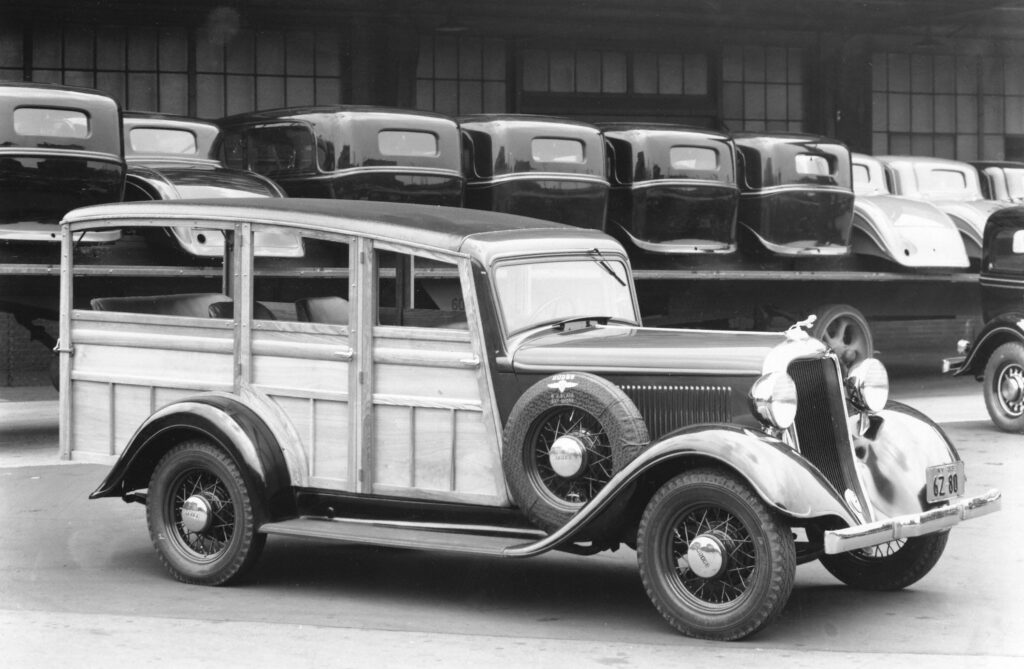
Not much is known about the Dodge Westchester Suburban woodies, according to an online report at SignificantCars. Research can confirm that Dodge and Plymouth offered similar models. None of the Plymouth woodies are known to have survived the ages and perhaps only one 1934 Dodge Westchester Suburban long-wheelbase woodie has survived.
Beginning in 1933 Dodge struck a relationship with U.S. Body and Forging Company in Tell City, Ind. Dodge would send commercial chassis to USBF where a custom-made wooden body would be assembled to the commercial 109-inch chassis.
Each vehicle was a custom order. Many were attractively finished and used as station wagons by the civilian population, but the versatile vehicle was found to be useful to the U.S. Army.
True production numbers are unknown as records were not kept on custom-built non-Dodge factory offerings. However, it is widely believed that the production figures are very low perhaps fewer than 40 units.
According to the Dodge Series D8 page in Wikipedia, there were 375 1938 “semi-custom ‘Westchester Suburban’ four-door woodie station wagon built.
The famed Schlumpf Collection of Bugatti models in France is a legendary automotive tale of obsession, wealth, and downfall for the brothers Schlumpf, Fritz, and Hans.
Breaking through a veil of secrecy in 1977, factory workers came across a secretly hoarded treasure of 427 vintage European luxury cars, most of them in showroom condition, with another 150 cars stashed away in the workshops.
Bugatti recently shared this story of an American stash of 30 cars that Fritz Schlumpf just had to have and how they were relocated in the 1960s from Illinois to France.
Fritz Schlumpf was a Bugatti enthusiast. He bought his first car, a Type 35B, at the age of 22 in 1928 and drove it on weekends and in car races. Schlumpf would stay in touch with the company, based in Alsace, France, over the coming years. But his passion for collecting didn’t really develop properly until 1961.
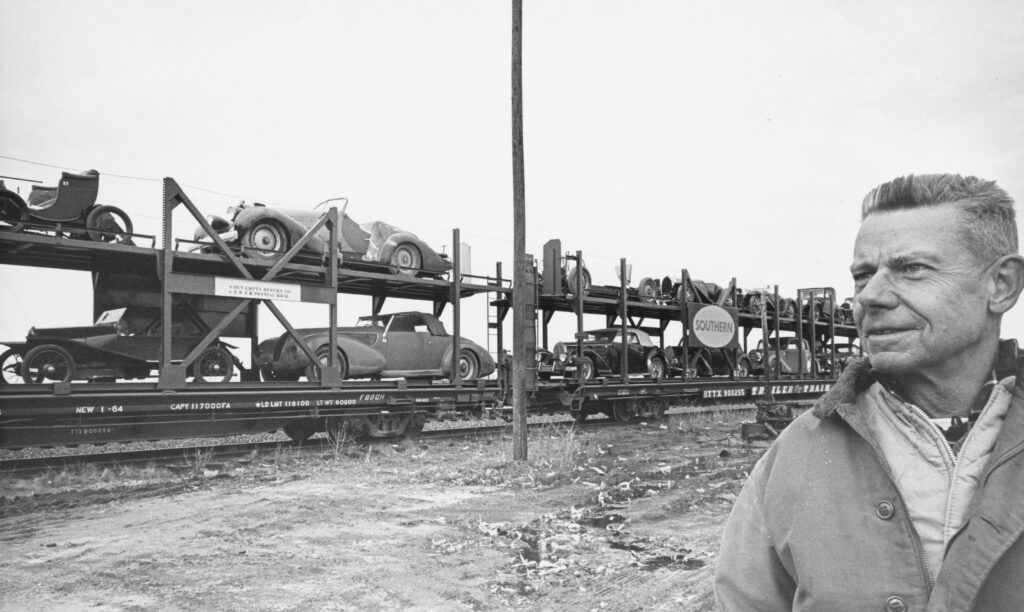
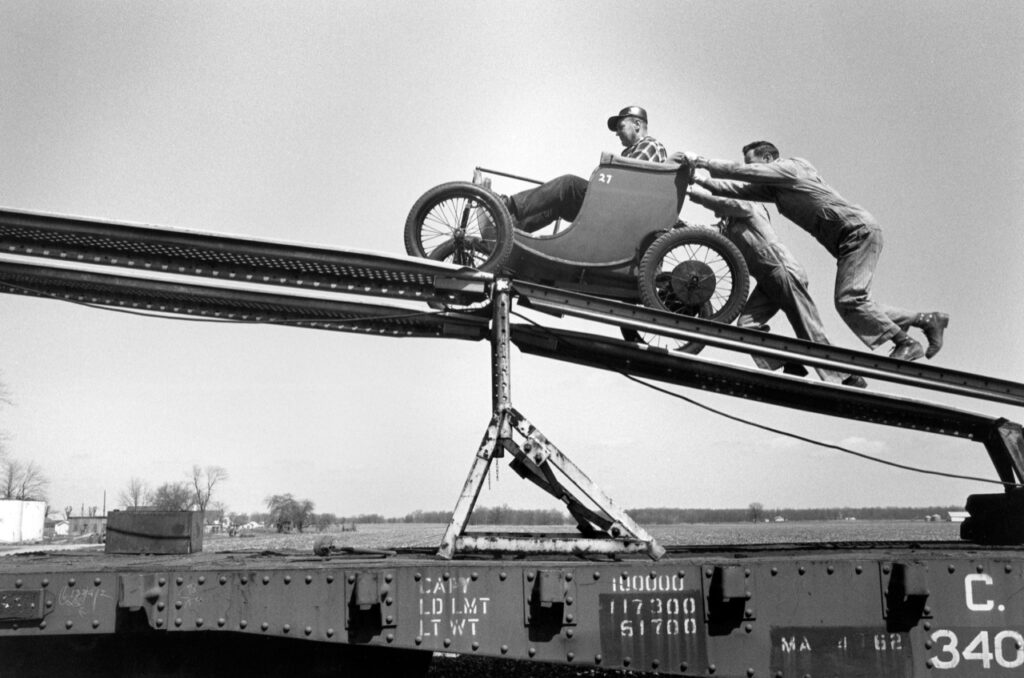
American collector John Shakespeare with his 30 Bugattis as they were loaded onto a train on March 30, 1964.
The Story Background
Schlumpf initially worked as a wool broker, and in 1929 his brother Hans — two years his senior — joined the textile company. In 1935, they founded Société Anonyme pour l’Industrie Lainière (SAIL), a limited company trading in wool. After the war, the brothers bought up several factories and spinning mills in Alsace until they almost fully dominated the textile industry in eastern France.
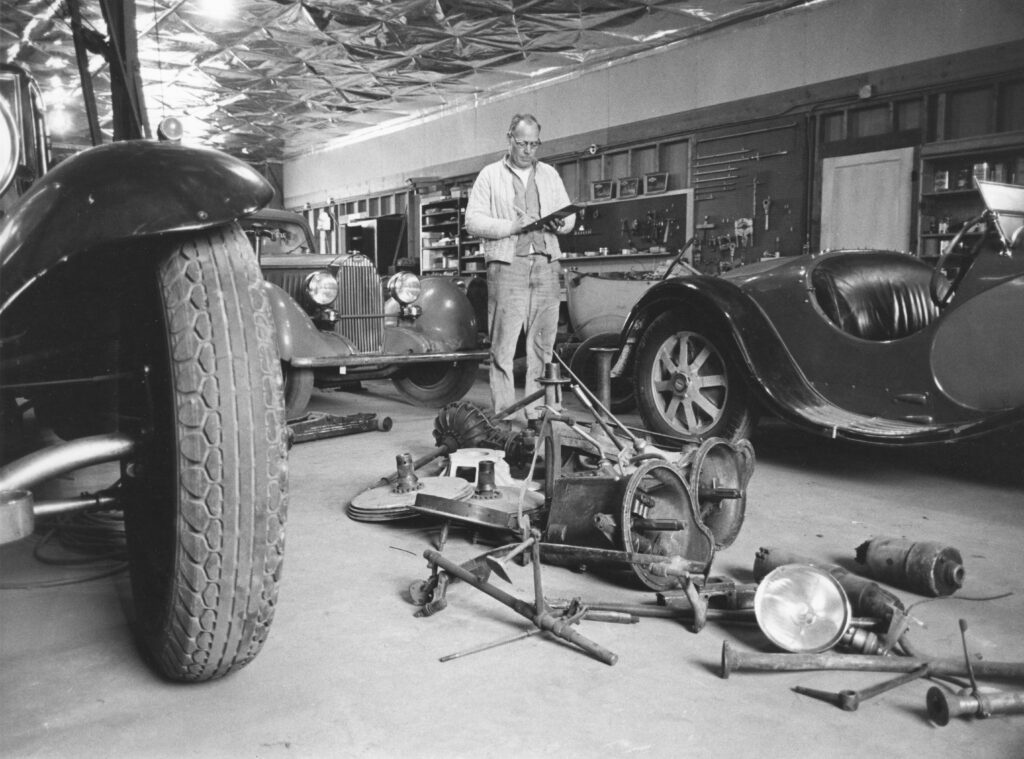
Assessing the collection.
In 1957, they acquired an idled wool factory in Mulhouse, Alsace, to build their own automobile museum. It would be in honor of their beloved mother and Bugatti founder Ettore Bugatti, but mainly it was for Fritz Schlumpf himself. After all, collecting Bugatti cars had long become his obsession.
From 1961 onward, he acquired numerous classic vehicles and eventually became the leading Bugatti collector in the world. And he wanted more.
To fuel his obsession, Schlumpf wrote to Bugatti owners worldwide in the early 1960s, sourcing addresses from a register kept by Hugh Conway of the British Bugatti Owners Club. Conway put him in touch with American collector John W. Shakespeare from Hoffman, Ill., in 1962.
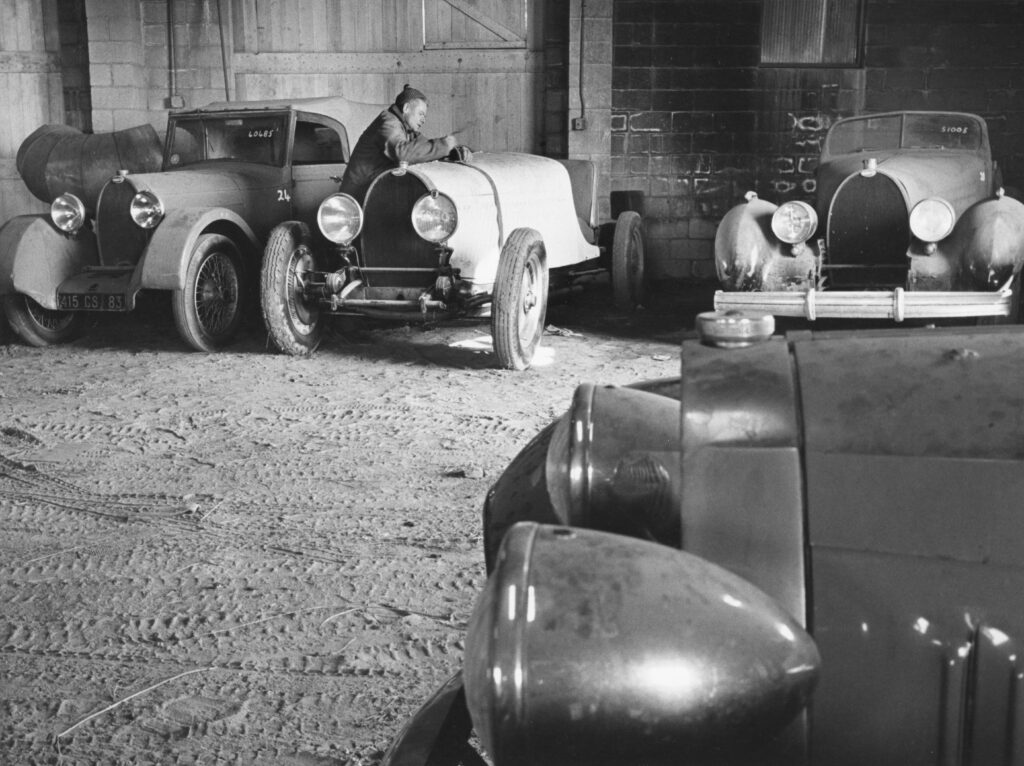
Inside Shakespeare’s dirt-floor garage.
Dedicated to Bugatti
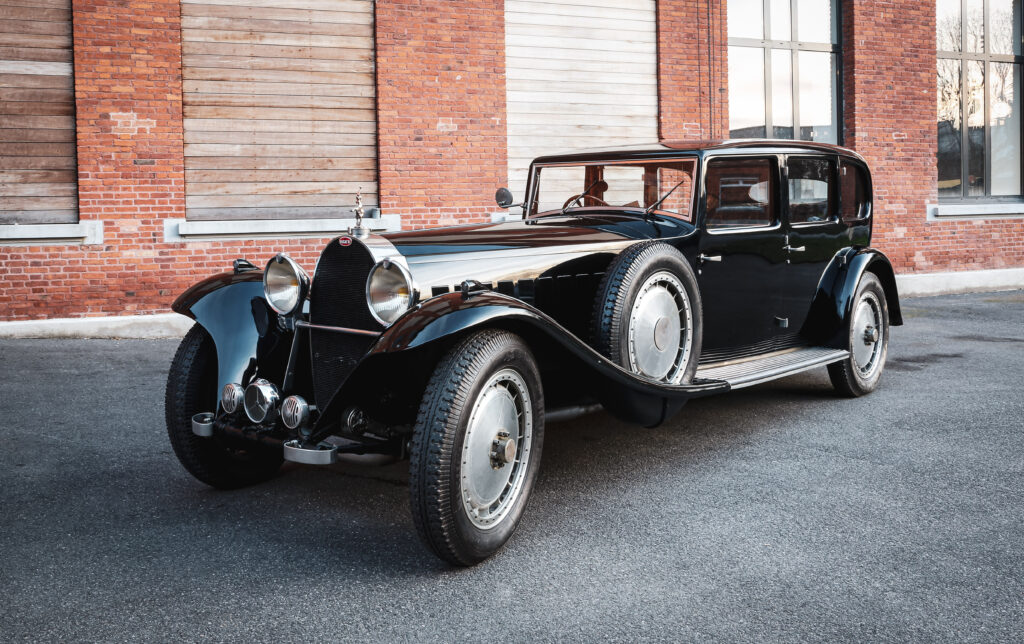
Shakespeare had dedicated himself to collecting Bugatti vehicles since the 1950s: his first car was a 1932 Bugatti Type 55, which was followed by a Type 41 Royale Park Ward, the third and last customer car. Also in his care were a dozen Type 57s, three Type 55s and Ettore Bugatti’s personal electric car, the Type 56 dating back to 1931.
All in all, Shakespeare owned the largest Bugatti collection in the world, comprising some 30 vehicles.
Schlumpf was on a mission to get these cars and made Shakespeare an offer of $70,000. But Shakespeare demanded at least $105,000, whereupon Schlumpf had the collection assessed by Bugatti connoisseur Bob Shaw from Illinois in 1963.
Ettore Bugatti’s personal electric car Type 56 dating back to 1931.
An Unflattering Conclusion
Shaw arrived at an unflattering conclusion: “Most of the cars are kept in a part of the building with a dirty floor, broken windows, leaking roof and nesting birds. Every car is in some state of disrepair and none of them have been running for at least 18 months.”
He advised against the purchase, but Schlumpf was fully committed by this time and offered Shakespeare $80,000 for the entire collection. After tough negotiations, mutual threats, and blackmail, Schlumpf and Shakespeare finally agreed on a purchase price of $85,000 the following year (equivalent to approximately $720,000 today) — including transport to France.
From today’s point of view, it was a real bargain. Today, genuine and restored Bugattis will sell at auction from around $200,000 to tens of millions of dollars.
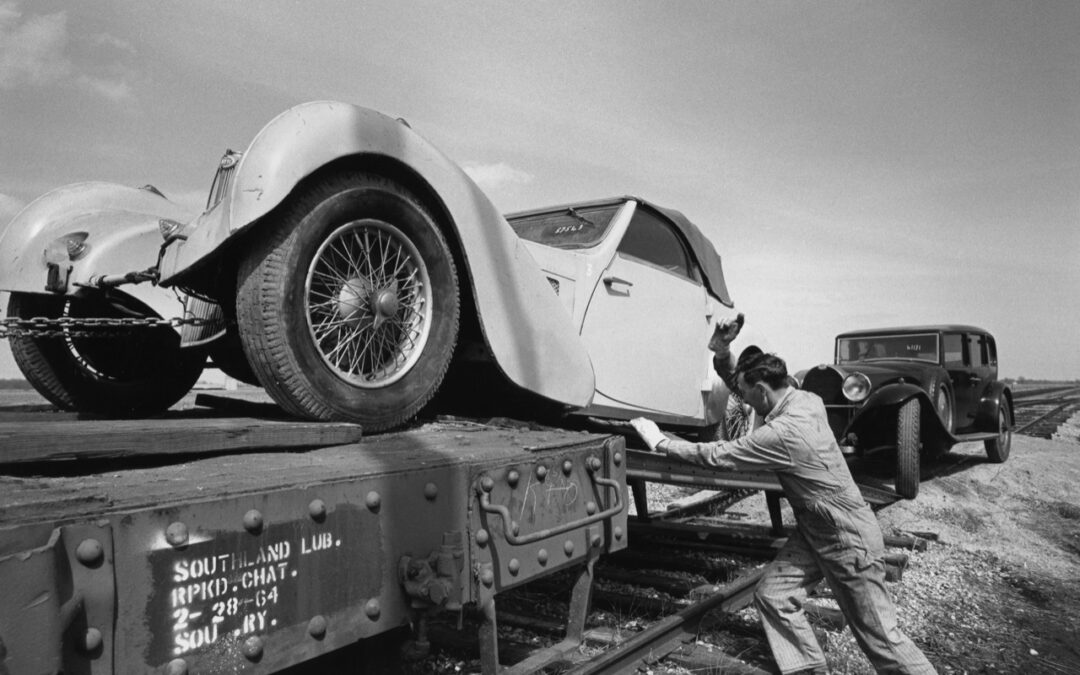
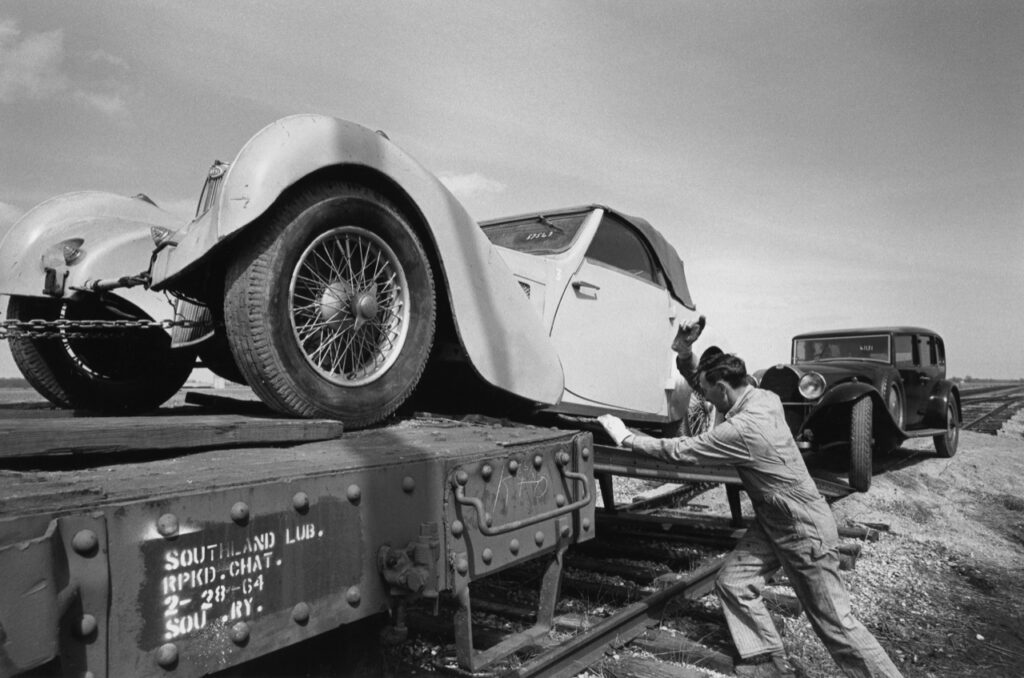
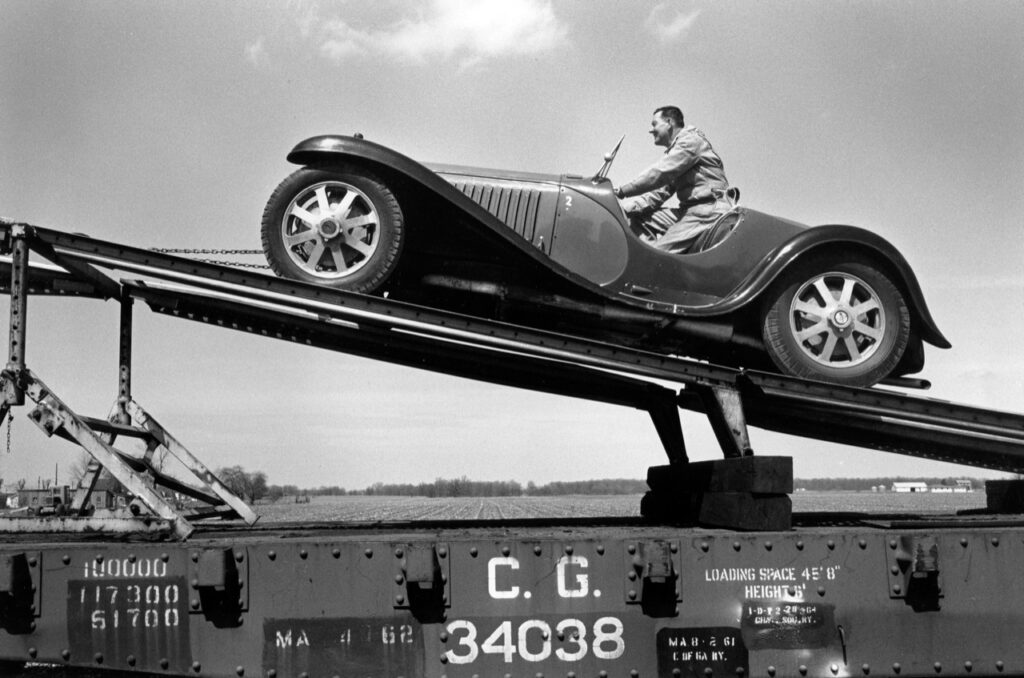
A 1932 Type 55 is loaded onto the railcar.
30 Bugattis On A Train
On March 30, 1964, the 30 Bugattis left Illinois on a Southern Railway train headed for New Orleans where they would be loaded onto a Dutch cargo ship. A photo shows the open train with the large number of rare vehicles.
A few weeks later, the freighter reached the French port of Le Havre, where Schlumpf finally received his treasure. He was now one huge step closer to achieving his goal of being the biggest Bugatti collector in the world. It wasn’t until 1965 that the Schlumpf brothers publicized their collection in a short press release — and the idea of a museum was born. But Schlumpf never officially opened it.
A Type 41 Royale Park Ward on display at the ‟Cité de l’Automobile” national museum in Mulhouse, France.
The Schlumpf brothers had little opportunity to enjoy their unique car collection, and their pleasure in these cars was only to last a few years. Large-scale labor strikes occurred after they engaged in questionable business practices, and the decline of the French textile industry in the 1970s eventually meant they were forced to flee to Switzerland.
The story of the amazed workers who came across the secretly hoarded treasure in 1977 has gone down in automotive history.
What remains are the exclusive vehicles, showcased in an extraordinary and unique exhibition, the Schlumpf collection is now in the “Cité de l’Automobile” national museum in Mulhouse in the heart of Alsace — the largest automobile exhibition in the world.
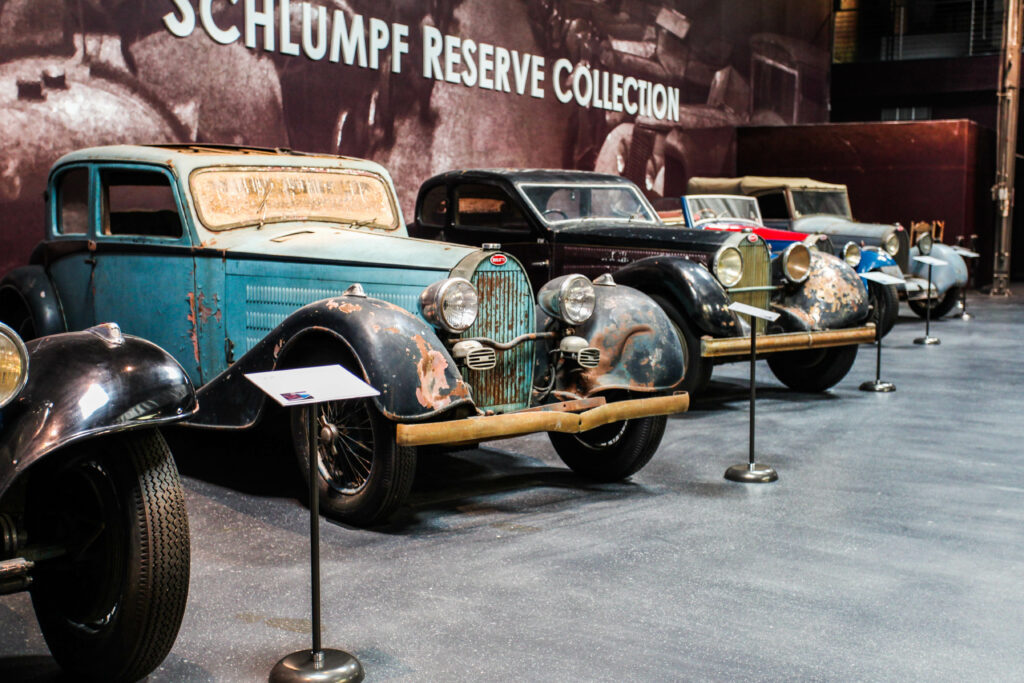
Original unrestored Bugattis from the “Shakespeare Collection” on display at the Mullin Automotive Museum in Oxnard, Calif.
The 80,000-square-foot museum comprises 400 of the world’s rarest, most magnificent, and most valuable cars — including around 100 Bugatti models, such as two of just six Type 41 Royales ever built. One of them is the former Shakespeare vehicle with the Park Ward bodywork.
The Mullin Automotive Museum
Other models from the group of 30 vehicles are to be found in their original unrestored condition at the Mullin Automotive Museum in Oxnard, Calif. There and in Alsace, visitors can admire them after their almost 60-year odyssey.
Note: The Mullin Automotive Museum in Oxnard, Calif., is open by appointment only. Learn more at www.mullinautomotivemuseum.com or email info@mullinautomotivemuseum.com
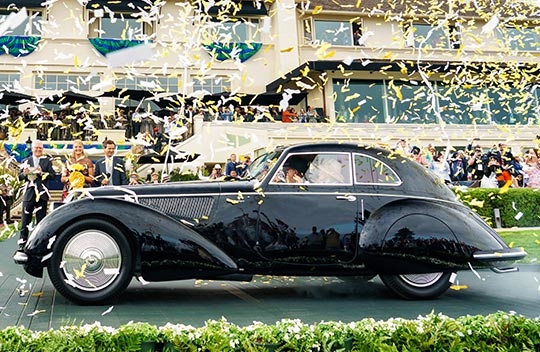
The 2018 Pebble Beach Concours d’Elegance Best of Show trophy went to this 1937 Alfa Romeo 8C 2900B Touring Berlinetta, owned by David and Ginny Sydorick.
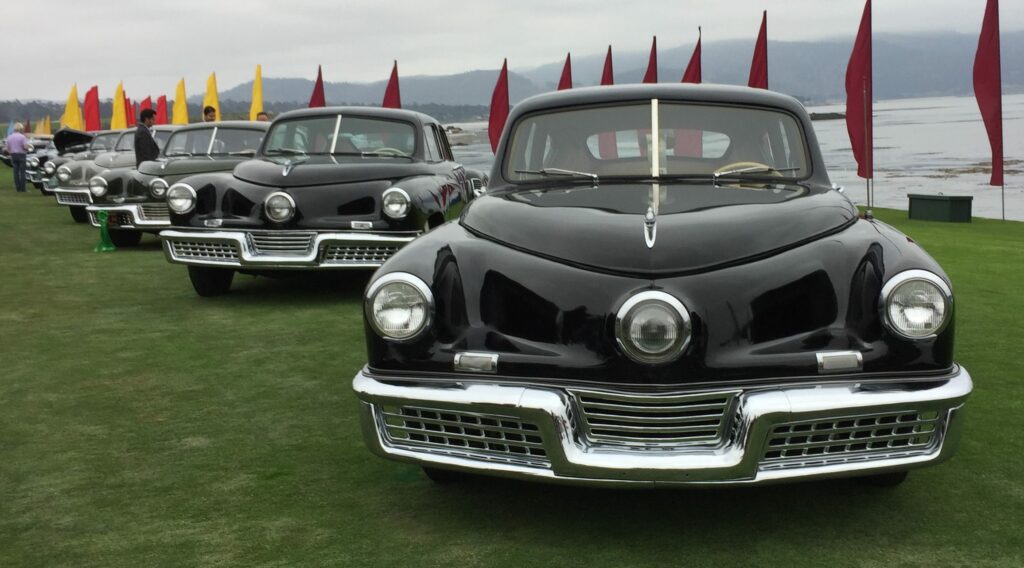
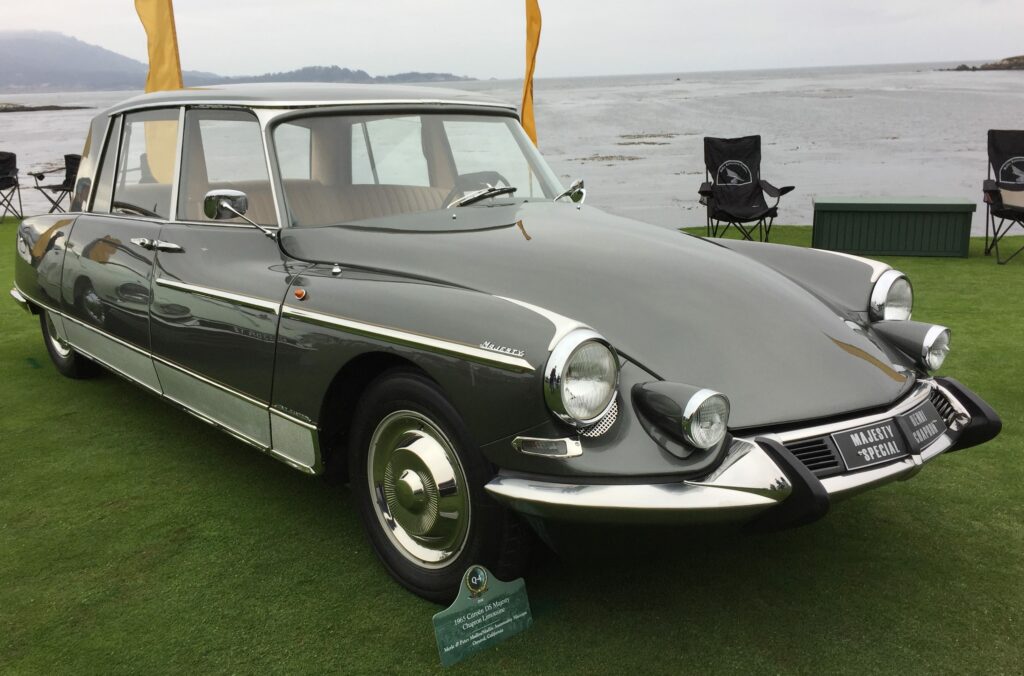
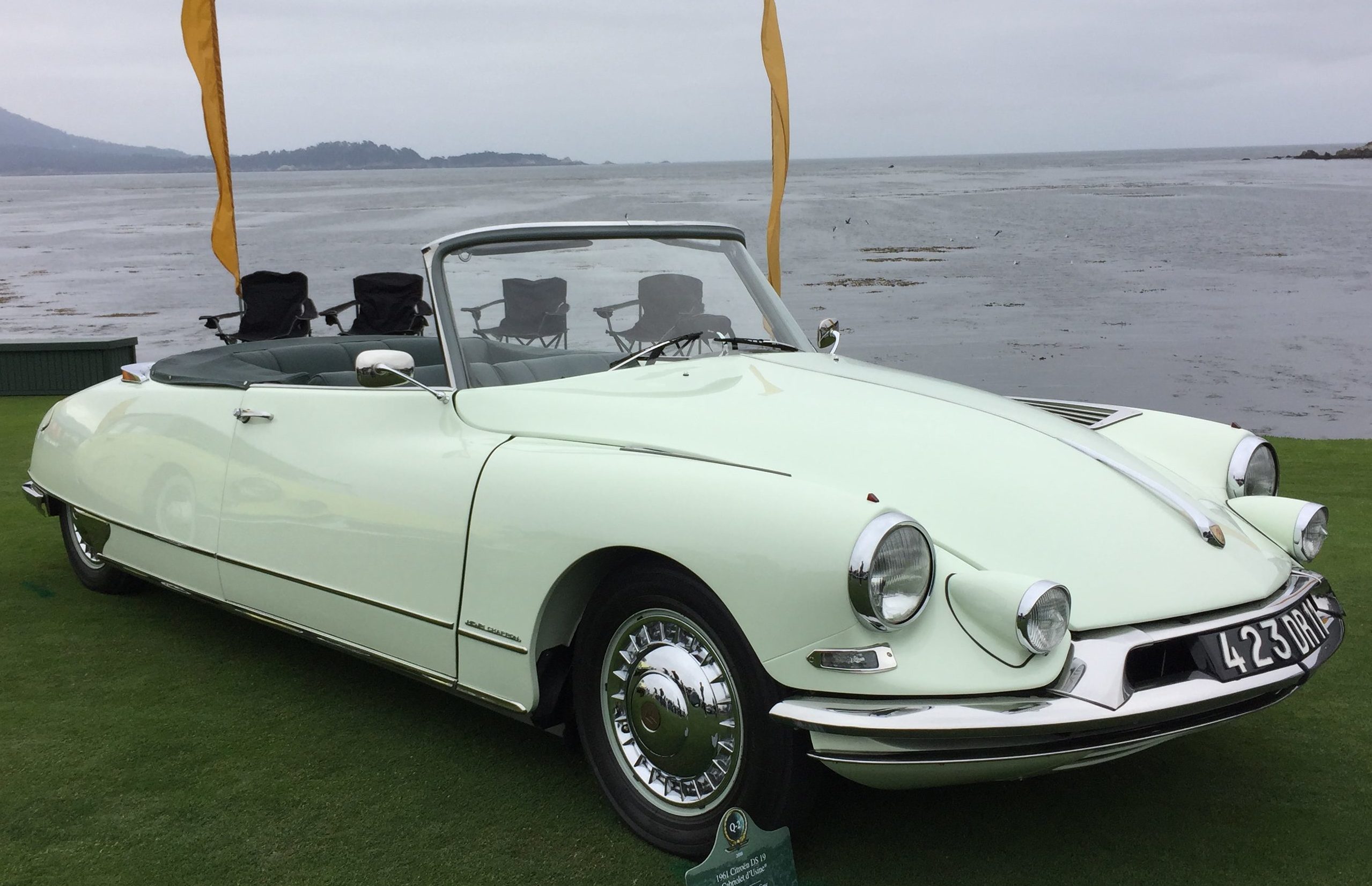
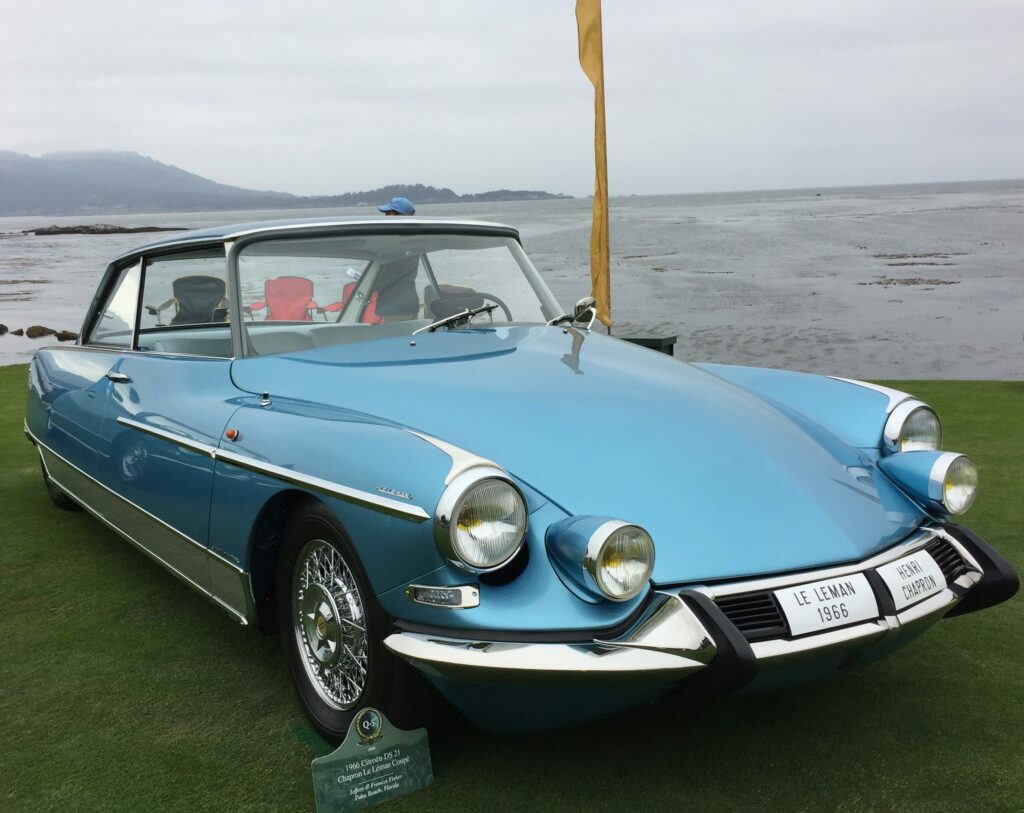
The Pebble Beach Concours d’Elegance is a long walk through automotive history, all of which could be considered “cars of tomorrow.” But there were two retrospectives that embraced the term: a line of a dozen Tucker 48s and a brightly colored lineup of the Citroen DS.
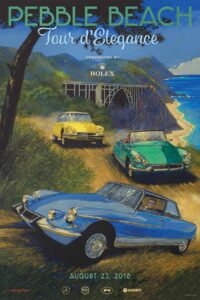
The official Pebble Beach poster featured a trio of Citroen’s DS 19 by British artist Barry Rowe.
According to one Tucker owner, this grouping was the largest gathering in one place since the debut of the movie in 1988, “Tucker: The Man and his Dream.” Among the cars was a bare test chassis and the 1947 prototype model, known as the “Tin Goose.”
Citroen Retrospective
The official Pebble Beach poster featured a trio of Citroen’s DS 19 by esteemed Brit artist (and car enthusiast) Barry Rowe. The DS nameplate is from the French word for goddess, Dé-esse.
Citroen introduced the DS in the fall of 1955 and production ran through spring of 1975. It, too, was a technology innovator and featured a number of firsts. Among them are inboard disc brakes and a hydropneumatic suspension with automatic leveling and adjustable ride height.
It was marketed as an “executive’s car” and it looked the part with its aerodynamic styling, power steering, semi-automatic transmission, and fiberglass roof.
Next year’s concours will be Aug. 18. Plan your visit here.
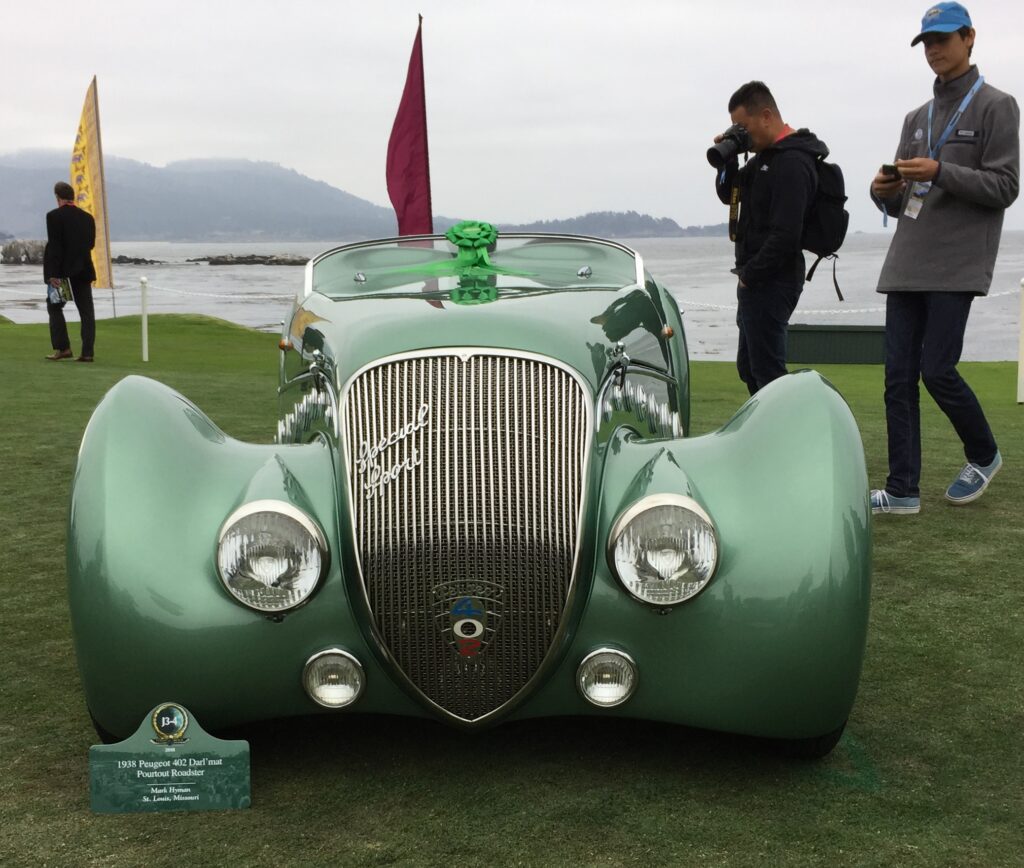
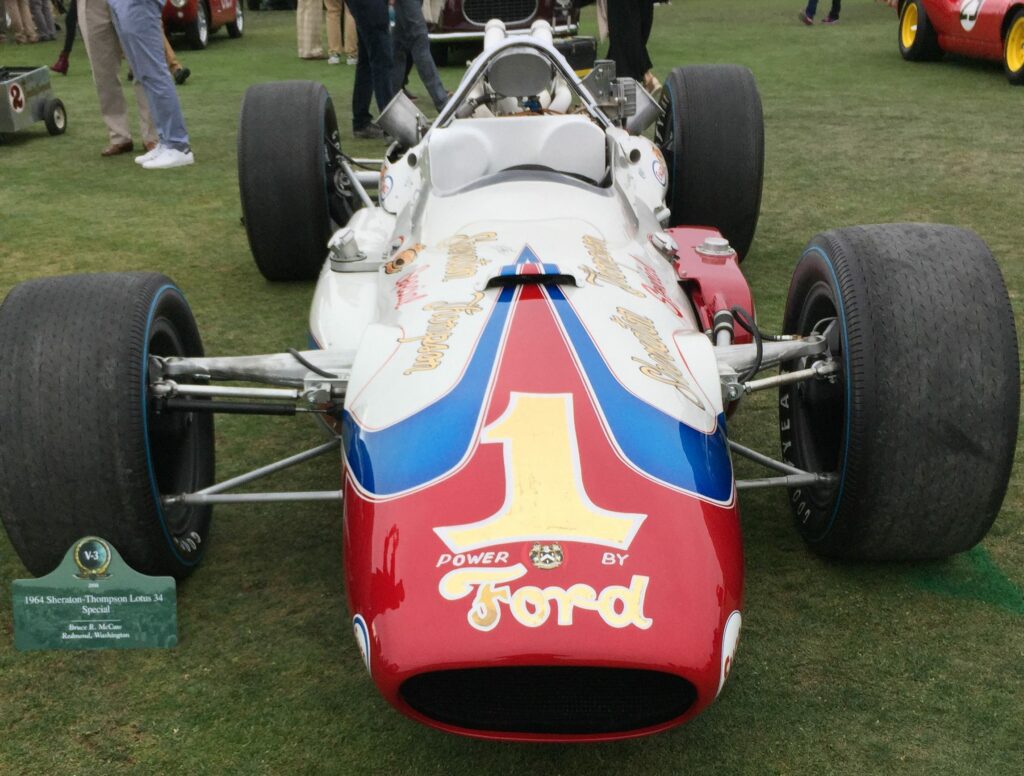
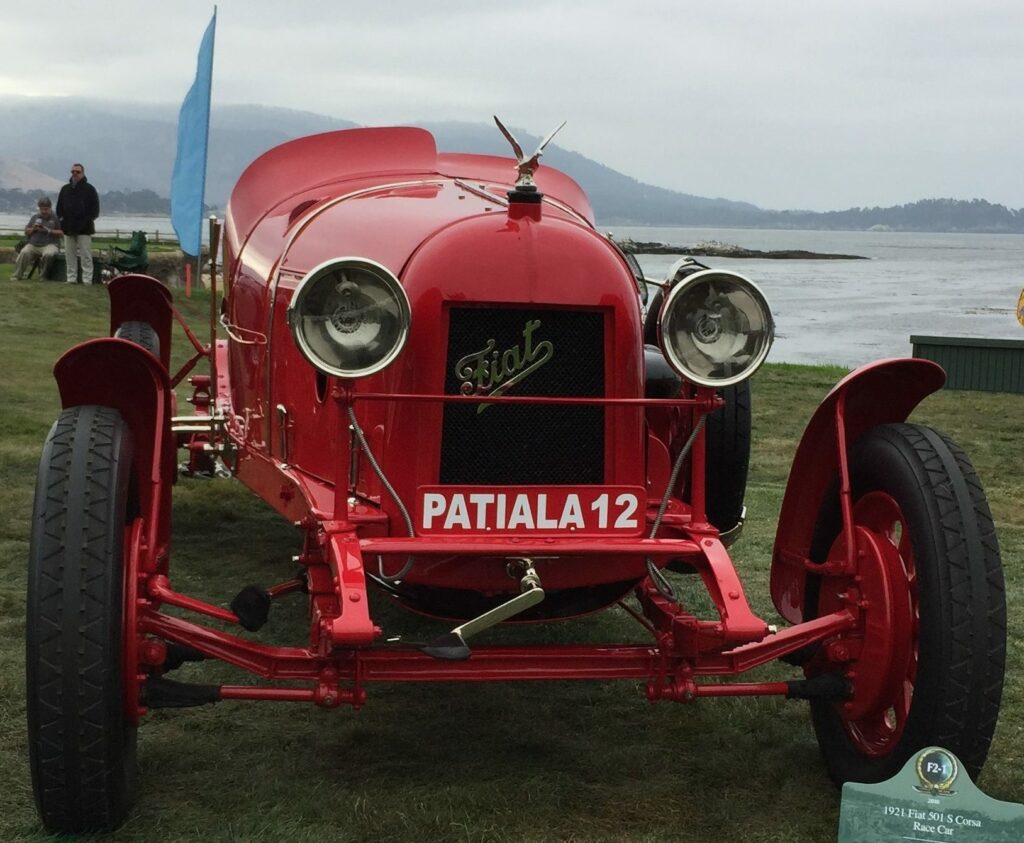
Here is a look at the friendly faces I saw on my walk through history:
A 12-car lineup of Tucker 48s was the largest gathering in one place since the debut of the 1988 film, “Tucker: The Man and his Dream.”
1965 Citroen DS Majesty, Chapron Limousine.
1961 Citroen DS 19, Cabriolet d’Usine. It was awarded the Center for Automotive Research at Stanford.
1966 Citroen DS 21, Chapron Le Leman coupe. 1st place Postwar Custom Citroën.
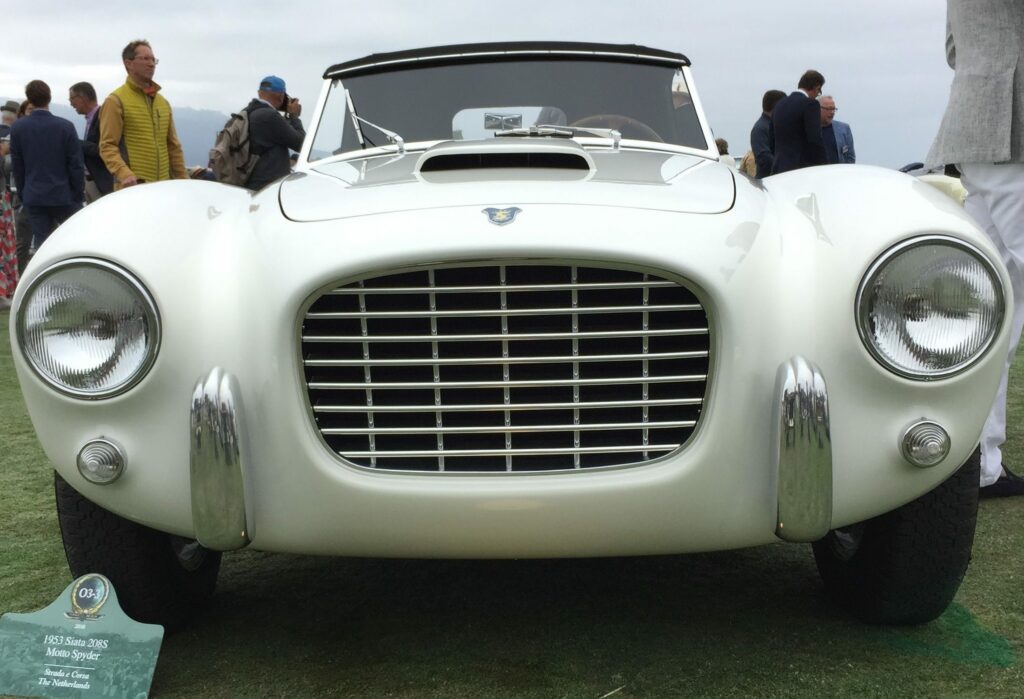
1953 Siata 208S Motto spyder.
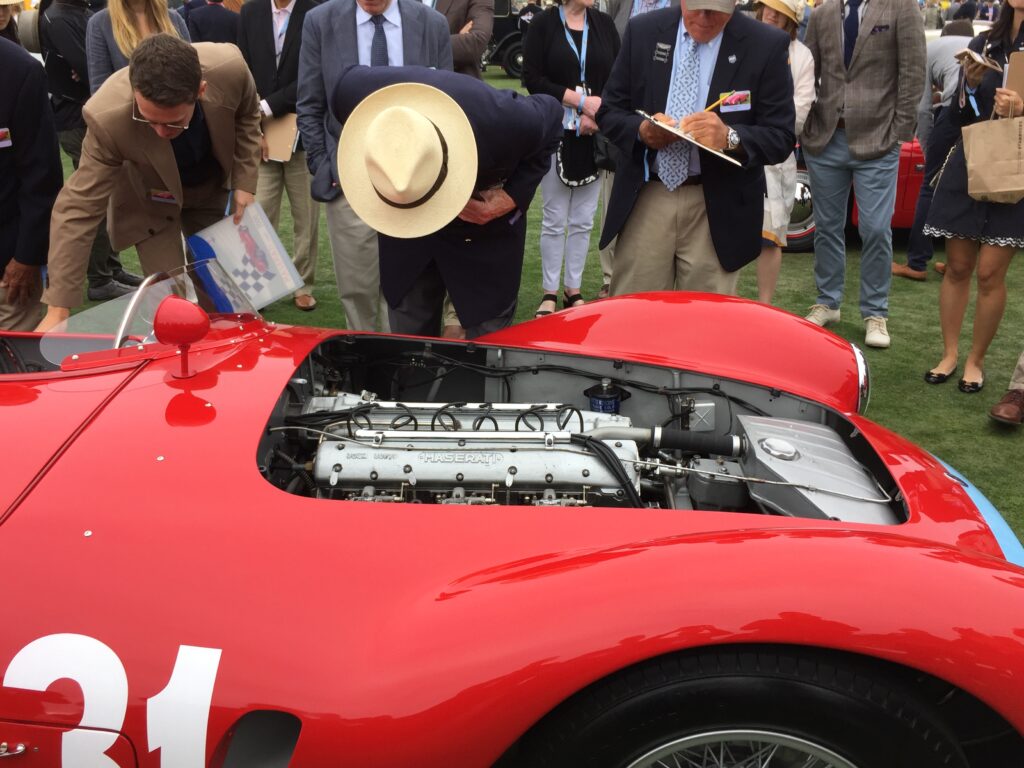
1955 Maserati A6GCS Frua spyder. Awarded the Briggs Cunningham Trophy.
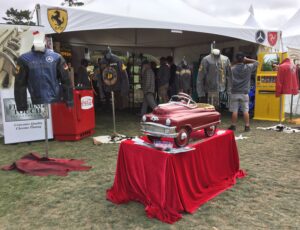
Shopping!
An affordable (somewhat) classic to bring home.
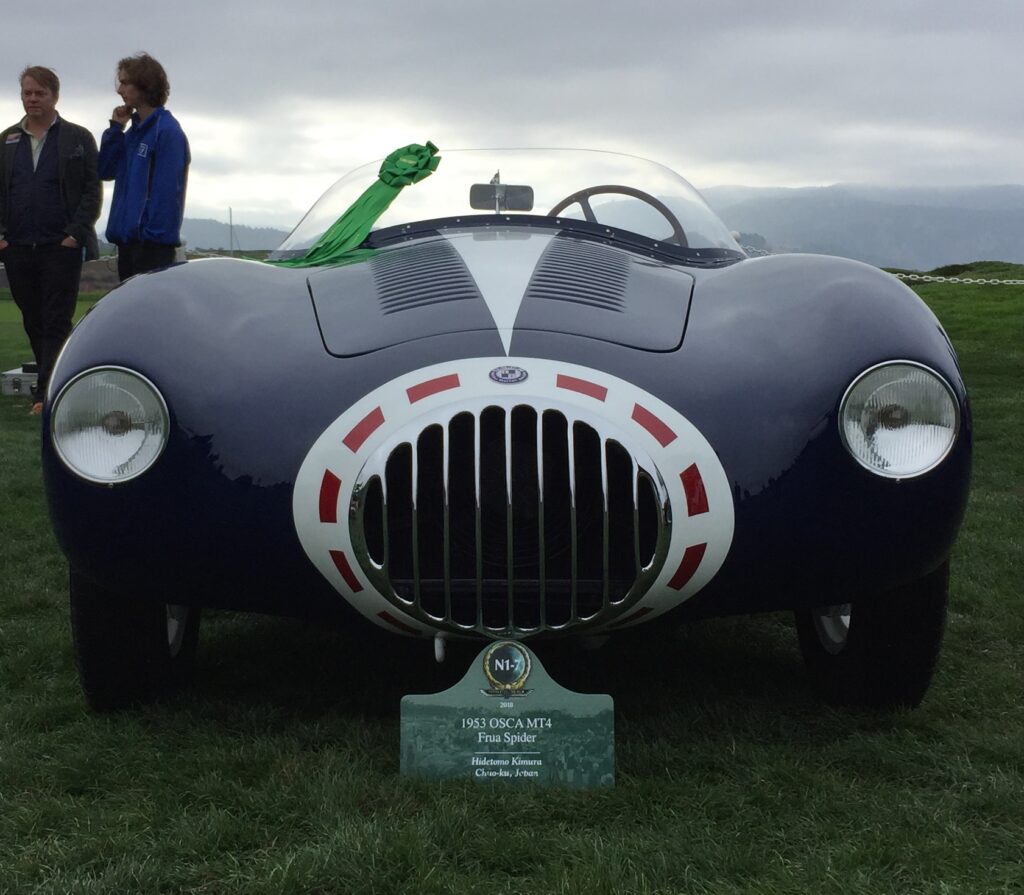
1953 Osca MT4 Frua spider.
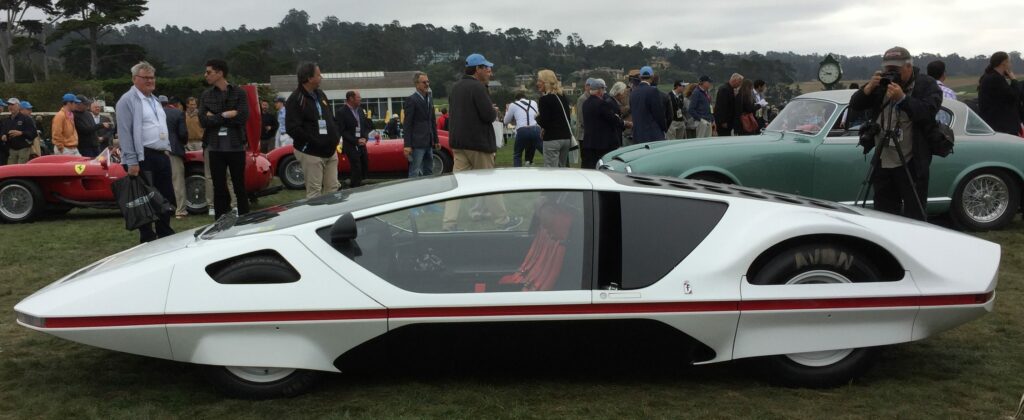
1970 Ferrari 512S Modulo Pininfarina coupe. Winner for Most Elegant Sports Car.