Select Page

Honda Civic Type R Review

Honda Civic Type R Review

If looks could kill. The 315-hp 2023 Honda Civic Type R is a purpose-engineered track star with manners

a championship white Honda Civic Type photographed on a corner of the Sonoma raceway

With 315 turbocharged horsepower, the 2023 Honda Civic Type R is the most powerful model in Type R’s 30-year history. (Photography courtesy of American Honda)

Table of Contents

Engineered Durability
Pricing
Performance
Roll on the Power
Datalogger
Ride and Handling
A Couple of Considerations
Interior Function
Why Buy the Honda Civic Type R?
Specifications

BY MARK MAYNARD

The 2023 Honda Civic Type R is exciting to look at and just as exciting to drive when its 315-horsepower turbo four is whipped for more, more, more. In between those runs of fury, the Type R settles into its Civic roots as a polite and squeaky-clean compact hatchback.

This segment of high-performance compacts is a storied gathering that includes the Hyundai Elantra N, Subaru WRX, Toyota GR Corolla, VW Golf R, and the Civic Type R.

The Elantra N and the Civic Type R are front-wheel drive, while the other competing models have all-wheel drive. Some are available with an automatic transmission, but the Type R has a six-speed manual only.

Honda’s skill at race-spec engineering transforms one of the top-selling compacts in the U.S. into a purpose-engineered track athlete. And Honda has been at it for 26 years. The Civic Type R has evolved through five different variants globally since it debuted as a 1997 model in Japan and Europe. North America got its first Civic Type R as the fifth-gen model from 2017 to 2021.

Red sport seats and floor mats

Type R interior features include a serial-number plate, high-bolstered front sport seats in red-and-black microsuede fabric, and red floor mats.

The Type R’s Engineered Durability

Built on Honda’s new 11th-generation Civic Hatchback, the sixth-gen 2023 Type R is basically an all-new model from its predecessor. The new hatchback, Honda says, uses 3.8 times more structural adhesive than the previous generation model. Gluing the spot welds doubles the strength and stiffness of the joint. All the better from which to hang the suspension to set performance standards, from the tires to the steering.

To fit the wide Michelin Pilot Sport tires, the new Type R has a 1-inch wider front track and 0.75-inch wider rear track (64/63.5 inches front/rear). There also are significant reinforcements for durability under pressure. For one, the Type R’s transmission has a more rigid exterior case, a high-strength bearing system, and high-strength gears.

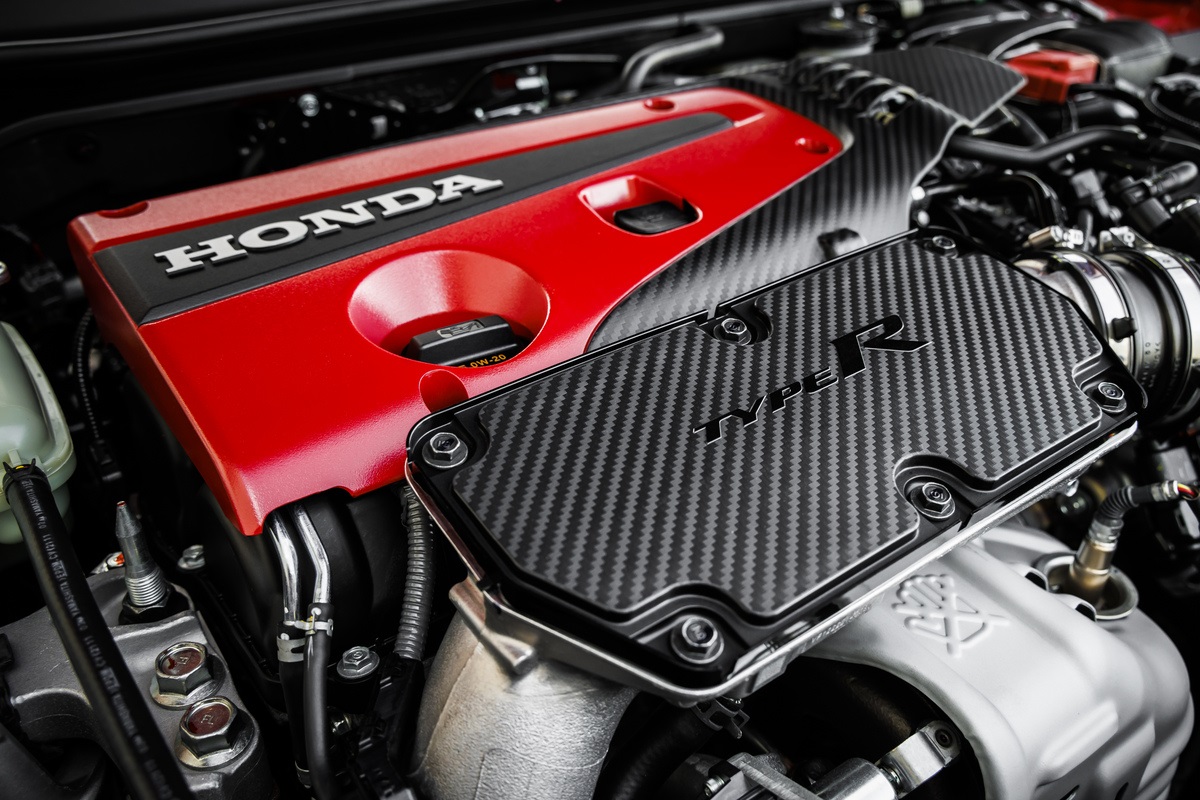
Pop the hood, and you’ll find a minimalist red Honda dress-up shroud and a carbon fiber plate over the air induction unit. Look closely for the downspout-sized air intake duct. It takes a lot of fresh air to supply combustion for 315 horsepower.

Honda pushed for speed and control in developing the new 2023 Civic Type R. It set a new production-car, front-wheel drive track record at the Suzuka Circuit in Japan . Home to the Formula 1 Japanese Grand Prix, the new Civic Type R lapped the Suzuka’s 3.6-mile figure-8 in 2 minutes 23.120 seconds. That blistering attack secured its legacy as the best-performing Civic Type R — ever.

According to ZeroTo60Times.com, the 2023 Type R will launch to 60 mph in 5.1 seconds. The fifth generation Type R is a click quicker at 5 seconds.

2023 Honda Civic Type R Pricing

The Honda Civic Type R is a one-spec choice for engine, manual transmission, and equipment. The 2023 model went on sale in the U.S. about a year ago (Oct. 7, 2022), and already there has been a $900 price bump; the Championship white paint option went up $60, from $395 to $455.

The Type R has a six-speed manual transmission.

A six-speed stick only for the Type R.

Manufacturer pricing for the Civic Type R starts at $44,890, including the $1,095 freight charge from Yorii-Machi, Zaitama, Japan. (However, the Type R engine is built in Honda’s Anna Engine Plant in Sidney, Ohio, and shipped to Japan.) Check here for current Honda and Type R pricing.

My tester was $45,345 with one option for Championship White paint, $455.

Unique Type R interior features include a serial-number plate, high-bolstered front sport seats in red-and-black microsuede fabric with double red stitching, red floor mats, red ambient LED interior lighting, metal-trimmed sport pedals, aluminum shift knob, red illuminated front door panels.

On the outside, look for the Brembo four-piston aluminum front brake calipers, 19-inch matte black alloy wheels, Michelin Pilot Sport 4S tires, gloss black side sills and wing spoiler, center-mounted, and the car’s signature triple outlet exhaust.

More Type R features are listed below in the specifications chart.

But Try To Find One …

Finding a new Civic Type R takes resolve, and fans at a car show told me that some dealers are asking $20,000 over sticker. A recent online search for a Civic Type R returned just four cars within 100 miles of my address in San Diego and just one Type R at a San Diego dealership (Pacific Honda). The other four Honda dealers in San Diego County included with their post, “We can still help you find it.”

Almost-new 2023 Type Rs, with very low miles, are being sold at dealerships for $50,000 to $56,000, according to Carfax.com. Because there are few factory options, just several accessories, these new-used Type R listings appear to include a dealer add-on “market value.”

The Type R engine has a red "Honda"

315 turbocharged horsepower from the K20C 2.0-liter 4-cylinder engine.

Type R Performance

Honda’s legion of Type R enthusiasts can be fanatical about their brand loyalty. Speak with any of these followers and they can recite stats for the Type R’s K20C engine. The VTEC turbocharged and direct-injected 2.0-liter four-cylinder has 315 hp at 6,500 rpm, and a redline of 7,000 rpm. Peak torque of 310 foot-pounds runs from 2,600 to 4,000 rpm.

A new turbocharger has an increased air intake flow rate, and boost pressure is up to 25 psi.

There are four drive modes: Comfort, Sport, +R, and Individual. I used Comfort mode for daily driving, and it gave excellent performance without a jarring ride. Sport mode is exponentially stiffer and becomes quite monotonous at interstate speeds. Individual mode, however, allows specific dial-ins for engine response, steering assist, suspension damping, engine sound, rev-match speed, and the red design of the gauge cluster.

The six-speed stick separates the pretenders from the proficient. Each gear slots with absolute engagement, which is the charm of a six-speed box vs. a crowded seven-speed. There’s little chance of accidental jamming when making fast shifts. And hill-start assist gives added relief as it brakes the car for a couple of seconds when starting on an incline.

Another electronic aid is rev-matching downshifts, which, fortunately, is a driver-selectable choice. To those who can heel-toe shift, this electronic enabler is more of an intrusion. It seems sissy when there are so many how-to heel-toe YouTube videos.

The 9-inch driver gauge screen in red Sport mode.

The 9-inch driver gauge screen in Sport mode.

Fuel Economy Ratings

Official EPA fuel economy ratings for the 2023 Type R are 22 mpg city, 28 highway, and 24 mpg combined. Using premium fuel provides the most power, but engine electronics will adjust to run on 87 octane.

I saw a highway mileage reading of 26.8 mpg, beating the EPA estimates. But I’m sure my around-town mileage was sacrificed by too much revving fun.

And keep an eye on the fuel gauge. It does not take long to use up the 12.4-gallon capacity. But a fill-up doesn’t hurt much when gas costs nearly $6 a gallon.

Safety Features

Type R safety features include 10 air bags and a complete set of driving-assist technologies (listed below in the specs box). The Level 2 semi-autonomous driving assist felt a little skitzy — insistent — at the steering wheel. Lane-centering, however, was accurate and reassuring in heavy traffic.

One of my most appreciated technologies is the Traffic Sign Recognition system. It is essential to know the speed limits in this speed-capable Type R.

Honda’s LogR Datalogger

Any sports car with tires this wide, a wing this big, and race seats demands a Performance Datalogger. And Honda complied with an enhanced version of its LogR Performance Datalogger. The datalogger helps drivers monitor and record various performance parameters, whether in real-time on the road, track, or other closed courses. Users can also share their lap times and other data with other Type R owners.

Key Honda LogR features include:

  • Stopwatch to record lap times;
  • Tire friction circle. The 3D motion indicator displays the tire force the vehicle achieves;
  • Scoring function, to help drivers improve their track driving.
19-inch Michelin Pilot Sport 4S tires have a “contact patch” that is 10.7 inches wide.

19-inch Michelin Pilot Sport 4S tires have a “contact patch” that is 10.7 inches wide. (Mark Maynard photo)

Power-To-Weight Ratio

The Type R is among the lightest of the current pocket rockets, weighing just 3,188 pounds, two pounds more than the front-drive Elantra N (also front-drive). Lightweighting measures include a vented aluminum hood (same as before) and a new lightweight resin hatch and a resin front bulkhead.

But saving weight also means paring back the budget for soundproofing, and the Type R’s interior noise level is at “Maelstrom” at highway speeds. At 65 mph, the engine revs at 2,500 rpm in sixth gear, and the wind and road harshness only increase with speed.

Type R Ride and Handling

Laying down 310 foot-pounds of torque to the front wheels can be a fury of dreaded “torque steer.” Hard acceleration in an FWD setup can make the tires pull from side to side as they seek traction. That is one reason some of these hot hatches are all-wheel drive, which helps displace torque steer by routing the force to all tires.

Honda has neatly solved the torque steer matter with a couple of engineering enhancements. One is what Honda calls a “dual axis suspension system with adaptive dampers.” The setup “greatly reduces torque steer, primarily through a 0.75-inch reduction in steering axis offset.”

The second piece of magic is the helical-type limited-slip differential, which minimizes wheel spin and puts more power to the pavement. The LSD enables harder acceleration on surfaces with uneven traction and reduces wheel spin when exiting corners.

By the way, Honda says a helical-type LSD describes how the differential’s gear teeth are cut at an angle to the gear shaft. Helical gears are quieter and can channel more torque than straight-cut (or spur) gears.

Roll On the Power

The revs have a sweet rise and fall as gears are neatly engaged. With the engine’s wide-spread of peak torque, shifts do not have to be rushed. Hustling along at 4,000 rpm through a second-gear turn is inspiring. Exit the apex and slot the shifter for third, and roll on the power — then smile at the reassuring pushback in the seat. That’s when these sport seats are in their element.

And that is also when the 19-inch Michelin Pilot Sport 4 S tires (265/30) are in their playground. These 10.7-inch-wide rollers bring an attack attitude to performance driving.

The tires have an asymmetric tread pattern and a treadwear rating (UTQG, or Uniform Tire Quality Grade) of 300. Honda advises that these three-season “summer” tires have a life that “may be less than 10,000 miles, depending on how you drive.”

Replacing a tire will run close to $400 — and do not cheap out when it’s time for replacements, or risk a compromise to handling performance.

The Type R’s signature triple round exhaust outlets are centered by the larger boom tube. In Sport mode, the exhaust note is one of determined grit under brisk acceleration, but the tone falls off quickly for quiet cruising.

Honda should have released the booming beast at all levels to remind owners why they paid $50,000 or $60,000 for a compact hatchback. Pull out a couple of baffles and let loose the snap, crackle, and pop.

A Couple of Considerations

With the hatchback’s 1.7-inch longer wheelbase(107.7 inches) and the wide Michelins, the Type R turning circle is an unwieldy 40 feet (39.9 inches). The low ride height is also a chin scraper, requiring some caution at dips in the street and some driveways.

The 9-inch color infotainment touchscreen adds a volume knob, customizable feature settings, and smart shortcuts

The 9-inch color infotainment touchscreen adds a volume knob, customizable feature settings, and smart shortcuts

Interior Function

This generation of Civic Hatchback is a solid base for performance. It has thinner windshield pillars, a lower hood, and the side mirrors mounted on the doors — not the pillar — creating a wide look-around.

Sightlines are open across the hood and out the back, even with that big wing on the decklid. The designers cleverly shaped the wing with an arc that matches the surround of the back glass.

The cabin ergonomics are Honda simple and direct. There’s nothing wrong with the leather-wrapped three-point steering wheel that a flat bottom wouldn’t improve for thigh space. Honda offers an Alcantara-wrapped upgrade with red baseball stitching for $408, but it does not have a flat bottom.

The big, winged race seats, ready for a three-point harness, are a one-size-fits-most.

A short throw shifter with a red shift knob is a $230 accessory, and it might be a worthwhile addition. The aluminum shift knob gets hot when the car has been sitting in the sun; the smooth finish of the knob can mean a missed shift if it slips in the hand. The accessory shifter has a metallic disc top with the lower portion wrapped in red leather.

The open cargo hatch of the Type R

The hatchback Type R has a 60/40 folding back seat and 24.5 cubic feet of trunk space.

Why Buy the Honda Civic Type R?

The Civic Type R is a street-able track car that looks like trouble. It is actually quite harmless but best enjoyed at high volume in competitive driving. The suspension gives stunning control, but as a Monday-Friday commuter, Comfort mode will be the way to go; Sport is just too rough.

As one enthusiast said of the Type R: “Hey, it has four doors; the spouse would approve.”

You can’t miss the Type R’s big wing, decklid spoiler, and triple exhaust tips.

You can’t miss the Type R’s big wing, decklid spoiler, and triple exhaust tips.

2023 Honda Civic Type R Specifications

Body style: Compact 4-seat, 5-door front-wheel-drive high-performance hatchback

Engine: K20C 315 hp, VTEC turbocharged and direct-injected 2.0-liter 4-cylinder; 310 lb.-ft. of torque from 2,600 to 4,000 rpm; 7,000 rpm redline

Boost pressure: 25psi

Transmission: 6-speed manual transmission with automatic rev-matching, and hill-start assist

Fuel economy: 22/28/24 mpg city/hwy/combined; premium fuel recommended for max performance

BY THE NUMBERS

Fuel tank: 12.4 gallons

Cargo space: 24.5 cubic feet

Front head/leg room: 39.3/42.3 inches

Rear head/leg room: 37.1/37.4 inches

Length/wheelbase: 180.9/107.7 inches

Height/width: 55.4/74.4 inches

Curb weight: 3,188 pounds; 62/38 weight distribution

Turning circle: 39.9 feet

FEATURES

Standard equipment includes: Smartkey entry with push-button start, multi-angle rearview camera with dynamic guidelines, 10.2-inch driver info screen, 12-speaker Bose sound System with subwoofer, 9-inch color touchscreen (with volume knob, customizable feature settings, and smart shortcuts), electric parking brake, Bluetooth phone and audio, Apple CarPlay and Android Auto, 2.5-amp USB smartphone-audio port (front), 2.5-amp USB charging port, 12-volt power outlet (front), wireless charging pad, sliding sun visors, LED map lights, cargo area cover,

Type R features, interior: Type R serial-number plate, high-Bolstered front sport seats with red-black microsuede fabric with double red stitching, red floor mats, red ambient LED interior lighting, leather-wrapped steering wheel, metal-trimmed sport pedals, aluminum shift knob, red illuminated front door panels, active sound control

Type R features, exterior: Brembo 4-piston aluminum front brake calipers, 19-inch matte black alloy wheels, Michelin Pilot Sport 4S tires, aluminum hood, red Honda badges, Type R badges front and rear, gloss black side sills, gloss black wing spoiler, center-mounted, triple outlet exhaust with active exhaust valve, gloss black side mirrors with LED turn signals

Safety features include: 10 air bags, stability and traction controls, brake distribution, brake assist, and hill-start assist.

Driving-Assistance Technologies

Collision Mitigation Braking; Road Departure Mitigation; Adaptive Cruise Control; Lane Keeping Assist; Forward Collision Warning; Lane Departure Warning; Traffic Sign Recognition System; Auto High-Beam Headlights; Driver Attention Monitor; Blind Spot Information System with Cross Traffic Monitor;

CHASSIS COMPONENTS

Suspension: Adaptive damper system; dual-axis MacPherson front struts, rear multi-link; stabilizer bars front (tubular) and rear (solid);

Steering: Dual-pinion, variable-ratio electric power steering; 2.1 turns lock to lock;

Brakes: Power-assisted and ventilated 2-piece front discs, solid rear; 13.8-inch rotors front, 12 inches rear; Brembo 4-piston aluminum front calipers;

Tires-Wheels: 19-inch Michelin Pilot Sport 4S tires (265/30); 19-inch matte black alloy wheels; tire-repair kit.

PRICING

Base price: $44,890, including $1,095 freight charge; price as tested $45,345

Options on test vehicle: Championship White paint $455

Where assembled: Yorii-Machii, Saitama, Japan

Warranties: 3-years/36,000-miles bumper to bumper with 24-hour roadside assistance; 5-years/60,000-miles powertrain

Hyundai Ioniq 6 Review

Hyundai Ioniq 6 Review

There is nothing “traditional” about the midsize Ioniq 6, but its features and technologies are familiar, with welcome engagement for driver and occupants.

A side view of the Hyundai Ioniq 6 electric sedan

The 2024 Hyundai Ioniq 6 is sold in four trim levels in rear or all-wheel drive with standard and long-range battery options. Starting prices range from $42,715 to $57,215. (Photos courtesy of Hyundai USA or as credited)

Table of Contents

Who Will Buy the Ioniq 6?
Choices of Power and Driving Ranges
Charging the Ioniq 6
2024 Ioniq 6 Pricing
Touchy Feely Design
The Human Experience
Enter the Living Space
Clever Function
Ride and Handling
Driver Assist Technologies
Back Seats and Cargo
Why Buy the Hyundai Ioniq 6?
2024 Hyundai Ioniq 6 Specifications

BY MARK MAYNARD

The Hyundai Ioniq 6 is not just a benchmark electric car; it is a well-done passenger car without gimmicks or compromise to comfort or drivability.

For those considering an electric vehicle, the Ioniq 6 treats you right, from its gracious ride quality to its ease of entry and exit and many appreciated details. Its potential as an emergency power source is not the least among its assets.

The midsize “coupe sedan” has been a breakout star for Hyundai. The Ioniq 6 debuted last year and is a “carryover” model with no changes for 2024.

Exterior styling of the Ioniq 6 has stirred controversy. The rear end is very busy with two spoilers, vertical metallic accent bars, and “parametric pixel” cubes liberally applied in the lighting.

Front views are sleek and refined, with a smooth slope to the hood, centered between the curvaceous fenders. The dramatic slope is key to aerodynamics, but at a compromise to space in the front trunk. The frunk’s 0.5 cu.ft. shows good use of space, but the space is long and shallow but lighted. How an owner would use this leftover space? For gloves? A microfiber towel? Christmas gift hiding place?

Trimming the height of the frunk was likely to allow the steep slant of the nose, contributing to low aerodynamic drag. Intended or not, the slope of the hood also allows open sightlines. The slant design treatment has been compared to the 1980s Porsche 911 Turbo S “slantnose.” The Porsche “Flachbau,” or flat front design, had a low front aerodynamic flow for its race cars.

Driver information comes from two side-by-side, 12.3-inch digital screens with white backgrounds.

Driver information comes from two side-by-side, 12.3-inch digital screens.

Who Will Buy the Ioniq 6?

Hyundai’s marketing research has decided that the focus buyer for the Ioniq 6 will be:

  • Millennial professionals who are confident in their choices and looking to transition to electric;
  • Accomplished singles or couples who are typically urban. They are comfortable standing apart and differing from the status quo. They seek to make an informed choice for their next vehicle;
  • They are looking to reward themselves with an EV that makes a statement of confidence and doesn’t compromise on a premium interior, advanced technology (safety and connectivity), or limit (through charging and range) their active lifestyle.
The front seatbacks gently cradle with modest cushion bolstering that does not give a goodbye wedgie when exiting.

The front seatbacks gently cradle with modest cushion bolstering.

Choices of Power and Driving Ranges

The 2024 Hyundai Ioniq 6 is sold in four trim levels in rear or all-wheel drive with standard and long-range battery options:

Standard range RWD with a 53-kWh battery pack of 264 cells; 149-hp (111kW); up to 240-mile range; 0-62 mph 9 seconds.

Long range RWD with a 77.4 kWh battery pack of 384 cells; 225 hp (168kW); up to 361-mile range; 0-62 mph 7.4 seconds.

Dual-Motor HTRAC AWD long range, with 77.4 kWh battery; 320 hp (239 kW), up to 316-mile range; 0-62 mph 5.1 seconds.

The single-speed transmission has four driving modes of Eco, Normal, Sport, Snow, and Custom, with a dedicated eAWD torque split for each drive mode.

The power closing charge door on the right rear flank.

The power closing charge door on the right rear flank. (Mark Maynard photo)

Charging the Ioniq 6

According to Hyundai, the Ioniq 6 battery pack will charge from 10 percent to 80 percent in 18 minutes at an ultra-fast 800V charging facility. Connecting to the more common 350-kW Level 3 fast charger can add as much as 65 miles of range in 5 minutes.

Hyundai includes a 10.9-kW onboard charger as standard equipment so owners can plug it into a household outlet or a 240V Level 2 home charger. Charging a depleted battery at home on a Level 2 charger would take around seven hours. I plugged in at home with 150 miles remaining on the charge, and it took about 4 hours to reach 100 percent.

Here are the official charging times, up to 80 percent:

Level II standard 120-volt: 6 hours 55 minutes

50kW: 73 minutes;

Rapid Charging, 350kW: 18 minutes.

Hyundai’s Multi-Charging System

Hyundai has patented its multi-charging system, calling it world-first technology. The system enables the motor and inverter to boost 400V to 800V for stable charging compatibility.

The technology includes “reverse compatibility,” also known as bidirectional. This added level of engineering — Vehicle to Load (V2L) — allows the Ioniq 6 battery to be used as an alternate power source. V2L is handy in the event of a significant power outage. It has enough power to operate small appliances, recharge electronic devices, or boost another EV.

The shift-by-wire gear selector.

The no-confusion shift-by-wire gear selector.

Recharging an EV on vacation travel is still a time-management effort, no matter if the EV has a range of 600 miles. The recharge still requires a break for a meal or shopping.

Hyundai has partnered with Electrify America to provide free fast-charge sessions. The plan is provided to any new all-electric Hyundai model. For the Kona small SUV, owners will receive up to 250kWh or about 1,000 miles of driving. Buyers of the Ioniq 5 and Ioniq 6 get two years of 30-minute DC fast-charging sessions.

2024 Hyundai Ioniq 6 Pricing

Starting prices include the $1,115 freight charge from Asan, Korea; add $3,500 for AWD:

SE RWD standard range: $42,715;

SE RWD long range: $46,615;

SEL: $48,815 (RWD 305-mile range, AWD 270-mile range);

Limited RWD: $53,715, up to 305-mile range;

Limited AWD, $57,215, up to 270-mile range.

The Limited AWD Long Range tester cost $58,425 with Gravity Gold matte paint ($1,000) and carpeted floor mats ($210).

Find current Hyundai pricing here.

Hyundai’s new-vehicle warranties include 10 years or 60,000 miles bumper to bumper and 10 years or 100,000 miles for the powertrain and electric vehicle systems.

The front door panel grip rail with ambient lighting.

The front door panel grip rail with ambient lighting.

Hyundai Ioniq 6 Incentives and Rebates

Leasing a 2023 and 2024 Hyundai Ioniq 6 qualifies for up to $7,500 in an IRS credit. The incentive is only available on a lease, and other qualifiers can apply. Learn more here.

There is a California Clean Fuel Reward of $2,000, but participants are eligible based on gross annual income, as stated on their federal tax return. Details are here.

Find federal and state laws or incentives here.

And the Ioniq 6 qualifies for High-Occupancy-Vehicle freeway access, with the green DMV decal

A front trunk of 0.5 cu.ft. shows good use of space, but how would an owner use it? For gloves? A microfiber towel? Christmas gift hiding place?

How would an owner use this shallow but lighted front trunk? (Mark Maynard photo)

Touchy Feely Design

Hyundai went far left coast in planning the Ioniq 6 interior. In the big wall map of features to be considered, Hyundai designers came up with many categories including “Mindful Cocoon,” “Ethical Design,” and “Emotional Efficiency.”

The cabin is referred to as “Living Space” and is defined by a cab-forward exterior design, a stretched cabin, and a low hood for a streamlined silhouette. The cabin as “Living Space” would have “Transparent Accents,” “Light Reflection,” “Parametric Pixel,” and “Eco Materials,” for “Sustainability.”

That’s a touchy-feely marketing focus that doesn’t mean a whole lot to an owner, but Hyundai neatly ties it all together. Perhaps most apparent is the “Parametric Pixel.” In, out, and around the Ioniq 6 are series of cube pixel-like accents, such as in the taillights, the trunk-lid spoiler, and on the steering wheel. There is no badge for Hyundai or Ioniq on the wheel, just a row of four, square pixels that light up when charging; they show the state of charge, whether one, two, or four squares.

The dashboard ‘winglet’ design.

The dashboard’s‘winglet’ design.

The Human Experience

Popular magazine reviews of the Hyundai Ioniq 6 go deep into its powertrain kilowattage, 0-60 acceleration, and charging times. The Ioniq 6 aces those categories, which an owner will quickly accept and appreciate. However, there is a bigger presence of thoughtfulness toward the human experience. That aspect will be a pleasant discovery period for the many surprise-and-delight features throughout the living space.

Achieving max aerodynamic flow can mean lowering the car’s ride height. That’s good for the manufacturer’s fuel-efficiency standards but damning to the driver and occupants who must drop into a seat while peering into the taillights of the vehicle ahead. Ride height is one reason SUVs have become so popular. Hyundai, however, managed to give the Ioniq 6 a comfortable step-in height with a commanding forward view. Most modern sedans are now notorious for chin-scraping on driveways and dips in the road, but the Ioniq 6 has none of those tendencies.

Those attributes alone make the Ioniq 6 a “buy.”

An artsy view from the back seat forward showing the wide sunroof

Enter the Living Space

Modern low-riding sedans lost buyers because of trimmed headroom. Hyundai went upward with Ioniq 6 headroom, providing (tall for a car) 40.2 inches of hair space without the wide sunroof or 38.3 inches with it.

Seat design is another strong selling point, whether in the front or back. Hyundai’s H-Tex leatherette upholstery feels rich to the touch and is more compliant than leather hides. The front seatbacks gently cradle with modest cushion bolstering that does not give a goodbye wedgie when exiting. Thigh support is full-bodied and suitable for those tall enough to need all 45.4 inches of the car’s very long legroom.

The tester’s interior was basic black but refined by meticulously neat stitching, patterns, textures, and translucent plastics in the lower areas of the cabin. I liked the robust driver’s footrest, and the metal-trimmed pedals fit well with the interior design and black microsuede headliner.

And the greenhouse of the living space is a lighthouse of unobstructed views at the side mirrors, over the shoulder, and the somewhat cropped back glass.

A winglet-design dashboard is unique with 90-degree angles at each end by the windows. The dashboard looks like a plug-and-play unit, but it all works — though it will look odd for the first few drives.

Driver information comes from two side-by-side, 12.3-inch digital screens with white backgrounds. The driver’s instrument cluster with EV display is visible in all lighting conditions with text and graphics that are an easy read.

The HD touch-screen navigation screen includes a split screen for the around-view camera system. The screen anchors at least a dozen categories with icons for connecting a phone, media, climate, and charging.

The “bridge” center console with storage shelf below.

The “bridge” console with storage shelf below.

Clever Function

A “bridge” console extends from the base of the instrument panel and divides the front seats, with unique storage. The upper level has cup holders, a wireless charging pad, window lift switches, and door locks. An armrest box has useful storage and conceals two Type C USB ports, and there is an old-style USB-A next to the wireless charging pad.

Below the bridge is a long, open storage space with low sides for a purse or take-out food bags.

Without a space-robbing gearshift lever, the designers rethought what could be. Placing window and lock controls on the console is different, but I adapted quickly. Moving the switches from the traditional door panel allowed the designer to create a long, padded armrest with an integrated grab rail for closing the door. On opening, the grab rail — with a bead of ambient lighting — provides the ideal leverage point to control the door from punching the car next to it.

Hyundai gives owners a 3-month trial for the Wi-Fi hotspot, followed by a $20 per month Verizon data plan. Or the owner can add the Ioniq 6 to their phone plan.

Mercifully, the digital infotainment touchscreen has various buttons and switches for such oft-used features as volume, tuning, fan speed, and temp control.

All controls were intuitive for me to quickly figure out and use — a degree in IT is not required. Also smartly designed is the steering-column mounted, shift-by-wire gear selector. The sturdy stalk is clearly marked D-N-R, with a Park button at the end. Turning the tab-end of the stalk was never confusing to select D or R.

an image of the Ioniq's 20-inch Pirelli tire and alloy wheel

The Ioniq 6 Limited has 20-inch Pirelli P Zero Elect all-season tires. (Mark Maynard photo)

Ioniq 6 AWD Ride and Handling

Underpinned by a seemingly unsophisticated steel suspension, there is outstanding control from the front MacPherson struts and rear multi-link. The setup provides capable finesse in enthusiastic driving, but the main asset is how the suspension absorbs the jarring roughness of crappy road surfaces and potholes. The ride is luxurious without a complex air ride system or electronic control.

On the Interstate with cruise set and Hyundai Drive Assist engaged, the Ioniq 6 settles in and tracks like a streamliner. The ride quality is consistently unruffled over California’s cantankerous concrete highways, but the ride is carpet smooth on blacktop.

The Hyundai Ioniq 6 is among the aerodynamic slipperiest cars on sale today. Models with 18-inch wheels have a drag coefficient of 0.20, while 20-inch models rise to 0.27 (matching the 2023 Toyota Prius). Other aerodynamically sleek cars include the Mercedes-Benz EQS and Mercedes-Benz EQE (0.20), Lucid Air (0.21cd), and Porsche Taycan (0.22 cd).

Ioniq 6 back seat

The Ioniq 6 has a comfortable stretch of back legroom.

Driver Assist Technologies

The Ioniq 6 has all the expected safety features, including six air bags and a full spectrum of advanced technologies, including Hyundai’s Highway Driving Assist 2.

This evolved system is reliably accurate for Level 2 semi-autonomous driving. When engaged, the lane-centering function is spot-on and keeps the car from drifting wide across the white lines or Botts dots. However, some stretches of light-colored Interstate highway can play tricks on the cameras, causing brief slowdowns.

The evolved technologies now allow Lane Change Assistance. It can be activated when the turn signal is held for a left or right move and the driver has hands on the steering wheel. In my experience, the response was too slow, and I intervened to make the lane change. This function is just one more layer of technology toward fully autonomous driving.

More relevant in the evolved HDA is how it now can respond to low-speed cut-ins of other vehicles or motorcyclists. The system also will adjust the car’s position in the lane if another vehicle in the adjacent lane moves too close.

Also evolved is the Smart Cruise Control with Machine Learning. This electronic “intelligence” mimics the driver’s acceleration style and spacing with the vehicle ahead. I’m too much of an actual driver to give up this type of control.

Other advanced driving-assist technologies include:

  • Blind-spot collision-avoidance assist and Blind-Spot View Monitor;
  • Rear Cross-Traffic Collision-Avoidance Assist;
  • Parking Distance Warning, reverse and forward;
  • Parking Collision-Avoidance Assist (reverse, forward, side);
  • Remote Smart Parking Assist 2;
  • Forward Collision-Avoidance Assist with Car/Ped/Cyclist Detection and Junction Turning;
  • Lane Keeping and Lane Following Assist;
  • Intelligent Speed Limit Assist.
Fold the 60/40 rear seatback for 6 feet in length. (Mark Maynard photo)

Fold the 60/40 rear seatback for 6 feet in length. (Mark Maynard photo)

Back Seat and Cargo Space

The Ioniq 6 is too nice to use as a ride-share sedan, but what a lovely back seat it has.

A comfortable stretch of back legroom seems longer than its specification of 34.7 inches. Headroom is adult accommodating for all but the very tall, somewhat cropped by the trailing arc of the roofline.

A completely flat floor provides exceptional three-across footroom. The bench seat has good thigh support and a relaxed seatback angle. The door panel has a bottle slot and a uniquely integrated niche as a small catchall for gum wrappers and other bits. The door also has the armrest rail for easy closing.

Other occupant amenities include a fold-down center armrest with dual can holders, two USB-C ports, center air vents with left and right flow, and grab handles above each door with a jacket hook on the driver side.

Trunk space is wide and low, looking more spacious than its 11.2 cubic feet. But fold the 60/40 seatback for up to six feet in ladder or ski length. A power trunk closer is a bonus for the Ioniq 6 Limited.

Charging cable storage under the trunk floor.

Charging cable storage under the trunk floor. (Mark Maynard photo)

Why Buy the Hyundai Ioniq 6?

For those who have said good riddance to a modern midsize sedan, the Hyundai Ioniq 6 could be a mind-changer, not just a game-changer.

The average price of a new midsize sedan is around $32,000, which compares to $48,000 for a midsize SUV, according to MoneyGeek.

Spending a little more upfront for the Ioniq 6 — charging at home is a lot cheaper than buying gasoline — buys a no-compromises family car, with the added incentive of it being a power source for emergency support or pleasurable activities.

A rear view of the Ioniq 6

The Limited AWD Long Range tester cost $58,425 with Gravity Gold matte paint ($1,000) and carpeted floor mats ($210).

2024 Hyundai Ioniq 6 Limited Specifications

Body style: midsize 5-seat, 4-door coupe-sedan in rear- or all-wheel drive

Motor: Permanent magnet synchronous

Power, AWD: 320 hp, 74 kW + 165 kW; 446 lb.-ft. torque

Battery: 77.4 kWh lithium-ion, 697 volts; output 277 kW

Transmission: Single-speed reduction gear

EPA-estimated driving range: 316 miles

Fuel economy equivalent, MPGe: AWD 111/94/103 city/hwy/combined); RWD
129/105/117

Charging, up to 80%:

Level II standard 120-volt: 6 hours 55 minutes

50kW: 73 minutes;

Rapid Charging, 350kW: 18 minutes;

BY THE NUMBERS

Coefficient of drag: 0.22 cd

Trunk space, rear: 11.2 cubic feet; 0.5 cu.ft. front trunk

Front head/leg room: 38.3*/45.4 inches *w/sunroof

Rear head/leg room: 36.9/34.7 inches

Length/wheelbase: 191.1/116.1 inches

Width/height: 74/58.9 inches

Curb weight: 4,616 pounds

Turning circle: 38.8 feet

FEATURES

Standard Limited equipment includes: smart key locking and push-button ignition, 12.3-inch HD touchscreen navigation system, 12.3-inch digital instrument cluster with EV display, Hyundai digital key (smartphone access), surround-view monitor, wireless device charging, Bose audio system with satellite radio, Android Auto or Apple CarPlay infotainment, Bluetooth phone and audio, H-Tex upholstery, 8-way power front seats with lumbar, heated and ventilated front seats, heated steering wheel, 60/40-split folding rear seats with armrest and cup holders;

Exterior features: wide sunroof, solar glass on front doors and windshield, acoustic windshield;

Safety features include: 6 air bags, electronic stability and traction controls, Brake Assist;

Advanced safety technologies, include:

  • Smart Cruise Control (SCC) with Stop & Go + Machine Learning;
  • Remote Smart Parking Assist 2;
  • Blind-spot collision-avoidance assist;
  • Blind-Spot View Monitor;
  • Rear Cross-Traffic Collision-Avoidance Assist;
  • Parking Distance Warning, reverse and forward;
  • Parking Collision-Avoidance Assist (reverse, forward, side);
  • Forward Collision-Avoidance Assist with Car/Ped/Cyclist Detection and Junction Turning;
  • Lane Keeping Assist;
  • Lane Following Assist;
  • Intelligent Speed Limit Assist;
  • Highway Driving Assist II;

CHASSIS COMPONENTS

Tires and wheels: 20-inch 245/40 Pirelli P Zero elect all season tires;

Braking: 4-wheel regenerative with brake-level control paddles;

Steering: Motor-driven power-assisted, 38.9-foot turning circle;

Chassis: Monocoque high-strength steel unibody;

Suspension: Front MacPherson struts with coil springs and gas shock absorbers; rear multi-link

PRICING

Base Limited price: $53,715, including $1,115 freight charge; price as tested $58,425

Options on test vehicle: Gravity Gold matte paint $1,000; carpeted floor mats $210

Where assembled: Asan, Korea

Warranties: 10-years/60,000-miles bumper to bumper; 10-years/100,000-miles powertrain and electric vehicle systems; 3-years/36,000-miles free scheduled maintenance; 5-years/unlimited mileage roadside assistance

Toyota RAV4 Prime Review

Toyota RAV4 Prime Review

The 2023 Toyota RAV4 Prime is a filling serving of meat and potatoes, just not prime rib

A side view of a Blueprint Blue 2023 RAV4 Prime

The 2023 Toyota RAV4 Prime has an electric driving range of 42 to 44 miles and a total driving range up to 600 miles. Today’s tester came to $52,227. (Photos courtesy of Toyota USA)

Table of Contents

Small Plug-In SUV Competitors
RAV4 Pricing
Performance and Powertrain
RAV4 PHEV or Gas-Electric Hybrid?
Ride and Handling
Interior Function
Safety Features and Technologies
Why Buy the 2023 Toyota RAV4 Prime?
Specifications

BY MARK MAYNARD

What the Toyota RAV4 Prime lacks in refinement, it makes up for it with horsepower and its 42 to 44 miles of battery electric driving range. But such plug-in efficiency comes at a price.

I considered a new plug-in hybrid to replace my 2008 Ford Escape Hybrid with 135,000 miles. I liked the idea of a plug-in because most of the driving for me and the girlfriend-wife is around town. I have a 240-volt Level 2 EV home charger, and there is an appeal to having a full “tank” every morning.

The 2023 Toyota RAV4 Prime was a strong contender, and after a test drive, its 302 horsepower was a selling point. But after some research and cost analysis, I decided that I could sacrifice a few battery miles for a more refined interior and more comfortable ride.

Front seats

Sightlines are open at the side mirrors.

Small SUV Plug-In Competitors

Including the Toyota RAV4 Prime, there are currently six mainstream small SUVs that have plug-in hybrid (PHEV) options:

2024 Dodge Hornet R/T, 32 miles of electric range, starting at $42,530;

2023 Ford Escape PHEV, 37 miles of electric range, $42,640 (including a $645 acquisition fee);

2023 Hyundai Tucson PHEV, 33 miles of electric range; $39,000 to $46,000;

2023 Kia Sportage PHEV, 34 miles of electric range; $40,000 to $45,000;

2023 Mitsubishi Outlander PHEV, 38 miles electric range; $40,000 to $50,000;

My preference of the lot is the 2023 Hyundai Tucson PHEV. I liked its rational and unexaggerated styling and its interior presence of premium materials and construction.

2023 Toyota RAV4 Pricing

The 2023 Toyota RAV4 Prime has starting prices of $44,425 to $48,310, including AWD. But the top-line XSE AWD tester model topped out at $52,227, including the $1,350 freight charge from Obu, Aichi, Japan.

The 2023 Hyundai Tucson PHEV Limited “as built” came to $46,820, including some cargo area extras and carpeted floor mats, and the $1,335 freight charge from Ulsan, South Korea (Tucson gas versions, however, are built in Alabama.

My thumbnail notes came down to this:

  • $52,000 RAV4 buys 44 miles of battery driving or $1,159.09 per mile of range;
  • $47,000 Tucson buys 33 miles of battery driving or $1,468.75 per mile of range
A vertical design to the LED running lights.

A vertical design to the LED running lights.

For the $5,000 price difference between the two PHEVs, the 2023 Toyota RAV4 Prime has the cost-per-mile advantage of $309.66 for the 11-mile range difference. But the $5,000 difference in starting prices buys a lot of gasoline, and the Hyundai Tucson has a more rewarding presence for the money.

(The Toyota RAV4 Prime does not qualify for the federal tax credit in 2023 because its final assembly is not in North America. Some state incentives for PHEVs range from $1,000 to $6,500, but with many qualifiers. Check here for details.)

Find current Toyota RAV4 pricing and offers here.

RAV4 Prime engine bay

The 302-hp gasoline-electric powertrain in the RAV4 Prime.

RAV4 Prime Powertrain

The gasoline-electric powertrain combines a 2.5-liter Dynamic Force four-cylinder engine, electric motors front and rear (for all-wheel drive), and a lithium-ion battery pack.

Only the new-for-2023 RAV4 Hybrid Woodland Edition still has a nickel-metal hydride battery pack, 244.8 volts. The 2023 RAV4 Hybrid Limited and Hybrid XSE have 259-volt lithium-ion cells.

The 18.1-kWh battery pack in the RAV4 Prime has an official battery-electric driving range of 42 to 44 miles. However, expect the battery-driving range to be less with more highway driving and closer to the 42-44 miles around town. A 6.6 kWh onboard charger is standard with Prime.

After a full charge at home, the onboard computer indicated 47 miles of potential EV range and 413 miles of combined gas and electric range. A full charge the second night brought 44 miles of EV range.

Toyota says it will take 2.5 hours to fully recharge on a 240-volt outlet. Charging times on a 120-volt household outlet would take about 12 hours (overnight).

The continuously variable transmission has performance modes of Sport, Eco, Normal, EV, HV, Auto EV/HV, Charge, and Trail. (The RAV4 Prime can be partially charged when the engine is running.)

The 2023 RAV4 Prime earns an EPA combined rating of 94 MPGe, or 38 mpg gasoline only, combined city/highway.

A view of the steering wheel and center stack of cabin controls

Driver controls are mostly just a finger’s reach away, with knobs for audio and climate control.

PHEV or Gas-Electric Hybrid?

The Toyota RAV4 Prime is an efficient tool for family duty, but it becomes less efficient for vacation trips when taking the time to charge is inconvenient. A standard gasoline-electric hybrid makes a better all-around choice. For example, the 2023 Toyota RAV4 Hybrid has peak mileage ratings of 41 mpg city, 38 highway, and 40 mpg combined; it has a full range of 580 miles on the recommended unleaded fuel. That mileage compares to 27/35/30 mpg for the gasoline RAV4.

Warranty coverage for the RAV4 Prime’s hybrid battery  is for 10 years or 150,000 miles, and EV drive components are covered for 8 years or 100,000 miles.

Ride and Handling

Black wheel and all-season, 19 inch tires

The RAV4 Prime XSE has 19-inch all-season tires and alloy wheels.

The ride quality of the RAV4 Prime feels somewhat coarse, tall, and almost tippy, not in cornering but in how the suspension must manage the curb weight of 4,300 pounds. Though heavy, the RAV4 Prime does not communicate the impression of being solidly built.

Acceleration uptake is smooth and measured. And brake pedal feel is smooth and reassuring. The steering force, too, is smooth but without any feedback. And there is noticeable wind noise at speed on the highway.

RAV4 Interior Function

Sightlines are open at the side mirrors. And driver controls are mostly just a finger’s reach away, with knobs for audio volume, tuning, and adjusting climate control. The access switch for the heated steering wheel is out of the way, below and left of the steering wheel.

There is reasonably tall front headroom of 37.7 inches with the sunroof. An asset for shorter drivers is the long reach of seat adjustment to the steering wheel. I have never been able to move a driver’s seat as far forward as in this RAV4.

Toyota loads up the RAV4 Prime XSE with a gratuitous list of standard features. The complete list is in the specs box below, but among the notable examples are:

  • Smart key locking with push-button ignition;
  • Rearview camera system with overhead 360 view;
  • 10-inch color head-up (windshield) display;
  • Heated and ventilated front seats;
  • Power adjustable driver seat;
  • Wireless charging pad;
  • 4 charging USBs;
  • Locking glovebox big enough to hold all the owner’s manuals;
  • Softex upholstery (which I prefer to Toyota leather) with red accents.

Back-seat passengers might comment about the odd hump in the second-row floor at the base of the front console. If the doors could open just a few degrees wider, it would benefit elbow room when loading toddlers into child seats, but there is adult head and leg room of 39.5 and 37.8 inches.

Cargo space is multifunctional with a 60/40 split reclining fold-flat rear seat and 33.5 cubic feet behind the second row, stacked to the headliner. The cargo opening is wide at 44 inches and tall at 33 inches; fold the second-row seatback for 6 feet in length.

The cargo area also has a height-adjustable deck board, side net, and tonneau cover.

An LED headlight

The Prime XSE has LED projector low- and high-beam headlights.

RAV4 Safety Technologies

The RAV4 might be compact, but it has a full complement of safety features and driver-assist technologies. Its basic safety features include eight air bags, a blind-spot monitor with rear cross-traffic alert, hill-start and downhill-assist controls, and active cornering assist.

Toyota’s Star Safety System adds enhanced stability and traction controls, brake-force distribution, brake assist, and Smart Stop technology;

Tying together those features is Toyota Safety Sense 2.5. This suite of systems integrates a precollision system with pedestrian detection, full-speed range dynamic radar cruise control, lane departure alert with steering assist, lane tracing assist, automatic high beams, and road sign assist.

The open cargo area

Cargo space is multifunctional with a fold-flat rear seat.

Why Buy the 2023 Toyota RAV4 Prime?

The Toyota RAV4 is an enduring model, debuting in North America in 1995 for the 1996 model year. The compact ute was born as a utility vehicle and continues with a utility foundation. After 28 years, The RAV4 is now in its fifth generation. Toyota is working to upgrade its dutiful RAV with more refined interior elements, just not all at once.

To date, the only plug-in hybrid vehicles with technology to charge the hybrid battery while driving are the 2024 Mazda CX-90 and two models of Volvo Recharge SUVs.

Until more manufacturers enhance the plug-ins with on-road charging ability, a plug-in is at its most efficient around town.

The Toyota RAV4 isn’t expected to have its next complete redesign until 2027, so the current generation is still full of life. If maximum range on battery power is your goal, then the Toyota RAV4 Prime is the obvious choice.

A rear view of the RAV

The Toyota RAV4 has a full complement of safety features and driver-assist technologies. Standard safety features include eight air bags, Toyota’s Star Safety System, and Toyota Safety Sense 2.5.

2023 Toyota RAV4 Prime Specifications

Body style: compact, 5-seat, 5-door SUV with electronic on-demand all-wheel drive

Engine: 2.5-Liter Dynamic Force 4-cylinder with dual direct- and port-injection

Power: 302 combined net horsepower; 177 hp at 6,000 rpm; 165 lb.-ft. 3,600 rpm

Electric motor: power output (front/rear) 179/53 hp front, 134/40 kW rear; torque 199/89 lb.-ft. (front/rear)

Transmission: Continuously variable-speed automatic with sequential shift mode simulating 8 speeds; performance modes of Sport, Eco, Normal, EV, HV, Auto EV/HV, Charge, and Trail

Emission rating: Super Ultra Low Emission Vehicle

Battery: 355.2-volt lithium-ion

Charging: 2.5 hours with 6.6kw onboard charger on a 240-volt Level 2 charger

EPA-estimated driving range: 42-44 miles

Fuel economy: 38 mpg combined

Fuel economy equivalent: 94 mpg-e; 38 mpg combined, gas engine only

0-60 mph acceleration: 5.7 seconds (per Toyota)

BY THE NUMBERS

Max towing capacity: 2,500 pounds, with standard trailer-sway control

Fuel tank: 14.5 gallons

Cargo space: 33.5 cubic feet

Front head/leg room: 37.7/41 inches

Rear head/leg room: 39.5/37.8 inches

Length/wheelbase: 180.9/105.9 inches

Curb weight: 4,300 pounds

Turning circle: 37.4 feet

FEATURES

Standard Prime equipment includes: power tilt-slide moonroof with one-touch open-close, electric parking brake with brake hold, lockable glove compartment, center armrest console with covered storage compartment, two front cup holders, sun visors with sliding extensions and illuminated vanity mirrors, 5 USB ports (one for media, two front and rear USB charging ports; 60/40 split reclining fold-flat rear seat with center armrest and cup holders, height-adjustable power liftgate with jam protection, height-adjustable rear cargo area deck board, cargo area side net, side and rear privacy glass, cargo area tonneau cover;

Exterior highlights: vertical LED front accent lights, dual chrome-tipped exhaust, low-profile black roof rails, black-painted (folded) heated power outside mirrors with turn signal and blind-spot warning indicators, LED projector low- and beams and auto on/off, color-keyed outside door handles with touch-sensor lock-unlock feature on front doors; one 12-volt 120-watt auxiliary power outlet in front instrument panel storage tray and one 12-volt, 120-watt auxiliary power outlet in cargo area;

Prime XSE Interior Features

Smart key locking and push-button start; backup camera with gridlines; leather-trimmed tilt-telescopic 3-spoke steering wheel with silver accents and redundant controls for audio, hands-free phone, voice-command, Qi-compatible wireless smartphone charging; Dynamic Radar Cruise Control, Lane Departure Alert, and Lane Trace Assist; power liftgate and remote illuminated entry; 6-speaker 10.5-inch infotainment system with wireless Apple CarPlay and Android Auto compatible, satellite radio with 3-month trial subscription; sunglass console with map lights, and Safety Connect button; dual zone automatic climate control system with dust and pollen filter and rear-seat vents; black fabric-trimmed headliner; red-accented interior, including stitching on dash, doors and seat, and black anti-slip in-dash storage trays with blue ambient lighting; SofTex-trimmed seats with red stitching and fabric seat inserts; heated front seats; 8-way power-adjustable front driver’s seat with lumbar support; 4-way adjustable front passenger seat with seatback pocket; heated front seats; soft-touch dash, door and armrests with stitched dash, door and center console accents, and anti-slip interior door grip; LED front-seat reading lights, dome light and cargo area light; rear liftgate window defogger, auto-dimming rearview mirror with HomeLink universal transceiver;

Hybrid-Specific Features: black diamond-patterned bar front grille; active grille shutters; silver-painted front lower spoiler; aerodynamic underbody panels with vortex generators; front and rear wheel spats; integrated rear spoiler; red-painted shock absorbers; blue ambient lighting for in-dash shelves, center console cup holders and in front footwells; acoustic noise-reducing front side windows;

RAV4 Safety Features

Standard 8 air bags; blind spot monitor with rear cross-traffic alert; hill start assist and downhill assist control; active cornering assist;

Star Safety System includes: Enhanced stability and traction controls, brake-force distribution, brake assist, and Smart Stop Technology;

Toyota Safety Sense 2.5, includes: precollision system with pedestrian detection, full-speed range dynamic radar cruise control, lane departure alert with steering assist, lane tracing assist, automatic high beams, road sign assist.

CHASSIS COMPONENTS

Brakes: Power-assisted ventilated 4-wheel disc brakes; 12.9-inch front rotors; 12.4-inch rear rotors;

Steering: Electric power-assisted rack-and-pinion; 37.4-foot turning circle;

Suspension: Independent MacPherson front struts with stabilizer bar; multi-link rear with stabilizer bar;

Tires-Wheels (XSE): All-season 235/55 19-inch; 5-spoke alloy wheels

2023 RAV4 PRIME XSE PRICING

Base price: $48,310, including $1,350 freight charge; price as tested $52,227

Options on test vehicle: Premium audio package $1,620; Weather package $375; Premium package $2,960; Roof rack cross bars $315; carpet floor mags and cargo mat $269; Door sill protector $199; Rear bumper applique $69; Mudguards $69; Wheel locks $65

Where assembled: Obu, Aichi, Japan

Warranties: 3-years/36,000-miles; roadside assistance 2-years/unlimited mileage; free scheduled maintenance 2-years/25,000-miles; Hybrid battery 10-years/150,000-miles; EV drive components 8-years/100,000-miles

2024 Mazda CX-90 PHEV Review

2024 Mazda CX-90 PHEV Review

The 2024 Mazda CX-90 plug-in hybrid SUV crossover is a trailblazer for its on-road charging capability

A side view of the white CX-90 along Mission Bay

The 2024 Mazda CX-90 debuts the new nameplate and a completely re-engineered and redesigned large SUV crossover. (Photos by Mark Maynard)

Table of Contents

Charging While Driving
CX-90 Overview
Pricing
3 CX-90 Powertrains
Ride and Handling
Safety Technologies
Interior Function
Back Seats and Cargo Space
Why Buy the 2024 Mazda CX-90 PHEV?
Specifications

BY MARK MAYNARD

The girlfriend-wife and I just returned from a 1,109-mile round-trip road trip from San Diego to Sacramento in the 2024 Mazda CX-90 plug-in hybrid. The three-row SUV crossover performed without a hiccup, returning on average 27.8 to 29.8 mpg; I tried but couldn’t get it to 30 mpg. However, the consistent 28-plus mpg at 70 mph-plus was acceptable to me for the CX-90’s all-wheel drive and curb weight of 5,243 pounds. And our return trip was laden with weighty vintage items.

Along Interstate 5 South, the nine-hour return trip traversed toasty temperatures of 104 degrees through the expansive agricultural fields and row after row of fruit and nut orchards. In the heat of the day, two 18-wheel semis adjacent to our lane had blowouts on trailers, and there was evidence of many more blowouts from the frequent scatterings of tire chunks.

From the onboard vehicle data pages, I kept an eye on the engine temperature, which never budged past a couple of hash marks below normal. And that was with the AC at a constant 66 degrees and continual use of the seat ventilators.

The 21-inch Falken ZIEX CT60 all-season tires (275/45R21) have a substantial footprint and uttered no complaints about speed or load.

I tested a top-line 2024 CX-90 PHEV Premium Plus that was $58,920, with one option for Rhodium White metallic paint, $595. The PHEV has three trims, which start at $48,820, including the $1,395 freight charge from Japan.

The driver area and steering wheel in the CX-90

The interior has a hand-crafted appearance and refined materials.

Charging While Driving

An MSRP near $60,000 is a lot for a mainstream, family-class, three-row SUV crossover, but this plug-in hybrid goes where few competitors can. The 2024 Mazda plug-in hybrid system has a unique feature that allows the hybrid battery to recharge while driving. That technological advancement converts a dutiful PHEV for mainly around-town use to a prime road-trip cruiser.

The CX-90’s EV range of 26 miles seems insignificant, but it has the considerable time benefit of not having to be “refilled” — for 90 minutes — at a public charging station while on a trip.

Creeping along in clogged commuter traffic in EV mode is rewarding. And if I were to run out of fuel, 26 miles would surely get me to a filling station.

All hybrids and electric vehicles have regenerative capabilities to capture lost energy while braking and during engine deceleration or coasting. But the captured energy is incremental and does not “refill” the battery.

There are more than a dozen choices of plug-in hybrids in many price ranges. From my research, only Volvo offers a charging mode while driving its XC60 T8 Recharge and XC40 Recharge SUVs. Volvo’s “Hold and Charge” function can charge and bank electric power for later use or charge the battery while driving.

The panoramic power moonroof in the Mazda CX-90.

The panoramic power moonroof.

2024 Mazda CX-90 Overview

Mazda went boldly with its redesigned and larger 2024 CX-90 three-row SUV. It is Mazda’s largest vehicle, and it replaces the previous-generation CX-9.

The CX-90 has an ambitious lineup of 11 trim levels with seating configurations for eight, seven, or six. There are three choices of electrified powertrains, two of which feature a new mild-hybrid 3.3-liter inline six-cylinder engine.

Compared to the outgoing Mazda CX-9, the 2024 CX-90 is 2.2 inches longer, about an inch narrower, on a wheelbase that is longer by 7.5 inches.

Mazda has been surprised by the early sales of the 2024 CX-90 PHEV. Initially, the product planners expected the gasoline versions to outsell the plug-in two to one. “What we are seeing is a huge demand for the plug-in, and we are ramping up production,” the spokesman said.

And there will be more plug-in innovators to come. Europe and Japan have hybrid versions of the smaller CX-60 and CX-80 SUVs. But a CX-70 is on the way for the U.S., and a CX-50 hybrid.

A schematic of the 2024 Mazda CX-90 chassis showing battery placement

The CX-90 hybrid battery is positioned in the center of the floor structure.

2024 Mazda CX-90 Pricing

Gasoline models:

  • CX-90 3.3 Turbo Select $40,970;
  • 3.3 Turbo Preferred $44,820;
  • 3.3 Turbo Preferred Plus $47,275;
  • 3.3 Turbo Premium $50,275;
  • 3.3 Turbo Premium Plus $54,325;
  • 3.3 Turbo S $53,125;
  • 3.3 Turbo S Premium $57,825;
  • 3.3 Turbo S Premium Plus $61,325.

All retail pricing includes the $1,375 freight charge from Japan.

Mazda CX-90 PHEV

  • PHEV Preferred $48,820;
  • PHEV Premium $54,275;
  • PHEV Premium Plus $58,325.

Hybrid components, including the battery, have a warranty of 8 years or 100,000 miles.

Check here for current Mazda USA pricing and offers.

CX-90 Gas and Hybrid Powertrains

All Turbo models feature M-Hybrid Boost, a 48-volt mild-hybrid system with stop-start at idle.

The uplevel e-SKYACTIV G 3.3-liter turbocharged Turbo S engine has 340 horsepower and 369 foot-pounds of torque at 2,000 rpm on the recommended premium fuel, or 319 hp on 87 octane. It has fuel economy ratings of 23 mpg city, 28 highway, and 25 mpg combined.

The entry Turbo engine has 280 hp and 332 lb.-ft. torque at 2,000 rpm using the recommended 87 octane. Its mileage ratings are nearly identical, with 24 mpg city, 28 highway, and 25 mpg combined.

There is a myriad of reasons why Mazda moved away from a V-6 engine to an inline 6. (The six-cylinder is used in non-hybrid models).

Among the reasons, an inline-6 keeps the engine nice and narrow, a spokesman said. And the design creates a slight efficiency of the powertrain. Also, with the CX-90’s double-wishbone front suspension, the inline engine benefits steering feel and stability, he said. But it is also a wider suspension compared to more economical suspensions. And that also benefits the tighter turning circle because the turn angle was increased. That bit of engineering trimmed about a half foot from the turning circle, now a manageable 38.1 feet.

A view of the plug-in hybrid engine bay.

The CX-90 PHEV powertrain is comprised of an inline four-cylinder engine, an electric motor, and a 17.8-kWh battery pack.

The Plug-In Choice

Mazda has a unique tuning technology to allow the CX-90 PHEV to recharge the battery while driving.

The CX-90’s hybrid powertrain is comprised of an inline four-cylinder engine, an electric motor, and a 17.8-kWh battery pack. The direct-injected e-Skyactiv 2.5-liter engine makes 189 hp with premium fuel or 185 hp with regular unleaded. The engine is paired with a 68-kW electric motor, which adds 173 hp and 199 lb.-ft. of torque at a very low 400 rpm.
Combined system power adds up to 323 hp when using premium fuel or 319 hp with regular unleaded. Peak torque of 369 foot-pounds at 4,000 rpm is the same with regular or unleaded fuel.

The CX-90 PHEV has an estimated driving range of 26 miles battery electric and a combined driving range of 490 miles. That peak range, however, depends on the use of air conditioning, seat heaters, and other electronic features. According to the onboard computer, I could charge while driving to 30 and 32 miles of range while on the road.

Mazda CX-90 PHEV Charging

Electric vehicle charging times, from 20 percent to 80 percent:

  • Level 1 (household 120-volt AC): 6 hours and 40 minutes
  • Level 2 (240V AC): 1 hour and 30 minutes
Underfloor storage of the charging cable for the CX-90 PHEV

Charging cable storage below the cargo floor.

e-Skyactiv PHEV

In Normal mode, when there is sufficient battery charge, the hybrid system will prioritize EV propulsion depending on the situation and conditions.

When the battery’s state of charge is below 20 percent, the system will keep the gas engine fired to charge the battery to make EV assist available.

EV mode is engaged through the Mi-Drive controller on the shift console.

The gas engine can turn on in EV mode when the accelerator pedal reaches the kick-down switch; this puts CX-90 back into Normal mode for quicker acceleration.

The back seat electronic climate controls in the 2024 Mazda CX-90

Electronic climate controls for the second row.

8-Speed Automatic Transmission

Power flow to the axles is rear-biased and channeled through an eight-speed automatic transmission with manual shift. There are driving modes of Normal, Sport, EV, and Off-Road.

I experienced several rough transmission shifts, sometimes on deceleration or electric mode as I rolled on power. Could that be a problem down the road?

Mazda says its plug-in hybrid has a comparable level of performance to the inline-6 models.

I sampled Sport mode in several situations but was satisfied with the performance in Normal. Get on the gas hard, and acceleration can be swift. However, passing power takes a heavy foot at speed on the Interstate.

The Mazda CX-90 PHEV has 21-inch Falken ZIEX CT60 all season tires.

The CX-90 PHEV has 21-inch Falken ZIEX CT60 all season tires.

CX-90 PHEV Ride and Handling

I wouldn’t say the CX-90 PHEV is sporty to drive, but it is engineered for confident handling under pressure and in evasive maneuvers.

For handling control, Mazda’s so-called Kinematic Posture Control applies a bit of brake force to the inside rear wheel during cornering. Because the CX-90 is a rear-drive-based platform, KPC minimizes the tippy feel for more natural poise through corners.

Mazda does not use adaptive dampers to help smooth the ride. The steel spring suspension underpinning the CX-90 lays down a luxuriously compliant — almost carpeted — ride on smooth surfaces. But the attitude swiftly changes over rough road with jarring impacts. There is much trucky head toss over speed bumps and driveway entrances.

The variable assist steering force feels overly firm at low speeds, at least too stiff for two-finger tooling through mall-garage parking.

At speed on the interstate, I had to make minor but continual steering adjustments. I wanted the CX-90 to settle down and track, but the effect was a slow ping-pong between the white lines. However, the steering control was more straight-line direct on smooth blacktop.

In constant, hands-on control situations, I have grown to appreciate (and somewhat trust) Level 2 semi-autonomous driving assist. These systems keep watch on the lanes and will work with navigation to speed up and slow the vehicle, usually to a stop in heavy traffic. But Mazda does not believe in semi-autonomous driving aids. The brand of zoom-zoom wants the driver to maintain control all the time.

While I appreciate the philosophy, navigating five lanes of constricted downtown freeway under construction at 65 mph can be nerve-racking.

The CX-90 shift console is broad but with limited storage space.

The shift console is broad but with limited storage space.

CX-90 Safety Technologies

Mazda might not prioritize semi-autonomous driving, but it has armed the CX-90 with layers of safety features and advanced technologies.

Among the features are eight air bags, hill start and hill descent assist, off-road traction assist, blind-spot monitoring, rear cross-traffic alert, lane-keep assist, and front and rear parking sensors.

Driver-assist technologies are thorough, including:

  • Radar cruise control with stop-and-go and automatic speed limit adjustment;
  • Blind-spot assist;
  • Emergency lane keeping;
  • Traffic sign recognition (which does not require a data plan);
  • Secondary collision-reduction system;
  • Smart brake support reverse;
  • Front cross-traffic alert with front cross traffic braking.

• Neither National Highway Traffic Administration nor the Insurance Institute for Highway Safety (IIHS) https://www.iihs.org/ have rated the 2024 Mazda CX-90. Check their websites for the latest ratings: NHTSA  and IIHS.

Interior Function

There is full-bodied cabin space in the first and second rows. The CX-90 PHEV’s battery pack is situated in the center of the floor structure, where it does not compromise interior space.

Front headroom of 39.2 inches with the panoramic sunroof should suit most adults 6-foot-plus. With shoulder room of 59.2 inches (door to door), there is room to spread out while resting elbows on nicely padded armrests at the doors and center console.

Sightlines are unobstructed across the hood and out the back glass. Side mirrors are on the doors, not the windshield pillars, eliminating sightline issues while cornering.

Cabin soundproofing is traffic-calmed around town, but there is modest wind or tire noise on the highway.

Check the list of CX-90 PHEV features and advanced safety technologies in the specifications box below.

Door panel storage.

Door panel storage.

Crafted Appearance

Contemporary materials and harmonious colors and textures are nicely crafted throughout the cabin. The perforated Nappa leather seating is supportive and comfortable for the hours between fuel stops. The driver gets eight-way power adjustments with a strong lumbar inflator. And in the Premium Plus package, the front passenger also gets eight-way power adjustment, up from the standard four-way power.

Most controls and readouts are ergonomically placed. The 12.3-inch digital gauge array changes configurations according to the drive mode, and some categories are confusing to page through and open for greater detail.

The 12.3-inch full-color center infotainment display is simple to access with the shift-console controller. It contains the usual lineup of phone connections, apps, navigation, connected services, audio, and other elements. The screen peeks above the center stack of AC and climate controls, but the display’s placement is not prone to glare.

The rearview camera is split for a broad view and the overhead. Mazda added a unique “See Through View” for a wide-angle rear or front view.

The shift console is large and broad but with constrained space. And there are too few areas for small-item storage. Especially annoying and insistent is the seatbelt reminder alert.

There are six charging USBs throughout the cabin, but all are Type C. Those of us still with the common iPhone Lightning cable are out of luck. And the wireless charging pad in a nook at the base of the instrument panel is narrow and won’t fit some of the larger phones. There is, however, a 12-volt plug at the charging e-bin that is still functional for some radar speed detectors, I suppose.


The CX-90 back seat viewed through open back doors

Back doors open wide to almost 90 degrees, an asset when buckling toddlers in child seats.

Back Seats and Cargo Space

The second row has tall headroom of 38.6 inches and max legroom of 39.4 inches, with fore-aft slide and recline. The captain’s chairs in the Premium Plus tester allowed step-through space to the third row. And there’s also a small flip-up cupholder on the seat side.

Back doors open wide to almost 90 degrees, an asset when buckling toddlers in child seats. The second-row seats tip and slide for third-row access, but the three-seat bench is strictly kid class (as are most in this midsize three-row crossovers).

The open CX-90 cargo area with seats folded.

Fold the second row for 4 feet in length or 7 feet with both rows folded.

Despite the longer wheelbase and slightly longer body length, the cargo space is comparable to the CX-9. Almost 15 cubic feet of space is behind the third row, ideal for slinging plastic grocery bags. Fold the second and third rows for 74.2 cu. ft., stacked floor to headliner.

The liftgate entry is 42 inches wide and 30 inches tall. Fold the second row for 4 feet in length or 7 feet with both rows folded.

It’s also convenient to have two 150-watt, 120-volt household plugs plus a 12-volt plug to power an air compressor, chargers, or other gadgets.

Third-row legroom is short at 30.4 inches.

Third-row legroom is short at 30.4 inches.

Why Buy the 2024 Mazda CX-90 PHEV?

Mazda’s advanced-tech tuning to provide on-road battery recharging is trailblazing. It is easy enough to plug in at a public charging facility, but the state of those chargers is often dirty or non-functioning. And nobody wants to take the time from vacation travel to charge up.

I have a Level 2 home charger in my garage, but I didn’t need it for this test. While driving in town, the battery added charge incrementally to shift the load from the engine. And to me, the performance while on gasoline power felt the same as with the electric boost.

You do not have to buy the top-line CX-90 PHEV Premium Plus model, but the tester shows how Mazda is moving its design and interiors upscale.

Good things are en route for this still-independent carmaker.

A rear three quarter view of a white CX-90 along Mission Bay

The recharge function elevates the CX-90 PHEV from an efficient, electrified short-range family SUV to an all-around road-trip hero.

2024 Mazda CX-90 PHEV Premium Plus Specifications

Body style: midsize, 7-passenger plug-in hybrid SUV Crossover with standard AWD

Hybrid powertrain: 2.5-liter direct-injected four-cylinder engine and 68 kW electric motor;

Engine power: 189 hp at 6,000 rpm (185 hp with regular unleaded);

Engine torque: 192 lb.-ft. at 4,000 rpm with premium fuel, 184 lb.-ft. on regular unleaded;

Combined system power: 323 hp, using premium fuel; 319 hp with regular unleaded

Peak torque: 369 lb.-ft. at 4,000 rpm, with regular or unleaded fuel;

Electric motor: 68 kW e-Skyactiv PHEV; 173 hp at 5,500 rpm; 199 lb.-ft. torque at 400 rpm;

Battery: 17.8 kWh lithium-ion;

Estimated driving range: 26 miles battery electric; 490 miles combined power range;

Transmission: PHEV e-Skyactiv Drive 8-speed automatic transmission with manual shift; Drive modes of Normal, Sport, Off-Road, and EV

Fuel economy: 25 mpg combined city/highway; premium fuel recommended for max power

0-60 mph acceleration: 6.2 seconds, per Edmunds.com

Towing capacity: 3,500 pounds

BY THE NUMBERS

Fuel tank: 18.5 gallons

Cargo space: 14.9 to 40 cubic feet; 2nd and 3rd-row seats folded 74.2 cu. ft.

Front head/leg room: 39.2/41.7 inches

2nd-row head/leg room: 38.6/39.4 inches

3rd-row head/leg room: 36.9/30.4 inches

Length/wheelbase: 201.6/122.8 inches

Curb weight: 5,243 pounds

Turning circle: 38.1 feet

CX-90 PHEV CHASSIS HARDWARE

Braking: 4-wheel discs with brakeforce distribution and brake assist; 13.7-inch vented rotors front, 13.8-inch solid rotors rear;

Steering: Power rack-and-pinion with variable assist; 38.1 feet turning circle;

Suspension: 4-wheel independent with front double wishbone and rear multilink with stabilizer bar.

Tires and Wheels: 21-inch alloy wheels with machine-cut finish; 275/45 tires.

FEATURES

Standard equipment includes: Keyless entry with push-button start, Nappa leather-trimmed upholstery, rearview camera, power panoramic sunroof, 8-way power adjustable driver’s seat with power lumbar, 8-way power adjustable passenger seat, heated and ventilated front seats, heated steering wheel, heated 2nd-row seats, hands-free power rear liftgate, electric parking brake, windshield wiper deicer, power-folding and dimming side mirrors (heated) with turn-signal indicators, LED exterior lighting, 12.3-inch full-color center display;

Safety features include: 8 air bags, hill start and hill descent assist, offroad traction assist, blind spot monitoring, rear cross-traffic alert, lane keep assist, front and rear parking sensors;

Driver-Assist Technologies: radar cruise control with stop and go and automatic speed limit adjustment; blind spot assist; emergency lane keeping; traffic sign recognition; secondary collision reduction system; smart brake support reverse; front cross-traffic alert with front cross-traffic braking; 360-degree monitor with see-through view;

PRICING

Base price: $58,325, including $1,375 freight charge; price as tested $58,920

Options on test vehicle: Rhodium White metallic paint $595

Where assembled: Hofu, Japan

Warranty: 3-years/36,000-miles bumper to bumper with 24-hour roadside service; 5-years/60,000-miles powertrain; hybrid components including battery 8-years/100,000-miles.

VW Golf GTI Review

VW Golf GTI Review

The scrappy 2023 VW Golf GTI hatchback defined the sport-tuned car segment when it debuted in 1976 for Europe and then in 1983 for the U.S.

The 2023 VW Golf GTI is available in 4 trim levels with starting prices ranging from $31,625 for the 6-speed manual S model to $40,965 for the Autobahn with automatic transmission.

The 2023 VW Golf GTI is available in 4 trim levels with starting prices ranging from $31,625 for the 6-speed manual S model to $40,965 for the Autobahn with automatic transmission. (Photos courtesy of Volkswagen of America or as credited)

Table of Contents

2023 VW Golf GTI Pricing
Clever GTI Features
In Praise of the Base GTI
Interior Function
Golf GTI Performance
Why Buy the 2023 VW Golf GTI?
Specifications

BY MARK MAYNARD

Volkswagen’s Golf GTI is the rascal that wakes you up early to go out and play. It might be just the long way to work or for a run to untangle a winding back road. Either way, it is a welcome wake-up call.

This scrappy hatchback defined the sport-tuned car segment when it debuted in 1976 for Europe and then in 1983 for the U.S. The GTI was never about hardcore muscle — VW now leaves that to the 315-horsepower Golf R — but the GTI defined front-wheel-drive frenzy. The Golf GTI is now in its eighth generation, and it still has pure-bred German engineering that is more felt than seen. Its suspension is lithe and lively, but never the bully that beats you up.

Strap into the sport bucket seats, and there is secure but non-intrusive bolstering. The steering wheel gives hand-in-glove control.

With a mere 241 hp, the Golf GTI is about finesse in corner clipping. The turbocharged 2.0-liter four-cylinder digs deep for power to spool up an accommodating 273 foot-pounds of peak torque at a low 1,600 rpm.

Around town, the six-speed manual has strong pull in second, third, and fourth gears. And at speed on the highway, there is good pull into sixth. The clutch is light when creeping in the commute, and each gear slots with honed smoothness.

At 65 mph on the interstate, the engine is spinning at 2,200 rpm yet its generated sound is never obnoxious as the revs rise. Unlike some sporty cars, this one is comfortable for a road trip.

The Golf GTI is fully fortified with electronic safeguards and an array of driver-assistance technologies — but they do not get in the way of a fun time.

The GTI driver's area

The Golf GTI has driver-focused ergonomics.

2023 VW Golf GTI Pricing

The 2023 Golf GTI is sold in four trim levels of S, SE, Autobahn, and the limited production 40th Anniversary Edition. There is one powertrain choice of a 241-horsepower, turbocharged four-cylinder engine and a six-speed manual or seven-speed Direct Shift Gearbox automated-manual automatic.

Pricing starts at $31,625 for the S — available only with the manual transmission and fabric upholstery — and ranges to $40,965 for the Autobahn with DSG transmission. Retail pricing includes the $1,095 freight charge from Wolfsburg, Germany.

No-cost paint colors are a handsome Atlantic Blue Metallic, Deep Black Pearl, and Reflex Silver Metallic. Or choose the optional colors of Kings Red Metallic, Opal White Pearl, or Moonstone Gray, $395 each.

The GTI 40th Anniversary Edition in Pomelo Yellow Metallic.

The 40th Anniversary Edition in Pomelo Yellow Metallic.

The 40th Anniversary Edition starts at $34,150 with manual transmission, or add $800 for the automatic. The anniversary edition is available in four no-cost and unique two-tone paint schemes of Urano Gray and black, Tornado Red and black, Opal White Pearl and black, or Pomelo Yellow Metallic and black.

VW made approximately 1,500 anniversary editions for the U.S. — about half with the six-speed manual. Despite its limited build, finding one online is not difficult.

While the GTI is a performance bargain, many dealers add markups of $5,000 or more. GTI buyers say shoppers should be patient and seek a dealership that does not exploit the buyer.

Check current Golf GTI pricing here.

Check special Golf GTI offers here  As of this posting, there were three $500 discounts for college graduates, military veterans and first responders, and VW employees, retirees and their household members.

The Digital Cockpit Pro with 10.25-inch configurable instrument display.

The Digital Cockpit Pro with 10.25-inch configurable instrument display.

Clever GTI Features

The good news for Golf shoppers is the longevity of the model. Since the 2012 seventh-generation redesign, the Golf has been built on the new MQB platform. It is shared with the third-generation Audi A3 and other Volkswagen Group models.

Along the way, the Golf has been updated with an array of useful details. Among them:

  • Back seat phone pockets in the front seatbacks;
  • Beefy driver’s footrest;
  • The 3-spoke steering wheel has perforated side grips in the 9-and-3 o’clock position and a flat bottom for driver thigh room;
  • Large door panel storage;
  • Articulated front cup holder snugs up to hold a can or small cup;
  • Sliding front center armrest with ratcheting height adjustment. Long a VW design.
A seatback phone pocket.

A seatback phone pocket.

In Praise of the Base Golf GTI

It is rare that I evaluate a base model of any class of vehicle and would be content to own it. The entry Golf GTI S is an exception and is thoroughly engaging to drive at this price point.

For the added $5,000 of the GTI SE, I do not need a power panoramic sunroof or integrated light bar in the grille, or illuminated door-handle recesses. Nor do I need the Harman Kardon premium audio system. I like the fabric seats for their grip and can do without leather-trimmed upholstery.

The Discover Pro 10-inch navigation and infotainment touchscreen might be nice, but I had no issues using the standard 8-inch screen in the S. It would have been expedient to have the complete keyless access function with push-button start-stop. Instead, the GTI S has half-step access. It includes the push-button start, but to open the doors, the driver must pull the key fob from pocket or purse, then remember to replace it before sitting down.

I praise the 18-inch Goodyear Eagle Sport 255/40 tires that would not cry out as I pushed through tight turns. And the 18s would be less expensive to replace than the 19-inch summer performance tires on the GTI Autobahn model. I also did not feel having the Autobahn’s adaptive chassis control and electronically controlled shock absorbers was necessary. I enjoyed the action of the steel-spring suspension and how well it kept the tires in contact with the road.

Looking down at the six speed manual gear shift

No Sport mode needed with the six-speed manual, it’s all under the driver’s right foot.

Golf GTI Interior Function

The 2023 Golf GTI is a compact-class five-door hatchback but functionally roomy. Because the side mirrors are on the body, driver sightlines on either side of the windshield pillars are open and out the back glass. Cornering views are enhanced by a small corner glass, which helps spot pedestrians in crosswalks.

The back seat is comfortable for two, with headroom almost as tall as the front seat, 38.1 inches. Legroom feels more comfortable than its 35 inches.

Cargo space is good for the week’s groceries or a run to the big-box store. Fold the 60/40 rear seatback for 5 feet in length.

Looking at the GTI engine with hood up

The 241-hp turbocharged 2.0-liter engine. Would a dress-up kit have blown the budget? This engine deserves a little showcase and instead looks naked. (Mark Maynard photo)

Performance

There is a simplicity to the Golf GTI founded in the German ethos of driving the car all week to work, then having fun with it on the weekend.

On the road, the Golf GTI feels tight and solid. It is pure pleasure to feel the suspension rise and then set to soar through sweeping turns or carve an exit off-ramp.

This five-door hatch is all in at 3,133 pounds for the manual and 3,206 lbs. for the automatic. The reserved weight boosts the quickness of the turbocharged 2.0-liter four-cylinder engine.

The 3 chrome-trimmed clutch, brake, and gas pedals.

The Golf GTI clutch is light, and gears slot smoothly.

All GTI models have performance modes of Comfort, Normal, Sport, and Custom. Comfort and Sport have different steering weights and throttle responses. Custom allows a driver to set steering and throttle inputs to their preference. The Sport mode gives more aggressive shifts on cars with the DSG transmission.

With the manual gearbox, performance is all under the driver’s right foot. A skillful driver can bang through the gears to 60 mph in 6.4 seconds, according to Car and Driver. The GTI pipes fake engine sound into the cabin, but it is not overdone, and there are different levels according to the performance mode.

EPA fuel economy ratings on the recommended 87 octane are 23 mpg city, 32 highway, and 27 mpg combined. I worked up to a combined rating of 30.7 mpg. The 13.2-gallon tank should yield around 356 to 365 miles of range — but who’s counting when every outing is fun?

The Golf GTI S is fitted with 18-inch Goodyear Eagle Sport 255/40 tires, which would not cry out as I pushed through tight turns.

The Golf GTI S is fitted with 18-inch Goodyear Eagle Sport 255/40 tires, which would not cry out as I pushed through tight turns. (Mark Maynard photo)

Chassis Hardware

Braking: Power assisted, dual circuit, 13.4-inch vented front discs and 12.2-inch vented rear discs;

Suspension: Front struts with lower control arms, coil springs, telescopic dampers, anti-roll bar; rear, multilink with coil springs, telescopic dampers, anti-roll bar;

Steering: Rack and pinion: electric power assist; 2.1 turns lock to lock; 35.8-foot turning circle.

The GTI back seat.

Back seat space is compact but with many conveniences.

Why Buy the 2023 VW Golf GTI?

The 2023 Golf GTI could be at its apex of development. Volkswagen discontinued the garden-variety Golf in 2021 but kept the Golf GTI and Golf R — for now. The carmaker says it is committed to maintaining these two models until sales dwindle, and with dealership markups that will occur sooner than later. The eighth-gen model will get a comprehensive update next year, according to Automotive News. That should carry the Golf through the end of the decade. “Then we will have to see how the segment develops,” VW brand boss Thomas Schaefer told Automotive News sister publication Automobilwoche.

For Golf loyalists, VW says it will keep the Golf nameplate for a battery-electric vehicle.

A rear view of the Golf GTI shows the twin exhaust tips

The rear of the Golf GTI has a strong stance with a hefty gauge to the twin chrome exhaust tips and roof-mounted spoiler.

2023 VW Golf GTI Specifications

Body style: Compact, 5-seat, front-wheel drive, 5-door hatchback

Engine: 241-hp 2.0-liter turbocharged and intercooled 4-cylinder engine; 273 lb.-ft. torque at 1,600 rpm

Maximum turbo boost: 26.1 PSI

Transmission: 6-speed manual transmission

Fuel economy: 23/32/27 city/hwy/combined mpg; 87 octane fuel recommended

0-60 mph acceleration: 6.4 seconds per Car and Driver

BY THE NUMBERS

Fuel tank: 13.2 gallons

Cargo space: 19.9 to 34.5 cubic feet

Front head/leg room: 38.5/41.2 inches

Rear head/leg room: 38.1/35 inches

Length/wheelbase: 168.8/103.6 inches

Curb weight: 3,133 pounds, manual; 3,206 lbs. automatic

Turning circle: 35.8 feet

FEATURES

Standard equipment includes: digital cockpit Pro (10.25-inch configurable digital instrument display), adaptive cruise control, 8-inch infotainment touchscreen with USB input, 4 USB-C ports (2 front data ports and 2 rear charging ports), wireless phone charging, App-Connect smartphone integration via USB;

Standard Golf GTI S equipment, exterior:

  • 18-inch alloy wheels with all-season tires
  • Adaptive front lighting system with dynamic cornering lights
  • Automatic headlights with arriving-leaving home feature
  • Automatic, LED headlights & LED Daytime Running Lights (DRL)
  • Heated washer nozzles
  • Heated, foldable, power-adjustable side mirrors with position memory and passenger-side auto-tilt function
  • LED front fog lights with low-speed cornering lights
  • LED taillights
  • Puddle lights on side mirrors

Standard Golf GTI S interior equipment:

  • Wireless charging;
  • Climatronic Touch single-zone automatic climate control with advanced air filter
  • Rearview camera system
  • Cloth seating surfaces with Scalepaper Plaid inserts
  • Front sport seats, heated
  • Leather-wrapped, heated multifunction touch sport steering wheel
  • Multi-color adjustable ambient lighting
  • 60/40 split-folding rear seat with center armrest and pass-through
  • Stainless steel pedal caps.

GTI Specific Features include:

  • GTI grille, bumpers, side skirts, dual chrome-tipped exhaust;
  • Leather-wrapped, multifunction GTI sport steering wheel;
  • GTI Interior with red accents and black headliner.

Safety features include: 6 airbags, brake-pressure distribution, hydraulic brake assist, anti-theft alarm system with engine immobilizer, electronic stability control and anti-slip regulation, electronic differential lock, and engine brake assist,

Driving-Assist Technologies

  • Front Assist (forward collision warning and autonomous emergency braking with pedestrian and cyclist monitoring);
  • Travel Assist (semi-automated driving assistance);
  • Lane Assist (Lane Keeping System);
  • Adaptive Cruise Control;
  • Park distance control front and rear; blind spot monitor with rear traffic alert,

PRICING

GTI S Base Price: $31,625, including the $1,095 freight charge; price as tested $31,625

Options on test vehicle: none

Where assembled: Wolfsburg, Germany

Warranty: 4-years/50,000-miles bumper to bumper; 3-years/36,000-miles 24-hour roadside assistance; 2-years/20,000-miles scheduled Carefree Maintenance

8 Generations of the Golf GTI

8 Generations of the Golf GTI
A graphic sketch timeline of the eight generations of the VW GTI

(All photos courtesy VWoA)

BY MARK MAYNARD

Volkswagen didn’t know it at the time, but when it debuted the first Golf GTI in 1976 it was like tossing a lighted match to gasoline — the hot-hatch segment of sporty front-wheel-drive compact cars was born.

TV advertising taunted performance enthusiasts with the German-tinged tune of “Little GTI,” their remake of the iconic “Little GTO,” by Ronnie and the Daytona’s. And with the “Fly GTI” ad campaign, an image was seared into American consciousness that fun cars did exist in the age of increased emissions standards and rising fuel prices.

The Golf GTI — now in its eighth generation — created a worldwide, cult following. Originally, 5,000 units had been planned, but sales of the Golf GTI Mk1 totaled 461,690 units.

Though Volkswagen ended Golf production for the U.S. this year, it will preserve the GTI fan club. The Golf family name will carry on in model year 2022 with the introduction of the all-new Mk 8 Golf GTI and Golf R, arriving this Fall.

In tribute to its survival, VWoA released today for #TBT this visual DNA of the GTI and how the car has developed over the past half century. Commentary is provided by Marco Pavone, head of exterior design for the new Golf GTI.

Golf GTI Mk 1

The first generation VW Golf GTI

An everyday talent with a dash of “brutishness” – all signs of the revolutionary design concept of the first Golf GTI.

The original GTI hit the scene in Europe in 1976, full of confidence, sporting a front grille with a red border and a simple design. The inside of the black radiator grille on the original GTI features 11 thin horizontal lines. The headlights, protruding from under the hood of the lightweight compact car, form the external end points. The early GTI can be identified by the narrow bumper that was replaced by broader, plastic-covered bumpers in 1978. The first GTI emblem is chrome and intentionally presents a stark contrast with the black Volkswagen logo. “Even with the original GTI, all the design elements already reflect a clear attitude,” says Pavone.

Golf GTI Mk 2

The Golf GTI Mk 2

The second generation of Golf GTI has a more aggressive look: the side, in particular, gives it a more “broad-shouldered” appearance.

“The design of the second-generation Golf GTI is a fascinating development,” says Pavone. Initially sporting twin headlights, like its predecessor, the 16-valve version of the second-generation GTI came with integrated fog lights from 1988 — each located next to the headlights. The grille is still outlined in red, while the bumper itself also features a red GTI line. Under this, for the first time, comes an additional air intake. On the whole, the design continues the conceptual course of the first generation: it is larger, wider and more comfortable. The Volkswagen logo remains black.

Golf GTI Mk 3

The third generation Golf GTI Mk 3

The improved comfort is clear to see from the third GTI. For the first time, the front spoiler and radiator grille are the same color as the car.

The third GTI is somewhat softer and has even more of a wedge shape. “This backs up the sporty character of the Golf GTI,” Pavone says. The front features a striking modification: the double headlamps of the second-generation GTI disappear under a combined diffuser lens, replaced by a collective diffuser. They give the radiator grille, which now consists of just three thick horizontal bars, a narrower appearance. The front spoiler is finished in the same color as the car, and is once again lowered and broader. This lower area also features a split air intake, which becomes a typical feature of generations 4 through 6. Another new feature is the striking red line below the halogen lighting unit, while the GTI emblem, now in red, is moved closer toward the chrome Volkswagen logo, which is now in chrome.
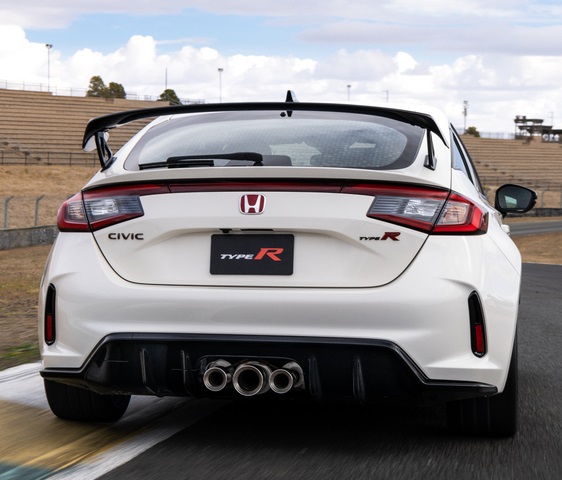
Golf GTI Mk 4

The Golf 4 GTI set new benchmarks in terms of individuality

The Golf 4 GTI set new benchmarks in terms of individuality, quality and speed, says design chief Marco Pavone.

“Launched in 1998, the Golf 4 GTI has a more modest appearance. For example, it is the first and only GTI not to sport the red stripe on the radiator grille. And yet the model is celebrated to this day as the starting point for a new, clean era of vehicle design. It also set new benchmarks in terms of individuality, quality and speed,” says Pavone. From the designer’s perspective, the European 25th-anniversary edition was particularly striking. “It was thanks to that model that I was bitten by the GTI bug,” says Pavone, who was born in Brazil. “The brilliant clear-glass headlights and wide sills were particularly distinctive!”

However, even in the production GTI, the lighting units (including the turn signals and fog lights) were installed in a compact module. The front and rear aprons, side sills and roof-edge spoilers were painted the same color as the car itself, while many elements were once again broader than those of its predecessor. The GTI logo shifted from the right to the left for the first time.

Golf GTI Mk 5

Generation 5 of the VW GTI

GTI No. 5 saw the iconic honeycomb pattern introduced to the sports compact from Wolfsburg for the first time.

“The design of the fifth-generation GTI is once again far more self-contained and takes inspiration from the first GTI,” says Pavone, describing the development. This is particularly clear from the red trim around the radiator grille. One new and emotional style element is the honeycomb design of the grille: Pavone says, “Even today, it is still hard to imagine a GTI without it!”

The round twin headlights are back, grouped in a unit behind dark glass. Just like its ancestor, the fog lights are located low down in the front apron.

Golf GTI Mk 6

The Mk 6

A throwback to the original GTI, directed by two parallel red GTI lines, sharper edges and new, black fins in the front apron.

The sixth generation of the Golf GTI transported the tradition of the original version into the future. Two fine red trim lines run across the grille and link the bi-xenon headlamps. The spoiler is now adorned with striking air intakes with three sharp fins on each side. The vertical fog lights are also located low. The spoiler takes up the central alignment of its predecessor, but broadens it. A splitter is also installed for the first time. “That gives the Golf 6 GTI the most powerful, modern and angular appearance to date,” says Pavone.

Golf GTI Mk 7

The seventh generation had full-LED headlights.

For the first time, the GTI trim runs into full-LED headlights.

“This was the first GTI on which I was allowed to let my creative juices flow as a designer,” says Pavone. “For me, it remains the very best, with an iconic quality — no GTI had ever been as stylish.”

The continuous red GTI trim on the seventh generation runs confidently into the slim, full-LED headlights. The hood arches right down to the grille, while sharp lines run from the headlights up to the A pillar. One particularly characteristic element is the daytime running light with its “Wings” design, which also features the red GTI trim. The broader side sills emphasize the fact that this ‘power’ Golf is a dynamic beast. However, the front spoiler, with its typical GTI honeycomb pattern, also impresses with wider bumpers extending further outwards.

Golf GTI Mk 8

The MK8 mug illustration

The  MK8 uses the honeycomb pattern to hide the optional fog lights, in an X formation, for the first time.

The deep-set headlights are enough to set the eighth-generation GTI apart and reinforce that light is the new chrome. “This Golf GTI has become an icon of the modern era and bears the unmistakable design DNA of its predecessors. However, it embodies these attributes in a more progressive and digital manner than ever before, with a particularly powerful and dynamic stance,” says Pavone. Immediately below the hood, we find the familiar red GTI trim. While the predecessor’s bumper was divided by fins, the honeycomb design is now completely open. Located to the left and right are the new GTI wings, which charismatically integrate the optional LED fog lights in an X shaped and create a completely new impression.

2022 Volkswagen Golf R

The 2022 Volkswagen Golf R on snow

When it goes on sale late this year, the all-new 2022 Volkswagen Golf R will be the most powerful Golf R to date — 315 hp, 310 lb.-ft. torque and a new 4Motion all-wheel-drive system with rear-axle torque vectoring. (VWoA)

A rear view of the 2022 Golf R

Mark Maynard