Select Page

Subaru BRZ Review

Subaru BRZ Review

Like a good red wine, the 2023 Subaru BRZ has gotten better with age. It has earned its tire wear as a sports car — not a “sporty” car with apologies

An exterior view of the a blue BRZ

The 2023 Subaru BRZ is offered in two trim levels of Premium and Limited. Pricing starts at $29,615 for the Premium and $32,115 for the Limited. (Photos courtesy of Subaru or as credited).

Table of Contents

2022 Subaru BRZ redesign
2023 BRZ Pricing
Powertrain
Ride and Handling
Suspension, Braking, Steering
Interior Function
Why Buy the 2023 Subaru BRZ?
Specifications

BY MARK MAYNARD

The Subaru BRZ is a dagger of inspiration when it’s time to cut to the chase. This rear-wheel drive, subcompact 2-plus-2 coupe has a snick-shift attitude with steely resolve. And by 2023 standards, it’s almost cheap to buy. Pricing starts at $29,615.

2022 Subaru BRZ Redesign

When the first BRZ launched in 2012 as a 2013 model, it was basically a badge-engineered model of the Scion FR-S. And when the Scion brand died in 2016, Toyota adopted it as the 86, or “eight-six” to purists. (In 2008, Toyota bought 16.5 percent of Fuji Heavy Industries, which includes the Subaru automotive brand.)

With its 200-hp, 2.0-liter engine (205-hp for automatic-equipped models), the first BRZ was a tepid performer that looked faster than it was.

That all changed with the redesigned and re-engineered second-generation 2022 BRZ. It introduced the 2.4-liter engine, the gear-changer that transformed the BRZ from a “sporty” car to a sports car.

Moving the BRZ to the Subaru Global Platform brought a 50-percent boost in twisting stiffness. The stiffer body allows a more responsive turn-in and throttle steering control.

The new body has been lightened with an aluminum roof, front fenders, and hood. With the reduced body weight, the center of gravity is now lower than the first-gen model, Subaru says — putting the BRZ on par with exotic hyper-cars.

The double-bubble roof design is just part of the aerodynamically enhanced body design. Other design elements include:

•An engine undercover insulator;

•Front fender air outlet;

•Body color rocker spoiler;

•An integrated trunk spoiler.

The 3 spoke steering wheel in the BRZ

A heated three-spoke wheel, and three pedals.

2023 Subaru BRZ Pricing

BRZ is available in two trim levels of Premium and Limited (today’s tester). Premium pricing starts at $29,615. It has the same performance elements as the Limited but with fewer interior upgrades. Among the standard BRZ fare is smart-key locking with push-button ignition, 17-inch wheels, fabric upholstery, a six-speaker audio system, and the leather-wrapped three-spoke steering wheel with red stitching.

The Limited starts at $32,115. It has such upgrades as leather-and-Ultrasuede-trimmed performance front seats, BRIN NAUB nubuck-like trim on the instrument panel visor and door trim, an eight-speaker audio system, and blind spot detection with rear cross-traffic alert. Get the list of standard equipment in the specs box at the end of this story.

Retail prices include the $1,020 freight charge from Gunma, Japan.

Check here for current pricing and offers.

The integrated trunk-lid spoiler.

The integrated trunk-lid spoiler.

Sporty BRZ Accessories Include

Rear Bumper Diffuser, $699.95: Lower rear body panel helps to direct airflow and adds a sculpted finished appearance.

STI Flexible V-Bar, $429.95: The performance-tuned STI Flexible V-Bar tightens steering response, stability, and cornering grip.

STI Shift Knob (for manual shifter), $216: A statement piece of aluminum and leather materials.

*Accessory prices do not include dealer installation.

A snick-shift six-speed manual.

A snick-shift six-speed manual.

BRZ Powertrain

In 2013, the co-developed engine began as a naturally aspirated flat-four 2.0-liter. At 200 horsepower, it was underpowered. But it was a debut for Toyota’s D-4S — Dynamic Force ‘Superior’ with direct and port fuel injection. The pairing improves fuel atomization while the port side is a self-cleaning feature to help rinse injector carbon build-up.

Fast forward to the 2022 redesign, and the new FA24 2.4-liter is still a “boxer” with horizontally opposed cylinders. The engine has 228 horsepower and a peak torque rating of 184 foot-pounds at 3,700 rpm. The sophisticated mighty-mite has a high-compression ratio of 12.5:1, requiring the energy of premium fuel.

Power delivery is by choice of six-speed transmissions, either a stick with a Torsen limited-slip differential or automatic. The automatic — $1,500 in the Premium, $1,700 in Limited — includes adaptive control, manual shift mode, downshift engine blipping, and steering wheel paddle shifters. Opting for the automatic also adds Subaru’s EyeSight Driver Assist Technology.

Both gearboxes have a Track mode and Traction Control Off switch. And for those who actually run their BRZ through a performance course, the tire pressure monitoring system has individual tire pressure displays and registrations for two sets of wheels, such as for your race rubber.

Testers at Edmunds.com managed a 0-60 mph acceleration run in 6.1 seconds in a manual BRZ Limited. “That’s almost a second quicker than the previous version and similar to the acceleration of the latest Golf GTI (5.9 seconds) and Mazda Miata (6 seconds),” wrote senior vehicle test editor Kurt Niebuhr.

Fuel economy ratings for the manual are 20/27/22 mpg. I worked up to 29.3 mpg on a longer highway run. The automatic offers an incremental mileage improvement of 21/30/25 mpg city/highway/combined.

The 24-liter 'boxer' four cylinder engine in the BRZ

The FA24 ‘boxer’ 2.4-liter has 228 hp and peak torque of 184 foot-pounds at 3,700 rpm.

BRZ Ride and Handling

The more powerful 2.4-flat four-cylinder has the guts to pull steady from liftoff to interstate cruising. It is an eager scrapper that does not blow past the pleasure of feeling the suspension give and take. A reassuring push is felt in the driver’s seat from rear-wheel control.

There is no need to rush shifts. The engine’s 184 foot-pounds of peak torque are easily finessed with the six-speed stick. The clutch is light and the gears engage with steely engagement, and I never missed a one in my week of testing. (A seven-speed gearbox might help fuel economy, but I liked the control of the six-speed.)

Hill-start assist eliminates clutching anxiety — there’s about a 3-second hold before the backward roll.

Despite a low-slung stance and driving position, the BRZ is not prone to chin-scraping at every low dip in the road or driveway. However, while idling in traffic, I was looking into the ass-end of a Prius, and just about any other car.

At speed on the highway, the BRZ is a maelstrom of sounds. There is a rush of road noise and wind noise. But this is a sports car, and the rage of sounds can be forgiven. Tach it up, and revs in the higher rpms start speaking in enthusiast’s tongues.

The customizable 7-inch digital instrument panel.

The customizable 7-inch digital instrument panel.

Suspension, Braking, Steering

Underpinning the BRZ is a four-wheel independent suspension. The front has MacPherson-type struts with lower L-arms, coil springs, a stabilizer bar, and a strut tower brace. At the rear is a double wishbone with coil springs, stab bar, and anti-lift engineering.

Four-wheel ventilated disc brakes have 11.6-inch front rotors with dual-piston calipers. At the rear, 11.4-inch rotors with a single pot caliper.

Quick-ratio rack-and-pinion has well-calibrated electric assist. The turning circle is a tidy 35.4 feet.

Tires on the Premium model are 17-inch summer performance, 215/45. The Limited’s 18-inch tires are Michelin Pilot Sport 4 summer performance, 215/40. Both models have a tire repair kit, not a spare.

The Limited’s 18-inch tires are Michelin Pilot Sport 4 summer performance

The Limited’s 18-inch tires are Michelin Pilot Sport 4 summer performance, 215/40. (Mark Maynard)

BRZ Curb Weights

The Limited manual weighs 2,864 pounds or just 49 pounds more than the Premium. (Compared to the first-gen model, the 2023 BRZ manual is just 88 pounds heavier.) Opting for the automatic shifter adds just 17 pounds for the Limited or 20 lbs. for the Premium.

Ultrasuede-trimmed performance buckets in the BRZ

Ultrasuede-trimmed performance buckets.

Interior Function

Settle into the cockpit, and you’ll notice some functional roominess. Headroom of 37 inches will be limiting to some, but a 6-foot-6 friend had no problem getting comfortable behind the wheel.

Sightlines are surprisingly open for such a low and swoopy body style.

There is much carryover content and materials between the BRZ and its alt-ego Toyota GR86. But there are subtle differences. For one, the BRZ has an electric parking brake, and the Toyota GR86 has a hand brake, which is beneficial for scooting the rear end at the apex of the slalom. Otherwise, Subaru’s interior treatment has premium appeal.

The Limited adds a leather-wrapped three-spoke steering wheel and shifter, Ultrasuede-trimmed performance front seats, heated front seats, carpeted floor mats with red stitching and BRZ logo, and a six-way manual driver’s seat.

Interior space is compact with a modular Subaru Starlink 8-inch multimedia audio system with Apple CarPlay and Android Auto connectivity. The screen doubles as a decent-sized rearview camera. Navigation is via the Starlink app.

The eight-speaker audio system works hard but is challenged by the noisy ride.

My daily complaint was how the seat belt cut across my neck. There is a guide loop, but it unsnapped almost immediately after securing the belt.

The very small back seats in the BRZ

The back seats make a better platform with the seatback folded. (Mark Maynard)

Back Seat and Cargo Space

Back seat space is a mere suggestion. Technically, there are 29.9 inches of legroom, but that becomes zero-inches with any occupant in the front seats. But fold the seatback, and there is about 5 feet in length for sports gear.
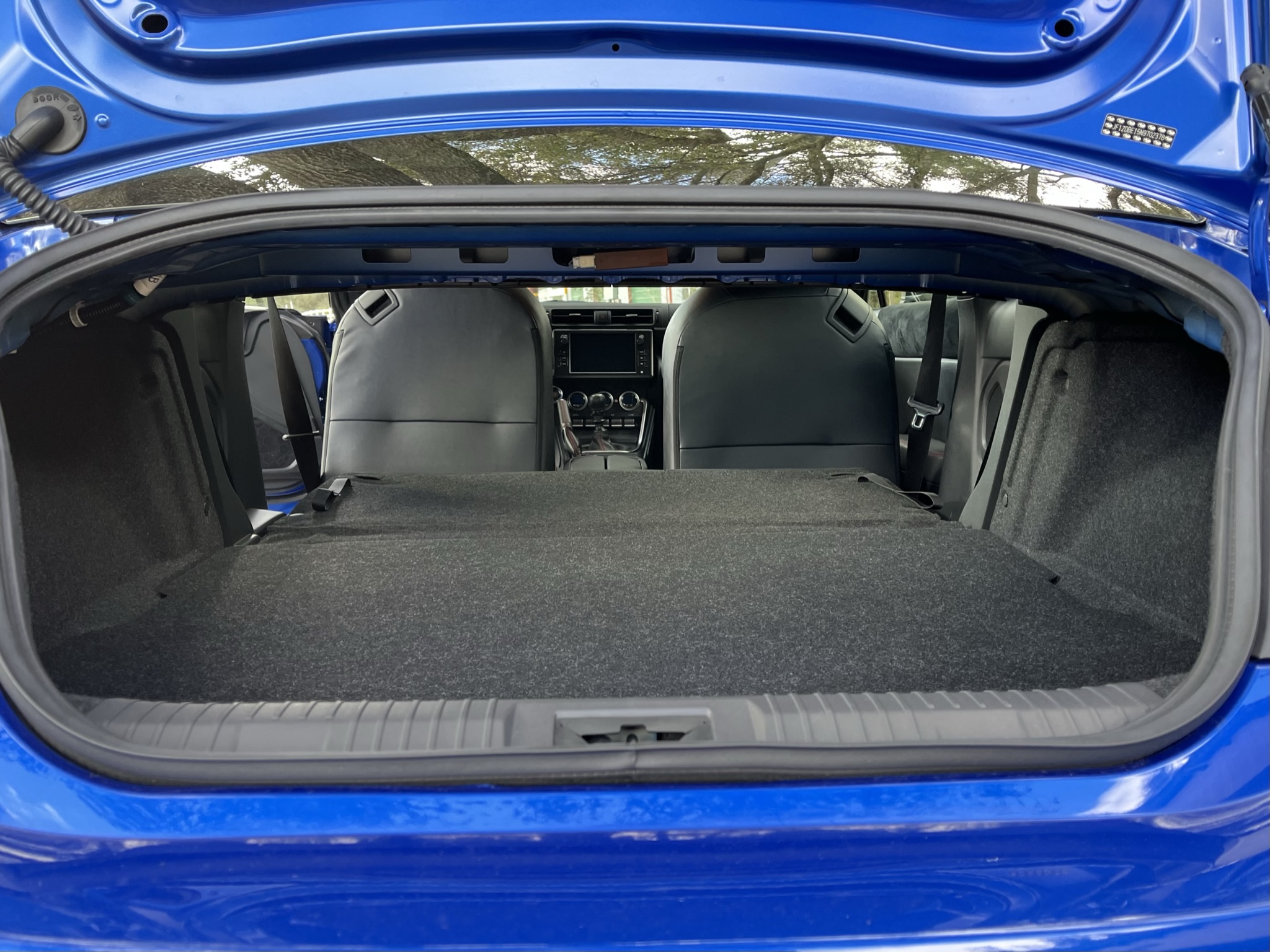
The BRZ cargo space with the back seat folded

Fold the seatback for about 5 feet in length. (Mark Maynard)

Why Buy the 2023 Subaru BRZ?

Like a good red wine, the Subaru BRZ has improved with age. It has earned its tire wear as a sports car, not a mere “sporty” car.

There is simple and honest integrity to the 2023 Subaru BRZ. Unlike some high-strung performance coupes, the BRZ is an everyday driver that does not extract a pound of muscle pain upon entry or exit.

It is built for fun, and the BRZ lets it rip with precision. It seems as if it should cost more, but just grab it and run with it like you stole it.
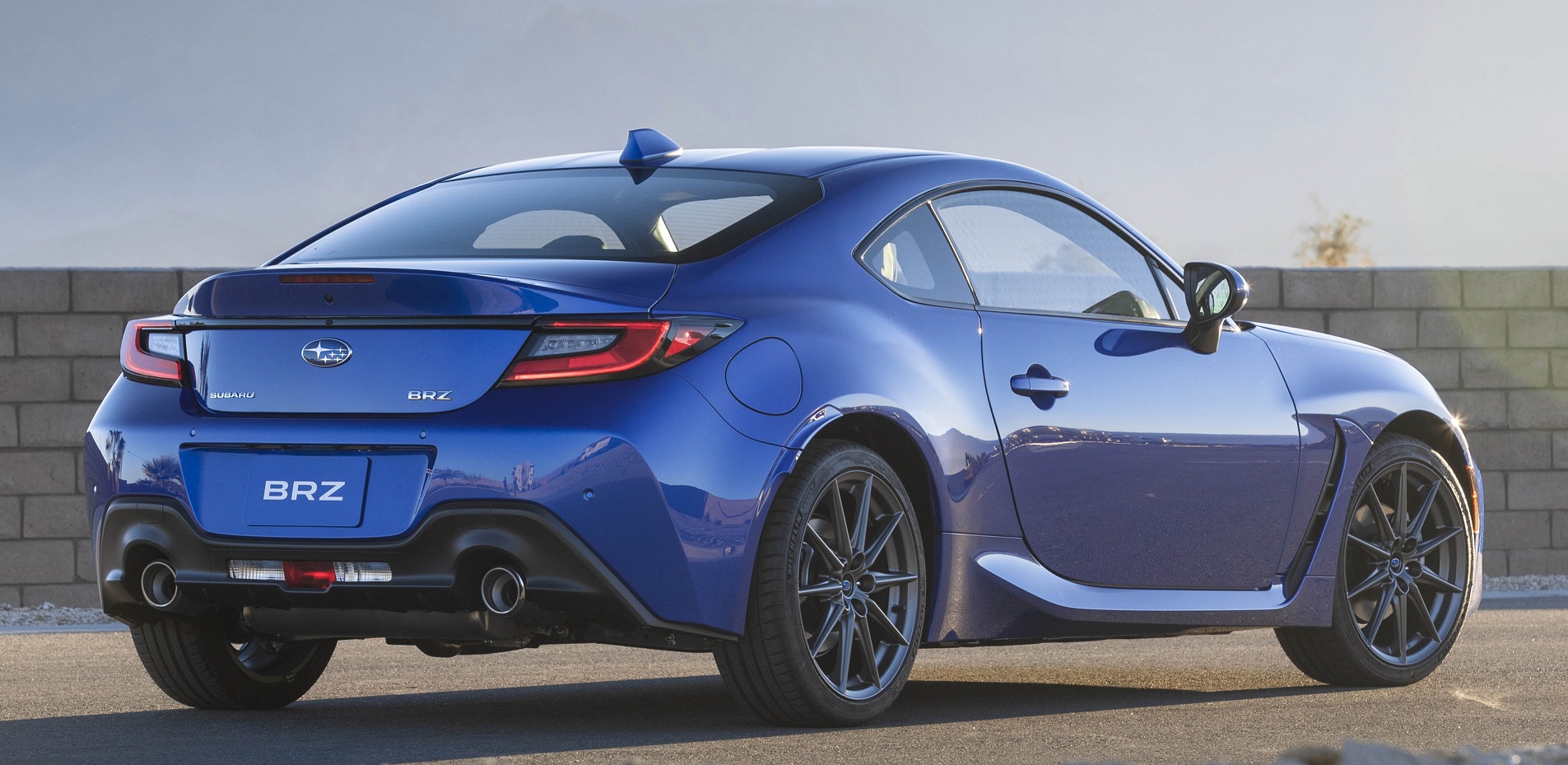
A rear view of a bold, blue BRZ

The second-gen BRZ has a lower center of gravity than the first-gen model.

2023 Subaru BRZ Limited Specifications

Body style: subcompact, 2+2 rear-wheel-drive coupe with aluminum hood, front fenders and roof

Engine: FA24 228-hp 2.4-liter, horizontally opposed (‘boxer’) 4-cylinder with direct and port fuel injection with multi-spray injectors), aluminum alloy cylinder block and cylinder heads; 184 lb.-ft. torque at 3,700 rpm

Transmission: 6-speed manual with Torsen limited-slip differential

Fuel economy: 20/27/22 mpg on the recommended premium fuel

0-60 mph acceleration: 6.1 seconds *per Edmunds.com

BY THE NUMBERS

Fuel tank: 13.2 gallons

Trunk space: 6.3 cubic feet

Front head/leg room: 37/41.5 inches

Rear head/leg room: 33.5/29.9 inches

Length/wheelbase: 167.9/101.4 inches

Width/height: 69.9/51.6 inches

Curb weight: 2,864 pounds

Turning circle: 35.4 feet

FEATURES

Limited model standard equipment includes: smart-key entry and push-button ignition, rearview camera, steering responsive LED high and low beam headlights, LED running lights, Subaru Starlink 8-inch multimedia audio system with Apple CarPlay and Android Auto connectivity, 8-speaker audio system with satellite radio, carpeted floor mats with red stitching and BRZ logo, heated front seats, leather-wrapped 3-spoke steering wheel and shifter, Ultrasuede trimmed performance-design front seats, 6-way manual driver’s seat, fold-down rear seatback, 18-inch alloy wheels with Michelin Pilot Sport 4 summer performance tires (215/40)

Safety features include: 7 air bags, stability and traction controls, blind-spot detection with cross-traffic alert, brake-force distribution, brake assist

PRICING

Limited base price: $32,115, including $1,020 freight charge; price as tested $32,115

Options on test vehicle: None

Where assembled: Gunma, Japan

Warranties: 3-years/36,000-miles bumper to bumper with roadside assistance; 5-years/60,000-miles powertrain

Mazda CX-50 2.5 Turbo Review

Mazda CX-50 2.5 Turbo Review

The 2023 Mazda CX-50 gives a leg up as a family-class adventure SUV with standard all-wheel drive

A trail side view of a Mazda CX 50in zircon sand metallic paint

The 2023 Mazda CX-30 Turbo is sold exclusively with all-wheel drive. Turbo model pricing starts at $43,575. (Photos courtesy of Mazda or as credited)

Table of Contents

Mazda CX-50 Overview
Going Up the Country
CX-5 to CX-50 Comparo
Pricing
CX-50 Powertrains
Curb Weight Dilemma
Ride and Handling
Driver-Assist Technologies
Back Seats and Cargo
Why Buy the Mazda CX-50?
Specifications

BY MARK MAYNARD

The Mazda CX-50 crossover SUV is a stepping stone along the brand’s plan to move upmarket. The brand’s evolution has been ongoing since the slightly larger CX-30 replaced the CX-3. Next is the larger CX-90 three-row SUV replacing the CX-9.

The CX-50 shares sales space with the smaller CX-5, which is likely to be phased out as the sophistication of the CX-50 is recognized. After all, the 2023 CX-50 starts at just $850 more than the CX-5. The larger CX-50 is marketed as an off-road adventure vehicle, Mazda says. Both models are the brand’s top sellers, hitting a combined 16,575 sales at the end of 2022.

The 2023 Mazda MX-30 EV goes on sale in California dealerships this spring but in limited numbers. Mazda says the MX-30 is a full battery-electric small SUV that will work best for urban drivers. It has a 35.5 kWh lithium-ion battery and a driving range of 100 miles. Sold in two trim levels, starting prices are $35,385 and $38,395. Built in Hiroshima, Japan, pricing includes the $1,275 freight charge.

Competitors to the Mazda CX-50 include the Honda CR-V, Hyundai Tucson, Nissan Rogue, Subaru Forester, Kia Sportage, and Toyota RAV4. Some of these have their own “X,” “Wilderness,” and “Off Road” trim levels.

The driver area with wide infotainment screen for the camera, navigation, and cabin controls

A 10.25-inch center display for the rearview camera, maps, apps, and other cabin controls.

Mazda CX-50 Overview

Mazda USA has plans to move the brand upmarket to generate higher revenue per vehicle, according to a report in Automotive News. And at the same time, Mazda is going country, or at least more adventurous in how its vehicles are equipped.

The CX-50 was developed for North America, particularly to support customers’ active and outdoor lifestyles in this region, Jeff Guyton, president and CEO of Mazda North American Operations, said in a release.

Guyton also said there are plans (in the coming years) to offer an electrified CX-50, including a traditional hybrid model, which will use a Toyota system. More information about electrified models will be shared later, he said.

Trail-riding capability is necessary for those just starting their journey into an active lifestyle, Guyton said. Among the capability elements are standard all-wheel drive, high-strength roof rails, and reinforced B-pillars and door jambs for strapping gear to the roof.

The CX-50 is the first Mazda vehicle to be assembled at the new Mazda Toyota Manufacturing (MTM) plant in Huntsville, Ala.

A view of the front passenger area with the new terracotta colored leather upholster.

The CX-50 debuts a terracotta interior color with heated and ventilated front seats.

Going Up the Country

Whether the adventure trend is pandemic based or just a general malaise of urban bitchiness, carmakers are adding off-road-influenced SUVs to help people get the hell out of town. There are lots of jacked-up pickup choices, but the uprated adventure SUVs are fewer but growing.

Long the territory of Jeep and Subaru, the dual-sport SUV choices are growing:

• Ford Motor staked its claim to the outdoors with the new Bronco and Bronco Sport, both with elevated pricing.

• Toyota now offers two adventure-oriented models of the RAV4 (Adventure and RAV4 TRD Off-Road), with a range of quality survival accessories.

• Honda has its Passport TrailSport, $45,000, with standard i-VTM4 all-wheel drive and a 5,000-pound towing capacity. The TrailSport has a 10mm wider track for trail stability and an increased ground clearance of 8.1 inches.

• Kia has an X-Pro trim for the Sportage.

And now Mazda is joining the trend in family-class adventure SUVs with the compact-class, five-seat CX-50.

Mazda has engineered its famed sport-tuned handling into the CX-50, but its off-roading credentials are caught in a crossfire.

It has rugged fender overriders for trail riding, but the suspension is not raised. Ground clearance of 8.6 inches (or 8.5 for the Meridian Edition) is slightly more than half an inch more than for the CX-5. The wider CX-50 on the longer wheelbase with 20-inch tires also has a wide turning circle of at least 39 feet. However, the tester was able to curl neatly into tight parking spaces. Making a U-turn on the trail might be less tidy.

A Meridian Edition CX-50 pulling a camping teardrop trailer on a forest trail

The CX-50 has a 3,500-pound tow rating with the turbo engine.

CX-5 to CX-50 Comparo

Owners who know the CX-5 will likely immediately notice the larger body of the CX-50. Here is a look at other size comparisons:

Wheelbase: The CX-50 wheelbase is a significant 4.6 inches longer than the CX-5. The longer wheelbase gives the CX-50 a more settled highway ride.

Overall length: The CX-50 is 5.7 inches longer, mainly benefiting cargo space. Back-seat legroom has a generous reach of 39.8 inches, but that depends on the person sitting ahead and how far back their seat is positioned.

Body Width: Total body width with the side mirrors folded is 3 inches wider at 80.8 inches (mirror to mirror). However, cabin space from door to door is 1.2 inches narrower in the front seats but 1.2 inches wider in the back seats.

Body height, with the shark fin antenna: The CX-50 roof is 2.4 inches lower than the CX-5, or 66.3 vs. 63.9 inches for CX-50.

Front head and legroom: With the lower roofline, headroom in the CX-50 was trimmed by about a half inch to 38.6 inches vs. 39.2 inches in the CX-5. Legroom gains 0.7 inch or 41.7 inches vs 41 in the CX-5.

Rear legroom: The CX-50 gains just 0.2 inch in rear legroom, or 39.8 vs. 39.6. The rear bench is short on thigh support, and the seatback is somewhat erect with no recline function; that complicates comfort for adults but is acceptable for the school carpool.

Cargo space: The CX-50 has less than a cubic foot of space (0.9 cu.ft.) than the CX-5. Using the EPA measurement standard, there are 30.9 cubic feet of space behind the back seat vs. 30 cu.ft. in the CX-5.

A view of the dashboard to show off the baseball-type cross stitching in terracotta color

Baseball-style cross stitching shows off the more premium interior elements.

2023 Mazda CX-50 Pricing

There are 10 trim levels of the 2023 Mazda CX-50, all with all-wheel drive, a choice of two 2.5-liter four-cylinder engines, and a six-speed automatic transmission.

Starting prices, including the freight charge, range from $28,825 with black fabric upholstery to the midrange CX-50 2.5 S Preferred with black leatherette and gray fabric trim. The top-line CX-50 2.5 Turbo Premium Plus (today’s tester) starts at $43,575.

The new-for-2023 Meridian Edition, $38,830, has a few more outdoorsy elements, such as black metallic 18-inch alloy wheels and all-terrain Falken Tires (225/60). Other Meridian-unique features include a matte black hood graphic, black wheel locks and lug nuts, and side rocker panels to help fend off scrapes and stone chips to the body.

The Meridian Edition has its own paint colors of Polymetal Gray or Zircon Sand exterior paint, $395 each. All seven paint colors are metallic. Only Jet Black Mica and Ingot Blue Metallic are no-cost choices; Machine Gray Metallic is $595.

New this year is the two-tone interior of Terracotta leather with black interior accents.

Mazda’s Mi-Drive is a standard feature with driving modes of Normal, Sport, Off-Road, and Towing. The Turbo models have a tow rating of 3,500 pounds.

Check here for current pricing and offers.

The panoramic sunroof, a first for Mazda

The panoramic moonroof is a first for Mazda.

Meridian Apex Package

Boosting the Meridian equipment list is the optional Apex Package, $1,235. It includes roof-mounted black crossbars, a roof platform, and front and rear splash guards. The roof platform allows customers to secure even more outdoor equipment, including the rooftop tent from Mazda’s accessory line.

Meridian Choice Package

Optional for any CX-50 model in either powertrain is the Meridian Choice Package, $1,899. It is a dealer-installed option, including roof-mounted black crossbars, roof platform, front and rear splash guards, side rocker garnish, and black wheel locks and lug nuts. The package also includes a matte black hood graphic with a different design from that on the Meridian Edition.

The flat black hood graphic on the Meridian Edition

The flat black hood graphic on the Meridian Edition.

CX-50 Powertrains

Both four-cylinder engines for the CX-50 are designated Skyactiv-G 2.5-liter, with direct injection. And all models have a six-speed automatic transmission.

The base non-turbocharged engine has power ratings of 187 horsepower and peak torque of 186 foot-pounds at 4,000 rpm.

The twin-turbocharged Skyactiv-G 2.5 has split power ratings depending on the fuel used, 87 octane or premium fuel.

Running 87 octane, the 2.5 turbo has power ratings of 227 hp and 310 lb.-ft. torque at 2,000 rpm. Pay for the premium fuel, and the ratings rise to 256 hp and 320 lb.-ft. torque at 2,500 rpm.

Mazda cites no power improvement with premium fuel for the base engine. Neither Mazda nor the EPA indicates a variance in fuel-economy ratings between regular and premium.

Sport mode kicks the turbo engine into rapid acceleration without hesitation. I used Sport mode frequently in town because the uptake is sharp and the force is not abrupt or wheel-spinning. Sport is also strategic in the clogged daily commute to guard your line. Acceleration in Normal is more gradual but not power starved.

For those who plan to tow something into the wilderness, the turbocharged engine has a higher tow rating. It has a max towing capacity of 3,500 pounds vs. 2,000 pounds for the non-turbo engine.

The turbo engine has 227 horsepower

The twin turbocharged Skyactiv-G 2.5 has power ratings of 227-hp or 256-hp, whether running 87 octane or premium fuel. (Mark Maynard photo)

Fuel Economy Ratings

EPA estimated mileage ratings for the base 2.5-liter engine are 24 mpg city, 30 highway, and 27 mpg combined, on 87 octane. With a full 15.9-gallon tank, owners can expect a total driving range of 427 miles, per FuelEconomy.gov.

The CX-50 2.5 Turbo has mileage ratings of 23/29/25 mpg city/hwy/combined on 87 octane, or a total range of 395 miles.

According to the onboard computer, most of my mileage around town was 15-16 mpg and up to 21-22 mpg on the highway. I’ll blame the reserved mileage on Sport mode. But it might be more than that.

The six speed automatic shift console

A six-speed automatic transmission is standard in all models of CX-50.

Curb Weight Dilemma

New owners gripe about CX-50 mileage, but its EPA fuel-economy ratings are just an mpg or three different from most of its competitors.

Curb weights tell another story that will influence fuel economy. The Mazda CX-50 is heavier than most of its compact all-wheel-drive competitors. The top-line tester weighs 3,907 pounds. The Honda CR-V is 19 pounds heavier but has the best EPA mileage ratings in the segment of 40/34/37 mpg.

Here is a look at other competitors’ curb weights with mileage ratings:

Subaru Forester Wilderness, 3,620 lbs. — heaviest of the Forester models; 25/28/26 mpg

Toyota RAV4 Adventure: 3,615 lbs.; 25/33/28 mpg

Hyundai Tucson: 3,666 lbs.; 23/28/25 mpg

Nissan Rogue: 3,737 lbs.; 28/34/31 mpg

Kia Sportage X-Pro Prestige: 3,834 lbs.; 23/28/25 mpg

The driver-info gauge array

A 7-inch LCD gauge display.

CX-50 Turbo Ride and Handling

In my test of the CX-50 Turbo, the highway ride was on glide control. It rode solid and steady at interstate speeds and with little variance, whether along California’s grooved concrete or blacktop.

As comfortably as the CX-50 rolls on the interstate, the ride is less svelte around town. The suspension is firm, even hard. I expect Mazda strapped down the CX-50 for sporty handling, but the ride can be jarring over bad pavement and potholes.

The front suspension uses MacPherson struts with a torsion-beam rear axle. Torsion beams are flat in design, which benefits cargo space, but the rear ride quality can feel clunky over bumps.

Mazda’s G-Vectoring traction-control system uses the center and rear differentials to control weight transfer, which is helpful on-road or off. There is confident front-end grip through enthusiastic cornering.

In the snow or dirt, Mazda’s i-Activ all-wheel-drive system is masterful at anticipating wheel slip before barely an inch of traction is lost. Mazda says it is a predictive system that monitors 27 sensors more than 200 times a second.

Rather than moving power “from the wheels that slip to the wheels that grip,” the i-Active system directs engine torque to the necessary wheel to maintain forward momentum.

Mazda also stepped up and gave the CX-50 four-wheel disc brakes a millimeter or three larger than the competition. There are 12.8-inch ventilated rotors in front and 12.8-inch solid rotors rear.

Tire and wheel packages range from 17 inches on entry models to 18 inches on the off-road-focused Meridian Edition. Premium Plus and Turbo models are on 20-inchers. The Premium Plus Turbo tester was fitted with 20-inch Goodyear Eagle Touring tires 245/45.

The 20-inch black alloy wheels have bright outlines for a handsome appearance

Premium Plus and Turbo models are fitted with 20-inch Goodyear Eagle Touring tires. (Mark Maynard photo)

CX-50 Interior Function

The interior layout is ergonomically designed and straightforward to use. Sightlines are open across the hood and over the shoulder. But the 360-degree-view monitor in the Premium Plus package is an enabler when in tight parking situations.

The tester had desirable standard features, such as the heated steering wheel, heated and ventilated front seats, an eight-way power driver’s seat, and a six-way front passenger seat.

There is wireless Apple CarPlay and Android Auto, but a wireless phone charging pad is only offered in the top-trim Turbo Premium Plus. Nor is there an interior tailgate release, only at the tailgate and the key fob.

Interior textures and colors enhance a premium appearance. The tester’s terracotta-and-black leather upholstery, with perforated centers, is handsomely set off with terracotta-color baseball-type stitching. The stitching also spans the dashboard face and upper door panels.

Standard on upper-trim models is a panoramic moonroof, a first for Mazda.

Not so enjoyable for me is the nagging and insistent alert should the driver use left-foot braking with the accelerator. And the same tone nags until the seat belt is secured.

The list of standard features is highlighted in the specs box below.

The back seats in the CX-50

Back-seat legroom has a generous reach of 39.8 inches, but the seat bottom is short on thigh support, and the back is somewhat erect without recline.

Mazda CX-50 Accessories

Another notable omission in the CX-50’s list of features is a power inverter with a household plug. A power inverter, now typical in many new vehicles, allows external electrical devices to be used with power from the vehicle.

A power inverter is handy for outdoor enthusiasts to plug in an inflator for tires, air mattresses, and inner tubes or play video games.

A new owner can buy a plug-in inverter, but Mazda should have considered including this for their new adventure SUV.

Also missing among the standard features of the $43K tester was a retractable roller cover, a $225 accessory. In today’s rampant smash-and-grab thefts, the cover is essential equipment to help keep valuables out of view.

Otherwise, a few camping and road-trip accessories are listed below. But, of course, dealer pricing might vary, and installation is not included in the price.

Roof Top Tent, $1,899: The tent sleeps one or two and has large doors, windows, and skylights. Mazda claims four-season weather protection with a rainfly and waterproof coating. The package includes a ladder and 2.5-inch-thick foam mattress.

Roof Platform, $899: Strap down large items, such as a full-size spare tire. Crossbars are required, adding $350.

Trailer Hitch Cargo Box, $900. Add another 13 cubic feet of storage with this rear-mounted, waist-level box. It slots into most 2- and 1¼-inch hitch receivers — but the box also might create a tail-dragging scrape through dips in the trail.

All-Weather Floor Mats, $150. These heavy-duty rubber mats are ideal replacements for carpeted mats.

Cargo Blocks, $50. Brace your groceries, sports equipment, and other gear.

The CX-50 accessory bike mount with a mountain bike

A bike carrier, tent and roof platform are among the CX-50 accessories.

CX-50 Safety Ratings and Features

The Insurance Institute for Highway Safety gave the new Mazda CX-50 its highest award of Top Safety Pick+. In IIHS testing, the CX-50 earned good ratings in the institute’s six crashworthiness evaluations:
• Driver-side small overlap front
• Passenger-side small overlap front
• Moderate overlap front
• Original side
• Roof strength
• Head restraint tests

Its front crash prevention system earned a superior rating in the vehicle-to-vehicle and daytime vehicle-to-pedestrian evaluations. The CX-50 also has good or acceptable rated headlights standard across all trims, garnering IIHS’s higher-tier award.

The National Highway Traffic Safety Administration has not yet tested the Mazda CX-50.

Driver-Assist Technologies

Mazda has equipped the CX-50 with a range of driver-assist technologies, but the grouping does not add up to Level 2 semi-autonomous driving.

Among the technologies are hill-launch assist, lane departure warning and lane-keep assist, blind-spot monitoring, and radar cruise control.

With the assist technologies activated, the CX-50 would not stay centered in the lane. Blind Spot Assist, however, will add a minor steering intervention to help the driver avoid a collision.

The Turbo Premium Plus package adds such safety tech as traffic jam assist (rerouting), front and rear parking sensors, rear smart brake support, and blind-spot prevention

The open cargo area of the CX-50 with back seats folded.

Fold the back seat for flat sleeping space of 6-plus-feet in length. (Mark Maynard photo)

Cargo Space

Car campers have 6.3 feet of flat space for sleeping when the 60/40 back seat is folded. The area is about 42 inches wide by 29.6 inches tall to the headliner. Oddly, I found only two tie-down anchors but four bag hooks. On either side at entry are two jug-size indents.

Space behind the back seat is wide at 42.6 inches and flat for about 30 cubic feet of space, stacked to the headliner.

A temporary spare is stored below the floor.  In the event of an off-road flat,  however, the small spare could be problematic.

Why Buy the Mazda CX-50?

Mazda has a built-in fan club with its CX-5 and CX-50. A check of Mazda CX-50 forums and social media shows excited reports from CX-5 owners who traded up to the CX-50 after a test drive.

The new CX-50 owners like the larger cabin — though they say cargo space isn’t quite as large as they’d like. Other comments suggest that the interior is more luxurious than the Subaru Forester. The biggest complaints were about the disappointing fuel economy and the firm ride.

With Mazda’s elite engineering and a network of traction-control assists, the CX-50 is safe and secure for families to try trail riding. New owners to off-road driving must use common sense when choosing their routes. The CX-50 will be a capable scamp along forest trails, but Jeep-grade excursions will eat it alive.

An on-road rear view of the Mazda CX-50

The CX-50 is the first Mazda vehicle out of the automaker’s new manufacturing plant in Huntsville, Ala., a joint venture with Toyota.

2023 Mazda CX-50 2.5 Turbo Specifications

Body style: compact, 5-seat, 5-door AWD SUV

Engine: twin-scroll turbocharged Skyactiv-G 2.5 with direct injection; 227-hp with 87 octane, 256-hp with premium fuel; 310 lb.-ft. torque, 87 octane; 320 lb.-ft. torque, premium

Transmission: Skyactiv-Drive 6-speed automatic

Fuel economy: 23/29/25 mpg city/hwy/combined on 87 octane; 395 miles total range.

Towing capacity: 3,500 pounds (w/turbo engine)

BY THE NUMBERS

Fuel tank: 15.9 gallons

Cargo space: 31.4 to 56.3 cubic feet

Front head/leg room: 38.6*/41.7 inches *w/moonroof

Rear head/leg room: 38.6/39.8 inches

Length/wheelbase: 195.8/110.8 inches

Width/height: 80.8 inches (mirror to mirror)/63.9 inches

Curb weight: 3,907 pounds

Turning circle: 39 feet

FEATURES

CX-50 Turbo standard equipment includes: smart-key entry with push-button ignition, 10.25-inch color center display, active-driving display, radar cruise control, rearview camera, Bluetooth phone and audio, Mazda Connected Services, wireless Android and Apple Carplay, electric parking brake, leather-trimmed upholstery, power driver’s seat with 2-position memory, power passenger seat, heated and ventilated front seats, heated steering wheel, remote power liftgate, rear AC vents, 4 USB ports, 12-speaker Bose audio system;

Exterior features include: black 20-inch wheels with P245/45 all-season tires, rain-sensing wipers, wiper de-icer, rear roof spoiler, power-folding side mirrors (automatic on engine shutoff), adaptive front lighting (turning headlights), LED headlights and taillights, high-beam control, roof rails, rear privacy glass;

Turbo Premium Plus features include: heated rear seats, 360-degree view monitor, traffic jam assist, front and rear parking sensors, rear smart brake support, blind-spot prevention, auto-dimming driver-side mirror, Mazda navigation system, active driving display, traffic sign recognition, frameless auto-dimming rearview mirror, wireless phone charger.

Safety features include: 7 air bags, hill-launch assist, lane departure warning, blind-spot monitoring, rear-cross-traffic alert, dynamic stability and traction controls, brake assist with brake-force control.

PRICING

CX-50 Turbo Premium Plus base price: $43,575, including $1,275 freight charge; price as tested $43,970

Options on test vehicle: Zircon Sand Metallic paint $395

Where assembled: Huntsville, Ala.

Warranties: 5-years/60,000-miles powertrain; 3-years/36,000-miles bumper to bumper with roadside assistance

Kia Carnival MPV Review

Kia Carnival MPV Review

The 2023 Kia Carnival is an ark of accommodation. Its lean styling is a refreshing reset to the typical minivan’s big hips and broad beam

An exterior view of the blue Kia Carnival in front of a train station

The 2023 Kia Carnival MPV SX Prestige tester was $49,285 with three options. (Mark Maynard photos or as credited)

Jump to Features

The Last Honest Vehicle
Pricing
New for 2023
Interior Function
Back Seats and Cargo
Powertrain and Performance
Ride and Handling
Why Buy the Kia Carnival?
Specifications

BY MARK MAYNARD

I see the look in fathers’ eyes as they follow my slow cruise in the Kia Carnival MPV through the beach parking lot. It is a look of envy — with resignation that their lot in life could be so much easier with that damn M-word — minivan. But, no, their hands and their partner’s hands are struggling to untangle a stroller from a crowded trunk while they schlep armloads of a trike, scooter, and a stuffed duffel of clothes and snacks for when everybody is wet, tired, and cranky.

There is much irrational venom directed at this most-efficient mode of moving people. It is as if the minivan represents swallowed pride to make the best of a sad situation.

I count my blessings that this stage has passed in my life. But I always enjoyed testing minivans. Not for their lively drivability but for an hour or so of free time. I’d park the latest test minivan in the driveway, and the kids would want to do homework or watch a movie. It was a secure space that would give me 45 minutes of peace and quiet … for laundry or cooking.

There is comfort and security in the family minivan. It is the modern ark of accommodation. Sure, bring a friend or three. And parents can pull the seats for room to haul furniture … to usher that college kid to the college dorm.

Minivans are built for comfort and accommodation. They are part lounge and part romper room. And any minivan with a combustion engine will get better fuel economy and cost less to maintain (tires and suspension elements) than a comparably sized SUV.

Driver controls are smartly placed and ergonomically designed.

Driver controls are smartly placed and ergonomically designed.

The Last Honest Vehicle

Unlike the SUV, the minivan is the last honest vehicle made today. Minivans don’t have to be something other than what they were intended. A minivan does not need sport bucket seats with their annoying in-your-crack bottom bolsters. A minivan doesn’t need paddle shifters. They surely don’t need a tachometer, which might be the most worthless space-cluttering element in the driver’s gauge display for an automatic-transmission vehicle. And they don’t need a Sport mode to turn the gauge display red.

Manufacturers have tried to sportify the minivan to little avail. Sporty features, such as aerodynamic fairings and hot wheels, just added to the cost. Today, the minivan segment is small: the Chrysler Pacifica, Honda Odyssey, Toyota Sienna, and today’s tester, the Kia Carnival MPV.

Kia has sold a minivan in the U.S. since 2002 called Sedona. It was unremarkable at the time when compared to the competition from Honda, Chrysler, and Toyota. But it did get high marks for safety from NHTSA and IIHS.

Undeterred, Kia moved forward with a second generation in 2005 as a 2006. A third generation came along in 2014 as a 2015. And now, the fourth generation debuted in North America in Feb. 2021 as a 2022 model. The 2022 redesign included adding Kia’s global nameplate Carnival MPV, or multi-purpose vehicle.

There isn’t a beauty competition for a minivan — it just can’t be ugly. Except for the Kia Carnival, there is dowdy minivan DNA in the exterior styling of the competitors, mainly in the big hips and a broad beam. The Kia Carnival, however, looks more like a business attaché. It has lean lines without contrived curves or bulges to hint at “sport.” The Carnival’s styling is legitimate and contemporary.

The 12.3-inch-wide navigation screen

A 12.3-inch navigation screen. (Kia)

2023 Kia Carnival Pricing

All models of Carnival are front-wheel drive with no option for all-wheel drive. For that traction capability, minivan shoppers must consider the Chrysler Pacifica or Toyota Sienna.

The 2023 Kia Carnival MPV is sold in four trim levels of LX, EX, SX, and SX Prestige. Pricing starts at $34,465 for the LX, and there is an LX Seat Package model for $36,465; it adds eight-passenger seating with SynTex upholstery and second-row slide-flex seat adjustment.

The midrange EX and SX start at $39,965 and $43,165.

The SX Prestige tester starts at $47,565 and was $49,285 with three options:

  • Astra Blue paint ($495);
  • Rear seat entertainment package ($1,000);
  • Carpeted floor mats ($200, for three rows).

All MSRPs include the $1,395 freight charge from Gwangmyeong, Korea.

For current Carnival pricing and incentives, go to Kia.com

VIP lounge seating with power controls.

VIP lounge seating with power controls.

What’s New On the 2023 Kia Carnival?

With the Carnival’s debut just a year ago, updates for 2023 are a minor shuffling of features for the SX and SX Prestige models. And there were price increases of $800 for the LX and EX models and $500 for the SX; the freight charge went up by $70.

SX

  • Integrated panoramic 12.3-inch digital cluster and 12.3-inch center display are now standard;
  • Blind-Spot View Monitor is now standard;
  • Dual screen rear seat entertainment and streaming media package was added as a $1,000 option.

SX Prestige

  • 8-passenger Slide-Flex Seating with second-row center multi-function seat is now standard;
  • Dual screen rear seat entertainment system and streaming media capability is a new $1,000 option;
  • 2nd row VIP Lounge Seats is a no-cost option, replacing 2nd-row Slide-Flex Seats. The seat package is for seven-passenger seating and adds a pair of power-operated VIP lounge seats that recline with leg support and an adjustable headrest. The seats also are heated and ventilated.
The video Passenger View display.

The video Passenger View display.

Carnival Interior Function

Space is the luxurious frontier of a minivan. And while the Kia Carnival is not a luxury vehicle, its refinement of interior materials, switchgear, and touchpoints are of rewarding quality.

The Carnival cabin has big-and-tall front headroom of 40.9 inches and shoulder room (door to door) of 64.2 inches, which is 2.6 inches wider than the Kia Telluride SUV.

Sightlines for the driver are unobstructed at the side mirrors and across the hood. Of special value is the around-view camera with overhead and forward views. The camera can be switched on when inching forward in a parking slot or the garage.

There is no stress to step in and buckle up, and definitely no need for running boards, but there is still an elevated ride height for a clear view down the road.

The interior design is fresh with no old-fogey faux wood trim, just clean metallic trim elements. All controls are smartly placed and ergonomically designed.

The shift console is a functional work zone with cup holders divided by a phone slot. A charging e-bin includes a wireless pad and USB charging ports. Small storage areas are handily placed throughout, including a large armrest box.

Rather than a flip-down conversation mirror to keep an eye on children, Kia has a video passenger view and talk function. It is accessed through the main 12.3-inch wide screen and can be set up as a one-touch button on the steering wheel.

The third row seats in the Kia Carnival

Third-row legroom of 35.6 inches is up to 3 inches less than in some competitors.

Back Seats and Cargo Space

Sliding side doors are a parent’s friend — power-operated and foot activated. The openness of the doors allows a parent to get close to the child seat for buckling without hoisting a child up into an SUV seating position.

The driver has controls to open and close either side door, which is helpful for the school taxi when admitting your charges, especially when there is rain or snow.

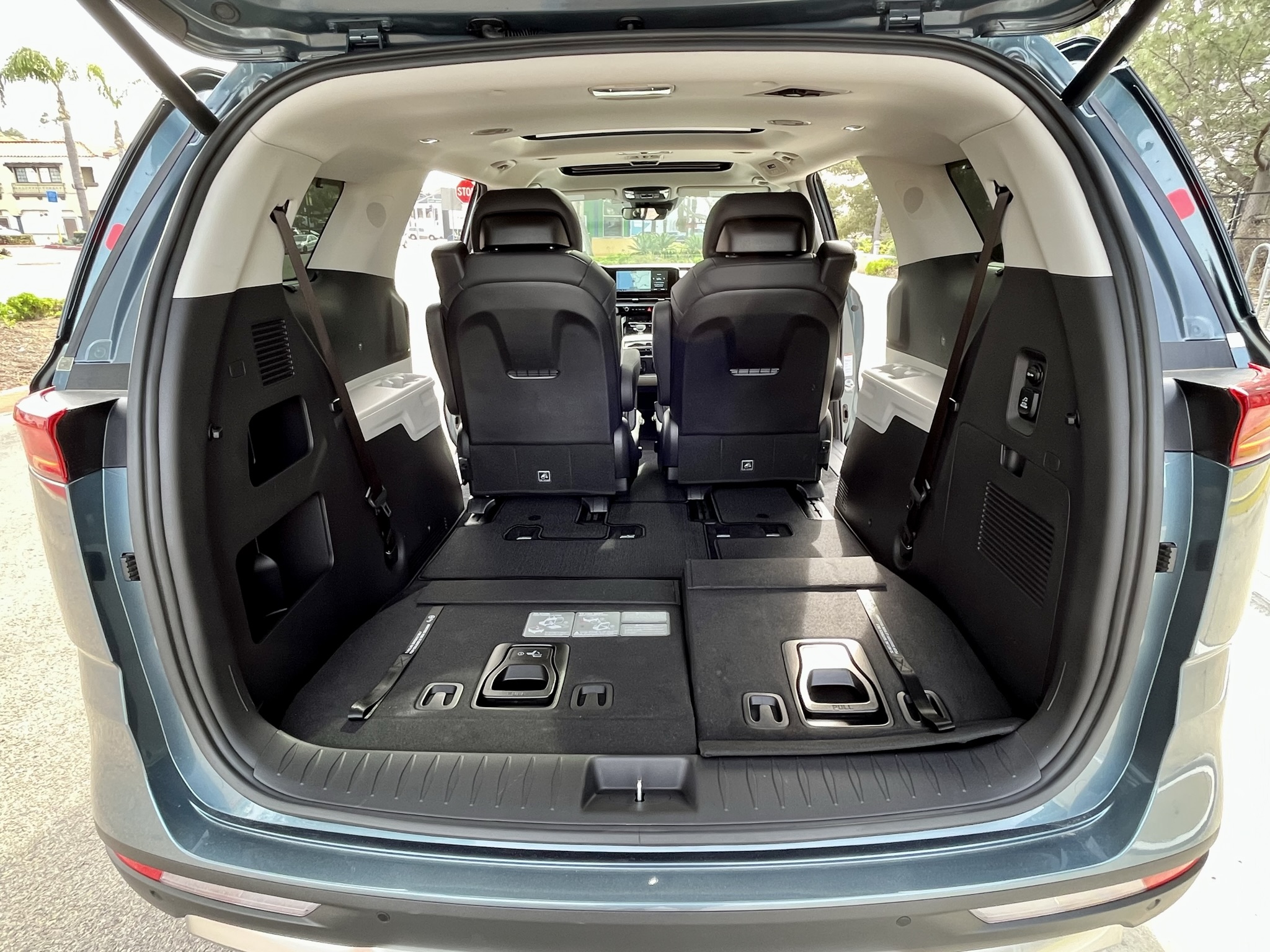
I would prefer the standard three-position second row; it has more family function than the VIP Lounge seats that are exclusive to the SX Prestige. With the eight-seat configuration, the second-row seats can be removed, or just the center seat removed for an aisle pass-through to the third row.

Kia adds a nifty feature of slide-flex seat adjustment. Both window seats can be moved manually inward by a couple of inches. The side movement is beneficial with the VIP Lounge seats, which cannot be removed and do not have a fold-and-tumble design for third-row access. The side flex isn’t much, but it doesn’t take much for a kid to slip by and into the third row.

Lounge seats (heated and ventilated) seem like a cool idea, cruising in a La-Z-Boy style with legs supported. But the full recline position made me feel propped up and vulnerable. It might seem more special when parked and watching a movie. I felt uncomfortable (safe) with the sizeable iPad-like video screens so close on the front seatbacks.

There is adult legroom in the second row — a max of 40.5 inches if a tall person is not sitting ahead. But a tall adult might not feel comfortable in full recline of the lounge seats.

The power panel for second-row climate controls.

Electronic second-row climate controls.

Carnival’s Third Row

There is no shortage of details for those in the third row. There are charging ports, an inset for cups or juice boxes, and a phone slot.

Headroom of 38.6 inches is adequate for adults of average size. However, the max legroom of 35.6 inches is up to 3 inches less than some competitors.

The Carnival cargo area with the third row folded

Fold the third row for 5 feet in length of flat storage.

Carnival Cargo Space

Carnival earns its cargo salt with the obligatory 4-foot width, as if owners will load sheets of plywood. As with most minivans, the waaay back has multi-function.

With the third-row seats in place, there is a deep well of steamer-trunk capacity that neatly corrals a multitude of grocery bags or whatever. Fold the 60/40 seatbacks to drop flat into the cargo well and a parent could roll in bikes and trikes or strap down a large dog kennel. The interior height of 40 inches is about 31 inches or less for a midsize SUV. With the third row folded there is flat space that is 5 feet in length.

The storage well in the cargo area when the third row seats are upright

Steamer-trunk cargo capacity behind the third row.

Carnival Powertrain and Performance

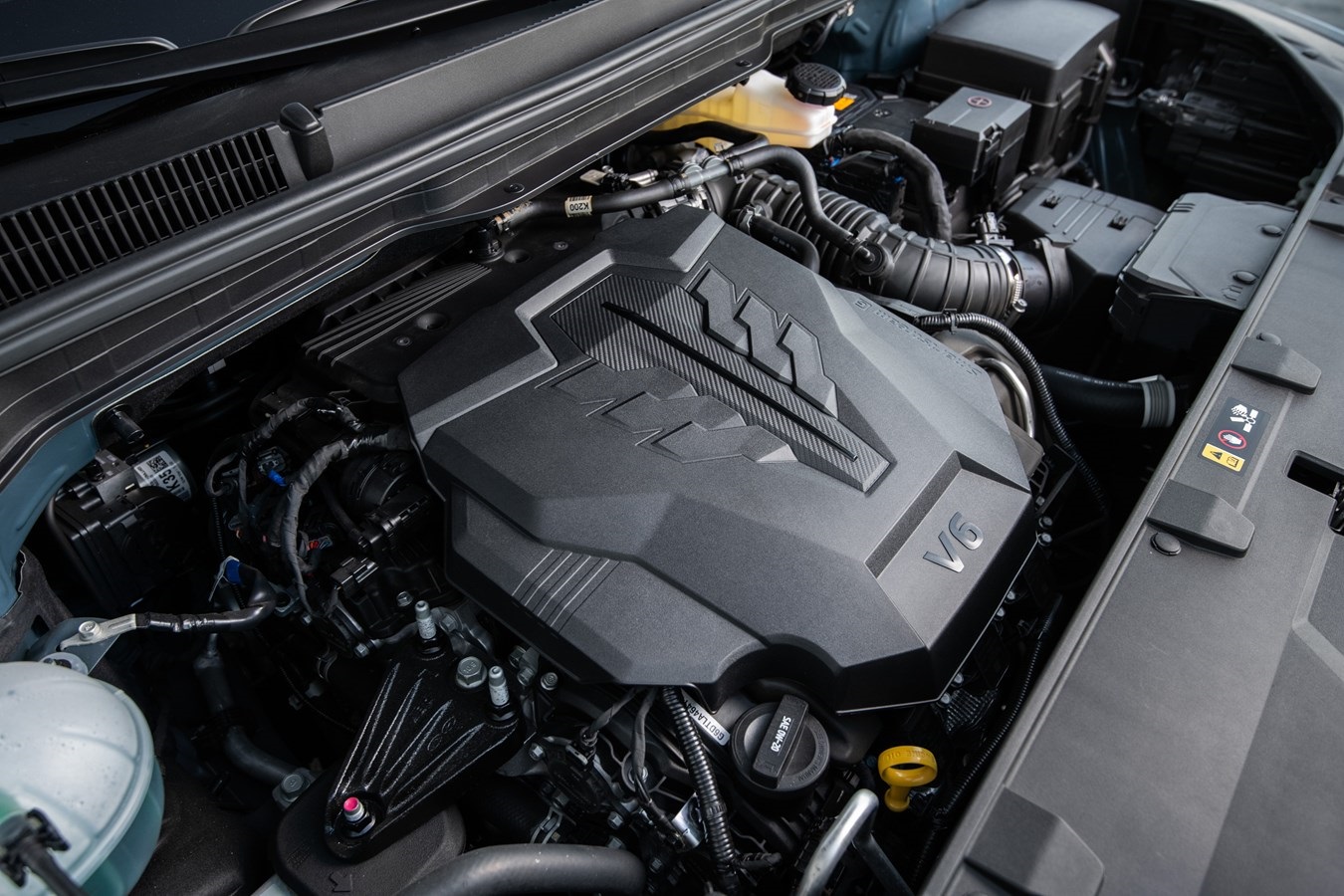
No overworked turbocharged four-cylinder for this Carnival. All models have the same V-6 and eight-speed automatic powertrain. The 290-horsepower direct-injected 3.5-liter V-6 has 262 foot-pounds of peak torque at 5,000 rpm.

Fuel economy ratings are 19 mpg city, 26 highway, and 22 mpg combined using the recommended 87 octane fuel. In my week of testing, the mileage around town was 19-21 mpg, and on the highway, I tooled along at 28.9 mpg, which might have gone higher had I not needed to exit.

With the generous 19-gallon fuel tank, thrifty drivers could expect a vacation-driving range of 500 miles or more.

Acceleration force is easy to modulate to maximize mileage or to put the hammer down for evasive action. There is no delay in acceleration response.

An open hood view of the 290-hp 3.5-liter V-6

The 290-hp 3.5-liter V-6. (Kia)

Carnival SX Prestige Ride and Handling

One of the most endearing aspects of minivan ownership is, generally, a forgiving ride quality. The Kia Carnival is especially adept at not tossing heads when pulling into driveways or when transitioning speed bumps.

The suspension is a well-engineered four-wheel independent setup with steel springs and gas-charged shock absorbers. The front has MacPherson struts and a multi-link at the rear.

Ride quality with the 19-inch Goodyear Assurance Finesse tires (235/55) was poised and carpet smooth — traits I did not expect from my past experiences with Goodyear Assurance tires. These tires are affordable and will cost between $220 and $250 each when replaced.

Advantageous is the light weight to the steering and very compact turning circle of 38 feet. It is possible to make a U-turn on most residential streets. Steering control, though light, is entirely on track while cruising at speed.

Four-wheel-disc braking engages with uncommon smoothness and direct engagement. Front and rear rotors are 12.8 inches, with ventilated discs at the front and solid discs rear. These discs are comparable to the competition’s and seem fit to handle a 3,500-pound trailer with brakes.

19-inch Goodyear Assurance Finesse tires and black alloy wheels.

The SX Prestige tester in 19-inch Goodyear Assurance Finesse tires and black alloy wheels.

Why Buy the Kia Carnival?

Minivan marketers have told me that once the children are out of the house, many parents hold onto their weary, old minivan. It’s just too convenient for its size.

If so, the Kia Carnival SX Prestige will be their upgrade minivan. The VIP seats will be a special perk for those travel getaways with friends.

And best of all, the Kia Carnival doesn’t look like a minivan.

The Carnival EX and SX trim levels are the meat and potatoes of family fare. And the package for rear seat entertainment is worth the $1,500 option. It’s the price for 45 minutes of rest time for parents.

A rear view of the Astra Blue Carnival

The Kia Carnival has a very compact turning circle of 38 feet. (Kia)

Kia Carnival SX Prestige Specifications

Body style: large 7- to 8-passenger front-wheel-drive minivan

Engine: 290-hp, direct-injected 3.5-liter V-6; 262 lb.-ft. torque at 5,000 rpm

Transmission: 8-speed automatic

Fuel economy: 19/26/22 mpg; 87 octane

Towing capacity: 3,500 pounds

BY THE NUMBERS

Fuel tank: 19 gallons

Cargo space: 40.2 to 86.9 cubic feet

Front head/leg room: 40.9/41.1 inches

2nd-row head/leg room: 39.5/40.5 inches

3rd-row head/leg room: 38.6/35.6 inches

Length/wheelbase: 203/121.7 inches

Curb weight: 4,727 pounds

Turning circle: 38 feet

FEATURES

SX Prestige standard features, include: smart-key entry and push-button ignition, electric parking brake, surround-view monitor, 12.3-inch dual panoramic displays for driver gauges and navigation, blind-spot view monitors (side mirror image display in driver gauges); smart cruise control with stop-and-go; dual power tilt and slide sunroof; LED projection headlights and LED rear combination lights; LED interior lighting; leather-trimmed upholstery; heated and ventilated front and rear seats; Bose premium audio; heated steering wheel; auto-dimming rearview mirror with Homelink controls, passenger view (camera) and passenger talk.

Safety features include: 7 air bags (including driver’s knee bag), rear occupant alert with ultrasonic sensors, parking distance warning forward and reverse

Driver-assist technologies, include: forward collision-avoidance assist with cyclist and junction turning; blind-spot collision-avoidance assist; rear cross-traffic collision-avoidance assist; driver attention warning and high-beam assist; lane-keeping assist and lane-following assist; parking collision-avoidance assist reverse; safe exist assist; highway driving assist.

PRICING

Base price: $47,565, including $1,395 freight charge; price as tested $49,285

Options on test vehicle: Astra Blue paint $495; rear seat entertainment package $1,000; carpeted floor mats $200, for three rows.

Where assembled: Gwangmyeong, Korea

Warranties: 10-years/100,000-miles powertrain; 5-years/60,000-miles bumper to bumper with roadside assistance

Corvette E-Ray Overview

Corvette E-Ray Overview

The 2024 E-Ray is the quickest production Corvette in history, clocking a 2.5-second 0-60 mph time before passing the quarter mile in 10.5 seconds

An exterior view of the E Ray

The 2024 Corvette E-Ray goes on sale later this year with an MSRP of $104,295 for the 1LZ coupe and $111,295 for the 1LZ convertible model. (Photos courtesy of Chevrolet)

BY MARK MAYNARD

The Corvette had a second day of infamy yesterday when Chevrolet released photos and many details for its 2024 Corvette E-Ray. It will be the first electrified Corvette with all-wheel drive and a gasoline-electric hybrid powertrain using the 6.2-liter V-8.

For Corvette enthusiasts, the E-Ray reveal on Jan. 17 is exactly 70 years after the 1953 Corvette debuted at Motorama in New York City.

“In 1953, the enthusiastic reaction to the Chevrolet Corvette concept kicked off seven decades of passion, performance and American ingenuity,” Mark Reuss, General Motors president, said in a statement. “E-Ray, as the first electrified, all-wheel-drive Corvette, takes it a step further and expands the promise of what Corvette can deliver.”

The 2024 E-Ray — available as a removable roof coupe or hardtop convertible — pairs two separate propulsion systems. The gasoline-electric hybrid system provides naturally aspirated V-8 power with a permanent magnet electric drive motor and a 1.9 kWh lithium-ion battery pack between the seats.

“The electrification technology enhances the feeling of control in all conditions, adding an unexpected degree of composure,” said Tadge Juechter, chief executive engineer, Corvette.

E Ray driver area with bright blue leather interior.

E-Ray’s interior choices include 2 carbon fiber trim packages, 3 seat choices, and 7 interior colors.

E-Ray Performance

The E-Ray is the quickest production Corvette in history, Chevrolet says. The E-Ray will accelerate to 60 mph in 2.5 seconds (a tenth of a second faster than the track-ready Corvette Z06) and complete the quarter-mile in 10.5 seconds.

Achieving such quickness and top speed is notable for the Corvette. According to Chevrolet, the E-Ray has a base dry weight of 3,774 pounds for the coupe and 3,856 pounds for the convertible. That is around 400 pounds heavier than the Stingray and about 300 pounds more than the Z06 equipped with carbon fiber wheels and the Z06 Performance package. The curb weight, with fuel, etc., will be higher.

Chevrolet is developing a fully battery-powered Corvette, but officials have not said when that model might arrive.

Driver side 3/4 view of 2024 Chevrolet Corvette E-Ray 3LZ convertible with Natural Tan Interior.

A 2024 E-Ray 3LZ convertible with Natural Tan Interior.

2024 Corvette E-Ray Pricing

The 2024 Corvette E-Ray goes on sale later this year with an MSRP of $104,295 for the 1LZ coupe and $111,295 for the 1LZ convertible model.

A base 2023 Corvette Stingray coupe starts at about $66,000 or $74,000 for the Stingray convertible. The Corvette Z06 starts at $110,00 for the coupe and about $117,000 for the convertible.

Z06 pricing includes $2,600 for the gas-guzzler tax. Will the E-Ray avoid the GGT?

E-Ray production will be at GM’s Corvette assembly plant in Bowling Green, Ky.

More information and specifications will be released closer to the on-sale date. Follow E-Ray developments at Chevrolet.com.

Close up view of gauges layout on E-Ray Performance App

The E-Ray Performance App on the infotainment screen.

E-Ray Hybrid Powertrain

The 6.2-liter LT2 small-block V-8 is paired with an eight-speed dual-clutch automated-manual transmission. The gas engine puts 470 foot pounds of torque at 5,150 rpm to the rear axle. The permanent magnet electric drive motor puts another 160-hp and 125 lb.-ft. of torque through the front wheels.

In total, E-Ray produces a combined 655 horsepower from the electric motor and V-8.

The engine’s Active Fuel Management system uses the electric motor to run on four cylinders, such as when coasting at highway speeds.

The amount of electric assist varies for the Corvette E-Ray’s six driver-selectable modes: Tour, Sport, Track, Weather, My Mode, and Z-Mode. Drivers can also select the Charge+ feature to maximize the battery’s state of charge.

Chevrolet says it has created a “visceral sound experience” for the combined powertrain. And to keep peace with neighbors, a Stealth Mode allows all-electric driving at start-up. The quiet mode will hold until the engine fires at 45 mph for everyday driving.

E Ray gloss black wheel finish

The E-Ray has 15.7-inch brake discs at the front and 15.4-inch discs rear.

Intelligent eAWD

E-Ray’s eAWD system continually learns the road surface, Chevrolet says. The so-called intelligent system seamlessly adapts to traction conditions and driver input. During enthusiastic driving and in low traction road conditions, E-Ray’s eAWD system enhances vehicle stability by directing additional power to the front wheels.

E-Ray Features and Technologies

  • New lightweight lithium-ion 12-volt battery for stop/start functionality
    of the gas engine;
  • Standard Brembo Carbon Ceramic brake system;
  • Standard Magnetic Ride Control 4.0 with three suspension settings;
  • Staggered 20- and 21-inch wheels with Michelin Pilot Sport all-season tires. (Michelin Pilot Sport 4S summer tires are available with an optional performance
    package.)

The E-Ray Performance App on the infotainment system provides the driver with technical insights into how the propulsion system is operating. There are three primary display layouts:

  • Gauges (displays dynamic power output from electric motor and V-8 engine);
  • Dyno (provides a graph of power/torque across selectable time intervals) ;
  • Data (showcases electrical system performance and efficiency).
Overhead view of the Silver Flare with Electric Blue stripe package.

The Silver Flare with Electric Blue stripe package.

E-Ray Exterior Design

The E-Ray is built from the wide-body Corvette Z06. The wider body accommodates wide staggered-width wheels to help manage the increased torque. The lightweight alloy wheels have a twisted five-spoke star design exclusive to E-Ray.

The Corvette E-Ray’s compact electric motor over the front axle preserves space in the front trunk.

Rear 7/8 view of an E-Ray coupe in Seawolf Gray parked in a parking garage.

The E-Ray’s low, wide stance is 3.6 inches wider overall than the standard Stingray model.

Corvette E-Ray Design Highlights

  • 4 aluminum wheel finishes;
  • 14 exterior color choices — including new for 2024 Riptide Blue, Seawolf Gray, and Cacti;
  • E-Ray-exclusive body-length stripe package in Electric Blue;
  • Standard carbon flash badging;
  • Available black exhaust tips and bright badging;
  • Available carbon fiber ground effects;
  • Optional carbon fiber wheels in carbon flash, visible carbon fiber finish or visible carbon fiber with a red stripe;
  • New  Artemis Dipped interior, available on 2024 Corvettes. The treatment features deep green tones throughout the cabin. Other options for interior design include two carbon fiber trim packages, three seat choices, seven interior colors, and more.

Toyota Tundra Capstone Hybrid Pickup Review

Toyota Tundra Capstone Hybrid Pickup Review

Tripping the white fantastic in the 2023 Toyota Tundra Capstone with its white-and-black leather cabin

The 2023 Toyota Tundra Capstone has an exclusive white-and-black leather interior. Capstone pricing starts at $77,040. (Photos courtesy of Toyota)

The 2023 Toyota Tundra Capstone has an exclusive white-and-black leather interior. Pricing starts at $77,040. (Photos courtesy of Toyota)

Table of Contents

Tundra Redesign Challenge
Tailgate Tricks
2023 Toyota Tundra Pricing
Hybrid-Related Warranties
iForce Powertrains and Fuel Economy
Interior Function
Ride and Handling
Intimidation Factor
Why Buy the Toyota Tundra Capstone?
Specifications

BY MARK MAYNARD

The Toyota Tundra pickup has long been dogging the tailgates of the Ford F-150, Chevrolet Silverado, GMC Sierra, and Ram 1500. Though the Tundra has always been capable, its presentation seemed dumbed down to fit an outdated perception of the American pickup. Even its exterior styling was a mashup of “Fordamrolet.”

With a thorough redesign for 2022, Toyota has elevated the Tundra with style and technologies — for better and worse.

A few years ago, at a big four-wheelers desert run, I watched a Tundra throwing rooster tails of synchronized sand art as it swept up a steep dune. It was a dealership truck (by the license plate) and optioned with the TRD package. The truck’s ability was remarkable because this stock Tundra always made it to the top of the big dune, while caged buggies and fat-tired crawlers failed. It seemed insulting to the modified rigs. And a prime selling opportunity.

Toyota learns and evolves quickly. The 2023 Toyota Tundra lineup has seven trim levels, from basic work trucks to high luxury. But more than the basic trucks, luxury models have been added steadily.

Now in its third generation, the new Tundra was introduced for 2022. It was designed in the U.S. and built in Texas at Toyota Motor Manufacturing (TMMTX) in San Antonio.

At long last, the restyled Tundra breaks loose from most comparisons to the Big 3 pickups and plows through the air with a mug that won’t be confused as a Fordamrolet.

But just as it is challenging to master a foreign language, there is something uniquely American about a pickup. And not all foreign makers can master the lingo. Toyota is catching up.

Front headroom is almost 10-gallon tall at 39.3 inches with Capstone’s standard panoramic moonroof.

Front headroom is almost 10-gallon tall with Capstone’s standard panoramic moonroof.

Tundra Redesign Challenge

“Technical muscle” was the Tundra design mantra for the 2022 makeover.

Inside the Tundra Capstone, the design group applied premium materials in high-contact areas, including wrapped armrests and pads across the dash and doors.

Toyota says that high-strength steel throughout the chassis increased rigidity considerably over the previous generation Tundra. Aluminum is used in critical areas to reduce weight. Frame cross members are more than doubled in size for reinforcement and additional rigidity. For the Limited model and above, the cab mounts to the frame with hydraulic mounts for a quieter ride.

Tundra’s bed of sheet-molded compound (SMC) is lightweight and extremely strong, backed by aluminum reinforcing cross members, Toyota says. An SMC bed is resistant to denting, impact dings, and rust corrosion.

Tundra Tailgate Tricks

There has been a small revolution in pickup tailgates. Some now offer a step-and-grab bar that folds away. Others have drop panels that form steps or accommodate a fifth-wheel trailer hitch. Some have a wider section for a work-site bench or even a connection for a Bluetooth audio system. Some have a tailgate measurement strip and indents for a cup or can.

Toyota’s innovation is the power tailgate release in the left-rear taillight. Just give it an elbow bump when walking up with an armload of gear, or release the tailgate from the key fob. And there is a power bed step at the driver-side left corner; the step lowers with the tailgate.

Toyota says that the Tundra tailgate benefits from light-weighting construction and is 20 percent lighter than the previous generation.

7 Tundra Trim Levels

As before, the new-gen Tundra is sold in two four-door body styles: Double Cab and CrewMax.

Double Cab models have bed-length choices of 6.5 feet or 8.1 feet. CrewMax models can have a 5.5-foot bed or the new 6.5-foot bed.

The 2023 Tundra lineup has seven choices: SR, SR5, Limited, Platinum, 1794 grades, TRD Pro, and Capstone. Rear-wheel drive is standard, with optional four-wheel drive.

At its introduction years ago, the Toyota Tundra Limited might have been the most luxurious choice. But as $70,000 has become the new $50,000 pickup, Toyota added a Platinum model and then the slightly more expensive 1794 with some Old West influences. The Tundra TRD, $9,000 more than the 1794, is the off-road package, but it’s pricey, starting at $70,000. And now the Tundra Capstone wears the luxury boots, and it is priced as such.

The Capstone is the halo choice with standard four-wheel drive, a CrewMax cab, 5.5-foot bed, and exclusive white-and-black leather cabin. Pricing starts at $77,000 or $79,000 with the one big factory option package. A wide range of accessories — including ball-hitch mounts, bed extenders, a dash camera, console safe, tie downs, racks, spray-on bedliner, or a hard tonneau cover — can nudge the price beyond $80,000.

High-luxury pickups don’t make practical sense, but they are impressive at the marina launch and equestrian events. Most Tundra sales are for midrange models, of course, but Toyota has to keep up with the Fordamrolets. And these country coaches are rich with options, including pearlescent paint, hand-tooled semi-aniline leather, and the most advanced technologies. If a passenger car can be so equipped, so can a pickup.

The 14-inch screen provides big-screen camera views.

The 14-inch screen provides big-screen camera views.

2023 Toyota Tundra Pricing

Tundra starting prices range from $38,760 for the entry rear-wheel-drive SR to $77,040 for the top-line Capstone iFORCE MAX with standard 4WD. Pricing includes the $1,795 freight charge from San Antonio.

The SR model is the basic work truck. Moving up to the SR5, $44,265, creates a more functional tow vehicle with a Class IV towing hitch and seven-pin wiring harness. Also included are tow-haul and tow-plus driving modes, 18-inch alloy wheels, and a power vertical or horizontal rear window.

The TRD Pro, $70,315, is factory primed for off-road capability. Its features include:

  •  Multi-terrain select with crawl control;
  •  A 1.1-inch lift with Fox shock absorbers;
  • Electronically controlled locking differential.

Special TRD Pro features include a heritage-like “Toyota” grille with LED light bar and marker lights, 18-inch matte-black forged-aluminum BBS wheels, and a 12-speaker JBL audio system.

The Capstone iFORCE MAX tester was $79,174 with these options:

  • Adaptive variable suspension with load-leveling rear height control air suspension $1,045;
  • Wind Chill Pearl paint $425;
  • Ball mount $65;
  • Non-skid spray-on bedliner $579.

Find current Tundra pricing and offers here.

Tundra Hybrid-Related Warranties

Toyota’s basic 36-month/36,000-mile new-vehicle warranty applies to all components other than normal wear and maintenance. Additional 60-month warranties cover the powertrain for 60,000 miles and corrosion with no mileage limitation.

Hybrid-related components, including the battery control module, hybrid control module, and inverter with converter, are covered for 8 years or 100,000 miles, whichever comes first.

The hybrid battery has coverage of 10 years or 150,000 miles, whichever comes first.

ToyotaCare covers regular factory-scheduled maintenance and 24-hour roadside assistance for two years or 25,000 miles, whichever comes first.

iForce Powertrains and Fuel Economy

Tundra has two 3.5-liter, twin-turbo iFORCE V-6 powertrains, both with a 10-speed automatic transmission. The transmission has a sequential shift mode, uphill-downhill shift logic, and tow/haul driving modes.

The sophisticated engine design uses Toyota’s D-4ST direct injection and port injection.

The entry V-6 for the SR trim has 348 horsepower and 405 foot-pounds of torque at 2,000 p.m. The uplevel engine for the rest of the models has 389 hp and 479 lb.-ft. torque at 2,400 rpm.

The i-FORCE MAX hybrid twin-turbo V-6 is available only in the TRD Pro and Capstone trim levels. The hybrid powertrain has 437 horsepower at 5,200 rpm, and 583 lb.-ft. of torque at 2,400 rpm.

Hybridization combines the V-6 and motor generator with a clutch in the bell housing between the engine and transmission. A 288-volt sealed nickel-metal hydride battery is under the rear passenger seats.

The motor generator adds power through the transmission. But parallel hybrid components function during engine start-up, EV driving, electric assist, and energy regeneration.

The electric motor does most of the work at speeds below 18 mph. Then the gasoline engine engages for power in the mid- and high-speed range. When using tow/haul mode, the engine is in full internal-combustion control.

a view of the i-FORCE MAX hybrid twin-turbo V-6 437 horsepower and 583 lb.-ft. of torque at 2,400 rpm.

The i-FORCE MAX hybrid twin-turbo V-6 437 horsepower and 583 lb.-ft. of torque at 2,400 rpm. (Mark Maynard photo)

i-FORCE MAX Performance

The torque is particularly well-suited for transporting livestock, boats, and travel trailers. The roll-on of acceleration is not abrupt and does not launch the truck with tire-spinning force. Instead, the power progressively moves out, preserving whatever is in or on the trailer and, perhaps, a bit of fuel.

Fuel-Economy Ratings

Though more powerful, the hybrid iFORCE MAX engine has the best EPA-mileage ratings of the Tundra line: 20 mpg city, 24 highway, and 22 MPG combined.

That mileage compares to the standard iFORCE V-6, with mileage ratings of 18/24/20 mpg for the SR trim and 18/23/20 mpg for the upper trims.

In my week of driving the hybrid iFORCE MAX, I worked up to a combined city-highway mileage rating of 15.6 mpg, with much highway cruising. With careful acceleration, the 32.2-gallon tank could stretch range to almost 500 miles.

A photo of the Captone's 22 inch alloy wheels and tires

The Capstone gets the largest Tundra wheel size of 22 inches.

Interior Function

Americans like big pickups because there is plenty of room in the cabin. The lowly passenger sedan has been mercilessly downsized to meet fuel economy and emissions standards.

With Capstone’s standard panoramic moonroof, Tundra’s front headroom is almost 10-gallon tall at 39.3 inches. There is room for large adults to spread out and plenty of storage and stash places.

Standard Capstone equipment is in the specs box at the end of this story. Among its luxury features are 10-way power seats, heated and ventilated. Power running boards are a welcome feature for a leg up to the front or rear seats.

A huge help in parking is the panoramic view monitor, which includes an overhead side-panel view panel of the truck. The color graphics are excellent on the 14-inch audio multimedia screen.

Back seat headroom is also tall (36.9 inches), and legroom is adult comfortable at 41.6 inches, even if there is a tall driver ahead.

The Tundra back seat

Back-seat legroom of 41.6 inches is adult comfortable, even if there is a tall driver ahead.

Ride and Handling

Tundra had been a hold-out for rear leaf springs, but a new multi-link suspension has replaced the old. The change to a more carlike suspension provides a smoother ride, especially when the bed has no weight.

The multilink suspension has not hurt towing or payload. The maximum towing capacity for Tundra increases 17.6 percent over the previous generation, to 12,000 pounds. Toyota says the maximum payload increases to 1,940 pounds, an improvement of more than 11 percent.

For the first time, a rear air suspension system is available with automatic and manual leveling functions. Another first for Tundra is the available Adaptive Variable Suspension system. Toyota says that AVS improves ride quality and handling by continually adjusting damping force based on road conditions.

You might mistake the semi-aniline leather for Lexus upholstery, but the ride quality is still pickup truck. The multilink suspension, and particularly the adaptive suspension, eliminates the empty-bed chatter on the highway, but without cargo, in the bed, you’ll know this truck has working-class roots.
Braking

To put the binders on a six-ton towing capacity (6,095 pounds at the curb) requires hefty brakes. The Tundra has power-assisted and ventilated four-wheel discs. The large, 13.9-inch front discs have opposed dual-piston calipers. The rear 13.6-inch discs use single-piston calipers.

While lesser trim levels have a max towing rating of 12,000 pounds, the Capstone is rated for 10,340 pounds.

A side view of the Capstone

The Tundra Capstone has a tow rating of 10,340 pounds and a max payload of 1,485 pounds.

The Intimidation Factor

The full-size pickup today is designed to be intimidating. These are the broad-shoulder linemen in the scrimmage for recognition. The bigger, the better, which works well in the open plains, mountain terrain, and desert regions. Not so much in the city.

With the intimidation factor, however, comes too much mass in the design solely to impress the competition. Depending on the cab size, whether extended or full and the bed length, a typical full-size pickup turning circle ranges from about 40 to 52 feet and more.

The wheelbase of the Tundra Capstone CrewMax is 145.7 inches (a tick over 12 feet), and this rig is 80.2 inches wide, not including the large side mirrors. Its width is comparable to the competition, and so is its length of 233.6 inches or 19.5 feet with its 5.5-foot bed. The Capstone’s turning circle isn’t terrible at 48.6 feet. But these packers are not nimble when navigating city streets. Parking is a consideration when heading out on errands.

The Capstone was like steering a stormtrooper in its Wind Chill Pearl (white) paint ($425) and two-tone white and black interior. The height of the hood opening is 4 feet from the ground and another half foot taller with the (unnecessary) hood bulge.

Sightlines across the wide hood and blunt front end are challenged. It takes time to become comfortable navigating city streets. The iForce Max hood scoops are like epaulets on a commander’s uniform — ornamental, but they show who has the big swinging sword. The pair of scoops flanking the hood are nonfunctional except to complicate sightlines at the fenders.

A close up of the nonfunctional hood scoops for the iMax hybrid engine.

The iForce Max hood scoops are ornamental.

Light Duty vs. Heavy Duty

The Big 3 competing pickups, however, also offer heavy-duty versions. These have higher tow ratings, spring rates, and payload capacity. The H-D models are typically a half-inch to an inch wider, a few inches taller, and about 10 to 18 inches longer. Toyota appears to split the difference by offering a one size Tundra with dimensions landing between half-ton and three-quarter-ton ratings, or light vs. heavy duty.

And that’s why the Tundra feels bigger than it needs to be. Driving the Capstone in town was like steering a stormtrooper in its Wind Chill Pearl (white) paint ($425) and two-tone white and black interior. The height of the hood opening is 4 feet from the ground and another half foot taller with the (unnecessary) hood bulge.

The iForce Max adds to the sightline complexity with a pair of non-functional “scoops” flanking the rear of the hood. They are ornamental — like epaulets on a commander’s uniform — but they show the troops who has the big swinging sword.

Sightlines across the wide hood, side mirrors and blunt front end are challenged, made more complex with the faux iForce Max scoops. It takes time to become comfortable navigating city streets.

Why Buy the Toyota Tundra Capstone?

All new full-size pickups on sale today offer pretty much the same thing. It just depends upon the church in which you believe. The brands copy each other and then make a modification to offer something unique. And then boast that their way is the truth and the light.

The Tundra will appeal to those disciples of Toyota. And in my experience, Toyota puts a little more effort into more precise engineering to do it right the first time.

The Tundra Capstone, with its white leather interior, isn’t a work truck or for the construction, boss pulling into muddy work sites. It’s not for the off-road adventurer. It’s not especially suited for the homeowner loading up at the building supply center. It can fill all those roles, but the Tundra Capstone will be most at home when hitched to a horse trailer for prestigious shows or riding events. You’ll also find the Capstone at the marina, steering a big boat down the ramp. In those venues, the Tundra Capstone will make a stunning statement — and vigorous use won’t cause undue harm to the pristine interior.

A studio shot of a rear three quarter view of the white Tundra

Hydraulic frame mounts provide a quieter ride on Tundra Limited and higher trims.

Toyota Tundra Capstone Specifications

Body style: full-size, 5-seat pickup with 5.5-foot bed

Engine: 437-hp, 3.5-liter, twin-turbocharged iForce Max V-6 Hybrid with water intercoolers and electric motor-generator; 583 lb.-ft. torque at 2,400 rpm

Hybrid components: Parallel hybrid system with permanent magnet electric motor-generator located between engine and transmission;

Electric motor output: 48 hp and 184 lb.-ft. torque

Hybrid battery: 288-volt nickel-metal hydride with 240 cells; 1.87 kWh capacity

Transmission: 10-speed sequential shift mode automatic, with uphill-downhill shift logic and tow-haul driving modes; 4WDemand part-time 4WD with electronically controlled two-speed transfer case (high/low range)

Fuel economy: 19/22/20 mpg city/hwy/combined; 87 octane or higher

Towing capacity: 10,340 pounds

Max payload: 1,485 pounds

Max tongue weight: 1,117 pounds

BY THE NUMBERS

Fuel tank: 32.2 gallons

Front head/leg room: 39.3*/41.2 inches *w/moonroof

Rear head/leg room: 36.9/41.6 inches

Shoulder room, front and rear: 65/ 62.4 inches

Length/wheelbase: 233.6/145.7 inches

Width/height: 80.2/78 inches

Curb weight: 6,095 pounds

Turning circle: 48.6 feet

FEATURES

Standard Capstone equipment includes: power tilt-slide sunroof, semi-aniline upholstery, 12-inch digital gauge display; 10-inch head-up windshield display, 10-way power adjustable (heated and ventilated) front seats with 4-way lumbar, heated and ventilated rear seats, 14-inch audio multimedia screen with 12-speaker JBL audio system with subwoofer, Apple CarPlay and Android Auto apps, 22-inch dark chrome alloy wheels, aluminum reinforced composite bed with 120-volt AC power outlet and LED lighting, auto-leveling LED headlights, power running boards and bed step;

Safety features and technologies include: 8 air bags, precollision system with pedestrian detection, full-speed range dynamic cruise control, lane-departure with steering assist, lane-tracing assist, road sign assist, blind-spot monitor, trailer backup guide with straight path.

PRICING

Base 2023 Capstone price: $77,040, including $1,795 freight charge; price as tested $79,174

Options on test vehicle: Adaptive variable suspension with load-leveling rear height control air suspension $1,045; Wind Chill Pearl paint $425; ball mount $65; non-skid spray-on bedliner $579

Where assembled: San Antonio, Texas

Kia Telluride: What’s New for 2023

Kia Telluride: What’s New for 2023

1,000-mile round-trip road trip in a 2023 Kia Telluride in near-luxury and complete comfort

An exterior view of a 2023 Kia Telluride sport utility vehicle in wolf gray

The 2023 Kia Telluride SX-Prestige X-Line tester was $53,825 with options for Wolf Gray paint ($495) and carpeted floor mats ($210). Pricing includes the $1,335 freight charge from West Point, Ga. (Photos by Mark Maynard)

Table of Contents

Road-Trip Ready Telluride
2023 Telluride Pricing
Interior Function
Back Seats and Cargo Space
V-6 Performance
Ride and Handling
Safety Technologies
What’s New for 2023?
Why Buy the Kia Telluride?
Specifications

BY MARK MAYNARD

I had just unpacked from a 1,000-mile round-trip road trip in a 2023 Kia Telluride and wasn’t ready for the drive to end. It was a holiday getaway with the girlfriend-wife and her sister and brother-in-law to spend Christmas with the sisters’ brother and wife in Santa Cruz. It was the quintessential getaway of four retirement-age friends rolling along in near luxury and complete comfort.

With its 291-horsepower V-6, there was plenty of power for secure acceleration — with all of us, our gear, and the Telluride’s all-wheel-drive curb weight of 4,482 pounds. Hefting such poundage still returned a combined fuel economy of 21.2 mpg to a max of 25.6 — on the recommended 87 octane.

To call the Telluride an SUV is almost disrespectful. The clumsy term with negative impact has endured from the early truck-based “sport utility” vehicles. And most of these were seldom sporty or provided much utility.

A view through the windshield from the driver's seat on a rainy day.

Sightlines are unobstructed over the fenders and over the shoulder.

Road-Trip Ready Telluride

The test vehicle was an upper trim level Telluride SX-Prestige V-6 with all-wheel drive and the new-for-2023 X-Line treatment. The new X-Line and X-Pro trim levels have some off-roading traits. X-Line and X-Pro trims have a slightly raised ride height (about a third of an inch), 20-inch black wheels, a unique black grille, trailering tow mode, and upgraded traction control for better control on gravel and sand.

Somebody could forgive such a blunt front end for some interior wind noise, but the Telluride is better soundproofed than some luxury SUVs I’ve tested. Conversations do not wash out in a wall of white noise or road harshness, thank you very much in part to the Michelin tires.

With three rows, the Telluride has seats for seven with the second-row captains’ chairs or eight seats with a second-row bench. The three-position third row is kid class in legroom, but it folds flat into the floor, making it ideal for lots of luggage. We could stow all the suitcases, the cooler of homemade foods and goodies for holiday meals, and the presents. It all fit below the rear window line, but if cargo must be stacked to the headliner, the Telluride has a digital rearview camera that gives a wide-open rearward view. (It is a welcome feature when pulling a trailer.)

There is no need for running boards to climb aboard (even with the X-Line lift). And all four of us had captain’s chairs, heated and ventilated, with rear side sunshades. The front seats are power-adjustable, including lumbar, with seat-bottom thigh extension for the driver.

Dual pane sunroofs in the Telluride SX create a light and pleasurable space for passengers.

Dual pane sunroofs in the Telluride SX Prestige.

2023 Kia Telluride Pricing

Telluride is sold in 10 trim levels: LX, S, EX, EX-X-Line, SX, SX-X-Line, SX-X-Pro, SX Prestige, SX Prestige X-Line, SX Prestige X-Pro. Entry-level LX, S, EX trims are front-wheel drive; AWD is optional ($2,000) and includes Michelin tires. Trims of SX and above have standard, active on-demand AWD.

The powertrain for all trims is a 291-horsepower, Atkinson cycle 3.8-liter, direct-injected V-6, and eight-speed automatic transmission. The tow rating is 5,000 pounds or 5,500 for the SX X-Pro.
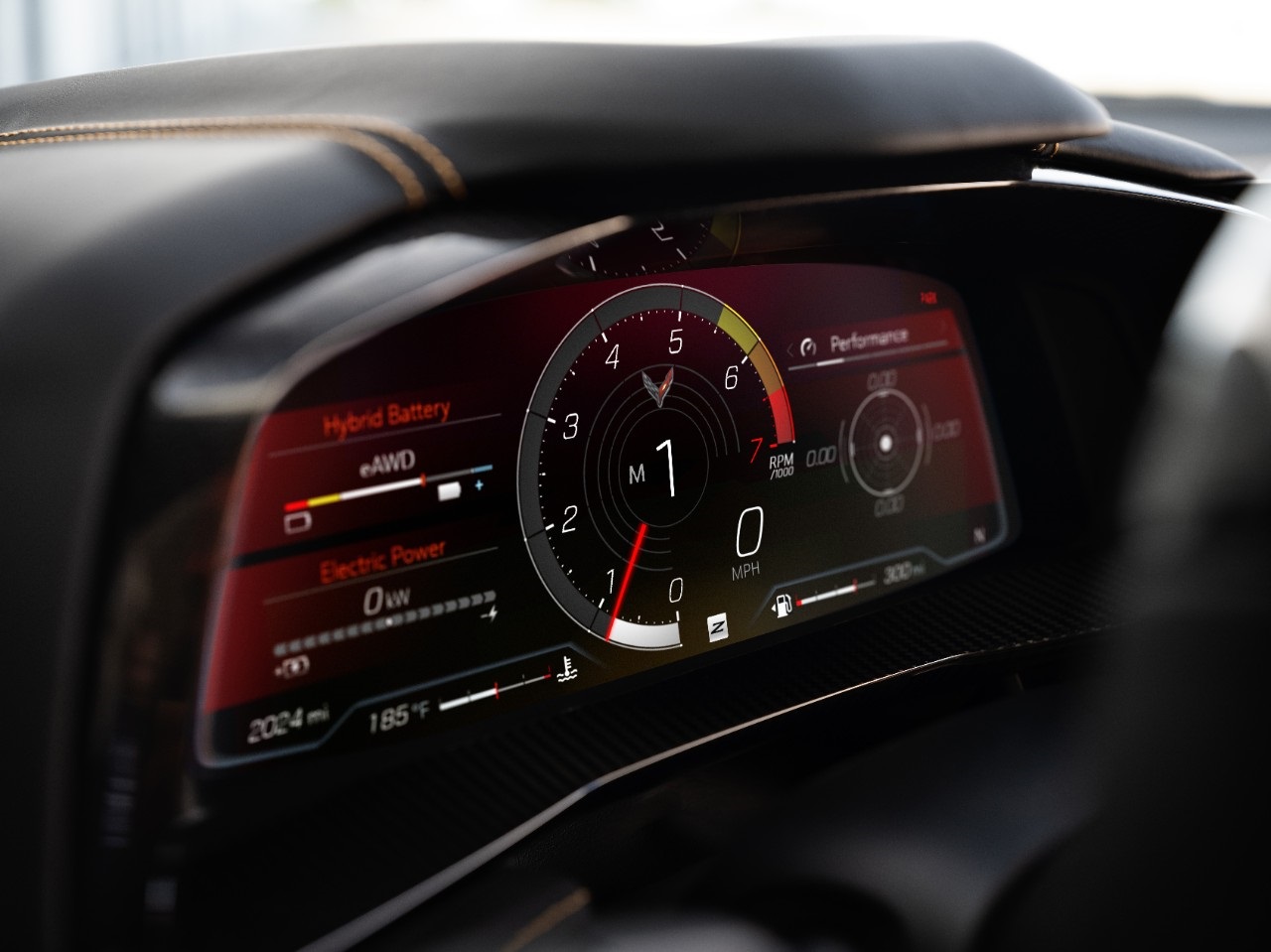
Starting prices range from $37,025 for the LX to $54,120 for the top-line SX Prestige X-Pro. Today’s SX-Prestige X-Line tester starts at $53,120, and with options for Wolf Gray paint ($495) and carpeted floor mats ($210), the sticker price was $53,825. All manufacturers’ retail pricing includes the $1,335 freight charge from West Point, Ga.

Kia’s new vehicle warranty coverage is 5 years or 60,000 miles bumper to bumper with roadside assistance. The powertrain has coverage of 10 years or 100,000 miles.
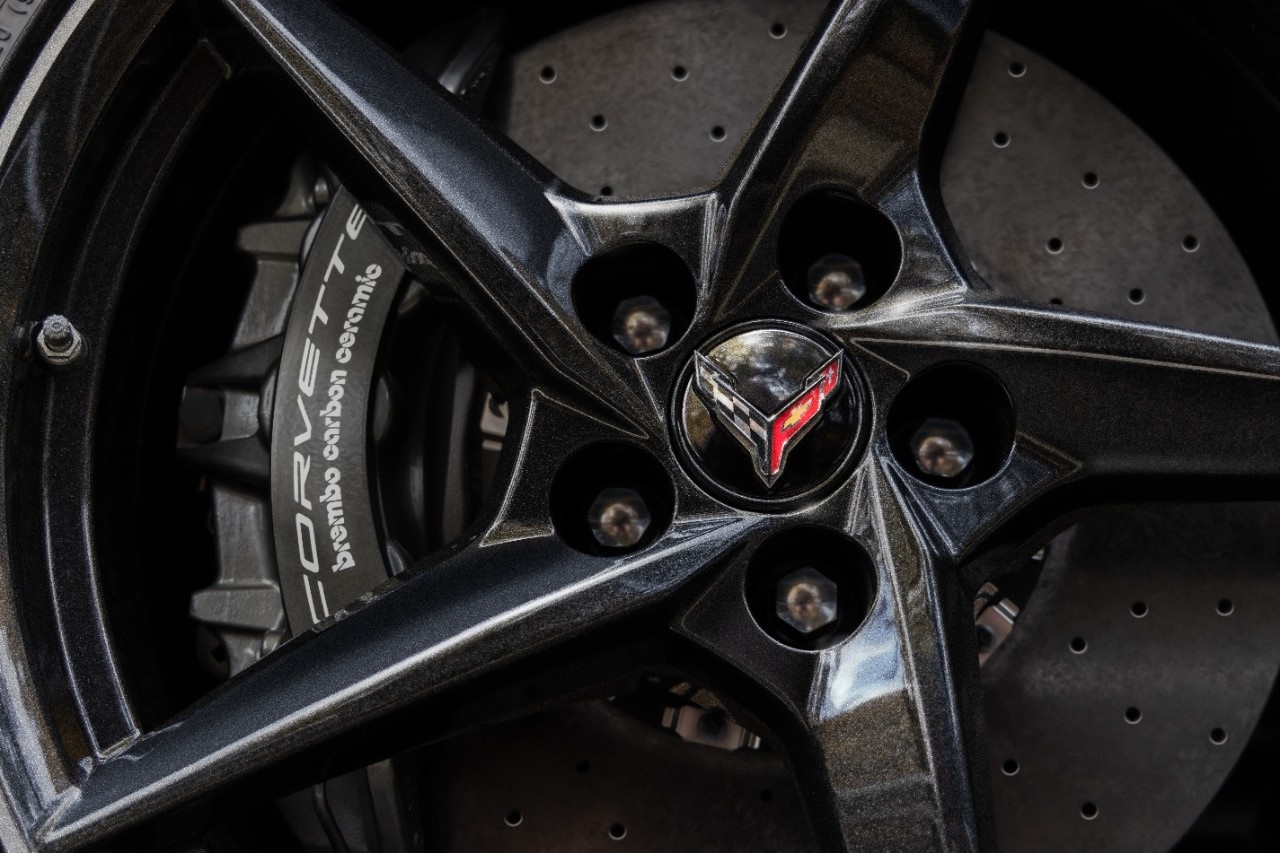
Find current pricing and incentives here.

Second row legroom in the Telluride is very long at 42.4 inches.

Second-row legroom is grand at 42.4 inches.

Telluride Interior Function

Because the cabin has door-to-door shoulder room of 61.6 inches, interior roominess is maximized.

The contemporary cabin design is open with contemporary with design elements of brushed metal trim and light gray wood in the tester. The plastics have an appealing texture, with attentive assembly to all panels. The headliner, roof pillars, and visors are wrapped in soft microsuede. Large sliding sun visors have large, covered mirrors.

There are 39.5 inches of front headroom and long legroom of 44.1 inches. Sightlines are open and further empowered by the around-view camera. (The Telluride is a big vehicle, but the camera system with an overhead side view is empowering when parking and backing out of the space.)

The shift console is efficiently designed with a large charging bin with a wireless pad, 12-volt plug and two USBs. The drive-mode controller (comfort, sport, smart, eco, etc.) takes up just a small square of space, with the nearby electric parking brake switch.

A heated steering wheel.

A heated steering wheel.

Sturdy grab rails flank each side of the console, and there is yet another USB in the dual-level armrest box.

There is no confusion when reaching for climate controls or to access the navigation system, radio or other media choices. But the navi system was a struggle to use, so we used the Waze smartphone app.

Telluride has almost as many USB ports as cup holders (12). There are up to six USB chargers, five of which are the more modern C-Type. But there is one “old-style” A-Type USB in the e-bin.

Back Seats and Cargo Space

The second-row captain’s chairs are road-trip ready. They recline and, in the SX, are heated and ventilated. Legroom is grand at 42.4 inches maximum. With no step rail, placing a child in a car seat is much easier.

The back side of the front armrest console has a pair of cup holders; down low is a 12-volt plug and a 115-volt, 150-watt household outlet. Plus, there is a charging USB notched into the front seatback sides, with a bag hook in each seatback.

An electronic AC controller in the headliner allows control of fan speed, vent flow, and temperature; the controller panel also packages a pair of large reading lights. The moonroof is a welcome skylight, but it would be nice to have a separate sunshade control switch, not just the main controller up front.

Entry to the third row is via a one-touch button to tilt and slide the captain’s seats, with a nearby grab handle for leverage. The three-seat bench, with legroom of 31.4 inches, is snug for adults but fun for youngsters. The seats recline, and the area is stocked with reading lights, cup or box holders, and two more charging USBs.

The cargo area is 4 feet wide and square with up to 7 feet in length with both rows folded, but the captain’s chairs prevent a contiguous floor, such as for sleeping. Behind the third row is 21 cubic feet of grocery capacity. And below the floor is some usable basement space, with storage for the roller shade.

The second-row seats tip and slide for third-row access.

The second-row seats tip and slide for third-row access.

Telluride’s V-6 Performance

I’ve long believed in electric and electrified vehicles, so a V-6 combustion engine might seem indulgent. But it is an asset for a vehicle of this size. The Telluride’s combustion V-6 uses the Atkinson cycle design for fuel efficiency. Together with auto stop-start at idle, the direct-injected engine can be considered a mild hybrid. With 262 foot-pounds of torque at 5,200 rpm, the power response is unhesitating in Sport mode and guarded in Eco mode.

In this round-trip road trip of almost 1,000 miles, my average fuel economy ranged from 21.2 mpg to a high of 25.6. The sweet spot for interstate cruising with cruise control was a consistent 22.8 mpg. With that mileage, the 18.8-gallon tank could provide a cruising range of around 425 miles.

I couldn’t complain about the fuel economy with a cabin of four adults, tooling along between 70 and 80 mph. The Telluride SX curb weight is 4,524 pounds, plus another 700 pounds or so with people and luggage.

I drove the entire trip in Eco mode, thinking that would stretch the mileage. But I also was surprised to find that Eco mode was capable of stiff acceleration when needed, but it wasn’t all that quick to respond to an urgent demand for get-going power.

The transmission also has modes for Smart, Sport, and Comfort. Each mode applies different calibrations for the engine, transmission, and steering effort.

When I’m creeping along in commuter traffic, I dial up Sport mode. There is enough added kick to guard my line against impatient drivers who have to try to cut in front.

The V-6 Telluride engine.

291 hp and thrifty fuel economy of 18 mpg city, 24 highway and 21 mpg combined.

Telluride AWD Ride and Handling

In Eco mode, the steering weight is comfortable and appreciated when hands are on the wheel for 8 hours. The wheel has an easy roll in tight parking situations but was never vague at speed. And the suspension and Michelin tires help the Telluride track steady at high speeds without wandering. Driving the Telluride SX X-Line — with self-leveling rear suspension — never felt heavy, nor was there body lean in cornering. For my passengers, there was no mention of queasiness — and that’s high praise for a road-trip vehicle or for parents with children prone to motion sickness.

Four-wheel disc brakes are reassuring with 13.4-inch vented rotors front and solid 12-inch rotors rear.

The wide navigation and camera screen in the dashboard

Dual 12.3-inch-wide display screens for driver info and navigation and camera system.

Telluride Safety Technologies

The multi-tasking shift console with e-bin and wireless charging pad.

The multi-tasking shift console with e-bin and charging pad.

Kia’s advanced driver assist systems contribute to a much more relaxed driving experience.

Highway Driving Assist 2 (standard on upper trim levels) is a semi-autonomous system that requires both hands on the wheel. But the vast network of safety technologies functions as an array of eyes to keep the Telluride on course. The system gives accurate lane centering, and not once did the Telluride drift wide in cornering or cross the highway lines or Botts dots.

Among the safety features are seven air bags, navigation-based smart cruise control, and Intelligent Speed Limit Assist. The list of driver-assist technologies is highlighted below in ADAS Technologies.

Active On-Demand AWD

Kia’s active on-demand all-wheel-drive system distributes torque between the front and rear wheels. Depending on road conditions and driver action, the system continually redistributes the amount of power transferred fore and aft.

In everyday driving, Eco and Comfort modes can direct 20 to 35 percent of the power to the rear wheels. Sport, Smart, and Snow modes can deliver up to 50 percent of the power to the rear wheels. AWD Lock”sends power evenly to all four wheels.

A gloss-black front wheel and Michelin tire on the Telluride with X-Line treatment

The Telluride X-Line gets 20-inch Michelin Primacy 245/50 tires and gloss-black wheels.

What’s New for 2023?

The Kia Telluride was a smash success when it debuted in the spring of 2019 as a 2020 model. It had the right look and the right stance — substantial and engaging. And 2023 brings a range of updates for Telluride.

The 2023 Kia Telluride has some freshened exterior styling, mainly for a more rugged yet refined look, Kia says. Among the tweaks are the following:

  • Revised vertical headlamp design with optional LED headlights and fog lights;
  • New front fascia and grille;
  • Revised taillights and new rear fascia and trim;
  • New wheel designs for every trim;
  • Three new exterior colors: Midnight Lake Blue, Dawning Red, Jungle Green;
  • X-Line trim replaces the former Telluride Nightfall Edition;
  • Downhill Brake Control, which helps keep a controlled descent on steep roads.
The Telluride X-Line has a unique, black grille treatment.

The Telluride X-Line has a unique grille treatment.

New 2023 Convenience Technologies

  • Standard upgraded 12.3-inch navigation screen (increased from 10.3 inches);
  • Optional full display mirror with HomeLink;
  • Optional Smart Power Liftgate with “Auto Close” function;
  • Kia Connect services for embedded connectivity:
  • Available Digital Key: Allows compatible iPhone, Apple Watch, and Samsung Galaxy smart devices to be used as a virtual vehicle key to lock, unlock and drive. Digital keys can be shared with friends and family over text messages on available devices;
  • In-vehicle Wi-Fi Hotspot connects up to five devices to 4G LTE-based internet;
  • Automatic over-the-air updates for maps and infotainment;
  • Kia Access App for Apple Watch and Samsung Galaxy smartwatch to access such features as remote climate control and door lock/unlock;
  • Stolen vehicle tracking and immobilization capability;
  • Connected Routing: The server-based system will calculate the optimal route using real-time and predicted traffic information. The cloud system uses past driving information to learn the driver’s preferred route;
  • Smart Speaker Integration: Amazon Alexa or Google Assistant can remotely control some functions, such as remote start.
There is rewarding quality to the stitching and precise alignment of interior panes.

There is rewarding quality to the stitching and precise alignment of interior panes.

Expanded ADAS Technologies

The 2023 Advanced Driver Assist Systems add several new technologies:

Intelligent Speed Limit Assist — ISLA: Can detect a road’s maximum speed limit in some cases, provide alerts to the driver and even limit the speed of the car depending on the settings (standard);

Navigation-based Smart Cruise Control – Curve — NSCC-C: In certain circumstances, the smart cruise control can lower the vehicle’s speed proactively before upcoming curves in the road (available);

Highway Driving Assist 2 — HDA 2: A driving convenience system that helps to maintain a predetermined distance from the vehicle detected in front, keep the vehicle within detected lane markers on certain highways, and assist in lane changes under certain conditions (optional; HDA 1.5 is standard);

Forward Collision Avoidance – Junction Turning — FCA-JT: Detects oncoming vehicles while turning left at an intersection (junction). If the system detects that a collision might be likely, the system may apply the brakes to help slow or stop the car (standard);

Forward Collision Avoidance – Junction Crossing — FCA-JC: Is designed to detect crossing vehicles while passing through an intersection. If the system detects that a collision might be likely, the system may apply the brakes to help slow or stop the car (available);

Forward Collision Avoidance – Lane Change Oncoming — FCA-LO: Designed to give steering input to help prevent collisions if the system detects oncoming vehicles while passing other vehicles (available);

Forward Collision Avoidance – Lane Change Side — FCA-LS: Provides steering input to help prevent collisions if the system detects cycles or vehicles in front of the car while changing lanes (available);

Forward Collision Avoidance – Evasive Steering Assist — FCA-ESA: Gives steering input to help prevent collisions if the system detects obstacles, pedestrians, or vehicles in front of the car while driving straight (available).

Looking through the open driver-side door at the front seats.

Front headroom is tall at 39.5 inches, and the driver seat is 8-way power adjustable.

Why Buy the Kia Telluride?

The Telluride is big but efficient, even nimble for a vehicle that is 16.4 feet long. After 12 hours in the saddle, the seats began to feel like leather saddles. But only seat massagers would have prevented that. Still, I stepped out at fuel stops without stiffness or back pain. And I was always eager to climb aboard and continue the adventure.

After our trip, it was a sad wave goodbye to the Telluride. If it had fit easily in my garage, it would have been a keeper.

A rear three quarter view of the wolf gray Telluride with gloss black alloy wheels.

The Kia Telluride X-Line package adds such features as raised, bridge-type roof rails, body-color door handles, and exclusive 20-inch wheels.

2023 Kia Telluride SX-Prestige X-Line V6 AWD Specifications

Body style: large 7-seat, 5-door SUV

Engine: 291-hp, direct-injected 3.8-liter V-6; 262 lb.-ft. torque at 5,200 rpm

Transmission: 8-speed automatic with active on-demand AWD

Fuel economy: 18/24/21 mpg city/hwy/combined; 87 octane recommended

BY THE NUMBERS

Towing capacity: 5,000 pounds

Fuel tank: 18.8 gallons

Cargo space: 21 to 46 cubic feet

Front head/leg room: 39.5/41.4 inches

2nd-row head/leg room: 38.8/42.4 inches

3rd-row head/leg room: 37.8/31.4 inches

Length/wheelbase: 196.9/114.2 inches

Width/height: 78.3/ 70.5 (with roof rails) inches

Curb weight: 4,524 pounds

Turning circle: 38.8 feet

FEATURES

Telluride SX-Prestige Standard equipment includes: smart key entry with push-button ignition and remote start, digital key (for smartphone app use), digital rearview mirror, Nappa-leather trimmed seat upholstery, 10-way power front seats with driver-seat memory, heated steering wheel, heated and ventilated front and rear seats, dual panoramic 12.3-inch panoramic displays with navigation, wireless phone charging pad, surround view monitor and blind-spot view monitor, head-up display, Kia Connect with free 1-year trial, Harman-Kardon audio system;

SX-Prestige exterior features include: 20-inch alloy wheel, dual sunroofs (2nd row fixed), LED headlights, smart power liftgate, power-folding side mirrors with turn signals, roof rails, and rear privacy glass.

Standard safety features and technologies include: 7 air bags, Forward Collision Warning, Forward Collision Avoidance Assist with Pedestrian & Cyclist Detection, high beam assist, lane departure warning, lane keeping assist, blind spot collision warning, driver attention warning, rear cross-traffic collision-avoidance assist, parking distance warning – reverse, lane following assist, safe exit assist;

Kia Drive Wise Driver-Assist Technologies: Forward collision avoidance (cyclist and junction turning), blind spot collision warning, rear cross-traffic collision-avoidance assist, safe exit assist, highway driving assist 2, parking distance warning forward and reverse, smart cruise control with stop-and-go, parking collision avoidance assist, reverse.

PRICING

Telluride SX-Prestige X-Line base price: $53,120, including $1,335 freight charge; price as tested $53,825

Options on test vehicle: Wolf Gray paint $495; carpeted floor mats $210

Where assembled: West Point, Ga.

Warranties: 5-years/60,000-miles bumper to bumper with roadside assistance; 10-years/100,000-miles powertrain