Select Page

2019 Subaru Ascent Review

2019 Subaru Ascent Review

The Subaru Ascent was made for American-sized gear, child seats, and strollers — with 19 cup holders, up to eight USB ports, and huge cargo space

An exterior view of the Ascent on an Oregon beach.

The Subaru Ascent is sold in four all-wheel-drive trim levels — with a no-cost choice for seven or eight seats. (Photos courtesy of Subaru)

BY MARK MAYNARD

Subaru is at the foothills of SUV mountain with its 2019 Ascent, the brand’s largest, three-row SUV. But this enlightened and accommodating newcomer will quickly gain ground among the many choices of large-midsize SUV crossovers.

More carlike than truck-based, this stalwart segment of non-luxury crossovers has at least 11 competing vehicles. Among them, the Chevrolet Traverse, Dodge Durango, Ford Explorer, Honda Pilot, Hyundai Santa Fe, Mazda CX-9, Mitsubishi Outlander, Nissan Pathfinder Toyota Highlander, and VW Atlas.

Subaru Ascent Overview

But Subaru is no stranger to this climb. It made a run at the mountain from 2005-2014 with its seven-seat B9 Tribeca, a well-done but oddly styled vehicle. And it has five-seat champions in its two-row Forester SUV and beefed-up Outlander and Crosstrek wagons. But Subaru saw that it was losing buyers in their child-bearing years. A larger vehicle, such as Ascent, is what customers told Subaru they wanted; something to be used without fear of getting dirty.

This time around, Subaru made sure Ascent had strong styling and that it was made for American-sized gear, child seats, and strollers — with 19 cup holders and up to eight USB ports.
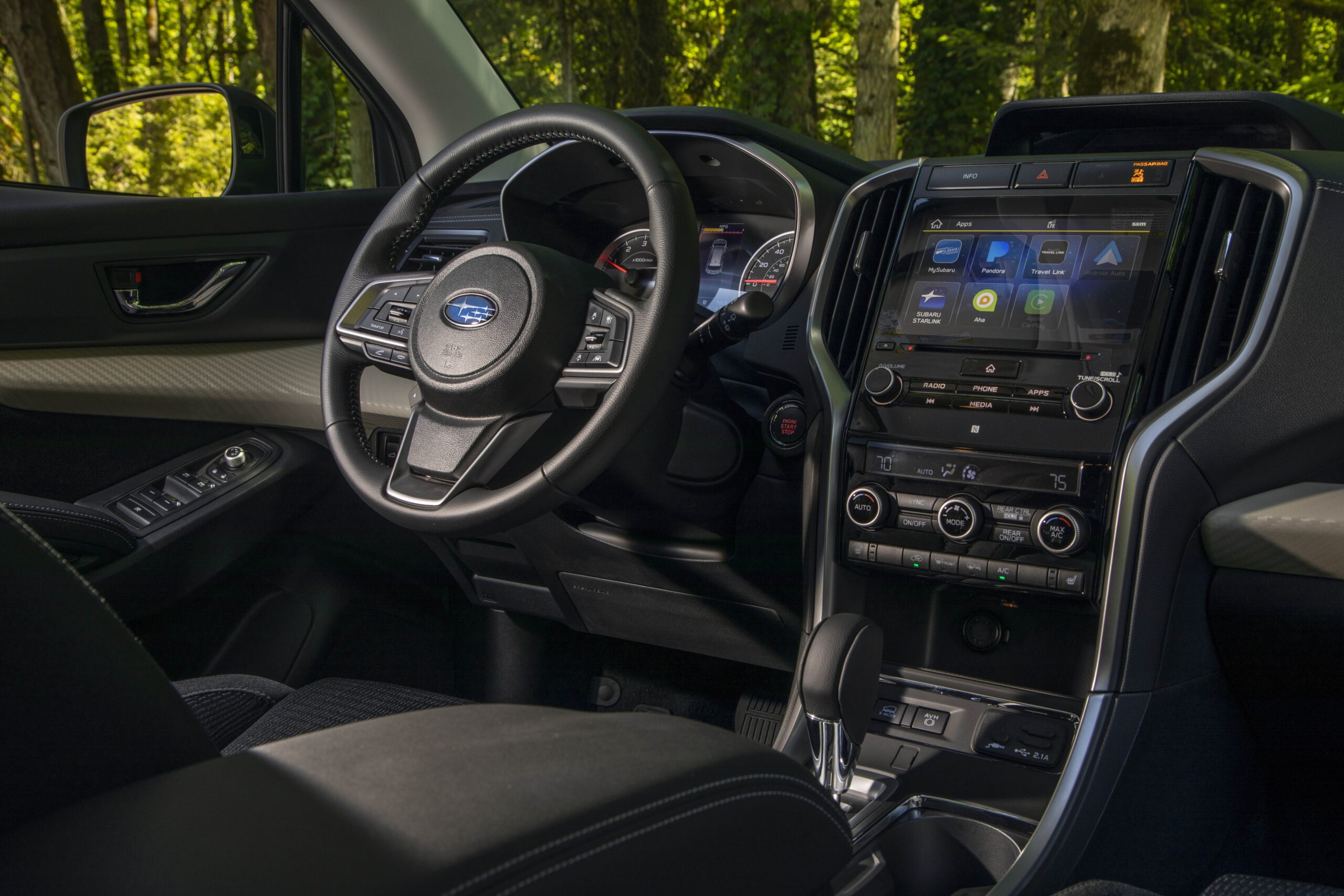
Subaru Ascent driver area

All models also have Subaru’s EyeSight driver-assist technologies.

Subaru Ascent Pricing

Ascent is sold in four all-wheel-drive trim levels — base, Premium, Limited and Touring — with a no-cost choice for seven or eight seats. Starting prices range from $32,970-$45,670, including the $975 freight charge from Lafayette, Ind.

Ascent standard features include a 6.5-inch multimedia infotainment system with Android Auto and Apple CarPlay, four USB ports, three-zone automatic climate control, power windows-mirrors-locks. Auto Vehicle Hold engages the brakes when stopped stop so the driver does not have to keep a foot on the pedal.

The front passenger-seat view of the Ascent

Standard features include a 6.5-inch multimedia infotainment system with Android Auto and Apple CarPlay.

Today’s tester is an eight-passenger Subaru Ascent Limited. The as-tested price was $42,920 with one option group ($2,950) for the Harman Kardon audio system, navigation, panoramic power moonroof and cargo cover.

The Limited’s equipment list includes SmartKey entry and push-button ignition, leather-trimmed upholstery, LED steering-responsive headlights with automatic high-beam assist (dimming) and LED fog lights, second-row retractable sunshades, 20-inch aluminum wheels, driver’s seat adjustable thigh support, power liftgate gate with height memory and two more USB ports for a total of six.

Front seats of the Ascent

The Ascent has open sightlines across the hood and over the shoulder.

The loaded, seven-seat Touring model ($45,670) gets such upgrades as (more luxurious) Java Brown leather upholstery and a leather-wrapped and heated steering wheel, woodgrain-pattern matte finish accent trim, three-mode ventilated and heated front seats, a 120-volt power outlet, and eight USB charging ports. It also gets an 8.0-inch multimedia navigation system, 14-speaker Harman Kardon Quantum Logic surround sound audio system, and panoramic power moonroof. Its Smart Rear-View Mirror helps rear visibility through a camera image and there is a very useful 180-degree front-view camera.

Find current Subaru pricing and incentives here.
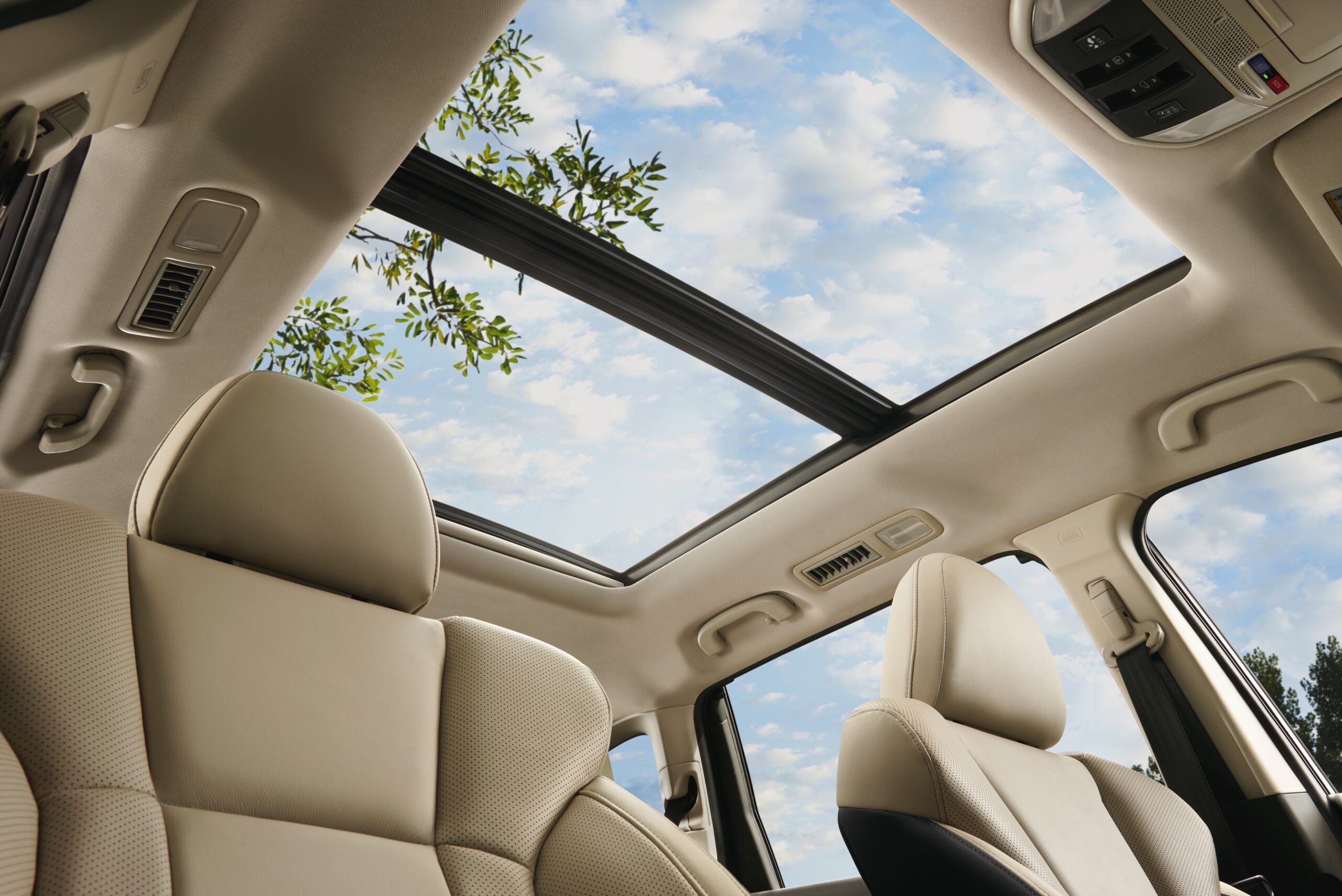
The large sunroof in the new new SUV

Front headroom is tall at 40.1 inches or 41.3 without the panoramic sunroof.

Subaru Ascent Safety Features

All Ascent models also have Subaru’s EyeSight driver-assist technologies of automatic pre-collision braking, adaptive cruise control, lane departure and sway warnings.

Optional technologies include blind-spot detection with lane change assist, rear cross-traffic alert, and reverse automatic braking.

Other Ascent safety features include seven air bags, trailer stability assist, active torque vectoring, and automatic vehicle hold

The turbocharged four-cylinder engine in the Ascent

The Subaru Ascent has a new 260-hp,  twin-scroll turbocharged 2.4-liter “boxer” flat four-cylinder engine.

Subaru Ascent Performance

All Ascent models get the new 260-horsepower, direct-injection and twin-scroll turbocharged 2.4-liter “boxer” flat four-cylinder engine with a continuously variable automatic transmission. The CVT, which integrates X-Mode off-road traction control and hill-descent control, allows little of the typical CVT motorboating (engine-revving) effect. There is no Sport mode, but the eight-speed manual mode with steering wheel shifters will help hold shift points when needed.

The Ascent will tow up to 5,000 pounds and includes an electronic trailer stability assist system. Subaru’s “Symmetrical” AWD system is not an on-demand system but powers all four wheels and continually shifts traction to those with more grip to keep the vehicle on course.

Though the Subaru Ascent is on the upper end of the curb-weight scale at almost 4,500 pounds, the new engine has as much power and fuel economy as its V-6-powered competitors. With 277 foot-pounds of torque at a low 2,000-4,000 rpm, the

Ascent will accelerate briskly and will hold that power into the freeway-cruising zone. Braking is almost overengineered with four-wheel ventilated disc brakes with large 13.1-inch rotors front and 13 inches rear.

Fuel economy ratings are 20 mpg city, 26 highway and 22 mpg combined on 87 octane. The 19.3-gallon tank allows a wide range of adventuring.

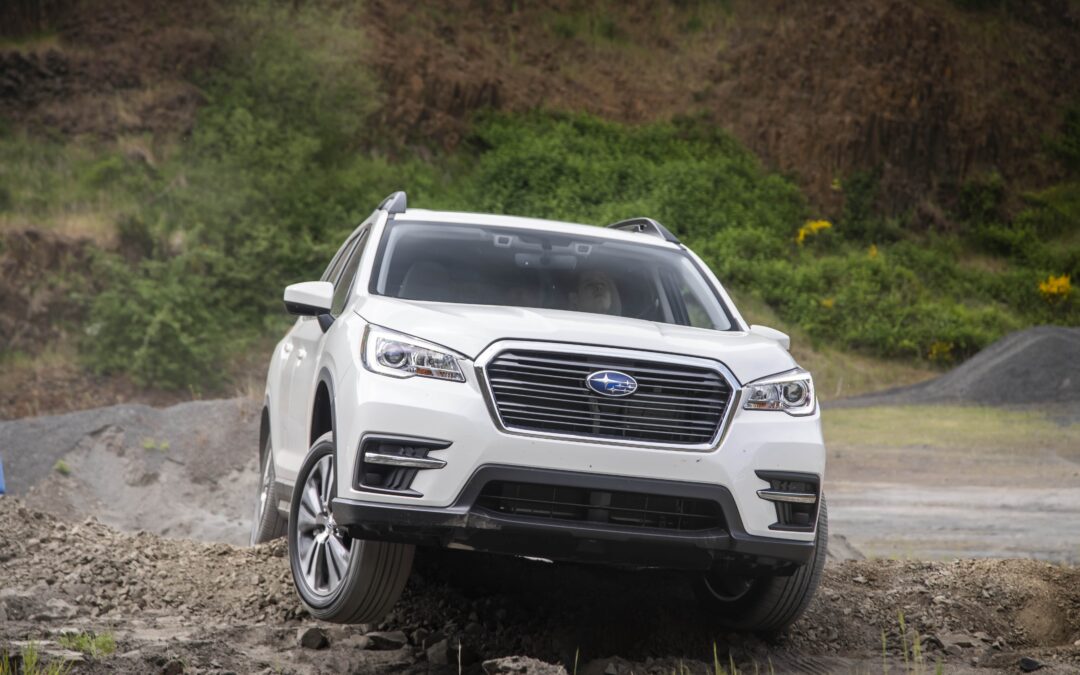
Making an uphill climb in the SUV.

Subaru’s symmetrical AWD system powers all four wheels and continually shifts traction to those with more grip to keep the vehicle on course.

Ascent Ride and Handling

Whether for young families or established households, the Subaru Ascent is a refined helpmate that drives small and gives big returns. Built of much high-strength steel, the solid chassis helps ensure a compliant suspension and a cabin that is luxury-class quiet over most road surfaces and at all speeds.

There is little head toss of passengers when making sharp turns or stepping over speed bumps. The turning circle seems tighter than its reasonable 38 feet.

Ascent Interior Function

There is complete function to the Ascent’s contemporary interior design with open sightlines across the hood and over the shoulder. Front headroom is minivan tall at 40.1 inches or 41.3 without the panoramic sunroof.

The shifter console has a charging area with two 2.1-amp charging USBs and an audio port.

The cabin has a low step-in height with thoughtful details in the sliding visors, the conversation mirror, bold (readable) graphics and plenty of large and small storage areas. The Limited’s front seats — upholstered in attractive, perforated leather — are gently bolstered and have thigh extenders.

The second row in the Ascent

The second row has generous width for three-across child seats.

Ascent Back Seats

The Ascent’s second row has generous width for three-across child seats, a flat floor, and long legroom of 38.6 inches. The seats recline and have fore-aft adjustment to allow more third-row legroom or cargo capacity. And there is a simple two-step tip-slide-fold feature to the seats.

Amenities include two 2.1-amp USB ports, a fold-down armrest with cup holders, door panel storage for at least two bottles and overhead air vents, which are so kid-friendly when motion sickness is a concern.

The third row is not overly cramped and the seats, which recline, are some of the most supportive I’ve tested in any three-row SUV. Extras include cup- and juice-box holders and a 2.1 USB port.

Third row seats in the Subaru Ascent

The third row is not overly cramped and the seats, which recline, are some of the most supportive I’ve tested in any three-row SUV

Ascent Cargo Capacity

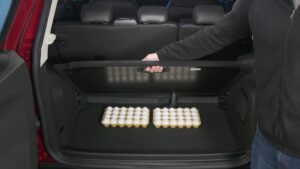
The cargo space is huge, wide and flat, spanning 17.6 cubic feet behind the third row to 47 cu. ft. with the second row folded. But even with the third-row in place, there is usable space for grocery-getting. There also is some basement storage with room to stash the roller cover.

The open cargo area

The cargo space is huge, wide and flat, spanning 17.6 cubic feet behind the third row to 47 cu. ft. with the second row folded.

There really is no such thing as being late to the hill-climbing party when you bring a vehicle as well presented as the Ascent. It won’t be long before the competition is looking at taillights from this new welcome wagon to the Subaru family.

2019 Subaru Ascent Limited

Body style: large, 7- or 8-seat AWD SUV

Engine: 260-hp, direct-injection and twin-scroll turbocharged 2.4-liter 4-cylinder; 277 lb.-ft. torque from 2,000-4,800 rpm

Transmission: CVT with hill descent control, selectable 8-speed manual shift mode and steering wheel paddle shifters

Fuel economy: 20/26/22 mpg city/hwy/combined; 87 octane

Tow capacity: 5,000 lbs.

BY THE NUMBERS

Fuel tank: 19.3 gallons

Cargo space: 17.6-47 cu. ft. *86 cu.ft. both rows folded

Front head/leg room: 40.1*/42.2 in. *41.3 inches without moonroof

2nd-row head/leg room: 40/38.6 in.

3rd-row head/leg room: 36.3/31.7 in.

Length/wheelbase: 196.8/113.8 in.

Width/height: 86.2*/71.6* inches *w/turn-signal mirrors and roof rails

Curb weight: 4,499 lbs.

Turning circle: 38 ft.

FEATURES

Standard equipment includes: smartkey entry and push-button ignition, leather-trimmed upholstery, LED steering-responsive headlights with automatic high beam assist (dimming), LED fog lights, second-row retractable sunshades, 20-inch aluminum wheels, driver’s seat adjustable thigh support, power liftgate gate with height memory, 6 USB ports

Safety features include: 7 air bags, trailer stability assist, stability and traction controls, brake assist and brake override, active torque vectoring and auto vehicle hold

PRICING

Base price: $39,970, including $975 freight charge; price as tested $42,920

Options on test vehicle: Harman Kardon, navigation, panoramic power moonroof, cargo $2,950

Where assembled: Lafayette, Ind.

Warranty: 3-years/36,000-miles bumper to bumper

A rear view of the Subaru SUV on an Oregon Beach

Subaru Ascent starting prices range from $32,970-$45,670, including the $975 freight charge from Lafayette, Ind.

Roller with a roof rack and board: Gone surfin’

Roller with a roof rack and board: Gone surfin’

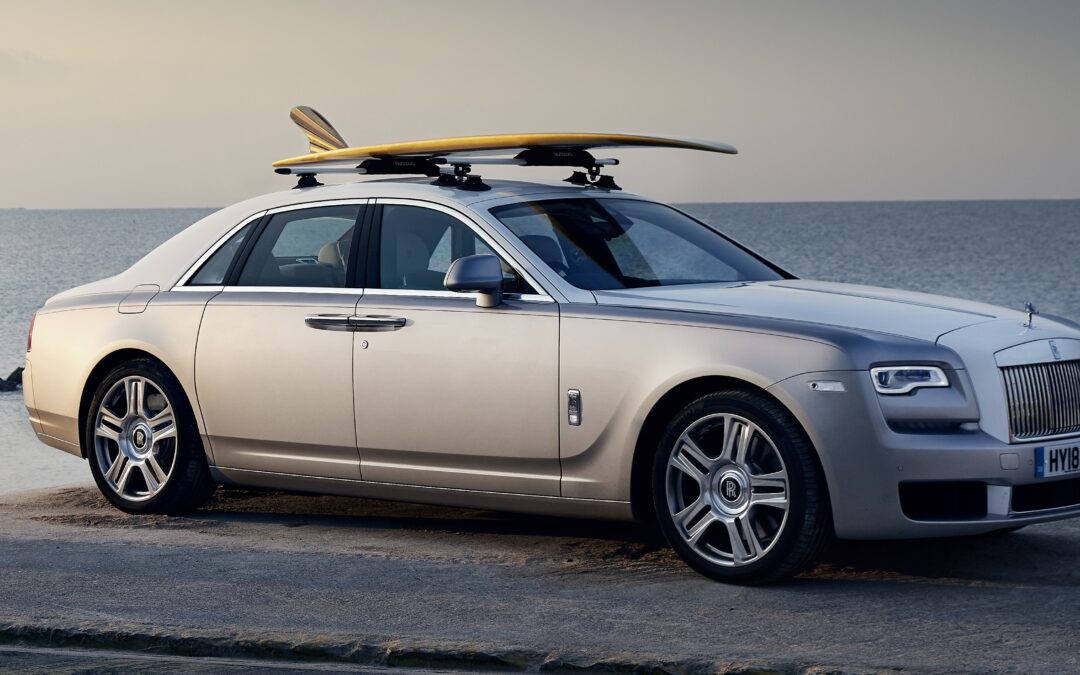
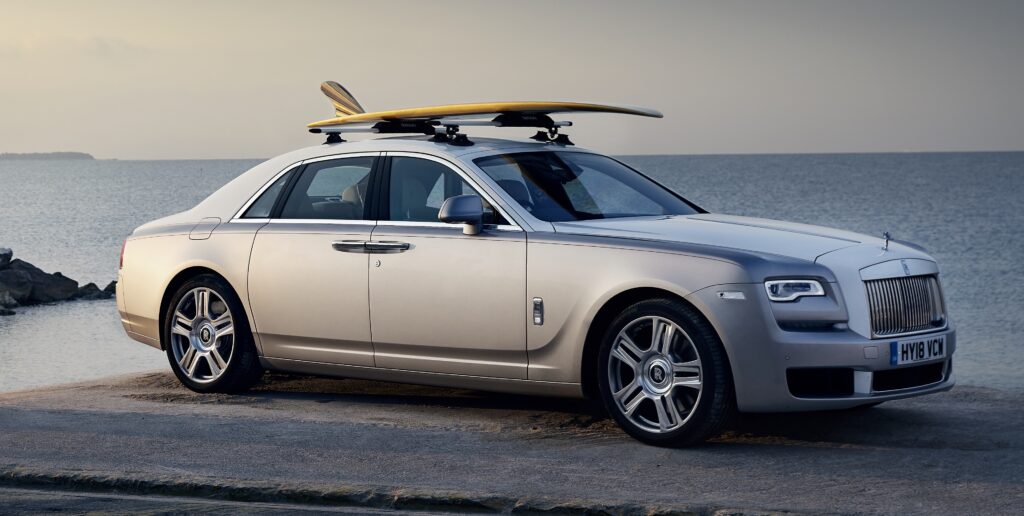
This “bespoke” Rolls-Royce Ghost, with a roof rack and custom surfboard, is part of the brand’s outreach for wealthy customer awareness.

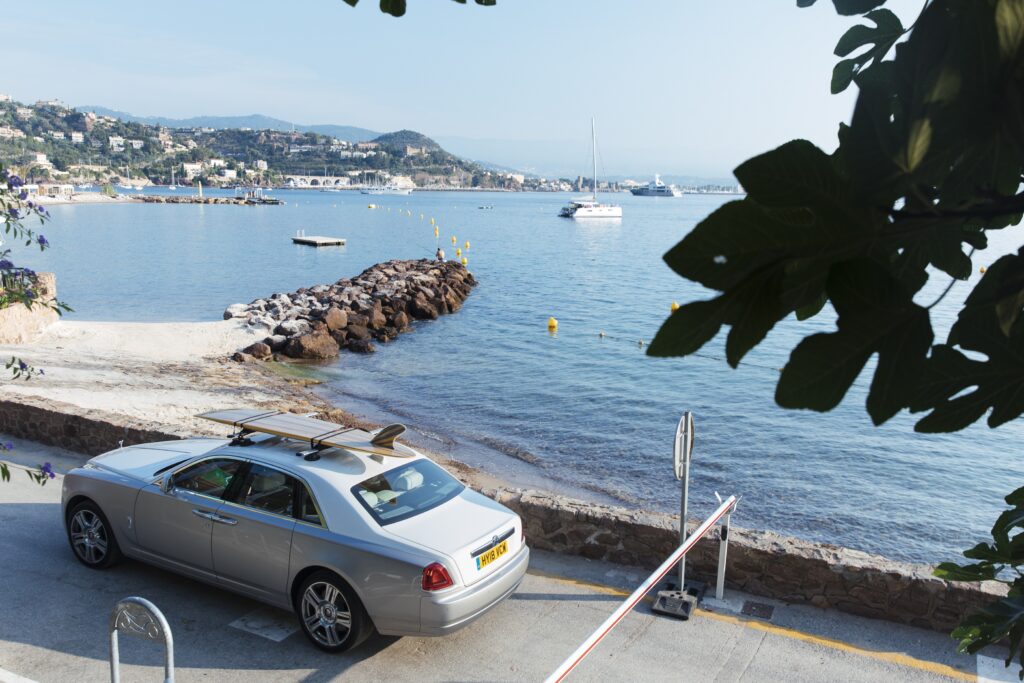
Now here’s something you don’t see often, even along such a surfin’ USA coast as is San Diego. Rolls-Royce Motor Cars is seaside in the idyllic Côte d’Azur enclave of Cannes, France, to “provide a gentle presence during peak summer season.”

I so enjoy a few summer weeks in Cannes — almost as much as I enjoy reading a Rolls-Royce press release. This one made me want to dig my toes into the sand and order a PBR for beach-chair service.

For this storming of the beaches, the British carmaker said it worked with “a small group of trusted and noteworthy partners to present its full portfolio of motor cars, including Cullinan [not so much an SUV as a “high-bodied car”], on the picturesque French Riviera and Elysian Andalusian Coastline: locations that truly befit the brand’s patrons.”

Julian Jenkins, Regional Director, says “Rolls-Royce Motor Cars prides itself on truly understanding its customers’ lifestyles. As such, the marque is uniquely positioned to tailor its presence in these Hot Spots to ensure that they are effortless for both existing and prospective patrons of the brand.”

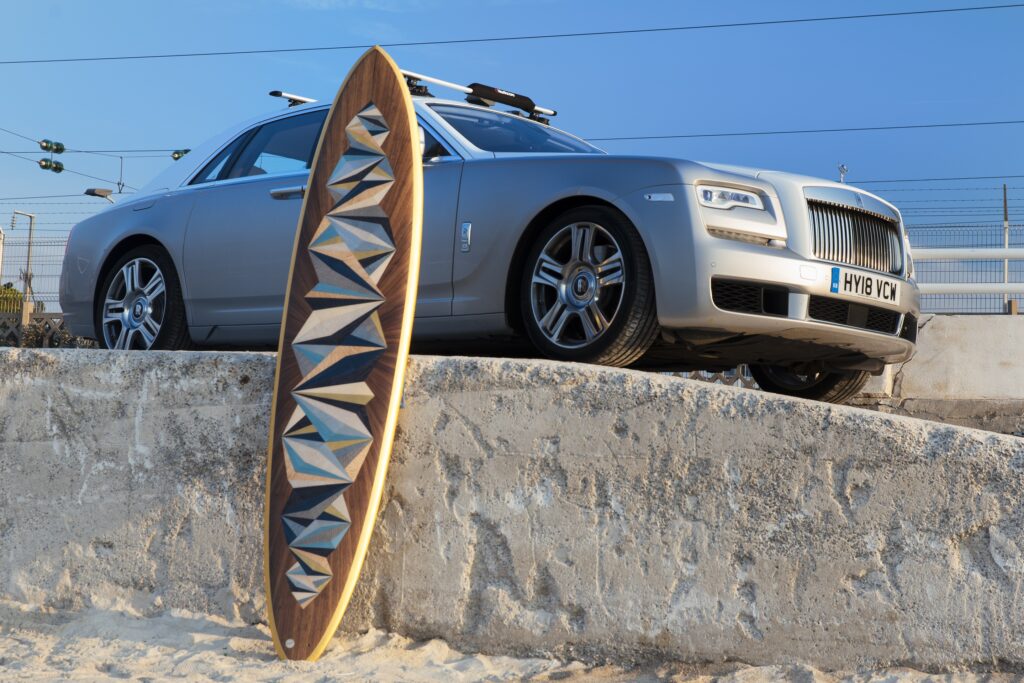
The 9-foot-2-inch sustainably sourced Paulownia timber board is handcrafted (just as a fine Rolls-Royce) of using veneers of American Walnut, Ripple Sycamore and Figured Anigre.

The 9-foot-2-inch sustainably sourced Paulownia timber is handcrafted (just as a fine Rolls-Royce) of using veneers of American Walnut, Ripple Sycamore and Figured Anigre.[/caption]

The gentle outreach began July 30 and will run through Aug. 12, in a relaxed environment to learn more of “the eccentricities of Rolls-Royce patrons.” One customer who commissioned his car at last year’s Cannes Hot Spot is loaning his latest acquisition, a surfboard crafted by contemporary British marquetarians, Woodpop.

The 9-foot-2-inch board is sustainably sourced Paulownia timber and handcrafted (just as a fine Rolls-Royce) with veneers of American Walnut, Ripple Sycamore, Figured Anigre and Birch. — with, of course, 24-carat gold leaf.

The board is showcased on a bespoke Rolls-Royce Ghost.

Seaside enclave.

The Roller caravan continues its continental road trip to Marbella, Spain, along the Andalusian Coastline, from the Aug. 15 to Sept. 2.

There, “guests of the marque can experience seven bespoke motor cars from the exclusive La Reserva Golf Course at the Sotogrande resort.

“Framed by the remarkable Sierra Blanca Mountains, driving and chauffeur experiences are available in all motor cars with the exception of Cullinan, which is available for static viewings.

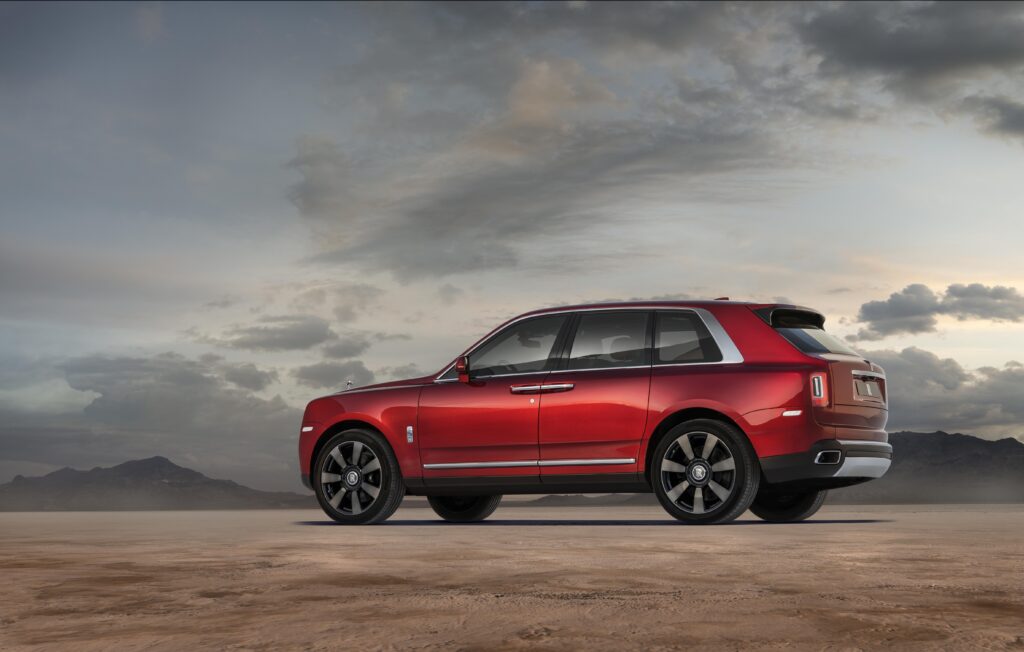
The 2018 Cullinan, a ‘high-bodied car.’

Dodge Charger SRT8 Super Bee Review

Dodge Charger SRT8 Super Bee Review

2013 Dodge Charger SRT8 Super Bee “Core” model packs power, pares price

a 2013 Dodge Charger SRT Super Bee

The Super Bee “core” model has all the power of the Dodge Charger SRT8, without the pricey option packages. (Photos courtesy of Stellantis)

BY MARK MAYNARD

Remember dog-dish hubcaps? Those “no-frills” nut covers were common on muscle cars of the ‘60s, including the Dodge Super Bee.

And when you saw those on a Super Bee – or a GTX or a Plymouth Road Runner or Dodge Challenger – you knew the driver was serious about speed. They were saving weight for a quicker quarter mile – or the next stoplight drag race.

The 2013 Dodge Charger SRT8 Super Bee is no “stripper,” but it is a “core performance” model of the brand. Dodge says it is reaching its “core” enthusiast, but really it means less content to save a few dollars. Pricy features were pared back to lighten the MSRP while not softening the punch.

Super Bee interior has Z stripe cloth seats

Interior features include Z-stripe cloth seats with silver striping and stitching.

The Super Bee has all the power of the Charger SRT8 – a 470-horsepower, 6.4-liter Hemi and five-speed automatic. But instead of the big, leather sport seats – with those steep side bolsters – the Super Bee has Z-stripe cloth seats with silver striping and stitching. The cloth seats are plenty grippy for performance driving.

Super Bee Pricing

Pricing for the 2013 Dodge Charger SRT8 Super Bee starts at $42,770, which is $2,720 less than the full-dress Charger SRT8. But the test car, with options and $1,000 gas-guzzler tax, came to $44,215.

The Super Bee is no “radio delete” model. Standard equipment includes: Smart key locking and push-button ignition, 4.3-inch touchscreen display with Bluetooth streaming audio, dual-zone air conditioning, SRT leather steering wheel, 20-inch performance tires, six-way power driver’s seat and aluminum lithographic accents

There’s also a hive of Super Bee graphics, including on the black grille, a dash plaque and a color digitized Bee that hovers a bit in the center gauge on start-up.

Check here for current Doge Charging pricing and offers.

Front cloth seats with the silver Z stripe

The Z-stripe cloth seats are plenty grippy for performance driving.

Observations and Considerations

Missing from the equipment list is a rearview camera, which is always useful in mall parking. Also absent is the big 8.4-inch media screen and Uconnect system. This system is totally cool for its ability to read and send texts, provide navigation, and more.

The Super Bee is also missing the three-mode adaptive damping system, which includes a “Track” setting. But it does have standard Launch Control, to help “maximize straight-line acceleration,” Dodge says.

But the Super Bee does get the active exhaust system (2.75-inch pipes) with healthy 4-inch round tips. And there are SRT disc brakes with 14.2-inch vented and slotted front rotors with four-piston black Brembo calipers. And 13.8-inch vented and slotted rear rotors with four-piston black calipers. The full SRT8 has the same brake system but with red Brembo calipers.

Also standard are Bilstein shock absorbers and stabilizer bars front and rear.

Last year’s Super Bee was available only in yellow or black paint. The 2013 comes in Bright White, Pitch Black and TorRed with black interiors.

Snobs will sniff at the five-speed transmission, but the AutoStick rolls through the gears without hesitation. Soon, the eight-speed will be the standard shifter.

The Super Bee can be optioned with steering wheel paddle shifters for $295.

The leather wrapped three spoke steering wheel

The leather-wrapped steering wheel – with flat bottom – is standard on the core model.

Big Hemi Powertrain

There is power with a conscience, sort of: The big hemi has fuel economy ratings of 14 mpg city, 23 highway and 17 mpg combined. Helping stretch the premium-unleaded is Fuel Saver Technology that switches between eight and four cylinders when possible.

Whatever the mileage, it’s good enough for an enthusiast not to fret over filling up with the good stuff.

Owners of any Chrysler Group SRT vehicle receive one day of professional driving instruction as part of the SRT Track Experience. It is a smart way to ease owners into the power and ability of the car. The sessions are held throughout the year at selected tracks. Info: DriveSRT.com.

Why Buy the Dodge Charger SRT8 Super Bee?

The SRT treatment is wicked to the core. The Charger SRT8 suspension was tweaked this year and the ride is more settled now. There’s something so old-school American about how this car is just butt-kicking fun. It is felt with every start of the Hemi, every dive into a corner and every wave of Mopar appreciators.

Dodge Charger SRT8 Super Bee Specifications

Body style: large, rear-wheel-drive fastback sedan with aluminum hood

Engine: 470-hp, 6.4-liter (392 cubic inch) pushrod V-8; 470 lb.-ft. torque at 4,300 rpm

Transmission: 5-spd. AutoStick with Track mode with performance shifting and gear holding

Fuel economy: 14/23 mpg city/hwy.; premium fuel recommended

Fuel tank: 19.1 gal.

Trunk space: 16.3 cu. ft.

Front head/leg/shoulder room: 38.6/41.8/59.5 in.

Rear head/leg/shoulder room: 37.9*/40.1/57.5 in. 36.9 w/sunroof

Length/wheelbase: 200.3/120.2 in.

Curb weight: 4,365 lbs.

FEATURES

Standard equipment includes: Smart key locking and push-button ignition, 4.3-inch touchscreen display with Bluetooth streaming audio, dual-zone air conditioning, SRT leather steering wheel, 6-way power driver’s seat, tilt-telescopic steering column, aluminum lithographic accents, 20-inch all-season tires and alloy wheels;

Safety features include: 7 air bags (including driver’s knee bag) electronic stability control, ABS, all-speed traction control, electronic brake-force distribution, brake assist, Ready Alert Braking, Rain Brake Support, hill-start assist

Base price: $43,770, including $995 freight charge and $1,000 gas-guzzler tax; price as tested $44,215
Options on test vehicle: 245/45ZR20 Goodyear F1 Supercar performance tires $150; steering-wheel mounted paddle shifters $295;

Where assembled: Brampton, Ontario, Canada

Warranties: 3-years/36,000-miles bumper-to-bumper with roadside assistance; 5-years/100,000-miles powertrain

A yellow dodge coronet super bee

Here’s a blast from the past: a 1968 Dodge Coronet Super Bee convertible, from the Chrysler LLC archives.

2014 Porsche 911 Turbo and Turbo S specs, photos, pricing

2014 Porsche 911 Turbo and Turbo S specs, photos, pricing
2014 911 Turbo updates include a new all-wheel-drive system, active rear axle steering, adaptive aerodynamics, full-LED headlights and up to 560 horsepower from a twin-turbocharged flat six.

2014 911 Turbo updates include a new all-wheel-drive system, active rear axle steering, adaptive aerodynamics, full-LED headlights and up to 560 horsepower from a twin-turbocharged flat six.

2014 Porsche 911 Turbo and Turbo S

 Fifty years ago, the Porsche 911 made its debut at the Frankfurt auto Show and then 10 years later came the first 911 Turbo prototype.

Now, for the 911 Turbo’s 40th anniversary, Porsche has just released official specs, photos and pricing for the latest 911 Turbo and Turbo S, which go on sale at the end of this year.

Porsche calls the Turbo models “the technological and dynamic performance peak of the 911 series.”

Updates include a new all-wheel-drive system, active rear axle steering, adaptive aerodynamics, full-LED headlights and up to 560 horsepower from a twin-turbocharged flat six-cylinder engine.

New 20-inch wheel design.

New 20-inch wheel design.

It also rides on 3.9-inch longer wheelbase and 20-inch wheels.

Porsche’s active anti-roll system (Dynamic Chassis Control) is optional on the base turbo and standard on the Turbo S. The Turbo S also comes with extras that were once options, including the Sport Chromo Package Plus and carbon ceramic composite brakes.

All for quicker acceleration. The 911 Turbo with the optional Sport Chrono Package Plus accelerates from zero to 60 mph in 3.2 seconds, on its way to a top track speed of 196 mph.

The 911 Turbo S gets to 60 mph 2.9 seconds, with a top track speed of 198 mph.

Performance
The twin- turbocharged, direct injection 3.8-liter six produces 520 hp in the 911 Turbo and 560 hp in the S.

Power is transferred to the drivetrain through a seven-speed dual-clutch transmission (PDK), with auto start/stop at idle.

Official mileage estimates are not final, but Porsche expects improvements in real-world fuel economy.

Induction and engine sounds are piped to the cabin by a speaker diaphragm.

Wide body
Visually, the Turbos have the widest bodies: rear body panels a broader by 1.1 inches over the 911 Carrera 4. The fenders have a nearly level surface, about the width of a hand, between the C-pillar and the outer edge of the car body.

Other styling differences include forged two-tone 20-inch aluminum wheels, with center hub locks on the Turbo S.  The Turbo S also gets -LED headlights that feature four-point daytime running lights and camera-based high/low beam control (Optional for the base model).

An even wider body.

An even wider body.

Rear wheel steering
Rear wheel steering system consists of two electro-mechanical actuators (rather than conventional control links) on the left and right rear axles.

The steering angle of the rear wheels can be varied by up to 2.8 degrees, depending on vehicle speed.

GIF_PorscheGauges

At speeds to 31 mph, the system steers the rear wheels in the opposite direction that the front wheels are turned. That essentially corresponds to a virtual shortening of the wheelbase by 9.8 inches. The system lets the car turn faster into corners and noticeably simplifies maneuvering and parking.

Above 50 mph, the system steers the rear wheels parallel to the front wheels.

This is equivalent to a virtual lengthening of the wheelbase by 19.6 inches and gives the car tremendous directional control capability, Porsche says.

At the same time, the steering input by the driver leads to significantly faster build-up of lateral force at the rear axle, which responds to steering commands even more quickly.

The interior was completely redesigned for the Turbo, with a richer list of extras for the S model.

The interior was completely redesigned for the Turbo, with a richer list of extras for the S model.

Active aerodynamics
The new active aerodynamic system is a retractable three-stage front spoiler (pneumatically extended) and a deployable rear wing with three adjustable wing positions.

In the performance position, the entire spoiler is fully extended to add considerable down force at the front axle. The rear wing also is extended to its maximum height “with the greatest angle of attack,” Porsche said in the release.

Dynamic performance is improved so much, Porsche says, that lap times at the North Loop of the Nürburgring are improved by up to two seconds. The new 911 Turbo S carves through  the 12.8 miles of the North Loop of the Nürburgring – nicknamed “The Green Hell” by Jackie Stewart – in less than 7.6 minutes – with standard production tires.

The 2012 Corvette ZR-1 went through the same 154-turn course in 7 minutes, 19.63 seconds.

New interior
The interior was completely redesigned for the Turbo, with a richer list of extras for the S model. Its cabin is trimmed in black with Carrera red and standard 18-way power adjusted Sport Seats Plus.

A Bose sound system is standard, but for the first buyers can upgrade to Burmester system. Other options include a radar-controlled cruise control system, camera-based road sign recognition and speed limit recognition.

Turbo pricing starts at $149,250. The Turbo S starts at $182,050. Pricing includes the $950 freight charge from Zuffenhausen.

The 911 Turbo S gets to 60 mph 2.9 seconds, with a top track speed of 198 mph.

The 911 Turbo S gets to 60 mph 2.9 seconds, with a top track speed of 198 mph.

2014 Nissan GT-R Track Edition Overview

2014 Nissan GT-R Track Edition Overview

The 2014 Nissan GT-R Track Edition Earns its Supercar Ranking In Price and Performance

Front view of the 2014 Nissan GT-R

The 545-hp GT-R Track Edition was pushed even harder on the Nurburgring for more track-competition ability. (Photos courtesy of Nissan)

BY MARK MAYNARD

Ppricing was announced today for the 2014 Nissan GT-R Track Edition. The new two-seat competition model will have a limited production of 150 cars for the U.S.

The four-seat GT-R coupe is sold in three all-wheel-drive models. Pricing starts at $100,590, including the $1,000 freight charge from Japan. All models route power through a dual-clutch sequential six-speed rear transaxle.

The new Track Edition claims a supercar ranking in price and features. The two-seater with competition upgrades starts at $116,710.

Learn more about Nissan’s performance cars here.

Front seats of the Track Edition

The Track Edition interior has blue-trimmed, high-grip front seats.

Backseat in the 2014 GT-R Track Edition

The Track model back seat is trimmed in a lightweight quilted cloth mat.

Lightweight wheels on the Track Edition GT-R

RAYS lightweight wheels.

Track Edition upgrades

Its features include a specially tuned suspension, special brake cooling guides, a front spoiler with carbon fiber air ducts, and a lightweight quilted cloth mat in place of rear seats.

Changes to the GT-R’s four-wheel independent suspension include special Bilstein DampTronic gas pressure shock absorbers and higher spring rates.

Inside, the Track Edition gets blue-trimmed, high-grip front seats with special leather and fabric. Magnesium paddle shifters are standard on all models.

The GT-R engine

The 545-hp GT-R engine.

Special features

Other special features are a handmade, lightweight dry carbon fiber rear spoiler and metallic black six-spoke RAYS forged lightweight wheels. The run-flat tires are ultra-high performance Dunlop SP Sport Maxx GT 600 DSST CTT, nitrogen filled.

The carbon fiber spoiler on the GT-R

The carbon-fiber spoiler.

The wheels and spoiler are also available for the Black Edition, which starts at $110,300. Other Black extras include a red and black interior, Recaro leather-trimmed seats, and a carbon-fiber rear spoiler.

2014 Nissan GT-R upgrades

GT-R upgrades for the 2014 model year include some performance tweaks and a new optional interior with hand-stitched Amber Red semi-aniline leather on the front seats.

The Nissan GT-R’s twin-turbocharged 3.8-liter V-6 has 463 foot-pounds of torque from 3,200 to 5,800 rpm. The power band was recalibrated for better response in the middle range of 4,500 to 6,000 rpm and for more acceleration above 6,000 rpm. Redline is at 6,400 rpm.

A rear view of the GT-R

The Nissan GT-R Track Edition has a curb weight of 3,796 pounds and a very low drag coefficient of 0.26.

McLaren P1 winter testing, video and photo

McLaren P1 winter testing, video and photo
McLaren will begin deliveries of the P1 supercar this summer. Its price of $1.34 million buys a car equipped for road and track, the company says, and “just” 375 cars will be built.

McLaren will begin deliveries of the P1 supercar this summer. Its price of $1.34 million buys a car equipped for road and track, the company says, and “just” 375 cars will be built.

P1 winter testing video: http://youtu.be/Hb_6pNFqqNA


The McLaren P1 is intended to be “the best driver’s car in the world on road and track,” the company says. Its price of $1.34 million buys a car equipped for road and track and “just” 375 cars will be built in the new production center in Woking, Surrey, UK, later this year.

The company was testing its 903-horsepower, plug-in electric supercar in northern Sweden at the Arctic Circle.

The P1, so named for “first place” or “position one” in Formula 1 racing. It’s an earned badge for the company, which in its 47-year F1 history has 182 Grand Prix victories and 155 pole positions to-date. The name also company history: the McLaren F1 was known internally as Project 1, or P1.

The powertrain is a McLaren-developed IPAS gasoline-(petrol) electric powertrain with revisions to the company’s 3.8-liter twin-turbo V8. It is coupled to a single electric motor and small but-high energy battery pack. Combined power output is 903 hp.

As important as absolute power is the electric motor’s ability to provide instant torque. 0-62 mph takes less than 3 seconds and it can be driven about 6.2 miles in electric-only mode at speeds to almost 100 mph. Top speed is limited to 215 mph.

‘It may not be the fastest car in the world in absolute top speed, but that was never our goal,” chief engineer Paul Mackenzie said in a press release. “Rather, we believe it is the fastest ever production car on a racing circuit, a much more important technical statement, and far more relevant for on-road driving.”

Its technological credentials are impressive. The car has an unprecedented amount of downforce for a road vehicle, Mackenzie said, “similar levels to a GT3 racing car and yet with even greater ground effect.”
The downforce boosts cornering and braking performance and helps balance, stability and driveability at all speeds he said.

The car’s agility is due in part to active aerodynamics and adjustable suspension, both now banned in Formula 1 racing, he said, because of the perceived performance advantage.

Air flow is optimized around the body by an active wing and underbody panels. To harness downforce, the F1 style rear wing can extend by about 4.7 inches on road and to nearly 12 inches on the track.

The hydro-pneumatic suspension – RaceActive Chassis Control – can lower the car by nearly 2 inches in Race mode, to produce ground effect aerodynamics. It also has adaptive spring rates, roll control, pitch control and damping. In Race mode, the spring rates stiffen by 300 percent, which will allow cornering grip of more than 2g.

Power is driven to the rear wheels through a seven-speed dual clutch gearbox.

IPAS (Instant Power Assist System) is a plug-in electric system. The battery is charged by kinetic energy from the engine, such as when decelerating and it can be plugged in to recharge.

The electric power assist system, developed by McLaren, can provide up to 176 hp from the electric motor, which can then be used as a boost at the touch of the steering wheel button. The nitrous-like charge operates only when close to full throttle
“It’s pretty cool to turn up, silently, in a million dollar McLaren,” said Mackenzie.

Deliveries begin this summer.