Select Page

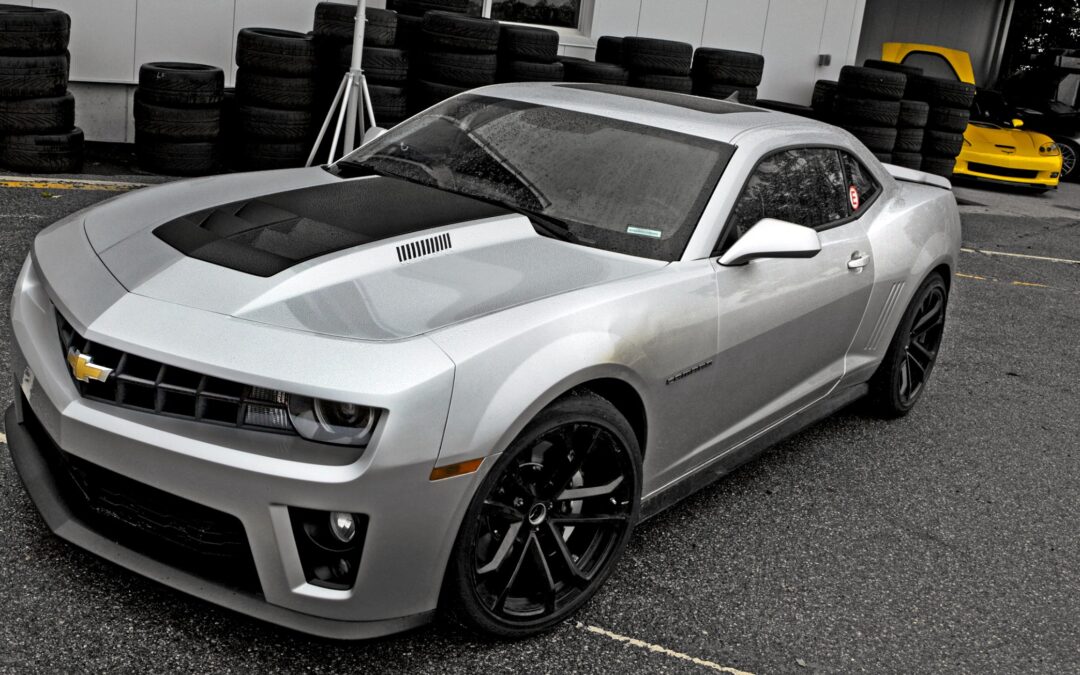
Super Camaro: ZL1 rated 580 horsepower

Super Camaro: ZL1 rated 580 horsepower
Super Camaro

The Camaro has straight-line speed and cornering finesse with some technologies borrowed from the Corvette ZR1 and the third generation of Magnetic Ride Control.

The 2012 Chevrolet Camaro ZL1 will be the most-powerful production Camaro ever, when it goes on sale in early 2012.

Promoted as a “track-ready” car, the ZL1 is rated for 580 horsepower and 556 foot-pounds of torque from its supercharged 6.2-liter V-8. And unlike some of the pony-car competition, this super Camaro will be available with an optional six-speed automatic transmission or standard six-speed manual.

And, yes, this repeat of the ZL1 nameplate beats the special-order, 1969 Camaro ZL1 427 cubic-inch big block by more than 150 horsepower. And, fortunately, the modern Camaro has a five-year / 100,000-mile powertrain warranty.

Pricing has not been released, but if some versions of the Camaro SS can run to $45,000, expect the ZL1 to start at or above $50,000.

Among the standard equipment are a five-mode Performance Traction Management system, a high-performance fuel system and fortified clutches and transmissions. The Super Camaro also borrows some technologies from the Corvette ZR1 and debuts the third generation of Magnetic Ride Control.

“The Camaro ZL1 delivers supercar performance and technology in the sports-car segment,” said Al Oppenheiser, Camaro chief engineer, said in a release. “For sheer power, the ZL1 delivers more horsepower than a Ferrari 458, more torque than an Aston Martin DB9 V12, and a better power-to-weight ratio than a Porsche 911 Carrera GTS.”

In comparison, the Ford Mustang Shelby GTR500 has power ratings of 550-hp and 510 lb.-ft. of torque at 4,250 rpm from its supercharged 5.4-liter V-8, which requires premium fuel. Its only transmission is a six-speed manual. The Dodge Challenger SRT8 392 has 470-hp and 470 lb.-ft. torque at 4,200 rpm from its naturally aspirated (non-“charged”) 6.4-liter pushrod V-8. Premium fuel is recommended, not required. Challenger has six-speed manual or automatic transmissions.

Reinforcements were applied to the ZL1 in key areas. Its aluminum LSA V-8 uses six-bolt main bearing caps that clamp and lock in the forged steel crankshaft. The 1.9-liter Roots-style blower has a four-lobe rotor set and intercooler to funnel boosted air into high-flow cylinder heads.

More air into the engine means more power out and the LSA engine has a lower-restriction air filter, dual inlet paths and improved airflow through the supercharger housing. Other changes include a higher-efficiency supercharger intercooler and electric power steering system, which takes away less engine power than hydraulic-steering systems.

The Tremec TR-6060 “MG9” manual transmission has been fortified by 30 percent to handle the torque, which is 136  lb.-ft. to 146 lb.-ft. more than the Camaro SS. The uprated transmission has a strengthened output shaft, high-strength rear housing, and additional roller bearing. There also are a dual-mass flywheel, twin-disc clutch and triple synchros for smooth engagement and precise shifts.

The Hydra-Matic 6L90 automatic also has been beefed up and has performance modes of Drive (with second-gear starts), Sport and Manual.
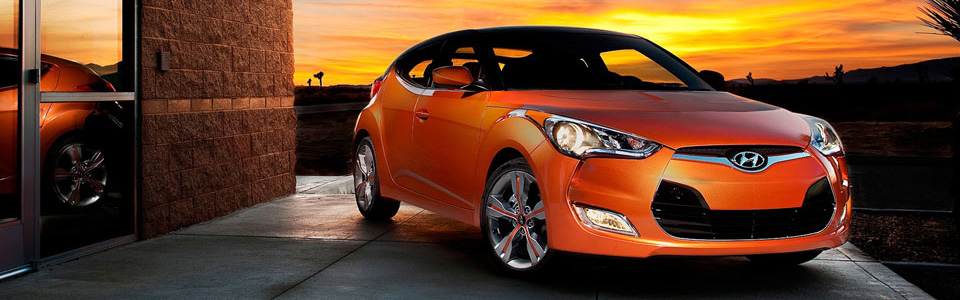
Hyundai Veloster: How cool is this?

Hyundai Veloster: How cool is this?

Veloster: a three-door coupe.

Pricing for Hyundai’s new 2012 Veloster three-door coupe starts at $18,060 for the entry-level model with six-speed manual transmission and ranges to $19,310 with the six-speed EcoShift dual-clutch transmission. Cars are rolling into dealerships now.

 Both models are powered by a 138-horsepower, direct-injection, 1.6-liter four-cylinder engine that gets EPA estimated fuel economy ratings of 28 mpg city and 40 mpg with the manual transmission and 29/38 with the dual clutch.

 The Veloster with manual transmission weighs 2,584 pounds, which is lighter than the Mini Copper S and Scion tC, Hyundai said in a release.

 The body style is a hatchback with a passenger side rear door that has a concealed door handle. (It’s a true door, not a so-called access panel). Standard equipment includes 17-inch alloy wheels, remote locking, power windows-locks-mirrors, air conditioning and cruise control.

 Other standard extras include Hyundai’s Blue Link telematics system for voice-activated controls, Pandora Internet radio, seven-inch touchscreen, Bluetooth hands-free phone connection, video game console connectivity with 115-volt power outlet.

 The Blue Link service comes with a free six month service and includes Automatic Collision Notification and Assistance, SOS Emergency Assistance, Enhanced Roadside Assistance and Monthly Vehicle Report. Other services, with other subscription rates, include voice text messaging, remote unlock or locking, remote vehicle start, stolen vehicle slowdown, curfew alert, turn-by-turn navigation, gas station locations and more.

 Options include:

  • Six-speed EcoShift Dual Clutch Transmission with paddle shifters, Hillstart Assist Control, and Active ECO System ($1,250 MSRP)
  • Style Package ($2,000), includes 18-inch alloy wheels, chrome grille surround with piano black highlights, fog lights, panoramic sunroof, piano black interior accents, eight-speaker Dimension audio system with external amp and subwoofer, leatherette bolster seats and door inserts, leather wrapped steering wheel and shift knob, alloy pedals.
  • Tech Package: ($2,000; requires Style package), includes unique 18-inch alloys with painted inserts, backup warning sensors, vavigation system with rearview camera, automatic headlights, proximity key entry with push-button start, 115-volt outlet

 SPECIFICATIONS
2012 Hyundai Veloster
Body style: compact, 3-door hatchback
Engine: 138-horsepower, direct-injection, 1.6-liter four-cylinder
Transmissions: 6-speed manual or 6-speed dual-clutch with paddle shifters
Fuel economy: 28 mpg city, 40 hwy (29/38 with dual-clutch); 87 octane recommended
Length/wheelbase: 166.1/104.3 in.
Front head/leg/shoulder room: 39/43.9/55.6 in.
Curb weight: 2,584 to 2,657 lbs.
Cargo space: 15.5 cu. ft.
Turning circle: 34.1 ft.
Safety features: 6 air bags, stability and traction controls, 4-wheel disc brakes with ABS, electronic brake-force distribution
Base pricing: $18,060 to $19,310
Warranty
: 5-years/60,000-miles bumper-to-bumper, 10-years/100,000-miles powertrain coverage, 5-years of free roadside assistance and the Hyundai Trade-in Value Guarantee.

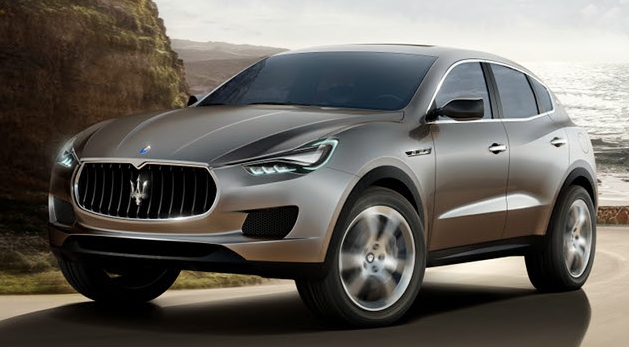
Kubang concept: a Maserati SUV?

Kubang concept: a Maserati SUV?

Maserati plans to partner with Jeep and Ferrari for its first sport-luxury SUV.

 
Maserati put a fresh face on its Kubang concept nameplate and showed a striking, new crossover SUV concept at the recent Frankfurt auto show.
 
The Italian automaker showed the original Kubang concept in 2003, when few luxury brands were considering a crossover. A truck still may seem bipolar for this maker of hand-tooled sports cars and sports sedans, but all the tools are now at hand.
 
Today, Maserati can reach to the other side of the world to its new sister division, Jeep, and explore an all-wheel drive, sport-luxury SUV. It also has reached out to another division partner, Ferrari.
 
There may be more “production” than concept to the Kubang. In a release, the company said that an SUV is “a natural direction for Maserati to enlarge its product range and strengthen its presence in the sport luxury  market.”
 
Critics may have scoffed at the thought of a Porsche truck, but the Cayenne crossover (a variant of the Volkswagen Touareg and Audi Q7) has been a sales salvation for the brand. And now a smaller crossover is planned.
 
The new Kubang styling was created at the Maserati Style Center headed by Lorenzo Ramaciotti. Maserati insists the essence of the SUV and all major system components will be unmistakably Maserati: style, engine, suspensions, brakes, handling and performance. An eight-speed automatic transmission will be developed by Maserati.
 
New-generation, high-tech Maserati proprietary engines will be designed in Modena, Italy, and built in Maranello by Ferrari. Engine development will be handled in-house by chief engineer Paolo Martinelli, head of the brand’s powertrain department. He also spent nearly 30 years at Ferrari, where he also served as engine chief of the Formula One racing team.There was no word whether the new powerplants will be V-8s, electrified or smaller-displacement “charged” engines, turbo- or supercharged.
 
Maserati is actively seeking input on the Kubang. Should it be built?
 
Send me an email: Mark.\m150@cox.net