
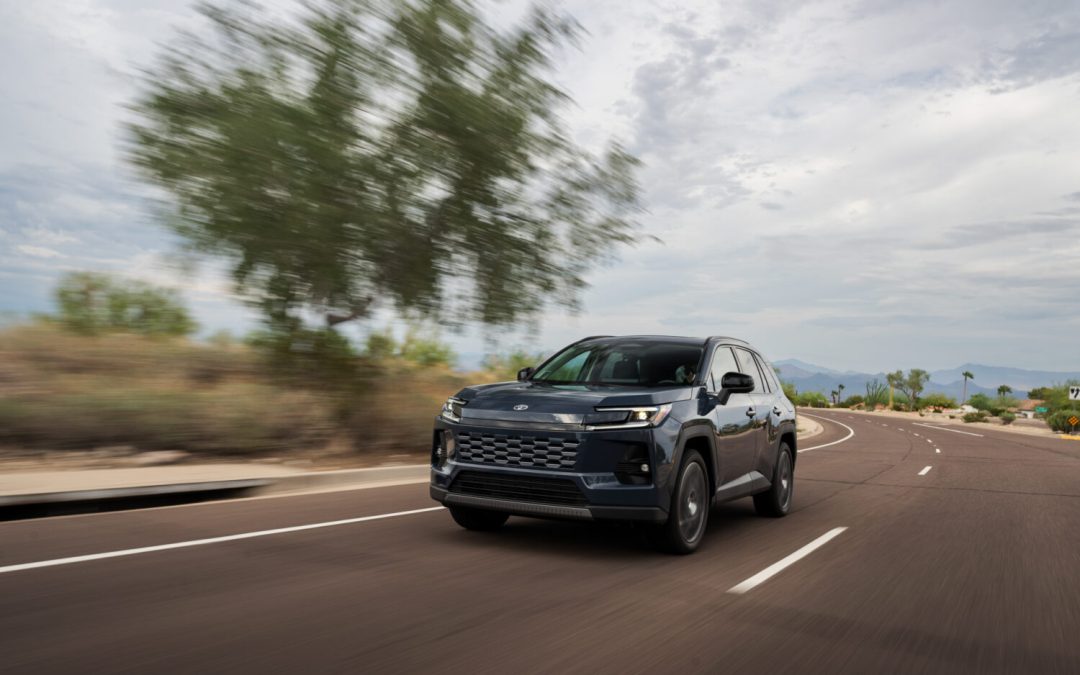
The 2026 Toyota RAV4 is a good, honest compact SUV that emphasizes function and utility with refinement to inspire pride of ownership
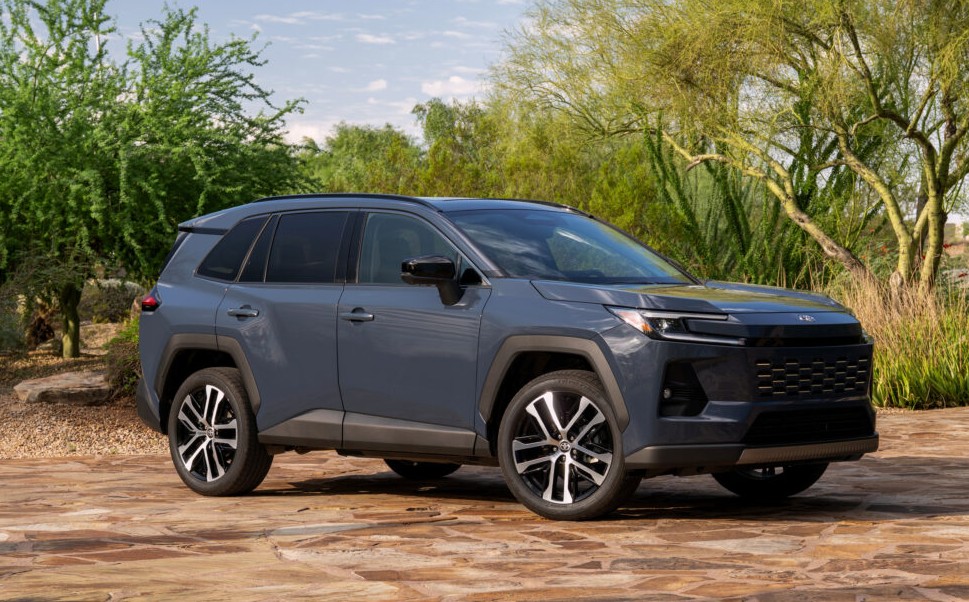
Far from its 1996 origins as a Corolla-based compact, the 2026 Toyota RAV4 is much evolved for its sixth generation. (Photography by Mark Maynard or Toyota USA)
Jump To Special Features
3 RAV4 Personalities
2026 RAV4 Pricing
Make Mine the Limited
10 Standout Features
Competing Hybrid Small SUVs
RAV4 Hybrid and New Vehicle Warranties
Observations and Considerations
2026 Toyota RAV4 Limited AWD Specifications
BY MARK MAYNARD
Forget everything you remember about the rattle-and-hum Toyota RAV4s of the past. As a former owner of a coarse-but-capable 2008 model, I expected the usual incremental updates for 2026. Instead, Toyota handed us a complete revolution: an all-hybrid lineup ranging from sensible daily drivers to a near-luxury cruiser and a rowdy-looking 324-horsepower GR Sport.
Perusing the press materials, the redesign would be an astounding improvement — from interior decor to drivability and ride quality. Too often, makers’ marketing perspectives do not always meet reality. However, for this sixth-gen RAV, the finished product shows complete communication among the various design and engineering groups. Their effort elevates the RAV4 to a level I was not expecting, and I am a past owner of a 2008 RAV4 — coarse but capable at best.
Far from its 1996 origins as a Corolla-based compact, the 2026 Toyota RAV4 is much evolved. Its exterior styling presents a solid stance, punching forward with what Toyota calls a “hammerhead” front end. To me, it is more of a robot face with sharp tuning-fork headlights. The side profile stands out with angular fenders and a low, contoured hood for improved driver sightlines. The rear end styling is creatively comprehensive and balanced. The broad spread of LED taillights set off the wider and stouter rear end.
3 RAV Personalities
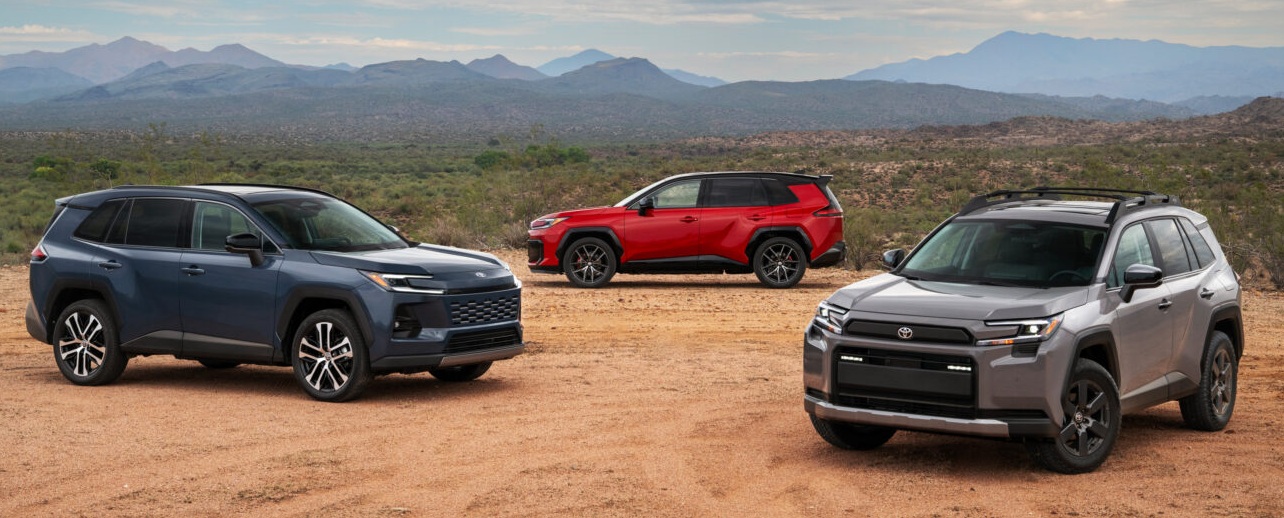
Three personalities for RAV4: Core (left), Sport (center), and Rugged. (Toyota USA)
For 2026, the RAV4 offers three exterior design treatments: Core, Rugged, and Sport. All are equipped with Toyota Safety Sense 4.0. And for the first time, all 2026 RAV4 Hybrid trims will be offered with front-wheel drive. Previously, the hybrid powertrain was paired with all-wheel drive in most configurations. Adding two-wheel drive boosts fuel economy and lowers the starting price.
Core: The family driver, in trim levels of LE, XLE Premium, and Limited.
Rugged: The new trail-themed Woodland has standard all-wheel drive and slightly raised ground clearance of 8.5 inches, a lift of 0.5 inch. Urban Rock is a new paint color.
Sport: Engineered for the look of performance; there is no power increase. This lineup includes the SE, XSE, and RAV4 GR Sport, which is only available as an AWD plug-in hybrid.
All models have the same basic powertrain: A 2.5-liter inline-four with two motor-generators, and a third motor for all-wheel drive.
2026 RAV4 Pricing
Toyota showed restraint in manufacturer retail pricing for the start of the 2026 model year. When freight is excluded, the 2026 RAV4 Hybrid LE FWD starts at the same price as the 2025: $31,900. However, the 2026 freight charge is now $1,595, up $145 from the start of 2026. With freight included, the cheapest trim is $33,475. Retail pricing below includes the $1,595 freight charge from Aichi, Japan.
There are six trim levels for the 2026 Toyota RAV4 hybrid. Starting prices range from $33,495 for front-wheel drive to $41,495 for the Woodland, and $44,895 for the Limited AWD.
Today’s Limited test cost $47,028 with three packages: head-up display $600; carpet floor mats and cargo mat $339; door-sill protectors $199; wheel locks $90; rear hatch cargo lamps $425; mudguards $160; low profile cross bars $320.
The plug-in RAV4 is sold in four trims with all-wheel drive. Starting prices range from $43,095 to $48,795, and up to $50,095 for the performance “themed” RAV4 GR Sport. And, of course, there are option packages. Among them are two-tone paint schemes ($500 to $975), a driver-assist package ($1,170), a panoramic moonroof ($700), and a JBL audio package ($620).
Retail pricing includes the $1,595 freight charge from Aichi, Japan. Check current pricing here.
Special Offers
Currently, there are two offers to finance a new 2026 RAV4 Hybrid or Plug-in Hybrid at 6.99 percent APR for 72 months. Excludes the GR Sport PHEV. Find details here.
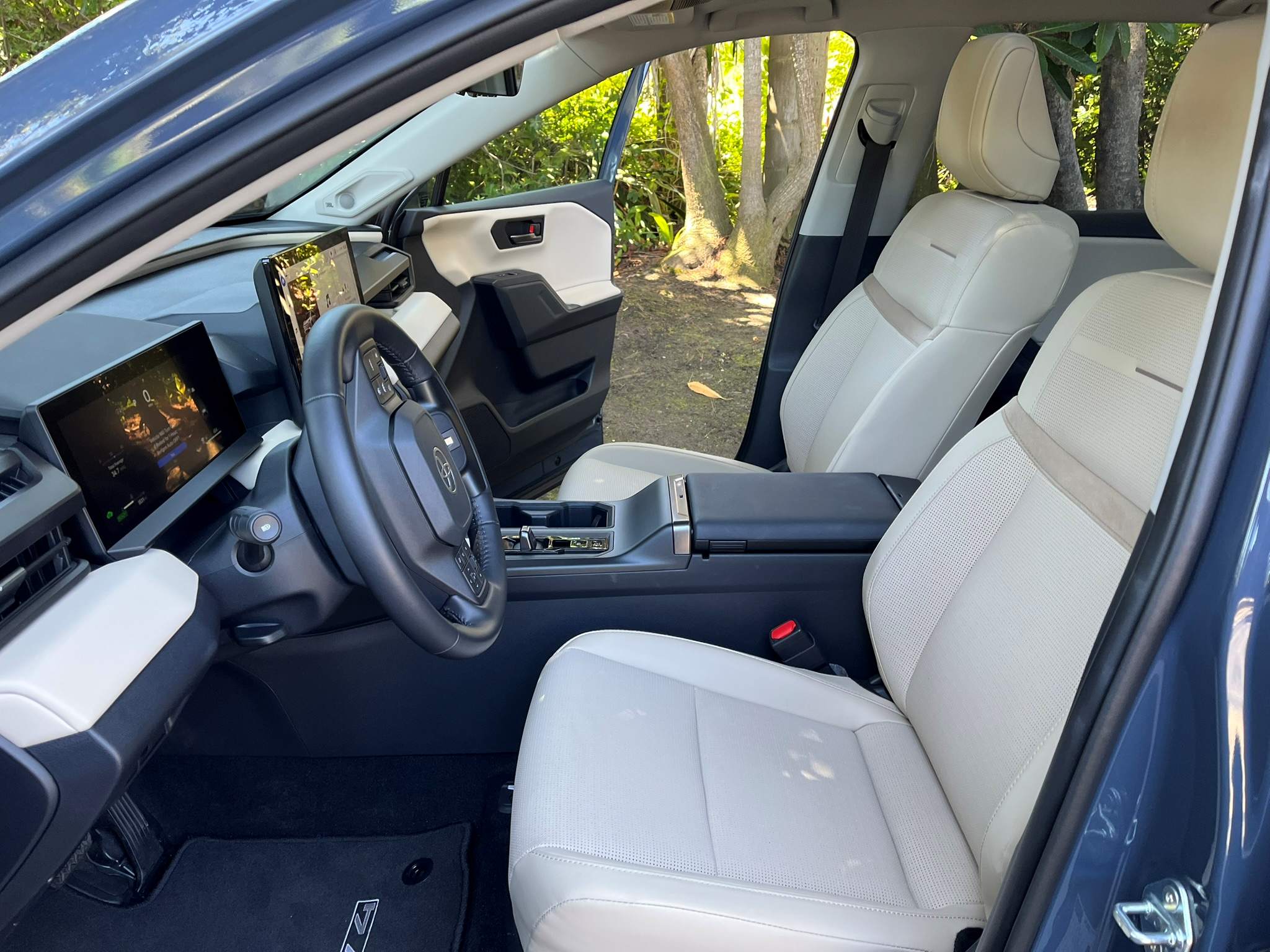
The Limited has SofTex-trimmed seats with eight-way power front seats.
Make Mine the Limited
The trim most desirable to me is the Limited, the top-line Core-grade model. While the lower trim levels are well appointed, the Limited and XSE have one feature the others do not: a power front passenger seat. Also somewhat unique among small hybrid SUVs is a temporary spare tire.
I have been shopping for a compact SUV to replace our 2008 Ford Escape Hybrid, which has a Toyota hybrid powertrain. At nearly 149,000 miles, it is time. It rides like a buckboard but has been relatively dependable. I have replaced the hybrid battery and its cooling fans, costing more than $4,000.
At my stage in life, my next new vehicle could be my last. But that still leaves room for fun but-not-new cars.
For a few reasons, my pick of the 2026 RAV4 line would be the Limited grade in Wind Chill Pearl. The wife favors white cars. To keep happiness flowing, an eight-way power front passenger seat is mandatory for both of us. Power front seats are included with the Limited. Wind Chill Pearl paint for the Limited is $475, and with it I would select the Harvest Beige SofTex interior. (Neither of us is fond of gray or black interiors). I would also opt for the cargo mat package with four carpet floor mats, $339.
With standard AWD and freight, my Limited “build” came to $45,709.
The XSE could have been a contender, but its paint colors are no-cost black or three $975 two-tone schemes. And the final cost was $615 more to match the Limited’s content.
For more detailed specifications and improvements for the 2026 RAV4, see my overview here.
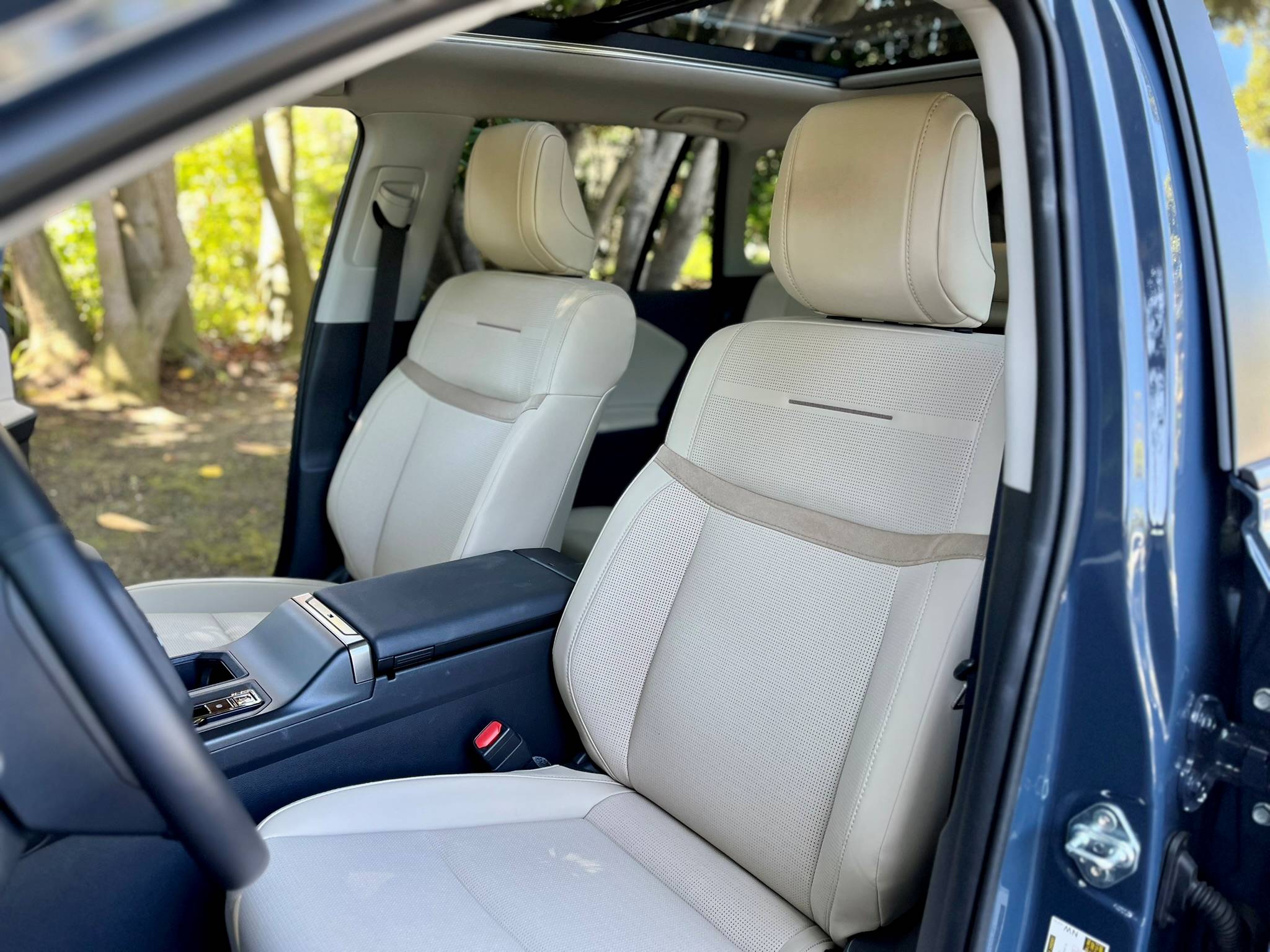
Harvest Beige SofTex interior.
10 Standout RAV4 Features
1: Suspension
Barely four blocks into my first drive, I knew the RAV suspension was a standout. It gracefully stepped through potholes and busted pavement with luxury-class smoothness. There is minimal head-toss when traversing speed humps and angled driveways.
Toyota says frame rigidity was significantly increased by reinforcing suspension mounting points, the front cowl, and the windshield pillars. Redesigned coil springs and shock absorbers provide a flatter, smoother ride.
Braking response has gentle pedal feel with smooth but absolute stopping force. A new electronically controlled brake system and Vehicle Braking Posture Control reduce body roll during cornering.
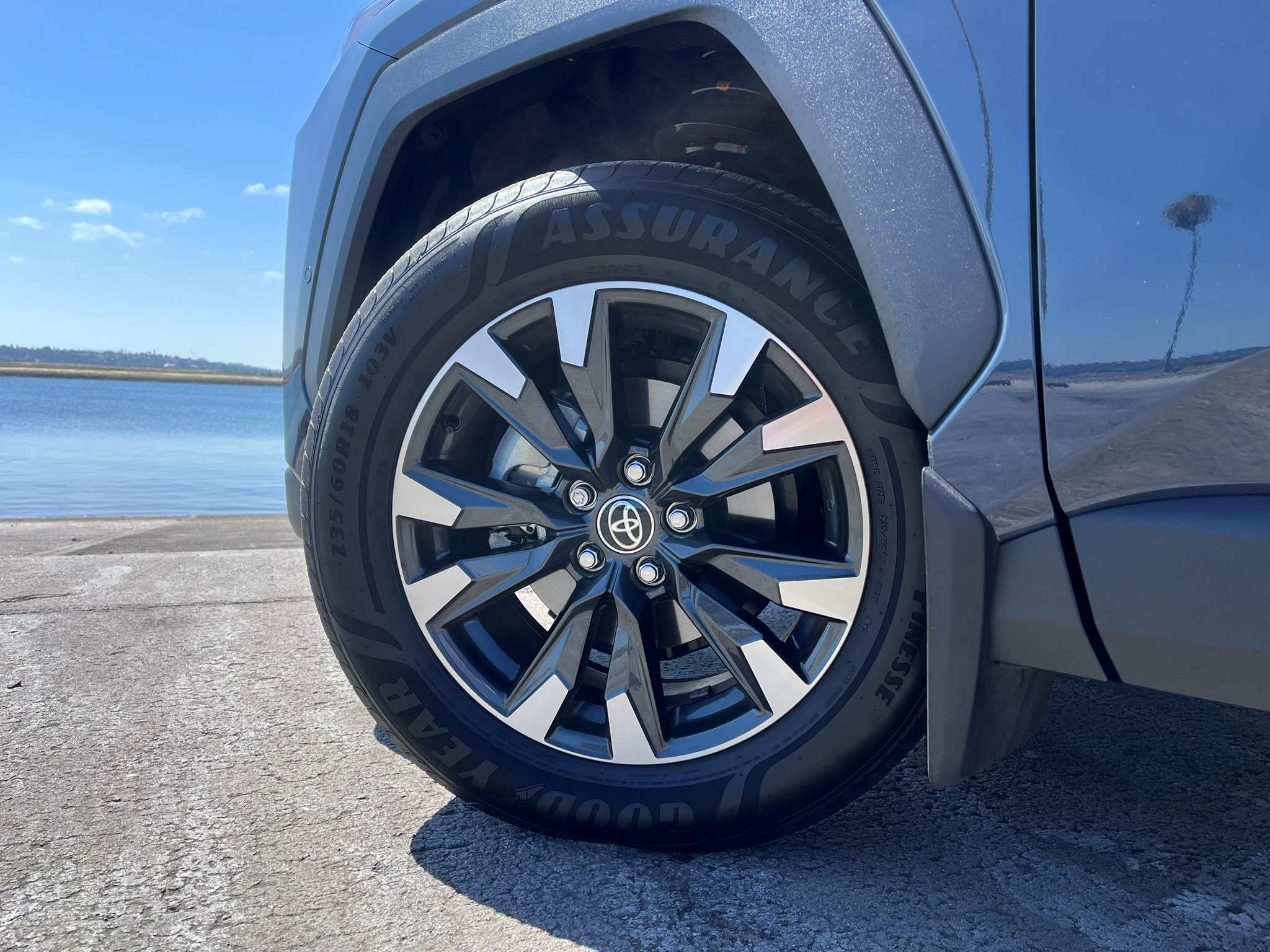
Goodyear Assurance Finesse all-season tires have a low-rolling-resistance compound.
2: Soundproofing
The new RAV4 might have the quietest cabin of all mainstream competitors. And I surely did not expect the traffic-calmed space. The tester came with roof rack crossbars, which typically produce a lot of wind noise on the highway. Not on this RAV, however. On the highway, conversations front to rear can be enjoyed without raised voices. For those who wear hearing aids, this feature is a selling standout.
To reduce the transfer of noise and harshness into the cabin, Toyota applied high-damping adhesive to the footwells and wheelhouses. Side mirrors and door seals have been reshaped to reduce wind noise. And because the side mirrors are mounted on the body, they do not whip up turbulence. (Side mirrors mounted at the windshield pillar base are notorious for wind noise.)
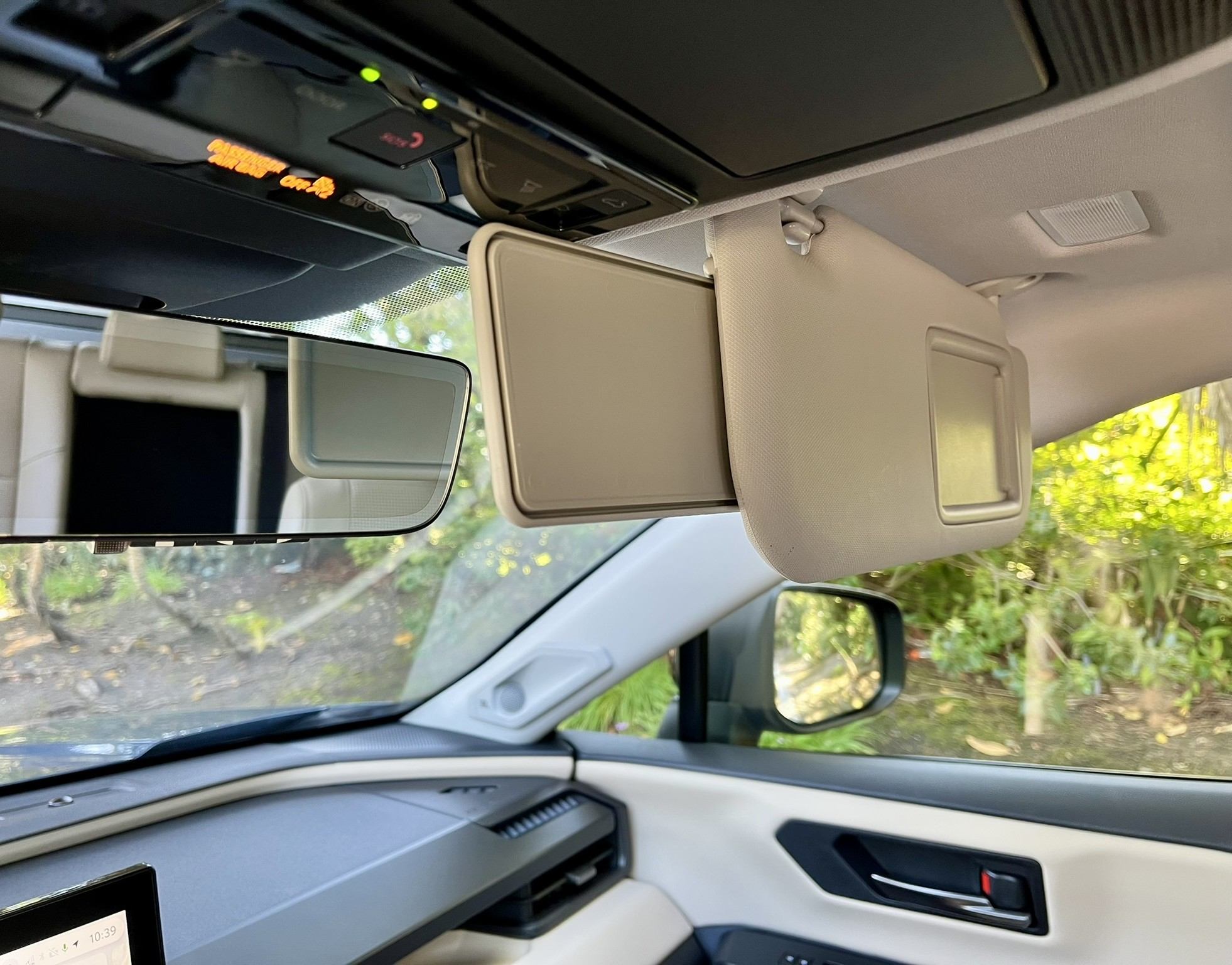
Visor extenders are a small but useful detail.
3: Performance
I like that Toyota gives the RAV a non-turbocharged 2.5-liter four-cylinder engine. It has enough displacement for rapid acceleration when needed. Hyundai and Kia use turbocharged, 231-hp, 1.6-liter four-cylinder in their Tucson and Sportage competitors. I have reservations about a small engine hefting an AWD 3,900-pound vehicle over the long term.
Toyota’s e-CVT is one of the better continuously variable transmissions. There is no sense of “rubberbanding” as the transmission catches up with throttle input. And performance in the standard drive mode was quick and responsive. Sport is my cheat code for commuting, keeping interlopers from messing with me.
The gear selector is a new toggle shift-by-wire switch; however, lower Core grades use a traditional shift lever.
Goodyear Assurance Finesse all-season tires have a low-rolling-resistance compound and were quiet rolling, especially at highway speeds.
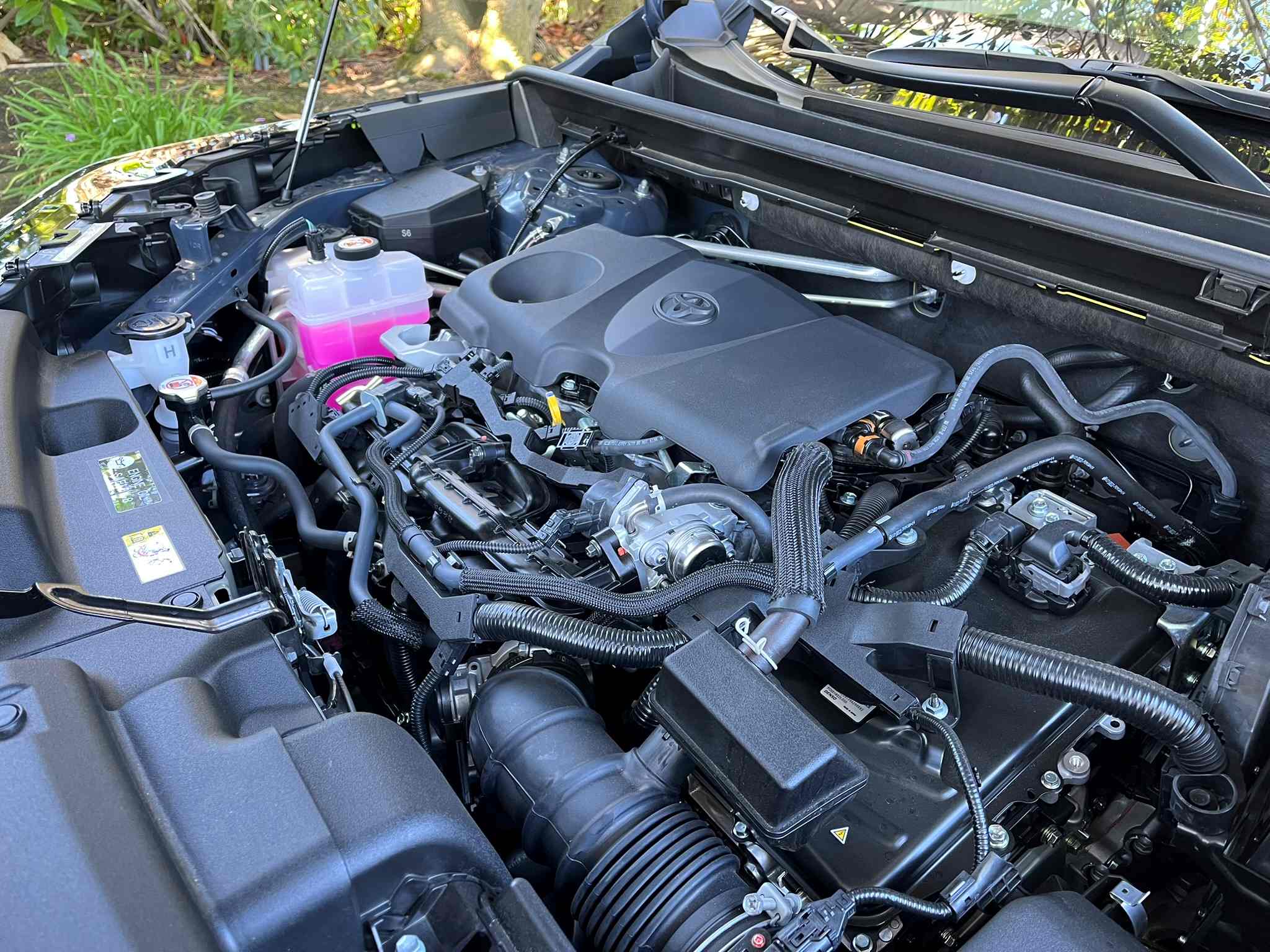
The 2026 RAV4 builds on the 5th Generation Hybrid (HEV) powertrain: a 2.5-liter inline-four gas engine with two motor-generators.
4: EV Mode
The hybrid battery is a sealed lithium-ion (Li-ion) battery at 247.5 volts and 4.1 ampere-hours. There is sufficient power for the RAV4 Hybrid to be driven on battery power for short distances at low speeds. How far depends on certain conditions, such as battery charge level. EV mode is useful for navigating parking lots and indoor parking garages, and for creeping along in commuter traffic.
The RAV4 PHEV powertrain is capable of up to 52 miles of driving range on a charge. That is a 23 percent increase in all-electric driving, Toyota says.
5: Fuel Economy
The Limited and XSE AWD models have mileage estimates of 43 mpg city, 37 highway, and 41 mpg combined. With those estimates, the 14.5-gallon tank should provide around 594 miles of range. My highway driving ticked up to 48.3 mpg, without using ECO mode.
6: On-Demand AWD
The electronic on-demand all-wheel drive system returns with updates to power the rear wheels. Rather than heavy mechanical driveshafts, the RAV4 Hybrid and PHEV models use a high-output Interior Permanent Magnet (IPM) electric motor.
7: Integrated Dashcam
Of special interest is the standard, built-in Drive Recorder. Dashcam cameras capture 20-second clips of manual or triggered events. Previously, owners could have bought the dashcam as an accessory costing $375 to $499.
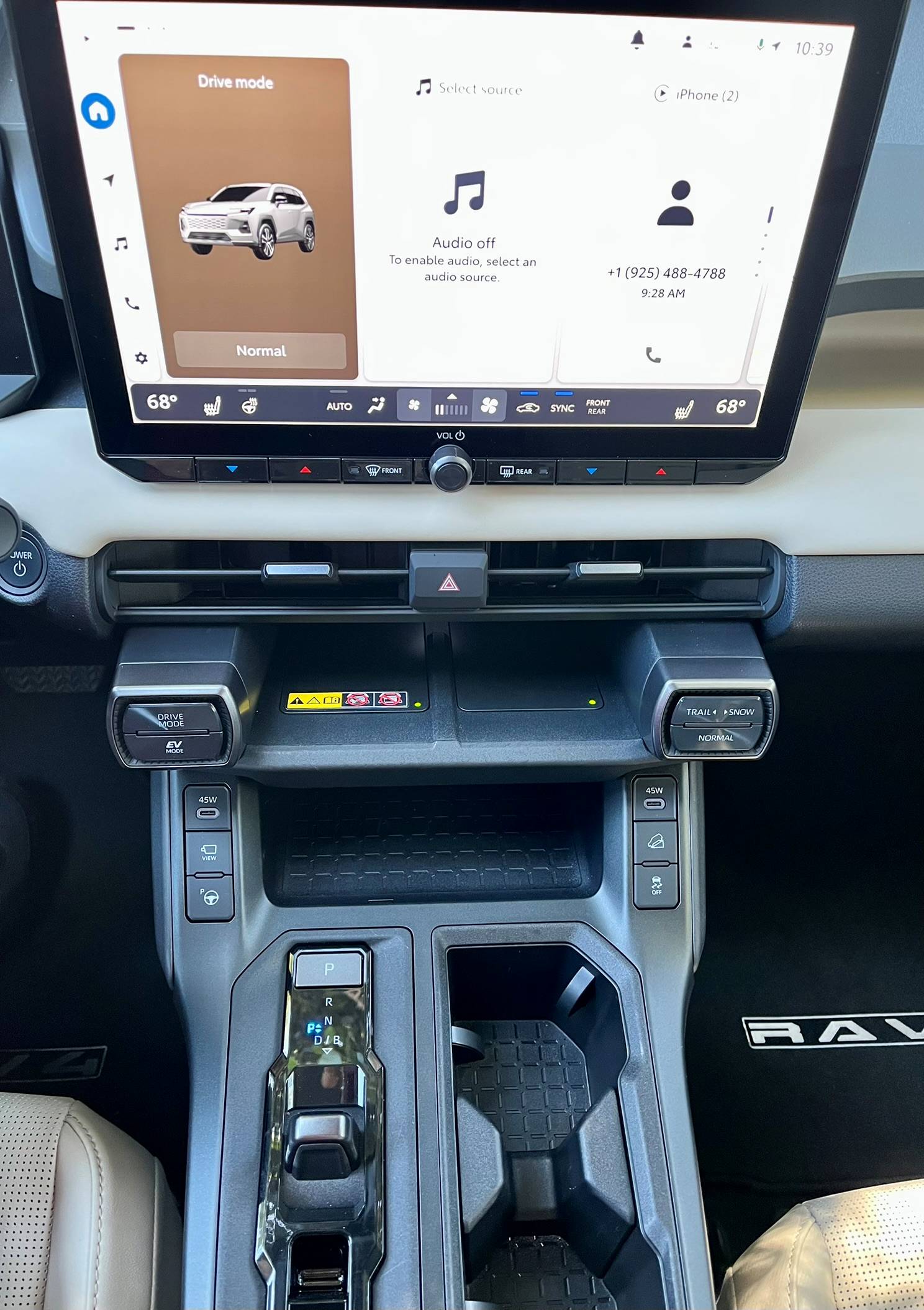
The 12.9-inch Toyota Audio Multimedia screen is big screen for making selections, which is not prone to glare or obstruction of driver sightlines. The camera view is large with a split screen for an overhead view.
8: Digital, Not Bewildering
Toyota’s next-gen multimedia and Arene software systems are easy enough to figure out. Previous RAV owners might lament that some buttons have been removed to make room for on-screen access. But there is a nice, big screen for making selections, which is not prone to glare or obstruction of driver sightlines. The camera view is large with a split screen for an overhead view.
The turn-by-turn navigation system can now display full-screen directions in the 12.3-inch-wide digital gauge cluster. And the software system allows Toyota to push over-the-air updates for safety features and infotainment features. Updates will keep coming even after the car has been sold. The system uses a smartphone-like interface, with customizable widgets, and an enhanced “Hey Toyota” voice assistant. Toyota says commands are processed more quickly than before.
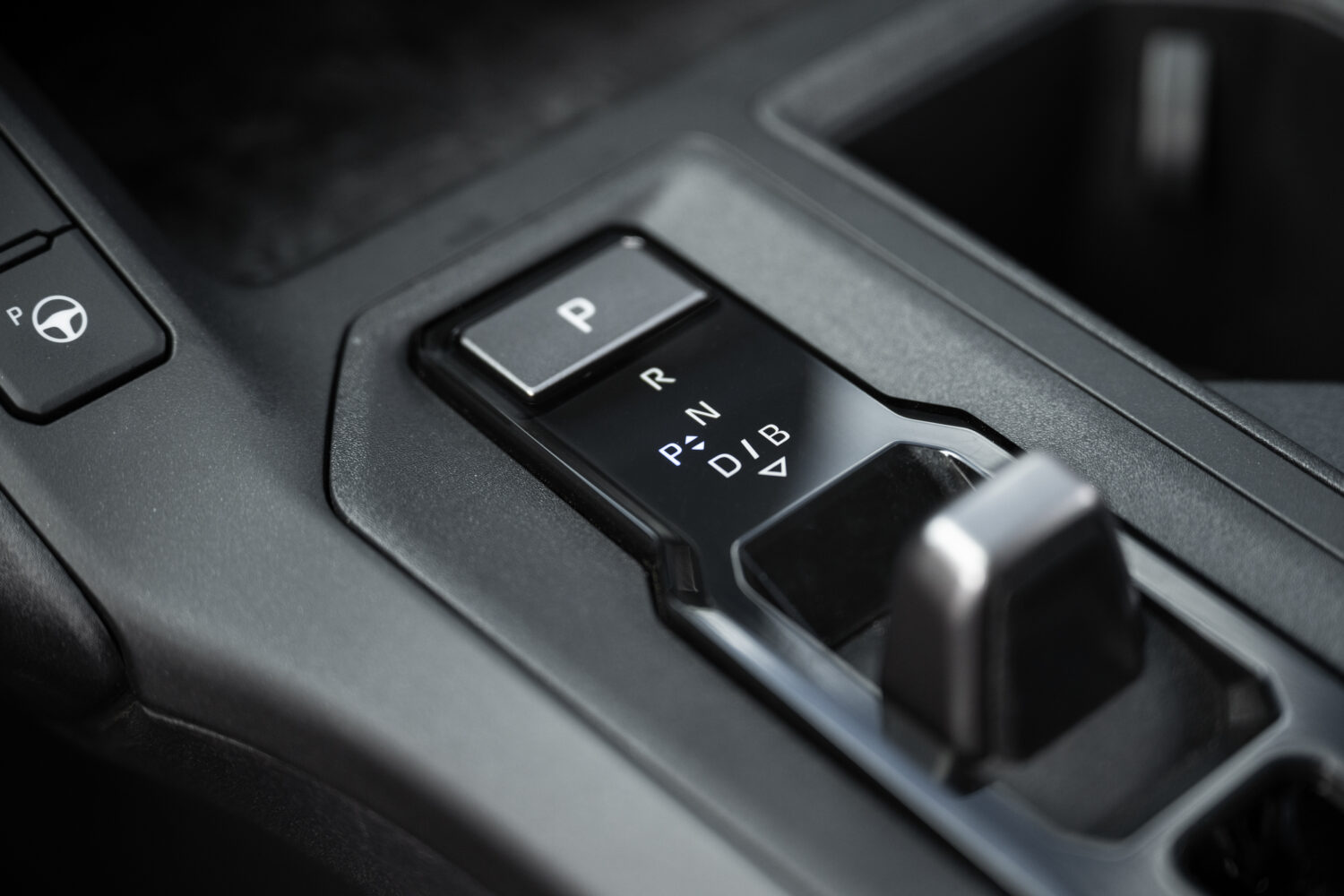
The Limited features a toggle, shift-by-wire gear selector.
9: Interior Versatility
Toyota says it prioritized cabin versatility through well-thought-out design. The door grabs, for example, are in the ideal position for leverage to pull the doors closed, front and rear. The front center armrest console has a unique top design that can be opened by either the driver or the passenger. And the console lid can be flipped over for a hard surface. A lockable glovebox is another detailed element missing from many competitors.
A redesigned rear seatback folds completely flat, maximizing cargo volume. (In the hybrid models, the battery is positioned under the back seat; the PHEV battery is under the cargo floor, which slightly trims cargo space.
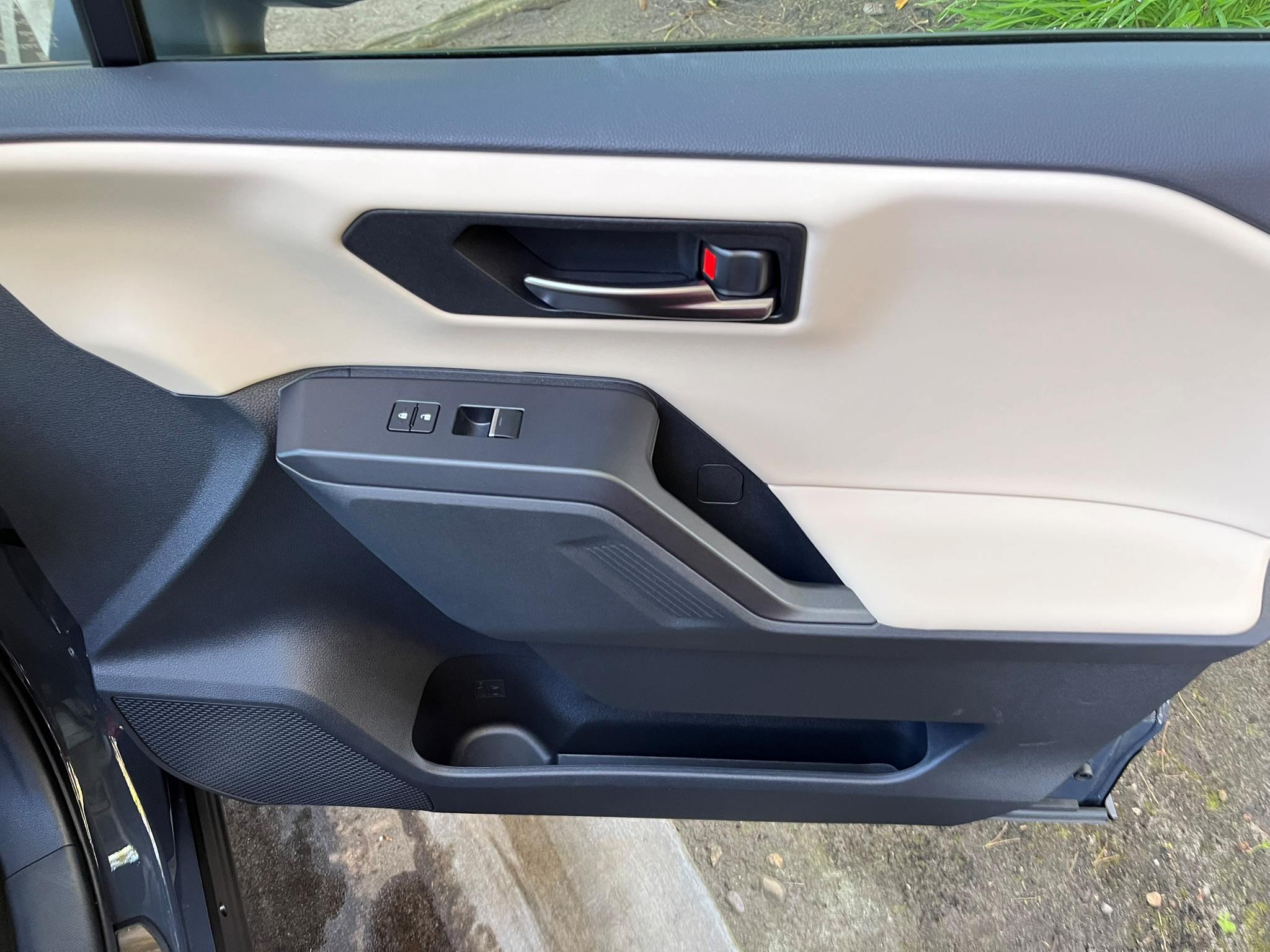
The door grab is an ideal position for good leverage.
10: A Spare Tire
Every model of the new RAV gets an actual full-size temporary spare under the cargo floor. That is a standout among most of the competitors.
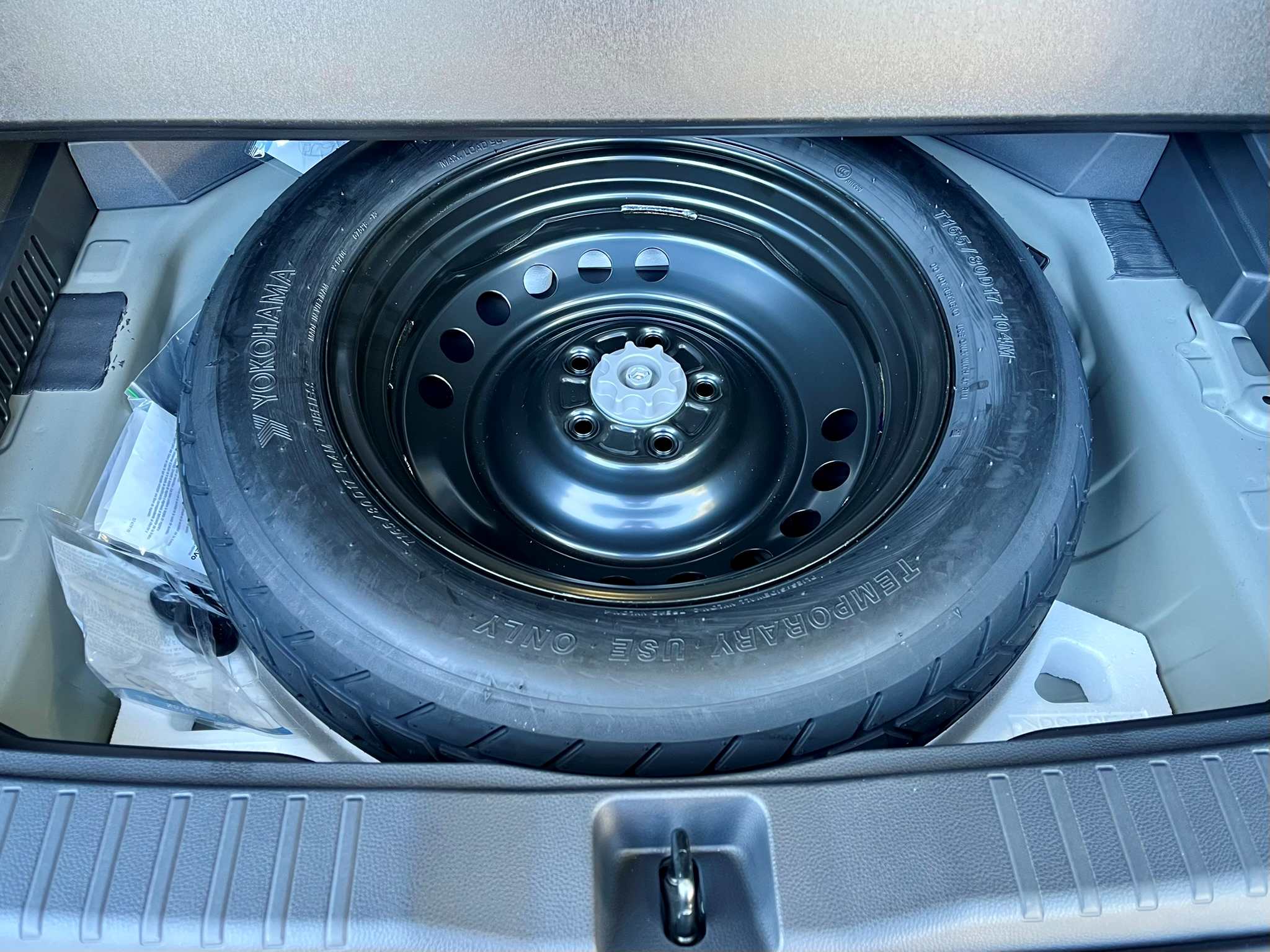
Another welcome detail is the standard temporary spare tire.
Competing Hybrid Small SUVs
There are only five 2026 compact hybrid SUV models that are comparable to the 2026 RAV4; retail pricing includes the freight charge:
Honda CR-V Hybrid, in two- or four-wheel drive: $37,080 to $44,000;
Hyundai Tucson Hybrid and PHEV, FWD or no-cost 4WD: $34,050 to $43,675; PHEV $42,425 to $50,650;
Kia Sportage Hybrid and PHEV: $32,085 (FWD) to $42,185 AWD; PHEV, AWD $42,085 to $48,885;
Mazda CX-50 Hybrid: $36,840 to $42,540;
Subaru Forester Hybrid: $39,380 to $42,995.
2026 RAV4 Warranties
Toyota’s warranty coverage emphasizes long-term protection for new hybrid and plug-in hybrid components. For the powertrain and key battery systems, the limited warranty terms are extensive:
Hybrid Component Coverage: Coverage for hybrid components lasts up to 8 years or 100,000 miles, whichever comes first. This applies to repairs needed to correct defects in materials or workmanship.
Hybrid Battery Coverage: The core hybrid battery receives even longer protection: 10 years or 150,000 miles, whichever comes first. This coverage is transferable to subsequent owners.
Powertrain Coverage: The conventional powertrain warranty remains at 60 months or 60,000 miles.
Standard new-vehicle protection also applies:
Basic Warranty: 3-years/36,000-miles limited warranty covers all vehicle components other than normal wear and maintenance items.
Corrosion Warranty: 60 months with no mileage limitation.
ToyotaCare: Normal factory-scheduled maintenance is covered for 2 years/25,000 miles. Roadside assistance is included for 2 years and unlimited mileage.
RAV4 Limited Standard Equipment
The 2026 RAV4 Limited focuses heavily on luxury and distinct styling. The exterior is dressed up with a color-keyed grille in Satin Chrome and silver-painted lower bumper valances (front and rear). A rear spoiler has piano black sides.
- Upgraded LED headlamps have distinctive LED Daytime Running Lights with integrated turn signals. LED front fog lights are standard.
- A standard power tilt and slide panoramic glass roof and a hands-free power liftgate.
- Power side mirrors are upgraded with puddle lamps and camera functionality.
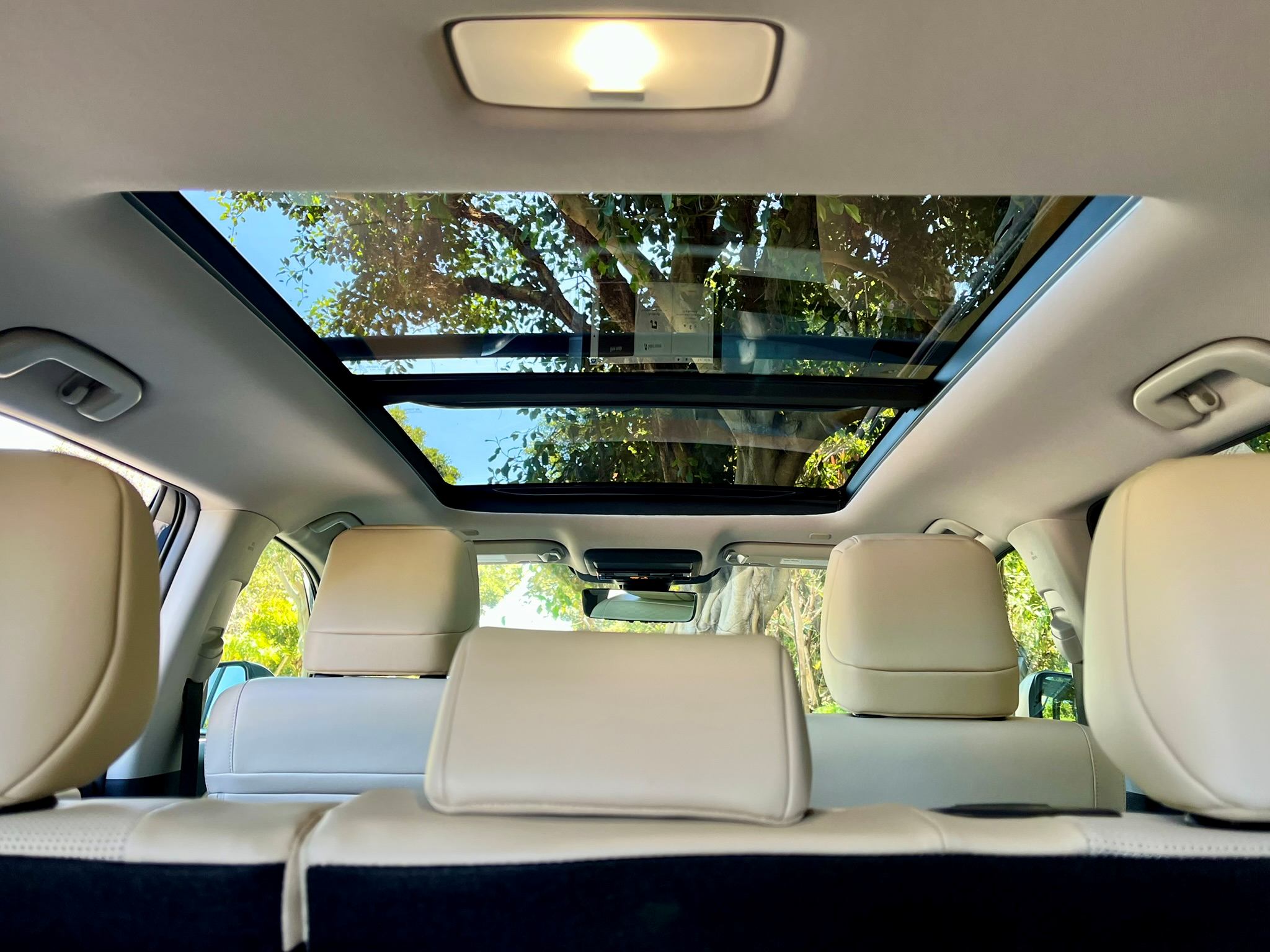
The Limited’s standard power-tilt-and-slide panoramic glass roof.
Limited Interior Features
- SofTex-trimmed seats with power eight-way adjustable front seats for driver and passenger;
- Heated and ventilated front seats;
- 12.9-inch Toyota audio multimedia;
- Nine-speaker JBL audio with amplifier and subwoofer;
- Heated rear window seats;
- Toggle switch shift-by-wire gear selector;
- 18-inch machined five-spoke dark gray metallic wheels;
- Leather-wrapped and heated three-spoke steering wheel;
- Digital rearview mirror with HomeLink garage door opener;
- 5 USB-C Ports: 2 front 45-watt USB-C charging ports, one center console media and charging port, and two rear 15-watt USB-C charging ports;
- Dual Qi-compatible wireless phone charging pads;
- Smart Key System on front doors and liftgate with push-button start; remote keyless entry system with lock, unlock, and panic functions; power liftgate; and remote-illuminated entry.
Toyota Safety Sense 4.0
In addition to eight air bags, every 2026 RAV4 is equipped with the updated Toyota Safety Sense (TSS 4.0) suite. The system was updated with hardware improvements and stronger detection capabilities. TSS 4.0 technologies include:
Proactive Driving Assist (PDA): Provides gentle braking and steering support for distance control in traffic;
Pre-Collision System with Pedestrian Detection (PCS w/PD): Enhanced detection of vehicles, pedestrians, bicyclists, and motorcyclists;
Full-Speed Range Dynamic Radar Cruise Control (DRCC): Adaptive cruise control capable of operating across the full speed range;
Lane Tracing Assist (LTA): To help keep the vehicle centered in its lane while using DRCC;
Road Sign Assist (RSA): Reads and displays road signs, such as speed limits.
Among other standard safety features are a blind-spot monitor with rear cross-traffic alert and a rear-seat reminder system. RAV4 options include a panoramic view monitor and front- and rear-parking assist with automatic braking.
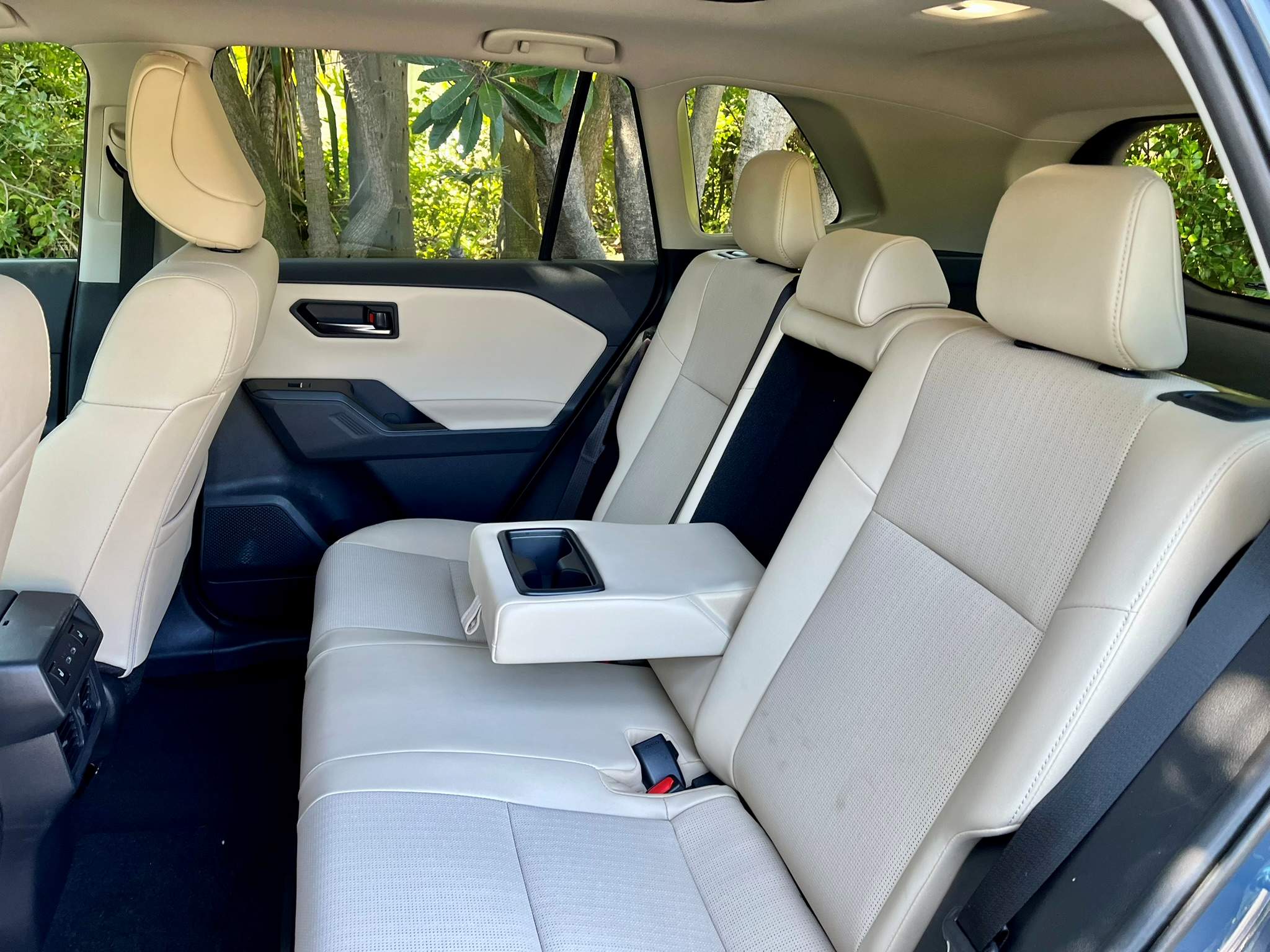
Back seat legroom of 37.8 inches is reasonably comfortable for adults.
Observations and Considerations
The 2026 Toyota RAV4 is a good, honest compact SUV: no glitz, no gimmicks, just genuine refinement to inspire pride in ownership.
Except for the GR Sport, the design treatment resists gimmicky swoops and compromised cargo space. The base RAV4 LE is still an economical choice for long-term reliability. Its features will be quite acceptable for many buyers, without feeling dumbed down. All-wheel drive can be added for $1,400.
2026 Toyota RAV4 Limited Specifications
Body style: 5-door, 5-seat compact, all-wheel drive SUV
BY THE NUMBERS
Fuel tank: 14.5 gallons
Cargo space: 37.8 cubic feet (behind back seat)
Front head/leg room: 37.9/41 inches
Rear head/leg room: 39.5/37.8 inches
Length/wheelbase: 181/105.9 inches
Width/height: 73/66.7 inches
Ground clearance: 8.1 inches
Curb weight: 3,920 lbs., Limited
Turning circle: 36.9 feet
Towing capacity: 3,500 pounds
CHASSIS COMPONENTS
Brakes: front, 12-inch power-assisted ventilated discs; rear, 11.1-inch solid discs; electronic parking brake
Steering: rack-mounted parallel-type, electric power steering (EPS); turning circle, 36.9 ft.
Tires-wheels: Standard aluminum alloy wheels; 235/60 18-inch (or optional 235/50R20) Goodyear Assurance Finesse low-rolling resistance; temporary spare
Suspension: Front, independent MacPherson strut front suspension with stabilizer bar; rear, multi-link with stabilizer bar
PRICING
Limited AWD base price: $44,895, including $1,595 freight charge; price as configured $47,028
Options on test vehicle: head-up display $600; carpet floor mats and cargo mat $339; door-sill protectors $199; wheel locks $90; rear hatch cargo lamps $425; mudguards $160; low profile cross bars $320
Where assembled: Aichi, Japan (hybrid models)
