Select Page

Subaru Forester Sport Review

Subaru Forester Sport Review

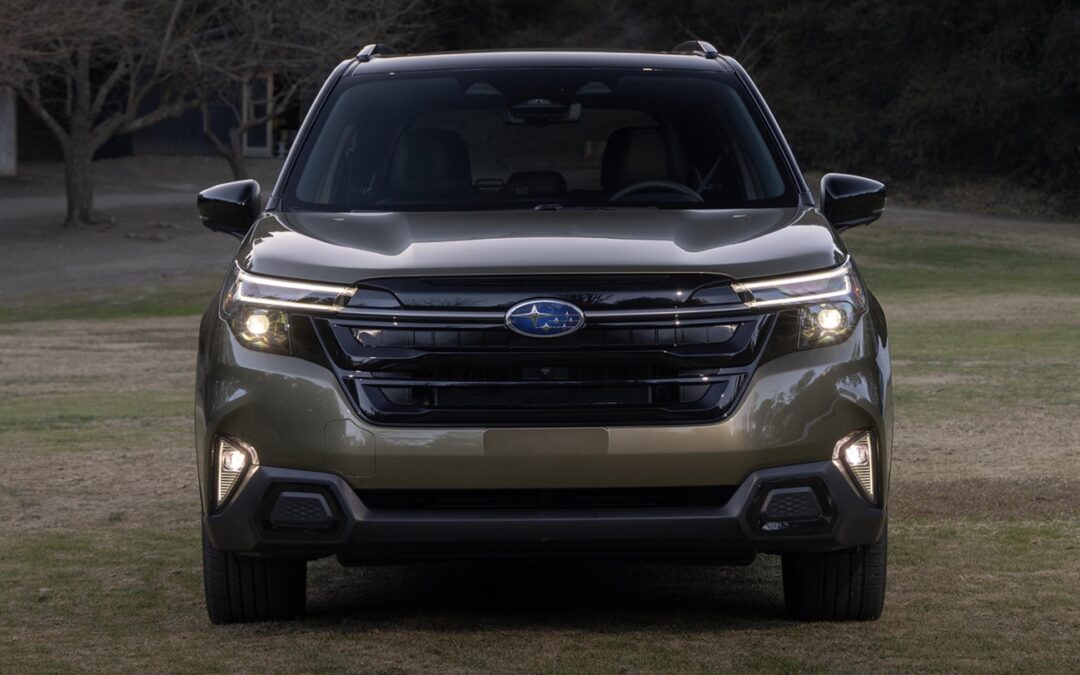
The redesigned, sixth-generation 2025 Subaru Forester is the compact SUV it was born to become

A bold dark blue 2025 Subaru Forester Sport parked along a roadside attraction in eastern San Diego County

The redesigned 2025 Subaru Forester is sold in five all-wheel-drive trim levels. Starting prices range from $31,115 to $41,415. (Photography courtesy of Subaru or as credited)

Jump To Special Features

2025 Subaru Forester Pricing
2025 Forester Powertrain and Fuel Economy
Safety Features and Technologies
Observations and Considerations
Interior Function
Ride and Handling
Why Buy the 2025 Subaru Forester?
2025 Subaru Forester Sport Specifications

BY MARK MAYNARD

The Subaru Forester has a fatherly backbone of trust and no-nonsense. Since this compact SUV’s U.S. debut in 1998, it has pursued function over fashion and durability over gimmicks. It is Subaru’s approach of knowing right from wrong and doing the right thing. However, Forester’s unadorned cosmetics never flirted with sexiness, which was a turn-off to many motorists, including me. Its exterior styling turned few heads, until now.

Forester’s new body styling is conservatively modern, with no odd cutouts, slashes, or swoops. The statement it makes is just what it needs to turn a few heads. The redesigned, sixth-generation 2025 Subaru Forester is the compact SUV it was born to become.

I have tested Foresters since 1998, when the first generation went on sale in the U.S., and I valued its driver-centric vehicle design. And it continued to improve. Subaru led Consumer Reports’ annual brand report card for the second time in four years. It is an assessment that measures such factors as performance, safety, and reliability.

The Forester’s main competitors include the Honda CR-V, Hyundai Tucson, Kia Sportage, Mazda CX-50, and Toyota RAV4.

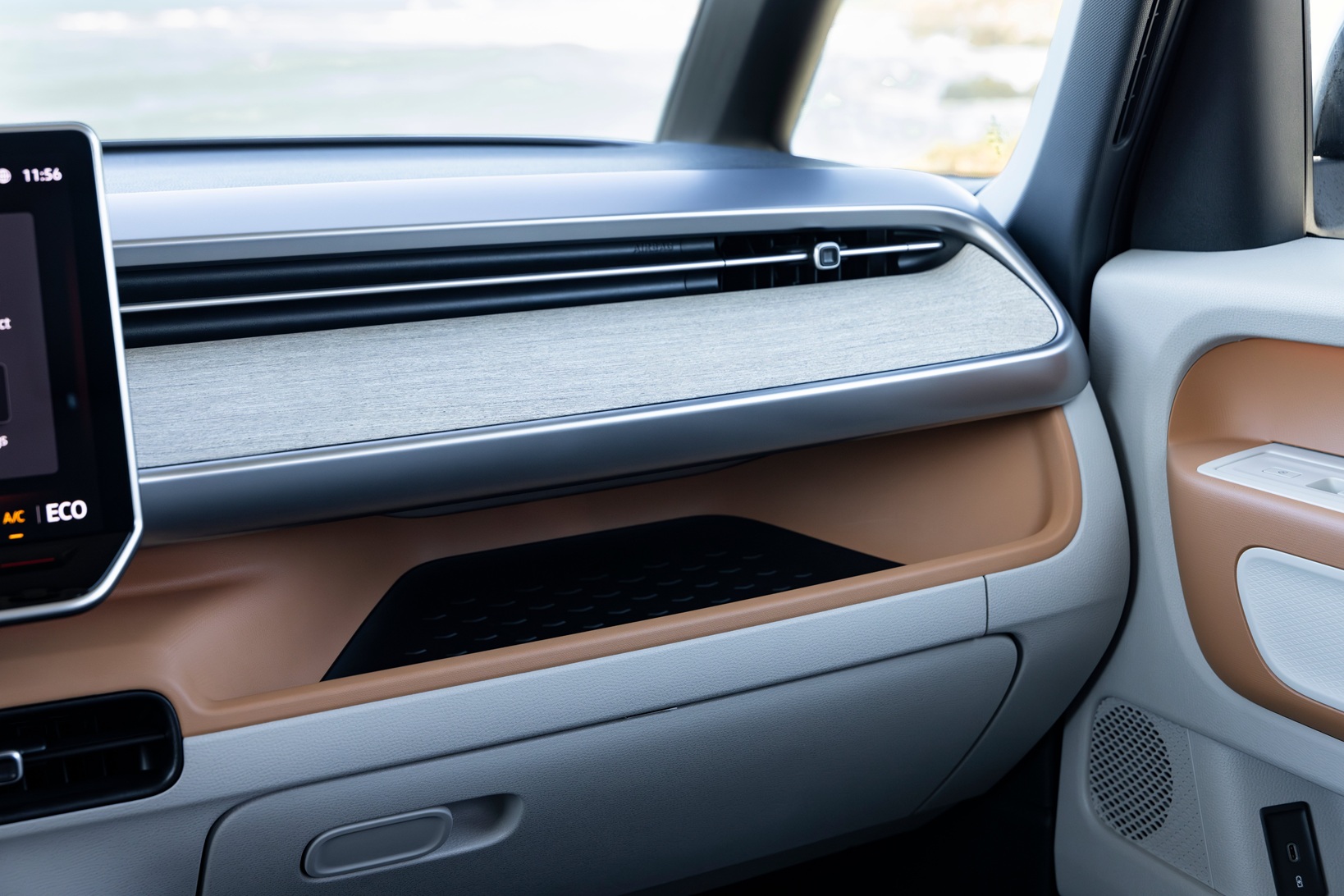
The Forester has a contoured dashboard is designed to avoid visible damage from daily use.

The contoured dashboard is designed to avoid visible damage from daily use.

2025 Subaru Forester Pricing

The 2025 Subaru Forester is sold in five all-wheel-drive trim levels. Starting prices range from $31,115 to $41,415 for the top-line Touring. Manufacturer’s suggested pricing includes the $1,420 freight charge from Gunma, Japan.

All 2025 Forester trim levels have the same 180-hp, 2.5-liter Subaru Boxer engine and Lineartronic CVT (Continuously Variable Transmission). The Sport, Limited, and Touring trims add a manual-shift mode with steering wheel-mounted paddle shifters that simulate eight ratios.

The Base and Premium come standard with 17-inch alloy wheels. The Limited has 18-inch wheels, and the Sport and Touring are on 19-inch wheels.

Today’s tester is a midrange Forester Sport in the no-cost bold paint of Sapphire Blue Pearl. Forester Sport pricing starts at $35,915. The tester with one $1,700 option package came to $37,615. Option package O24 included:

  • Reverse Automatic Braking; (RAB)
  • 11-speaker, Harman Kardon premium audio with 576-watt equivalent amp;
  • Power rear gate with automatic close, height memory, and hands-free foot activation;
  • SI-Drive Engine Performance Management with Intelligent and Sport Sharp Modes.

Check current Forester pricing here.

At the time of publication, many trim levels had financing incentives of 4.9 percent APR for 36 and 72 months. There were also special offers for some 2024 Forester trims.

Find special offers here.

Looking at the Forester's engine

The 180-hp Forester 2.5-liter flat-four cylinder engine.

Forester Powertrain and Fuel Economy

Until the 2026 Forester Hybrid goes on sale, there is one strong four-cylinder powertrain and continuously variable automatic transmission.

Step on the gas, and the 180-hp Forester Sport scoots. Its 2.5-liter flat-four cylinder has an eager 178 foot-pounds of torque at 3,700 rpm. And torque is what puts the zip in Forester’s buzz saw launch. It is liberating to step on the gas without the hand-wringing hesitation of electronic intervention.

While the power punch is appreciated around town, a 0-to-60 run might seem disappointing. Car and Driver clocked the run at 8.3 seconds. However, I found freeway merging power more than adequate.

The Lineartronic CVT has been refined for smoother and quieter performance. This is an outstanding CVT for its actual shift feel, simulating eight gear shifts. There is no “rubber banding” as the CVT belt catches up to acceleration force. In my first drive, before reading up on the Forester Sport, the transmission gave the response of a traditional stepped transmission. Not all CVTs have such palpable performance.

Fuel Economy Ratings

Official fuel economy ratings are 25 mpg city, 32 highway, and 28 mpg combined on the recommended 87 octane fuel. I worked up to 28.5 mpg over a week of driving 200 miles.

With cruise control set at 67 mph, I noticed no big drop in mpgs on long mountain grades.

The 16.6-gallon tank beats the top competitors by more than two gallons! That could translate to a driving range of more than 470 miles. Happy trails to us.

SI Engine Performance Management

If you are going to have a Sport model, it should be more than badging, black wheels, and a bump in shift points. Subaru made its Forester Sport define the term for a compact SUV with its Sport Sharp (S#) Mode.

However, S# is part of Option Package 24 ($1,700), and it is an odd mix of features. It includes SI-Drive with Sport Sharp (S#) mode, an 11-speaker Harman Kardon audio system, hands-free power rear gate, and reverse automatic braking (RAB).

Some of us might prefer a stand-alone choice for SI-Drive with Sport Sharp (S#) mode. I don’t care about a hands-free liftgate, but I want RAB, and I’ll take the audio system with a 576-watt amp.

Selectable Performance Modes

All Foresters have selectable performance modes through SI-Drive — Subaru Intelligent Drive. Three modes adjust throttle response, engine mapping, and transmission characteristics.

Intelligent (I) Mode. Subaru says the more gradual acceleration in I Mode (Normal) can give a 10 percent boost in fuel economy.

Sport (S) Mode. An everyday jolt to throttle response. However, I drove in Normal mode for most of my driving. Acceleration pickup in I mode was quick.

Sport Sharp (S#) Mode. Quicker throttle response while holding upshifts for stronger acceleration.

Looking at a front tire's 19 inch bronze alloy wheel

All-season Bridgestone Turanza EL450 tires on 19-inch bronze finished aluminum alloy wheels.

X-Mode for the Trail Ride

Subaru’s X-Mode all-wheel-drive system is the electronic building block for a capable trail explorer. There is a basic X-Mode and a more electronically sophisticated Dual-Function X-Mode.

X-Mode is a driver-engaged electronic hub for foul-weather and off-road finesse. It monitors engine output and CVT ratio position to increase all-wheel drive engagement and Hill Descent Control.

The system functions through Vehicle Dynamics Control to enhance stability and reduce individual wheel spin.

The Forester Sport, Limited, and Touring add dual-function X-Mode for Snow or Dirt and Deep Snow or Mud.

A view of the Bridgestone Turanza's tire's wide tread face.

The tires have a wide footprint for street or trail. And note the air outlet at the trailing edge of the front wheel opening contributes to reduced lift on the front tires and improved driving stability. (Mark Maynard photo)

Forester Safety Features and Technologies

Standard on all 2025 Forester models is the latest version of Subaru’s EyeSight Driver Assist Technology. The improved system has a wider field of view, updated control software, and the addition of an electric brake booster. EyeSight can identify cyclists and pedestrians at intersections sooner and will alert the driver and apply braking to avoid collisions.

Level 2 semi-autonomous driving gives spot-on lane centering and no drifting across the Botts’ dots or white lane markings.

Optional active safety features for Forester include Reverse Automatic Braking, Blind-Spot Detection with Lane Change Assist, and Rear Cross-Traffic Alert.

The front seats have slimmed-down shoulder areas for better visibility and access to the rear seats.

The front seats have slimmed-down shoulder areas for better visibility and access to the rear seats.

Observations and Considerations

  • Barely warming seat heaters;
  • Slow power seat lift adjustments;
  • No heated steering wheel. (But standard on the Forester Limited and Touring models);
  • No happy thrum of the boxer four-cylinder.
The Forester Sport interior design has levels of textures and colors.

The Forester Sport interior design has levels of textures and colors.

Forester Interior Function

Whether on the street or on the trail, the Subaru Forester has open sightlines, some of which are due to the low dashboard. Side mirrors are offset from the body and have a corner glass for more visibility when turning.

With its turning circle of a trim 35.4 feet, the Forester treads lightly on the trail or the mall parking lot. Some SUV crossovers are pushing 40 feet in a curb-to-curb circle.

Members of the Big and Tall Club take note:

  • Headroom of 40 inches — with the panoramic sunroof — is remarkably tall for a compact SUV crossover;
  • Front legroom of 43 inches is as long as in any big sedan at 43 inches;
  • Front shoulder room of 57.7 inches is just a tenth or so less than the Honda CR-V or Toyota RAV4.

Inside, there is a definite improvement in the appearance of plastics and trim materials. The Sport model features include a 10-way power driver’s seat, floor mats with the Sport logo, and dark gray StarTex upholstery with brown stitching.

Somewhat uncommon in an import vehicle is the eight-way power front passenger seat.

The vertical clipboard-size infotainment display is not the best design for on-the-go temp changes. The only exterior buttons are for volume control. And making heat-AC-vent adjustments requires a two-tap entry.

A close look at the colorful icons in the vertical Subaru Starlink 11.6-inch multimedia-plus system.

The vertical Subaru Starlink 11.6-inch multimedia-plus system.

Other Sport model features include:

  • Keyless locking and push-button ignition
  • Rearview camera
  • Electric parking brake
  • Panoramic power moonroof,
  • Retractable cargo cover,
  • Floor mats with Sport logo
  • Reclining rear seatbacks
  • Gloss black grille.
The Forester back seat has a very long 39.4 inches of legroom

The Forester back seat back seat has generous legroom of 39.4 inches.

Back Seats and Cargo Space

There is an easy step-in and out of the back seat with generous legroom of 39.4 inches. The seatbacks have a comfortable angle and have a few notches of recline.

Back seat amenities include bottle slots in door panels and can holders in the pull-down center armrest. A pair of USB charging ports accommodate a 2.4 amp Type A and 30 amp Type C.

The cargo space has generous dimensions and many accommodating details. The liftgate entry is 4 feet wide and 32 inches tall at entry. Fold the 60/40 split seatback for 6 feet in length, and the seatbacks fold almost flat for car camping. There is also a 12-volt plug to power an air compressor or lights. However, there is a light in the cargo area and a light in the liftgate.

There are two bag hooks on both sides and two headliner hooks (which I’d not seen in other SUVs). Also helpful is a slot under the cargo floor to stow the roller cover.

A close up image of Forester's LED headlight

Steering responsive LED headlights.

Forester Sport Ride and Handling

Highway cruising is quiet without tire harshness or sensitivity in noise transfer from varying road surfaces.

Subaru’s four-wheel independent steel suspension provides compliant and athletic control over broken city streets. The raised ride height has no compromise in sporty handling through fast cornering or evasive maneuvers.

All-season Bridgestone Turanza EL450 tires (235/50) have a wide footprint and a compliant treadwear rating of 400 (with 700 UTQG being the hardest).

Braking is secure and steady from four-wheel ventilated discs, 12.4 inches front, and 11.8 inches rear.

The open cargo are with back seats folded.

Fold the 60/40 split seatback for 6 feet in length.

Why Buy the 2025 Subaru Forester?

The 2025 Subaru Forester is a class leader for its safety, reliability, and drivability. I respect Subaru’s engineering to go just a bit farther to get it right. The Forester’s attention to detail will be rewarding for long-term ownership.

This is the compact SUV I would buy. Or maybe I’d wait for the 2025 Forester Hybrid, which goes on sale in late spring, starting at $34,995.

Tap into the Subaru Forester community at subaruforester.org.

A rear three quarter view of Sapphire Blue Forester

The redesigned sixth-generation 2025 Subaru Forester is the compact SUV it was born to become.

2025 Subaru Forester Sport Specifications

Body style: Compact, five-seat, five-door AWD SUV crossover

Engine: 180-hp, DOHC 2.5-liter horizontally opposed (‘boxer’) 4-cylinder with direct injection; 178 lb.-ft. torque at 3,700 rpm

Transmission: Lineartronic CVT with eight-speed manual mode; X-Mode (dual-function) with hill descent control

Fuel economy: 25/32/28 mpg city/hwy/combined; 87 octane recommended

Max. towing capacity: 1,500 pounds

BY THE NUMBERS

Fuel tank: 16.6 gallons

Cargo space: 27.5 to 69.1 cubic feet

Front head/leg room: 40*/43.3 inches *w/panoramic sunroof

Rear head/leg room: 37.7/39.4 inches

Length/wheelbase: 183.3/105.1 inches

Width/height: 72*/68.1 inches *81.2 inches w/mirrors

Minimum road clearance: 8.7 inches

Curb weight: 3,611 pounds

Turning circle: 35.4 feet

FEATURES

Standard Forester Sport equipment includes: Keyless Access with push-button start, panoramic power moonroof, electric parking brake with auto vehicle hold, 10-way power driver’s seat, 8-way power front passenger seat, all-weather package (heated front seats, heated side mirrors, and windshield wiper de-icer), dark tint privacy glass, Subaru Starlink 11.6-inch multimedia-plus system, reclining rear seatbacks, retractable cargo area cover, USB-C input/charge port and wireless charger in front center console, USB-A and USB-C charge ports in rear center console, Wi-Fi in-vehicle hotspot (monthly service fee required);

Interior design: Sport models have a unique dark gray with brown stitching and bronze accents throughout, gray StarTex water-repellent upholstery with brown stitching, leather-wrapped steering wheel with brown stitching, shift lever boot in simulated leather with brown stitching, carpeted floor mats with Sport logo;

Exterior Styling: dark gray interior with brown stitching and bronze accents, low profile gloss-black roof rails, lower body underguards in black with bronze accents (front, rear, and sides), 19-inch alloy wheels in the bronze finish, and LED fog lights.

Safety features include: 8 air bags, electronic traction control with active torque vectoring, driver-assist technologies, automatic emergency steering, blind-spot detection with lane departure warning, and rear cross-traffic alert.

CHASSIS COMPONENTS

Brakes: 4-wheel ventilated discs, front rotors 12.4 inches, rear 11.8 inches, electronically controlled dual diagonal-wheel brake system. With electronic brake-force distribution and 4-channel, 4-sensor ABS with brake assist and brake override; incline start assist;

Steering: Electric power assisted rack-and-pinion (dual-pinion); 35.4-foot turning circle

Tires-wheels (Sport model): 19-by-7.5-inch bronze finished aluminum alloy wheels; all-season Bridgestone Turanza EL450 235/50; 400 treadwear rating

Suspension: 4-wheel independent, raised; front, MacPherson-type struts, lower L-arms, coil springs, stabilizer bar, hydraulic engine mounts; rear, double wishbone, coil springs, stabilizer bar

PRICING

Base price: $35,915, including $1,420 freight charge; price as tested $37,615

Options on test vehicle: Option package O24 $1,700

Where assembled: Gunma, Japan

Warranties: 3 years/36,000 miles bumper to bumper; 5 years/60,000 miles powertrain; 24/7 roadside assistance with free towing to nearest Subaru dealer if stranded

Genesis G90 3.5T E-Supercharged Review

Genesis G90 3.5T E-Supercharged Review

The ultra-lux 2025 Genesis G90 3.5T E-Supercharged is a 409-hp streamliner to Pleasuretown

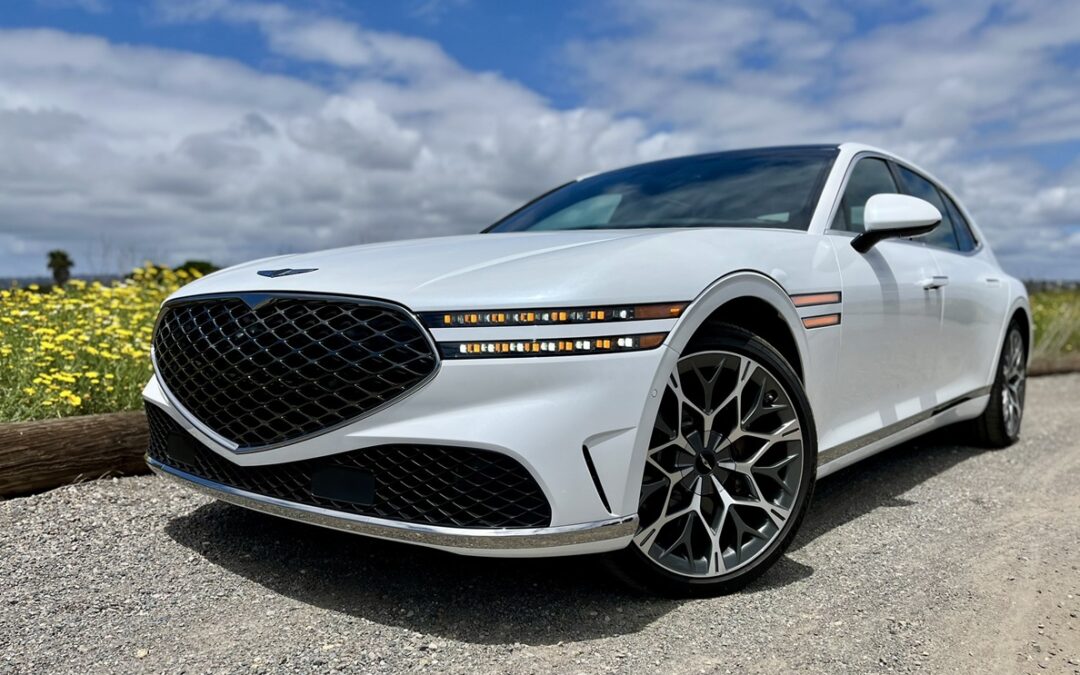
A forward three quarter view of a Yuni White Genesis G90 supercharged with a field of yellow daises in the background

The 2025 Genesis G90 large sedan is sold in two trim levels of G90 3.5T and G90 3.5T E-Supercharged mild hybrid. Starting prices are $91,700 and $101,350. (Photography by Mark Maynard or as credited)

Jump To Special Features

The Genesis Lineup
2025 Genesis G90 Pricing, Lease Deals, and Incentives
Sophisticated yet Practical
G90 e-Supercharged Powertrain and Performance
Sign Me Up for the Genesis Service Valet
Don’t We All Need A Mood Curator?
The Chauffeured Lifestyle
Thumbnail Stats for G90 e-Supercharged Competitors
Why Buy the Genesis G90 3.5T E-Supercharged?
Specifications

BY MARK MAYNARD

The Genesis G90 is an outlier among luxury-class sedans. It is a lovely and engaging car, contemporary with defining elegance. The Genesis brand, the luxury division of the Hyundai (Kia) Group, debuted in North America in 2017. It was an upstart hammer to break the glass ceiling into the luxury segment. The fledgling brand, however, was misunderstood.

American car buyers understood South Korea-based Hyundai as an economical brand. However, for luxury cars, the prestige of Euro cruisers was the benchmark.

What most in the peanut gallery did not know is that Hyundai has long been a purveyor of chauffeur-class sedans. Today, that chauffeuring influence defines the Genesis G90. What was once an outlier is now a full-bodied expression of rich luxury and technology.

The G90 is the successor of the Hyundai Equus. Fully redesigned for 2023, the G90 carries over to 2025 with minimal changes.

A wide angle view of the front seat area showing the bordeaux brown leather

You will not find a more crafted appearance in an interior. (Genesis USA)

The 2025 Genesis Lineup

The G90 is the flagship of the Genesis lineup. The brand now has nine body styles of sedans and SUVs, with rear- or all-wheel drive. Depending on the model, there are turbocharged four-cylinder or twin-turbocharged V-6 engines. There are two battery-electric models, the Electrified G80 sedan and the Electrified GV70 midsize SUV. As of 2025, there is a mild hybrid model of the G90 E-supercharged, today’s tester.

Of interest is a long-wheelbase G90L AWD sold in South Korea, Germany, Switzerland, and the Middle East, including Saudi Arabia. The G90L is available only with a 5.0-liter V-8 and the 48-volt mild hybrid system with an electric supercharger. It is the same system used in the 2025 G90 3.5T E-supercharged.

Sedan competitors to the Genesis G90 include the Audi A8, BMW 7-Series, Lexus LS, and Mercedes-Benz S500. See the comparo chart below.

A multifunction steering wheel with touch-sensitive controls.

A multifunction steering wheel with touch-sensitive controls. (Genesis USA)

2025 Genesis G90 Pricing and Incentives

The G90 has two trim levels. Both trims have standard all-wheel drive, eight-speed automatic transmissions, and twin-turbocharged 3.5-liter V-6 engines.

The entry G90 rear-wheel drive starts at $91,700, including the $1,350 freight charge from Ulsan, Korea. Its fuel economy ratings are 18 mpg city, 26 highway, and 21 mpg combined on the required premium fuel.

When only the best will do, the top-line Genesis G90 3.5T E-Supercharged mild hybrid model starts at $101,350. It has fuel economy ratings of 17/24/20 mpg city/hwy/combined. Today’s tester had just one factory option for Uyuni white paint, which was $650. Its price, as tested, is $102,000.

Check current Genesis G90 pricing here.

Check out current special G90 offers here. At the time of publication, there was a lease offer of $1,409 per month for 36 months, with $6,999 due at lease signing. Add to that a Retail Bonus of $3,000 for any G90 model.

Nighttime ambient lighting in a striking pink-red color

Set the mood with ambient lighting. (Genesis USA)

Sophisticated yet Practical

One of the G90’s more outstanding assets is its engineering refinement. It is an electronically “smart” car that doesn’t make its owner feel dumb. The G90 mild hybrid has the algorithms of a NASA launch, yet it manages it with hands-on simplicity. Often, the vaunted European carmakers launch their advanced technologies that are not yet user-friendly.

Without a dealership tutorial or reading the owner’s manual, I felt immediately confident behind the wheel. It was a quick learn to add my phone, access climate controls, and page through the broad infotainment touchscreen. Many commonly used cabin features have manual knobs and buttons.

As the pinnacle model, the G90 e-Supercharged appears to have few, if any, budget cuts. However, that attention to detail makes this G90 the heaviest of the competing sedans, 5,319 pounds. Despite such avoirdupois, this 17.3-foot-long sedan drives light and maneuverable, a credit to rear-wheel steering.

It is a pleasant surprise to unwrap the many surprise-and-delight features.

Top of my list is the EasyClose door system. As is common now, the exterior door handles pop out when the owner approaches with the proximity key fob. The doors are pulled open manually to any aperture so as not to bang into a wall or adjacent vehicle.

The driver makes a graceful entry and can power close the door or step on the brake pedal for the door to power close. And there are alternate door close buttons on the center shift-armrest console — for all four doors. That’s some of the chauffeuring treatment.

The open driver's door showing the meticulous detail of the leather and matte trim

Note the lozenge-shaped power door closer button and small, covered storage box at the end of the armrest.

Elevated features include:

A Mood Curator, a fragrance system, and the Genesis Service Valet (highlighted below).

Fingerprint identification loads the driver’s specifics for seat position, audio choice, etc. The ID is activated via the sensor on the center console.

The G90 announces its high-tech image with a micro lens headlamp array in an ultraprecise design. The two-line headlamps integrate daytime running lights, turn signals, high beams, and the micro lens array of the low beams. The low beams combine roughly 200 micro-optic lenses per module. Genesis says the lenses are smaller than those of legacy projection lamps but provide the same light intensity level, Genesis says.

Yet, with all its electronics, the G90 lacks wireless Apple CarPlay and Android. A cable is still required.

The G90 backup camera digital image on the wide screen

Split-screen backup camera views.

Comparing G90 3.5T E-SC vs. entry G90

Consider these differences between the G90 3.5T E-SC vs. standard G90.

  • Starting prices: $101,350 vs. $91,050;
  • Multi-chamber air ride vs. electronically controlled suspension with road preview;
  • Power heated, ventilated, and massaging rear seats vs. heated rear seats;
  • 23-speaker Bang & Olufsen 3D audio system with 300 watt auxiliary amplifier for 3D sound vs. 15-speaker Bang & Olufsen audio system;
  • Copper-painted brake calipers vs. silver-painted calipers;
  • 37.1-foot turning circle with rear-wheel steering vs. 40.1 feet;
  • Tire inflation system vs. temporary spare tire;
  • Rear wireless charging pad vs. none in the back seat;
  • Curb weights: 5,149 to 5,351 pounds (depending on optional equipment) vs. 4,828-4,850 pounds;
  • Trunk space: 10.59 vs. 12.04 cubic feet (including understorage for temporary spare)

Genesis Warranty Coverages

Genesis warranty coverage is gold class. Bumper-to-bumper new vehicle coverage is for 5 years or 60,000 miles, and powertrain coverage is for 10 years or 100,000 miles.

And there is greater gold in owner care:

  • 3-years/36,000-miles complimentary maintenance and service valet;
  • 3 years of free map updates;
  • And 3 years of free Genesis Connected Services, which include:

Connected Care: Safety and maintenance services, including automatic collision notification, enhanced roadside assistance, and monthly vehicle health reports.

Remote: Convenience features include Remote Start with Climate Control, Remote Door Lock/Unlock, and Stolen Vehicle Recovery.

Guidance: Navigation-related services such as Destination Search and Send-to-Car.

The connected services are accessed through the vehicle’s infotainment screen, the Genesis website, smartphone app, or Smartwatch.

For those buying a used 2023 or newer Genesis vehicle, there is still free access to safety and maintenance features. However, a subscription is required to use the convenience and remote technology features included in the Remote and Guidance packages. The cost for each of these packages is $9.90 per month or $99 per year.

For more information, visit the Genesis Owners website or contact Genesis customer support.

Sign Me Up: Genesis Service Valet

An outstanding buyer incentive is the Genesis Service Valet, a free program for the first three years of ownership.

Key features include:

Vehicle pickup and return: Schedule maintenance or repairs online or via the Genesis mobile app. A dealership representative will pick up your vehicle from your chosen location.

Free loaner vehicle: Genesis provides a loaner vehicle while servicing your vehicle.

Flexible scheduling: Choose times and locations for pickup and return of your vehicle.

For more details or to schedule a Service Valet appointment, visit the Genesis Owners website.

G90 Safety Features and Technologies

Both Genesis G90 models have 10 air bags, and a bank of driver assistance features that include:

  • Forward Collision-Avoidance Assist
  • Lane Keeping Assist and Lane Following Assist
  • Blind-Spot Collision-Avoidance Assist and Rear Cross-Traffic Collision-Avoidance Assist
  • Driver Attention Warning
  • Parking Distance Warning — forward, side, reverse
  • Parking Collision-Avoidance Assist — forward, side, reverse.

Top Safety Pick+ Rating

The Insurance Institute for Highway Safety (IIHS) gives the 2024-25 Genesis G80 and G90 sedans a Top Safety Pick+ rating. The TSP+ award applies to 2024 model-year vehicles built after October 2023. That is when Genesis modified the rear seat belts in both cars to improve rear occupant protection. Cars built before that date still qualify for the (non-plus) Top Safety Pick award.

Driver-Assist Systems

The Genesis G90 is fully functional for Level 2, hands-on-the-wheel semi-autonomous driver assistance. In my testing, the array of advanced technologies kept the big sedan accurately centered in the lane without crossing the lines or the highway Botts dots. However, driving into low-angle sunshine can cause disruptions. The sight sensors can struggle with washed-out road surfaces, broken white lines, and even when alongside 18-wheelers with light-colored trailers.

The Highway Drive Assist system begins with the GPS-enabled smart cruise control with stop and go. The guidance system includes:

  • Blind-spot collision-avoidance assist
  • Rear cross-traffic collision avoidance assist
  • Lane-keeping assist with road-edge and lane-following assist
  • Forward collision assist
  • Forward-attention and driver-attention alerts.

It takes time for the uninitiated to find their comfort level with these driver-assist systems. The support is an all-seeing set of eyes that is valuable in crammed daily commuting traffic, especially in narrow construction areas. I now activate steering assist in HDA as a distraction-avoidance safeguard.

The G90 supercharged and turbocharged mild hybrid engine.

409 horsepower twin-turbocharged 3.5-liter V-6 with 48 volt e-supercharger.

G90 e-Supercharged Performance

Turbocharging and supercharging give the G90 E-SC performance lift, but I wanted (expected) more. Its twin-turbocharged 3.5-liter V-6 has direct injection, 24 valves, and dual continuous variable valve timing. It puts out a credible 409 horsepower and 405 foot-pounds of torque from a low 1,300 rpm running up to 4,500 rpm. Tightening the launch is the 48-volt e-supercharger. This welcome addition closes the gap between turbo-spooling and forceful acceleration.

Car and Driver launched the G90 E-supercharged to 60 mph in 5.1 seconds. While impressive in this big cruiser, its hefty curb weight keeps it from besting the competition.

Besides acceleration boost, the 48-volt mild-hybrid system has (cancellable) idle stop-start, which helps a bit with fuel economy and reduced emissions. Hyundai-Genesis typically use lithium-ion pouch cells arranged in series to achieve the desired voltage. The configurations can consist of 12 to 14 cells, depending on the cell voltage, to reach a total of 48 volts.

While the battery’s primary function is to boost engine torque, it also smoothes idle start-stop action and powers the supercharger.

With official mileage ratings of 17 mpg city, 24 highway, and 20 mpg combined, my ratings ranged from 21.5 to 28.2 mpg. A 19.3-gallon tank helps extend the cruising range.

Fuzzy Logic

There is fuzzy logic to the performance calibrations, meaning that the powertrain control function tries to mimic the driver’s style. With a lot of gentle driving, the performance is relaxed. But it can be awakened by some enthusiastic exercise of the accelerator pedal.

Fuel economy aside, this elevated powerplant would be enhanced with a Sport-Plus mode. The engine tone can be selected in three settings: “smallest,” “moderate,” and “largest.” I did not notice much change in any, but the “largest” setting could be more vociferous. The transmission could provide more aggressive shift points, especially when duking it out in commuter traffic. It might be unchauffeur-like, but high performance is expected of a $100,000 flagship.

A front G90 tire and alloy wheel. 21-inch Michelin Primacy Tour all-season tires — cushioning and quiet.

21-inch Michelin Primacy Tour all-season tires — cushioning and quiet.

Ride and Handling

The E-Supercharged G90 is invitingly quiet at speed on the highway. Depending on driving conditions, the Multi Chamber air suspension alters pressure in the air springs. When driving at high speeds, the air suspension system lowers to reduce wind resistance and improve fuel efficiency. On rough surfaces, the ride height raises about an inch to protect the undercarriage and reduce road harshness. The vehicle’s height can stay at a certain level regardless of changes in weight from passengers or luggage.

The Preview Electronic Control Suspension contributes to on-road stability. The system uses a front camera to recognize road conditions and further settle the ride.

Helping to smooth the ride quality are the cushioning and quiet Michelin Primacy Tour all-season tires. The rubber reacts quickly for controlled evasive maneuvers. The 21-inch tires have staggered widths front and rear, 245/40 front and 275/35 rear.

Rear-wheel steering is the great equalizer for nimble maneuverability. At low speeds, it turns the rear wheels to a maximum of four degrees, moving them in the opposite direction of the front wheels. At high speeds, the system sharpens the turn by moving the tires in the same direction as the front wheels.

Showing the wide footprint of a front tire

Staggered front and rear tire sizes: 245/40 front, 275/35 rear.

Interior Function

You will not find a more crafted appearance in an interior. Quilted Nappa leather upholstery, microfiber headliner, and tastefully stylized matte trim elements communicate a youthful and contemporary ethos.

Headroom with the panoramic sunroof (with fixed rear panel) is accommodating at 39.4 inches with a long 42.3 inches of legroom. The driver seat in the e-Supercharged has 18-way power adjustment, with a 16-way power front passenger seat. Both front seats are massaging with power-adjustable bolsters.

The so-called “ergo-relaxing” front seats have 10 air cells on the seatback and two on the cushion. There are four levels of massage and three options for massage duration and strength.

Especially considerate, the air-cell system deflates the side bolsters on exit and reinflates them after entry. In Sport mode or when driving at high speed, the side bolsters automatically inflate to increase lateral support.

Over-the-air software will update major electronic systems, including:

  • Navigation system
  • Digital cluster
  • Head-up display
  • Brakes
  • Steering wheel
  • Suspension
  • Air bags
  • Advanced Driver Assistance Systems.
The back seat controller with digital screen to adjust seat position, massaging, climate, window shades.

The back seat controller to adjust seat position, massaging, climate, window shades.

Traffic-Calmed Cabin

Curb weight be damned, Genesis gave the G90 laminated glass all around — not just the windshield and the front doors but also the back doors. The traffic-calmed ride is sublime, due in part to the supple Michelin Primacy Tour all-season tires.

The noise-cancelling ANC-R (Active Noise Control-Road) system also contributes to the interior quiet. It detects noise from the road surface and then sends opposite-phase sounds through the audio speakers to cancel it out. Genesis measured and analyzed the sound sensitivity of each seat and tailored the sound-cancelling to match.

Some areas of the body were reinforced with sound-absorbing materials.

In the lap of luxury, with reclining and massaging seats, below.

In the lap of luxury, with reclining and massaging seats, below.

Don’t We All Need A Mood Curator?

The G90’s Mood Curator, new to the Genesis lineup, is a collection of passenger pampering features. It integrates a fragrance system, ambient lighting, the sound system, massaging seats, and electric side window curtains. Choose the mood from four treatments, including Care, Delight, and Vitality.

In replaceable cartridges, fragrances are spritzed through the climate system in three aromas: The Driver’s Awakening, The Great Outdoors, and My Favorite Place (if it is forest-thickened air after rain).

Showing the back seats in the reclined position

(Genesis USA)

The Chauffeured Life

The G90 E-Supercharged gives back-seat passengers the full chauffeur treatment. Thick C-pillars provide discrete privacy yet allow an open atmosphere.

There are seats for three, but fold the center seatback for a two-seat executive presentation. A digital screen in the center seatback controls seating position, massage, climate, audio, window shades, and closing doors.

With the panoramic roof, there is tall headroom of 38 inches. Legroom is a comfortable 37.8 inches.

Both window seats are heated, ventilated, and massaging. Power side window shades are a nice touch, as are the pillow-soft microsuede head restraints and flip-down vanity mirrors in the headliner. EasyClose doors are especially useful here.

A trunk space of 10.6 cubic feet with a ski passthrough is adequate for a couples’ weekend getaway. Because underfloor storage is consumed by the large lithium-ion battery, there is no temporary spare, just an inflator system.

Showing the Bordeaux brown quilted Nappa leather.

Bordeaux brown quilted Nappa leather.

 Genesis G90 e-Supercharged Competitors

Here are some thumbnail stats for comparably equipped all-wheel-drive competitors to the Genesis G90 3.5T E-Supercharged. Pricing includes the freight charge:

Audi A8 55 quattro Tiptronic: $106,445, 4,773 lbs., 20/26/22 mpg

BMW 740i xDrive: $121,225, 4,855 lbs., 24/31/27 mpg, 19.5 gallons

Lexus LS 500 AWD: $97,705, 4,905 lbs., 22/29/25 mpg, 22.2 gallons

Mercedes-Benz S 550 4Matic: $139,420, 4,740 lbs., 21/31/24 mpg, 20 gallons.

Genesis G90 3.5T E-Supercharged: $101,350, 5,351 lbs., 17/24/20 mpg, 19.3 gallon

Among these models, the Genesis G90 3.5T e-SC AWD is the heaviest, largely due to its integrated electric supercharger and 48V mild hybrid system. In contrast, the Mercedes-Benz S 500 4MATIC is the lightest, which may contribute to slightly more agile handling characteristics.

Looking into the trunk with ski passthrough open. Trunk space of 10.6 cubic is adequate for a couples’ getaway.

Trunk space of 10.6 cubic feet is adequate for a couple’s getaway.

Looking at the The lithium-ion battery under the trunk floor, eliminating space for a spare tire.

The lithium-ion battery is under the trunk floor, eliminating space for a spare tire.

Why Buy the Genesis G90 3.5T E-Supercharged?

There has been a shift from elegant luxury in large sedans to a sport-tuned impact with fierce styling. The Genesis G90 conveys a kinder, gentler presence — it is not snobbish.

With the extensive electronics network, sensors, motors, and big lithium battery, the safe bet is a lease rather than a purchase. Turn it in after three years for a welcome do-over.

Read what owners are saying about their Genesis G90 in the forum.

An on-road view of the rear end of the G90

The Genesis G90 is an electronically “smart” car that does not make its owner feel dumb. (Genesis USA)

2025 Genesis G90 3.5T E-Supercharged Specifications

Body style: large, 5-seat, 4-door all-wheel-drive sedan

Engine: 409-hp, 3.5-liter 24-valve, dual CVVT twin turbo with gasoline direct injection and 48-volt e-supercharger with idle stop-and-go; 405 lb.-ft. torque from 1,300-4,500 rpm

Hybrid battery: Lithium-ion 9.7 ampere-hours; pouch cells

Transmission: Shift-by-wire 8-speed automatic with paddle shifters and Eco, Normal, Smart, and Sport driving modes

Fuel economy: 17/24/20 mpg city/hwy/combined; premium fuel required

Coefficient of drag: 0.27 Cd

0-60 mph: 5.1 seconds (Car and Driver)

BY THE NUMBERS

Fuel tank: 19.3 gallons

Trunk space: 10.59 cubic feet

Front head/leg room: 39.4/42.3 inches

Rear head/leg room: 38/37.8 inches

Shoulder room, front/rear: 59.1/ 57.9 inches

Length/wheelbase: 207.7/125.2 inches

Curb weight: 5,149 to 5,351 pounds (depending on optional equipment)

Turning circle: 37.1 feet, w/rear-wheel steering

FEATURES

Standard equipment includes: Nappa leather-trimmed upholstery, panoramic glass roof with power tilt and slide front portion and fixed panel rear, 18-way power driver’s seat, 16-way power front passenger seat, massaging front seats with power bolsters, heated and ventilated front seats, acoustic laminated windshield and front and rear side windows, auto-defogging windshield, power heated and ventilated massaging rear seats, 12.3-inch multimedia screen display, 12.3-inch digital cluster, 23-speaker Bang & Olufsen 3D audio system with 300-watt auxiliary amplifier for 3D sound, surround view backup camera with parking guidelines

Safety features include: 10 air bags, ABS, electronic brake-force distribution, vehicle stability management, electronic stability and traction controls

CHASSIS COMPONENTS

Brakes: 14.2-inch front ventilated rotors with electronic booster; 4 piston front calipers, single-piston rear; copper-colored calipers

Steering: Rack-mounted motor-driven power assist; 37.1-foot turning circle, with rear steering

Tires-wheels: 21-inch Michelin Primacy Tour A/S front and rear in staggered sizes, 245/40 front, 275/35 rear; UTQG 540; tire-inflator system; diamond cut aluminum wheels with machined finish

Suspension: multi-link front and rear with multi-chamber air ride

PRICING

Base price: $101,350, including $1,350 freight charge; price as tested $102,000

Options on test vehicle: Uyuni white Paint $650;

Where assembled: Ulsan, Korea

Warranties: 3-years/36,000-miles complimentary maintenance and service valet; 3-year map updates; free Genesis Connected Services; 5-years/60,000-miles bumper to bumper; 10-years/100,000-miles powertrain

1948 Chevrolet Fleetmaster Pace Car

1948 Chevrolet Fleetmaster Pace Car
A black and white photo of a young lady holding a checkered flag in front of a 1948 Chevrolet Fleetmaster Pace Car

The first Chevrolet Pace Car, a 1948 Fleetmaster convertible. (Chevrolet PR archives)

BY MARK MAYNARD

The first Chevrolet to pace the Indianapolis 500 was a 1948 Fleetmaster convertible.

American racing driver Warren Wilbur Shaw (Oct. 31, 1902 –to Oct. 30, 1954) drove the 1948 Chevrolet Pace Car. Shaw, the automotive test evaluator for Popular Science magazine, was president of the Indianapolis Motor Speedway from 1945 until his death in 1954.

According to his page in Wikipedia, Shaw won the Indianapolis 500 race three times, in 1937, 1939, and 1940. He was the second driver to win the 500 three times, and the first to win it twice in a row. In the 1941 race, Shaw was injured when his car crashed; it was later discovered that a defective wheel had been placed on his car.

During World War II, Shaw was hired by the tire manufacturer Firestone Tire and Rubber Company to test a synthetic rubber automobile tire at the Indianapolis Motor Speedway. The speedway had been closed due to the war.

Fall and Rise of the Speedway

Shaw was dismayed at the dilapidated condition of the racetrack and quickly contacted then-owner Eddie Rickenbacker, the World War I flying ace and president and founder of Eastern Air Lines. When the United States entered World War II, ending racing at Indianapolis and elsewhere for the duration, Rickenbacker padlocked the gates and let the race course slowly begin to disintegrate.

During a meeting soon after the tire test, Rickenbacker informed Shaw that what was left of the track would be demolished, and the land turned into a housing subdivision. Shaw sent letters to the major car manufacturers trying to find a backer to buy the speedway. However, all indicated that should they buy the IMS, they would turn it into a private testing facility for their own cars only.

Shaw then met Terre Haute [Indiana] businessman Tony Hulman who had inherited his family’s business.  Hulman & Company was a wholesale grocer and producer of coffee and baking powder, Clabber Girl.

Hulman was a lifelong fan of automobile racing in general and the “500” in particular. He listened with great interest to what Shaw had to say. Despite what Hulman saw among the weeds and deterioration when Shaw took him to Indianapolis, he purchased the Speedway from Rickenbacker in November 1945 for the sum of $750,000.

As a reward for his efforts to revive the Speedway, Shaw was appointed as its president, where he would have complete day-to-day control over the track. To this job, Shaw brought his extensive knowledge of the business of auto racing, something Hulman would admit that he himself did not have. And it was Shaw’s hard work that cemented the reputation of the “500” as the “Greatest Spectacle in Racing.”

Chevrolet Fleetmaster Lineup

The Fleetmaster had a model-year run from 1946-1948. The 1948 line included the Fleetline sub-series which was offered only in two-door and four-door fastback body styles.

According to an entry in Wikipedia, the Chevrolet Fleetmaster replaced the “prewar” Chevrolet Special Deluxe and was powered by a 216.5 cubic inch (3.5-liter) straight-six engine driving through a three-speed manual transmission. It was offered in two-door Town Sedan, four-door Sport Sedan, two-door Sports Coupe, two-door convertible, and four-door station wagon models.

The Chevrolet Fleetline sub-series featured fastback styling and additional triple moldings on all fenders.

Rev up for the 2023 Indy 500

The 107th Running of the Indianapolis 500 — “The Greatest Spectacle in Racing” — is “Back Home Again” on Sunday, May 28. Presented by Gainbridge, NBC will provide live coverage of the Indianapolis 500 beginning at 9 a.m. ET (Noon Pacific) Sunday, May 28. Coverage will include a bonus two hours of streaming before the race begins on the Peacock streaming platform.

Get the Indy 500 week schedule here.

Kia Carnival Hybrid Review

Kia Carnival Hybrid Review

Kia America adds a 2025 Carnival Hybrid MPV with mileage ratings of 34 mpg city, 31 highway, and 33 mpg combined

A silver Kia Carnival parked amid a forest setting

The 2025 Kia Carnival Hybrid powertrain has mileage ratings of 34/31/33 mpg city/highway/combined. (Photography by Kia or as credited)
Jump To Special Features

What’s New about Carnival for 2025?
Carnival HEV Powertrain
An Evolved Hybrid
2025 Kia Carnival Pricing
Carnival’s Driver Assistance Technologies
Chillin’ In the Lounge
Why Buy the Kia Carnival Hybrid?
Kia Carnival Hybrid Specifications

BY MARK MAYNARD

The Kia Carnival MPV can do almost everything an SUV can do — while dancing backward in high heels. Kia calls its Carnival a multi-purpose vehicle, not a minivan, though it is. It is an ideal people mover for most stages of life.

In its basic form, the Carnival is built for family duty and has many innovative details and features. In its top trim, the Carnival is experiential amid luxurious materials and modernistic design style. Consider it “business elite, not business as usual.”

The Carnival ride brings the comfort of a big sedan, the easy maneuverability of a midsize, and more utility than an SUV.

Kia expanded its Carnival lineup for 2025 with a hybrid powertrain, adding to the standard 290-horsepower V-6. The front-wheel-drive Carnival is not available with all-wheel drive.

In my week’s test of a topline Carnival SX Prestige Hybrid, it defined the EPA’s estimated fuel economy of 34 mpg city, 31 highway, and 33 mpg combined. My overall mileage was 33.7 mpg, and I broke 42.7 mpg on extended highway driving. With the 19-gallon fuel tank, a driver could see a cruising range of more than 600 miles. A road trip awaits.

Today, there are just four minivan choices, including the Carnival: the Chrysler Pacifica, Honda Odyssey, and Toyota Sienna. Of those, only the Honda does not have a hybrid or all-wheel-drive option.

Looking from the second row forward in the Carnival front seats

Spacious accommodations in the front seat area.

What’s New About Carnival for 2025?

Kia has sold a minivan called Sedona in the U.S. since 2002. It was unremarkable compared to the competition at the time, but it did get high marks for safety from NHTSA and IIHS.

Undeterred, Kia moved forward with a second generation in 2005 as a 2006. A third generation came along in 2014 as a 2015. And now, the fourth generation debuted in North America in Feb. 2021 as a 2022 model. The 2022 redesign included adding Kia’s global nameplate Carnival MPV.

Kia updated the 2025 Carnival with new front and rear fascias, redesigned headlights, and taillights. The liftgate was also cleaned up by removing the visible handle release.

The Carnival interior was revamped with an updated center console and new switchgear. The more compelling update is the new hybrid powertrain.

A close of the Carnival's front end with headlights illuminated

The Carnival’s new front fascia. Below, the restyled rear fascia. (Mark Maynard photo)

Looking at the Carnival rear end and the illuminated taillights

The Last Honest Vehicle

Unlike the SUV, the minivan is the last honest vehicle made today. Minivans don’t have to be anything other than what they were intended. They don’t need sport bucket seats with their annoying in-your-crack bottom bolsters, paddle shifters, a tachometer cluttering the driver’s gauge display, or a Sport mode turning the gauge display red.

Manufacturers have tried to sportify the minivan to little avail. Swoops and bulges did not disguise the maternity mode. Aerodynamic fairings and flashy wheels just added to the cost.

There isn’t a beauty competition for a minivan — it just can’t be ugly. Except for the Kia Carnival, there is dowdy minivan DNA in the competitors’ exterior styling. See it mainly in the big hips and broad beam. The Kia Carnival is sleek and nimble to drive.

The view forward from the second row with 37.6 inches of headroom.

The view forward from the second row with 37.6 inches of headroom. (Mark Maynard photo)

Carnival HEV Powertrain

The Kia Carnival Hybrid has a 1.6-liter turbo-hybrid engine, a 54kW motor, and a six-speed automatic transmission. The powertrain’s combined output is 242 hp and 271 foot-pounds of torque.

Other features exclusive to the Carnival Hybrid include 17-inch aerodynamic wheels (standard on the LXS trim), standard active air flaps integrated into the front fascia, and paddle regenerative braking.

Hybrid performance upgrades unique to the Carnival Hybrid include

  • Electrification-Vehicle Motion Control (E-VMC). The paddle shift levers allow you to adjust the amount of regenerative braking with a three-level deceleration control.
  • E-Handling. Stabilizes suspension response when entering and exiting a corner;
  • E-Ride. Specially tuned shock absorbers help smooth bumpy rides;
  • E-Evasive Handling Assist. Helps control vehicle movement during emergency steering.
  • Aerodynamic 17-inch or 19-inch wheels.

I appreciated how much battery driving was available at speeds up to nearly 30 mph.

The gasoline-powered Carnival has a direct-injected 3.5-liter V-6 and an eight-speed automatic transmission. Carnival V-6 has a towing capacity of 3,500 pounds vs. 2,500 lbs. for the Carnival Hybrid. Its fuel economy ratings are an EPA-estimated 18/26/21 mpg city/highway/combined, using the recommended 87 octane fuel.

Looking at the engine bay of the Kia Carnival

The Carnival’s hybrid powertrain has a combined output of 242 horsepower. (Mark Maynard photo)
An Evolved Hybrid

Kia has sophisticated engineering for its gasoline-electric hybrid system. An electrified vehicle’s 12-volt battery is the weak link, whether in a hybrid or a full battery electric. It is common for the 12-volt battery to run down when using features when the engine is not running. I looked for the 12-volt in the Kia Carnival and found none. I did find a 12-volt charging port under the hood.

In researching the system in the owner’s manual, I learned that Kia’s hybrid system has three batteries. The 12-volt AGM (absorbent glass mat) battery is integrated with the lithium-ion hybrid battery pack.

Kia has had this setup since the 2017 Niro hybrid.

An image of the passenger view and talk camera system

How the passenger view appears in the main screen. (Mark Maynard photo)

Auxiliary Parking Battery

The Carnival Hybrid has a secondary lithium battery as an auxiliary parking battery. The 12-volt P-LBM (parking lithium battery module) supports power to modules that need power after the ignition is turned off. Some of those modules include the anti-theft system, entry lighting (which activates the side mirrors when approaching with the key), and the power side doors and liftgate. This battery is charged when the ignition is on.

Parents waiting to pick up children from school or the practice field have a second safeguard against AGM battery rundown. In such cases, Kia says to use “Ready” mode. In Ready mode, the high-voltage battery keeps the 12-volt battery voltage at its operational level. If the high-voltage battery runs low, the engine kicks in to charge it.

The 12-volt battery has a lifespan of three to five years or longer for an AGM battery. When the Kia hybrid battery needs to be replaced, it requires a dealership appointment. Specific steps must be followed during the removal and installation process.

In all new vehicles today, the 12-volt battery must be factory-calibrated when replaced. That means going to the dealership or a repair facility with the (expensive) computer program. If not, the battery will quickly run down.

The hybrid battery and components have warranty coverage of 10 years or 100,000 miles, or 150,000 miles in California.

Dual 12.3-inch displays for driver info and navigation.

Dual 12.3-inch displays for driver info and navigation.

2025 Kia Carnival Pricing

The 2025 Carnival Hybrid is available in four trim levels of LXS, EX, SX, and SX Prestige. MSRP starting prices range from $42,235 to $54,335.

Gas-powered Carnivals are offered in five trims of LX, LXS, EX, SX, and SX Prestige. Starting prices range from $38,235 to $52,335.

The manufacturer suggested retail pricing includes the $1,435 freight charge from Gwangmyeong, Korea.

Today’s tester, a Carnival HEV SX Prestige, cost $57,595 with three options:

  • Ceramic Silver paint, $495,
  • Rear-seat entertainment package, $2,500. The package includes dual seatback screens, second-row VIP power seats with leg support, heated and ventilated seats, and ambient lighting.
  • Carpet floor mats, $265.

Check current Kia Carnival pricing here.

And find special offers and incentives here.

Looking through the steering wheel at the gauge display showing the blind-spot view turn signal image

Blind spot view monitors activate with turn signals.

Carnival’s Driver Assistance Technologies

Central to the Carnival’s advanced driver assist technology is standard Forward Collision-Avoidance Assist, which now includes:

  • Junction Crossing (FCA-JC);
  • Lange-Change Oncoming (FCA-LO);
  • Lange-Change Side (FCA-LS);
  • Evasive Steering Assist (FCA-ESA) on SX models and above.

Carnival SX trims and above also get standard Highway Driving Assist 2. The hands-on semi-autonomous driving technology can maintain a set distance from the vehicle ahead. The system also centers the vehicle within lane markers and will assist in lane changes under certain conditions.

In my test of the Carnival Hybrid’s semi-autonomous driving, the lane centering was consistent, with only an occasional wide swing across the lane lines. The system’s composure was not prone to loud safety alerts.

Spacious accommodations in the front seat area.

Spacious accommodations in the front seat area.

Carnival Interior Function

Space is a minivan’s luxurious frontier. While the Kia Carnival is not a luxury vehicle, its refinement of interior materials, switchgear, and touchpoints is rewarding.

The Carnival cabin has big-and-tall front headroom of 40.9 inches. Front shoulder room (door to door) of 64.2 inches is 2.6 inches wider than the Kia Telluride SUV.

Driver sightlines are unobstructed at the side mirrors and across the hood. Of special value is the around-view camera with overhead and forward views. The camera can be switched on when inching forward in a parking slot or the garage.

There is no stress to step in and buckle up, and definitely no need for running boards. An elevated ride height provides a clear view down the road.

The interior design is fresh, with no faux wood trim, just clean metallic elements. All controls are smartly placed and ergonomically designed.

The shift console is a functional work zone with cup holders divided by a phone slot. A charging e-bin includes a wireless pad and USB charging ports. Small storage areas, including a large armrest box, are handily placed throughout. The side-door panels have large cup holders.

Rather than a flip-down conversation mirror to keep an eye on children, Kia has a video view and talk function. It is accessed through the main 12.3-inch wide screen. It also can be programmed as a one-touch button on the steering wheel.

Dual power sunroofs are standard on the Carnival SX Prestige.

Dual power sunroofs are standard on the Carnival SX Prestige. (Mark Maynard photo)

Carnival Hybrid Ride and Handling

One of the most endearing aspects of minivan ownership is the generally forgiving ride quality. The Kia Carnival is especially adept at not tossing heads when pulling into driveways or transitioning speed bumps. The setup is well-tuned for side-to-side stability. The Carnival rolls along with uncommon quiet and smoothness. However, it can send a shocking jolt over a pothole and rough pavement.

The suspension is a well-engineered four-wheel independent setup with steel springs and gas-charged shock absorbers. There are MacPherson struts at the front and a multi-link rear.

Ride quality with the 19-inch Goodyear Assurance Finesse tires (235/55) was poised and carpet smooth. These tires are affordable, costing between $220 and $250 each when replaced.

Advantageous is the lightweight of the steering and very compact turning circle of 38 feet. It is possible to make a U-turn on most residential streets. Steering control, though light, is entirely on track while cruising at speed.

Four-wheel-disc braking engages with uncommon smoothness and direct engagement. Front and rear rotors are 12.8 inches, with ventilated discs at the front and solid discs rear. These discs are comparable to the competition’s and seem fit to handle a 2,500-pound trailer with brakes.

Looking at the driver side front tire and black wheel

19-inch dark alloy wheels are part of the Carnival HEV SX package. (Mark Maynard photo)

Back Seats and Cargo Space

Sliding side doors are a parent’s friend — power-operated and foot-activated. The openness of the doors allows a parent to get close to the child seat for buckling without hoisting a child up into an SUV’s seating position.

Either power side door can be opened from the driver seat, which is helpful for the school taxi, especially when there is rain or snow.
I would prefer the standard three-position second row; it has more family function than the VIP Lounge seats, which are exclusive to the SX Prestige. With the eight-seat configuration, the second-row seats can be removed, or just the center seat removed for an aisle pass-through to the third row.

Kia adds a nifty feature of slide-flex seat adjustment. Both window seats can be moved manually inward by a couple of inches. The side movement is beneficial with the VIP Lounge seats, which cannot be removed and do not have a fold-and-tumble design for third-row access. The side flex is not much, but it doesn’t take much for a kid to slip by and into the third row.

Lounge seats in full upright positionThere is adult legroom in the second row — 40.5 inches if a tall person is not sitting ahead.

A special feature in the eight-passenger Kia Carnival is a second row “child minding seat.” The center seat can be moved forward on tracks to install a child seat. In that position, a parent in the front row can reach the child. Or just fold the center seat for a tablelike surface, which also can be used by those in the third row.

With the second row removed there is four feet in width for hauling sheets of plywood and tools

Second-row seats in the eight-passenger model can be removed for open cargo capacity, 4 feet wide.

Chillin’ In the Lounge

VIP Lounge seats are impressive and entertaining to friends and family, however, the appeal might not last. The seats should not be used in a reclined position while the Carnival is in motion. In the event of emergency braking, the shoulder belt would unlikely hold the occupant in position.

The reclining loungers cannot be removed, such as for romper room cargo function. Heated and ventilated second-row seats are only offered with the $2,500 package.

2nd row VIP lounge seating with leg support extended

2nd row VIP lounge seating with power controls.

Carnival’s Third Row

There is no shortage of details for those in the third row. There are charging ports, an inset for cups or juice boxes, and a phone slot.

Headroom of 38.6 inches is adequate for adults of average size. However, the max legroom of 35.6 inches is up to 3 inches less than in some competitors.

All Carnival models have a deep well of storage space behind the third row.

All Carnival models have a deep well of storage space behind the third row.

Carnival Cargo Space

Carnival earns its cargo salt with the obligatory 4-foot width, as if owners will load sheets of plywood. As with most minivans, the waaay back has multi-function.

With the third-row seats in place, there is a deep well of steamer-trunk capacity that neatly corrals a multitude of grocery bags or whatever. Fold the 60/40 seatbacks to drop flat into the cargo well and a parent could roll in bikes and trikes or strap down a large dog kennel. The interior height of 40 inches is taller than that in most midsize SUVs. Fold the third row for 5 feet of flat space.

Why Buy the Kia Carnival Hybrid?

Save face while saving fuel and emissions.

Minivans are a stage-of-life vehicle. For parents, the Carnival’s utility and function are as rewarding as having a housekeeper. Yet, its styling does not announce we are in a family way.

A rear side view of the Ceramic Silver Carnival

The Kia Carnival has a compact turning circle of 38 feet.

2025 Kia Carnival HEV SX Prestige Specifications

Body style: large 7- to 8-passenger front-wheel-drive minivan

Engine: 242-hp 1.6-liter turbo gasoline direct injection 4-cylinder; 270 lb.-ft. torque

Transmission: 6-speed automatic with steering wheel regenerative braking paddles

Fuel economy: 34/31/33 mpg city/hwy/combined; 86 octane recommended

Motor: 18 hp permanent magnet synchronous

Battery: 270-volt, 5.5 Ah lithium-ion with 64.0 kWh

BY THE NUMBERS

Towing capacity: 2,500 pounds (braked trailer), 1,000 lbs. unbraked

Fuel tank: 19 gallons

Cargo space: 40.2 cubic feet

Front head/leg room: 39.7*/41.1 inches *40.9 in. w/o sunroof

2nd row head/leg room: 37.6/40.5 inches

3rd row head/leg room: 36.5/35.6 inches

Length/wheelbase: 203/121.7 inches

Width/height: 89.2*/68.5** inches *w/side mirrors *w/o roof rails

Curb weight: 4,967 pounds (7-seats); 4,852 lbs. w/8 seats

Turning circle: 38 feet

FEATURES

Standard Carnival equipment includes: smart-key entry and push-button ignition, dual 12.3-inch digital panoramic display, 8-passenger seating with 2nd row child minding seat, SynTex upholstery, electric parking brake, wireless Android Auto and Apple CarPlay, Kia Connect with 3-year Ultimate, satellite radio with 3-mongh subscription, Passenger View and Passenger Talk, dual smart power sliding side doors, tri-zone automatic climate control, wireless phone charger, heated and ventilated power front seats, smartphone digital key

Exterior features include: 19-inch alloy wheels, smart power liftgate, dual power sunroofs, multi LED headlights-fog lights-DRLs, roof rails, rear spoiler, rear privacy glass, tire mobility kit (no spare tire included)

HEV SX Prestige features include: Leather-trimmed upholstery, Dark Edition alloy wheels and exterior accents, LED projector headlights and rear combination taillights, head-up windshield display, Bose premium audio system, heated steering wheel, digital rearview mirror-camera

Safety features include: 7 air bags (including driver’s knee bag), rear occupant alert with ultrasonic sensors, parking distance warning forward and reverse

Driver-assist technologies, include: navigation-based smart cruise control with stop-and-go, forward collision-avoidance assist with cyclist and junction turning; blind-spot collision-avoidance assist; rear cross-traffic collision-avoidance assist; driver attention warning; high-beam assist; lane-keeping assist and lane-following assist; parking collision-avoidance assist reverse; safe exist assist; highway driving assist.

CHASSIS COMPONENTS

Brakes: 4-wheel discs; front, 12.8-inch ventilated rotors; rear, 12.8-inch solid rotors

Steering: Column-mounted electric power steering; 38-foot turning circle

Tires-wheels: 19-inch Goodyear Assurance Finesse tires (235/55); tire-mobility kit; dark alloy wheels

Suspension: front, MacPherson struts with gas shocks; rear, multilink w/gas shocks

PRICING

Base price: $54,335, including $1,435 freight charge; price as tested $57,595

Options on test vehicle: Ceramic Silver paint, $495; Rear-seat entertainment package, $2,500 includes dual screen system, 7-passenger seating, 2nd row power seats with leg support, heated and ventilated 2nd row seats, ambient lighting, glossy interior trim; carpet floor mats, $265.

Where assembled: Gwangmyeong, Korea

Warranties: 10-years/100,000-miles powertrain; 5-years/60,000-miles bumper to bumper with roadside assistance; 10-years/100,000-miles hybrid battery (150,000 miles in California)

2023 Chevrolet Corvette Z06 To Pace Indianapolis 500

2023 Chevrolet Corvette Z06 To Pace Indianapolis 500
A Torch Red metallic 2023 Corvette Z06 will pace the 107th Indianapolis 500 race on May 28

The Chevrolet Corvette has paced ‘The Greatest Spectacle in Racing’ more times than any car. The 2023 race marks the 34th time for Chevrolet to pace dating back to 1948 and the 20th time overall and since 1978. (Photo by Chris Owens)

BY MARK MAYNARD

The 107th Running of the Indianapolis 500 — “The Greatest Spectacle in Racing” — is “Back Home Again” on Sunday, May 28.

Presented by Gainbridge, NBC Sports will provide live coverage of the Indianapolis 500 beginning at 9 a.m. ET (Noon Pacific) Sunday, May 28
. Coverage will include a bonus two hours of streaming before the race begins on the Peacock streaming platform.

There will be 33 cars on the field this year by Chevrolet and Honda.

Katherine Legge, 42, is the lone female in the pack. Driving for Rahal Letterman Lanigan Racing in the No. 44 Honda, the British-born Legge will start in row 10, the 30th position.

According to a report by Scott Horner of the Indianapolis Star, Legge crashed into Stefan Wilson Monday, May 22, during Indianapolis 500 practice.

Wilson suffered a fractured vertebra in Monday’s crash, which required surgery on Wednesday night, wrote Charles Bradley of Motorsport.com. Wilson is determined to make a full recovery and return to contest the race next year with his Cusick Motorsports/Dreyer and Reinbold team, he wrote in the online report.

Legge was cleared by medical personnel to compete on Sunday. She returned to the track in her repaired Rahal Letterman Lanigan Racing car and was 29th fastest in Friday’s final practice on Carb Day, per Bradley Motorsport.com.

Wilson, a Chevrolet driver for Dreyer & Reinbold Racing, was replaced by veteran driver Graham Rahal. 

Legge is just the ninth woman ever to compete in the Indianapolis 500.

Race Day Countdown

All times are Pacific Standard, or 3 hours ahead of Indianapolis:

11:45 a.m.: Borg Warner trophy march to the Bricks; departing from the IMS Museum;

Noon-12:30: Cars to Pit Lane;

1:30 p.m.: Cars to grid on front straight;

2:47 p.m.: Driver introductions; Trackside Yard of Bricks Stage

3:18 p.m.: Invocation; trackside Yard of Bricks Stage;

3:24 p.m.: Jewel sings the national anthem;

3:36 p.m.: Jim Cornelison singing the Hoosier state’s favorite anthem, “Back Home Again In Indiana”;
3:38 p.m.: Indianapolis Motor Speedway owner Roger Penske will command drivers to start engines.

3:45 p.m.: Green flag drops.

2023 Indy 500 Corvette Z06 Pace Car

For the first time in the storied history of “America’s sports car,” a hardtop convertible Chevrolet Corvette Z06 will lead the field to the green flag.
Corvette is the longest-running car nameplate in automotive industry history, and the Corvette has paced “The Greatest Spectacle in Racing” more times than any car. The 2023 race marks the 34th time for Chevrolet to pace, dating back to 1948.

This year’s Corvette Z06 Pace Car exterior is two-tone Red Mist Metallic and Jet Black. The interior in Sky Cool Gray has Torch Red accents. Spider-design forged aluminum wheels are finished in Tech Bronze.

The 2023 Corvette Z06 is set apart from the rest of the lineup by its 670 horsepower, 5.5-liter LT6 V-8, and 8-speed dual-clutch transmission. Chevrolet says the LT6 V-8 is the highest-horsepower, naturally aspirated V-8 in any production car.

Helping to keep the Z06 pace car flying low is the Carbon Aero package. It provides 734 pounds of downforce at 186 mph, more than any other Corvette.

Expect to spend around $150,000 if you’d like to re-create a 2023 Corvette Z06 in the image of the pace car.

Get the Indy 500 schedule here.


Ford Mustangs That Never Were

Ford Mustangs That Never Were

16 concepts and design sketches of proposed Ford Mustang variants

16 concepts and design sketches of proposed Ford Mustang variants.

The first-generation Ford Mustang in Wimbledon White. (Photography courtesy of Ford PR archives)

BY MARK MAYNARD

It was 61  years ago on April 17, 1964, that the Ford Mustang debuted at the World’s Fair in Flushing Meadows, New York. It was an immediate sales success — but there were many concepts, design studies, and prototypes that were considered along the way. Some of those were codenamed the “Bruce Jenner” and the “Rambo,” and there was a station wagon, a four-door, and a two-seater body style.

Ford Motor completely redesigned the Mustang for 2024, and it is now in its seventh generation. The company says its venerable pony car is the most exhilarating and visceral yet. 

“Investing in another generation of Mustang is a big statement at a time when many of our competitors are exiting the business of internal combustion vehicles,” said Jim Farley, CEO of Ford Motor Company. “Ford, however, is turbocharging its ICE growth plan, adding connected technology, opinionated derivatives, and hybrid options to our most profitable and popular cars — all in the Ford Blue family — on top of investing $50 billion in electric vehicles through 2026.”

According to Ford’s internal data, the United States remains home to the strongest demand for Mustang, representing 76 percent of global sales. Other markets that saw growth in Mustang sales in 2021 include New Zealand, up 54.3 percent, Brazil, up 37.3 percent, and South Korea, up 16.6 percent. 

Here are some images and captions from the Ford Motor archives that show some of the ideas that were considered. Most were wisely resisted.

1965 Mustang Four-Door

A prototype four-door mustang.

Two doors too many?

While Mustang used the platform of the compact Falcon as its starting point, the four-door Mustang could have brought the idea full circle by adding two doors to the pony car. Fortunately for Mustang fans, cooler heads prevailed.

1966 Mustang Station Wagon

In the mid-1960s, Ford designers considered at least a couple of different concepts for a Mustang station wagon, with at least one running prototype based on a 1966 coupe getting built. Another design study included elements for refreshed models that were coming later that decade. All of the known Mustang wagons were three-doors that were closer to a European “shooting brake” than a traditional American family station wagon.

1961 Avventura, Avanti, Allegro Concepts

From late 1961 into mid-1962, Ford designers tried out a wide range of themes for a sporty coupe based on the platform of the new Falcon compact. Each design was given an internal name for the purpose of discussion. One fastback design actually went through at least three different names starting with Avventura before moving on to Avanti and finally Allegro. The fastback design was originally sketched with a hatchback and rear-facing second-row seat. While this car never made it to production, a variation of the fastback profile was eventually adopted as the third body style for Mustang.

Avanti/Allegro Concept

As Avventura moved from sketch to physical design model, the hatch was replaced with a trunk and the rear seat was switched to a more conventional forward-facing orientation. Originally shown internally as Avanti, the name was eventually changed to Allegro, likely because Studebaker had introduced its own production Avanti coupe around the same time.

1962 Allegro Design Study

In 1962, the design team, led by Gene Bordinat, worked on several iterations of another design called Allegro. While the production 1965 Mustang was a very different car in almost every visual detail from Allegro, the design study established the basic proportions that would define most Mustangs for the next five decades. The notchback coupe had the same long-hood, short-deck layout with a compact greenhouse that would roll out of the Rouge factory two years later.

The Millionth Mustang

For the 1966 celebration of the millionth Mustang produced: Airline pilot Capt. Stanley Tucker, the owner of the first ordered Mustang, with Ford design chief Gene Bordinat (left), Ford President Lee Iacocca, product manager Donald Frey and an unnamed Ford exec.

1967 Allegro II Concept

The 1967 Allegro II Concept for Mustang

In 1967, Ford designers decided to reprise one of the original Mustang design concepts from 1962 with a new form and repurposed name. Starting with the Avanti/Allegro fastback coupe, the greenhouse was removed and replaced with a low-cut speedster-style windshield, roll bar, flying buttresses on the rear deck, and a new rear end. The reworked concept was dubbed Allegro II.

1967 Mach 2 Concept

1967 Mustang Mach 2 Concept

With the Mustang having already set sales records following its launch in 1964, Ford design chief Gene Bordinat and the Special Vehicles Group decided to try rearranging the pieces for the Mach 2 concept. The 289 Hi-Po V-8 was shifted from the front to behind the two seats to evaluate the layout as a possible successor to the Shelby Cobra. Despite its midengine layout, the Mach 2 retained the long-hood, short-deck proportions of a Mustang. Unfortunately, the Mach 2 never went much beyond the auto-show circuit.

1966 Mustang Mach I Concept

1966 Mustang Mach I Concept
Pantera-esqe?

The two-position hatchback was intended to accommodate longer objects in a near-horizontal position or open wider for cargo loading.

1969 Ford Mustang Boss 302 Engine

1969 Ford Mustang Boss 302 Engine

The high-performance 302-cubic-inch V8 used in the 1969 Ford Mustang Boss 302.

1966 Mach 1 Concept

1966 Ford Mustang Mach 1 Concept

As the first-generation model transitioned from a pony car to a larger and heavier big-block muscle car, the Mach 1 concept was created as a preview of the 1968 model. The original nose of the concept drew inspiration from the 1963 Mustang II concept.

1970 Mustang Milano

1970 Ford Mustang Milano in purple

First shown publicly at the February 1970, Chicago Auto Show, the Mustang Milano concept previewed the nearly horizontal rear deck and sharp, extended nose that would be seen on the production 1971 model. However, aside from those two elements, the Milano didn’t really bear much resemblance to any production Mustang. In fact, the car that probably drew most heavily on the Milano profile was the Australian-market Falcon XB coupe of the mid-1970s.

1970 Mustang Milano front

Would this become Ford’s Torino?

‘Bruce Jenner’ design study

Bruce Jenner Mustang design concept

Too soft?

In 1990, Ford designers evaluated a number of themes to replace the long-running third-generation Mustang. The notchback and hatchback body styles would be replaced with a single fastback coupe format. After departing from many of the original design cues on the third-generation models, the upcoming fourth-generation would return elements like the galloping pony in the grille, the side scoops and the tri-bar taillamps. This softer concept, known as “Bruce Jenner” wasn’t considered aggressive enough to be a Mustang.

‘Rambo’ Design Study

The Mustang 'Rambo' Design Study

Too extreme for a Mustang?

This alternative proposal dubbed, “Rambo,” was deemed too extreme for production.

1980 Mustang RSX Concept

1980 Mustang RSX Concept

Created in the Italian Ghia design studio, the RSX was conceived as a rally special based on the new Fox-body third-generation Mustang that debuted for the 1979 model year. With a 1-inch-wider track and 5.6-inch-shorter wheelbase than the road-going Mustang, the RSX had extra ride height that would be needed for dealing with the off-tarmac stages of European rallies.

1961-62 Two-Seater Studies

A two-seat Mustang study.

The two-seater concept.

Early in the gestation of the original Mustang, Ford designers considered a number of two-seater studies. These were seen as a more affordable return to the roots of Thunderbird, which by this time had grown into a much larger four-seater. The idea of a two-seat Mustang was something designers returned to frequently in the period between the original Mustang 1 concept and the 1992 Mach III. Aside from some track-oriented Mustangs that had the rear seats removed to save weight, there has never been a strictly two-seat production Mustang.