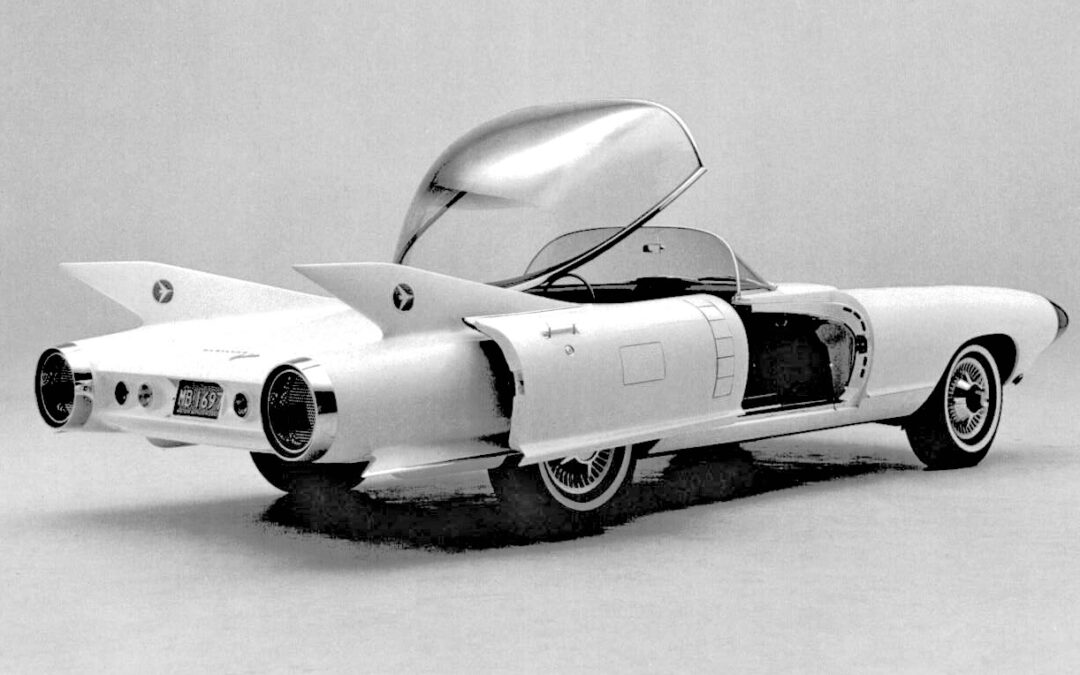
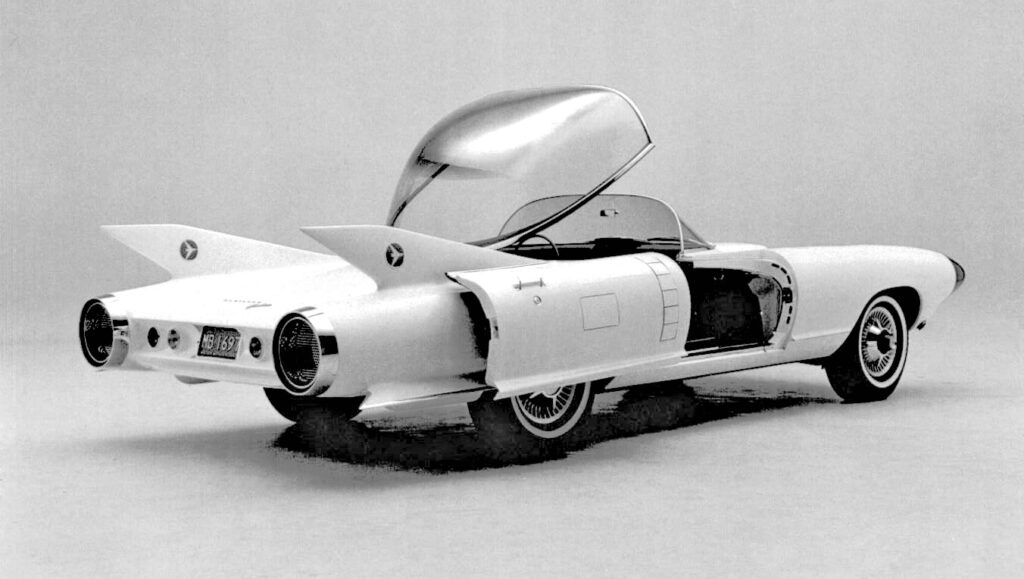
The Cadillac Cyclone featured a radar-operated collision avoidance system . (GM PR archives)
One of the last cars designed by Harley Earl, the 1956 Cyclone concept was a test-bed for futuristic styling and technology, according to Wikipedia. The design was heavily inspired by the aviation and rocket designs of the 1950s.
The Cyclone was built on a 104-inch wheelbase chassis and featured a front-mounted 390-cubic-inch V-8 engine, rear-mounted automatic transaxle and an all-wheel independent suspension.
A unique design was the engine exhaust that was ported out just ahead of the front wheels. It also featured a radar-operated collision avoidance system, with the radar sensors mounted in twin “nose-cones” on the front of the car.
The bubble-top canopy, silver coated for UV protection, automatically opened along with the sliding electrically operated doors. The canopy could also be stowed in the rear compartment, where it rested on a special air-bag base.
The original design of the Cyclone included larger tailfins (similar looking to the 1959 Cadillac lineup), adorned with the logo of the General Motors Air Transport Section (GMATS). The fins were reduced in size in 1964 (and the GMATS logo removed) to look more like the 1963-64 Cadillac range.
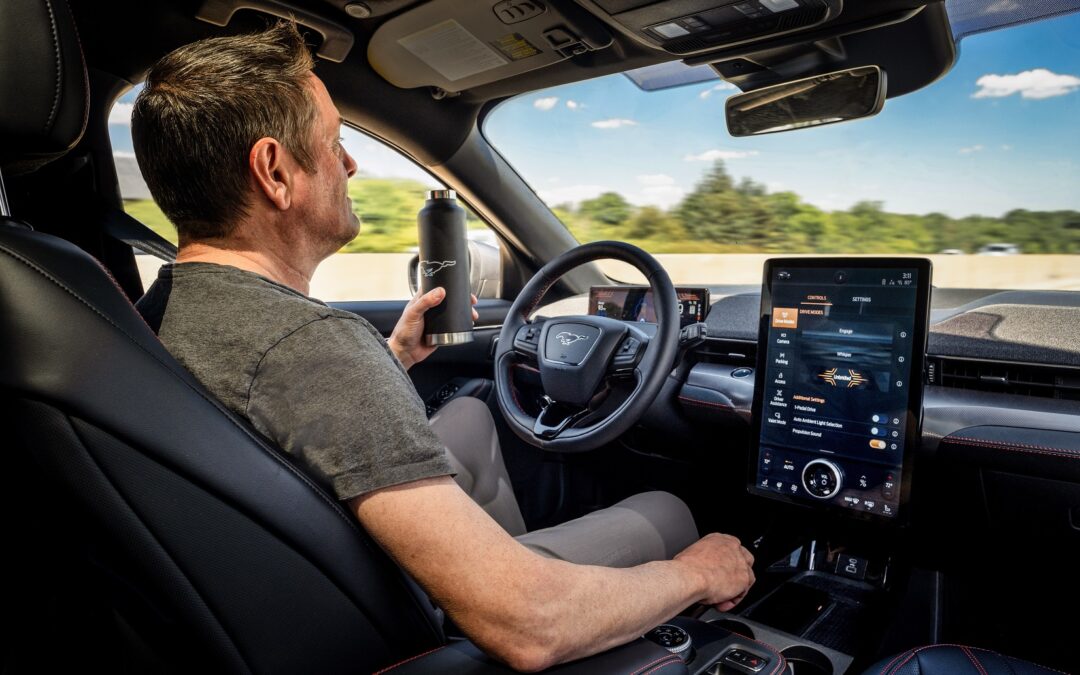
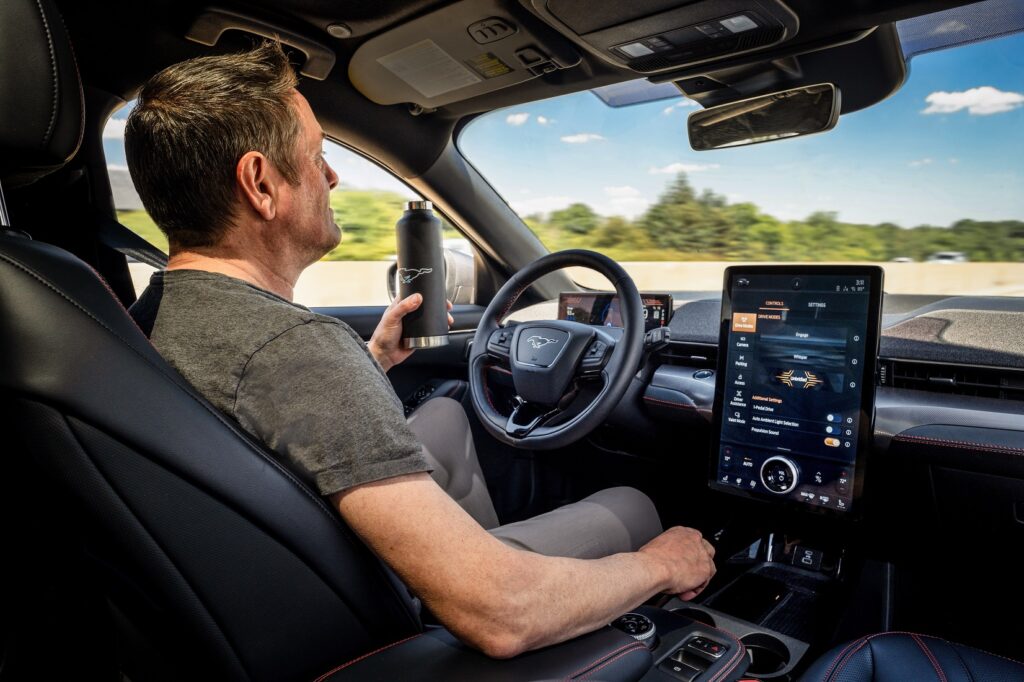
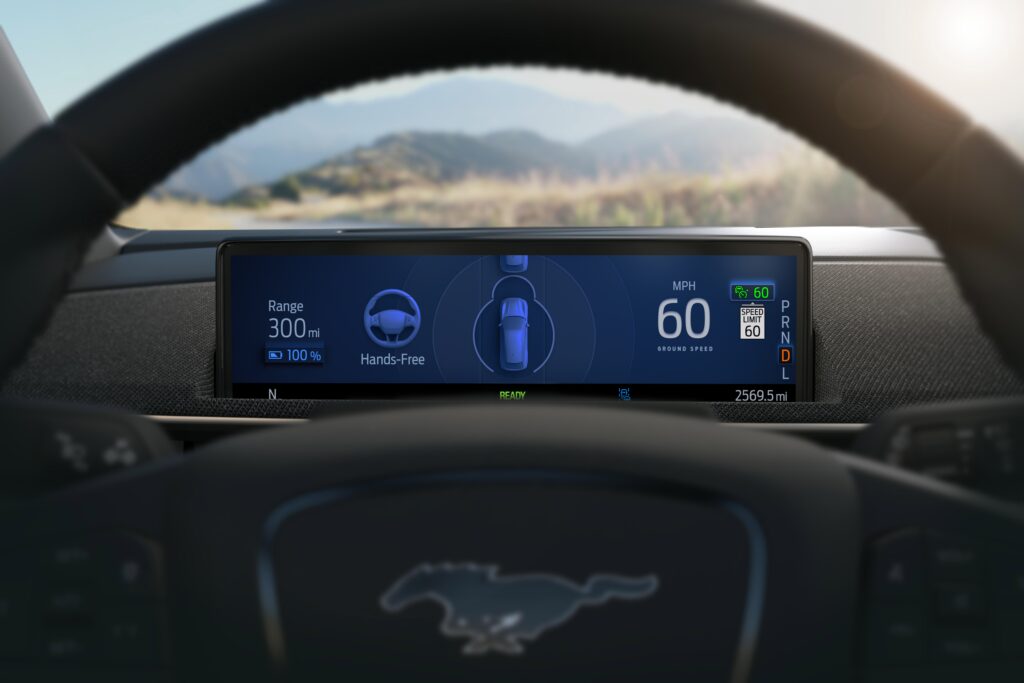
John Gilchrist, Mustang Mach-E engineer, demonstrates Active Drive Assist, which will allow for hands-free driving on divided highways. The technology will first be available as an option package on certain 2021 vehicles, including the Mustang Mach-E. (Ford)
Updates to Co-Pilot360 include hands-free driving, over-the-air updates
Ford Motor announced today that its driver-assist technology, Ford Co-Pilot360, will be updated with Active Drive Assist to allow hands-free driving on divided highways. The enhanced system will compare to the semi-self-driving technologies in Cadillac’s Super Cruise and Tesla’s Autopilot.
The added feature is the next evolution of Intelligent Adaptive Cruise Control with Lane Centering, with the potential for future enhancements, Ford said in a release.
Active Drive Assist is integrated with a driver-facing camera that will track head position and the driver’s eyes, even while wearing most sunglasses. Drivers will be notified by visual prompts on the instrument cluster to return their attention to the road or resume control of the vehicle.
The optional technology, Co-Pilot360 Active 2.0 Prep Package, will first be offered with the electric Mustang Mach-E, on sale later this year, followed by select 2021 models, Ford said. The package includes camera and radar hardware with the ability to separately purchase Active Drive Assist as an over-the-air software update next year. Pricing will be announced closer to on-sale dates for 2021 model year vehicles, Ford said.
A series of graphics and indicators were created to let drivers know when the system is engaged — and when it’s not. (Ford)
Ford said its engineers and test drivers have accumulated more than 650,000 miles testing the radar- and camera-based features.
“We go to far-flung places around the U.S. and Canada — from Florida to California, from Quebec to Texas, Wyoming and Idaho — to try to stimulate those rare-case sensor measurements we might not get anywhere else, capturing data in a number of different ways,” Justin Teems, Active Drive Assist feature lead, said in the release.
Co-Pilot360 refinements
Several other semi-autonomous driving technologies were also updated for Co-Pilot360. Among them:
Active Park Assist: The latest iteration of Active Park Assist (part of the Active 2.0 Prep Package) will allow the vehicle to park itself in parallel and perpendicular spaces. It also offers Park Out Assist so drivers can navigate out of a parking spot when another vehicle is parked too close.
Road Edge Detection and Blind Spot Assist: Road Edge Detection can sense the edges of a lane with visible lines or a road with a clear edge, such as grass or dirt. The technology can then alert the driver if the vehicle starts to drift out of the lane or off the road. Blind Spot Assist was updated to give a nudge to the steering wheel to alert the driver, along with the warning light in the side mirror.
Intersection Assist: Camera and radar sensor technologies in the pre-collision system will be able to detect oncoming traffic attempting to turn left. If there’s a risk of a potential collision with an oncoming vehicle, the vehicle can alert the driver and apply the brakes.
Lane-Keeping: The updated system is now integrated with automatic high-beam headlights, blind spot information with cross-traffic alert, pre-collision assist with automatic emergency braking, post-collision braking, rearview camera, reverse brake assist and reverse sensing system. The technologies will be among the Co-Pilot360 2.0 standard package for Mustang Mach-E.
Drop the kids at school and take the long way to work in this sophisticated yet sinister 2020 Avalon TRD
New for 2020, the Avalon TRD is a customized sport sedan built on the legendary reputation of Toyota Racing Development. (Photos courtesy of Toyota or as credited)
The new Toyota Avalon TRD is not your granddad’s Avalon. When the fifth-generation Avalon sedan was redesigned for 2019, Toyota steered this flagship from its mooring as an icon of modern maturity to a speed-line cruiser. Authenticity and exhilaration were the mantras of design, Toyota said.
Designed and built in the U.S., the interior and exterior design makeover was done at Calty Design Research in Ann Arbor, Mich. Engineering work was done at Toyota’s R&D center in Saline, Mich., and production is in Georgetown, Ky.
Black sport SofTex-trimmed front seats with embroidered headrests are trimmed with Ultrasuede inserts and red accents.
Sold in gasoline and gasoline-electric hybrid models, the front-wheel-drive sedan was re-invented with a range of “Toyota firsts.” Among them are dynamic auxiliary turn signals, Toyota Safety Sense P, adaptive variable suspension and authentic Yamaha (guitar) wood trim.
And 2020 brings another first for Avalon, a performance-tuned TRD model, which also is available for the midsize Camry.
Toyota says it has begun introducing TRD-tuned passenger cars to reflect the motorsports division’s 40-year heritage of tarmac racing. Toyota Racing Development has a trophy case of IMSA GTO and GTP championships, open-wheel racing successes (including the Indy 500) and, today, a formidable presence in NASCAR.
2020 Avalon TRD Pricing
The Avalon TRD, $43,330, slots between the Touring and Limited models and above the entry XLE ($36,830) and step-up XSE. (Pricing includes the $955 freight charge from Georgetown.) Check pricing incentives here, which currently include a $2,500 cash-back offer.
The 8-speed automatic has performance modes of Eco, Normal, and Sport.
The TRD Treatment
Based on the Toyota New Global Architecture, the Avalon foundation has steel-plank rigidity. It is an ideal platform from which to hang a performance suspension to create a track-capable but compliant sedan.
The performance tuning is a “holistic” approach, Toyota says. The engineering teams worked out the details at Toyota’s Arizona proving ground, at the Higashi-Fuji proving ground in Japan, and at the MotorSport Ranch in Texas.
The contemporary design includes metallic trim — and no faux wood.
Toyota gave the car a badass stance, wrapped in an aerodynamic body kit with red pinstriping. The kit includes the front splitter, side aero skirts, trunk lid spoiler, and rear diffuser. Unique coil springs lower the car by a half-inch, trimming the center of gravity and improving high-speed stability.
The TRD treatment builds upon the Avalon’s 301-horsepower, direct-injected, 3.5-liter V-6 and eight-speed automatic transmission with sport modes and paddle shifters. With a reasonably trim curb weight of 3,638 pounds, fuel economy ratings are achievable at 22 mpg city, 31 highway and 25 mpg combined, on 87 octane.
The Avalon TRD, $43,330, slots between the Touring and Limited models.
Stiffening the Body
From there, thicker underbody braces increase torsional rigidity. Stiffer springs and stabilizer bars increased body-roll stiffness by 44 percent in the front and 67 percent rear. The TRD model does not get the Avalon’s adaptive variable suspension, but with the TRD shock absorbers, there is almost an air-ride quality to the smoothness of weight transitions. The stiffness does not transfer to the cabin with waggling head-toss when traversing speed bumps or driveways.
The front brakes are larger, with 12.9-inch diameter rotors and dual-piston calipers, compared to 12-inch rotors and single-piston calipers on the Avalon XSE. Brake performance is tuned to provide more direct feedback, Toyota says, and I experienced no grab or dive on initial activation.
The Avalon’s 301-hp, direct-injected 3.5-liter V-6. (Mark Maynard)
The lightweight 19-inch matte-black alloy wheels reduce unsprung mass by 18 pounds compared to the 19-inch wheels on the Avalon XSE.
A TRD-tuned cat-back dual exhaust system announces with deep subtlety the driver’s departure and arrival. The organic-sounding tone is channeled through sport-modified baffles with an electronically enhanced engine note. Hit the start button, and the engine fires with a gutsy “flare” and settles into a throaty idle. The sound is never droning at highway speeds, but the enhanced sound can be switched off, if desired. The cabin is well-soundproofed at highway speeds, even with the sound generators.
Matte-black and lightweight 19-inch alloy wheels. (Mark Maynard)
Avalon TRD Interior Features
Inside, there are black sport SofTex-trimmed heated front seats with Ultrasuede inserts and red accents — and red seat belts. Red stitching accents the TRD embroidered headrests, leather-wrapped steering wheel, shift knob with TRD logo and TRD floor and trunk mats.
Standard safety features and technologies include 10 air bags, blind-spot monitor with cross-traffic alert and Toyota Safety Sense P, which integrates a precollision system with pedestrian detection, emergency braking, lane-departure alert with steering assist, automatic high beams, full speed-range dynamic radar cruise control, rear cross-traffic braking and intelligent clearance sonar for parking alerts.
The back seat has a long 40.4 inches of legroom. (Mark Maynard)
Paint colors, with red pinstriping, include Supersonic Red (exclusive to TRD), Wind Chill Pearl, Celestial Silver Metallic and Midnight Black Metallic.
Why Buy the Toyota Avalon TRD?
This is a well-executed performance package with legendary engineering at a modest price premium. Avalon might not be on the short list for drivers seeking a sport sedan, but the TRD customization creates long-term pride of ownership.
Drop the kids at school and take the long way to work.
The TRD aero kit includes lower-side skirts, a trunk lid spoiler, and a rear diffuser.
2020 Toyota Avalon TRD Specifications
Body style: large midsize, 5-passenger, front-drive sedan
Standard equipment includes: smart key entry with push-button ignition, moonroof with sliding sunshade, electric parking brake, wireless phone charging, 9-inch infotainment touch screen, 8-speaker audio system, 4 USB charging ports, rearview camera with guidance lines, 8-way power front seats with 4-way lumbar, heated leather and wood steering wheel
Avalon TRD package equipment: cat-back dual exhaust with chrome tips; 19-inch matte-black alloy wheels with 235/40 tires, piano black grille with mesh insert, black rear spoiler, intake engine sound generator, LED headlights-taillights-running lights, dynamic turn signals
Avalond TRD package interior features: black sport SofTex-trimmed heated front seats with Ultrasuede inserts and red accents; red-stitched TRD embroidered headrests, leather-wrapped steering wheel with red stitching, red seatbelts, a shift knob with an embossed TRD logo and TRD floor and trunk mats
Safety features include: 10 air bags, stability and traction controls, blind-spot monitor with cross-traffic alert, hill-start assist, brake assist and Toyota Safety Sense P (precollision system with pedestrian detection, lane-departure alert with steering assist, automatic high beams, full speed range dynamic radar cruise control, rear cross-traffic braking, intelligent clearance sonar)
PRICING
AvalonTRDBase price: $43,330, including $955 freight charge; price as tested $46,712
Options on test vehicle: Supersonic red paint $425; 14-speaker JBL audio system with 3.0 Entune infotainment with navigation and app suite $1,760; door edge guard $140; protection package $657 (bodyside moldings); paint protection film $395; wheel locks $80; Preferred Owner’s (manual) Portfolio $80
here assembled: Georgetown, Ky.
Warranty: 3-years/36,000-miles bumper to bumper with 2 years free scheduled maintenance; 5-years/60,000-miles powertrain
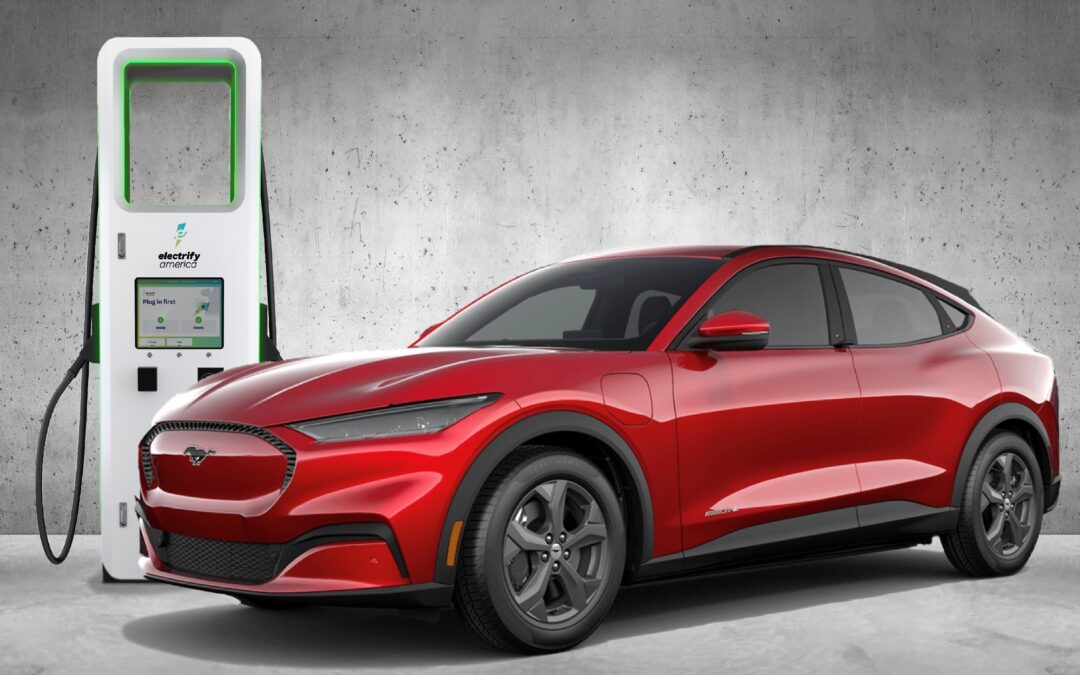
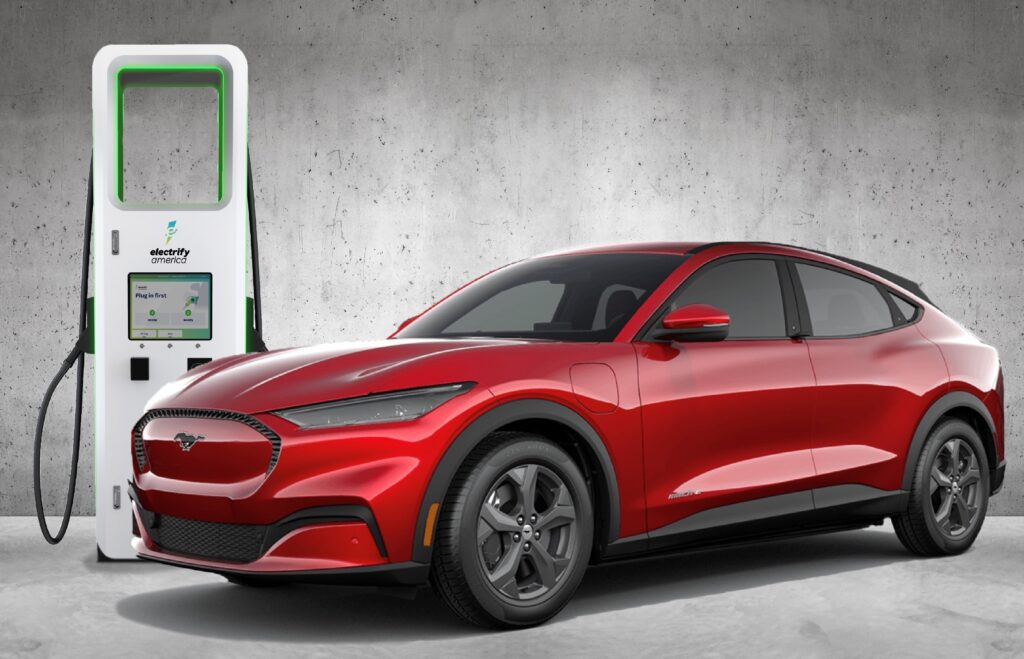
Ford Mustang Mach-E owners will receive 250 kilowatt-hours of complimentary charging through FordPass Rewards at Electrify America fast-charging stations. (Ford)
To kick-start their electric Mustang Mach-E experience, Ford announced June 15 that owners will receive 250 kilowatt-hours of complimentary charging through FordPass Rewards at Electrify America fast-charging stations. That’s the equivalent of approximately three to five full DC fast charges, Ford said in a statement.
According to GreenCarReports.com, that’s potentially a value of hundreds of dollars at EA’s $0.99-per-minute standard rate.
For Mustang Mach-E owners with the extended-range battery, the 250 kilowatt-hours of fast-charging energy is equal to more than three fill-ups. For standard-range models, the free charging is equal to more than five fill-ups.
Using Electrify America’s DC fast chargers, a rear-wheel-drive Mach-E with an extended-range battery can add an estimated 61 miles of range in approximately 10 minutes. All-wheel-drive and rear-wheel-drive cars are estimated to achieve a 10 percent to 80 percent charge in approximately 45 minutes, Ford said.
The free charging will give Mach-E owners the confidence to plan trips, no matter their destination, said Matt Stover, Ford director of charging, energy services and business development.
“One of the main opportunities we have is educating our potential customers about road-trip readiness,” said Stover.
The free charging is in addition to the two years of free access to the FordPass Charging Network. The network is North America’s largest public charging network, Ford said, with more than 13,500 charging stations and almost 40,000 individual plugs.
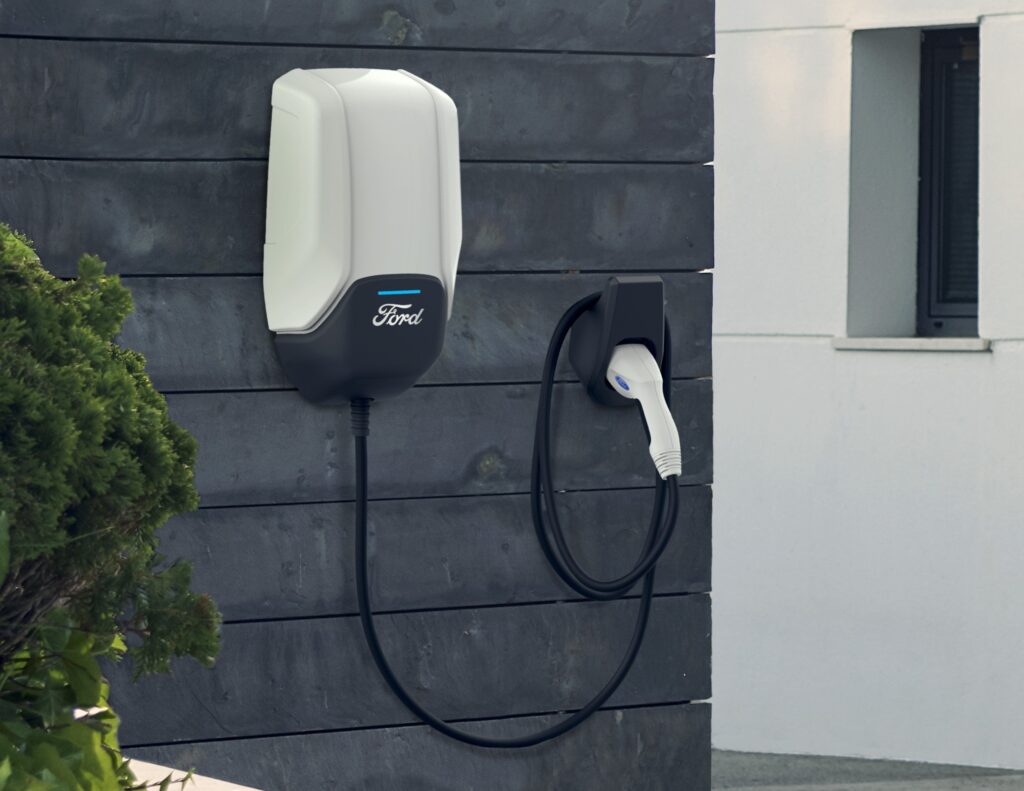
Ford Connected Charge Station wallbox will start at $799. (Ford)
Home charging
Ford also announced that a 240-volt, Level 2 home wallbox will be available for $799, excluding taxes. The Ford Connected Charge Station is available at the dealership or online with the purchase of the Mach-E or at FordParts.com.
The 48-amp charge station will be able to charge overnight a rear-wheel-drive Mach-E with extended-range battery. The Mach-E also will have a mobile charge cable, capable of charging on a higher-voltage 240-volt electrical outlet.
Ford works with Amazon Home Services for installation of home charging setups, which will be available later this year.
The 5 millionth BMW built in the U.S.A. rolled off the line at Plant Spartanburg, South Carolina on Thursday, June 4, 2020. (BMW)
Toronto Red X5 M Competition to stay in plant’s historic collection
BMW announced today that its Spartanburg, S.C., manufacturing facility built its 5-millionth vehicle on June 4. The milestone vehicle is a Toronto Red Metallic BMW X5 M Competition equipped with a 617-horsepower M TwinPower Turbo V-8 engine with Silverstone Full Merino Leather interior and 21/22-inch M Star-spoke bi-color wheels. Pricing starts at $115,095, including the freight charge.
But this BMW will not go to an eager owner. Instead, it will remain at the factory and become part of the BMW historic collection.
The first BMW built in the U.S., a BMW 318i, with the 5 millionth, a Toronto red metallic BMW X5 M Competition at BMW’s historic collection at Group Plant Spartanburg in South Carolina. (BMW)
“This BMW X5 M Competition is a symbol of the success of our products and the commitment and dedication of our associates and supplier network,” Knudt Flor, president and CEO of BMW Manufacturing said in a statment. “Every BMW X5 in the world comes from Plant Spartanburg. We are proud to call South Carolina home!”
More than half of all BMWs sold in U.S. are built in Spartanburg, according to Bernhard Kuhnt, president and CEO, BMW of North America. “BMW Group has long considered the United States to be our second home and we are proud to say that the U.S. is in fact home to the biggest BMW plant in the world. We congratulate our colleagues on this historic achievement.”
Production milestones at BMW manufacturing: • 1 millionth BMW – Feb. 28, 2006 – Z4 M Roadster • 1.5 millionth BMW – Sept. 8, 2009 – BMW X6 xDrive35i • 2 millionth BMW – Jan. 12, 2012 – BMW X3 xDrive35i • 2.5 millionth BMW – Sept. 17, 2013 – BMW X5 xDrive50i • 3 millionth BMW – March 24, 2015 – BMW X5 M • 3.5 millionth BMW – May 18, 2016 – BMW X4 xDrive20i • 4 millionth BMW – Sept. 8, 2017 – BMW X3 xDrive M40i • 4.5 millionth BMW – March 7, 2019 – BMW X7 xDrive40 • 5 millionth BMW – June 4, 2020 – BMW X5 M Competition
The Spartanburg, S.C., plant is BMW’s largest in the world. Last year, the plant celebrated 25 years and set a new production record of 411,620 BMW SUVs. (BMW)
The South Carolina plant also celebrated two important milestones last year: • 25 years of production and a record year of 411,620 vehicles built. • In 2019, Plant Spartanburg led the nation in automotive exports by value for the sixth consecutive year, with a total export value of approximately $9.6 billion. Nearly 70 percent of the plant’s total production was exported from 2010 – 2019.
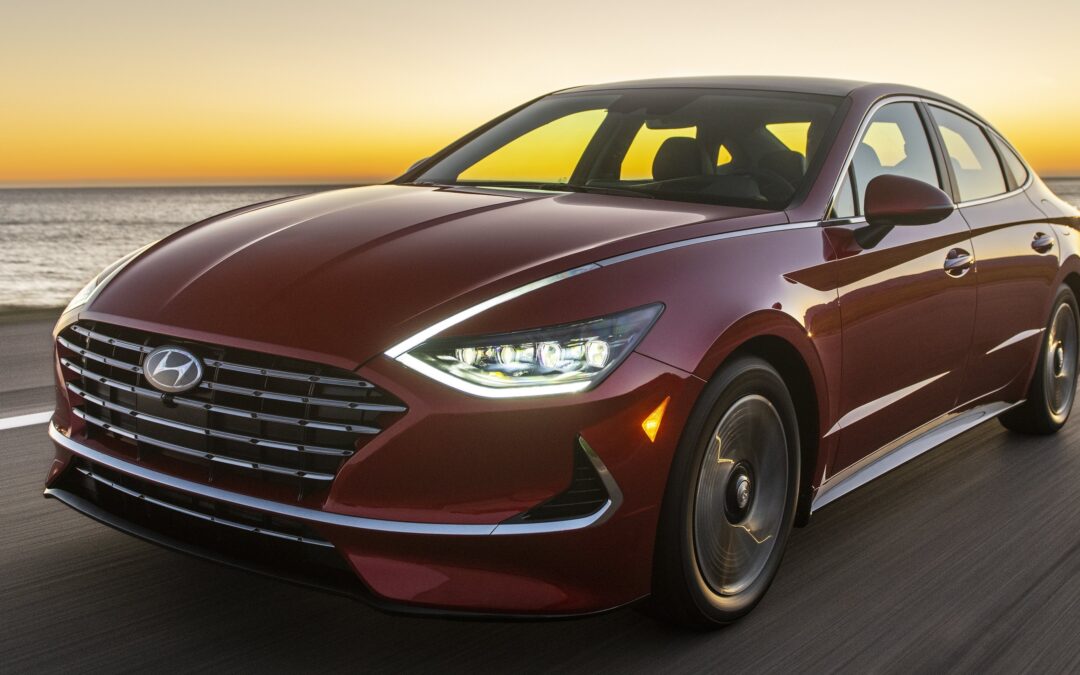
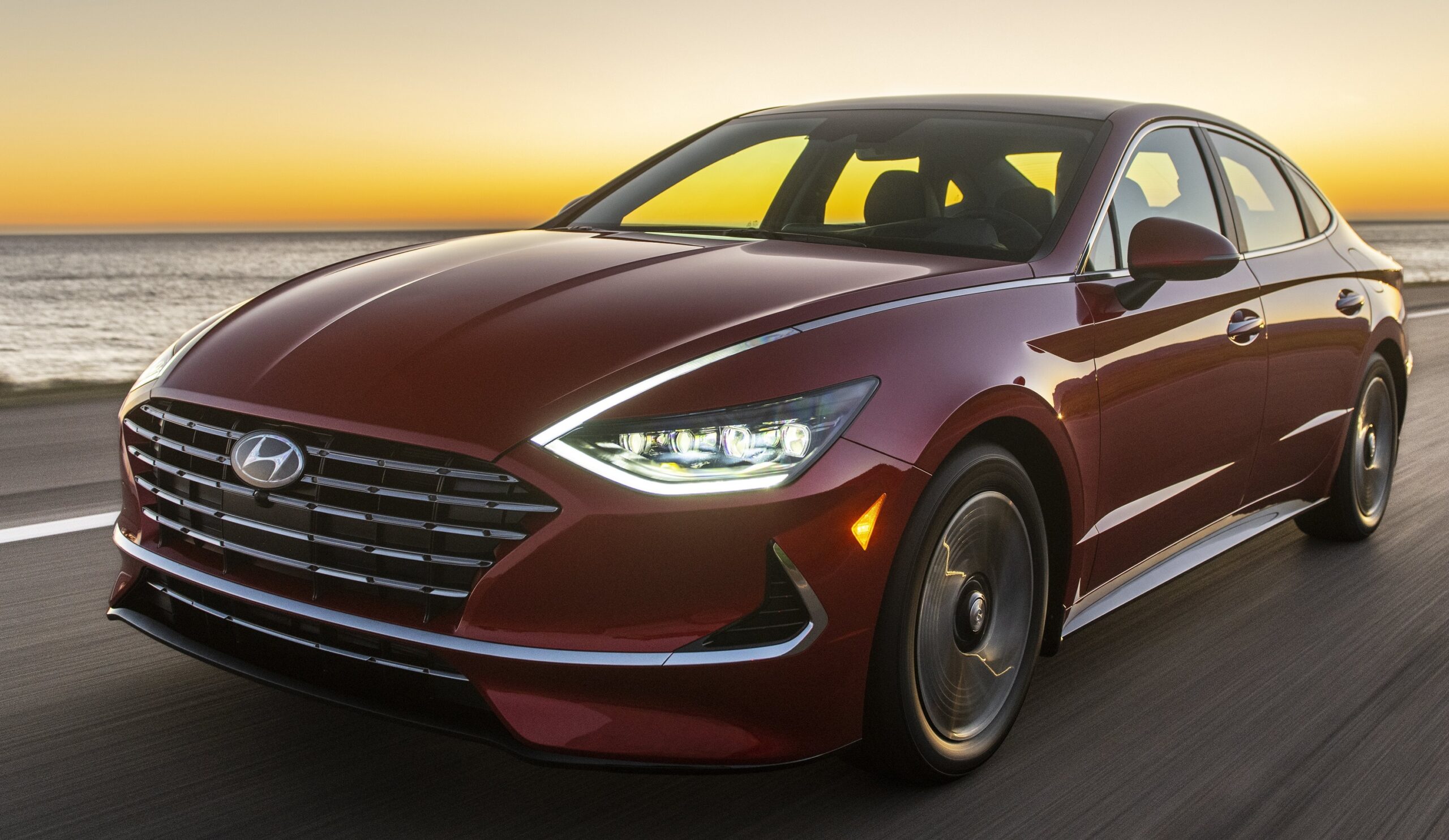
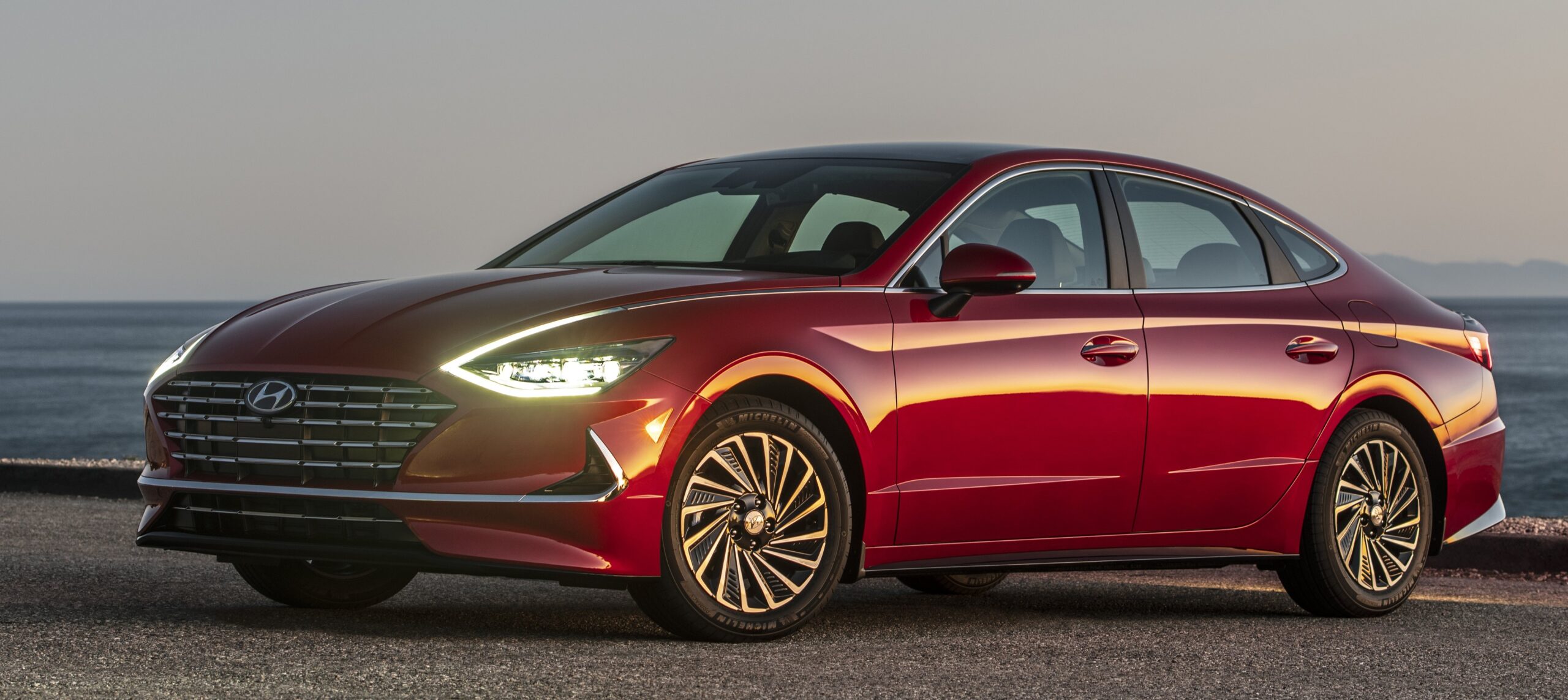
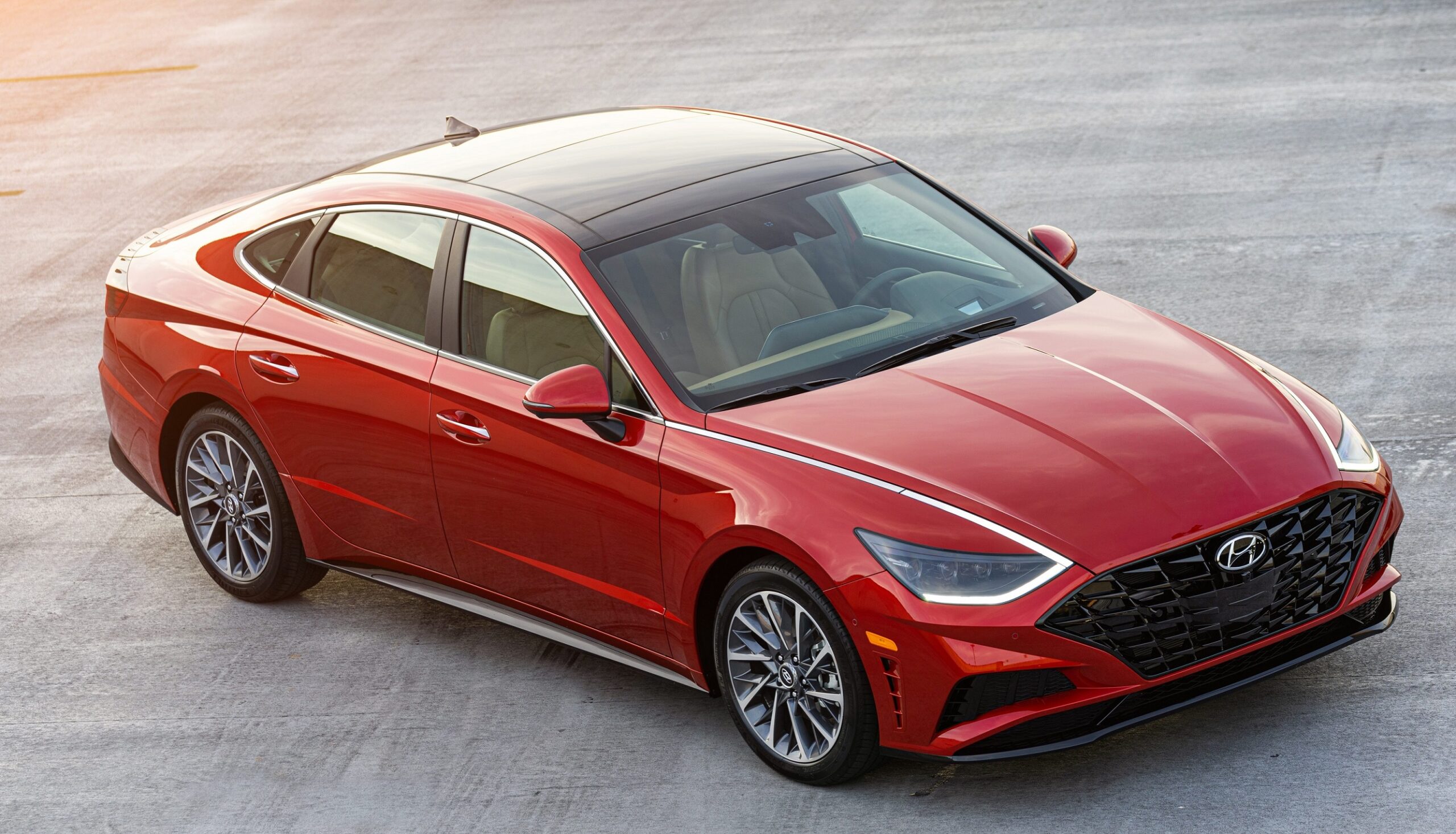
The Sonata Hybrid is sold in three trim levels with starting prices of $28,725, $30,965 and $36,275, including the $975 freight charge from Asan, South Korea. (Hyundai)
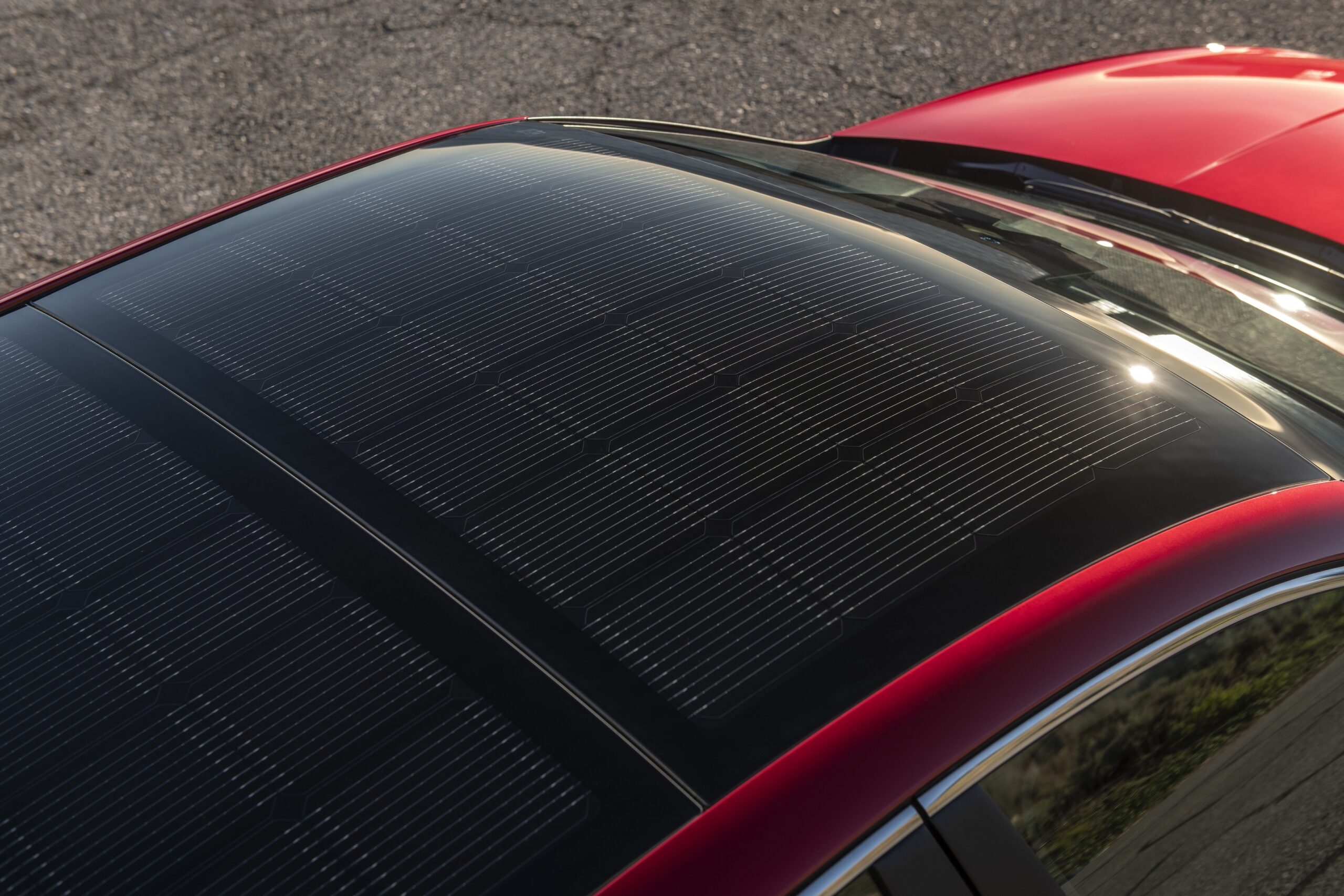
Hyundai went through the roof to maximize fuel economy for its redesigned Sonata Hybrid sedan. The completely re-engineered sedan debuts a solar roof system that recharges the engine-cranking 12-volt battery and the hybrid battery. Depending on region, the sunlight system could provide around 1,200 miles of free driving, such as in Southern California, Hyundai says, or more like 600 miles a year, or 2 miles per day on average, in less sunny parts of the country.
The goal of the solar roof is to help the car stay in EV mode longer. Starting off from a standstill, the fully charged hybrid battery allows a takeoff on electric power rather than firing up the engine, which saves fuel. And, especially useful, the system acts as a tender to the 12-volt battery so when the car sits for two to three weeks, the onboard electronics for anti-theft and sensor systems will not drain the battery — as long as the car is parked outside. That will be a relief to owners who are not driving as much now or for those who park at remote airport lots for extended travel.
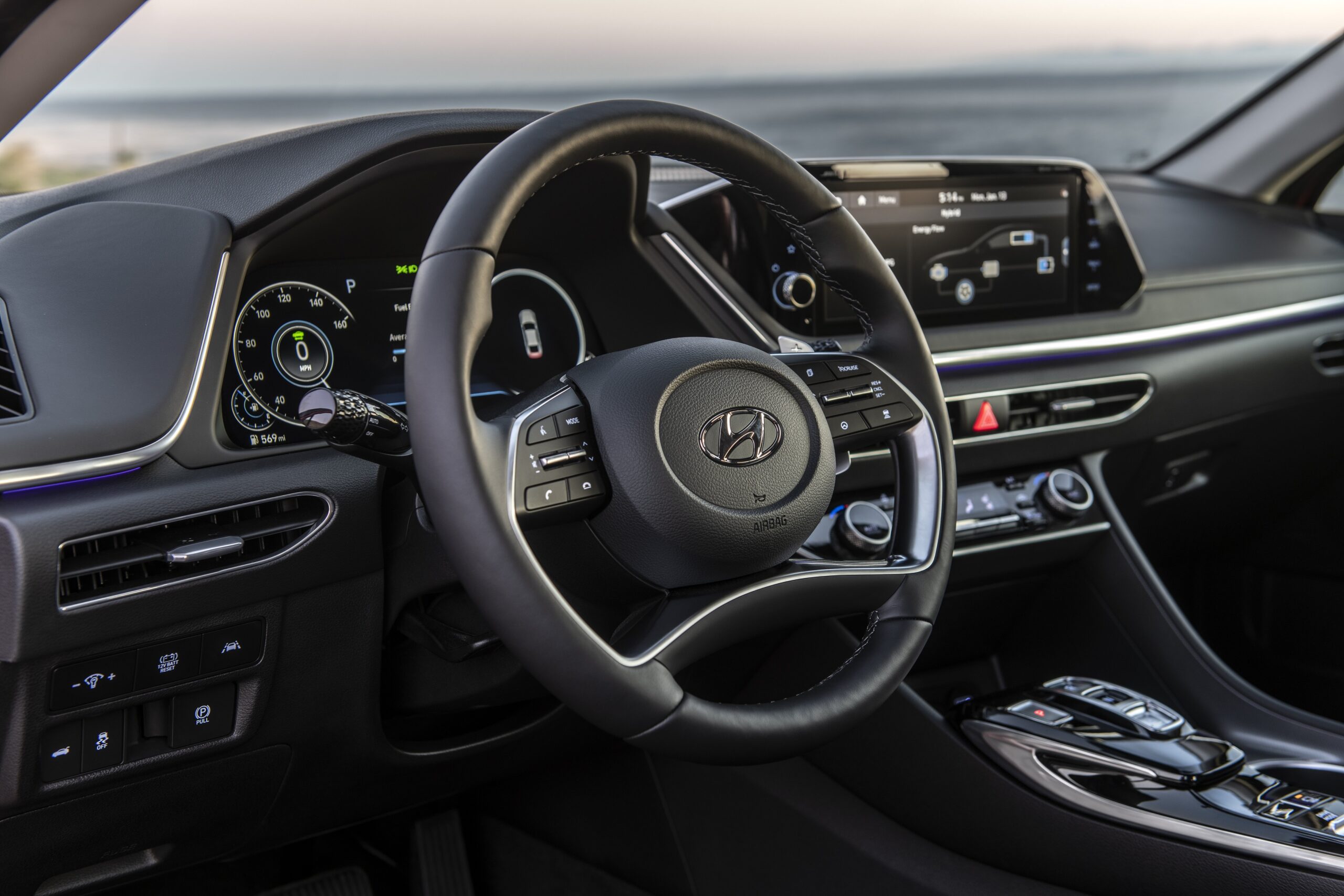
In the Limited, the driver faces a 12.3-inch digital gauge array with configurable panels. (Hyundai)
A full 13.2-gallon tank could allow a driving range of 660 miles. (Hyundai)
System Check
The system first charges the 12-volt battery (fully charged in about two hours) and then the hybrid pack. If the driver manages to kill the battery, there is a dashboard button—“12V Batt Reset”—that will give a jump of current, pulling from the hybrid battery.
Hyundai says the new hybrid model delivers up to a 24 percent increase in fuel economy over the prior generation.
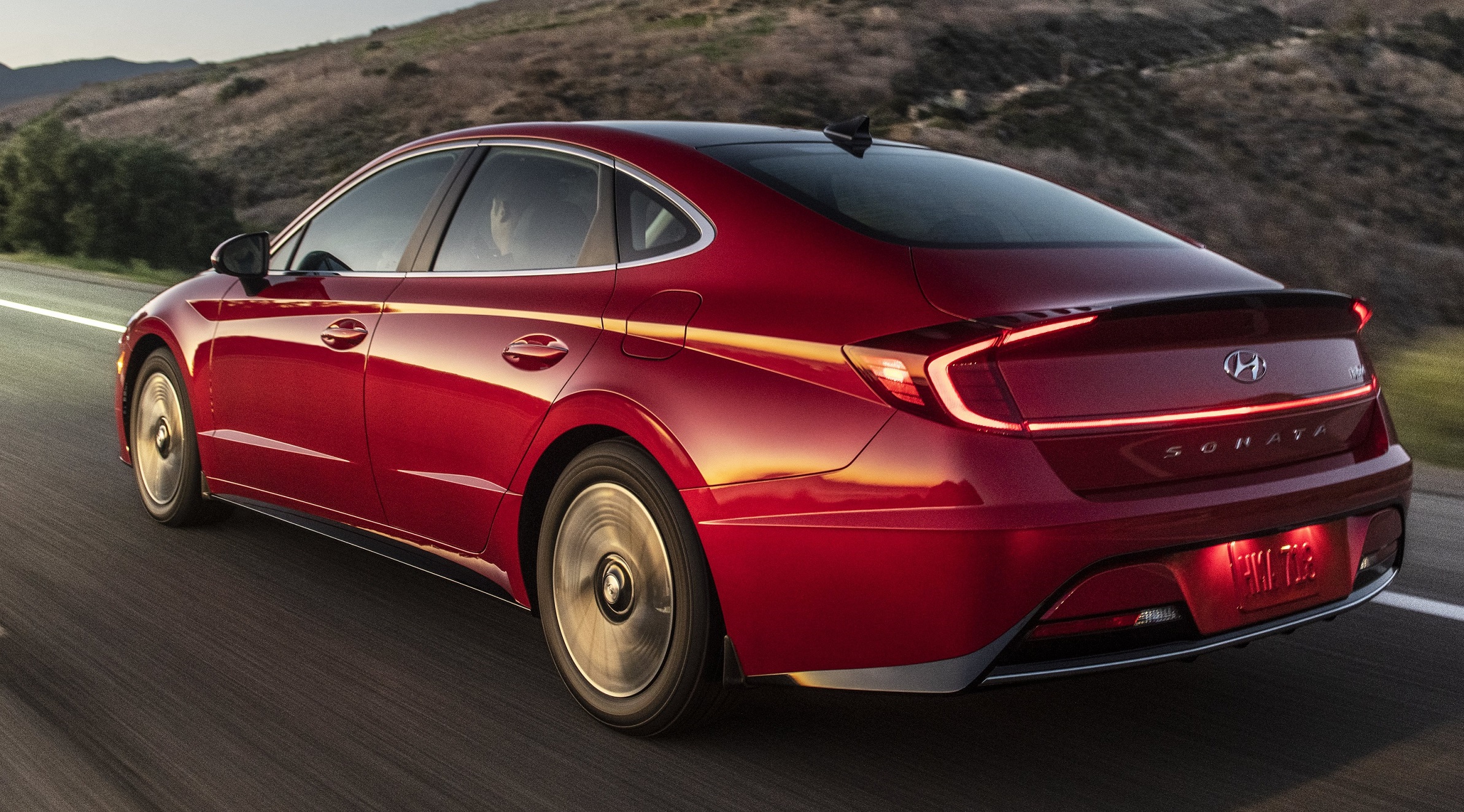
The new body style, with help from a range of aerodynamic add-ons, has a sleek drag coefficient of 0.24, which compares to 0.25 for the Toyota Camry Hybrid and Honda Accord Hybrid, the two main sedan competitors. And even the standard gas-powered Sonata has a sleek drag of 0.27.
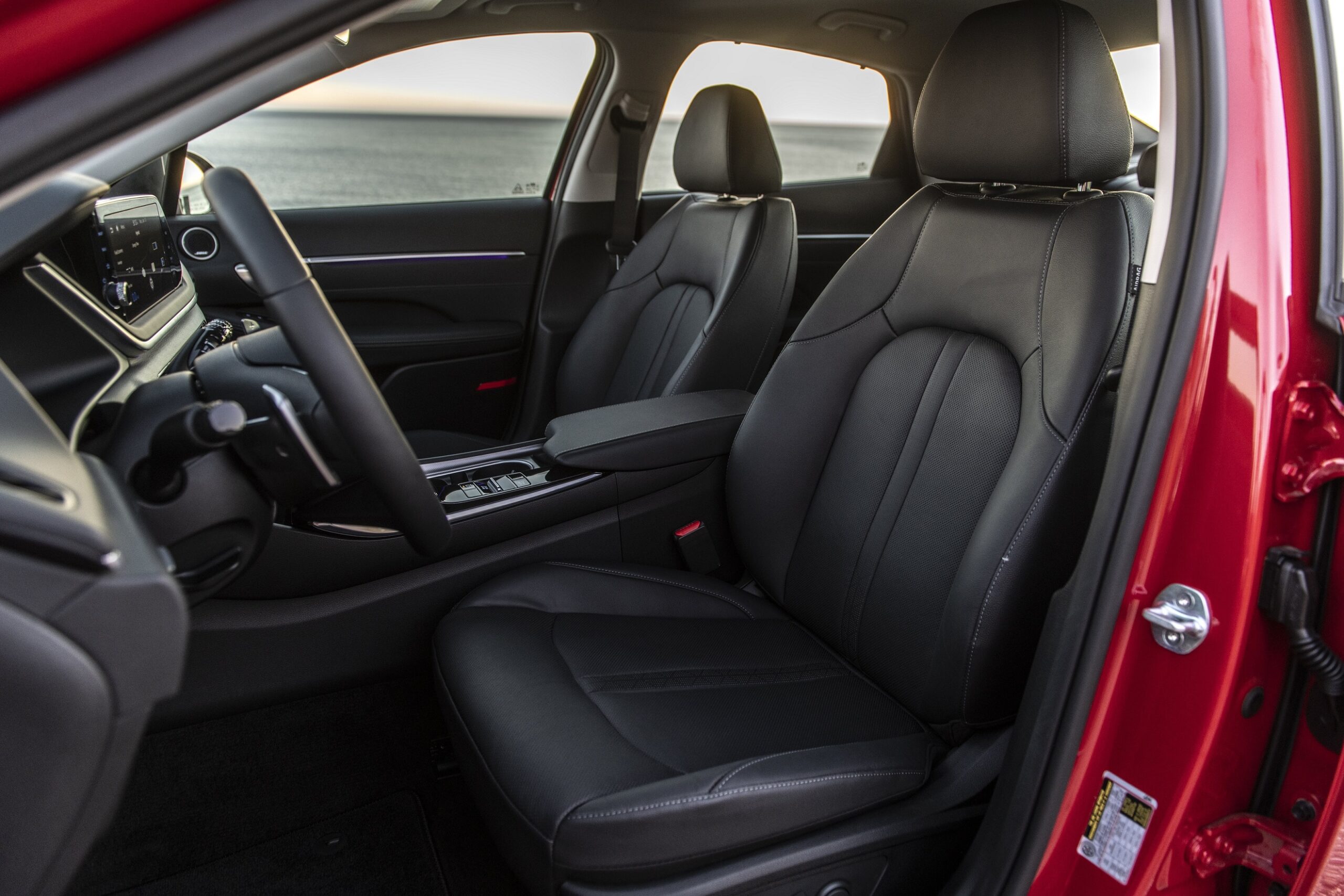
The front seats have a robust design and comfortable support for the big-and-tall driver. (Hyundai)
‘Smaht Pahk’
And for those who saw Hyundai’s Super Bowl commercial for “smaht pahk” remote parking (Smart Park), you can’t get that feature on the Sonata Hybrid. With all the electronics it’s another layer of complexity that Hyundai chose not to adapt. But since the feature debuted a glitch was discovered that did not always stop the car as programmed, despite a fail-safe function. It was a software issue that Hyundai says has been corrected.
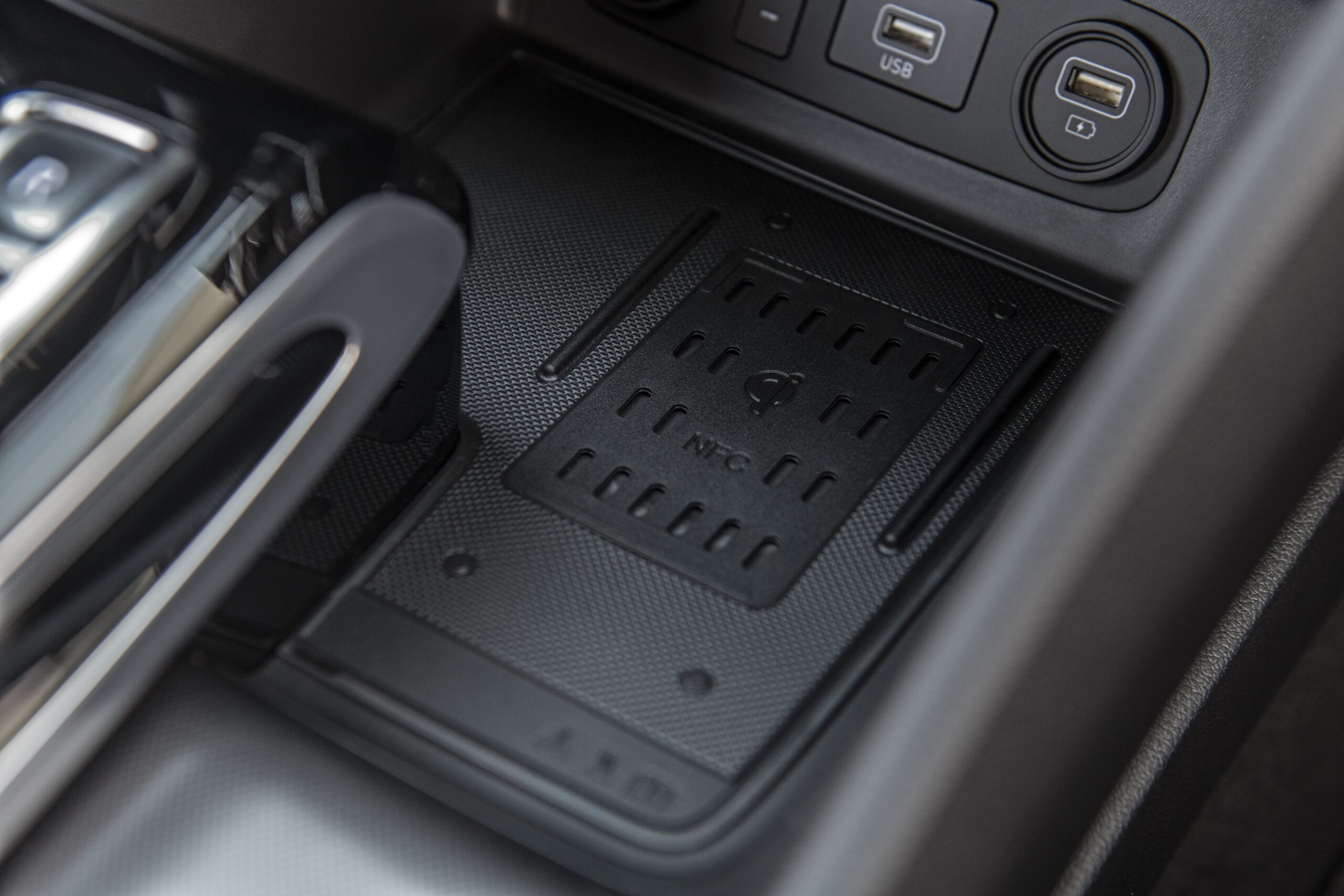
The wireless charging pad is large enough for the latest billboard-class phone. (Hyundai)
2020 Hyundai Sonata Pricing
The redesigned Sonata Hybrid is everything a contemporary driver would want in a new midsize sedan if he or she wanted a four-door car. As well done as it is, the preferred body style today is an SUV crossover. But there could be some equalization in pricing — sedans cost less than SUVs.
The six-speed automatic transmission has performance modes of Smart, Eco, Sport and Custom. (Hyundai)
The Sonata Hybrid is sold in three trim levels — Blue, SEL, and Limited — with starting prices of $28,725, $30,965, and $36,275, including the $975 freight charge from Asan, South Korea. Today’s tester is the Limited with one option for carpeted floor mats, $155.
The base model is well equipped with such features as keyless locking and push-button ignition, advanced cruise control with stop-and-go function, hands-free trunk opening, locking glove box, rearview camera, and high-speed wireless smartphone charging pad, and LED lighting for headlights, running lights, taillights and interior with six-way adjustable front seats and fabric upholstery.
Electricity generated from the solar roof could provide around 1,200 miles of free driving in Southern California or about half as much in less sunny areas. (Hyundai)
Sonata Safety Features
Standard safety features include nine air bags, forward collision‐avoidance assist with pedestrian detection, blind‐spot collision‐avoidance assist with rear cross‐traffic alert, lane-keeping assist and high-beam headlight dimming. The Limited adds a blind‐spot monitor, highway driving assist (lane centering), and parking collision-avoidance assist rear.
The new vehicle warranty includes coverage of the hybrid battery with the powertrain for 10 years or 100,000 miles. The rest of the vehicle is covered for 5 years or 60,000 miles.
All Sonata models, except the entry model, include three years of complimentary Blue Link services.
The 205-watt solar roof system trickle-charges the 12-volt and hybrid batteries. (Hyundai)
Sonata’s Hybrid Powertrain
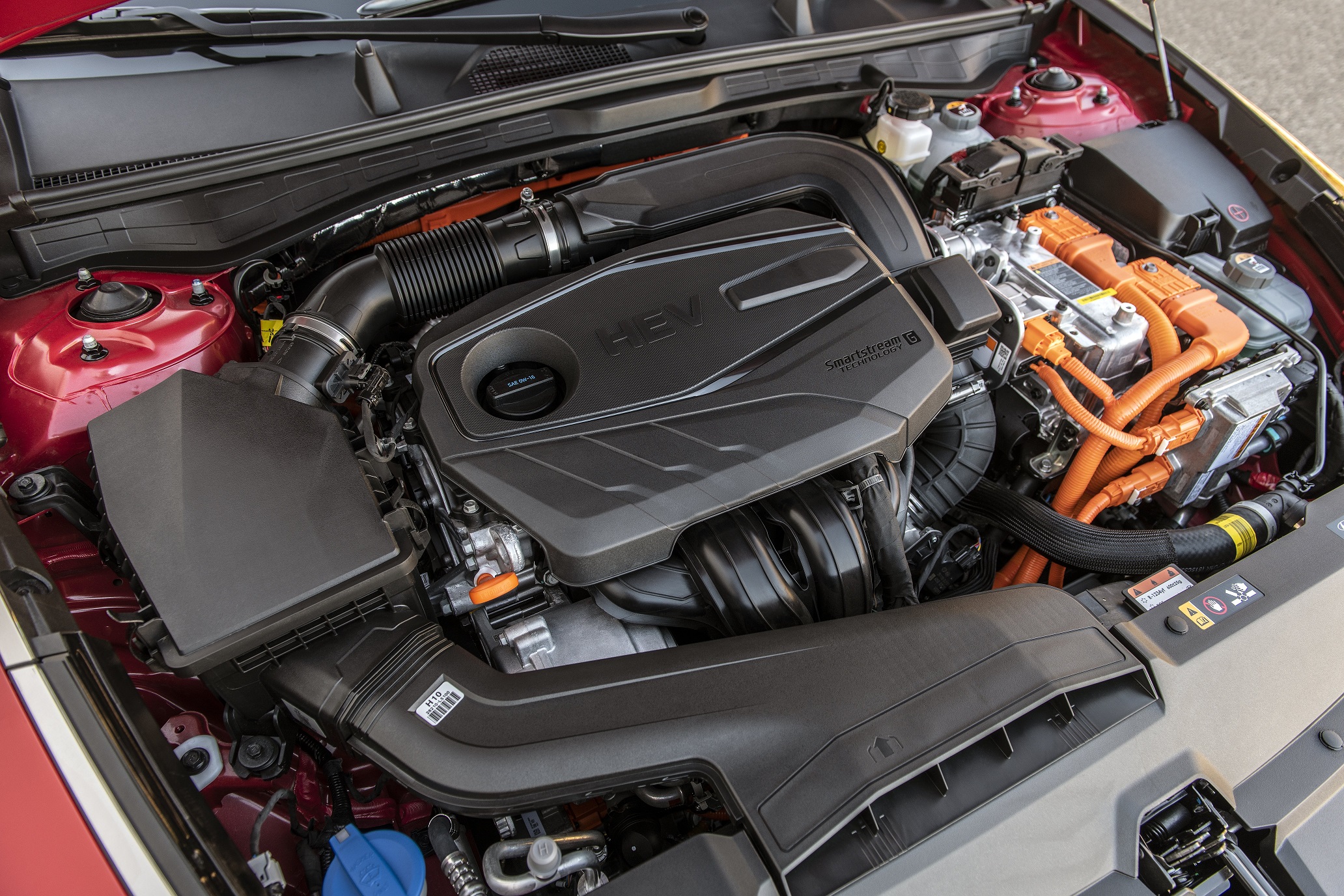
The front-wheel-drive hybrid powertrain integrates Hyundai’s Smartstream G2.0 direct-injection four-cylinder gas engine with a permanent magnet electric motor and lithium-ion polymer battery pack. Total system power adds up to 192 hp, or 150 hp from the ICE and 51 hp from the motor.
The six-speed hybrid automatic transmission (a refreshing alternative to the ubiquitous continuously variable automatic in most hybrids) has been optimized to reduce gear-shifting times by 30 percent. There are performance modes of Smart, Eco, Sport, and Custom, and while I sampled each, my preference was Smart mode for its responsive acceleration. Sport felt a little too jittery, and I was in pursuit of mpgs not performance driving.
Fuel economy estimates are 50 mpg city, 54 highway and 52 mpg combined for the Blue trim, on the recommended 87 octane fuel. The heavier SEL and Limited trims have ratings of 45/51/47 mpg. In highway driving, I noted 54 mpg, as decided by the onboard computer. With the 13.2-gallon gas tank, there will be a lot of commuting between fill-ups.
The solar roof is lighter than a panoramic glass sunroof (66 pounds versus 95), but it also means no sunroof option. At 3,350 pounds, the curb weight is just 194 pounds more than the non-hybrid Sonata.
Hyundai’s Smartstream G2.0 direct-injection four-cylinder gas engine is paired with a permanent magnet electric motor and a lithium-ion polymer battery pack. (Hyundai)
Sonata’s New Footprint
The re-engineering of the eighth-generation Sonata (first seen in the U.S. in 1988 for its second generation) is a little longer and lower on a stronger vehicle architecture. The size shift was enough to move it into the EPA’s large-car class, but it seems more of a large-midsize.
It was a ground-up opportunity to make the hybrid packaging more efficient, Hyundai says, which included moving the hybrid battery from under the trunk to under the back seat.
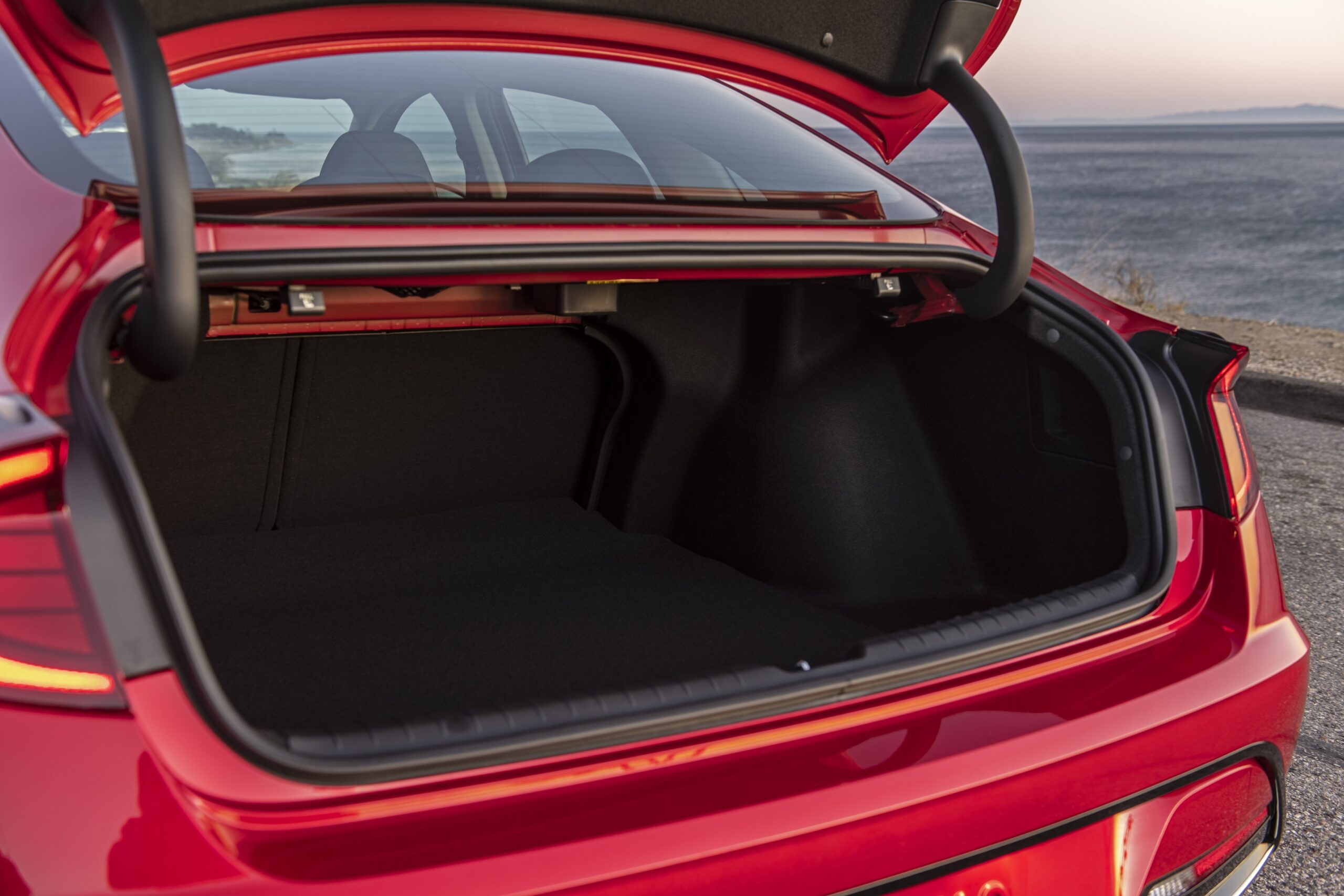
The placement allows a 60/40 folding back seat, preserves the large trunk space of 16 cubic feet and the more central location benefits vehicle balance and rotational control, Hyundai says. The battery sits at about the thigh point in the back seat and the fuel tank is under the butt zone.
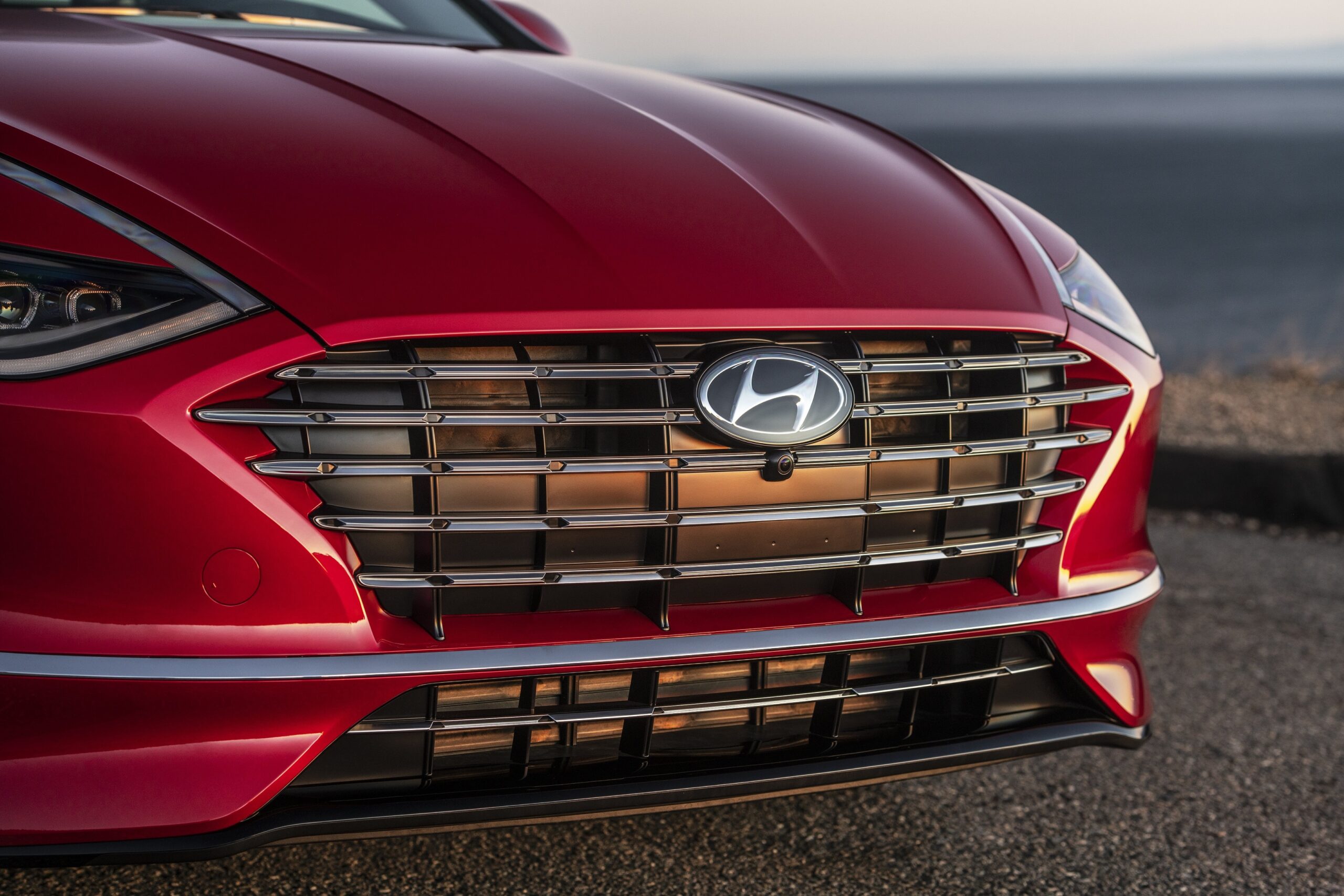
The design of the cross-hole grille works with three active air flaps in front of the radiator. (Hyundai)
Longer, Lower, Sleeker
Sizewise, the 2020 Sonata is 1.8 inches longer (192.9 inches) with a roofline lowered by 1.2 inches, now at 56.9 inches and the wheelbase is 1.4 inches longer, at 111.8 inches. The body width is nearly the same at 73.2 inches versus 73.4.
Typically, redesigned sedans are made a little lower and wider for aerodynamics to benefit fuel economy. Sometimes the lower roof cramps headroom and complicates the ease of entry and exit. But the dimensions of the Sonata preserve the tall front headroom of 40 inches and it just doesn’t feel as if you are riding close to the ground and looking up at taillights ahead. Also helpful are doors that open to nearly right angles and an innovative interior grab handle that is long and easy to grasp for optimum leverage. Often, door grabs are a hand-size grip that isn’t always at the best leverage point to control the door on opening and dinging the next car over.
Even with the longer wheelbase, the turning circle is still tight at 36.1 feet. And the regenerative braking has completely smooth engagement; some systems can have an initial on-off activation. The four-wheel disc brakes have 12-inch ventilated front rotors and 11.2-inch solid rotors rear.
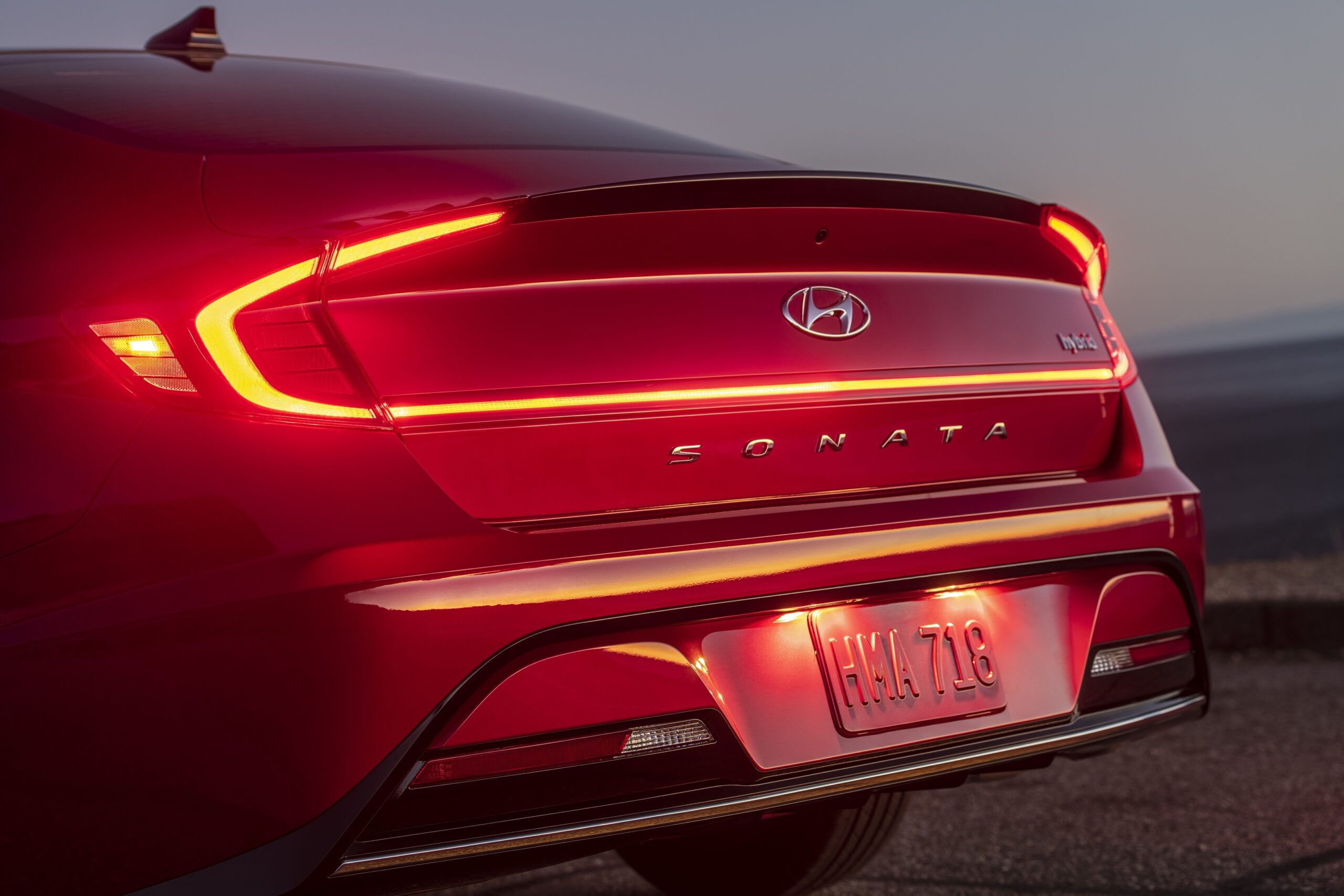
Hyundai is pursuing more dramatic LED lighting displays, such as the Hidden Lighting Lamps that appear to be chrome when switched off and become dramatically lit when switched on. (Hyundai)
A wide horizontal LED strip connects each brake light. (Hyundai)
Soundproofing Maximized
Hyundai likely created the most soundproofed Sonata yet, though there is some tire hardness that is heard and felt at highway speeds. Otherwise, it rolls on carpet. Among the soundproofing tricks are improved carpet, advanced sound-absorption materials throughout the trunk and door trim and an acoustic windshield on all trims and laminated side glass on the SEL and Limited.
Cabin Function
While the Sonata Hybrid is electronically sophisticated, it does not require an advanced degree for the user to learn and enjoy. In the Limited, the driver faces a 12.3-inch digital gauge array with configurable panels, such as for fuel economy, map and more.
The front seat area has a clean design with clear access to controls. The 10.25-inch upper touch screen is to access radio and media, navigation, phone and apps. Climate controls, including for the heated and ventilated seats and the heated steering wheel, are just below on a separate tier — and just a finger-touch away.
The front seats have a robust design and comfortable support for the big-and-tall occupants. The steering wheel has meaty grip, wrapped in glove-smooth leather and neatly cross-stitched. Sliding visors have covered and lighted mirrors and the locking glove box is large enough to hold all the owner’s manuals.
Sightlines are completely open at the side mirrors and over the shoulder. The around-view camera system (overhead, front, and rear) is a welcome safeguard to avoid tapping the garage door or curbing the wheels when parallel parking.
The e-bin on the shift console is a handy hub with a 180-watt 12-volt plug, media USB, charging USB and a wireless charging pad large enough for the latest billboard-class phone.
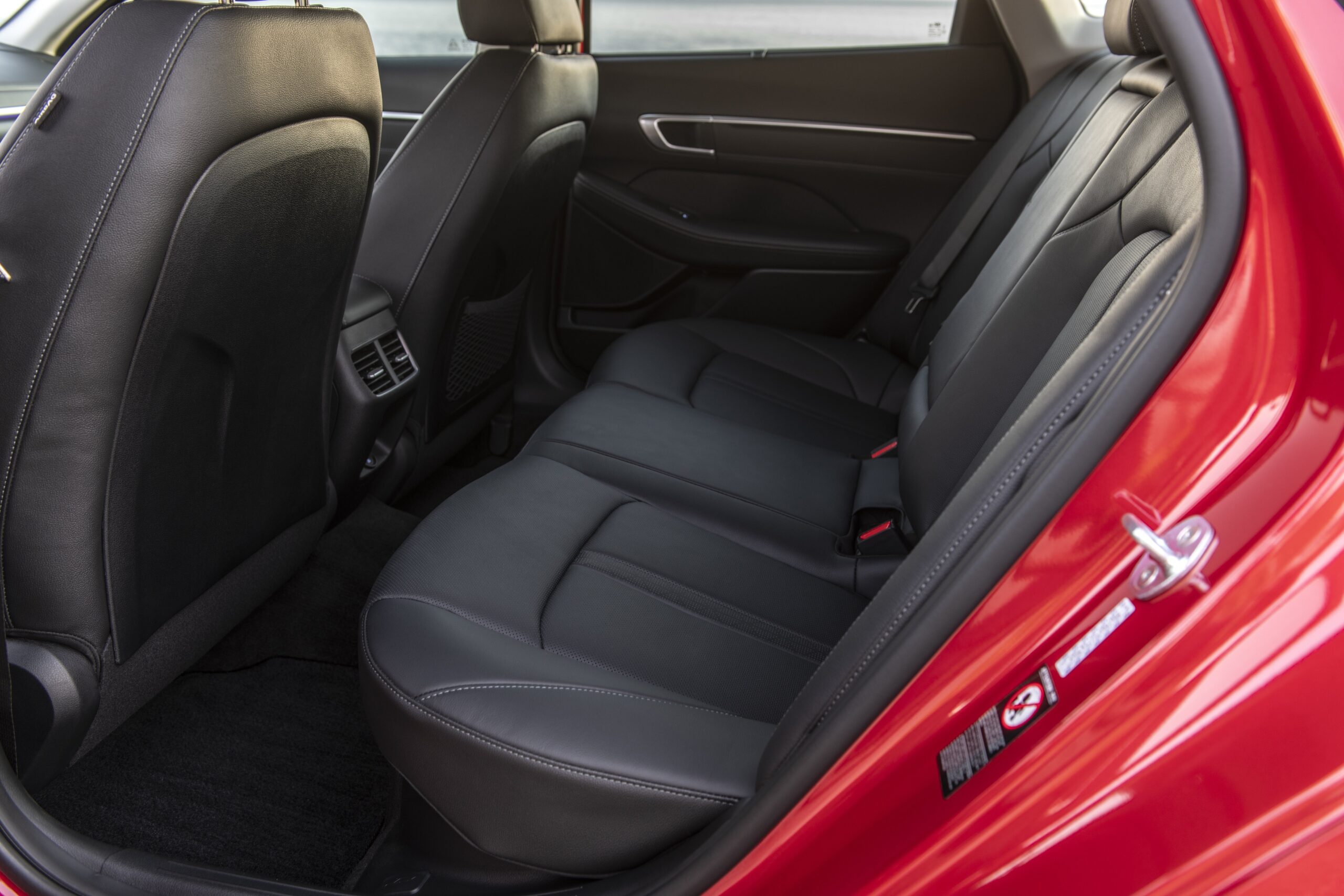
Back-seat space is adult-class for long thigh support and 34.8 inches of legroom. (Hyundai)
Improved Door Lock Sensors
Also improved were the door touch sensors for no-questions locking by touching the sensor on the outside of the door handle. This potentially solves the problem between using a chiclet-style button in the door handle, which gives an absolute response on locking, and the full sensor door handle, which sometimes must be rubbed, tapped, or smacked to get a response. And in that confusion, it’s not easy to know if the door is actually locked without pulling on the handle, which then unlocks the door. Aargh!
Owners can also opt for the smartphone-activated digital key. It uses Near Field Communication and Bluetooth technology to allow the car to be unlocked, started, and driven without a physical key.
Machine Learning
In my test week, I discovered a couple of interesting electronic messages.
While sitting in the idling car to take notes, a warning advisory popped up in the gauge display: “Vehicle will be turned off automatically” in a countdown of 30 minutes. Hyundai says this is to prevent accidental carbon monoxide deaths from people who accidentally leave a vehicle running in a closed garage.
And even better, there is a sort of a pay-attention-and-drive message. While waiting in traffic, with the adaptive cruise control engaged, the system will give an advisory message and tone to the distracted driver that reads “The car ahead is moving.” Or loosely translated, stop checking your phone and drive!
Trunk space is large at 16 cubic feet. (Hyundai)
Aerodynamics
Fuel economy is all about efficient airflow and Hyundai split hairs in the pursuit of mpgs. Among the tricks and techniques to calm the airflow:
Underbody bumper lip, front- and rear-wheel deflectors; undercovers in the front and back of the engine bay; center floor and rear undercovers.
Redesigned rear deck-lid spoiler.
The cross-hole grille design works with three active air flaps in front of the radiator. The shutters improve aerodynamics and reduce air resistance by closing on engine start-up and reopening gradually as needed for optimum airflow to cool the engine. At highway speeds, the shutters close to block too much air from entering and jamming up in the engine bay, which makes it harder to push the vehicle through the air, using more fuel.
Wheels and “green” tires have always been important in EV efficiency. The Sonata Hybrid’s wheels are actual alloy wheels, not wheel covers (aka hubcaps), that are aerodynamically designed and good—looking. The base model has 16-inch wheels, with 17s on the Limited. The tester’s Michelin Primacy all-season tires (215/55) have a fairly high (hard) treadwear rating of 540, which might explain some tire noise at highway speeds, but they have a 55,000-mile tread-life rating.
Why Buy the 2020 Hyundai Sonata Hybrid?
With an easily achieved 50 mpg on the commute, the Sonata Hybrid is a premium presentation without sacrifice of style, comfort and technologies. For $36K, this is the new benchmark for what to expect from a gasoline-electric hybrid.
The new Sonata hybrid delivers up to a 24 percent increase in fuel economy over the prior generation. (Hyundai)
2020 Hyundai Sonata Hybrid Limited Specifications
Body style: large-midsize, front-wheel drive 5-passenger sedan
Electric motor: Permanent magnet with 39 kW (51) hp from 1,800-2,300 rpm
Battery: 56 kW lithium-ion polymer, 270-volt max power
Total system power: 192 hp
Transmission: 6-speed automatic with electronic shift control
Fuel economy: 45/51/47 mpg; 87 octane
BY THE NUMBERS
Fuel tank: 13.2 gal.
Trunk space: 16 cu. ft.
Front head/leg room: 40/46.1 in.
Rear head/leg room: 37.8/34.8 in.
Length/wheelbase: 192.9/111.8 in.
Curb weight: 3,505 lbs.
Turning circle: 36.1 ft.
FEATURES
Standard Limited equipment includes: digital key locking and push-button ignition, solar roof panel, leather-trimmed upholstery, leatherette-wrapped dashboard, 10.25-inch navigation-infotainment touch screen, 12.3-inch digital instrument cluster, around-view camera system, front and rear parking sensors, electric parking brake (with automatic vehicle hold), 12-speaker Bose audio system, color head-up display, LED lighting (headlights, running lights, taillights and interior), 8-way power driver seat, 4-way power front passenger seat, power (heated) side mirrors with turn signals, heated and ventilated front seats, heated steering wheel, wireless phone and device charging, dual USB ports
Safety features on Limited include: 9 air bags, blind-spot monitor, lane-keeping assist, brake assist, stability and traction controls, high-beam headlight assist, 5 mph bumpers, highway driving assist, parking collision-avoidance assist rear
PRICING
Base price: $36,275, including the $975 freight charge. Price as tested $36,430.
Options on test vehicle: Carpeted floor mats $155
Where assembled: Asan, South Korea
Warranty: 5-years/60,000-miles bumper to bumper with roadside assistance; 10-years/100,000-miles powertrain and hybrid battery