Select Page

WD-40 Co. to showcase off-road racing champ Kyle LeDuc at SEMA show

WD-40 Co. to showcase off-road racing champ Kyle LeDuc at SEMA show

Kyle LeDuc with his 900-hp Raptor.

San Diego-based WD-40 has long produced project vehicles for the annual Specialty Equipment Marketing Association trade show in Las Vegas. This year, it’s a 4,000-pound, 900-horsepower EVVO II Ford Raptor from five-time Pro4 off-road racing champion Kyle LeDuc.

LeDuc’s team uses WD-40 for everything in racing, even as a detailer on the body for easier cleanup of mud and dirt. His tube-chassis Raptor has carbon-fiber body panels, which are lighter and stronger (and more expensive) than the traditional aluminum used by most competitors.

LeDuc’s tube-chassis Raptor has carbon-fiber body panels, which are lighter and stronger (and more expensive) than the traditional aluminum used by most competitors.

The SEMA show is about the biggest automotive specialty products trade event in the world. The 2017 show had more than 70,000 domestic and international buyers. The displays are segmented into 12 sections, and a New Products Showcase featured nearly 3,000 newly introduced parts, tools and components.

The SEMA show will run from Oct. 30 to Nov. 2 in the Las Vegas Convention Center. The WD-40 booth will be outside by the South Hall. LeDuc will be in the booth from 9-11 a.m. Friday, Nov. 2.

Info: www.SEMA.org and www.wd40.com/sema. #SEMA2018

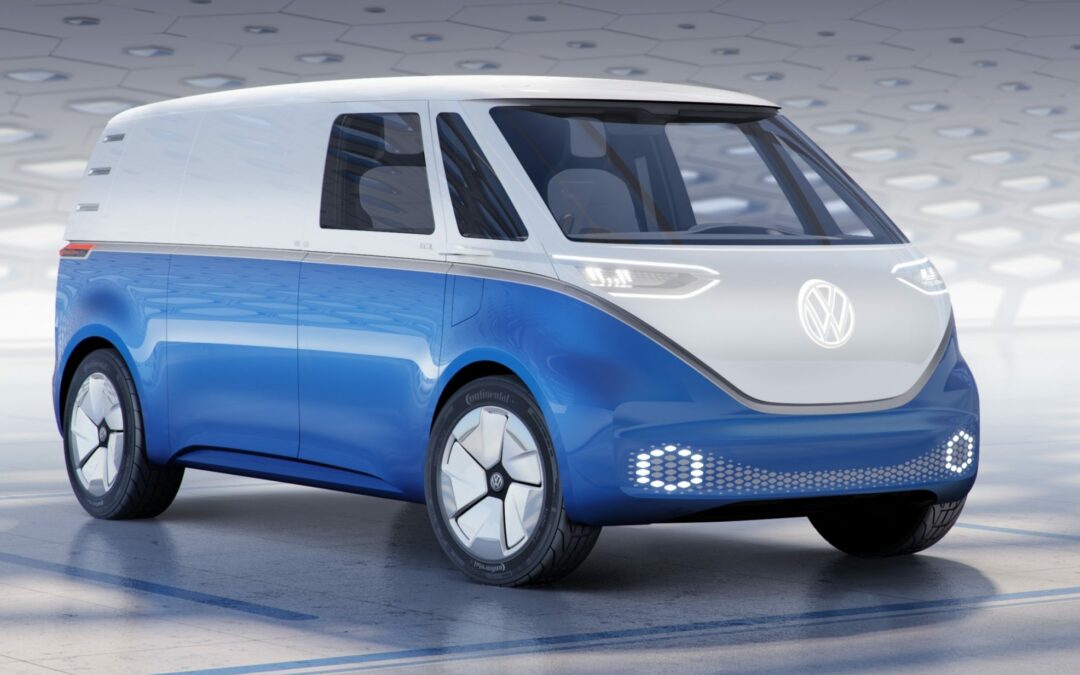
VW shows concept I.D. BUZZ Cargo van

VW shows concept I.D. BUZZ Cargo van

The cargo van is close to production level, Volkswagen said in a release. The van is rear-wheel drive but all-wheel drive is possible.

Volkswagen today debuted its I.D. BUZZ CARGO, an electrically powered commercial van that recalls the vintage Transporter bus. The concept vehicle offers a glimpse into the middle of the next decade, Volkswagen says, with its fully-automated I.D. Pilot driving mode (Level 4).
The transporter concept shown at the IAA Commercial Vehicles in Hannover is a sibling of the I.D. BUZZ concept, shown at the 2017 Detroit auto show. That concept is the people-carrier version of the van format.

The people or cargo vans can be configured with different lithium-ion battery sizes with driving ranges of about 200 (48 kWh battery) or 340 miles.

The cargo van is close to production level, Volkswagen said in a release. The van is rear-wheel drive but all-wheel drive is possible.

The people or cargo vans can be configured with different lithium-ion battery sizes according to the vehicle’s purpose and budget. Based on the Modular Electric Drive Kit, driving ranges of about 200 (48 kWh battery) or 340 miles (111 kWh), are possible. A large solar roof extends the driving range by up to 9.3 miles, Volkswagen said.

Because the rear overhang was extended by about 4 inches, the cargo version is significantly longer than the people carrier.

The cargo van is 77.8 inches wide and 77.3 inches tall, with a wheelbase of 129.9 inches. Because the rear overhang was extended by about 4 inches, the cargo version is significantly longer than the people carrier, VW said. The cargo van has a payload capacity of 1,760 pounds.

Compared to Nissan’s compact NV cargo can, the I.D. BUZZ cargo is 12.5 inches longer, substantially larger van is 198.7 inches long, 9.8 inches wider and 3.8 inches taller on a wheelbase that is 14.7 inches longer.
Automakers are in a rush to develop electric vehicles for many areas of Europe that plan to ban sales of new gasoline and diesel cars and vans by 2040.

Jaguar XF Sportbrake: The runway model of modern wagons

Jaguar XF Sportbrake: The runway model of modern wagons

Based on the XF sedan, the Sportbrake is the same length but appears longer. And it is roomier inside, which is accentuated by the optional panoramic glass roof.

The ol’ station wagon ain’t what it used to be but it’s still as functional as it once was. This sedan-extension body style is finding new relevance that is not a minivan or an SUV and not looking like either while having more manners.

Wagon’s had become a universal gag reflex among those who grew up sliding around the back seats in the 1960s and ’70s. Even the European and import brands that continued with the body style created such descriptors as Sport Wagen, Touring or estate car.

But wagons have pushed back into the carscape in plentiful numbers, small and large. The styling trick is to avoid the squared off rear — then provide attitude in the stance and make sure it is sporty to drive.

Among the big wagon roundup are such choices as the Porsche Panamera Sport Turismo, Mercedes-Benz E- and S-Class, Volvo V60 and V90 (both in standard longroof or raised Cross Country) and the Buick Regal TourX.

The optional panoramic glass roof can handle 220 pounds.

And now Jaguar is testing the niche in the U.S. with its new XF Sportbrake with standard all-wheel drive. The moniker goes back to ye olde England when hunters boarded a “Shooting Brake” truck or wagon to be carted off to the countryside to harvest game.

If prestige and sex appeal sells wagons, then the XF Sportbrake is the runway model. The silver tester was a constant conversation starter all week with plenty of photos taken home on smartphones.

So far, the XF Sportbrake is sold in Jaguar’s sportiest S model configuration, which adds exterior elements of sportier front and rear bumpers, gloss black side sills and trunk lid spoiler. Pricing starts at $71,445, including the $995 freight charge from Castle Bromwich, U.K. The tester was $84,245 with four packages and the Indus Silver paint ($565).

The driver area is simple but with many touch-screen controls.

XF DNA

The starting price of the Sportbrake is $3,585 more than the powertrain-comparable XF sedan.

While the XF sedan has engine choices of 2.0-liter turbodiesel and turbocharged gasoline four-cylinder, the Sportbrake gets Jaguar’s top XF engine:  the 380-horsepower supercharged 3.0-liter V-6 with 332 foot-pounds of torque at 4,500 rpm. All XF models have an eight-speed automatic transmission with steering wheel shifters. In addition to a Sport mode, which adjusts steering, transmission, throttle and suspension settings, there are configurable modes of Eco, Dynamic, Normal and Adaptive Surface Response (for low-grip situations).

The advanced AWD system puts most power to the rear until there is slippage and power is transferred as needed to the front wheels.

As old-school as the Jaguar brand once was, the modern re-incarnation is completely contemporary with compelling design and graceful interiors of fashionable arcs and bevels, solidly built and handsomely stitched.

The large cabin is rewardingly roomy.

Based on the XF sedan, the Sportbrake is the same length but appears longer. And it is roomier inside, which is accentuated by the optional panoramic glass roof.  And is a functional roof that can handle 220 pounds. The overall roof height is 57.4 inches (less than 5 feet) so it should be a simpler process to load bikes and other gear. And the Sportbrake can tow up to 4,408 pounds but the sedan is not rated for towing.

The large shifter dial rises from the console on ignition — for a little (too much) British theater.

Inside, there’s almost an inch more rear headroom (than the sedan) and the same comfortable rear legroom of 37.2 inches. The rear structure added 165 pounds, but you don’t feel it on the road because of the retuned front suspension and the S model’s self-leveling rear suspension.

With much aluminum throughout the body and architecture and a polymer (plastic) tailgate, the curb weight of 3,880 pounds is diminished by the big engine.

Fuel economy

But fuel economy does take a hit compared to the AWD sedan with the big motor: 18 mpg city, 25 highway and 21 mpg combined vs the sedan’s 20/28/23 mpg, using premium fuel.

I was averaging around 18.5 mpg and not sparing the Sport and Dynamic modes. But a 19.5-gallon tank gives a wide range.

The Sportbrake gets Jaguar’s top XF engine, the 380-hp supercharged 3.0-liter V-6.

Jaguar says the Sportbrake has a near-perfect 50/50 weight balance. While Sport mode has a desired effect, it is Dynamic mode that transforms the driving experience. It is easy to get hooked on its decisive launch acceleration among the faint whine of the supercharger. The ride stiffens but not harshly so and the steering is sensitized for minimal inputs when carving up blacktop roads. It just feels good to hold the nose to the apex and then roll on the power — and this much pleasure from a wagon.

Braking is absolute but never grabby from ventilated, four-wheel-disc brakes with 13.8-inch rotors front and 12.8-inches rear

Sightlines are mostly clear but the base of the righthand side mirror is wide and is worth a second look for pedestrians in crosswalks. The driver area is simple but with many touch-screen controls rather than switches and buttons.

The large cabin is rewardingly roomy, which also leaves room for many storage places. But there is a little too much British theater with the large shifter dial that rises from the console on ignition. It’s a cool detail for about a hundred times, then the owner might wish for a more functional e-bin charging area with an array of USB and 12-volt plugs.

The back seat has wide and upright door openings for easy entry and exit. But the three-seat bench has a butts-down orientation to maximize foot and legroom.

I also griped about the noisy cabin fan at higher speeds and the maddening door-lock sensors that require massaging, gripping or slapping to coax into locking, and even that often didn’t work and I had to dig into my pocket for the fob. Just put a little button on the door handle to lock and unlock.

The big glass roof is barely noticed in the front seats, but it is majestic for back seat passengers.  The back seat has wide and upright door openings for easy entry and exit.  But the three-seat bench has a butts-down orientation to maximize foot and legroom. The center seat is compromised by the tall transmission tunnel and the 40/20/40 folding seatback leaves a narrow center position. Three air vents in the right places are a luxury.

Cargo space is wide at 49.5 inches with about 6 ½ feet of length with the seat folded.

Cargo space, stacked to the headliner, spans 31.7-69.7 cubic feet. It is wide space at 49.5 inches with about 6 ½ feet of length with the seat folded.

Wagons were once a “life-stage” choice, but the XF Sportbrake is a lifestyle choice.

2018 Jaguar XF Sportbrake S AWD

  • Body style: large, 5-passenger, AWD wagon
  • Engine: 380-hp, supercharged 3.0-liter V-6; 332 lb.-ft. torque at 4,500 rpm
  • Transmission: 8-spd automatic with shift paddles
  • Fuel economy:  18/25/21 mpg city/hwy/combined; premium fuel
  • 0-60 mph: 5.3 secs
  • Drag coefficient: 0.30

SPECIFICATIONS

  • Fuel tank: 19.5 gal.
  • Cargo space: 19.1-31.3 cu. ft.
  • Front head/leg room: 39/41.5 in.
  • Rear head/leg room: 38.2/37.2 in.
  • Length/wheelbase: 195/116.5 in.
  • Curb weight: 3,880 lbs.
  • Turning circle: 38.1 ft.

FEATURES

  • Standard equipment includes: smartkey locking and push-button ignition, rearview camera, panoramic glass roof, LED headlights and running lights with high-beam auto assist, power heated and folding side mirrors, soft-grain heated steering wheel, metal sill plates, carpeted floor mats front and rear, 40/20/40 folding back seat, cargo-area cover, blue ambient interior lighting, foot-gesture activated tailgate, 380-watt Meridian audio system, front and rear parking tones, 8-inch touch infotainment screen,  S body kit with tailgate spoiler, 20-inch wheels
  • Safety features include: 6 air bags, lane-keep assist, driver drowsiness alert, blind-spot monitor, rear cross-traffic alert

PRICING

  • Base price: $71,445, including $995 freight charge; price as tested $84,245
  • Options on test vehicle: Indus Silver metallic paint $565; carbon fiber trim finisher $810; Tech package B, $3,265, includes 10-inch touch screen with navigation, WiFi hotspot, 825-watt Meridian surround sound system; Driver assistance package B, $3,495, includes adaptive cruise control with queue assist, traffic-sign recognition, 360-degree parking camera, blind-spot assist, parallel and perpendicular parking assist; Comfort and convenience package B, $1,805, includes heated and cooled front seats, heated rear seats, soft door closers; Premium interior package B, $2,860, includes four-zone climate control, manual rear sunshade, microsuede headliner, premium front and rear floor mats, lighted sill plates, 10-color ambient lighting
  • Where assembled: Castle Bromwich, U.K.
  • Warranty: 5-years/60,000-miles bumper to bumper with free scheduled maintenance and roadside assistance

Wagons were once a “life-stage” choice, but the XF Sportbrake is a lifestyle choice.

2019 Lexus ES 300h: Larger, more luxurious, more fuel efficient

2019 Lexus ES 300h: Larger, more luxurious, more fuel efficient

The fourth-generation ES 300 hybrid has starting prices of $42,335-$45,985, including the $1,025 freight charge from Kyushu, Japan.

The Lexus ES has been a consistent Golden Goose of sales since its debut in 1989. It found a fan base as a luxury-comfort midsize sedan that was not trying to be fast or flashy. And in today’s SUV-heavy car marketplace, the ES is still an enduring choice.

Re-engineered and redesigned for 2019, the seventh-generation Lexus ES went on sale in September in front-wheel-drive V-6 and hybrid models. Pricing starts at $40,525, a $550 increase over the outgoing model.

The fourth-generation ES 300 hybrid, also sold in three trim levels, has starting prices of $42,335-$45,985. All pricing includes the $1,025 freight charge from Georgetown, Ky., where the ES V-6 is built or from Kyushu, Japan, from where the ES hybrid hails.

The interior is handsomely designed with arrow-straight panel alignment.

The price difference between the gasoline and hybrid is just $1,810, which Lexus hopes will grow ES hybrid sales, which had been running at 15 percent of sales. Lexus would be happy with 20 percent, but isn’t expecting a big swing yet because its SUV crossovers are growing faster.

ES hybrid competitors include the Lincoln MKZ and the sport-infused Infiniti Q50 and plug-in versions of the BMW 330e and Mercedes C350e PHEV.

Also new for 2019 is the ES 350 F Sport, starting at of $45,060, which has a stiffer suspension, 19-inch wheels and tires, special aluminum interior trim, a rear spoiler and a dark lower valance.
Today’s tester is a midrange hybrid Premium model that starts at $43,510 and was $50,465 as tested.
The ES once left the impression of being an enhanced and pricier Camry, from which it shared the majority of its architecture, but the 2019 is more of a Lexus pureblood. It is built on Toyota’s global GA-K platform, which also is the foundation of the Toyota Camry and Avalon sedans. The new body has about the same dimensions as the new Toyota Avalon, which has an inch more front headroom and 1.2 inches more rear legroom. And the ES even beats the big LS flagship for a little more front head and leg room.

The wide multimedia display at the top of the dashboard includes a generous camera screen.

But the 2019 ES has more compelling exterior styling and is a definitive destination for luxury and prestige. The new body is 2 ½ inches longer, 1.8-inches wider and just a bit lower on a 113-inch wheelbase that is 2 inches longer than before. The wheels have been pushed closer to the corners and the stance is wider by 0.4 inch at the front axle and 1.5-inches rear.

There also are many buttons for quick adjustments of fan speed, temperature, audio volume and seat heat and ventilation.

The body is more rigid now with laser-screw welding and more industrial glue to secure (and silence) body panels. There is much more soundproofing throughout and the hybrid model gets a three-layer pad at the engine’s firewall to cut down on whirrs and whines from the motors and inverter. The aluminum hood and fenders help hold curb weight to 3,704 pounds, which is the lowest of the competing hybrids by a couple hundred pounds.

The hybrid powertrain (also used in Avalon) is a 176-horsepower, 2.5-liter Atkinson cycle four-cylinder gas engine (with Toyota’s direct and port injection) that is integrated with a 29.1 kw nickel-metal-hydride battery pack (204 cells) and two motor generators. One motor drives the front wheels, the other charges the battery and starts the car. Total system power is 215 hp, including the 39-hp battery. The transmission is a continuously variable automatic. Fuel economy ratings are an achievable 43 mpg city, 45 highway and 44 mpg combined, on 87 octane. I was averaging 42-44.3 mpg in my test week.


Mileage ratings of 43/45/44 mpg makes the ES 300h the most fuel-efficient luxury vehicle without a plug, Lexus says.

The battery is now under the passenger seat rather than below the trunk space, which is now fully functional at 16.7 cubic feet (for the gasoline model, too).

The ES 350 is powered by a 302-hp, 3.5-liter V-6 with direct and port fuel injection (D-4S) and an eight-speed automatic transmission. Fuel economy of 22 mpg city, 33 highway and 26 mpg combined is 2 mpg more than before with a larger car and 34 more horsepower.

While the V-6 has definite force, I never wished for more power — or more responsive power — from the hybrid tester. And its fuel thrift is a definite incentive.

All models have large four-wheel disc brakes with ventilated 12-inch rotors front, 11.1-inch solid rear.

The interior is handsomely designed with arrow-straight panel alignment. Unless you are 6-foot-5, the ES is very accommodating. The doors open quite wide (front and rear) and the seats that without overly sporty bolsters. The perforated NuLuxe leather-like upholstery is just as appealing as the real thing and more lightweight. But the lower roofline trimmed front headroom to 37.5 inches and the protruding ridge of the side-curtain air bags encroaches on the tall-person’s peripheral sense of space.

Every ES gets the new Lexus Safety System+ 2.0 technologies. Among the features are precollision warning with oncoming vehicle, all-speed dynamic radar cruise control with road-sign assist, lane-tracing assist and daytime bicyclist detection.

Other safety features include 10 air bags, parking assist (parallel and perpendicular), rear cross traffic alert and braking, lane-change assist, blind-spot monitor, LED cornering lights and Intelligent Clearance Sonar, which adds automatic braking to the rear cross traffic alert and intuitive park assist functions.

The center console packs a lot in a limited space to integrate a device-charging area with dual USBs, two cup holders (one of which has dual levels), the gear shift lever (stubby and handy to use) and a much more user-friendly touch-pad controller (less darty) to access features such as navigation, audio, phone and apps.

All models have large four-wheel disc brakes with ventilated 12-inch rotors front.

The wide multimedia display at the top of the dashboard includes a generous camera screen. There also are many buttons for quick adjustments of fan speed, temperature, audio volume and seat heat and ventilation.

And this is the first Lexus to offer Apple CarPlay infotainment and Amazon Alexa for Android devices, which allows voice commands to use car functions and connect with the home.

Back seat comfort, attention to detail and roominess are outstanding.

But there were some budget constraints at the rear trailing-arm suspension, which can be clunky over rough patches of road. And using the nickel-metal-hydride hybrid battery rather than the higher-tech (and higher cost) lithium-ion, seems a shortfall for a luxury-class car. But Toyota favors the lower cost, proven dependability and packaging capabilities of nickel-metal.

ES buyers are very loyal to the brand Lexus says. And those returning owners will have a more prestigious ES that is not an upscale Camry. You might be attracted to this car for its styling, but it will be a long-term destination for its accommodating efficiency.

Re-engineered and redesigned for 2019, the seventh-generation Lexus ES has just gone on sale in front-wheel-drive V-6 and hybrid models with a base price of $40,525, a $550 increase over the outgoing model.

2019 Lexus ES 300h Premium

Body style: midsize, 5-seat, front-drive sedan
Hybrid powertrain: 176-hp, 2.5-liter Atkinson cycle 4-cylinder gas engine with direct and port injection, integrated with a 29.1 kw nickel-metal hydride battery pack (204 cells)
Total system power: 215 hp, including 39-hp battery
Transmission: CVT
Fuel economy: 44/45/44 mpg city/hwy/combined; 87 octane
0-60 mph: 8.1 seconds

SPECIFICATIONS
Fuel tank: 13.2 gal.
Trunk space: 16.7 cu. ft.
Front head/leg room: 37.5/42.4 in.
Rear head/leg room: 37.4/39.2 in.
Length/wheelbase: 195.9/113 in.
Curb weight: 3,704 lbs.
Turning circle: 38 ft. *38.8 w/18-inch wheels

FEATURES
Standard equipment includes: smart key entry with push-button ignition, 10-way power adjustable front seats, Perforated NuLuxe upholstery, Bi-LED adaptive (turning) headlights and LED cornering lights, hands-free power trunk lid, 10-speaker Pioneer audio system, 12.3-inch color touch-screen infotainment, 7-inch multi-information (gauge) display, 3 USB ports, glass roof, 18-inch noise-reducing wheels, Enform app suite with Amazon Alexa, LED cornering lights
Safety features include: 10 air bags; precollision system with oncoming vehicle; all-speed dynamic radar cruise control with road-sign assist; lane-tracing assist; daytime bicyclist detection; parking assist (parallel and perpendicular); rear cross traffic alert and braking; lane-change assist; blind-spot monitor; and intelligent clearance sonar

PRICING
Base price: $43,510, including $1,025 freight charge; price as tested $50,465
Options on test vehicle: Navigation $1,920; blind spot monitor with panoramic view camera $1,900; triple-beam headlamps $1,515; 18-wheels $770; hands-free power trunk opener $550; wood steering wheel $300
• Where assembled: Kyushu, Japan.
Warranty: 4-years/50,000-miles bumper to bumper; 6-years/70,000-miles powertrain

The battery is now under the passenger seat rather than below the trunk space, which is now fully functional at 16.7 cubic feet (for the gasoline model, too).

Project ‘Marmite’: Electrified 1968 Jaguar E-Type reborn

Project ‘Marmite’: Electrified 1968 Jaguar E-Type reborn

The Jaguar E-Type Zero, will be available by summer 2020, hand-assembled at a 75,000 square-foot facility in Coventry, England. (David Shepherd photo)

It has the looks of a classic 1968 Jaguar E-Type, but under its long bonnet is an electric motor that delivers more performance than the six-cylinder iron lump with which it was born.

You might have seen the first completed E-Type Zero during the Royal wedding, in which Prince Harry and Meghan Markle drove to the ceremony at Windsor Castle. It was a brief showing of the car and Jaguar has been mum on how it occurred, nor did the loyal British brand seek publicity for the exposure.

What began as a one-off project to see if there was a future in electrifying its classic models has since become a new business model of Jaguar Classic. Completely restored electric E-Types, officially called the Jaguar E-Type Zero, will be available by summer 2020, hand-assembled at a 75,000 square-foot facility in Coventry, England.

There were two major areas of concern for even considering electric powertrains for its classics, said Tim Hannig, 40, director of Jaguar Classic. No. 1, he said, was that more metropolitan areas of England and Europe are considering a ban of the combustion engine. And No. 2 was concern for owners of vintage Jags, “What do people who love their cars do in that situation?”

The 295-hp electric motor is mated with a 40kWh lithium battery, which can be recharged in six to seven hours, depending on power source. The driving range is 170-200. (Jaguar Classic photo)

The classics market has changed, Hannig said, in an interview at the recent Quail Motorsports Classic in Monterey, Calif.

“What was once a segment dominated by older white males has evolved to multi-generations, multi-ethnicities and enthusiasts with near-luxury budgets not just the wealthy,” he said. “The majority who get into it [the classics market] now want to use their car as a convenience, a daily driver. The E-Type was not made for that. But now, we can make something that is a completely different animal.”

And that animal can now be purchased in a variety of stages and prices.

  • Jaguar Classic can find a good and solid, numbers-matching 1968 E-Type and restore it to as-new factory specs with the modern electric powertrain.
  • An owner can have the electric powertrain installed in his or her car and the original powertrain crated up to be saved.
  • Or, if you own a wreck, it can be built into a full electric.

It is not an inexpensive undertaking, but neither is restoring an E-Type. The electric powertrain alone is $75,000 and the completely electrified and restored Jaguar Classics E-Type will range from $300,000-$400,000.

The battery can be recharged in six to seven hours, depending on power source. (Jaguar Classic photo)

The conversion is a labor-intensive process, Hannig said. Considering that a quality restoration of an E-Type can cost $250,000 (above the cost of the car) there is some value in buying a restored Jaguar Classic.

“It’s all on us when we source a car because any problems are ours to fix,” he said.

Buying the factory-restored car, with matching numbers for engine and transmission, is expensive, Hannig said, “But you know exactly what you are getting.” And collectors know that every phone call from the restoration shop is $10,000, Hannig said, “and there will be five to eight of those. But we’ve turned around the bad moment.”

Project “Marmite”

Jaguar knows the E-Type is a precious collectible and treats it as such for all its restorations including the electric conversion. But not everyone in the company was on board with the electric idea.

It was so disputed, Hannig said, that the project was codenamed “Marmite,” for the British version of the yeasty sandwich spread (repurposed from brewing beer) that is loved or hated.

The seats, key-start ignition, steering wheel and hand-brake lever retain the classic’s design. The center console and dashboard (with modern toggle switches) are new. (Jaguar Classic photo)

“But after driving it, it feels exactly as an E-Type,” he said. “You feel every movement of the car and you don’t have engine noise. It’s a bit surreal.”

Hannig started with a convertible because it is a fair-weather car and ideal for EV-driving conditions (no freezing temperatures), but coupes also will be offered.

The project goals were many:

  • Above all, to cut no metal or alter the bodywork so the electric powertrain could be returned to a combustion engine.
  • The finished car had to have the same performance and driving characteristics.
  • And it could not be heavier and have the same weight distribution. The electric’s weight distribution is an ideal 51/49 front to rear, Hannig said.

“The XK engine is bloody heavy,” said Hannig, referencing the old 4.2-liter inline six-cylinder. “Removing it took out 360kg [about 794 pounds],” he said.

The original car’s curb weight was around 2,756 pounds and the electrified E-Type weighs about 100 pounds less, depending on how the owner equips the car. Performance, however, is throttled back to match the combustion model.

The transformation

The electrification process begins by removing the engine and transmission followed by complete body work and paint and then the installation of the electric powertrain. The interior is the last bit to be spruced up, Hannig said.

The cabin retains much of the classic style, including the seats, key-start ignition, steering wheel and hand-brake lever. The center console and dashboard (with modern toggle switches) are bespoke to the car, Hannig said, but the original style gauge pods can be used.

There are no cup holders, but there is no power steering, either, “so you won’t have a free hand to drink coffee,” Hannig said. And there is no air conditioning, either, but there is an option for it, he said.

The electric powertrain is a bespoke Jaguar system with an amalgam of parts from the new Jaguar iPace EV and other plug-in elements from Jaguar Land Rover.

The electric powertrain is a bespoke Jaguar system with parts from the new Jaguar iPace EV and other plug-in elements from Jaguar Land Rover. (David Shepherd photo)

The 295 horsepower electric motor is mated with a 40kWh lithium battery, which can be recharged in six to seven hours, depending on power source. The driving range is 170-200 miles on a charge. The top speed has been limited to 110 mph, in line with the original, Hannig said.

The battery pack has the same dimensions, and similar weight to the combustion engine and is in the same location.  The motor is sandwiched between the battery pack and the single-speed reduction gear transmission. A new propshaft sends power to a carry-over differential and final drive.

Jaguar is proceeding full speed with its Reborn Program (for Land Rovers, too) with a just-opened center in Essen, Germany, and a U.S. center in Savannah, Ga., is expected to open by summer 2019.

Electrifying the classic E-Type is a way to future-proof enjoyment of car ownership, Hannig said, to make it fit for another 50 years.

Info: www.jaguarlandroverclassic.com/workslegends

Hyundai Veloster Turbo R-Spec Review

Hyundai Veloster Turbo R-Spec Review

The redesigned 2019 Hyundai Veloster R-Spec is an eager rascal to grab a rascal by manual gear shift and shake it out on a run

The Hyundai Veloster is sold in five trim levels with starting prices that range from $19,385-$29,035. (Photos courtesy of Hyundai USA)

BY MARK MAYNARD

With so much attention on teacup crossovers and self-driving vehicles, I sometimes forget what fun it is to grab a rascal by the scruff and shake it out on a run.

The redesigned Hyundai Veloster R-Spec is that kind of car — and it is not expensive.

The 2019 Hyundai Veloster is the second generation of this compact-class, front-wheel-drive, four-seat hatchback “coupe.” It is unique in the segment for its lone rear passenger door on the right side; it is supposed to be an incentive over a traditional two-door.

And its cargo potential could be ideal for rapid delivery service. There is almost 20 cubic feet of wide and flat space behind the back seat, which more than doubles by folding the 50/50 seat. But back-seat passenger space is snug — barely 36 inches of headroom and 34.1 inches of legroom.

The cabin is well equipped and smartly designed with quality-appearing materials and construction.

Veloster competition, Hyundai says, is the Chevrolet Trax, Fiat 500, Honda Civic coupe, Mini Cooper, Toyota C-HR, and VW Beetle.

While the architecture of the car is new — from Elantra — the 104.3-inch wheelbase is the same, but most cabin measurements are a few tenths larger. The roofline was lowered, so the front headroom is an inch less now without the sunroof. Rear headroom, however, grew by half an inch. Front legroom was trimmed by 1.3 inches, but rear legroom grew by 2.4 inches.

Hyundai Veloster Pricing

There are four trim levels of Veloster, to date, with a choice of turbocharged and non-turbocharged four-cylinder engines. Starting prices range from $19,385 to $29,035 for the Turbo Ultimate with seven-speed dual-clutch automatic transmission.

The spory Hyundai Veloster N

2019 Veloster N: 275 hp, 6-speed manual.

A higher performance 2019 Veloster N will go on sale in November with a 275-hp, turbocharged 2.0-liter four-cylinder and six-speed manual with rev-matching downshifts. Pricing starts at $33,545.

Check current Hyundai Veloster pricing here.

Veloster Powertrains

Base models have a 147-horsepower, 2.0-liter Atkinson-cycle four-cylinder engine with a six-speed manual or six-speed automatic transmissions.

The Turbo models are upgraded to a 201-hp, turbocharged and direct-injection 1.6-liter four-cylinder. It has 195 foot-pounds of torque from 1,500-4,500 rpm with an overboost trick on hard acceleration that pushes peak torque to 202 lb.-ft. This engine is matched with a six-speed manual — sometimes called the “millennials’ anti-theft device” or seven-speed dual-clutch automatic with steering wheel paddle shifters. The Turbo models also have an engine sound generator — but it sounds natural while some are just artificially obnoxious.

Automatic transmissions have Normal, Sport and Smart driving modes and the manual has Sport and Normal.

It only looks small and hard to see out of. It’s actually a very workable small car that has open sightlines across the hood and a good rearview camera with guidance lines.

Testing the Veloster R-Spec

Today’s tester is the R-Spec with manual-transmission only, which was $23,785, including the $885 freight charge from Ulsan, Korea.

 It is a sweet package off the showroom floor with a good collection of sport-tuned elements and a stance that lives up to its speedy styling. R-Spec features include a quick-ratio B&M Racing sport shifter, black Turbo fabric upholstery with yellow stitching, metal-trimmed pedals, center-mounted dual exhaust tips, rear spoiler and sport-tuned suspension-steering-exhaust. The 18-inch black alloy wheels with Michelin Pilot Sport 4 summer tires fill the wheel area nicely.

The previous-generation Veloster was OK-fun to drive, but I always wished for another 50 hp. And now the upgraded 1.6-liter and manual are fully engaging. The clutch is light, the shifter precise and gear ratios are such that you don’t have to continually row through the gears to stay in the power band.  There is good range in first to wind it out without rushing to second with plenty more revving range in third and fourth to maintain power in the S-turns. The brake pedal is a bit tall for easy heel-toe shifting, but it’s still a hoot to scoot.

Veloster engine

The Turbo models are upgraded with a 201-hp, 1.6-liter turbocharged and direct-injection four-cylinder.

Veloster R-Spec Fuel Economy

While the R-Spec is a functional small car, it might not be the best long-distance commuter for fuel economy. The engine revs fairly high at 2,500 rpm at 65 mph or 3,000 rpm at 80, but it is not a buzzy engine and the revs do not rock the cabin. Fuel economy ratings are not bad at 26 mpg city, 33 highway, and 29 mpg combined on 87 octane. I was averaging 28.9-34.1 mpg.

Michelin Pilot Sport summer tires make every car better and these were no crybabies when pushed hard in cornering. The Veloster has good balance and sightlines across the hood are wide open. The rear might look like a blind-spot black hole, but the wide rear glass helps views and the rearview camera with guidance lines helps when parking.

Standard driver-assist features include lane-keeping assist and forward collision-avoidance assist; a forward-facing camera watches for an imminent collision and will brake autonomously to avoid impact or at least minimize damage. Blind-spot collision warning with rear cross-traffic collision warning is optional.

Four-wheel-disc brakes are robust for the 2,921-pound Veloster: 12-inch vented front discs, 10.3 solid disc rear.

Four-wheel-disc brakes are robust for the 2,921-pound Veloster: 12-inch vented front discs, 10.3 solid discs rear.

Turbo models also have a quicker steering ratio, which has good driver feedback and requires minimal inputs for course corrections. The 34.8-foot turning circle is handy in all parking situations.

Safety Features

Torque-vectoring control will help keep drivers from their own undoing. It works with the electronic stability control to help hold the line when pushing hard through corners. Wheel-speed sensors mete out braking force to the inside front and redirect power to the outside front wheel in the turn to trim wheelspin for a quicker corner exit.

Other safety features include six air bags, high-beam assist (with the optional LED headlights), and driver attention warning.

Veloster sunroof

Front headroom is tall at 38 inches without the sunroof.

Interior Function

The cabin is well equipped and smartly designed with quality-appearing materials and construction — but bare elbows leave scuff marks on the plastic door panels. The sports seats are supportive and comfortably bolstered with more thigh length than is commonly found in compact cars. The gauge array and center stack of audio-AC-fan-phone controls is a quick read with direct access. The shifter console has plenty of room for the manual parking brake lever, cup holders, and an e-bin for device charging with two USBs (charging and standard), a 12-volt plug, and an audio aux-in.

Headroom for tall drivers might be short at 38.1 inches (36.9 with the sunroof), but legroom is not at 42.6 inches.

The Veloster would seem to be on the endangered-species list as the brand’s lowest seller by far. But it is a distinct disruptor for the discerning young driver — though most of them would sooner buy Hyundai’s new subcompact Kona crossover with four doors and more cargo capacity.

But for those who know how to work a stick, it’s a hands-on kind of car when the world is rushing to hands-off driving.

Hyundai Veloster back seat

Back seat space is snug, but headroom grew by half an inch.

2019 Hyundai Veloster Turbo R-Spec Specifications

Body style: subcompact, front-wheel drive 3-door, 4-seat hatchback

Engine: 201-hp, turbocharged and direct-injection 1.6-liter four-cylinder; 195 lb.-ft. torque from 1,500-4,500 rpm

Transmission: 6-speed manual

Fuel economy:  26/33/29 mpg city/hwy/combined; 87 octane

BY THE NUMBERS

Fuel tank: 13.2 gallons

Cargo space: 19.9-44.5 cu. ft.

Front head/leg room: 38.1*/42.6 inches *36.9 w/sunroof

Rear head/leg room: 35.9/34.1 inches

Length/wheelbase: 166.9/104.3 inches

Curb weight: 2,921 pounds

Turning circle: 34.8 feet

Veloster competitors include the Chevrolet Trax, Fiat 500, Honda Civic coupe, Mini Cooper, Toyota C-HR and VW Beetle.

FEATURES

Standard equipment includes: smartkey entry and push-button ignition, rearview camera with guide lines, 8-speaker Infinity audio system with 8-inch touch screen and Android Auto or Apple CarPlay infotainment, LED headlights, leather-wrapped steering wheel, power mirrors-windows, 4-wheel disc brakes

RSpec features include: quick-ratio shifter, black Turbo fabric upholstery with yellow stitching, metal-trimmed pedals, 18-inch alloy wheels with Michelin Pilot Sport 4 summer tires, dual center-mount exhaust tips, rear spoiler, sport-tuned suspension-steering-exhaust, B&M Racing sport shifter

Safety features include: 6 air bags, lane-keep assist, brake assist, brake-force distribution, hill-start assist, blind-spot monitor

PRICING

Base price: $23,785, including $885 freight charge

Options on test vehicle: None

Where assembled: Ulsan, Korea

Warranty: 5-years/60,000-miles with roadside assistance; 10-years/100,000-miles powertrain

Veloster open cargo area

There is 19.9 cubic feet of cargo space behind the back seat or up to 44.5 with the 50/50 seat folded.