Select Page

2022 Infiniti QX80 Overview

2022 Infiniti QX80 Overview

The “significantly refined” 2022 Infiniti QX80 SUV emphasizes a more luxurious interior and more technologies

An exterior view of the 2022 Infiniti QX80 SUV

The three-row, body-on-frame Infiniti QX80 SUV goes on sale later this summer. Pricing starts at almost $72,000. (Photos courtesy of Infiniti)

Table of Contents

Pricing
Drivetrain
Standard Equipment
Options
Specifications

BY MARK MAYNARD

The “significantly refined” 2022 Infiniti QX80 SUV emphasizes a more luxurious interior and more technologies. Prominent in the update is a wide-screen, high-definition 12.3-inch Infiniti InTouch display that includes wireless Apple CarPlay and USB-based Android Auto compatibility.

The InTouch infotainment system

The wide-screen InTouch display updates the previous two screens that were stacked in the center of the instrument panel.

2022 Infiniti QX80 Pricing

The three-row, body-on-frame Infiniti QX80 SUV goes on sale later this summer. Sold in three trim levels of Luxe, Premium Select, and Sensory, starting MSRPs range from $71,995 to $ 76,780 to $83,630.

Rear-wheel drive is standard or add all-mode four-wheel drive to any trim level for $3,100. All MSRPs include the $1,395 freight charge from Kyushu, Japan.

Check Infiniti pricing and incentives here.

And please read my review of the 2020 Infiniti QX80 here.

The front-seat area of the QX80

All trim levels of the QX80 have Nappa leather-appointed seats in all three rows.

QX80 Drivetrain

The 5,678-pound QX80 has a 400-horsepower, direct-injected 5.6-liter V-8 paired with a seven-speed automatic transmission. With a maximum of 413 foot-pounds of torque at 4,000 rpm, the tow capacity is up to 8,500 pounds.

Fuel economy ratings from 2021 are 14 mpg city and 20 mpg highway, using the recommended premium fuel. The 26-gallon should provide around 400 miles of driving.

All QX80 models have a four-wheel independent, double-wishbone suspension with rear automatic self-leveling. The hydraulic Body Motion Control System is available.

The second-row captain's chairs.

Second-row captain’s chairs tip up for easier access to the third row.

QX80 Standard Equipment

The wide-screen InTouch display updates the previous two screens that were stacked in the center of the instrument panel. The navigation system includes five years of free access to premium traffic and MapCare. A Wi-Fi hotspot to connect multiple devices is included, but a subscription is sold separately after the 30-day trial.

  • Smart Rearview Mirror. The digital mirror provides an unobstructed view when cargo or passengers obstruct rearward vision;
  • Around View Monitor with Moving Object Detection and Front and Rear Sonar. The system helps when navigating tight parking spaces;
  • Intelligent Cruise Control, Backup Collision Intervention, Lane Departure Warning, Blind Spot Intervention, and Lane Departure Prevention. The driver-assistance technologies provide Level 2 semi-autonomous highway driving;
  • Nappa leather-appointed seats in all three rows and second-row captain’s chairs that tip up for easier access to the third row;
  • Heated front seats.
The third row of the QX80

The third-row space is kid-class with short legroom of 28.8 inches.

QX80 Optional Features

  • Semi-aniline leather-appointed and climate-controlled front seats;
  • Advanced Climate Control System with Plasmacluster technology and Grape Polyphenol filter;
  • Bose Performance Series Audio with 17 speakers;
  • 22-inch alloy wheels with dark chrome accents;
  • Body Motion Control System;
  • Rear Seat Entertainment system, with twin, 8-inch screens.
The wide open cargo area of the QX80

Power 60/40-split fold-flat and reclining third-row seats.

Infiniti QX80 Specifications

Body style: full-size 7-passenger body-on-frame SUV; rear-wheel or 4WD

Engine: 400-hp, direct-injected 5.6-liter V-8 with 413 foot-pounds of torque at 4,000 rpm.

Transmission: 7-speed automatic transmission with snow and tow modes

Tow capacity: up to 8,500 lbs. with standard trailer sway control

Fuel economy: 14/20 mpg city/highway; premium fuel recommended

BY THE NUMBERS

Fuel tank: 26 gallons

Cargo space: 16.6 to 49.6 to 95.1 cu. ft.

Front head/leg room: 39.9/39.6 in.

2nd-row head/leg room: 40/41 in.

3rd-row head/leg room: 36.8/28.8 in.

Length/wheelbase: 210.2/121.1 in.

Height/width: 75.8*/79.9 in. *with roof rails

Curb weight: 5,678 lbs.

Turning circle: 41.3 ft.

PRICING

QX80 Luxe, $71,995, includes 20-inch alloy wheels, Charcoal Burl trim, Bose 13-speaker premium audio system and a power liftgate.

QX80 Premium Select, $76,780, includes 22-inch dark chrome alloy wheels and unique Matte Mocha Burl interior trim.

The QX80 Sensory, $83,630, includes 22-inch dark chrome alloy wheels, chrome exterior accents, semi-aniline leather-appointed seats, 17-speaker Bose Performance Audio, Hydraulic Body Motion Control, and climate-controlled front seats.

Where assembled: Kyushu, Japan

Warranty: 4-years/50,000-miles basic coverage with 24-hour roadside assistance; 6-years/70,000-miles powertrain

A rear view of the QX80

Rear-wheel drive is standard on the QX80 or add all-mode four-wheel drive for $3,100.

2016 Lamborghini Huracan Review

2016 Lamborghini Huracan Review

The rear-wheel-drive Lamborghini Huracan LP 580-2 is new for 2016 and has a shared but unique architecture with the Audi R8

The Rosso Red Lamborghini Huracan

The 2016 Lamborghini Huracan 580-2 starts at $204,595. (Photography by Mark Maynard)

Table of Contents

Pricing
Powertrain
Ride and Handling
Interior Function
Why buy the Lamborghini Huracan?
Specifications

 BY MARK MAYNARD

The Lamborghini Huracan has a reputation as a social rave, but in truth, it is a masterpiece of engineering and a daily-driver supercar.

The Huracan is Lamborghini’s smaller sports car. The exotic two-seater replaced the Gallardo in mid-2014, and the new model is a righteous successor.

New for 2016 is the rear-wheel-drive Lamborghini Huracan LP 580-2. There’s also the all-wheel-drive Huracan LP 610-4 with about 602 horsepower.

There are coupe and convertible versions of the AWD model, but only a hardtop for the 2016 RWD model. A new setup for springs and stabilizer bars on a double-wishbone suspension improves torsional rigidity by 50 percent over its predecessor, the Gallardo LP 550-2.

With positive support from parent company Volkswagen Group, the Lamborghini Huracan is a shared architecture with the Audi R8. Comparable exotics include the Ferrari 458 and McLaren 650S. But there also are new and less expensive supercars, such as the Acura NSX, Aston Martin Vantage, and even the Corvette Z06.

The Huracan driver area

The leather-lined buckets are comfortably bolstered for performance driving.

Lamborghini Huracan Pricing

The starting price of $204,595 for the Huracan LP 580-2 is a reasonable entry point for a V-10 supercar. That pricing includes the $3,495 freight charge from Modena, Italy, and the $1,300 gas-guzzler tax.

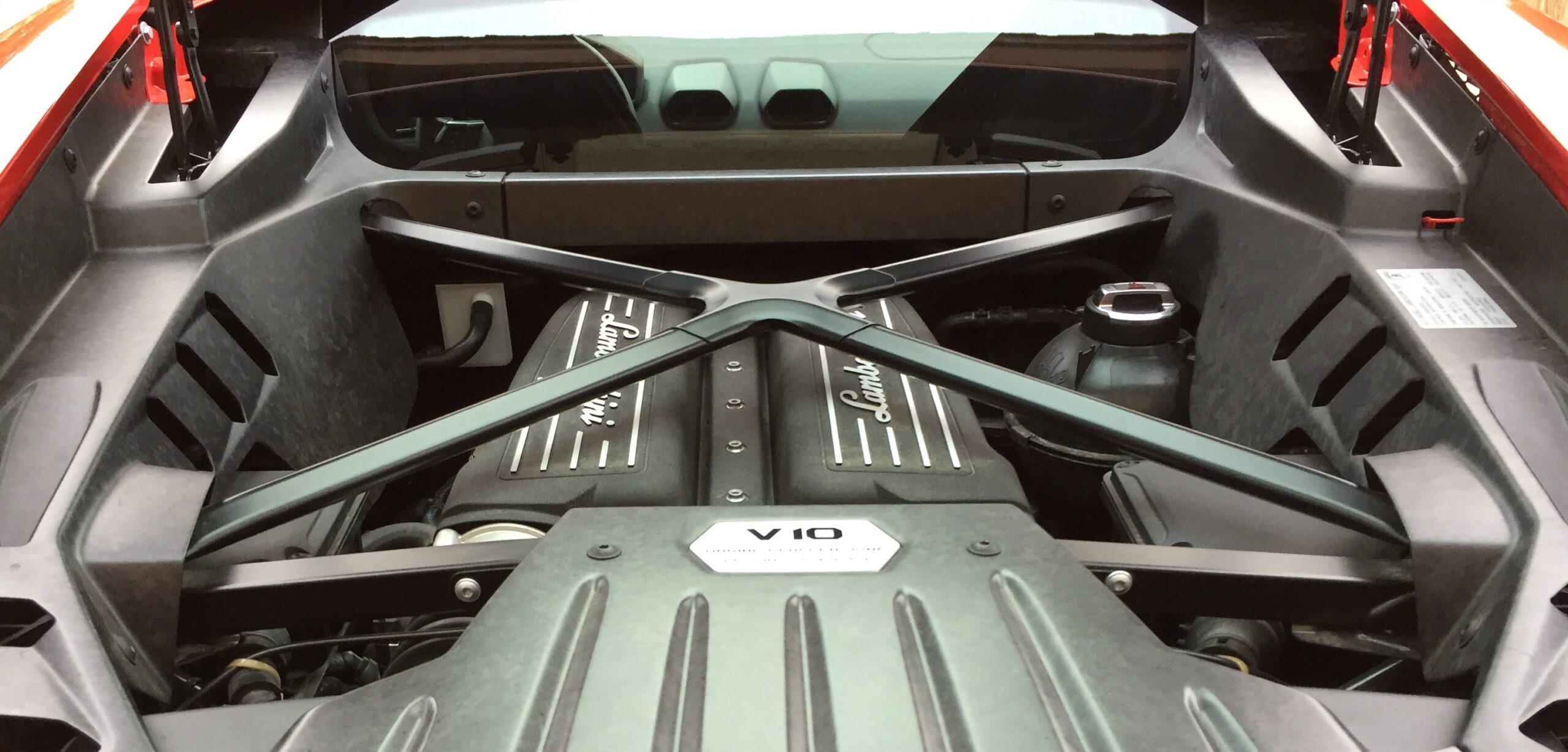
The tester was $238,795 with just two options, including the transparent engine-bay cover, $7,000. One admiring look at this car in the bright Rosso Red paint ($2,500)  and the driver is immediately guilty until proved innocent.

Despite that V-10, the Huracan’s fuel economy is not terrible. The EPA cites 17 mpg city, 21 highway and 17 mpg combined on the recommended premium fuel. On a daylong drive, I managed 19.9 mpg. But the mileage drops precipitously when the right foot goes down. The 22-gallon tank allows around 366 miles of driving with restraint.

View the current lineup of Lamborghini models here.

Front passenger seat

The seats are surprisingly comfortable for an all-day drive.

Huracan LP 580-2 Powertrain

For the starting price, the owner gets a hybrid chassis of aluminum and carbon fiber. The naturally aspirated, 572-horsepower 5.2-liter V-10 has direct injection and cylinder deactivation. And with peak torque of 398 foot-pounds at 6,500 rpm, 75 percent of the torque is available at 1,000 rpm, Lamborghini says.

The seven-speed dual-clutch transmission gives such quick shifts in Sport mode that its speed would embarrass a lightning strike. There are automatic and manual driving options and performance choices of Strada (normal), Sport, and Corsa (track).

Lamborghini cites zero to 62 mph acceleration in 3.2 seconds and a top speed of 199 mph. The 14.6-foot-long, midengine car has a dry weight of 3,062 pounds. Lamborghini does not cite “wet” curb weight, such as when loaded with fuel, but figure another 122 pounds with a tankful.

The 572-hp V-10 engine

The 572-hp, naturally aspirated 5.2-liter V-10.

Huracan LP 580-2 Ride and Handling

Sport mode opens the pipes, sharpens the shift points, and gives hefty throttle blips on downshifts. In addition, the system loosens the reins of stability and traction controls for some slide through the corners.

A hard launch brings a howitzer blast of force without torque pull left or right. The experience is straight-ahead traction in a blazing chorus of cylinders.

19 inch Pirelli tires

Low profile, high grip 19-inchPirelli tires.

There is an absolute engagement of gears from the start off to flat out. Flooring the pedal at about 30 mph is a hold-on event as the Huracan lunges like a predator in pursuit.

The magnetic ride suspension shows its superiority with sensitive adjustments in milliseconds. After six hours on the road, there was no fanny fatigue or torqued necks. The steering is light, direct, and requires just minimal inputs to clip the apex.

The standard steel brakes have supercar dimensions. The ventilated and cross-drilled rotors are 14.37 inches at the front and 14 inches rear. The aluminum monoblock calipers have eight pistons at the front and four pistons rear. From 62 mph, the stopping distance takes just 104.7 feet, which is 3.6 feet shorter than the rear-drive Gallardo predecessor.

The steering wheel as command center

The driver’s command center.

Huracan Interior Function

Breathe deep the rich cabin aroma of leather and microsuede. The interior layout is efficient and easy to access, with some console controls by Audi. The foot-wide gauge array can be electronically changed into a full video screen with a large RPM gauge and other essentials.

The Huracan interior is cockpit-compact, but this is a wide car and there is wide shoulder room of almost 55 inches door to door. There is long legroom and headroom for a 6-foot-3 driver, and maybe even taller, which is also surprising for the car’s low 46-inch roof height. But the doors are not hugely broad (unlike a Corvette) and the tight turning circle makes maneuvering easy in close quarters.

The leather-lined buckets are bolstered for performance driving but surprisingly comfortable for an all-day drive. However, the seats are heatable there is no lumbar adjustment or seat ventilation.

The LP 580-2 has a weight distribution of 40 percent front and 60 percent rear.

Why buy the Lamborghini Huracan?

I’m not sure why this car costs nearly a quarter of a million dollars. But there will be few complaints about owning this daily-driving supercar.

Whatever the Lamborghini Huracan does not have or does not do, you do not need or will find a way to do without — and like it.

The red starter button

The red push-button ignition.

Huracan LP 580-2 Specifications

Body style: 2-seat, rear-wheel-drive coupe

Chassis: Hybrid aluminum and carbon fiber

Bodyshell: Aluminum and composite material outer skin

Suspension: Aluminum double-wishbone

Springs and dampers: Steel springs and hydraulic dampers. “MagneRide”
electromagnetic damper control available as an option

Engine: 572-hp, naturally aspirated 5.2-liter V-10 with direct injection and cylinder deactivation; 398 lb.-ft. of torque at 6,500 rpm

Transmission: 7-speed dual-clutch

Fuel economy: 17/21/17 mpg city/highway/combined; premium required

Fuel tank: 22 gallons

BY THE NUMBERS

Top speed: 198.8 mph

0-62 mph acceleration: 3.2 seconds

0-200 kmh (124.27 mph) acceleration: 10.1 seconds

Brakes: Specially contoured steel discs ventilated and cross-drilled; 14.3-inch front rotors with 8-piston calipers; rear,14-inch rotors with 4-piston calipers

Steering: Electromechanical; optional variable-ratio LDS (Lamborghini Dynamic Steering)

Tires: Pirelli 245/35 19-inch front, 305/35 R19 rear

Wheels: 8.5J x 19-inches front, 11J x 19 inches rear

Length/wheelbase: 175.5/103. in.

Width/height: 88*/45.9 in. *including side mirrors

Dry weight: 3,062.2 lbs.

Turning circle: 37.7 ft.

PRICING

Base price: $204,595, including $3,495 freight charge and $1,300 gas-guzzler tax; price as tested $238,795

Options on test vehicle: transparent engine-bay cover $7,000; Rosso Red paint $2,500

Where assembled: Modena, Italy

Warranty: 36-months/unlimited mileage covering everything from the powertrain to the seats

1961 Buick Special Deluxe

1961 Buick Special Deluxe
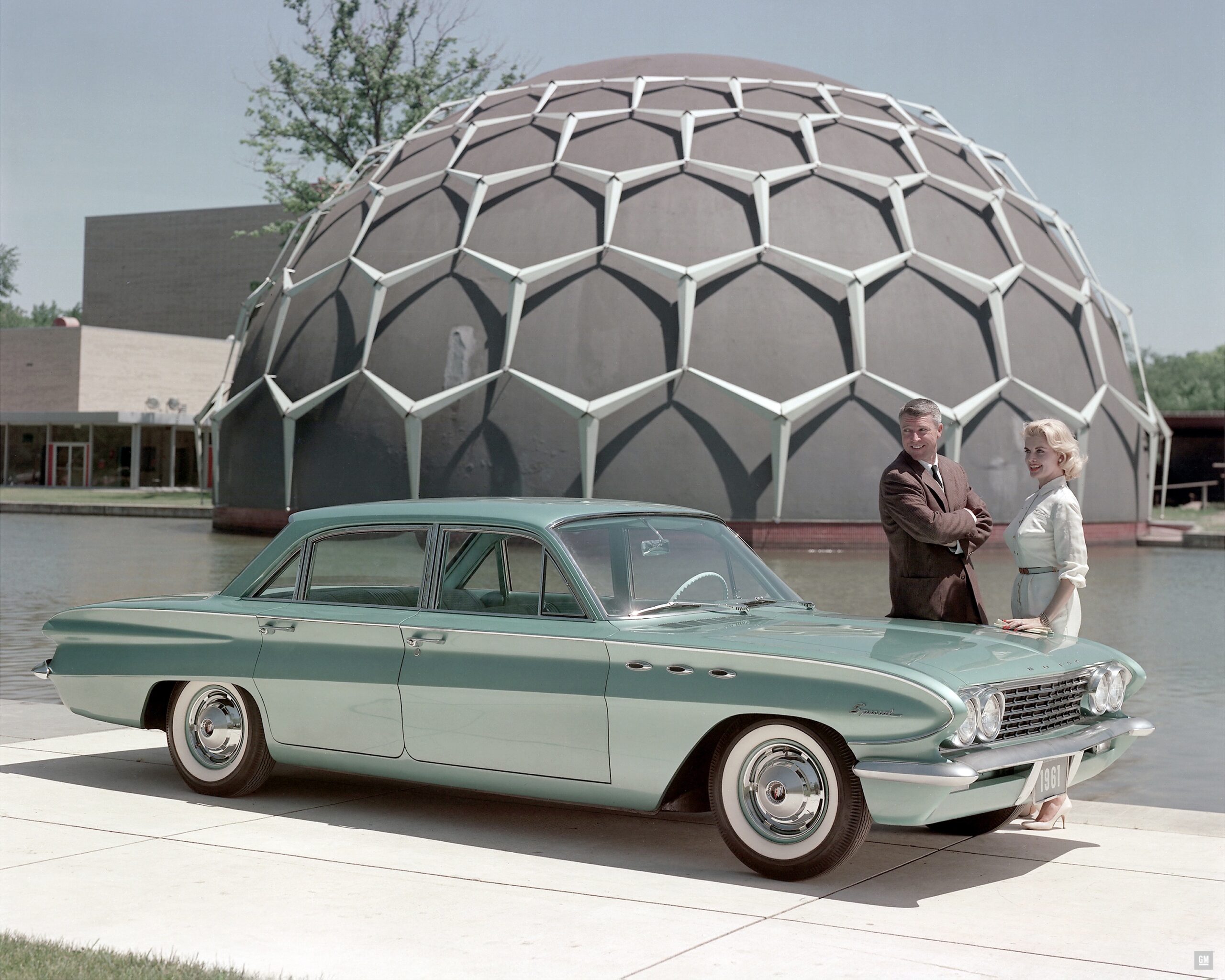
The 1961 Buick Special was an entry level model.

The entry-level Buick Special can trace its heritage to the Buick Model 10, a companion to Buick’s first car, the Model B. (GM photo archives)

BY MARK MAYNARD

The Buick Special was typically the brand’s lowest-priced model. According to its page in Wikipedia, the nameplate started as a full-size car in 1936. After a two-year hiatus, the model returned in 1938 as a midsize.

The Special was built for several decades and was offered as a coupe, sedan, and later as a station wagon.

General Motors modernized its entry-level products in the 1960s, and the Special introduced the modern Buick V-6. The engine would become the core engine for GM for several decades and lives on in current upgraded V6 products.

“By 1970, Special was no longer offered as a standalone model, but the name would later be used for the entry trim on 1975 to 1979 and 1991 to 1996 Century models.

The entry-level Buick can trace its heritage to the Buick Model 10, a companion to Buick’s first car, the Model B. The Model 10 started as one of the independent brands merged into Buick, called the Janney, a Brass-Era carmaker.

In 1961, the model returned after an absence of two years, but this time it was on the new unibody compact GM Y platform.

Buick Special Powertrains

The Special’s engine was the 155-horsepower, aluminum-block 215-cubic-inch V-8. It was paired with the two-speed Dual Path Turbine Drive automatic transmission. The Dual Path was a Buick design and shared no common parts with the better known Chevrolet Power-Glide transmission.

Buick introduced the performance-oriented Skylark trim level midyear. It featured unique trim elements, optional bucket seats, and a 185 hp, four-barrel version of the 215 V-8.

In 1962, the Special was the first American car to use a V-6 engine in volume production; it earned Motor Trend’s Car of the Year for 1962.

The 198-cubic-inch “Fireball” was engineered from the 215 V-8.

The design used many of the same V-8 parameters, but it was cast in iron. Peak horsepower was 135 hp at 4,600 rpm with 205 foot-pounds of torque at 2,400 rpm.

In Road & Track testing that year, the editors were impressed with Buick’s “practical” new V6, saying it “sounds and performs exactly like the aluminum V8 in most respects.”

1963 Special Refresh

In 1963, the Special’s exterior was restyled. Mechanically, however, the car was identical to the 1962 model. According to the Wikipedia report, there were also some minor interior updates to the dash and instrument cluster.

The 1963 Special was available as a two-door pillared hardtop coupe, four-door sedan, a convertible, and a station wagon.

The 1963 body was only produced for one year and had sales of 148,750, including 42,321 Skylarks. The car was redesigned for 1964.

Aston Martin Valkyrie Spider Reveal

Aston Martin Valkyrie Spider Reveal

Aston Martin says its Valkyrie Spider “delivers the most comparable experience to that of an F1 car, not limited to the track”

ston Martin's new Valkyrie Spider with doors up

Aston Martin says its Valkyrie Spider is one of the world’s most extreme hypercars. (Photos courtesy of Aston Martin)

BY MARK MAYNARD

The new Aston Martin Valkyrie Spider, unveiled Friday, Aug. 10 at the Pebble Beach Concours d’Elegance, is called one of the world’s most extreme hypercars. “One that delivers the most comparable experience to that of an F1 car, not limited to the track,” Aston Martin said in a release.

Production is limited to 85 units worldwide in left and right-hand drive derivatives. But all 85 cars are “over subscribed,” and deliveries are scheduled to begin H2 2022, Aston Martin said in a statement.

The Valkyrie Spider is powered by a 6.5-liter V-12 hybrid system. It has a combined power output of 1,160 horsepower with 664 foot-pounds of torque.

“The sound of that 6.5-litre V12 engine revving to over 11,000 rpm with the roof removed is something I cannot wait to hear,” Aston Martin Chief Executive Officer Tobias Moers said in a release.

Pricing was not stated, but news reports claim the Aston Martin Valkyrie hardtop coupe has a price of around $3 million. So, how much does the price go up when the roof comes off?

Side by side view of the Spider with the dihedral doors raised.

The Valkyrie Spider is the fastest open-top, road-legal Aston Martin ever built.

Valkyrie Spider construction

The Valkyrie Spider is the fastest and most extreme open-top, road-legal Aston Martin ever built. It has a top speed of 330 kmh-plus (205 mph) with the roof panel removed or 350 kmh-plus (217.5 mph) with the roof panel in place.

The ultra-lightweight construction and high downforce aerodynamics use Formula One technology. The upper body surfaces of the teardrop-shaped cockpit and lower tub contours follow the envelope of space between the huge full-length Venturi tunnels that run either side of the cockpit floor.

The tunnels draw huge quantities of air beneath the car to feed the rear diffuser. The venturis are the key to generating the Valkyrie Spider’s extraordinary levels of downforce, Aston Martin said in the release. At 240 kmh (149 mph) in Track mode the aerodynamics can produce 3,086.47 pounds (1400 kg) of downforce. It is the F1-type construction that “keeps the upper body surfaces free from additional aerodynamic devices that would spoil the purity of the open-top styling,” Aston Martin said in the release.

A side view of the Valkyrie

The huge full-length Venturi tunnels run on either side of the cockpit floor.

Design elements

The removable carbon-fiber roof panel latches onto the tub at the rear and to the front windshield surround. A pair of polycarbonate windows are hinged on either side. On opening the doors, the roof can be lifted off and stowed.

The front-hinged dihedral doors are unique to Valkyrie Spider and are designed to tilt forward.

A front view of the Aston Martin Valkyrie Spider with the doors up

The front-hinged dihedral doors tilt forward.

The driver-focused cabin has a low, F1-inspired hip-to-heel height. In addition, the near-central seat positioning and six-point safety harness are safety elements for the driver.

A center rear-view camera system and front and rear parking sensors have screen displays just above the instrument panel.

Follow the development of the Valkyrie Spider at Aston Martin.

Cruisin’ the USA in Your Chevrolet virtual fan experience Aug. 16-21

Cruisin’ the USA in Your Chevrolet  virtual fan experience Aug. 16-21

Celebrate automotive history with host @EmeliaHartford on Chevrolet’s social channels: @Chevrolet on TikTok, Instagram, Twitter and Facebook

The poster for the second annual Cruisin’ the USA in Your Chevrolet


BY MARK MAYNARD

A year ago, the inaugural Cruisin’ the USA in Your Chevrolet debuted as a virtual fan experience. It was an alternative space for car enthusiasts to celebrate our automotive history when pandemic restrictions prevented in-person events.

“This year, we’re celebrating by sharing stories through the eyes of our customers, fans and employees from around the world,” Chevrolet Marketing VP Steve Majoros said in a statement.

For the second annual Cruisin’ the USA, Chevrolet works with automotive influencer Emelia Hartford to host the virtual event. The virtual fan experience will post from Aug. 16-21 on Chevy’s social channels: @Chevrolet on TikTok, Instagram, Twitter and Facebook.

There will be daily themes, inside looks at some of Chevy’s most iconic vehicles and fan memorabilia. There also will be special guests including former Camaro Chief Engineer Al Oppenheiser and superfan Pinky “Mr. Chevy” Randall.

Schedule of Events

Aug. 16 – History of Heroes Trivia: Emelia Hartford challenges fans on Chevy’s history of heroes. The challenge will test your knowledge of the engineers and designers behind the significant innovations that helped shape the brand.

Aug. 17 – An EVolution: Ride along with Emelia Hartford in the all-electric 2022 Bolt EUV and catch a glimpse of Chevy’s E-10 concept vehicle. (The E-10 Concept is a hot-rodded 1962 C-10 pickup powered by an electric Connect & Cruise concept crate propulsion package. The package uses components from the Chevrolet Bolt EV, but the power targets 450 horsepower.)

Aug. 18 – For the Love of Trucks: Emelia Hartford will lead another trivia challenge covering all things Chevy trucks.

Aug. 19 – A Salute to our Fans: Discover how lifelong fan Pinky Randall earned the right to be called “Mr. Chevy.” (Randall, 94, is a retired grocery store owner from Houghton Lake, Mich., according to a report in Automotive News. He collects pretty much anything bearing the Chevy bow tie and he also bought the last Impala SS in 1996. He even visited General Motors’ plant in Arlington, Texas, to drive it off the line. Randall later sold the car to GM’s Heritage Center.)

Aug. 20 – The Thrills of Performance: Tour former Camaro Chief Engineer Al Oppenheiser’s jaw-dropping Chevy Cave with Emelia Hartford.

Aug. 21 – Spread the #ChevyLove: Fans can share their love of the brand and their most prized vehicles by posting photos and videos using #ChevyLove.