Select Page

2019 Jaguar F-Pace SVR Review

2019 Jaguar F-Pace SVR Review

All claws, fangs, and growl in a velvet coat, the Jaguar F-Pace SVR is the 550-hp black cat of the brand’s SUV family

An exterior view of the F-Pace SVR

Everything about the 550-hp, Jaguar F-Pace SVR has been pumped up or widened. The tester was $89,900. (Photography by Mark Maynard)

Table of Contents

Overview
Pricing
The SVR Package
Performance Upgrades
Powertrain
Ride and Handling
Interior
Back seats and cargo
Why buy the F-Pace SVR?
Specifications

BY MARK MAYNARD

In the right place at the right time, the versatile 2019 Jaguar F-Pace is rich in the brand’s “beautiful” design directive. But three years ago, Jaguar had no SUV in its lineup. Today, however, the British manufacturer of road-going beauty is making tea while the pot is hot. It now has three SUV crossovers, including the electric iPace. The lineup has evolved the face and perception of the brand, the company says.

The driver's space in the F-Pace

The driver area is functional with a variety of small storage areas.

Jaguar F-Pace Overview

It might surprise that the F-Pace is not a clone from the SUV stable of corporate partner Land Rover. The closest it gets is the architecture of the carlike Range Rover Velar, which just doesn’t have the visceral appeal of the F-Pace.

The five-seat Jaguar F-Pace SUV is sold in a dozen, all-wheel-drive trim levels with five powertrain choices: two turbocharged four-cylinders, a turbocharged diesel four-cylinder, a supercharged V-6 and the SVR-exclusive 550-hp supercharged V-8.

Today’s tester, the F-Pace SVR, is a new model for 2019. On a scale of one to 10, the SVR is an 11, without going over the top, said Rob Filipovic, Jaguar’s director of customer experience, who was interviewed on a recent media drive.
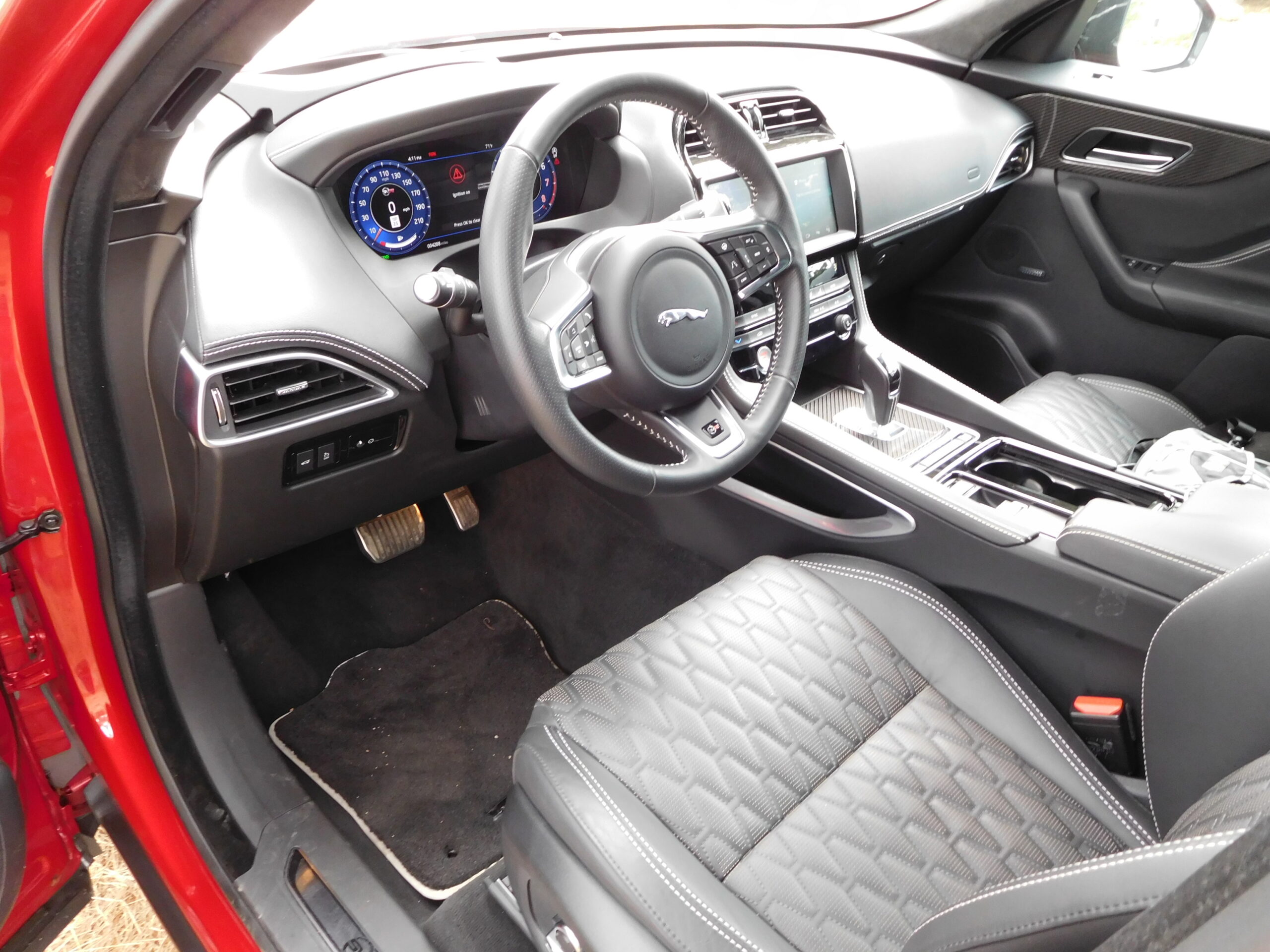
Looking into the F-Pace driver area.

Filipovic called the SVR the “ultimate Jaguar experience, and it’s probably going to be better than you think it will be.”

There are several F-Pace competitors, including the Acura RDX, Audi Q5, BMW X3, Cadillac XT5, Infiniti QX60 and Mercedes-Benz GLC. But there are few to compare with the F-Pace SVR. Among them are the Porsche Macan S (348-hp, turbocharged 3.0-liter V-6; $60,000), BMW X4 M40i (355-hp, inline 6-cylinder; $62,000) and Mercedes-AMG GLC 63 (496-hp or 503-hp 4.0-liter twin-turbocharged V-8; $71,000).

Filipovic, 39, isn’t just blowing tire smoke at his admiration for the SVR. After spending almost 1,000 miles in highway and city driving (but no track time), I found it to be a bi-modal sports car. It has the attitude of the Jaguar F-Type SVR coupe but with added back seat room and luggage space.

The steering wheel in the F-Pace

Despite all the advanced tech, the F-Pace SVR is a hands-on experience.

Jaguar F-Pace Pricing

Pricing for the 2019 F-Pace lineup starts at $46,225 for the entry 25t and ranges to $80,925 for the high-performance F-Pace SVR, today’s tester; pricing includes the $1,025 freight charge from Solihull, England.

At $89,900 as tested, the F-Pace SVR pricing is competitive with the others in the segment. And there is the added owner perk of improved warranty coverage: five years or 60,000 miles of bumper-to-bumper protection with 24-hour roadside assistance and free scheduled maintenance.

Look here for current F-Pace pricing and incentives.

The SVR Package

Because the F-Pace does not have to be a superior off-roading SUV, its drivability is balanced: A nonenthusiast can drive it without getting into trouble. And a car enthusiast can drive it hard and, with common sense, not get into trouble. The SVR is one of the few performance SUVs with an ideal 50/50 weight balance.

Everything about it has been pumped up or widened, from the brake-cooling vents in the front fenders to the 15.6-inch vented Brembo disc brakes all around. The forged wheels are lightweight and the sport seats front and rear are track-ready.

Slimline front sport seats in the F-Pace

The slimline seats look racing-harness ready, but they are actually quite livable.

Jaguar F-Pace SVR Upgrades

  • Aerodynamic body kit with unique front and rear bumpers. The wide-mouth grille, lower body sides and a rear spoiler enhance cooling, reduce lift and drag and add to high-speed stability.
  • SVR-tuned chassis with upgraded shocks front and rear spring rates increased by 30 percent and 10 percent.
  • Lightweight wheels. 21- or optional 22-inch forged wheels with staggered widths front to rear. The forged wheels saved 5 pounds at the front and 3 pounds rear.
  • Rear electronic active differential, to balance power delivery
  • Specially tuned variable valve active exhaust for a more vocal soundtrack. But the system is also 14.5 pounds lighter and reduces back pressure for more airflow exiting the engine.
  • Slimline performance seats in the front and rear feature Jaguar signature “lozenge” quilting and embossed SVR logo. The seats saved 5 pounds each.
  • SportShift Gear Selector (from the F-Type) replaces the rotary gear selector.
  • SVR steering wheel with aluminum paddle shifters.
The Jaguar F-Pace V-8

The 550-hp, supercharged and direct-injection 5.0-liter V-8 with 8-speed automatic is capable of 0-60 mph in 4.1 seconds, Jaguar says.

Jaguar F-Pace Powertrain

The second showpiece of this SVR package is the 550-hp, supercharged and direct-injection 5.0-liter V-8 (the basic architecture is still built by Ford) and an eight-speed automatic with paddle shifters.

Hit the red ignition button and the engine fires with a deep growl and then settles into a nasty purrr. There are several performance modes to sharpen acceleration and suspension, but the standard setting brings raucous pleasure without having the ride quality of a buckboard paint-shaker.

Fuel-economy ratings are challenged at 16 mpg city, 21 highway and 18 mpg combined, on the recommended premium fuel. I worked up to 23.4 mpg combined in seven hours of highway driving. In addition, the 21.7-gallon tank of premium fuel went the 440 miles with 74 remaining when I pulled into my driveway.

The high-performance tires on the F-Pace SVR

22-inch wheels have room for big Brembo brakes.

Jaguar F-Pace Ride and Handling

The Jaguar F-Pace SVR has such easy drivability. There is eager pull from the engine and the transmission was always ready to keep the power in the rpm band. With such catlike finesse, the 16 mpg will be forgiven.

Some sport-tuned SUVs can have a tortuous ride quality, with suspensions more intended for racing than street driving. But the F-Pace SVR is masterfully engineered for compliance without disruption. The 113.1-inch wheelbase and steel-spring suspension — double-wishbone front and integral link rear — work to settle the F-Pace SVR’s 4,395-pound curb weight.

The cabin is very well sound-proofed and the 38-foot turning circle seemed smaller and is no-stress when negotiating the parking garage.

Among the tester’s options was the Driver Assist package, $3,600, which adds Adaptive Cruise Control. Activating the semi-autonomous system requires at least one hand on the wheel for the system to steer, brake and maintain speed. And it works well in stop-and-go commuting traffic.

I valued the system’s attentiveness when going through highway work zones with five lanes crammed into four. Commercial trucks and passenger cars are seemingly just inches away. In those close quarters, all it takes is a sneeze or a long glance at a roadside caution and the driver could be making new friends while exchanging insurance information. But not on this trip.

A look into the front passenger side of the F-Pace

Standard features include “lozenge” quilted Windsor leather seat upholstery.

Jaguar F-Pace Interior

The slimline seats look racing-harness ready, but they are actually quite livable. The seats will feel quite firm (hard) on initial seating — so much so that I almost removed my wallet from the back pocket. But after 7.5 hours on the road, I stepped out with no stiffness. However, the lumbar inflation bladder must have had a leak because I had to refill it every hour or two. Even the seat-cushion bolsters are low enough to not give an annoying wedgie on entry or exit.

The back-seat console with temp controls

Back-seat hookups.

The cabin is immaculately detailed with much leather and white stitching. It is a masculine space with handsome charcoal black microfiber headliner, enhanced by the (optional) aluminum-weave carbon-fiber trim.

Front headroom of 38.5 inches will fit most, and two inches more than in the F-Type coupe. However, a 6-foot-4 auto journalist on the drive commented that the tall seatback with head restraint pushed his head farther forward than he normally preferred. To compensate, he had to recline the seatback a little farther.

The driver area is functional with a variety of small-storage areas and two charging USBs in the center armrest box and a convenient place to lay a phone on the shifter console.

Cornering views are slightly compromised at the large side mirrors, but not so much that an owner will not adapt. And the 360-degree camera gives wide views for narrow parking.

The back seat in the Jag F-Pace

Back seat legroom is adult class at 37.2 inches.

F-Pace Back Seat and Cargo

The rear slimline seats are also quite firm with integrated head restraints, but legroom has adult comfort at 37.2 inches. There is no seatback recline, but the window seats are heated and passengers have access to two 5-amp charging USBs and a 12-volt plug. The center position is kid class.

Accommodations include a wide pull-down center armrest with can-cup holders, bottle storage in the doors, reading lights and grab handles with coat hooks.

Running boards are not needed to reach the roof to secure a bike or board. And fold the back seats for about six feet of length through the cargo area. The 33.5 cubic feet of cargo space behind the back seat is wide but with a tall liftover (30 inches).

The open cargo space in the F-Pace

The 33.5 cubic feet of cargo space behind the back seat is wide but with a tall liftover.

Why buy the Jaguar F-Pace SVR?

Jaguar’s engineering of the F-Pace SVR is all claws, fangs and growl in a velvet coat. It will almost drive itself and it will park itself, but it is still a hands-on experience that transcends technology.

A rear view of the F-Pace

The SVR’s aerodynamic body kit adds unique front and rear bumpers,  lower body sides, and a rear spoiler

Jaguar F-Pace Specifications

Body style: 5-seat, midsize AWD SUV crossover

Engine: 550-hp, supercharged and direct-injection V-8 engine; 502 lb.-ft. torque from 2,500-5,000 rpm

Transmission: 8-speed automatic with paddle shifters

Fuel economy: 16/21/18 mpg city/hwy/combined; premium fuel

BY THE NUMBERS

Fuel tank: 21.7 gal.

Cargo space: 33.5 cu. ft. *behind second row

Front head/leg room: 38.5/40.3 in.

Rear head/leg room: 37.5/37.2 in.

Length/wheelbase: 186.5/113.1 in.

Curb weight: 4,395 lbs.

Turning circle: 38 ft.

0-60 mph: 4.1 seconds

FEATURES

Standard equipment includes: smart key locking and push-button ignition, multiview rearview camera, “lozenge” quilted Windsor leather seat upholstery, heated and cooled front seats, heated and leather-wrapped sport steering wheel, ambient interior lighting, 10-inch touch screen with navigation, 380-watt Meridian sound system, electronic multi-mode gauge display, 360 parking aid, adaptive LED headlights, power tailgate, panoramic roof with opening front section, heated and power-folding side mirrors (auto-dimming),

Safety features include: 6 air bags, dynamic stability and traction controls, emergency braking, brake assist, lane-keep assist, driver-condition (drowsiness) alert, traffic-sign recognition

PRICING

Base price: $80,925, including $1,025 freight charge; price as tested $89,900

Options on test vehicle: Driver-assist package, $3,600, includes blind-spot assist, 360-degree surround camera, adaptive cruise control with steering assist, high-speed emergency braking, park assist, rear traffic monitor; 22-inch 5-spoke alloy wheels $1,530; aluminum weave carbon fiber trim finisher $1,300; head-up display $1,010; 17-speaker Meridian surround-sound 825-watt audio system $450; Activity key $410; heated windshield $385; cargo area back-seat release levers $200

Where assembled: Solihull, England

Warranty: 5 years/60,000 miles bumper to bumper with 24-hour roadside assistance and free scheduled maintenance

The mini McLaren GT supercar for budding enthusiasts

The mini McLaren GT supercar for budding enthusiasts

Right-sized for youngsters aged 3 to 6 years, the battery-powered McLaren GT Ride-On is based on the full-size supercar

BY MARK MAYNARD

Train up a child in the way he [or she] should go — and get her or him on a McLaren GT Ride-On battery-powered minicar.

Budding enthusiasts from 3 to 6 years old can experience their very own McLaren GT in miniature. The just-announced McLaren GT Ride-On is based on the lightest and quickest accelerating vehicle in its class, the company says. See the GT here.

McLaren GT Ride-On front

The GT Ride-On is sold in six McLaren colors, including Amaranth Red. (Photos courtesy of McLaren)

The McLaren GT Ride-On is the fourth car in McLaren’s range of children’s toys. It follows the P1, 720S, and McLaren Senna.

The minicar has a functioning dashboard.

The minicar has a functioning dashboard.

‘’At McLaren Automotive, we aim to inspire the future generation of supercar enthusiasts,” Hayley Robinson, Merchandise, Licensing & Partnerships Manager, McLaren Automotive, said in a release.

“We’re proud to develop and encourage younger minds and seek to create the next generation of drivers, engineers, and automotive designers,’’ she said.

A side view of the McLaren GT minicar

The battery-powered mini McLaren is suitable for supercar enthusiasts aged 3 to 6.

Functional features

The new Ride-On has an impressive list of standard features and detailed design. The little car’s working dihedral (scissor) doors make for the ultimate entrance and getaway. In addition, the trunk with a functional lid has room for junior driving essentials.

The trunk on the GT Ride-On

The trunk has a functioning lid.

Like the real thing, the GT Ride-On has working dashboard controls including a key start. Twist the key and the car fires up with McLaren engine sounds. There also are functioning brake lights.

Youngsters can hook up their playlist through an infotainment system. It can access files from a USB device or SD card with the optional MP4 display screen.

The McLaren GT Ride-On is 42.5 inches long,  23.6 inches wide, and 16.9 inches tall. It is available in six McLaren colors of Burnished Copper, Silica White, Onyx Black, McLaren Orange, Amaranth Red, and Burton Blue.

Ride-On pricing

The McLaren GT Ride-On is sold in two rechargeable battery choices of $230 and $330. Options include an MP4 display screen and a black leather seat trimmed in red and yellow.

The GT Ride-On is available to order from select global toy retailers.

Go here for other McLaren merch.

17 Years of the Lamborghini Countach

17 Years of the Lamborghini Countach

Automaker celebrates the 50th anniversary of the Lamborghini Countach in a series of four social-media videos

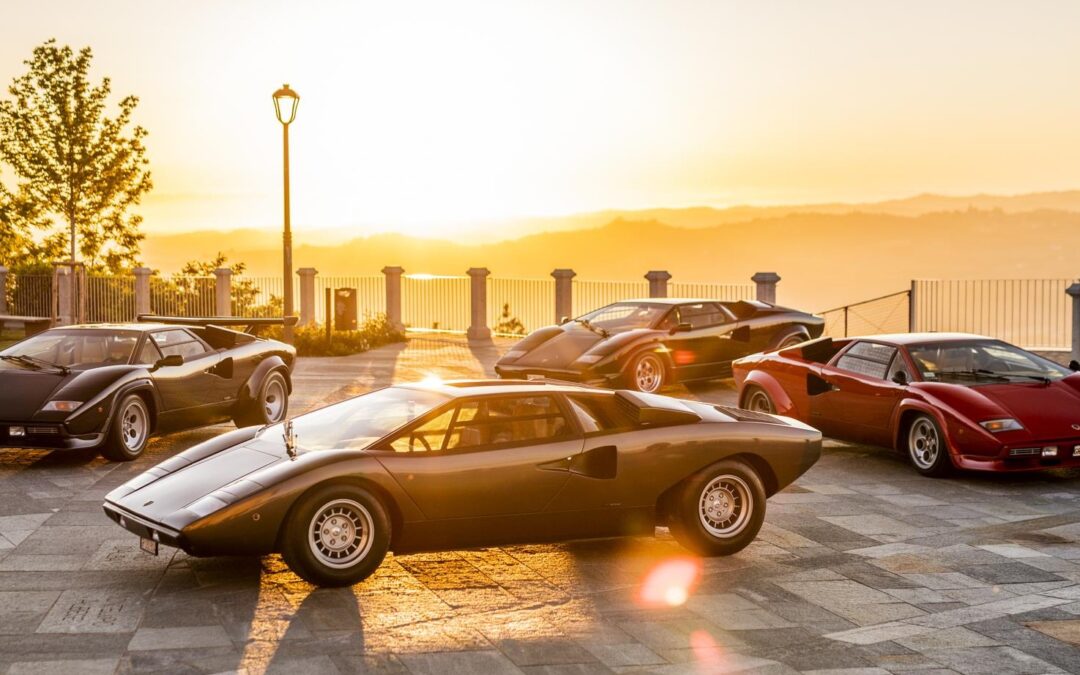
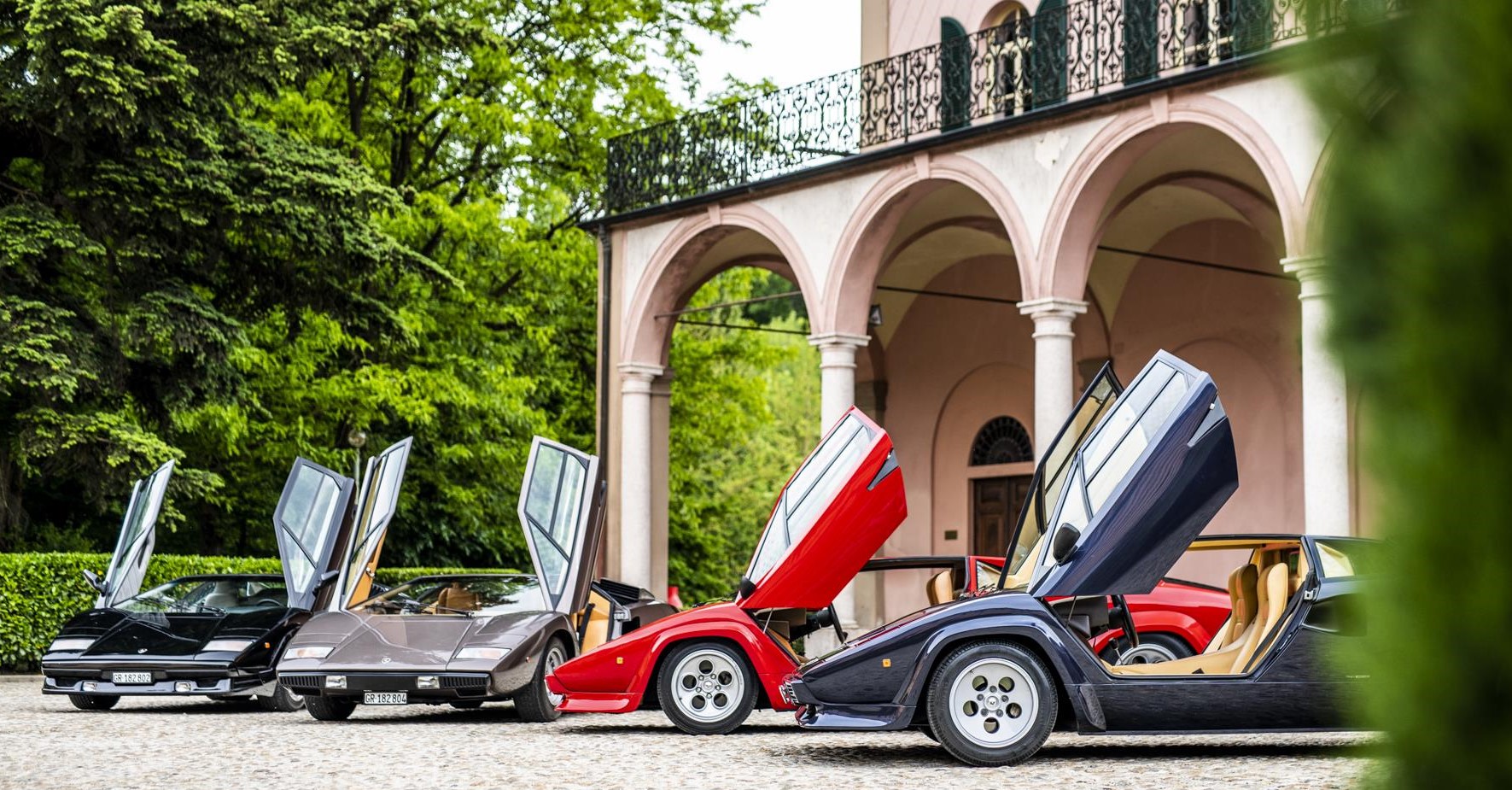
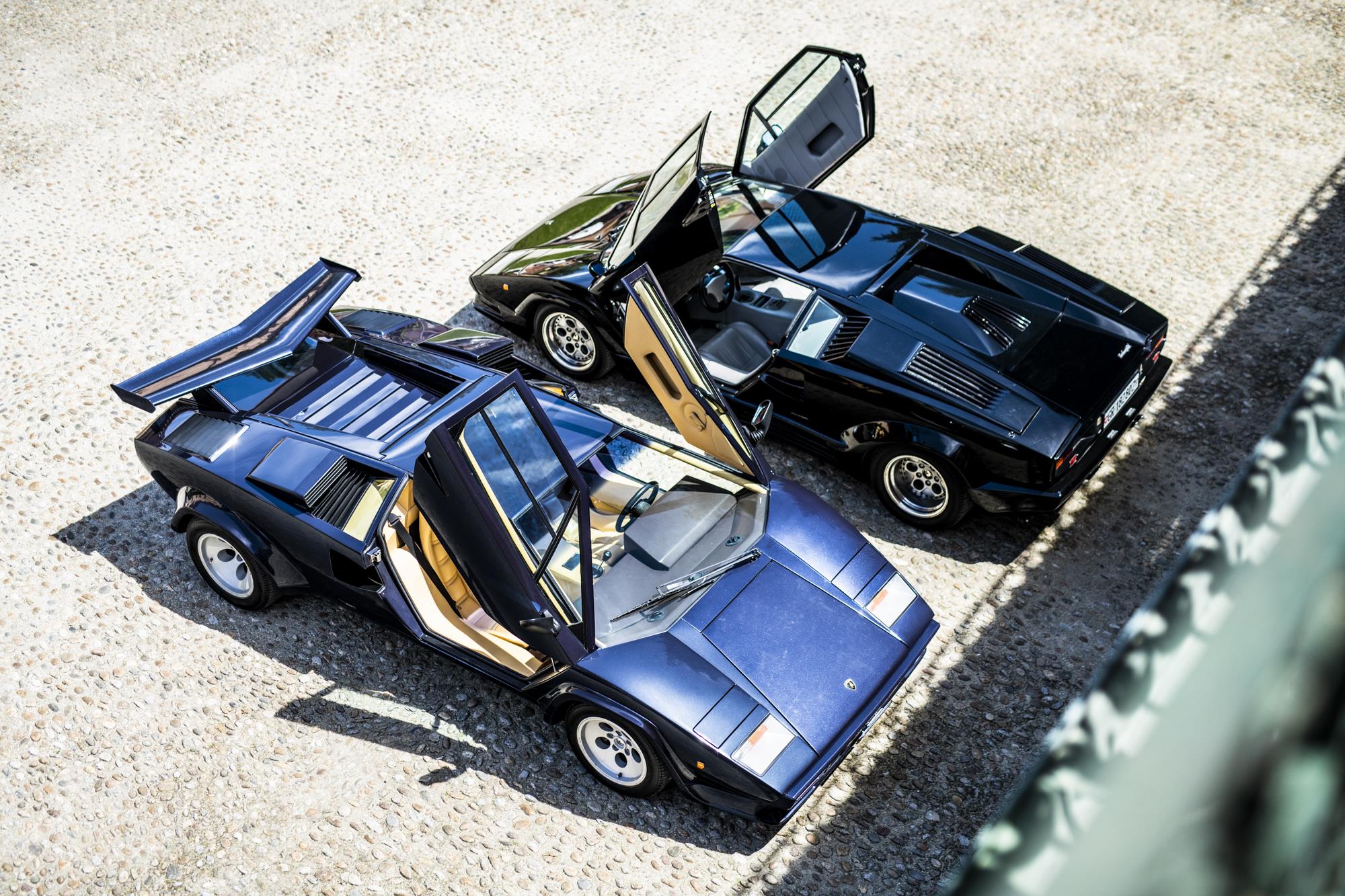
Five generations of the Lamborghini Countach.Five generations of the Lamborghini Countach. (Remi Dargegen)
BY MARK MAYNARD

To celebrate the 50th anniversary of the Lamborghini Countach supercar, Automobili Lamborghini is launching a series of four videos on its social media channels. Every Monday, the Italian carmaker will recount the legacy of the Lamborghini Countach, including interviews with significant personalities who shaped the car.

The first is Marcello Gandini, head of style at Carrozzeria Bertone. He sketched the futuristic lines of this supercar and added its now-iconic scissor doors.

The 1970s was one of ultimate creativity, Gandini says, and one of the important moments for design.

It was an era of individualism, the jet age, and the space race. And it embraced the geometric patterns of the period and the bright colors of fashion trends.

The Countach LP 5000 S badge.

(Remi Dargegen)

Lamborghini  Countach as style and performance icon

The Countach depicted much more than a commercial success. Images and posters of the supercar were on bedroom walls of an entire generation. The supercar also played a starring role in dozens of films.

The Lamborghini Countach fulfilled the role of style and performance icon. As a result, it rightfully won the title in the annals of world automotive history, Lamborghini says.

The Countach had a total production of 1,999 cars (not including the first LP 400 prototype).

Since the beginning of production, the Countach was exported to the U.S. But it was not until 1986, and the debut of the LP 5000 Quattrovalvole, that the Countach was officially approved for North America.

The word “Countach” is an exclamation of the Italian Piedmontese dialect that translates to astonishment and admiration for something.

1971: Countach LP 500 ‘idea car’

Lamborghini Countach LP 500.

Lamborghini Countach LP 500. (Lamborghini)

In the summer of 1970, Ferruccio Lamborghini wanted a revolutionary car to succeed the Lamborghini Miura. The new car had to be technically advanced and faster. And it had to become the sports car symbolizing the 1970s.

The 12-cylinder engine remained but with a displacement increase from 4.0 to 5.0 liters. The engine also was repositioned from rear transverse to rear longitudinal. The five-speed synchromesh manual transmission was placed in front of the engine and practically abutted the seats.

1973: First-gen Lamborghini Countach LP 400

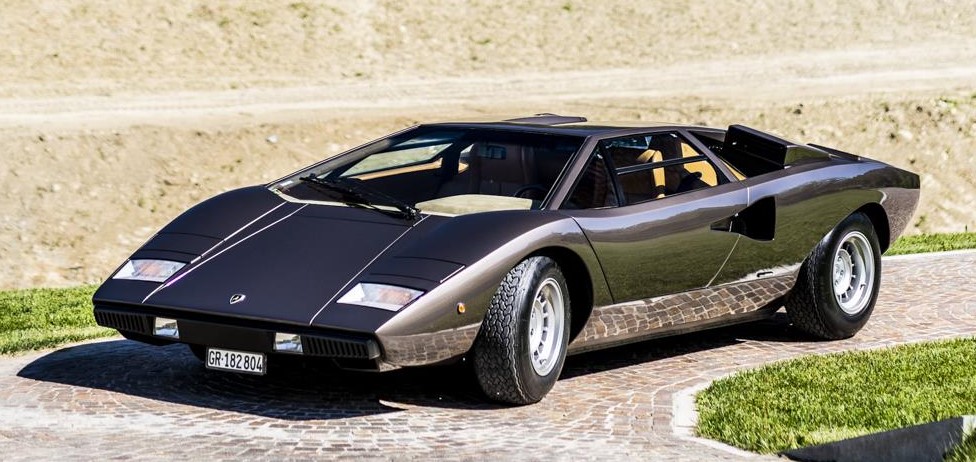
The Countach LP 400

Countach LP 400. (Remi Dargegen)
Early road tests of the 5.0-liter engine uncovered problems that would take more time to sort. So a quick fix was for the engineers to instead use the 4.0-liter engine.

The Countach LP 400 made its official debut at the Geneva Motor Show in March 1973. It was chassis No. 1120001 car. LP 400 was a prototype very similar to what would become the production car.

The LP 400 adopted a tubular trellis frame instead and aluminum was used for the body, not steel panels.

A front view of the Countach LP 400Countach LP 400. (Remi Dargegen)
The 4.0-liter (3929cc) engine used six Weber 45 DCOE twin-body carburetors. The engine developed 375 horsepower at 8,000 rpm and could reach a top speed or 186 mph or 300 kmh.

A red LP 400 was shown at the Geneva Motor Show. It was later repainted medium green for the 1973 motor shows in Frankfurt, Paris, and Earls Court, London.

The show car was sold to a buyer in Switzerland after the show and rediscovered in the early 2000s. Today LP 400 is owned by Automobili Lamborghini. It is now on display at the company museum, the MUDETEC.

The Countach LP 400 is the most sought-after version by collectors, Lamborghini says, with 152 units produced until 1977.

1978: Lamborghini Countach LP 400 S

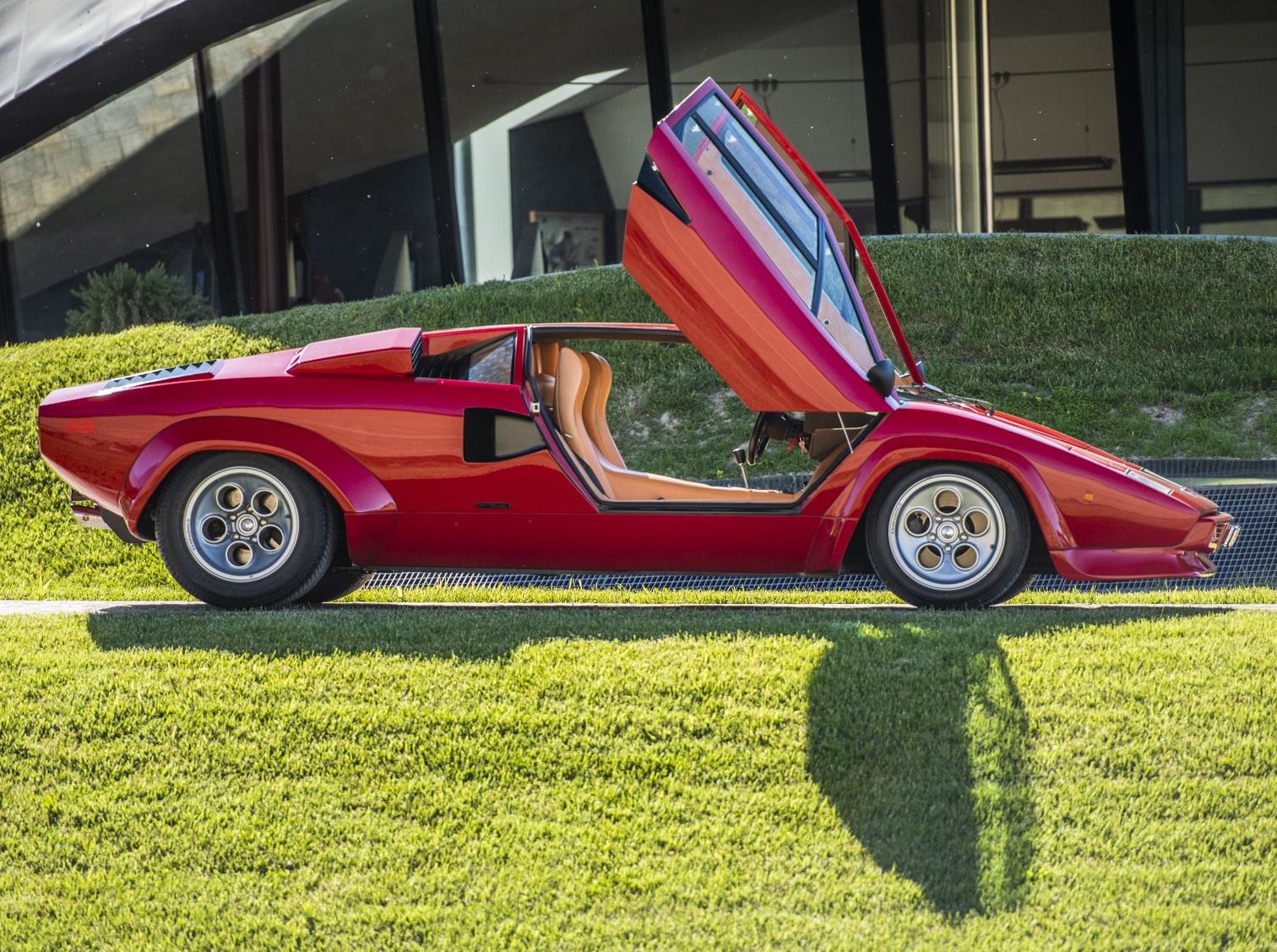
A red Lamborghini Countach LP400S.

Countach LP 400 S. (Remi Dargegen)

The LP 400 was replaced in 1978 by the Countach LP 400 S.

It sported lower profile and wider Pirelli P7 tires. The staggered-width tires mounted on magnesium rims had sizes of 205/50 VR 15 on the front and 345/35 VR on the rear. Wheel-arch extensions were added to contain the larger tires.

The 375-hp, 4.0-liter V-12 engine in the Countach LP 400 S.

The 375-hp, 4.0-liter V-12 engine in the Countach LP 400 S. (Remi Dargegen)

Other updates include an optional ultra-low front spoiler and a rear wing. The wing would become one of the most distinctive features of the Countach.

Never before had a “normal” car with such a racing appearance been seen on the road, Lamborghini says. It was the source of inspiration for each of the subsequent Countach series. Production of the LP 400 S totaled 235 units.

1982: Lamborghini Countach LP 5000 S

An overhead shot of the Countach LP 5000 S.

Countach LP 5000 S. (Remi Dargegen)

The 1982 Lamborghini Countach had an engine upgrade to a 5.0-liter V-12. The new LP 5000 S debuted at the Geneva Motor Show in March 1982.

The new engine developed 375 hp at 7,000 rpm, and it retained the six Weber horizontal twin-body carburetors. After import to the U.S., some cars were retrofitted with the Bosch K-Jetronic electronic injection.

With 323 cars produced, this model was replaced by the LP 5000 Quattrovalvole. It debuted at the Geneva Motor Show in March 1985.

1985: Lamborghini Countach LP 5000 Quattrovalvole

The Countach LP 5000 Quattrovalvole.

Countach LP 5000 Quattrovalvole. (Remi Dargegen)

The technical evolution of the 5.0-liter V-12 added four valves per cylinder. The Quattrovalvole (QV) engine displacement increased to 5.2 liters and the six Weber carburetors were mounted vertically, not in the horizontal position.

Cars for the U.S. market were fitted with Bosch KE-Jetronic electronic injection and a catalytic converter. As a result, horsepower rose to 455 hp at 7,000 rpm.

Aesthetic alterations were few but included a new engine hood with a more prominent bulge to contain the vertical carburetors.

There were 631 Quattrovalvole models produced until 1988.

1988: Lamborghini Countach 25th Anniversary

Countach 5000 S (left) and Countach 25th Anniversary (right).

Countach 5000 S (left) and Countach 25th Anniversary (right). (Remi Dargegen)

The Lamborghini Countach 25th Anniversary was the final evolution of the model. It debuted at the Paris Motor Show in September 1988.

The aesthetic updates were significant, but changes to the mechanics and chassis were minor. An improved cooling system updated the engine, and the chassis was modified to accommodate the new Pirelli P Zero tires. 

The Countach interior.

Countach interior. (Remi Dargegen)

The passenger compartment was updated with power windows and more comfortable power seats with less bolstering. In addition, the body style was decisively revised by young Horacio Pagani, who was working for Lamborghini at the time. He rounded the shapes and better integrated the wheel-arch extensions and the plates under the doors.

The Countach 25th Anniversary,

Countach 25th Anniversary, (Remi Dargegen)

The last Countach, a 25th Anniversary, was produced on July 4, 1990, with European specification. Its exterior was Argento Metallizzato (metallic silver) with a gray leather interior. It has not been sold and is still on display at the MUDETEC.

Toyota GR Supra A91-CF Edition

Toyota GR Supra A91-CF Edition

Limited to just 600 cars, the GR Supra A91-CF Edition is the most exclusive Mark V Supra to date and only for North America

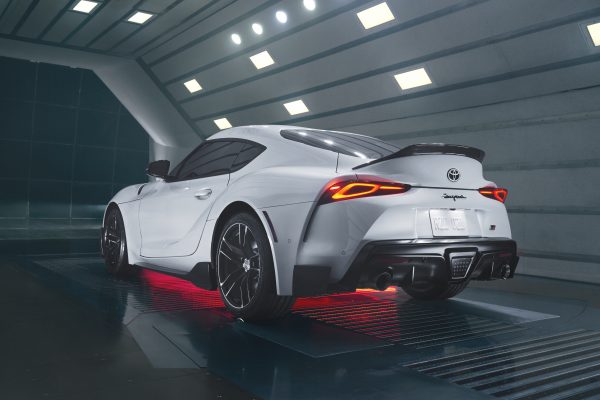
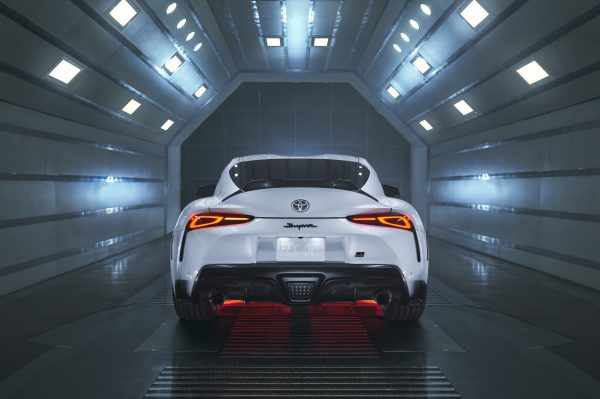
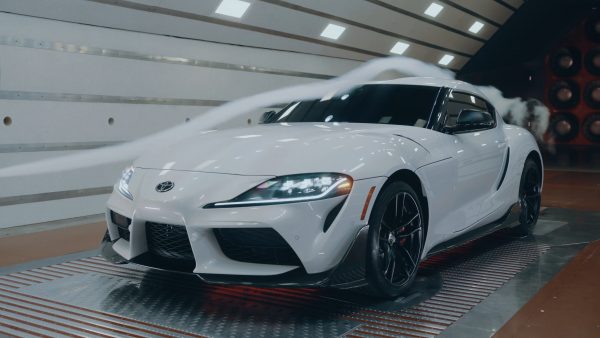
An exterior view of the Toyota GR Supra A91-CF Edition in wind-tunnel testing

The Toyota GR Supra A91-CF Edition elevates the lineup with a carbon fiber aerodynamics kit and a 382-hp 3.0-liter inline six-cylinder engine.  (All photos courtesy of Toyota)

BY MARK MAYNARD

Toyota teased Supra enthusiasts today with the first official images and details of the upcoming 2022 Supra A91-CF Edition.

Limited to just 600 cars, the GR Supra A91 Carbon Fiber Edition is the most exclusive Mark V Supra to date, Toyota said in a release. Pricing will be announced this fall. Get updates here.

A rear view of the Supra A91 CF to the show the duckbill spoiler

The functional carbon fiber body kit includes a duckbill rear spoiler.

The basic Supra

The fifth-generation 2021 GR (Gazoo Racing) Supra is sold in two turbocharged powertrains. The entry model has a 255-hp 2.0-liter four-cylinder and the uplevel choice is a 382-hp, 3.0-liter inline six-cylinder. Both engines have an eight-speed Z-F8 automatic transmission with paddle shifters.

Current 2021 Supra pricing ranges from $44,085 for the entry 2.0 to $55,990 for the A91. Add $995 for the freight charge from Graz, Austria. The Supra is built at the Magna Steyr plant, which makes the BMW Z4 that shares its foundation with the Supra.

The front aerodynamic front splitter of the Supra A91-CF

The aerodynamic front splitter of the Supra A91-CF

Elevating the lineup

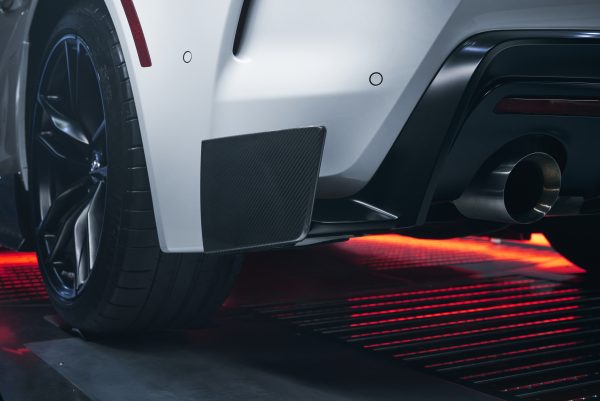
The 2022 GR Supra A91-CF elevates the lineup with a carbon fiber front splitter and larger winglet-like canards. In addition, carbon fiber side rockers define the lower side edges and more carbon fiber is used at the rear duckbill spoiler and lower canards.

This aero kit isn’t just for looks, Toyota says, and was engineered and tested to improve downforce and stability.

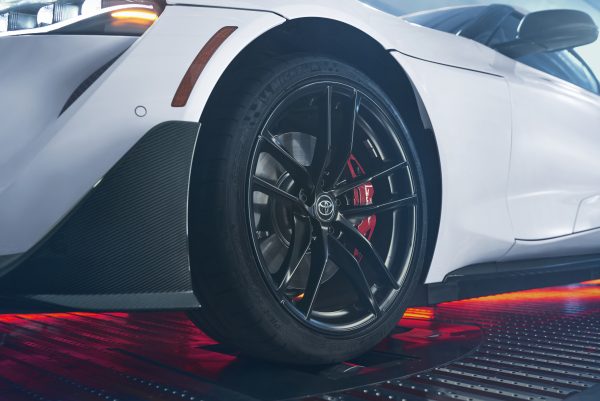
Other notable features include unique matte-black19-inch wheels. The black treatment helps set off the optional new paint color of matte-gray Phantom. Absolute Zero White and Nitro Yellow are the other color choices for the Supra A91-CF.

A tire and wheel of the Supra A91-CF Edition

Forged 19-inch matte-black wheels have red brake calipers.

Toyota GR Supra A91-CF performance

Stock GR Supra features the 382-hp inline-six with peak torque of 368 foot-pounds from 1,800-5,000 rpm. Toyota says the 3,400-pound two-seater can accelerate to 60 mph in 3.9 seconds.

G-Force control comes from an adaptive variable sport suspension and an active rear sport differential. Stopping force is competition-ready with large Brembo vented discs. The front rotors are 13.7 inches with four-piston red calipers and a silver Toyota Supra logo. The rear discs with single-piston calipers are 13.6 inches.

GR Supra A91-CF Edition has a red-and-black interior theme. The cabin is richly decked in Alcantara and leather with carbon fiber elements. The theme includes red stitching on 14-way power-adjustable and heated sport seats and a leather-wrapped three-spoke steering wheel.

Intelligent safety features include a pre-collision system with pedestrian detection and lane departure warning.

The rear canard of the A91-CF.

A rear canard of the Supra A91-CF.

Driving course

New owners can learn to wring the most from their GR Supra A91-CF with a free one-year membership to the National Auto Sport Association. Included with each sale, participants will receive expert high-performance driving instruction.


Lamborghini Celebrates Founder’s 105th Birthday

Lamborghini Celebrates Founder’s 105th Birthday

Ferruccio Lamborghini was born on April 28, 1916, in the hamlet of Renazzo, in the municipality of Cento province of Ferrara

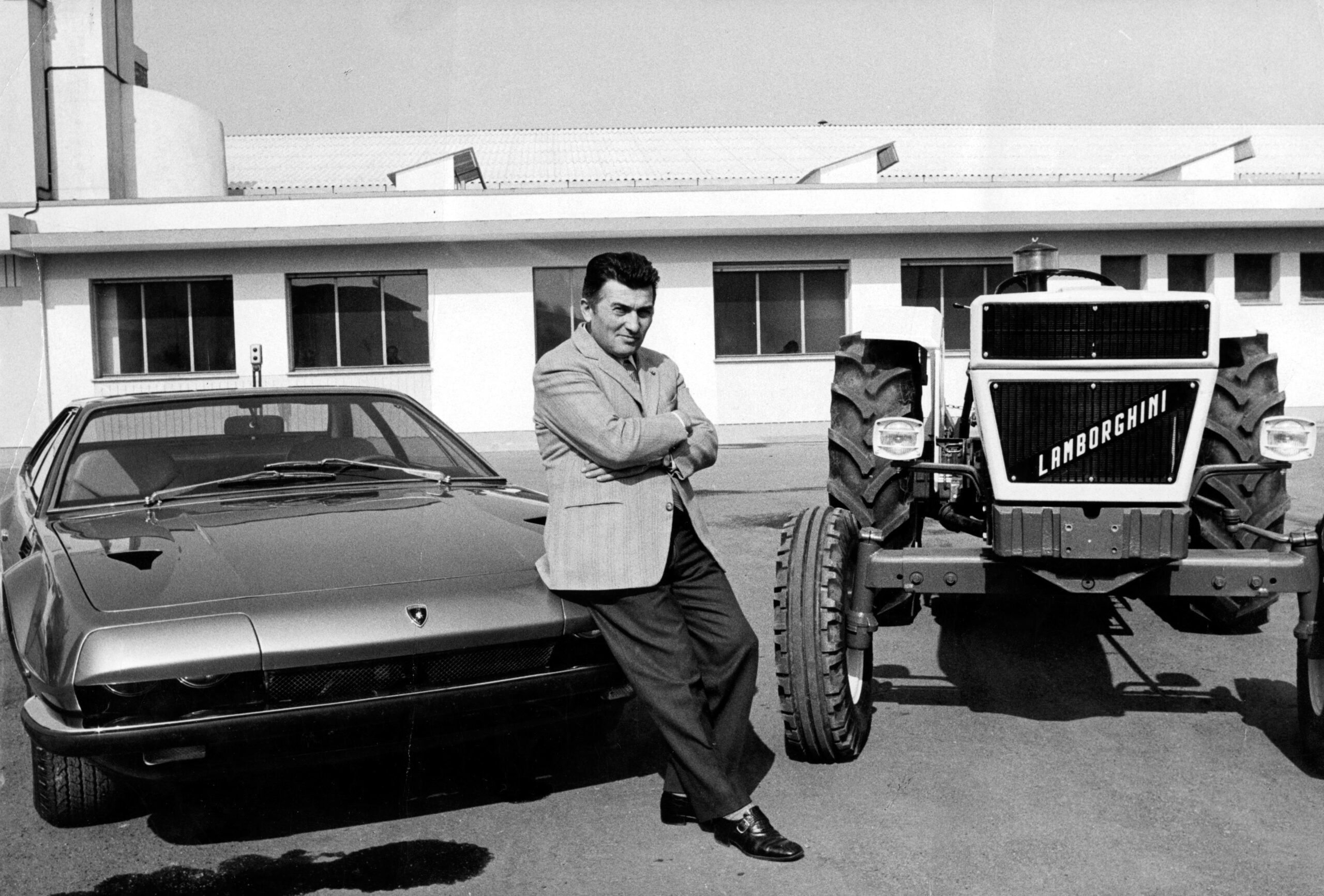
Ferruccio Lamborghini with a car and tractor.

From humble beginnings in a farming family, Ferruccio Lamborghini had a talent for mechanical engineering that would lay the foundation for his future namesake car company. (Photos courtesy of Lamborghini)


BY MARK MAYNARD

April 28 is a holiday at Lamborghini headquarters in Sant’Agata Bolognese, Italy. The company celebrated the 105th birthday of its founder, Ferruccio Lamborghini, who passed away in 1993 at age 77.

Growing up in a farming family, Ferruccio had a talent for mechanical engineering that would lay the foundation for his namesake car company.

The Automobili Lamborghini factory was established in 1963.  Ferruccio was the inspiration for its most iconic models, such as the Miura and Countach. He was driven by a desire to improve and innovate.

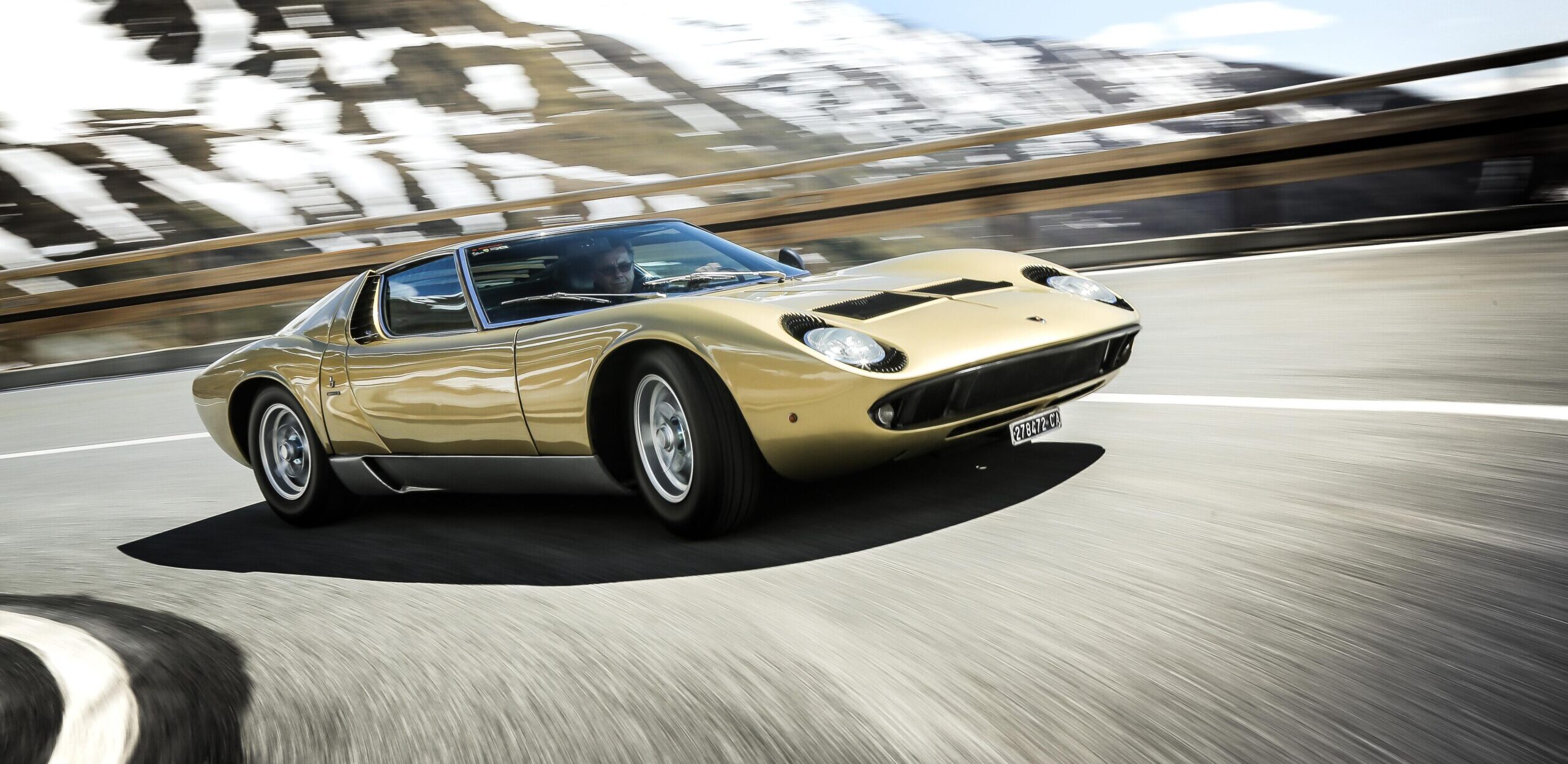
A 1966 Lamborghini Miura

The 1966 Miura rewrote the history of Grand Touring supercars.

Lamborghini sold the company in 1973-1974, when it had become one of the world’s most successful manufacturers. Today, the company adheres to the founder’s legacy of continuous innovation.

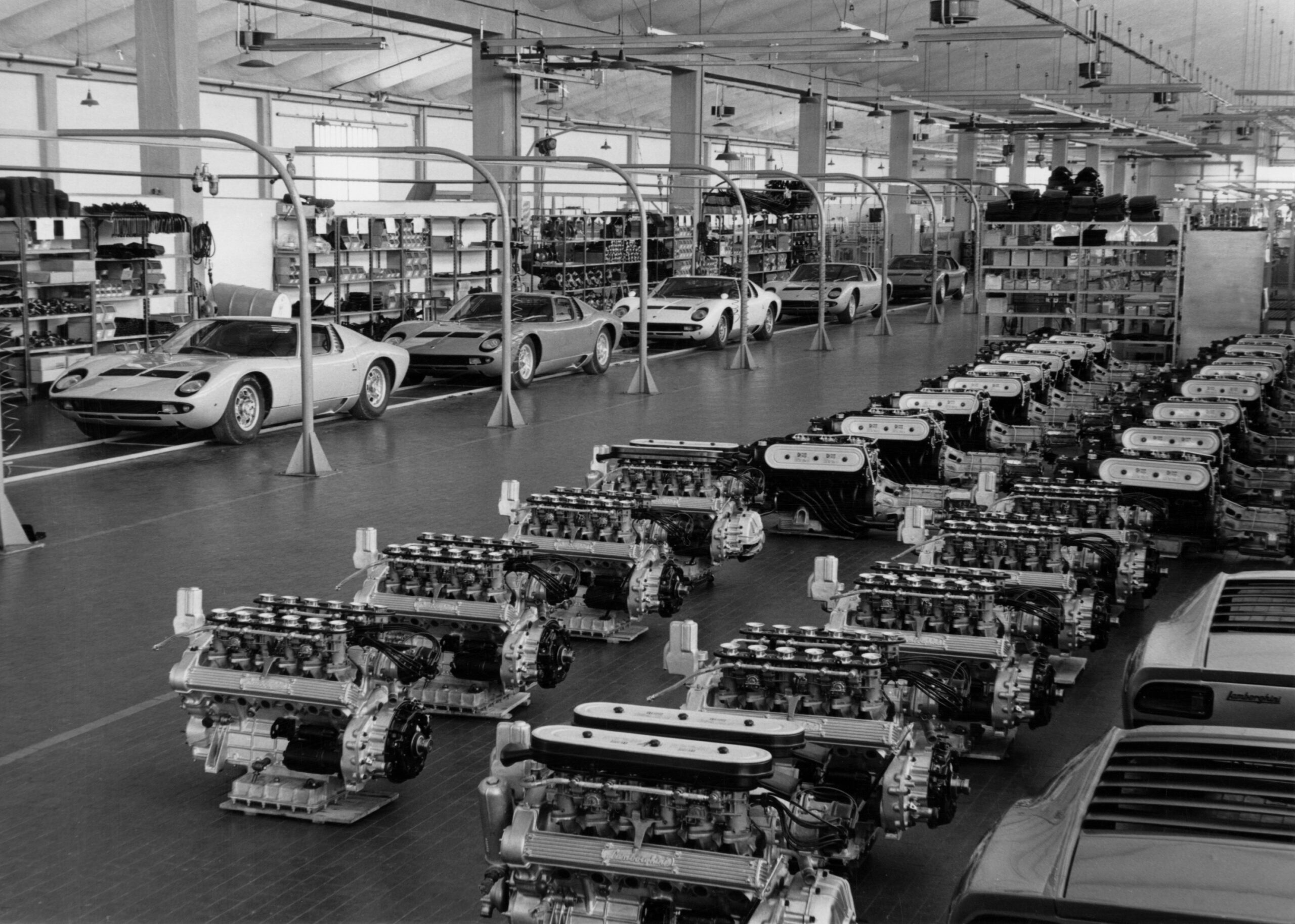
The Lamborghini Miura production line in 1965.

The 1965 Miura production line.

The Lamborgini History

In the early 1960s, Ferruccio Lamborghini was the determined owner of a tractor factory. It was during that time that he resolved to build a new luxury super sports car.

He began working on his ambitious project, and in 1963 he bought a huge plot of land in the town of Sant’Agata Bolognese. It was the location where he would build a large and modernized factory.

The company bore his name, and a bull was chosen as a logo to express the strength and power symbolized by his astrological sign, Taurus.

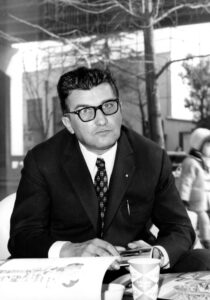
Ferruccio Lamborghini in the 1950s.

During WWII Ferruccio was  assigned to the 50th Mixed Operations Vehicle Fleet, stationed in Rhodes, in charge of the maintenance of all military vehicles on the island.

Ferruccio’s Farming Roots

Ferruccio Lamborghini was born on April 28, 1916, in Renazzo, a hamlet in the municipality of Cento (province of Ferrara). He was the eldest son of farmers Antonio and Evelina Lamborghini. His destiny seemed set in stone because tradition dictated that the eldest son inherited the family farm. Young Ferruccio, however, was more attracted to mechanics than to the land. From a very young age, he preferred to spend his afternoons in the farmstead workshop.

Just like the typical character traits of those born under the sign of Taurus, Ferruccio was strong, tenacious and convinced by his own ideas.

As a boy, he managed to get hired by the best mechanical workshop in Bologna. It was then that he was able to discover all the secrets of mechanics.

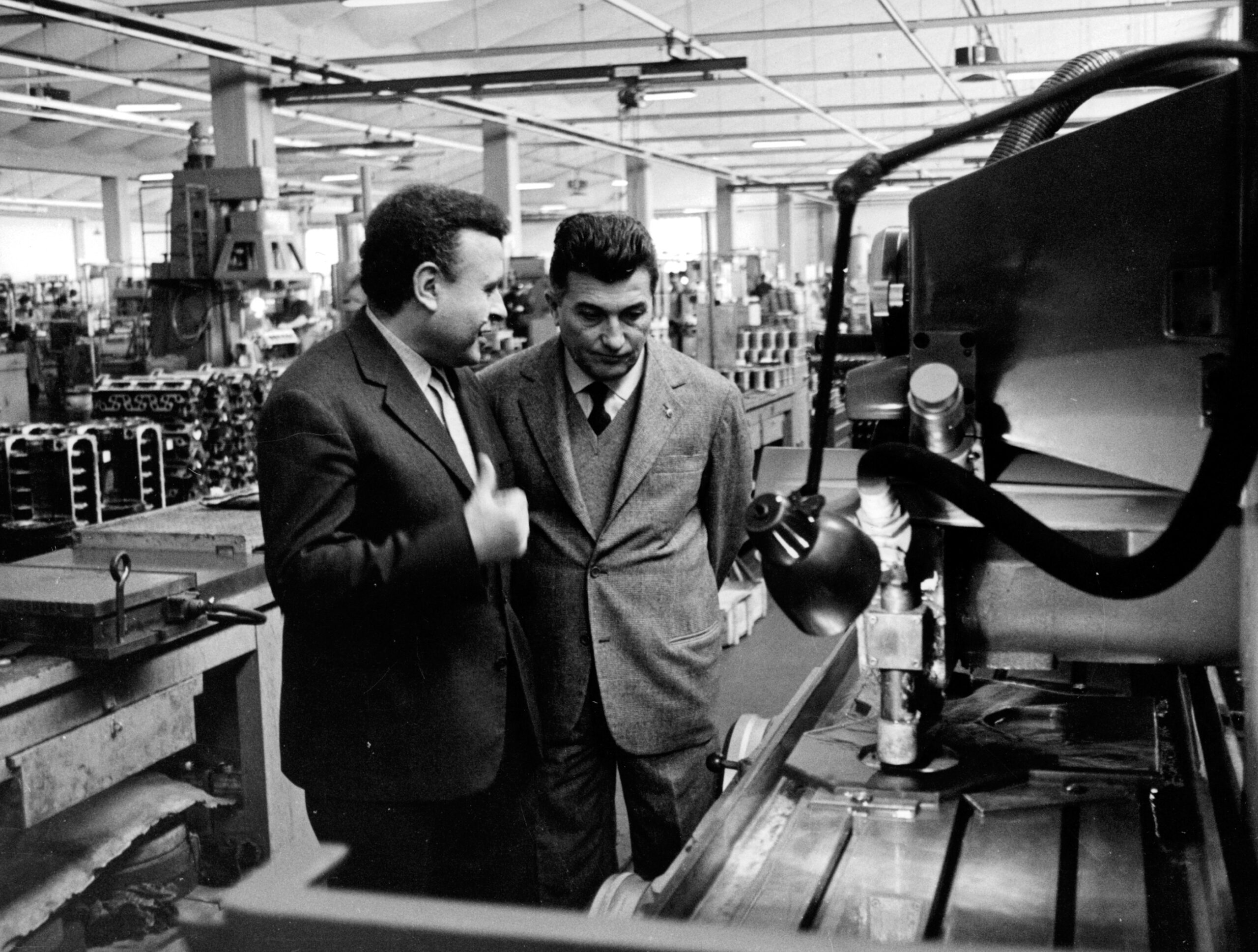
Ferruccio Lamborghini confers on the factory floor with another executive.

On the factory floor.

At the outbreak of World War II, Ferruccio, by then an experienced and highly regarded mechanic, was drafted and assigned to the 50th Mixed Maneuver Motor Fleet stationed in Rhodes, Greece, which took care of the maintenance of all the military vehicles present on the island, including diesel trucks and tractors used to tow aircraft.

The alternating fortunes of the war would see Ferruccio successfully repair — and sometimes also break, as he would later recall — vehicles belonging to the Italians, Germans, and British.

It was in Rhodes, just after the end of the war, that he opened his first company: a small mechanical repair shop.

In 1946, he returned to Italy and, taking advantage of incentives put in place to support the economic recovery, Ferruccio opened a machine shop in Cento where he repaired motor vehicles and built small utility vehicles.

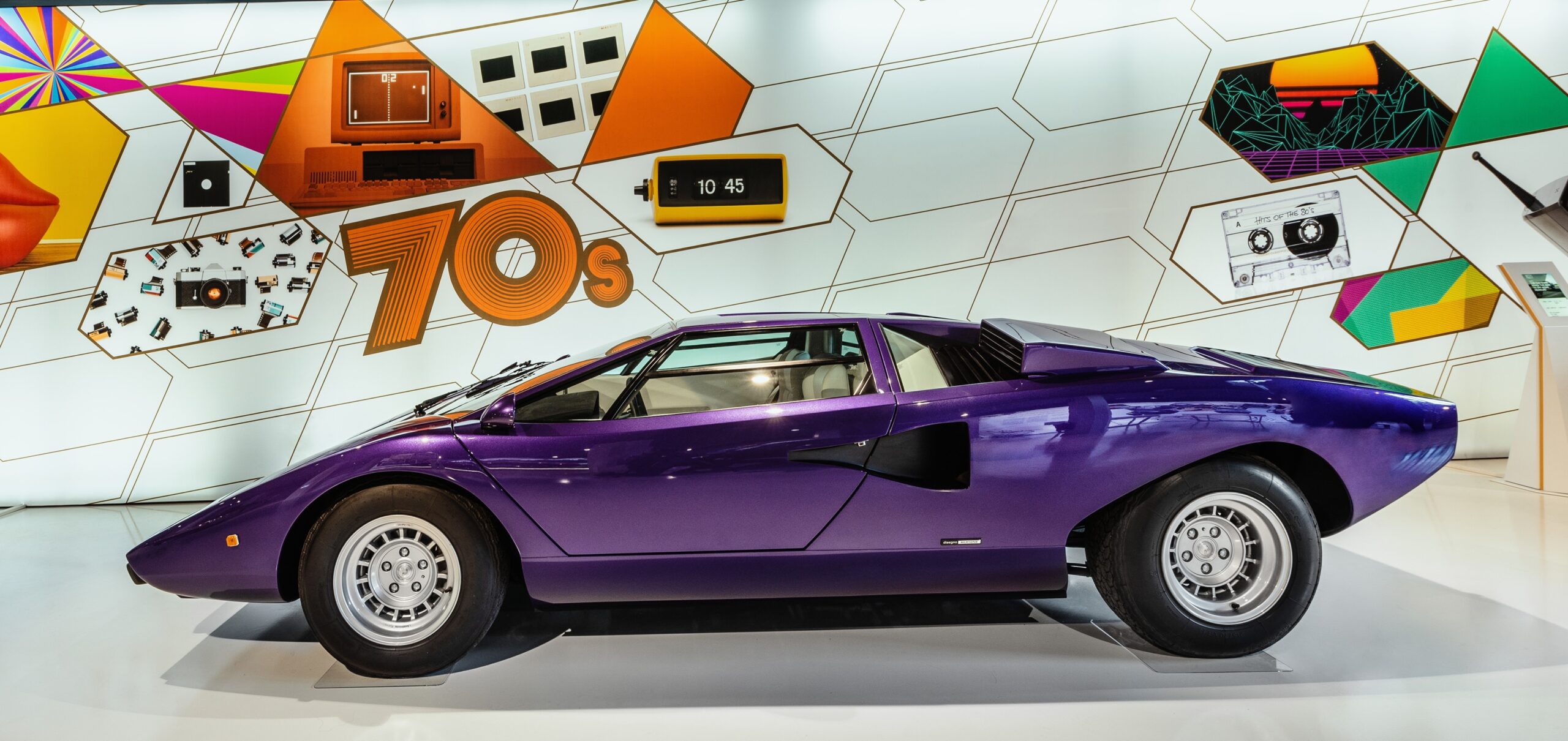
A Lamborghini Countach LP 500.

The Countach LP 500 debuted in 1971.

The Lamborghinetta Tractor

It was while working in the shop he observed the crisis suffered by local agriculture. Thinking back to the tractors he had repaired in Rhodes, Ferruccio developed a plan. He would build tractors that would be affordable for small landowners.

He began by using components from old military vehicles.

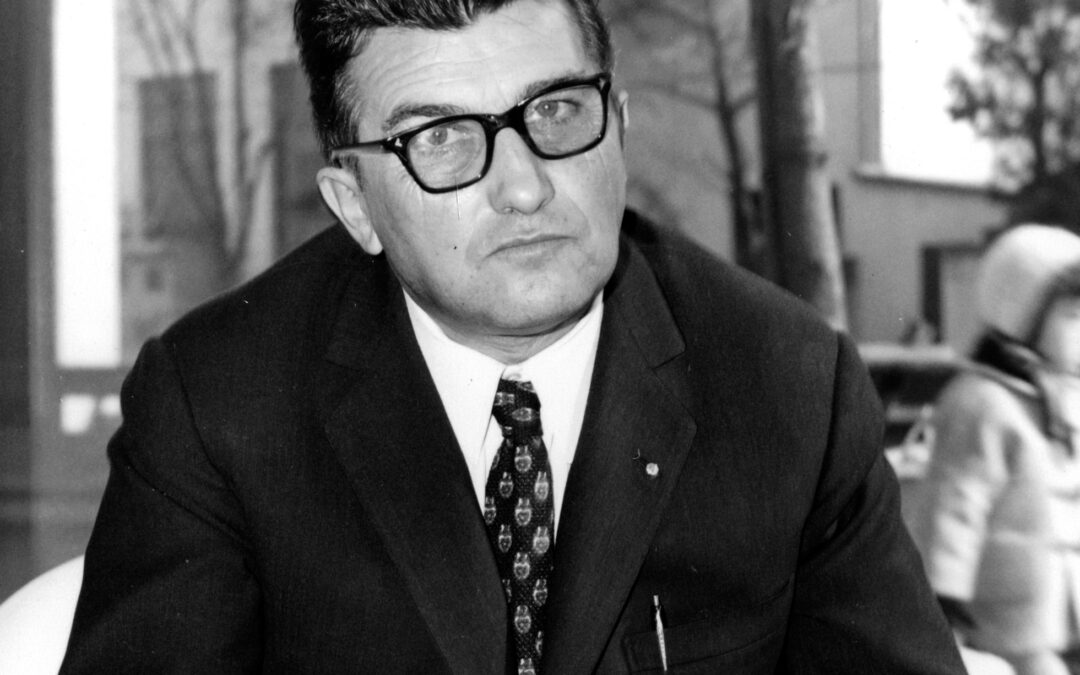
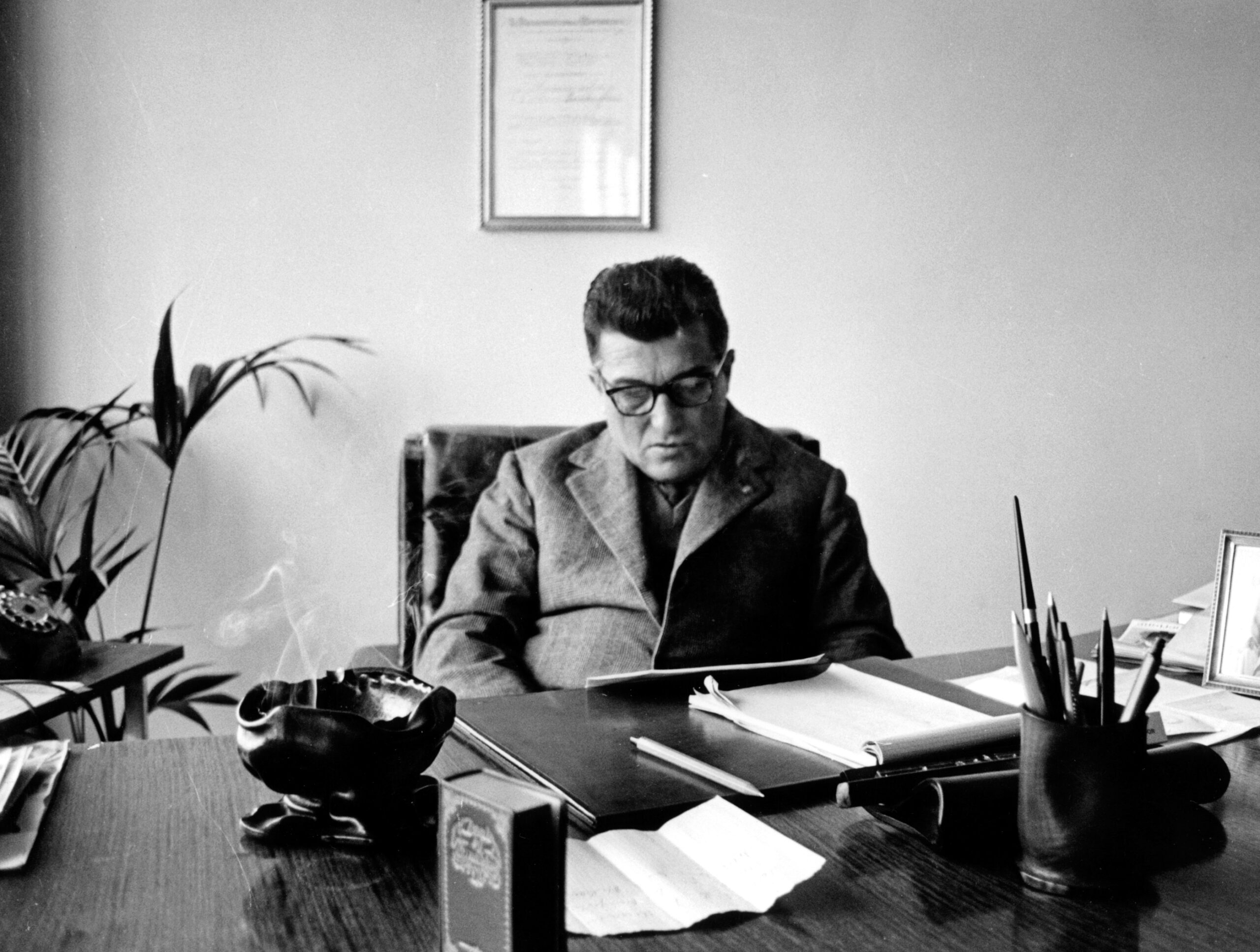
Ferruccio Lamborghini at his office desk.

Ferruccio Lamborghini was born on April 28, 1916.

The first vehicle to be transformed was a Morris truck, to which Ferruccio applied his own invention for a fuel vaporizer. His device allowed the tractor to be started with gasoline and then switch to diesel.

The prototype Lamborghinetta tractor was revealed on Feb. 3, 1948. During the town’s celebration of the feast of the patron saint of Cento, Ferruccio sold 11 tractors.

With that success, Ferruccio had to go into debt with the bank to buy a block of 1,000 Morris engines. With his father’s approval, he used the family farm and everything he had as collateral.

A 1964 350 GT V-12 coupe.

The 1964 350 GT V-12 is considered the first true Lamborghini.

The Lamborghini Logo

By 1963 he was counted among the most important industrialists in Italy. It was then that his attention shifted from tractors to a desire to build the best grand touring cars in the world. But he would need a suitable logo to characterize them.

The Lamborghini logo.

A bull was chosen to express the strength and power symbolized by the founder’s astrological sign, Taurus.

His tractors had a very simple silver emblem logo. It was a triangle with the letters FLC for  Ferruccio Lamborghini Cento.

Ferruccio worked with the well-known graphic designer, Paolo Rambaldi, for  new logo.

Rambaldi asked him what personal characteristics he felt he possessed. “I’m tamugno, which translates to ‘hard, strong, stubborn,’  like a bull,”  Ferruccio said. That drive, combined with his zodiac sign,  became the world-famous logo of Automobili Lamborghini.

Ferruccio Lamborghini Legacy

The characteristics of innovation and technical curiosity remain the hallmark of Ferruccio Lamborghini. He often hired the best engineers in the world.

The 1966 Miura rewrote the history of Grand Touring. It influenced the journalists who tested it to coin the new term “supercar.”

The 1971 Countach prototype was so groundbreaking that it was still current in 1990.  After 17 years of production and 1,999 units produced, the Countach was replaced by the Diablo. It would be Lamborghini’s first super sports car available with four-wheel drive.

The four-seat Espada debuted in 1968.

The 1968 Espada became known as the world’s fastest four-seater.

Ferruccio has not been in the company for years, but his philosophy endures that even the best can still be improved.

In recent years, the debut of the 2018 Urus super SUV opened up a new market. In 2020 the Sián arrived as the first hybrid Lamborghini. The 12-cylinder car uses supercapacitors to store and release electric power in the quickest and most efficient way.

Ferruccio, who died on Feb. 20, 1993, would have been proud.