Select Page

2021 Lexus LS 500 F Sport Review

2021 Lexus LS 500 F Sport Review

The updated Lexus LS 500 F Sport is almost worth its weight in carats, but in reality it is among the less-expensive choices

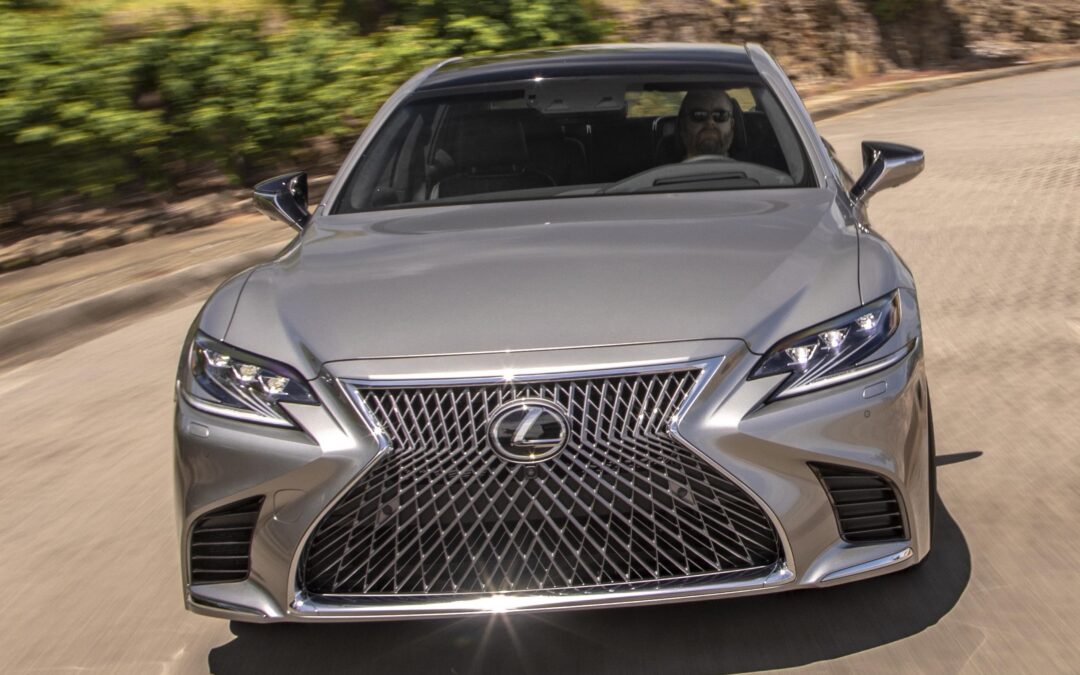
The 2021 Lexus LS 500 F Sport exterior.

The Lexus LS 500 F Sport is largely about added performance features without added horsepower. Pricing starts at $80,625. (Photos courtesy of Lexus)

BY MARK MAYNARD

The Lexus LS 500 F Sport is the diamond-class among full-size luxury sedans. There is brilliance in its engineering that has been its benchmark since the first generation debuted as a 1990.

Since then, trendier diamond hues have debuted, but most of these are laboratory creations and they lack the credibility and value of a natural stone. While there are true colored diamonds, the best have exotic pricing.

The driver area in the LS F Sport.

I like the cabin architecture that provides unobstructed sightlines at the windshield-pillar corners and over the shoulder. (Lexus)

Lexus LS 500 F Sport Pricing

The updated Lexus LS 500 F Sport is almost worth its weight in carats, but in reality it is among the less-expensive choices in this high-end class.

Sold in rear- or all-wheel drive with one powertrain, there are three trim choices for the 2021 Lexus LS 500 F Sport. Pricing starts at $77,025 for the entry LS. The rear-drive F-Sport, today’s tester, starts at $80,625 (add $3,250 for AWD) and the LS 500h Hybrid, the quickest LS model, at $91,525. All MSRPs include the $1,025 freight charge from Tahara, Japan.

An updated 2022 LS 500h Hybrid will go on sale this fall with a showcase of advanced technologies. All-wheel drive models will debut the new Lexus Teammate systems for Advanced Drive and Advanced Park. Pricing will be announced later.

The front seats in the F Sport.

With the optional panoramic roof, headroom is 36.8 inches, which is far more accommodating to tall drivers than would appear by the dimensions. (Lexus)

Lexus LS 500 F Sport Comparos

For pricing comparisons among the LS competitors, the entry Mercedes-Benz S-Class (with 3.0-liter biturbo V-6) starts at $95,245, including the $995 freight charge. Upgrading to the AMG-line of styling features and driver assistance systems will push the price to more than $107,000.

BMW’s 740i (with its biturbo incline six-cylinder) would cost more than $103,000 when equipped comparably to the F-Sport tester. But the BMW does include free scheduled maintenance for the duration of the warranty.

And there are option groups to further personalize or elevate, including the $12,710 Luxury package, the Executive at $17,630 or the Executive with handcrafted Kiriko glass trim elements, $23,630.

Find pricing offers here.

The F Sport steering wheel.

The heated, three-spoke F Sport wheel with red stitching. (Lexus)


F Sport Features

The Lexus LS 500 F Sport is largely about added performance features without added horsepower.

The package includes unique trim on the bumper, grille, lower door trims, and rear diffuser. 20-inch five-spoke alloy wheels have a Dark Vapor Chrome finish. Inside there is a performance-themed instrument cluster with sliding gauge bezel, F Sport perforated leather upholstery, a heated steering wheel, Ultrasuede headliner, 28-way adjustable sport seats, passenger seat power cushion adjuster and aluminum pedals.

Performance hardware upgrades include:
• 6-piston front brake calipers with 15.7-inch ventilated discs, 4-piston rear brake calipers with 14.1-inch ventilated discs;
• F Sport adaptive variable suspension;
• Dynamic Handling Package ($7,800 RWD only) adds variable gear ratio steering, active rear steering and active stabilizer bars.

The tire and wheel package for the LS 500 F Sport

Bridgestone Turanza runflat summer performance tires have staggered, 20-inch sizes.  (Lexus)

2021 LS Updates

Subtle updates for 2021 emphasize interior quietness and comfort with a smoother, more comfortable ride. There were technological refinements with the Lexus Driving Signature to set a new standard for vehicle development and refinement.
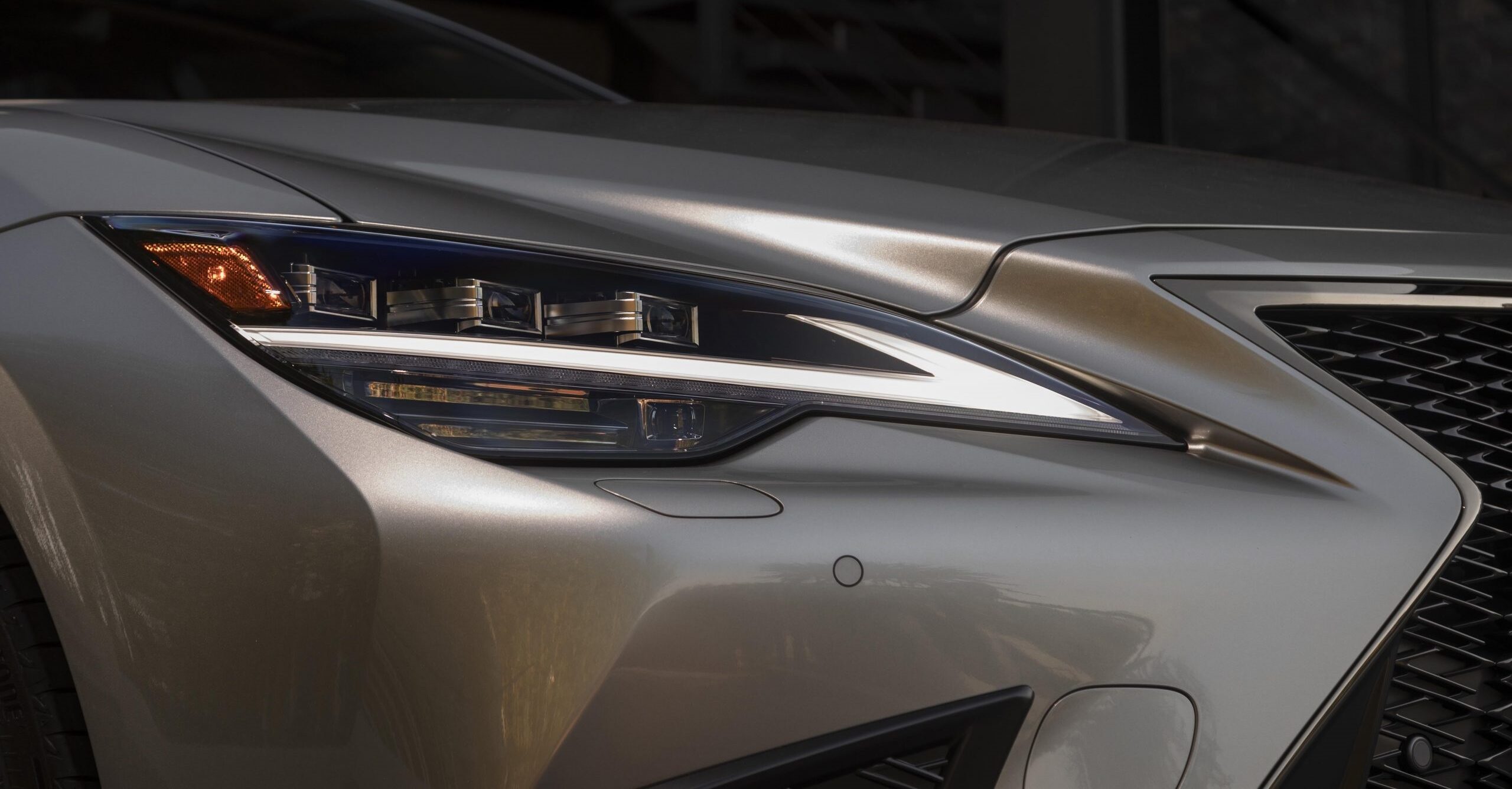
The F Sport's ultra-compact LED headlights.

Triple-projector ultra-compact LED headlamps with cornering lamps. (Lexus)

LS F Sport Suspension

The standard steel suspension has revised spring and damper rates for improved damping performance.  And the front and rear anti-roll bars were “optimized” to better control body roll in turns. Larger front and rear liquid-filled bushings help create an even plusher ride, Lexus says.

The vehicle engineers modified the Adaptive Variable Suspension ($1,400) for “suppleness” and handling while the ride-height-adjustable air suspension is quicker to respond.

F Sport Powertrain 

Revisions to the 3.5-liter, twin-turbo V-6 include a lip shape on the piston top for quicker activation to curb emissions and quiet operation when the engine is cold.

The 416-horsepower, direct-injected engine has 442 foot-pounds of torque, starting from a 1,600 rpm and rising steady to 4,800 rpm.

The 416-horsepower, V-6 engine in the LS 500 F Sport

The 416-horsepower, direct-injected V-6 is capable of 0-60 mph in 4.6 seconds.

The shift logic of the 10-speed automatic transmission was recalibrated to help keep the engine in a more responsive area of its power band.

The acceleration has V-8 thrust off the line and in Sport-plus mode is capable of 0-60 mph in 4.6 seconds.

While most LS drivers will rein in the force and feel comfortable in Normal, Comfort or Sport drive modes, there is a direct horse-and-rider communication in Sport-plus that gives almost intuitive upshifts and downshifts.

And when using Sport-plus the main gauge bezel slides right for a red-themed performance mode.

Fuel economy ratings are 18 mpg city, 29 highway and 22 mpg combined, on the required premium fuel. In my week of more than 200 miles the best combined average I achieved was 17 mpg. But with the 21.7-gallon tank, even that mileage would allow more than 368 miles of cruising range.

Interior Upgrades

The LS cabin is a statement of impeccable Takumi craftsmanship, which is all about meticulous attention to detail and hospitality, Lexus says. Among the interior upgrades is a new Palomino Leather interior with new trim materials, including Black Laser Special and Open Pore Black.

The LS 500 infotainment touch screen.

The wide touch screen is simple to use, but there also are actual buttons to make adjustments for fan speed, temperature and vents.

On Executive models, the available Kiriko Glass ornamentation and hand-folded pleats on the door trim illustrate the Japanese craftsmanship of Kiriko glassware, and unique in a production vehicle. The hand-cut glass is polished to a soft glow.

Credit the cabin air-filter recirculation for a stink-free environment. While on a long highway descent, the semi-truck next to me was sending billows of brake smoke as the lanes of traffic slowed for road construction. Usually, it is difficult to filter out that type of acrid pollutant, but I felt quite smug among the lingering aroma of Lexus leather.

The Kiriki glass interior upgrade.

An example of handcrafted Kiriko glass in the top Executive package, $23,630.

The new 12.3-inch multimedia touch screen integrates Apple CarPlay and Android Auto compatibility with iPhone or Android interface. And the new Amazon Alexa allows users to control smart home devices such as lighting, thermostat and security systems — or sync to the navigation system for on-the-go recommendations.

The wide touch screen is simple to use, but there also are actual buttons to make finger-reach adjustments for fan speed, temperature, vents.

I like the cabin architecture that provides unobstructed sightlines at the corners of the windshield pillars and over the shoulder.

The digital rearview mirror, $200, features a larger high-resolution display for improved visibility of the area behind the vehicle. It can be handy when chauffeuring passengers and heads get in the way of rearward views. But because I wear glasses, my eyes struggle to focus quicky enough, so I just flip it to manual mode.

With the optional panoramic roof, headroom is 36.8 inches, which is far more accommodating to tall drivers than would appear by the dimensions. However, the lower roofline will make the cabin seem smaller than it is, however, compensates in width, with 58.8 inches of shoulder room.

Missing from the tech features was wireless charging. And I wished for space on the shift console to lay a phone, though there are USBs and secure space in the armrest console.

Back seat space has the limo stretch of legroom, 38.9 inches, but the tall center tunnel for AWD and exhaust, makes the LS a better four-seater. And a simple jacket or coat hook on the back seat B-pillar or overhead hand grip would be considerate.

Trunk space is wide and low with nearly 17 cubic feet of space, but the entry opening is a little short for loading big-box items.

Ride and Handling

The ride is quite smooth and free of harshness transferred from varying road surfaces. And the LS includes such soundproofing enhancements as active sound control and active noise cancellation.

The back seats in the F Sport.

 Back seat space has the limo stretch of legroom, 38.9 inches, but the tall center tunnel for AWD and exhaust, makes the LS a better four-seater.

The optional air suspension ($1,400) has a new rapid rise system that also gives rapid adjustment in cornering to transfer weight without unsettling responses, though there can be an occasional jolt that gets past the system.

I expect I was also enjoying the F Sport dynamic package ($7,800), which added variable gear-ratio steering, active rear steering and active stabilizer bars. The turning circle is trimmer than most midsize sedans at 36.8 feet.

Because this generation LS has a lower roofline for aerodynamics (benefitting corporate average fuel economy) the air suspension automatically raises the vehicle to make it easier to step into or get out when the doors are unlocked.

The 20-inch Bridgestone Turanza runflats on the tester were almost surprising in their supple ride quality when Bridgestones often can feel hard and somewhat noisy.

LS Safety Features

Lexus has long been a pioneer of safety technologies and the LS has such advanced features as the Lexus Safety System+ 2.0. It is comprised of a pre-collision system with low-light pedestrian detection and daytime bicyclist detection, lane departure alert with steering assist, automatic high-beam dimming, all-speed adaptive cruise control with road-sign assist and lane tracing assist.

The optional Lexus safety system, $3,000, allows Level 2 semi-autonomous driving, while keeping both hands on the wheel. The system integrates enhanced all-speed dynamic radar cruise control and lane change assist, front cross-traffic alert and pedestrian alert.

The driver-assist system capably keeps the car centered in the lane, but like most systems it will randomly shut off. Sometimes the system gets confused by light colored road-surface conditions and highway lines that are broken up and uneven.

For those drivers who have daily commutes in heavy traffic, this safety-assist system could be a lifesaver. It is an extra six eyes on the road to watch for less-attentive drivers.

An exterior rear view of the Lexus LS.

The updated 2021 LS is almost worth its weight in carats, but it also is among the less-expensive choices in this high-end class. (Lexus)

Why Buy the Lexus LS 500 F Sport?

This big sedan is for the risk-averse buyer. It is a trusted nameplate with exemplary dealer treatment during the sale and then for service. The F Sport is the alter ego, with the grip-and-grin attitude of a charged grand tourer.

The LS raises the satisfaction level with the Lexus-Toyota business plan: Do it right the first time. And then make subtle updates for clarity and shine.

Here is my review of the 2021 Lexus IS 350 F Sport.

SPECIFICATIONS

2021 Lexus LS 500 F Sport

Body style: large, 5-seat, 4-door RWD sedan

Engine: 416-hp, twin-turbo, with electrical and D-4ST direct injected. 3.5-liter V-6; 442 lb.-ft. from 1,600-4,800 rpm

Transmission: 10-speed direct-shift automatic with paddle shifters; w/ Drive Mode Select with Sport S+ and Custom modes

Fuel economy: 18/29/22 mpg city/hwy/combined; premium fuel required

0-60 mph acceleration: 4.6 seconds

Coefficient of drag: 0.28; (*0.30 AWD)

BY THE NUMBERS

Fuel tank: 21.7 gal.

Trunk space: 16.9 cu. ft.

Front head/leg room: 36.8*/42 in. (37.3 in. w/o pane roof)

Rear head/leg room: 36.4*/38.9 in. (*37.4 in. (w/o pano roof)

Length/wheelbase: 206.1/123 in.

Curb weight: 4,740 lbs.* (4,696 lbs. with standard coil springs)

Turning circle: 36.8 ft.

FEATURES

Standard equipment includes: Smart key entry/locking with push-button ignition, rearview camera, power moonroof, quilted-stitch perforated semi-aniline leather interior trim, 16-way power-adjustable heated and ventilated front seats, 28-way power-adjustable driver’s seat with multifunction massage, power-adjustable front headrests, heated leather-trimmed steering wheel, Ultrasuede headliner and sun visors, wood- and semi-aniline leather-trimmed center console, semi-aniline leather-trimmed door armrests, heated rear seats, power rear sunshade, navigation system with 12.3-inch touchscreen and 3 years of free Lexus Enform Dynamic Navigation, Lexus 12-speaker premium audio system, Apple CarPlay or Android Auto with Alexa+Lexus compatibility, intuitive parking assist with auto-braking, active sound control and active noise cancellation, remote touch pad, triple-projector ultra-compact LED headlamps with cornering lamps, LED taillamps and turn signals, electrochromic (auto-dimming) inside and outside mirrors with puddle lamps, hands-free power open-close trunk, auto door closers, 19-inch alloy wheels

F Sport Package, includes: Unique exterior trim on the bumper, grille, lower door trims, rear diffuser; 20-inch split five-spoke alloy wheels with Dark Vapor Chrome finish;  6-piston front brake calipers with 15.7-inch ventilated discs and 4-piston rear brake calipers with 14.1-inch ventilated discs; adaptive variable suspension; performance-themed instrument with sliding bezel;; perforated leather interior (with heated steering wheel and shifter knob) with Ultrasuede headliner; 28-way adjustable sport seats; passenger seat power cushion adjuster; aluminum pedals and interior trim elements; Dynamic Handling Package (RWD only, includes F Sport Package features plus variable gear ratio steering, active rear steering, active stabilizer bars

Safety features, include: 10 air bags, Lexus Safety System+ 2.0 standard, includes Pre-Collision System with low-light pedestrian detection and daytime bicyclist detection; Lane Departure Alert with Steering Assist; Intelligent High Beam; all-speed adaptive cruise control; road sign assist, lane tracing assist

PRICING

Lexus LS 500 F Sport: $80,625, including $1,025 freight charge; price as tested $98,990
Options on test vehicle: Lexus safety system, $3,000, includes enhanced all-speed dynamic radar cruise control and lane change assist, front cross-traffic alert, pedestrian alert;
• Adaptive variable air suspension with rapid height function $1,400;
• Mark Levinson 23-speaker, 2,400-watt surround sound audio $1,940;
• Panorama glass roof $1,000;
• 24-inch head-up display $1,220;
• Panoramic view monitor $800;
• Rear bumper appliqué $95;
• Door-edge guards $155;
• Trunk mat package $305, includes key glove, cargo mat and wheel locks;
• F Sport Dynamic Handling Package, $7,800, includes variable gear ratio steering, active rear steering and active stabilizers

Where assembled: Tahara, Aichi, Japan
Warranty: 4-years/50,000 miles basic with roadside assistance, free 1st and 2nd scheduled maintenance services and lodging for emergency breakdowns 100 miles from home; 6-years/70,000-miles powertrain
MarkMaynard@cox.net

Lamborghini Miura SV Turns 50 in 2021

Lamborghini Miura SV Turns 50 in 2021

V is for Veloce — Super Fast

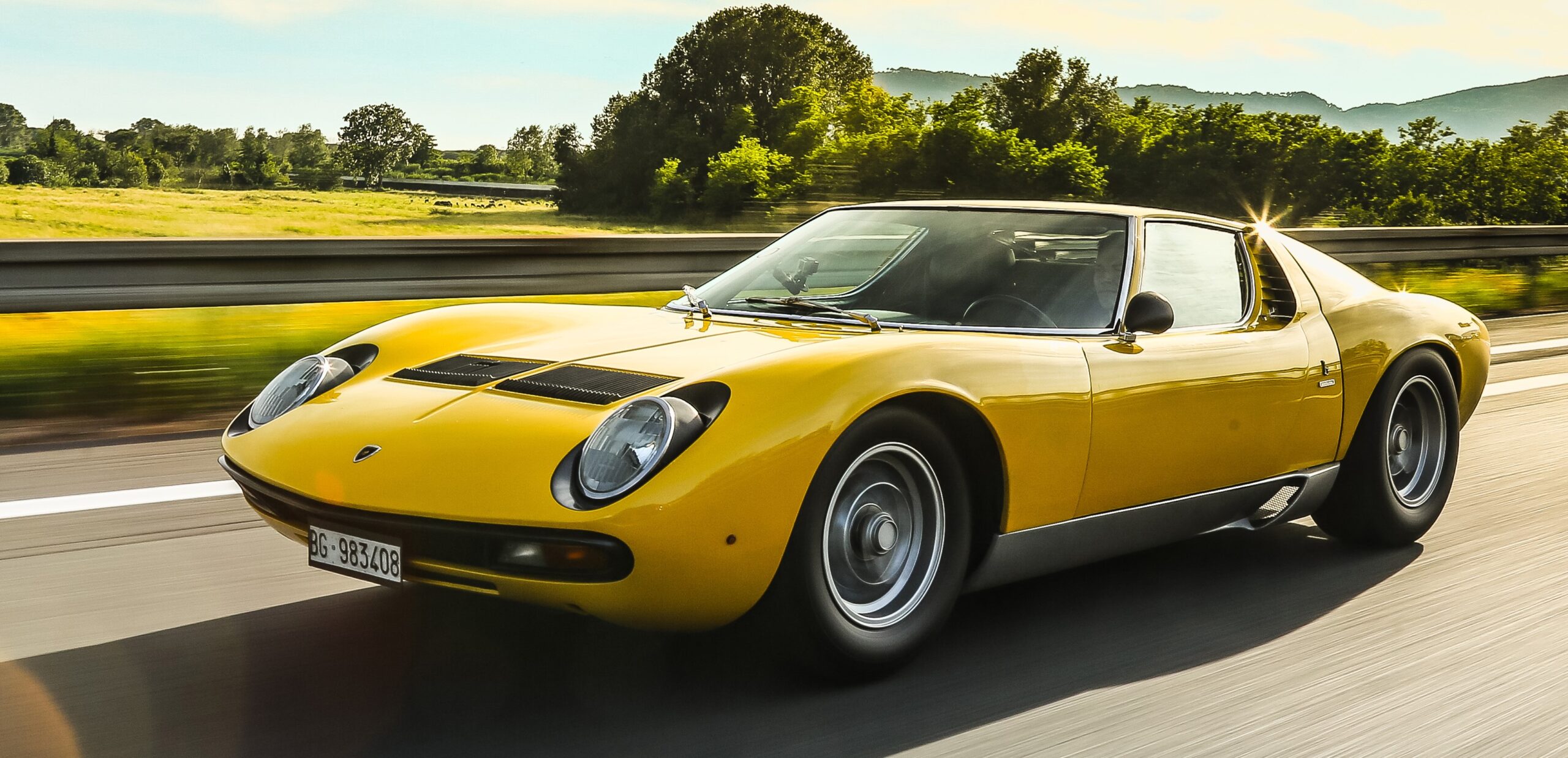
A 1971 The Miura SV

The 1971 Miura SV is considered the highest expression of the ‘supercar’ concept of its time and the best of all the Miura versions produced, says Lamborghini. (Photo courtesy of Lamborghini)


BY MARK MAYNARD

The Lamborghini Miura SV was officially unveiled at the Geneva Motor Show in March 1971. As the last evolution of the P400 line, the Miura SV became the most sought-after production car made by Lamborghini, the company said in an April 14 release. “[The Miura] is considered the highest expression of the ‘supercar’ concept of its time and the best of all the Miura versions produced.”

Building on the Miura S nameplate, the V stands for veloce (super fast). But the SV’s huge sales success would replace the S.

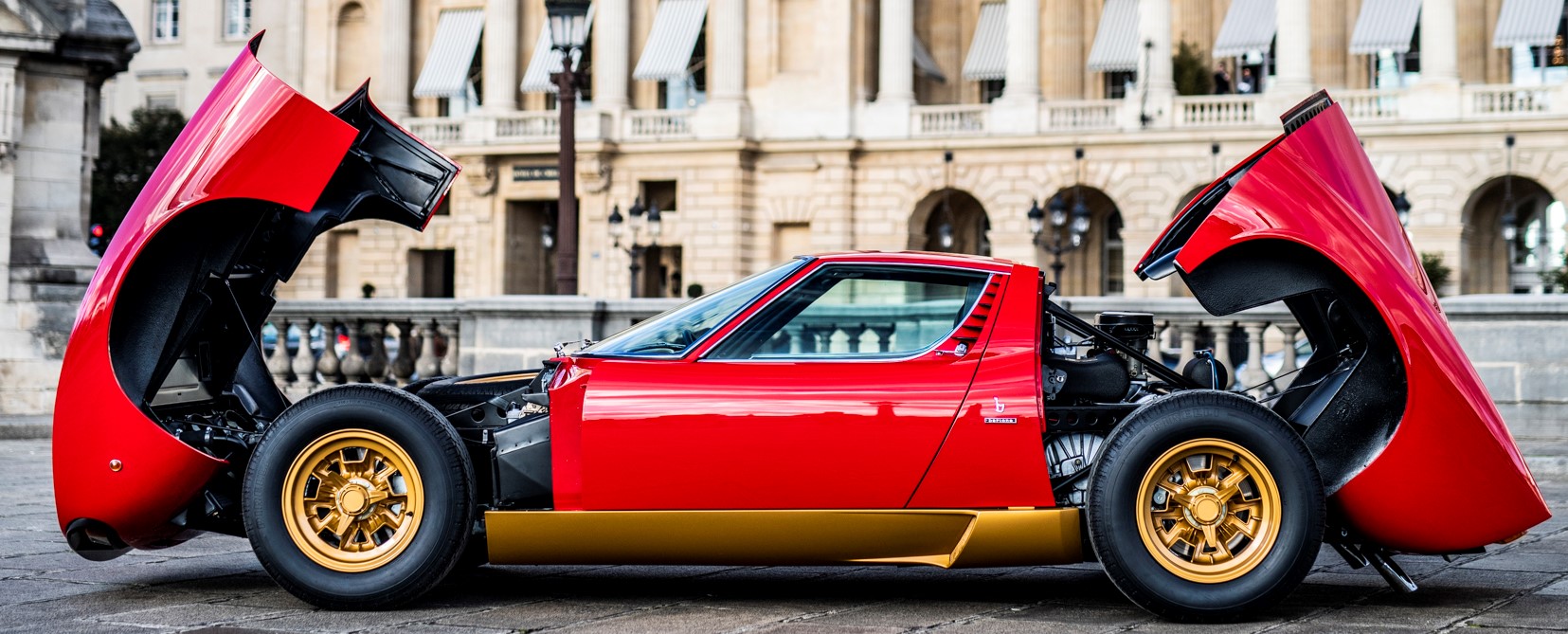
A Rosso Corsa Lamborghini Miura SV

This Rosso Corsa Miura SV was restored by Lamborghini’s Polo Storico for Jean Todt, former rally racer, former Scuderia Ferrari Formula 1 team principal and longtime president of the Fédération Internationale de l’Automobile. (Remi Dargegen)

The Rosso Corsa Lamborghini Miura SV with front and rear hoods open.

(Remi Dargegen)

Gian Paolo Dallara and Paolo Stanzani, Lamborghini’s chief engineers at the time, were the creators of the Miura and Miura S. They confirmed that the SV version benefitted from the experience gained during the first five years of Miura production.

The Miura SV was quite different technically and stylistically from the other Miuras, the P400 and P400 S. The SV maintained the same general layout and 4.0-liter 12-cylinder transversely mounted rear-mid engine. Many changes were structural. The SV had a stiffer and reinforced chassis and a revised rear suspension system with different anchor points and arms. It also had a track widened by a little more than 5 inches (130 mm).

A new setting for the four Weber triple-barrel carburetors boosted the SV’s engine to 385 horsepower at 7,850 rpm. And the 12-cylinder’s peak torque increased to 294 foot-pounds at 5,750 rpm.

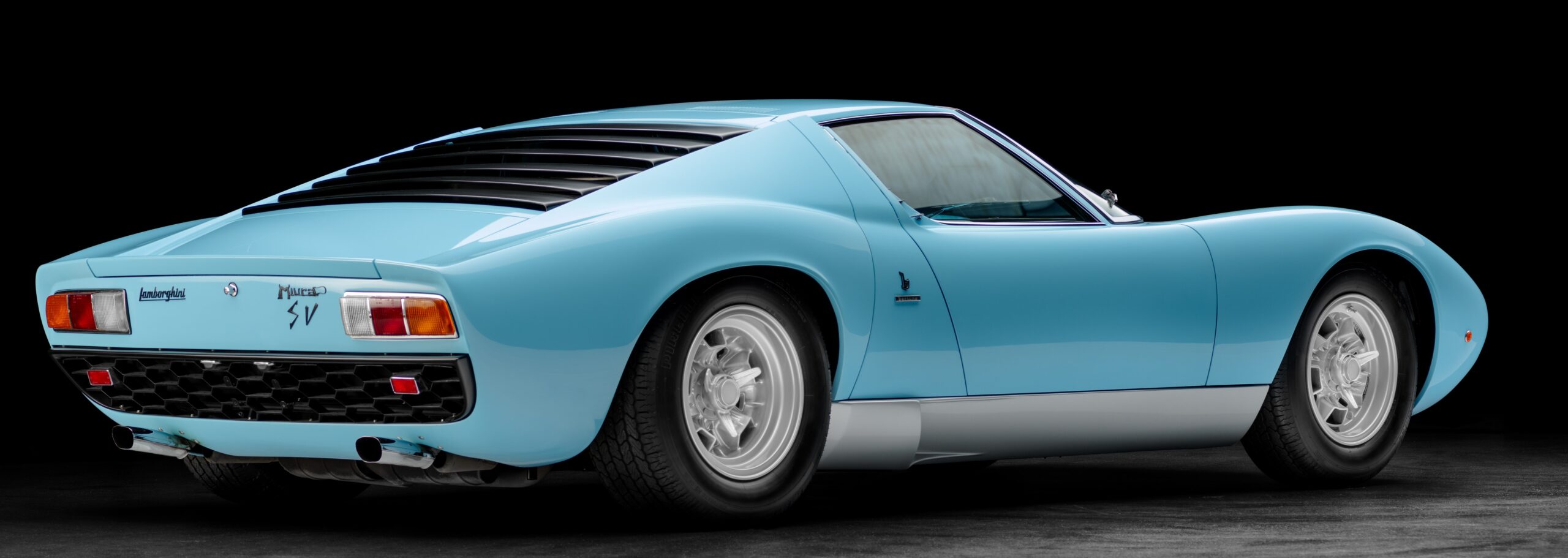
A Lamborghini SV.

The SV has wider rear fenders and unique taillights.

A separate lubrication system between the engine and gearbox was a hugely important technical improvement, the company said.

The Miura SV’s official top speed was just over 180 mph (290 km/h). Acceleration to 62 mph took 6.9 seconds, which was record performance back then.

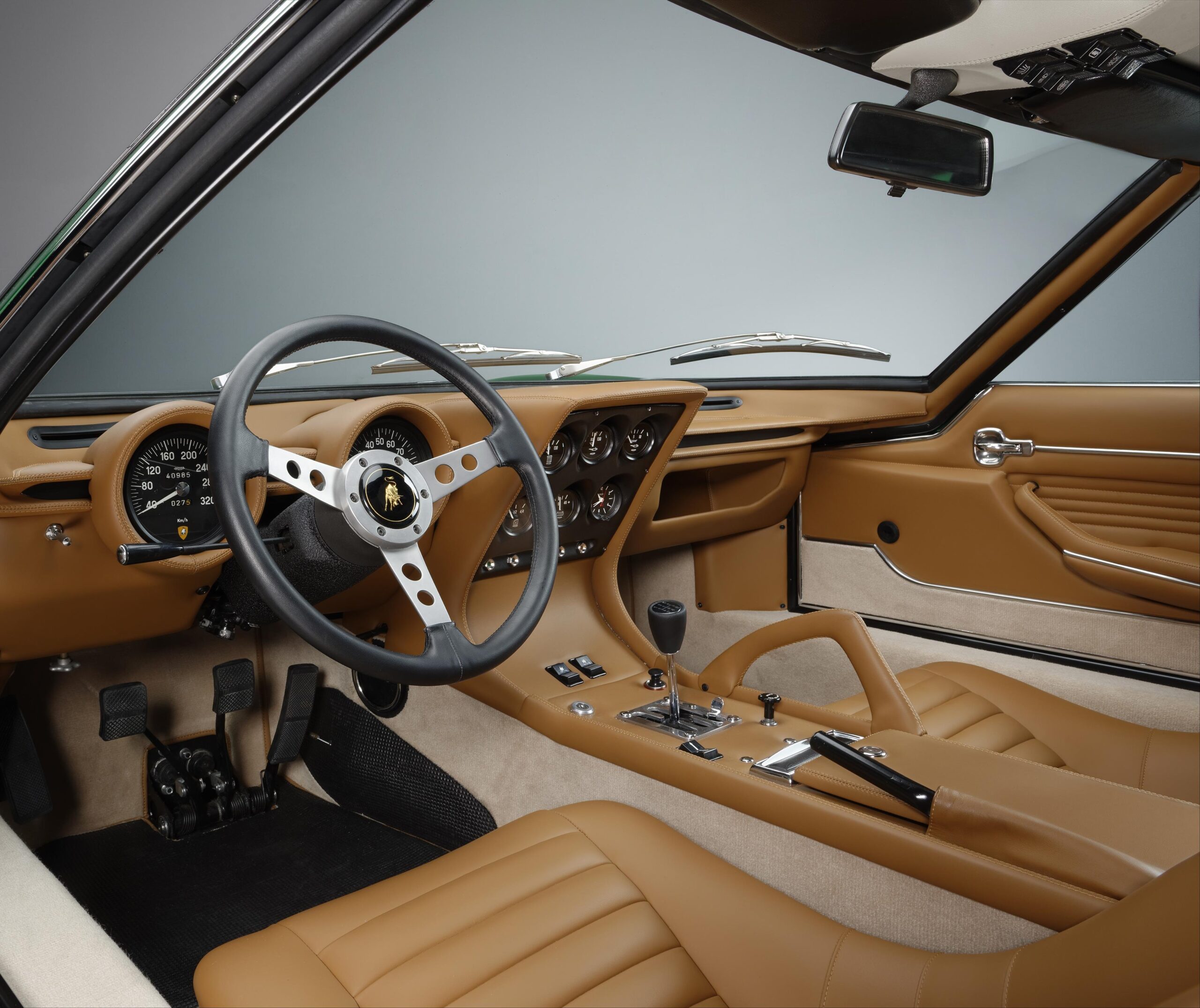
The Lamborghini SV interior.

The SV interior was updated with more leather and chrome. 

Now fitted with staggered-size tires, the rim design had a new and sportier appearance. Most SV customers ordered them with a gold finish, Lamborghini says.

The revised SV has wider rear fenders, differently designed taillights, and a new front hood with an air intake for the radiator.

Eyelashes Are Gone

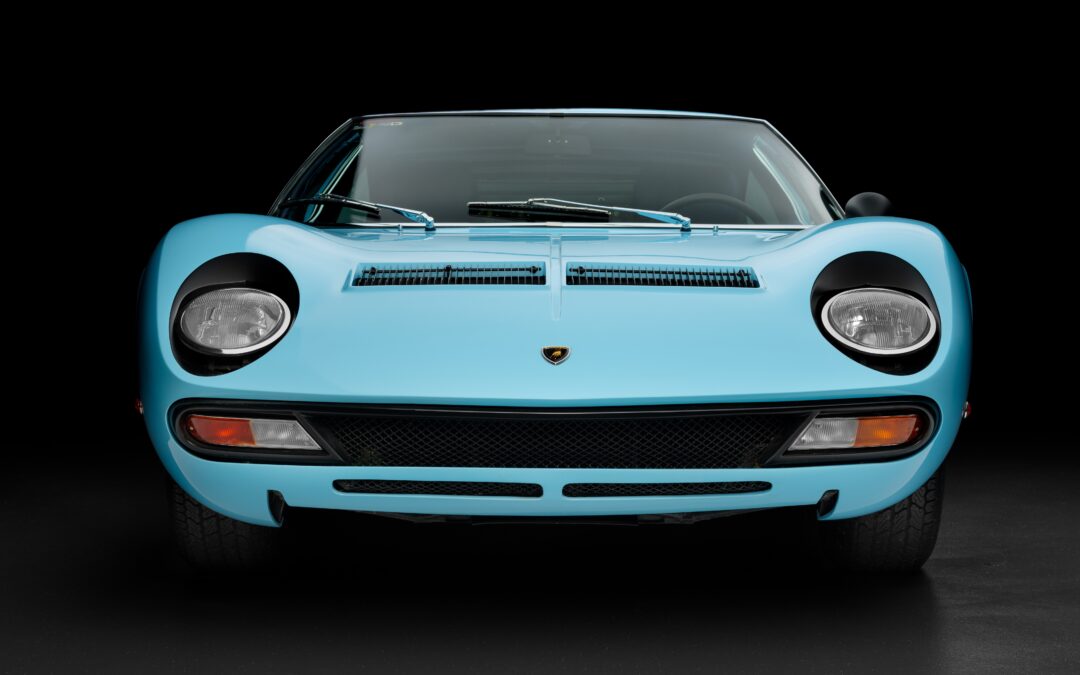
One of the most important visual changes to the Miura SV was the deletion of the famous “eyelashes” around the headlights. There was no real technical reason for this esthetic modification and creating them was a time-consuming step.

“However, for his own personal Miura SV — the only one to officially adopt this specification — Ferrucio Lamborghini asked for the eyelashes around the headlights to remain,” Lamborghini said in the release.

A Lamborghini Miura SV, in Azzurro Cielo paint.

A Miura SV in Azzurro Cielo.

The SV’s interior was better finished and more modern looking than that of the previous versions. There was more leather and various chromed details.

The Miura SV was taken out of production in early 1973 after 150 units had been produced. In 1975, however, a final SV was expressly manufactured for Walter Wolf. The renowned businessman was also a Formula 1 racing supporter and team owner of Walter Wolf Racing. His SV is now on view at the Lamborghini Museum, MUDETEC, in Sant’Agata Bolognese.

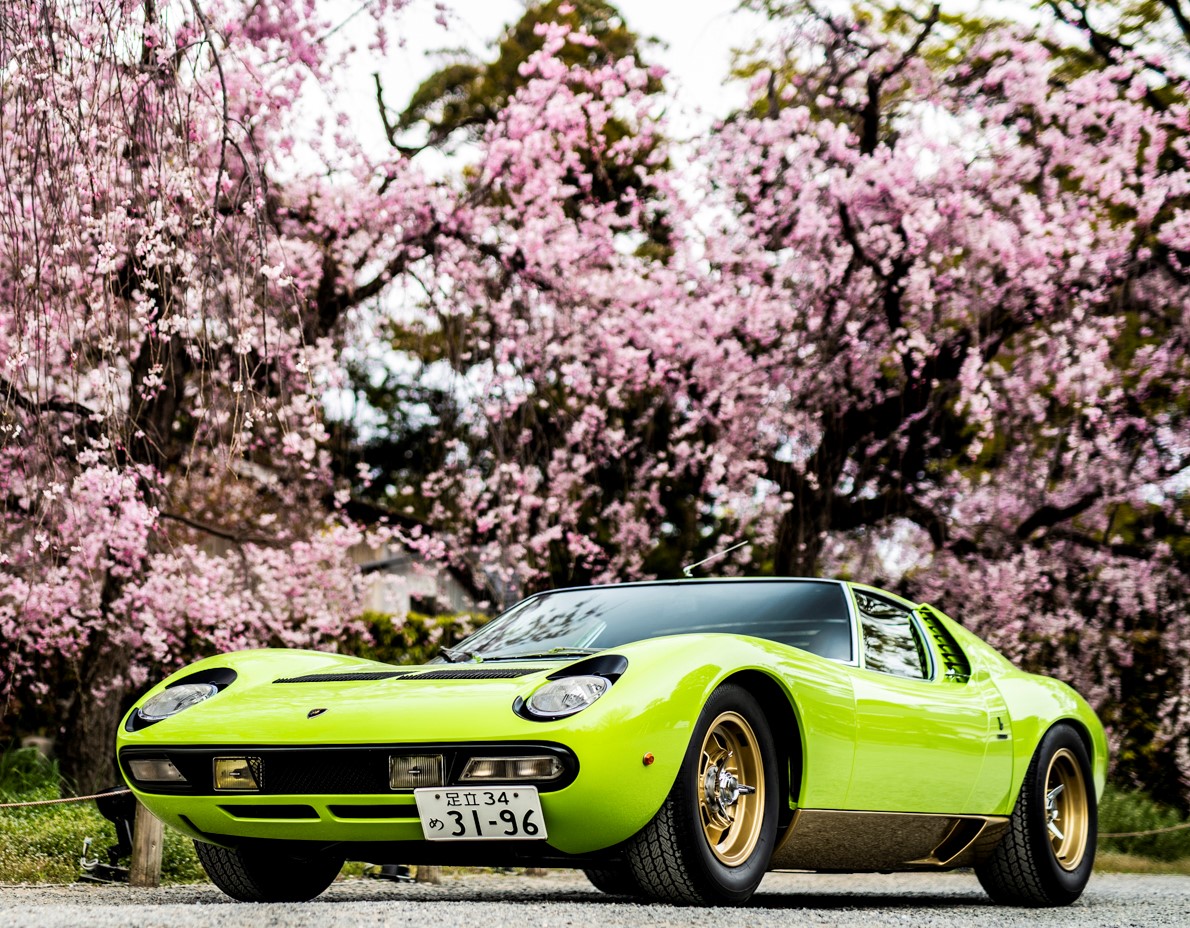
A 1971 Lamborghini Miura SV.

This 1971 Miura SV earned ‘Best Lamborghini’ at the 2019 Concorso d’Eleganza Kyoto (Japan). 

The end of Miura SV production ended an era in which speed and sinuous lines predominated. For many, it remains the most beautiful car ever produced in series.

Lamborghini Polo Storico

Opened in 2015, Lamborghini Polo Storico is an Automobili Lamborghini department that supports the preservation of classic Lamborghini vehicles produced up to 2001. The special department can provide restoration services, spare parts, and certification.

Polo Storico also curates the archive and includes information relating to the models manufactured in Sant’Agata Bolognese. The archive includes the first sketches to the production files and the original technical drawings.

Mullin Automotive Museum to reopen every weekend beginning April 9

Mullin Automotive Museum to reopen every weekend beginning April 9

The Mullin specializes in the Art Deco and Machine Age eras, and features more than 140 vehicles, art and artifacts. (Mullin Automotive Museum)


BY MARK MAYNARD

It has been an unfortunate year of Covid-forced closures for most museums in the U.S., but there has been a spring thaw in pandemic restrictions and many of the famed institutions are emerging from hibernation.

Notable among the openings will be the famed and somewhat exclusive Mullin Automotive Museum, in Oxnard, Calif. It will reopen to the public on Friday, April 9, with a new schedule of 10 a.m. to 3 p.m., Friday through Sunday. Viewing is by appointment only.

The museum celebrated its 10th anniversary last year.

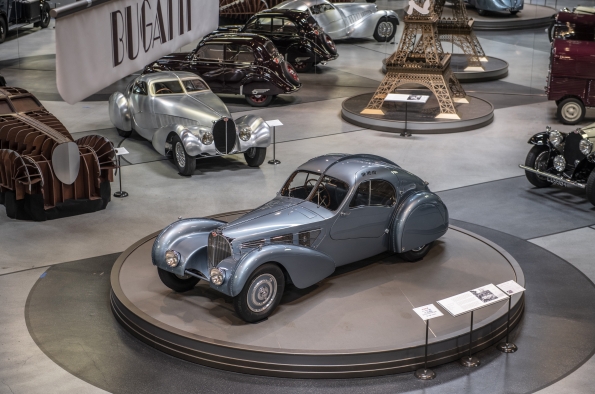
The Mullin specializes in the Art Deco and Machine Age eras, and features more than 140 vehicles, art and artifacts. Its main concentration are the finest examples of French curve coachwork and the craftsmanship by manufacturers such as Bugatti, Delage, Delahaye, Hispano-Suiza, Talbot-Lago and Voisin.

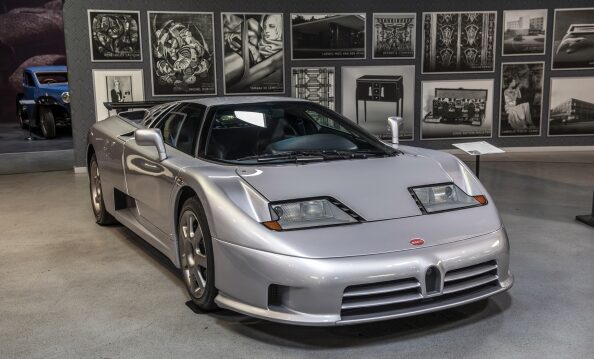
The 1994 Bugatti EB 110 Supersport ‘Le Mans.’ (Mullin Automotive Museum)
Several of the automobiles in the collection are champions from concours events around the world, and many have won historic races, such as Grand Prix de Pau and the 24 Hours of Le Mans.

Among the Concours “Best of Show” winners are the 1936 Bugatti Type 57SC Atlantic, 1938 Hispano-Suiza Dubonnet H6B “Xenia” and the 1937 Talbot-Lago T150-C-SS Goutte d’Eau. Also on view is the 1994 Bugatti EB 110 Supersport “Le Mans” and what is considered to be the world’s most extensive collection of Bugatti artwork, sculpture and furniture.

View the museum’s YouTube series here.

Covid precautions

The museum will follow health and safety guidelines set by the Centers for Disease Control and Prevention, State of California and County of Ventura to help reduce the spread of COVID-19. Staff members, docents, and visitors will have their temperature taken prior to entry and must always wear protective face coverings. No personal items such as purses, bags or backpacks will be allowed in the museum. Additionally, the museum will enforce social distancing guidelines of at least 6 feet between unrelated groups. The museum will also increase the frequency of routine cleaning and provide hand sanitizer stations throughout the facility.

“As we welcome back guests, we will continue to prioritize the health of our community, visitors, volunteers, and employees,” said Mullin Automotive Museum Founder and Executive Director Peter Mullin. “We are more excited than ever to reopen our doors and continue sharing our passion for the automobile.”

The museum also has relaunched its website, which offers an all-new user experience and online shopping cart. The new site features an archive of the museum’s collection — complete with high-quality studio images and placard information — and the ability to purchase books, museum merchandise, art, and accessories from the museum’s online store.

Tickets

Visitors must purchase tickets in advance on the museum website and tickets must be printed in advance. There are two weekend sessions: 10 a.m. to 12:30 p.m. and 12:30 p.m. to 3 p.m.

Ticket prices are $16 for adults, $14 for seniors and students and $10 for children ages 3-12 years. At this time, docent-led tours will not be available.

For tickets and more information visit MullinAutomotiveMuseum.com. The museum is located at 1421 Emerson Avenue, Oxnard, Calif. 93033.

VW Atlas Cross Sport Review

VW Atlas Cross Sport Review

Volkswagen applied just about everything to its rakish 2021 Atlas Cross Sport, but is it enough for it to stand out?

The VW Atlas Cross Sport

The midsize VW Atlas Cross Sport 5-seat SUV redistributes space for a wealth of back-seat and cargo space

BY MARK MAYNARD

Volkswagen’s new Atlas Cross Sport shares a rich bloodline that also underpins the Lamborghini Urus, Audi Q8 and Porsche Cayenne Coupe, if not other nameplates in the VW Group global family. Consider it the sporting alter ego to the three-row, seven-passenger Atlas SUV.

Using the footprint of the family-oriented Atlas, the Cross Sport adopts a shaved roofline with a styling slant at the rear with redistributed back seat space for a long 40.4 inches of legroom.

Compared to the full-size Atlas, the Cross Sport is 5.2 inches shorter with a roofline lowered by 2.2 inches. Front headroom is still tall at 39.4 inches with a long 41.6 inches for legs. And even the cargo space is fully functional at 40.3 cubic feet behind the back seat (stacked to the ceiling) and 77.8 cu. ft. with the 60/40 back seat folded.

An interior view out the windshield of the VW

The cabin has broad front shoulder room of 61.5 inches and tall headroom of 39.4 inches. (VW)

New for 2021

The Cross Sport was new for 2020 and received a few technology updates for 2021. The next-generation MIB3 infotainment system with wireless app-connect and multi-phone pairing is now standard on SE models and above. And VW’s newest driver-assistance features of Travel Assist and Emergency Assist were added to SEL models and above.

Travel Assist is a semi-autonomous driving system that when activated will steer, accelerate and brake the vehicle when driving on a divided highway. The system is good at lane centering, but, as with many of these semi-autonomous systems, the vehicle will drift wide along sweeping highway corners.

The electronic Digital Cockpit (gauge display) can be configured to include the navigation map. (VW)

Atlas Cross Sport Pricing

The Cross Sport is sold in eight trim levels — S, SE, SE with Technology, SE with Technology R-Line, SEL, SEL R-Line, SEL Premium, and SEL Premium R-Line — in front- or 4Motion all-wheel drive.

Starting prices range from $32,050 for the entry front-drive model to $51,220 for the top-line V6 SEL Premium R-Line 4Motion (today’s tester); pricing includes the $1,195 freight charge from Chattanooga, Tenn. The tester, in Aurora Red metallic paint ($395), was $51,615.

The bumper-to-bumper warranty (including powertrain) of 4-years/50,000-miles includes free maintenance for 2 years or 20,000 miles.

Standard equipment on all models includes power and heated side mirrors, LED headlights-taillights-running lights, 18-inch alloy wheels, six-way adjustable driver’s seat, rearview camera, 6.5-inch color touch screen and 11 cup holders.

Find Atlas and Atlas Sport lease and financing incentives here.

The seats are Euro firm and the seat bottoms will feel hard after a couple of hours on the road. (VW)

Cross Sport Safety Features

Among the standard VW Cross Sport safety features are six air bags, forward collision warning and autonomous emergency braking. In addition, there is pedestrian monitoring, a blind-spot monitor, and rear traffic alert.

The 2020 and 2021 Atlas and Atlas Cross Sport received NHTSA five-Star overall crash safety ratings.

The 276-hp, direct-injection 3.6-liter VR6 and eight-speed automatic is rated for towing up to 5,000 pounds. (VW)

Cross Sport Powertrains

Powertrain choices are either a 235-horsepower, turbocharged and direct-injected 2.0-liter four-cylinder engine or 276-hp, direct-injected 3.6-liter VR6. Both engines are paired with an eight-speed automatic transmission.

Fellow car critics say the turbocharged 2.0-liter engine will be adequate for most needs. But those who tow will want the V-6. And there’s not much incentive to go for the four.

The 2.0-liter has fuel economy ratings of 21/24/22 mpg and nearly the same with AWD at 20/24/22 mpg.

The V-6 has EPA ratings of 18/23/20 mpg front-drive or 17/23/29 mpg AWD, using premium fuel for maximum power, but 87 octane is acceptable. In highway driving, I worked up to 24.2 mpg, but around-town mileage was typically between 15-18 mpg. The 19.5-gallon tank should provide commuters around 400 or more miles before refueling.

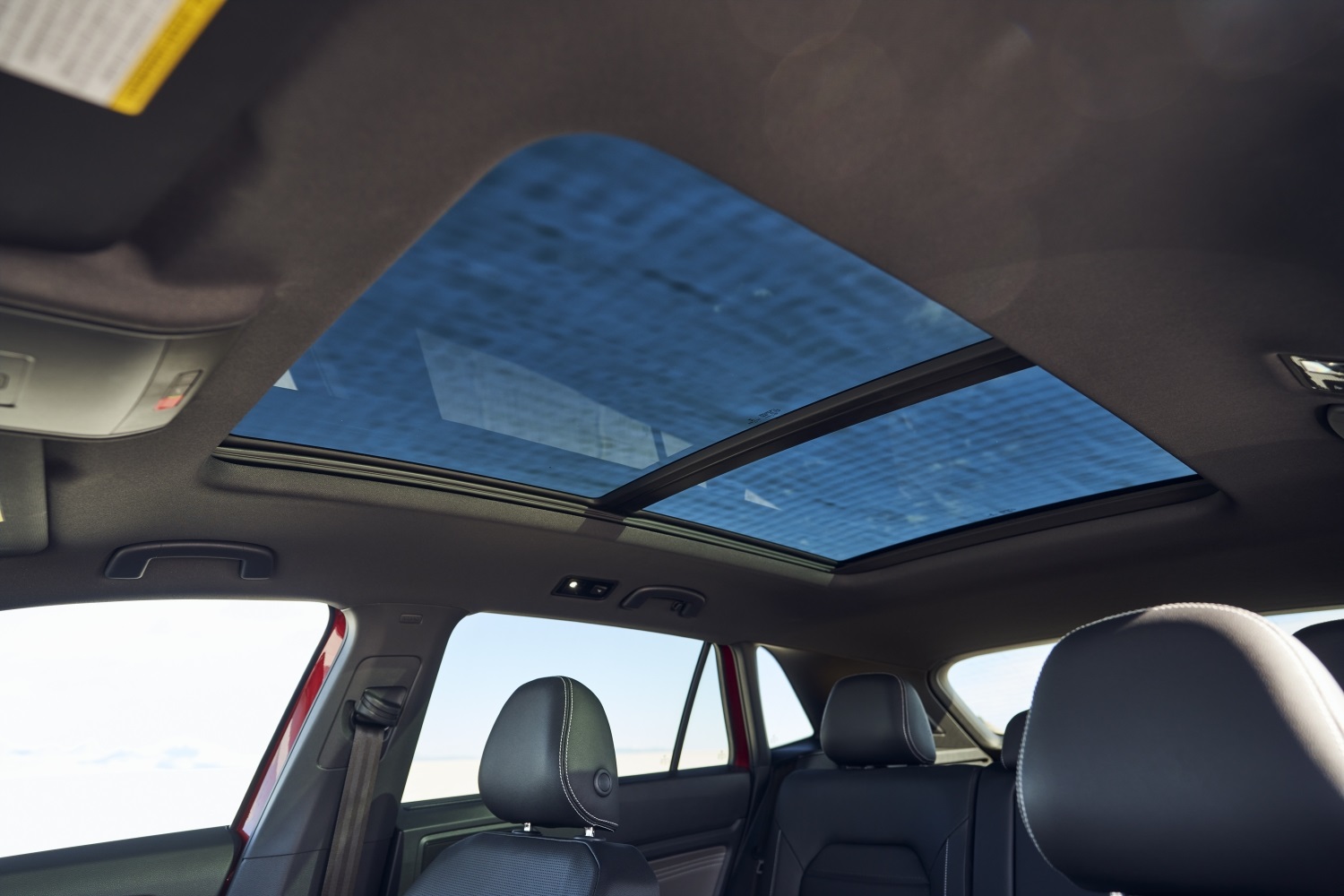
The big sunroof in the Cross Sport

There is chauffeur-class appeal to the second row. (VW)

Cross Sport Interior Function

The SEL Premium cabin is well stocked with creature comforts and useful technologies, which made it easy to forgive the liberal use of black plastic in lower areas; it’s tough looking but not with a cheap finish.

The SEL’s heated seats and steering wheel have three heat settings, which I’d not seen before on a steering wheel. The e-bin on the shift console has two charging USB ports and a wireless pad, but the pad was fussy for my iPhone 8 and wouldn’t function unless I removed its official Apple cover. The deep center armrest console hides another USB port.

I bonded with the lush rotation of the electric steering and how easily I trolled the mall parking in search of a space. The official turning circle is 40.5 feet, but it seems much tighter as the big SUV curls easily into parking slots. The wide-screen camera with an overhead view is helpful when parking, but a front view would be more helpful.

There is solid assembly and contemporary styling elements to the interior, despite the liberal use of black plastic in lower areas. (VW)

Steel-slab security

There is a strong sense of steel-slab security in the architecture. There is a generous space inset from the doors, which is functional as crush space in a side impact.

Sightlines are somewhat complicated by large side mirrors and the broad base of the windshield pillars, which are good for roof-crush standards — but the mirrors can block views of vehicles and pedestrians when turning at intersections. Over-the-shoulder views are unimpeded and I had no issue with seeing out the slimmer back glass.

The e-bin on the shift console has two charging USB ports and a wireless pad, but it was fussy for my iPhone 8. (VW)

After a couple of hours on the road, the seat bottoms will feel hard — so much so that I wanted to pull the wallet from my back pocket. The driver’s seat helps compensate with 10-way power adjustment, though I would have preferred some up-and-down adjustment to the lumbar. The passenger has an eight-way power seat.

The sliding visors have large coverage and there is equally large door-panel storage, with a large, locking glove box.

21-inch Pirelli tires on the Cross Sport

The all-season, 21-inch Pirelli Scorpion Zero tires roll quite smoothly. (VW)

Ride and Handling

There is bullish durability in how solidly the Cross Sport V-6 feels on the road and yet how deftly it managed the tester’s hefty all-wheel-drive curb weight of 4,484 pounds.

It is not quick in its handling and in standard drive mode the ride quality is soft, for a German-engineered SUV, with some bounding over intersection transitions, but it is comfortable. Switch to Sport mode and the shifts become aggressive (almost too much for in-town) and the suspension tightens significantly.

Braking is solid with four-wheel disc brakes, 13.2-inch vented rotors front and 2.2-inch solid rear rotors. The all-season, 21-inch Pirelli Scorpion Zero tires (265/45) have a wide footprint and roll quite smoothly.

Cross Sport back seat

The long doors ease access to the second row. (VW)

Cross Sport Back Seat

There is damn-nice back-seat space accommodations that are almost too nice for children. No parent has the arm length to reach back to subdue squabbles. There is a limousine-class 40.4 inches of legroom and a slightly cropped 37.8 inches of headroom with just a low hump at the transmission tunnel. The seatbacks recline and there is generous two-level stash space in the door panels. There are a pair of vents in the rear of the console, but no fan speed or temp controls.

The back seats, which recline, have 40.4 inches of leisurely legroom. (VW)

There is lots of black plastic and the leather isn’t a showpiece but the tester’s window seats were heated and have a perforated back and cushions. The pull-down armrest has cup-can holders and there are two charging USBs and a 150-watt 115-volt household plug.

Cargo Area

There is a tall lift-up to the cargo floor, which has huge cubic footage behind the second row — 40.3 to 77.8 cu. ft. with the back seat folded. The space is 47 inches wide by 46 inches deep with a height-challenged 29 inches to the headliner.

Cargo space is 47 inches wide by 46 inches deep with a height-challenged 29 inches to the headliner. (VW)

Why Buy the Atlas Cross Sport?

Way back in the 1990s, carmakers would offer two-door versions of their midsize SUVs as the sportier variant. Those short-wheelbase models didn’t fare well in evasive maneuvers or ride quality. Today, the trend is the more rakishly styled five-door SUV variant with the sloped roof to make it look sporty. Basically, it’s an ego purchase in which the buyer pays more and gets less (space) for a still-functional format.

For $51k, the topline V-6 SEL Premium R-Line, is loaded with desirable features and details, but it is not without its quirks. Elements as simple as floor mats and a cargo area roller cover are options, $105 and $180. Its fuel economy is among the lowest among the towing-capable competitors (including the Chevrolet Blazer, Jeep Grand Cherokee, Ford Explorer or Honda Pilot), but its good German engineering is an engaging separator.

But it might not be stylistically different enough from the seven-seat Atlas to be a convincing purchase.

A top-line seven-seat Atlas SEL Premium comparably equipped to the Cross Sport tester works out to be about $1,000 less. But the seven-seater also has the option for second-row captain’s chairs ($695), which are not offered for the Cross Sport.

VW might be missing out on not offering an “Executive Black” seating format and promoting the Cross Sport as the prestigious dressed-for-success SUV.

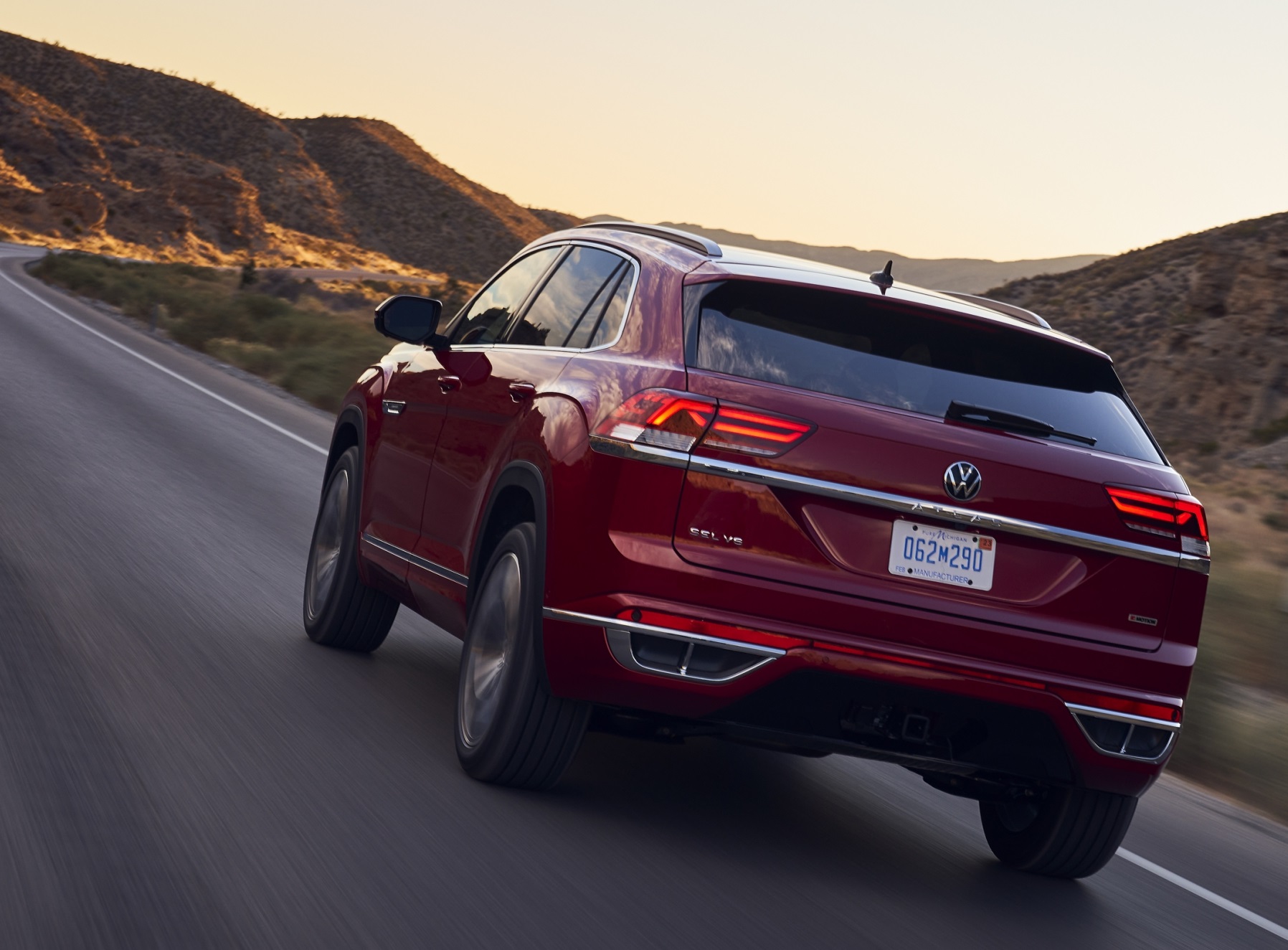
A rear view of the Atlas Cross Sport

There is bullish durability in how solidly the Cross Sport V6 feels on the road. (VW)

2021 Atlas Cross Sport V6 SEL Premium R-Line 

Body style: midsize, 5-seat, 5-door AWD SUV

Engine: 276-hp, direct-injection 3.6-liter VR6 with auto stop-start at idle; 266 lb.-ft. torque at 3,500 rpm

Transmission: 8-speed automatic with 4MOTION permanent all-wheel drive with four performance modes

Fuel economy: 17/23/19 mpg city/hwy/combined; premium preferred for peak power but 87 octane recommended

BY THE NUMBERS

Fuel tank: 19.5 gallons

Cargo space: 40.3-77.8 cu. ft.

Front head/leg room: 39.4/41.6 in.

Rear head/leg room: 37.8/40.4 in.

Length/wheelbase: 195.5/117.3 in.

Curb weight: 4,484 lbs.

Turning circle: 40.5 ft.

Tow capacity: 2,000 lbs. or 5,000-lbs. with tow package ($550)

FEATURES

Standard equipment includes: smart-key locking and push-button ignition, power tilt-and-slide panoramic sunroof, heated and ventilated front seats, 10-way power driver’s seat, 8-way power front passenger seat, 17 cup holders, heated rear (window) seats, electric parking brake, Digital Cockpit (gauge display), power (heated) side mirrors with turn signals, Park Assist with steering assistant, park-distance control front and rear with tones, rearview camera with overhead view, 8-inch touch screen display for navigation-audio-apps, 12-speaker Fender premium audio system with satellite radio, Climatronic dual-zone cabin temperature control, e-bin with 2 USB charging ports and wireless pad, manual lift-up rear window sunshades, ambient cabin lighting, lighted and covered vanity mirrors with sliding visors, stainless-steel pedal covers, 21-inch wheels with 21-inch Pirelli Scorpion Zero tires (265/45), LED headlights-taillights-fog-running lights, trailer hitch, R-Line bumpers-badging-trim, rain-sensing wipers with heated nozzles

Safety features include: 6 air bags, engine-brake assist and electronic differential lock, hill hold and hill-descent control, automatic post-collision braking

IQ.Drive features: Travel Assist (semi-autonomous driver assist), adaptive cruise control with stop-and-go, Lane Assist lane-keeping system, semi-automated Emergency Assist, forward collision warning and autonomous emergency braking and pedestrian monitoring, Active Side assist (blind-spot monitor) and rear traffic alert

PRICING

Base price: $51,220, including $1,195 freight charge; price as tested $51,615

Options on test vehicle: Aurora Red Metallic paint $395

Where assembled: Chattanooga, Tenn.

Warranty: 4-years/50,000-miles includes the powertrain and free maintenance for 2-years or 20,000 miles.

The quickest Bimmer yet: 2022 M5 CS sedan

The quickest Bimmer yet: 2022 M5 CS sedan

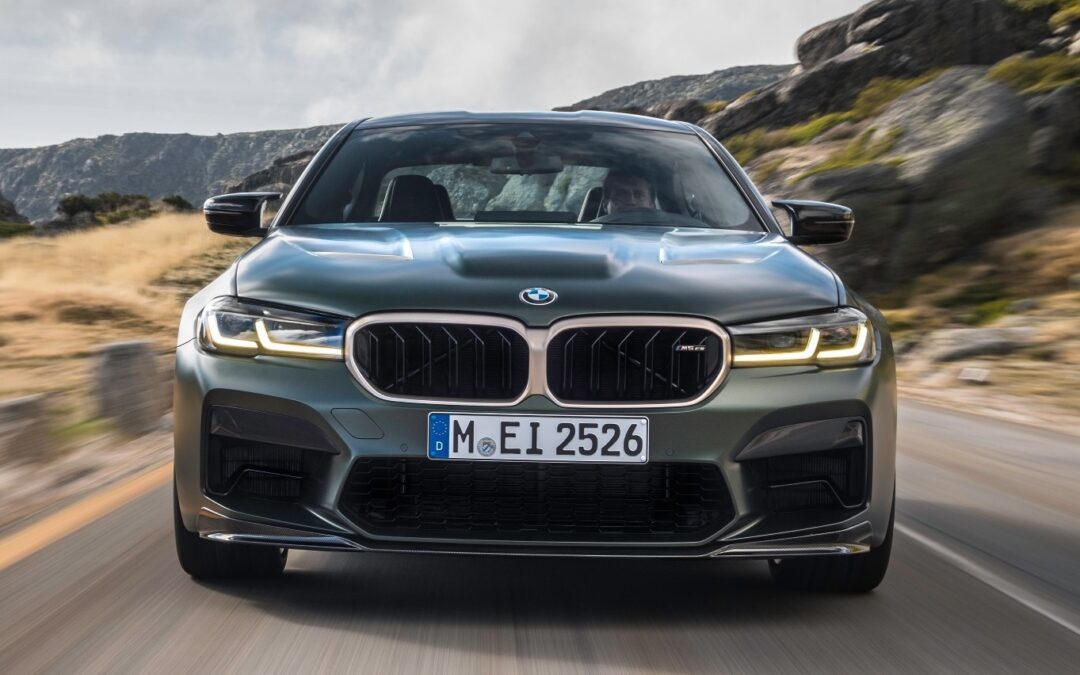
Available only for the 2022 model year, the new limited production all-wheel-drive supersedan builds on the M5. (BMW)


All-wheel-drive supersedan to start at $142,995


BY MARK MAYNARD

BMW has just announced that its 2022 M5 CS sedan is its quickest and most powerful BMW production vehicle ever. Available only for the 2022 model year, the new limited production all-wheel-drive supersedan builds on the M5, recently updated for 2021.

Interior features include power, heated M carbon front bucket seats, two-passenger rear bucket seats, Live Cockpit professional array with two 12.3-inch digital displays. (BMW)

The S63 4.4-liter M TwinPower turbo V-8 has been tuned for 627 horsepower, a boost of 10 hp over the Competition model, with 553 foot-pounds of torque from 1,800-5,950 rpm, which is 90 rpm wider than the M5 Competition.

M carbon bucket seats have integrated head rests and illuminated M5 logos. (BMW)

The power is sent through an eight-speed M Steptronic automatic transmission. Roll on the power for a launch to 60 mph in 2.9 seconds, BMW says, with a top speed of 190 mph, with the Driver’s package.

The S63 4.4-liter M TwinPower turbo V-8 has been tuned for 627 horsepower. (BMW)

Pricing starts at $142,995, including the $995 freight charge from Dingolfing, Germany.

Stand-alone options include:
• Frozen Brands Hatch grey metallic paint and Frozen Deep Green metallic paint;
• Gold painted brake calipers (no-cost option);
• Pirelli P Zero Corsa non-runflat high-performance tires (no-cost option).

Expect its U.S. arrival in the second half of 2021.

With the eight-speed M Steptronic transmission, BMW cites 0-60 mph in 2.9 seconds. (BMW)