Select Page

Kia Carnival Hybrid Review

Kia Carnival Hybrid Review

Kia America adds a 2025 Carnival Hybrid MPV with mileage ratings of 34 mpg city, 31 highway, and 33 mpg combined

A silver Kia Carnival parked amid a forest setting

The 2025 Kia Carnival Hybrid powertrain has mileage ratings of 34/31/33 mpg city/highway/combined. (Photography by Kia or as credited)

Jump To Special Features

What’s New about Carnival for 2025?
Carnival HEV Powertrain
An Evolved Hybrid
2025 Kia Carnival Pricing
Carnival’s Driver Assistance Technologies
Chillin’ In the Lounge
Why Buy the Kia Carnival Hybrid?
Kia Carnival Hybrid Specifications

BY MARK MAYNARD

The Kia Carnival MPV can do almost everything an SUV can do — while dancing backward in high heels. Kia calls its Carnival a multi-purpose vehicle, not a minivan, though it is. It is an ideal people mover for most stages of life.

In its basic form, the Carnival is built for family duty and has many innovative details and features. In its top trim, the Carnival is experiential amid luxurious materials and modernistic design style. Consider it “business elite, not business as usual.”

The Carnival ride brings the comfort of a big sedan, the easy maneuverability of a midsize, and more utility than an SUV.

Kia expanded its Carnival lineup for 2025 with a hybrid powertrain, adding to the standard 290-horsepower V-6. The front-wheel-drive Carnival is not available with all-wheel drive.

In my week’s test of a topline Carnival SX Prestige Hybrid, it defined the EPA’s estimated fuel economy of 34 mpg city, 31 highway, and 33 mpg combined. My overall mileage was 33.7 mpg, and I broke 42.7 mpg on extended highway driving. With the 19-gallon fuel tank, a driver could see a cruising range of more than 600 miles. A road trip awaits.

Today, there are just four minivan choices, including the Carnival: the Chrysler Pacifica, Honda Odyssey, and Toyota Sienna. Of those, only the Honda does not have a hybrid or all-wheel-drive option.

Looking from the second row forward in the Carnival front seats

Spacious accommodations in the front seat area.

What’s New About Carnival for 2025?

Kia has sold a minivan called Sedona in the U.S. since 2002. It was unremarkable compared to the competition at the time, but it did get high marks for safety from NHTSA and IIHS.

Undeterred, Kia moved forward with a second generation in 2005 as a 2006. A third generation came along in 2014 as a 2015. And now, the fourth generation debuted in North America in Feb. 2021 as a 2022 model. The 2022 redesign included adding Kia’s global nameplate Carnival MPV.

Kia updated the 2025 Carnival with new front and rear fascias, redesigned headlights, and taillights. The liftgate was also cleaned up by removing the visible handle release.

The Carnival interior was revamped with an updated center console and new switchgear. The more compelling update is the new hybrid powertrain.

A close of the Carnival's front end with headlights illuminated

The Carnival’s new front fascia. Below, the restyled rear fascia. (Mark Maynard photo)

Looking at the Carnival rear end and the illuminated taillights

The Last Honest Vehicle

Unlike the SUV, the minivan is the last honest vehicle made today. Minivans don’t have to be anything other than what they were intended. They don’t need sport bucket seats with their annoying in-your-crack bottom bolsters, paddle shifters, a tachometer cluttering the driver’s gauge display, or a Sport mode turning the gauge display red.

Manufacturers have tried to sportify the minivan to little avail. Swoops and bulges did not disguise the maternity mode. Aerodynamic fairings and flashy wheels just added to the cost.

There isn’t a beauty competition for a minivan — it just can’t be ugly. Except for the Kia Carnival, there is dowdy minivan DNA in the competitors’ exterior styling. See it mainly in the big hips and broad beam. The Kia Carnival is sleek and nimble to drive.

The view forward from the second row with 37.6 inches of headroom.

The view forward from the second row with 37.6 inches of headroom. (Mark Maynard photo)

Carnival HEV Powertrain

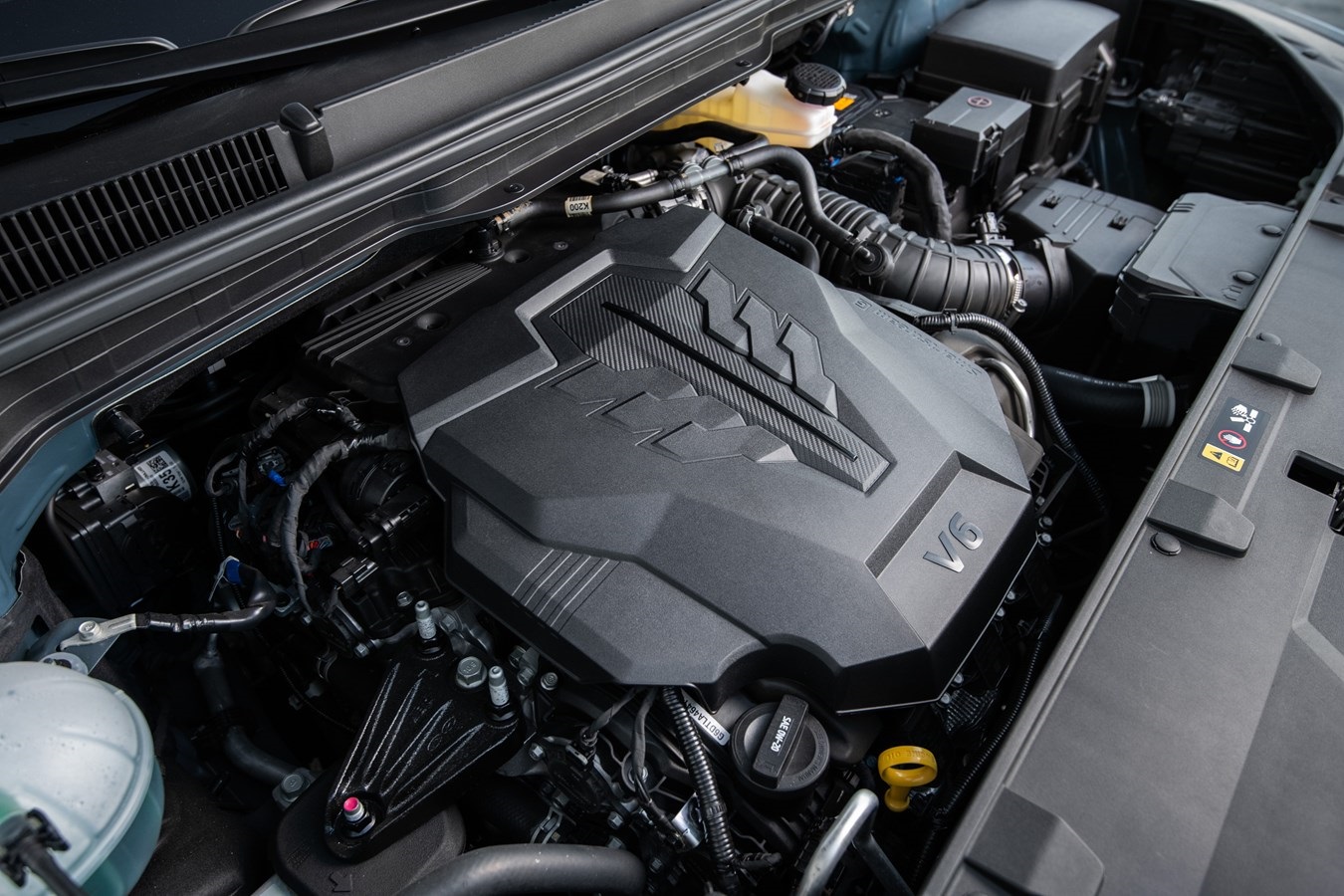
The Kia Carnival Hybrid has a 1.6-liter turbo-hybrid engine, a 54kW motor, and a six-speed automatic transmission. The powertrain’s combined output is 242 hp and 271 foot-pounds of torque.

Other features exclusive to the Carnival Hybrid include 17-inch aerodynamic wheels (standard on the LXS trim), standard active air flaps integrated into the front fascia, and paddle regenerative braking.

Hybrid performance upgrades unique to the Carnival Hybrid include

  • Electrification-Vehicle Motion Control (E-VMC). The paddle shift levers allow you to adjust the amount of regenerative braking with a three-level deceleration control.
  • E-Handling. Stabilizes suspension response when entering and exiting a corner;
  • E-Ride. Specially tuned shock absorbers help smooth bumpy rides;
  • E-Evasive Handling Assist. Helps control vehicle movement during emergency steering.
  • Aerodynamic 17-inch or 19-inch wheels.

I appreciated how much battery driving was available at speeds up to nearly 30 mph.

The gasoline-powered Carnival has a direct-injected 3.5-liter V-6 and an eight-speed automatic transmission. Carnival V-6 has a towing capacity of 3,500 pounds vs. 2,500 lbs. for the Carnival Hybrid. Its fuel economy ratings are an EPA-estimated 18/26/21 mpg city/highway/combined, using the recommended 87 octane fuel.

Looking at the engine bay of the Kia Carnival

The Carnival’s hybrid powertrain has a combined output of 242 horsepower. (Mark Maynard photo)

An Evolved Hybrid

Kia has sophisticated engineering for its gasoline-electric hybrid system. An electrified vehicle’s 12-volt battery is the weak link, whether in a hybrid or a full battery electric. It is common for the 12-volt battery to run down when using features when the engine is not running. I looked for the 12-volt in the Kia Carnival and found none. I did find a 12-volt charging port under the hood.

In researching the system in the owner’s manual, I learned that Kia’s hybrid system has three batteries. The 12-volt AGM (absorbent glass mat) battery is integrated with the lithium-ion hybrid battery pack.

Kia has had this setup since the 2017 Niro hybrid.

An image of the passenger view and talk camera system

How the passenger view appears in the main screen. (Mark Maynard photo)

Auxiliary Parking Battery

The Carnival Hybrid has a secondary lithium battery as an auxiliary parking battery. The 12-volt P-LBM (parking lithium battery module) supports power to modules that need power after the ignition is turned off. Some of those modules include the anti-theft system, entry lighting (which activates the side mirrors when approaching with the key), and the power side doors and liftgate. This battery is charged when the ignition is on.

Parents waiting to pick up children from school or the practice field have a second safeguard against AGM battery rundown. In such cases, Kia says to use “Ready” mode. In Ready mode, the high-voltage battery keeps the 12-volt battery voltage at its operational level. If the high-voltage battery runs low, the engine kicks in to charge it.

The 12-volt battery has a lifespan of three to five years or longer for an AGM battery. When the Kia hybrid battery needs to be replaced, it requires a dealership appointment. Specific steps must be followed during the removal and installation process.

In all new vehicles today, the 12-volt battery must be factory-calibrated when replaced. That means going to the dealership or a repair facility with the (expensive) computer program. If not, the battery will quickly run down.

The hybrid battery and components have warranty coverage of 10 years or 100,000 miles, or 150,000 miles in California.

Dual 12.3-inch displays for driver info and navigation.

Dual 12.3-inch displays for driver info and navigation.

2025 Kia Carnival Pricing

The 2025 Carnival Hybrid is available in four trim levels of LXS, EX, SX, and SX Prestige. MSRP starting prices range from $42,235 to $54,335.

Gas-powered Carnivals are offered in five trims of LX, LXS, EX, SX, and SX Prestige. Starting prices range from $38,235 to $52,335.

The manufacturer suggested retail pricing includes the $1,435 freight charge from Gwangmyeong, Korea.

Today’s tester, a Carnival HEV SX Prestige, cost $57,595 with three options:

  • Ceramic Silver paint, $495,
  • Rear-seat entertainment package, $2,500. The package includes dual seatback screens, second-row VIP power seats with leg support, heated and ventilated seats, and ambient lighting.
  • Carpet floor mats, $265.

Check current Kia Carnival pricing here.

And find special offers and incentives here.

Looking through the steering wheel at the gauge display showing the blind-spot view turn signal image

Blind spot view monitors activate with turn signals.

Carnival’s Driver Assistance Technologies

Central to the Carnival’s advanced driver assist technology is standard Forward Collision-Avoidance Assist, which now includes:

  • Junction Crossing (FCA-JC);
  • Lange-Change Oncoming (FCA-LO);
  • Lange-Change Side (FCA-LS);
  • Evasive Steering Assist (FCA-ESA) on SX models and above.

Carnival SX trims and above also get standard Highway Driving Assist 2. The hands-on semi-autonomous driving technology can maintain a set distance from the vehicle ahead. The system also centers the vehicle within lane markers and will assist in lane changes under certain conditions.

In my test of the Carnival Hybrid’s semi-autonomous driving, the lane centering was consistent, with only an occasional wide swing across the lane lines. The system’s composure was not prone to loud safety alerts.

Spacious accommodations in the front seat area.

Spacious accommodations in the front seat area.

Carnival Interior Function

Space is a minivan’s luxurious frontier. While the Kia Carnival is not a luxury vehicle, its refinement of interior materials, switchgear, and touchpoints is rewarding.

The Carnival cabin has big-and-tall front headroom of 40.9 inches. Front shoulder room (door to door) of 64.2 inches is 2.6 inches wider than the Kia Telluride SUV.

Driver sightlines are unobstructed at the side mirrors and across the hood. Of special value is the around-view camera with overhead and forward views. The camera can be switched on when inching forward in a parking slot or the garage.

There is no stress to step in and buckle up, and definitely no need for running boards. An elevated ride height provides a clear view down the road.

The interior design is fresh, with no faux wood trim, just clean metallic elements. All controls are smartly placed and ergonomically designed.

The shift console is a functional work zone with cup holders divided by a phone slot. A charging e-bin includes a wireless pad and USB charging ports. Small storage areas, including a large armrest box, are handily placed throughout. The side-door panels have large cup holders.

Rather than a flip-down conversation mirror to keep an eye on children, Kia has a video view and talk function. It is accessed through the main 12.3-inch wide screen. It also can be programmed as a one-touch button on the steering wheel.

Dual power sunroofs are standard on the Carnival SX Prestige.

Dual power sunroofs are standard on the Carnival SX Prestige. (Mark Maynard photo)

Carnival Hybrid Ride and Handling

One of the most endearing aspects of minivan ownership is the generally forgiving ride quality. The Kia Carnival is especially adept at not tossing heads when pulling into driveways or transitioning speed bumps. The setup is well-tuned for side-to-side stability. The Carnival rolls along with uncommon quiet and smoothness. However, it can send a shocking jolt over a pothole and rough pavement.

The suspension is a well-engineered four-wheel independent setup with steel springs and gas-charged shock absorbers. There are MacPherson struts at the front and a multi-link rear.

Ride quality with the 19-inch Goodyear Assurance Finesse tires (235/55) was poised and carpet smooth. These tires are affordable, costing between $220 and $250 each when replaced.

Advantageous is the lightweight of the steering and very compact turning circle of 38 feet. It is possible to make a U-turn on most residential streets. Steering control, though light, is entirely on track while cruising at speed.

Four-wheel-disc braking engages with uncommon smoothness and direct engagement. Front and rear rotors are 12.8 inches, with ventilated discs at the front and solid discs rear. These discs are comparable to the competition’s and seem fit to handle a 2,500-pound trailer with brakes.

Looking at the driver side front tire and black wheel

19-inch dark alloy wheels are part of the Carnival HEV SX package. (Mark Maynard photo)

Back Seats and Cargo Space

Sliding side doors are a parent’s friend — power-operated and foot-activated. The openness of the doors allows a parent to get close to the child seat for buckling without hoisting a child up into an SUV’s seating position.

Either power side door can be opened from the driver seat, which is helpful for the school taxi, especially when there is rain or snow.

I would prefer the standard three-position second row; it has more family function than the VIP Lounge seats, which are exclusive to the SX Prestige. With the eight-seat configuration, the second-row seats can be removed, or just the center seat removed for an aisle pass-through to the third row.

Kia adds a nifty feature of slide-flex seat adjustment. Both window seats can be moved manually inward by a couple of inches. The side movement is beneficial with the VIP Lounge seats, which cannot be removed and do not have a fold-and-tumble design for third-row access. The side flex is not much, but it doesn’t take much for a kid to slip by and into the third row.

Lounge seats in full upright positionThere is adult legroom in the second row — 40.5 inches if a tall person is not sitting ahead.

A special feature in the eight-passenger Kia Carnival is a second row “child minding seat.” The center seat can be moved forward on tracks to install a child seat. In that position, a parent in the front row can reach the child. Or just fold the center seat for a tablelike surface, which also can be used by those in the third row.

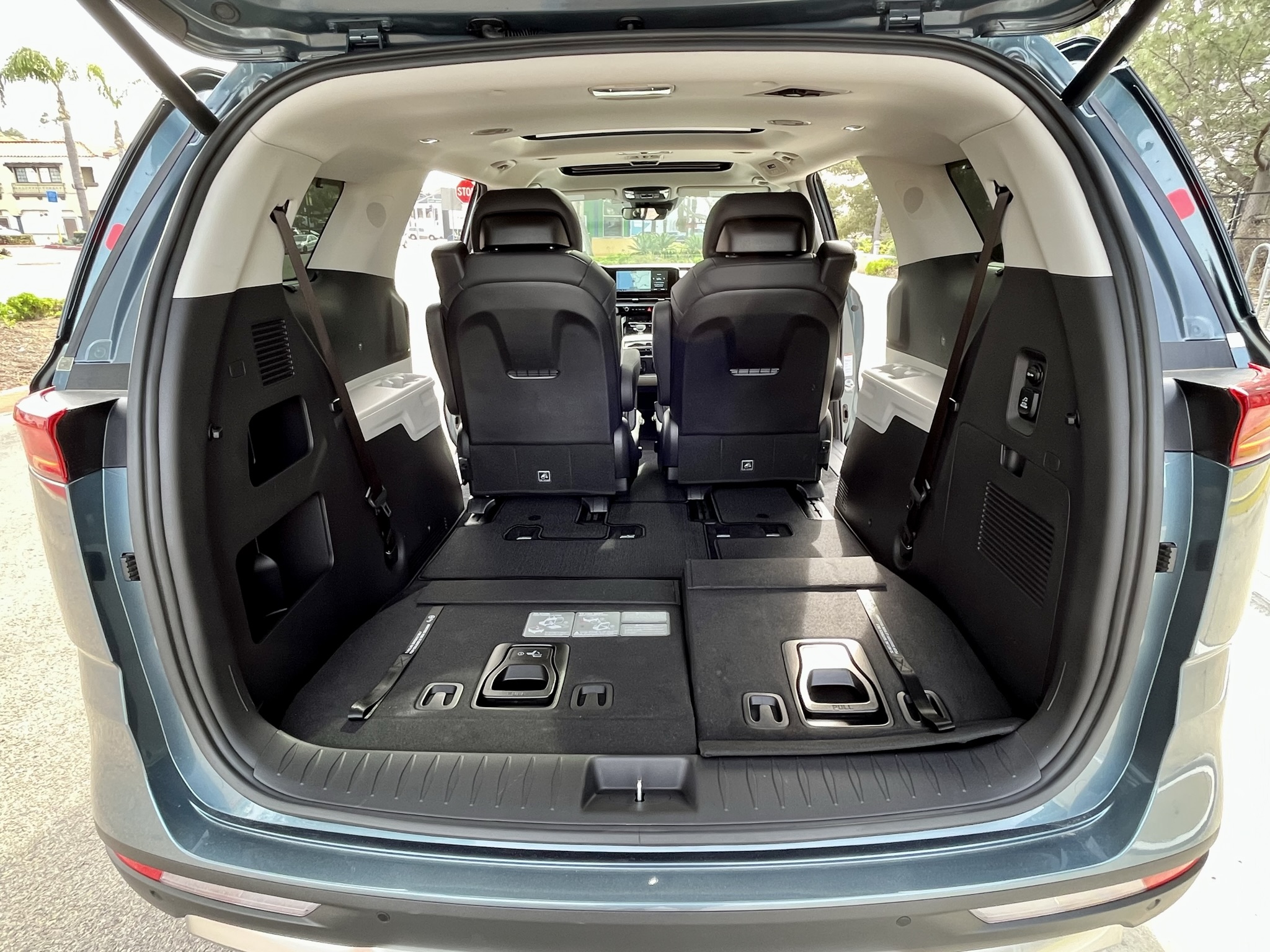
With the second row removed there is four feet in width for hauling sheets of plywood and tools

Second-row seats in the eight-passenger model can be removed for open cargo capacity, 4 feet wide.

Chillin’ In the Lounge

VIP Lounge seats are impressive and entertaining to friends and family, however, the appeal might not last. The seats should not be used in a reclined position while the Carnival is in motion. In the event of emergency braking, the shoulder belt would unlikely hold the occupant in position.

The reclining loungers cannot be removed, such as for romper room cargo function. Heated and ventilated second-row seats are only offered with the $2,500 package.

2nd row VIP lounge seating with leg support extended

2nd row VIP lounge seating with power controls.

Carnival’s Third Row

There is no shortage of details for those in the third row. There are charging ports, an inset for cups or juice boxes, and a phone slot.

Headroom of 38.6 inches is adequate for adults of average size. However, the max legroom of 35.6 inches is up to 3 inches less than in some competitors.

All Carnival models have a deep well of storage space behind the third row.

All Carnival models have a deep well of storage space behind the third row.

Carnival Cargo Space

Carnival earns its cargo salt with the obligatory 4-foot width, as if owners will load sheets of plywood. As with most minivans, the waaay back has multi-function.

With the third-row seats in place, there is a deep well of steamer-trunk capacity that neatly corrals a multitude of grocery bags or whatever. Fold the 60/40 seatbacks to drop flat into the cargo well and a parent could roll in bikes and trikes or strap down a large dog kennel. The interior height of 40 inches is taller than that in most midsize SUVs. Fold the third row for 5 feet of flat space.

Why Buy the Kia Carnival Hybrid?

Save face while saving fuel and emissions.

Minivans are a stage-of-life vehicle. For parents, the Carnival’s utility and function are as rewarding as having a housekeeper. Yet, its styling does not announce we are in a family way.

A rear side view of the Ceramic Silver Carnival

The Kia Carnival has a compact turning circle of 38 feet.

2025 Kia Carnival HEV SX Prestige Specifications

Body style: large 7- to 8-passenger front-wheel-drive minivan

Engine: 242-hp 1.6-liter turbo gasoline direct injection 4-cylinder; 270 lb.-ft. torque

Transmission: 6-speed automatic with steering wheel regenerative braking paddles

Fuel economy: 34/31/33 mpg city/hwy/combined; 86 octane recommended

Motor: 18 hp permanent magnet synchronous

Battery: 270-volt, 5.5 Ah lithium-ion with 64.0 kWh

BY THE NUMBERS

Towing capacity: 2,500 pounds (braked trailer), 1,000 lbs. unbraked

Fuel tank: 19 gallons

Cargo space: 40.2 cubic feet

Front head/leg room: 39.7*/41.1 inches *40.9 in. w/o sunroof

2nd row head/leg room: 37.6/40.5 inches

3rd row head/leg room: 36.5/35.6 inches

Length/wheelbase: 203/121.7 inches

Width/height: 89.2*/68.5** inches *w/side mirrors *w/o roof rails

Curb weight: 4,967 pounds (7-seats); 4,852 lbs. w/8 seats

Turning circle: 38 feet

FEATURES

Standard Carnival equipment includes: smart-key entry and push-button ignition, dual 12.3-inch digital panoramic display, 8-passenger seating with 2nd row child minding seat, SynTex upholstery, electric parking brake, wireless Android Auto and Apple CarPlay, Kia Connect with 3-year Ultimate, satellite radio with 3-mongh subscription, Passenger View and Passenger Talk, dual smart power sliding side doors, tri-zone automatic climate control, wireless phone charger, heated and ventilated power front seats, smartphone digital key

Exterior features include: 19-inch alloy wheels, smart power liftgate, dual power sunroofs, multi LED headlights-fog lights-DRLs, roof rails, rear spoiler, rear privacy glass, tire mobility kit (no spare tire included)

HEV SX Prestige features include: Leather-trimmed upholstery, Dark Edition alloy wheels and exterior accents, LED projector headlights and rear combination taillights, head-up windshield display, Bose premium audio system, heated steering wheel, digital rearview mirror-camera

Safety features include: 7 air bags (including driver’s knee bag), rear occupant alert with ultrasonic sensors, parking distance warning forward and reverse

Driver-assist technologies, include: navigation-based smart cruise control with stop-and-go, forward collision-avoidance assist with cyclist and junction turning; blind-spot collision-avoidance assist; rear cross-traffic collision-avoidance assist; driver attention warning; high-beam assist; lane-keeping assist and lane-following assist; parking collision-avoidance assist reverse; safe exist assist; highway driving assist.

CHASSIS COMPONENTS

Brakes: 4-wheel discs; front, 12.8-inch ventilated rotors; rear, 12.8-inch solid rotors

Steering: Column-mounted electric power steering; 38-foot turning circle

Tires-wheels: 19-inch Goodyear Assurance Finesse tires (235/55); tire-mobility kit; dark alloy wheels

Suspension: front, MacPherson struts with gas shocks; rear, multilink w/gas shocks

PRICING

Base price: $54,335, including $1,435 freight charge; price as tested $57,595

Options on test vehicle: Ceramic Silver paint, $495; Rear-seat entertainment package, $2,500 includes dual screen system, 7-passenger seating, 2nd row power seats with leg support, heated and ventilated 2nd row seats, ambient lighting, glossy interior trim; carpet floor mats, $265.

Where assembled: Gwangmyeong, Korea

Warranties: 10-years/100,000-miles powertrain; 5-years/60,000-miles bumper to bumper with roadside assistance; 10-years/100,000-miles hybrid battery (150,000 miles in California)

Kia Carnival MPV Review

Kia Carnival MPV Review

The 2023 Kia Carnival is an ark of accommodation. Its lean styling is a refreshing reset to the typical minivan’s big hips and broad beam

An exterior view of the blue Kia Carnival in front of a train station

The 2023 Kia Carnival MPV SX Prestige tester was $49,285 with three options. (Mark Maynard photos or as credited)

Jump to Features

The Last Honest Vehicle
Pricing
New for 2023
Interior Function
Back Seats and Cargo
Powertrain and Performance
Ride and Handling
Why Buy the Kia Carnival?
Specifications

BY MARK MAYNARD

I see the look in fathers’ eyes as they follow my slow cruise in the Kia Carnival MPV through the beach parking lot. It is a look of envy — with resignation that their lot in life could be so much easier with that damn M-word — minivan. But, no, their hands and their partner’s hands are struggling to untangle a stroller from a crowded trunk while they schlep armloads of a trike, scooter, and a stuffed duffel of clothes and snacks for when everybody is wet, tired, and cranky.

There is much irrational venom directed at this most-efficient mode of moving people. It is as if the minivan represents swallowed pride to make the best of a sad situation.

I count my blessings that this stage has passed in my life. But I always enjoyed testing minivans. Not for their lively drivability but for an hour or so of free time. I’d park the latest test minivan in the driveway, and the kids would want to do homework or watch a movie. It was a secure space that would give me 45 minutes of peace and quiet … for laundry or cooking.

There is comfort and security in the family minivan. It is the modern ark of accommodation. Sure, bring a friend or three. And parents can pull the seats for room to haul furniture … to usher that college kid to the college dorm.

Minivans are built for comfort and accommodation. They are part lounge and part romper room. And any minivan with a combustion engine will get better fuel economy and cost less to maintain (tires and suspension elements) than a comparably sized SUV.

Driver controls are smartly placed and ergonomically designed.

Driver controls are smartly placed and ergonomically designed.

The Last Honest Vehicle

Unlike the SUV, the minivan is the last honest vehicle made today. Minivans don’t have to be something other than what they were intended. A minivan does not need sport bucket seats with their annoying in-your-crack bottom bolsters. A minivan doesn’t need paddle shifters. They surely don’t need a tachometer, which might be the most worthless space-cluttering element in the driver’s gauge display for an automatic-transmission vehicle. And they don’t need a Sport mode to turn the gauge display red.

Manufacturers have tried to sportify the minivan to little avail. Sporty features, such as aerodynamic fairings and hot wheels, just added to the cost. Today, the minivan segment is small: the Chrysler Pacifica, Honda Odyssey, Toyota Sienna, and today’s tester, the Kia Carnival MPV.

Kia has sold a minivan in the U.S. since 2002 called Sedona. It was unremarkable at the time when compared to the competition from Honda, Chrysler, and Toyota. But it did get high marks for safety from NHTSA and IIHS.

Undeterred, Kia moved forward with a second generation in 2005 as a 2006. A third generation came along in 2014 as a 2015. And now, the fourth generation debuted in North America in Feb. 2021 as a 2022 model. The 2022 redesign included adding Kia’s global nameplate Carnival MPV, or multi-purpose vehicle.

There isn’t a beauty competition for a minivan — it just can’t be ugly. Except for the Kia Carnival, there is dowdy minivan DNA in the exterior styling of the competitors, mainly in the big hips and a broad beam. The Kia Carnival, however, looks more like a business attaché. It has lean lines without contrived curves or bulges to hint at “sport.” The Carnival’s styling is legitimate and contemporary.

The 12.3-inch-wide navigation screen

A 12.3-inch navigation screen. (Kia)

2023 Kia Carnival Pricing

All models of Carnival are front-wheel drive with no option for all-wheel drive. For that traction capability, minivan shoppers must consider the Chrysler Pacifica or Toyota Sienna.

The 2023 Kia Carnival MPV is sold in four trim levels of LX, EX, SX, and SX Prestige. Pricing starts at $34,465 for the LX, and there is an LX Seat Package model for $36,465; it adds eight-passenger seating with SynTex upholstery and second-row slide-flex seat adjustment.

The midrange EX and SX start at $39,965 and $43,165.

The SX Prestige tester starts at $47,565 and was $49,285 with three options:

  • Astra Blue paint ($495);
  • Rear seat entertainment package ($1,000);
  • Carpeted floor mats ($200, for three rows).

All MSRPs include the $1,395 freight charge from Gwangmyeong, Korea.

For current Carnival pricing and incentives, go to Kia.com

VIP lounge seating with power controls.

VIP lounge seating with power controls.

What’s New On the 2023 Kia Carnival?

With the Carnival’s debut just a year ago, updates for 2023 are a minor shuffling of features for the SX and SX Prestige models. And there were price increases of $800 for the LX and EX models and $500 for the SX; the freight charge went up by $70.

SX

  • Integrated panoramic 12.3-inch digital cluster and 12.3-inch center display are now standard;
  • Blind-Spot View Monitor is now standard;
  • Dual screen rear seat entertainment and streaming media package was added as a $1,000 option.

SX Prestige

  • 8-passenger Slide-Flex Seating with second-row center multi-function seat is now standard;
  • Dual screen rear seat entertainment system and streaming media capability is a new $1,000 option;
  • 2nd row VIP Lounge Seats is a no-cost option, replacing 2nd-row Slide-Flex Seats. The seat package is for seven-passenger seating and adds a pair of power-operated VIP lounge seats that recline with leg support and an adjustable headrest. The seats also are heated and ventilated.
The video Passenger View display.

The video Passenger View display.

Carnival Interior Function

Space is the luxurious frontier of a minivan. And while the Kia Carnival is not a luxury vehicle, its refinement of interior materials, switchgear, and touchpoints are of rewarding quality.

The Carnival cabin has big-and-tall front headroom of 40.9 inches and shoulder room (door to door) of 64.2 inches, which is 2.6 inches wider than the Kia Telluride SUV.

Sightlines for the driver are unobstructed at the side mirrors and across the hood. Of special value is the around-view camera with overhead and forward views. The camera can be switched on when inching forward in a parking slot or the garage.

There is no stress to step in and buckle up, and definitely no need for running boards, but there is still an elevated ride height for a clear view down the road.

The interior design is fresh with no old-fogey faux wood trim, just clean metallic trim elements. All controls are smartly placed and ergonomically designed.

The shift console is a functional work zone with cup holders divided by a phone slot. A charging e-bin includes a wireless pad and USB charging ports. Small storage areas are handily placed throughout, including a large armrest box.

Rather than a flip-down conversation mirror to keep an eye on children, Kia has a video passenger view and talk function. It is accessed through the main 12.3-inch wide screen and can be set up as a one-touch button on the steering wheel.

The third row seats in the Kia Carnival

Third-row legroom of 35.6 inches is up to 3 inches less than in some competitors.

Back Seats and Cargo Space

Sliding side doors are a parent’s friend — power-operated and foot activated. The openness of the doors allows a parent to get close to the child seat for buckling without hoisting a child up into an SUV seating position.

The driver has controls to open and close either side door, which is helpful for the school taxi when admitting your charges, especially when there is rain or snow.

I would prefer the standard three-position second row; it has more family function than the VIP Lounge seats that are exclusive to the SX Prestige. With the eight-seat configuration, the second-row seats can be removed, or just the center seat removed for an aisle pass-through to the third row.

Kia adds a nifty feature of slide-flex seat adjustment. Both window seats can be moved manually inward by a couple of inches. The side movement is beneficial with the VIP Lounge seats, which cannot be removed and do not have a fold-and-tumble design for third-row access. The side flex isn’t much, but it doesn’t take much for a kid to slip by and into the third row.

Lounge seats (heated and ventilated) seem like a cool idea, cruising in a La-Z-Boy style with legs supported. But the full recline position made me feel propped up and vulnerable. It might seem more special when parked and watching a movie. I felt uncomfortable (safe) with the sizeable iPad-like video screens so close on the front seatbacks.

There is adult legroom in the second row — a max of 40.5 inches if a tall person is not sitting ahead. But a tall adult might not feel comfortable in full recline of the lounge seats.

The power panel for second-row climate controls.

Electronic second-row climate controls.

Carnival’s Third Row

There is no shortage of details for those in the third row. There are charging ports, an inset for cups or juice boxes, and a phone slot.

Headroom of 38.6 inches is adequate for adults of average size. However, the max legroom of 35.6 inches is up to 3 inches less than some competitors.

The Carnival cargo area with the third row folded

Fold the third row for 5 feet in length of flat storage.

Carnival Cargo Space

Carnival earns its cargo salt with the obligatory 4-foot width, as if owners will load sheets of plywood. As with most minivans, the waaay back has multi-function.

With the third-row seats in place, there is a deep well of steamer-trunk capacity that neatly corrals a multitude of grocery bags or whatever. Fold the 60/40 seatbacks to drop flat into the cargo well and a parent could roll in bikes and trikes or strap down a large dog kennel. The interior height of 40 inches is about 31 inches or less for a midsize SUV. With the third row folded there is flat space that is 5 feet in length.

The storage well in the cargo area when the third row seats are upright

Steamer-trunk cargo capacity behind the third row.

Carnival Powertrain and Performance

No overworked turbocharged four-cylinder for this Carnival. All models have the same V-6 and eight-speed automatic powertrain. The 290-horsepower direct-injected 3.5-liter V-6 has 262 foot-pounds of peak torque at 5,000 rpm.

Fuel economy ratings are 19 mpg city, 26 highway, and 22 mpg combined using the recommended 87 octane fuel. In my week of testing, the mileage around town was 19-21 mpg, and on the highway, I tooled along at 28.9 mpg, which might have gone higher had I not needed to exit.

With the generous 19-gallon fuel tank, thrifty drivers could expect a vacation-driving range of 500 miles or more.

Acceleration force is easy to modulate to maximize mileage or to put the hammer down for evasive action. There is no delay in acceleration response.

An open hood view of the 290-hp 3.5-liter V-6

The 290-hp 3.5-liter V-6. (Kia)

Carnival SX Prestige Ride and Handling

One of the most endearing aspects of minivan ownership is, generally, a forgiving ride quality. The Kia Carnival is especially adept at not tossing heads when pulling into driveways or when transitioning speed bumps.

The suspension is a well-engineered four-wheel independent setup with steel springs and gas-charged shock absorbers. The front has MacPherson struts and a multi-link at the rear.

Ride quality with the 19-inch Goodyear Assurance Finesse tires (235/55) was poised and carpet smooth — traits I did not expect from my past experiences with Goodyear Assurance tires. These tires are affordable and will cost between $220 and $250 each when replaced.

Advantageous is the light weight to the steering and very compact turning circle of 38 feet. It is possible to make a U-turn on most residential streets. Steering control, though light, is entirely on track while cruising at speed.

Four-wheel-disc braking engages with uncommon smoothness and direct engagement. Front and rear rotors are 12.8 inches, with ventilated discs at the front and solid discs rear. These discs are comparable to the competition’s and seem fit to handle a 3,500-pound trailer with brakes.

19-inch Goodyear Assurance Finesse tires and black alloy wheels.

The SX Prestige tester in 19-inch Goodyear Assurance Finesse tires and black alloy wheels.

Why Buy the Kia Carnival?

Minivan marketers have told me that once the children are out of the house, many parents hold onto their weary, old minivan. It’s just too convenient for its size.

If so, the Kia Carnival SX Prestige will be their upgrade minivan. The VIP seats will be a special perk for those travel getaways with friends.

And best of all, the Kia Carnival doesn’t look like a minivan.

The Carnival EX and SX trim levels are the meat and potatoes of family fare. And the package for rear seat entertainment is worth the $1,500 option. It’s the price for 45 minutes of rest time for parents.

A rear view of the Astra Blue Carnival

The Kia Carnival has a very compact turning circle of 38 feet. (Kia)

Kia Carnival SX Prestige Specifications

Body style: large 7- to 8-passenger front-wheel-drive minivan

Engine: 290-hp, direct-injected 3.5-liter V-6; 262 lb.-ft. torque at 5,000 rpm

Transmission: 8-speed automatic

Fuel economy: 19/26/22 mpg; 87 octane

Towing capacity: 3,500 pounds

BY THE NUMBERS

Fuel tank: 19 gallons

Cargo space: 40.2 to 86.9 cubic feet

Front head/leg room: 40.9/41.1 inches

2nd-row head/leg room: 39.5/40.5 inches

3rd-row head/leg room: 38.6/35.6 inches

Length/wheelbase: 203/121.7 inches

Curb weight: 4,727 pounds

Turning circle: 38 feet

FEATURES

SX Prestige standard features, include: smart-key entry and push-button ignition, electric parking brake, surround-view monitor, 12.3-inch dual panoramic displays for driver gauges and navigation, blind-spot view monitors (side mirror image display in driver gauges); smart cruise control with stop-and-go; dual power tilt and slide sunroof; LED projection headlights and LED rear combination lights; LED interior lighting; leather-trimmed upholstery; heated and ventilated front and rear seats; Bose premium audio; heated steering wheel; auto-dimming rearview mirror with Homelink controls, passenger view (camera) and passenger talk.

Safety features include: 7 air bags (including driver’s knee bag), rear occupant alert with ultrasonic sensors, parking distance warning forward and reverse

Driver-assist technologies, include: forward collision-avoidance assist with cyclist and junction turning; blind-spot collision-avoidance assist; rear cross-traffic collision-avoidance assist; driver attention warning and high-beam assist; lane-keeping assist and lane-following assist; parking collision-avoidance assist reverse; safe exist assist; highway driving assist.

PRICING

Base price: $47,565, including $1,395 freight charge; price as tested $49,285

Options on test vehicle: Astra Blue paint $495; rear seat entertainment package $1,000; carpeted floor mats $200, for three rows.

Where assembled: Gwangmyeong, Korea

Warranties: 10-years/100,000-miles powertrain; 5-years/60,000-miles bumper to bumper with roadside assistance

2021 Toyota Sienna XSE Review

2021 Toyota Sienna XSE Review

The 2021 Toyota Sienna is a complete redesign and exclusively powered as a gasoline-electric hybrid

2021 Toyota Sienna XSE exterior.

The sport-themed 2021 Toyota Sienna XSE adds dark 20-inch split five-spoke wheels, more aggressive front and rear bumpers and a black headliner. (Photography by Toyota)


BY MARK MAYNARD

You can fit just about anything in a minivan — except an ego. These three-row people movers are the most efficient modes of transportation, yet ownership has been traumatized ever since the damning label of “Soccer Mom Mobile” was applied. It nearly killed the segment. Mention of the word brings polarized responses, like “hell-no never” to “make way for the welcome wagon.”

To spackle over the crazed aversion, manufacturers have long tried to offer sporty variants, which were usually received with a shrug and “Meh.” Anybody who wanted a van, didn’t need it to be cladded-up and those who didn’t want a van would not be tempted by cosmetic enhancements.

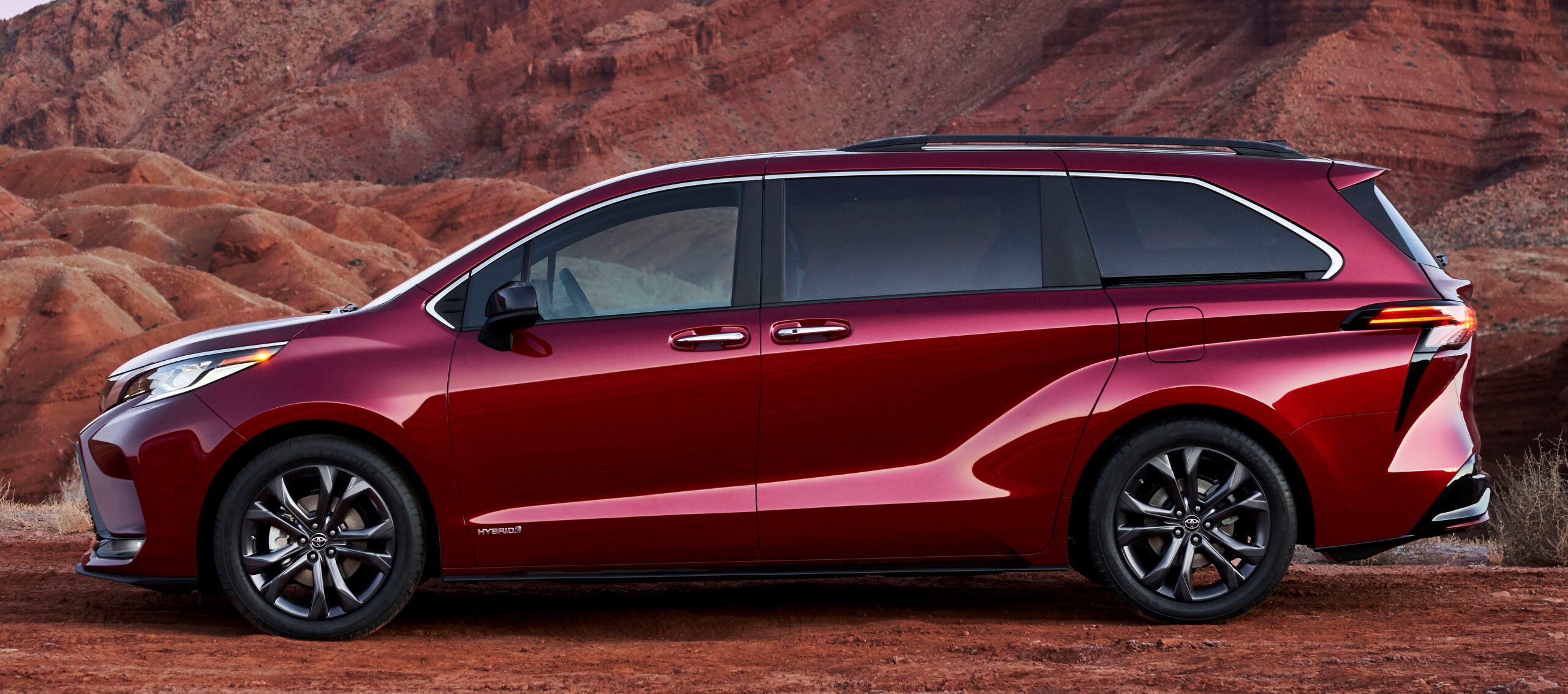
A side view of the new Sienna minivan

The 17-foot-long Sienna drives “small” with a high seating position.

So those carmakers with struggling minivans sales dumped them, including Ford and GM. Today, there are just four 2021 minivan choices: the Chrysler Pacifica, Honda Odyssey, Kia Sedona (soon to be replaced by the Carnival), and today’s tester, the Toyota Sienna.

Toyota’s sculpted redesign of its 2021 Sienna makes for a more credible sporty variant in the new XSE model. Whether for minivan-hating parents or their children, the Sienna is a big toy box of possibilities, and now a greener choice.

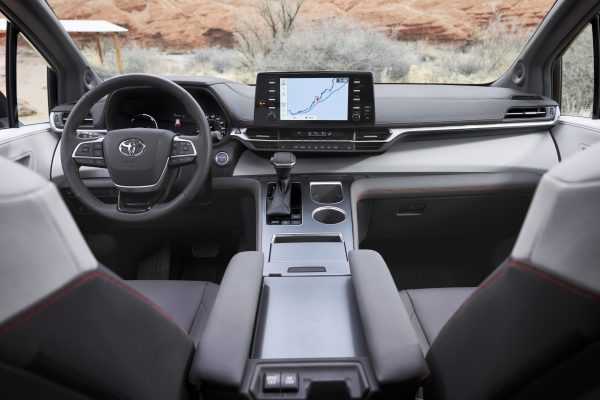
Front seats in the Sienna minivan.

The shifter and necessary functions are all within easy reach.

2021 Toyota Sienna Pricing

The first Sienna went on sale in the United States as a 1998 model and is now in its fourth generation. It has been designed, engineered, and assembled in the U.S. since it debuted.

The 2021 Toyota Sienna is a complete redesign and exclusively powered as a gasoline-electric hybrid, with optional all-wheel drive and seating for seven or eight.

A view of the Sienna's rear end

Toyota applied a few styling tricks to tone down the traditional minivan styling.

The Sienna is sold in five trim levels of LE, XLE, XSE, Limited, and Platinum. Starting prices range from $35,635 for the eight-seat, front-drive LE to $51,710 for the seven-seat Platinum AWD. Pricing includes the $1,175 freight charge from Princeton, Ind.

Some Sienna XLE models and the XSE, Limited, and Platinum are seven-seat models and feature the super-long-slide second-row captain’s chairs, and the Limited and Platinum FWD models have ottomans.

Electronic on-demand AWD is just a $760 option.

The XSE Plus package ($1,000) adds wireless phone charging, black roof rails, 12-speaker JBL audio, 9-inch touch screen, and dynamic navigation with a 3-year trial and connected services.

Pricing incentives for APR, cash, and lease.

2021 Toyota Sienna front seat features with the under-console storage area.

The broad span of the instrument panel has a step-down shelf.

Warranty Coverage

Hybrid-related components that require repairs to correct defects in materials or workmanship are covered for 8 years or 100,000 miles from the original date of first use when sold as new. The hybrid battery is covered for 10-years/150,000-miles and is transferrable across ownership.

The new-vehicle warranty includes 3-years/36,000-miles bumper to bumper; 5-years/60,000-miles powertrain; and 2-years/25,000-miles ToyotaCare, free factory scheduled services, and 24/7 roadside assistance.

Super long slide second-row seats.

Super-long-slide second-row captain’s chairs.

Styling

Here’s how Toyota tried to take the minivan out of the styling:

•A speedy pillar at the rear cabin is dynamically angled forward;
•Thin bands of LED lighting at the taillight flow from the body to the rear to create a signature impression;
•Integrated black taillight canard looks cool but also improves aerodynamics;
•Sculpted tailgate with an integrated spoiler is made possible by a molded resin process.

The minivan's gearshift console.

The shift console is cleverly integrates storage and cup holders. 

Ride and Handling

No tachometer, no wedgie-inducing front seats, no problem.

As a father now graduated from child-rearing years, I always liked testing minivans, and not just because my two charges ran to do homework in the van.

It’s the view from the inside out that mattered — not that I might be judged a “soccer dad,” though my step-daughter was a brutally effective club soccer player.

Ride quality in the XSE is slightly sport-tuned but never harsh or pitchy. There is good driver connectivity between the steering input, braking response, and acceleration.

Second-row captain's chairs.

The storage areas are a vertical ecosystem of tiers, trays, and cubbies.

20-inch Tires and Wheels

The front-drive XSE has 20-inch Michelin Primacy all-season tires, P235/50; AWD models get 18-inch tires, P235/60. Its exterior appearance is somewhat sportified by dark 20-inch split five-spoke wheels and aggressive front and rear bumpers.

Despite the Sienna’s 17-foot-length, it drives “small” with a high seating position, low step-in height, and big windows, with privacy glass behind the front row. Driver sightlines are open across the hood and over the shoulder and the turning circle is refreshingly modest at 38.2 feet, though you’ll have to swing a little wider when steering into the parking stall.

Four-wheel disc brakes work without regen-grab common to some of Toyota’s other hybrid models. Ventilated discs front and rear are towing capable (up to 3,500 pounds) with 12.9-inch discs front, 12.5 inches rear.

The XSE has dark chrome wheels and all-season tires.

The Sienna XSE has dark 20-inch split five-spoke wheels.

Sienna Safety Features

The Toyota Safety Sense (TSS 2.0) system includes a pre-collision system with daytime and low-light vehicle and pedestrian detection, plus daytime bicyclist detection. Automatic braking is activated by PCS if the driver does not react in time in certain emergency situations. The system also can detect a vehicle ahead, a bicyclist, or a pedestrian in low light situations.

Other standard equipment on all trim levels are 10 air bags, stability, and traction controls, brake-force distribution, brake assist, blind-spot monitor with rear cross-traffic alert.

Driver-Assist Systems

The standard Toyota Safety Sense 2.0 package of technologies allows Level 2 semi-autonomous driving while keeping both hands on the wheel. Keeping the Sienna on the correct track is enhanced by all-speed dynamic radar cruise control and lane change assist, lane tracing assist, front cross-traffic alert, and pedestrian alert.

The system capably keeps the car centered in the lane, but like most systems, it will randomly shut off, sometimes due to variable light and road-surface conditions. This type of safety system will be beneficial for those drivers who have daily commutes in heavy traffic. It is an extra six eyes on the road to watch for less attentive drivers.

2021 Toyota Sienna Softex trimmed seat upholstery.

Softex-trimmed seat upholstery and heated power front seats are standard on the XSE.

Sienna Hybrid Powertrain

The Sienna’s gasoline-electric hybrid system integrates a 176-horsepower, direct-injection 2.5-liter four-cylinder with two electric motors, a front-drive 134 kW (180-hp) permanent-magnet synchronous, and a 40-kW rear.

Toyota’s use of a nickel-metal hydride battery pack isn’t as technologically high-powered as a lithium-ion battery pack, but I couldn’t tell a difference, it just works. With  288-volts, the battery pack lets the Sienna roll for blocks on silent battery power at low speeds or creeping in traffic. This is the same well-tested system Toyota has used for years.

With a combined power of 245-hp, there was no lag in launch power and it will cruise comfortably at highway speeds. The electronic continuously variable transmission (eCVT) has a sequential shift mode, but I didn’t feel the need. The CVT kept the power easily controlled under my right foot.

Official fuel economy ratings are 36 mpg city, 36 highway, and 36 mpg combined for front-drive and 35/36/35 mpg AWD, using the recommended 87 octane. In a test week of 142 miles, my average fuel economy ranged from 27.5 to 29.8 mpg, and it was still building when I had to exit the freeway.

Interior Function

The entire cabin of the 2021 Toyota Sienna is well-soundproofed and quiet rolling with the Michelins.

Interior storage opportunities are a vertical ecosystem of tiers, trays, and cubbies. In all, there are seven USBs, six of them for charging, 18 cup holders, onboard Wi-Fi, and the optional Driver Easy Speak, which is essentially a built-in PA system that carries the driver’s voice through the audio system to the rear seats to the source of the disturbance.

The broad span of the instrument panel has a step-down shelf, handy for the passenger to lay a phone and the door panels have spacious bottle storage and a shallow tray. Toyota says the unique Bridge Console is key to allocating personalized space to the driver and front passenger. Positioned high between the driver and passenger, the bridge connects the instrument panel to the center armrest. Beneath the bridge is a large open area to stow out of sight larger items such as a purse or bag. But the bridge takes away the once-familiar step-through for parents to slip into the back seat for child care or discipline.

Clever Engineering

The shift console is cleverly designed to integrate storage and cup holders, of which there are four. A cutout for the two smaller cup holders nearest to the driver’s elbow is made dual purpose with a tip-back lid that leaves a 6-inch-wide by 1.24-inch slot for a phone, errand list, or note pad. One of the larger cup holders nearest the wireless charging pad and a charging USB also integrates a phone-size slot.

There is deep storage in the armrest console (12 inches to the bottom) with a pair of charging USBs. The space is handy for holding the pair of wireless headphones for the optional rear-seat entertainment system.

The Toyota Sienna's cargo area with folded third-row seats

Split & Stow third-row seats are cleverly engineered. (Mark Maynard)

Back Seats and Cargo

Kick-activated sliding doors and the back seat step-in height of 18 inches are child-reasonable. There is nearly 3 feet of NBA-class legroom provided by the super-long-slide second-row captain’s chairs, which also recline. Manual sunshades in the second row are assets as are two more charging USBs.

Power ports in the Toyota Sienna's cargo area.

The cargo area has a 1500-watt household power plug. (Mark Maynard)

And there is another pair of charging USBs in the third row, which is a Split & Stow design. It takes a hefty tug to stow or restore the seats and the flat area when the seats are stowed has no covering so dog crates or other such materials might not ride flat without bolstering.

Woodland Special Edition

Adventurers will be able to embrace their nomad lifestyle this fall with the Sienna Woodland Special Edition. Pricing has not been announced but is expected to start at around $45,000, including all-wheel drive and raised suspension.

Special features include:

•1500-watt capable power outlet (to power most household items for a day trip or an overnight camping excursion);
•Tow hitch with a 3,500-pound trailer weight;
•Roof rails with crossbars;
•Exclusive Cement paint color;
•Black sport trimmed seats with unique stitch color;
•18-inch wheels;
•Dark chrome-colored accents;
•Black badging;
•Navigation with 12-speaker JBL 1200-watt audio system.

Other standard Woodland Edition equipment includes super-long-slide second-row captain’s chairs, Split & Stow 3rd Row Seat, kick-activated sliding doors, heated front driver and passenger seats, sunshades in the second row, and seven USB ports across all three rows.

And with every sale, Toyota will make a $250 donation to the National Environmental Education Foundation. The effort will be a guaranteed minimum donation of $250,000 to support NEEF’s mission to make the environment more accessible, relatable, and connected to people’s lives.

The 2022 Toyota Sienna Woodland Edition.

The 2022 Woodland Edition features the exclusive Cement paint color.

Why Buy the 2021 Toyota Sienna?

With the substantial baggage most drivers drag along with them every day, a rational society might think that a minivan would be a top seller. But minivans are like green vegetables — we know should eat more of them, but for many, it is the sexiness of SUV fast food that wins the sale.

The Sienna is green and very inviting for an extended road trip. My average fuel economy of 28-plus-mpg was impressive, though I never transported a van full of people.

Its exterior styling is attractive and somewhat eye-catching on the road … for a minivan. But it is the inside where this minivan far exceeds any utility of an SUV or its fuel economy or ease of entry — and all that with a tow rating of 3,500 pounds.

2021 Toyota Sienna XSE FWD Specifications

Body style: Full-size 7- to 8-seat front- or AWD minivan

Engine: 176-hp, direct-injection 2.5-liter 4-cylinder; 176 lb.-ft. torque at 4,400 rpm

Electric motors: 134 kW (180 hp) permanent-magnet synchronous front; 40 kW rear

Hybrid battery pack: Nickel metal hydride; 288 volts; 40 cells, 7.2-volts per cell; 650 volts maximum

Combined net power: 245-hp

Transmission: eCVT with sequential shift mode

Fuel economy: 36/36/36 (FWD) 35/36/35 (AWD) city/hwy/combined; 87 octane

BY THE NUMBERS

Fuel tank: 18 gallons

Cargo space: 33.5-75.2 cu. ft. behind 2nd/3rd rows

Front head/leg room: 40.1/40.3 in.

2nd-row head/leg room: 39.3/39.9 in.

3rd-row head/leg room: 37.4/38.7 in.

Length/wheelbase: 204.1/120.5 in.

Curb weight: 4,675 lbs.

Turning circle: 39.2 ft. FWD (20-inch wheels); 38.3 ft. AWD (18-inch wheels)

Tow capacity: 3,500 lbs.

Coefficient of drag: 0.28

Safety features include: 10 air bags, Toyota’s Star Safety System (stability and traction controls), brake-force distribution, brake assist and smart-stop technology, blind-spot monitor with rear cross-traffic alert.

Toyota Safety Sense 2.0, includes a pre-collision system with daytime and low-light vehicle and pedestrian detection, and daytime bicyclist detection; full-speed range dynamic radar cruise control; lane departure alert with steering assist; automatic high-beam headlights; lane tracing assist; and road sign assist

PRICING

Base price: $42,000, including the $1,175 freight charge. Price as tested $46,843

Options on test vehicle: Ruby Pearl metallic paint $425; Rear seat entertainment system with 2 wireless headphones $1,415; XSE Plus package $1,000; 1,500-watt power inverter $300; Rear bumper applique $69; Floor and cargo mat package $294; wheel locks $65

Where assembled: Princeton, Ind.

Warranty: 3-years/36,000-miles basic bumper to bumper; 5-years/60,000-miles powertrain; 10-years/150,000-miles hybrid battery; 8-years/100,000-miles hybrid system; 2-years/25,000-miles ToyotaCare, free factory scheduled services and 24/7 roadside assistance