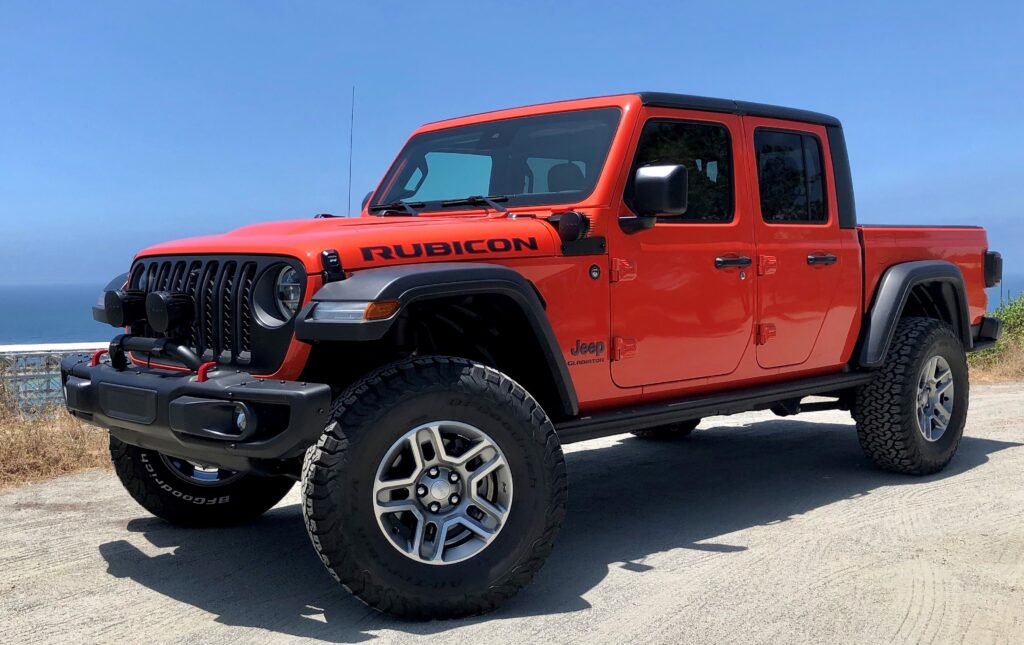
Starting at $45,370, the Jeep Gladiator Rubicon is the pinnacle of Trail Rated features for adventuring. But the Manufacturer’s Suggested Retail Price of a new vehicle is as vague as a stoplight in Boston — a suggestion, at best.
To spark some red mist for the buyer — while ratcheting up the cost — manufacturers have aggressively pursued their catalogs of personalization and performance accessories. If you can imagine it, it’s probably offered or will be.
A 2-inch lift kit, $1,495, to add bigger tires and wheels.
Jeep and Mopar have been masterful at providing factory-sanctioned upgrades that can be ordered with their new Jeep. And the upgrades are covered by the same new vehicle warranty protections.
Most new luxury cars or SUVs are bought with $10,000 in options or packages. And sometimes a package alone is $10,000, or more.
Fox 2.0 performance shocks are standard equipment on the Rubicon.
From unique paint colors to better leather, bigger wheels, lower-profile tires, crests, badges, colored seat belts, more gratuitous performance, LED lighting, and techno-marvelous infotainment systems to extended warranties, what the customer wants, the customer gets … for a price.
Jeep has long been a champion of choice with several versions of four-wheel-drive systems, soft and hard tops, street tires or adventure treads, audio and style perks.
And then there’s the Mopar catalog with more than 200 accessories. Mopar (MOtor PARts) is the parts, service, and primary accessory seller for Stellantis brands under the Mopar brand.
Katzkin leather seats, $1,750.
Jeep Performance Parts
Jeeps are basically a canvas and Jeep Performance Parts are the buyer’s paints for personalization. So far, there are 200 Mopar products available for the Gladiator.
I’ve just tested a Jeep Gladiator Rubicon, the top-line off-roader, that had $12,400 in Jeep/Mopar performance parts.
Rearview camera and front-facing trail cam, $595.
At $45,370 the Gladiator Rubicon is the pinnacle of Trail Rated features, including the 4:1 Rock-Trac heavy-duty four-wheel-drive system (with an Off-Road Plus mode), locking front and rear axles, disconnecting front stabilizer bar, steel rock rails, and an appetite for adventuring.
For those serious about getting there and back in demanding off-road adventures, this is the rig to consider. But access doesn’t come cheaply.
Decked truck-bed storage system, $1,295.Tri-fold hard tonneau cover, $950, and spray-on bedliner, $495.
With the Jeep Performance upgrades, by Chrysler FCA’s Mopar performance division, the tester had a sticker of $58,955, including the striking Punk’n Metallic paint ($245).
But there is a reprieve when buying new. The performance parts have the same basic, limited warranty as the vehicle — 3-years or 36,000-miles — and they can be rolled into the financing (with the cost of labor for parts installation).
Jeep-logo hood latches, $60.
The Jeep Gladiator Rubicon tester is a formidable pickup that includes city features. Commuters will value the adaptive cruise control with idle stop-and-go function in traffic and full-speed collision warning.
And this wide rig with a 44.8-foot turning circle benefited from the Jeep Active Safety Group, $895. The package adds blind-spot and cross-path detection and ParkSense rear park-assist system, which alerts to the nearness of an object.
Set of two 7-inch LED off-road lights, 8,000 lumens each, $725.Set of two 5-inch LED off-road lights, 4,800 lumens each, $475.
The 8.4-inch Uconnect infotainment touch screen is an upright and visible display for the rearview camera, with guidance lines. But it’s even better for the front-facing trail cam, $595.
JPP accessories
The tester also included $12,400 JPP accessories for:
A 2-inch lift kit lift, $1,495. Created by Jeep engineers and Fox shocks so owners can add bigger tires and wheels.
Military-grade 7-inch off-road LED lights, $725 two-light set. The lights have an 8,000-lumens output, each. Mounting brackets, $65
Tires. Mopar/FCA dealers have a “TireWorks program” that gives access to different tire brands. The dealer can source whatever brand, model, and size (up to 35 inches) the customer prefers depending on their intended use — whether on-road, off-road or a combination.
Black satin grille, $325
Heavy-duty rock rails, $950. To help slide across objects with high-centering potential. The heavy-gauge steel rock rails are thicker and wider than stock in a non-slip powder-coat finish.
Tri-fold tonneau system, $950.
Bed storage system, $1,295. A heavy-duty pair of lockable, sliding drawers (200-pound capacity) to secure gear, supplies and tools.
Seatback Molle design storage bags, $145 set of three.
Katzkin leather seats, $1,750. Embroidered with Jeep grille logo in Tungsten stitching.
Mopar grab handles, $39 each for first and second rows. hard-secured for increased grip.
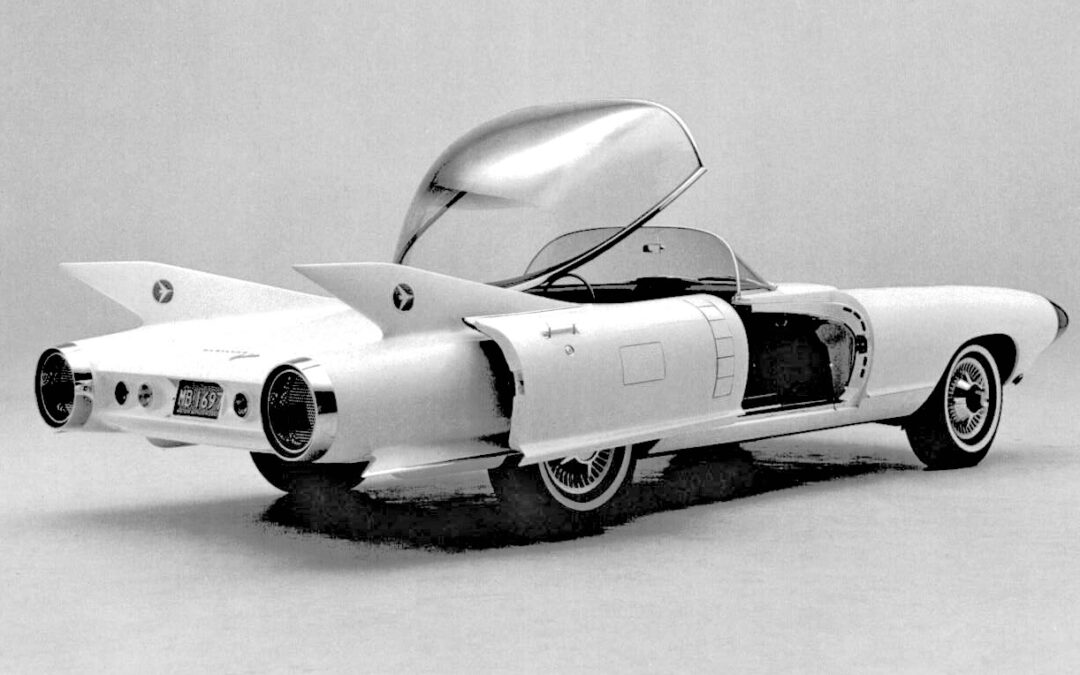
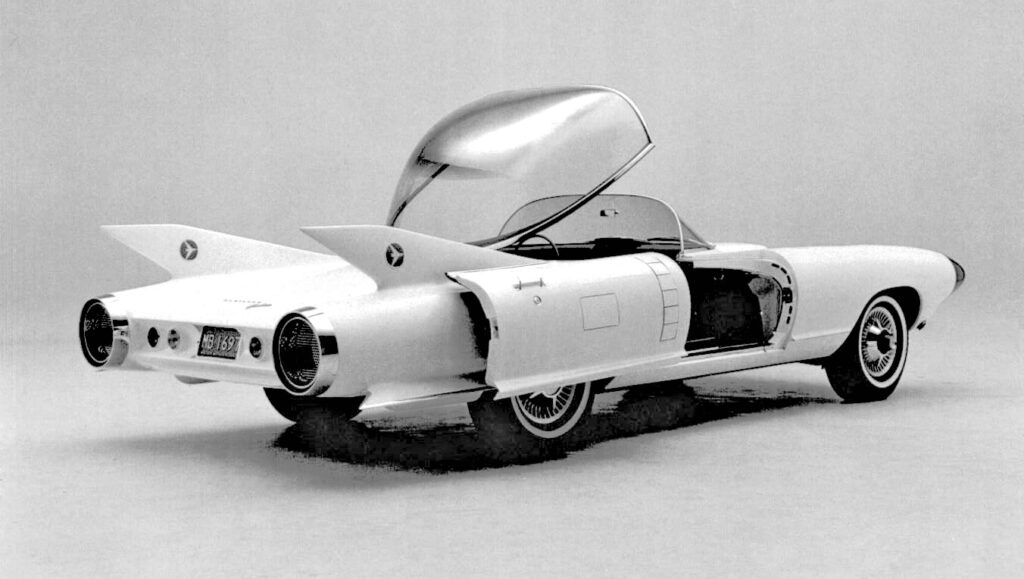
The Cadillac Cyclone featured a radar-operated collision avoidance system . (GM PR archives)
One of the last cars designed by Harley Earl, the 1956 Cyclone concept was a test-bed for futuristic styling and technology, according to Wikipedia. The design was heavily inspired by the aviation and rocket designs of the 1950s.
The Cyclone was built on a 104-inch wheelbase chassis and featured a front-mounted 390-cubic-inch V-8 engine, rear-mounted automatic transaxle and an all-wheel independent suspension.
A unique design was the engine exhaust that was ported out just ahead of the front wheels. It also featured a radar-operated collision avoidance system, with the radar sensors mounted in twin “nose-cones” on the front of the car.
The bubble-top canopy, silver coated for UV protection, automatically opened along with the sliding electrically operated doors. The canopy could also be stowed in the rear compartment, where it rested on a special air-bag base.
The original design of the Cyclone included larger tailfins (similar looking to the 1959 Cadillac lineup), adorned with the logo of the General Motors Air Transport Section (GMATS). The fins were reduced in size in 1964 (and the GMATS logo removed) to look more like the 1963-64 Cadillac range.
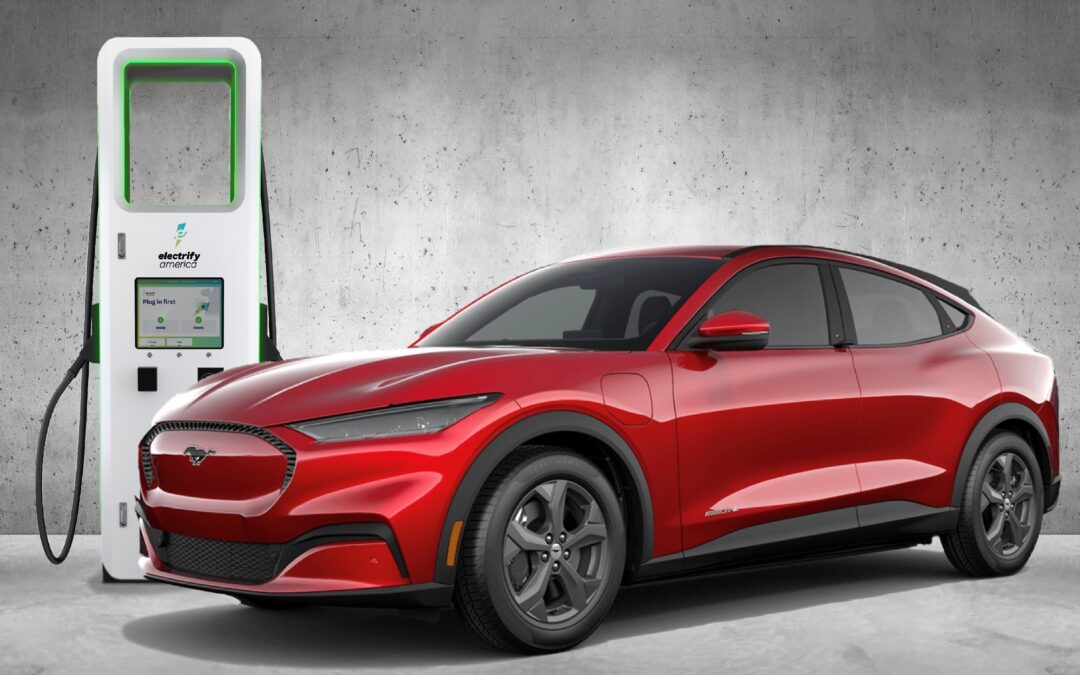
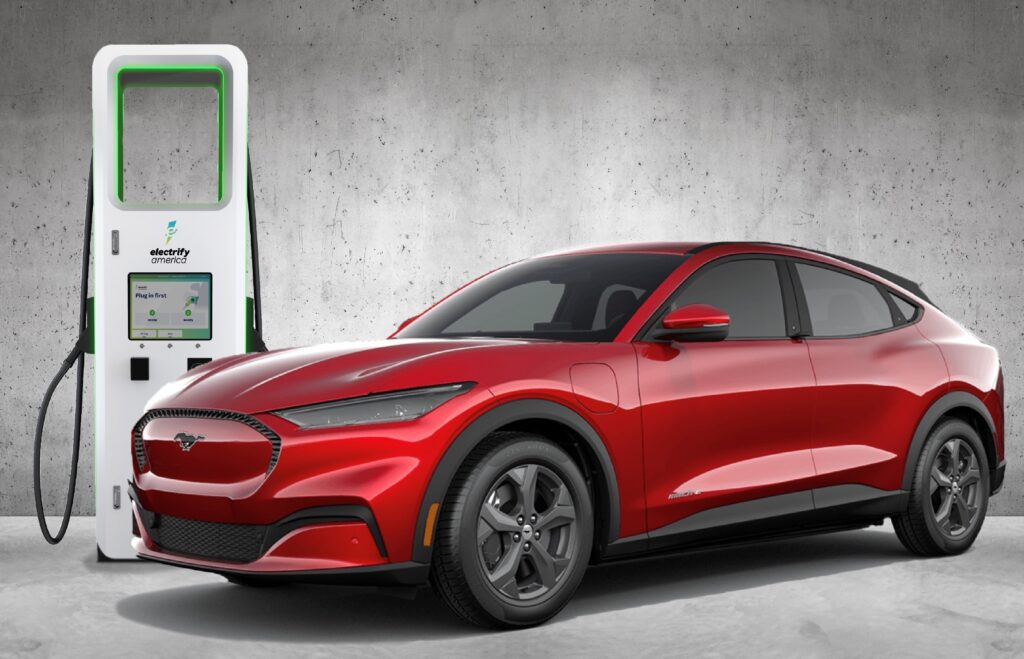
Ford Mustang Mach-E owners will receive 250 kilowatt-hours of complimentary charging through FordPass Rewards at Electrify America fast-charging stations. (Ford)
To kick-start their electric Mustang Mach-E experience, Ford announced June 15 that owners will receive 250 kilowatt-hours of complimentary charging through FordPass Rewards at Electrify America fast-charging stations. That’s the equivalent of approximately three to five full DC fast charges, Ford said in a statement.
According to GreenCarReports.com, that’s potentially a value of hundreds of dollars at EA’s $0.99-per-minute standard rate.
For Mustang Mach-E owners with the extended-range battery, the 250 kilowatt-hours of fast-charging energy is equal to more than three fill-ups. For standard-range models, the free charging is equal to more than five fill-ups.
Using Electrify America’s DC fast chargers, a rear-wheel-drive Mach-E with an extended-range battery can add an estimated 61 miles of range in approximately 10 minutes. All-wheel-drive and rear-wheel-drive cars are estimated to achieve a 10 percent to 80 percent charge in approximately 45 minutes, Ford said.
The free charging will give Mach-E owners the confidence to plan trips, no matter their destination, said Matt Stover, Ford director of charging, energy services and business development.
“One of the main opportunities we have is educating our potential customers about road-trip readiness,” said Stover.
The free charging is in addition to the two years of free access to the FordPass Charging Network. The network is North America’s largest public charging network, Ford said, with more than 13,500 charging stations and almost 40,000 individual plugs.
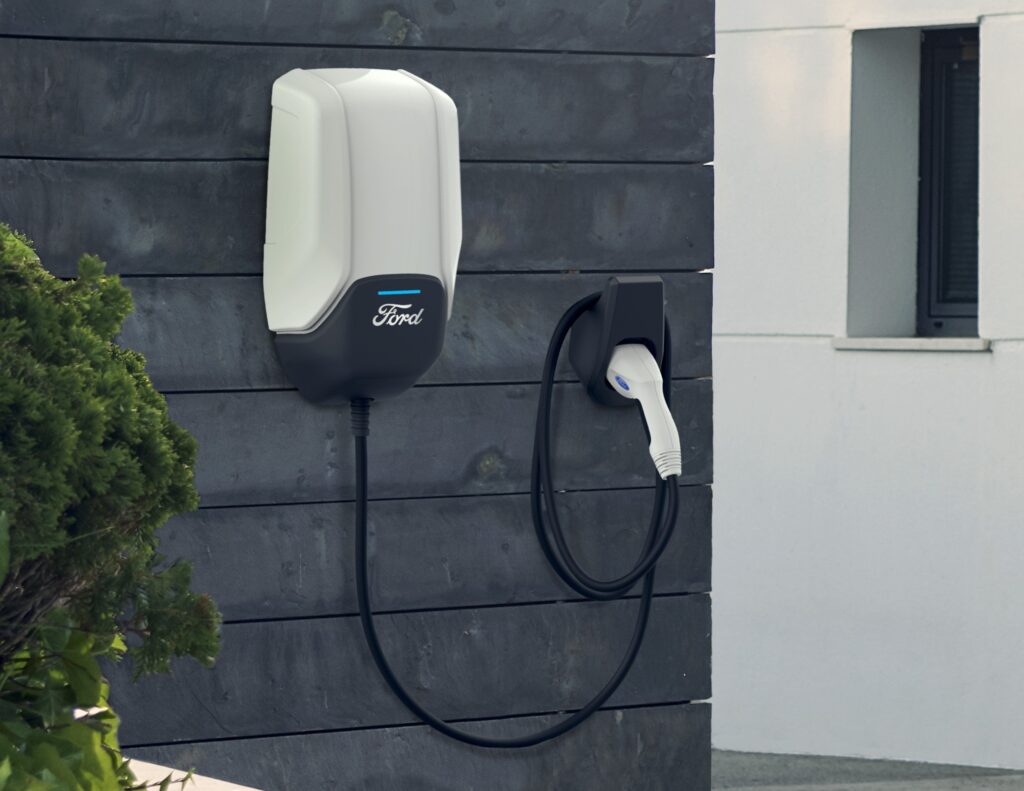
Ford Connected Charge Station wallbox will start at $799. (Ford)
Home charging
Ford also announced that a 240-volt, Level 2 home wallbox will be available for $799, excluding taxes. The Ford Connected Charge Station is available at the dealership or online with the purchase of the Mach-E or at FordParts.com.
The 48-amp charge station will be able to charge overnight a rear-wheel-drive Mach-E with extended-range battery. The Mach-E also will have a mobile charge cable, capable of charging on a higher-voltage 240-volt electrical outlet.
Ford works with Amazon Home Services for installation of home charging setups, which will be available later this year.
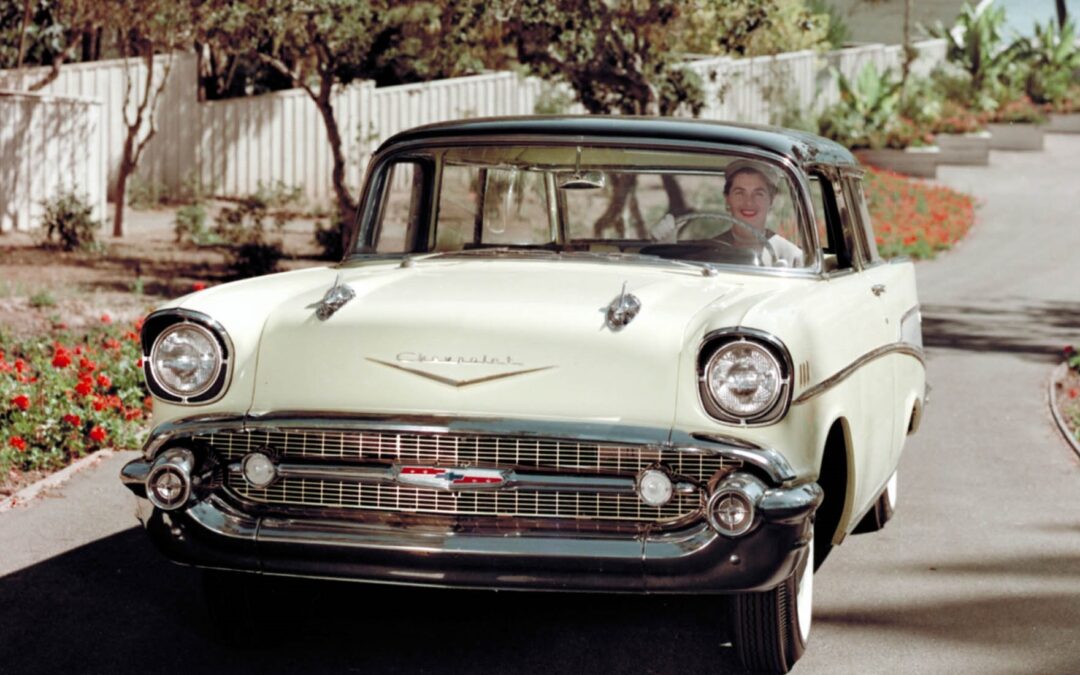
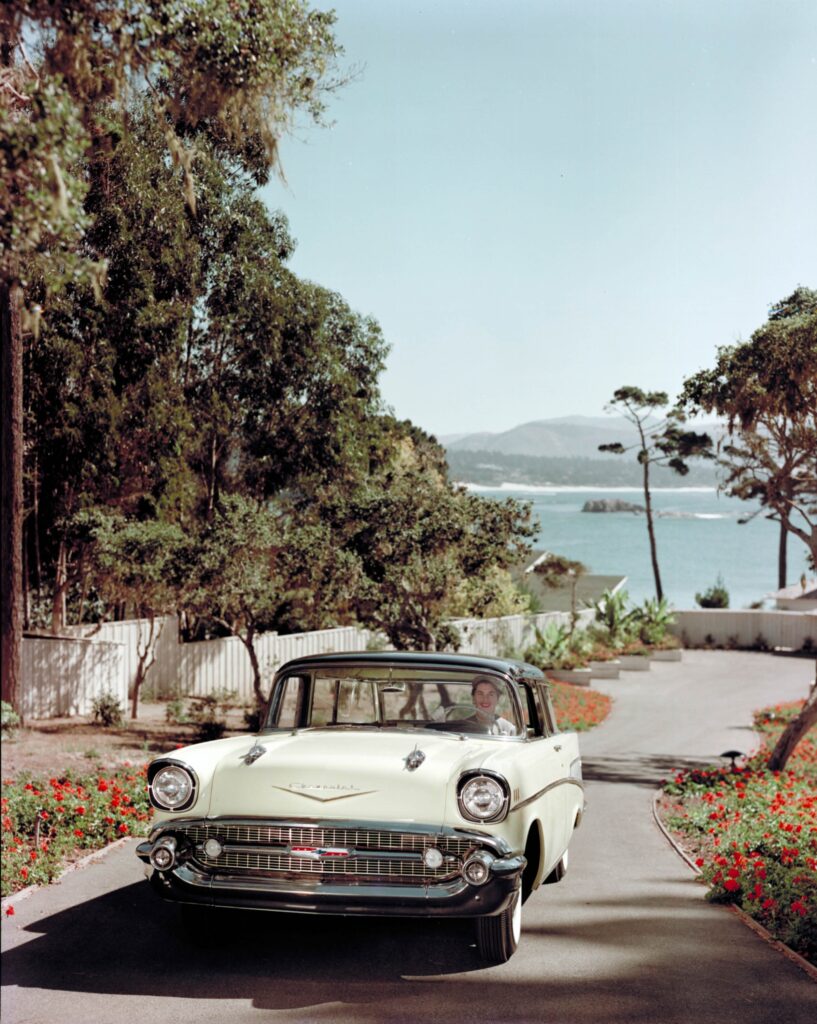
Chevrolet calls out the 1957 Nomad
two-door wagon in a release that highlights 24 vehicles that helped define the
brand in the U.S. market. The strikingly sleek Chevy Nomad of 1955-1957 brought
midcentury modern design to the utilitarian station wagon, according to the
release.
“The Nomad got its name, along with its
unique roofline and rear body treatment, from a 1954 GM Motorama Corvette
concept wagon conjured up by GM design chief Harley Earl – father, as well, of
the 1953 Corvette roadster.
“Encouraged by the show car’s reception,
and mindful that America’s burgeoning suburbs were absorbing ever more station
wagons, Chevrolet developed the Nomad into a premium Bel Air-level “halo” model
for their 1955-57 regular wagon lines.
“The Nomad two-door sport wagon design was produced through 1957. Each of the three model years still has its passionate followers — the original Nomads have never gone out of style.”
We can’t always get what we want but sometimes being able to get what we need fulfills a lot of essential wants. And in the throes of a pandemic, the new Kia Seltos subcompact SUV is a heaping helping of comfort food with a full serving of meat-and-potatoes function, safety technologies, durability, value and just enough style for pride of ownership.
The 2021 Seltos is a new vehicle in the Kia lineup that slots between the boxyish Soul and the compact-class Sportage SUV. It shares an architecture with the Hyundai Kona, which has been well received in a growing subcompact segment that includes the Chevrolet Trax, Ford EcoSport, Honda HR-V, Mazda CX-30, Nissan Rogue Sport and Subaru Crosstrek.
The broad-beam cabin has ergonomically placed switches and controls.
Like many of the competitors, Seltos is a so-called world car. It was launched last year in South Korea, followed by India, the Philippines and Indonesia with its North American debut early this year as a 2021 model.
With a name derived from “Celtos,” the son of Hercules in Greek mythology, Kia says that the Seltos is aimed directly at millennials and “youthful, tech-savvy buyers” looking for a vehicle that stands out from the crowd. But that sounds much like the marketing used for the Soul, which had been a disruptor for its youthful styling and attitude — and it is the last of its kind from when boxy was cool, outlasting the dearly departed Honda Element and Nissan Cube.
Front headroom is a tall at 40 inches without the sunroof.
Kia Seltos Pricing
While the Kia Seltos’ pricing — $23,000-$29,000 — will appeal to younger buyers the bigger influencer for a wider range of buyers will be its optional all-wheel drive, squared-off cabin space, access to advanced driver-assist technologies and for many — more palatable styling.
Seltos is sold in five trim levels — LX, EX, S 2.0L, S 1.6T and SX. There are two choices of four-cylinder powertrains and optional AWD with torque vectoring (for traction and steering stability) and a locking differential for sure-footed off-road situations.
Current pricing incentives include special financing of 0.9 percent APR for 48 months for qualified customers. And there is a $199 monthly lease for 36 months for the Seltos LX and S, with $2,699 due at signing for qualified lessees. Check Kia Offers for updates.
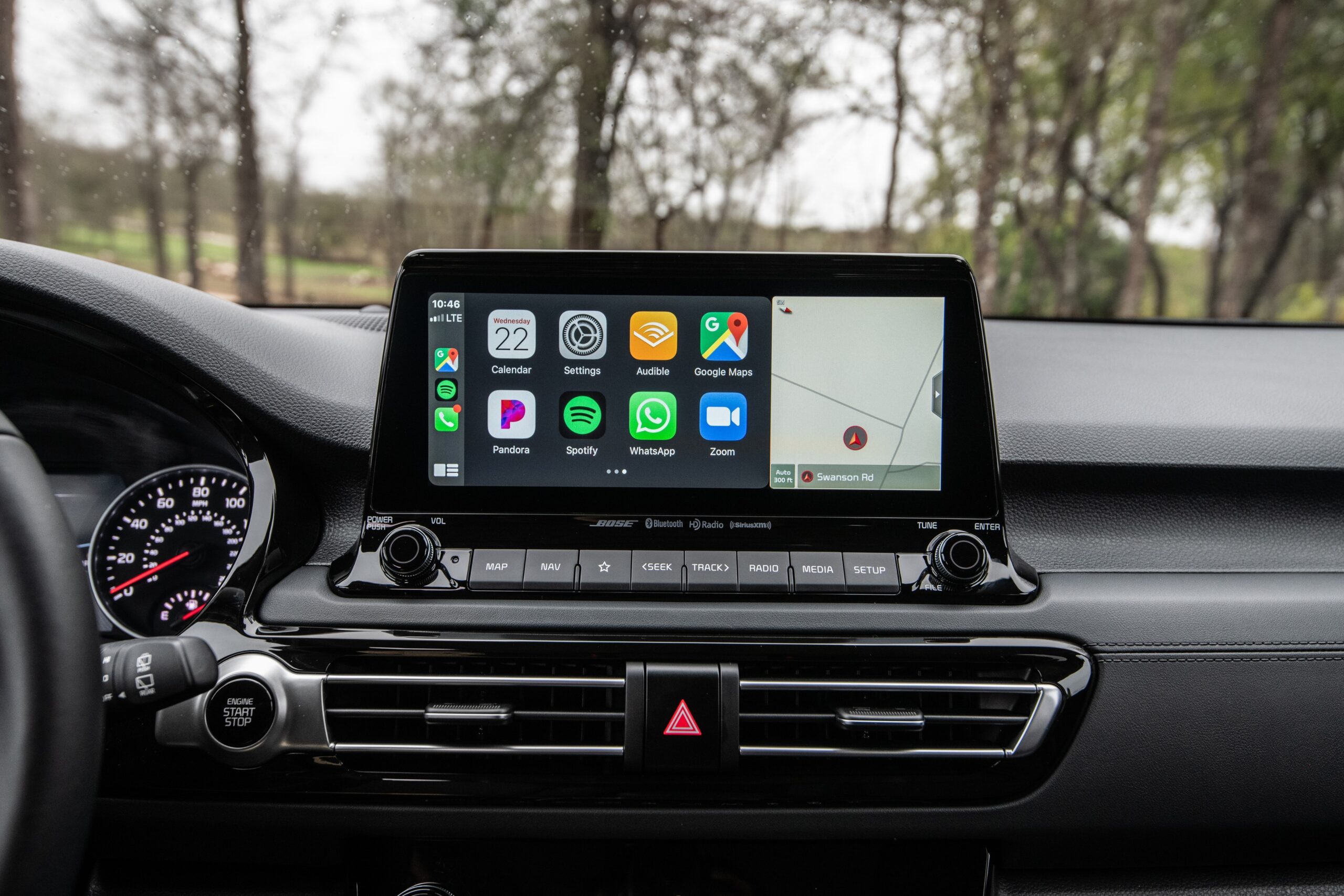
The top-line SX model gets a 10.2-inch touch screen display.
Kia Seltos Powertrains
Entry Seltos models are powered by a 146-horsepower, non-turbocharged 2.0-liter Atkinson-cycle (for fuel economy) and an “Intelligent” continuously variable automatic transmission. Front-wheel-drive fuel economy ratings are 29/34/31 mpg city/highway/combined and 27/34/29 with AWD, with the recommended 87 octane fuel.
The sportier trim levels get the more tech-infused and turbocharged 175-hp, 1.6-liter four-cylinder with a seven-speed dual-clutch automatic. It has mileage estimates of 25/30/27 mpg city/highway/combined.
Both powertrains have driving modes of Normal, Smart (Eco) and Sport. Selections are made by a small dial on the shift console or just nudge the shift lever to the left for grab-and-go Sport mode.
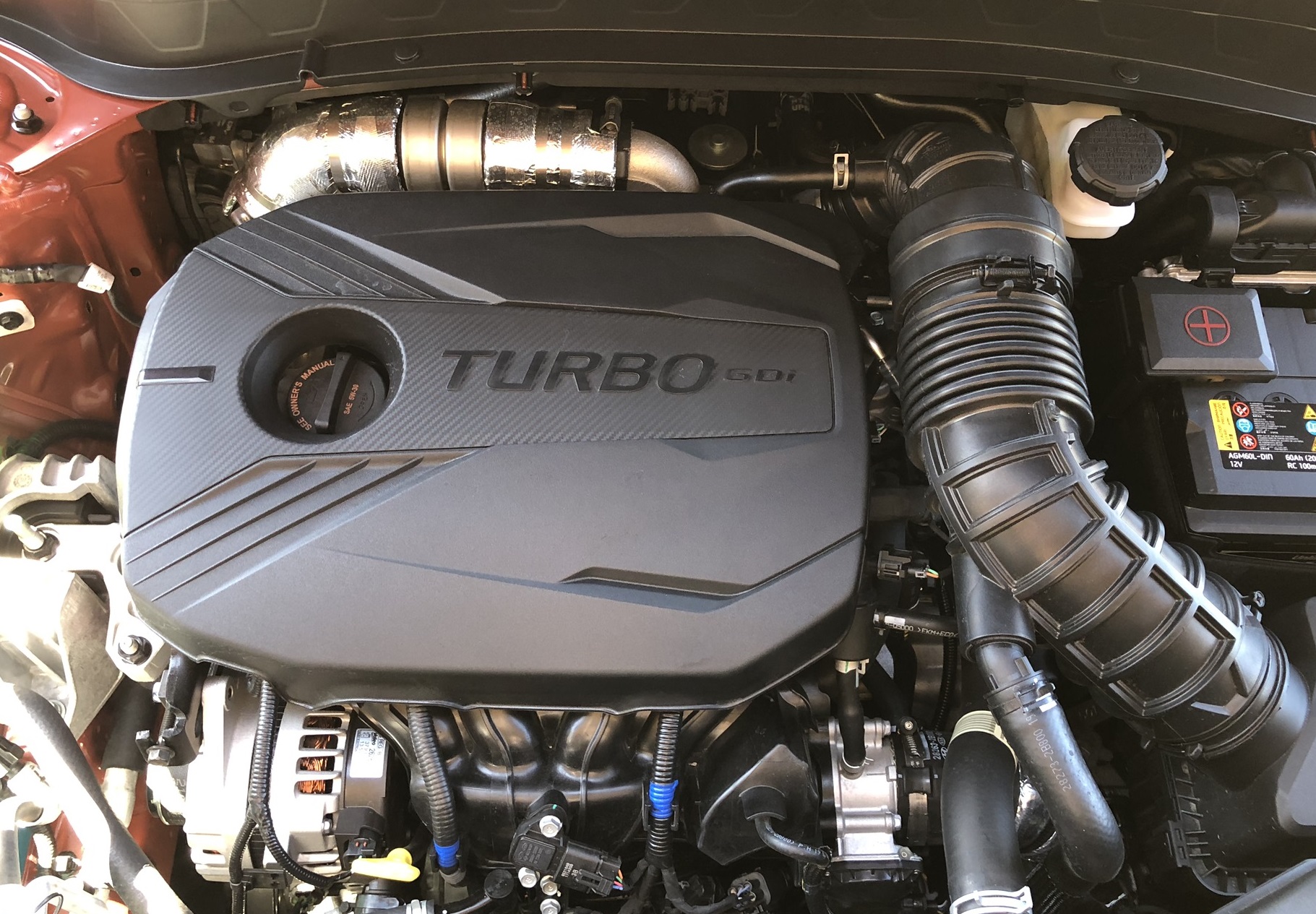
The turbocharged and direct injection 1.6-liter four-cylinder is no laggard with its 195 foot-pounds of torque from 1,500-4,500 rpm. (Mark Maynard photo)
Kia Seltos Features
Today’s Seltos tester is the upper-middle-class S Turbo AWD with a starting price of $26,610, including the $1,120 freight charge from Gwangju, South Korea. With one option for carpeted floor mats ($130), the tester’s sticker price was $26,740.
The many conveniences mean a lot in a lower-priced vehicle and the Seltos has an accommodating list of standard equipment. Among the features for all models are remote locking, rearview camera, 17-inch alloy wheels and four-wheel disc brakes, power side mirrors, six-way manually adjusted driver’s seat, steering wheel audio and cruise controls, 60/40 folding seatback and dual-level cargo floor, air conditioning, six-speaker audio system with Bluetooth phone and audio connections, Apple CarPlay or Android Auto for navigation, phone and other apps.
The interior has a premium presence in the plastics, fabrics and trim elements.
Seltos Safety Features
Safety features in all Seltos models include six air bags, downhill brake assist, hill-start assist, stability, and traction controls.
Moving up to the Seltos S trim adds Kia’s Drive Wise driver-assist technologies of forward collision-avoidance assist with pedestrian detection, lane-following assist, lane-keep assist, driver-attention warning and high-beam assist.
The S 1.6 Turbo model layers on other safety features, including blind-spot collision warning, blind-spot collision-avoidance assist rear, rear cross-traffic collision warning and rear cross-traffic collision avoidance assist.
Driver-Assist Features
It is not yet common for a $25,000 car to have advanced driver-assist technologies, but Kia connects the technologies in the higher trim levels.
Only the Seltos SX model includes all the Level II semi-autonomous driving features, such as highway-driving assist, smart cruise control with stop and go and fusion forward collision assist with cyclist detection.
The not-quite semi-autonomous drive experience in the tester is well calibrated to center the Seltos in the lane while making fluid course corrections. The system sensors did not seem to be overly sensitive to varying daylight conditions and shadows, which have caused frequent cancellations in some systems I’ve tested.
Kia’s system gives the driver the immediate benefit of more watchful eyes on the road without continual beeps, bonks, and random alerts. But when the driver is about to do something stupid, the system will sound the wake-up alert.
Always keep both hands on the wheel when using a driver-assist system, even though Kia’s system seemed to be forgiving of one-handed driving.
The rear seatback has a two-position recline.
Seltos Performance
The turbocharged and direct-injection 1.6-liter four-cylinder is no laggard with its 195 foot-pounds of torque from 1,500-4,500 rpm. The seven-speed dual-clutch transmission works well enough to maintain the power flow, mostly because of the low 3,317-pound curb weight.
In heavier vehicles, this type of powertrain is somewhat slow to respond as the turbocharger builds boost and the automated-manual transmission takes time to engage and disengage gears. It can be a loopy transaction at slower speeds when it takes a bigger push on the accelerator to get a quick power response.
But less weight means quicker uptake of forward momentum in the Seltos. Sport mode takes away much of the delay and the engine’s automatic stop-start at idle function can be switched off, such as when creeping in downtown traffic.
The base 2.0-liter engine might be powerful enough for the majority of drivers, but I have not tested it with the continuously variable transmission.
Seltos Ride and Handling
Engineering a small SUV for sporty-driving attributes typically causes a stiffer ride that isn’t easy to tame, but the suspension in the Seltos AWD felt remarkably well balanced.
Front-drive models use a torsion-beam rear suspension, which is less heavy and less expensive than a multi-link with lower mounting points that improve cargo space, but the ride quality is not always smooth.
The AWD models are uprated with an independent rear setup (multi-link) for more flexibility and wheel travel when driving off-road. The balance of spring rates and shock absorbers is a commendable accomplishment of comfort with stable enthusiasm when the spirit moves — or evasive maneuvers demand.
Between the relatively long wheelbase (103.5 inches) and the independent rear end, the ride quality is steady on the highway (not choppy) and without big head-toss when transitioning speed bumps or turning into driveways. And for a small upright SUV, the cabin is not jittery from road harshness or wind noise — and all this with a subcompact turning circle of 34.8 feet.
My week of testing returned a peak average fuel economy of 28.5 mpg with much highway driving, but readings of 19-23 mpg were common around town.
Braking for the 1.6 Turbo is beefier than expected with 12-inch ventilated front discs and solid 11.2-inch rear rotors. But there was no shortcut to braking for the 2.0-liter models, which have discs of 11 inches front and 10.3 inches rear.
17- or 18-inch alloy wheels are standard. (Mark Maynard photo)
Interior Function
The Kia Seltos is bigger on the inside than expected for a subcompact, created by a squared-off openness and upright glass. Front headroom is a tall at 40 inches without the sunroof and front shoulder room of 55.5 inches is just 1.6 inches less than in the slightly larger Sportage.
The raised ride height (with 7.2 inches of off-road ground clearance) allows comfortable hip-point entry and exit, with no head-ducking from swoopy body lines. The seats, too, have less intrusive side and bottom bolstering, which avoids that indelicate wedgie. The center armrest has a deep box and a sliding top for improved elbow support.
Sightlines are open at the side mirrors, over the hood and out the rearview through the deep tailgate glass. The sun visors are deep and provide good coverage but do not extend.
The broad-beam cabin has functional space to ergonomically place gauges, switches and controls. The gauge cluster focuses attention with two white-on-black dials for speed and tachometer, separated by a 3.5-inch driver-info module with pages for fuel economy, tire pressure, user settings and a digital speedometer.
The 8-inch infotainment touch screen at the top center of the instrument panel is easily viewed without glare in daylight. And just below are two large dials for cabin temperature and vent position with a smaller dial between for fan speed. It is a good format for eyes-on-the-road adjustments. The six-speaker audio system isn’t terrific, but there is a Bose upgrade. The top-line SX gets a 10.25-inch-wide touch screen for navi, audio, and apps.
The shift console is a compact module of efficiency with a large e-bin for charging devices with one USB port and two 180-watt, 12-volt plugs. And it integrates a shelf to lay a phone or for the optional wireless charging. (The EX and SX have wireless charging and one more USB in the back seat.)
The seats are wide and supportive with thigh support for most adults. And the Sofino upholstery has a premium appearance of durable fabric neatly stitched with the manmade leatherette. The driver seat in the S is six-way manually adjusted but the four-way front passenger seat lacks height adjustment, but it’s not like riding in a hole.
Cargo space is square with up to 5 ½ of length with the back seat folded.
Back Seat Space
The Seltos back seat benefits from the openness of the cabin. A low hump to the exhaust tunnel aids three-across seating. And the seatback has a two-position recline. The seatback folds 60/40 and has a fold-down armrest with cup holders, but amenities are spartan, with no ports, plugs or air vents.
Cargo Capacity
The Seltos has a working cargo area of 26.6 cubic feet behind the back seat stretched to 62.8 cu. ft. with the seat folded. The square space is about 33 inches deep behind the back seat, extending to almost 5½ feet when the seats are folded. Kia has a clever two-level cargo floor that when manually moved to the lower position adds 4 inches more depth for taller items up to about 33 inches.
Why Buy the Kia Seltos?
Some of the competitors in this subcompact SUV segment are transplants from other countries and not completely reconfigured or engineered for the U.S. and North America for long-term durability and reliability. The Kia Seltos does not feel foreign-born in how it drives or its premium presentation of materials and technologies.
As the son of Hercules, the Seltos earns a mighty-mite badge of determination.
For a small SUV, the cabin is not jittery from road harshness or wind noise.
2021 Kia Seltos S Turbo AWD Specifications
Body style: subcompact, 5-seat, 5-door small SUV crossover with AWD
Engine: 175-hp turbocharged and direct-injection 1.6-liter 4-cylinder with auto stop-start at idle; 195 lb.-ft. torque from 1,500-4,500 rpm
Transmission: 7-speed dual-clutch automatic with torque-vectoring all-wheel drive with locking center differential
Standard Seltos equipment includes: remote locking, 8-inch touch screen with Apple CarPlay or Android Auto app infotainment, rearview camera with guidance lines, USB multimedia port, heated front seats, Sofino leatherette and cloth seat trim, sliding front center armrest console, 60/40 folding back seat, power (heated) side mirrors with LED turn signals, LED running lights and taillights, 18-inch alloy wheels, roof rails, fog lights




 Pedal kit, $105. All-weather (slush) floor mats, $165.