Select Page

Kia Niro PHEV Review

Kia Niro PHEV Review

The second-generation 2023 Kia Niro is sold with electrified powertrains of hybrid, plug-in hybrid, or battery electric

A new Niro with the broad aero blade at the rear fender

The redesigned 2023 Kia Niro is incrementally larger but still in the compact class. How do you like the black aero blade? (Photos courtesy of Kia America or as credited)

Table of Contents

What’s New for the 2023 Kia Niro?
2023 Kia Niro Pricing
Safety Features
Powertrain and Performance
Ride and Handling
Interior Function
Back Seats and Cargo
Why Buy the 2023 Kia Niro PHEV ?
Specifications

 BY MARK MAYNARD

The second-generation 2023 Kia Niro has been restyled, resized, and revitalized as a compact, small crossover vehicle. The new Kia Niro continues to be available in electrified powertrains of gasoline-electric hybrid, plug-in hybrid, or battery electric. All models have been refined for efficiency and electrified driving range. And as before, Niro is a front-wheel-drive platform with no option for all-wheel drive.

The first-generation Niro was introduced in 2016, based on the same platform as the Hyundai Ioniq. Kia then added plug-in-hybrid and battery-electric models in 2018.

Of Kia’s 13 nameplates, including electrified models, the Niro is a solid midrange player accounting for around 3,000 sales a month. That should satisfy Kia, with Niro price points ranging from $28,000 to about $41,000.

Still, the Kia Niro is an affordable electrified vehicle, whether it be a gasoline-electric hybrid, a plug-in hybrid, or full battery-electric.

Compact-class hybrid and electric vehicles include the Chevrolet Bolt and Bolt EUV, Hyundai Ioniq and Hyundai Kona Electric, Jeep Wrangler 4xe, Nissan Leaf, Subaru Crosstrek Hybrid, Toyota Prius and Toyota Prius Prime.

The front seat area of the redesigned Kia Niro

Interior design is electro-contemporary.

What’s New for the 2023 Kia Niro?

The redesigned exterior styling of the 2023 Niro is a total improvement, giving it a more solid stance and less pinched appearance. And Kia took the bold step to offer an option for a broad black aero blade at the rear fender. The add-on blade at the rear D-pillars is just $195 and creates sort of a two-tone appearance. But the blade design is functional. It has a slim inlet to channel airflow along the body sides and past the tailgate to trim aerodynamic drag.

With other aero treatments, the 2023 Niro has a low drag coefficient of 0.29. For aero comparisons, the Toyota Prius and Hyundai Ioniq have drag coefficients of 0.24. The battery-electric Mercedes-Benz EQS 500 4Matic has a Cd of 0.20. And a Ram 1500 pickup has a blunt Cd of 0.36. The lower the drag coefficient, the smoother the vehicle drives through the air, which benefits fuel efficiency.

Dimensionally, the 2023 Niro is still in the compact class, but the five-seater is incrementally larger than the vehicle it replaces. The wheelbase was stretched by 0.8 of an inch to 107.1 inches. Overall length increases by 2.5 inches to 174 inches. The added length benefited cabin openness and cargo space, now 22.8 cubic feet behind the rear seats.

And there were some weight reductions. The 2023 Niro PHEV SX Touring weighs 3,496 pounds, of which 111 pounds are for the hybrid battery. Overall, the new larger Niro is 46 pounds heavier than its predecessor.

The front passenger side of the Niro

The driver has an 8-way power seat, but the passenger gets only a 6-way manual seat.

2023 Kia Niro Pricing

With its trusty gasoline-electric powertrain, the Niro Hybrid has starting prices of $28,000 to $36,000, including the $1,295 freight charge from Hwaseong, South Korea. The hybrid’s estimated fuel-economy ratings are 53 mpg city, 54 highway, and 53 mpg combined, and it has a combined driving range of 588 miles; using the recommended 87 octane fuel.

The Niro EV has trim-level choices of Wind and Wave, with starting prices of $40,745 and $45,745. With its 64.8 kWh lithium-ion polymer battery, the Niro EV has an EPA-estimated driving range of around 253 miles. And the Niro EV is now available in all 50 states.

And the Kia Niro PHEV, today’s tester, is sold in two well-equipped trim levels. The plug-in model has starting prices of $35,035 for the EX and $40,785 for the SX Touring. With its 11.1-kWh lithium-ion polymer battery, the plug-in hybrid has a driving range of 31 to 33 miles.

The SX Touring tester came to $41,635. Its options included the black aero blade with Mineral Blue paint, $195; carpeted floor mats ($155); and the Cold Weather package, $500, which adds a heat pump and heated rear window seats; a heat pump uses less energy than traditional radiant heating.

Notable SX Touring features include:

  • Smart key entry with push button ignition and remote start;
  • Perforated SynTex upholstery with heated and ventilated front seats
  • Sunroof;
  • 10.25-inch touchscreen display with navigation;
  • Harmon Kardon audio system;
  • Wireless phone charging pad;
  • 8-way power driver’s seat with power lumbar and memory presets;
  • 6-way manual front passenger seat with height adjustment;
  • Digital Key (using the smartphone app);
  • Heated steering wheel,

Exterior features include 18-inch alloy wheels, a hands-free power tailgate, roof rails, and LED projector headlights and fog lights.

The charge power on the left front fender.

31 to 33 miles to a charge and about 3 hours to fully recharge.

Kia Warranties

Kia Niro’s warranties include 10 years/100,000 miles for the powertrain and hybrid battery. Bumper-to-bumper coverage is for 5 years/60,000 miles with roadside assistance.

Find current pricing and available lease or purchase offers here.

Safety and Driver Assist Technologies

The Kia Niro has Level 2 hands-on driver-assist capability. The calibrations for driver assist are consistent in tracking through corners and keeping the Niro centered in the lane. It is a trustworthy system, in my experience, but always keep both hands on the wheel.

Among its Level 2 advanced technologies are:

  • Smart cruise control with stop and Go;
  • Highway Driving Assist;
  • Enhanced auto emergency braking with junction turning detection;
  • Blind spot detection;
  • Rear cross-traffic collision avoidance assist;
  • Lane keeping and following assist.
the 18-inch tires and wheels on the Kia Niro.

Run-flat Continental ProContact RX tires are noisy on the interstate. (Mark Maynard)

Niro PHEV Powertrain and Performance

The Niro PHEV pairs a 1.6-liter direct-injected four-cylinder with a 62kW electric motor. Total system output is 180 horsepower and 195 foot-pounds of torque.

Connecting to a Level 2 charger, the Niro PHEV can refill its 11.1-kWh lithium-ion polymer battery in about three hours.

Fully charged, the all-electric range of the Niro PHEV is 31 to 33 miles with 108 MPGe combined. Kia says the mileage improved by 25 percent over the previous model. Gasoline-only mileage is 48 mpg combined city/highway using 87 octane fuel.

Kia’s plug-in hybrid system switches from battery power to engine intervention for more aggressive driving. And even with a depleted battery, the hybrid system functions as any other hybrid system, giving some short-range and low-speed acceleration, regenerative braking, and auto stop-start at idle.

The six-speed dual-clutch automated manual (DSG) hooks up quickly for forward motion. But shift points can sometimes be abrupt.

When the battery charge ends and the hybrid engine engages, there is little difference in performance. There might be quicker acceleration in EV mode as it lays down power without hesitation.

Over a week of just 64 miles of testing, my average fuel economy was 115 mpg. I barely touched the fuel supply, and each morning after a charge, I was greeted with a readout of 510 miles of driving range. Battery power can be “banked” by combining Hybrid and Sport modes.
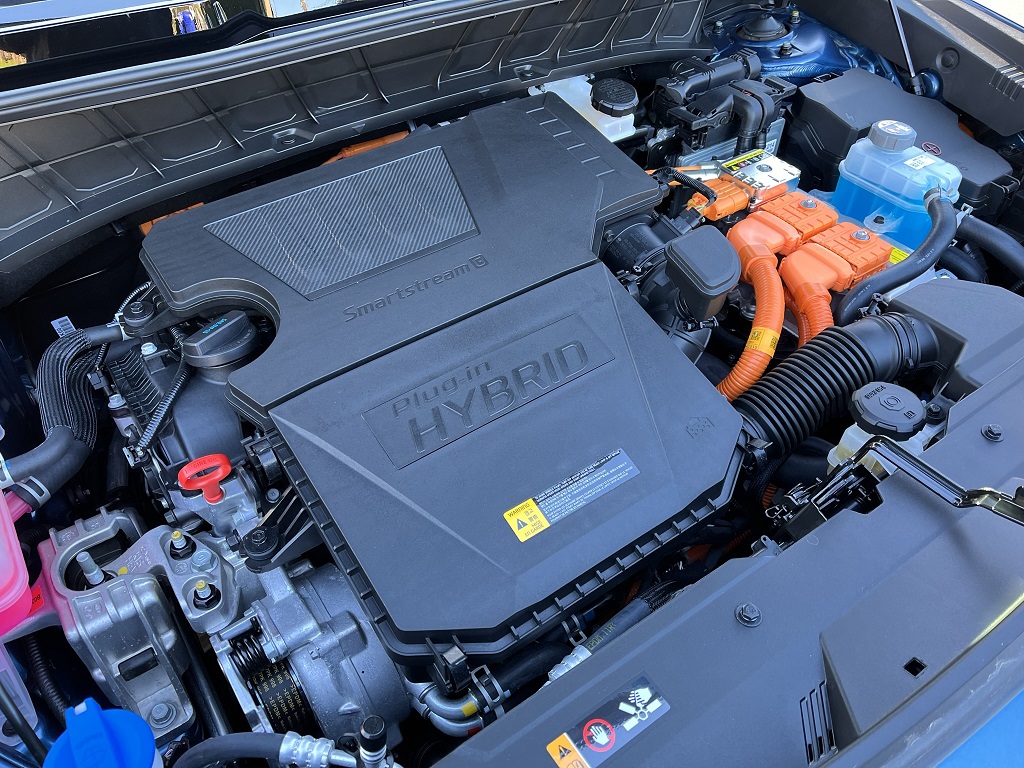
180 horsepower from the 1.6-liter four-cylinder and 62kW electric motor.

180 horsepower from the 1.6-liter four-cylinder and 62kW electric motor. (Mark Maynard)

Niro PHEV Charging

Charging a depleted battery took almost 3 hours on my home 240-volt Level 2 charger. Kia includes an alternate charging cable for use on a 110-volt household plug. It can be handy when traveling, but it will take an overnight charge to top off the battery.

Niro PHEV Ride and Handling

Niro’s suspension work is focused on everyday comfort. Steering and braking inputs are tight and reassuring. But the handling is not sporty — nor does it have to be for its mission of fuel economy and crossover function.

Cabin noise, however, is noticeable at interstate speeds, which takes away from the pleasure of the Niro as a daily long-distance commuter. The wall of white noise I noticed is likely from the run-flat Continental ProContact RX tires.

Kia also includes a “Tire Mobility Kit” in case of a flat that might exceed run-flat capability. The kit is just a can of sealant that connects to a little air pump powered by the 12-volt plug in the dashboard. I doubt this system can inflate a flat to road-worthy air pressure, but it might get the driver out of a bind and on the road to a service station.

Back seats of the Niro

Headroom is tall at 39.5 inches, and max legroom of 39.8 inches is outstanding.

Kia Niro Interior Function

Driver sightlines are accommodating across the hood and out the back. Rear views are much improved over the narrow back glass of the previous-gen Niro.

There is newfound elbow and shoulder room in the cabin. And with 6.3 inches of ground clearance, there is a comfortable hip-point for entry and exit. The front seats are reasonably comfortable for longer drives. Mercifully, the seats are without “sporty” side bolstering to firmly hold the driver in enthusiastic driving, such as when getting the kids to school on time.

The interior design is electro-contemporary with some engaging finesse. The appearance is somewhat like the glossy black screen of a smartphone. The dashboard is an asymmetric arc that begins high on the driver’s side (for open gauge views) and to low on the passenger’s side for better sightseeing. Piano black and creative elements of metallic trim influence the modern treatment.

Small storage areas are abundant, including open trays and slots. The shift-dial console has multifunction cup holders, a wireless charging pad, a C-type charging USB, and a 12-volt plug.

But for the tester’s price of nearly $42,000, it seems cheap not to provide a power-adjustable front passenger seat. It might be a weight-saving measure, but there should be the choice of a powered seat. The front passenger seat does, however, have manual seat-height adjustment.

And where’s the audio volume knob? It’s there, in the temperature-control knob, but it takes some fiddling to figure it out. Adjusting the volume and most other cabin controls is a two-touch process to access features.

Give yourself some exploring time to learn the multimodes of electronic settings. Or pay close attention when taking delivery of your Niro.

The open area of the Niro cargo space.

Fold the seatbacks for 5 ½ to 6 feet in length.

Back Seat and Cargo Space

The back seat is simple but comfortable. Headroom is tall at 39.5 inches and the max legroom of 39.8 inches is outstanding, as long as a member of the big-and-tall club is not seated ahead. A low exhaust tunnel allows better center-seat footroom, but the space feels cluttered for anyone not on the way to grade school.

I like how Kia inserts a charging USB in the side seatbacks of the front seats.

The cargo area opening is wide at 42 inches, but floor-to-headliner height is limited at 27 inches for carting tall items. Fold the 60/40 back seat for 5 ½ to 6 feet in length.

There is no subfloor storage or dedicated place to store the alternate charge cable. It lies coiled up on the cargo floor.

Garden nursery items in the cargo area of the Niro.

The cargo entry is wide at 42 inches, but there is no dedicated space to store the alternate charging cable. (Mark Maynard)

Why Buy the 2023 Kia Niro PHEV?

I like seeing a readout of 500 miles of driving range in the morning. The larger 2023 Niro is now big enough for greater family function. And the Niro plug-in is a confidence-building step toward a total EV experience.

Most owners could drive through the workweek with just a few sips of gasoline. And even for longer trips, the Niro PHEV performance is strong with thrifty fuel economy.

The SX Touring tester is fully priced at $41,635, but its added features build a car for rewarding ownership.

2023 Kia Niro PHEV Specifications

Body style: compact, 5-passenger, 5-door front-wheel-drive crossover

Engine: 104-hp 1.6-liter direct-injected 4-cylinder; 106.3 lb.-ft. at 4,000 rpm

Transmission: 6-speed dual-clutch automated-manual with Sport and Hybrid modes

Fuel economy: 48 mpg city/hwy combined; 87 octane

Fuel economy equivalent: 108 MPGe combined city/hwy

EPA-estimated driving range: 31-32 miles (33 miles EX)

Combined driving range: 510 miles

Motor: Permanent Magnet Synchronous

Battery: 60Ah, 360-volt lithium-ion polymer

Battery Power: 83.0 kW

Battery Energy: 11.1 kWh

Top speed: 104 mph

Coefficient of drag: 0.29

BY THE NUMBERS

Fuel tank: 9.7 gallons

Cargo space: 22.8/63.7 cubic feet

Front head/leg room: 40.5/41.5 inches

Rear head/leg room: 39.5/39.8 inches

Length/wheelbase: 174/107.1 inches

Curb weight: 3,496.5 pounds

Turning circle: 34.9 feet

FEATURES

Standard Niro PHEV equipment includes:

Exterior: 18-inch alloy wheels and Continental ProContact RX (225/45) tires, sunroof, smart power tailgate, roof rails, LED projector headlights and fog lights, LED interior lighting;

Interior: 10.25-inch touchscreen display with navigation, Kia Connect, and satellite radio, Apple CarPlay and Android Auto, Harmon Kardon audio system, smart key entry with push button start and remote start, wireless phone charging pad, perforated SynTex upholstery with heated and ventilated front seats, heated steering wheel, power driver’s seat with power lumbar and memory presets, 6-way manual front passenger seat with height adjustment, Digital Key (using the smartphone app);

Safety features include: 7 air bags, front and rear parking sensors, driver attention warning with leading vehicle departure alert, high-beam assist, safe exit warning, and stability and traction controls

PRICING

Niro SX Touring base price: $40,785, including the $1,295 freight charge; price as tested $41,635

Options on test vehicle: Carpeted floor mats $155; Cold Weather package, $500; black aero blade with Mineral Blue paint, $195.

Where assembled: Hwaseong, South Korea

Warranties: 10-years/100,000-miles powertrain; 5-years/60,000-miles bumper-to-bumper coverage with roadside assistance.

Volvo EX90 Electric SUV Reveal

Volvo EX90 Electric SUV Reveal

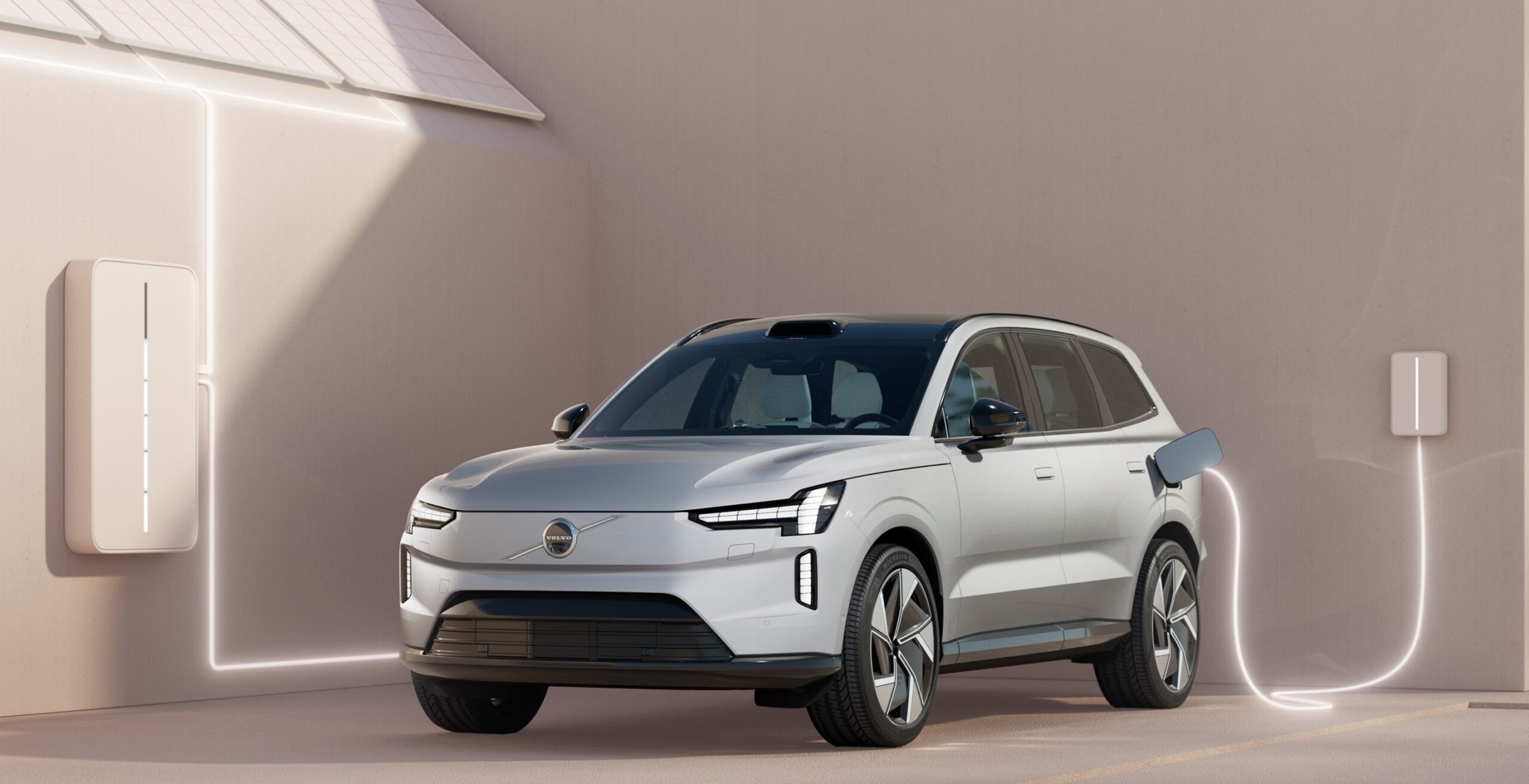
The 2024 Volvo EX90 is the company’s vision of a large family SUV in the electric age. Pricing will start at around $80,000.

The 2024 Volvo EX90 is the company’s vision of a large family SUV in the electric age. A home energy management system features a bi-directional wall box to power a home.

The 2024 Volvo EX90 is the company’s vision of a large family SUV in the electric age. A home energy management system features a bi-directional wall box to power a home. (Photos courtesy of Volvo Cars USA)

BY MARK MAYNARD

Volvo revealed its battery-electric EX90 SUV Nov. 9, 2022, in downtown Stockholm. The much-anticipated seven-seat SUV represents the start of a new era for Volvo as a carmaker of battery-electric vehicles.

Volvo has only one other battery-electric vehicle, the XC40 Recharge. However, the company plans to offer only battery-electric vehicles by 2030 and expects to be carbon-neutral by 2040. The Sweden-based carmaker is now owned by Geely Automobile, a major automotive brand based in China

Though the EX90 debuted in Sweden, U.S. models will be built in Charleston (Ridgeville), S.C., beginning next year.

Volvo CEO Jim Rowan said, “The Volvo EX90 is a statement for where we are, and where we are going. It’s fully electric with a range of up to 300 miles on a single charge, designed to further raise our safety standards, the first Volvo car to be truly defined by its software and part of a wider ecosystem, connecting to your home and your other devices. The Volvo EX90 is the start of something new for Volvo Cars in many ways.”

Rowan also said that EX90 would be sold online or by going to a retailer. “You decide how you access it,” he said, “whether that is through outright ownership, by subscribing to it, or by leasing it. Whatever works for you.”

Front seats with the large vertical infotainment screen

Interior materials are made of recycled plastics and bio-materials that Volvo calls Nordico. The 14.5-inch vertical center screen has Google built-in for apps and services.

Battery-Electric Powertrain

The powertrain at launch will be a twin-motor all-wheel drive version. It is powered by a 111kWh lithium-ion battery and two permanent magnet electric motors. Total power is up 496 horsepower and 671 foot-pounds of torque, though a lower horsepower version will be available.

The frunk, or front trunk

Charging cable storage in the “frunk.”

Volvo says that the battery pack can be charged from 10 percent to 80 percent in about 30 minutes. However, the release did not mention which level of pubic charger could supply that charge rate, whether 150kW, 250kW, or 350kW, or if that charge rate requires a Level 3 DC fast charger, which is hard to find.

Also advantageous is bi-directional charging. The battery pack in the Volvo EX90 can be tapped as an extra energy supply, such as to power a home, other electric devices, or another electric Volvo. The company says that bi-directional charging will be available in the future and in select markets.

A side view of the ex90 connected to a battery charger.

The 111kWh lithium-ion battery pack can be charged from 10 percent to 80 percent in about 30 minutes.

EX90 Safety Technologies

The Volvo EX90 is the smartest and safest vehicle the company has ever made. And it can get smarter and safer over time as it learns from new data and receives over-the-air updates.

The company says that the latest network of Volvo’s sensing technologies creates an invisible shield of safety. Cameras, radars, and lidar function through high-performance core

Thor's Hammer headlight design.

“Thor’s Hammer” lighting.

computers. NVIDIA DRIVE runs Volvo Cars’ in-house software to create a real-time, 360-degree view of the world.

The lidar system, by Luminar, can sense the road ahead, whether day or night, and at highway speeds, Volvo says. The system can see small objects hundreds of yards ahead, which gives more time to inform, act and avoid. Volvo’s Pilot Assist driving function has been improved with a new steering assist while changing lanes.

Unsupervised Driving

Volvo says the EX90 is hardware-ready for unsupervised driving in the future.

Inside, special sensors and cameras track eye-gaze concentration. The technology can determine when the driver is distracted, drowsy, or inattentive. And if that fails and there is a collision, the Volvo EX90 is designed to safely stop and call for help.

San Diego-based Qualcomm Technologies’ Snapdragon Cockpit Platforms runs most of the core interior functions, from safety and infotainment to battery management.

A 14.5-inch vertical center screen has Google built-in for apps and services, including hands-free help from Google Assistant and Google Maps. And the Volvo EX90 will also be compatible with wireless Apple CarPlay.

Digital phone key technology will function as the car key through a smartphone app.

The second row back seat area

New interior radar developed by Volvo is sensitive enough to detect the tiniest movements at the sub-millimeter scale — such as those of a sleeping toddler. The radar feature covers the entire interior of the car, including the trunk.

Volvo EX90 Preordering Now

Pricing for the 2024 Volvo EX90 will start at around $80,000. Vehicles can be preordered in the U.S. with a $500 deposit. Get the details at VolvoCars.com/us. Customers placing preorders will be asked to configure their cars in the fall of 2023 and will receive prioritization when deliveries begin in early 2024.

Other information and full specifications will be available closer to the on-sale date.

The EX90 cargo space with the tailgate raised

Flexible cargo capacity.

WeatherTech Raceway Laguna Seca Celebrates 65 Years

WeatherTech Raceway Laguna Seca Celebrates 65 Years
Lou Gold, president of the Sports Car Racing Association of the Monterey Peninsula stands with Major General William M. Breckinridge during the ribbon cutting. (Photos courtesy of WeatherTech Raceway Laguna Seca)

Lou Gold, president of the Sports Car Racing Association of the Monterey Peninsula stands with Major General William M. Breckinridge during the ribbon cutting. (Photos courtesy of WeatherTech Raceway Laguna Seca)

Green Flag Waved Nov. 9, 1957, to Open Laguna Seca Raceway

BY MARK MAYNARD

It was Saturday morning, Nov. 9, 1957, when America’s newest road course opened in Monterey, Calif. — Laguna Seca. The ribbon cutting occurred during the 8th Annual Pebble Beach National Championship Sports Car Road Races. Few of those in attendance might have expected that the hastily-built road course carved into the Fort Ord Army Installation was the beginning of an iconic motorsports venue.

The 8th annual event was a first for Laguna Seca. The name was a carryover of the races that began in 1950, racing through the Del Monte Forest of Pebble Beach, which had also added a Concours d’Elegance to bring a social atmosphere to its race weekend.

Six years later in 1956, the Pebble Beach Road Races showed the imperative need for a safer, larger race track to host one of North America’s most famous competitions.

Following Ernie McAfee’s death during a crash that year, organizers decided that the current Pebble Beach course was “not enough track” to house the rising horsepower being created annually.

Inaugural Laguna Seca race winner Pete Lovely (car no. 125) starts in third position on Nov. 10, 1957.

The nine-turn Laguna Seca road course was created in just 60 days at a cost of $125,000. In this image, inaugural race winner Pete Lovely (car no. 125) starts in third position on Nov. 10, 1957.

Military Approval

The Army brass was in attendance for the race because it was on an active military reservation. Negotiations to use the site began with Major General Gilman Mudgett, then commander of Fort Ord. Maj. Gen. Mudgett sent the request up the chain of command to the Sixth Army in San Francisco, which approved. However, in January 1956 the Defense Department withheld permission because a military reservation was not suitable for an event of this kind because of liability and public opinion.

After several months of lobbying by Fort Ord and Sixth Army officials — and members of the California Congressional district, the DOD reversed its opinion and left it up to the Fort Ord Commander.

Mudgett gave his permission with the stipulation that a property lease be drawn up between the military and the Monterey Peninsula Chamber of Commerce, which then admitted the newly formed SCRAMP as a member to oversee the race.

The U.S. Army and the Monterey Chamber of Commerce signed a lease for the Fort Ord property on Aug. 7, 1957. But another entanglement had to be addressed. Two lessees retained cattle grazing rights from the Army on a portion of the property. Two separate leases were required, which took another three weeks’ time.

By the time all the property rights were retained, it was September when plans could be finalized for a Nov. 9 race weekend. Incredibly, the nine-turn road course was created in just 60 days at the cost of $125,000, just in time for its inaugural race on Nov. 9 and 10, 1957.

Carroll Shelby racing in 1960 at Laguna Seca in a red Maserati Type 61

Carroll Shelby in 1960 on the Laguna Seca course in car No. 98, a red Maserati Tipo 61.

Laguna Seca Track Design

Wallace Holm, a young Salinas, Calif., architect, was the site development chair. He explained the track design by drawing a rough diagram in the dirt, staked the course, and the bulldozers went to work.

One of the most famous, one-of-a-kind turns in motorsports sits atop the circuit — the Corkscrew. As the story goes, the construction foreman drove up the hill and informed the bulldozer driver that he was going to lunch. The dozer driver asked the plan for the next phase of the track, to which the foreman said, “just get down the hill any way you can.” And notorious hard-left, hard-right combination of turns was created.

The first race program included some cautionary advice for visitors, such as: “Stay away from the hay bales. They were put there because experts felt that was where a car going wild would hit. Don’t try to prove the experts wrong the hard way,” and “Don’t try to cross the track. At the least, you are exposing yourself to arrest. And you may be tempting a quick and painful and final end to your day’s spectating.”

Sir Stirling Moss in 1961 Laguna Seca as he won his second straight Pacific Grand Prix.

Sir Stirling Moss in 1961 as he won his second straight Pacific Grand Prix.

Laguna Seca Greats

Sixty-five years later, the “dry lagoon” has been the venue for countless memorable moments. As a non-motorsports entertainment site, Laguna Seca has hosted such dignitaries as The Pope, the Beach Boys, and Grateful Dead.

Its reputation in motorsports is a legendary Who’s Who of racing. Among its veteran racers are Dan Gurney, Sir Stirling Moss, Phil Hill, Jim Clark, Mario Andretti, Bruce McLaren, Bobby Rahal, Roger Penske, Valentino Rossi, and Wayne Rainey, all Hall of Fame athletes. Even actor-racer Paul Newman favored the location by constructing garages for his race team. The Newman Building remains in use today.

If You Go

Get information on camping, special events, and an update on the capital improvements at WeatherTechRaceway.com, or call for tickets and accommodations at (831) 242-8200.

1964 Dodge 330 HEMI Lightweight?

1964 Dodge 330 HEMI Lightweight?
A B&W image from Stellantis PR archives of the production line for “Historical Mopar 1964 Package Car Production.”

“Historical Mopar 1964 Package Car Production,” from the Stellantis PR archives.

BY MARK MAYNARD

This photo from the Stellantis PR vehicle archives shows “Historical Mopar 1964 Package Car Production.” The car being assembled is not identified in the caption, but it appears to be a 1964 Dodge 330 HEMI Lightweight. Built for speed, it was a privateer’s super stock drag car.

Note the skinny front tires with magnesium wheels (not steelies with dog-dish nut covers). Also unique are the hood pins and the grille with single headlights because we don’t need no turn signals on a race track.

A car similar to this factory image sold at Bonham’s 2021 Amelia Island Auction. According to the auction report, the 1964 Dodge 330 Hemi Lightweight on offer was “One of 55 A864 lightweight cars for the model year.” And it was built with aluminum and magnesium parts from the factory.

How Much?

There is a fine example for sale now through Hemmings. Asking price: $159,000.

According to a report in ConceptCarz.com, the Dodge 330 Lightweight was identified by the Hemi engine code A864. The engine denoted the cross-ram-equipped race Hemi drag engine.

“For 1964, the Hemi package had an aluminum intake, offset dual Holley carburetors, 12.5:1 compression, and chrome valve covers,” according to the ConceptCarz report.

“The exhaust system used factory cutouts, one transverse-mounted muffler, and a single exhaust exit.

“The Hemi models used light aluminum components wherever possible, including the fenders, hood, scoop, front bumper, and doors.

“The battery was moved to the trunk and the rear seat was deleted. The engines were backed by the A727 TorqueFlite transmission operated by pushbuttons in the dash.

“Interiors included factory lightweight A100 bucket seats with lightweight brackets, red carpeting, and radio- and heater-delete plates.

“The side windows were made from thin plastic and the rear window was from lightweight Plexiglas. Magnesium wheels were at the front.”

Bonham’s Auction Report

In Bonham’s auction report, the red 1964 Dodge 330 HEMI Lightweight on offer was “Stored & unused from 1966 – 2006.” And its authenticity was documented by Mopar expert Galen Govier. The car was sold new at Mr. Norm’s Grand Spaulding Dodge . “Mr. Norm” was the legendary purveyor of high-performance Mopar muscle, beginning in 1962 at his Chicago dealership.

The car in the Bonham’s auction did not sell at the time, and it likely would have taken $150,000 or more.

Bonham’s car had these specs for chassis no. 6142229092:

  • 426ci Hemi V8 Engine
  • Dual Offset Holley Carburetors
  • 425bhp
  • 3-Speed 727 Torqueflite Racing Automatic Transmission
  • Independent Front with Live Rear Axle
  • 4-Wheel Hydraulic Drum Brakes

Volkswagen Arteon 2.0T Review

Volkswagen Arteon 2.0T Review

The 2023 Volkswagen Arteon is a diabolically understated driver’s car

A front-corner view of the blue Arteon

The 2023 VW Arteon, in front- or all-wheel drive, has starting prices of $43,825 to $50,990. (Photos courtesy of Volkswagen America)

Table of Contents

Overview
2023 Updates
Pricing
Safety Features
Ride and Handling
Performance
Interior Function
7 Cool Features
Back Seats and Cargo Space
Why Buy the VW Arteon?
Specifications

BY MARK MAYNARD

The Volkswagen Arteon is a sleek and sophisticated grand tourer with a complete array of advanced safety and driver assistance technologies. But this large-midsize sedan travels below the radar of most motorists and, consequently, will be discontinued in the U.S. in 2024.

According to Automotive News, VW’s top-line internal combustion-powered sedan will be replaced by the ID Aero, a battery-electric sedan. ID Aero sales are expected to commence in China during the second half of 2023, followed by a version for Europe. There has been no confirmation yet on the ID Aero for North America, but surely there will be one. Volkswagen is in the process of electrifying its entire vehicle lineup.

The front seat area

The R-Line front sport seats are eight-way adjustable with long thigh support.

Volkswagen Arteon Overview

Arteon arrived in the U.S. from Germany in the spring of 2019 as the replacement for the CC sport sedan. Its sales have been modest for the VW brand, averaging 2,500 to 5,500 yearly, but sales drove off a cliff in 2022. Just 941 Arteon models have been sold as of third-quarter reporting, per Volkswagen.

It is not because the Arteon is a bad car. It’s actually a very well-done car, and diabolically understated as a driver’s car. It is wide but not too low for open sightlines and simple entry and exit. The direct-shift gearbox hooks up quickly from a start and rolls aggressively up to speed. And there is expansive cargo space.

Despite its rewarding performance, the Arteon is simply overlooked in favor of SUVs and SUV crossovers. (VW has four SUV models, plus the battery-electric ID 4 sedan and upcoming ID Buzz microvan.) For the value shopper, the VW Arteon is a pricey commitment, no matter how enjoyable it is to drive.

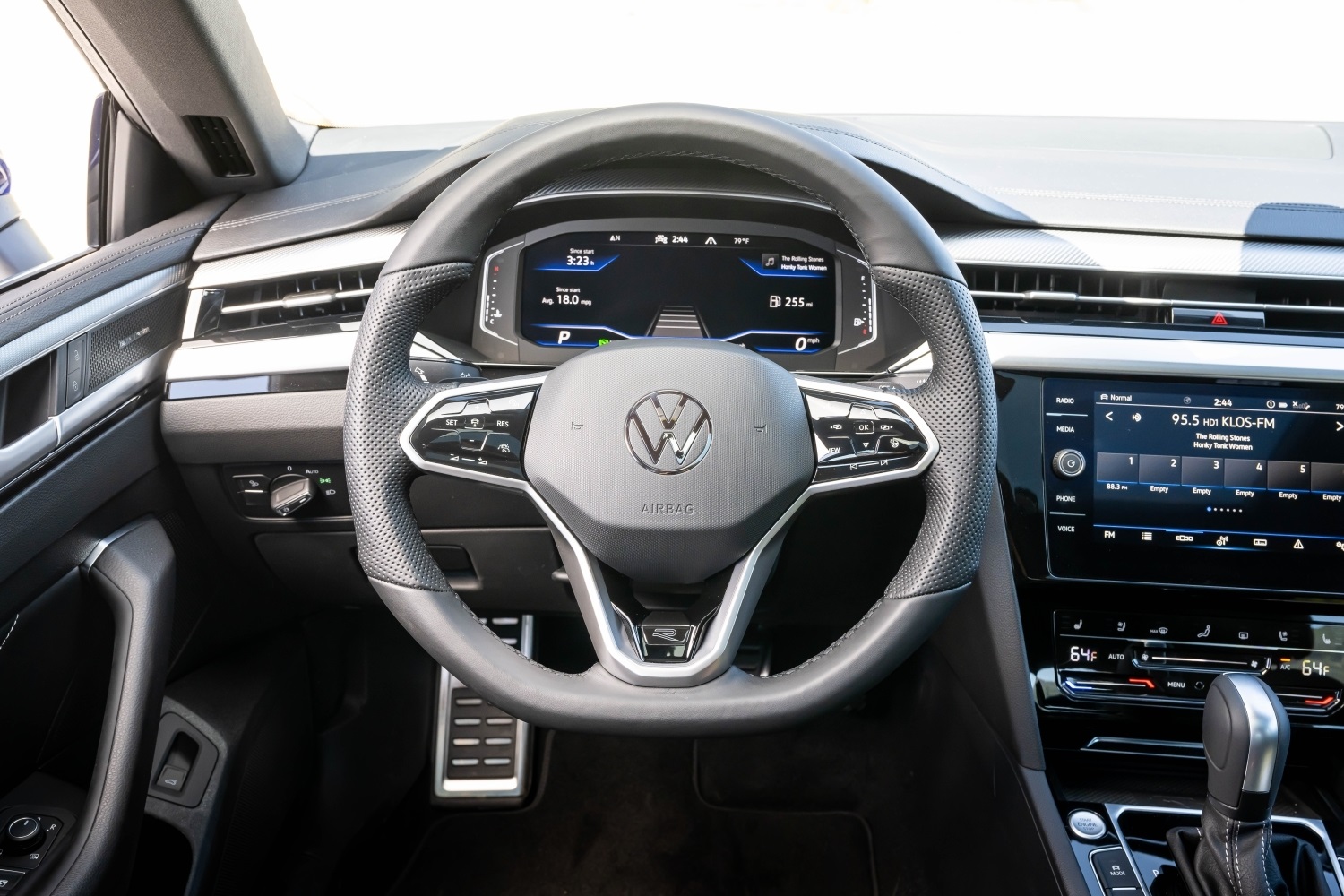
The 3-spoke steering wheel

The three-spoke, heated steering wheel fits firmly in hand.

Out With the ICE, In With the EV

Throughout the car industry, slow-selling cars are being replaced, mostly, by fully electric or electrified models. Would more advertising have helped save the Arteon? Or a more understandable name? “Arteon” is from the Latin word “artem,” meaning art.

The Volkswagen Arteon has just a few competitors in size and content, including the Kia Stinger, Nissan Maxima, and Toyota Avalon. And these well-done cars are facing the same fate as the Arteon.

It is expected that Kia will cease production of the Stinger — a critically acclaimed liftback sport sedan — in late 2023. Sales will continue into 2024, and it will undoubtedly be replaced by an electrified model.

The Maxima is caught in the same dejected state. Nissan will end production for its long-running Maxima nameplate in 2023. And like Volkswagen, Nissan will fill the slot with an electric vehicle inspired by the IMs “elevated sports sedan” concept in 2023, per Automotive News. The same goes for the Toyota Avalon, which is being phased out and will be replaced by the 2023 Crown sedan, a hybrid.

The 8-inch infotainment screen

Access to controls is smartly arranged with an easy-to-use 8-inch touch screen.

2023 Volkswagen Arteon Updates

In its three years on the market, Volkswagen has made dutiful improvements every year. Last year, VW repackaged the Arteon powertrain with a 300-horsepower, turbocharged and direct-injected 2.0-liter four-cylinder engine and seven-speed dual-clutch automated manual transmission. It is the same EA888 2.0-liter engine used in the Mk8 Golf R. The new powertrain replaces a 268-hp, turbocharged and direct-injection 2.0-liter with an eight-speed stepped automatic transmission.

And for the 2023 model year, Volkswagen added more standard content for the entry-level SE R-Line and a few cosmetic changes for higher trim levels. The lineup also was restructured to three trim levels, continuing with a choice of front- or 4Motion all-wheel drive.

Newly standard exterior features include adaptive LED headlights, cornering lights, and front fog lights. The grille now has an illuminated light bar, and the liftgate has an easy open-and-close power function. On SEL R-Line models, 20-inch wheels replace the previous year’s 19-inch wheels.

Inside is a new heated steering wheel, Dynamic Road Sign Display in the digital gauge array, and IQ.Drive driver-assistance technologies. SEL and SEL Premium R-Line models add Black Carbon trim with 30-color ambient lighting.

The wireless charging pad

Slim hands are required to get into the wireless charging pad.

2023 VW Arteon Pricing

Arteon is sold in three trim levels in front- or all-wheel drive with a 300-hp, 2.0-liter turbocharged engine and seven-speed automated-manual direct-shift transmission.

Starting prices for each trim level are $43,825 SE, $48,390 SE R-Line, and $50,990 for the SEL R-Line with 4Motion all-wheel drive. Pricing includes the $1,295 freight charge from Emden, Germany. No-cost interior colors are Titan Black or Stone and Raven.

The SEL R-Line tester with one option for metallic paint ($395 for Kingfisher Blue or King’s Red) was $51,385.

An interesting option is the LED Dynamic Turn Signals, $265, for a set of two. An amber lighting line on the exterior mirror body moves sequentially to the outside of the mirror housing.

The lengthy list of standard features is detailed in the specs box at the end of this story. But Arteon’s overachieving features support its $50K pricing without regrets.

Find current Arteon pricing here.

As of this posting, there are two 2023 $500 pricing offers for college graduates and military, veterans, and first responders. The offers are good for purchase or lease. Get the details here.

The Arteon engine bay

The 300-hp EA888 evo4 engine produces 295 lb.-ft. of peak torque at a low 2,000 rpm.

Warranties and Maintenance

Volkswagen supports the Arteon and every vehicle in its lineup with a bumper-to-bumper warranty and Carefree Maintenance Program. The warranty is for four years or 50,000 miles and can be transferred to a subsequent owner.

The maintenance program provides scheduled maintenance for two years or 20,000 miles. And this coverage, too, can be transferred to a subsequent owner throughout the remainder of the warranty.

VW Arteon Safety Features

The 2022 Arteon was named a 2022 Top Safety Pick by the Insurance Institute for Highway Safety. It is a specific award to Arteon models equipped with LED headlights and adaptive front lighting. It was a three-peat annual award for Arteon.

Standard safety features include six air bags, electronic brake-pressure distribution and hydraulic brake assist, electronic stability control, anti-slip regulation, electronic differential lock, and engine brake assist.

Driver-assist technologies include:

  • Travel Assist (Level 2 semiautonomous driving) and emergency assist;
  • Blind-spot monitor;
  • Forward collision warning and autonomous emergency braking;
  • Pedestrian monitoring;
  • Lane assist;
  • Park assist with park distance control front and rear.

The Travel Assist function works through the adaptive cruise control and has stop-and-go capability. The system’s lane-centering is consistent, particularly in freeway curves, when many other systems allow the vehicle to drift wide across the white lines.

The 20-inch tire and wheel package

The 20-inch wheel and tire package.

Arteon 4Motion Ride and Handling

It is easy to maintain car control with the deliciously engaging German engineering for steering input, throttle uptake, and braking engagement. The steel-spring suspension (front struts and rear multilink) is reinforced by telescopic dampers and an anti-roll bar, front and rear.

The chassis feels extremely rigid and secure. The ride quality is compliant but firm without jolt (or chin scraping) over lumpy intersections. Even the 20-inch Continental ProContact all-season tires (245/35) added to a smooth ride with little road noise. The tires on the test car were inflated to 42 psi. Typically that hard of a tire inflation would create harsh-riding black checkers. But the Continentals showed no harshness or noise. Four-wheel vented disc brakes have 13.4-inch front rotors and 12.2-inch rotors at the rear.

The sturdy gear shift handle in the shift console

Sturdy action for the seven-speed direct-shift gearbox.

Arteon 4Motion Performance

In Arteon specification, the EA888 evo4 engine displaces 1984cc, producing 300 horsepower (using the required premium fuel) at 5,350 rpm. The 295 foot-pounds of torque peaks at a low 2,000 rpm, and there is little turbo or DSG delay in laying down power. It gives some of the most unfettered performance I’ve experienced from a turbocharged four-cylinder and DSG.

Drive modes of Eco, Comfort, Normal, Sport and Custom allow personalization to the driver’s style. Sport mode adds potent acceleration and upshifts. According to ZeroTo60times.com, the Arteon SEL Premium R-Line 4Motion can get to 60 mph in 5 seconds.

Front-wheel-drive Arteon models have an EPA-estimated fuel economy rating of 25 mpg in city driving, 33 mpg on the highway, and 28 mpg combined. Models with 4Motion all-wheel drive have ratings of 22/31/25 mpg. All models have a 17.4-gallon fuel tank, which was downsized from 18.3 gallons last year.

I spent most of a 200-mile test week in Eco plus Sport or Normal plus Sport. My fuel economy around town was in the 20 mpgs, and I worked up to 31.3 mpg on highway cruising, which might have gone higher if I hadn’t reached my exit.

4Motion All-Wheel-Drive

The latest generation of Volkswagen’s 4Motion system is standard on the SEL and SEL Premium trim levels. The system will activate before wheelspin occurs. When driven under a relatively low load or coasting, the front wheels are driven and the rear wheels are decoupled to help save fuel. However, the rear wheels will engage in a millisecond whenever necessary via the center differential.

The XDS cross-differential lock functions as a limited-slip differential and helps to compensate for understeer (front-end push) during cornering. In low traction situations, the system can briefly brake a slipping wheel to transfer drive power to the opposite wheel.

Interior Function

The R-Line cabin has a sporty coupe-like presence with a contemporary design and horizontal lines to accentuate width. The hefty girth of the three-spoke steering wheel fits firmly in hand with grips in the right places.

Front headroom of 37.9 inches (with the sunroof) and the seating position should accommodate taller drivers (up to at least 6-foot-5 inches in my test). The R-Line front sport seats are firmly supportive with long thigh support. But the seats also have serious side and cushion bolsters for those drivers who push the cornering limits. As a grand tourer, however, I’d have the side bolsters cut down to reduce the friction and wear as butts slide over the ridge.

Sightlines are clear at the side mirrors and down the hood, but the smallish back glass and sloped sides can be an issue. When parking, the wide-screen rearview camera with guidance lines is the great equalizer.

Ergonomics and access to controls are smartly arranged with an easy-to-use 8-inch touch screen. As VW has stepped up to add more charging USBs, its wireless charging pad is a struggle to use. It occupies a shallow tray just ahead of the gearshift lever, and it requires slender fingers to slip in a phone or pull it out, but it beats the tangle of a charging cord.

The 12.3-inch-wide digital gauge display (trickle down from Audi) is helpful for its selectable elements, such as the navigation map as background or to highlight a digital speed readout or gear position.

Small storage areas include large door panels with space for bottles.

The Arteon back seat

Back seat legroom of 40.2 inches is grand-touring comfortable.

7 Cool Arteon Features

The Volkswagen Arteon appears to have had a generous budget to support its entry-lux price. Some of the assets I appreciated are:

  • Both front seats are fully power-adjustable. Some makers cheap out on the front passenger seat and give half as many power adjustments;
  • Door lock sensors are in all four doors, not just the front doors, as are done by many other makers;
  • Heated steering wheel;
  • Ventilated front seats, not just heated seats;
  • Frameless side glass for that sport-coupe appearance. And the driver can enjoy driving with the window down and not being cruelly buffeted;
  • Sliding front center armrest top, which helps drivers of all sizes get comfortable;
  • Front and overhead camera views, not just a rear view.

Back Seat and Cargo Space

Access to the back seat is a bend-and-drop sequence, but legroom is grand-touring comfortable at 40.2 inches — and the window seats have adult thigh support. The tall but narrow transmission tunnel helps center-seat legroom, but the window seats are far more comfortable.

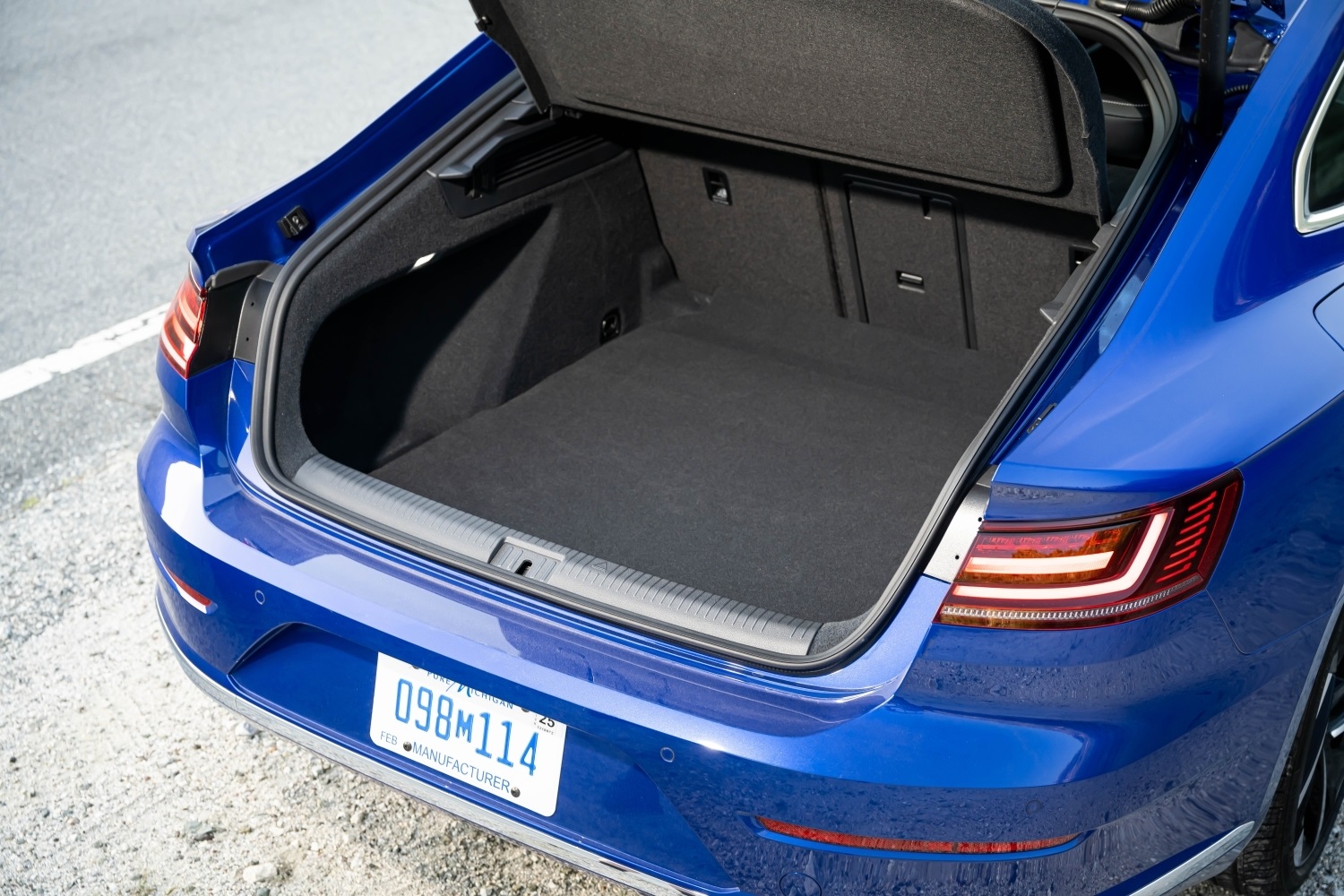
There is a fold-down armrest and ski pass-through to the cargo area, which is wide and deep. Fold the seatback for about 6 ½ feet in length.

The open cargo area

Fold the seatback for about 6 ½ feet in length.

Why Buy the Volkswagen Arteon?

I strongly dislike using the overused words “premium” or “elevated” unless referring to ice cream, gasoline, or an out-of-the-way diner. However, the Arteon fits both of those descriptors.

As a sedan, it is a step up from a family car and a step below the luxury class.

While an SUV is an appliance valued for its view from the inside outward, the Arteon has a sophisticated presence, seen from the outside in.

The purposeful and balanced German engineering is the unspoken asset of the Arteon. It is a soaring grand tourer, built for 100 mph continental cruising and arriving at your destination with unrumpled style.

Owners will enjoy for the long term its cabin size, power, and nimble footprint.

A review of the Arteon moving along a country road

The Volkswagen Arteon is a soaring grand tourer, built for 100 mph continental cruising.

2023 VW Arteon 2.0T SEL Premium R-Line Specifications

Body style: large-midsize, 5-seat liftback sedan with 4Motion all-wheel drive

Engine: 300-hp turbocharged and intercooled 2.0-liter 4-cylinder with auto stop-start at idle; 295 lb.-ft. torque at 2,000 rpm

Transmission: 7-speed direct-shift automatic transmission with performance modes of Eco,

4Motion Fuel economy: 22/30/25 mpg city/hwy/combined; premium fuel recommended

0-60 mph acceleration: 5.0 seconds

BY THE NUMBERS

Fuel tank: 17.4 gallons

Cargo space: 27.2-56.2 cubic feet

Front head/leg room: 37.7/41.2 inches

Rear head/leg room: 37/40.2 inches

Shoulder room f/r: 56.5/54.7 inches

Length/wheelbase: 191.5/111.9 inches

Curb weight: 3,929 pounds

Turning circle: 39 feet

FEATURES

SEL Premium standard equipment includes:

Exterior: 20-inch alloy wheels with 245/35 all-season tires, adaptive (turning) headlights with cornering lights, LED headlights-taillights-daytime running lights, hands-free remote power rear hatch, fog lights, power folding, heated, power adjustable side mirrors with position memory and passenger-side auto-tilt function, power tilting and sliding panoramic sunroof, and R-Line front bumper and badging.

Interior: Keyless access locking with push-button ignition, rearview camera with overhead view), electronic parking brake with auto-hold function, Volkswagen Digital Cockpit Pro with 10.25-inch configurable instrument display, wireless charging pad, 60/40 split-folding back seat with armrest and center pass-through, auto-dimming rearview mirror, three-zone automatic climate control with air filter, comfort sport seats with power lumbar and driver seat massage function, heated seats front and rear, ventilated front seats, leather-trimmed upholstery and leather-wrapped multi-function (heated) sports steering wheel with touch control and shifting paddles, multi-color adjustable ambient lighting, stainless steel pedal caps, Titan Black headliner, remote engine start, Harman Kardon audio system with center speaker and subwoofer, satellite radio with 3-month subscription, headlight high-beam control, two front USB-C data ports and one rear USB- C charging port, 8-inch touchscreen navigation, adaptive cruise control, App-Connect smartphone integration via wireless & USB, myVW connected vehicle services from Car-Net.

Safety features include: Six air bags, electronic brake-pressure distribution and hydraulic brake assist, electronic stability control, anti-slip regulation, electronic differential lock, and engine brake assist, blind-spot monitor.

Driver-assist technologies include: Travel Assist and emergency assist, dynamic road sign display, forward collision warning and autonomous emergency braking, lane (steering) assist, park assist with park distance control front and rear, and pedestrian monitoring.

PRICING

SEL Premium R-Line base price: $50,990, including $1,295 freight charge; price as tested $51,385

Options on test car: metallic paint $395

Where assembled: Emden, Germany

Warranties: 4-years/50,000-miles bumper to bumper including powertrain; 2-years/20,000-miles free scheduled maintenance; 3-years/36,000-miles roadside assistance