Select Page

1963 Buick Special

1963 Buick Special
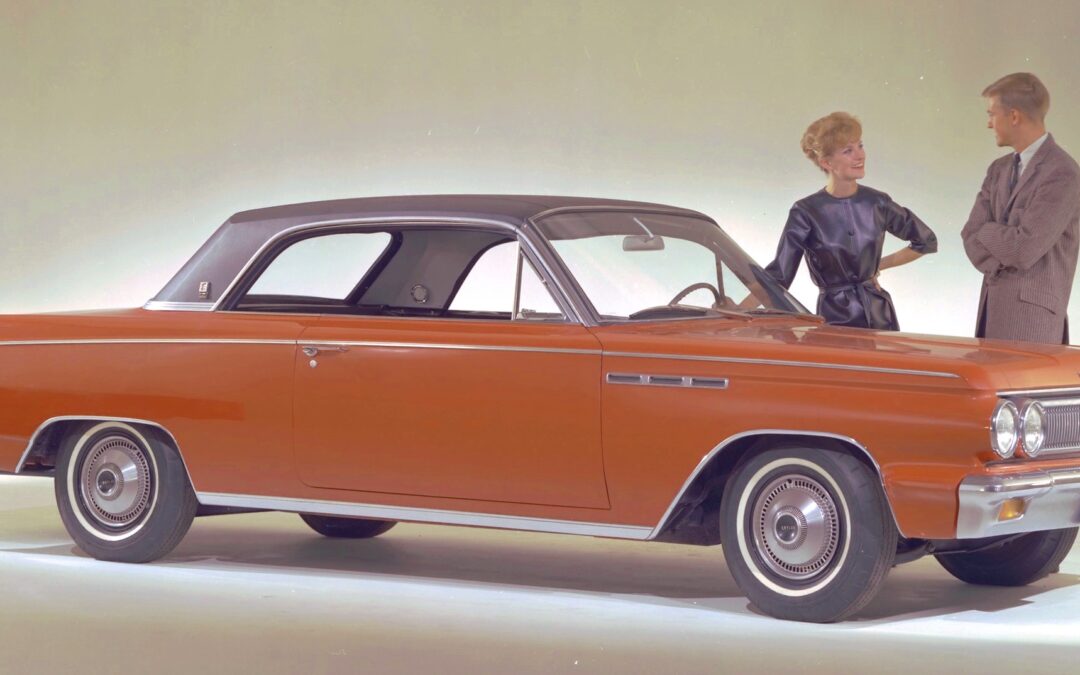
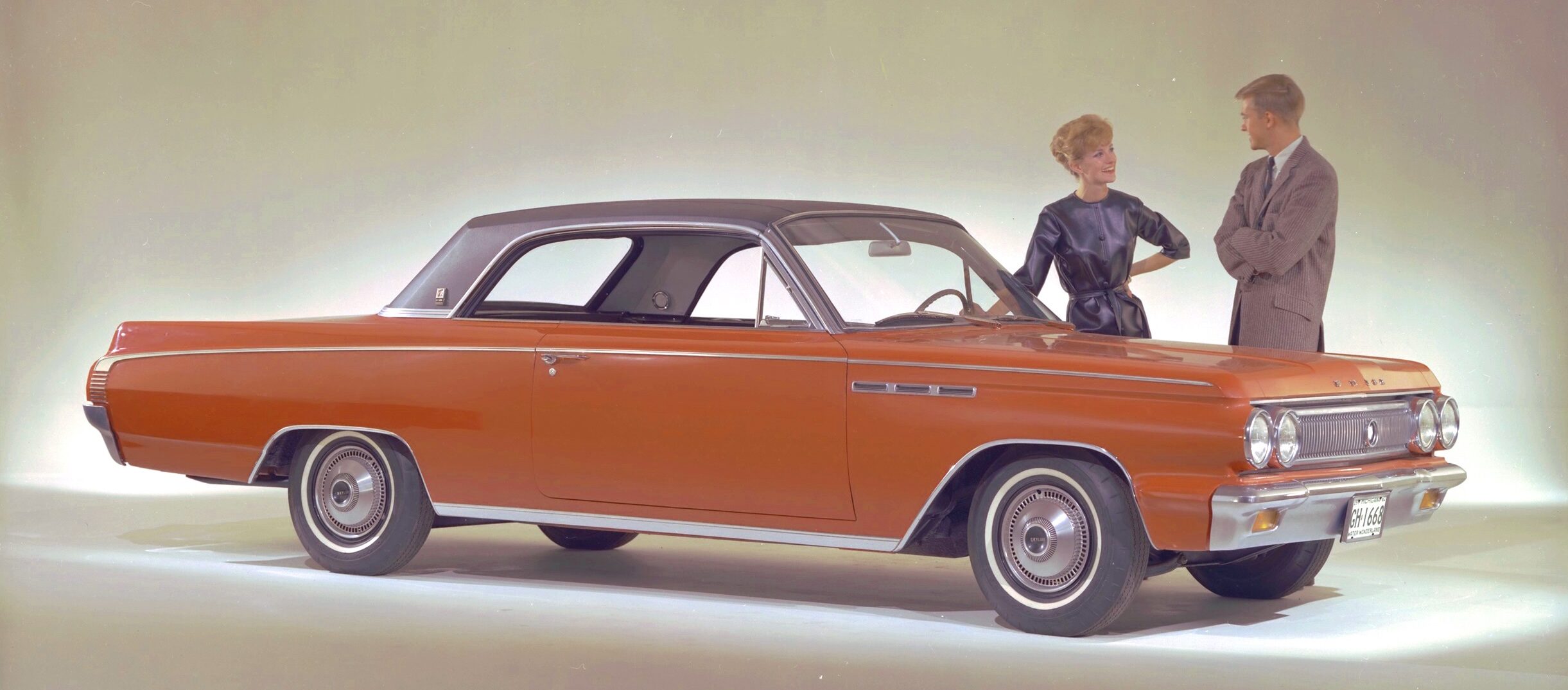
A 1963 Buick Special coupe.

The 1963 Buick Special body was only produced for one year. (GM)

BY MARK MAYNARD

General Motors promoted the 1963 Buick Special for its “unique, compact 3.5-liter all-aluminum V-8 engine.” The 215-cubic-inch engine gave the Special one of the highest horsepower-per-liter ratios of its day: 0.93:1.

The engine had a power rating of 155-hp with the two-barrel carburetor. When equipped with the optional four-barrel carburetor horsepower rose to 190-hp, according to Wikipedia.

Transmission choices were a three-speed column shift manual transmission, a floor shift Borg-Warner T-10 four-speed manual, or a two-speed Turbine Drive automatic. The two-speed “Dual Path Turbine Drive” automatic was a Buick design and shared no common parts with the better-known Chevrolet Power-Glide transmission.

In 1961, the Buick Special debuted a brand new unibody compact GM Y platform. And in 1962, the Special was the first American car to use a V-6 engine in volume production, earning its Motor Trend’s Car of the Year for 1962.

The 1963 Special was available as a two-door pillared hardtop coupe, a four-dour sedan, a convertible, and a station wagon.

The 1963 body was only produced for one year, selling 148,750 copies, including 42,321 Skylarks. The entire car was redesigned for 1964.

The Buick 215

After that, the Buick 215 V-8 found its way into the Rover P6 3500S in 1968 but was never sold in North America in any great numbers.

The engine was used, however, in other British cars. The V-8 was used in the Morgan Plus 8, MG MGB GTV8, Land Rover, and Triumph TR8. It was also retrofitted into MGAs and MGBs.

The Buick engine had really earned its stripes as being the sole engine powering the Range Rover for a couple of decades, according to the Wiki page. Eventually, the V-8 found its way into the original Series/Defender Land Rover. The engine also was used in several other Land Rover Models including the Discovery and the Forward Control (Army vehicle).

2022 Hyundai Santa Cruz Midsize Pickup Reveal

2022 Hyundai Santa Cruz Midsize Pickup Reveal
2022 Hyundai Santa Cruz pickup teaser image.

2022 Hyundai Santa Cruz teaser images. (Hyundai)

9 a.m. PT April 15 on Hyundaiusa.com

BY MARK MAYNARD

Hyundai calls its 2022 Santa Cruz a Sport Adventure Vehicle, not merely a midsize, four-door pickup. Its target audience is “urban adventure seekers that require daily urban flexibility coupled with versatility for extra-urban adventures.”

2022 Hyundai Santa Cruz pickup teaser side view.

The teaser sketch does seem to merge pickup-car elements, such as in a classic El Camino or the now-retired Subaru Baja, but with a clear truck stance and contemporary without the tough-guy bulk.

Few details have been released so far, other than “Santa Cruz boasts a bold yet sophisticated design, powerful and efficient powertrain options, a flexible, secure open bed for gear, cutting-edge connectivity and an all-wheel-drive platform.”

2022 Hyundai Santa Cruz pickup teaser rear view.

In the teaser video, Brad Arnold, design manager Hyundai Design Team California says, “It’s not a truck, it’s a Santa Cruz.”

We’ll learn more at the digital reveal. Until then here’s the

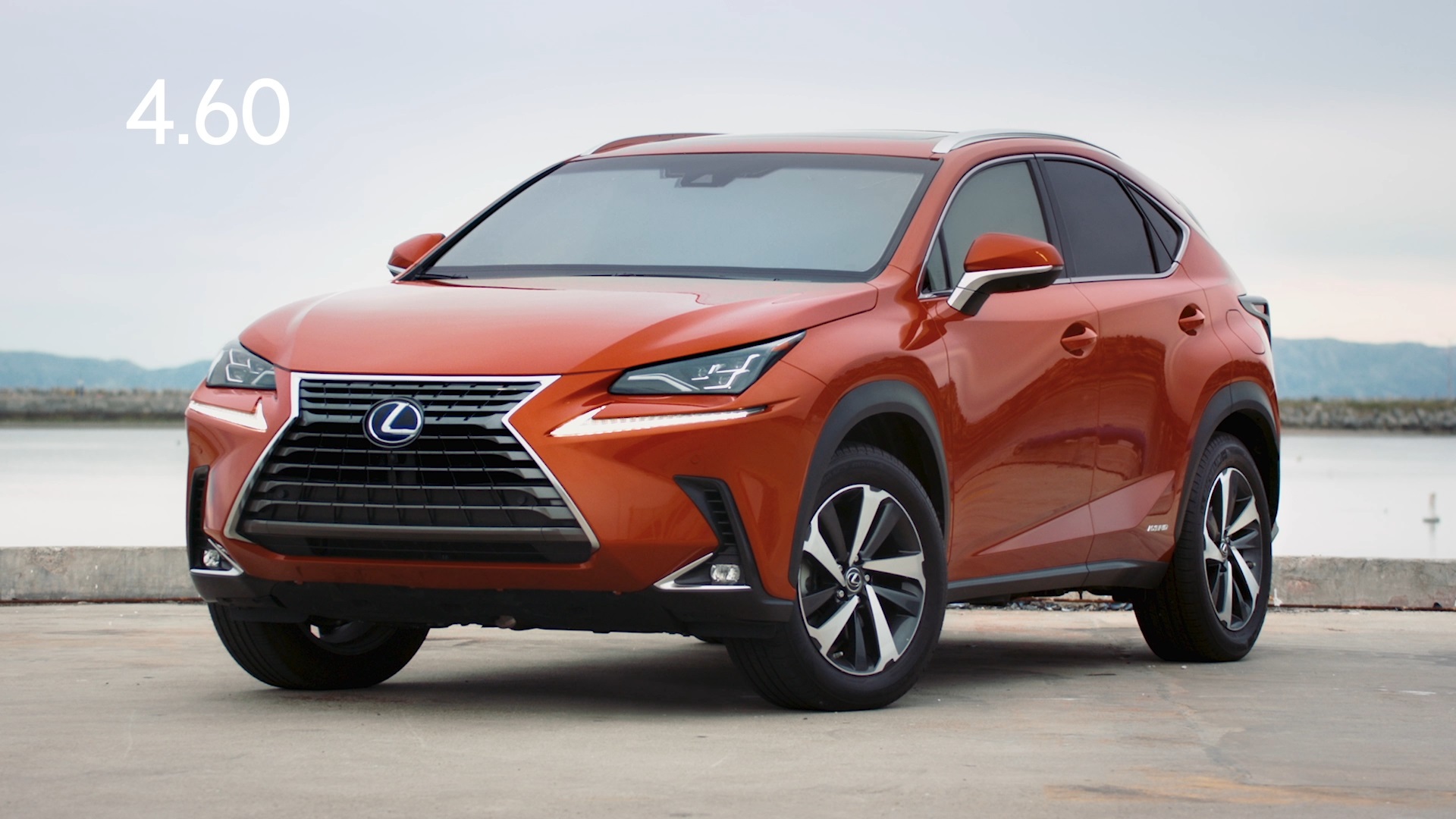
Lexus can change your mind about texting and driving in 4.6 seconds

Lexus can change your mind about texting and driving in 4.6 seconds

The Lexus NX 4.6 demo vehicle.The NX 4.6 demo vehicles has been modified with electrochromic glass film that with the flick of a switch turns the windshield and windows from transparent to opaque instantaneously. In this test, the windows obscure the driver’s view for 4.6 seconds. (Lexus)


BY MARK MAYNARD

How long do you think it takes to glance at a text message when you’re driving? One second? Two seconds? You’re not alone. Most drivers believe that texting and driving create only a momentary distraction.

In reality, the average length of time it actually takes to send or receive a text message when you’re behind the wheel is 4.6 seconds, according to the National Highway Traffic Safety Administration. In illustrate the dangers of those few seconds of distracted driving, Lexus released a video on April 6 — or 4/6 — to bare this common misconception.

April is National Distracted Driving Awareness Month and a good time to regroup and reconsider the choices we make when we’re on the road, Lexus said in a statement.

Distracted driving is dangerous, claiming 3,142 lives in 2019 (the most recent available data) according to NHTSA. Texting is the most alarming distraction. At 55 mph, taking your eyes off the road for 4.6 seconds is like driving the length of an entire football field with your eyes closed.

The Lexus NX 4.6 demo vehicle in mock crash.

In the video, “Driving Disrupted,” Lexus demonstrates what happens when drivers can no longer see the road for 4.6 seconds. (Lexus)

One-of-a-kind safety vehicle

In the new video called “Driving Disrupted,” Lexus demonstrates what happens when drivers can no longer see the road for 4.6 seconds. Participants (mostly young drivers) get behind the wheel of a Lexus NX on a closed course, thinking they’re taking the vehicle for a routine test drive. What they don’t know is that they are driving a one-of-a-kind specially modified version of the small SUV called the NX 4.6. It’s equipped with electrochromic technology that turns the windshield and windows from transparent to opaque instantaneously. The frosted glass will completely obscure the driver’s view for 4.6 seconds.

The video captures the chaos that ensues.

“Even the most advanced safety systems on the road today can’t replace the undivided attention of the driver,” said Vinay Shahani, vice president of Lexus marketing.

To learn more, visit Lexus.com/DrivingDisrupted.

Mustang Mach-E 1400 X Hot Sauce

Mustang Mach-E 1400 X Hot Sauce

Mustang Mach-E hot sauce promo.Ford Performance joined forces with Sean Evans, of the web show “Hot Ones” to turn the feeling of riding in the Mustang Mach-E 1400 into a hot sauce. (Ford) 

BY MARK MAYNARD

Ford Performance and hot sauce “heatonist” Sean Evans are playing chicken, sort of, with an eye-watering recipe. Evans, of the “Hot Ones” web show, has cooked up a blistering sauce that attempts to translate the sensation of riding in the Mustang Mach-E 1400.

The bottled sauce — too-hot-for-production or for sale — is said to have notes of smoke and charred earth from plenty of insanely hot peppers. Motorsport’s champion and fearless “fun-haver,” Vaughn Gittin Jr., took a taste test. And then Gittin Jr. took Evans for a saucy track run in the Mustang Mach-E 1400.

Both prototypes appear to have similar insane capabilities. Pass the cold milk for the hot sauce, pass the barf bag for the ride-along with Gittin. Watch the video.

Mustang Mach-E hot sauce with Vaughn Gittin and Sean Evans.

Hot sauce “heatonist” Sean Evans (left) and racing champ Vaughn Gittin Jr. sit down for an eye-watering taste test of the hot sauce. (Ford)

No rules

The Mustang Mach-E 1400 is a 1,400-horsepower, all-electric racing prototype built by Ford Racing engineers and RTR Vehicles. It’s a just-for-the-hell-of-it prototype to fathom the limits and adhesion potential for obscene electric power on the track, drag strip, or gymkhana course.

The Mach-E 1400 racing prototype.

The Mustang Mach-E 1400 is a 1,400-horsepower experiment. (Ford)

The project took 10,000 hours of collaboration to figure out what an electric vehicle can do and what customers tend to believe it can do, said Ron Heiser, chief program engineer for the Mustang Mach-E, in a release.

Mustang Mach-E Performance

Blistering power comes through seven — 7 ! — electric motors, five more than the production Mustang Mach-E GT. Three are attached to the front differential and four are attached to the rear in pancake style. A single driveshaft connects them to the differentials.

The setup has a huge range of adjustability to set the car up for everything from drifting to high-speed track racing, Heiser said.

The racecar's tire and aerodynamic fender fairing.

Aerodynamics were optimized, including unique cooling ducts. (Ford)

Battery power

The 56.8-kilowatt-hour battery is made up of nickel manganese cobalt pouch cells. The composition allows ultra-high performance at a high discharge rate. The battery system uses a di-electric coolant during charging to decrease the time needed between runs.

The project took shape without rules, according to Mark Rushbrook, motorsports director for Ford Performance. The Ford team and RTR used many of the same tools Ford uses for its race and production vehicles.

A rear view of the Ford racecar

Blistering power comes through seven electric motors. (Ford)

A winged warrior of downforce

Beginning with a Mustang Mach-E GT body-in-white, aerodynamics were optimized to create a winged warrior of downforce. The body has unique cooling ducts, a front splitter, dive planes, and a tall rear wing. Downforce is targeted at more than 2,300 pounds at 160 mph.

The chassis and powertrain were a test beds to evaluate different layouts and their effects on energy consumption and performance. There were chassis tests for rear-wheel drive, all-wheel drive, and front-wheel drive. Power delivery can be split between front and rear, or completely to one end or the other.

Drift and track setups have completely different front-end configurations,  Rushbrook said. As an example, the control arms and steering changes were calibrated to allow for the extreme steering angles in drifting.

The disc-brake system by Brembo has an integrated electronic booster. It allows series regenerative braking and is combined with ABS and stability control. A hydraulic handbrake for drifting allows the powertrain controls to shut off power to the rear motors.

“The challenge was controlling the extreme levels of power provided by the seven motors,” Rushbrook said in the release. “Mustang Mach-E 1400 is a showcase of the art of the possible with an electric vehicle.”

1948 Willys-Overland Jeepster

1948 Willys-Overland Jeepster

The Civilian Jeep

The 1948 Jeep Jeepster PR image.The 1948 Jeep Jeepster. (Photos courtesy Stellantis PR archives)

BY MARK MAYNARD

The Willys-Overland Jeepster was a clever business plan and an early example of a crossover SUV with carlike features.

Introduced in April 1948 and produced through 1950, the Jeepster was conceived as a sporty two-door, convertible sports car for veterans of World War II, according to its page in Wikipedia.

The basic Jeepster (“VJ” internally) included numerous deluxe features and a high level of standard equipment. Among its carlike extras were whitewall tires, hubcaps with chrome trim rings, sun visors, deluxe steering wheel, wind wings, locking glovebox, cigar lighter, and continental tire with fabric cover.

Slab-Sided Design

Willys-Overland lacked the machinery to form deep-drawn fenders or complicated shapes, according to the Wiki report, so the vehicle line had to use a simple and slab-sided design.

“Industrial designer Brooks Stevens styled a line of postwar vehicles for Willys using a common platform that included the Jeep pickup and station wagon, as well as a sporty two-door open car that he envisioned as a sports car for veterans of World War II.

“After World War II, Jeep trademark owner, Willys (originally pronounced WILL-is), began producing and marketing the “CJ” (for Civilian Jeep) to farmers, foresters, and others with similar utilitarian needs. It also began producing the Jeep wagon, panel utility and pickup in 1946 and the Jeep truck in 1947.

The majority of the Jeepster’s hardware carried over from the Willys station wagon, including the entire drivetrain, front end, rear suspension, steering and four-wheel drum brakes. Its flat-topped rear fenders were taken from the Jeep truck line.

The drivetrain was Willys’ World War II-proven, 63-horsepower, 2.2-liter inline-4 “Go Devil” engine. The three-speed manual transmission had standard overdrive.

The Jeepster was only offered with rear-wheel drive, which limited its appeal with other Jeep customers. With plastic side curtains, its $1,765 price was about the same as a Ford Super DeLuxe Club convertible. But the Ford had roll-down windows, fancier styling and a V-8 engine.

Jeepster Not Popular

Limited by sparse advertising and an insufficient dealer network, the Jeepster did not catch on with the intended market segment. Still, a total of almost 20,000 were manufactured through 1950, with some leftover models sold in the 1951 model year.

The Jeepster name was revived in 1966 on a new model, the C-101 Jeepster Commando. American Motors Corp., Willys-Overland’s successor, removed Jeepster from the name for 1972, and production ended after 1973.

The 1967 Jeepster Commando.

The 1967 Jeepster Commando.