Family hustle, family hub

The “all-new” 2021 Nissan Rogue, in front or all-wheel drive, has starting prices of $26,745 to $37,925. (Photos courtesy of Nissan)
Table of Contents
Overview
Pricing
Design
Powertrain
Fuel Economy
Ride and Handling
Safety Features
Cargo and back seat space
Why buy the Nissan Rogue?
Specifications
It takes a rogue to survive in the cutthroat segment of compact SUVs, of which there at least a dozen in this arena. The Nissan Rogue had long been among the top three to six sellers, but its luster dimmed as the competitors were renewed.
The hierarchy will shuffle again with the complete redesign and re-engineering of the 2021 Nissan Rogue. Everything about it is new, Nissan says, from the platform, powertrain, rear multi-link suspension, electric steering system, safety, and driver-assist technologies, and exterior and interior styling. Also new is a top-line Platinum model.
Competitors include the Ford Escape, Chevrolet Equinox, Jeep Cherokee, GMC Terrain, Honda CR-V, Hyundai Tucson, Kia Sportage, Toyota RAV-4, Mazda CX-5, Mitsubishi Eclipse Cross, Subaru Forester, and VW Tiguan.

The interior design offers “family hub” utility with a premium presence.
Nissan Rogue Overview
The Rogue is all about the modern family, Nissan says, and refers to the new interior layout as the “Family Hub.”
Much design and engineering detail went into the family-friendly format.
- More attentive engineering allows all doors to open to nearly 90 degrees. That extra space is especially helpful when buckling a child into a car seat.
- Door panel bottle holders can hold a 32-ouncer;
- Four charging USBs and a new wireless charging pad;
- The new electronic shifter eliminates mechanical elements under the shifter, which allowed storage space under the new “floating” center console.
- Standard safety technologies include the Nissan Safety Shield 360 and 10 airbags.

The new “floating” center console.
Nissan Rogue Pricing
The Nissan Rogue is sold in four trim levels (S, SV, SL, Platinum) in front- or all-wheel drive with one choice for engine and transmission. Front-drive starting prices range from $26,745 to $36,525. AWD pricing ranges from $28,145 to $37,925. All MSRP pricing includes the $1,095 freight charge from Smyrna, Tenn.
The front-drive SL tester was $33,480 with one accessory for floor mats and a cargo mat ($385).
Look here for deals and incentives.
 The shift console is a hub of function for charging.
Rogue Design
While still in the compact segment, Nissan considers Rogue more of a midsize.
The footprint is about the same as before but 1.5 inches shorter with a roofline lowered by 0.2 inches. The wheelbase and width are the same, at 106.5 and 72.4 inches. But headroom is a hair shorter, at 39.2 inches with the moonroof. And front legroom is 1.5 inches shorter, at 41.5 inches. The front shoulder room grew by a half-inch, to 57.1 inches, which helps the cabin feel open.
Unlike some swoopier SUVs in the segment, the Nissan Rogue has a roomy, more squared-off cabin. That format helps for unobstructed sightlines at the side mirrors and over the shoulder. Though the back glass might seem cropped, it is a rectangle that fills the rearview mirror. The around-view monitor on the SL is very enabling with an overhead view, front and rear.

All controls and switches are smartly arranged and simple to access.
The interior materials won’t be confused with a luxury vehicle, but the woven headliner and plastics have an appealing appearance and the panels fit with precision. The test vehicle was “preproduction” (an early run through the factory), for which I will blame the vibrations in the side mirror on the passenger side; the driver-side mirror was tight.
But for a $34K sticker price, I would have expected a wireless charging pad to be included. It is a $250 option for the SL.
Aerodynamics
The exterior styling, with the so-called “floating roof,” has the desirable qualities that define an SUV without the contrived angles and posture to create a “look.”
Integrated into the design are stealth aerodynamic features, such as the “3D” tire deflectors in the lower front fascia, an active grille shutter to control airflow into the engine compartment, special A-pillar shaping, underbody covers to manage airflow under the vehicle, and an “air curtain” that directs air from the front to the sides of the Rogue.
Rogue Powertrain
The 2.5-liter four-cylinder is the same displacement as before but with new engineering to add direct injection, which replaces multiport. The secret sauce of DI added another 11 horsepower, now at 181 hp. Torque is up by 6 foot-pounds, which peaks 800 rpms lower at 3,600 rpm for a quicker takeoff from a stop.
Automatic stop-start at idle is expected to be added later, but with this powertrain’s high fuel economy it will not be missed.
The Xtronic continuously variable automatic transmission was updated with paddle shifters and Eco and Sport modes (in addition to the Standard drive mode).

The 2.5-liter four-cylinder now with direct injection.
Rogue Fuel Economy
Fuel economy ratings are about the same but 1 mpg better in the highway mode: 26/34/29 mpg city/highway/combined, on 87 octane. AWD models are rated 26/34/29 mpg. (That’s comparable to the Toyota RAV4 XLE FWD at 28/35/30 mpg.) With the 14.5-gallon tank, it wouldn’t be difficult to have a range of 450 miles.
I worked up to 33.7 mpg in extended highway driving and averaged 24-28 mpg around town while driving in standard mode, not Eco.
The larger displacement four-cylinder without turbocharging provides a balanced ratio of power to fuel economy that should handily accommodate most buyers.
Rogue Ride and Handling
The new suspension design, including a new multi-link rear, might have the smoothest ride quality of the competitors. It steps across speed bumps and driveway transitions without whiplash to occupants.
The 19-inch Bridgestone Alenza tires (235/55) complement the well- soundproofed interior, but they spool up noise on concrete highways.
While most owners won’t push the limits of adhesion, soaring through a sweeping exit loop will bring a smile. And there is confident control in evasive maneuvers.
Driver Assist Features
Nissan’s proprietary ProPILOT Assist is among the more accurate for lane-centering on the interstate or divided highways. But keep both hands on the wheel because the system (like most others) will switch off briefly and randomly in certain conditions. And driving into bright sunlight can cause the Rogue to drift ever so slightly across the white lines or Botts’ dots before correcting course.
ProPILOT Assist with Nissan’s door-to-door navigation system adds another layer of watchful protection. Using map data, the system can proactively reduce speed for upcoming freeway curves or junctions and also help slow the vehicle for freeway exits.
Safety Features
Safety Shield 360 technologies include automatic emergency braking with pedestrian detection, blind-spot warning, rear cross-traffic alert, lane departure warning, and rear automatic braking.
Optional technologies include intelligent cruise control and the ProPILOT semi-automatic driver-assist system with blind-spot intervention and traffic sign recognition. It is included as part of the Premium package or standard on the Platinum.
Plan on spending another $39 a month for the data plan to use these advanced-driver-assist features. But once you’ve experienced them, you won’t wonder “What’s the speed limit here?”

Tire-wheel sizes range from 17-, 18- or 19-inches.
Cargo and Back Seat Space
The back seat is a comfortable place to spend time, particularly with the pano roof. There is another half-inch of back seat legroom (38.5 in.) and rear headroom grew by 1.2 inches.
Total cargo-area capacity grew by 4 cubic feet, now at 74 cu.ft. Space behind the back seat is slightly smaller but still haul-worthy at 36.5 cu. ft. Nissan’s nifty Divide-N-Hide cargo floor in the low position provides almost 5 inches more load space. The space is 45 inches wide by 32 inches to the ceiling and 35 inches deep. Fold the back seat for 6 feet of length. Release levers are a convenient detail.

The Divide-N-Hide cargo floor.
With all the new changes, and with an aluminum hood and doors, the Rogue’s weight grew by about 60 pounds across the trim levels/ Curb weights range from 3,411 to 3,512 pounds. The SL weighs 3,490 pounds.
A remarkable engineering feat was how 2.2 feet were sliced from the turning circle, now at 35.4 feet, which makes it a doughnut champ on a city street. The “floating roof” design.
Why buy the Nissan Rogue?
With the SL’s safety and driver-assist features, this Rogue will see children through their teen driving years and beyond.
The SV model is the value choice of trim levels ($28,435 FWD). But adding the niceties of the SV package, $2,660, brings the price to $31,095. The SV package adds family-friendly features of roof rails, a power liftgate, dual-panel panoramic moonroof, rear sunshades, leatherette upholstery, leather-wrapped steering wheel, heated front seats, and a heated steering wheel.
It is refreshing that Nissan cared enough to push the budget to do it right the first time. They won’t have to make excuses later.
Specifications
2021 Nissan Rogue SL
Body style: compact, 5-seat SUV
Engine: 181-hp, direct-injection 2.5-liter 4-cylinder; 181 lb.-ft. torque at 3,600 rpm
Transmission: Xtronic CVT with manual shift mode, paddle shifters, and Eco and Sport modes
Fuel economy: 26/34/29 mpg city/hwy/combined; 87 octane
BY THE NUMBERS
Fuel tank: 14.5 gal.
Cargo space: 36.5-74.1 cu. ft.
Front head/leg room: 39.2*/41.5 in. *41.1 w/o moonroof
Rear head/leg room: 37.8/38.5 in.
Length/wheelbase: 183/ 106.5 in.
Curb weight: 3,490 lbs. (SL model)
Turning circle: 35.4 ft.
Tow capacity: 1,350 lbs.
FEATURES
Standard SL equipment includes: smart key locking and push-button ignition, leather-trimmed upholstery, Around View camera system, Intelligent Cruise Control with full speed stop and go, ProPILOT Assist, 8-way power (heated) driver seat, 4-way power (heated) front passenger seat, reclining and heated 60/40 back seat, power panoramic moonroof, leather-wrapped and heated steering wheel, 6-speaker audio system with 8-inch color display with NissanConnect, Apple CarPlay and Android Auto, Bluetooth phone and audio, 2 charging USBs (Type A, Type C), 2 rear charging USBs, Siri Eyes Free, electric parking brake, power (folding) mirrors, 19-inch alloy wheels
Safety features include 8 airbags, hill-start assist, brake assist, Intelligent Trace and Active Ride controls, automatic emergency braking with pedestrian and cyclist detection, Intelligent Forward Collision Warning and Lane Intervention, lane-departure warning, blind-spot warning, and rear cross-traffic alert,
PRICING
SL Base price: $33,095, including $1,095 freight charge; price as tested $33,480
Options on test vehicle: floor mats and cargo mat $385
Where assembled: Smyrna, Tenn.
Warranties: 3-years/36,000-miles bumper to bumper with roadside assistance; 5-years/60,000-miles powertrain
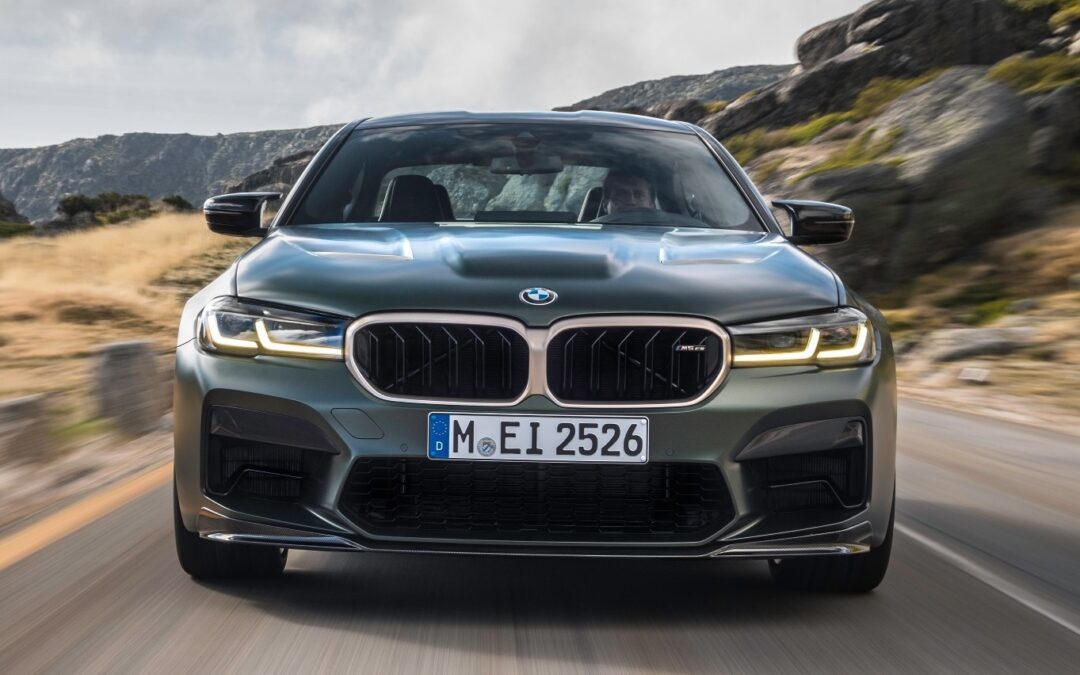
 Available only for the 2022 model year, the new limited production all-wheel-drive supersedan builds on the M5. (BMW)


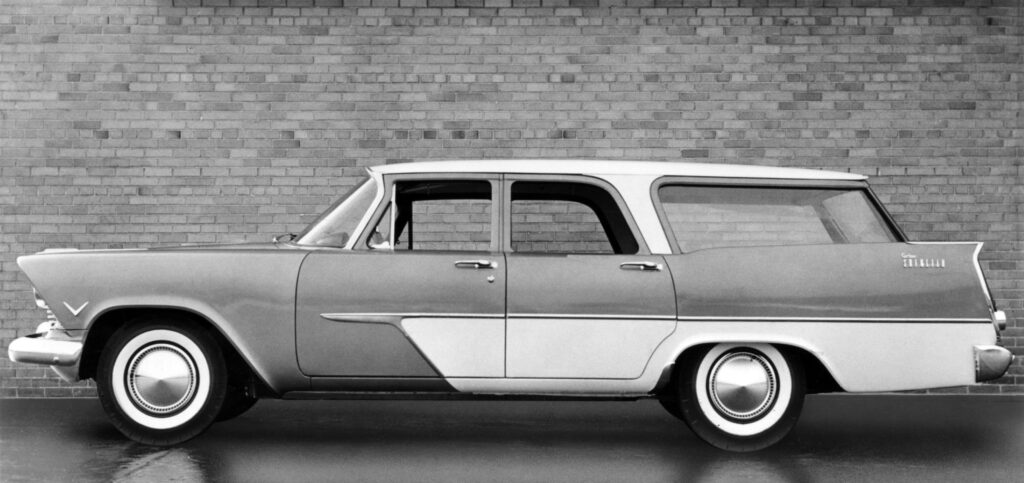 The 1957 Plymouth Suburban wagon, with the new “Forward Look” styling. (Stellantis)