Select Page

8 Generations of the Golf GTI

8 Generations of the Golf GTI
A graphic sketch timeline of the eight generations of the VW GTI

(All photos courtesy VWoA)

BY MARK MAYNARD

Volkswagen didn’t know it at the time, but when it debuted the first Golf GTI in 1976 it was like tossing a lighted match to gasoline — the hot-hatch segment of sporty front-wheel-drive compact cars was born.

TV advertising taunted performance enthusiasts with the German-tinged tune of “Little GTI,” their remake of the iconic “Little GTO,” by Ronnie and the Daytona’s. And with the “Fly GTI” ad campaign, an image was seared into American consciousness that fun cars did exist in the age of increased emissions standards and rising fuel prices.

The Golf GTI — now in its eighth generation — created a worldwide, cult following. Originally, 5,000 units had been planned, but sales of the Golf GTI Mk1 totaled 461,690 units.

Though Volkswagen ended Golf production for the U.S. this year, it will preserve the GTI fan club. The Golf family name will carry on in model year 2022 with the introduction of the all-new Mk 8 Golf GTI and Golf R, arriving this Fall.

In tribute to its survival, VWoA released today for #TBT this visual DNA of the GTI and how the car has developed over the past half century. Commentary is provided by Marco Pavone, head of exterior design for the new Golf GTI.

Golf GTI Mk 1

The first generation VW Golf GTI

An everyday talent with a dash of “brutishness” – all signs of the revolutionary design concept of the first Golf GTI.

The original GTI hit the scene in Europe in 1976, full of confidence, sporting a front grille with a red border and a simple design. The inside of the black radiator grille on the original GTI features 11 thin horizontal lines. The headlights, protruding from under the hood of the lightweight compact car, form the external end points. The early GTI can be identified by the narrow bumper that was replaced by broader, plastic-covered bumpers in 1978. The first GTI emblem is chrome and intentionally presents a stark contrast with the black Volkswagen logo. “Even with the original GTI, all the design elements already reflect a clear attitude,” says Pavone.

Golf GTI Mk 2

The Golf GTI Mk 2

The second generation of Golf GTI has a more aggressive look: the side, in particular, gives it a more “broad-shouldered” appearance.

“The design of the second-generation Golf GTI is a fascinating development,” says Pavone. Initially sporting twin headlights, like its predecessor, the 16-valve version of the second-generation GTI came with integrated fog lights from 1988 — each located next to the headlights. The grille is still outlined in red, while the bumper itself also features a red GTI line. Under this, for the first time, comes an additional air intake. On the whole, the design continues the conceptual course of the first generation: it is larger, wider and more comfortable. The Volkswagen logo remains black.

Golf GTI Mk 3

The third generation Golf GTI Mk 3

The improved comfort is clear to see from the third GTI. For the first time, the front spoiler and radiator grille are the same color as the car.

The third GTI is somewhat softer and has even more of a wedge shape. “This backs up the sporty character of the Golf GTI,” Pavone says. The front features a striking modification: the double headlamps of the second-generation GTI disappear under a combined diffuser lens, replaced by a collective diffuser. They give the radiator grille, which now consists of just three thick horizontal bars, a narrower appearance. The front spoiler is finished in the same color as the car, and is once again lowered and broader. This lower area also features a split air intake, which becomes a typical feature of generations 4 through 6. Another new feature is the striking red line below the halogen lighting unit, while the GTI emblem, now in red, is moved closer toward the chrome Volkswagen logo, which is now in chrome.

Golf GTI Mk 4

The Golf 4 GTI set new benchmarks in terms of individuality

The Golf 4 GTI set new benchmarks in terms of individuality, quality and speed, says design chief Marco Pavone.

“Launched in 1998, the Golf 4 GTI has a more modest appearance. For example, it is the first and only GTI not to sport the red stripe on the radiator grille. And yet the model is celebrated to this day as the starting point for a new, clean era of vehicle design. It also set new benchmarks in terms of individuality, quality and speed,” says Pavone. From the designer’s perspective, the European 25th-anniversary edition was particularly striking. “It was thanks to that model that I was bitten by the GTI bug,” says Pavone, who was born in Brazil. “The brilliant clear-glass headlights and wide sills were particularly distinctive!”

However, even in the production GTI, the lighting units (including the turn signals and fog lights) were installed in a compact module. The front and rear aprons, side sills and roof-edge spoilers were painted the same color as the car itself, while many elements were once again broader than those of its predecessor. The GTI logo shifted from the right to the left for the first time.

Golf GTI Mk 5

Generation 5 of the VW GTI

GTI No. 5 saw the iconic honeycomb pattern introduced to the sports compact from Wolfsburg for the first time.

“The design of the fifth-generation GTI is once again far more self-contained and takes inspiration from the first GTI,” says Pavone, describing the development. This is particularly clear from the red trim around the radiator grille. One new and emotional style element is the honeycomb design of the grille: Pavone says, “Even today, it is still hard to imagine a GTI without it!”

The round twin headlights are back, grouped in a unit behind dark glass. Just like its ancestor, the fog lights are located low down in the front apron.

Golf GTI Mk 6

The Mk 6

A throwback to the original GTI, directed by two parallel red GTI lines, sharper edges and new, black fins in the front apron.

The sixth generation of the Golf GTI transported the tradition of the original version into the future. Two fine red trim lines run across the grille and link the bi-xenon headlamps. The spoiler is now adorned with striking air intakes with three sharp fins on each side. The vertical fog lights are also located low. The spoiler takes up the central alignment of its predecessor, but broadens it. A splitter is also installed for the first time. “That gives the Golf 6 GTI the most powerful, modern and angular appearance to date,” says Pavone.

Golf GTI Mk 7

The seventh generation had full-LED headlights.

For the first time, the GTI trim runs into full-LED headlights.

“This was the first GTI on which I was allowed to let my creative juices flow as a designer,” says Pavone. “For me, it remains the very best, with an iconic quality — no GTI had ever been as stylish.”

The continuous red GTI trim on the seventh generation runs confidently into the slim, full-LED headlights. The hood arches right down to the grille, while sharp lines run from the headlights up to the A pillar. One particularly characteristic element is the daytime running light with its “Wings” design, which also features the red GTI trim. The broader side sills emphasize the fact that this ‘power’ Golf is a dynamic beast. However, the front spoiler, with its typical GTI honeycomb pattern, also impresses with wider bumpers extending further outwards.

Golf GTI Mk 8

The MK8 mug illustration

The  MK8 uses the honeycomb pattern to hide the optional fog lights, in an X formation, for the first time.

The deep-set headlights are enough to set the eighth-generation GTI apart and reinforce that light is the new chrome. “This Golf GTI has become an icon of the modern era and bears the unmistakable design DNA of its predecessors. However, it embodies these attributes in a more progressive and digital manner than ever before, with a particularly powerful and dynamic stance,” says Pavone. Immediately below the hood, we find the familiar red GTI trim. While the predecessor’s bumper was divided by fins, the honeycomb design is now completely open. Located to the left and right are the new GTI wings, which charismatically integrate the optional LED fog lights in an X shaped and create a completely new impression.

2022 Volkswagen Golf R

The 2022 Volkswagen Golf R on snow

When it goes on sale late this year, the all-new 2022 Volkswagen Golf R will be the most powerful Golf R to date — 315 hp, 310 lb.-ft. torque and a new 4Motion all-wheel-drive system with rear-axle torque vectoring. (VWoA)

A rear view of the 2022 Golf R

Mark Maynard

International Volkswagen Bus Day June 2

International Volkswagen Bus Day June 2
A 1960s VW camper van along the Pacific ocean

The first-generation Microbus was budget-friendly and built for sightseeing adventures. The 23-window bus was designed as a vehicle to tour the Swiss Alps, with seats for up to nine passengers. The van’s features include eight skylights, two curved rear windows, a retractable skylight, and a split windshield. (Photos courtesy of Volkswagen of America)

BY MARK MAYNARD

On June 2nd, 2023, Volkswagen—with The National Day Calendar—will celebrate the inaugural International Volkswagen Bus Day. Paying homage to a global automotive icon, the celebration takes fans of the Type 2 VW Bus for a ride into the future with the debut of the three-row version of Volkswagen’s all-electric ID Buzz in Huntington Beach, Calif.

This global reveal will include new product showcases, live entertainment, and streamed programming, plus a “Cars & Coffee” style gathering for classic Volkswagen Bus owners. Adding the International Volkswagen Bus Day designation commemorates a major milestone in the brand’s journey to electrification and creates a day for worldwide VW Bus and ID Buzz fans to celebrate for years to come.

The VW ID Buzz European model

The ID Buzz is on sale in Europe in two-row and cargo-vehicle configurations.

North American ID Buzz On Sale 2024 

The ID Buzz will be the latest addition to Volkswagen of America’s growing fleet of all-electric vehicles. Already available in Europe in two-row and cargo-vehicle configurations, the three-row model is planned for sale in the North American market starting in 2024.

The zero-tailpipe emission ID Buzz transfers the design of one of the greatest automobile icons—the Microbus—to the era of electric mobility. Its short overhangs, spacious interior and available two-tone color palette pay homage to the past, while the high-tech interior, progressive design features, and EV technology marks it clearly as a vehicle of the future.

“Whether you call them Buses, Bullis, or Kombis, the legacy Type 2s have left on modern culture is unmatched,” Cameron Batten, Chief Communications Officer, Volkswagen Group of America, said in a release. “As we continue to introduce the T2’s 21st Century electric successor, the ID Buzz, we’re thrilled to create this annual day of celebration for Volkswagen bus fans and enthusiasts everywhere.”

A 1960s 23 window vw bus

The first-generation “Microbus” was built from 1951-1967. A Type 2 camper van is shown.

National Day Calendar 

The National Day Calendar is the original source for fun, unusual and unique National and International Days. Since its beginnings on National Popcorn Day in 2013, the organization has been dedicated to the official creation and tracking of National Days, National Weeks, National Months, and International Days.

“National Day Calendar is honored to announce International Volkswagen Bus Day will be celebrated each June 2nd,” Amy Monette, CEO, National Day Calendar, said in a release.

“Life is about celebrating moments and milestones and we are happy to have another reason to celebrate every day,” Monette said. “We can’t wait to see the #VWBusDay celebrations worldwide.”

Volkswagen brand fans and enthusiasts seeking more information on the Huntington Beach celebration of International Volkswagen Bus Day can learn more here.  Live broadcast coverage will begin at 11 a.m. EST on RadioWoodstock.com and on YouTube.

WeatherTech Raceway Laguna Seca Celebrates 65 Years

WeatherTech Raceway Laguna Seca Celebrates 65 Years
Lou Gold, president of the Sports Car Racing Association of the Monterey Peninsula stands with Major General William M. Breckinridge during the ribbon cutting. (Photos courtesy of WeatherTech Raceway Laguna Seca)

Lou Gold, president of the Sports Car Racing Association of the Monterey Peninsula stands with Major General William M. Breckinridge during the ribbon cutting. (Photos courtesy of WeatherTech Raceway Laguna Seca)

Green Flag Waved Nov. 9, 1957, to Open Laguna Seca Raceway

BY MARK MAYNARD

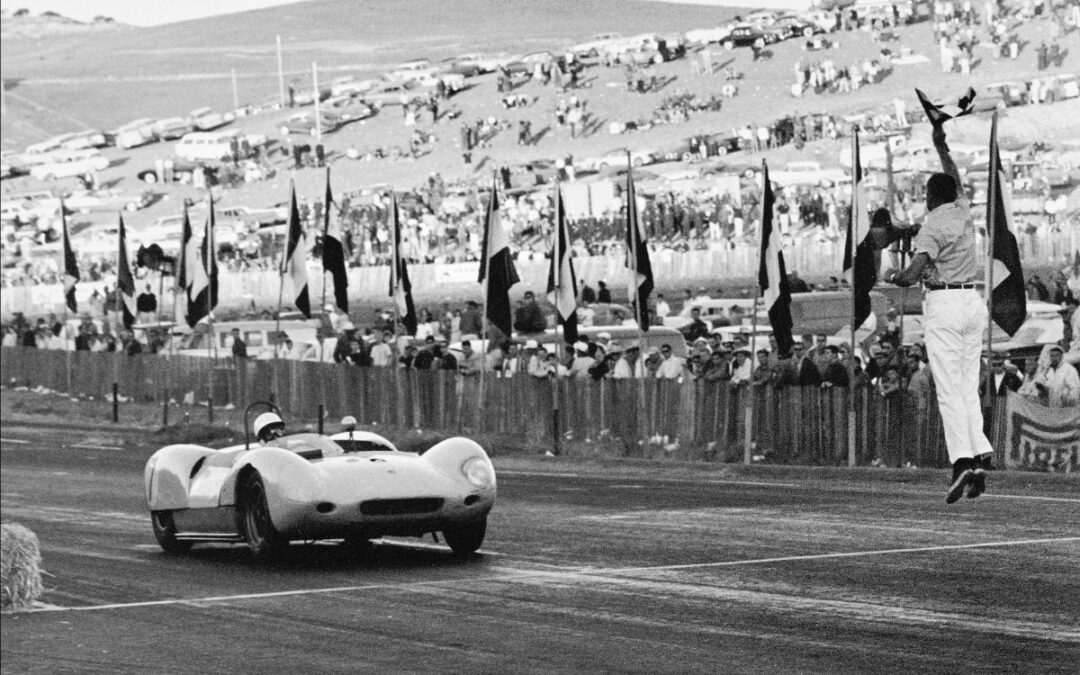
It was Saturday morning, Nov. 9, 1957, when America’s newest road course opened in Monterey, Calif. — Laguna Seca. The ribbon cutting occurred during the 8th Annual Pebble Beach National Championship Sports Car Road Races. Few of those in attendance might have expected that the hastily-built road course carved into the Fort Ord Army Installation was the beginning of an iconic motorsports venue.

The 8th annual event was a first for Laguna Seca. The name was a carryover of the races that began in 1950, racing through the Del Monte Forest of Pebble Beach, which had also added a Concours d’Elegance to bring a social atmosphere to its race weekend.

Six years later in 1956, the Pebble Beach Road Races showed the imperative need for a safer, larger race track to host one of North America’s most famous competitions.

Following Ernie McAfee’s death during a crash that year, organizers decided that the current Pebble Beach course was “not enough track” to house the rising horsepower being created annually.

Inaugural Laguna Seca race winner Pete Lovely (car no. 125) starts in third position on Nov. 10, 1957.

The nine-turn Laguna Seca road course was created in just 60 days at a cost of $125,000. In this image, inaugural race winner Pete Lovely (car no. 125) starts in third position on Nov. 10, 1957.

Military Approval

The Army brass was in attendance for the race because it was on an active military reservation. Negotiations to use the site began with Major General Gilman Mudgett, then commander of Fort Ord. Maj. Gen. Mudgett sent the request up the chain of command to the Sixth Army in San Francisco, which approved. However, in January 1956 the Defense Department withheld permission because a military reservation was not suitable for an event of this kind because of liability and public opinion.

After several months of lobbying by Fort Ord and Sixth Army officials — and members of the California Congressional district, the DOD reversed its opinion and left it up to the Fort Ord Commander.

Mudgett gave his permission with the stipulation that a property lease be drawn up between the military and the Monterey Peninsula Chamber of Commerce, which then admitted the newly formed SCRAMP as a member to oversee the race.

The U.S. Army and the Monterey Chamber of Commerce signed a lease for the Fort Ord property on Aug. 7, 1957. But another entanglement had to be addressed. Two lessees retained cattle grazing rights from the Army on a portion of the property. Two separate leases were required, which took another three weeks’ time.

By the time all the property rights were retained, it was September when plans could be finalized for a Nov. 9 race weekend. Incredibly, the nine-turn road course was created in just 60 days at the cost of $125,000, just in time for its inaugural race on Nov. 9 and 10, 1957.

Carroll Shelby racing in 1960 at Laguna Seca in a red Maserati Type 61

Carroll Shelby in 1960 on the Laguna Seca course in car No. 98, a red Maserati Tipo 61.

Laguna Seca Track Design

Wallace Holm, a young Salinas, Calif., architect, was the site development chair. He explained the track design by drawing a rough diagram in the dirt, staked the course, and the bulldozers went to work.

One of the most famous, one-of-a-kind turns in motorsports sits atop the circuit — the Corkscrew. As the story goes, the construction foreman drove up the hill and informed the bulldozer driver that he was going to lunch. The dozer driver asked the plan for the next phase of the track, to which the foreman said, “just get down the hill any way you can.” And notorious hard-left, hard-right combination of turns was created.

The first race program included some cautionary advice for visitors, such as: “Stay away from the hay bales. They were put there because experts felt that was where a car going wild would hit. Don’t try to prove the experts wrong the hard way,” and “Don’t try to cross the track. At the least, you are exposing yourself to arrest. And you may be tempting a quick and painful and final end to your day’s spectating.”

Sir Stirling Moss in 1961 Laguna Seca as he won his second straight Pacific Grand Prix.

Sir Stirling Moss in 1961 as he won his second straight Pacific Grand Prix.

Laguna Seca Greats

Sixty-five years later, the “dry lagoon” has been the venue for countless memorable moments. As a non-motorsports entertainment site, Laguna Seca has hosted such dignitaries as The Pope, the Beach Boys, and Grateful Dead.

Its reputation in motorsports is a legendary Who’s Who of racing. Among its veteran racers are Dan Gurney, Sir Stirling Moss, Phil Hill, Jim Clark, Mario Andretti, Bruce McLaren, Bobby Rahal, Roger Penske, Valentino Rossi, and Wayne Rainey, all Hall of Fame athletes. Even actor-racer Paul Newman favored the location by constructing garages for his race team. The Newman Building remains in use today.

If You Go

Get information on camping, special events, and an update on the capital improvements at WeatherTechRaceway.com, or call for tickets and accommodations at (831) 242-8200.

The “Lost Speedways” of American motorsports history

The “Lost Speedways” of American motorsports history
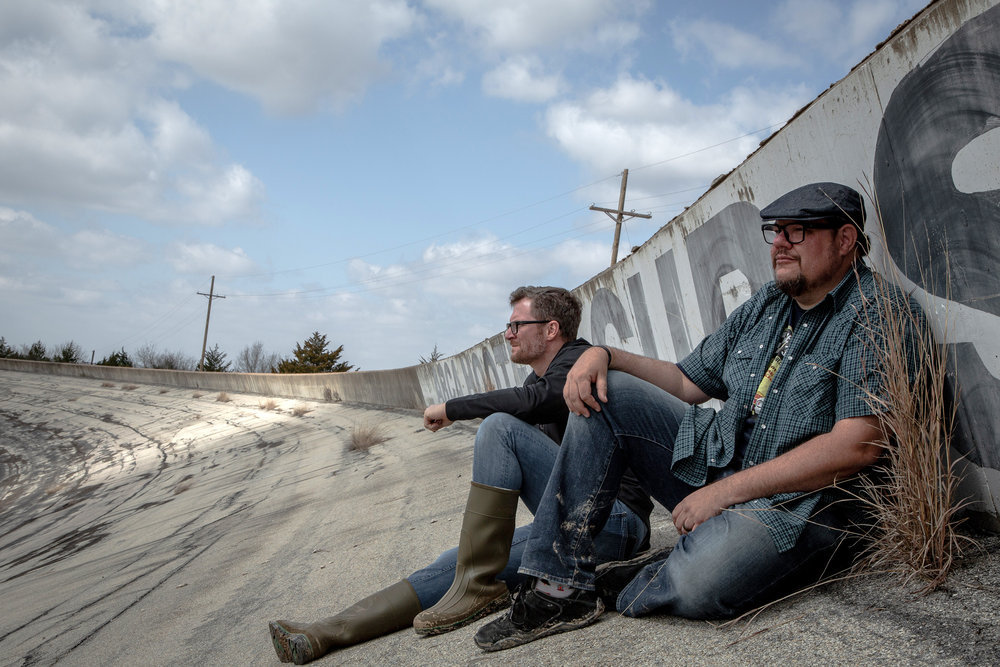
Dale Earnhardt Jr. and Matthew Dillner sit along a banked portion of the Texas World Speedway,

Dale Earnhardt Jr. and Matthew Dillner sit along a banked portion of the Texas World Speedway in “Lonely Star”  (Allie Fredericks/Dirty Mo Media)

BY MARK MAYNARD

I was shuffling through TV channels recently and landed upon an episode of “Lost Speedways. The docuseries on Peacock was created and hosted by Earnhardt and co-host Matthew Dillner. Together they explore historically significant and visually stunning racetracks that are now abandoned, dormant, or in decay.

Dale Jr. and his team explore deserted tracks, search for artifacts and solve unanswered questions at venues all across the country.

I immediately connected with the show because of my interest in history and cars. And the show’s focus on automotive history and motorsports made the discovery even better. I had tuned into “Danger Zone,” which was episode seven from the first season. It told the history of the Jungle Park Speedway, an hour west of Indianapolis.

The half-mile dirt track opened in 1926 and closed in 1960. It closed after one more in a long line of horrific accidents, according to a 2016 report by Will Higgins of the Indianapolis Star.

Reclaimed By Nature

Nature has been reclaiming the grounds ever since it closed. But remnants remain, such as the grandstand.

“Sycamore trees stand 40 feet tall in the middle of the first turn. Honeysuckle grows thick in what once was the pits.

“The grandstand is the most obvious remnant. It was built in 1947.

“Jungle Park Speedway, a half-mile oval with a quarter-mile oval in its infield, was one of the premier speedways in the Midwest in the early 20th century,” Higgins wrote. “It was a proving ground for some of the top American race drivers. Eight Jungle Park veterans went on to win the Indianapolis 500, including one of Indy’s all-time greats, Wilbur Shaw, who won the 500 in 1937, 1939, and 1940.”

Jungle Park on Facebook

“It’s been over fifty years since the big cars roared around the Parke County racing bowl, wrote author Tom W. Williams in the intro to the Jungle Park Speedway Facebook page.

“It was a track where a driver could hardly tell how many curves there were or where the next one started. It was a place where engine noises echoed off the trees and hills like voices in a cave. If you go there, you may experience the presence of ghosts as well. Perhaps you will encounter a spier darting off the track into the trees or flitting from seat to seat in the old grandstand, empty for so many years. The ghosts are most certainly there.”

Williams is the author of “The Ghosts of Jungle Park, History, Myth, and Legend, the Story of a Place Like No Other.”

Free Streaming

Eight episodes of “Lost Speedways” were produced for the first season that debuted on July 15, 2020. The eight-episode second season debuted on July 1, 2021.

Season 2 of “Lost Speedways” is available to stream for free on Peacock now.

Speedways featured in Season 2 include Arundel Speedway (Arundel, ME), Pennsboro Speedway (Pennsboro, WV), and Columbia Speedway (Cayse, SC).

Racing legends, such as seven-time Cup champion Richard Petty, join as guests throughout the series.

Top driver confessions behind the wheel

Top driver confessions behind the wheel

Hankook Tire survey reveals drivers’ best and worst habits during National Tire Safety Week, June 28 to July 1, 2021

A young woman struggles to change a spare tire

28 percent of drivers admit they can’t change a tire or never rotate their vehicle’s tires, according to the Hankook survey. (NewsUSA)

BY MARK MAYNARD

Americans are hitting the road again as traffic returns to pre-pandemic levels, Hankook Tire found in its latest Gauge Index Survey. As National Tire Safety Week rolls in on busier roads, Hankook’s survey revealed the top habits that impact daily driving. It is one way to better understand potential safety hazards as Americans gear up for summer travel.

For National Tire Safety Week runs from June 28 through July 4, 2021.

Here are Hankook’s best and worst drivers’ habits behind the wheel.

Maintenance impacts tire safety

Consistent maintenance is among the best ways to uphold the safety and performance of tires and vehicles, but 28 percent of drivers admit they either can’t change a tire or never rotate their vehicle’s tires. Regular rotation helps ensure even wear, which in turn impacts a car’s ride quality, cabin noise level and the tire’s longevity.

Experts recommend rotating tires every 5,000 to 8,000 miles driven, though it is important to check the requirements for each specific tire model.

Millennials are most likely to know how to change a tire (only 12 percent claim they can’t), according to the Gauge. And almost two-thirds (61 percent) own the required tire jack to do it. In fact, two out of every three drivers (64 percent), no matter their age, say they own a tire jack. That makes the jack one of the top three car maintenance tools drivers own. That is in addition to a tire pressure gauge (65 percent) and a set of jumper cables (67 percent).

Driver distractions

More than half (64 percent) of American drivers admit they multitask while driving. The National Highway Traffic Safety Administration defines distracted driving as “any activity that diverts attentions from driving.” NHTSA strongly advises against doing anything besides focusing on the road ahead.

Sources of distraction behind the wheel include:

Singing at the top of their lungs: 24%

Eating while driving: 21%

Texting: 11%

Applying makeup or shaving: 3%

Texting is considered among the most concerning distractions by the NHTSA. Sending or reading a text can take one’s eyes off the road for up to five seconds, which is roughly the equivalent of driving the length of a football field with eyes closed.

It’s time for a trip back to driving school

The survey revealed that one in 10 drivers failed his or her first driving test. Several others still have habits that might not earn them passing marks. Parallel parking is the most stressful and practiced part of the driving test for many, but 13 percent of drivers today say they can’t parallel park.

Gen Z-aged drivers are more than twice as likely to admit they turn too fast compared to older generations. And 14 percent say they brake too harshly or turn too fast.

Many of these habits are dangerous and can add stress to a vehicle’s tires. That type of stress can reduce traction or wear a flat spot on the tread of the tire.

Check tread depth regularly

Drivers are encouraged to regularly check the tread depth of their vehicle’s tires.

The recommended tread depth is more than 2/32 of an inch deep. An easy and quick way to tell if your vehicle’s tires meet the minimum depth is to stick a penny into the tread with Lincoln’s head facing down. If the tread covers the top of his head, you’re good to go. If not, it’s time to replace the tire.

A driver uses a tire pressure gauge

A majority of drivers own a tire pressure gauge (65 percent). (NewsUSA)

For National Tire Safety Week, Hankook is calling on drivers to recommit to safety, on the road and in the garage, said JJ Park, Director of Marketing Strategy, Hankook Tire America Corp.

“Our latest Gauge Survey indicated drivers are eager to hit the road again, and as we do, it is increasingly important to ensure that vehicles are maintained for top performance and safety,” said Park in the Gauge release.

To help avoid any unforeseen bumps in the road, drivers should check their vehicle’s tires before heading out. Exerts also recommend a full mechanical inspection of any vehicle that has been parked for an extended period of time.

About the Hankook Tire survey

The Hankook Tire Gauge Index is a survey of Americans’ attitudes and opinions about driving. The latest survey was conducted April 19-22, 2021. It polled 1,021 randomly selected Americans age 18 and older who have a valid U.S. driver’s license.

View the latest data from the Hankook Tire Gauge Index at TechAndTread.com

Mark Maynard

Ford Maverick Pickup Pricing Dilemma

Ford Maverick Pickup Pricing Dilemma

2 Maverick pickups

The 2022 Ford Maverick has good small-truck styling and stance. (Photos courtesy of Ford)

BY MARK MAYNARD

I grew up with a 1969 F100 on the farm and I still like pickups no matter how ugly or bad they smell. But they have gotten just too damn big, cumbersome and expensive.

Writing my story about the 2022 Ford Maverick, a possible return to pickup sanity, I considered how this good-looking compact might fit in my city life.

I don’t like the Ford Ranger. It’s too expensive and too cheaply outfitted, which is Ford’s plan to keep its F-150 the top-selling nameplate. And, to me, the Ranger felt to be an Americanized convert from another country, which it is.

Maybe the Maverick could be a truck for me.

I considered the midrange hybrid XLT 4WD, which starts at $23,775, including the freight charge from Mexico. But in spec’ing out “my” truck at Ford.com, I learned that 4WD is only available with the turbocharged 2.0 four-cylinder. That preference would add $3,305 for the engine and AWD and it pushed the starting price to $27,080.

I’ve lived with a front-drive 2008 Ford Escape since 2012 (and have had no major problems with it), so I figured I can let go of my wish for 4WD. And maybe there would be fewer electronic issues with the higher-tech features on the Lariat.

After noting the many compromises in “building” my Maverick, I pushed ahead.

I checked the box for a Maverick XLT SuperCrew hybrid in the no-cost color of Velocity Blue. Among the 10 color choices, Cyber Orange has a $495 premium and Alto Blue and Hot Pepper Red are $390 upgrades. Standard no-charge colors are black, silver, white, Area 51 (a medium gray), Cactus Gray (more the hue of caulking putty) and Carbonized Gray (a darker gray).

The hybrid powertrain was more important to me than 4WD. And I preferred the XLT’s two-tone Navy Pier fabric upholstery because Ford Leather is just ‘meh’ in appearance after a few months of use.

Prickly Price Points

I then added my picks for option packages and accessory items that were permitted for that trim level:

•Ford Co-Pilot360 driver-assist systems $540;

•XLT luxury package ($2,345), which included such features as eight-way power adjustable driver’s seat, 400-watt inverter, bed tiedown locking rails, spray-in bedliner, full-size spare, heated side mirrors with body-color skull caps, heated seats and leather-wrapped steering wheel, LED bed lighting and trailer hitch.

•Manual rear sliding window $155;

•Dual bed lights $200;

•Cargo bed net $70;

•All-weather floor liners (including carpeted mats) $175;

•Console vault $390

The options came to $3,310 toward the total of $27,085, not including other fees.

The two-tone fabric interior in the Maverick XLT hybrid

The two-tone fabric interior in the Maverick XLT.

Going through Ford Finance with a 5 percent APR and 10 percent down, the monthly would be a painful $461 for 60 months. A 3-year term would be $731. And pushing out to a 6-year term would be $393.

Before putting money down, I’d need to test drive this teacup pickup to be certain this Maverick is the disruptor Ford hopes it is.

Otherwise, I’ll wait a couple of years and buy used. Or whatever compact pickup comes along next.

What are your thoughts about compact pickups?