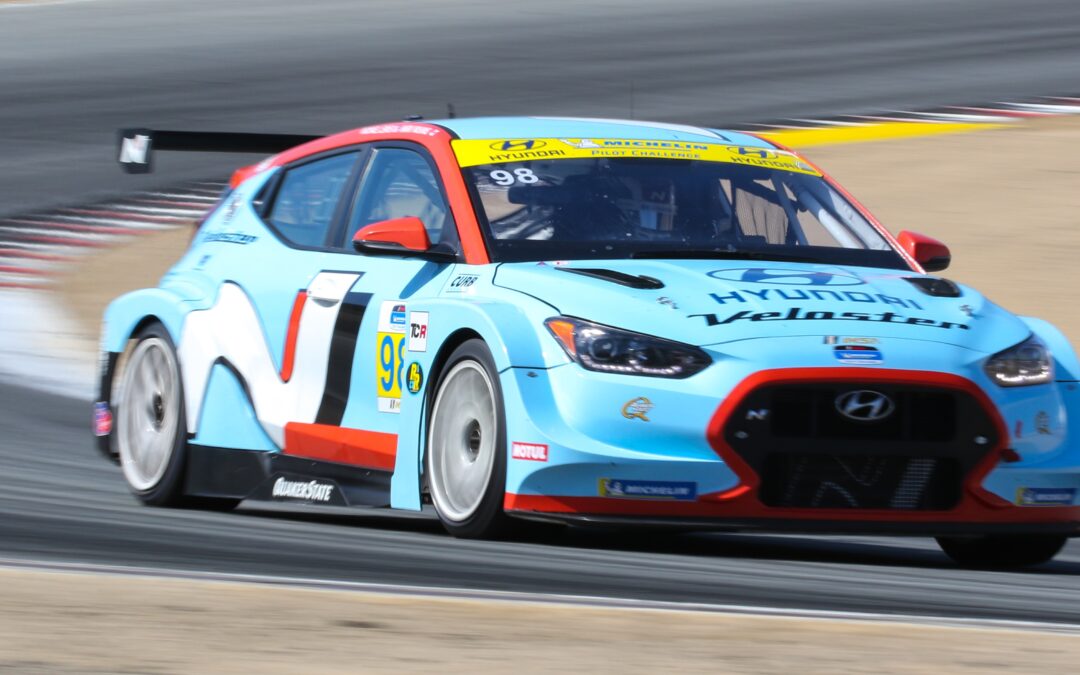
Hyundai plans to mount an all-out assault with three Veloster N TCR cars. (Hyundai)
Hyundai announced May 28, 2022, that its high-performance N Brand will be the title sponsor of the International Motor Sports Association (IMSA) race weekend at the WeatherTech Raceway Laguna Seca Sept. 4-6, in Monterey, Calif. This year’s IMSA Race Weekend will be the Hyundai Monterey Sports Car Championship.
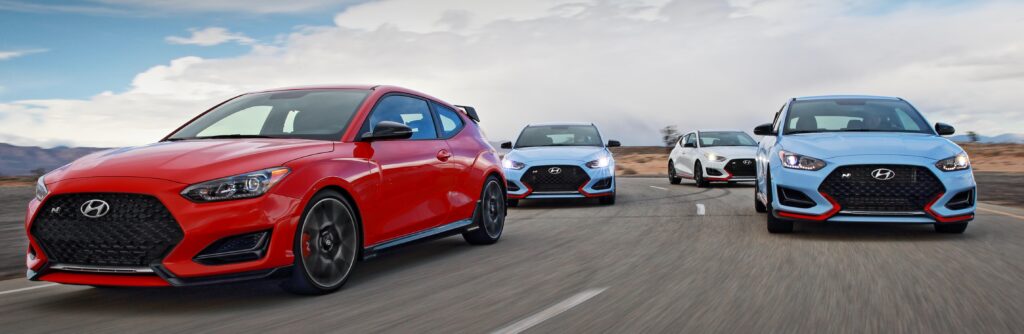
Hyundai will provide N Brand experiences to fans throughout the weekend. The title sponsorship is intended to enhance Hyundai’s growing N and N Line portfolio of vehicles that includes: the Veloster N, Elantra N Line and Sonata N Line. Hyundai also will be the broadcast title sponsor when the race airs on NBCSN.
Hyundai says its N Brand is a match for the IMSA series and the 11-turn, 2.238-mile road course that includes the famous “Corkscrew” turn.
“Seeing Hyundai and their N performance brand combine with one of my all-time favorite venues is fantastic news,” said Bryan Herta, co-owner of Bryan Herta Autosport.
Mark Wilkins and Michael Lewis who co-drove the #98 Veloster N TCR to the 2019 IMPC Drivers championship will be split up for 2020. Michael Lewis will remain in the #98, now with Mason Filippi and Mark Wilkins will co-drive with Harry Gottsacker in the #21. The new third entry, the #33 Veloster N TCR, will be driven by open wheel standouts Gabby Chaves and Ryan Norman.
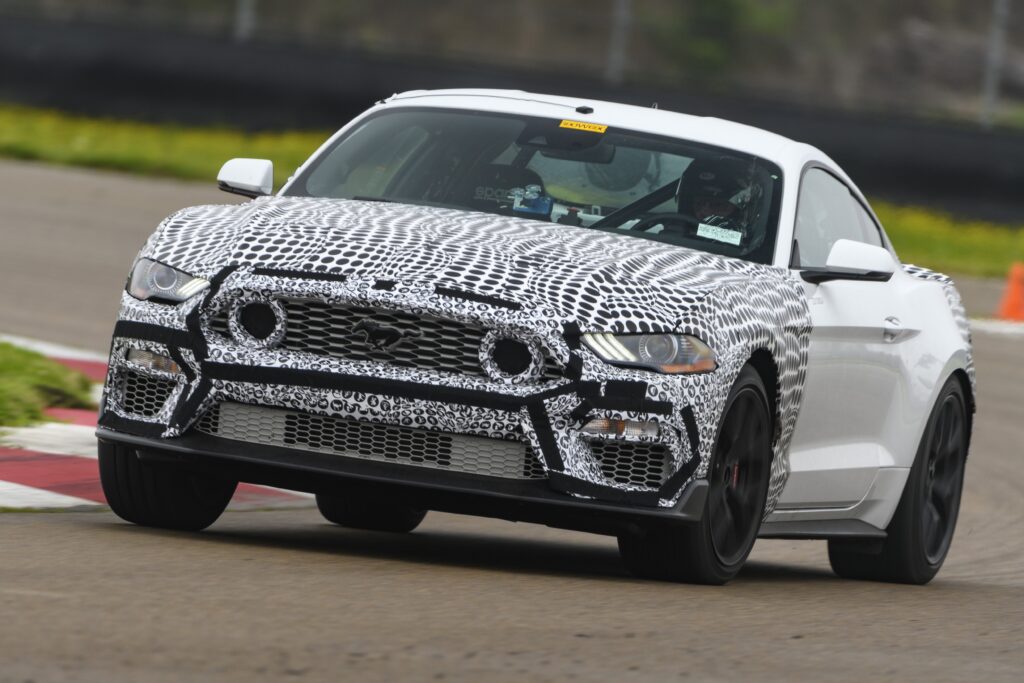
With speed, style and a name that embodies both, Ford today announces the Mustang Mach 1 is roaring back to life this year, with its debut coming this spring.
Big muscle from its 5.0-liter V-8 will become top performing Mustang
From the golden age of muscle cars in the late 1960s to the golden age of power, Ford announced today that the Mustang Mach 1 is roaring back to life with a debut expected this spring. And that should mean soon, with the official start of summer on June 20.
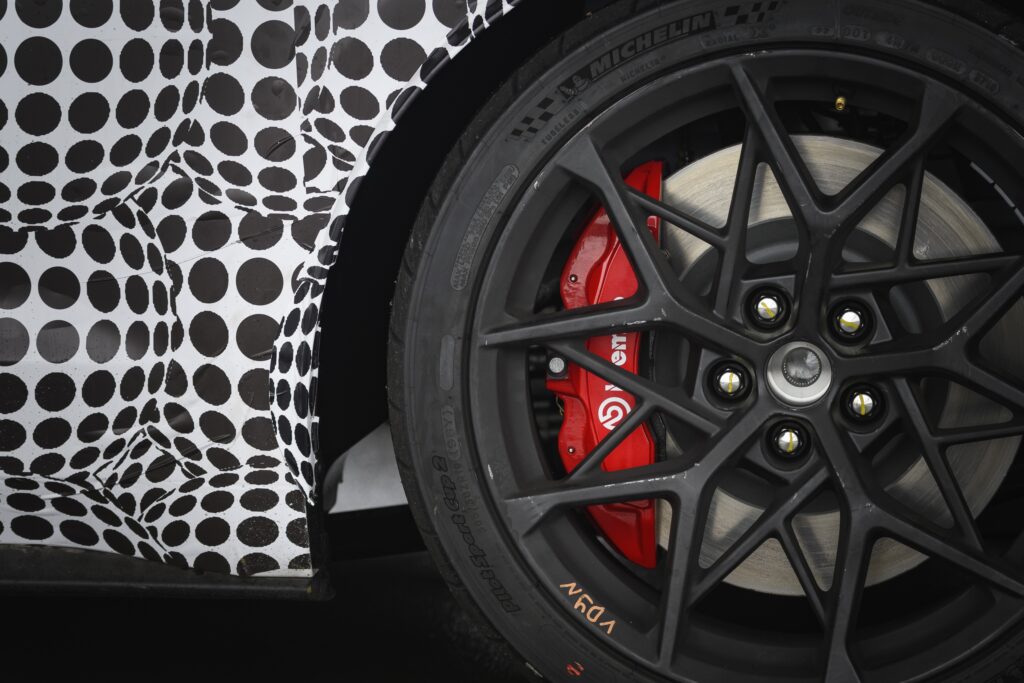
No specifics were shared, except that it will have a naturally aspirated 5.0-liter V-8 and be more track-ready. Photos of a tire and wheel show some big Brembo binders and Michelin Pilot Sport 2 tires.
The Mach I will move into the role as the most potent production variant, possibly with 500 horsepower. And a manual transmission, we hope.
“Mach 1 has a special place in Mustang history, and it’s time for this special edition to claim the top spot in our 5.0-liter V8 performance lineup and reward our most hardcore Mustang enthusiasts who demand that next level of power, precision and collectability,” said Dave Pericak, director, Ford Icons. “Like the original, the all-new Mustang Mach 1 will be true to its heritage, delivering great looks and as the most track-capable 5.0-liter Mustang ever.”
No specifics were shared, but this Ford photo shows some big Brembo binders and Michelin Pilot Sport 2 tires.
That’s all good for Mustang fans, but will it be quicker than the electric Mustang Mach-E GT, which is claimed to have 0-60 mph acceleration in 3.5 seconds?
The original Mach 1 debuted for the 1969 model year and delivered performance and improved dynamics with its GT handling suspension, Ford said in a statement. In the years that followed, Mach 1 saw improved performance versus Mustang GT and was more attainable than the Shelby and Boss variants.
“Mach 1 has always been that bridge between base Mustangs and the Shelby models,” said Ted Ryan, heritage brand manager, Ford Archives. “From a style and handling perspective, the original Mach 1 managed to stand out as unique, even in the Mustang lineup — and as the name implies, it could really move.”
Two years after its debut, Mach 1 with its competition suspension hit the streets in 1971 longer and larger than the original, with an assortment of powerful engine options.
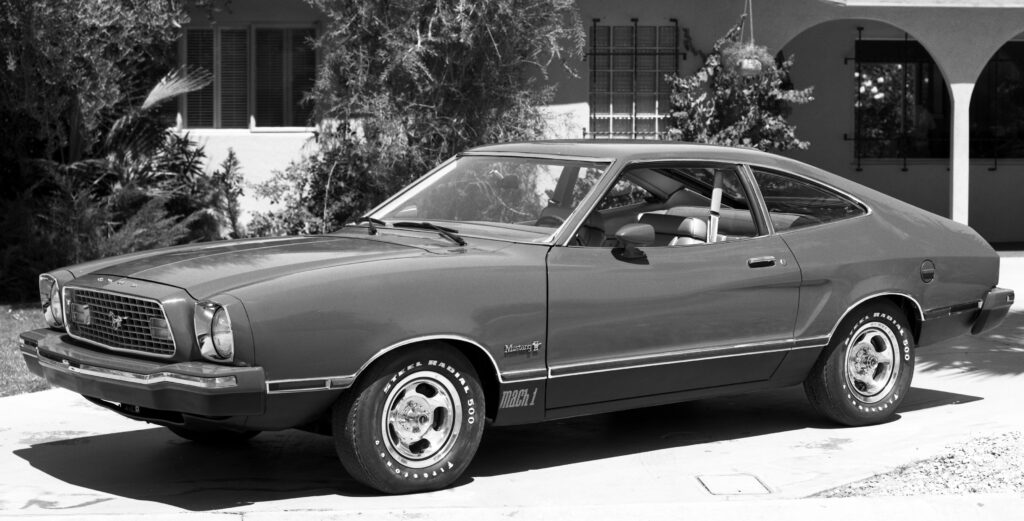
But the second-generation model that debuted in 1974 (shown below) was downsized and built on the Pinto hatchback platform with power restrained due to the gasoline crisis. The 302 Windsor V-8 was added in 1975, with anemic power ratings of 140 hp and 240 foot-pounds of torque, according to Wikipedia. The Mach 1 remained mostly unchanged in 1976, as a new performance model — the Cobra II — was introduced alongside. 1977 proved to be the weakest sales year of the Mach 1 to date, selling only 6,719 units.
1974 Ford Mustang Mach I. (Ford)
The nameplate remained for one more year, upon when it was discontinued with the advent of the third-generation Mustang in 1979. The Mach 1 nameplate returned for the 2003 and 2004 model years, blending modern power with the nostalgia of 1970s-era Mach 1 design elements. Its Mach 1 handling suspension with larger Brembo front-disc brakes improved on-road performance, while its matte black spoiler and hood stripe helped the coupe standout.
Seventeen years later, the all-new 2021 Mustang Mach 1 is set to return as the most track-ready 5.0-liter Mustang ever, once again delivering design magic while adding to its performance legacy.
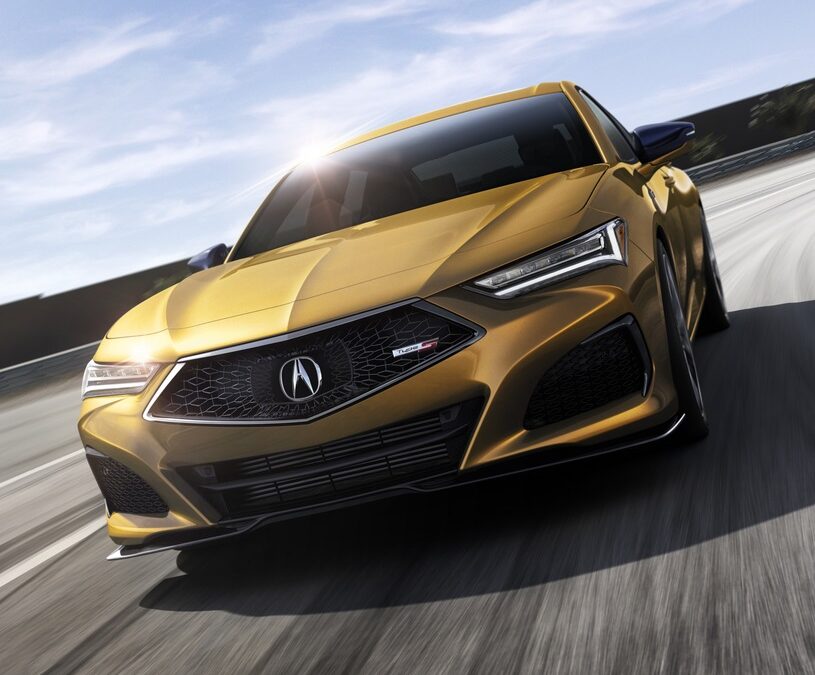
Arriving spring 2021, TLX Type S debuts Acura’s new 3.0-liter V-6 Turbo engine and Super Handling All-Wheel Drive — a first for the Type S. (Acura)
Midsize sedan to go on sale this fall starting in the mid-$30,000 range
Acura revealed today, May 28, what it calls the quickest, best-handling and most well-appointed sedan in the brand’s 35-year history — the 2021 Acura TLX. The midsize sport sedan joins the RDX compact SUV and NSX supercar as the entry-luxury brand revives its mojo as a performance and technology brand.
Acura had announced in mid-May that it will discontinue its large RLX sedan in North America and focus on sporty sedans and crossover. The larger TLX will now become the flagship sedan. With an exclusive body and chassis architecture (not shared with the brand’s Honda division) the new TLX will be the first Acura sedan to fully apply the brand’s Precision Crafted Performance hallmark for engineering and design.
Among the safety enhancements is the first application of the company’s front passenger air bag that uses a three-chamber design, which functions much like a baseball catcher’s mitt. It is designed to more effectively cradle and help protect the front seat occupant’s head in more steeply angled frontal collisions.
With a choice of new turbocharged four-cylinder and V-6 engine choices, the 2021 TLX will arrive at dealerships early this fall with a starting price in the mid-$30,000 range. The current TLX starts at $34,025, including the $1,025 freight charge from Marysville, Ohio, where the 2021 model also will be built. Pricing details, trim levels and complete specifications will be released closer to the on-sale date.
The second-generation TLX also brings back the Type S high-performance variant after a decade-long hiatus. The Type S, arriving next spring, will be powered by a new Acura exclusive turbocharged 3.0-liter V-6 engine and it will be the first TLX Type S with Acura’s torque vectoring Super Handling All-Wheel Drive system.
“With this new TLX, we’re doubling down on what today’s sport sedan enthusiasts are asking for — a more stylish, personal and performance-focused driving experience,” Jon Ikeda, vice president and Acura brand officer, wrote in a release. “Our designers and engineers really took the gloves off, rethinking what an Acura sport sedan should be, right down to its most essential elements — stance, proportion, platform and powertrain. This is unquestionably our most ambitious redesign of an Acura sedan.”
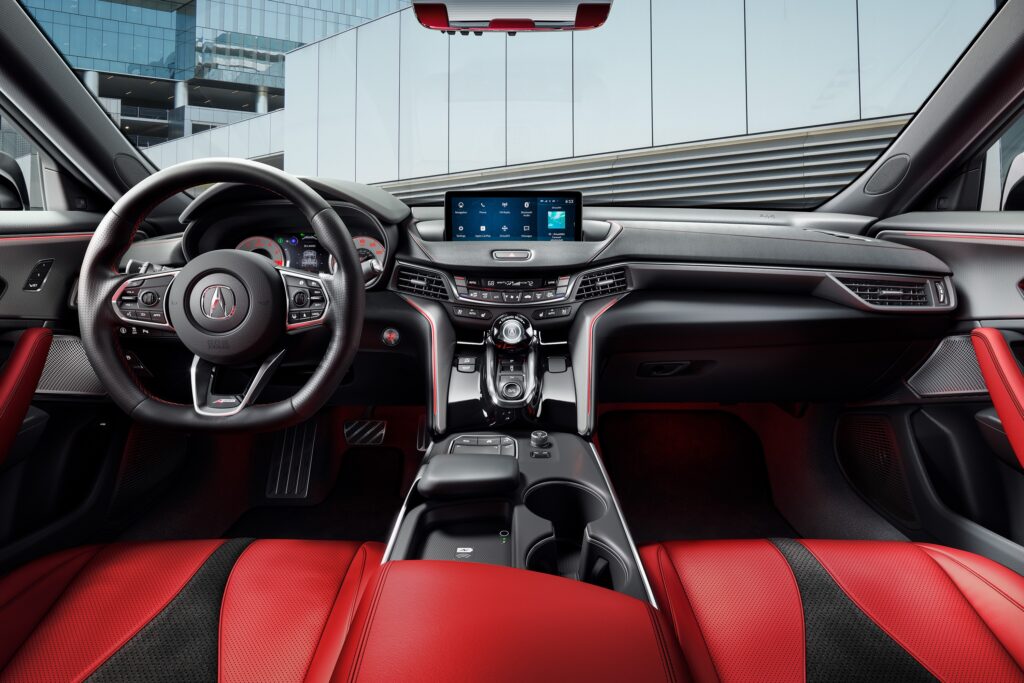
The 2021 TLX will have a more tech-focused cabin with options high-grade materials including real aluminum, open-pore wood and full-grain Milano leather. (Acura)
Next-generation design
The exterior design emphasizes an athletic appearance heavily influenced by the Acura Precision Concept and from the Type S Concept. The designers worked to create a low and wide stance, long dash-to-axle ratio, expansive hood, tapered greenhouse and pronounced rear haunches, Ikeda said in the release.
Compared to the previous model, the 2021 TLX has a 3.7-inch longer wheelbase, 2.2-inch wider body with wider front and rear tracks (1.2 inches front and 1.6 inches rear, respectively) and a lower roof by a half inch. The more upright diamond pentagon grille is flanked by signature lighting cues including new Jewel Eye LED headlights with four LED elements and bright-white “Chicane” LED daytime running lights (inspired by the Acura ARX-05 Daytona Prototype race car).
The cabin section is set farther back on the body and features more steeply inward-sloping roof pillars to further emphasize muscle. The roof has a lower-set center section with two inward-curving grooves to convey a sense of movement and lower appearance, Ikeda said.
Front-to-rear weight balance has been improved by using more aluminum in the body, including the front bumper, hood, front fenders and front damper mounts. The 12-volt engine-cranking battery was moved to the trunk.
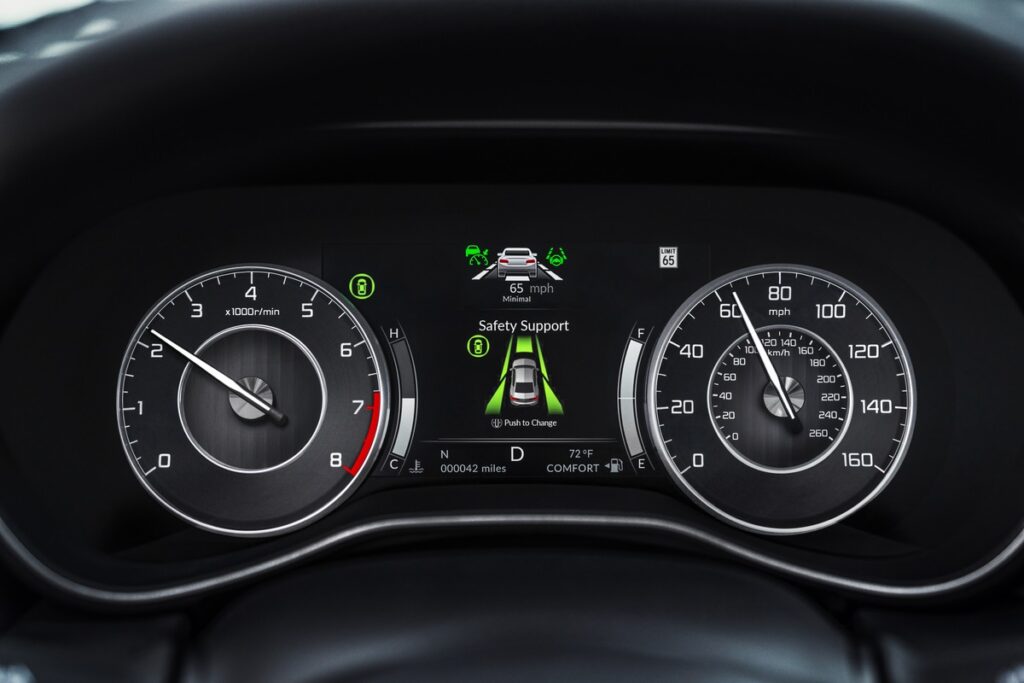
The gauge array features a 7-inch full-color multi-information display and there is an optional 10.5-inch color head-up windshield display. (Acura)
Type S
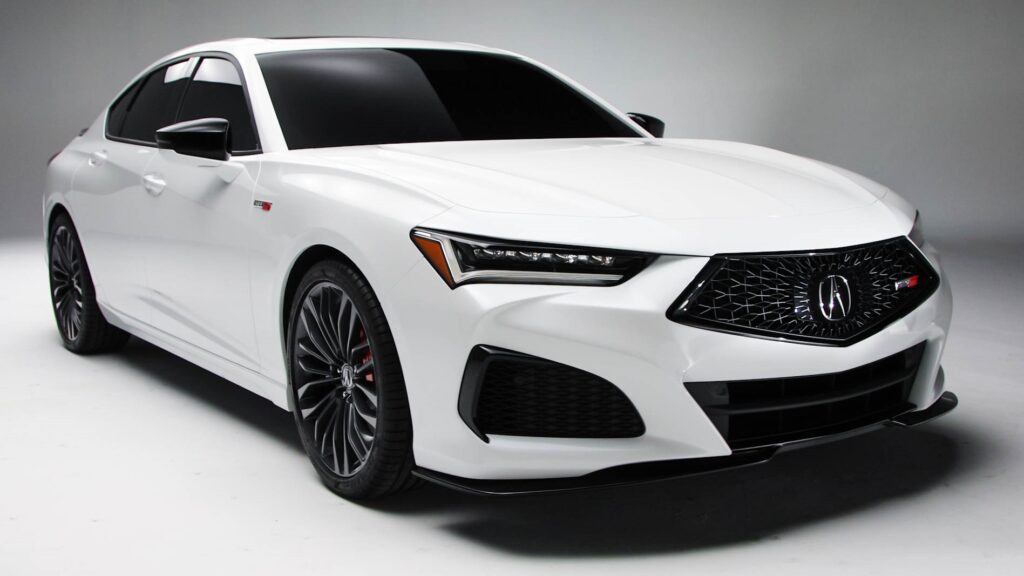
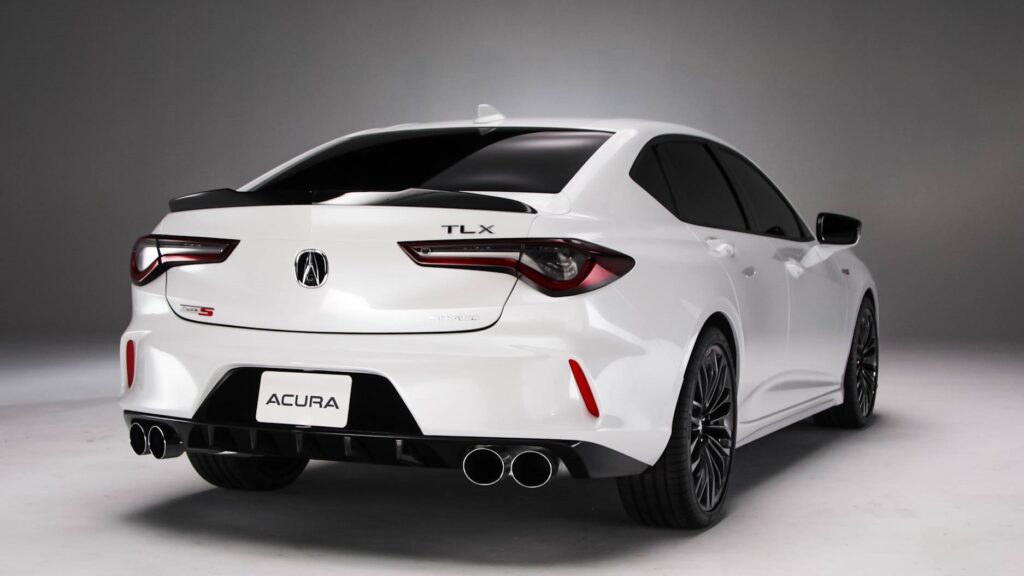
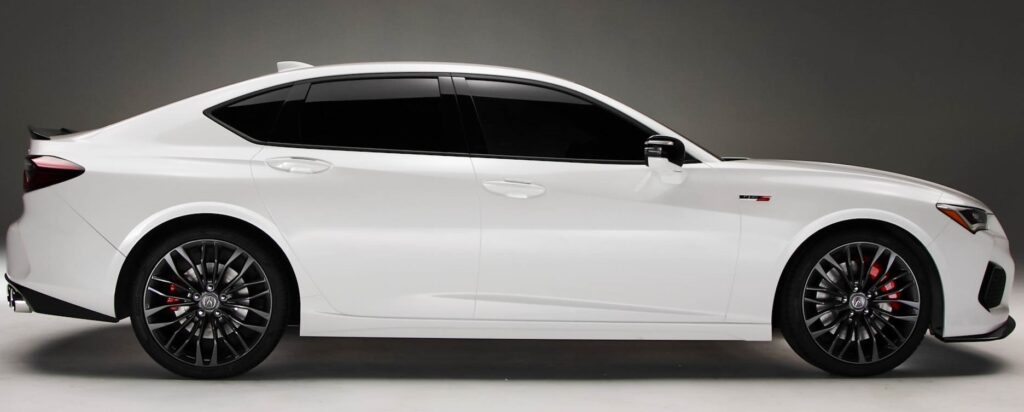
Arriving spring 2021, the TLX Type S builds upon the A-Spec styling elements, with its own open-surface Diamond Pentagon grille and larger side air intakes. A-Spec elements add such appearance upgrades as Shark Gray 19-inch wheels, gloss black accents front to rear, darkened headlight and taillight treatment and a rear decklid spoiler.
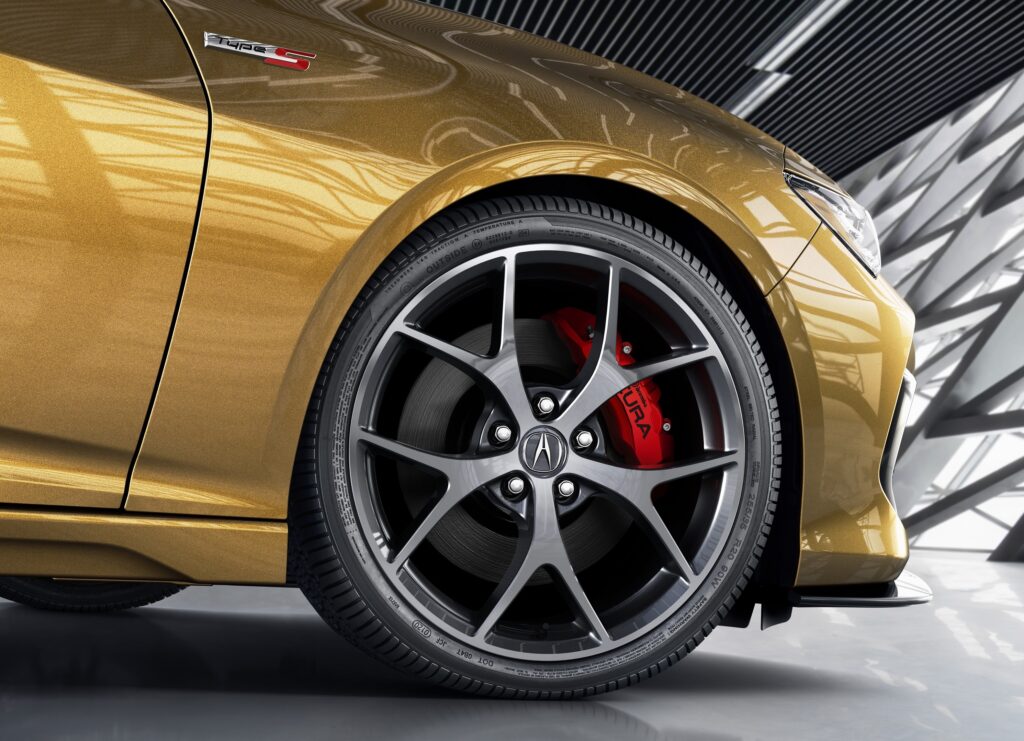
Type S aerodynamic elements include a rear decklid spoiler, aggressive front splitter and rear diffuser, and large quad exhaust outlets (recalling the 2007-2008 TL Type S). Two exclusive 20-inch wheels designs will be offered, including an NSX-inspired lightweight “Y-Spoke” wheel, both with 255-series performance tires.
With an exclusive body structure not shared with Honda, the new TLX will be the first Acura sedan fully designed around the brand’s Precision Crafted Performance hallmark. (Acura)
Body and chassis
The new chassis brings back a double-wishbone front suspension (also used on the NSX and replacing MacPherson struts) for more precise handling, cornering grip and a more compliant ride. Performance-focused engineering upgrades include a variable-ratio steering system, electro-servo brake-by-wire technology (from the NSX) and an available driver selectable adaptive damper system.
The new chassis was made 50 percent stronger in torsional stiffness by using more advanced, lightweight materials, such as aluminum and press-hardened steel. A new ultra-rigid center tunnel serves as the backbone of the TLX’s higher structural rigidity, complimented by triangulated front shock tower bars, front and rear underfloor braces, a one-piece rear bulkhead stiffener and new cast-aluminum front shock tower mounts.
The optional A-Spec package and Type S models include a thick-rimmed, flat-bottom steering wheel wrapped in perforated leather with contrast stitching and paddle shifters. (Acura)
Wheels and tires
Entry models will have standard 18-inch wheels or optional 19-inch wheels in various finishes, depending on trim. Performance-tuned 255-series tires will provide 20 percent more lateral grip than the outgoing tires, Acura says.
Type S models will have 20-inch split-10 spoke alloy wheels finished in Shark Gray. An optional lightweight wheel inspired by the NSX “Y-spoke” design will be offered with a high-performance summer tire.
The Type S will have four-piston Brembo braking power with 20-inch split-10 spoke alloy wheels finished in Shark Gray. (Acura)
High-output turbocharging
Replacing the naturally aspirated 2.4-liter four-cylinder, the standard engine is a direct-injected and turbocharged 272-horsepower, 2.0-liter engine with VTEC (variable timing and lift control). The engine has peak torque of 280 foot-pounds from 1,600-4,500 rpm.
The 10-speed automatic transmission with Sequential SportShift replaces the previous eight-speed dual-clutch automated manual and nine-speed automatic transmissions.
The 2.0-liter turbo boasts the highest horsepower in its core competitive set, Acura says. It delivers 66 more horsepower and another 98 foot-pounds of torque at peak rpm and an additional 123 lb.-ft. torque at 1,500 rpm.
Compared to the optional 3.5-liter V-6 in the previous TLX, the new engine has an additional 13 lb.-ft. of peak torque and an additional 48 lb.-ft. at 1,500 rpm.
When it arrives in spring 2021, the TLX Type S will showcase the new 3.0-liter, 24-valve, DOHC direct-injected and turbocharged engine, influenced by the team that developed the twin-turbocharged hybrid V-6 in the NSX.
The new transverse-mounted V-6 will be compact and lightweight. Its dual scroll turbocharger and electronic wastegate will provide immediate, high-torque response, Acura says. Final specifications for the new engine, including power output, will be released closer to launch timing. But the 3.0-liter will deliver dramatic gains in peak horsepower, Acura says, compared to the outgoing, naturally aspirated 3.5-liter V-6.
The V-6 also will be paired with Acura’s 10-speed automatic, with Sequential SportShift and standard paddle shifters. Type S models will have more aggressive and responsive transmission tuning.
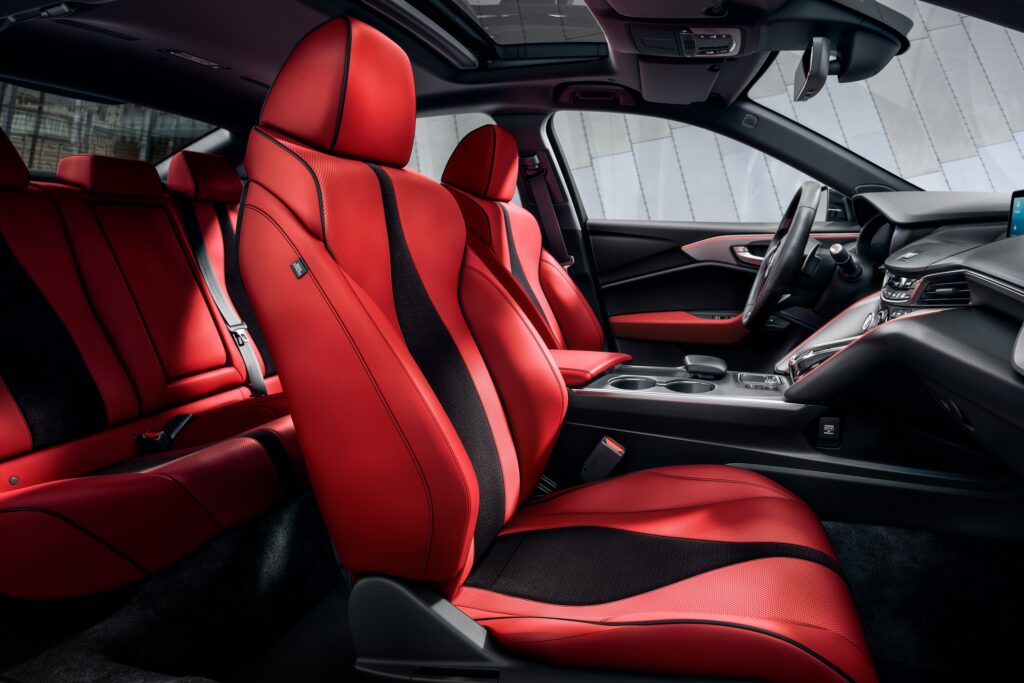
TLX A-Spec and TLX Type S models will feature either ebony or red leather, both with black Ultrasuede inserts. (Acura)
Customizable performance
Acura’s Integrated Dynamics System now includes an Individual mode along with the pre-set programs for Comfort, Normal and Sport or Sport-plus (Type S) to adjust the performance or engine and chassis systems. Individual mode allows personalization of such programs as the drive-by-wire throttle, transmission, SH-AWD, electric power steering and adaptive damping.
Acura’s Integrated Dynamics System now includes an Individual mode along with the pre-set performance programs for Comfort, Normal and Sport or Sport-plus (Type S). (Acura)
Torque vectoring SH-AWD
Acura’s fourth generation Super Handling All-Wheel Drive (SH-AWD) will be available on all TLX models and standard on the Type S. The rear-biased system has 40 percent more rear torque capacity and 30 percent quicker front-to-rear torque transfer than the third-generation system, Acura says.
The system can transfer up to 70 percent of engine torque to the rear axle during normal driving conditions, while continuously moving up to 100 percent of that rear-axle torque between either the left and right rear wheels.
The console touchpad has an upgraded interface for more accurate swipe zones and handwriting recognition. (Acura)
Driver-focused cockpit
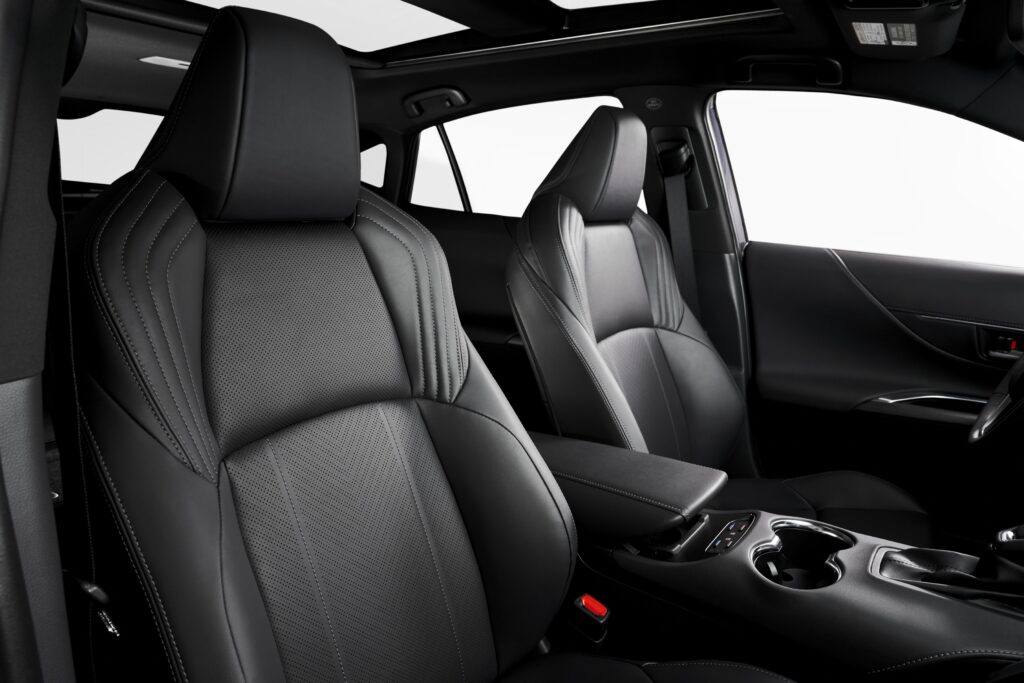
The 2021 TLX’s more premium and tech-focused cabin will include optional choices for high-grade materials such as aluminum, open-pore wood and full-grain Milano leather.
The so-called “Dual Personal Cockpit” is intended to create a more personal yet strongly delineated space for front-seat occupants, Acura says. The cockpit’s high and wide center tunnel, wraparound instrument panel and wider body will allow first-class seating, with top-of-class hip and shoulder room (+0.5 inch and +0.7 inch, respectively). The front sport seats have up to 16-way power adjustment.
The optional A-Spec package and Type S models will feature a thick-rimmed, flat-bottom steering wheel wrapped in perforated leather with contrast stitching and larger metal-plated paddle shifters.
Intuitive technologies
Technologies for connectivity and audio entertainment will have new access through Acura’s driver-oriented True Touchpad Interface. The system features a high-mounted 10.2-inch HD display and a console mounted touchpad with “Absolute Position” mapping for more accurate swipe zones and handwriting recognition. Also added were exterior controls for power, volume and seek next to the touchpad.
The gauge array features a 7-inch full-color multi-information display and there is an optional 10.5-inch color head-up windshield display. The upgrade to the Acura ELS STUDIO 3D audio system features four ultraslim ceiling-mounted speakers and a new Twin Telford subwoofer design.
Connectivity features include AcuraLink with 4GLTE Wi-Fi, over-the-air software updates and available cloud-based services. Among those are remote locking and unlocking, engine start, stolen vehicle tracking, remote diagnostics, geofencing and concierge services.
Driver-assistive technologies
All 2021 TLX models will come equipped with the AcuraWatch suite of advanced safety and driver-assistive technologies standard. This includes several new features, such as Traffic Sign Recognition, Driver Awareness Monitor and Traffic Jam Assist. All of which are integrated with the adaptive cruise control with low-speed follow. Traffic Jam Assist helps reduce driver stress in congested traffic by helping keep the vehicle in its lane and at a set interval behind the vehicle ahead.
Colors
The new TLX will have a choice of nine paint colors, five of which are premium choices. New to the palette is Phantom Violet Pearl. The Type S will be offered in an exclusive, bold Tiger Eye Pearl and Apex Blue Pearl. The interior will have seven color options, with ebony, espresso, graystone and parchment on standard models. A-Spec and Type S models will feature either ebony or red leather, both with black Ultrasuede inserts. The Type S will have an exclusive light orchid leather option.
2021 TLX fulfills the muscular design and proportions previewed in the Type S Concept, Acura says, with a wide stance, low roofline and stretched wheelbase. (Acura)
American made, mostly
Design, engineering and development of the 2021 Acura TLX was conducted primarily in America. Styling was led by Acura Design in Torrance, Calif., while full platform development was led by engineers in the company’s development center in Raymond, Ohio. Engineering development of the new 3.0-liter turbocharged V-6 was led by the company’s R&D center in Tochigi, Japan.
The 2.0-liter and 3.0-liter turbocharged engines will be produced at the company’s Anna, Ohio, engine plant, also home to the twin-turbocharged V-6 hybrid engine in the NSX. The 10-speed automatic transmission will be manufactured at the company’s Tallapoosa, Ga., plant. And the SH-AWD system’s front power-takeoff unit and rear differential will be manufactured in the company plant in Russells Point, Ohio.
We can’t always get what we want but sometimes being able to get what we need fulfills a lot of essential wants. And in the throes of a pandemic, the new Kia Seltos subcompact SUV is a heaping helping of comfort food with a full serving of meat-and-potatoes function, safety technologies, durability, value and just enough style for pride of ownership.
The 2021 Seltos is a new vehicle in the Kia lineup that slots between the boxyish Soul and the compact-class Sportage SUV. It shares an architecture with the Hyundai Kona, which has been well received in a growing subcompact segment that includes the Chevrolet Trax, Ford EcoSport, Honda HR-V, Mazda CX-30, Nissan Rogue Sport and Subaru Crosstrek.
The broad-beam cabin has ergonomically placed switches and controls.
Like many of the competitors, Seltos is a so-called world car. It was launched last year in South Korea, followed by India, the Philippines and Indonesia with its North American debut early this year as a 2021 model.
With a name derived from “Celtos,” the son of Hercules in Greek mythology, Kia says that the Seltos is aimed directly at millennials and “youthful, tech-savvy buyers” looking for a vehicle that stands out from the crowd. But that sounds much like the marketing used for the Soul, which had been a disruptor for its youthful styling and attitude — and it is the last of its kind from when boxy was cool, outlasting the dearly departed Honda Element and Nissan Cube.
Front headroom is a tall at 40 inches without the sunroof.
Kia Seltos Pricing
While the Kia Seltos’ pricing — $23,000-$29,000 — will appeal to younger buyers the bigger influencer for a wider range of buyers will be its optional all-wheel drive, squared-off cabin space, access to advanced driver-assist technologies and for many — more palatable styling.
Seltos is sold in five trim levels — LX, EX, S 2.0L, S 1.6T and SX. There are two choices of four-cylinder powertrains and optional AWD with torque vectoring (for traction and steering stability) and a locking differential for sure-footed off-road situations.
Current pricing incentives include special financing of 0.9 percent APR for 48 months for qualified customers. And there is a $199 monthly lease for 36 months for the Seltos LX and S, with $2,699 due at signing for qualified lessees. Check Kia Offers for updates.
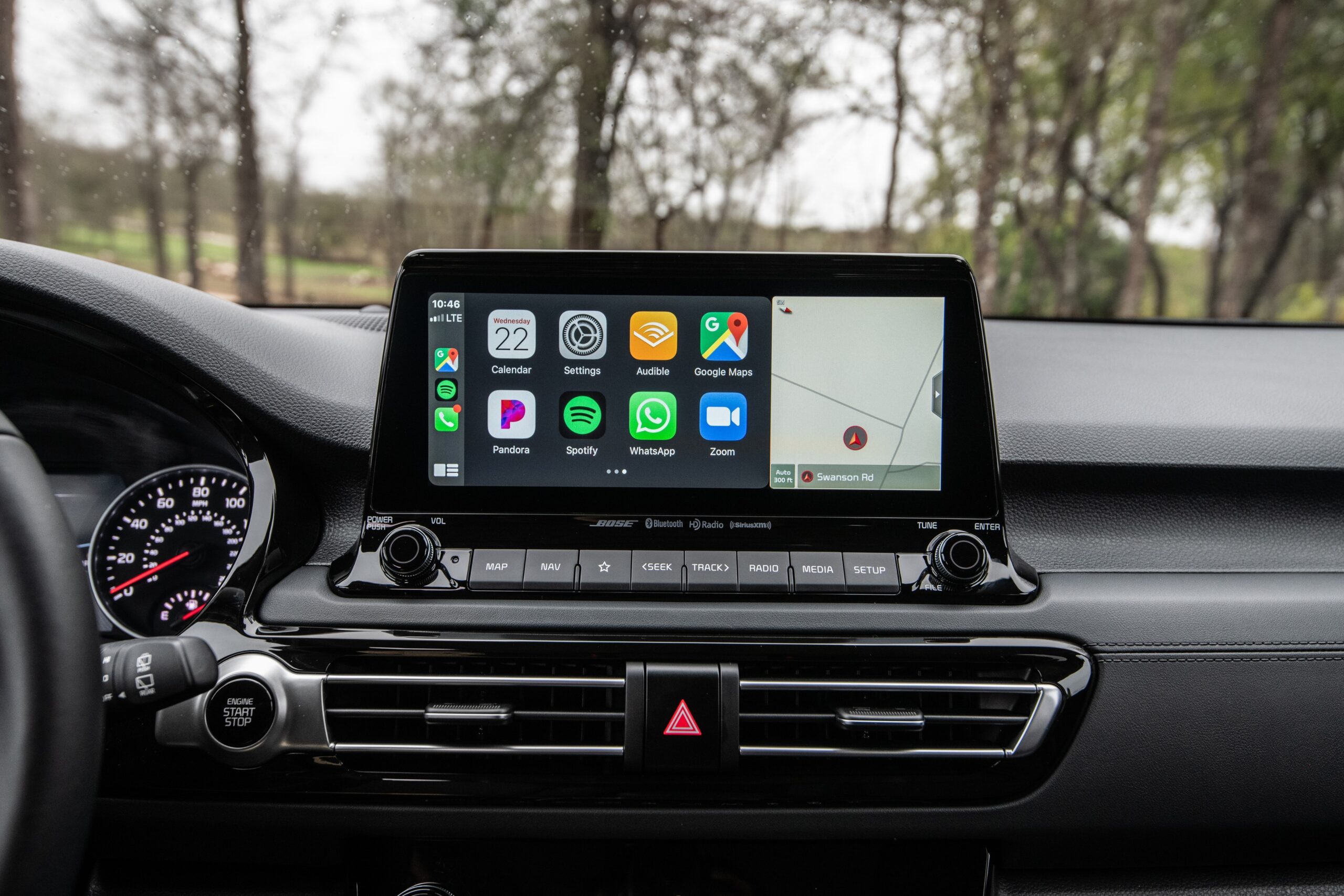
The top-line SX model gets a 10.2-inch touch screen display.
Kia Seltos Powertrains
Entry Seltos models are powered by a 146-horsepower, non-turbocharged 2.0-liter Atkinson-cycle (for fuel economy) and an “Intelligent” continuously variable automatic transmission. Front-wheel-drive fuel economy ratings are 29/34/31 mpg city/highway/combined and 27/34/29 with AWD, with the recommended 87 octane fuel.
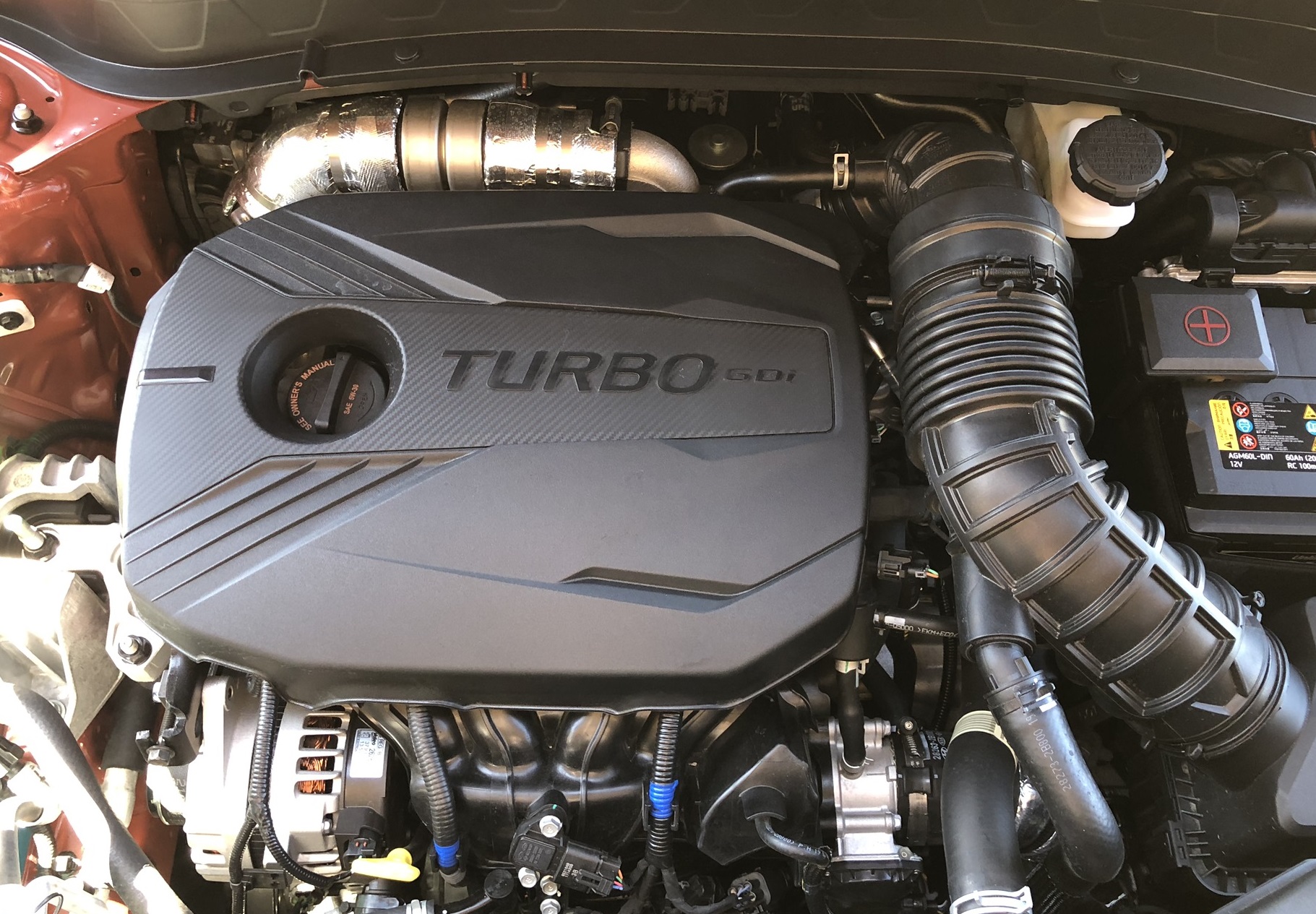
The sportier trim levels get the more tech-infused and turbocharged 175-hp, 1.6-liter four-cylinder with a seven-speed dual-clutch automatic. It has mileage estimates of 25/30/27 mpg city/highway/combined.
Both powertrains have driving modes of Normal, Smart (Eco) and Sport. Selections are made by a small dial on the shift console or just nudge the shift lever to the left for grab-and-go Sport mode.
The turbocharged and direct injection 1.6-liter four-cylinder is no laggard with its 195 foot-pounds of torque from 1,500-4,500 rpm. (Mark Maynard photo)
Kia Seltos Features
Today’s Seltos tester is the upper-middle-class S Turbo AWD with a starting price of $26,610, including the $1,120 freight charge from Gwangju, South Korea. With one option for carpeted floor mats ($130), the tester’s sticker price was $26,740.
The many conveniences mean a lot in a lower-priced vehicle and the Seltos has an accommodating list of standard equipment. Among the features for all models are remote locking, rearview camera, 17-inch alloy wheels and four-wheel disc brakes, power side mirrors, six-way manually adjusted driver’s seat, steering wheel audio and cruise controls, 60/40 folding seatback and dual-level cargo floor, air conditioning, six-speaker audio system with Bluetooth phone and audio connections, Apple CarPlay or Android Auto for navigation, phone and other apps.
The interior has a premium presence in the plastics, fabrics and trim elements.
Seltos Safety Features
Safety features in all Seltos models include six air bags, downhill brake assist, hill-start assist, stability, and traction controls.
Moving up to the Seltos S trim adds Kia’s Drive Wise driver-assist technologies of forward collision-avoidance assist with pedestrian detection, lane-following assist, lane-keep assist, driver-attention warning and high-beam assist.
The S 1.6 Turbo model layers on other safety features, including blind-spot collision warning, blind-spot collision-avoidance assist rear, rear cross-traffic collision warning and rear cross-traffic collision avoidance assist.
Driver-Assist Features
It is not yet common for a $25,000 car to have advanced driver-assist technologies, but Kia connects the technologies in the higher trim levels.
Only the Seltos SX model includes all the Level II semi-autonomous driving features, such as highway-driving assist, smart cruise control with stop and go and fusion forward collision assist with cyclist detection.
The not-quite semi-autonomous drive experience in the tester is well calibrated to center the Seltos in the lane while making fluid course corrections. The system sensors did not seem to be overly sensitive to varying daylight conditions and shadows, which have caused frequent cancellations in some systems I’ve tested.
Kia’s system gives the driver the immediate benefit of more watchful eyes on the road without continual beeps, bonks, and random alerts. But when the driver is about to do something stupid, the system will sound the wake-up alert.
Always keep both hands on the wheel when using a driver-assist system, even though Kia’s system seemed to be forgiving of one-handed driving.
The rear seatback has a two-position recline.
Seltos Performance
The turbocharged and direct-injection 1.6-liter four-cylinder is no laggard with its 195 foot-pounds of torque from 1,500-4,500 rpm. The seven-speed dual-clutch transmission works well enough to maintain the power flow, mostly because of the low 3,317-pound curb weight.
In heavier vehicles, this type of powertrain is somewhat slow to respond as the turbocharger builds boost and the automated-manual transmission takes time to engage and disengage gears. It can be a loopy transaction at slower speeds when it takes a bigger push on the accelerator to get a quick power response.
But less weight means quicker uptake of forward momentum in the Seltos. Sport mode takes away much of the delay and the engine’s automatic stop-start at idle function can be switched off, such as when creeping in downtown traffic.
The base 2.0-liter engine might be powerful enough for the majority of drivers, but I have not tested it with the continuously variable transmission.
Seltos Ride and Handling
Engineering a small SUV for sporty-driving attributes typically causes a stiffer ride that isn’t easy to tame, but the suspension in the Seltos AWD felt remarkably well balanced.
Front-drive models use a torsion-beam rear suspension, which is less heavy and less expensive than a multi-link with lower mounting points that improve cargo space, but the ride quality is not always smooth.
The AWD models are uprated with an independent rear setup (multi-link) for more flexibility and wheel travel when driving off-road. The balance of spring rates and shock absorbers is a commendable accomplishment of comfort with stable enthusiasm when the spirit moves — or evasive maneuvers demand.
Between the relatively long wheelbase (103.5 inches) and the independent rear end, the ride quality is steady on the highway (not choppy) and without big head-toss when transitioning speed bumps or turning into driveways. And for a small upright SUV, the cabin is not jittery from road harshness or wind noise — and all this with a subcompact turning circle of 34.8 feet.
My week of testing returned a peak average fuel economy of 28.5 mpg with much highway driving, but readings of 19-23 mpg were common around town.
Braking for the 1.6 Turbo is beefier than expected with 12-inch ventilated front discs and solid 11.2-inch rear rotors. But there was no shortcut to braking for the 2.0-liter models, which have discs of 11 inches front and 10.3 inches rear.
17- or 18-inch alloy wheels are standard. (Mark Maynard photo)
Interior Function
The Kia Seltos is bigger on the inside than expected for a subcompact, created by a squared-off openness and upright glass. Front headroom is a tall at 40 inches without the sunroof and front shoulder room of 55.5 inches is just 1.6 inches less than in the slightly larger Sportage.
The raised ride height (with 7.2 inches of off-road ground clearance) allows comfortable hip-point entry and exit, with no head-ducking from swoopy body lines. The seats, too, have less intrusive side and bottom bolstering, which avoids that indelicate wedgie. The center armrest has a deep box and a sliding top for improved elbow support.
Sightlines are open at the side mirrors, over the hood and out the rearview through the deep tailgate glass. The sun visors are deep and provide good coverage but do not extend.
The broad-beam cabin has functional space to ergonomically place gauges, switches and controls. The gauge cluster focuses attention with two white-on-black dials for speed and tachometer, separated by a 3.5-inch driver-info module with pages for fuel economy, tire pressure, user settings and a digital speedometer.
The 8-inch infotainment touch screen at the top center of the instrument panel is easily viewed without glare in daylight. And just below are two large dials for cabin temperature and vent position with a smaller dial between for fan speed. It is a good format for eyes-on-the-road adjustments. The six-speaker audio system isn’t terrific, but there is a Bose upgrade. The top-line SX gets a 10.25-inch-wide touch screen for navi, audio, and apps.
The shift console is a compact module of efficiency with a large e-bin for charging devices with one USB port and two 180-watt, 12-volt plugs. And it integrates a shelf to lay a phone or for the optional wireless charging. (The EX and SX have wireless charging and one more USB in the back seat.)
The seats are wide and supportive with thigh support for most adults. And the Sofino upholstery has a premium appearance of durable fabric neatly stitched with the manmade leatherette. The driver seat in the S is six-way manually adjusted but the four-way front passenger seat lacks height adjustment, but it’s not like riding in a hole.
Cargo space is square with up to 5 ½ of length with the back seat folded.
Back Seat Space
The Seltos back seat benefits from the openness of the cabin. A low hump to the exhaust tunnel aids three-across seating. And the seatback has a two-position recline. The seatback folds 60/40 and has a fold-down armrest with cup holders, but amenities are spartan, with no ports, plugs or air vents.
Cargo Capacity
The Seltos has a working cargo area of 26.6 cubic feet behind the back seat stretched to 62.8 cu. ft. with the seat folded. The square space is about 33 inches deep behind the back seat, extending to almost 5½ feet when the seats are folded. Kia has a clever two-level cargo floor that when manually moved to the lower position adds 4 inches more depth for taller items up to about 33 inches.
Why Buy the Kia Seltos?
Some of the competitors in this subcompact SUV segment are transplants from other countries and not completely reconfigured or engineered for the U.S. and North America for long-term durability and reliability. The Kia Seltos does not feel foreign-born in how it drives or its premium presentation of materials and technologies.
As the son of Hercules, the Seltos earns a mighty-mite badge of determination.
For a small SUV, the cabin is not jittery from road harshness or wind noise.
2021 Kia Seltos S Turbo AWD Specifications
Body style: subcompact, 5-seat, 5-door small SUV crossover with AWD
Engine: 175-hp turbocharged and direct-injection 1.6-liter 4-cylinder with auto stop-start at idle; 195 lb.-ft. torque from 1,500-4,500 rpm
Transmission: 7-speed dual-clutch automatic with torque-vectoring all-wheel drive with locking center differential
Standard Seltos equipment includes: remote locking, 8-inch touch screen with Apple CarPlay or Android Auto app infotainment, rearview camera with guidance lines, USB multimedia port, heated front seats, Sofino leatherette and cloth seat trim, sliding front center armrest console, 60/40 folding back seat, power (heated) side mirrors with LED turn signals, LED running lights and taillights, 18-inch alloy wheels, roof rails, fog lights
Toyota Motor held a virtual press conference today, May 18, to debut two hybrid vehicles that the company says will help propel it to offering electrified powertrains on its entire model line worldwide by 2025. The 2021 Toyota Venza midsize SUV crossover and Sienna minivan will have gasoline-electric hybrid powertrains, more luxurious features and full infotainment and safety technologies. Venza will go on sale around August and the Sienna in late 2020.
Positive signs are emerging, said Bob Carter, executive vice president of sales for Toyota Motor North America, as he opened the reveal via teleconference from headquarters in Plano, Texas.
Toyota says the 2021 Sienna offers all of the luxuries of a large SUV, but with room for a family of seven. (Toyota)
Toyota Sienna notes
The fourth-generation 2021 Sienna minivan will have a standard gasoline-electric hybrid powertrain across all trim levels. Options include all-wheel drive and a limo-like option for Super Long Slide second-row captain chairs with a stowable middle seat.
“This is an all-new vehicle from the ground up, including a new chassis platform as well as a new electrical platform,” said Chief Engineer Monte Kaehr in a release.
The driver area was reconfigured to include an instrument panel of horizontal layers with a large center touch-screen. (Toyota)
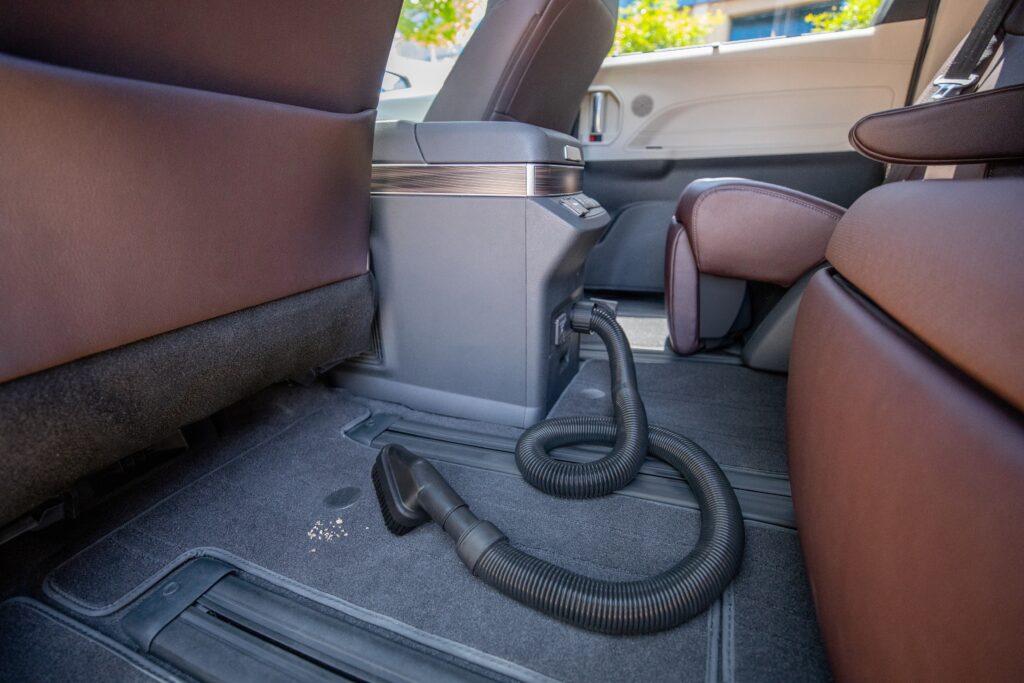
Designed, engineered, and assembled in the U.S., the minivan will debut kick-open and closed sliding side doors and a rear liftgate. An optional vacuum and refrigerator will be available. Other new features include a tilt and telescoping steering column with a heated steering wheel, which Toyota says is a segment first. Tech upgrades include a digital camera rearview mirror, 10-inch color head-up display, and a 12-speaker JBL premium audio system.
The ergonomically designed Bridge Console has larger storage space is below. (Toyota)
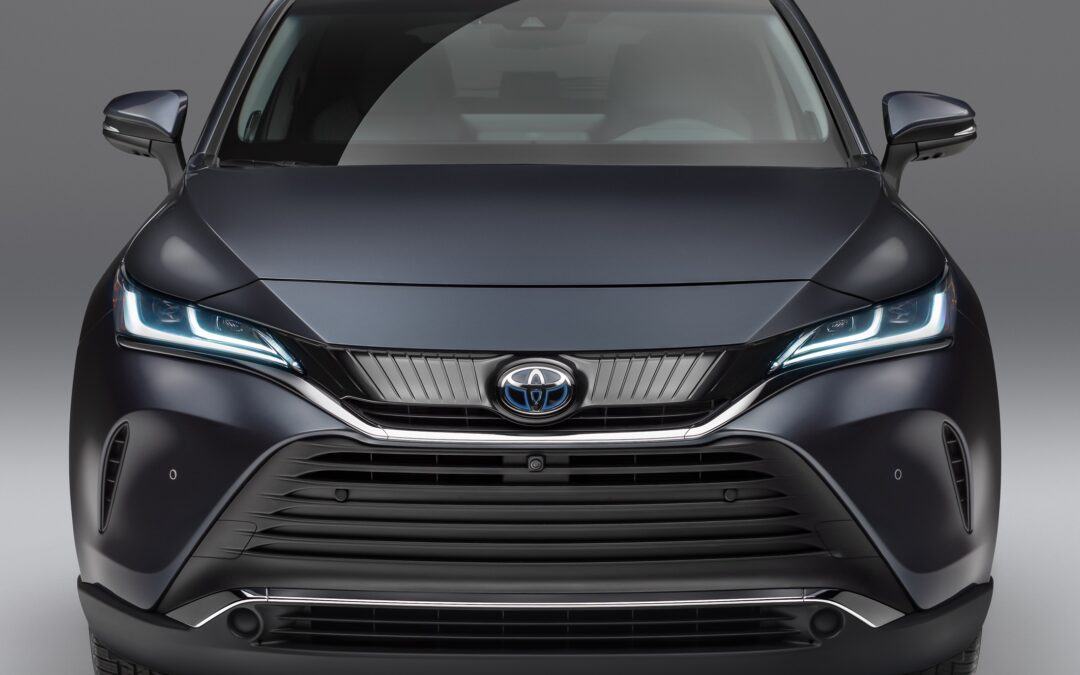
The Sienna’s exterior was designed by Toyota’s studios in Newport Beach, Calif., and Ann Arbor, Mich. The front design was inspired by the Shinkansen Japanese bullet train “to appear sleek, speedy and confident,” Toyota says.
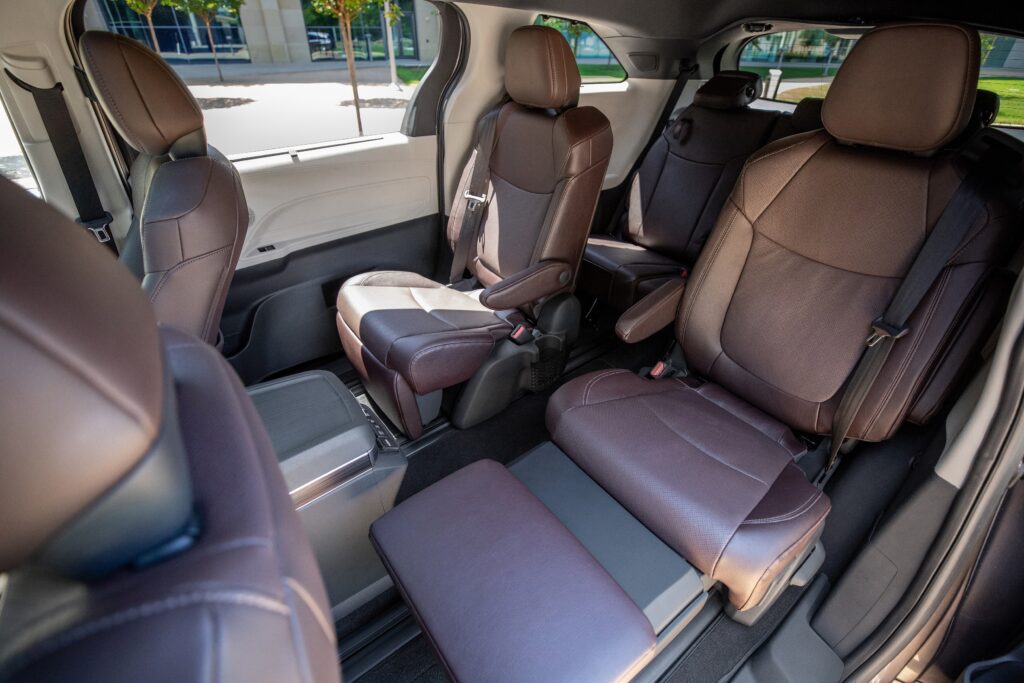
With seats for seven or eight occupants, the three-row Sienna will debut a new option for Super Long Slide second-row captain chairs with a stowable middle seat. Occupants will have fore-aft seat travel of 25 inches for unprecedented legroom, Toyota says. The seats can be paired with an optional ottoman feature.
The Sienna with AWD has a tow rating of 3,500 pounds. The minivan can be optioned with a 1,500-watt inverter with a 120-volt household outlet. It can be used to power small appliances for camping, tailgating, or home improvement.
Pricing for 2021 models has not been announced, but starting prices for the 2020 Sienna range from about $32,000 to $50,000 with AWD.
The option for Super Long Slide second-row captain chairs allows rearward seat travel of 25 inches. (Toyota)
Safety
Standard safety technologies on both vehicles will include the second-generation Toyota Safety Sense (TSS 2.0). It integrates a pre-collision system with pedestrian and bicyclist detection with low-light detection, full-speed-range dynamic radar cruise control, lane-departure alert with steering assist, lane-trace assist, and road-sign assist. The pre-collision system initiates automatic braking should the driver not react in time in certain emergency situations.
Full specifications will be released later but the hybrid powertrain in the Sienna is a 2.5-liter four-cylinder engine with two electric motors and a nickel-metal hydride battery. The powertrain has a combined 243 horsepower. All-wheel-drive models will use a third electric motor to drive the rear wheels. The Sienna has a manufacturer-estimated 33 combined MPG fuel economy, a benchmark for the segment, Toyota says.
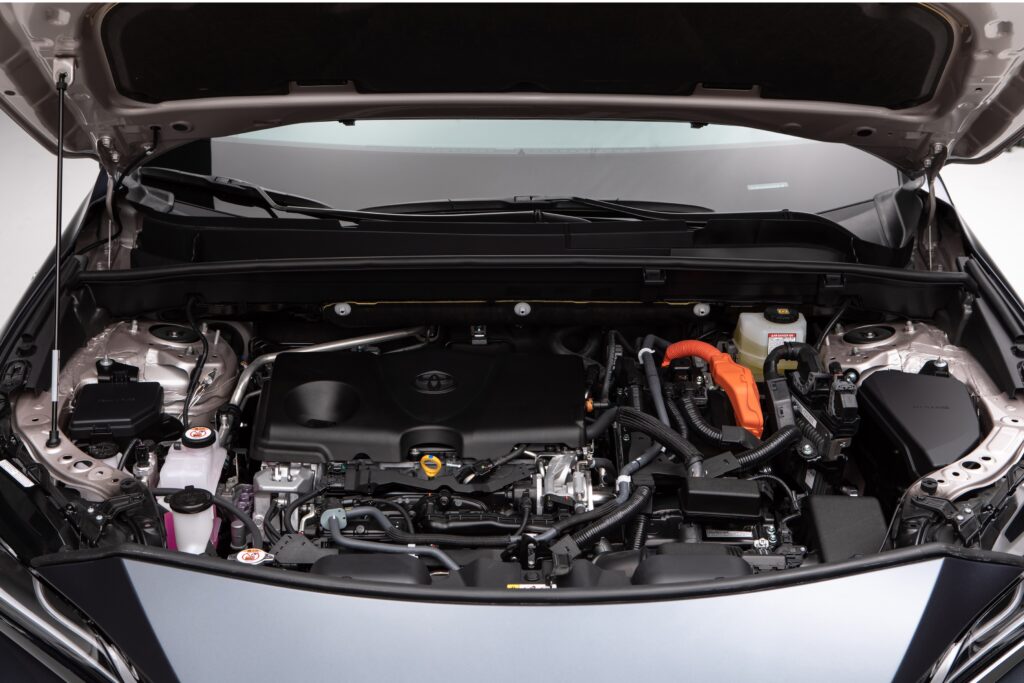
The three-motor system in the Toyota Venza is just about the same as for the RAV4 Hybrid, but with a lithium-ion battery replacing nickel-metal hydride. The powertrain has 219 total horsepower and an estimated combined fuel economy of 33 mpg.
Hybrid-related components that require repairs needed to correct defects in materials or workmanship are covered for 8-years/100,000-miles. The hybrid battery is covered for 10-years/150,000-miles, whichever comes first, and is transferrable across ownership.
Toyota has sold 15 million electrified vehicles to date through nine models, Carter said. “Nine is nice, but we have room for another hybrid in the lineup,” he said.
The Venza will bring the number of Toyota hybrids to 10 – or 11 with the Mirai fuel cell – for 2021, more than any other brand, Toyota says.
The business plan is to achieve 25 percent of global income from electrified vehicles by 2025, Carter said.
Sienna is road-trip ready with an onboard vacuum and refrigerator, below. (Toyota)
Sienna styling
Minivans are the most efficient mode of moving people but most of those people today prefer to be moved in a vehicle that looks more like an SUV. So, Toyota tried to provide the experience of an SUV in the Sienna but with minivan comfort and ease of access.
The exterior design was a joint effort by Toyota’s studios in Newport Beach, Calif., and Ann Arbor, Mich. The front end was inspired by a Japanese bullet train “to appear sleek, speedy and confident,” Toyota says.
Designed, engineered and assembled in the U.S., the minivan will debut kick-open and close sliding side doors and rear liftgate, (Toyota)
The headlights are mounted high and stretched around to the sides as if shaped by the wind. The lower grille is contrasted by slim, high tech LED fog lights that are pushed to the corners, to emphasize width and stability.
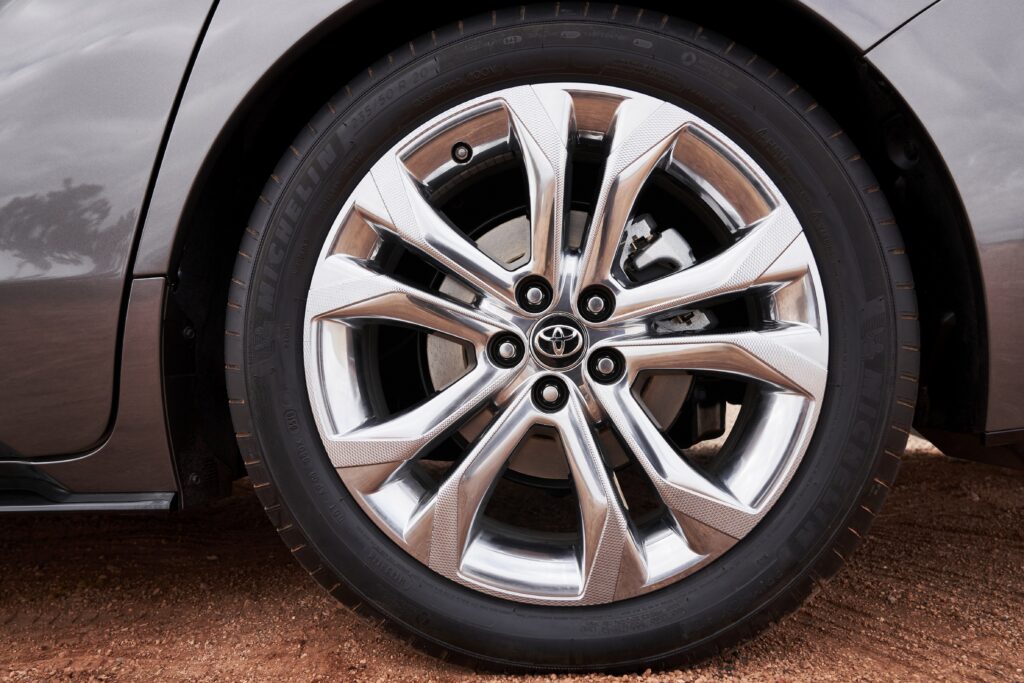
A sporty XSE model is set apart by dark 20-inch split five-spoke wheels (the biggest wheels yet on a Sienna, Toyota says) and aggressive front and rear bumpers.
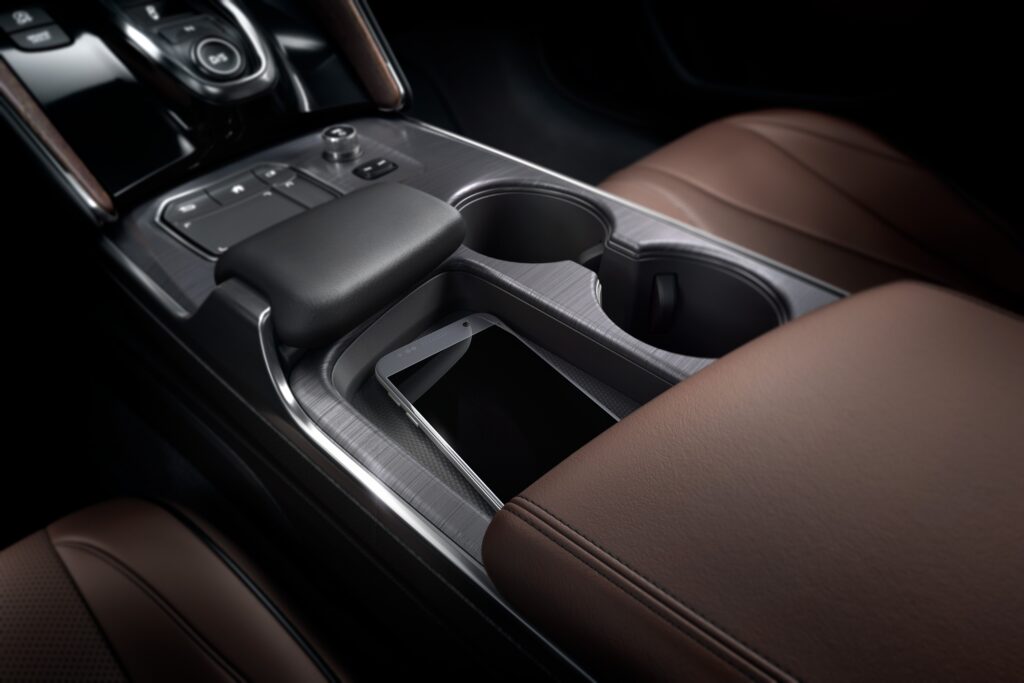
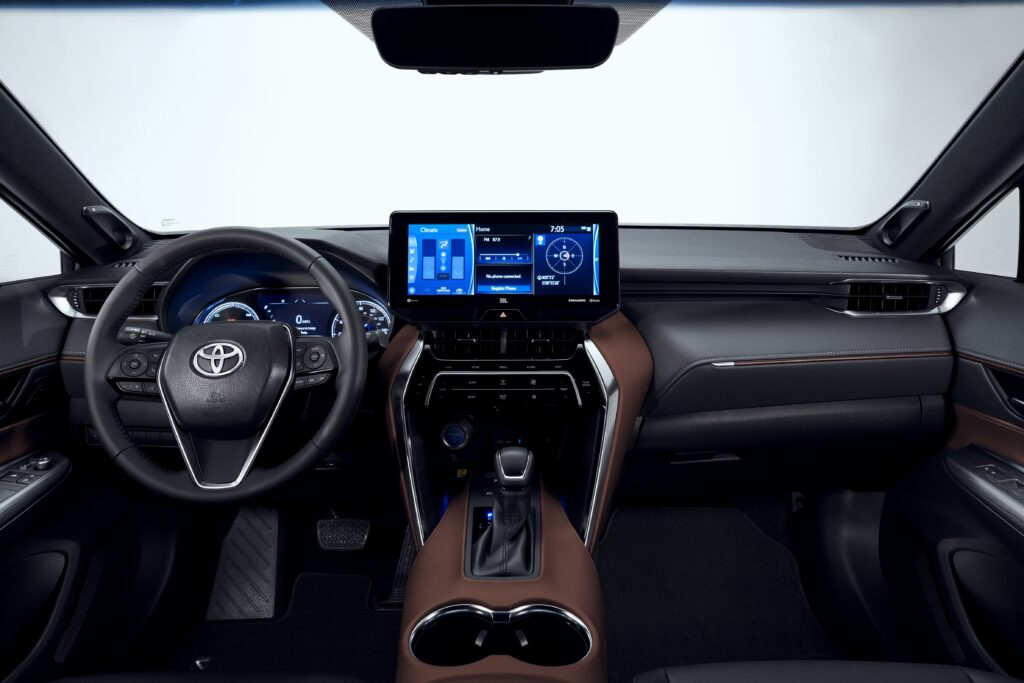
The driver area was reconfigured to include an instrument panel of horizontal layers with a large center touch-screen display, small-item storage and the Bridge Console, which connects the instrument panel to the center armrest. The ergonomically designed console is positioned high between the driver and passenger.
The design places the shifter and necessary functions within easy reach, along with cup holders, available wireless charger and storage areas for smaller items, Toyota says. Beneath the bridge is a large open area for convenient storage of larger personal items such as a purse or bag.
Standard equipment
All Sienna trim levels will have: • 9-inch touch-screen display; • Six-speaker audio system with Android Auto, Apple CarPlay and Amazon Alexa; • Seven USB ports; • Hands-free Bluetooth phone and music streaming; • Power windows with one-touch up and down; • Dual, power sliding side doors. (Kick-type sliding doors and a power tailgate standard on XLE and higher trim levels.) • Three-zone climate control; • Fabric upholstery with eight-way power driver’s seat. (Softex leatherette trimmed seats on upper trim levels.) • Second-row sunshades.
Safety
Standard safety technologies include the second-generation Toyota Safety Sense (TSS 2.0), an active safety system that includes:
• Pre-Collision System with pedestrian detection with low light detection • Full-speed-range dynamic radar cruise control • Lane departure alert with steering assist • Lane trace assist • Road sign assist The pre-collision system provide automatic braking should the driver not react in time in certain emergency situations. The PCS system can also detect a bicyclist and even a pedestrian in low-light situations.
Other standard safety features include 10 air bags (including a driver’s knee bag and a passenger-seat-cushion air bag), blind-spot monitor with rear cross traffic alert.
20-inch wheels on the Platinum and XSE models are the largest ever offered for Sienna. 18-wheels are standard. (Toyota)
Hybrid system
The Toyota Hybrid System II in the Sienna will deliver 243 total horsepower and have a manufacturer-estimated 33 combined MPG fuel economy, a benchmark for the segment, Toyota says. What will be noticeable, Toyota says, is the kick in low-speed torque from two electric motors working with the 2.5-liter four-cylinder engine.
Battery warranty
The powertrain warranty covers all hybrid-related components, including the HV battery, for 10-years/150,000-miles, whichever comes first. Hybrid-related components that require repairs needed to correct defects in materials or workmanship are covered for 8-years/100,000-miles.
AWD
During off-the-line starts in Sienna or Venza, the all-wheel-drive system can send up to 80 percent of power to the rear wheels to help prevent front-wheel slip. The Hybrid AWD system enhances cornering agility by helping to reduce understeer for a more confident handling feel, Toyota says.
Instead of a heavy AWD transfer case and space-robbing driveshaft to the rear wheels, electronic on-demand system uses a third electric motor.
PED
Using the navigation system in both vehicles, the Predictive Efficient Drive analyzes driving habits and memorized road and traffic conditions to optimize hybrid battery charging. When the driver activates PED, the system learns repeating routes and can predict when and where the vehicle is likely to slow down or stop. Then, through optimum accelerator pedal release timing guidance, the feature can reduce energy consumption.
2021 Toyota Venza
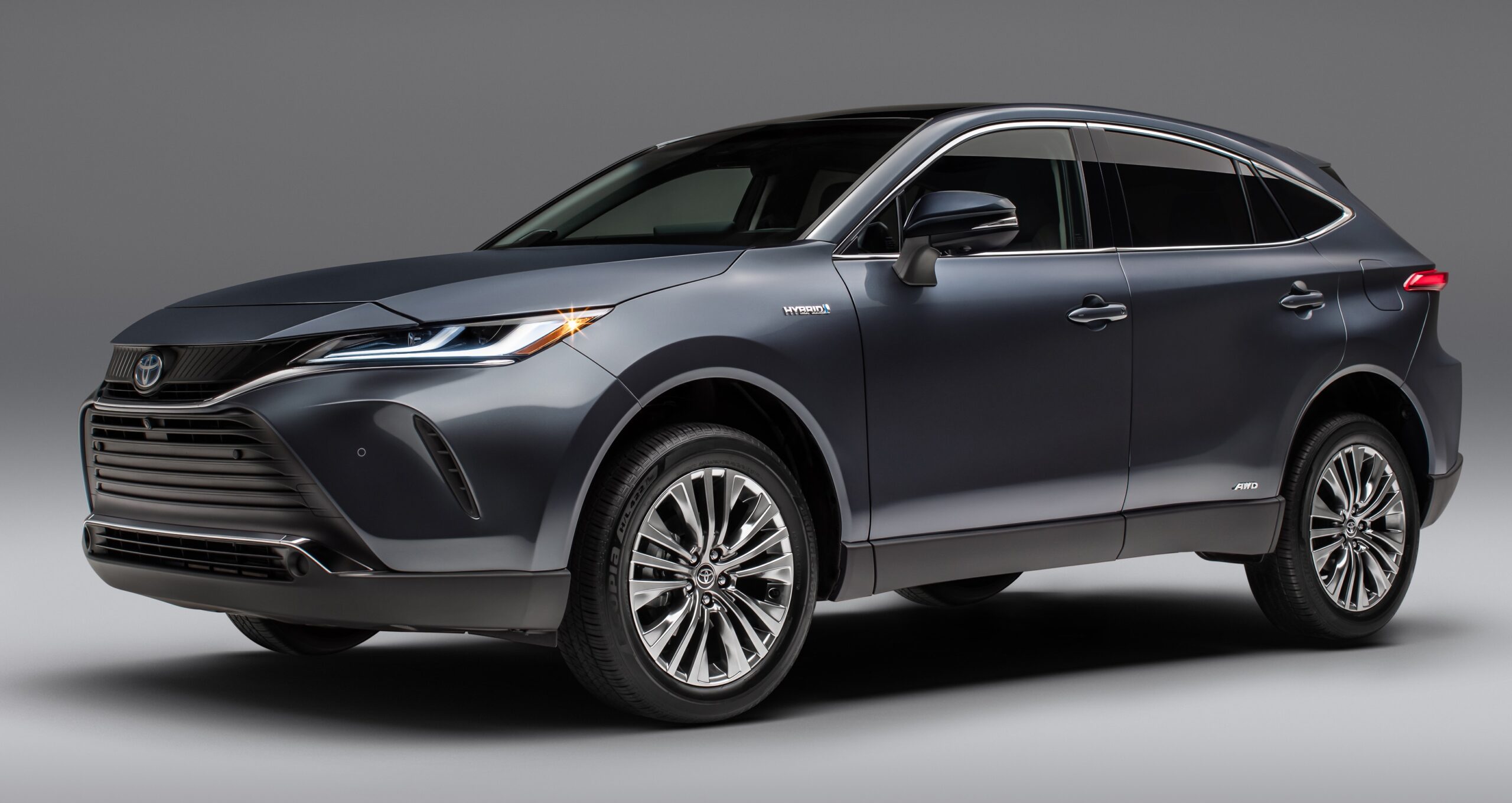
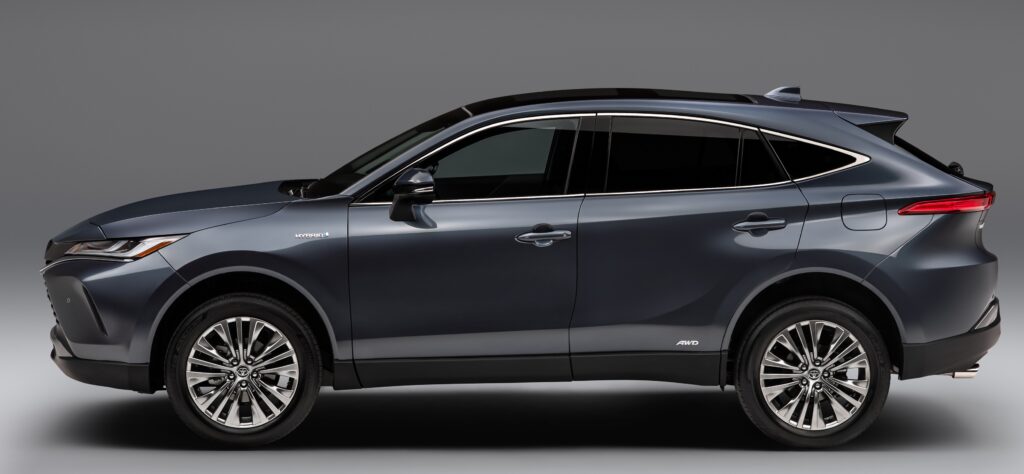
Venza fits between the compact RAV4 and the large-midsize Highlander SUV. (Toyota)
The midsize Venza debuts a revived nameplate last used in 2015 for the discontinued wagon. It is built on the same TNGA-K platform as the Highlander and RAV4 and is known as the Harrier in Japan. (It’s also similar in stance and styling to the Lexus NX.)
The midsize two-row, five-seat crossover utility vehicle is intended to fill a gap in Toyota’s lineup of seven SUVs and crossovers and fits between the compact RAV4 and large-midsize Highlander SUV. It is expected to have an estimated 40 mpg in combined fuel economy, Toyota says.
Venza has eight-way power driver seats on all grades with four-way passenger on the Limited. (Toyota)
The lithium-ion battery pack is small enough to be installed under the rear seats, so it does not take up any cargo or passenger space.
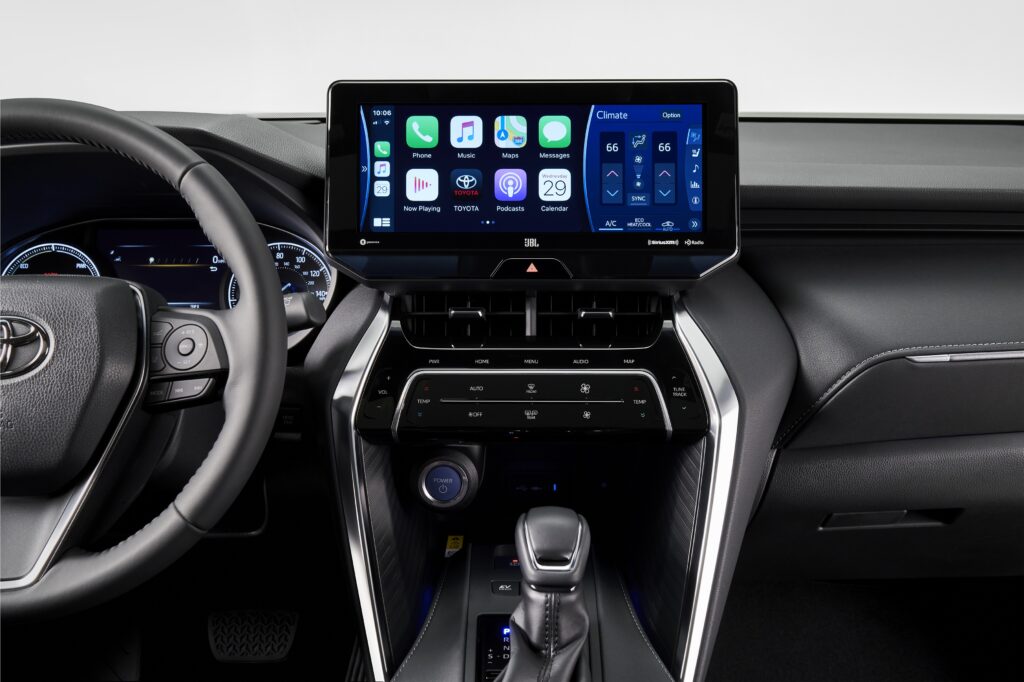
Optional features will include the new Star Gaze fixed panoramic glass roof. The electrochromic glass technology allows drivers to switch from transparent to frosted modes, with UV protection from sunshine. Other upgrades include a 12.3-inch touch-screen display with a nine-speaker JBL audio system and a digital rearview camera mirror.
Ventilated front seats draw cool air from the air conditioning system. (Toyota)
Seats
Venza has eight-way power driver seats on all grades with a four-way passenger on the Limited (but no height adjustment). The power driver’s seat integrates an auto slide-away function that on entry or exit, the seat automatically moves to the rearmost position to optimize ingress and egress. When the Venza is started, the seat moves to the last position set by the driver.
Ventilated front seats are standard on Limited and draw cool air from the air conditioning system into the seats. The ventilated seat option integrates S-FLOW cooling technology (from Lexus) that directs air conditioning only to occupied seats, helping to reduce energy consumption.
The 7-inch multi-information display. (Toyota)
Soundproofing
Toyota says the Venza represents graceful grand touring, which it emphasizes with thorough soundproofing.
The high-strength TNGA-K platform is a rigid platform to block noise intrusion, Toyota says, which helps curb vibration through the steering, floor and structure. From there, suspension tuning resists road surface disturbances, tire noise is reduced via strategically placed insulation and an acoustic glass windshield helps minimize wind noise.
The three-motor system in the Venza is just about the same as for the RAV4 Hybrid, but with a lithium-ion battery replacing nickel-metal hydride. The powertrain has 219 total horsepower and an estimated combined fuel economy of 33 mpg. (Toyota)
Sound-blocking and absorbing insulation with body-sealing material are placed throughout the structure, under the carpeting, and above the headliner. The materials and their placement were optimized to minimize the noise in the frequencies that typically interfere with conversation, Toyota says.
As one example, the floor silencer pad is one large piece rather than separate segments. The pad’s surface coverage reaches about 92 percent. Holes and gaps between parts are filled in with sound-damping material for greater road-noise reduction.
Under the hood, sound-absorbing insulation around the engine compartment helps reduce intake noise, helped by the placement of two special resonance chambers that help minimize air intake noise in the 530Hz and 650Hz ranges.
A 12.3-inch touch screen display is optional. An 8-inch touch screen is standard. (Toyota)
Toyota Venza Features
The new Star Gaze fixed panoramic glass roof uses electrochromic glass technology to switch from transparent to frosted modes, with UV protection.
The standard backup camera features projected path and dynamic gridlines, while an available rear camera cleaning system sprays washer fluid to clear away water droplets, mud, snow and snow-melting road treatments from the lens.
The Limited model has a bird’s-eye view camera system with perimeter scan. It gives a panoramic overhead view of the vehicle’s surroundings.
Other upgrades include a 12.3-inch touch-screen display with a nine-speaker JBL audio system and digital rearview camera mirror. XLE and Limited grades have a standard smart key system for unlocking and push-button ignition.
Two-tone, 18-inch alloy wheels are standard with 19-inch standard on XLE and Limited, with super chrome finished alloy wheels.
The Star Gaze panoramic glass roof uses electrochromic glass technology to be switched from transparent to frosted modes. (Toyota)
Toyota Venza Storage
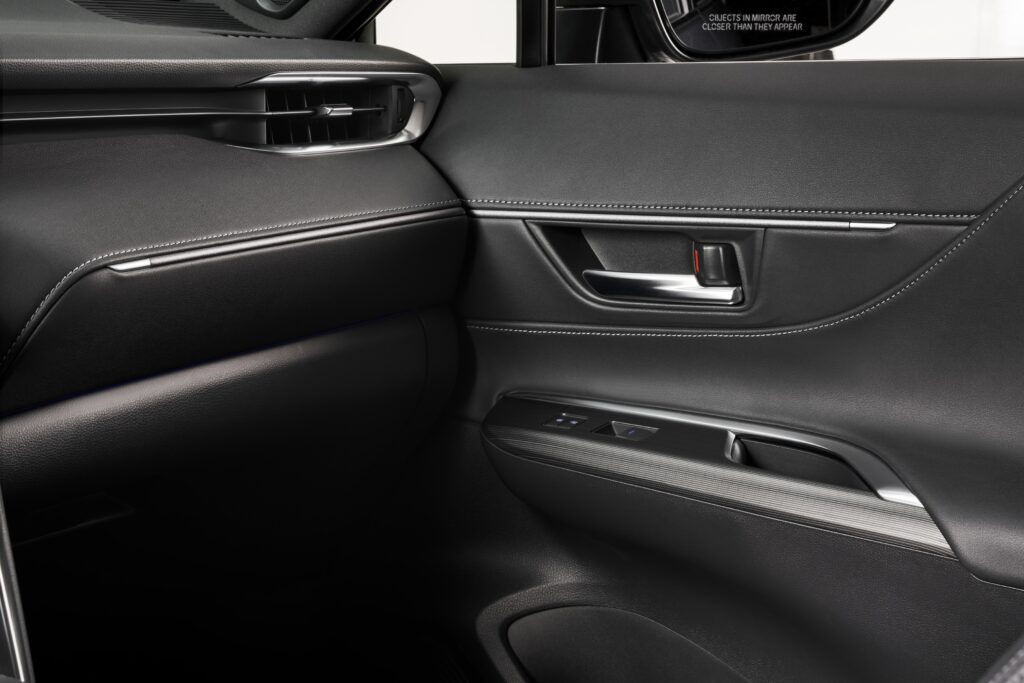
Cup holders can accommodate large drink sizes, while the center stack tray can handle the largest iPhone models. Bottle holders in the door panels can take 24-ounce bottles.
Cargo space behind the second row is up to 36.3 cubic feet, with no intrusion from the lithium-ion battery pack. It is small enough to be installed under the rear seats, so it does not take up any cargo or passenger space. The standard tonneau cover can be stored in the storage space beneath the deck board when not in use.
Door panels can store 24-ounce bottles. (Toyota)
Infotainment in the Toyota Venza
Audio Plus is standard on LE and XLE and includes an 8-inch touch screen. Premium Audio with Dynamic Navigation and JBL is optional on XLE and standard on Limited. The system features a 12.3-inch touch-screen display with controls that can be switched between the driver or front passenger.
Connectivity features include Apple CarPlay, Android Auto and Amazon Alexa and Bluetooth wireless technology. Apple CarPlay includes access to Siri, while Android Auto connects with Google Assistant.
Cargo space has no intrusion from the lithium-ion battery pack. (Toyota)
All Toyota Venza grades come with a three-month trial for satellite radio Toyota Remote Services trial subscriptions. Available dynamic navigation features enhanced 2D landmark display, land guidance display, and freeway exit display. All Venza models will come equipped with Toyota Safety Connect with a one-year trial subscription.
Official pricing had not been announced at the time of posting this story. Industry sources, however, have reported Toyota Venza pricing should start around $35,000 and top out at around $45,000.
Toyota says the Venza represents graceful grand touring. (Toyota)
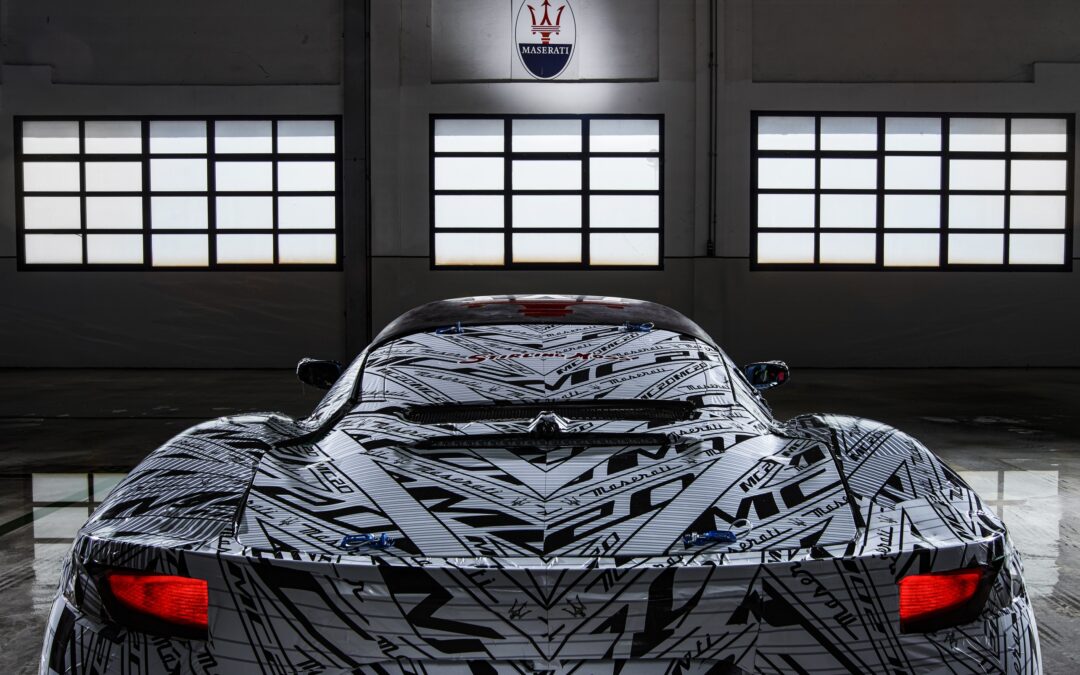
With the Stirling Moss “signature” for the MC20 prototype, Maserati commemorates one of the greatest names in the annals of world motorsports. (Maserati)
Unveiling planned for September at “MMXX: The Way Forward”
May 13 was a checkered-flag day for Maserati and Stirling Moss in 1956. The renowned British racecar driver won the Monaco F1 Grand Prix on that day, piloting a Maserati 250F. The victory stands out among the many trophies in the champion’s collection. And in tribute, Maserati announced on May 13, 2020, that a prototype of the Maserati MC20, the new Maserati super sportscar, will pay homage to Sir Stirling Moss, the British motor-racing ace who died April 12 at the age of 90. Testing of the Trident’s new super sports car continues.
The design used for this prototype is taken from the Maserati Eldorado, the iconic single-seater driven on its debut in Monza in 1958 by Stirling Moss at the “Trofeo dei due Mondi.” The “Race of the Two Worlds” was open to European and American cars.
The Maserati Eldorado (left), the 250F (right) and the Proto MC20. The historic racecars, both driven by Sir Stirling, are now in the Collezione Umberto Panini, Modena. (Maserati)
According to a report in DriveMag.com, the Maserati Eldorado, “wrote history as it became the first single-seater in Europe to be sponsored by a brand not connected to the world of motorsport — in this case, a company that made ice-cream [Eldorado Sud].”
The 1958 Eldorado was based on the Maserati 250F Formula One racer, according to a report in Wikipedia, and given the chassis number 4203. The car was then identified as the 420M/58. Its twin cam V-8 engine was adapted from the Maserati 450S endurance racer and was capable of speeds to 217 mph.
Details about the Maserati MC20 and the future business plan for the House of Trident will be revealed in September (pandemic allowing) at “MMXX: The Way Forward.” (Maserati)
An amazing win
It is very fitting that the Trident brand has chosen the date of May 13 to recall the great British driver, Maserati said in a statement. His victory that day at the Monaco Grand Prix was an amazing win. Moss led the race from the first to the last of the 100 laps around the winding Monaco circuit. It was a doubly good day for Maserati as the brand took third place as well — also in a 250F — by French driver Jean Behra.
Stirling Moss racing a 250F. (Maserati)
Moss, who recorded 16 victories in 66 starts in Formula 1 Grand Prix racing, is one of the most successful drivers never to have won the world title, a Maserati spokesperson said in the release. “Sir Stirling came within a whisker of the crown on more than one occasion, finishing in second place on four occasions, and third in three championships. For this reason, he was known as the ‘king without a crown.’ ”
In the 1956 season and some 1957 races, Moss drove a Maserati 250F (“his favorite,” he often recalled), beaten only by Juan Manuel Fangio. Moreover, Moss’ Argentinian rival took his 1957 title at the wheel of another 250F, confirming the reliability and superiority of the Modena-built car.
The Maserati Eldorado, commissioned to be driven by Stirling Moss, was a sponsorship venture by Eldorado Sud, an ice-cream company. (Maserati)
With the Stirling Moss “signature” for the MC20 prototype, Maserati commemorates one of the greatest names in the annals of world motorsports, who wrote some of the finest pages in its own racing history.
The list of Masers piloted by the British driver also includes the Tipo 60 Birdcage, Tipo 61 and 300 S.
Stirling Moss tests a Tipo 60 “Birdcage” in 1959 at Modena. (Maserati)
Important car for Maserati
The prototype of the MC20 is an important car for Maserati as it aims to return to a leading role on the racing circuits. Its most recent world championship was won in 2010 with another extraordinary car, the MC12.
The arrival of the MC20, “Maserati Corse 2020,” will be the first car to adopt a new engine 100 percent designed, developed and produced by Maserati, the spokesperson said. “But like all new Maserati models, it also will be available in an electrified version.”
The new MC20 sports car will be produced at the Viale Ciro Menotti plant in Modena, where major production line upgrades are underway. Maserati will mark the new era and relaunch of the Maserati brand and unveil the MC20 at its special event in September, “MMXX: The Way Forward.”
A big loss for Maserati and the entire motorsports world. Sir Stirling Moss passed the finish line April 12, 2020, at age 90. (Maserati)