Select Page

2018 Nissan Leaf EV, Electric Vehicle Review

2018 Nissan Leaf EV, Electric Vehicle Review

Simple Nissan Leaf EV green without the gimmicks
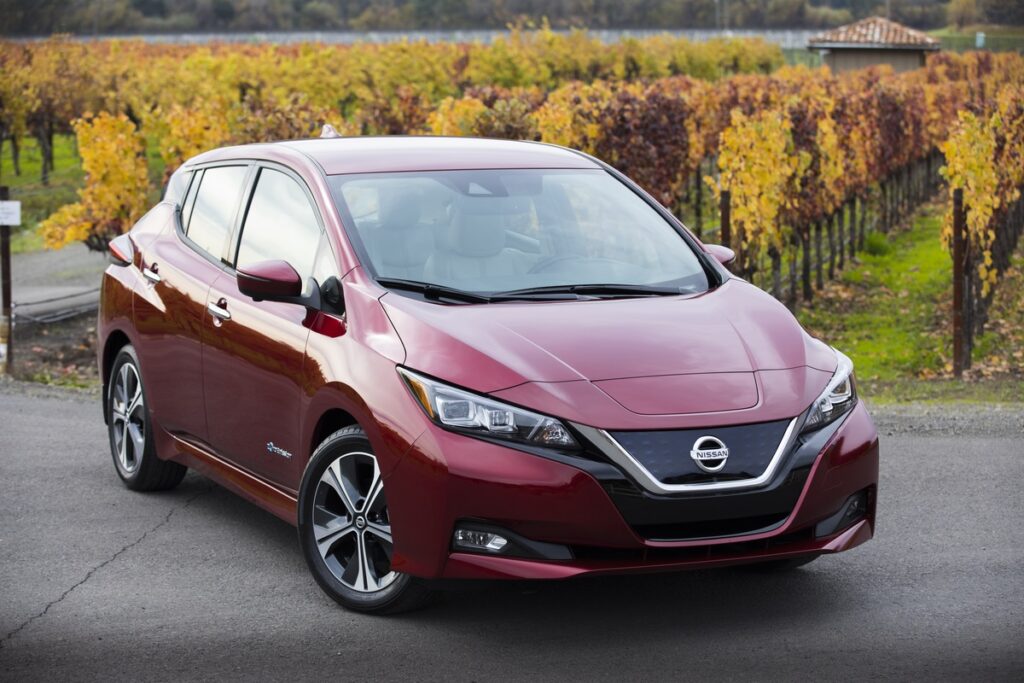
A front view of the 2018 Leaf EV

The Nissan Leaf EV has about 160 miles of range, but a higher-capacity (60 kWh) model is planned for 2019. (Nissan)

BY MARK MAYNARD

Critics of electric cars point to the obvious downsides of range, range anxiety, and price. But few realize the upsides until they own an EV. The Nissan Leaf EV is a good usher to introduce the simple pleasure of electric driving.

Among the assets of driving a battery-electric vehicle is not having to pump gas. Then there are the obvious incentives of reduced vehicle maintenance and an ever-topped-off tank after an overnight charge. And somewhere on the list of assets will be reduced tailpipe emissions.

There are several mainstream battery-electric models now, including the Chevrolet Bolt, Ford Focus EV, Hyundai Ioniq, VW eGolf, and today’s tester, the 2018 Nissan Leaf.

Chevrolet gave the EV segment a jolt with its 250-mile Bolt. This little hatchback can work as a commuter (with HOV-lane access) to those who have long daily commutes.

The Leaf EV interior

The Nissan Leaf EV provides simple efficiency without gimmicks. (Mark Maynard)

2nd generation Nissan EV Leaf

The second-generation 2018 Nissan Leaf EV debuted with a boost in battery power in a complete redesign. The new Leaf has about 160 miles of range, but a higher-capacity (60 kWh) model is planned for 2019.

A Leaf door panel with bottle holder.The Leaf format seems to be simple efficiency in a mainstream package. It provides useful advanced technologies without the fuss of “premium” add-ons or gimmicky EV tricks.

The five-seat, front-wheel-drive hatchback is about the same size as before. In my week of testing, it did not matter if I was sitting on a battery capable of 160 miles or 250. I seldom drive more than 100 miles in a day, and I’d just plug in when at home. The car can chart a course to a public fast-charging station, but there can be wait times.

The Nissan Leaf EVcenter stack of cabin controls is smartly arranged. (Mark Maynard)

Nissan Leaf EV Pricing

The Nissan Leaf EV is sold in three trim levels with starting prices that range from $30,875-$37,085, including the $885 freight charge from Smyrna, Tenn. Standard equipment includes keyless locking with push-button start, Bluetooth phone and audio connection, and automatic emergency braking.

Today’s tester is the midrange SV that was $36,855, including the all-weather and technology packages. Pricing does not include the federal tax credit of $7,500 or California’s $2,500 EV rebate. (Details at DriveClean.ca.gov).

All models have the same driving range and powertrain: a 110-kW AC electric motor and 40 kWh lithium-ion battery of 192 cells. Its 147 horsepower with 236 foot-pounds of torque provides instant forward thrust.  The transmission is a continuously variable automatic.

The new lithium-ion battery design packs 67 percent more power but is the same size as before, stored in the floor.

Standard on all models is a 6.6 kW onboard charger and portable trickle-charge cable (120-volt) and a charging timer. A dead battery can take up to 35 hours to charge on 110-volt (household current), but it drops to 7.5 hours on the 220-volt home charger. Or use a public fast charger for an 80 percent charge in 40 minutes.

The new lithium-ion battery design packs 67 percent more power.

And as with other EVs, a smartphone app can monitor the state of charge. The owner can also set a charging schedule or pre-heat or cool the cabin.

The heavy and heavy-duty Level 2 charging cable. (Mark Maynard)

The ePedal

One of the Leaf’s more engaging innovations is the e-Pedal accelerator. It is an electronic function to recapture more braking-energy regeneration on deceleration. The system felt heavy-footed at first, but it didn’t take long to modulate acceleration. The driver can lift gently to decelerate or let the car come to a complete stop.

I quickly learned to anticipate the distance to stopping by just lifting the accelerator pedal to come to a gentle stop.

Acceleration force is quick when needed with a hard push on the pedal. But always use the brake pedal when immediate stopping power is needed. The electric power steering is well calibrated for a “real steering feel.”

Ride and handling

Ride quality is comfortably firm and the car does not feel heavy in its handling; the curb weight of 3,468 pounds is 112 pounds less than the Bolt.

The interior has midsize-car dimensions. The front headroom is tall at 41.2 inches and the legroom is also long at 42.1 inches.

The rear legroom is tight at 33.5 inches and the bench seat is short on thigh support for adults. There is no center position head restraint, so it is a better four-seater than five.

Cargo capacity is large at 23.6 cubic feet and the 60/40 back seat folds for longer items.

Cargo capacity is large at 23.6 cubic feet, or fold the 60/40 back seat for longer items and up to 30 cu.ft.

The roomy front seat space benefits from a cab-forward layout. The large dashboard and outstretched windshield pillars fork at the base of the side mirrors to give more cornering visibility. The fork is helpful, but drivers will need to take a second look for pedestrians in crosswalks. The wide rear roof pillars restrict the rearview, which can complicate watching for traffic at the rear three-quarter.

The wide rear roof pillars restrict the rear view. (Mark Maynard

The EPA calculates that the annual Leaf “fuel” cost is $600. The cost of gasoline for a comparably sized gasoline-powered vehicle would be double or triple that cost.

A driving range of 250 miles is good for bragging rights. But the Leaf’s reasonable price point might be the more reassuring numbers.

SPECIFICATIONS

2018 Nissan Leaf SV

  • Body style: midsize, 5-passenger, front-drive hatchback EV
  • Electric motor: 110-kW AC synchronous electric motor
  • Battery: 40-kWh laminated lithium-ion, 192 cells
  • Power: 147-hp; 236 lb.-ft. torque from 0-3,283 rpm
  • Transmission: CVT
  • Estimated driving range: 150-160 miles
  • Charging:   6.6-kW onboard charger; 35 hours on 110-volt (household current); 7.5 hours 220-volt; quick charge in 40 minutes to 80 percent

BY THE NUMBERS

  • Cargo space: 23.6-30 cu. ft.
  • Front head/leg room: 41.2/42.1 in.
  • Rear head/leg room: 37.3/33.5 in.
  • Length/wheelbase: 176.4/106.3 in.
  • Co-efficient of drag: 0.28
  • Curb weight: 3,468 lbs.
  • Turning circle: 36.1 ft.

FEATURES

Standard equipment includes: keyless locking and push-button starter, 17-inch all-season 215/50 Michelin Energy Saver tires and alloy wheels, a rearview camera with guidance lines, portable trickle charge cable, HVAC timer to heat or cool cabin, 60/40 folding back seat, leather-wrapped steering wheel, Nissan Connect with navigation

Safety features include: 6 airbags, stability and traction controls, automatic emergency braking, blind-spot warning, rear cross-traffic alert, driver-awareness alert

PRICING

Base price: $33,375, including $885 freight charge; price as tested $36,885

Options on test vehicle: All-weather package, $900, includes heated front seats, steering wheel, and side mirrors; SV Tech package, $2,200, includes 8-way power front seat with 2-way lumbar, universal garage opener, auto-dimming rearview mirror, LED headlights and running lights, portable charge cable (120v, 240v), automatic emergency braking, blind-spot warning, rear cross-traffic alert, ProPilot Assist with steering assist, intelligent cruise control, electric parking brake, high-beam assist, lane intervention; splash guards $190; carpeted floor mats and cargo mat $190

Where assembled: Smyrna, Tenn.

Li-ion battery pack warranty:  8-years/100,000-miles against defects and excessive capacity loss.


Ride quality is comfortably firm and the car does not feel heavy in its handling. (Nissan)

2019 Subaru Forester Review

2019 Subaru Forester Review

The new Subaru Forester is a complete redesign and roomier with more power and loaded with safety technologies

The improvements to the fifth-generation Subaru Forester are a new North Star for the brand. (Photos courtesy of Subaru)

BY MARK MAYNARD

There have always been good reasons to buy a Subaru Forester, but its exterior styling was never among them — until the redesigned 2019 model. The new Forester is a complete remake and roomier with more power and loaded with safety technologies, including the watchful DriverFocus camera to monitor for distracted or drowsy driving.

The exterior styling is familiar but more appealing, especially at the rear. But it is Subaru’s attentive engineering that is the real beauty in Forester.

Sold in five trim levels, starting prices range from $25,270-$35,270, including the $975 freight charge from Gunma, Japan. Today’s tester is the top-line Touring that was loaded with luxury-class features for a reasonable price. All models except base include a power panoramic moonroof, but Subaru’s EyeSight driver-assist safety suite is now standard on all trim levels.

Check current Subaru Forester pricing and incentives here.

Forester’s driver controls are intelligently placed for access and heads-up control.

All models have Subaru’s symmetrical all-wheel drive and an updated 182-hp, 2.5-liter flat four-cylinder engine and CVT transmission with seven-speed manual shift mode with steering wheel shifters.

Subaru Forester Safety Features

Subaru has been an e-pioneer in protecting its owners, first with a robust body and then with its EyeSight driver-assist technology. The suite of technologies includes adaptive cruise control, pre-collision braking, lane departure warning, lead vehicle start alert (vehicle in front) and lane-keep assist.

The DriverFocus feature uses facial recognition software to identify signs of driver fatigue or distraction and gives a quick and subtle three-tone beep to alert the driver. Of course, I tried to fake it out by deliberately turning my head left then right, while trying to keep an eye on the road. But it was smarter than that. It did ding me a couple of times when it caught me in distracted glances at some roadside phenomenon I just had to check out.

All of the EyeSight monitoring, however, does so without intrusion or constant tones of alarms. It’s in the background, but a certified lifeguard when needed.

The cargo area has a little more cubic footage, but the space is more squared off and the load floor lies flatter when the back seats are folded.

And the Forester has long been an overachiever in official crash-test rankings. It has been named an Insurance Institute for Highway Safety Top Safety Pick for 12 years running (2007–2018) and earns the institute’s highest rating of “Superior” for front crash prevention from when equipped with EyeSight. And the National Highway Traffic Safety Administration gave the 2018 model its top score of five stars overall. The 2019 testing had not been completed as of press time.

Subaru expects equally strong or better results for the 2019 Forester, which it says has a stiffer and stronger chassis and with the EyeSight system and LED low and high beam headlights as standard equipment, with seven air bags.

Subaru Forester Overview

The slightly larger, compact Forester seems more midsize inside. And it could be the new leader on the SUV mountain with at least nine competitors. Among them, the Chevrolet Equinox, Ford Escape, Honda CR-V, Hyundai Tucson (refreshed for 2019), Jeep Cherokee, Mazda CX-5, Mitsubishi Outlander, Nissan Rogue and Toyota RAV4 (also redesigned for 2019).

The open cargo space has 6 feet of length with the seatbacks folded.

The body is only an inch longer and a half-inch wider and the same height at 68 inches (including roof rack), but cabin space improved by stretching the wheelbase 1.2 inches, to 105.1 inches. The back-seat area benefitted with max legroom of 39.4 inches, or an inch and quarter more than before. But also significant is front headroom of 40 inches with the big sunroof or 41.2 inches without.

The cargo area, too, has a little more cubic footage, but the space is more squared off and the load floor lies flatter when the back seats are folded. The cargo opening is wider, 51.2 inches, and there is six feet of length with the 60/40 seatbacks folded, which will be handy for camp-out sleeping or bike, board or big-box transport.

Interior Function

Inside, there is a heaping helping of no-nonsense Subaru utility and function, but with more style than ever. The tall glass and upright cabin provide unrestricted views over the hood and fenders or over the shoulder.  Driver controls are intelligently placed for access and heads-up control.

There are many clever design and engineering elements that add utility and function.  The shift console is large with plenty of room for a charging bin with USB charge ports and a place to rest a phone. There’s another 12-volt plug in the two-level armrest storage box and a ledge on the outside for a phone. 

The large visors (a Subaru specialty) have covered mirrors and a pull-out extender with covered and lighted mirrors. Door panels have deep bottle holders and stash space.

The front seats — leather-trimmed and heated with perforated centers — are comfortably firm with side bolsters that support without restricting. The driver’s seat adjusts 10 ways and the passenger has eight-way adjustment.

Back Seat

Back seat space is limo long and open with good footroom. The seatbacks recline and the angle is comfortable. The driveshaft tunnel is a low hump and the center seat is reasonably wide and supportive without the occupant feeling perched on a skinny pad. The doors open to almost 90 degrees and to further help feet through the opening the designer shaved a scallop of plastic from the lower door pillar. Very smart.

Conveniences include a pair of charging USBs and seat heaters, on this model. The seatback pockets are smartly divided with a lower outside pocket and the usual deep pocket behind it. Another smart idea, which should be copied by others. 

Amenities include overhead lights, grab handles above the doors, bottle storage in the doors, and a pull-down center armrest with cup holders.

Subaru Forester Powertrain

The sole engine choice now is the 182-horsepower, 2.5-liter four-cylinder with horizontally opposed pistons, the so-called “boxer.” It was the base engine last year — with the step-up turbo 250-hp, 2.0-liter flat-four. The 2019 Forester engine is updated with direct injection, which added another 12 hp. Torque increased by 2 foot-pounds of torque, now at 176 lb.-ft. at 4,000 rpm.

The power flow is better and while I’m not fond of the sometimes-vague performance of CVTs, Subaru’s Lineartronic is quick to hook up power without noisy motorboating of the engine. There is a seven-speed manual mode, but I never felt the need. Subaru’s SI-Drive sport mode sharpens performance enough to fill the gap at low speeds, which is a help for commuters to hold their line on the daily commute. SI-Drive adjusts only throttle response, which, at times, can seem abrupt.

Fuel economy estimates are 26 mpg city, 33 highway and 29 combined on 87 octane. I was averaging 24.7-27.4 mpg. With those numbers, there is a cruising range of around 400 miles with the 16.6-gallon tank. 

The tall glass and upright cabin provide unrestricted views over Forester’s hood and over the shoulder.

Ride and Handling

The Touring tester was not particularly sporty to drive, but it has confident handling. The 18-inch Falken Ziex ZE001 all-season tires were quiet rolling and were dutiful in sporty maneuvers. (The Sport model has a Sport Sharp performance mode, but no other performance enhancements.)

The suspension is quite accommodating with barely any head toss when tromping across speed bumps and steep driveways. The cabin, too, is well soundproofed with little wind noise at the mirrors.

You don’t have to be an outdoor adventurer to appreciate this fifth-generation Subaru Forester. It is a smart remodel that preserves its traditional SUV ability and shines as a new North Star to guide through the cluster of competitors.

2019 Subaru Forester Touring

Body style: midsize, 5-passenger AWD SUV

Engine: 182-hp, direct-injection 2.5-liter horizontally opposed “boxer” 4-cylinder; 176 lb.-ft. torque at 4,400 rpm; active grille shutters and auto stop-start at idle

Transmission: CVT with 7-speed manual mode; with symmetrical all-wheel drive

Fuel economy: 26/33/29 mpg city/hwy/combined; 87 octane

BY THE NUMBERS

Fuel tank: 16.6 gal.

Cargo space: 33-71* cu. ft. w/moonroof; *35.4-76.1 w/o moonroof

Front head/leg room: 40.2*/43.3 in. *41.2 w/o moonroof

Rear head/leg room: 37.7/39.4 in.

Length/wheelbase: 182.1/105.1 in.

Width/height: 71.5 in. w/o mirrors; 81 in. w/mirrors

Curb weight: 3,588 lbs. *Touring

Turning circle: 35.4 ft.

Tow capacity: 1,500 pounds, with trailer sway assist

FEATURES

Standard equipment includes: smartkey entry and push-button ignition, power panoramic moonroof, sound-insulated windshield, height adjustable driver seat, 7 air bags, electric parking brake, LED headlights (low and high beam), Starlink multimedia infotainment with 6.5-inch touch screen for Apple CarPlay or Android Auto smartphone integration, carpeted floor mats, power (folding) side mirrors, 60/40 folding back seat

Safety features include: all-speed traction control, rollover sensor, brake assist, torque vectoring, trailer-stability assist

PRICING

Base price: $35,270, including $975 freight charge

Options on test vehicle: none

Where assembled: Gunma, Japan

Warrranty: 3-years/36,000-miles bumper to bumper; 5-years/60,000-miles powertrain

Time flies in a Porsche watch

Time flies in a Porsche watch

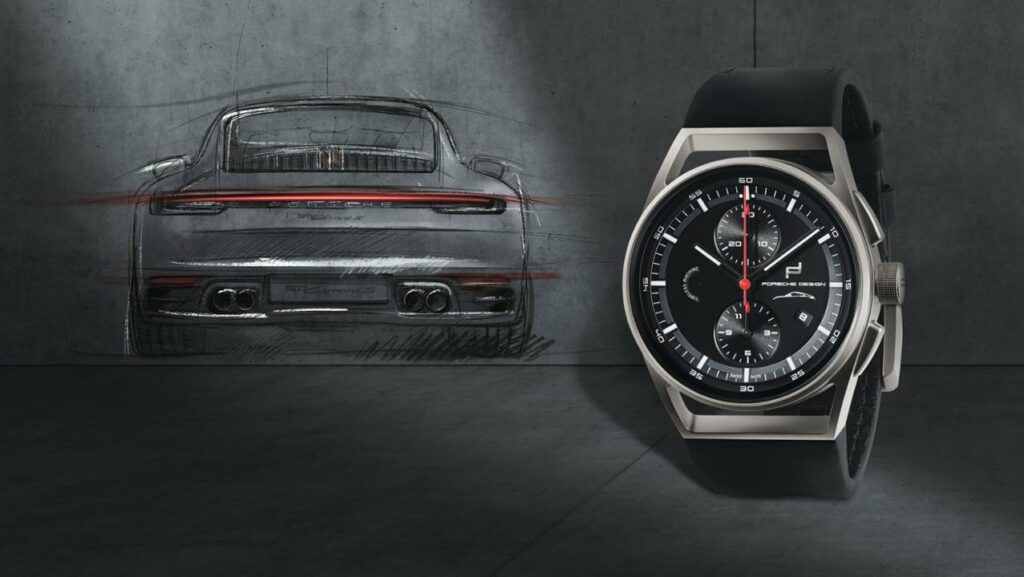
The 911 Chronograph Timeless Machine Limited Edition follows the design principles of the new 911 922 coupe: Lightweight, low profile and race ready.

Porsche unveiled the new, eighth-generation at the recent 2018 Los Angeles Auto Show and with it the new Porsche Design watch to honor it: the 911 Chronograph Timeless Machine Limited Edition.

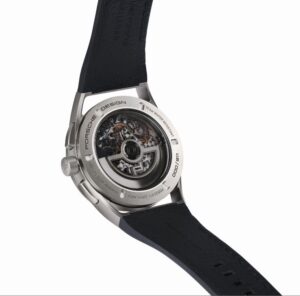
The Swiss-made ETA Valjoux 7750 movement is visible through the sapphire case back

Low profile, as is the new wider and lower 992, the special edition watch is limited to 911 pieces and uses a hypoallergenic titanium case. The Swiss-made ETA Valjoux 7750 movement is visible through the sapphire case back and customized with the Porsche Design Icon Rotor. The strap is made of the same leather and yarn used in the 911 interiors.

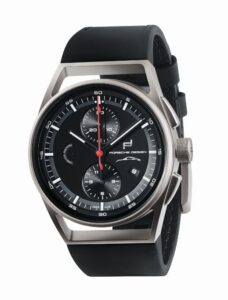
The black-background dial, with silhouette of the Porsche 911, has white hands and hash marks, in the style of a speedometer, and a bright red stop function and central seconds hands.

The black-background dial shows the silhouette of the Porsche 911.

The watch is priced at $5,411, which includes a numbered, special-edition box. The new 911 starts at $113,300.

The watch will be at dealerships and Porsche Design Stores (including Costa Mesa) in April 2019 — in time for the launch of the new 911. Or order online at porsche-design.us.

It was Professor Ferdinand Alexander Porsche who in 1963 created the Porsche 911. And in 1972, he launched the lifestyle brand Porsche Design with the debut of Chronograph I, the first all-black watch. The design group is the only watch brand owned by a car company, and as such, it is able to harness the carmaker’s technology and resources on the back end and apply it to the development of a range of lifestyle accessories.

Today, Porsche Design products — including eyewear, clothing, electronics, kitchen ware, fashion accessories and luggage — are sold worldwide in more than 130 stores, specialty shops and high-end department stores.

Tesla Model 3 Review: Don’t stop thinking about tomorrow

Tesla Model 3 Review: Don’t stop thinking about tomorrow
The Tesla Model 3 from a rear three quarter view

The entry model has battery power of “just over 50 kWh,” which is rated for 220 miles of range, and about 75 kWh for the “long range” version, which Tesla claims can enable 310 miles of range. (Photography courtesy of Tesla)


BY MARK MAYNARD

Tesla is complicated, but its cars are not. A recent week in a new Model 3, the compact electric sedan, is a rethinking of car ownership. It’s as much lifestyle choice as transportation.

There is much awareness of this new car and brand — and some attitude. A driver in an Audi A4 tried a stoplight drag race and a few other drivers were not hospitable in yielding the right of way, which was quite deliberate.

The fledgling Model 3 has emerged as a tattletale of all that appears wrong with the company. Its CEO leader Elon Musk is an admitted tech nerd — part visionary, part capricious micromanaging control freak. But he has the capital to indulge his whims, which includes building big space rockets and tunnels, colonizing mars, creating home battery storage systems and a factory to build those batteries, plus a nationwide link of 11,200 “supercharging” stations for the owners of his electric cars.

To skeptics and critics, Musk has been showing mental signs of cracking from the workload. But there were no cracks in the Model 3, I tested. There were two slightly misaligned corners at the front fascia, which could be attributed to the much-reported teething problems during early production at the Fremont, Calif., factory.  The rest of the car was a proud statement of perseverance from a leader who will do it his way, even if that means working the line and sleeping on the shop floor.

Tesla model 3 front seat area

The cabin design is lean and uncluttered with unique synthetic fabrics, headliner and plastics.

2018 Tesla 3 Pricing and Range

Three versions of Model 3 are currently available in the U.S., with three levels of lithium-ion batteries and a second-motor option for all-wheel drive: Midrange rear-wheel drive, $46,200, 260 miles; long range rear-wheel, $50,200, 310 miles; long range dual-motor AWD, $56,200 and Performance AWD, $65,200, both EPA-rated for 310 miles. Pricing includes the $1,200 freight charge.

The mid-range battery option uses the long-range battery, but contains fewer cells, Tesla says. The Mid-Range model also can be upgraded with the premium black and white interior ($1,500) which had been available only with the dual-motor variants.

A single-battery option, with a 220-mile range, will be available in four to six months, Tesla says, which will drop the starting price to $37,120 for the rear-drive model.

Tesla also cut the price of the Dual-Motor All-Wheel Drive option to $5,000, from $29,000.

My top-line extended-range Performance tester was $78,200 with dual-motor AWD and performance upgrades. The EPA gives it e-mpg ratings of 120/112/116 mpg city/highway/combined. That translates to about 319 miles city, 296 miles highway and 308 miles combined.

Pricing is before a $7,500 federal tax credit and $2,500 California incentive, but time is running out. The federal tax credit (incentive) was allowed for the first 200,000 such vehicles sold by an automaker and Tesla passed that milestone in July. But buyers taking delivery by the end of the year will get the full credit, Tesla says. After that, the tax credit will be reduced by 50 percent every six months until it phases out in 2020.

Tesla’s vehicle designs are a complete rethinking of space. All ye who enter the cabin must do so with an open mind.

The view rearward from the front seats through the panoramic roof

The roomy cabin has 40.3 inches of front headroom with the glass roof or 39.6 inches with a metal roof.

Midsize Cabin

While the Model 3 is Tesla’s smallest sedan it is close in footprint to the midsize Mercedes-Benz C300 or Audi A4. But the Tesla’s wheelbase of 113.2 inches is at least 2 inches longer. The stretch of space allows a roomy interior but it also adds to the width of the turning circle, which I’d guess to be about 40 feet with 20-inch tires, when others in the size class can range from 36 to 40 feet.

The Tesla app turned my iPhone into the key to open the car and there also are key cards (like a hotel room card). The driver can create a profile for his or her preferences of driving.

It’s a bit of a culture shock to not use a key fob, to not push an ignition button to start or shut off the car, to not set the parking brake and then just walk away and let the car lock itself, and then remind you where it is an how much fuel remains.

The cabin design is lean and uncluttered with unique and appealing synthetic fabrics, headliner and plastics. Nearly all cabin and driving controls are made through a 15-inch, clipboard-sized iPad-like touch screen turned on its side in the center of the instrument panel. But the screen is prone to glare and reflections in sunlight and finger smudges can be annoying. The access and activation work quite well — once you learn the levels to find what you need. And some features can be voice activated.

Because there is no engine or transmission to work around, there is uncharted capacity in its center console that reaches from the base of the instrument panel to between the front seats, with a charging bin and clever connectors for an iPhone or Android, good cup holders and deep, two-level armrest storage.

Sightlines are unobstructed over the hood and over the shoulder. The roomy cabin has 40.3 inches of front headroom with the glass roof or 39.6 inches with a metal roof. The Model 3 body is made of aluminum and steel. Tesla also designs or makes many of the elements that go on or with the car, including the seat design and synthetic upholstery.

The front trunk has a usable 3 cubic feet of space with another 12 cubic feet in the rear trunk. The 60/40 back seat folds and there is a deep well under the cargo floor to corral grocery bags or other gear.

The Tesla keycard to unlock doors

The Tesla app turned my iPhone into the key to open the car and there also are key cards.

Power

I don’t need 450-hp, but 0-60 mph in 3.5 seconds is fortifying on those occasional full-on pedal-down power plays. With that kind of power, there will be no more pink red-traffic lights and you’ll be able to scoot away from most muscle cars.

The enhanced autopilot will be good to have when the system can be upgraded to Level 3, which will include city-safe driving features. But the current Level 2 semi-autonomous system, in which drivers much keep a finger’s weight on the wheel, still requires much driver vigilance. It is most helpful in bumper-to-bumper traffic as an omniscient guardian on 360-degree watch.

The Performance model’s 450-hp is compelling, but at 4,072 pounds the weight is felt at high speed. It is not overly sporty to drive, but it didn’t unravel when pushed. Around town, the acceleration is moderate and the ride quality settled and well soundproofed. But there is road harshness at Interstate speeds, which might be from the high tire pressure of 42 psi.

Model 3 achieved a perfect 5-star safety rating in every category and sub-category, and NHTSA’s tests also show that it has the lowest probability of injury of all cars the safety agency has ever tested.

Looking at the front center console from the passenger's seat

The center console between the front seats has a charging bin and clever connectors for an iPhone or Android.

Battery Charging

With 300 miles of range, I had no range anxiety. Charging at home on the 240-volt system (which requires buying the charger and installation costs for around $3,000) is good for 37 miles of range an hour. Visiting a supercharger station will add 170 miles of range per 30 minutes. Or figure 24 hours on household current; Tesla provides a 20-foot charging cable for home and 240-volt charging.

Tesla’ Supercharger system is available pretty much nationwide and the stations are often positioned in shopping areas. But just a bare charging station is a far more pleasant experience than plugging in at public charging station in parking lots of Walmart, grocery stores and urban attractions. Tesla says it is adding six charging stations a week.

Looking from the back seat through the front windshield and instrument panel

Nearly all cabin and driving controls are made through a 15-inch horizontal clipboard-sized iPad-like touch screen.

 There is nothing traditional about the marketing or maintenance of a Tesla, either. Cars are ordered online or sourced through the closest boutique (often in shopping malls) and then picked up at a delivery center. When a Tesla needs maintenance, the problem can be diagnosed remotely and then a service truck can be dispatched to make repairs wherever. Scheduled maintenance does not mean time off work — the technician can unlock and lock your car electronically.  The new-vehicle warranty is for 4-years/50,000-miles with battery coverage of 8-years/100,000-miles (120,000 mile with long range battery).

Buying a Tesla isn’t just owning a car, it’s buying into a lifestyle. It’s not a lifestyle for everybody, but it will make many converts.

2018 Tesla Model 3 Lineup

Three long-range versions of the Model 3 are on sale now, with the standard-range model due in three to six months. Pricing includes the $1,200 freight charge from Fremont, Calif. 

 Model 3 Long Range Rear-Wheel Drive

  • Power: 271 hp with 307 ft.-lb. torque
  • Top Speed: 140
  • 0-60 time: 5.1 seconds
  • Range: 310 miles EPA
  • Price: $50,200

Model 3 Long Range Dual-Motor

  • Power: 346 hp with 376 ft.-lb. torque
  • Top Speed: 145
  • 0-60 time: 4.5 seconds
  • Range: 310 miles EPA
  • Price: $56,200

Model 3 Performance

  • Power: 450 hp with 471 ft.-lb. torque
  • Top Speed: 155
  • 0-60 time: 3.5 seconds
  • Range: 310 miles EPA
  • Price: $64,000

Model 3 Mid Range Rear-Wheel Drive

  • Range: 260 miles (EPA estimate)
  • 0-60 mph: 5.6 seconds
  • Top Speed: 125 mph
  • Choice of Premium Black Interior or Premium Black and White Interior
  • Price: $45,000 before incentives (as low as $30,700 after incentives)
Looking at the exterior of the red Model 3 from a low angle at three quarter view

Three versions of the 2018 Model 3 are currently available in the U.S.: Long range rear-wheel, $50,200; long range dual motor, $56,200 and Performance, $65,200 (also on the dual motor platform.)

2018 Tesla Model 3 Performance Specifications

Body style: compact-midsize, 5-passenger sedan

Motors: 450-hp with 471 ft.-lb. torque, total power; permanent magnet motor front, induction AC motor rear

Batteries: 50 and 75 kWh lithium-ion

Driving range: 310 miles

E-Fuel economy:  120/112/116 mpg-e

0-60 acceleration: 3.5 seconds; top speed 155 mph

Transmission: 1-speed automatic

Drag coefficient: 0.23

BY THE NUMBERS

Trunk space: 12 cu. ft. rear, 3 cu. ft. front

Front head/leg room: 40.3*/42.7 in. *39.6 w/metal roof

Rear head/leg room: 37.7/35.2 in.

Length/wheelbase: 184.8/113.2 in.

Curb weight: 4,072 lbs. *3,549 lbs.

Turning circle: NA ft.

FEATURES

Standard equipment includes: 15-inch capacitive touch screen, maps and navigation, W-Fi and mobile connectivity, streaming audio and phone, voice-activated controls, high-definition camera system, 2 USBs nd12-volt plug, full LED lighting, 20-foot charging cable (for 120, 220-volt),

Safety features include: 8 air bags, stability and traction controls, seven cameras, forward radar and 12 ultrasonic sensors

2018 TESLA MODEL 3 PRICING

Base price: $65,200, including $1,200 freight charge; price as tested $78,200

Options on test vehicle: Performance dual motor AWD $29,000; silver metallic paint $1,500; white upholstery $1,500; enhanced autopilot $5,000; Performance upgrade $5,000

Where assembled: Fremont, Calif.

Warranty: 4-years/50,000-miles bumper to bumper; battery 8-years/100,000-miles (120,000 mile with long range battery)

Drive A Tank for a new Thanksgiving tradition

Drive A Tank for a new Thanksgiving tradition

The 60-acre Drive-a-Tank facility in the Minnesota woods offers quasi-military adventures with nine authentic military tanks and several military vehicles that have been used in actual combat.

I grew up in the rural Midwest where it was a common tradition to hunt rabbits and other game on Thanksgiving morning. I was never much of a hunter or even a good shot to bring home dinner. But I might have better luck driving a Sherman tank and hunting other armored vehicles at Drive A Tank, in rural Kasota, Minn. This map dot is about halfway between the cities of Mankato and St. Peter on the eastern side of the Minnesota River.

In business since 2009, the 60-acre facility in the Minnesota woods offers quasi-military adventures with nine authentic military tanks and several military vehicles that have been used in actual combat. Participants can drive a tank in a combat scenario and run over just about anything that gets in the way, including cars and mobile homes.

For Thanksgiving, Drive A Tank is offered a new holiday tradition it calls Tanks-giving on Saturday, Nov. 24, 2018. Engines fired up at 10 a.m. with dinner served around 4 p.m. (Expect about the same timing for 2019.)

There are several tank-driving options, including three-, four- and five-star General packages ranging in price from $299-$2,599. (Drive A Tank)

Participants will be able to experience an armored combat mission to hunt armored vehicles and engage them with the Sherman Tank’s main gun, using proprietary combat-training ammo. There also will be many authentic WWII-era machine guns to shoot.

After a day of target practice and piloting tons of steel, owner Tony Borglum and the crew at Drive A Tank will have a Thanksgiving meal and beverage waiting.

“This isn’t your run-of-the-mill Thanksgiving festivity,” said Borglum. Thanksgiving holidays blend together because year after year, they aren’t ever different. If you come to our Tanks-giving, I guarantee, you will never forget it.”

There are several tank-driving options, including three-, four- and five-star General packages ranging in price from $299-$2,599. New this year is the $1,599 Sherman Driver Experience. The Tanks-giving turkey shoot is offered with a 10 percent discount toward any program and includes the Thanksgiving meal.

Add-ons include driving a 60-ton Chieftain battle tank over a car, $549 — or mash two cars for $749. And there are options to drive a tank through a mobile home ($3,495, total package cost).

Also on site is an indoor shooting range with historic military firearms.

Info: (507) 931-7385 or Driveatank.com.

The Tanks-giving turkey shoot is offered with a 10 percent discount toward any program and includes the Thanksgiving meal. Add-ons include driving a 60-ton Chieftain battle tank over a car, $549 — or mash two cars for $749. (Drive A Tank)

2019 Infiniti QX50: More luxury, more sophistication, more complexity

2019 Infiniti QX50: More luxury, more sophistication, more complexity

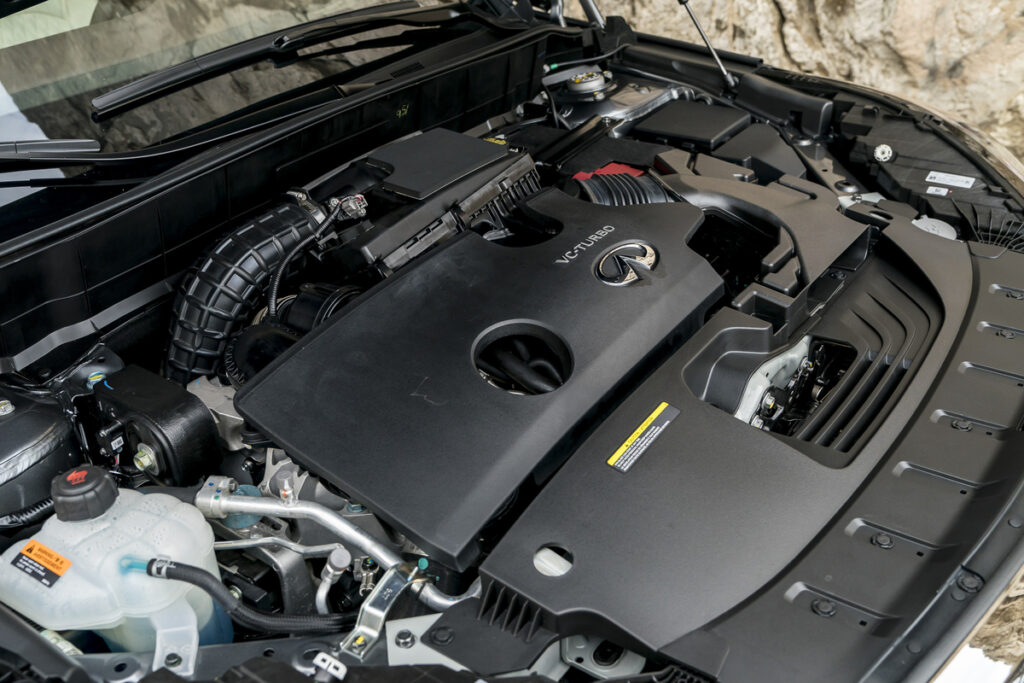
The QX50’s new 2.0-liter VC-Turbo four-cylinder engine is getting much attention in advertising and in road-test evaluations, but not all of it is progressive.

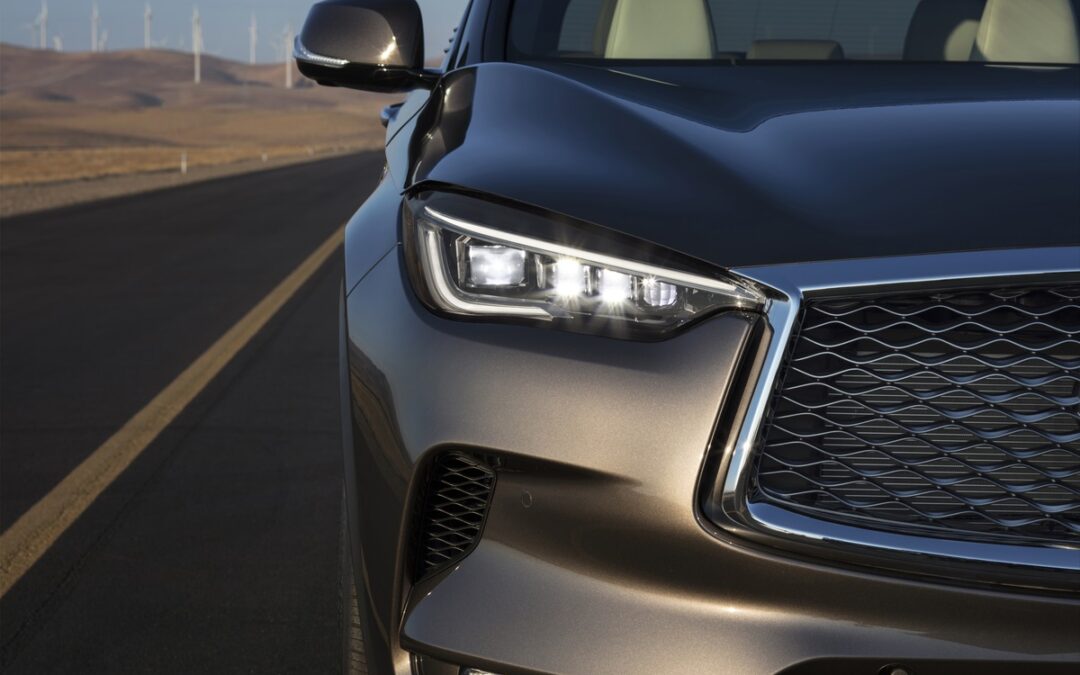
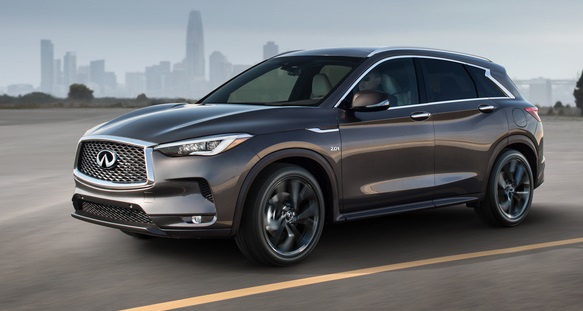
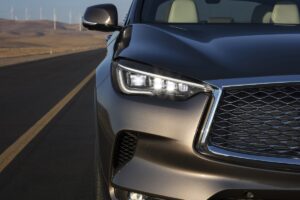
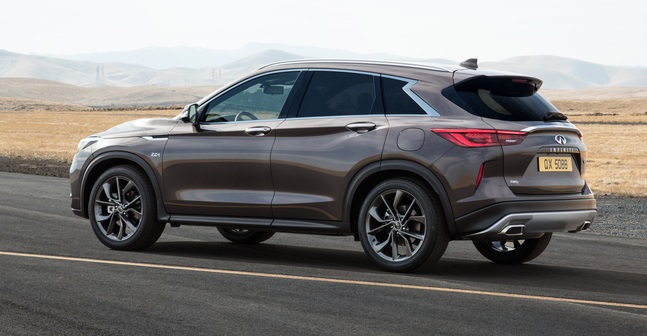
The 2019 Infiniti QX50 is fresh start with striking exterior styling, a more luxurious presentation, Level 2 semi-autonomous driving and a first-of-its-kind engine with variable compression.

There are a lot of moving parts to the redesigned QX50, the brand’s midsize five-passenger SUV crossover. Its new 2.0-liter VC-Turbo four-cylinder engine is getting much attention in advertising and in road-test evaluations, but not all of it is progressive.

Infiniti says the engine’s variable compression ratio technology is a breakthrough in combustion-engine design. But it is a complex engineering design that took about 20 years to exorcise the demons for mainstream application.

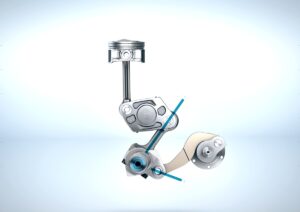
The once-simple engine piston gets sophisticated bottom-end internals, with a multi-link connector at the crankshaft that connects with another control shaft then an actuator arm and an electric motor-controlled rotating unit called the Harmonic Drive.

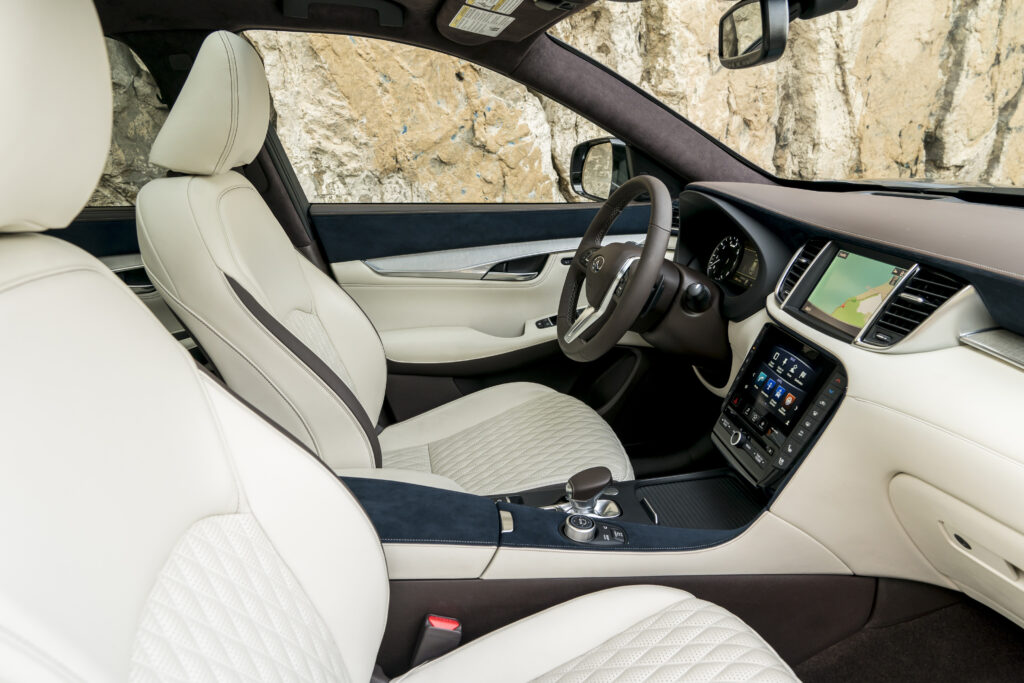
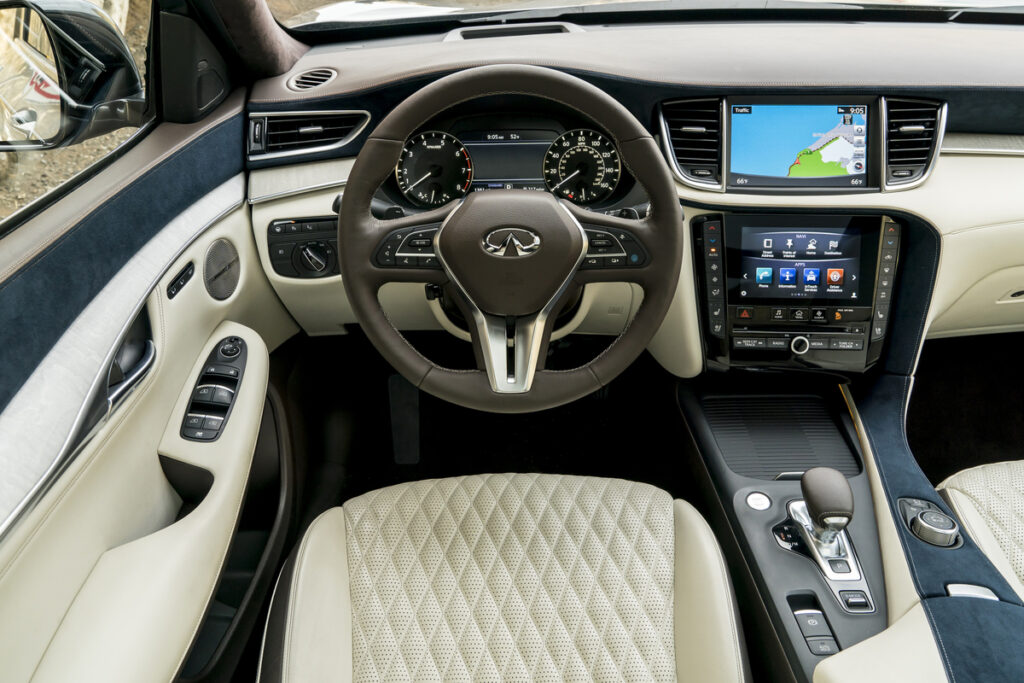
Cabin materials are immaculate, but the traditional cabin layout does not set any new standards for functionality or creativity.

The movement is robotic-like syncopation to continually adjust the engine’s compression ratio by raising or lowering the reach of the pistons. The consumer benefit is more power and fuel efficiency from a four-cylinder engine — and it does have impressive power numbers.

The 2.0-liter VC-Turbo replaces a 3.7-liter V-6 with 325-hp and 267 foot-pounds of torque at 5,200 rpm. With a seven-speed transmission, it had mileage of 17/24/20 mpg city/hwy/combined.

Headroom is tall at 40 inches — with the panoramic roof — and driver controls are reasonably intuitive.

The VC-Turbo, with direct-and-port injection, has 268 horsepower and 280 lb.-ft.  torque from 1,600-4,800 rpm. All-wheel-drive fuel economy ratings are 24 mpg city, 30 highway and 26 mpg combined on the recommended premium fuel. I was averaging just 16.9 mpg in a week with little freeway driving and much use of Sport mode. Oddly, there was no auto stop-start at idle, but I don’t think there’s much mileage benefit for the driver with that feature.

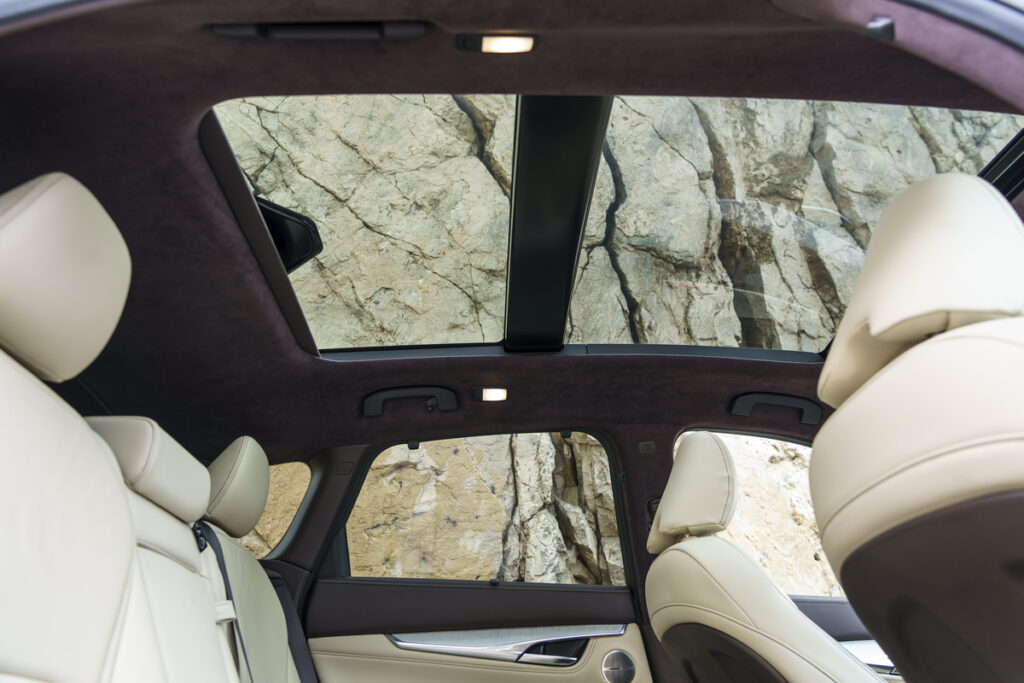
The panoramic roof is wide and long.

The efficiency gains are apparent on paper, but my driving experience was variable and made somewhat annoying by the continuously variable automatic transmission. At times the power delivery was quick and assertive, mostly around town, and at times the spooling of the turbo (as the engine reached 1,600 rpm) and the rubberbanding uptake of the CVT had the feel of a small powertrain trying to move a heavy vehicle. But the QX50 is not heavy at 3,857 pounds. At speed, the engine response is quicker and almost frenzied.

Only AWD models are recommended for towing and have a 3,000-pound rating.

The steering weight is very light, which I like when tooling the city, and the overall drivability is comfortable, not sporty, particularly with the Bridgestone Ecopia 19-inch runflat tires. There is noticeable road noise on concrete Interstate despite a well-soundproofed cabin.

The VC-Turbo, with direct-and-port injection, has 268 horsepower and 280 foot-pounds of torque from 1,600-4,800 rpm.

The QX50 is sold in three trim levels with front- or all-wheel drive. Pricing starts at $38,540 and ranges to $46,145 for the top-line Essential AWD; pricing includes the $995 freight charge from Aguascalientes, Mexico. The Essential tester was $59,585 with four major packages and three stand-alone options for premium paint ($500); illuminated kick plates ($465); and welcome lighting ($425), which shines at the ground from below the door opening.

The once-simple engine piston gets sophisticated bottom-end internals. The electronics of the variable compression ratio engine can detect the car’s driving condition and driver inputs, and seamlessly select the most suitable compression ratio, Infiniti says. The engine is able to offer any compression ratio between 8:1 (for high performance) and 14:1 (for high efficiency).

Competitors include the Acura RDX, Audi Q5, BMW X3, Cadillac XT5 or XT4, Lexus NX, Mercedes-Benz GLC and Porsche Macan.

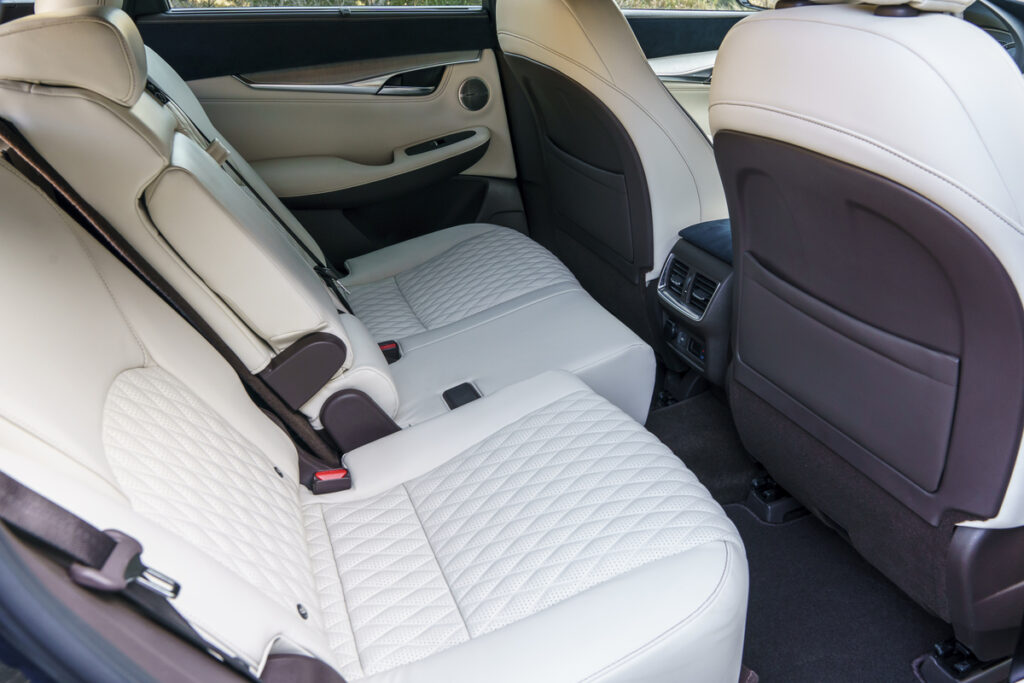
The traditional cabin layout does not set any new standards for functionality or creativity, but Infiniti is a master tailor at high-luxury interiors. The tester’s three-tone cabin was neatly dressed in white perforated and quilted leather upholstery, etched metallic trim and a brown Ultrasuede headliner with accent swaths of blue Ultrasuede across the instrument panel and upper doors. All of the plastic pieces felt sturdy with spot-on panel fit.

The tight turning circle of 36.4 feet is empowering, as is the around-view monitor, which shows all sides of the vehicle. Braking is confident with light pedal pressure from vented four-wheel disc brakes, 13-inch discs front and 12.1-inch rear.

The ride height is ideal for command of road visibility without a big step-up to the cabin. Sightlines are open over the shoulder, but the wide base of the windshield pillars at the side mirrors can block views of pedestrians in crosswalks. Eight-way power front seats are firmly supportive and not overly bolstered; but only the driver gets two-way lumbar adjustment.

The back seat is quite functional with fore-aft slide and a reclining seatback.

Headroom is tall at 40 inches with the panoramic roof. Driver controls are reasonably intuitive, but the dual stacked screens in the center console are low and not conducive for parallel eye movement from screen to road. The 8.8-inch navigation screen is at the top but there is no ability to swap the screen functions to have the more used 7-inch infotainment screen in the upper position.

The back seat is quite functional with fore-aft slide and a reclining seatback. There is almost adult-class thigh support and the low center exhaust tunnel improves center-seat footroom. Extra features include temperature control (but no fan speed), a charging USB and 12-volt plug and a fold-down padded center armrest with cup holders.

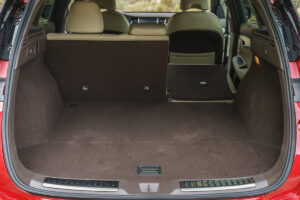
The cargo area is deep and wide with room for three golf bags, Infiniti says.

The cargo area is deep and wide with 31.1 cubic feet of storage that will fit three golf bags. Or fold the seats for about six feet of length and up to 64.4 cubic feet. Extras include usable basement storage, two lights, dual seatback releases and a bag hook.

The QX50 has glints of engineering brilliance in a setting rich in luxury. The next evolution should include a brilliant transmission.

2019 Infiniti QX70 Essential AWD 

  • Body style: midsize, 5-passenger, AWD SUV crossover
  • Engine: 268-hp, turbocharged and direct-and-port injection 2.0-liter 4-cylinder; 280 lb.-ft. torque from 1,600-4,800 rpm
  • Transmission: CVT w/manual shift mode and rev-matching downshifts
  • Fuel economy:  24/30/26 city/hwy/combined; premium fuel
  • 0-60 mph: 6.2 secs

SPECIFICATIONS

  • Fuel tank: 16 gal.
  • Cargo space: 31.4-65.1 cu. ft.
  • Front head/leg room: 40*/39.6 in. *41 in. w/o moonroof
  • Rear head/leg room: 38.4/38.7 in.
  • Length/wheelbase: 184.7/110.2 in.
  • Curb weight: 3,857 lbs.
  • Turning circle: 36.4 ft.

FEATURES

  • Standard equipment includes: smartkey locking and push-button ignition, around-view monitor, power panoramic roof with sunshade, LED headlights, leather-trimmed upholstery, 8-way power adjustable front seats, 2-way power lumbar for driver, electric parking brake, around-view camera, navigation and infotainment apps, 4 USB ports, 19-inch runflat Bridgestone Ecopia tires
  • Safety features include: 8 air bags, forward collision warning, forward emergency braking with pedestrian detection, blind-spot warning, hill-start assist 

    The 2019 Infiniti QX50 is fresh start with striking exterior styling, a more luxurious presentation, Level 2 semi-autonomous driving and a first-of-its-kind engine with variable compression.

  • PRICING
  • Base price: $46,145, including $995 freight charge; price as tested $59,585
  • Options on test vehicle: lighted kick plates $465; premium paint $500; welcome lighting $425; ProASSIST package, $550, includes backup collision Intervention, distance control assist, intelligent cruise control, rear cross traffic alert;

ProASSIST Package, $2,000, adds ProPILOT Assist with steering assist and intelligent cruise control with full-speed range, blind-spot intervention, lane departure warning, lane departure prevention, high-beam control;

Autograph package, $2,000, adds, white, quilted semi-aniline leather upholstery, blue Ultrasuede upper door, upper instrument panel and center console lid accents, seat quilting stitch; blue piping between white leather and blue Ultrasuede;

Sensory package, $7,500, adds 20-inch dark painted wheels with 255/45R20 all-season run-flat tires, climate-control seats; 2-way passenger power lumbar, motion-activated liftgate, rear side window sunshades, advanced climate control system, cube design LED headlamps (LED high-low beam), adaptive front lighting system, open pore maple wood trim, black Ultrasuede upper door, upper instrument panel and center console lid accents, Ultrasuede headliner, metallic cargo-area finishers

  • Where assembled: Aguascalientes, Mexico
  • Warranty: 4-years/60,000-miles bumper to bumper with roadside service and a free loaner car for scheduled service;6-years/70,000-miles powertrain

With a 3,857 pound curb weight, the QX50 feels heavy when leaving the stoptlight until power builds.