Select Page

Hyundai Veloster Turbo R-Spec Review

Hyundai Veloster Turbo R-Spec Review

The redesigned 2019 Hyundai Veloster R-Spec is an eager rascal to grab a rascal by manual gear shift and shake it out on a run

The Hyundai Veloster is sold in five trim levels with starting prices that range from $19,385-$29,035. (Photos courtesy of Hyundai USA)

BY MARK MAYNARD

With so much attention on teacup crossovers and self-driving vehicles, I sometimes forget what fun it is to grab a rascal by the scruff and shake it out on a run.

The redesigned Hyundai Veloster R-Spec is that kind of car — and it is not expensive.

The 2019 Hyundai Veloster is the second generation of this compact-class, front-wheel-drive, four-seat hatchback “coupe.” It is unique in the segment for its lone rear passenger door on the right side; it is supposed to be an incentive over a traditional two-door.

And its cargo potential could be ideal for rapid delivery service. There is almost 20 cubic feet of wide and flat space behind the back seat, which more than doubles by folding the 50/50 seat. But back-seat passenger space is snug — barely 36 inches of headroom and 34.1 inches of legroom.
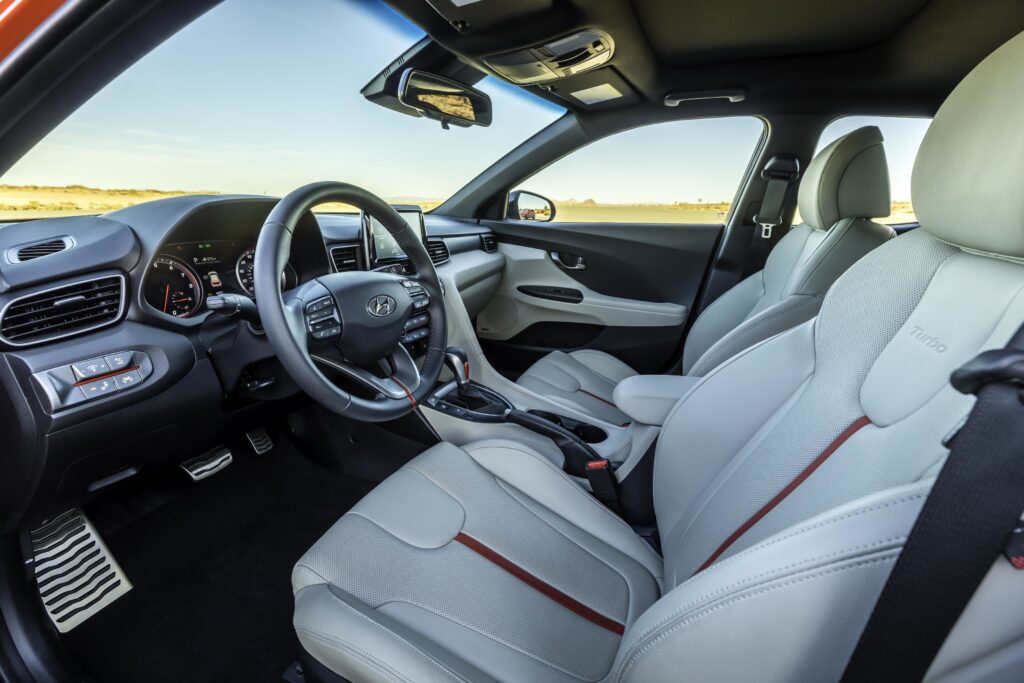
The cabin is well equipped and smartly designed with quality-appearing materials and construction.

Veloster competition, Hyundai says, is the Chevrolet Trax, Fiat 500, Honda Civic coupe, Mini Cooper, Toyota C-HR, and VW Beetle.

While the architecture of the car is new — from Elantra — the 104.3-inch wheelbase is the same, but most cabin measurements are a few tenths larger. The roofline was lowered, so the front headroom is an inch less now without the sunroof. Rear headroom, however, grew by half an inch. Front legroom was trimmed by 1.3 inches, but rear legroom grew by 2.4 inches.

Hyundai Veloster Pricing

There are four trim levels of Veloster, to date, with a choice of turbocharged and non-turbocharged four-cylinder engines. Starting prices range from $19,385 to $29,035 for the Turbo Ultimate with seven-speed dual-clutch automatic transmission.

The spory Hyundai Veloster N

2019 Veloster N: 275 hp, 6-speed manual.

A higher performance 2019 Veloster N will go on sale in November with a 275-hp, turbocharged 2.0-liter four-cylinder and six-speed manual with rev-matching downshifts. Pricing starts at $33,545.

Check current Hyundai Veloster pricing here.

Veloster Powertrains

Base models have a 147-horsepower, 2.0-liter Atkinson-cycle four-cylinder engine with a six-speed manual or six-speed automatic transmissions.

The Turbo models are upgraded to a 201-hp, turbocharged and direct-injection 1.6-liter four-cylinder. It has 195 foot-pounds of torque from 1,500-4,500 rpm with an overboost trick on hard acceleration that pushes peak torque to 202 lb.-ft. This engine is matched with a six-speed manual — sometimes called the “millennials’ anti-theft device” or seven-speed dual-clutch automatic with steering wheel paddle shifters. The Turbo models also have an engine sound generator — but it sounds natural while some are just artificially obnoxious.

Automatic transmissions have Normal, Sport and Smart driving modes and the manual has Sport and Normal.
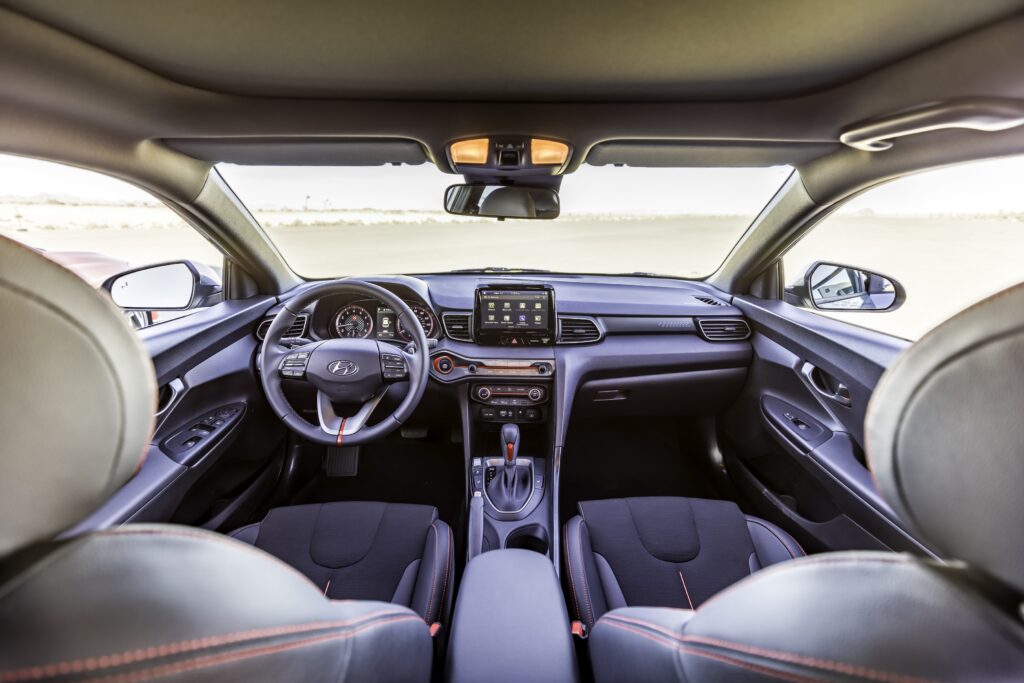
It only looks small and hard to see out of. It’s actually a very workable small car that has open sightlines across the hood and a good rearview camera with guidance lines.

Testing the Veloster R-Spec

Today’s tester is the R-Spec with manual-transmission only, which was $23,785, including the $885 freight charge from Ulsan, Korea.

 It is a sweet package off the showroom floor with a good collection of sport-tuned elements and a stance that lives up to its speedy styling. R-Spec features include a quick-ratio B&M Racing sport shifter, black Turbo fabric upholstery with yellow stitching, metal-trimmed pedals, center-mounted dual exhaust tips, rear spoiler and sport-tuned suspension-steering-exhaust. The 18-inch black alloy wheels with Michelin Pilot Sport 4 summer tires fill the wheel area nicely.

The previous-generation Veloster was OK-fun to drive, but I always wished for another 50 hp. And now the upgraded 1.6-liter and manual are fully engaging. The clutch is light, the shifter precise and gear ratios are such that you don’t have to continually row through the gears to stay in the power band.  There is good range in first to wind it out without rushing to second with plenty more revving range in third and fourth to maintain power in the S-turns. The brake pedal is a bit tall for easy heel-toe shifting, but it’s still a hoot to scoot.

Veloster engine

The Turbo models are upgraded with a 201-hp, 1.6-liter turbocharged and direct-injection four-cylinder.

Veloster R-Spec Fuel Economy

While the R-Spec is a functional small car, it might not be the best long-distance commuter for fuel economy. The engine revs fairly high at 2,500 rpm at 65 mph or 3,000 rpm at 80, but it is not a buzzy engine and the revs do not rock the cabin. Fuel economy ratings are not bad at 26 mpg city, 33 highway, and 29 mpg combined on 87 octane. I was averaging 28.9-34.1 mpg.

Michelin Pilot Sport summer tires make every car better and these were no crybabies when pushed hard in cornering. The Veloster has good balance and sightlines across the hood are wide open. The rear might look like a blind-spot black hole, but the wide rear glass helps views and the rearview camera with guidance lines helps when parking.

Standard driver-assist features include lane-keeping assist and forward collision-avoidance assist; a forward-facing camera watches for an imminent collision and will brake autonomously to avoid impact or at least minimize damage. Blind-spot collision warning with rear cross-traffic collision warning is optional.
Four-wheel-disc brakes are robust for the 2,921-pound Veloster: 12-inch vented front discs, 10.3 solid disc rear.

Four-wheel-disc brakes are robust for the 2,921-pound Veloster: 12-inch vented front discs, 10.3 solid discs rear.

Turbo models also have a quicker steering ratio, which has good driver feedback and requires minimal inputs for course corrections. The 34.8-foot turning circle is handy in all parking situations.

Safety Features

Torque-vectoring control will help keep drivers from their own undoing. It works with the electronic stability control to help hold the line when pushing hard through corners. Wheel-speed sensors mete out braking force to the inside front and redirect power to the outside front wheel in the turn to trim wheelspin for a quicker corner exit.

Other safety features include six air bags, high-beam assist (with the optional LED headlights), and driver attention warning.

Veloster sunroof

Front headroom is tall at 38 inches without the sunroof.

Interior Function

The cabin is well equipped and smartly designed with quality-appearing materials and construction — but bare elbows leave scuff marks on the plastic door panels. The sports seats are supportive and comfortably bolstered with more thigh length than is commonly found in compact cars. The gauge array and center stack of audio-AC-fan-phone controls is a quick read with direct access. The shifter console has plenty of room for the manual parking brake lever, cup holders, and an e-bin for device charging with two USBs (charging and standard), a 12-volt plug, and an audio aux-in.

Headroom for tall drivers might be short at 38.1 inches (36.9 with the sunroof), but legroom is not at 42.6 inches.

The Veloster would seem to be on the endangered-species list as the brand’s lowest seller by far. But it is a distinct disruptor for the discerning young driver — though most of them would sooner buy Hyundai’s new subcompact Kona crossover with four doors and more cargo capacity.

But for those who know how to work a stick, it’s a hands-on kind of car when the world is rushing to hands-off driving.

Hyundai Veloster back seat

Back seat space is snug, but headroom grew by half an inch.

2019 Hyundai Veloster Turbo R-Spec Specifications

Body style: subcompact, front-wheel drive 3-door, 4-seat hatchback

Engine: 201-hp, turbocharged and direct-injection 1.6-liter four-cylinder; 195 lb.-ft. torque from 1,500-4,500 rpm

Transmission: 6-speed manual

Fuel economy:  26/33/29 mpg city/hwy/combined; 87 octane

BY THE NUMBERS

Fuel tank: 13.2 gallons

Cargo space: 19.9-44.5 cu. ft.

Front head/leg room: 38.1*/42.6 inches *36.9 w/sunroof

Rear head/leg room: 35.9/34.1 inches

Length/wheelbase: 166.9/104.3 inches

Curb weight: 2,921 pounds

Turning circle: 34.8 feet

Veloster competitors include the Chevrolet Trax, Fiat 500, Honda Civic coupe, Mini Cooper, Toyota C-HR and VW Beetle.

FEATURES

Standard equipment includes: smartkey entry and push-button ignition, rearview camera with guide lines, 8-speaker Infinity audio system with 8-inch touch screen and Android Auto or Apple CarPlay infotainment, LED headlights, leather-wrapped steering wheel, power mirrors-windows, 4-wheel disc brakes

RSpec features include: quick-ratio shifter, black Turbo fabric upholstery with yellow stitching, metal-trimmed pedals, 18-inch alloy wheels with Michelin Pilot Sport 4 summer tires, dual center-mount exhaust tips, rear spoiler, sport-tuned suspension-steering-exhaust, B&M Racing sport shifter

Safety features include: 6 air bags, lane-keep assist, brake assist, brake-force distribution, hill-start assist, blind-spot monitor

PRICING

Base price: $23,785, including $885 freight charge

Options on test vehicle: None

Where assembled: Ulsan, Korea

Warranty: 5-years/60,000-miles with roadside assistance; 10-years/100,000-miles powertrain

Veloster open cargo area

There is 19.9 cubic feet of cargo space behind the back seat or up to 44.5 with the 50/50 seat folded.

The official 2018 Pebble Beach Tour d’Elegance poster

The official 2018 Pebble Beach Tour d’Elegance poster

The official poster for the 2018 Pebble Beach Tour d’Elegance is an elegant representation of three variants of Citroen’s DS 19 by esteemed Brit artist (and car enthusiast) Barry Rowe.

The original piece will be shown in the Automotive Fine Arts Society exhibit on Sunday, Aug. 26, 2018, on the 18th fairway of Pebble Beach Golf Links.  The AFAS show is sponsored by The Lincoln Motor Co.

This is the 21st consecutive commission given to Rowe by the Pebble Beach organization. And this year’s opportunity, as Barry describes it, “was a most enjoyable endeavor, painting DS 19s with their vibrant colours and curvey shapes. The setting is along the coast, with Bixby Bridge in the background.” (Rowe is an English native and currently resides in England’s Devon County, along the southwestern coast known for its sandy shores.)

The DS nameplate is from the French word for goddess, Dé-esse.

Citroen and its DS were minor footnotes in America’s mid-century automotive scene, but the DS — introduced in the fall of 1955 and produced through spring 1975 — was a technology innovator. At its launch, it was the first production car to use disc brakes and one of its signature technologies was the hydropneumatic suspension with automatic leveling and adjustable ride height.

Its stance was awkward looking with a narrower rear track than the front.

As an “executive’s car,” it had aerodynamic styling, power steering, a semi-automatic transmission, inboard disc brakes and a fiberglass roof, which trimmed weight and lower the center of gravity for better handling.

“I always look forward to being part of the Pebble Beach Concours,” said Rowe. “From the spectacular backdrop to the gorgeous cars, its simply the most marvelous place to be each August. The magic of Pebble Beach is simply undeniable.”

English artist Barry Rowe.

Rowe studied graphic design at the Coventry School of Art and Design. From there, he worked as an art director in the advertising field before pursuing his passion for painting automotive artwork, becoming a freelance artist in 1966.

His career jumpstarted after receiving the Sotheby’s Art Award for his portrait of Argentinian champion Juan Fangio. This led to commissions from Louis Vuitton of Paris, Royal Mail, Royal Doulton and Royal Caribbean Cruise Lines. As well as his many poster commissions, Rowe has captured ten “Awards of Excellence” and the “Lincoln Award” in 2006 at the annual AFAS exhibit during the Pebble Beach Concours.

In addition to his automotive art, Rowe is an avid enthusiast. Growing up near the Jaguar factory, Barry would ride his bicycle to watch Jaguar’s C-Type and later  D-Type racecars under construction.

He also is an avid F1 and vintage racing fan and among the collectible  cars he has owned are a 1931 supercharged Lagonda, a 1929 Riley Nine Tourer and a  Morgan.

Original pieces from Rowe’s long career can be seen in “Atmosphere and Light: The Paintings of Barry Rowe.” More information about Barry Rowe and his artwork can be found at www.barryrowe.com.

About the Automotive Fine Arts Society

AFAS was first established in 1983 by a group of artists who are acknowledged by critics to be among the best in their field. Members work in many diverse mediums including oil, watercolors, acrylics, wood, gouache, pen & ink, clay and metal. AFAS and its members participate in select shows across the country including the Pebble Beach Concours d’Elegance, Dana Point Concours d’Elegance and the Amelia Island Concours d’Elegance. Additional information about AFAS is available at www.autoartgallery.com.

2019 Maserati Levante S GranSport: Precision-tooled ingot of wealth

2019 Maserati Levante S GranSport: Precision-tooled ingot of wealth


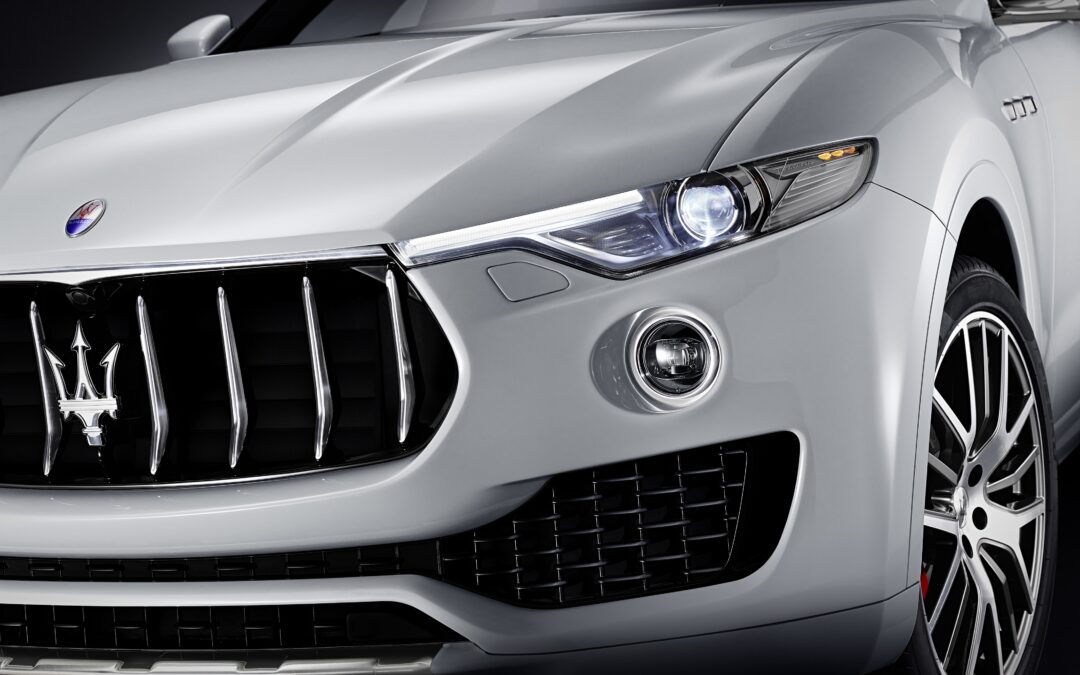
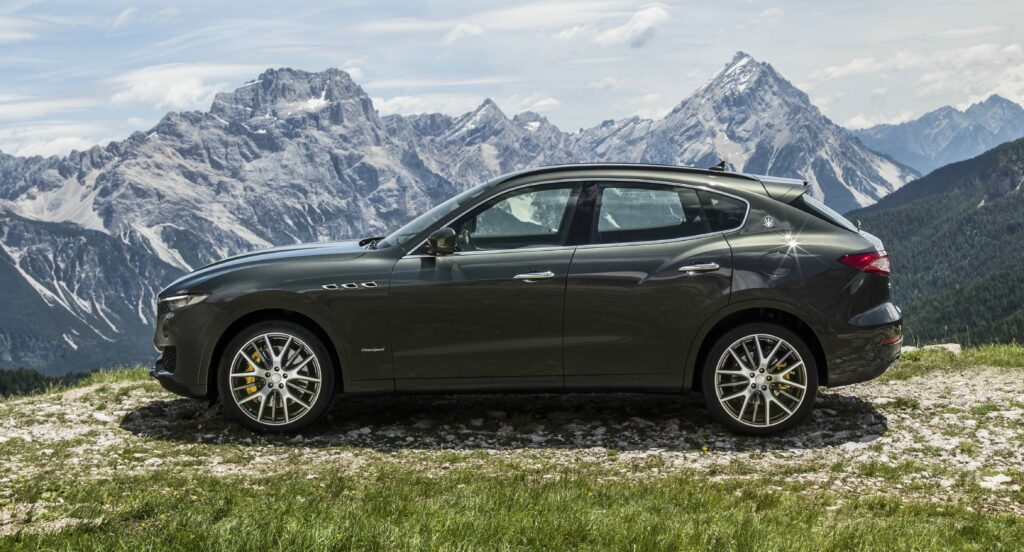
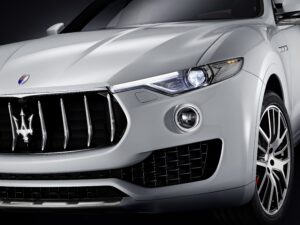
You’ll know this ingot of wealth when you see its sleek body, all muscular and bulging with anticipation — and the Trident logo.

There is nothing subtle about the sound of a Maserati Levante V-6 on startup. It is an ideal way to start the day — and startle the unexpecting.

The Levante is a precision tool in the working class of superluxury SUVs. Most of the competing brands in this $100,000-plus segment of so-called utility vehicles — Bentley Bentayga, Porsche Cayenne Turbo, Range Rover Sport SVR — begin with a family-oriented SUV that is turned into a leather-lined, overperforming SUV. The Levante, however, is more of a sports sedan that sort of looks like an SUV but has a little more cargo capacity than the midsize Ghibli sedan from which it begins life.

If you are shopping a superluxury SUV, the Levante has exclusive credentials as an ingot of wealth. Ferrari is the engineering division for Maserati’s family class of functional fast movers — with a smattering of parts-bin content from parent company Fiat Chrysler. (You know it when you see it, but it does not detract from performance or design.)

It is built the old-fashioned way, on an assembly line of skilled technicians at each station to guide the assembly in a handcrafted way.

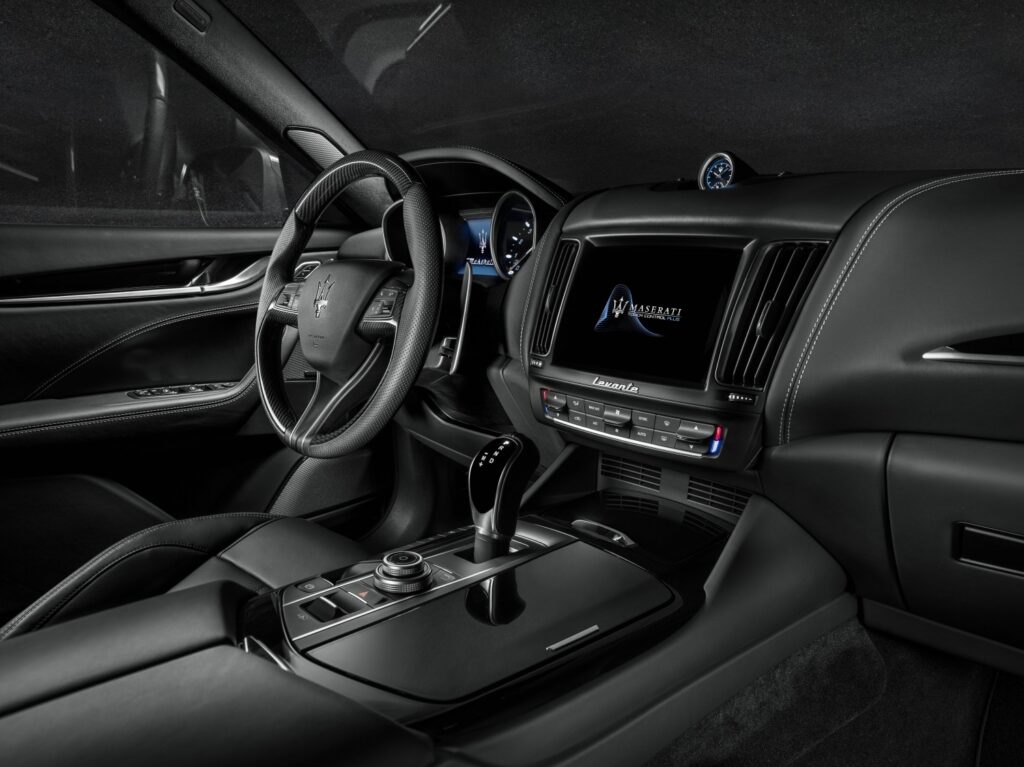
The driver area, with 40 inches of headroom without the wide panoramic roof, has complete function, free of flashy gimmicks or over-exaggerated sport seats.

The front part of the chassis is an aluminum casting with a reinforcing cross strut for rigidity. The rear section is rolled steel and the doors, hood and the cargo area aluminum, plus a magnesium dashboard brace.

The five-seat Levante was engineered for off-road function using Maserati’s Q4 Intelligent all-wheel-drive system and air suspension with Skyhook shock absorbers. But the electronic ride is more about competent handling, with the occasional dirtying of tires on the way to a glade. The system can route power 50/50 front to rear wherever it is needed, whether off road, on road or on track. The air suspension allows an adjustable ride height from 3 to 3.5 inches, for passenger entry to off-road clearance.

I doubt many owners will hook up the tent trailer for a family adventure, but the Levante can tow up to 5,952 pounds. In my test week, I stopped at a garden nursery and freaked when the large pot I bought left some dirt and debris on the back-seat floor. It just looked wrong in the carpeted terrain more suitable to Ferragamo loafers.

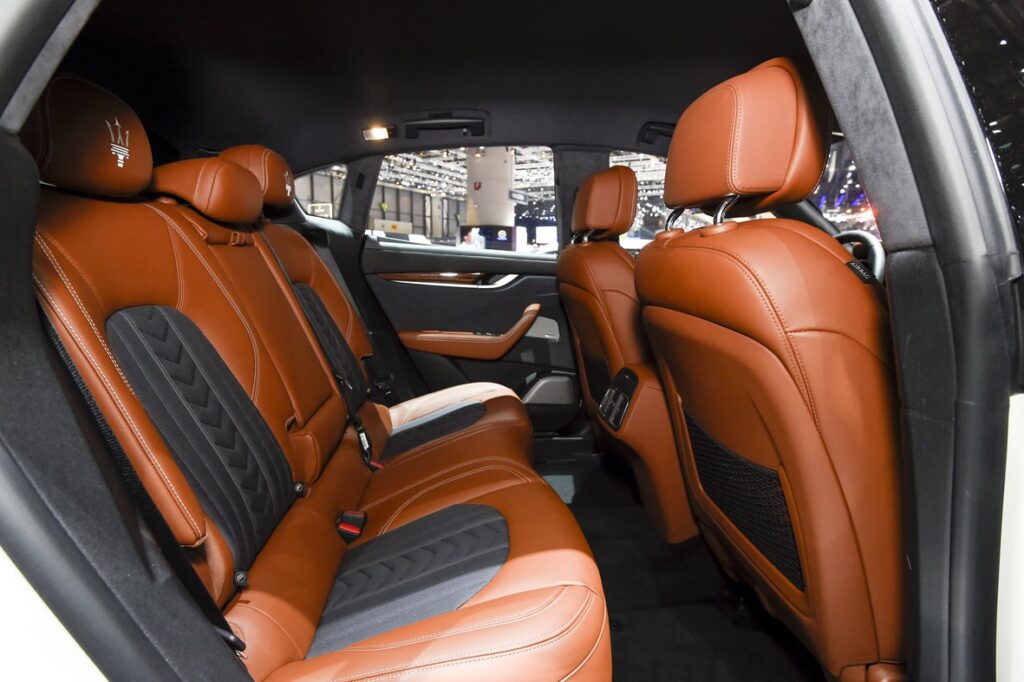
The back seat is more comfortable than in any midsize sedan.

The lean exterior styling has a sleek 0.31 coefficient of drag — for an SUV shape. Its low center of gravity and balanced 50/50 weight distribution make it handle as a prancing horse. The ride quality even in Sport mode was composed and jiggle free on California’s concrete highways. Sport mode adjusts everything from accelerator response to shift points and suspension.

Six-piston Brembo brakes will get you out of trouble faster than you can get into it. Aluminum monobloc calipers grip 15-inch drilled rotors at the front and 13-inch platters rear.

There are four Levante models, with two choices of 3.0-liter twin-turbocharged V-6 engines and two with the Ferrari-assembled 3.8-liter twin-turbocharged V8. All with eight-speed automatic transmissions and pronghorn-like steering-column paddle shifters.

And Maserati just announced the 550-hp V8 Levante GTS, capable of 0-60 mph in 4 seconds and a top speed of 181 mph. Starting at $120,000, it slots just below the top-of-the-line 590-hp Levante Trofeo, starting at about $170,000.

The entry Levante and Levante S are V-6 powered, with starting prices of $76,840 and $88,230, including the $1,250 freight charge from Turin, Italy. And then add $5,560 for either the GranLusso or GranSport trim treatments. The Levante S GranSport tester was $104,800 with nine options or packages. And more “bespoke” treatments are offered.

The base engine has 345 horsepower and 360 foot-pounds of torque from 4,000-5,000 rpm, making it capable, Maserati says, of 0-60 mph in 6 seconds. Its fuel economy is just one tick better than the upgrade 3.0-liter at 14 mpg city, 20 highway and 16 mpg combined, on premium fuel.

The engines are assembled by Ferrari in Maranello, Italy, and the 3.0-liter V-6 engine shares most of its core components with the V-8 found in the Quattroporte GTS – same bore dimensions, variable valve technology and very similar turbocharging, manifold and engine block technology.

Levante was named for a wind in the western Mediterranean.

The 424-hp Levante S has 428 lb.-ft. torque at 5,000 rpm — making it a second quicker to 60. And those potent engine and exhaust tones are real, not sound generated.

The S model has fuel economy ratings of 14/29/16 mpg, but I was averaging a surprising 22.9 mpg. Despite not using the I.C.E. mode (Increased Control and Efficiency), I attribute my exemplary mileage to learning how to play the exhaust notes like a pipe organ, though I hot-rodded the Levante only when safe to do so and have no idea how I ended up with better-than-EPA numbers. I won’t let it happen again. But I never wished for more power.

Available safety technologies include adaptive cruise control with stop and go, forward collision warning plus, advanced brake assist system and lane departure warning system.

Also new is an advanced driver-assist package of highway (steering) assist, lane keeping assist, active blind spot assist and traffic sign recognition.

 The Levante might be the best morphing of an SUV into a midsize sports sedan, yet. The design and layout have confidence without trial and error. The driver area, with 40 inches of headroom without the wide panoramic roof, has complete function, free of flashy gimmicks or over-exaggerated sport seats. There are useful cup holders, charging ports, storage areas and even a cooled box in the armrest console. Sightlines are good over the hood and not as bad as might appear at the rear three-quarter angle.

The back seat is more comfortable than in any midsize sedan. And the cargo capacity looks to have plenty of capacity for two or three hefty golf bags.

My only gripe-observations were the doors that clattered on closing and the shifter is notchy to select a gear.

This is the second year of production for the Levante and examples are still seldom seen, even in ZIP codes where superlux cars reside. There is exclusivity in ownership, when big Range Rovers, Cayenne Turbos and Teslas are now mundane sightings.

2019 Maserati Levante S GranSport

  • Body style: midsize, 5-passenger AWD SUV with adaptive air suspension
  • Engine: 424-hp, turbocharged and direct-injection 3.0-liter V-6; 428 lb.-ft. torque at 5,000 rpm
  • Transmission: 8-spd automatic
  • Fuel economy:  14/19/16 mpg city/hwy/combined; premium fuel
  • 0-62 mph: 5 seconds; top speed 164 mph
  • Drag coefficient: 0.31
  • Tow capacity: 5,952 lbs.

SPECIFICATIONS

  • Fuel tank: 21.1 gal.
  • Cargo space:  19.4-57.4 cu. ft.
  • Front head/leg room: 40.2/NA in.
  • Rear head/leg room: 39.1/NA in.
  • Length/wheelbase: 197/118.3 in.
  • Curb weight: 4,650 lbs.
  • Turning circle: NA ft.

FEATURES

  • Standard equipment includes: smartkey entry and push-button ignition, 8.4-inch touch screen display, surround-view camera, bi-xenon and LED headlights, piano black trim, 8-speaker audio system, 12-way power (heated and ventilated) front seats, 60/40 folding back seat, park-assist alerts,
  • Safety features include: 6 air bags, torque vector control, stability and traction controls, hill descent control, brake assist, engine brake torque control (to prevent wheel lock in downshifts), trailer sway control, rollover mitigation, hill-start assist

PRICING

  • Base price: $91,980; price as tested $104,800, including $1,250 freight charge
  • Options on test vehicle: Driver assistance package $3,000; high gloss carbon trim $2,850; full natural and perforated leather $2,500; tailgate kick sensor $100; Bowers & Wilkins audio system $1,300; ventilated front seats $900; lighted steel door sill plate $200; 20-inch gray wheels $300; Pirelli Pzero summer tires $420
  • Where assembled: Turin, Italy
  • Warranty: 4-years/50,000-miles bumper to bumper with roadside assistance

The Levante borrows a rib from the Maserati’s midsize Ghibli (pronounced GIB-lee) sedan and adds some headroom and a modicum of cargo capacity.

Toyo debuts new high-performance flagship Proxes Sport

Toyo debuts new high-performance flagship Proxes Sport

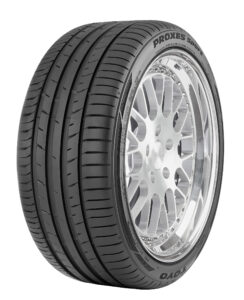
The Proxes Sport has an impressive 25,000-mile warranty and is backed by the Toyo Tires 500 Mile Trial Offer.

Toyo Tires USA has just updated its Proxes line of high-performance tires with the new Proxes Sport max performance summer tire. It replaces the Proxes 1 and Proxes T1 Sport.

The new tire has a Y speed rating making it good for 186 mph. And it will be an ideal upgrade for sporty and high-performance big guns, such as the Audi R8, BMW M5, Ford Mustang GT, Lexus LC500h and Porsche 911.

The Proxes Sport has a Y speed rating making it good for 186 mph.

While this tire is not the intended target for SUVs, there are a handful of sizes and load ranges that happen to fit some CUVs and small SUVs.

The Proxes Sport has a new secret sauce in the rubber Toyo calls Nano Balance Technology. The rubber “has more precisely arranged molecules in the tread compound of the tire,” the tiremaker said in a release. “It’s all about improved contact, improved grip, and improved handling.”

The tire is available in nearly 70 sizes, fitting 17- to 20-inch wheels — And Toyo has Proxes Sport widths up to a monstrous 305/25ZR for 20-inch wheels.

The tires will be in stores soon. The average minimum advertised price is $190 per tire and these should be bought in a set of four.

The Proxes Sport has a 25,000-mile warranty and is backed by the Toyo Tires 500 Mile Trial Offer. Buy a set of four and in the trial period of 45 days or 500 miles if you don’t like them, just return them to the original dealer with the original sales receipt and the reason you’re not satisfied. The dealer will replace the tires or refund the purchase price, including charges for mounting and balancing.

Info: Toyotires.com/tire/pattern/proxes-sport.

2018 Ford EcoSport SES 4WD: Global traveler

2018 Ford EcoSport SES 4WD: Global traveler

The EcoSport — pronounced “Echo-sport” — is a tough little city car — load it up, beat it up, fill it up and do it again.

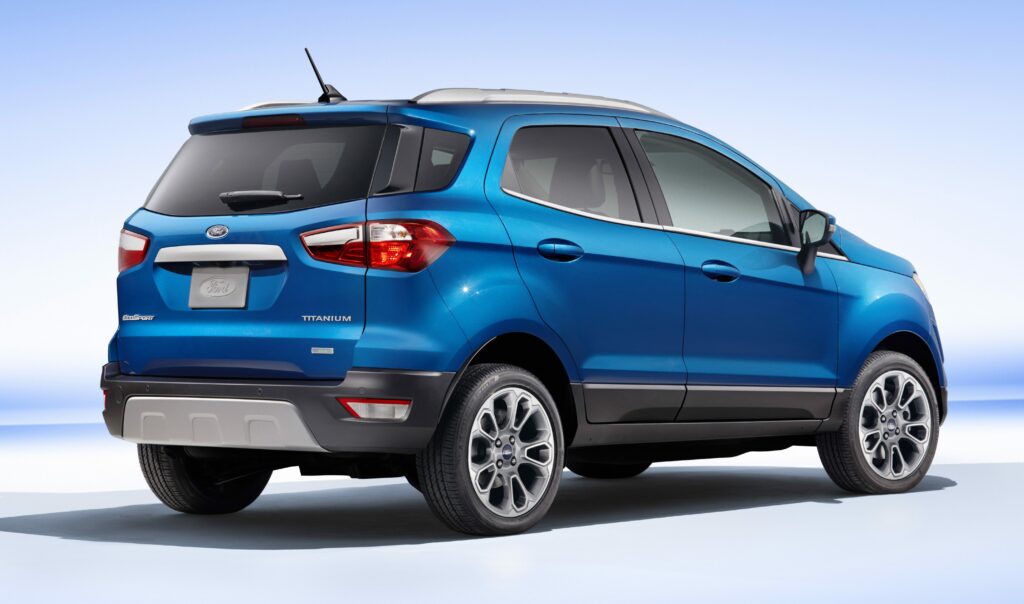
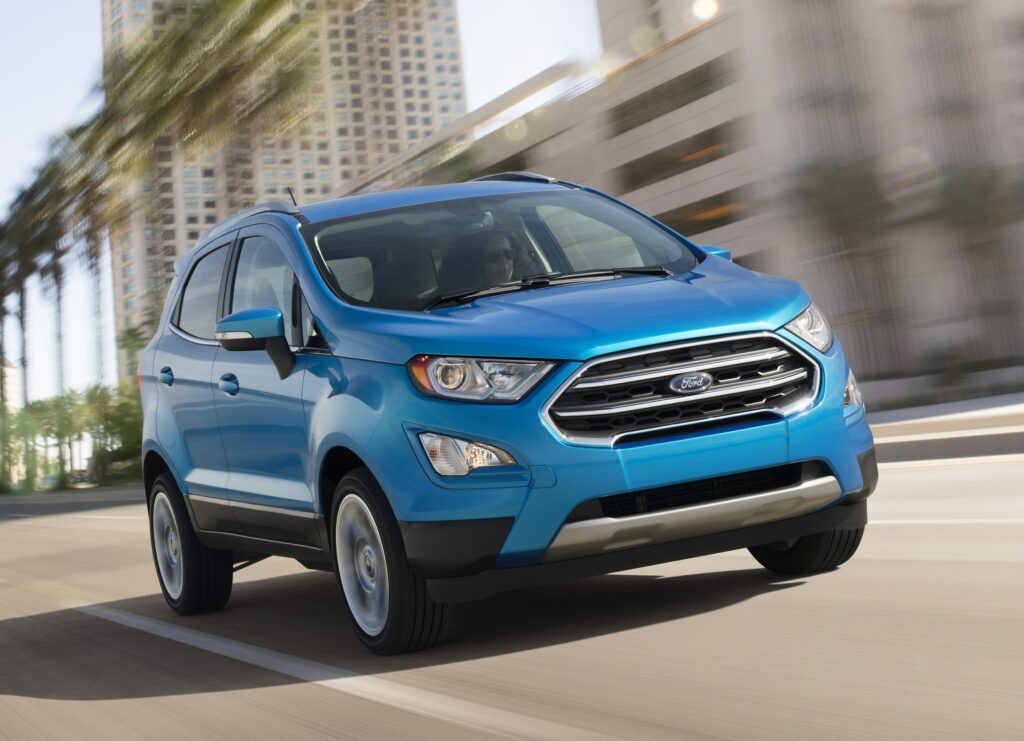
Ford’s smallest SUV crossover is a global traveler sourced from Brazil and built in India for a North American market eager for these subcompact sit-high, priced-lower vehicles.

The 2018 EcoSport — pronounced “Echo-sport” — is among the many foreign-born small crossovers being brought into the U.S. Each has its charms, its own demographic target and its exceptions. Competitors include the Nissan Kicks, Chevrolet Trax, Hyundai Kona, Jeep Renegade, Fiat 500L, Mazda CX-3, Toyota C-HR, Honda HR-V.

Ford’s teacup-class EcoSport is the shortest in this lot with a wheelbase of 99.2 inches and a total length of 161.3 inches. It is almost 17 inches shorter than Ford’s compact Escape crossover and it is about 7 inches shorter than the Nissan Kicks.

The upright cabin architecture maximizes interior space, but driver sightlines are complicated at the windshield pillars for cornering views and over the shoulder at the rear corners.

But the EcoSport is available with Ford’s Intelligent 4WD (an automatic, on-demand system) and two engine choices. Its stubby, baby-boot styling is an upright environment with a tall 39.6 inches of front headroom and substantial cargo capacity of almost 21 cubic feet to 50 cu. ft. with the 60/40 back seat folded.
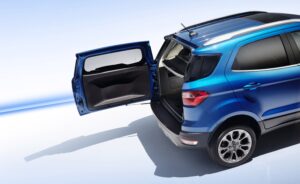
And because it is a global vehicle, the EcoSport has a few things not typically seen in the competitors. Among them, a 12-volt plug notched into the right-side base of the rear passenger seat, a very tall back seat and a left-side-hinged tailgate.

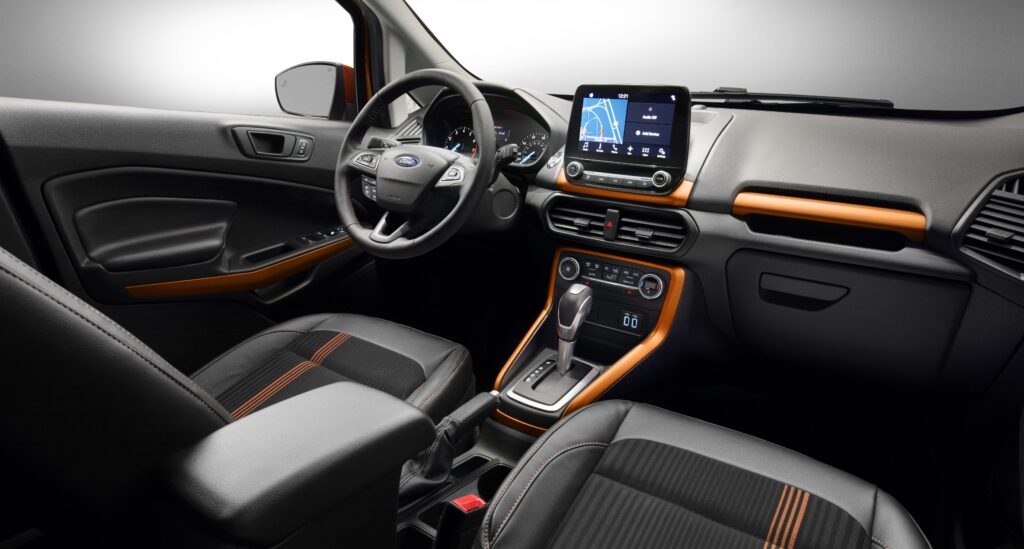
Cabin controls are clearly arranged and easy to access.

The EcoSport is sold in S, SE, Titanium and SES trim levels in front or AWD with a six-speed automatic transmission. Starting prices range from $20,900-$27,875, including the $995 freight charge from Chennai, India. Today’s tester is the top-line SES 4WD with no options.

The front-drive SE will be the value package (1.0-liter engine, moonroof, 16-inch wheels, fabric upholstery) with the $1,295 convenience package of useful urban upgrades (currently discounted by $500), which include a 110-volt AC power outlet, 10-color ambient lighting, blind spot information system with cross-traffic alert, seven-speaker audio system with 8-inch touch screen and voice-activated navigation. As equipped, the total of $25,290 was further trimmed by a lease incentive of $3,550 to a reasonable $21,740.

A variety of cash incentives also has been available for all trim levels. Among them: $2,000 cash back; 0 percent financing for 60 months with $1,000 bonus cash; $750 college student; $500 first responders and military appreciation.

The basic front-drive EcoSport is paired with a turbocharged, 1.0-liter three-cylinder engine with 135 foot-pounds of torque at 3,500 rpm. It has fuel economy ratings of 27 mpg city, 29 hwy, 28 mpg combined on 87 octane.

Four-wheel-drive models are upgraded with a 166-hp, direct-injection 2.0-liter four-cylinder with 149 lb.-ft. torque at 4,500 rpm. Its mileage ratings are 23/29/25 mpg, but the best I achieved in city driving was 18 mpg.

The interior seems well reworked for North American function, such as a pair of charging USBs and a 12-volt plug in the small charging area on the shifter console.

I’ve tested the three-cylinder engine also used in the Ford Fiesta and it works well enough for the price point as basic transportation. It’s hard to say how well the engine hefts the heavier EcoSport.

It’s a stout little SUV at 3,300 pounds, but despite its blunt shape, short wheelbase and tall center of gravity, the ride quality is tough but not harsh. Its four-wheel disc brakes are a hardware upgrade (11.8-inch vented rotors front, 10.7-inch solid discs rear) from some competitor that use rear drums and front discs.

The non-turbocharged 2.0-liter is quick off the line with no hesitation to grab a gear when needed. The six-speed automatic gives a quick response, but at highway speeds there is more engine noise than giddy-up on hard acceleration.

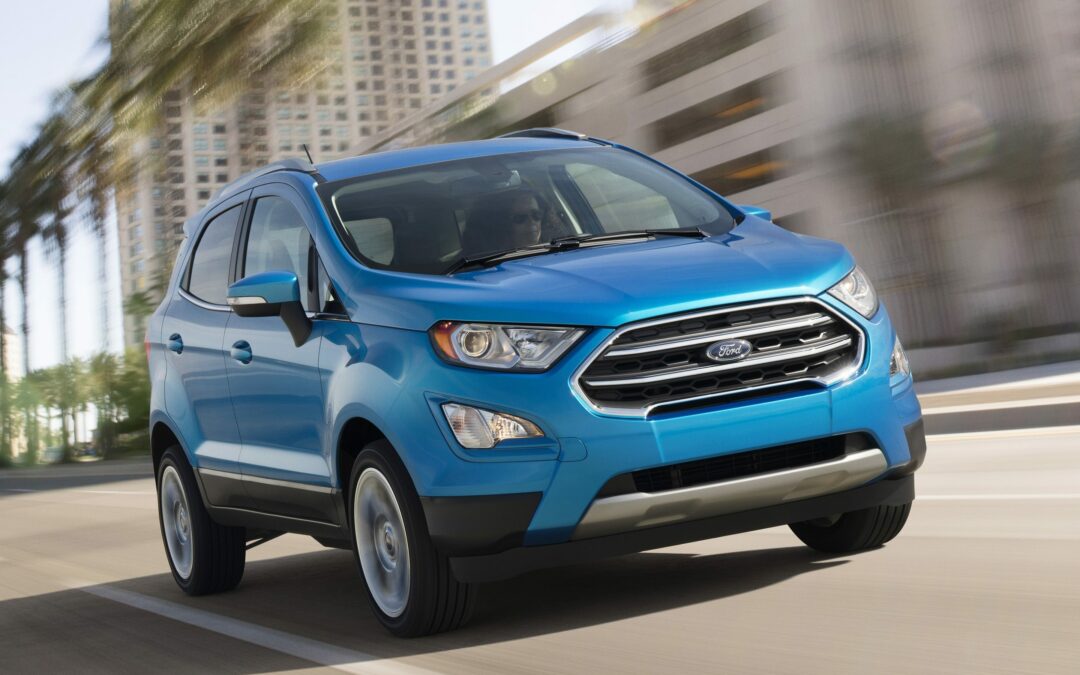
Ford EcoSport packs all of its features and style into a vehicle that is nearly a foot-and-a-half shorter than Ford Escape.

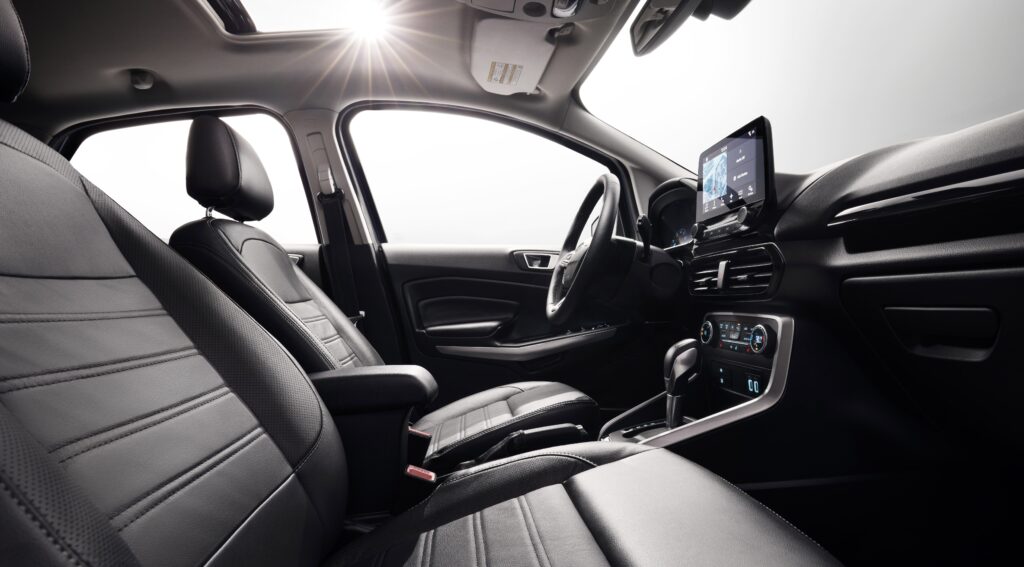
The upright cabin architecture maximizes interior space, but driver sightlines are complicated for cornering views at the windshield pillars and over the shoulder at the rear corners. But there is smart use of space carved out for storage nooks, cubbies and bottle and cup holders. Large visors slide and the SES has lighted and covered mirrors. The SES also breaks up the black plastic with copper trim elements and seat stitching.

The rear swing gate, however, seems less space efficient than a liftgate. There is no spare tire, just an inflator system.

The little center armrest has a padded top and a deep storage box, but the whole assembly feels flimsy.

 The interior seems well reworked for North American function, such as a pair of charging USBs and a 12-volt plug in the small charging area on the shifter console. The Sync3 infotainment system also allows a Wi-Fi hot spot to keep passengers’ devices connected, too.

The back seat is subcompact with not much legroom if there is a tall driver. But the tall seat height allows good footroom. The best role for the slim center position (with a head restraint that can be lowered) is as the fold-down armrest with cup holders. There are no grab handles, but it does have the largest coat- or dry-cleaning hooks I’ve seen in a car.

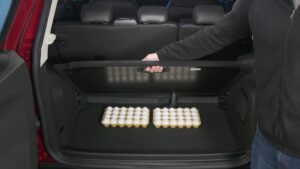
The 60/40 split back seats flip and fold and with the two-level adjustable cargo floor form a flat load space.

The 60/40 folding back seat flips and folds to integrate a two-level adjustable cargo floor, which forms a flat load space. The rear swing gate, however, seems less space efficient than a liftgate.  There is no spare tire, just an inflator system.

The swing gate’s plastic handle feels flimsy and might not fare well over time after being baked or frozen in climates. There also is a lot of lightweight plastic lines and connectors under the hood, which might not be durable in wintry climates.

There will be compromises when an automaker shops among its lineup of global vehicles and pulls one from South America to be a savior in North America. It is a smart business plan to source an established vehicle and its engine choices, but such a small transplant can be challenged on the diverse American roadways with equally diverse drivers.

But four-wheel drive gives the EcoSport an edge: load it up, beat it up, fill it up and do it again.

2018 Ford EcoSport SES 4WD

  • Body style: subcompact, 5-passenger SUV crossover in front- or AWD
  • Engine: 166-hp, direct-injection 2.0-liter 4-cylinder; 149 lb.-ft. torque at 4,500 rpm
  • Transmission: 6-spd automatic
  • Fuel economy: 23/29/25 mpg city/hwy/combined; 87 octane

SPECIFICATIONS

  • Fuel tank: 13.6 gal.
  • Cargo space: 20.9-50 cu. ft.
  • Front head/leg room: 39.6/41.1 in.
  • Rear head/leg room: 37.5/36.7 in.
  • Length/wheelbase: 161.3/99.2 in.
  • Curb weight: 3,300 lbs.
  • Turning circle: 35.1 ft.

FEATURES

  • Standard SES equipment includes: smartkey entry with push-button ignition, moonroof, leather-and-fabric upholstery, acoustic-laminated windshield, active grille shutters, fog lights, halogen headlights, 17-inch alloy wheels, 2 12-volt plugs, power windows and side mirrors, 7-speaker audio system with Sync3 infotainment and 8-inch touch screen with voice-activated navigation, rearview camera, 4-wheel disc brakes (11.8-inch vented rotors front, 10.7-inch solid discs rear)
  • Safety features include: 8 air bags, roll stability control, blind-spot information with cross-traffic alert (SES)

PRICING

  • Base price: $27,875, including $995 freight charge
  • Options on test vehicle: none
  • Where assembled: Chennai, India

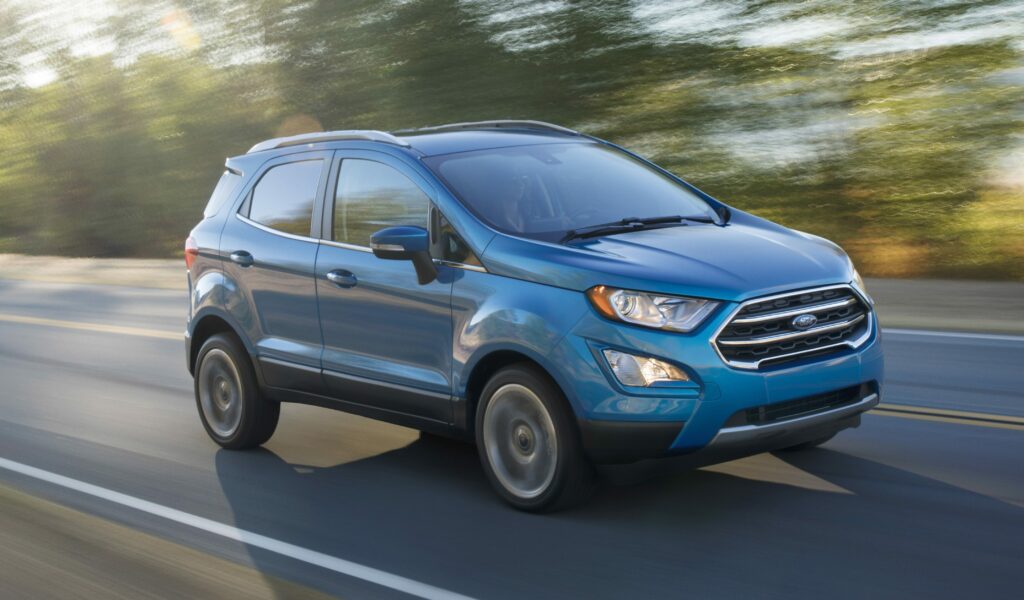
    Ford’s new EcoSport is a Brazil market transplant that is made in Chennai, India, for North America.

2019 Subaru Ascent Review

2019 Subaru Ascent Review

The Subaru Ascent was made for American-sized gear, child seats, and strollers — with 19 cup holders, up to eight USB ports, and huge cargo space

An exterior view of the Ascent on an Oregon beach.

The Subaru Ascent is sold in four all-wheel-drive trim levels — with a no-cost choice for seven or eight seats. (Photos courtesy of Subaru)

BY MARK MAYNARD

Subaru is at the foothills of SUV mountain with its 2019 Ascent, the brand’s largest, three-row SUV. But this enlightened and accommodating newcomer will quickly gain ground among the many choices of large-midsize SUV crossovers.

More carlike than truck-based, this stalwart segment of non-luxury crossovers has at least 11 competing vehicles. Among them, the Chevrolet Traverse, Dodge Durango, Ford Explorer, Honda Pilot, Hyundai Santa Fe, Mazda CX-9, Mitsubishi Outlander, Nissan Pathfinder Toyota Highlander, and VW Atlas.

Subaru Ascent Overview

But Subaru is no stranger to this climb. It made a run at the mountain from 2005-2014 with its seven-seat B9 Tribeca, a well-done but oddly styled vehicle. And it has five-seat champions in its two-row Forester SUV and beefed-up Outlander and Crosstrek wagons. But Subaru saw that it was losing buyers in their child-bearing years. A larger vehicle, such as Ascent, is what customers told Subaru they wanted; something to be used without fear of getting dirty.

This time around, Subaru made sure Ascent had strong styling and that it was made for American-sized gear, child seats, and strollers — with 19 cup holders and up to eight USB ports.

Subaru Ascent driver area

All models also have Subaru’s EyeSight driver-assist technologies.

Subaru Ascent Pricing

Ascent is sold in four all-wheel-drive trim levels — base, Premium, Limited and Touring — with a no-cost choice for seven or eight seats. Starting prices range from $32,970-$45,670, including the $975 freight charge from Lafayette, Ind.

Ascent standard features include a 6.5-inch multimedia infotainment system with Android Auto and Apple CarPlay, four USB ports, three-zone automatic climate control, power windows-mirrors-locks. Auto Vehicle Hold engages the brakes when stopped stop so the driver does not have to keep a foot on the pedal.

The front passenger-seat view of the Ascent

Standard features include a 6.5-inch multimedia infotainment system with Android Auto and Apple CarPlay.

Today’s tester is an eight-passenger Subaru Ascent Limited. The as-tested price was $42,920 with one option group ($2,950) for the Harman Kardon audio system, navigation, panoramic power moonroof and cargo cover.

The Limited’s equipment list includes SmartKey entry and push-button ignition, leather-trimmed upholstery, LED steering-responsive headlights with automatic high-beam assist (dimming) and LED fog lights, second-row retractable sunshades, 20-inch aluminum wheels, driver’s seat adjustable thigh support, power liftgate gate with height memory and two more USB ports for a total of six.

Front seats of the Ascent

The Ascent has open sightlines across the hood and over the shoulder.

The loaded, seven-seat Touring model ($45,670) gets such upgrades as (more luxurious) Java Brown leather upholstery and a leather-wrapped and heated steering wheel, woodgrain-pattern matte finish accent trim, three-mode ventilated and heated front seats, a 120-volt power outlet, and eight USB charging ports. It also gets an 8.0-inch multimedia navigation system, 14-speaker Harman Kardon Quantum Logic surround sound audio system, and panoramic power moonroof. Its Smart Rear-View Mirror helps rear visibility through a camera image and there is a very useful 180-degree front-view camera.

Find current Subaru pricing and incentives here.

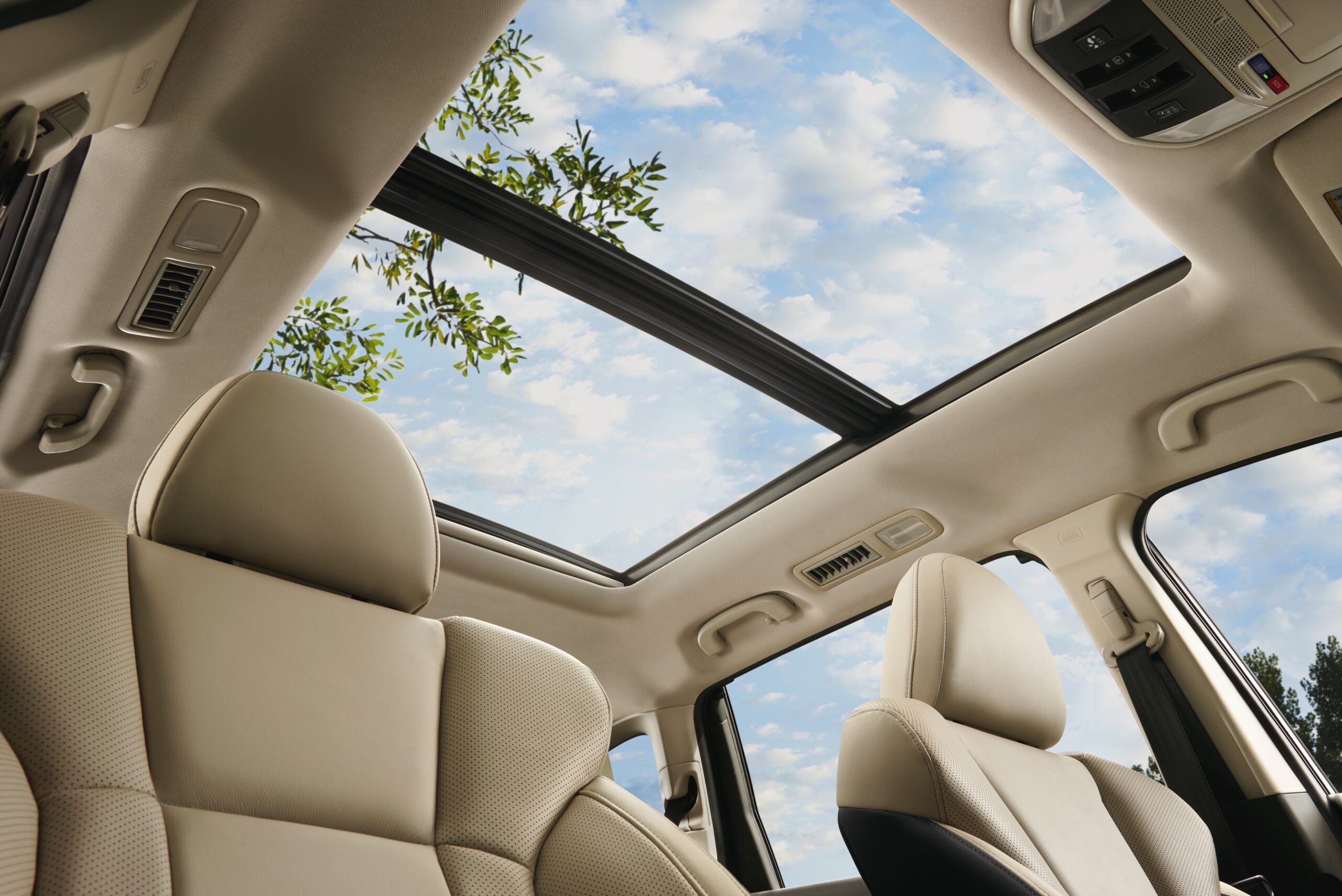
The large sunroof in the new new SUV

Front headroom is tall at 40.1 inches or 41.3 without the panoramic sunroof.

Subaru Ascent Safety Features

All Ascent models also have Subaru’s EyeSight driver-assist technologies of automatic pre-collision braking, adaptive cruise control, lane departure and sway warnings.

Optional technologies include blind-spot detection with lane change assist, rear cross-traffic alert, and reverse automatic braking.

Other Ascent safety features include seven air bags, trailer stability assist, active torque vectoring, and automatic vehicle hold

The turbocharged four-cylinder engine in the Ascent

The Subaru Ascent has a new 260-hp,  twin-scroll turbocharged 2.4-liter “boxer” flat four-cylinder engine.

Subaru Ascent Performance

All Ascent models get the new 260-horsepower, direct-injection and twin-scroll turbocharged 2.4-liter “boxer” flat four-cylinder engine with a continuously variable automatic transmission. The CVT, which integrates X-Mode off-road traction control and hill-descent control, allows little of the typical CVT motorboating (engine-revving) effect. There is no Sport mode, but the eight-speed manual mode with steering wheel shifters will help hold shift points when needed.

The Ascent will tow up to 5,000 pounds and includes an electronic trailer stability assist system. Subaru’s “Symmetrical” AWD system is not an on-demand system but powers all four wheels and continually shifts traction to those with more grip to keep the vehicle on course.

Though the Subaru Ascent is on the upper end of the curb-weight scale at almost 4,500 pounds, the new engine has as much power and fuel economy as its V-6-powered competitors. With 277 foot-pounds of torque at a low 2,000-4,000 rpm, the

Ascent will accelerate briskly and will hold that power into the freeway-cruising zone. Braking is almost overengineered with four-wheel ventilated disc brakes with large 13.1-inch rotors front and 13 inches rear.

Fuel economy ratings are 20 mpg city, 26 highway and 22 mpg combined on 87 octane. The 19.3-gallon tank allows a wide range of adventuring.

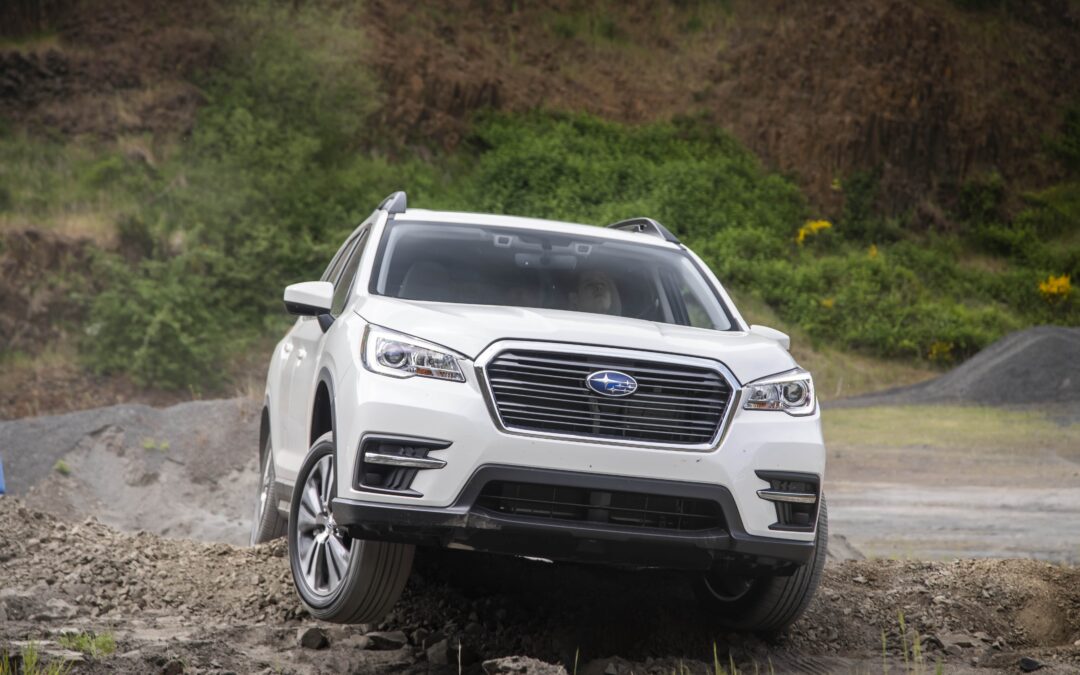
Making an uphill climb in the SUV.

Subaru’s symmetrical AWD system powers all four wheels and continually shifts traction to those with more grip to keep the vehicle on course.

Ascent Ride and Handling

Whether for young families or established households, the Subaru Ascent is a refined helpmate that drives small and gives big returns. Built of much high-strength steel, the solid chassis helps ensure a compliant suspension and a cabin that is luxury-class quiet over most road surfaces and at all speeds.

There is little head toss of passengers when making sharp turns or stepping over speed bumps. The turning circle seems tighter than its reasonable 38 feet.

Ascent Interior Function

There is complete function to the Ascent’s contemporary interior design with open sightlines across the hood and over the shoulder. Front headroom is minivan tall at 40.1 inches or 41.3 without the panoramic sunroof.

The shifter console has a charging area with two 2.1-amp charging USBs and an audio port.

The cabin has a low step-in height with thoughtful details in the sliding visors, the conversation mirror, bold (readable) graphics and plenty of large and small storage areas. The Limited’s front seats — upholstered in attractive, perforated leather — are gently bolstered and have thigh extenders.

The second row in the Ascent

The second row has generous width for three-across child seats.

Ascent Back Seats

The Ascent’s second row has generous width for three-across child seats, a flat floor, and long legroom of 38.6 inches. The seats recline and have fore-aft adjustment to allow more third-row legroom or cargo capacity. And there is a simple two-step tip-slide-fold feature to the seats.

Amenities include two 2.1-amp USB ports, a fold-down armrest with cup holders, door panel storage for at least two bottles and overhead air vents, which are so kid-friendly when motion sickness is a concern.

The third row is not overly cramped and the seats, which recline, are some of the most supportive I’ve tested in any three-row SUV. Extras include cup- and juice-box holders and a 2.1 USB port.

Third row seats in the Subaru Ascent

The third row is not overly cramped and the seats, which recline, are some of the most supportive I’ve tested in any three-row SUV

Ascent Cargo Capacity

The cargo space is huge, wide and flat, spanning 17.6 cubic feet behind the third row to 47 cu. ft. with the second row folded. But even with the third-row in place, there is usable space for grocery-getting. There also is some basement storage with room to stash the roller cover.

The open cargo area

The cargo space is huge, wide and flat, spanning 17.6 cubic feet behind the third row to 47 cu. ft. with the second row folded.

There really is no such thing as being late to the hill-climbing party when you bring a vehicle as well presented as the Ascent. It won’t be long before the competition is looking at taillights from this new welcome wagon to the Subaru family.

2019 Subaru Ascent Limited

Body style: large, 7- or 8-seat AWD SUV

Engine: 260-hp, direct-injection and twin-scroll turbocharged 2.4-liter 4-cylinder; 277 lb.-ft. torque from 2,000-4,800 rpm

Transmission: CVT with hill descent control, selectable 8-speed manual shift mode and steering wheel paddle shifters

Fuel economy: 20/26/22 mpg city/hwy/combined; 87 octane

Tow capacity: 5,000 lbs.

BY THE NUMBERS

Fuel tank: 19.3 gallons

Cargo space: 17.6-47 cu. ft. *86 cu.ft. both rows folded

Front head/leg room: 40.1*/42.2 in. *41.3 inches without moonroof

2nd-row head/leg room: 40/38.6 in.

3rd-row head/leg room: 36.3/31.7 in.

Length/wheelbase: 196.8/113.8 in.

Width/height: 86.2*/71.6* inches *w/turn-signal mirrors and roof rails

Curb weight: 4,499 lbs.

Turning circle: 38 ft.

FEATURES

Standard equipment includes: smartkey entry and push-button ignition, leather-trimmed upholstery, LED steering-responsive headlights with automatic high beam assist (dimming), LED fog lights, second-row retractable sunshades, 20-inch aluminum wheels, driver’s seat adjustable thigh support, power liftgate gate with height memory, 6 USB ports

Safety features include: 7 air bags, trailer stability assist, stability and traction controls, brake assist and brake override, active torque vectoring and auto vehicle hold

PRICING

Base price: $39,970, including $975 freight charge; price as tested $42,920

Options on test vehicle: Harman Kardon, navigation, panoramic power moonroof, cargo $2,950

Where assembled: Lafayette, Ind.

Warranty: 3-years/36,000-miles bumper to bumper

A rear view of the Subaru SUV on an Oregon Beach

Subaru Ascent starting prices range from $32,970-$45,670, including the $975 freight charge from Lafayette, Ind.