Select Page

VW Says Auf Wiedersehen To the Golf in U.S.

VW Says Auf Wiedersehen To the Golf in U.S.

Production in Puebla, Mexico, transitioning to new products, including the Taos small SUV

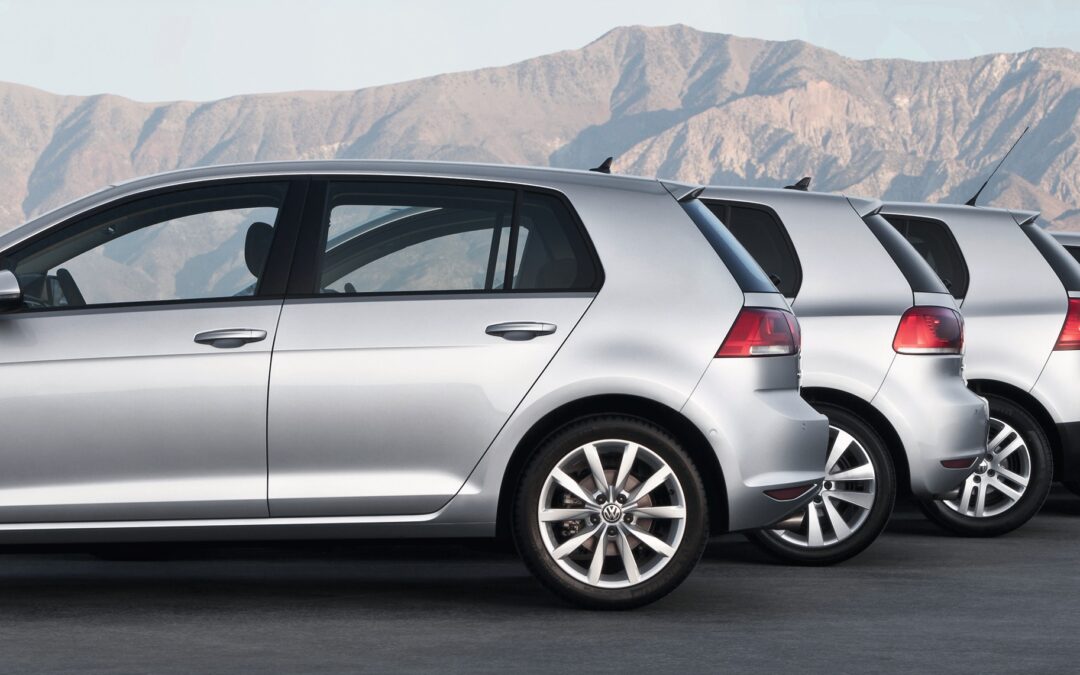
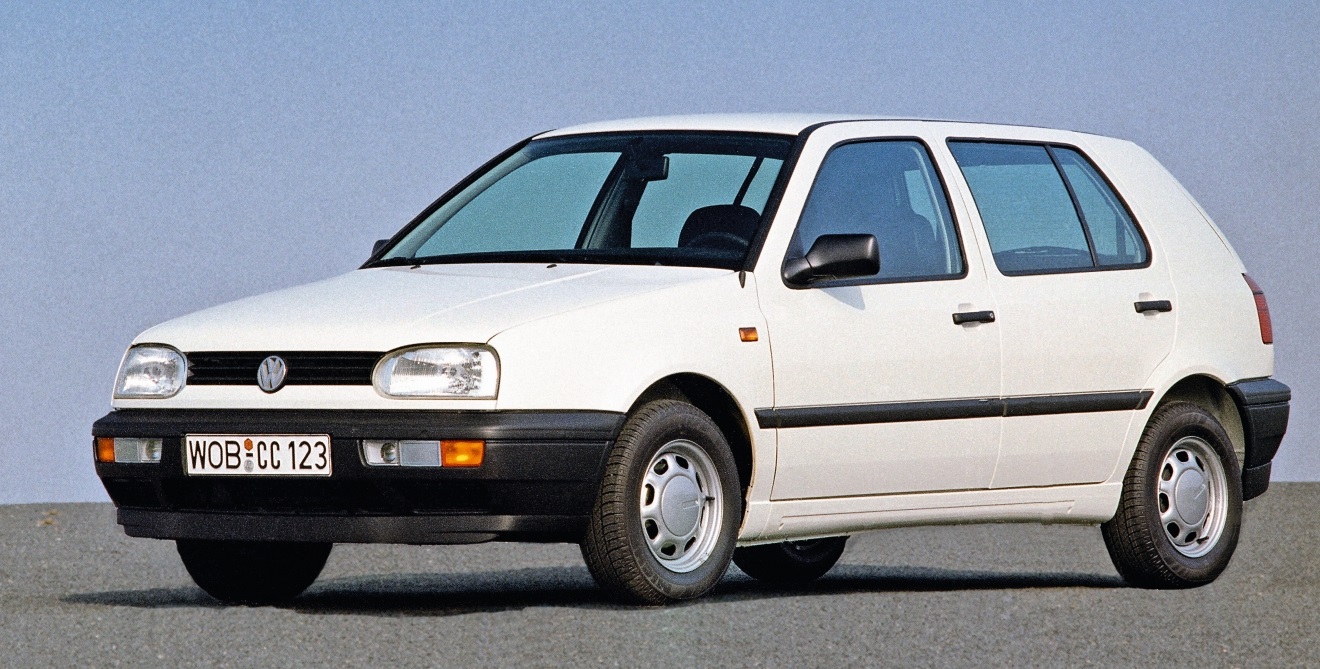
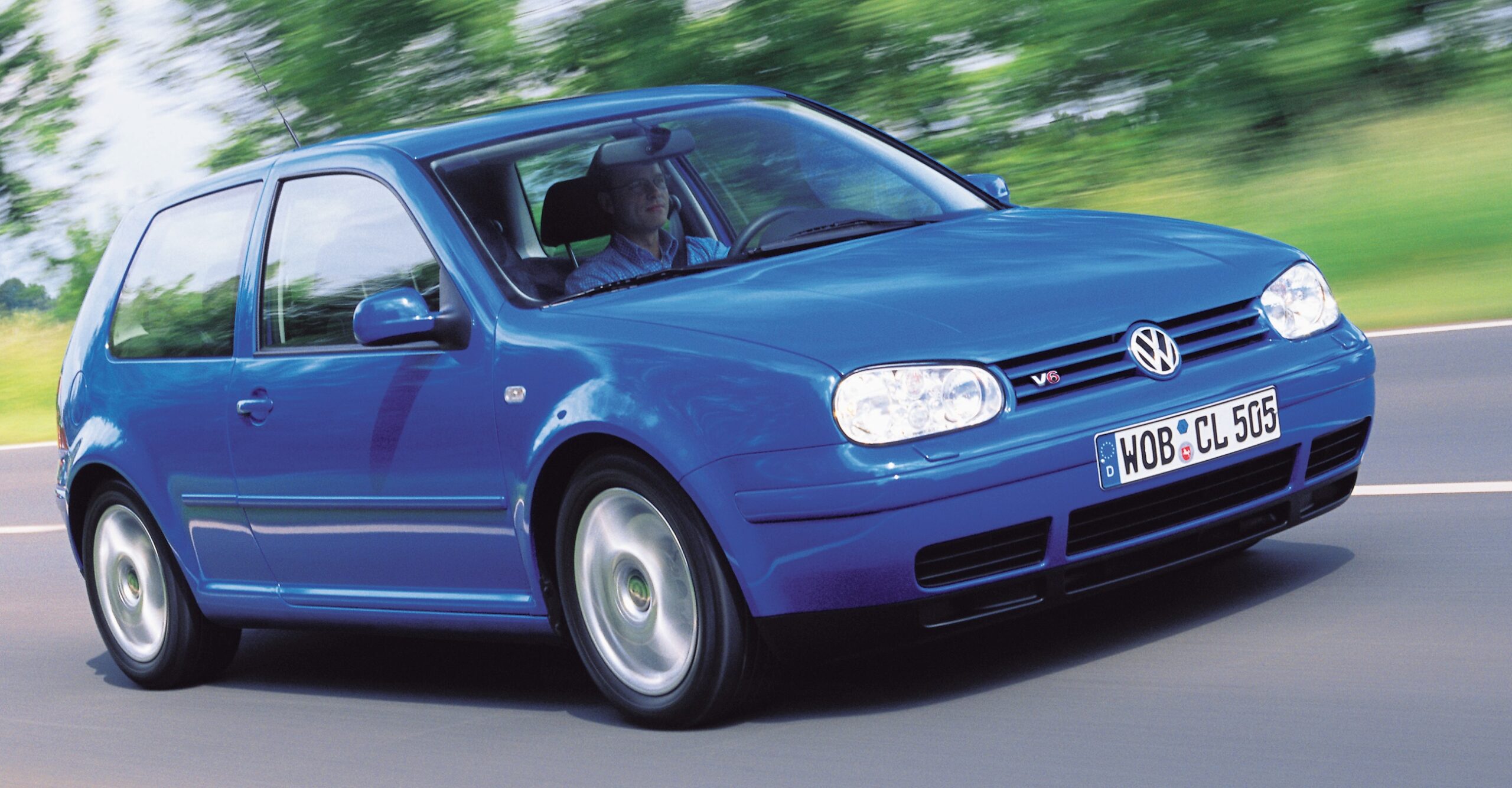
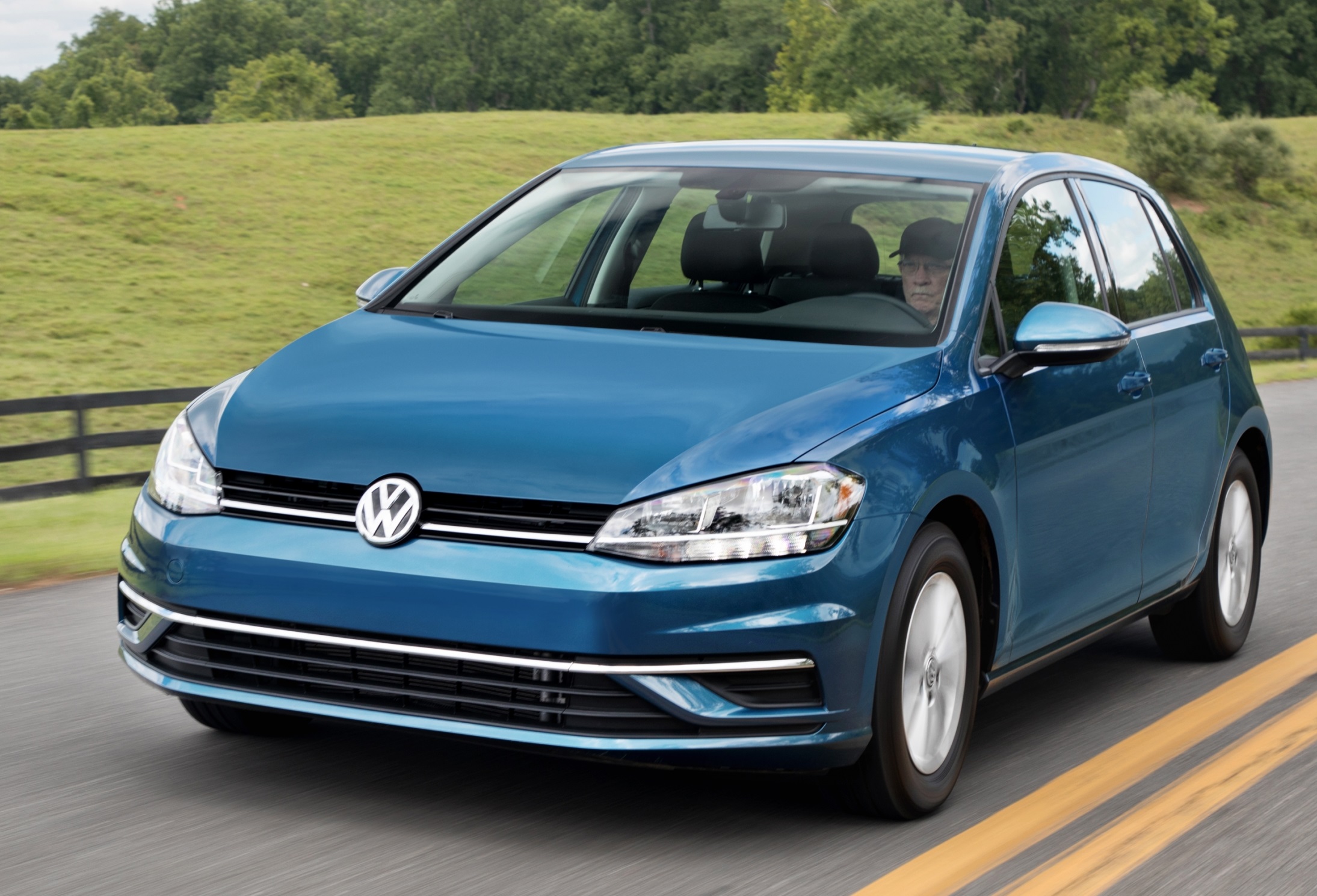
A row of VW Golf models.

Nearly 2.5 million VW Golf family models have been sold in the U.S. market. (Photos courtesy of Volkswagen USA)

BY MARK MAYNARD

Volkswagen of America announced today that its subcompact Golf hatchback ended production last week for the U.S. market. The VW Golf family name will carry on in model-year 2022 with the introduction of the all-new Mk 8 Golf GTI and Golf R, arriving this fall.

Volkswagen expects that the model year 2021 Golf models built at the Puebla, Mexico plant will sustain sales through year-end.

The Golf debuted in December 1974 as the “Rabbit” in the U.S. For more than four decades, the Golf exemplified what Volkswagen does best — melding dynamic driving characteristics with purposeful packaging and unmatched quality, said Hein Schafer, senior vice president, product marketing and strategy for Volkswagen of America, Inc.

“While the seventh-generation Golf will be the last of the base hatches sold here,” he said, “the GTI and Golf R will carry its legacy forward.”

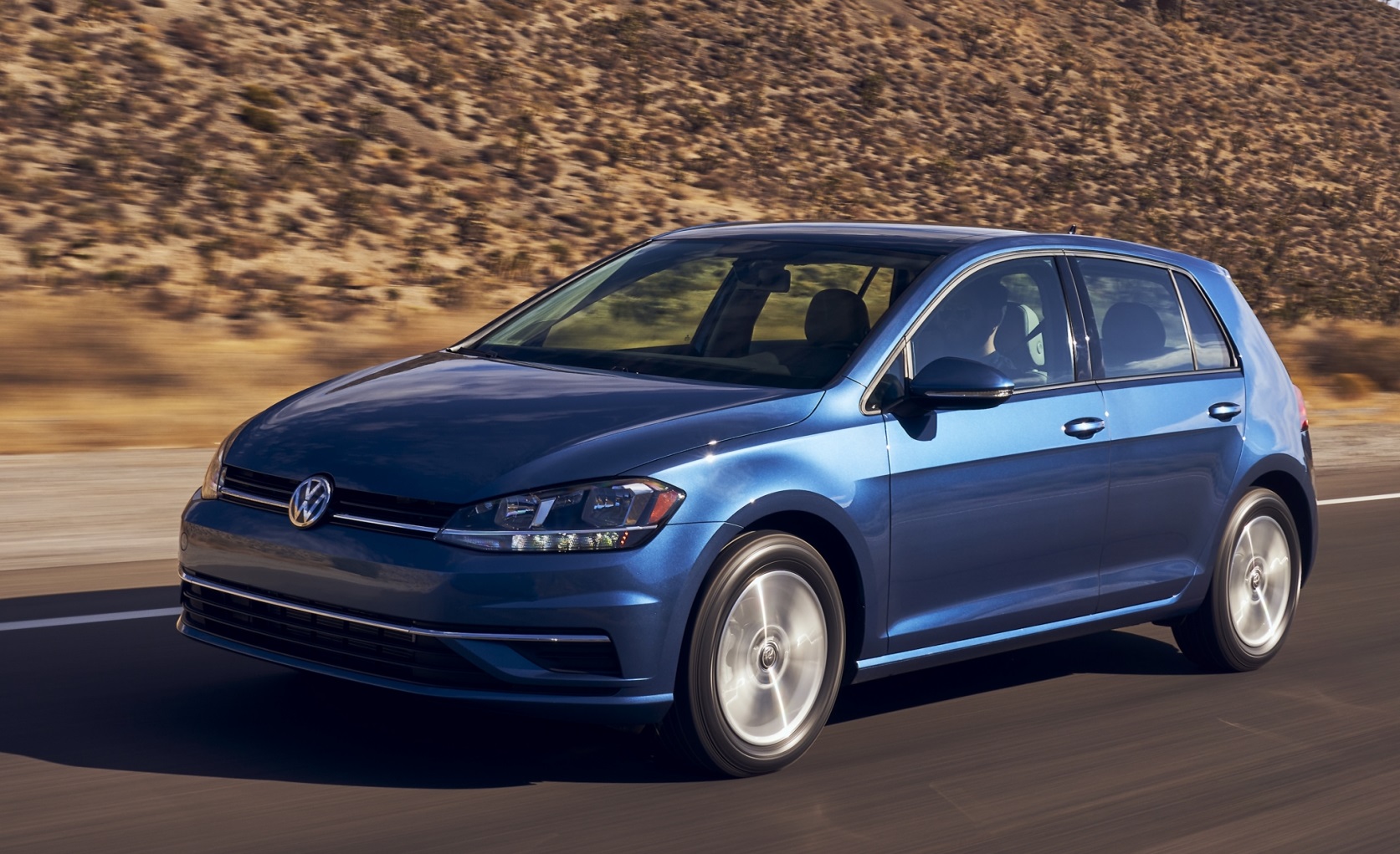
The Golf TSI model

The 2021 VW Golf is sold in only one TSI trim level. Pricing starts at $24,190.

U.S. Golf Family

In the U.S., nearly 2.5 million Golf family models have been sold since 1974. The current-generation Mk 7 Golf was named North American Car of the Year when it debuted for the 2015 model year.

The new eighth-generation 2022 Golf R and Golf GTI will be built in Germany as the Puebla plant transitions to new products, including the Taos subcompact crossover, according to VW.

The 2022 Volkswagen Taos

2022 Volkswagen Taos.

For 2021, the Golf is available in one well-equipped trim —TSI. It features a 147 horsepower, 1.4-liter turbocharged and direct-injection four-cylinder engine with a standard six-speed manual gearbox or optional eight-speed Tiptronic automatic transmission. EPA fuel-economy estimates are 29 mpg city, 39 highway and 33 mpg combine or 29/36/32 mpg with the automatic.

Golf TSI pricing starts at $24,190; add $800 for the Tiptronic. Pricing includes the $995 freight charge from Puebla, Mexico.

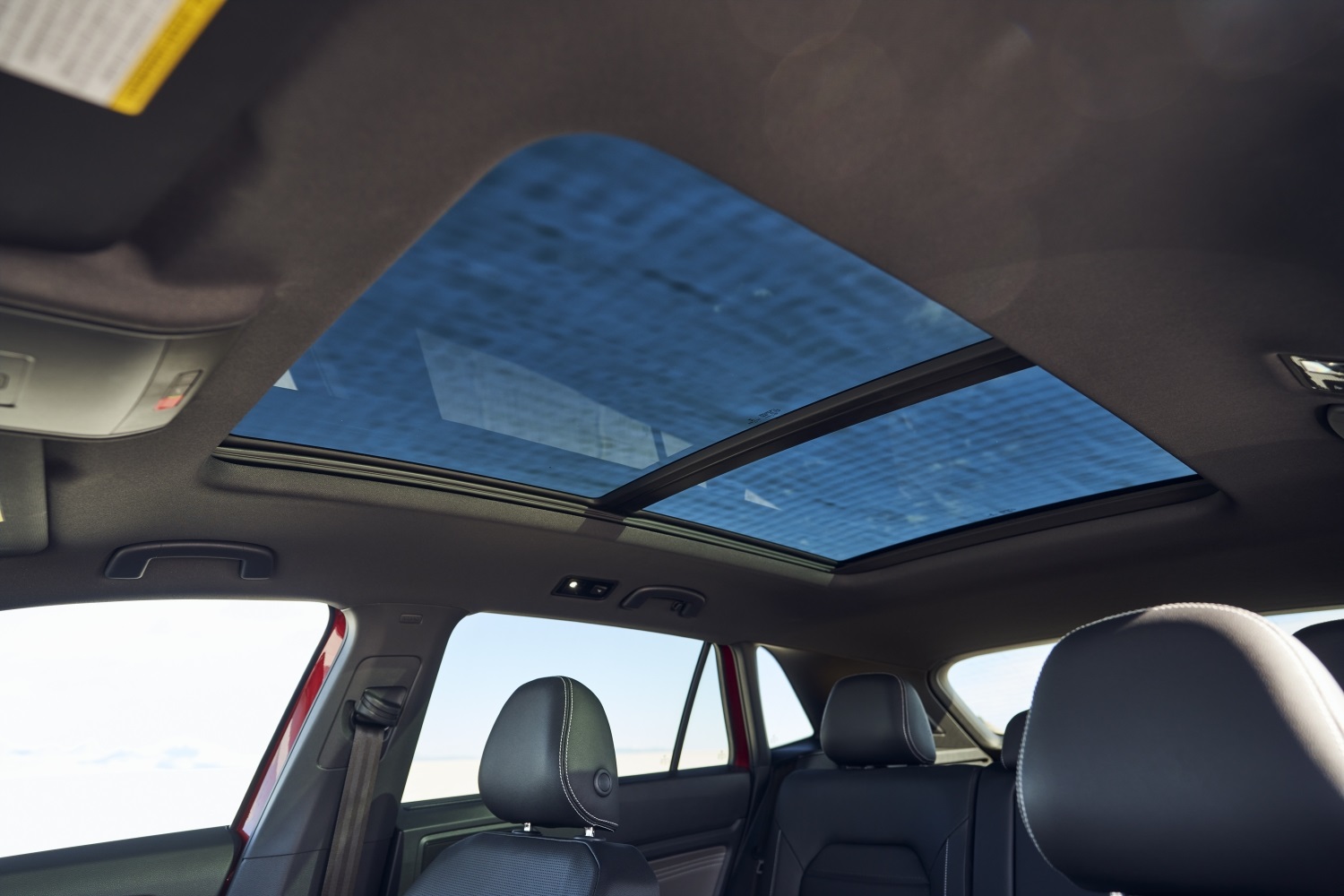
Standard features include 16-inch aluminum-alloy wheels with 205/55 all-season tires, smart-key locking and push-button ignition, panoramic tilt-and-slide sunroof, leatherette upholstery, and heated front seats. Driver assistance features include Forward Collision Warning and Autonomous Emergency Braking with Pedestrian Monitoring (Front Assist), Blind Spot Monitor and Rear Traffic Alert.

Seven Generations of Golf in the U.S.


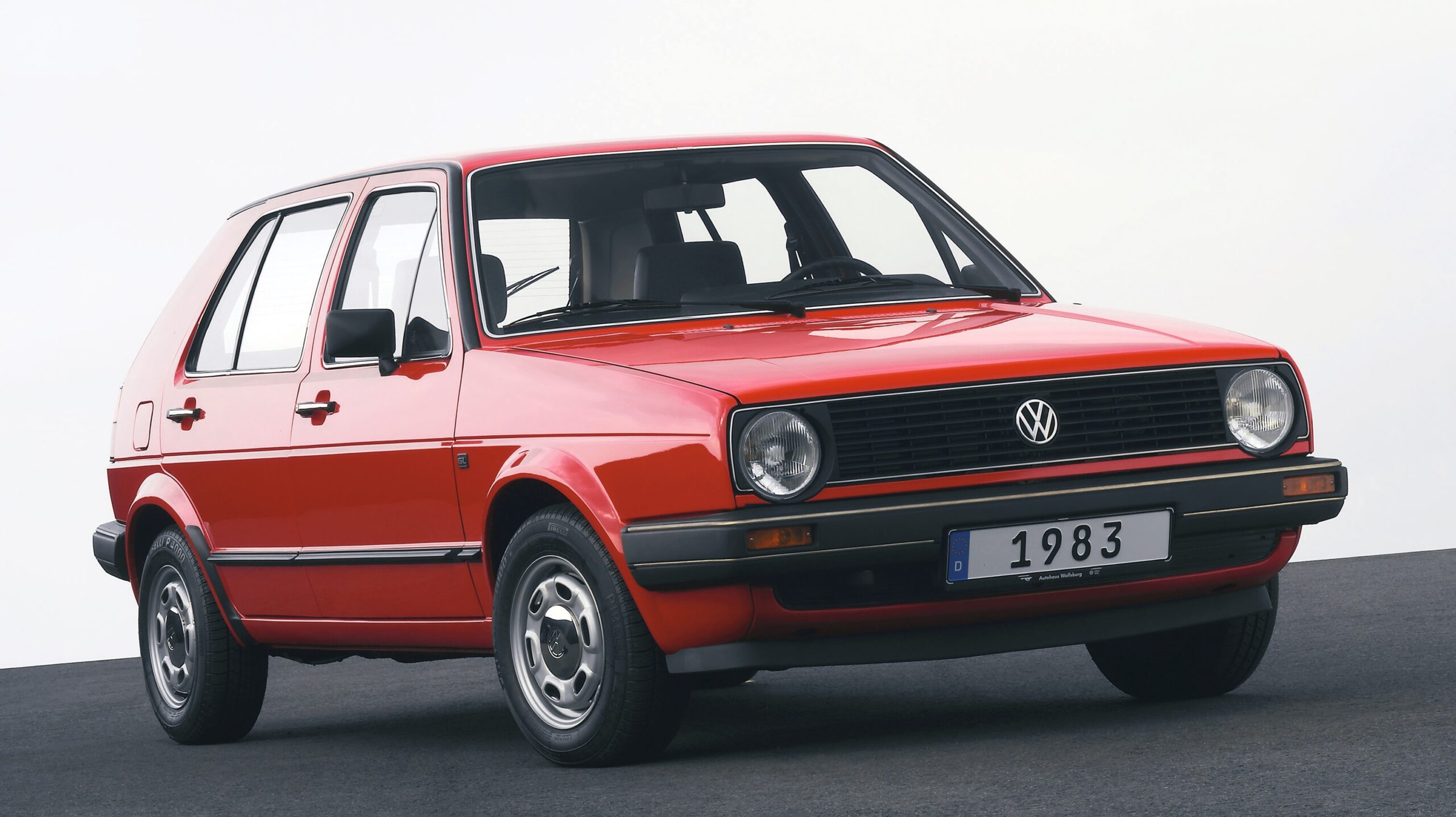
Golf I: 1975-1984

7 generations of the Gold in North America. This is Gen 1

  • First sold in December 1974 as the “Rabbit” with a 70-hp, 1.5-liter four-cylinder engine;
  • GTI was introduced in 1983 with a 90-hp, 1.8-liter engine.

Golf II: 1985-1992

The second generation Golf

  • Nameplate shift to “Golf.” Dimensions grew by nearly 7 inches in length, 3 inches in wheelbase and 2 inches in width;
  • Standard engine is revised 85-hp,1.8-liter;
  • GTI introduces 131-hp, 2.0-liter engine;
  • Catalytic converter, anti-lock braking and power steering debut.

Golf III: 1993-1999

  • Exterior design shifts to wedge shape;
  • Base powertrain increased to 115-hp, 2.0-liter; GTI available with 172-hp, 2.8-liter VR6;
  • Front and side airbags debut; advances in body construction result in improved crash safety;
  • VR6 engine and cruise control offered for the first time.

Golf IV: 1999.5-2005

The Golf IV

  • All-new design with flatter windshield; roofline carried farther back with steeper rear window;
  • Electronic stability control and side curtain airbags debut;
  • 1.8T engine introduced for GTI, bringing turbocharging to this generation of GTI;
  •  R32 introduced for 2004 with 240 hp, six-speed manual, and 4MOTION all-wheel drive.

Golf V: 2006-2009

The Golf V: 2006-2009

  • New multi-link rear suspension; rain-sensing wipers introduced; sold as “Rabbit” again;
  • DSG dual-clutch automatic transmissions debuts as an option for GTI and the standard transmission for R32; Bi-Xenon headlights introduced on both models;
  • Base engine is 150-hp, 2.5-liter; GTI moves to 200-hp 2.0-liter turbocharged direct-injection engine;
  • R32 reintroduced for 2008 with 250 hp.

Golf VI:  2010-2014

The Golf VI:  2010-2014

  • “Golf” name returns;
  • Refreshed styling with prominent character line from headlights to taillights;
  • Base powertrain is 170-hp, 2.5-liter five-cylinder engine;
  • Golf R was introduced for 2012, with the VR6 engine replaced by a 2.0-liter turbocharged direct-injection engine pushing 256 hp.

Golf VII: 2015-2021

  • Now based on Modular Transverse Matrix (MQB) architecture;
  • Golf grows in size yet drops in weight, despite many new and upscale features;
  • Facelift in MY 2018 features included revised headlight and taillight designs, redesigned bumpers, and infotainment and driver assistance updates;
  • Base 170-hp, 1.8-liter TSI engine replaces 2.5-liter to gain an EPA-estimated 6 mpg highway, later replaced by the 1.4-liter TSI engine in 2019;
  • GTI and Golf R powered by new versions of the 2.0-liter TSI engine, with up to 228 hp for GTI and up to 288 hp for Golf R (using premium fuel);
  • Available driver-assistance technology includes Automatic Post-Collision Braking System, Forward Collision Warning, Park Distance Control.

2021 Kia K5 Review

2021 Kia K5 Review

The “all-new” 2021 Kia K5 sedan represents one of the biggest leaps forward between generations in recent automotive history, the carmaker says.

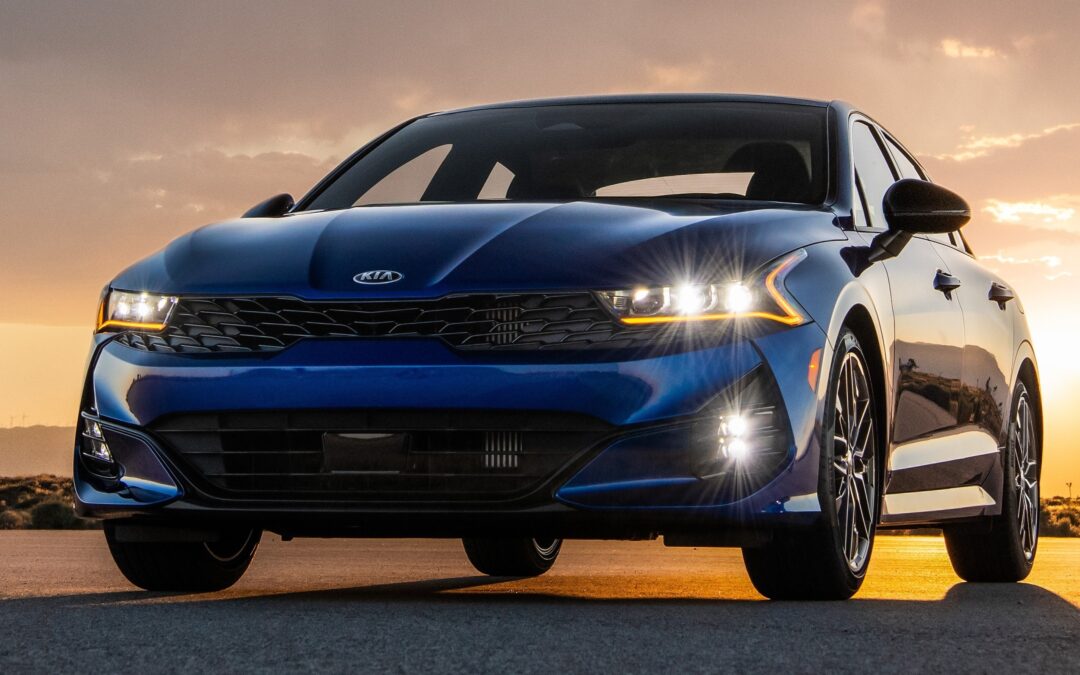
The 2021 Kia K5 midsize sedan

The 2021 Kia K5 is the brand’s third generation midsize sedan, formerly known as Optima. (Photos courtesy of Kia America)


Wholistic coup d’sedan


BY MARK MAYNARD

If there is a spark of ownership urgency remaining in the mainstream midsize sedan segment, Kia hopes its renamed and re-invented K5 will get drivers fired up.

The “all-new” Kia K5 sedan represents one of the biggest leaps forward between generations in recent automotive history, Kia says. Worthy of renaming, the Korean automaker says the K5 emphasizes revolutionary design on a new safety and performance enhanced “N3” platform, turbocharged engines, optional all-wheel drive and high-impact technologies. The new platform will also be the foundation for future Kia models

Its predecessor, the Optima, debuted in 2011 and, as today, it is a corporate partner to the Hyundai Sonata. The K5 designation is simply a global name, Kia says. The K5 and K900 are the first U.S. models to use the integrated global market names. Whether the other models will be eventually renamed, “is being looked at holistically from both a market and a global level and is determined by model,” a spokesman said.

The driver area of the 2021 Kia K5 EX model

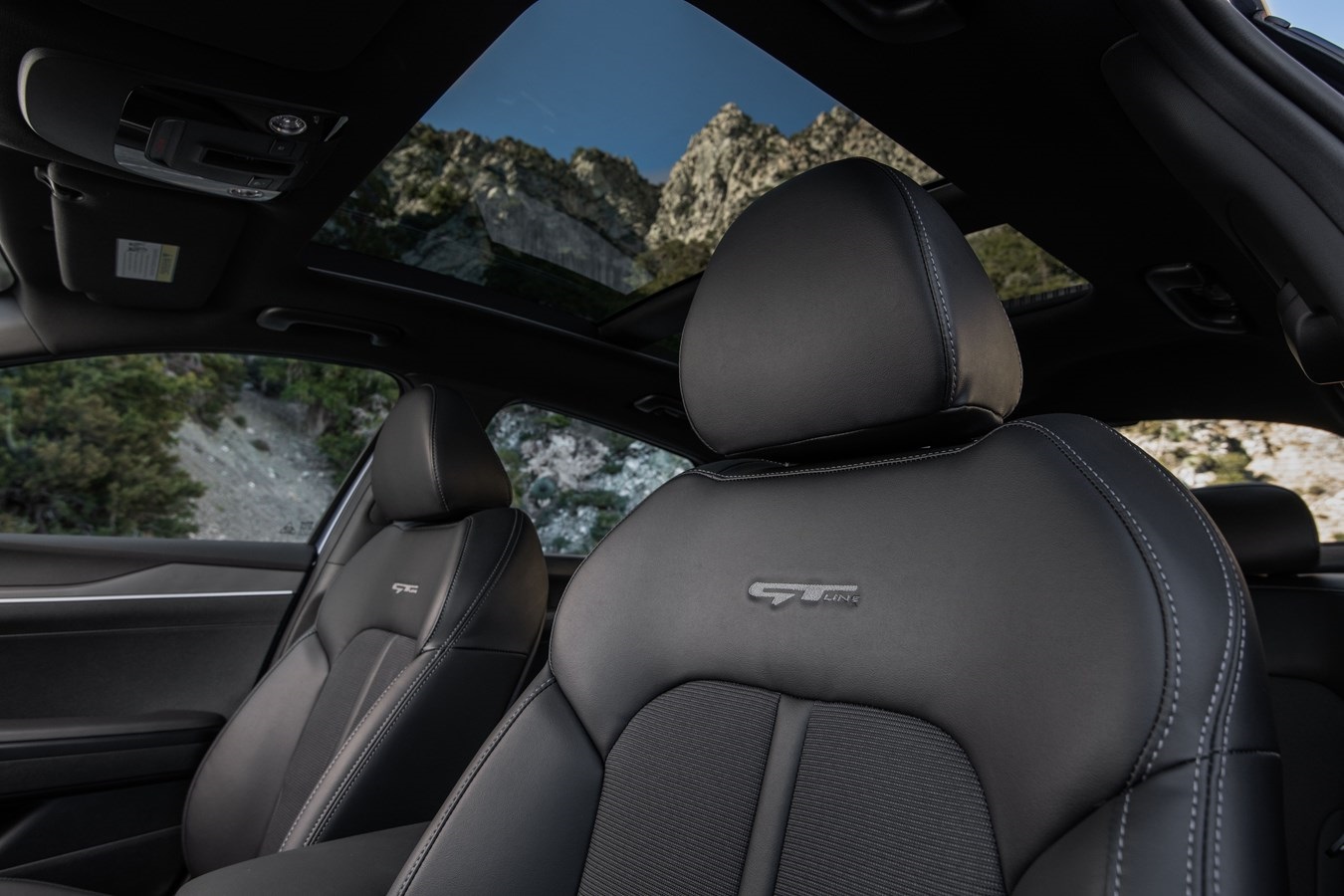
K5 EX features include leatherette upholstery and 10-way power driver’s seat.

Good Times

These are good times to buy a sedan. The big three top-sellers in the current lineup of choices — Honda Accord, Toyota Camry, Nissan Altima — have distinct identities, which might be key to connecting with drivers. And the remaining choices, of which there are several, are at the peak of their games, too.

As many drivers have migrated to an SUV as their preferred body style, manufacturers — those that still have a sedan lineup — are hoping that their revolutionary improvements will reinvent the midsize sedan into something other than what it is.

Kia cut to the chase with a regrouped business plan for the K5, calling “Give It Everything.” And it is packaged at a reasonable price.

The front passenger side of the Kia K5.

The lower roofline allows reasonably tall headroom with the large sunroof.

Kia K5 By the Numbers

Dimensionally, the Kia K5 sedan sits lower, longer, and wider than its predecessor. At 193.1 inches long it is 2 inches longer and an inch wider but 0.8-inch lower at the roofline. The wheelbase was stretched 1.8 inches, now at 112.2 inches.

Kia K5 Pricing

There are five trim levels of Kia K5 — LX, LXS, GT-Line, EX — and the performance-tuned GT. The standard trims use a 180-horsepower 1.6-liter turbocharged four-cylinder engine and eight-speed automatic transmission. The GT is spiked with a 290-hp 2.5-liter turbocharged four-cylinder (with 311 foot-pounds of torque from 1,650-4,500 rpm). Its eight-speed automatic is a “wet” dual-clutch automated manual transmission. (The wet dual-clutch, rather than dry, uses an electric oil pump for lubrication and to provide more cooling for higher torque outputs and smoother shifts.

Pricing for front-wheel-drive models with the 1.6T powertrain ranges from $24,555 for the entry LX to $29,055 for the EX 1.6T, The AWD GT-Line 1.6T starts at $30,155. The front-drive GT 2.5T GDI with an eight-speed dual-clutch automatic starts at $31,555. Pricing includes the $965 freight charge from West Point, Ga.

K5 in Front- or All-Wheel-Drive

All-wheel drive is available only on the K5 LXS or GT-Line trims. The front-drive system uses electro-hydraulics for a quicker coupling response, Kia says. The 1.6 LXS option is $2,100 and includes heated seats; the GT-Line is $3,700 and is part of the Premium package, which includes Special Edition Wolf Gray paint with red SynTex upholstery, 10.25-inch Touch-screen, navigation with smart cruise control and Highway Driving Assist.

At the time of posting this story, there were several Kia K5 sedan pricing discounts for cash, leasing or zero-percent financing for 60 months, with a $750 cash-back offer. See them here.

And there is Kia’s desirable new-vehicle warranties of 5-years/60,000-miles bumper to bumper with roadside assistance and 10-years/100,000-miles powertrain.

A view of the panoramic sunroof in the Kia K5 sedan.

Part of the K5 EX package, the panoramic sunroof has a power sunshade.

Standard Kia K5 Features

K5 base models are competitively equipped with such standard features as remote locking, 8-inch infotainment touch screen, fabric upholstery, Android Auto and Apple CarPlay with Bluetooth phone and music, six-speaker audio system, steering-wheel controls for audio and cruise control, two USB ports (one for charging), power side mirrors and windows, lighted visor vanity mirrors, six-way manually adjusted front seats, electric parking brake with auto-hold and 16-inch alloy wheels.

Standard K5 safety features and technologies are loaded, including nine air bags, forward collision avoidance assist with pedestrian detection, driver-attention warning with lead-vehicle-departure warning, lane-keep assist and lane-following assist, lane-departure warning, and high-beam (dimming) assist.

The center shift console in the K5 has useful storage and wireless charging

The K5 EX has almost as many USB ports as cup holders.

The EX upgrade

The K5 EX tester, $32,355, added such features as leatherette seat trim and leather-wrapped steering wheel, 10-way power driver’s seat with power lumbar, heated and ventilated front seats, panoramic sunroof with power sunshade, wireless phone charging, 18-inch alloy wheels, and parking-distance warning reverse.

The EX Premium package, $3,400, added desirable technology pieces, including navigation with a 10.25-inch touch screen and MapCare, Bose audio upgrade, a power front passenger seat with power lumbar, and heated steering wheel.

K5 Safety Features

Safety features include forward collision avoidance alert cyclist, forward collision avoidance-assist junction turning, smart cruise control with stop-and-go, highway driving assist, safe-exit assist with power child lock, and parking collision avoidance rear.

Highway Driving Assist (HDA) controls steering and acceleration-deceleration to keep a safe distance from the vehicle directly ahead. Using navigation input, the system can determine whether the vehicle is on a state highway or Interstate. Using the front view camera and front radar, HDA monitors the lane position and speed of the vehicle directly ahead.

A view of the infotainment touch screen and other cabin climate and audio controls

Driver controls are placed for easy access.

The integrated technologies create a semi-autonomous driving mode, but with hands remaining on the wheel. The guidance system is at its best on multi-lane expressways, but the guidance system can still allow the car to drift wide and across lane markings before correcting course, while giving the driver a warning tone.

As a safety suite, the assist systems elevate the EX trim level to a safe and efficient long-distance commuter.

Kia K5 Fuel Economy

Fuel economy and what Kia calls real-world torque have improved with the new 1.6-liter engine, which replaced a 2.4-liter.

Only the base LX model, which Kia considers its fuel efficiency trim, is equipped with automatic stop-start at idle. The LX has fuel-economy ratings of 29 mpg city, 38 highway, and 32 mpg combined, on 87 octane. Compare that to 25/35/29 for the 2.4-liter. But at 14.8 gallons, the K5 LX has a gallon smaller fuel tank than the other trims; The Optima’s tank was 18.5 gallons.

The other 1.6T models have mileage ratings of 27/37/31 mpg city/highway/combined. AWD has ratings of 26/34/29 mpg. And the GT has ratings of 24/32/27 mpg. The 15.8-gallon tank in the EX could provide more than 500 miles of range.

Driving in the transmission’s “smart” mode, I worked up to 37.4 mpg with much highway driving, which settled to an accumulated average mpg of 26.4 mpg, over 610 miles. Smart mode mimics the driver’s acceleration style to provide consistent power.

The body styling has a low, wind-cheating 0.27 coefficient of drag, which compares to 0.26 for the Altima and 0.28 for the Camry.

The Kia K5 turbocharged four-cylinder engine

The base K5 engine is a 180-hp, turbocharged four-cylinder.

K5 Ride and Handling

Kia probably erred on the side of sportiness for the K5. It has a pedigree of the Stinger sport sedan built into the presence of the K5, which can be seen first in the exterior styling and then the driving attitude.

The rigidity of Kia’s new N3 platform is a great enabler in controlled cornering and evasive maneuvers, yet ride quality is forgiving. Kia cites a 60/40 front to rear weight distribution for the 1.6T trims and 61/39 on GT.

Drivers can choose from four drive modes (or five with AWD) for Smart, Normal, Sport, and Custom, which allows a deeper dive to set distinct preferences for suspension, throttle, and steering.

I found Sport mode to be overly enthusiastic in town, but it is an asset out on the twisty roads as calibrations hold shifts when neatly clipping an apex. The car turns and rotates flatly, which also keeps the driver in a command position. And Custom

K5 Power

The eight-speed automatic in the K5 rolls easily through gear changes. And what, no paddle shifters? No problem! Acceleration is not greatly impacted by turbo spooling, which is helped by the trim curb weight of 3,228 pounds, among the lightest in the segment.

Standard K5 models have four-wheel disc brakes 12-inch vented rotors front, 11.2-inch solid rotors rear. The GT is upgraded with 13.6- rotors front and 12.8-inches rear.

The turning circle is another asset, at 36 feet or a little wider with 18- or 19-inch wheels — but still a tidy arc for U-turns in most neighborhood streets.

K5 Interior Function

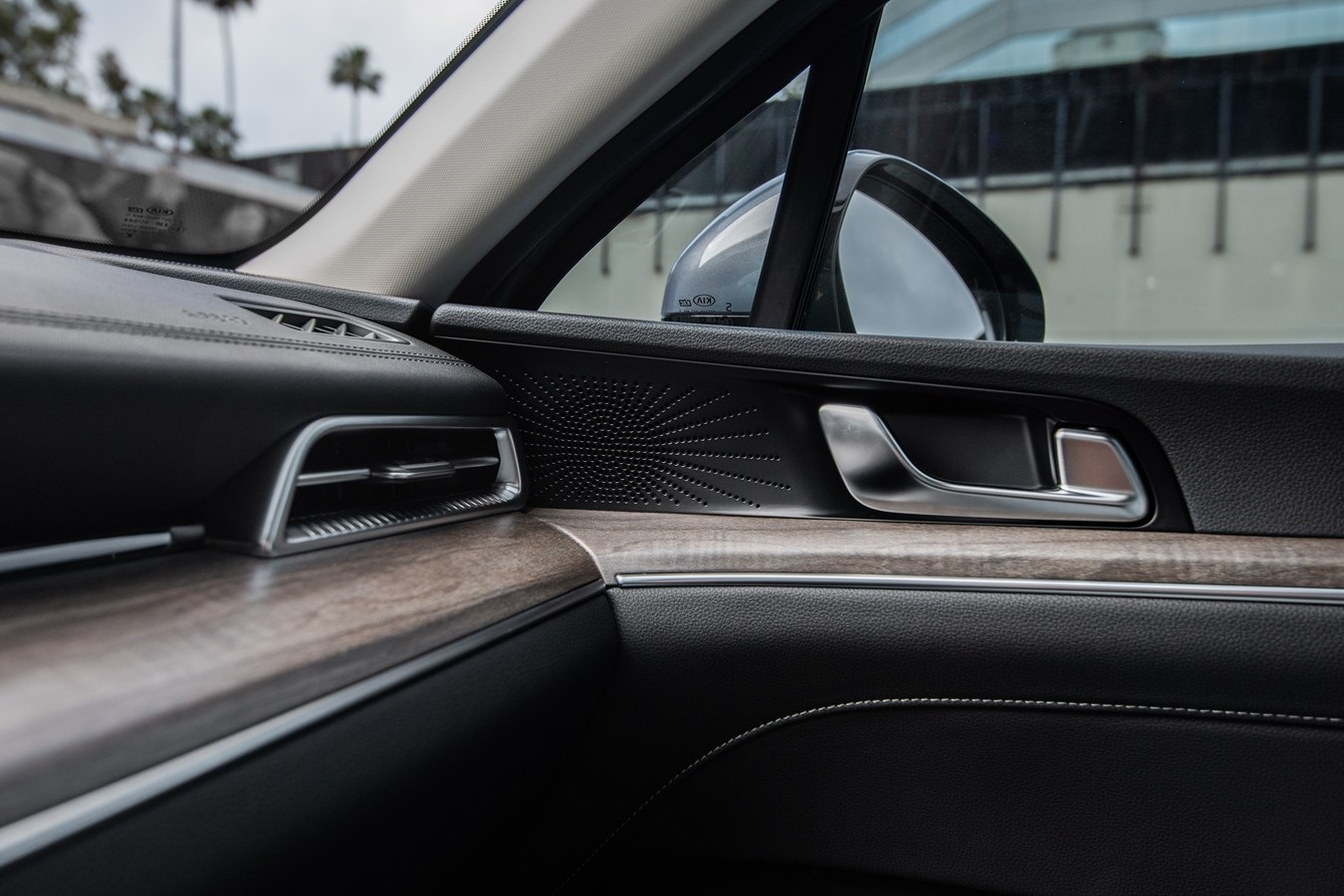
Inside the Kia K5, the interior design achieves a futuristic and high-tech appearance. There is great attention to detail in the trim elements. And improved sound-deadening materials create a quieter and more premium cabin, Kia says.

The standard 8-inch infotainment supports Apple CarPlay or Android Auto, but opting for the 10.25-inch display does not allow those apps.

Settling into the front seats is quite supportive and comfortable for the long haul, but the seat-bottom squabs (bolsters) give a little goose on exit. (A female friend who bought a new Kia Sportage spent $300 to have those bolsters trimmed back to prevent the wedgie, and the results look “factory.”

A look at the premium trim elements in the Kia K5

Interior materials have a premium-quality appearance.

Some new sedans are built so low to the ground (for aerodynamics to improve fuel economy) that it compromises comfortable entry and with a heave-ho on exit. But the K5 maintains a reasonable entry height.

The doors open to almost right angles and for the driver, the designers built in a stylish ridge in piano black at the window controls. It is an ideal leverage point to comfortably close the door.

Front headroom, even with the lower roofline, is reasonably tall (38.4 inches) with the large sunroof. Cars without the sunroof gain 1.8 inches of hair space, at 40.2 inches. Legroom of 46.1 inches is accommodating for those in the big-and-tall club.

Ergonomic Controls

Interior design of the K5 cockpit places driver controls, switches, and digital displays in position for easy access. Small corner glass greatly opens sightlines at the front side mirrors and at the rear three-quarters. At first glance, it might appear the shallow arc of the back glass might be an issue, but it is not when the side mirrors are correctly positioned.

Glancing at the large rearview-camera screen is liberating in parking situations, and there is a reverse park-distance warning. Because of the long hood, a front camera would be an asset, too.

The cabin of the K5 EX has almost as many USB ports as cup holders, plus wireless charging with a broad slot for a variety of phones. And the leatherette upholstery in the EX looks and feels better than many grades of leather.

K5 Back Seat Comfort

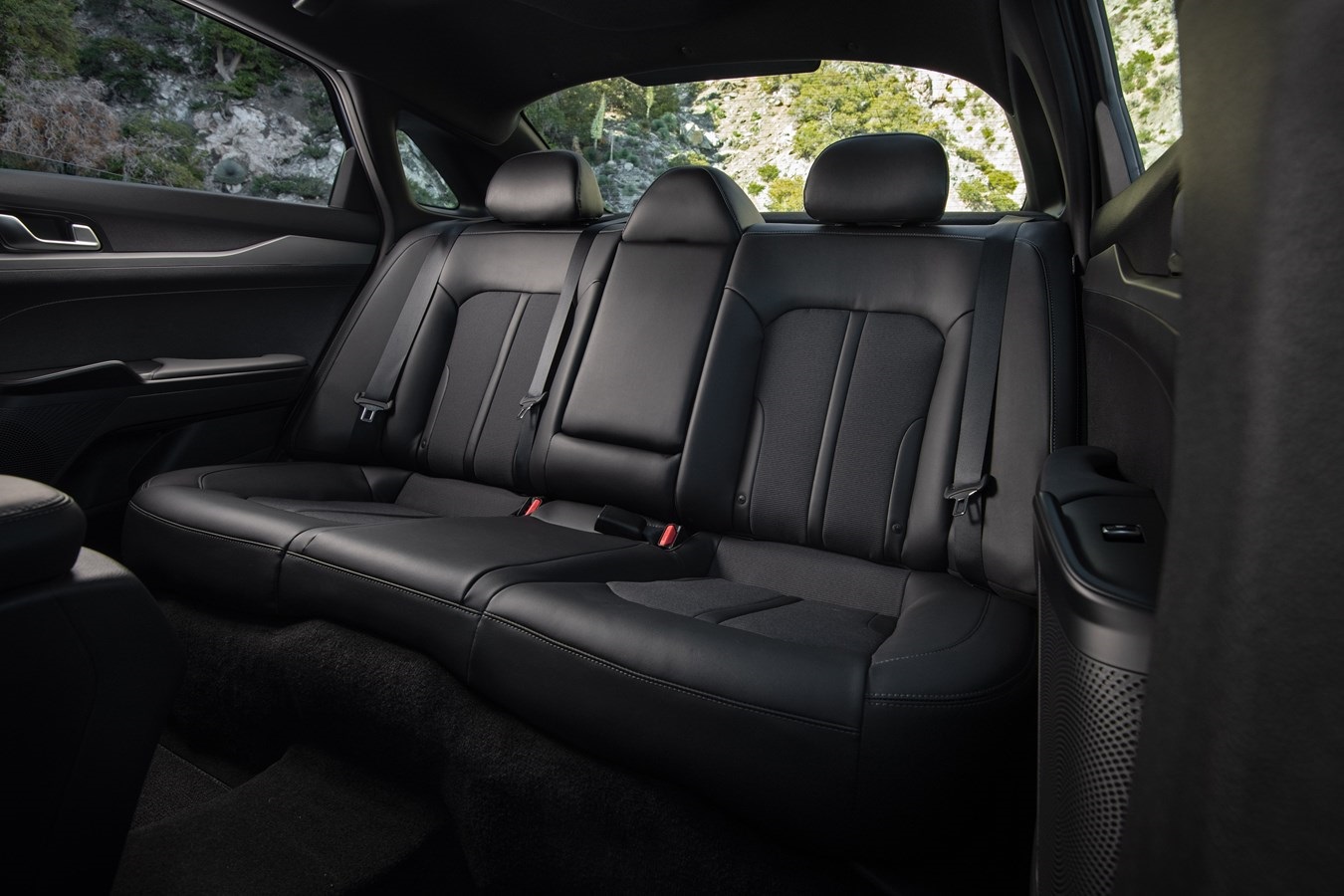
There are comfortable dimensions in the K5 back seat and the doors open wide for colleagues or growing children. The seatback angle is relaxed and with 35.2 inches of legroom, the designer did not have to create a seat cushion with a knees-up angle to stretch leg space.

There is just a modest height intrusion from the exhaust-AWD tunnel, which eases footroom when sharing space with a center-seat occupant, which would be a child (or forgiving colleague). Amenities include the broad fold-down armrest with cup holders and two charging USBs.

The K5 back seat has comfortable dimensions for adults

The back seat has comfortable dimensions for colleagues or growing children.

K5 Trunk Capacity

The Kia K5 has a roomy,16-cubic-foot trunk that is a broad 44 inches wide and low. But the smallish loading aperture (17 inches) will limit the size of big-box items to haul home. The 60/40 folding seatback includes pulls to release the seats.

The Kia K5 trunk is wide and low with a large 16 cubic feet of space

Th K5’s 16 cubic feet of trunk space is wide and low.

Why Buy the Kia K5?

As midsize sedans have evolved, manufacturers have introduced more luxury-class features with a “premium” presentation to support the cars’ higher price points.

For Kia, the K5’s ground-up remake was as well planned and budgeted as a sedan can be in this age of anti-sedan.

The K5  has been designed for smart use of interior space. There are several small-storage areas and finger-reach controls to keep eyes on the road. The cabin has some of the best attention to detail in interior materials and switchgear. The driver area is straightforward and without unnecessary glitz or gimmicks, all of which will appeal to the contemporary driver.

But I can’t be alone in wishing the EX trim included the option for the 2.5-liter engine and the choice for AWD.

What would it take to get you into a midsize sedan today?

 MarkMaynard@cox.net

A nighttime view of the rear end of the Kia K5

Built on a new N3 platform, the Kia K5 is stronger, longer, wider, and lower.

2021 Kia K5 EX Premium Specifications

Body style: midsize 5-passenger, front-drive sedan

Engine: 180-hp, direct-injection and turbocharged 1.6-liter 4-cylinder; 195 lb.-ft. torque 1,500-4,500 rpm

Transmission: 8-speed automatic

Fuel economy: 27/37/31 mpg city/hwy/combined; 87 octane or higher

BY THE NUMBERS

Fuel tank: 15.8 gallons

Trunk space: 16 cu. ft.

Front head/leg room: 38.4*/46.1 in. *40.2 w/o sunroof

Rear head/leg room: 37.4/35.2 inches

Length/wheelbase: 193.1/112.2 inches

Curb weight: 3,228 pounds

Turning circle: 36 feet

FEATURES

Standard equipment includes: smart key locking and push-button ignition, dual-zone automatic climate control, acoustic windshield, steering wheel controls for Bluetooth-audio-cruise, tilt-telescopic steering wheel, power windows with one-touch up-down driver’s window, rear-occupant alert, 8-inch touch screen with Android Auto and Apple CarPlay, rearview camera with guidance lines, USB media and charging ports, multi-adjustable front seats, high-beam assist, LED headlights and amber running lights, power-heated side mirrors, automatic headlights, 16-inch alloy wheels and compact spare, electric parking brake with auto-hold

K5 EX Features:  leatherette seat trim and leather-wrapped steering wheel, power driver’s seat with power lumbar, heated and ventilated front seats, panoramic sunroof with power sunshade, wireless phone charging, auto up-down to front passenger window, 18-inch machined alloy wheels, UVO Link, satellite radio with free 3-month subscription, rear USB charger ports and rear air vents, parking distance warning reverse

Safety features include: 9 air bags, electronic stability control, forward collision-avoidance assist-pedestrian, blind-spot collision-avoidance assist, rear cross-traffic collision avoidance, safe exit assist, lane-keep assist and lane-following assist, driver attention warning, leading vehicle departure alert

PRICING

Base price: $28,955 including $965 freight charge; price as tested $32,355

Options on test vehicle: EX Premium package, $3,400, includes navigation with 10.25-inch touch screen and MapCare, Bose premium audio system, power front passenger seat with power lumbar, heated steering wheel, forward collision-avoidance alert cyclist, forward collision-avoidance-assist junction turning, smart cruise control with stop-and-go, highway driving assist, safe-exit assist with power child lock, parking collision avoidance rear, LED rear combination lights, memory driver’s seat and side mirrors

Where assembled: West Point, Ga.

Warranty: 5-years/60,000-miles bumper to bumper with roadside assistance; 10-years/100,000-miles powertrain

Mark Maynard

2020 Buick Encore GX

2020 Buick Encore GX

The Buick Encore GX is an inch wider and 3 inches longer than the original model, which fully elevates its real-world functionality

The Encore GX hits the sweet spot of Buick with more technologies, more power, and the soundproofing blanket of QuietTuning. (Buick)

BY MARK MAYNARD

A Buick Encore? Who wants to drive a Buuu-ick?” asked the girlfriend-wife. “They don’t even make Buicks, anymore, do they?” — adding with a snarky wince that she would not need to be driving a Buuu-ick.

Suit yourself, thought I. I’ve tested many new Buicks in recent years, with her in the passenger seat, yet somewhere those had been forgotten. And all this before she’d even seen touched the chrome strip on the door handle of the Encore GX Essence test car.

“Oh, hmmm, is that it, the black one?” she asked of the little SUV in the driveway. “Is it a cheesy car?”

No, but let the car speak for itself, as I handed over the key fob for a run to the market.

The Encore GX still is a small vehicle but with full-size adult headroom. (Buick)

Subcompact not substandard

Subcompact SUVs are the new sweet spot of getting a lot more space and function, while still generating a hefty sticker price over a sedan.

It was not long ago that a subcompact car or SUV was substandard in its comfort, drivability, and quality. These types of econoboxes were the manufacturers’ shoehorn to slide buyers into a larger and more profitable model. But today, a subcompact SUV, such as the Encore GX, has been hand-hammered from the inside out to be roomier and more accommodating to a wider range of drivers. It is smoothed over with a liberal layer of Buick refinements, including QuietTuning and a full suite of advanced technologies.

The tall headroom and shoulder room of 55.4 inches contribute to the roominess of the cabin.  (Buick)

Buick Encore Overview

Buick debuted the Encore nameplate in late 2012 as a 2013 model, the brand’s first subcompact model — car or SUV. The Encore is a GM global platform (and shared with the older and slightly smaller Chevrolet Trax) and is assembled at the GM Korea plant in Bupyeong, South Korea. The Chinese market Encore is assembled in Shanghai.

The updated and larger Encore GX, sort of a super-subcompact in size, joined the lineup as a 2020 model. It has more commonality with the new Chevrolet Trailblazer and, eventually, will replace its smaller sibling.

U.S. sales of Encore totaled almost 32,000 in 2013 and the pace leapfrogged consistently every year to 78,565 by 2016. It had a midcycle refresh in 2017 and sales continued to climb from 41,129 to 102,402 by 2019, the last year that sales numbers were available. (That’s according to Wikipedia; GM no longer posts monthly sales and now relies on quarterly tallies.)

Each month since June, the Encore GX has been Buick’s highest-selling nameplate, a spokeswoman said, “and we expect it to the end the year as the brand’s No. 1 selling vehicle, as well,” she said via email. “We expect the Encore GX/Encore split to be roughly 70/30.”

There are at least a dozen choices of subcompact crossovers with the Ford EcoSport, Honda HR-V, Nissan Kicks, and Toyota CH-R among them. But the luxury choices are fewer, namely the Audi Q3, BMW X1, Lexus UX, Mercedes-Benz GLA, and Volvo XC40. Most of the competitors, some with standard all-wheel drive, have starting prices that range from $34,695 (Volvo XC40) to $37,095 for the Audi with AWD.

The Encore GX starts at about $10,000 less than those top-tier competitors, but it is also more of a “premium” choice than entry-luxury. It might not have the depth of sophisticated engineering or refinement of the European makes, but it is more than a glam job of an economy model. And it will cost a lot less to maintain over the years.

The 8-inch touch screen provides a good display for the surround-view camera. (Buick)

Encore GX Pricing

The Encore GX is sold in front- or all-wheel drive with a choice of two turbocharged and direct-injection three-cylinder engines — either a 137-horsepower 1.2-liter or 155-hp, 1.3-liter. Front-drive models use a continuously variable automatic transmission and AWD gets a nine-speed automatic.

2020 GX pricing starts at $25,095, including the $995 freight charge from Bupyeong, South Korea; AWD adds $2,000. A Sport Touring package, $1,100, is a cosmetic upgrade of body-color side and rocker moldings, unique grille with red accents, 18-inch dark high gloss wheels, and front and rear sport bumpers with red accents.

Buick says 2021 pricing increased by just $100 across all trim levels and the new model-year cars are now on sale.

The front-drive GX Essence tester had a 2020 starting price of $28,500 and came to $34,965 with six packages and options, including the bigger 1.3-liter engine, a modest $395 upgrade. Also worthwhile was the $495 Safety group that includes rear cross-traffic alert and side blind-zone alert.

At the time of posting this story, there were two pricing incentives:

The Encore GX FWD Preferred has an ultra low-mileage lease (for qualified lessees) of $265 per month for 39 months; $3,214 due at signing (after all offers) and no security deposit required. (Mileage charge of $0.25/mile over 30,000 miles at participating dealers.

And there was a cash offer of $3,250.

All Buick incentives can be found here (depending on ZIP code).

A panoramic moonroof is part of the Buick Experience package. (Buick)

2021 Encore GX Updates

Additions and changes for 2021 include:

  • 8-inch Buick Infotainment System with navigation was removed from the Experience Buick Package on the Select and Essence models.
  • The Bose seven-speaker system with amplifier and HD radio now requires adding the Safety Package. (It previously required the Experience Buick Package).
  •  Satellite radio is now standard on all models with wireless Apple CarPlay and Android Auto.
  •  Adaptive cruise control was added to the Preferred trim level.

Cargo space has flip-and-fold function. (Buick)

Interior Function

The Encore GX is an inch wider and 3 inches longer than the original model, which fully elevates its real-world functionality.

It still is a small vehicle, but with full-size adult headroom in the front of almost 38 inches and legroom of almost 41 inches. That space is more typical of a midsize sedan. The tall headroom and shoulder room of 55.4 inches contribute to the roominess of the cabin.

Back seat legroom of 36 inches and headroom of 38 inches will accommodate a 6-foot-tall passenger behind the driver. A flat floor helps foot space for three-across seating.

There are several areas for small-item storage and the tester was well equipped with accommodating features. Standard on the tester was wireless charging, four USB charging ports, heated seats and steering wheel, a big (8-inch) surround-view camera screen, a 10-way power driver’s seat, and an eight-way power front passenger seat.

Cargo space of 23.5 to 50.2 cubic feet has flip-and-fold convertibility. The front passenger seat, for example, folds flat forward and there is a two-level cargo floor. The tall load floor limits the height of cargo capacity, but there is about 8.5 feet of length with the back seat folded.

The GX is an inch wider and 3 inches longer than the original Encore. (Buick)

Buick Encore Safety Features

Small cars like this aren’t what I would recommend as a hypermiling commuter, but the tester’s new size and its depth of safety technologies would be an exception. The raised ride height helps it to be seen and provides the driver an open view of traffic.

Standard safety features are extensive and include 10 air bags and a range of technologies. The GX safety technologies include Automatic Emergency Braking, Front Pedestrian Braking, Lane Keep Assist with Lane Departure Warning, Forward Collision Alert and Following Distance Indicator.

Four-wheel disc brakes easily handle the curb weight of 3,094 pounds and a tow rating of up to 1,000 pounds. The front rotors are 11.8-inches with 10.4-inch rotors rear.

2020 GX pricing starts at $25,095; AWD adds $2,000. (Buick)

Buick Encore powertrains

There’s not much of a fuel-economy advantage for the 1.2-liter engine. Front-drive models are rated for 26 mpg city, 30 highway and 28 mpg combined, on the recommended 87 octane. Those numbers compare to 30/32/31 mpg for the 1.3-liter or 26/29/28 with AWD.

The “big” engine has more force than you might imagine from a 1.3-liter, though it sounds rattly at idle. Buick’s QuietTuning soundproofing muffles most engine noise around town, but there is some engine and wind noise at highway speeds. And the Hankook Synergy GT all-season tires have a high (hard) treadwear rating of 700, making the ride quality feel hard.

I’m not usually a fan of the CVT, but this one moves the Encore GX without delay from turbo spooling or the transmission taking hold. Using Sport mode can sharpen launch force and shift points, but I zipped around in the standard mode. My average fuel economy ranged from 24 to 25 mpg around town to a brief best of 48.5 with very long stretches of highway driving.

Compared to a four-cylinder, there is a little more engine vibration at idle, but it’s not distracting. And there is a more abrupt start-up after a stop-start at idle.

The size of the Encore GX is parking-garage friendly and it’s nimble to maneuver, with a 36.8-foot turning circle. Anybody can be a sloppy parker and still stay between the lines.

The “big” engine has more force than you might expect from three cylinders, though it sounds rattly at idle. (Mark Maynard)

Why Buick Encore GX?

The girlfriend’s Buick skepticism waned after a test run. She liked that the Encore GX wasn’t macho, and it connected with her feminine side.

“From a woman’s perspective, it’s cute and easy to get in and out of, and it’s really quiet,” she said. “And it goes like hell when you step on it.”

The Encore GX is a sweet package and a credible “premium” offering in a segment with more utilitarian competitors. You might gulp at the as-tested price, but its wealth of features will seem fair as a safe space to navigate a pandemic.

2020 Buick Encore GX Essence FWD

Body style: Subcompact, 5-seat, 5-door crossover SUV, in front or AWD

Engine: 155 hp, turbocharged and direct-injected 1.3-liter 3-cylinder with auto stop-start at idle; 176 lb.-ft. torque at 1,600 rpm

Transmission: CVT

Fuel economy: 30/32/31 city/hwy/combined; 87 octane

BY THE NUMBERS

Fuel tank: 13.2 gal.

Cargo space: 23.5-50.2 cu. ft.

Front head/leg room: 37.9*/40.9 in. *39.7 w/o moonroof

Rear head/leg room: 38/36 in.

Length/wheelbase: 171.4/102.2 in.

Curb weight: 3,094 lbs.

Turning circle: 36.8 ft.

Tow capacity: 1,000 lbs.

FEATURES

Standard equipment includes: smart key entry with push-button ignition, 10-way power driver’s seat with lumbar, 8-way power front passenger seat, perforated leather-trimmed upholstery, heated steering wheel, power (heated) side mirrors, LED headlights-taillights-fog-running lights, Quiet-tuning soundproofing with active noise (audio) cancellation, 8-inch color infotainment touch screen with voice command Bluetooth phone and audio, rearview camera, 4.2-inch color driver-info display, 4 USB ports (2 type C), 60/40 folding back seat, 2-level cargo floor, cargo roller cover

Safety features include: 10 air bags, automatic emergency braking, front pedestrian braking, forward collision alert with following distance indicator, lane-keep assist with lane departure warning; lane change alert with side blind zone alert and rear cross-traffic alert

PRICING

Base price: $29,495, including $995 freight charge; price as tested $34,965

Options on test vehicle: Ebony Twilight metallic paint $495; Ecotec 1.3-liter turbocharged engine $395; Advanced Technology package, $1,790, adds HD surround vision camera, head-up display, adaptive cruise control (w/camera), Buick infotainment system with navigation; Experience Buick package, $1,500, includes a power moonroof, 18-inch high-gloss alloy wheels; Convenience package, $770, includes automatic parking assist with braking, wireless charging, rear camera mirror with washer and rain-sensing wipers; Liftgate package, $560, adds a hands-free power liftgate

Where assembled: Bupyeong, South Korea

Warranty: 3-years/36,000-miles bumper to bumper; 5-years/60,000-miles powertrain with roadside assistance and courtesy vehicle; free scheduled first maintenance

The updated and larger Encore GX joined the lineup as a 2020 model.  (Buick)

2021 Chevrolet Trailblazer Activ Review

2021 Chevrolet Trailblazer Activ Review

Subcompact 2021 Chevrolet Trailblazer SUV done right for North America

The subcompact Chevy Trailblazer SUV

The 2021 Chevrolet Trailblazer ACTIV The Trailblazer feels robust and durable with a trail pass for light-duty excursions. (Chevrolet)


BY MARK MAYNARD

The 2021 Chevrolet Trailblazer is a social climber in a steep segment of small SUVs. The new Trailblazer expands the perception and function of a subcompact vehicle. It makes the most of a small space and scoots around on a choice of two turbocharged three-cylinder engines.

The new model revives the nameplate previously applied to the midsize model discontinued in 2009. However, the 2021 Chevrolet Trailblazer is a fresh start throughout. It fits in the lineup between the slightly smaller Chevy Trax and compact-class Equinox. It also shares much with the Buick Encore GX. While the Encore is a more “premium” choice, the Trailblazer is “sporty” with optional all-wheel drive and an Activ trim level that is toughened up for some trail driving.

Competitors include the Honda HR-V, Hyundai Kona, Jeep Renegade, Mazda CX30, Nissan Kicks, and Toyota C-HR.

Trailblazer front seats

The upright cabin design feels roomy, for a subcompact.  (Chevrolet)

The 2021 Chevrolet Trailblazer is sold in five trim levels in front- or all-wheel drive: L, LS, LT, Activ and RS. The RS has street-sporty features of black trim elements, a black mesh grille and dual exhaust outlets with chrome tips. The Activ is burlier with 17-inch all-terrain-styled tires, a raised lower section for ground clearance, and underbody skid shields.

All front-drive models have a continuously variable transmission and 137-hp, turbocharged and direct-injected 1.2-liter Ecotec three-cylinder engine. Upgrading to AWD adds the nine-speed automatic and the 155-hp, 1.3-liter engine.

The driver area is well presented for easy access to controls

Driver controls are large and easily viewed. (Chevrolet)

2021 Chevrolet Trailblazer Pricing

Starting prices for front-drive Trailblazer models range from $19,995 to $24,695, including the $995 freight charge from Incheon, South Korea. The L and LS models are basic runabouts and couriers but ideal for the task with a large cargo area, a tall 40 inches of headroom, and a folding back seat; the L is available only in white paint with a black interior and 16-inch wheels with wheel covers.

At the time of this posting, there was a customer-cash incentive of $550 applied when building the 2021 Chevrolet Trailblazer online. Find current pricing incentives here for all Chevy models.

Front seats in the small SUV

The seats are full-bodied and supportive. (Chevrolet)


Standard Trailblazer Features

The LT, RS, and Activ will have the desirable convenience and audio features expected of a car costing $26,000 and up. The RS and Activ with AWD and 1.3-liter engine start at $27,445. The Activ AWD tester was $32,995 with all three of the major packages, plus $645 for Iridescent Pearl Tricoat paint and Zeus Bronze metallic roof. (There are six other no-charge paint colors, including a non-metallic white and five metallic hues, including Blue, Dark Copper, and Zeus Metallic.

Standard equipment on the Activ includes smart-key locking and push-button ignition, 10-way power driver’s seat with lumbar, leatherette upholstery and leather-wrapped steering wheel, flat-folding front passenger seat, power (manually folding) side mirrors, LED taillights-foglights-running lights, IntelliBeam (auto-dimming) headlights, power windows, 60/40 folding back seat, rear center armrest, 17-inch sport-terrain tires and alloy wheels and underbody skid plates.

A dual pane panoramic sunroof

The Sun and Liftgate package, $1,770, includes a dual-pane panoramic sunroof. (Mark Maynard)

Safety features include 10 air bags with advanced technologies for Automatic Emergency Braking, Front Pedestrian Braking, Lane Keep Assist with Lane Departure Warning, Forward Collision Alert, Following Distance Indicator.

It is the option packages that run up the price, and the tester’s $33,000 sticker seemed plenty — but it created a car to enjoy for the long term.

The interior materials are of appealing quality, the design is contemporary, and so are the infotainment options. Among its clever features is a fold-flat front passenger seat, which will allow boards and gear up to 8.5 feet long. The four-wheel-disc brakes, 12.6-inch front, and 11.3-inches rear should be adequate for its 1,000-pound tow rating. And the Trailblazer can be dolly-towed behind a motor home.

Powertrain

I have not driven a 2021 Chevrolet Trailblazer with the 1.2-liter engine, but pulling around a 3,030-pound SUV with a 135-hp three-cylinder and CVT could be an experience of underpowered frustration of turbo spooling and CVT rubber-banding.

There’s not much of a fuel economy advantage, either. Front-drive models are rated for 28 mpg city, 31 highway, and 29 mpg combined on the recommended 87 octane. The 1.3-liter has mileage ratings of 29/33/31 mpg or 26/30/28 mpg with AWD.

The “big” engine has more force than you might imagine from a 1.3-liter, and the nine-speed automatic easily manipulates the engine’s 174 foot-pounds of torque from a reasonably low 1,600 rpm. Using sport mode can sharpen launch force and shift points, but I zipped around in the standard mode. My average fuel economy ranged from 21.3 to 34.3 mpg.

Compared to a four-cylinder, there is a little more engine vibration at idle, but it’s not concerning. And there is a more abrupt start-up after a stop-start at idle.

The 1.3-liter three-cylinder turbocharged engine

An impressive 155-hp from three turbocharged cylinders. (Mark Maynard)

Interior Function

The Trailblazer is a small SUV and will limit access to some drivers of the big-and-tall club, but front headroom of 38 inches, with the sunroof and legroom of almost 41 inches, will accommodate many in the height range of 6 feet.

Back seat legroom in the 2021 Chevrolet Trailblazer

A roomy back seat area has a long 39.3 inches of legroom. (Mark Maynard)

Sightlines are unobstructed over the hood, at the side mirrors, and over the shoulder. The turning circle of 37.3 feet is a little wide but not unwieldy in tight parking —and the wide rearview camera is empowering in tight parking situations.

The driver area is well-designed for the modern driver. The controls are large and easily viewed, and there are several areas for small-item storage. The shift console integrates a handy e-bin with wireless charging and two USB charging ports, one Type C.

Cargo space in the Chevrolet Trailblazer Activ is loaded with gear.

It’s a tall lift to the two-level cargo floor. (Chevrolet)

Cargo space in the subcompact SUV

Fold the 60/40 seatback for about 8.5 feet in length. (Chevrolet)

Ride and Handling

The Hankook tires on the Trailblazer

The Hankook tires look the part for off-roading but feel hard on the highway. (Mark Maynard)

The Trailblazer feels robust and durable, not dainty, with a trail pass for light-duty excursions. On road, the ride quality is sporty-firm but not rough, though there is head-toss when transitioning driveways or speed bumps.

The Hankook Dynapro AT2 (225/60) tires, with their all-terrain sidewall blocks and a hard 660 treadwear rating, can be noisy on concrete highways and you will feel every little seam. But a hard tire benefits fuel economy and the tires have a tread-life warranty of six years or 60,000 miles.

Why Buy the Chevrolet Trailblazer?

The Trailblazer is a puddle-jumper of fun, whether whomping along busted American streets or scrambling to a trailhead. It might be marketed to young drivers, but mature drivers will value the ride height, roomy cabin and range of conveniences and comfort features.

I liked the fold-flat front seat, two-level cargo floor, and the latest in device-charging ports.

Several of the subcompact SUVs sold in the U.S. have been sourced from global or Asian markets. And some of them aren’t always well retrofitted or redesigned for how American drivers prefer their vehicles. The 2021 Chevrolet Trailblazer was developed by GM Korea, and it seems to be a pure translation for an American audience, at least on the higher trim levels.

A rear three-quarter view of the 2021 Chevrolet TrailblazerThe 2021 Chevrolet Trailblazer can be dolly-towed behind a motor home. (Chevrolet)

2021 Chevrolet Trailblazer Activ AWD Specifications

Body style: subcompact, 5-seat, 5-door SUV crossover, with AWD

Engine: 155-hp, 1.3-liter direct-injection, turbocharged 4-cylinder with auto stop-start at idle; 174 lb.-ft. torque at 1,600 rpm

Transmission: 9-speed automatic

Fuel economy: 26/30/26 mpg city/hwy/combined; 87 octane

BY THE NUMBERS

Tow capacity: 1,000 lbs.

Fuel tank: 13.2 gal.

Cargo space: 25.3-54.4 cu. ft.

Front head/leg room: 40*/40.9 in. *w/o sunroof

Rear head/leg room: 40/39.4 in.

Length/wheelbase: 173.7/103.9 in.

Curb weight: 3,275 lbs.

Turning circle: 37.3 ft.

FEATURES

Standard equipment includes: smart-key locking and push-button ignition, 10-way power driver’s seat with lumbar, 4-way manual front passenger seat, leatherette upholstery and leather-wrapped steering wheel, flat-folding front passenger seat, power (manually folding) side mirrors, LED taillights-foglights-running lights, power windows, 60/40 folding back seat, rear center armrest, 17-inch sport-terrain tires, and alloy wheels and underbody skid plates

Safety features include: 10 air bags, Automatic Emergency Braking, Front Pedestrian Braking, Lane Keep Assist with Lane Departure Warning, Forward Collision Alert, Following Distance Indicator, IntelliBeam (auto-dimming) headlights

PRICING

Base price: $27,995, including $995 freight charge; price as tested $32,995

Options on test vehicle: Iridescent Pearl Tricoat paint $645; Sun and liftgate package, $1,770, adds a power dual-pane sunroof and hands-free power liftgate with LED logo lighting; Technology package, $1,620, includes wireless Apple CarPlay or Android Auto connectivity, wireless charging, adaptive cruise control, LED headlights, 7-speaker Bose audio system, HD rearview camera; Convenience package, $620, includes automatic air conditioning, auto-dimming rearview mirror, sliding visors with lighted and covered mirrors, a 120-volt power outlet, back seat charging USBs (A and C); Driver Confidence package, $345, adds rear park assist, rear cross-traffic alert and lane-change alert with side blind-zone alert

Where assembled: Incheon, South Korea

Warranty: 3-years/36,000-miles bumper to bumper with a free first scheduled maintenance; 5-years/60,000-miles powertrain and roadside assistance with courtesy transportation

2020 Honda CR-V Hybrid Review

2020 Honda CR-V Hybrid Review

More power, more fuel economy, and more fundamental goodness

A forward view of the 2020 Honda CR-V Hybrid The 2020 CR-V Hybrid is the most powerful, fuel-efficient, and refined CR-V yet, Honda says. (Photos courtesy of Honda)

Table of Contents

Powertrain
Fuel economy
Pricing
Ride and Handling
Interior
Back Seats
Cargo Capacity
Why buy the Honda CR-V Hybrid?
Specifications

BY MARK MAYNARD

The Honda CR-V hits a sweet spot of wholesomeness among compact SUV crossovers. It is poised, comfortable and rich in clever engineering and function. And this year, the automaker raised its relevance with a gasoline-electric hybrid model, making it the most powerful and fuel-efficient CR-V in the lineup.

Launched in 1997, the CR-V has brought Honda 5 million sales and is currently the No. 2 retail-selling SUV in America, Honda says. With nearly 15 percent of compact CUV sales, the CR-V also has some of the lowest incentives in the segment and Honda’s focus on retail sales over fleet can mean a higher resale value for the customer.

Front seats in the CR-V

Headroom of 38.8 inches with the sunroof should accommodate most tall drivers.

CR-V Hybrid Powertrain

The CR-V Hybrid is Honda’s fourth gasoline-electric model (along with the Accord, Insight and Clarity sedans) and among just two mainstream hybrid competitors in the class of small SUVs: the Ford Escape and Toyota RAV4.

But its hybrid powertrain is a variation on those used by the competitors. Their more common “parallel hybrid” system uses the gasoline engine to assist the electric motors and hybrid battery.

The driver area

The driver area is well-focused for eyes-on-the-road access to controls.

Honda uses a two-motor hybrid system that is more electric in its application by using one motor to power a motor-generator that powers the CR-V while the other motor acts as a generator-starter. It has reduced complexity and frictional losses, Honda says, because there is no conventional transmission.

The system can operate as either a series or parallel hybrid. The gasoline engine, electric generator-motor and electric propulsion motor work together, routing power through the single-speed direct-drive transmission. It is a relatively lightweight and compact system that spends more time in EV-only mode, Honda says, which results in higher city fuel efficiency.

The front passenger side.

The CR-V Hybrid Touring includes leather-trimmed upholstery and heated seats.

Two Motors

The powertrain integrates a 143-horsepower, 2.0-liter DOHC i-VTEC Atkinson-cycle four-cylinder with a 181-hp permanent-magnet propulsion motor for a combined 212 hp. Total foot-pounds of torque totals 232 lb.-ft., with peak pull from 0-2,000 rpm. (That compares to the gas model’s turbocharged 1.5-liter four-cylinder with 190-hp and 179 lb.-ft. torque from 2,000-5,000 rpm.)

The majority of the time, the CR-V Hybrid operates as a series hybrid. Its 181-horsepower propulsion motor drives the wheels while the gasoline engine (connected to the electric generator-starter motor) functions as an onboard electrical generator, supplying power to the hybrid battery and the propulsion motor.

The system manages power by shifting through three drive modes — EV Drive (electric only), Hybrid Drive (series hybrid) and Engine Drive (parallel hybrid). The system automatically selects the best mode for the conditions with no input from the driver.

Depending on the state of battery charge, the hybrid system applies the usual hybrid assets of auto stop-start at idle, regenerative braking and steering-wheel paddle shifters to increase downhill braking regeneration in four increments of resistance.

The gasoline-electric engine

The powertrain integrates a 143-horsepower, 2.0-liter DOHC i-VTEC Atkinson-cycle four-cylinder with a 181-hp permanent-magnet propulsion motor for a combined 212 hp.

3 Drive Modes

EV Drive: All-electric driving occurs when starting from a stop, during light cruising and acceleration, and when braking. The gasoline engine is off when in EV Drive mode and is decoupled from the drivetrain to reduce friction; power is supplied by the 1.4 kWh lithium-ion battery pack.

Hybrid Drive: Operating as a series hybrid, the system uses the electric propulsion motor with the gasoline engine to supply electricity through the generator motor to the propulsion motor, and it helps charge the battery.

Engine Drive: During light-load cruising, the Atkinson-cycle engine provides propulsion, sending power directly to the drive wheels. This allows the hybrid system to use the gasoline engine and, if needed, the electric propulsion motor to boost power.

The power-flow meter

Drivers can monitor their driving via the power-flow meter.

CR-V Hybrid Fuel Economy

The CR-V Hybrid has fuel-economy estimates of 40 mpg city, 35 highway and 38 mpg combined, on the recommended 87 octane. (The gasoline CR-V with AWD has ratings of 27/32/29 mpg.) The 14-gallon fuel tank provides a good range and is the same size for gas or hybrid models.

My mileage average had been stuck at 33.4 mpg with much highway driving, but when I spent more in-town driving, the rating climbed quickly to 34 mpg. It likely would have gone higher with more in-town driving, but whether it would reach 38 mpg is a question owners can answer.

The two gasoline-electric hybrid competitors have slightly better EPA mileage ratings — 43/37/40 for the Escape AWD and 41/38/40 mpg for the RAV4 AWD.

But there is enough about the CR-V to overlook a few miles per gallon difference that can be made up with careful driving.

While the screen is reasonably large at 10 ¾ inches wide by 5 ¼ inches deep, the actual viewing area is much smaller, particularly for the rearview camera. 

CR-V Hybrid Pricing

The CR-V Hybrid is sold in four trim levels, same as the gasoline-powered model: LX, EX, EX-L, and Touring.

With standard all-wheel drive, starting prices range from $28,970 to $37,170, including the $1,120 freight charge from Greensburg, Ind. Depending on trim level, the CR-V Hybrid is $1,200-$2,320 more than the comparable gas model.

Standard Hybrid features include automatic climate control and automatic high beams, LED headlights, smart locking and push-button ignition, and a cargo roller cover.

Currently, the CR-V has a $500 customer loyalty offer for lease or purchase and other Honda offers are here.

The center stack of audio, climate controls

The shift-by-wire gear selector is flanked on the right by driver-selectable drive modes.

The top-line Hybrid Touring tester included such extras as leather-trimmed upholstery, nine-speaker audio system (with Apple CarPlay or Android Auto), wireless phone charger, heated seats and steering wheel, 12-way power-adjustable driver’s seat (but just four-way adjustable for the front passenger), power moonroof and 19-inch alloy wheels with Continental CrossContact LX Sport all-season touring tires.

In addition to six air bags, new this year is the Honda Sensing suite of safety and driver-assistive technologies, standard on all CR-Vs (and soon to be integrated on all Hondas). The suite includes Collision Mitigation Braking with Forward Collision Warning and pedestrian sensing capability, Road Departure Mitigation with Lane Departure Warning, Adaptive Cruise Control with low-speed follow, and lane-keeping assist.

Honda’s warranty coverage is 3 years or 36,000 miles bumper-to-bumper (with roadside assistance) and 5 years or 60,000 miles for the powertrain. Hybrid components are covered for 8 years or 100,000 miles.

Hybrid’s Soundproofing

The Hybrid model gets special attention for soundproofing. There is thicker insulation on the hood, dash and firewall, and additional sound-absorbing materials are used in the front wheel wells. The Active Noise Cancellation feature in the audio system reduces low-frequency booming at lower engine speeds.

Around town, the cabin environment is calmed with the whirring tone of the electrified sound machine when in EV Drive. On the highway, there is more wind and road noise, likely due to the ride height and tires.

The CR-V sunroof

The Touring model includes a power moonroof.

CR-V Hybrid Ride and Handling

The Hybrid’s driving experience will feel very much like the standard model, but with a more direct acceleration force. The regenerative braking engages with consistent pedal force, which in some systems can feel like an abrupt on-off switch at low speeds.

The direct-drive transmission is CVT-like in its mission but without the rubber-banding of power on takeoff.

The suspension was tightened to support the added 200 pounds of electrification components, raising the curb weight to 3,708 pounds. But the ride quality is uncommonly supple for a small SUV. It is not sport-tuned, but there is enough control and tire patch for enthusiastic carpooling or evasive maneuvers.

The turning circle is modest at 37.4 feet, curb to curb (compared to 39 feet in the Escape or 36.1 in the RAV4).

The elements of the Honda Sensing allow near Level 2 semi-autonomous driving. Though it is technically just an assist system, requiring hands on the steering wheel, the lane-keeping calibrations keep the CR-V well centered in the lane. Other such systems can allow the vehicle to drift across the lines — and then the system chides the driver with alarm tones for not paying attention.

The tires and wheels on the hybrid model

The 19-inch tires and wheels on the hybrid model.

Interior Function

The rest of the CR-V experience is Honda tidy, enhanced by smart engineering.

The upright cabin structure provides uncomplicated sightlines over the hood and over the shoulder. The leather-trimmed upholstery is high quality and soft to the touch with perforated centers for breathability.

The doors open a few degrees farther (than some mainstream vehicles) to ease entry and exit; and the back-seat doors open to nearly right angles, which is a huge help in loading toddlers in car seats.

The driver area is well focused for eyes-on-the-road access to controls. But there is room for improvement in the touch screen access. While the screen is reasonably large at 10 ¾ inches wide by 5 ¼ inches deep, the actual viewing area is much smaller. The image for the rearview camera, for example, is just 5 inches wide by 3 ¼ inches deep, but it includes wide angle and curb views.

A front interior door panel

Interior materials have a quality appearance and have manicured assembly.

Headroom of 38.8 inches with the sunroof (40.1 inches without) should accommodate most tall drivers, particularly with the Touring’s 12-way power driver seat. (Honda should at least provide a six-way seat, adding height adjustment, for the front-seat passenger, rather than just a four-way seat.)

Because the gear-shift lever has been replaced with a drive-by-wire button grouping (and easy to use), the floor console is put to more efficient use. The sliding-top armrest console has two-level storage, with a sliding shelf above the box, which has a 12-volt plug. The wireless charging pad is in clear sight and easy reach, with adjacent 1.5- and 1.0-amp USBs. Large visors slide and have large lighted and covered vanity mirrors.

The wireless charging pad is in clear sight and easy reach, with adjacent 1.5- and 1.0-amp USBs.  (Honda)

CR-V Hybrid Back Seat

There should be few complaints from those in the back seats, which seem to have more support and padding than others in the segment. The rear leg room is long at 40.4 inches and the seatbacks recline about 2 inches. The transmission tunnel is very low for more comfortable three-across seating when necessary. And there are two 2.5-amp charging USBs. The wide fold-down armrest has a pair of cup-can holders with generous bottle storage in the doors.

Rear leg room is long at 40.4 inches and the seatbacks recline about 2 inches. Below, In packaging the IPU (hybrid battery), engineers also maintained the capacity of the second-row seats to fold fully flat, unlike some competing models. 

CR-V Hybrid Cargo Capacity

The CR-V Hybrid loses some cargo capacity due to the placement of the hybrid battery under the floor, where a spare tire would go. And while it eliminates the two-level cargo floor and spare tire (and adds a tire-inflator system) there is still a lot of hauling space. The liftgate opening is 42 inches wide and 33 inches tall with a depth of 38 inches or up to 6 feet with the 60/40 seatback folded. There’s good access for bicycles and other large and awkward parcels. Extras include two seatback-release handles, two side lights, and a standard roller cover.

Looking into the open cargo area from the rear

Despite losing the two-level cargo floor, the usable space is large, with a wide and tall opening.

Why Buy the 2020 Honda CR-V Hybrid?

The basic gasoline-electric hybrid is a no-brainer experience of shift into Drive and go. The CR-V system applies some driver-selectable modes to squeeze more mpgs when fuel economy is the goal. I found it engaging to use the regen and other modes to recover lost tenths of a mile.

While there is a line of accessories and a couple of optional wheel styles, I like that the starting price is the as-tested price. There are no other factory option packages to add. And while the Touring is the loaded choice, the EX-L is close in its content at a cost savings of $3,200.

A big separator for the CR-V Hybrid is its fundamental goodness and refinement that reinforce a perception of long-term quality and durability.

A rear view of the Honda CR-V Hybrid

The CR-V Hybrid has such style separators as unique front and rear bumper designs. (Honda)

2020 Honda CR-V Hybrid Specifications

Body style: compact, 5-passenger, 5-door AWD sport-utility

Engine: 143 hp 16-valve DOHC i-VTEC Atkinson-cycle 2.0-liter 4-cylinder with 129 foot-pounds of torque at 3500 rpm

Propulsion motor: 181-hp, AC synchronous permanent-magnet; 232 lb.-ft. torque from 0-2,000 rpm

Total system power: 212 hp

Battery pack: 1.4 kWh, air-cooled lithium-ion

Transmission: single-speed direct drive

Fuel economy: 40/35/38 mpg city/hwy/combined; 87 octane

BY THE NUMBERS

Fuel tank: 14 gallons

Cargo space: 33.2-68.7 cu. ft.

Front head/leg room: 38.8*/41.3 in. *40.1 inches, w/o sunroof

Rear head/leg room: 39.1/40.4 in.

Length/wheelbase: 182.1/104.7 in.

Curb weight: 3,7008 lbs.

Turning circle: 37.4 ft.

Towing capacity: not recommended

FEATURES

Standard equipment includes: keyless locking and push-button ignition, leather-trimmed upholstery, power moonroof, multi-view rearview camera, 12-way power driver’s seat with 4-way lumbar, 4-way power front passenger seat, heated front seats, 7-inch touch-screen display audio, Apple CarPlay or Android Auto, 9-speaker audio system, wireless phone charging pad, automatic high beams, active noise cancellation, LED fog lights, power (heated) side mirrors with turn signals, conversation mirror with sunglasses storage, locking glove box, floor mats, hands-free power tailgate, walk-away auto lock, cargo area lights and roller cover, 60/40 folding back seat, 19-inch alloy wheels

Safety features include: 6 air bags; Collision Mitigation Braking with Forward Collision Warning and pedestrian sensing capability; Road Departure Mitigation with Lane Departure Warning; Adaptive Cruise Control with low-speed follow; lane Keeping Assist; hill-start assist; stability and traction controls; brake assist and brake-force distribution

PRICING

Base price: $37,170, including $1,120 freight charge; price as tested $37,070

Options on test vehicle: none

Where assembled: Greensburg, Ind.

Hyundai Venue SEL Review

Hyundai Venue SEL Review

The subcompact Hyundai Venue SUV crossover is a fun ride loaded with features and priced for youthful buyers

An exterior view of the 2020 Hyundai Venue

The Hyundai Venue is sold in three trim levels with starting prices of $19,000-$23,000.(Photography by Hyundai and Mark Maynard)

Table of Contents

Pricing
Performance
Ride and Handling
Interior Function
Back Seat and Cargo Space
Why buy the Hyundai Venue?
Specifications

BY MARK MAYNARD

Hyundai’s newest and smallest SUV crossover, the Venue, makes the most of difficult choices.

Based on the Hyundai’s subcompact Accent sedan, the Venue is the boxy equivalent, but it’s not a penalty box. It’s a fun ride, aimed at buyers with youthful bank accounts and loaded for their necessities, such as rapid connectivity for music, phone, apps, and other connected services. It has no-brainer drivability, seating for friends, and manageable maintenance costs.

Subcompact SUV crossovers represent the new reality of doing more in a smaller but well-equipped “car.” The choices continue to evolve with competition from the (new) Chevrolet Trailblazer, Buick Encore, Fiat 500X, Ford EcoSport, Honda HR-V, Jeep Renegade, Kia Seltos, Mazda CX3, Nissan Kicks and Toyota’s C-HR.

Hyundai Venue front seats and driver area

The Venue driver area has intuitive placement of switches and dials.

But as sweetly packaged as it is, the Venue also provides a rich experience for mature drivers. Among the Venue’s assets are heated seats, no-nonsense placement of controls, comfortable entry and exit, and quick convertibility for cargo. And there are driver-assist technologies on the more expensive models.

With a tidy turning circle of 33.2 feet, the Venue is small enough to park anywhere. Consider this a selling point for urban dwellers who might have limited or no on-site vehicle parking.

The infotainment touch screen

The wide touch screen has a wide rearview camera.

Hyundai Venue Pricing

The Venue is sold in three trim levels of SE, SEL or Denim. All models are front-wheel drive with a 121-horsepower, 1.6-liter four-cylinder engine. There is a standard six-speed manual transmission or optional continuously variable automatic.

Starting prices range from $18,490 with manual transmission to $20,390 for the SEL; add $1,200 for the CVT. The Denim starts at $23,190 and features Denim blue paint with a white roof, Denim-influenced interior, 17-inch alloy wheels, and leatherette-and-fabric seats. All MSRP pricing includes the $1,140 freight charge from Ulsan, Korea.

Check current Hyundai Venue pricing here.

All new Hyundais include free scheduled maintenance for 3 years or 36,000 miles. And that is in addition to the bumper-to-bumper warranty of 5 years or 60,000 miles (with roadside assistance) and powertrain coverage of 10 years or 100,000 miles.

The Venue SEL tester with CVT was $23,445 with the two main factory packages. The convenience package ($1,150) adds a power sunroof, smart-key locking and push-button ignition, sliding armrest storage box (a desirable extra on these cheap cars), leather-wrapped steering wheel and shift knob, blind-spot collision, and rear cross-traffic collision warnings.

The Venue shift console

The shifter console is multifunctional.

The Premium package ($1,750) includes heated front seats and side mirrors, LED headlights-taillights-running lights, 17-inch alloy wheels, smart key locking and push-button ignition, 8-inch navigation touch screen display with Android Auto and Apple CarPlay. Carpeted floor mats added $155.

Even base models have six air bags and a full suite of advanced safety tech, including forward collision warning and pedestrian detection, and lane-keeping assist.

Hyundai Venue Performance

The performance of the 121-horsepower 1.6-liter isn’t overwhelming but shows its grit for right-now power. Sport mode will sharpen the response, but I found it too jittery and was content to manipulate acceleration through a heavier foot. The manual transmission might give more direct performance, but hurry, it is going away for the 2021 SE model.

Hyundai’s “intelligent” variable transmission — IVT rather than CVT — can match a gear ratio with the optimum engine speed, the engineers say. But to me, it still feels like a CVT, sometimes vague and tuned for fuel economy.

The EPA mileage ratings (CVT) are achievable: 30 mpg city, 34 highway and 32 mpg combined, on 87 octane. My driving returned an average of 32.3 mpg and up to 37.6 with more highway driving. 

Hyundai Venue Ride and Handling

The highway ride is surprisingly comfortable for a small SUV with a stubby 99.2-inch wheelbase. Often, these small and tall vehicles can be prone to choppiness on concrete freeway surfaces. The torsion beam rear axle isn’t sophisticated for sporty driving, but its flat design allows greater cargo capacity. The SEL adds rear disc brakes while the lower-trim models are fitted with the less-expensive drums.

On the highway commute, there was no objectionable wind noise or tire harshness from the 17-inch Nexen N’Priz all-season touring tires.

The Venue's engine

The 121-hp 4-cylinder engine has fuel economy ratings of 30 mpg city, 34 highway and 32 mpg combined. (Mark Maynard)

Interior Function

There is nothing “cheap car” about the interior materials of the Hyundai Venue. Though there is plenty of plastics, they have pleasing grains and finishes. 

It’s roomy inside with a tall 39.4 inches of headroom, which trims a bit with the sunroof. Legroom is large-car long at 41.3 inches. But the one-size-fits-most seat-belt anchor positioned the belt higher across my neck than was comfortable. And some will wish for some seat-bottom tilt, but that is uncommon in these less-expensive cars.

The tires on the Venue

Tire sizes range from 15- to 17-inches. (Mark Maynard)

Driver sightlines are open and the rearview camera provides wide coverage with guidance lines. There is an intuitive placement of switches and dials. The shifter console is multifunctional with a parking hand brake, cup-bottle holders, and charging bin with two USBs and a 180-watt 12-volt plug. Sliding visors have large, lighted vanity mirrors.

There is plenty of small-item storage, particularly with the optional armrest box. There’s a short shelf on the passenger side above the glove box, which makes a handy place to park a phone.

Back Seat and Cargo Space

The back seat is compact but with a low exhaust hump for occasional three-across seating.  Rear leg room of 34.3 inches will be snug for adults.

There is a generous two-level cargo space that has a wide opening of 37 ½ inches. Fold the 60/40 back seat for almost 5 feet of length.

The back seat in Venue

The back seat has a low exhaust hump for occasional three-across seating.

Why buy the Hyundai Venue?

As the Coronavirus sucks the spontaneity out of our daily routines, having to replace anything, especially a vehicle, gets new scrutiny. How much or how little is required? Do we make ourselves happy? Or do we settle?

The Hyundai Venue is an opportunity to downsize without settling. It will expand expectations for its interior roominess and quality of accommodations — with the peace of mind from free maintenance and long warranty protection.

A rear view of the Hyundai Venue

All new Hyundais include free scheduled maintenance for 3 years or 36,000 miles.

2020 Hyundai Venue SEL Specifications

Body style: compact, 5-passenger, 5-door front-wheel-drive SUV crossover

Engine: 121-hp, dual-port fuel injection 1.6-liter four-cylinder; 113 lb.-ft. torque at 4,500 rpm

Transmission: CVT w/sport, normal and snow modes

Fuel economy: 30/34/31 mpg city/hwy/combined; 87 octane

BY THE NUMBERS

Fuel tank: 11.9 gallons

Cargo space: 18.7-31.9 cu. ft.

Front head/leg room: 39.4*/41.3 in. *w/o sunroof

Rear head/leg room: 38.6/34.3 in.

Length/wheelbase: 158.9/99.2 in.

Curb weight: 2,738 lbs.

Turning circle: 33.2 ft.

FEATURES

Standard equipment includes: smart key locking with push-button ignition, 6-way adjustable driver’s seat, rearview camera, heated front seats and side mirrors, automatic temperature control, 8-inch color touch screen audio system with Android Auto and Apple CarPlay, 60/40 folding back seat, 2-stage cargo floor

Safety features include: 6 air bags, forward collision avoidance assist with pedestrian detection, lane-keeping assist, driver attention warning, stability and traction controls, hill-start assist

PRICING

SEL Base price: $20,390, including $1,140 freight charge; price as tested $23,445

Options on test vehicle: Convenience package, $1,150, adds a power sunroof, sliding armrest storage console, leather-wrapped steering wheel and shift knob, blind-spot collision and rear cross-traffic warnings;

Premium package, $1,750, adds heated front seats and side mirrors, LED headlights-taillights-running lights, 17-inch alloy wheels, proximity key with push-button ignition, 8-inch navigation touch screen with Apple CarPlay or Android Auto and Blue Link connected services for three years;

Carpeted floor mats $155

Where assembled: Ulsan, Korea

Warranties: free scheduled maintenance for 3 years or 36,000 miles; bumper-to-bumper 5-years/60,000-miles with roadside assistance; powertrain 10-years/100,000-miles