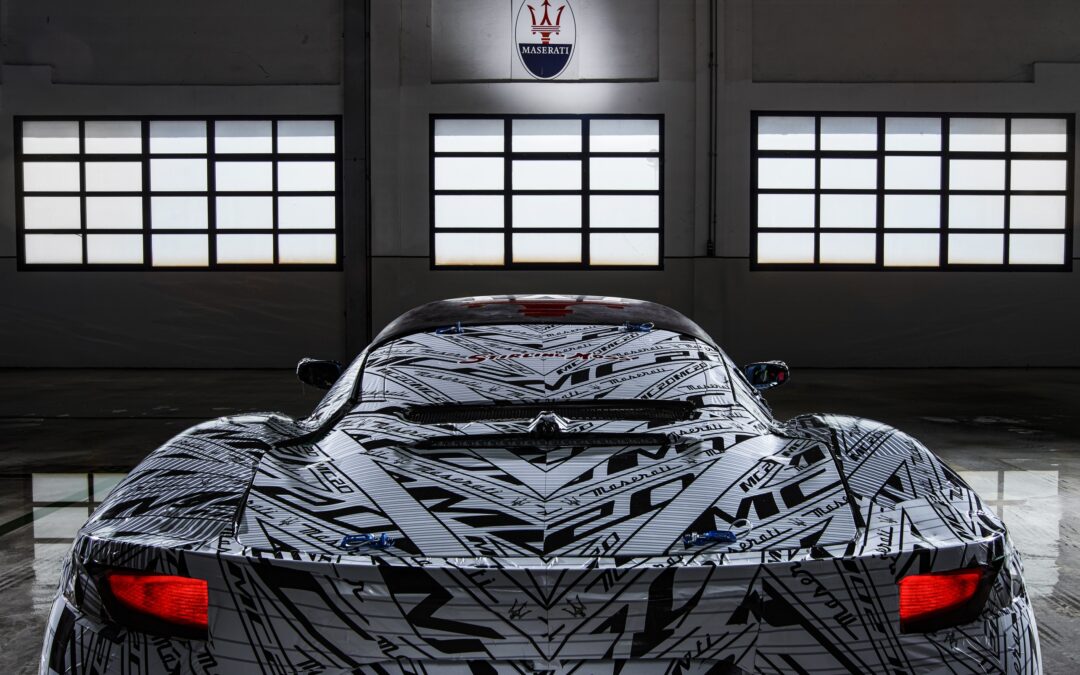
With the Stirling Moss “signature” for the MC20 prototype, Maserati commemorates one of the greatest names in the annals of world motorsports. (Maserati)
Unveiling planned for September at “MMXX: The Way Forward”
May 13 was a checkered-flag day for Maserati and Stirling Moss in 1956. The renowned British racecar driver won the Monaco F1 Grand Prix on that day, piloting a Maserati 250F. The victory stands out among the many trophies in the champion’s collection. And in tribute, Maserati announced on May 13, 2020, that a prototype of the Maserati MC20, the new Maserati super sportscar, will pay homage to Sir Stirling Moss, the British motor-racing ace who died April 12 at the age of 90. Testing of the Trident’s new super sports car continues.
The design used for this prototype is taken from the Maserati Eldorado, the iconic single-seater driven on its debut in Monza in 1958 by Stirling Moss at the “Trofeo dei due Mondi.” The “Race of the Two Worlds” was open to European and American cars.
The Maserati Eldorado (left), the 250F (right) and the Proto MC20. The historic racecars, both driven by Sir Stirling, are now in the Collezione Umberto Panini, Modena. (Maserati)
According to a report in DriveMag.com, the Maserati Eldorado, “wrote history as it became the first single-seater in Europe to be sponsored by a brand not connected to the world of motorsport — in this case, a company that made ice-cream [Eldorado Sud].”
The 1958 Eldorado was based on the Maserati 250F Formula One racer, according to a report in Wikipedia, and given the chassis number 4203. The car was then identified as the 420M/58. Its twin cam V-8 engine was adapted from the Maserati 450S endurance racer and was capable of speeds to 217 mph.
Details about the Maserati MC20 and the future business plan for the House of Trident will be revealed in September (pandemic allowing) at “MMXX: The Way Forward.” (Maserati)
An amazing win
It is very fitting that the Trident brand has chosen the date of May 13 to recall the great British driver, Maserati said in a statement. His victory that day at the Monaco Grand Prix was an amazing win. Moss led the race from the first to the last of the 100 laps around the winding Monaco circuit. It was a doubly good day for Maserati as the brand took third place as well — also in a 250F — by French driver Jean Behra.
Stirling Moss racing a 250F. (Maserati)
Moss, who recorded 16 victories in 66 starts in Formula 1 Grand Prix racing, is one of the most successful drivers never to have won the world title, a Maserati spokesperson said in the release. “Sir Stirling came within a whisker of the crown on more than one occasion, finishing in second place on four occasions, and third in three championships. For this reason, he was known as the ‘king without a crown.’ ”
In the 1956 season and some 1957 races, Moss drove a Maserati 250F (“his favorite,” he often recalled), beaten only by Juan Manuel Fangio. Moreover, Moss’ Argentinian rival took his 1957 title at the wheel of another 250F, confirming the reliability and superiority of the Modena-built car.
The Maserati Eldorado, commissioned to be driven by Stirling Moss, was a sponsorship venture by Eldorado Sud, an ice-cream company. (Maserati)
With the Stirling Moss “signature” for the MC20 prototype, Maserati commemorates one of the greatest names in the annals of world motorsports, who wrote some of the finest pages in its own racing history.
The list of Masers piloted by the British driver also includes the Tipo 60 Birdcage, Tipo 61 and 300 S.
Stirling Moss tests a Tipo 60 “Birdcage” in 1959 at Modena. (Maserati)
Important car for Maserati
The prototype of the MC20 is an important car for Maserati as it aims to return to a leading role on the racing circuits. Its most recent world championship was won in 2010 with another extraordinary car, the MC12.
The arrival of the MC20, “Maserati Corse 2020,” will be the first car to adopt a new engine 100 percent designed, developed and produced by Maserati, the spokesperson said. “But like all new Maserati models, it also will be available in an electrified version.”
The new MC20 sports car will be produced at the Viale Ciro Menotti plant in Modena, where major production line upgrades are underway. Maserati will mark the new era and relaunch of the Maserati brand and unveil the MC20 at its special event in September, “MMXX: The Way Forward.”
A big loss for Maserati and the entire motorsports world. Sir Stirling Moss passed the finish line April 12, 2020, at age 90. (Maserati)
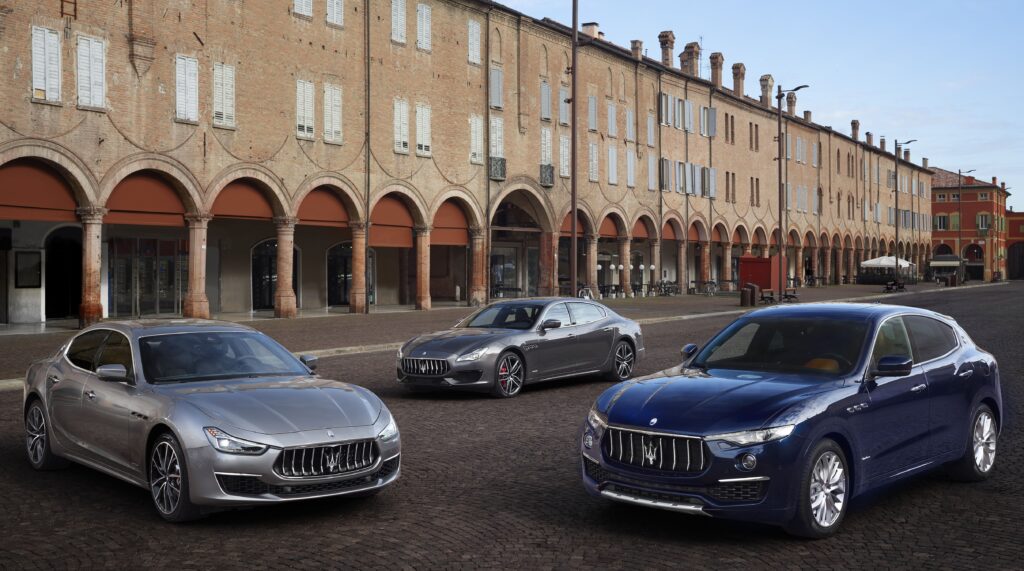
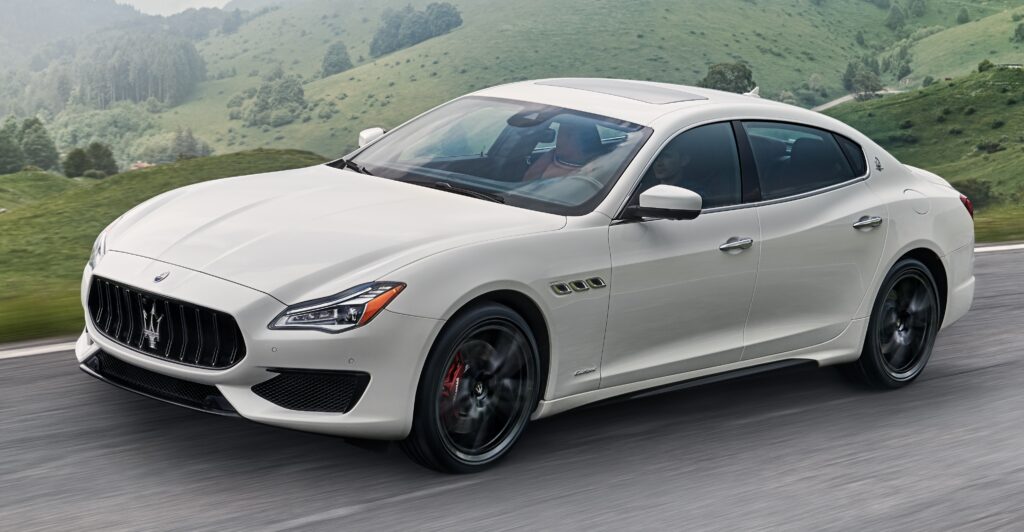
The current Maserati lineup is comprised of the Ghibli executive sports sedan, the sixth generation of the Quattroporte flagship sedan (center), and the Levante SUV. (Maserati)
Italian marque adds standard equipment, elevates luxury options
Italian luxury vehicle marque Maserati has been a manufacturer of racing and grand-touring cars since it was established on Dec. 1, 1914, in Bologna, Italy. The “House of Trident” will mark a new era for the future of mobility and the relaunch of the Maserati brand in September at “MMXX: The Way Forward,” when it will unveil the MC20 supercar at the special event. Follow the event at 2020 Modena.
The current Maserati lineup of vehicles is comprised of three models: the sixth generation of the Quattroporte flagship sedan, the Ghibli executive sports sedan (the brand’s first midsize sedan) and the Levante SUV. Production of the Gran Turismo coupe ($135,000) and GT convertible ($151,000) ended last year, but cars might still be available at dealerships.
] Here’s a look at what is new for the 2020 model year:
The Levante now has standard soft-close doors, heated leather sport steering wheel and a dual-pane panoramic sunroof. The S GranSport is shown. (Maserati)
Levante SUV
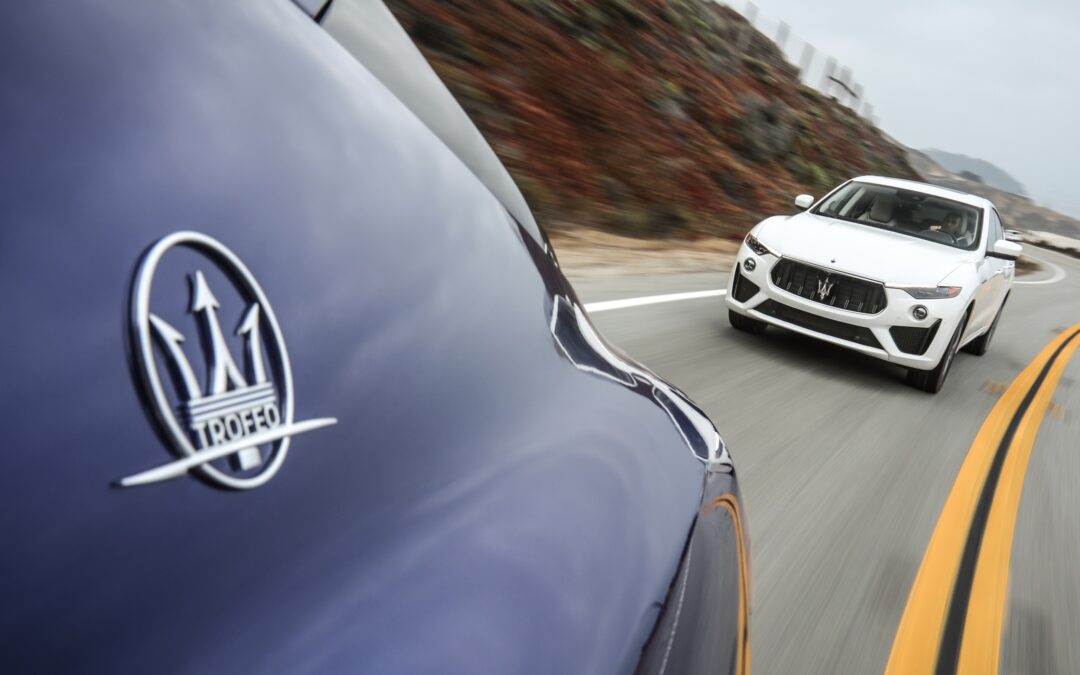
The brand’s first SUV is named for a warm Mediterranean wind that can change from light breeze to gale force in an instant. With near perfect 50/50 weight distribution, the Levante luxury performance SUV is powered by a choice of twin-turbo V-6 or V-8 engines. The two trim levels of V-6 have 345-hp in the base model and 424-hp in the Levante S. The V-8-powered GTS and Trofeo models have 550-hp and 590-hp. Starting prices range from about $75,000 to $170,000.
For 2020, entry models now have standard soft-close doors, heated leather sport steering wheel and a dual-pane panoramic sunroof. The driver assistance package and adaptive LED matrix headlamps are also standard on the Levante GranLusso, GranSport and GTS.
Interiors can be upgraded with the Ermenegildo Zegna PELLETESSUTA woven leather in one of the 50 limited edition GranSport models.
Soft-close doors, heated leather sport steering wheels and the driver-assistance package are among the updates for 2020. A SQ4 GranSport is shown. (Maserati)
Ghibli
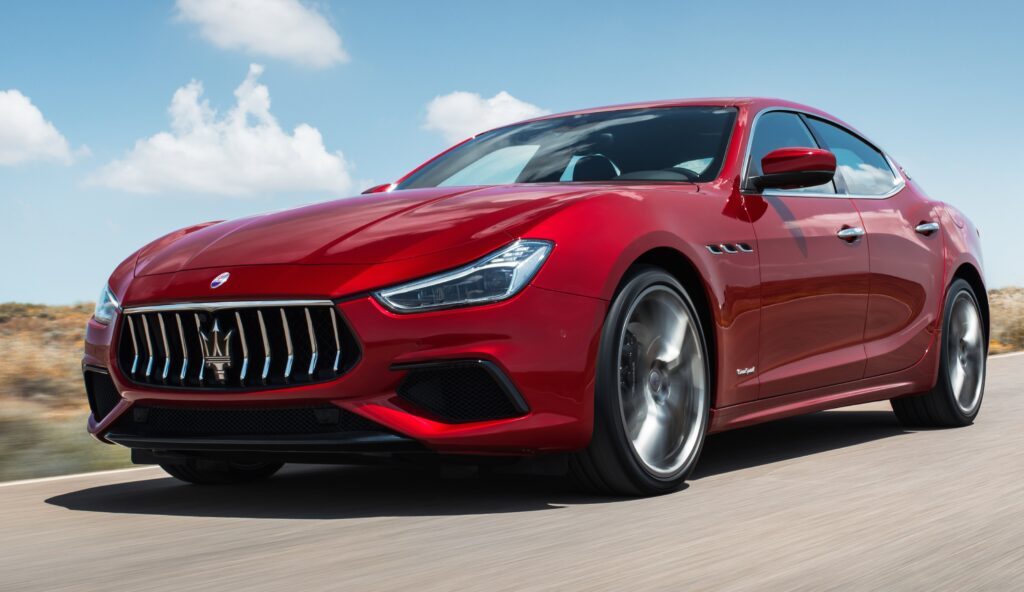
The midsize sport sedan takes inspiration from Maserati’s first 2+2 fastback and is named for an African desert wind. The Ghibli is available with a choice of two twin-turbo V-6 engines at 345-hp and 424-hp and available AWD on the 424-hp. Soft-close doors, heated leather sport steering wheels and the driver-assistance package are now standard on all GranSport and GranLusso trims for 2020, plus optional Skyhook Performance suspension on GranLusso trims. Starting prices range from about $71,000 to $80,000.
Column-mounted paddle shifters are offered for the S Q4 and S Q4 GranLusso. (Maserati)
Quattroporte
When it was first introduced in 1963, the Quattroporte was the world’s first luxury sport sedan and created the category, Maserati claims. The full-size flagship sedan has twin-turbocharged V-6 or V-8 powertrains. The 424-hp twin-turbo V-6 is available in rear- or all-wheel drive or in rear-drive only for the 523-hp twin-turbo V-8 model.
For 2020, optional column-mounted paddle shifters are offered for the S Q4 and S Q4 GranLusso. Soft close doors, heated leather and wood steering wheel, power rear sunblind and driver assistance package are all standard. Interiors can be upgraded with the Ermenegildo Zegna PELLETESSUTA woven leather in one of the 50 limited edition GranSport models.
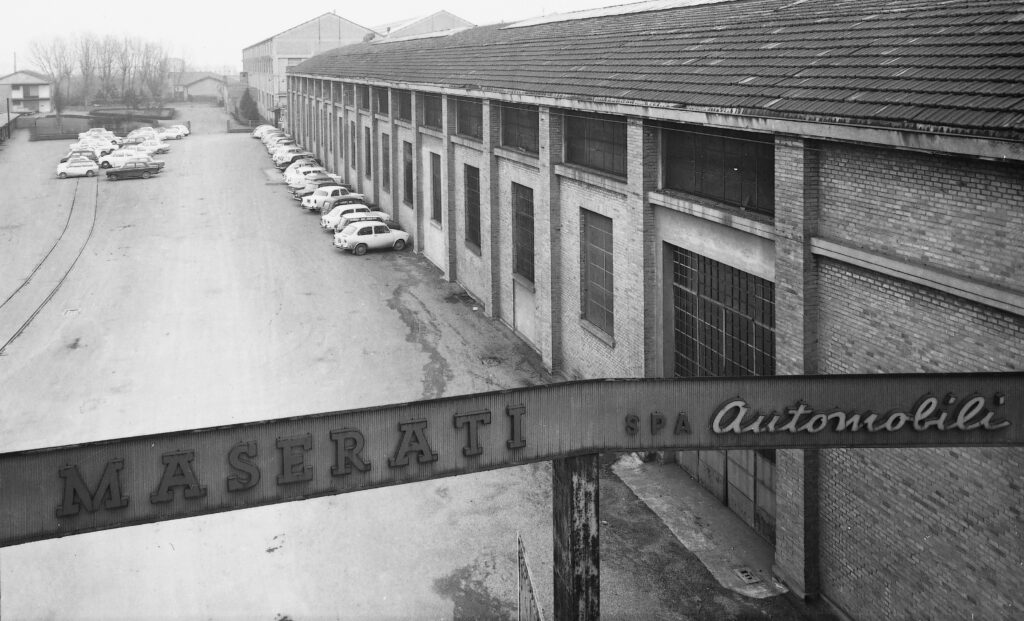
The entrance in 1965 to the Viale Ciro Menotti plant, in Modena. (Maserati)
Maserati vehicles are built at three locations: • The historic plant on Viale Ciro Menotti, Modena, opened in 1939, is currently undergoing major upgrades to accommodate the new MC20 super sportscar. • The Avvocato Giovanni Agnelli Plant in Grugliasco, in Turin, constructs the Quattroporte and Ghibli sedans. • The Levante SUV is produced on its own line in the Turin Mirafiori complex.
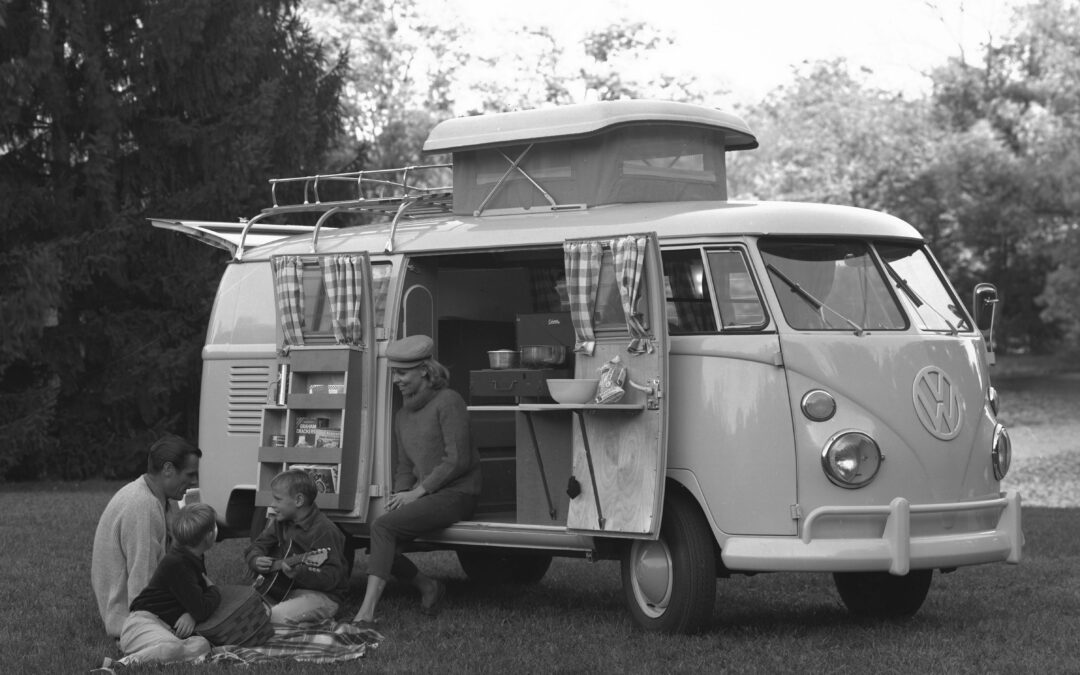
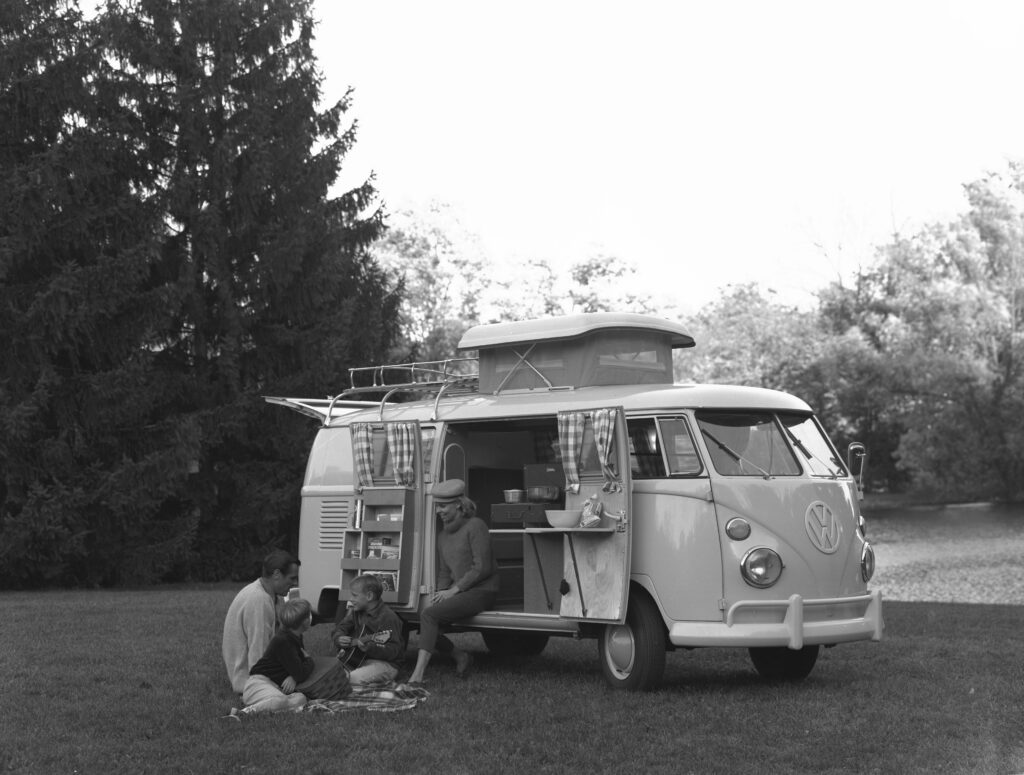
The versatile Volkswagen Type 2, known officially as the Transporter, Kombi or Microbus, was available in several body styles, from panel van to single- and double-cab pickups. This camping van was a conversion by Westfalia, fondly referred to as a “Westy” featured an optional “pop up” top.
Ihave often thought it would be fun to own a Porsche tractor. Fortunately, my lust for the little red tractor was renewed with the debut of free Porsche coloring pages. The four coloring pages will help children and their parents be obedient lockdown participants.
The Porsche mascots, Tom Targa and Tina Turbo, are intended to influence young people to have fun coloring a Panamera sedan, a 911 police car, the tractor, and a vintage 356 model.
The Porsche-Diesel Super was manufactured by Porsche between 1956 and 1963, according to Wikipedia. It is powered by an air-cooled, four-stroke, 2466 cc, three-cylinder diesel.
Porsche From Home
And there also is a new website, PorscheFromHome.com, that is focused more on North America with an emphasis on social and digital media.
According to the website: “At a time when we need to stay apart, we have the opportunity to get closer together. Check out some ways to stay entertained and connected. #DreamsAreMadeAtHome.
The site has downloadable Porsche coloring pages for the Panamera, Taycan, 718 spyder, Targa, Cayenne, and 911 GT3. And also relevant these days for video conferencing are backgrounds with some of your favorite Porsches.
So, as the website suggests, share some Porsche from home while you are staying safe at home.
The Porsche Cayenne SUV is now the brand’s top seller in the U.S. Fortifying sales this year is the four-door, fastback Coupe model. Sharing a foundation and mechanicals with the squared-off Cayenne, the hunky stance of the Coupe is a fusion of style and skill.
And so what if this variant costs about $8,500 more than its donor for a few fewer cubic feet of cargo capacity?
It is the Cayenne Coupe’s muscular 911 lines for which the buyer will gladly pay to participate for the prestige of owning a Porsche. It’s not all about vanity, though — the Coupe will take corners with sports-car finesse and it can bring home a load of firewood.
This third-generation Cayenne is a Volkswagen Group architecture that has been repurposed, reformatted, and restyled as the Audi Q7 and Q8 Sportback, Lamborghini Urus and Bentley Bentayga, if not other nameplates in the global VW family.
To create the Coupe body, the windshield and A-pillars are shallower and the roofline is 0.78 inches lower with a fixed rear spoiler. For its more muscular stance, the rear track was widened by 0.70 inches and redesigned rear doors and quarter panels broaden the shoulders by 0.7 inch. To compensate for the lower roofline, the second-row 2+2 seats sit lower in the vehicle, but headroom is still accommodating at 37.4 inches.
The midsize cabin is broad enough to ergonomically place controls and digital screens.
Cayenne Coupe Pricing
The Cayenne Coupe is a versatile variant sold in turbocharged V-6 and V-8 gasoline-powered models. And there are two gasoline-electric plug-in hybrid models that leverage power over fuel savings.
All models are all-wheel drive with an eight-speed automatic transmission. Starting prices for the gas models range from about $76,000 to $131,000 to the topline Turbo Coupe.
Today’s Cayenne S Coupe tester starts at $89,950, including the $1,350 freight charge from Bratislava, Slovakia. With options totaling $12,260 the as-tested price was $102,110. And I still would have wanted a few more convenience features.
Standard S Coupe features include the Sport Chrono performance package, eight-way sport seats, an adaptive roof spoiler, panoramic fixed glass roof, park assist tones (front and rear), and Porsche Active Suspension Management. Twenty-inch alloy wheels are standard with options for 21- and 22-inch tires and wheels.
The hands-on relationship of the Coupe S is immediately sensed in the steering, braking, and suspension.
Cayenne Hybrid Models
There are two Porsche Cayenne E-Hybrid models. Both use a 14.1 kWh lithium-ion battery and have estimated driving ranges of 20-22 miles and up to 41 mpg-e average fuel economy.
The E-Hybrid Coupe, $87,750, uses a single turbocharged 3.0-liter V-6 with a combined 455-hp. It can accelerate from 0-60 mph acceleration in 4.7 seconds — and that is with a curb weight of 5,265 pounds.
The Turbo S E-Hybrid Coupe, $165,750, launches to 60 mph in 3.6 seconds with its twin-turbocharged, 4.0-liter V-8. Its combined engine-motor horsepower is 670 with 567 lb.-ft. torque from 1,960-4,500 rpm. And it weighs 5,673 lbs.
The shift console is an electronic array with touch-sensitive buttons with a haptic response to show activation.
Porsche Cayenne Coupe Powertrains
Buying a Porsche is a numbers exercise: How quick to 60? How fast from 60 to zero mph? And how much?
The base Coupe is the welcome wagon for those who don’t care about performance numbers but want the brand prestige and sexy styling. The S Coupe is the enthusiast’s number for the purity of Porsche performance. And the Turbo is for those who don’t have to ask “How much?”
The base model is powered by a 335-horsepower, single turbo 3.0-liter V-6 with 332 foot-pounds of torque from 1,340 to 5,300 rpm. Porsche cites 0-60 mph in 5.7 seconds.
For another $13,300, the S model is a full second quicker to 60 with its 434-hp 2.9-liter twin-turbo V-6 and 405 lb.-ft. torque from 1,800 to 5,500 rpm.
And the mighty Turbo Coupe, with its 541-hp twin-turbo 4.0-liter V-8, is yet another second quicker, propelled by 567 lb.-ft. torque from 1,960 to 4,500 rpm — for $41,500 above the S Coupe.
The S model has an impressive 434-hp from its twin-turbocharged 2.9-liter V-6.
Cayenne Coupe Performance
The hands-on relationship of the S Coupe is immediately sensed in the steering, braking and suspension. It is a buffet of fine-driving skills neatly served with a platter of power.
Acceleration in standard driving mode is focused on meeting fuel economy, which isn’t egregious at 18 mpg city, 22 highway and 19 mpg combined on the required premium fuel. I was averaging 19-21 mpg in daily driving and up to 24.2 on extended highway driving. The hefty 23.7-gallon tank will allow a generous cruising range, even at 18 mpg.
But fuel efficiency depends on the performance mode: Normal, Individual, Sport and Sport-plus. My preference was Sport, which quickened throttle response and got me away from the light with no hesitation, but my go-to was Sport-plus for its overall tighter suspension, steering, and launch control. Engine stop-start at idle is also deactivated in the Sport modes.
The performance modes are engaged via a small dial at the lower right spoke of the steering wheel. It seems like an odd placement, but it works well and takes away another switch on the shift console.
Sport Exhaust upgrade
To let others know of your arrival, there is a sport exhaust upgrade with more relaxed silencers for $3,220. But I felt the standard exhaust was communicative enough.
And while you are adding features, the performance package, $4,900, adds rear-axle steering, adaptive air suspension, and a sport exhaust system with tailpipes in black or silver. My driving style would not require such advanced levels and the tester was optioned with the adaptive air suspension, $2,170.
The S model rolls with 21-inch Pirelli P Zero tires, 285/40 ZR at the front and 315/35 ZR rear.
Ride and Handling
The Porsche Cayenne Coupe air suspension was never harsh, never soft but always ready to clip an apex and find a new way home. The driver can feel the steadiness of the chassis through the steering wheel. And there is barely any turn-in transition as the suspension prepares for cornering maneuvers or rolling across speed bumps.
Curb weights are substantial, even with the aluminum hood, tailgate, doors, fenders, roof and suspension pieces. Weights range from 4,663 pounds for the base model to 4,725 for the S model and on to 5,024 lbs. for the Turbo. Consequently, four-wheel disc braking is a three-bear choice:
The base model gets internally vented 13.8-inch rotors front, 13 inches rear with four-piston calipers front and two-pistons rear.
The S stopping power is enhanced with internally vented 15.3-inch rotors with six-piston calipers 13-inch rotors rear with four-piston calipers.
The Turbo gets 16.3-inch internally vented rotors front, 14.3 inches rear with 10-piston front, and four-piston rear calipers.
Cayenne Coupe Turbo Coupe Options
Turbo owners also can opt for a carbon-fiber roof option, $11,570, to save about 48 pounds. The big package includes a suite of upgrades:
Sport Design Package in exterior color
Carbon interior package
Carbon fiber rear diffuser
Heated multifunction steering wheel in Alcantara
22-inch GT Design wheels in satin platinum
Standard Interior in black with silver houndstooth
Matte black air-intake grilles and matte black airblades
Alcantara headliner
Sport exhaust system
To compensate for the lower roofline, the second-row 2+2 seats sit lower in the vehicle, but headroom is still accommodating at 37.4 inches.
Disc Brake Upgrades
For stable braking under extreme use, Porsche has added a new brake upgrade. The Porsche Surface Coated Brake system, $3,490 (but standard on Turbo Coupe), has an exceptionally hard tungsten-carbide coating, Porsche says, that is combined with fade-resistant brake pads. Compared to conventional gray cast-iron brakes, the new discs generate up to 90 percent less brake dust, Porsche says. A side effect of the disc treatment will be a polished surface after several hundred miles of driving. It is also intended to prevent the flash rust that appears on brake rotors when the vehicle sits after driving in the rain. The option includes white calipers to show off the brightness.
And when the cost is no matter, the $9,080 ceramic composite brake upgrade (with carbon fiber-reinforced discs) adds 17.3-inch internally vented and cross-drilled rotors at the front and 16.1-inch discs rear, with bright yellow 10-piston calipers front and four-piston rear. (Big steel disc brakes are very heavy and the ceramic option would cut the weight by around 50 percent, Porsche says. For those who participate in slalom racing, the cost to weight savings might be important. But for a daily driver, my choice would be the Surface Coated Brake system.)
Off-Roading, if you dare
Porsche offers an overkill for an off-road suspension package, $2,170, for those brave enough to risk an $800 metallic paint upgrade or a $3,150 special paint color (Cashmere Beige Metallic, Chalk or Lava Orange). The only no-cost colors are white and black.
The adaptive three-chamber air suspension (standard on Turbo Coupe), also adds forged aluminum suspension links at the rear. And there are five ride heights ranging from a load-level of 5.9 inches to 9.6 inches for trail driving, and up to about 20.6 inches of water-fording depth.
The standard panoramic fixed glass roof (with sunshade) is especially enjoyable for back-seat passengers.
Cayenne Safety Features
Standard safety features include 10 air bags, a forward collision warning with automated emergency braking, pedestrian and cyclist alerts. Other advanced and optional features include lane-keep assist and adaptive cruise control with stop-and-go function.
Porsche’s electronic co-pilot InnoDrive uses navigation data to calculate rates of optimum acceleration and deceleration for the next 1.8 miles. Controls are activated via the engine, transmission, and braking. The system factors corners, gradients, and maximum speeds and monitors current traffic conditions using radar and video sensors. Porsche says this exclusively developed system can even recognize roundabouts and will adjust vehicle speed to negotiate the circle.
The tester had none of the advanced technologies for assisted driving and instead relied on the driver to steer, stop, brake, and pay attention to the road. And that was just fine by me; there were no intrusive warning alerts or subtle steering assistance.
For commuters who want the electronic backup, the $6,240 assistance package adds a surround-view camera, head-up windshield display, InnoDrive co-pilot, adaptive cruise control and traffic jam assist, lane keep assist, traffic sign recognition and night vision assist.
The Cayenne Cargo space has a low liftover, with ride-height switches.
Interior Function
The Porsche Cayenne Coupe is easy to live with and accommodating as your version of the 911 coupe but with legitimate back seats and usable cargo space. The turning circle is broad but manageable at 39.8 feet, but the rear-axle steering option ($1,620) will trim that span by almost 2 feet, to 37.8 ft.
The cabin and cockpit are driver and passenger-friendly. Sightlines are open at the side mirror and across the hood, but the rearview is cropped by the slim rear glass and wrap of the rear roof pillars.
The 12.3-inch wide infotainment screen isn’t prone to wash out in sunlight and is simple enough to use. The rearview camera image is large and while there are front and rear parking assist tones, a more helpful 360-degree camera system is a $1,200 option.
Porsche offers a 55-piece tool set accessory in a leather case ($403).
The eight-way power-adjustable front sport seats are firm but still comfortable after a three-hour run. But for those who appreciate more lower back support, lumbar adjustment is added in the 14-way power seat upgrade, $1,290. And there is an 18-way power seat upgrade for $1,710.
With the tester’s leather upholstery upgrade ($3,750), I’d recommend the ventilated seat upgrade, $850, for those in warm climates. Seat heaters are $530 and a heated steering wheel is $280.
The midsize cabin is broad enough to ergonomically place controls and digital screens. The shift console is an electronic array with touch-sensitive buttons with a haptic response to show activation.
The console isn’t big on small-item storage, but there is a new phone slot and charging ports in the armrest console box. Wireless charging is an option. The visors do not slide and driver’s left coverage is poor with a gap between windshield and visor where morning or evening sun presents a problem.
The performance modes are engaged via a small dial at the lower right spoke of the steering wheel.
Comfort Access
The Comfort Access option, $940, gives a complete keyless unlocking setup and a foot-activated tailgate. Without it, the driver must use the key fob to unlock the doors, then put the fob back in pocket or purse and start the car using the ignition stub, to the left of the steering wheel, of course, in the Le Mans style.
The other notchy thing was the electric activation of the gear shift. After a week of driving, I was still fumbling to press the engagement button on the front of the shift lever. But at least there is a gear-shift console and not a shifter “stalk” on the steering column.
Back Seats and Cargo
The standard panoramic fixed glass roof (with sunshade) is especially enjoyable for back-seat passengers. Seat comfort is quite firm with adult-class thigh support and seatback recline. Conveniences with the S Coupe are spartan with no electronic temperature or fan-speed controls, but there are two charging USBs. The 2+2 seating configuration has a no-cost option for a 2+1 “comfort” back seat with a third seat belt for the narrow center position.
The back end has a square space of 22 cubic feet behind the second row or up to 54.3 cu. ft. with the seatbacks folded for about 6.3 feet of length. Access to the space is particularly smart because of the low liftover (with ride-height raising or lowering switches) and the wide 43-inch-wide opening offers comfortable tailgating potential because there is no protruding rear fascia. It’s a good space to sit and pull on shoes, boots, or wetsuits.
New owners can take advantage of the Porsche Experience Center Delivery in Los Angeles for $535 or $465 in Atlanta.
Why Buy the Porsche Cayenne Coupe?
Buying a new Porsche is always special and new owners can christen their purchase with delivery and track time at a Porsche Experience Center, either in Los Angeles for $535 or $465 in Atlanta. The option includes special delivery of your new Coupe (or another model), a tour of the facility, lunch at Restaurant 356 overlooking the track, and a 90-minute instructed track session in an equivalent car.
The Cayenne Coupe has the purity of Porsche performance in an SUV with nothing to prove, except that there is almost no end to the customization options. Once a buyer chokes down the price, it tastes like “more” and there will be many rewards in ownership — with little remorse.
The Porsche Cayenne Coupe is easy to live with and accommodating as your version of the 911 coupe but with legitimate back seats and usable cargo space.
2020 Porsche Cayenne S Coupe AWD
Body style: midsize, 2+2 4- or 5-seat sportback SUV; w/aluminum hood, tailgate, doors, fenders and roof
Engine: 434-hp, direct-injection and twin-turbocharged 2.9-liter V-6 with auto stop-start at idle and coasting function; 405 lb.-ft. torque from 1,800-5,500 rpm
Transmission: 8-speed Tiptronic; active all-wheel drive with electronic and map-controlled multi-plate clutch with automatic brake differential and anti-slip regulation
Standard equipment includes: remote locking, 8-way power adjusted front sport seats, fixed panoramic roof, 10-speaker audio system, electric parking brake, electric folding and heated side mirrors, LED lighting (headlights, cornering lights, brake and running lights), stainless steel pedals, tinted and thermally insulated glass all around, park assist front and rear with reversing camera, analog dashboard clock and floor mats
Safety features include: 10 air bags, forward collision warning with automated emergency braking, pedestrian and cyclist alerts
PRICING
Base price: $89,950, including $1,350 freight charge; price as tested $102,110
Options on test vehicle: Carrera White metallic paint $800; slate gray leather interior $3,750; adaptive air suspension with PASM (stability management) $2,170; heated steering wheel $280; 21-inch RS Spyder design wheels and painted wheel arches $2,710; heated front seats $630; torque vectoring plus PTV+ $1,500; auto-dimming mirrors $420
Where assembled: Bratislava, Slovakia
Warranty: 4-years/50,000-miles bumper to bumper with 24-hour roadside assistance; 1-year/10,000-miles free first scheduled service
Teletouch transmission controls in the 1958 Edsel. (Ford archives)
The Edsel would not become the “entirely new kind of car” for which Ford had high expectations, but it did debut some innovative features. According to the history provided by Wikipedia, the technology and design features included the rolling-dome speedometer; warning lights for such conditions as low oil level, parking brake engaged, and engine overheating; and the push-button Teletouch transmission shifting system in the center of the steering wheel (a conventional column-shift automatic was also available at a reduced price).
The rolling-dome speedometer. (Ford archives)
Other Edsel design innovations include ergonomically designed controls for the driver and self-adjusting brakes (which Ford claimed for Edsel as a first for the industry, even though Studebaker had pioneered them earlier in the decade). Edsels also offered such features, advanced for the time, as seat belts (which were available at extra cost as optional equipment on many other makes) and child-proof rear door locks that could be unlocked only with the key.