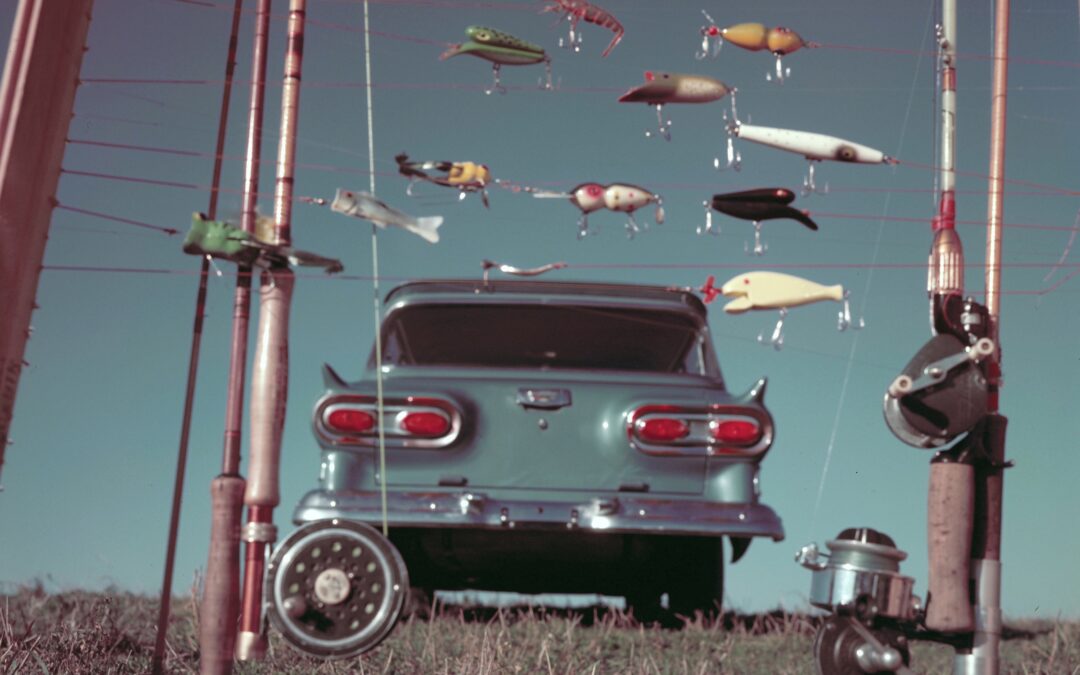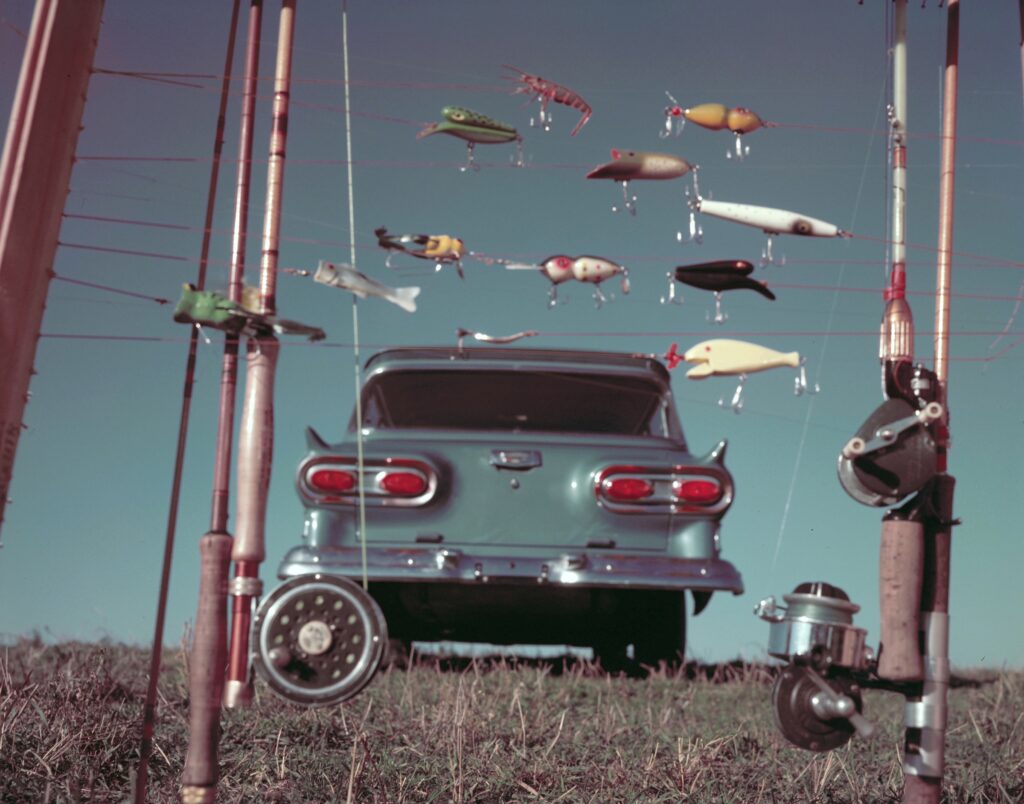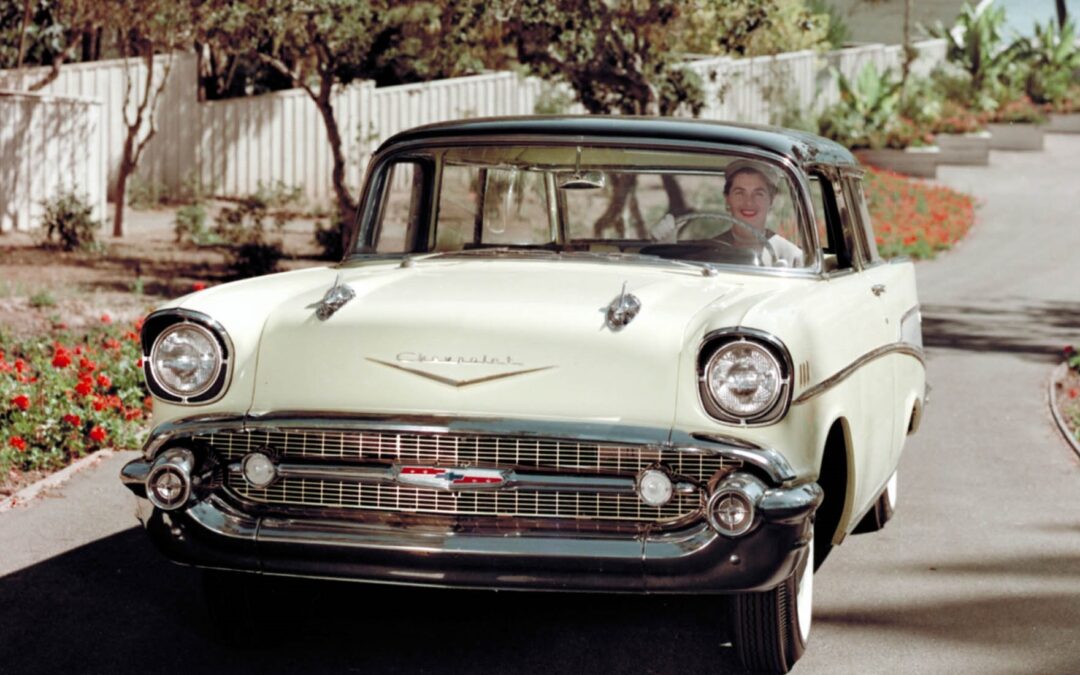
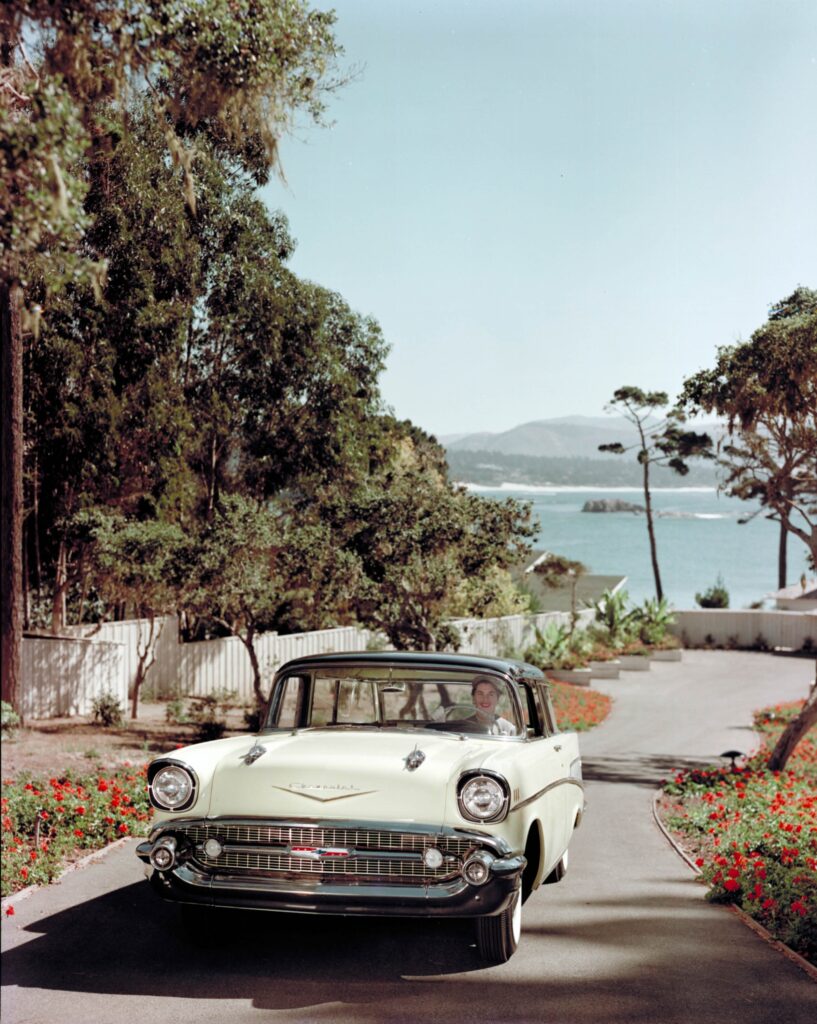
Ford took a first stab at navigation systems in 1964, revealing the Aurora concept car with a map that automatically adjusted to the vehicle’s location. Ford’s introduction of this technology came nearly 30 years before the first navigation system for automobiles was produced. (Ford archives)
Ford might have been angling to poach buyers who were considering Chevrolet’s Nomad wagon, but it didn’t work out that way. According to the report in Wikipedia, “The impetus for the creation of the Del Rio was Ford’s desire to remain in the two-door sport wagon market started by the Chevrolet Nomad and Pontiac Safari.
“While the Nomad was Chevrolet’s most expensive model, offering a premium vehicle with a show-car-inspired body style, the Del Rio was strictly based on an existing product, the utilitarian two-door Ranch Wagon, Ford’s least expensive station wagon, as part of the Custom 300 series.
“Beginning with the basic body, buyers of the Del Rio were offered a unique two-tone paint scheme (optional), better quality interior and exterior brightwork (including gold anodized aluminum accents) and a higher grade vinyl upholstery. Four-way power seats were available.
“While the Ford sold more Del Rios in 1957 (46,105) than Chevrolet did with its Nomad in its three years of production, Ford terminated the Del Rio program at the end of the 1958 model year after selling only 12,687 of its “sport wagons.”
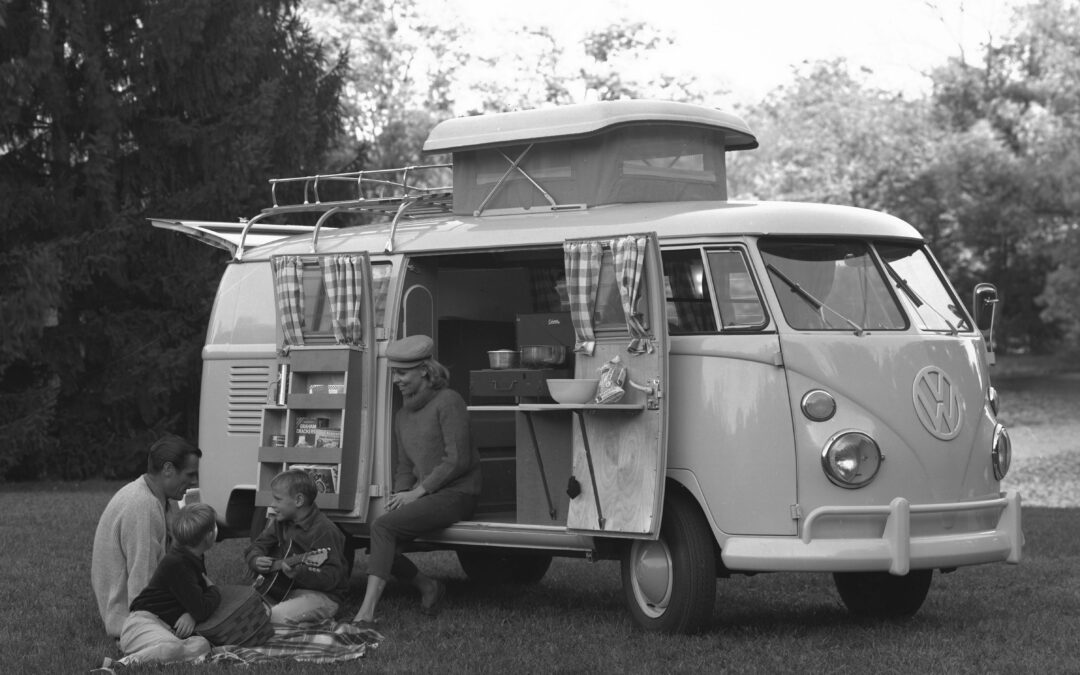
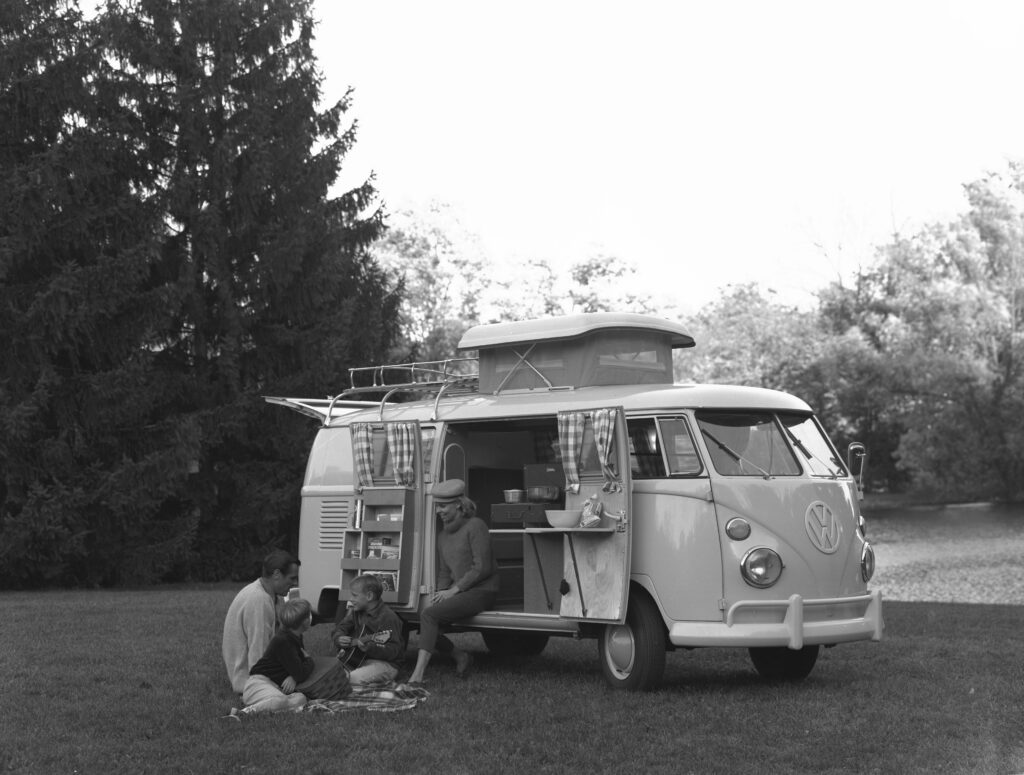
The versatile Volkswagen Type 2, known officially as the Transporter, Kombi or Microbus, was available in several body styles, from panel van to single- and double-cab pickups. This camping van was a conversion by Westfalia, fondly referred to as a “Westy” featured an optional “pop up” top.
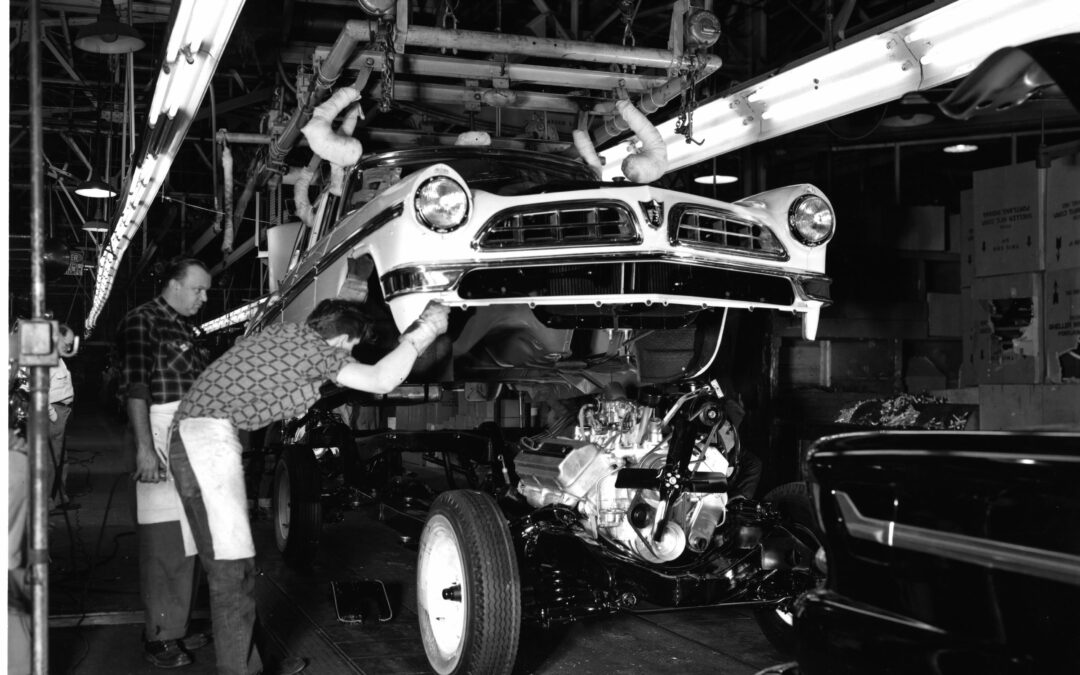
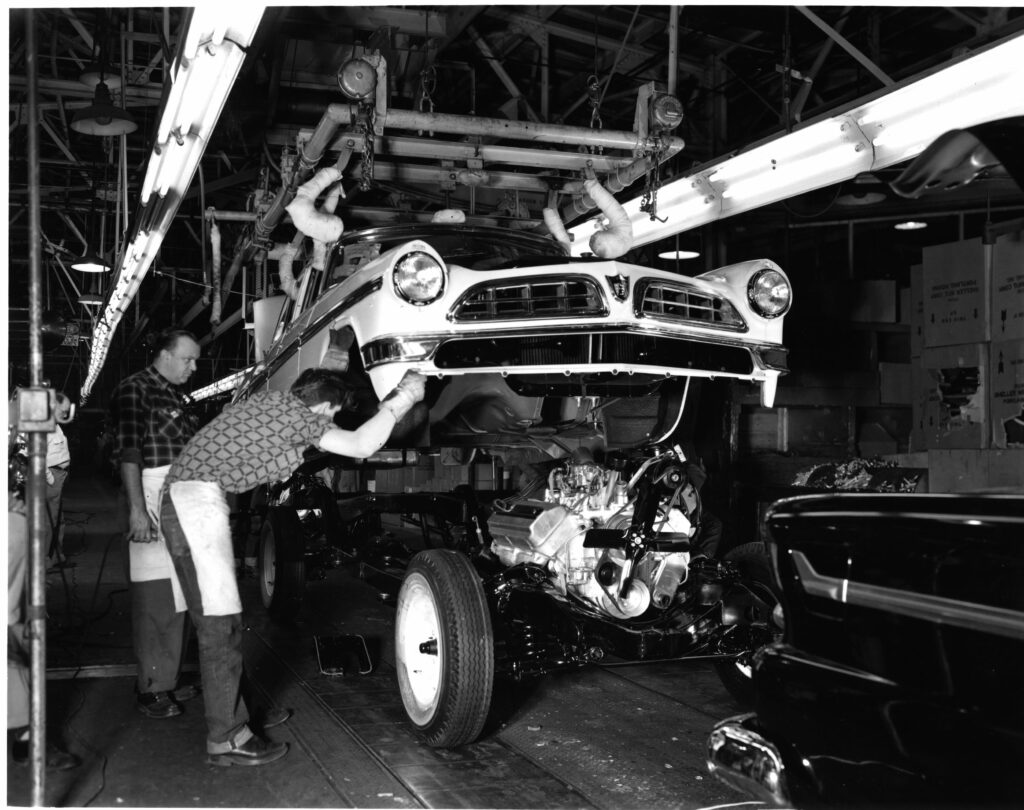
At Chrysler’s Jefferson Avenue plant, Detroit, Mich. (Chrysler archive)
This “body drop” appears to show an Imperial being mated with a Hemi V-8. According to Wikipedia, the “FirePower” V8 engine was Chrysler’s first-generation Hemi with a displacement of 331 cubic inches (5.4 liters) and developed 250 brake horsepower.
Teletouch transmission controls in the 1958 Edsel. (Ford archives)
The Edsel would not become the “entirely new kind of car” for which Ford had high expectations, but it did debut some innovative features. According to the history provided by Wikipedia, the technology and design features included the rolling-dome speedometer; warning lights for such conditions as low oil level, parking brake engaged, and engine overheating; and the push-button Teletouch transmission shifting system in the center of the steering wheel (a conventional column-shift automatic was also available at a reduced price).
The rolling-dome speedometer. (Ford archives)
Other Edsel design innovations include ergonomically designed controls for the driver and self-adjusting brakes (which Ford claimed for Edsel as a first for the industry, even though Studebaker had pioneered them earlier in the decade). Edsels also offered such features, advanced for the time, as seat belts (which were available at extra cost as optional equipment on many other makes) and child-proof rear door locks that could be unlocked only with the key.
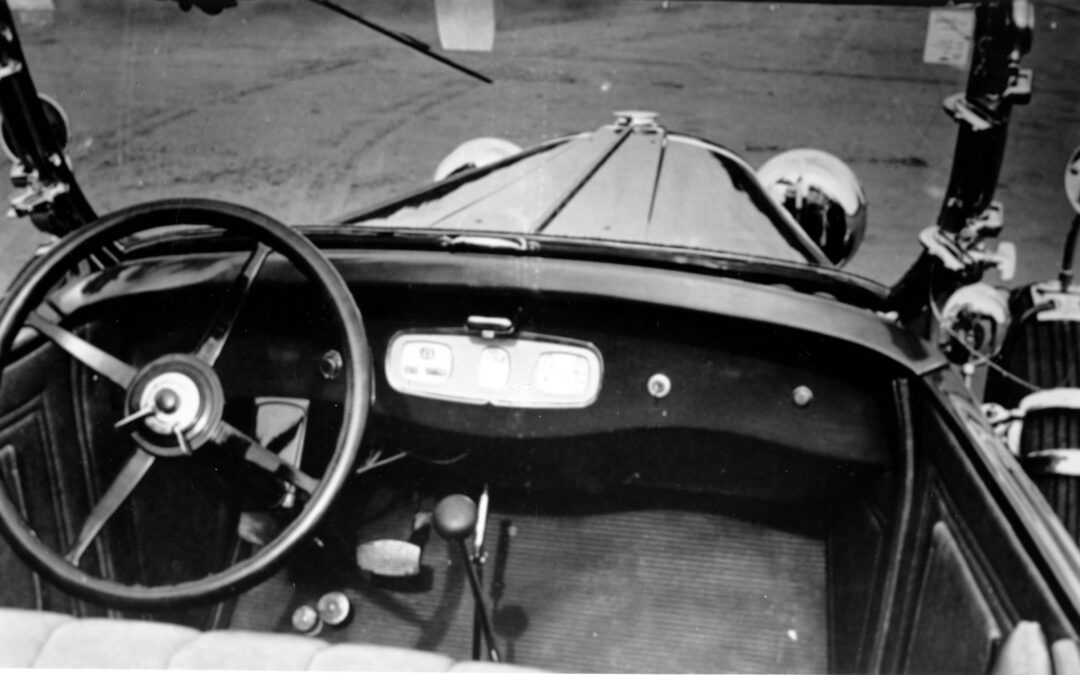
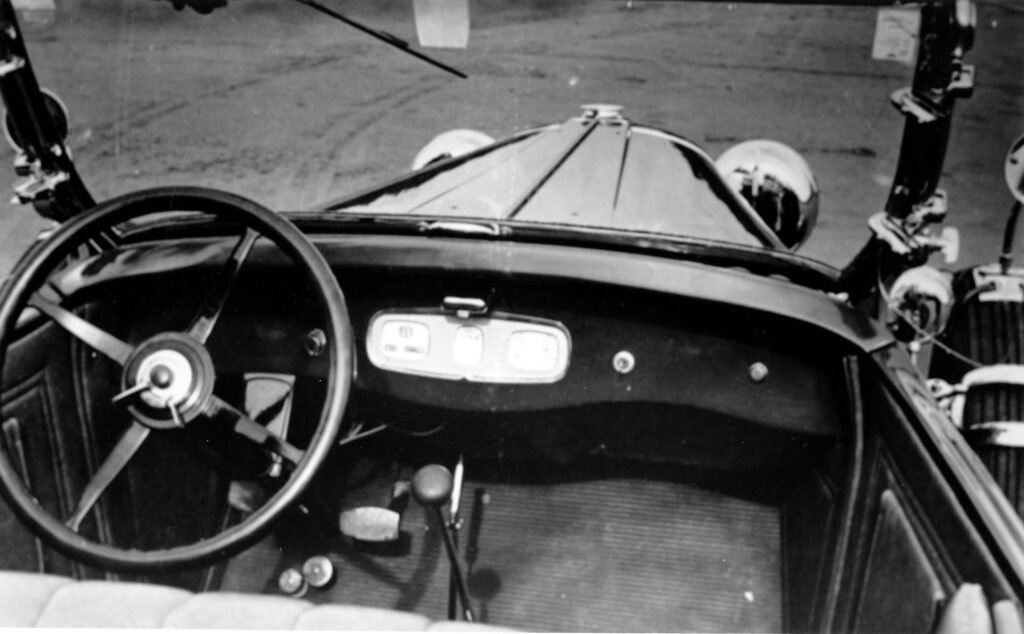
A dashboard from the new 1928 Dodge Victory Six. (Stellantis archives)
The 1928 Dodge Victory Six was offered in honor of the 10th anniversary of World War I, according to ConceptCarz.com. It was the brand’s first six-cylinder car (68 horsepower) and featured hydraulic brakes, unique for a low-priced car. It featured an all-steel body (built by Budd Manufacturing) at a time when most auto manufacturers still used composite metal and wood bodies.