Select Page

1933 Dodge Westchester Suburban

1933 Dodge Westchester Suburban
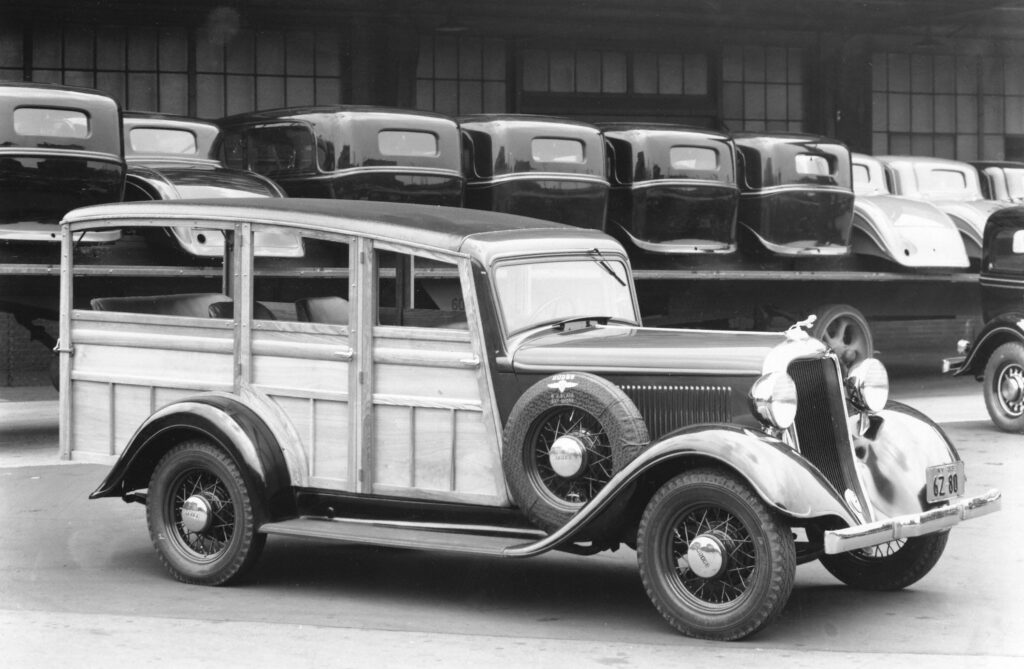
The 1930s Dodge Westchester woodie wagon.

The 1930s Dodge Westchester woodie wagons were all custom built. (Stellantis PR archives)

BY MARK MAYNARD

Not much is known about the Dodge Westchester Suburban woodies, according to an online report at SignificantCars. Research can confirm that Dodge and Plymouth offered similar models. None of the Plymouth woodies are known to have survived the ages and perhaps only one 1934 Dodge Westchester Suburban long-wheelbase woodie has survived.

Beginning in 1933 Dodge struck a relationship with U.S. Body and Forging Company in Tell City, Ind. Dodge would send commercial chassis to USBF where a custom-made wooden body would be assembled to the commercial 109-inch chassis.

Each vehicle was a custom order. Many were attractively finished and used as station wagons by the civilian population, but the versatile vehicle was found to be useful to the U.S. Army.

True production numbers are unknown as records were not kept on custom-built non-Dodge factory offerings. However, it is widely believed that the production figures are very low perhaps fewer than 40 units.

According to the Dodge Series D8 page in Wikipedia, there were 375 1938 “semi-custom ‘Westchester Suburban’ four-door woodie station wagon built. 

1968 Ford Bronco

1968 Ford Bronco
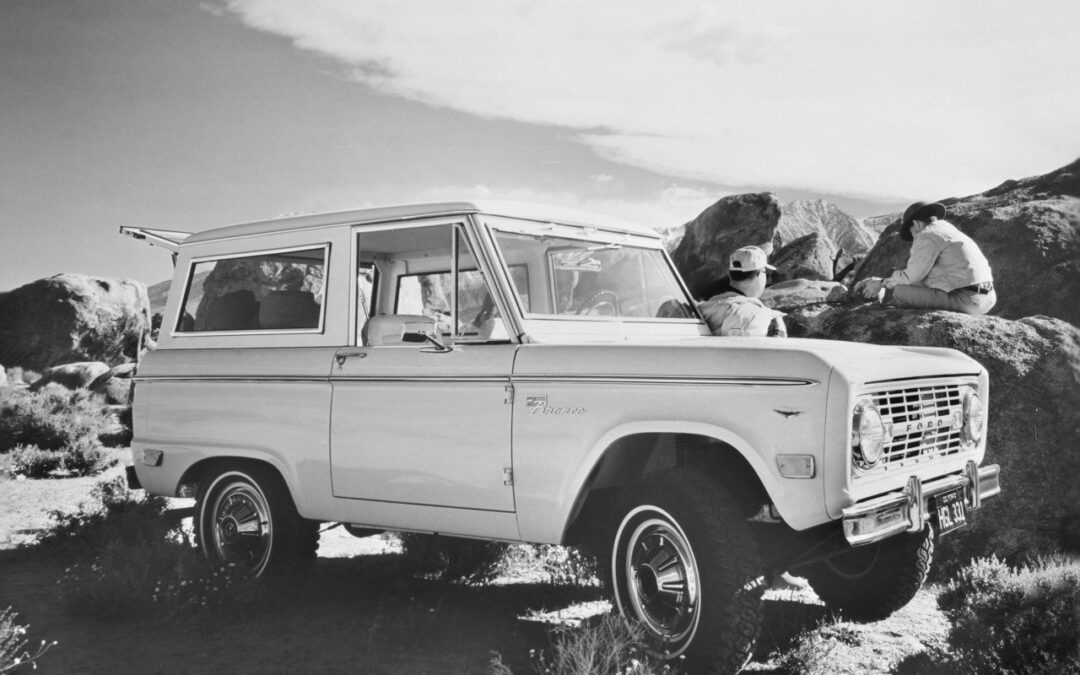
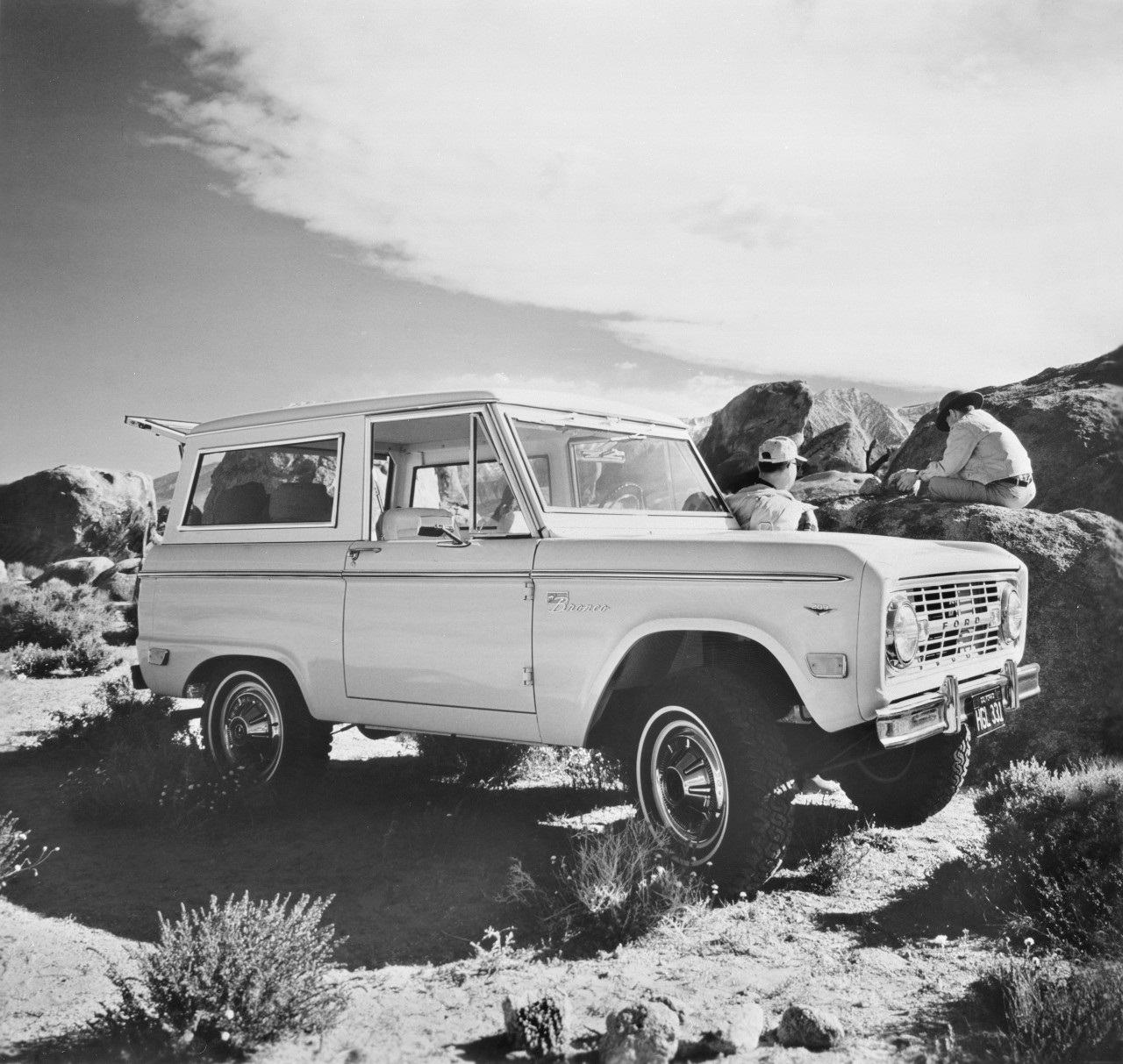
The first-generation of Broncos ran from 1966 to 1977.

The first generation of Broncos ran from 1966 to 1977. A 1968 model is shown. (Photos courtesy of Ford Motor)

BY MARK MAYNARD
Since Ford vowed in 2017 to bring back the Bronco, fans have eagerly awaited its return. Based on a foundation from the current-generation Ford Ranger, the reveal of the new midsize Ford Bronco is expected this July.

There were five generations of Ford Bronco, built from 1966 to mid-1996 when Ford announced the discontinuation of the Bronco to make way for the Expedition. The second generation was moved to a larger F-150 chassis to better compete with the Chevrolet K5 Blazer, Dodge Ramcharger, and Jeep Cherokee.

The first-generation of Broncos, from 1966 to 1977, had their own box-section, body-on-frame chassis, according to Wikipedia. Built on a 92-inch wheelbase it was sized between the Jeep CJ-5 and International Scout, the major competitors of its day.

To simplify production, all examples were sold with four-wheel drive, a shift-on-the-fly Dana 20 transfer case, and locking hubs. The rear axle was a Ford 9-inch axle with Hotchkiss drive and leaf springs. The front axle was a Dana 30, replaced by a Dana 44 in 1971.

All generations of Bronco to date have been built at Ford’s Michigan Truck Plant in Wayne, Mich. And the 2021 Ford Bronco, offered in two- and four-door body styles, also will be built at the nameplate’s birthplace, alongside the Ranger.

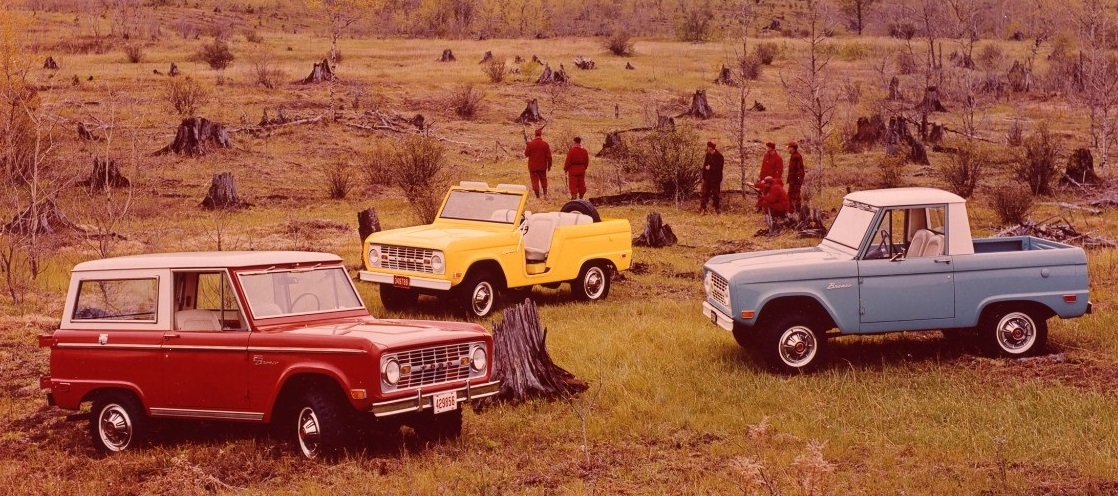
The first-generation Bronco was sold in three body styles: two-door wagon, half-cab pickup and open-body roadster. 

The first-generation Bronco was sold in three body styles: two-door wagon, half-cab pickup, and open-body roadster.

1928 GMC T-11 Canopy Express

1928 GMC T-11 Canopy Express
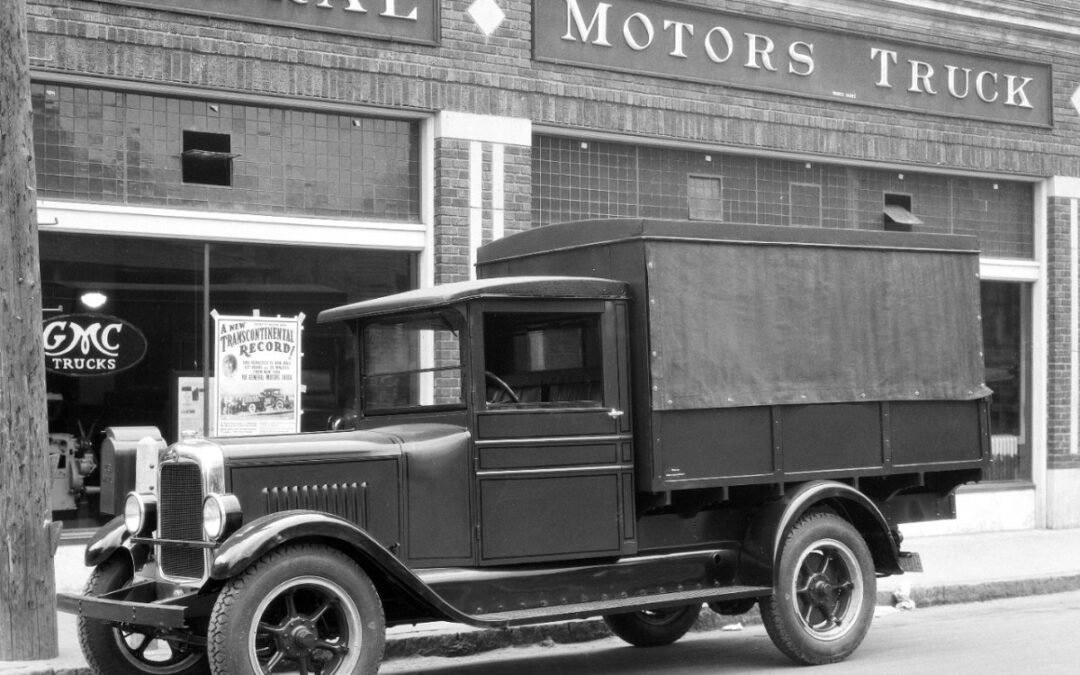
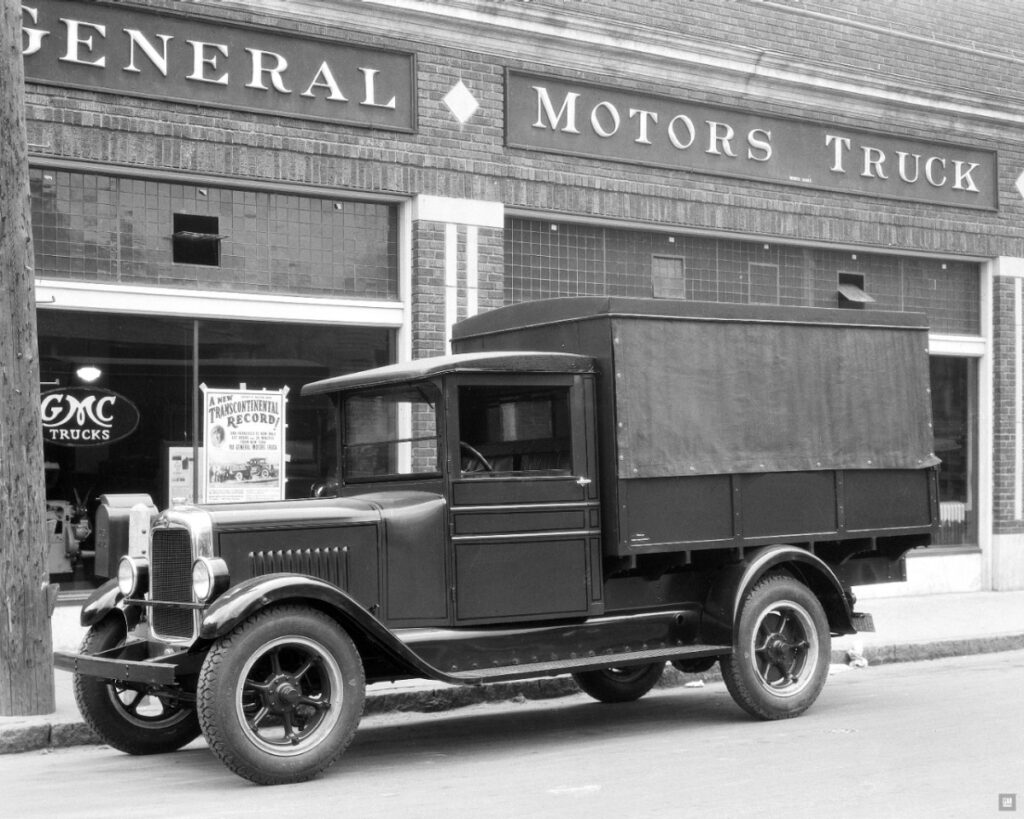
a 1928 GMC Canopy Express

The 1928 GMC Canopy Express used a Pontiac six-cylinder engine. (GM PR archives)

BY MARK MAYNARD

Beginning in 1920, GMC and Chevrolet trucks became largely similar, built as variants of the same platform, sharing much the same body sheet work, except for nameplates and grilles — though their differences, especially engines, have varied over the years, according to Wikipedia.

GMC advertising marketed its trucks to commercial buyers and businesses, whereas Chevrolet’s advertising was directed toward private owners.

Beginning in 1928, GMCs used Pontiac’s 186 cubic-inch six-cylinder engines in their lighter trucks. Medium-duty trucks relied on Buick engines, while the heaviest trucks used GMC’s own “standard Big Brute” engine.

From 1939 to 1974 GMC had its own line of six-cylinder engines, first the inline sixes known as “Jimmy’s” from 1939 to 1959, and then their own V-6 from 1960 until 1974, of which a V-8 and a V-12 version also existed. Additionally, from 1955 through 1959, the less than 2-ton, domestic GMC gasoline trucks were equipped with Pontiac, Buick, and Oldsmobile V-8s — whereas the Canadian models used Chevrolet engines.

Learn more about GMC truck history here.

Vin Car Pic: 1957 Chevrolet Bel Air Nomad

Vin Car Pic: 1957 Chevrolet Bel Air Nomad
1957 Chevy Nomad. (GM archive PR image)

Chevrolet calls out the 1957 Nomad two-door wagon in a release that highlights 24 vehicles that helped define the brand in the U.S. market. The strikingly sleek Chevy Nomad of 1955-1957 brought midcentury modern design to the utilitarian station wagon, according to the release.

“The Nomad got its name, along with its unique roofline and rear body treatment, from a 1954 GM Motorama Corvette concept wagon conjured up by GM design chief Harley Earl – father, as well, of the 1953 Corvette roadster. 

“Encouraged by the show car’s reception, and mindful that America’s burgeoning suburbs were absorbing ever more station wagons, Chevrolet developed the Nomad into a premium Bel Air-level “halo” model for their 1955-57 regular wagon lines. 

“The Nomad two-door sport wagon design was produced through 1957.  Each of the three model years still has its passionate followers — the original Nomads have never gone out of style.”

Vin Car Pic: The future of GPS circa 1964

Vin Car Pic: The future of GPS circa 1964
Ready for the big screen.

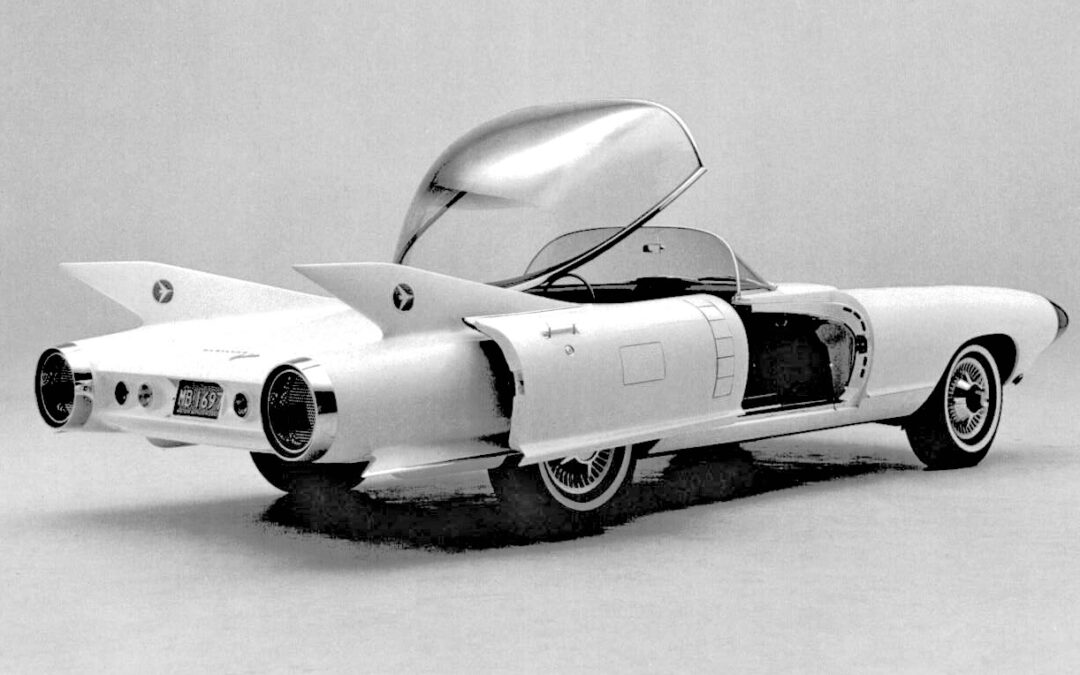
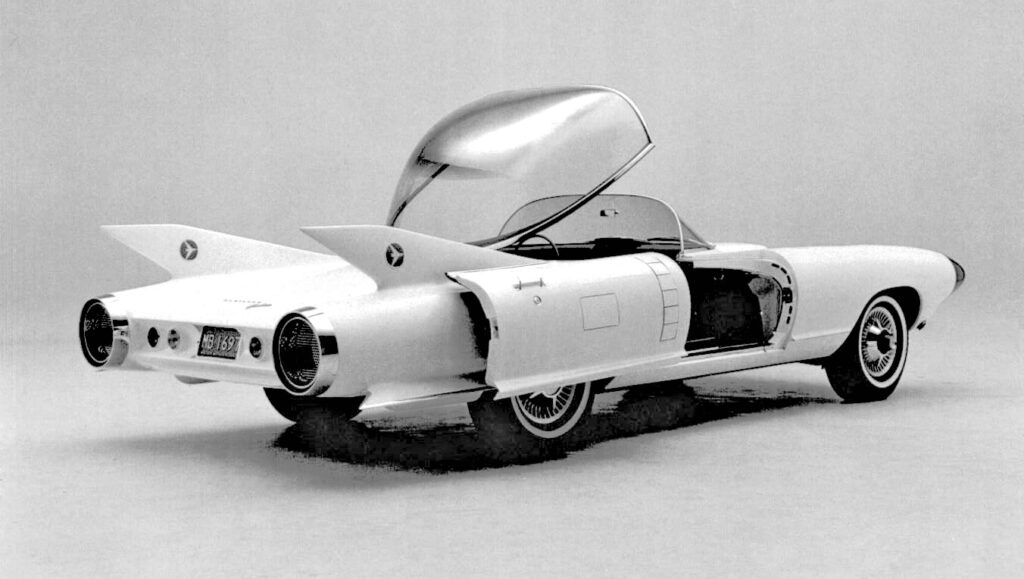
Ford took a first stab at navigation systems in 1964, revealing the Aurora concept car with a map that automatically adjusted to the vehicle’s location. Ford’s introduction of this technology came nearly 30 years before the first navigation system for automobiles was produced. (Ford archives)

Vin Car Pic: 1958 Ford Del Rio wagon

Vin Car Pic: 1958 Ford Del Rio wagon
1958 Ford Del Rio Ranch Wagon. (Ford archives)

Ford might have been angling to poach buyers who were considering Chevrolet’s Nomad wagon, but it didn’t work out that way. According to the report in Wikipedia, “The impetus for the creation of the Del Rio was Ford’s desire to remain in the two-door sport wagon market started by the Chevrolet Nomad and Pontiac Safari.

“While the Nomad was Chevrolet’s most expensive model, offering a premium vehicle with a show-car-inspired body style, the Del Rio was strictly based on an existing product, the utilitarian two-door Ranch Wagon, Ford’s least expensive station wagon, as part of the Custom 300 series.

“Beginning with the basic body, buyers of the Del Rio were offered a unique two-tone paint scheme (optional), better quality interior and exterior brightwork (including gold anodized aluminum accents) and a higher grade vinyl upholstery. Four-way power seats were available.

“While the Ford sold more Del Rios in 1957 (46,105) than Chevrolet did with its Nomad in its three years of production, Ford terminated the Del Rio program at the end of the 1958 model year after selling only 12,687 of its “sport wagons.”