Select Page

Vin Car Pic: Walter P. Chrysler

Vin Car Pic: Walter P. Chrysler
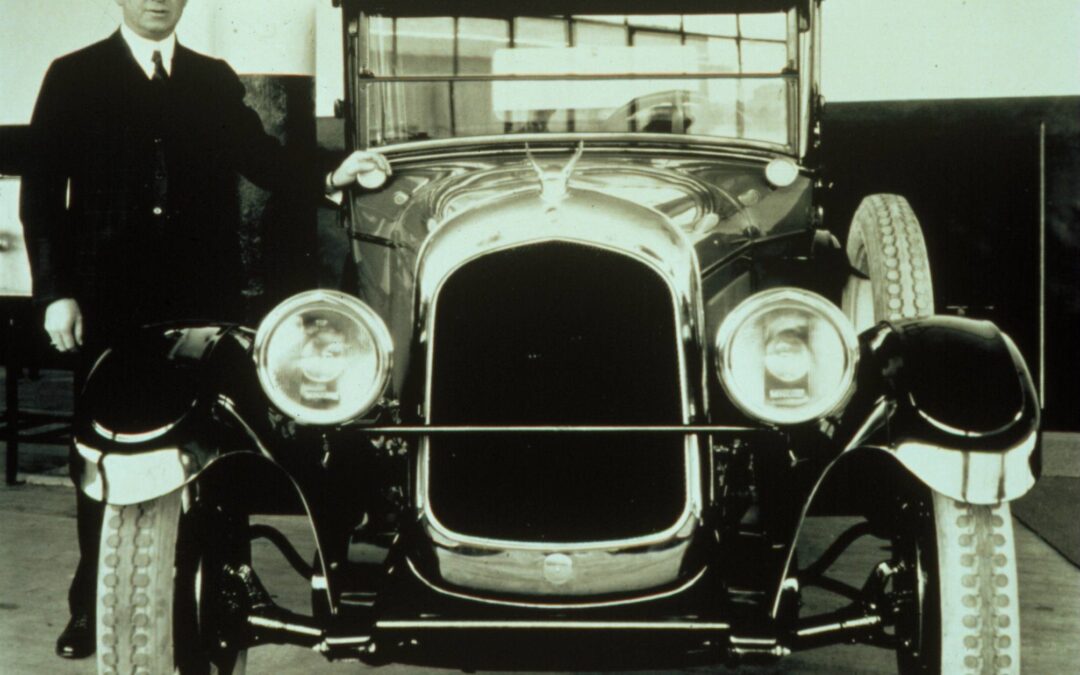
A black and white photo of Chrysler founder Walter P Chrysler standing along side a a1924 Chrysler Six

Walter P. Chrysler with his first eponymous named car in 1924. (FCA US archives)

BY MARK MAYNARD

On this day in automotive history, the founder of the Chrysler Corp., Walter Percy Chrysler, died on Aug. 18 1940 after succumbing to a cerebral hemorrhage.

According to AutomotiveHistory.org, Walter Chrysler was born in Kansas in 1875 and began his career as a machinist and mechanic in the railroad industry. His railroad career peaked as works manager of the Allegheny locomotive erecting shops of the American Locomotive Co., also known as Alco.

His introduction to the automotive business would come in 1911 when he was approached by James J. Storrow, an investment banker who was critical in the formation of General Motors just a few years prior.

Walter P. Chrysler with a 1924 Chrysler.

Walter P. Chrysler with a 1924 Chrysler. (FCA US archives)

Walter Chrysler made his final resignation from railroading to become works manager (in charge of production) at Buick in Flint, Mich., according to Wikipedia. He found many ways to reduce the costs of production, such as putting an end to finishing automobile undercarriages with the same luxurious quality of finish that the body warranted.

The Chrysler 70 debuted with a six-cylinder engine in January 1924. It was marketed as an advanced, well-engineered car at a more affordable price than the competition. (Elements of this car are traceable back to a prototype that had been under development at Willys when Chrysler was there.)

The original 1924 Chrysler included a carburetor air filter, a high-compression engine, full-pressure lubrication inside the engine, and an oil filter, at a time when most autos came without all these features.

a black white photo of a 1924 Chrysler Touring model

The 1924 Chrysler Touring. (FCA US archives)

Among the innovations in its early years would be the first practical mass-produced four-wheel hydraulic brakes, a system nearly completely engineered by Chrysler with patents assigned to Lockheed.

Chrysler pioneered rubber engine mounts to reduce vibration, Oilite bearings, and superfinishing for shafts.

Chrysler also developed a road wheel with a ridged rim, designed to prevent a deflated tire from flying off the wheel. The auto industry eventually adopted this safety wheel worldwide.

Vin Car Pic: 1954 Chevrolet Corvette Corvair concept

Vin Car Pic: 1954 Chevrolet Corvette Corvair concept
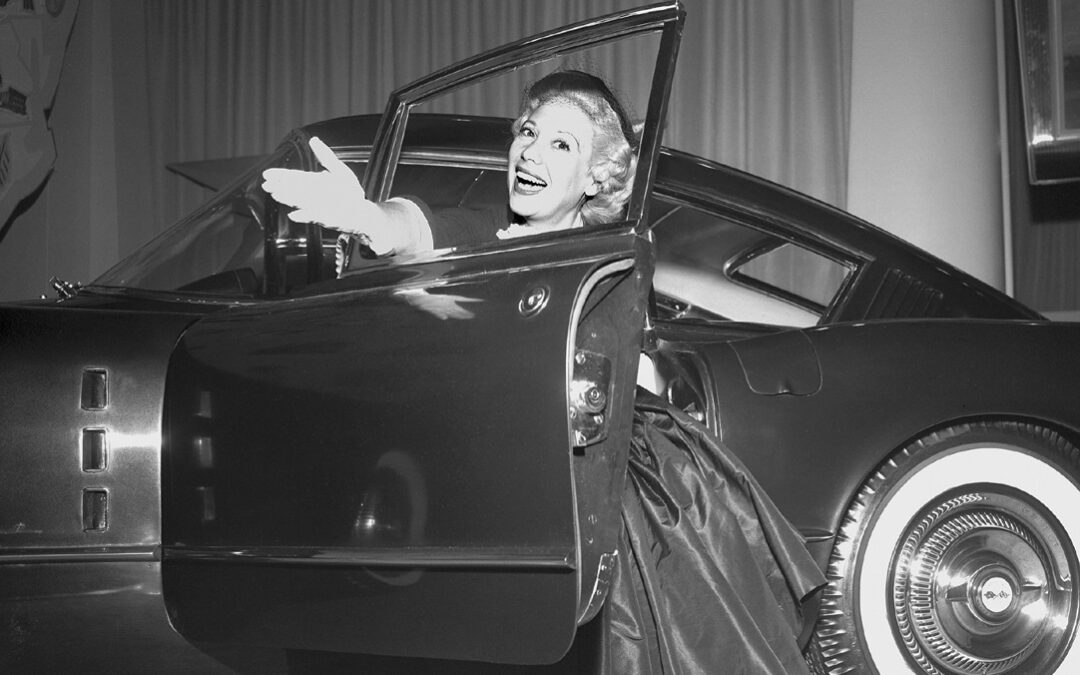
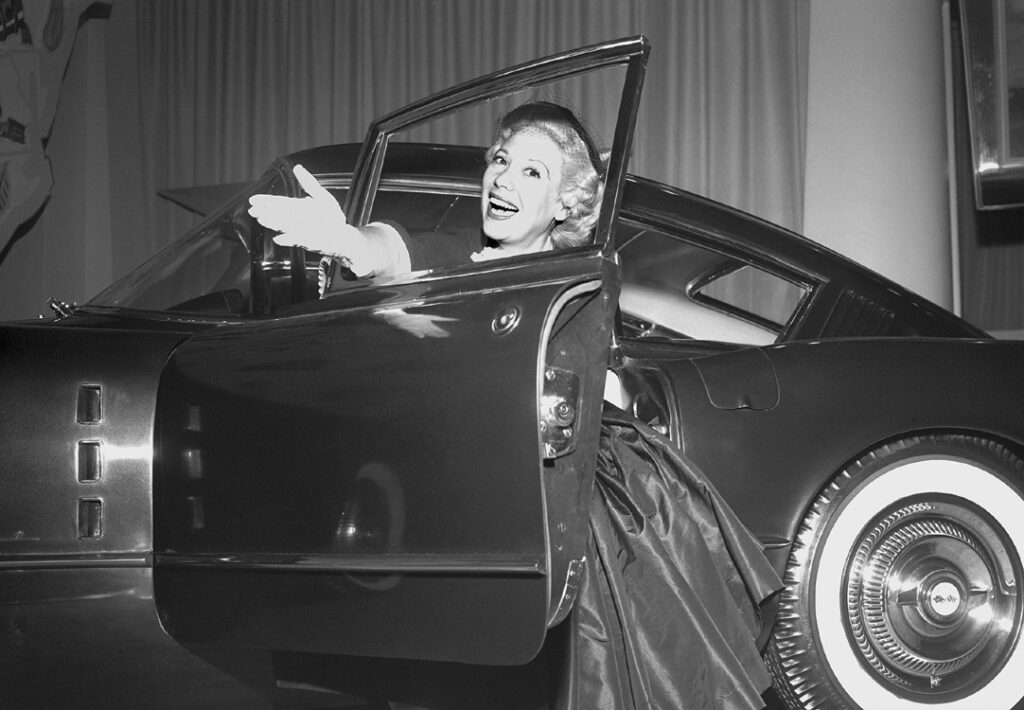
Dina Shore “See the USA” with the 1954 Chevrolet Corvette Corvair. (Chevrolet PR archvies)

It was 1956 when the “Dinah Shore Chevy Show” debuted on TV, with Shore singing “See the USA in your Chevrolet” at the close of each show. The show grew out of Shore’s earlier 15-minute programs and she was the first woman to host her own TV show. Shore had sung “See the USA” since the early 1950s and the song was used in Chevrolet advertising after Shore’s show ended in 1963.

Chevrolet is now recalling a version of that enduring tagline for its weeklong virtual festival Aug. 10-16, hosted on Chevy’s social media channels. “Cruisin’ the USA in your Chevrolet” will be a tribute more than a century of the brand’s automotive history, technological innovation, design and passion.

Each day of the festival will have a different theme and will highlight historic footage, guest appearances, trivia and more. Chevy experts will provide in-depth looks at some of the brand’s most iconic vehicles in the General Motors Heritage Center https://www.gmheritagecenter.com/ — and even some of their own custom builds.

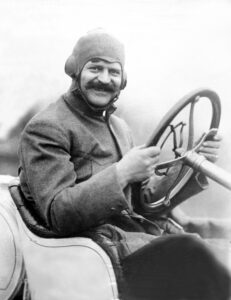
The week will begin at the year 1911, when Chevy was founded by Louis Chevrolet and Billy Durant. The segment will feature rare archival photos and videos from the last 109 years.

Louis Chevrolet at the wheel of a racing car in 1911. (Chevrolet)

Schedule of events:

Aug. 10: The Origins and Innovations of Chevrolet 
Aug. 11: Chevy’s Most Iconic Designs
Aug. 12: The Proud Truck Tradition
Aug. 13: The Peak of Performance
Aug. 14: Team Chevy – A Culture of Winning
Aug. 15: Chevy’s Heritage – A Fan Celebration
Aug. 16: Race Day – Cheering on Team Chevy at NASCAR and the NHRA Nationals

To gear up for the event, fans can download a 18-by-24-inch high-resolution printable poster featuring a 1967 C10 CST pickup, 1957 Corvette convertible, 2020 Corvette C8.R and 2020 Camaro ZL1.

Follow for festival on Chevy’s social media channels: @Chevrolet on Twitter, Instagram and Pinterest, and @TeamChevy on Race Day.

And enthusiasts are encouraged to share their own fan photos using the hashtag #ChevyLove.

markmaynard@cox.net

1949 Mercury Eight Convertible

1949 Mercury Eight Convertible
A color vintage cars photo of a 1949 Mercury convertible.

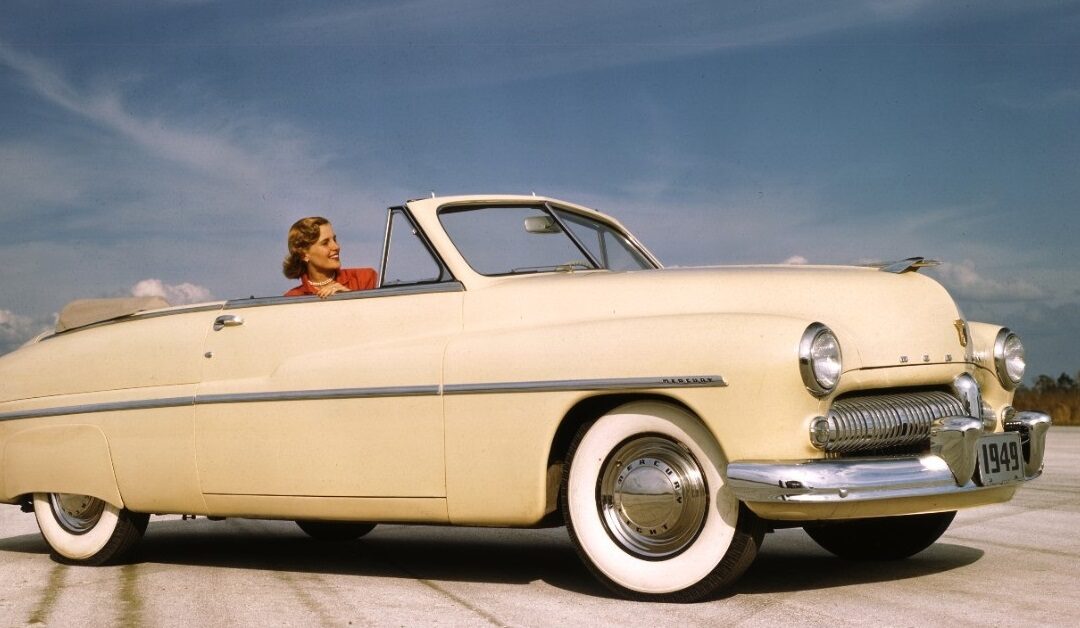
The post-war 1949 Mercury had breakaway styling. (Ford archives)

The third-generation 1949 Mercury was the first new design following World War II, according to Wikipedia.

The so-called “ponton” or pontoon styling helped differentiate it from its Ford cousin. The ’49 also became the definitive “lead sled” for customizers, including the Barris brothers, Sam and George.

The all-new postwar Mercurys were introduced toward the end of the 1948 model year, on April 29,1948, according to a report by the Automotive History Preservation Society. The cars did not look like fancy Fords but instead shared Lincoln styling and basic body shells.

“The engine was still a flathead V-8 now upped to 255 CID with 110 horsepower. A new and optional overdrive system was  activated by a handle under the dash.

“The Mercury Eight used full instrumentation in round dials. There were two dials on either side of the large central speedometer. An optional eight-tube radio and electric clock were centered on the dashboard.

“The transverse leaf spring suspension was gone. The front suspension was independent coil-spring with telescopic-type shock absorbers mounted inside front springs. A stabilizer bar was fitted to reduce body roll. The rear suspension had longitudinal, semi-elliptic leaf springs with telescopic shock absorbers. A semi-floating rear axle with hypoid-type ring gear and pinion was fitted.

“The ’49 Merc grille resembled a shiny coil. It was divided in the center by a large vertical chrome “Eight” stamped.

“A nearly full-length, mid-body chrome spear stretched across the sides. The 1949 Mercury also had wraparound front and rear bumpers. 

Paint Colors

There more than a dozen paint choices: Alaska Gray, Cairo Gray, Midland Maroon, Black, Alberta Blue, Royal Bronze Maroon, Dakota Gray, Lima Tan, Biscay Blue, Berwick Green, Tampico Red,  Haiti Beige, Bermuda Cream and Banff Green

“The 1949 Mercury Eight production totaled an astounding 301,307 units. It was far and away Mercury’s best ever year.”

See more vintage car photos here.

Vin Car Pic: 1949 Buick Roadmaster Riviera Convertible

Vin Car Pic: 1949 Buick Roadmaster Riviera Convertible
1949 was the first year for the “VentiPorts.” (GM PR archives)

The Buick Roadmaster received its first major postwar restyling in 1949, according to Wikipedia. Its wheelbase and overall length were reduced but its weight was actually marginally increased. The biggest change was a much larger two-piece, curved glass windshield that the sales brochure described as like an “observation car.”

It was also in 1949 that Buick introduced “VentiPorts.” Four were displayed on each of the Roadmaster’s front fenders, with three on the fenders of the Super, Century and Special.

The Riviera joined the body-style lineup in midyear, selling 4,314 units. Featuring power windows as standard equipment, the two-door Buick Roadmaster Riviera, along with the Cadillac Series 62 Coupe de Ville and the Oldsmobile 98 Holiday, was among the first hardtop coupes ever produced.

The Riviera was also notable for its popular optional “Sweepspear” chrome body-side molding, which would soon become a Buick trademark.

The name Riviera, Latin for coastline, was chosen to evoke the allure and affluence of the French Riviera. Its new two-door pillarless hardtop styling was described in advertising as “stunningly smart.”

Vin Car Pic: 1953 Corvette

Vin Car Pic: 1953 Corvette
The first 300 Corvettes were largely hand-assembled. (GM archives)

The first Corvette rolled off the assembly line in Flint, Mich., on June 30, 1953, according to a report in AutomotiveHistory.org. Only 300 Corvettes were made for the 1953 model year — all Polo White with red interiors.

The first generation of the Corvette was produced through 1962 and is commonly referred to as the “solid-axle” generation, according to Wikipedia.

All 300 1953 C1 Corvettes were Polo White with red interiors. (GM archives)

“The Corvette was rushed into production for its debut model year to capitalize on the enthusiastic public reaction to the concept vehicle, but expectations for the new model were largely unfulfilled. Reviews were mixed and sales fell far short of expectations through the car’s early years. The program was nearly canceled, but Chevrolet would ultimately stay the course.

The C1 assembly line. (GM archives)

“To keep costs down, GM executive Robert F. McLean mandated off-the-shelf mechanical components, and used the chassis and suspension design from the 1949–1954 Chevrolet passenger vehicles.

“The drivetrain and passenger compartment were moved rearward to achieve a 53/47 front-to-rear weight distribution. It had a 102-inch wheelbase. The engine was a 235 cubic-inch (3.85-liter) inline six-cylinder, similar to the 235 engine that powered all other Chevrolet car models, but with a higher-compression ratio, three Carter side-draft carburetors, mechanical lifters and a higher-lift camshaft. Output was 150 horsepower.

The C1 Corvette assembly line. (GM archives)

“Because there was currently no manual transmission available to Chevrolet that was rated to handle 150 horsepower, a two-speed Powerglide automatic was used. 0-60 mph acceleration was 11.5 seconds.

1953 Chevrolet Corvette Mororama Show Car. (GM archives)

Today, the 2020 Corvette Stingray is back in normal production at the Bowling Green, Ky., assembly facility following the shutdown due to the pandemic.

According to a Chevrolet spokesman, production of the 2020 model has been extended through fall to meet demand. The MSRP for the 2021 will remain the same, he said.

An advertising image for the 1953 Chevrolet Corvette. (GM archives)

Vin Car Pic: 1956 Cadillac Cyclone concept

Vin Car Pic: 1956 Cadillac Cyclone concept
The Cadillac Cyclone featured a radar-operated collision avoidance system . (GM PR archives)

One of the last cars designed by Harley Earl, the 1956 Cyclone concept was a test-bed for futuristic styling and technology, according to Wikipedia. The design was heavily inspired by the aviation and rocket designs of the 1950s.

The Cyclone was built on a 104-inch wheelbase chassis and featured a front-mounted 390-cubic-inch V-8 engine, rear-mounted automatic transaxle and an all-wheel independent suspension.

A unique design was the engine exhaust that was ported out just ahead of the front wheels. It also featured a radar-operated collision avoidance system, with the radar sensors mounted in twin “nose-cones” on the front of the car.

The bubble-top canopy, silver coated for UV protection, automatically opened along with the sliding electrically operated doors. The canopy could also be stowed in the rear compartment, where it rested on a special air-bag base.

The original design of the Cyclone included larger tailfins (similar looking to the 1959 Cadillac lineup), adorned with the logo of the General Motors Air Transport Section (GMATS). The fins were reduced in size in 1964 (and the GMATS logo removed) to look more like the 1963-64 Cadillac range.