The Genesis GV70 starting price of $41,000 includes AWD and suite of advanced driver-assist technologies
The compact-class Genesis G70 SUV will have standard AWD. (All photos courtesy GenesisUSA)
The 2022 Genesis GV70 will have a starting price of $42,090, Genesis Motor America announced today. Pricing includes the $1,045 freight charge from Ulsan, South Korea.
The compact-class, five-seat luxury SUV will go on sale this summer in two engine configurations: a 300-horsepower, 2.5-liter turbocharged gasoline four-cylinder or an optional 375-hp, twin-turbocharged 3.5-liter V-6.
It will be sold in three trim levels of Standard, Advanced and Prestige. A Sport package adds such unique features front and rear fascia, dark chrome trim and exclusive wheel and interior designs.
Standard equipment includes a 12-way power driver’s seat, smart key locking with push button ignition and wireless device charging.
All G70 SUVs will have standard all-wheel drive with an eight-speed automatic transmission.
Competitors of the GV70 include the Acura RDX, Audi Q5, BMW X3, and Mercedes-Benz GLC.
Starting prices for the GV70 2.5T range from $42,090-$45,690. Starting prices for the GV70 3.5T range from $53,645-$58,545 for the Sport Prestige.
Standard equipment includes leatherette upholstery and 12-way power driver’s seat, eight-way power front passenger seat and a leather-wrapped steering wheel.
Other special features include smart key locking with push-button ignition and remote start, a 9-speaker audio system with Apple CarPlay and Android Auto and a 14.5-inch multimedia display. Other features include a rearview camera with guidelines, wireless device charging, fingerprint recognition and over-the-air updates.
GV70 safety
The compact SUV has a suite of driver assistance and safety technologies. Safety features include eight air bags, smart cruise control with stop and go, forward collision avoidance-assist, lane keeping assist, blind-spot collision-avoidance assist and rear cross-traffic collision-avoidance assist.
This 1946 photo shows Ford’s River Rouge plant where the 1962 Fairlane would be built. (Ford)
Watch how a 1962 Ford Fairlane was built back in the day from this 10:54-minute that I found on YouTube. The video shows the Fairlane assembly line at Ford’s River Rouge plant.
The color video shows the pouring of molten steel into molds to the final vehicle check at the Ford River Rouge Complex assembly facility in Dearborn, Mich.
With some theatrical music and old-school news narration, viewers are steered through the assembly process from raw materials, the engine build, paint booth, suspension and final testing.
The closing comment: “Built to order by the men, the women, the mills and machines in this dynamic, industrial city: The Rouge.”
Rouge History
Ford Motor Co.’s River Rouge Complex was commonly known as the Rouge Complex, River Rouge or The Rouge, according to its page in Wikipedia. The sprawling complex was built in Dearborn, Mich., along the River Rouge.
Construction began in 1917 and finished in 1928. At the time, it was the largest integrated factory in the world, surpassing Buick City, built in 1904.
The titanic Rouge was able to turn raw materials into running vehicles. The complex measuresd1.5 miles wide by 1 mile long. The facility includes 93 buildings with nearly 16 million square feet of factory floor space.
It had its own docks in the dredged Rouge River, 100 miles of interior railroad track, its own electricity plant and an integrated steel mill.
“Today, the Rouge site is home to Ford’s Rouge Center. This industrial park includes six Ford factories on 600 acres of land. There also are steelmaking operations by AK Steel, a U.S. steelmaker.
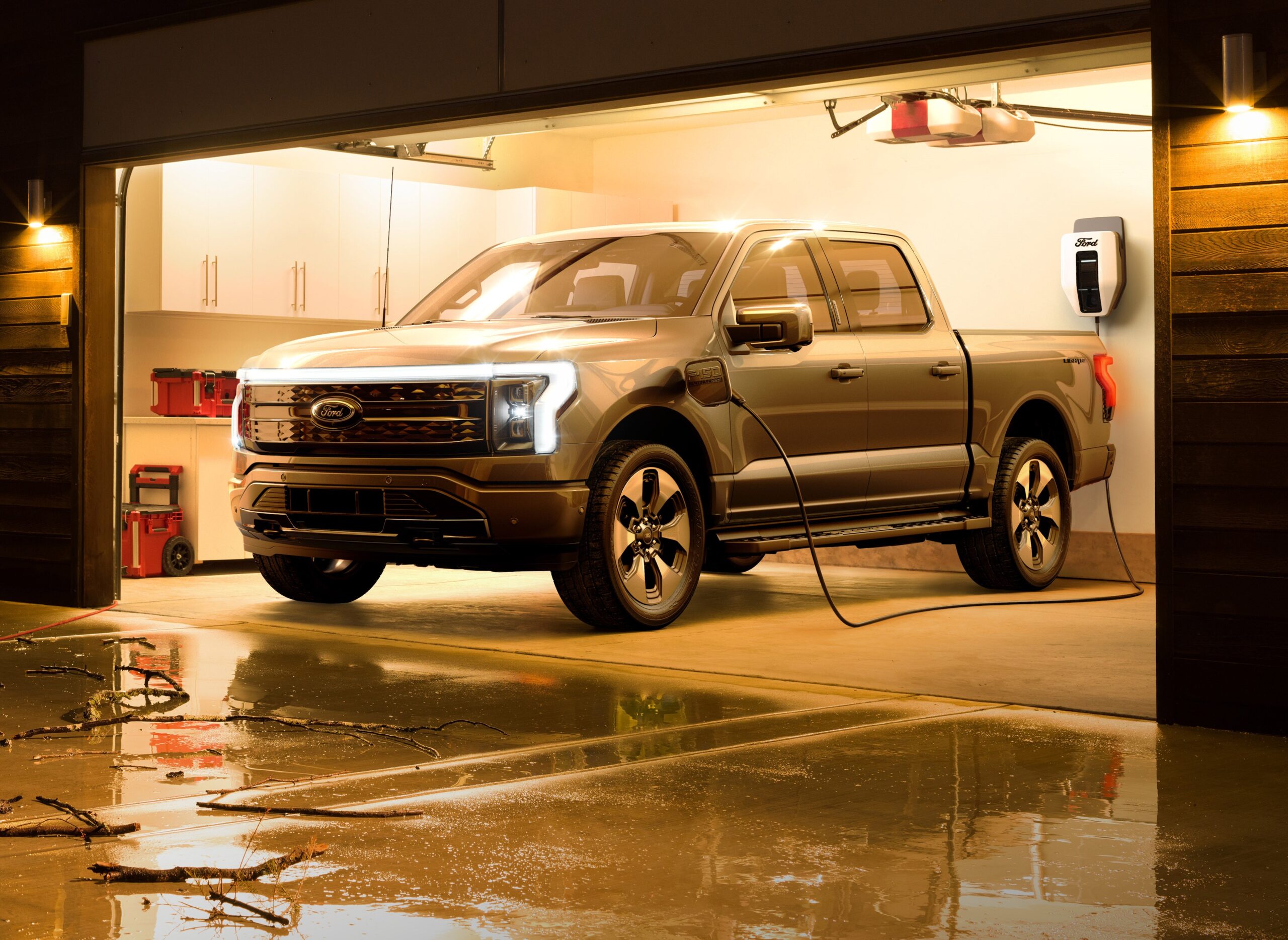
An electric pickup is one thing. An electric pickup that is also an emergency power generator for the home adds a whole new level of consumer usability in this complicated era of climate change.
Ford Motor pulled the camouflage from its striking, all-electric F-150 Lightning last night in a big reveal at its world headquarters in Dearborn, Mich. It was a massive moment for Ford, said Ford President and CEO Jim Farley.
The F-150 Lightning is expected to go on sale in spring, 2022. It will be sold in four series and two battery options.
The exterior styling looks traditional F-150, but much has been modified under the military-grade aluminum skin. The truck introduces an independent rear suspension, standard four-wheel drive, and dual in-board motors pushing 563 horsepower.
Two levels of lithium-ion battery packs will be offered. Ford has targeted a driving range of 230 miles with the standard-range battery and 300 miles with the extended-range battery.
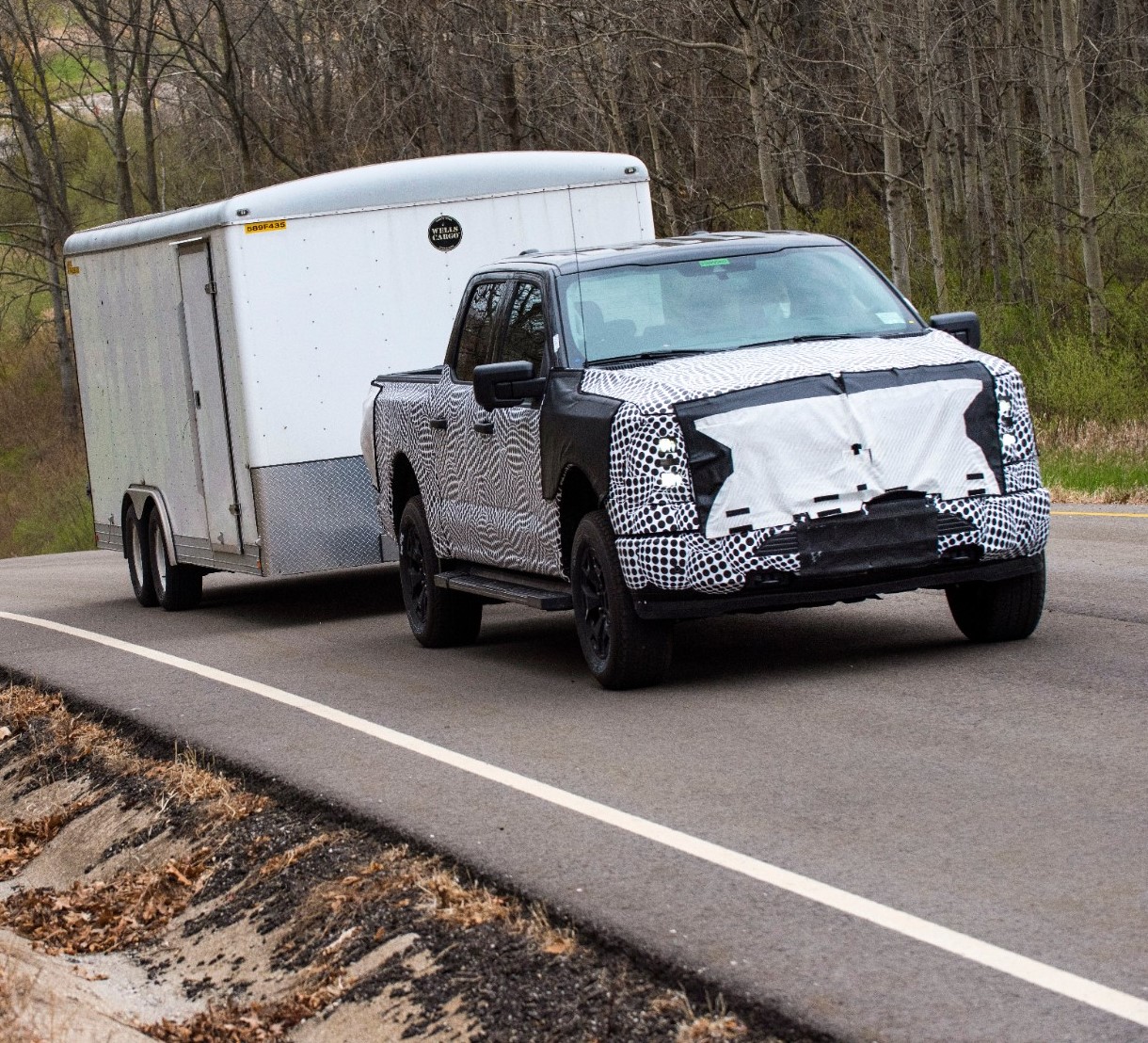
A payload of 2,000 pounds is expected for base models with a max tow rating of 10,000 pounds. Official specifications will be released closer to the on-sale date.
“It’s quicker than a Raptor, with standard 4×4 and independent rear suspension,” said CEO Farley.
Ford F-150 Lightning pricing
2022 Ford F-150 Lightning Platinum, Lariat, and XLT. Available spring 2022.
The electric pickup will be sold in four series in crew-cab body styles with a 5.5-foot-long bed. The commercial-grade model starts at $39,974 before any federal or state tax credits. The mid-range XLT model starts at $52,974. Pricing was not announced for the top-line Platinum, but a spokesman said its MSRP could be around $90,000 with the extended range battery.
Pricing does not include the freight charge from the Rouge Electric Vehicle Center in Dearborn, Mich.
The 2022 F-150 Lightning can be reserved here with a $100 deposit.
Powertrain
The powertrain layout shows the two in-board motors and lithium-ion battery storage.
The powertrain of the F-150 Lightning targets 563-hp and 775 foot-pounds of near-instantaneous torque. That’s more than any F-150 ever, Ford says. Acceleration to 60 mph is in the mid-4-second range with the extended-range battery.
Power at home
The Intelligent Backup Power system can power a home for three days, Ford says.
The debut of the Ford Intelligent Backup Power turns the truck into a substantial source of power for a home. The system can tap into 9.6 kilowatts of power — 9600 watts. That is enough backup power to maintain household lighting during an outage. It also will be enough to power other utilities, such as home appliances and security systems. (According to online reports, an average-size home in the U.S. uses about 900 kWh per month.)
The backup power system requires the optional 80-amp Ford Charge Station Pro and home management system (for which Ford can help with installation). In an emergency, the F-150 Lightning will automatically activate to power the house. Once power is restored, the truck automatically reverts to charging its battery.
Based on the average use of 30kWh per day, the entire system with an extended-range battery can provide full home power for up to three days. With careful use, the power can last as long as 10 days, Ford says.
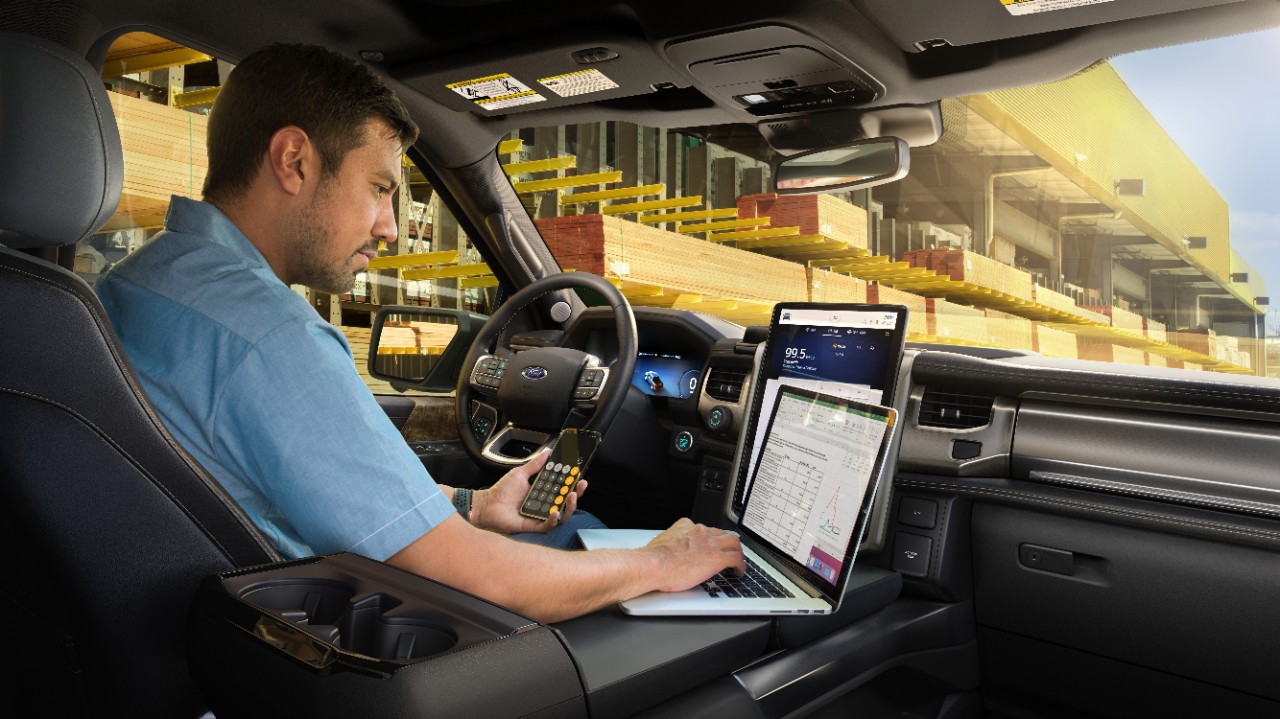
The optional fold-out Interior Work Surface.
For a later introduction, the Ford Intelligent Power system can use the truck to power homes during high-cost, peak-energy hours while taking advantage of low-cost overnight rates to charge the vehicle in time for the morning drive. The owner saves money on electricity while also taking pressure off the grid in peak usage times, Ford says.
Ford partnered with Sunrun, a leading solar company, to facilitate the installation of the 80-amp Ford Charge Station Pro and home integration system. Customers will also have the opportunity to install solar energy on their homes, tapping into clean, affordable energy and be able to charge their F-150 Lightning.
Battery power
The secure charge door.
F-150 Lightning offers two levels of battery power: a standard-range battery targets 230 miles of EPA-estimated range and the extended-range battery targets 300 miles of EPA-estimated range.
Standard with the truck is an 80-amp charge station to maintain an extended-range truck at home. This system has a dual onboard charging system that can add an average range of 30 miles per charging hour. Fully charging an extended-range truck from 15 percent to 100 percent would take about eight hours, Ford says.
On the road, users have access to the ChargePoint public charging network, considered North America’s largest system. Using FordPass, drivers will have access to more than 63,000 charging plugs and growing. On a 150-kW DC fast charger, the extended-range battery is targeted to get up to 54 miles of range in 10 minutes and charge from 15 percent to 80 percent in about 41 minutes, Ford says.
The FordPass Power My Trip function identifies charging routes in advance of an extended drive. The truck’s, Intelligent Range mode calculates range while factoring in weather, traffic, payload, and towing weights, Ford says. Cloud-connected navigation on SYNC 4 also identifies public charging locations.
Truck as generator
The optional Tailgate Work Surface.
The enhanced Pro Power Onboard provides built-in electrical outlets to power a variety of tools, electronics, and appliances. Base trims have 2.4 kilowatts of power with the option for more. Lariat and Platinum models have 9.6 kilowatts of power — a combination of up to 2.4 kilowatts available through the frunk and up to 7.2 kilowatts through outlets in the cab and bed.
Customers will receive a FordPass notification if their truck’s battery falls below a third of its total range. And the truck can be programmed to stop using Pro Power Onboard if the battery level approaches the distance to the nearest charging station.
Front trunk
The front trunk, or frunk, is power opened and closed.
The newfound space under the hood allowed for a lockable “mega power frunk” that is power opened and closed. The storage capacity has about 14 cubic feet of volume and a 400-pound payload. Ford says that’s enough space for two carry-on travel bags and one checked bag, or two sets of golf clubs.
The water-resistant space has four electrical outlets and two USB chargers. Drain holes in the floor allow the frunk to be used as a cooler. With 2.4 kilowatts of power, there’s enough electrical capacity to plug in power tools, TVs, laptops and speakers, or even a crockpot and other appliances.
Testing
Endurance testing included running the truck through Iowa Hill, Calif.
The F-150 Lightning was put through the same endurance testing as all F-Series trucks. The military-grade aluminum-alloy body and upgraded frame were engineered to support the advanced battery. The first F-Series independent rear suspension and low center of gravity help improve noise isolation from the road and provide a more stable ride.
No compromises on space or utility were made, Ford says. The cab and bed have the same dimensions as the gas models.
The truck’s four-wheel-drive system features four selectable drive modes: Normal, Sport, Off-Road, and Tow-Haul. Metal underbody skid plates protect the battery and inboard motors. The battery itself is secured inside a waterproof casing that is surrounded by crash-absorption protection. It has been tested at temperatures as extreme as minus-40 degrees.
To maintain steady thermal conditions, the F-150 Lightning was engineered with an advanced liquid cooling system and powertrain layout to manage heat distribution.
Endurance testing included running the truck through Iowa Hill, Calif. In the testing, loaded trailers were towed for long durations up and down the steep Iowa Hill Road, where there are no safety guardrails, according to Wikipedia
Ford F-150 Lightning aerodynamics
Base models are expected to have a max tow rating of 10,000 pounds.
F-150 Lightning is the most aerodynamic F-150 ever, Ford says. Styling enhancements include newly shaped running boards, a sculpted hood to reduce drag, and grilles with a smoother, textured surface.
2022 Ford F-150 Lightning specifications
Body style: full-size, 5-seat crew-cab pickup with a 5.5-foot-long bed
Electric motors: Two inboard three-phase fixed magnet AC
Battery type: Liquid-cooled lithium-ion pouch with battery management
Targeted horsepower: 426 hp standard range; 563-hp extended range
Targeted peak torque: 775 foot-pounds for both battery packs
Onboard charger power, (input/output): 11.3 kW/10.5 kW standard range; 19.2 kW/17.6 kW extended range
Targeted EPA driving range: 230 miles standard battery; 300 miles extended range battery
TARGETED CHARGING TIMES: Level 3 fast charge: 15%-80% in 44 minutes standard range; 41 minutes extended range
Level 2 home charging: NA
80-amp Ford Charge Station Pro: 15%-100% in 10 hours standard range; 8 hours extended range
32-amp/240-watt onboard charger: 15%-100% in 14 hours standard range; 19 hours extended range
BY THE NUMBERS
Targeted maximum payload: 2,000 lbs. standard battery; 1,800 lbs. extended-range battery
Targeted maximum towing: 7,700 lbs. with the standard battery; 10,000 lbs. with the extended-range battery
Length/wheelbase: 232.7/145.5 inches
Cab height/width: 78.9/*96 inches. *w/mirrors folded 83.6 in.
Ground clearance: 8.9 inches
Open tailgate to the ground: 37.2 inches
Front trunk liftover height: 35 inches
Curb weight: NA
Turning circle: NA
WARRANTIES
Bumper to bumper: 3-years/36,000-miles
Roadside assistance: 5-years/60,000-miles;
Electric vehicle components: 8-years or 100,000-miles, including the battery that is expected to retain a minimum of 70% of its original capacity over that period
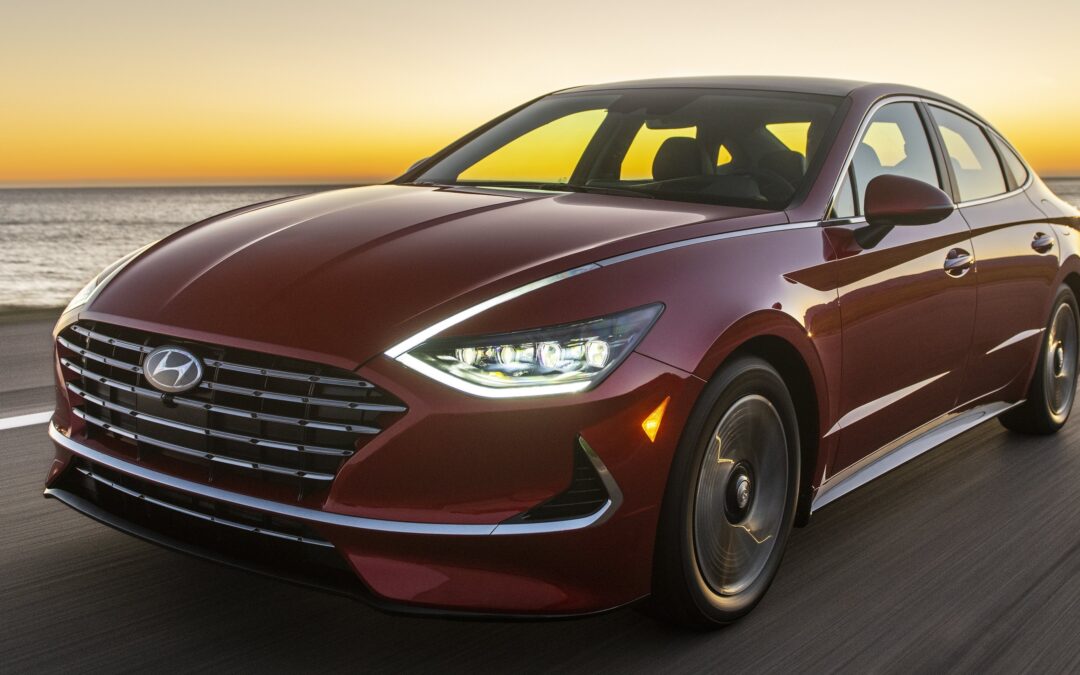
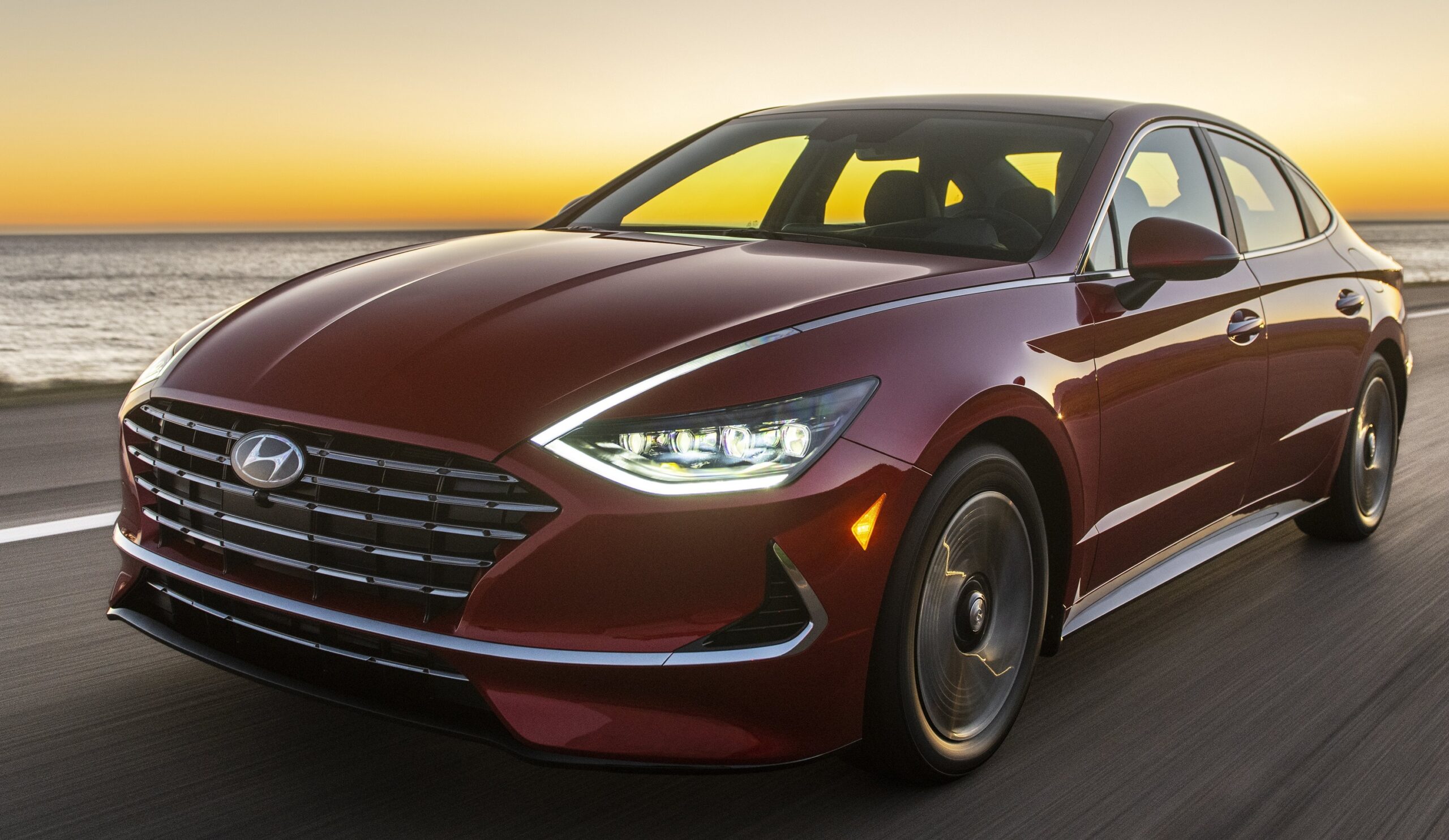
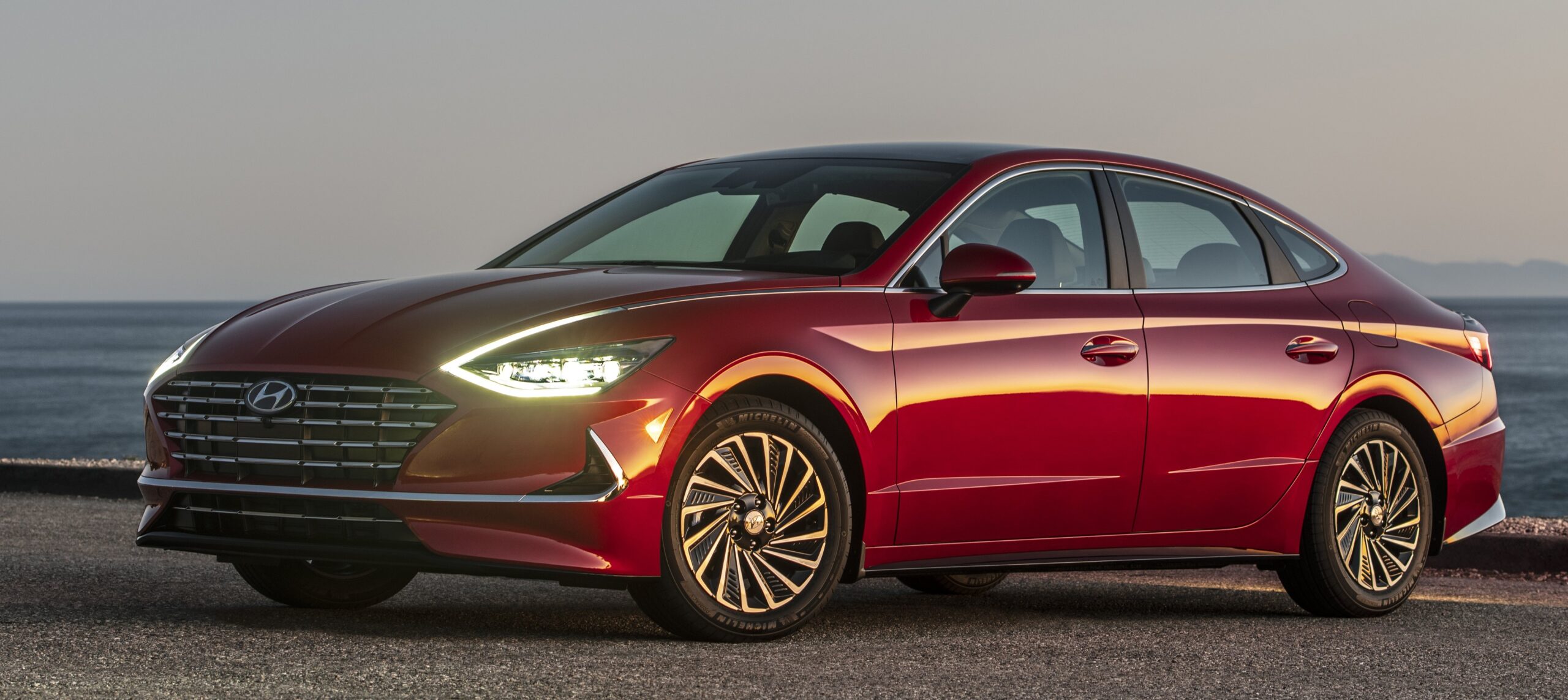
The Sonata Hybrid is sold in three trim levels with starting prices of $28,725, $30,965 and $36,275, including the $975 freight charge from Asan, South Korea. (Hyundai)
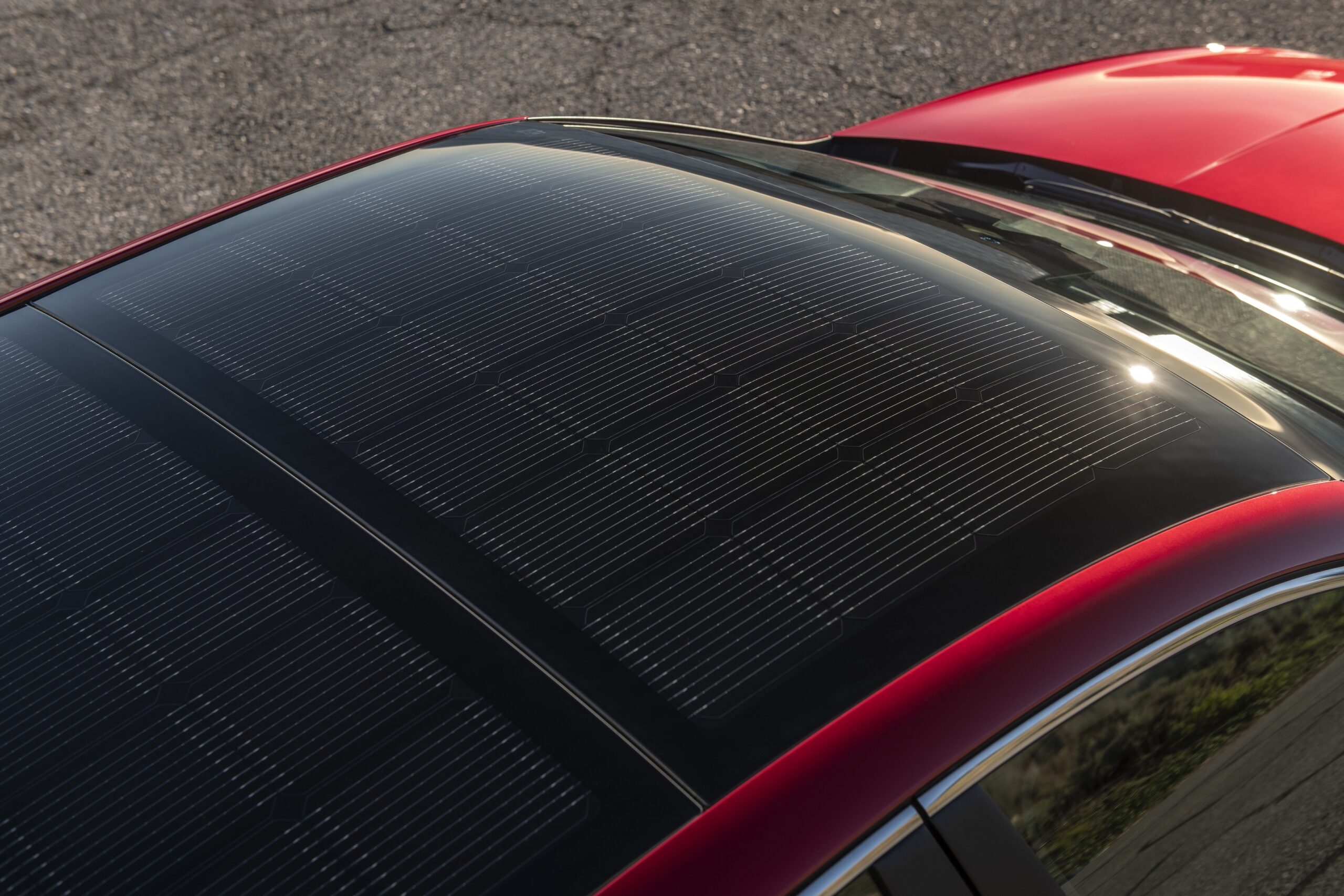
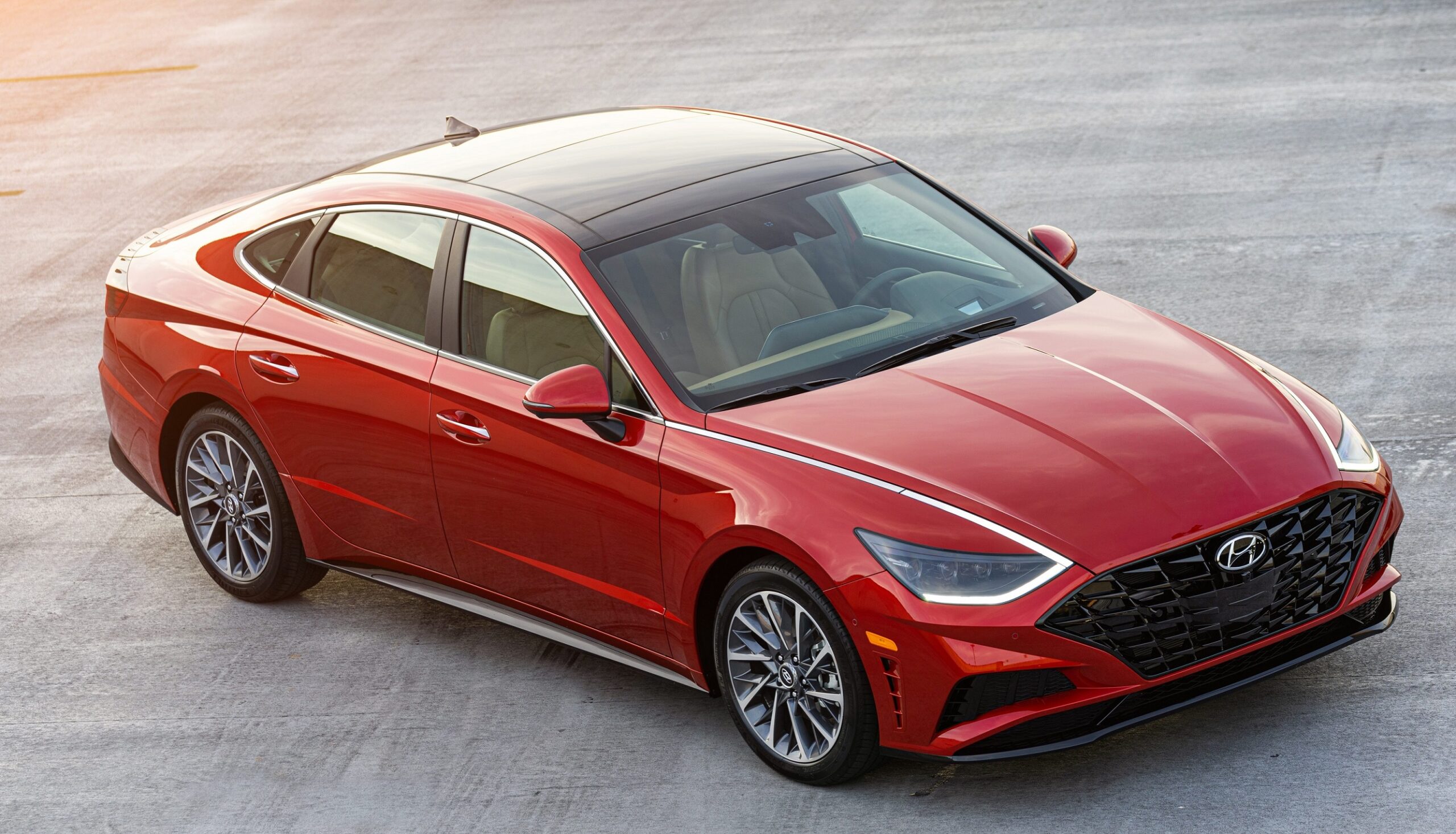
Hyundai went through the roof to maximize fuel economy for its redesigned Sonata Hybrid sedan. The completely re-engineered sedan debuts a solar roof system that recharges the engine-cranking 12-volt battery and the hybrid battery. Depending on region, the sunlight system could provide around 1,200 miles of free driving, such as in Southern California, Hyundai says, or more like 600 miles a year, or 2 miles per day on average, in less sunny parts of the country.
The goal of the solar roof is to help the car stay in EV mode longer. Starting off from a standstill, the fully charged hybrid battery allows a takeoff on electric power rather than firing up the engine, which saves fuel. And, especially useful, the system acts as a tender to the 12-volt battery so when the car sits for two to three weeks, the onboard electronics for anti-theft and sensor systems will not drain the battery — as long as the car is parked outside. That will be a relief to owners who are not driving as much now or for those who park at remote airport lots for extended travel.
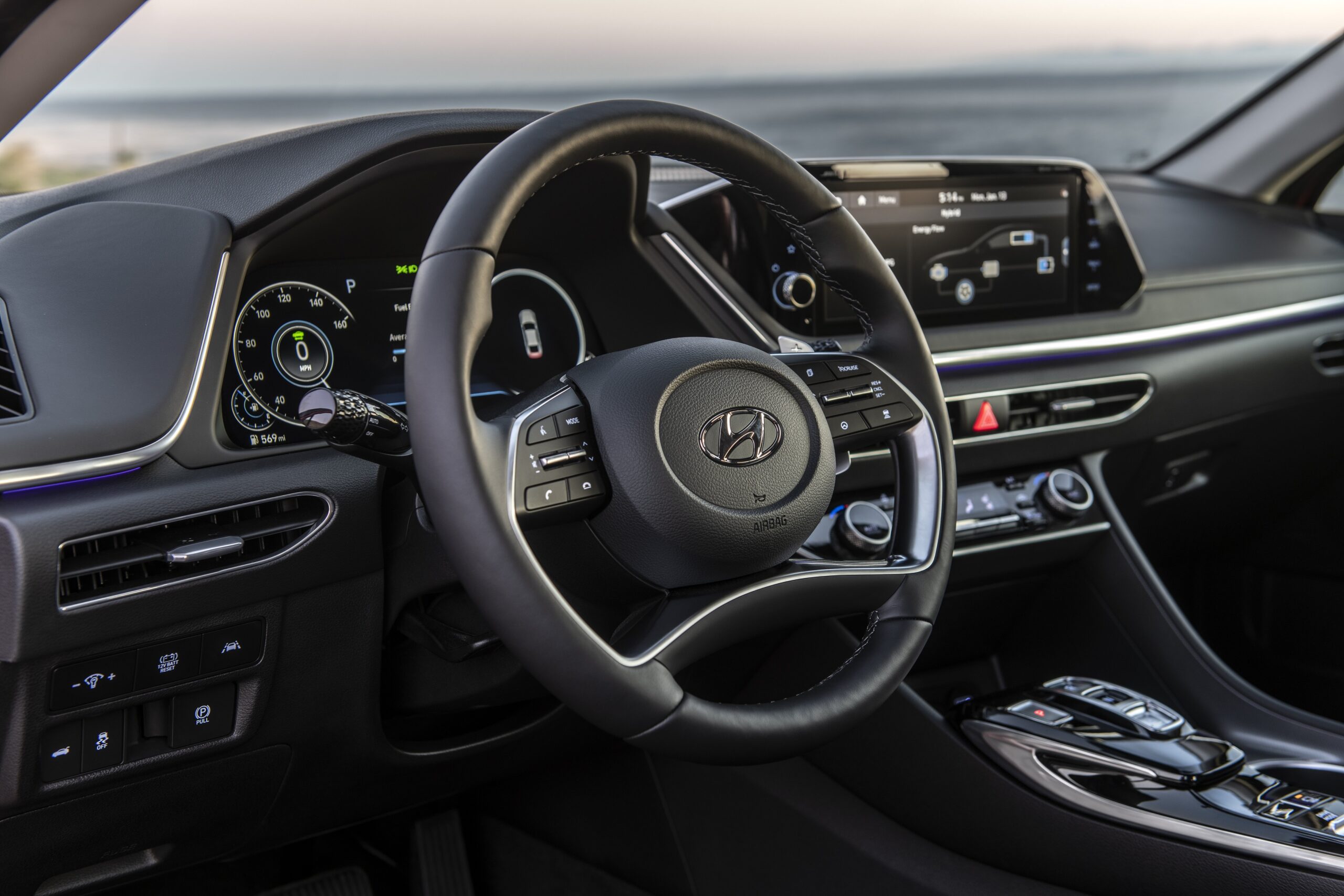
In the Limited, the driver faces a 12.3-inch digital gauge array with configurable panels. (Hyundai)
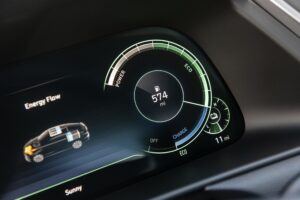
A full 13.2-gallon tank could allow a driving range of 660 miles. (Hyundai)
System Check
The system first charges the 12-volt battery (fully charged in about two hours) and then the hybrid pack. If the driver manages to kill the battery, there is a dashboard button—“12V Batt Reset”—that will give a jump of current, pulling from the hybrid battery.
Hyundai says the new hybrid model delivers up to a 24 percent increase in fuel economy over the prior generation.
The new body style, with help from a range of aerodynamic add-ons, has a sleek drag coefficient of 0.24, which compares to 0.25 for the Toyota Camry Hybrid and Honda Accord Hybrid, the two main sedan competitors. And even the standard gas-powered Sonata has a sleek drag of 0.27.
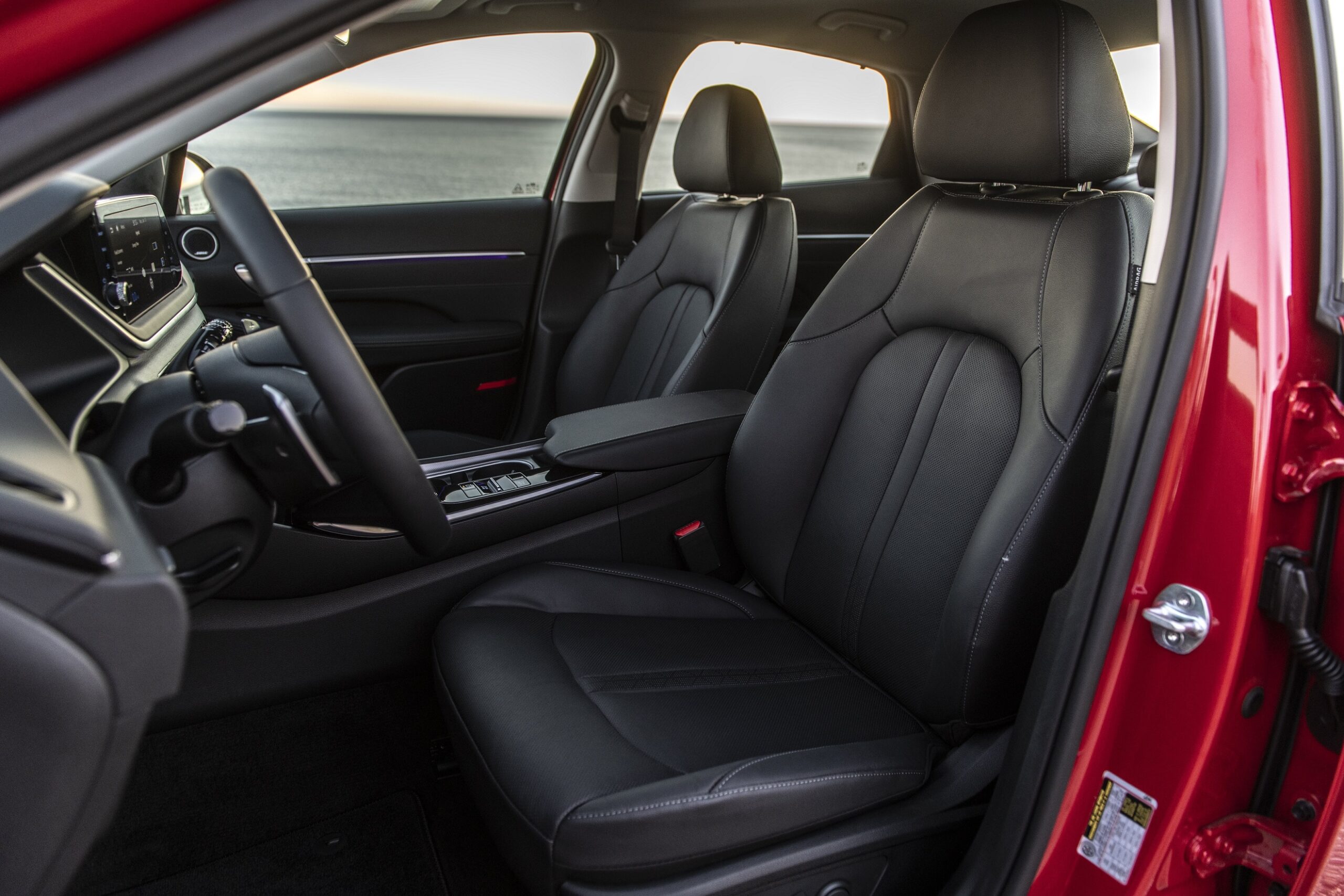
The front seats have a robust design and comfortable support for the big-and-tall driver. (Hyundai)
‘Smaht Pahk’
And for those who saw Hyundai’s Super Bowl commercial for “smaht pahk” remote parking (Smart Park), you can’t get that feature on the Sonata Hybrid. With all the electronics it’s another layer of complexity that Hyundai chose not to adapt. But since the feature debuted a glitch was discovered that did not always stop the car as programmed, despite a fail-safe function. It was a software issue that Hyundai says has been corrected.
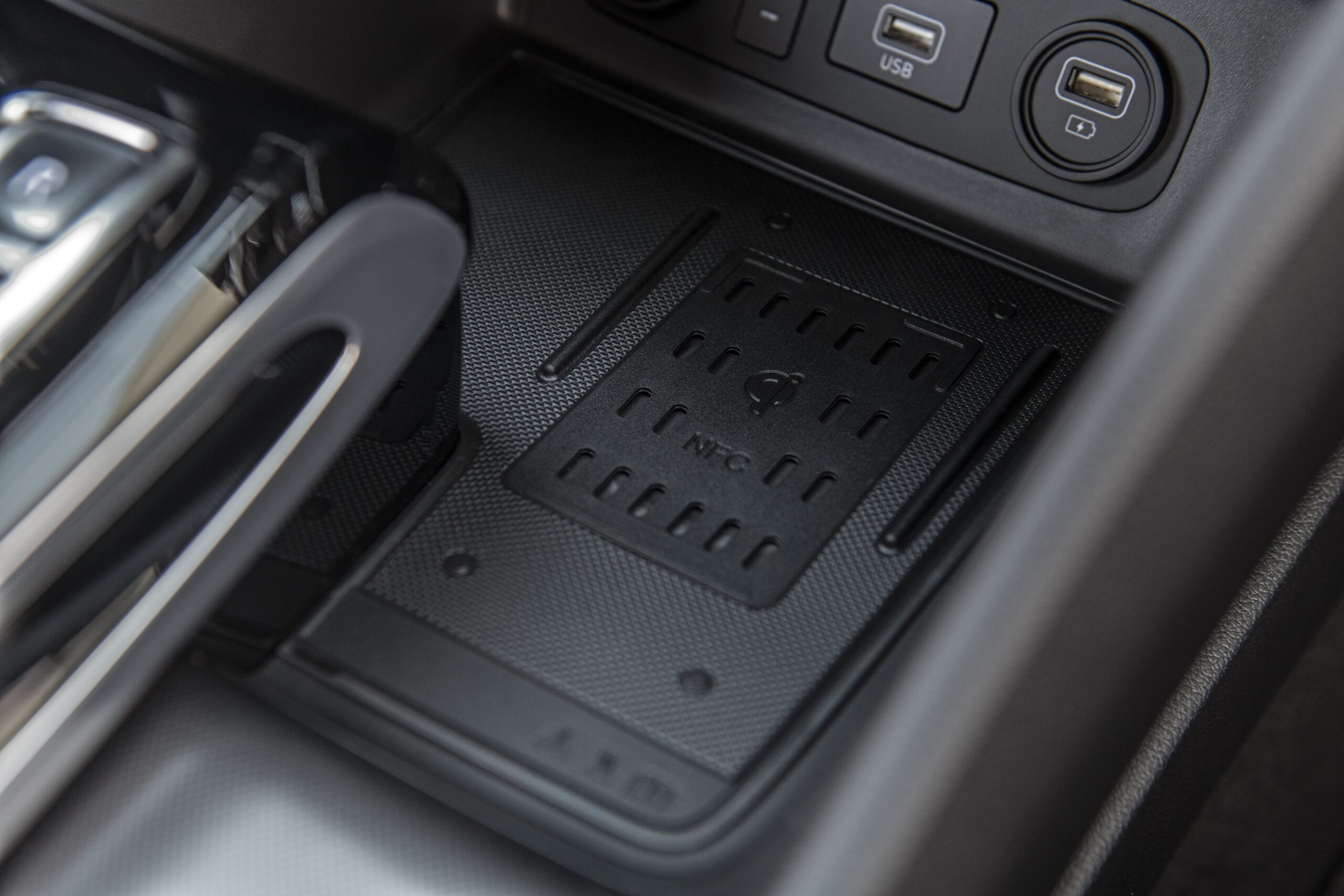
The wireless charging pad is large enough for the latest billboard-class phone. (Hyundai)
2020 Hyundai Sonata Pricing
The redesigned Sonata Hybrid is everything a contemporary driver would want in a new midsize sedan if he or she wanted a four-door car. As well done as it is, the preferred body style today is an SUV crossover. But there could be some equalization in pricing — sedans cost less than SUVs.
The six-speed automatic transmission has performance modes of Smart, Eco, Sport and Custom. (Hyundai)
The Sonata Hybrid is sold in three trim levels — Blue, SEL, and Limited — with starting prices of $28,725, $30,965, and $36,275, including the $975 freight charge from Asan, South Korea. Today’s tester is the Limited with one option for carpeted floor mats, $155.
The base model is well equipped with such features as keyless locking and push-button ignition, advanced cruise control with stop-and-go function, hands-free trunk opening, locking glove box, rearview camera, and high-speed wireless smartphone charging pad, and LED lighting for headlights, running lights, taillights and interior with six-way adjustable front seats and fabric upholstery.
Electricity generated from the solar roof could provide around 1,200 miles of free driving in Southern California or about half as much in less sunny areas. (Hyundai)
Sonata Safety Features
Standard safety features include nine air bags, forward collision‐avoidance assist with pedestrian detection, blind‐spot collision‐avoidance assist with rear cross‐traffic alert, lane-keeping assist and high-beam headlight dimming. The Limited adds a blind‐spot monitor, highway driving assist (lane centering), and parking collision-avoidance assist rear.
The new vehicle warranty includes coverage of the hybrid battery with the powertrain for 10 years or 100,000 miles. The rest of the vehicle is covered for 5 years or 60,000 miles.
All Sonata models, except the entry model, include three years of complimentary Blue Link services.
The 205-watt solar roof system trickle-charges the 12-volt and hybrid batteries. (Hyundai)
Sonata’s Hybrid Powertrain
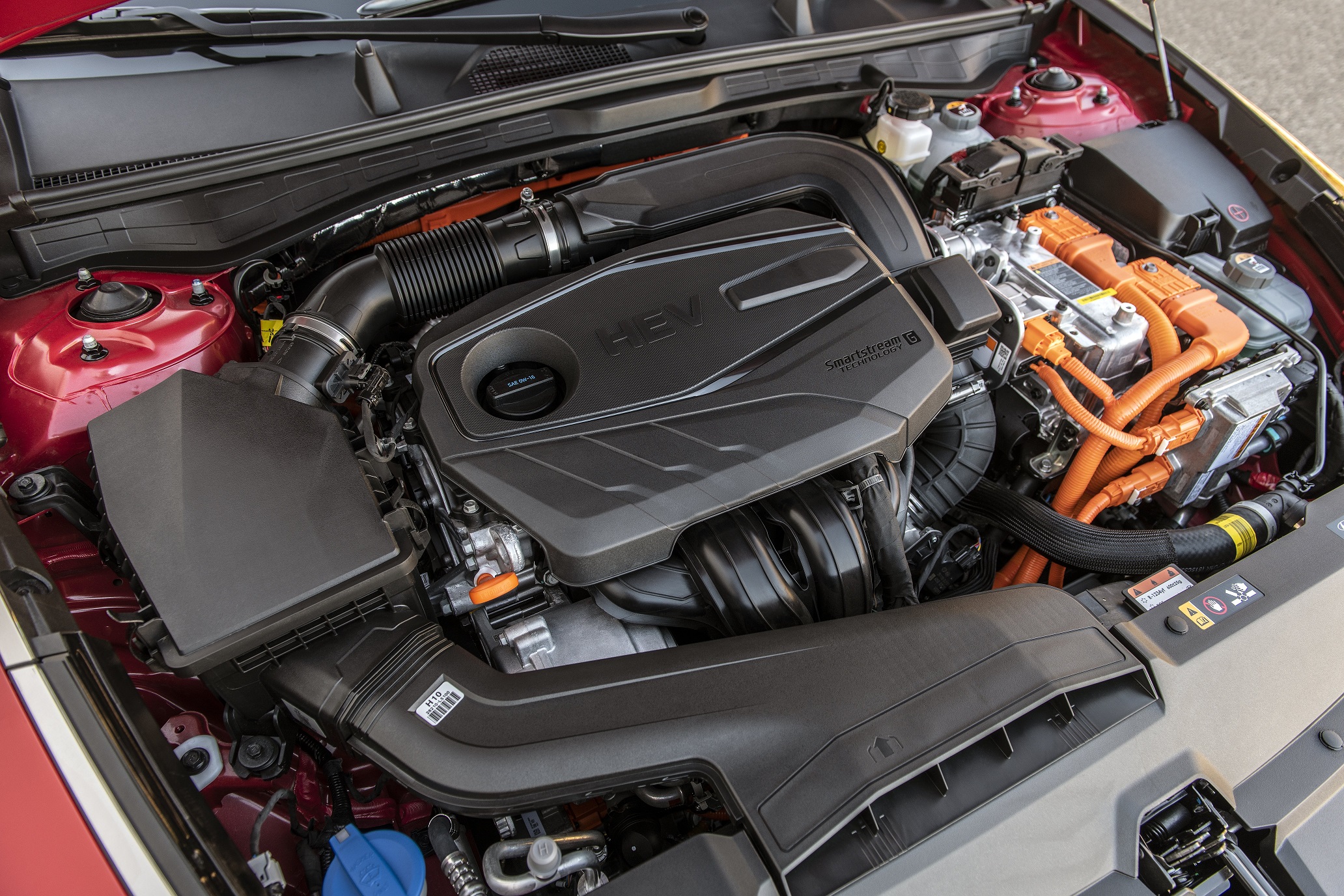
The front-wheel-drive hybrid powertrain integrates Hyundai’s Smartstream G2.0 direct-injection four-cylinder gas engine with a permanent magnet electric motor and lithium-ion polymer battery pack. Total system power adds up to 192 hp, or 150 hp from the ICE and 51 hp from the motor.
The six-speed hybrid automatic transmission (a refreshing alternative to the ubiquitous continuously variable automatic in most hybrids) has been optimized to reduce gear-shifting times by 30 percent. There are performance modes of Smart, Eco, Sport, and Custom, and while I sampled each, my preference was Smart mode for its responsive acceleration. Sport felt a little too jittery, and I was in pursuit of mpgs not performance driving.
Fuel economy estimates are 50 mpg city, 54 highway and 52 mpg combined for the Blue trim, on the recommended 87 octane fuel. The heavier SEL and Limited trims have ratings of 45/51/47 mpg. In highway driving, I noted 54 mpg, as decided by the onboard computer. With the 13.2-gallon gas tank, there will be a lot of commuting between fill-ups.
The solar roof is lighter than a panoramic glass sunroof (66 pounds versus 95), but it also means no sunroof option. At 3,350 pounds, the curb weight is just 194 pounds more than the non-hybrid Sonata.
Hyundai’s Smartstream G2.0 direct-injection four-cylinder gas engine is paired with a permanent magnet electric motor and a lithium-ion polymer battery pack. (Hyundai)
Sonata’s New Footprint
The re-engineering of the eighth-generation Sonata (first seen in the U.S. in 1988 for its second generation) is a little longer and lower on a stronger vehicle architecture. The size shift was enough to move it into the EPA’s large-car class, but it seems more of a large-midsize.
It was a ground-up opportunity to make the hybrid packaging more efficient, Hyundai says, which included moving the hybrid battery from under the trunk to under the back seat.
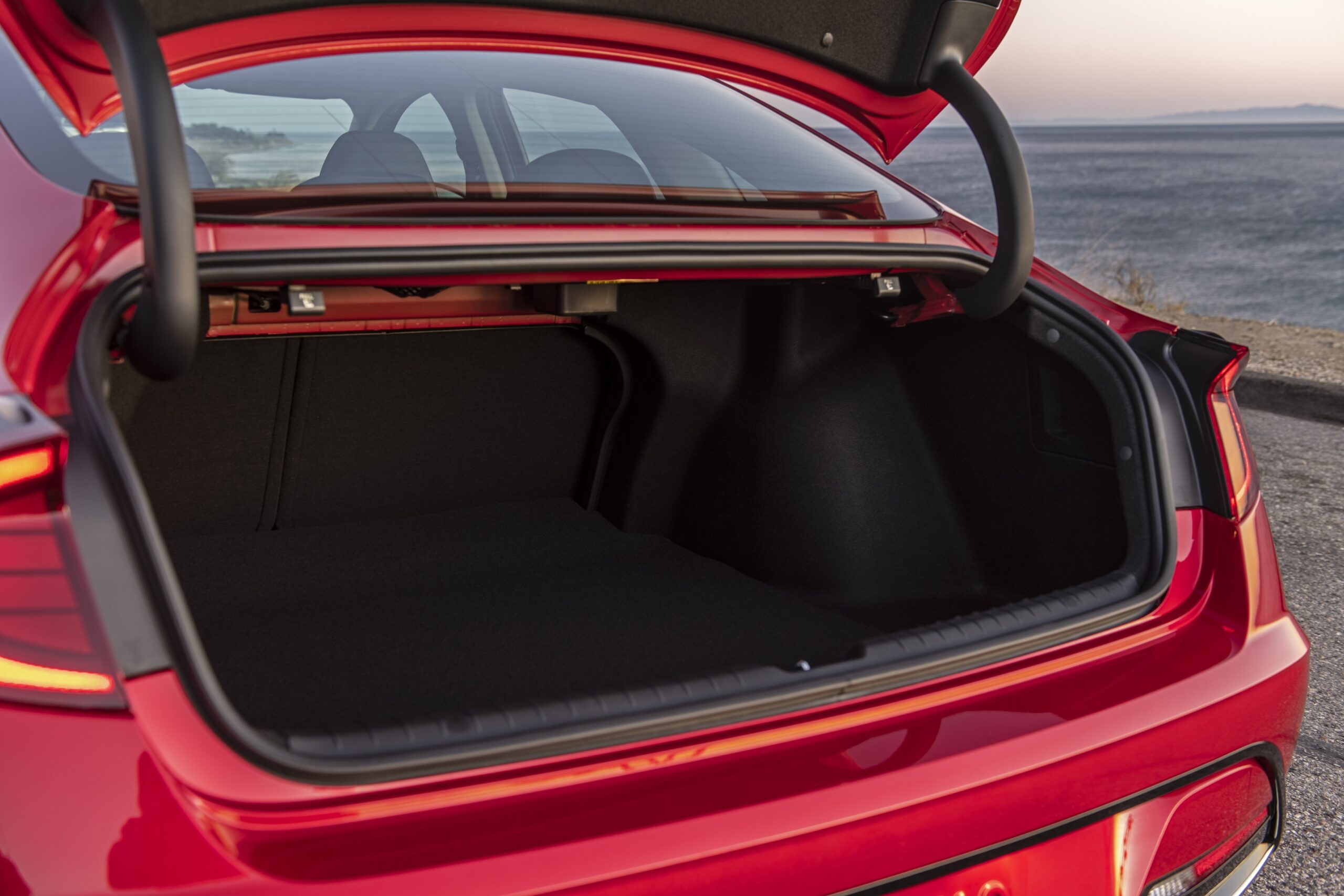
The placement allows a 60/40 folding back seat, preserves the large trunk space of 16 cubic feet and the more central location benefits vehicle balance and rotational control, Hyundai says. The battery sits at about the thigh point in the back seat and the fuel tank is under the butt zone.
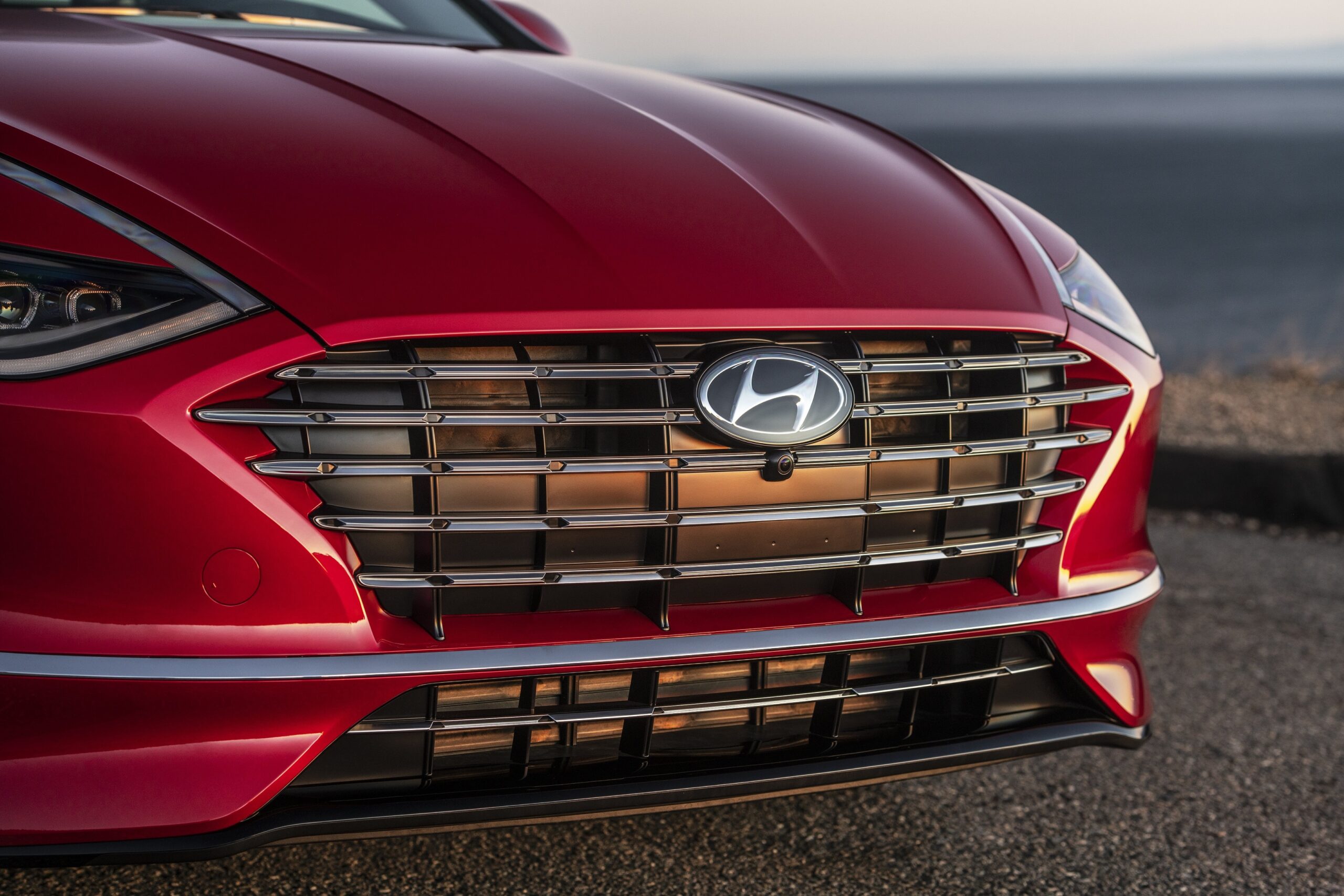
The design of the cross-hole grille works with three active air flaps in front of the radiator. (Hyundai)
Longer, Lower, Sleeker
Sizewise, the 2020 Sonata is 1.8 inches longer (192.9 inches) with a roofline lowered by 1.2 inches, now at 56.9 inches and the wheelbase is 1.4 inches longer, at 111.8 inches. The body width is nearly the same at 73.2 inches versus 73.4.
Typically, redesigned sedans are made a little lower and wider for aerodynamics to benefit fuel economy. Sometimes the lower roof cramps headroom and complicates the ease of entry and exit. But the dimensions of the Sonata preserve the tall front headroom of 40 inches and it just doesn’t feel as if you are riding close to the ground and looking up at taillights ahead. Also helpful are doors that open to nearly right angles and an innovative interior grab handle that is long and easy to grasp for optimum leverage. Often, door grabs are a hand-size grip that isn’t always at the best leverage point to control the door on opening and dinging the next car over.
Even with the longer wheelbase, the turning circle is still tight at 36.1 feet. And the regenerative braking has completely smooth engagement; some systems can have an initial on-off activation. The four-wheel disc brakes have 12-inch ventilated front rotors and 11.2-inch solid rotors rear.
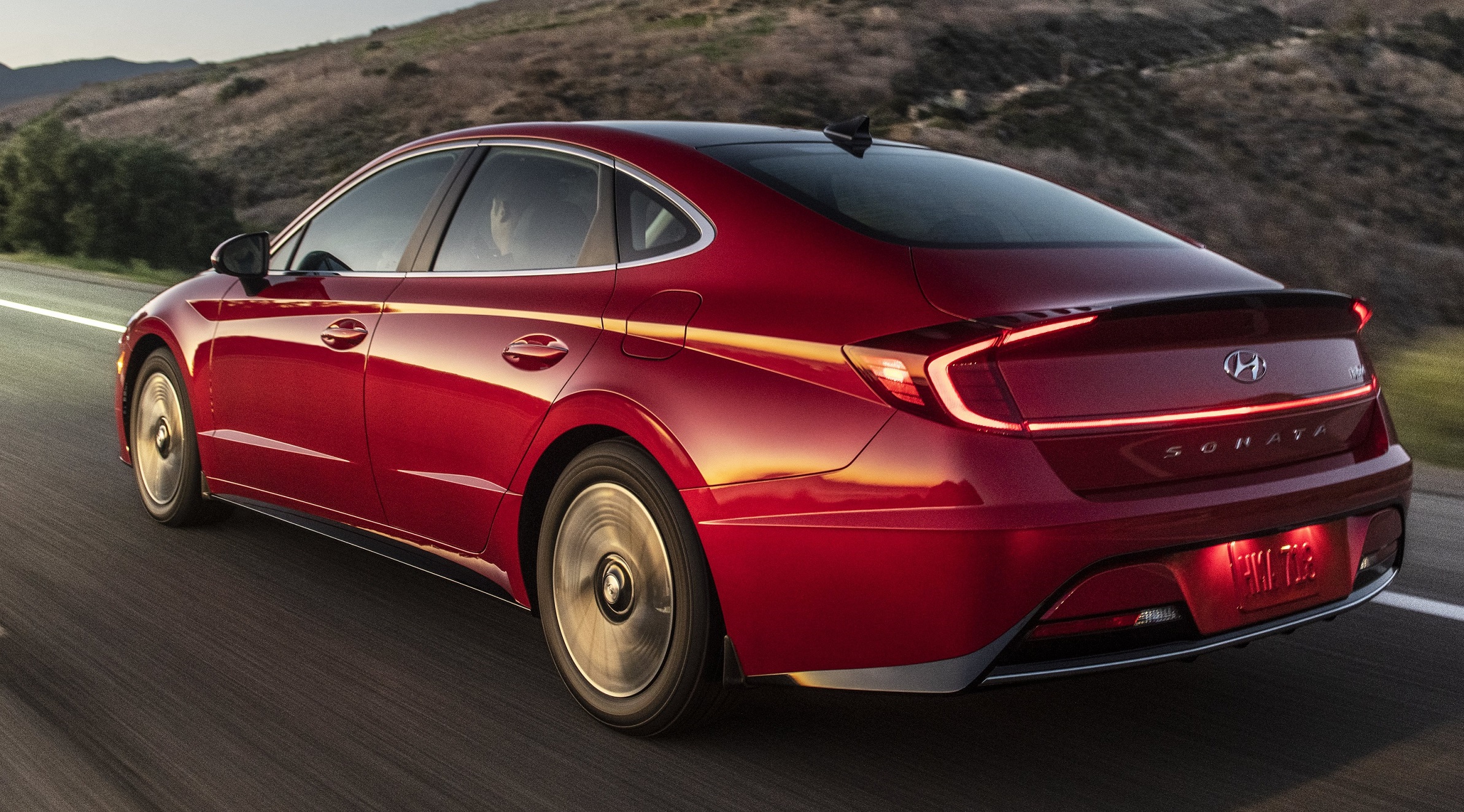
Hyundai is pursuing more dramatic LED lighting displays, such as the Hidden Lighting Lamps that appear to be chrome when switched off and become dramatically lit when switched on. (Hyundai)
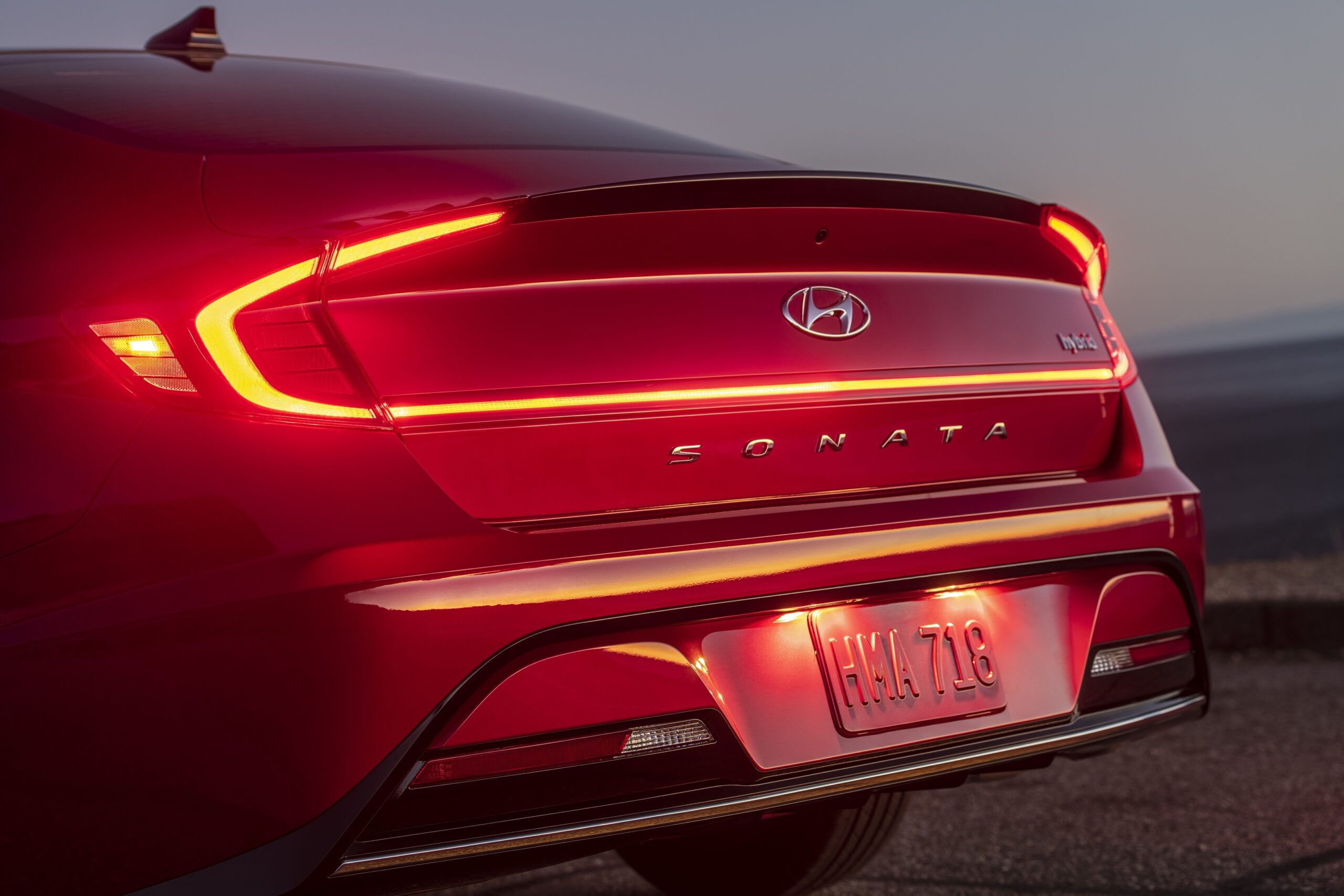
A wide horizontal LED strip connects each brake light. (Hyundai)
Soundproofing Maximized
Hyundai likely created the most soundproofed Sonata yet, though there is some tire hardness that is heard and felt at highway speeds. Otherwise, it rolls on carpet. Among the soundproofing tricks are improved carpet, advanced sound-absorption materials throughout the trunk and door trim and an acoustic windshield on all trims and laminated side glass on the SEL and Limited.
Cabin Function
While the Sonata Hybrid is electronically sophisticated, it does not require an advanced degree for the user to learn and enjoy. In the Limited, the driver faces a 12.3-inch digital gauge array with configurable panels, such as for fuel economy, map and more.
The front seat area has a clean design with clear access to controls. The 10.25-inch upper touch screen is to access radio and media, navigation, phone and apps. Climate controls, including for the heated and ventilated seats and the heated steering wheel, are just below on a separate tier — and just a finger-touch away.
The front seats have a robust design and comfortable support for the big-and-tall occupants. The steering wheel has meaty grip, wrapped in glove-smooth leather and neatly cross-stitched. Sliding visors have covered and lighted mirrors and the locking glove box is large enough to hold all the owner’s manuals.
Sightlines are completely open at the side mirrors and over the shoulder. The around-view camera system (overhead, front, and rear) is a welcome safeguard to avoid tapping the garage door or curbing the wheels when parallel parking.
The e-bin on the shift console is a handy hub with a 180-watt 12-volt plug, media USB, charging USB and a wireless charging pad large enough for the latest billboard-class phone.
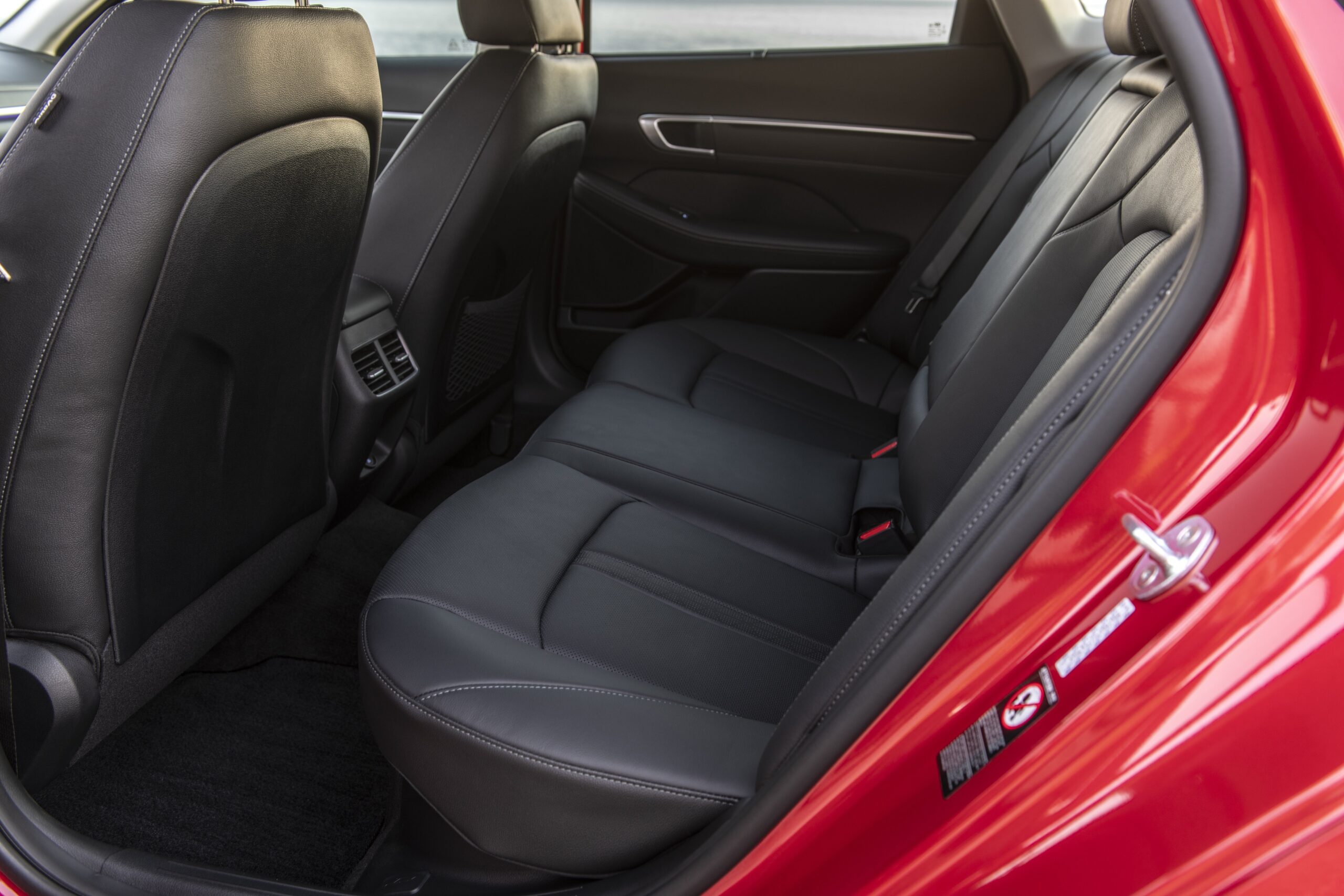
Back-seat space is adult-class for long thigh support and 34.8 inches of legroom. (Hyundai)
Improved Door Lock Sensors
Also improved were the door touch sensors for no-questions locking by touching the sensor on the outside of the door handle. This potentially solves the problem between using a chiclet-style button in the door handle, which gives an absolute response on locking, and the full sensor door handle, which sometimes must be rubbed, tapped, or smacked to get a response. And in that confusion, it’s not easy to know if the door is actually locked without pulling on the handle, which then unlocks the door. Aargh!
Owners can also opt for the smartphone-activated digital key. It uses Near Field Communication and Bluetooth technology to allow the car to be unlocked, started, and driven without a physical key.
Machine Learning
In my test week, I discovered a couple of interesting electronic messages.
While sitting in the idling car to take notes, a warning advisory popped up in the gauge display: “Vehicle will be turned off automatically” in a countdown of 30 minutes. Hyundai says this is to prevent accidental carbon monoxide deaths from people who accidentally leave a vehicle running in a closed garage.
And even better, there is a sort of a pay-attention-and-drive message. While waiting in traffic, with the adaptive cruise control engaged, the system will give an advisory message and tone to the distracted driver that reads “The car ahead is moving.” Or loosely translated, stop checking your phone and drive!
Trunk space is large at 16 cubic feet. (Hyundai)
Aerodynamics
Fuel economy is all about efficient airflow and Hyundai split hairs in the pursuit of mpgs. Among the tricks and techniques to calm the airflow:
Underbody bumper lip, front- and rear-wheel deflectors; undercovers in the front and back of the engine bay; center floor and rear undercovers.
Redesigned rear deck-lid spoiler.
The cross-hole grille design works with three active air flaps in front of the radiator. The shutters improve aerodynamics and reduce air resistance by closing on engine start-up and reopening gradually as needed for optimum airflow to cool the engine. At highway speeds, the shutters close to block too much air from entering and jamming up in the engine bay, which makes it harder to push the vehicle through the air, using more fuel.
Wheels and “green” tires have always been important in EV efficiency. The Sonata Hybrid’s wheels are actual alloy wheels, not wheel covers (aka hubcaps), that are aerodynamically designed and good—looking. The base model has 16-inch wheels, with 17s on the Limited. The tester’s Michelin Primacy all-season tires (215/55) have a fairly high (hard) treadwear rating of 540, which might explain some tire noise at highway speeds, but they have a 55,000-mile tread-life rating.
Why Buy the 2020 Hyundai Sonata Hybrid?
With an easily achieved 50 mpg on the commute, the Sonata Hybrid is a premium presentation without sacrifice of style, comfort and technologies. For $36K, this is the new benchmark for what to expect from a gasoline-electric hybrid.
The new Sonata hybrid delivers up to a 24 percent increase in fuel economy over the prior generation. (Hyundai)
2020 Hyundai Sonata Hybrid Limited Specifications
Body style: large-midsize, front-wheel drive 5-passenger sedan
Electric motor: Permanent magnet with 39 kW (51) hp from 1,800-2,300 rpm
Battery: 56 kW lithium-ion polymer, 270-volt max power
Total system power: 192 hp
Transmission: 6-speed automatic with electronic shift control
Fuel economy: 45/51/47 mpg; 87 octane
BY THE NUMBERS
Fuel tank: 13.2 gal.
Trunk space: 16 cu. ft.
Front head/leg room: 40/46.1 in.
Rear head/leg room: 37.8/34.8 in.
Length/wheelbase: 192.9/111.8 in.
Curb weight: 3,505 lbs.
Turning circle: 36.1 ft.
FEATURES
Standard Limited equipment includes: digital key locking and push-button ignition, solar roof panel, leather-trimmed upholstery, leatherette-wrapped dashboard, 10.25-inch navigation-infotainment touch screen, 12.3-inch digital instrument cluster, around-view camera system, front and rear parking sensors, electric parking brake (with automatic vehicle hold), 12-speaker Bose audio system, color head-up display, LED lighting (headlights, running lights, taillights and interior), 8-way power driver seat, 4-way power front passenger seat, power (heated) side mirrors with turn signals, heated and ventilated front seats, heated steering wheel, wireless phone and device charging, dual USB ports
Safety features on Limited include: 9 air bags, blind-spot monitor, lane-keeping assist, brake assist, stability and traction controls, high-beam headlight assist, 5 mph bumpers, highway driving assist, parking collision-avoidance assist rear
PRICING
Base price: $36,275, including the $975 freight charge. Price as tested $36,430.
Options on test vehicle: Carpeted floor mats $155
Where assembled: Asan, South Korea
Warranty: 5-years/60,000-miles bumper to bumper with roadside assistance; 10-years/100,000-miles powertrain and hybrid battery