Select Page

WeatherTech Raceway Laguna Seca Celebrates 65 Years

WeatherTech Raceway Laguna Seca Celebrates 65 Years
Lou Gold, president of the Sports Car Racing Association of the Monterey Peninsula stands with Major General William M. Breckinridge during the ribbon cutting. (Photos courtesy of WeatherTech Raceway Laguna Seca)

Lou Gold, president of the Sports Car Racing Association of the Monterey Peninsula stands with Major General William M. Breckinridge during the ribbon cutting. (Photos courtesy of WeatherTech Raceway Laguna Seca)

Green Flag Waved Nov. 9, 1957, to Open Laguna Seca Raceway

BY MARK MAYNARD

It was Saturday morning, Nov. 9, 1957, when America’s newest road course opened in Monterey, Calif. — Laguna Seca. The ribbon cutting occurred during the 8th Annual Pebble Beach National Championship Sports Car Road Races. Few of those in attendance might have expected that the hastily-built road course carved into the Fort Ord Army Installation was the beginning of an iconic motorsports venue.

The 8th annual event was a first for Laguna Seca. The name was a carryover of the races that began in 1950, racing through the Del Monte Forest of Pebble Beach, which had also added a Concours d’Elegance to bring a social atmosphere to its race weekend.

Six years later in 1956, the Pebble Beach Road Races showed the imperative need for a safer, larger race track to host one of North America’s most famous competitions.

Following Ernie McAfee’s death during a crash that year, organizers decided that the current Pebble Beach course was “not enough track” to house the rising horsepower being created annually.

Inaugural Laguna Seca race winner Pete Lovely (car no. 125) starts in third position on Nov. 10, 1957.

The nine-turn Laguna Seca road course was created in just 60 days at a cost of $125,000. In this image, inaugural race winner Pete Lovely (car no. 125) starts in third position on Nov. 10, 1957.

Military Approval

The Army brass was in attendance for the race because it was on an active military reservation. Negotiations to use the site began with Major General Gilman Mudgett, then commander of Fort Ord. Maj. Gen. Mudgett sent the request up the chain of command to the Sixth Army in San Francisco, which approved. However, in January 1956 the Defense Department withheld permission because a military reservation was not suitable for an event of this kind because of liability and public opinion.

After several months of lobbying by Fort Ord and Sixth Army officials — and members of the California Congressional district, the DOD reversed its opinion and left it up to the Fort Ord Commander.

Mudgett gave his permission with the stipulation that a property lease be drawn up between the military and the Monterey Peninsula Chamber of Commerce, which then admitted the newly formed SCRAMP as a member to oversee the race.

The U.S. Army and the Monterey Chamber of Commerce signed a lease for the Fort Ord property on Aug. 7, 1957. But another entanglement had to be addressed. Two lessees retained cattle grazing rights from the Army on a portion of the property. Two separate leases were required, which took another three weeks’ time.

By the time all the property rights were retained, it was September when plans could be finalized for a Nov. 9 race weekend. Incredibly, the nine-turn road course was created in just 60 days at the cost of $125,000, just in time for its inaugural race on Nov. 9 and 10, 1957.

Carroll Shelby racing in 1960 at Laguna Seca in a red Maserati Type 61

Carroll Shelby in 1960 on the Laguna Seca course in car No. 98, a red Maserati Tipo 61.

Laguna Seca Track Design

Wallace Holm, a young Salinas, Calif., architect, was the site development chair. He explained the track design by drawing a rough diagram in the dirt, staked the course, and the bulldozers went to work.

One of the most famous, one-of-a-kind turns in motorsports sits atop the circuit — the Corkscrew. As the story goes, the construction foreman drove up the hill and informed the bulldozer driver that he was going to lunch. The dozer driver asked the plan for the next phase of the track, to which the foreman said, “just get down the hill any way you can.” And notorious hard-left, hard-right combination of turns was created.

The first race program included some cautionary advice for visitors, such as: “Stay away from the hay bales. They were put there because experts felt that was where a car going wild would hit. Don’t try to prove the experts wrong the hard way,” and “Don’t try to cross the track. At the least, you are exposing yourself to arrest. And you may be tempting a quick and painful and final end to your day’s spectating.”

Sir Stirling Moss in 1961 Laguna Seca as he won his second straight Pacific Grand Prix.

Sir Stirling Moss in 1961 as he won his second straight Pacific Grand Prix.

Laguna Seca Greats

Sixty-five years later, the “dry lagoon” has been the venue for countless memorable moments. As a non-motorsports entertainment site, Laguna Seca has hosted such dignitaries as The Pope, the Beach Boys, and Grateful Dead.

Its reputation in motorsports is a legendary Who’s Who of racing. Among its veteran racers are Dan Gurney, Sir Stirling Moss, Phil Hill, Jim Clark, Mario Andretti, Bruce McLaren, Bobby Rahal, Roger Penske, Valentino Rossi, and Wayne Rainey, all Hall of Fame athletes. Even actor-racer Paul Newman favored the location by constructing garages for his race team. The Newman Building remains in use today.

If You Go

Get information on camping, special events, and an update on the capital improvements at WeatherTechRaceway.com, or call for tickets and accommodations at (831) 242-8200.

Volkswagen Arteon 2.0T Review

Volkswagen Arteon 2.0T Review

The 2023 Volkswagen Arteon is a diabolically understated driver’s car

A front-corner view of the blue Arteon

The 2023 VW Arteon, in front- or all-wheel drive, has starting prices of $43,825 to $50,990. (Photos courtesy of Volkswagen America)

Table of Contents

Overview
2023 Updates
Pricing
Safety Features
Ride and Handling
Performance
Interior Function
7 Cool Features
Back Seats and Cargo Space
Why Buy the VW Arteon?
Specifications

BY MARK MAYNARD

The Volkswagen Arteon is a sleek and sophisticated grand tourer with a complete array of advanced safety and driver assistance technologies. But this large-midsize sedan travels below the radar of most motorists and, consequently, will be discontinued in the U.S. in 2024.

According to Automotive News, VW’s top-line internal combustion-powered sedan will be replaced by the ID Aero, a battery-electric sedan. ID Aero sales are expected to commence in China during the second half of 2023, followed by a version for Europe. There has been no confirmation yet on the ID Aero for North America, but surely there will be one. Volkswagen is in the process of electrifying its entire vehicle lineup.

The front seat area

The R-Line front sport seats are eight-way adjustable with long thigh support.

Volkswagen Arteon Overview

Arteon arrived in the U.S. from Germany in the spring of 2019 as the replacement for the CC sport sedan. Its sales have been modest for the VW brand, averaging 2,500 to 5,500 yearly, but sales drove off a cliff in 2022. Just 941 Arteon models have been sold as of third-quarter reporting, per Volkswagen.

It is not because the Arteon is a bad car. It’s actually a very well-done car, and diabolically understated as a driver’s car. It is wide but not too low for open sightlines and simple entry and exit. The direct-shift gearbox hooks up quickly from a start and rolls aggressively up to speed. And there is expansive cargo space.

Despite its rewarding performance, the Arteon is simply overlooked in favor of SUVs and SUV crossovers. (VW has four SUV models, plus the battery-electric ID 4 sedan and upcoming ID Buzz microvan.) For the value shopper, the VW Arteon is a pricey commitment, no matter how enjoyable it is to drive.

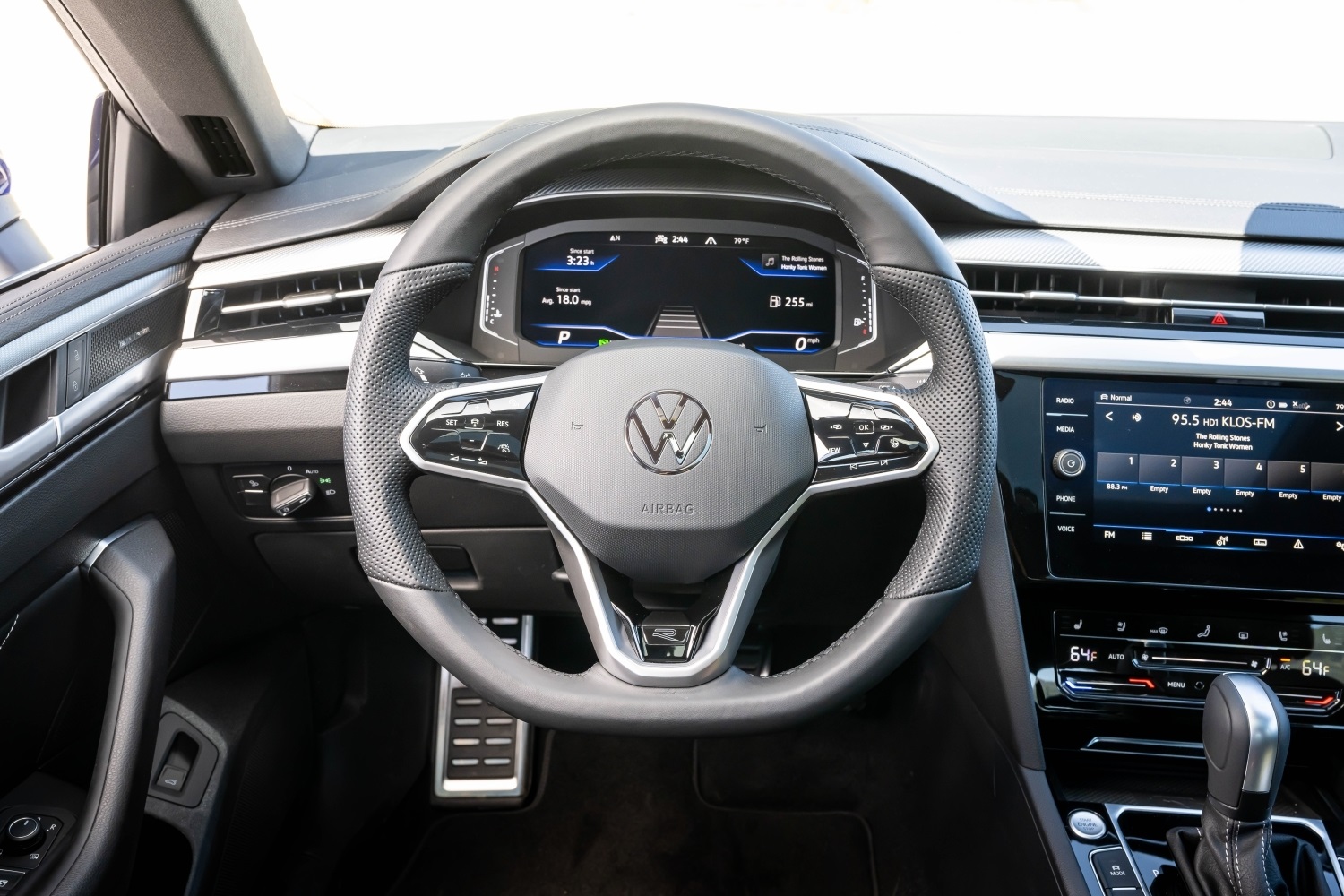
The 3-spoke steering wheel

The three-spoke, heated steering wheel fits firmly in hand.

Out With the ICE, In With the EV

Throughout the car industry, slow-selling cars are being replaced, mostly, by fully electric or electrified models. Would more advertising have helped save the Arteon? Or a more understandable name? “Arteon” is from the Latin word “artem,” meaning art.

The Volkswagen Arteon has just a few competitors in size and content, including the Kia Stinger, Nissan Maxima, and Toyota Avalon. And these well-done cars are facing the same fate as the Arteon.

It is expected that Kia will cease production of the Stinger — a critically acclaimed liftback sport sedan — in late 2023. Sales will continue into 2024, and it will undoubtedly be replaced by an electrified model.

The Maxima is caught in the same dejected state. Nissan will end production for its long-running Maxima nameplate in 2023. And like Volkswagen, Nissan will fill the slot with an electric vehicle inspired by the IMs “elevated sports sedan” concept in 2023, per Automotive News. The same goes for the Toyota Avalon, which is being phased out and will be replaced by the 2023 Crown sedan, a hybrid.

The 8-inch infotainment screen

Access to controls is smartly arranged with an easy-to-use 8-inch touch screen.

2023 Volkswagen Arteon Updates

In its three years on the market, Volkswagen has made dutiful improvements every year. Last year, VW repackaged the Arteon powertrain with a 300-horsepower, turbocharged and direct-injected 2.0-liter four-cylinder engine and seven-speed dual-clutch automated manual transmission. It is the same EA888 2.0-liter engine used in the Mk8 Golf R. The new powertrain replaces a 268-hp, turbocharged and direct-injection 2.0-liter with an eight-speed stepped automatic transmission.

And for the 2023 model year, Volkswagen added more standard content for the entry-level SE R-Line and a few cosmetic changes for higher trim levels. The lineup also was restructured to three trim levels, continuing with a choice of front- or 4Motion all-wheel drive.

Newly standard exterior features include adaptive LED headlights, cornering lights, and front fog lights. The grille now has an illuminated light bar, and the liftgate has an easy open-and-close power function. On SEL R-Line models, 20-inch wheels replace the previous year’s 19-inch wheels.

Inside is a new heated steering wheel, Dynamic Road Sign Display in the digital gauge array, and IQ.Drive driver-assistance technologies. SEL and SEL Premium R-Line models add Black Carbon trim with 30-color ambient lighting.

The wireless charging pad

Slim hands are required to get into the wireless charging pad.

2023 VW Arteon Pricing

Arteon is sold in three trim levels in front- or all-wheel drive with a 300-hp, 2.0-liter turbocharged engine and seven-speed automated-manual direct-shift transmission.

Starting prices for each trim level are $43,825 SE, $48,390 SE R-Line, and $50,990 for the SEL R-Line with 4Motion all-wheel drive. Pricing includes the $1,295 freight charge from Emden, Germany. No-cost interior colors are Titan Black or Stone and Raven.

The SEL R-Line tester with one option for metallic paint ($395 for Kingfisher Blue or King’s Red) was $51,385.

An interesting option is the LED Dynamic Turn Signals, $265, for a set of two. An amber lighting line on the exterior mirror body moves sequentially to the outside of the mirror housing.

The lengthy list of standard features is detailed in the specs box at the end of this story. But Arteon’s overachieving features support its $50K pricing without regrets.

Find current Arteon pricing here.

As of this posting, there are two 2023 $500 pricing offers for college graduates and military, veterans, and first responders. The offers are good for purchase or lease. Get the details here.

The Arteon engine bay

The 300-hp EA888 evo4 engine produces 295 lb.-ft. of peak torque at a low 2,000 rpm.

Warranties and Maintenance

Volkswagen supports the Arteon and every vehicle in its lineup with a bumper-to-bumper warranty and Carefree Maintenance Program. The warranty is for four years or 50,000 miles and can be transferred to a subsequent owner.

The maintenance program provides scheduled maintenance for two years or 20,000 miles. And this coverage, too, can be transferred to a subsequent owner throughout the remainder of the warranty.

VW Arteon Safety Features

The 2022 Arteon was named a 2022 Top Safety Pick by the Insurance Institute for Highway Safety. It is a specific award to Arteon models equipped with LED headlights and adaptive front lighting. It was a three-peat annual award for Arteon.

Standard safety features include six air bags, electronic brake-pressure distribution and hydraulic brake assist, electronic stability control, anti-slip regulation, electronic differential lock, and engine brake assist.

Driver-assist technologies include:

  • Travel Assist (Level 2 semiautonomous driving) and emergency assist;
  • Blind-spot monitor;
  • Forward collision warning and autonomous emergency braking;
  • Pedestrian monitoring;
  • Lane assist;
  • Park assist with park distance control front and rear.

The Travel Assist function works through the adaptive cruise control and has stop-and-go capability. The system’s lane-centering is consistent, particularly in freeway curves, when many other systems allow the vehicle to drift wide across the white lines.

The 20-inch tire and wheel package

The 20-inch wheel and tire package.

Arteon 4Motion Ride and Handling

It is easy to maintain car control with the deliciously engaging German engineering for steering input, throttle uptake, and braking engagement. The steel-spring suspension (front struts and rear multilink) is reinforced by telescopic dampers and an anti-roll bar, front and rear.

The chassis feels extremely rigid and secure. The ride quality is compliant but firm without jolt (or chin scraping) over lumpy intersections. Even the 20-inch Continental ProContact all-season tires (245/35) added to a smooth ride with little road noise. The tires on the test car were inflated to 42 psi. Typically that hard of a tire inflation would create harsh-riding black checkers. But the Continentals showed no harshness or noise. Four-wheel vented disc brakes have 13.4-inch front rotors and 12.2-inch rotors at the rear.

The sturdy gear shift handle in the shift console

Sturdy action for the seven-speed direct-shift gearbox.

Arteon 4Motion Performance

In Arteon specification, the EA888 evo4 engine displaces 1984cc, producing 300 horsepower (using the required premium fuel) at 5,350 rpm. The 295 foot-pounds of torque peaks at a low 2,000 rpm, and there is little turbo or DSG delay in laying down power. It gives some of the most unfettered performance I’ve experienced from a turbocharged four-cylinder and DSG.

Drive modes of Eco, Comfort, Normal, Sport and Custom allow personalization to the driver’s style. Sport mode adds potent acceleration and upshifts. According to ZeroTo60times.com, the Arteon SEL Premium R-Line 4Motion can get to 60 mph in 5 seconds.

Front-wheel-drive Arteon models have an EPA-estimated fuel economy rating of 25 mpg in city driving, 33 mpg on the highway, and 28 mpg combined. Models with 4Motion all-wheel drive have ratings of 22/31/25 mpg. All models have a 17.4-gallon fuel tank, which was downsized from 18.3 gallons last year.

I spent most of a 200-mile test week in Eco plus Sport or Normal plus Sport. My fuel economy around town was in the 20 mpgs, and I worked up to 31.3 mpg on highway cruising, which might have gone higher if I hadn’t reached my exit.

4Motion All-Wheel-Drive

The latest generation of Volkswagen’s 4Motion system is standard on the SEL and SEL Premium trim levels. The system will activate before wheelspin occurs. When driven under a relatively low load or coasting, the front wheels are driven and the rear wheels are decoupled to help save fuel. However, the rear wheels will engage in a millisecond whenever necessary via the center differential.

The XDS cross-differential lock functions as a limited-slip differential and helps to compensate for understeer (front-end push) during cornering. In low traction situations, the system can briefly brake a slipping wheel to transfer drive power to the opposite wheel.

Interior Function

The R-Line cabin has a sporty coupe-like presence with a contemporary design and horizontal lines to accentuate width. The hefty girth of the three-spoke steering wheel fits firmly in hand with grips in the right places.

Front headroom of 37.9 inches (with the sunroof) and the seating position should accommodate taller drivers (up to at least 6-foot-5 inches in my test). The R-Line front sport seats are firmly supportive with long thigh support. But the seats also have serious side and cushion bolsters for those drivers who push the cornering limits. As a grand tourer, however, I’d have the side bolsters cut down to reduce the friction and wear as butts slide over the ridge.

Sightlines are clear at the side mirrors and down the hood, but the smallish back glass and sloped sides can be an issue. When parking, the wide-screen rearview camera with guidance lines is the great equalizer.

Ergonomics and access to controls are smartly arranged with an easy-to-use 8-inch touch screen. As VW has stepped up to add more charging USBs, its wireless charging pad is a struggle to use. It occupies a shallow tray just ahead of the gearshift lever, and it requires slender fingers to slip in a phone or pull it out, but it beats the tangle of a charging cord.

The 12.3-inch-wide digital gauge display (trickle down from Audi) is helpful for its selectable elements, such as the navigation map as background or to highlight a digital speed readout or gear position.

Small storage areas include large door panels with space for bottles.

The Arteon back seat

Back seat legroom of 40.2 inches is grand-touring comfortable.

7 Cool Arteon Features

The Volkswagen Arteon appears to have had a generous budget to support its entry-lux price. Some of the assets I appreciated are:

  • Both front seats are fully power-adjustable. Some makers cheap out on the front passenger seat and give half as many power adjustments;
  • Door lock sensors are in all four doors, not just the front doors, as are done by many other makers;
  • Heated steering wheel;
  • Ventilated front seats, not just heated seats;
  • Frameless side glass for that sport-coupe appearance. And the driver can enjoy driving with the window down and not being cruelly buffeted;
  • Sliding front center armrest top, which helps drivers of all sizes get comfortable;
  • Front and overhead camera views, not just a rear view.

Back Seat and Cargo Space

Access to the back seat is a bend-and-drop sequence, but legroom is grand-touring comfortable at 40.2 inches — and the window seats have adult thigh support. The tall but narrow transmission tunnel helps center-seat legroom, but the window seats are far more comfortable.

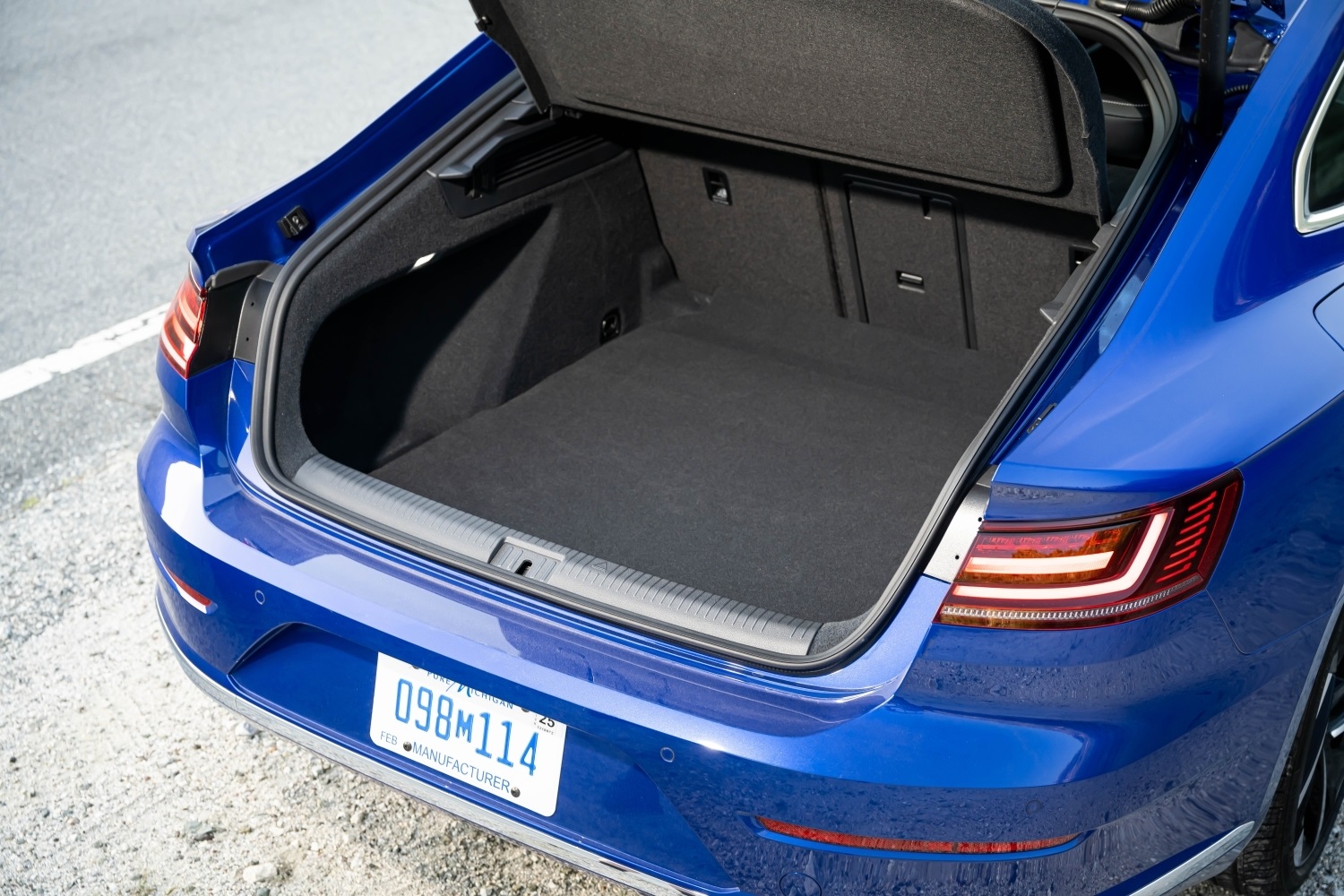
There is a fold-down armrest and ski pass-through to the cargo area, which is wide and deep. Fold the seatback for about 6 ½ feet in length.

The open cargo area

Fold the seatback for about 6 ½ feet in length.

Why Buy the Volkswagen Arteon?

I strongly dislike using the overused words “premium” or “elevated” unless referring to ice cream, gasoline, or an out-of-the-way diner. However, the Arteon fits both of those descriptors.

As a sedan, it is a step up from a family car and a step below the luxury class.

While an SUV is an appliance valued for its view from the inside outward, the Arteon has a sophisticated presence, seen from the outside in.

The purposeful and balanced German engineering is the unspoken asset of the Arteon. It is a soaring grand tourer, built for 100 mph continental cruising and arriving at your destination with unrumpled style.

Owners will enjoy for the long term its cabin size, power, and nimble footprint.

A review of the Arteon moving along a country road

The Volkswagen Arteon is a soaring grand tourer, built for 100 mph continental cruising.

2023 VW Arteon 2.0T SEL Premium R-Line Specifications

Body style: large-midsize, 5-seat liftback sedan with 4Motion all-wheel drive

Engine: 300-hp turbocharged and intercooled 2.0-liter 4-cylinder with auto stop-start at idle; 295 lb.-ft. torque at 2,000 rpm

Transmission: 7-speed direct-shift automatic transmission with performance modes of Eco,

4Motion Fuel economy: 22/30/25 mpg city/hwy/combined; premium fuel recommended

0-60 mph acceleration: 5.0 seconds

BY THE NUMBERS

Fuel tank: 17.4 gallons

Cargo space: 27.2-56.2 cubic feet

Front head/leg room: 37.7/41.2 inches

Rear head/leg room: 37/40.2 inches

Shoulder room f/r: 56.5/54.7 inches

Length/wheelbase: 191.5/111.9 inches

Curb weight: 3,929 pounds

Turning circle: 39 feet

FEATURES

SEL Premium standard equipment includes:

Exterior: 20-inch alloy wheels with 245/35 all-season tires, adaptive (turning) headlights with cornering lights, LED headlights-taillights-daytime running lights, hands-free remote power rear hatch, fog lights, power folding, heated, power adjustable side mirrors with position memory and passenger-side auto-tilt function, power tilting and sliding panoramic sunroof, and R-Line front bumper and badging.

Interior: Keyless access locking with push-button ignition, rearview camera with overhead view), electronic parking brake with auto-hold function, Volkswagen Digital Cockpit Pro with 10.25-inch configurable instrument display, wireless charging pad, 60/40 split-folding back seat with armrest and center pass-through, auto-dimming rearview mirror, three-zone automatic climate control with air filter, comfort sport seats with power lumbar and driver seat massage function, heated seats front and rear, ventilated front seats, leather-trimmed upholstery and leather-wrapped multi-function (heated) sports steering wheel with touch control and shifting paddles, multi-color adjustable ambient lighting, stainless steel pedal caps, Titan Black headliner, remote engine start, Harman Kardon audio system with center speaker and subwoofer, satellite radio with 3-month subscription, headlight high-beam control, two front USB-C data ports and one rear USB- C charging port, 8-inch touchscreen navigation, adaptive cruise control, App-Connect smartphone integration via wireless & USB, myVW connected vehicle services from Car-Net.

Safety features include: Six air bags, electronic brake-pressure distribution and hydraulic brake assist, electronic stability control, anti-slip regulation, electronic differential lock, and engine brake assist, blind-spot monitor.

Driver-assist technologies include: Travel Assist and emergency assist, dynamic road sign display, forward collision warning and autonomous emergency braking, lane (steering) assist, park assist with park distance control front and rear, and pedestrian monitoring.

PRICING

SEL Premium R-Line base price: $50,990, including $1,295 freight charge; price as tested $51,385

Options on test car: metallic paint $395

Where assembled: Emden, Germany

Warranties: 4-years/50,000-miles bumper to bumper including powertrain; 2-years/20,000-miles free scheduled maintenance; 3-years/36,000-miles roadside assistance

Barbie Maserati Grecale Trofeo: A Collaboration of Mutual Desire

Barbie Maserati Grecale Trofeo: A Collaboration of Mutual Desire
An exterior studio shot of the pink Maserati Grecale

The Barbie Maserati Grecale Trofeo is a trident effort from Maserati, Mattel, and Neiman Marcus. (Photos courtesy of Maserati)

BY MARK MAYNARD

The House of the Trident and the world’s most famous fashion doll have embraced the power of pink for a bespoke edition of the Barbie Maserati Grecale Trofeo.

The unprecedented collaboration with Mattel, Inc. is motivated by a “mutual desire to break boundaries and showcase the unique flair of both brands,” Maserati said in a press release.

Inspired in part by the Barbiecore phenomenon, the Barbie Maserati Grecale is an ultra-limited Fuoriserie edition (Italian for “customized”) that is available in only two (maybe three) custom units globally. One of them was unveiled on the evening of Oct. 25 as one of the 2022 Neiman Marcus Fantasy Gifts at the luxury retailer’s holiday launch soirée in Los Angeles.

The pink and black interior

The interior features black leather seats with pink leather accents throughout.

A portion of the sales price will benefit the Barbie Dream Gap Project. The charitable initiative is a global outreach to help provide equal opportunities and remove barriers for girls.

Additional details regarding the second custom Barbie Grecale will be announced in 2023.

Black wheels of the Barbie Maserati

Gloss black elements include Neiman Marcus and Barbie logos.

The Maserati Grecale Trofeo

The bold pink Barbie Maserati Grecale is based on the Trofeo trim level, powered by a 530-horsepower, twin-turbocharged 3.0-liter Nettuno V-6. In full Barbie fashion, the iconic pink hue covers nearly every inch of the compact SUV with fine acid-yellow pinstriping inspired by the Trident’s racing heritage. The Grecale Trofeo (Italian for “trophy”) has a starting price of $102,500.

The pink paint is sealed with an iridescent topcoat, creating a rainbow effect in sunlight. The black interior features full-leather seats, dashboards, carpets, doors — accented with pink stitching — and headrests embossed with the unique “B” badge.

A rear view of the pink Barbie Maser

Acid-yellow pinstriping highlights the iconic pink hue.

Barbie Maserati Grecale Price

The asking price for the Barbie Maserati Grecale is $330,000. With the purchase, Mattel will donate 10 percent of the sales price to the Barbie Dream Gap Project page on GoFundMe.org. No sale portion is tax deductible, and the promotion will run through March 31, 2023. The Fantasy Gift is available for residents in the lower 48 U.S. states.

For details, visit NeimanMarcus.com/FantasyGifts.

Audi A3 40 Quattro Review

Audi A3 40 Quattro Review

A test drive of the 2023 Audi A3 without activating Sport mode, just doesn’t tell the story of Audi’s smallest sedan

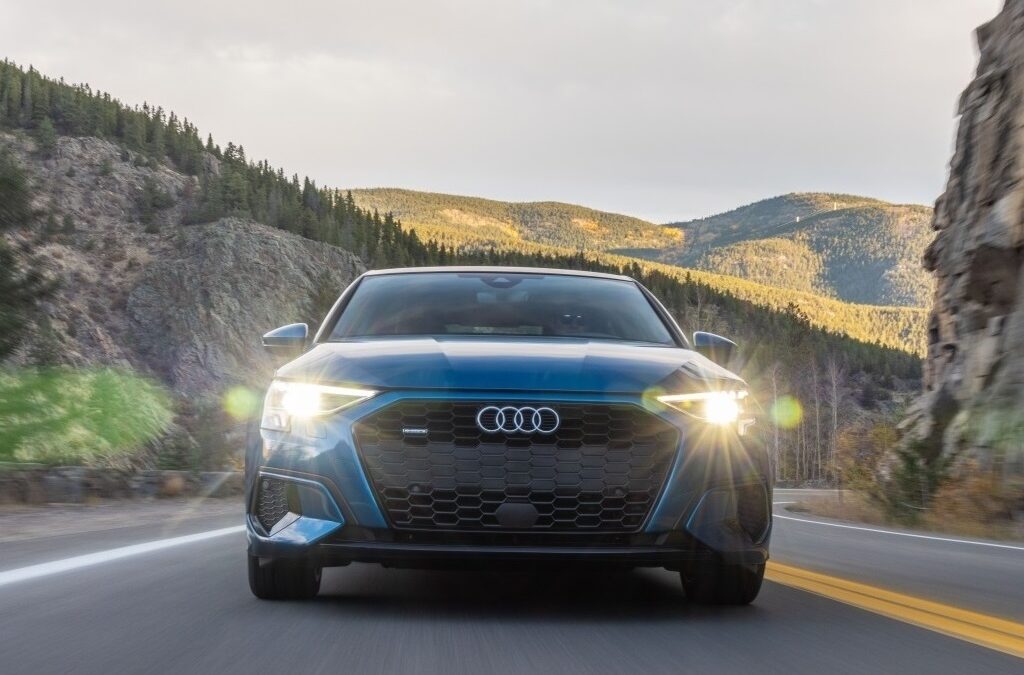
An exterior side view of an Atoll Blue Audi A3 sedan

For 2023, the Audi A3 continues with choices for front- or quattro all-wheel drive in trim levels of Premium or Premium Plus. (Photos courtesy of Audi USA)

Table of Contents

A History of A3 Firsts
2023 A3 Updates
A3 Model Line Pricing
A3 40 Performance
Driver-Assist Driving
Ride and Handling
Audi A3 40 Fuel Economy
Interior Function
Back Seats and Trunk Space
Why Buy the Audi A3?
Specifications

BY MARK MAYNARD

The Audi A3 shows its true colors — Red — in the performance modes of its 201-horsepower turbocharged four-cylinder engine and seven-speed S tronic transmission.

A test drive without activating Sport mode, or even the Dynamic performance setting, just doesn’t tell the story of this smallest Audi sedan. It can be a sleeper until prodded by the amped-up attitude of red in the gauge display.

By opting for this entry-level A3, the owner straps into a legitimate subcompact sport sedan without glam or gimmickry. It is the first touch point for this storied A3 family, which might be overlooked by the 306-hp Audi S3 or the 401-hp Audi RS 3.

Among the A3 standout features are the smartly designed interior, Audi’s shrewd engineering, a mild-hybrid engine, and the fact that this small sedan still has a spare tire! It’s a temporary spare with the jacking equipment, but with the broad electrification of vehicles, a spare tire is being deleted to make room for the battery pack and to save weight. The exception is larger vehicles and those intended for off-road travel.

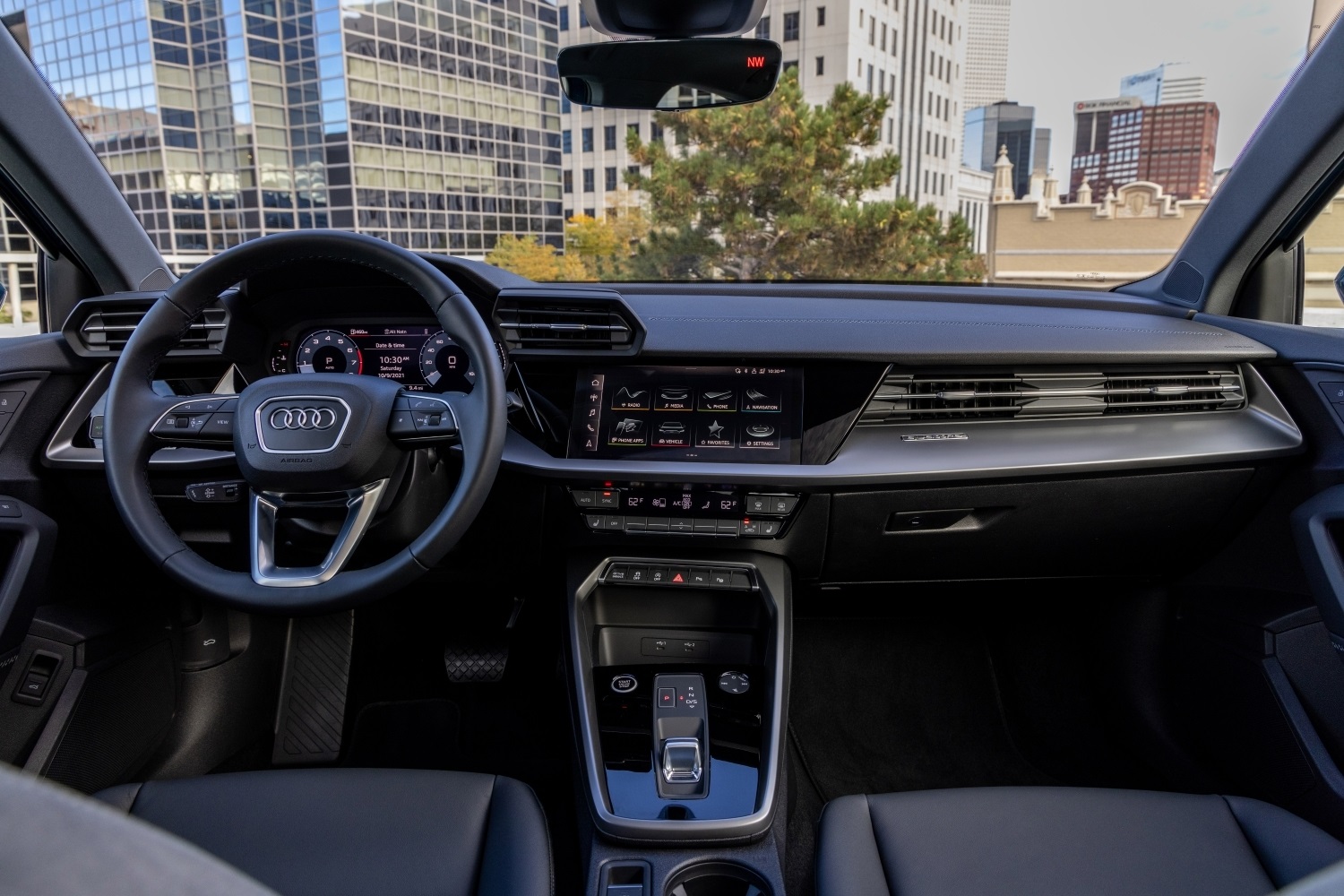
Looking through windshield from inside the driver seat of the A3

The A3 cabin seems to have been designed as a driver’s car — with a true coupe feel.

A History of Audi A3 Firsts

The Audi A3 made its U.S. debut in 2005 as a 2006 model. It was one of the first modern luxury-class subcompact sedans.

Redesigned for the 2015 model year, the A3 was one of Audi’s biggest marketing launches. Much of the fanfare was about its advanced technologies, which Audi calls industry “firsts.” Among its enhancements were:

  • First in-vehicle LTE connectivity (Long Term Evolution) with Wi-Fi;
  • The first Audi model to use the modular infotainment platform, MIB;
  • First integrated social networking applications and Picture Book Navigation;
  • And in 2014, the A3 won the award for World Car of the Year.
Looking through the 3 spoke steering wheel at the digital gauge array

The 10.25-inch digital gauge array.

2023 Audi A3 Updates

After its complete redesign and re-engineering for the 2022 model year, the 2023 A3 and S3 models have just a few packaging adjustments.

Full LED headlights and stitched door armrests in leatherette are now standard for the 2023 A3 40.

The A3’s Premium Plus trim adds LED interior lighting-plus package and an Agate gray fine grain birch wood inlay. Adaptive cruise control is available through Function on Demand for the base Premium trim.

For the A3 40, the 18-inch 5-spoke Y design wheels with a bi-color finish and all-season tires are now included in the Black optic sport package. And wireless phone charging has been added to the Convenience package for the A3 and S3.

Looking up through the A3 panoramic sunroof

The Premium Plus features include a panoramic sunroof.

Audi A3 Model Line Pricing

The entry 2023 Audi A3 40 is available in front-wheel drive or quattro all-wheel drive. All A3 models have a seven-speed S tronic dual-clutch automated-manual transmission with performance modes. A3 starting prices range from about $36,000 for the front drive Premium trim to $43,145 for the Prestige Plus quattro, today’s tester. Including Atoll Blue paint ($595) and the Black Optic sport package, $1,550, the tester came to $43,740. All MSRPs include the $1,095 freight charge from Ingolstadt, Germany.

The main subcompact sedan competitors in size and price to the Audi A3 are the 2023 BMW 2-Series Gran Coupe four-door ($36,600) and the 2023 Mercedes-Benz A-Class ($36,095). Other potential competitors are the 2023 Acura Integra  ($32,000) and 2023 Cadillac CT4 ($35,790).

The infotainment screen in the A3

A 10.1-inch touch screen for rearview camera views and infotainment.

Audi A3 Premium Plus Features

Standard A3 Premium Plus technologies include:

  • Advanced key with push-button ignition;
  • Adaptive cruise assist with lane guidance;
  • Side assist with rear cross-traffic assist;
  • Active lane assist with emergency assist;
  • Parking system with park assist.

Convenience features on the A3 Premium Plus include leather-trimmed upholstery, panoramic sunroof, wireless phone charging, eight-way power (heated) front seats, driver’s seat memory presets, power folding and heated side mirrors, full HED headlights, garage-door opener. (See the longer list in the specs box at the end of the story.)

The A3 Black optic sport package adds:

  • 18-inch 5-spoke Y design wheels with a bi-color finish;
  • Pirelli all-season tires;
  • Black exterior trim;
  • Sport suspension lowers the ride height by a little more than half an inch, or 15mm.

Audi S3 and RS 3 Pricing

The Audi S3 starts at almost $47,000, with standard quattro AWD. With a few options, the price settles in at $56,000.

The RS 3 Quattro starts at almost $60,000. With desirable options, including the Black optic plus package ($750), Dynamic plus package ($5,000), RS sport exhaust system with black tips ($1,000), and Design selection interior ($1,500), the sticker grows to $69,000.

The Audi warranty of four years or 50,000 miles is for bumper-to-bumper coverage, with roadside assistance. The free first-scheduled maintenance is no longer offered. But Audi offers more comprehensive Care Select packages, starting at $999 for the A3.

Find current Audi A3 pricing here and special offers here.

A yellow Audi RS 3

The 401-hp, 5-cylinder Audi RS 3. Acceleration from 0 to 100 mph in 3.8 seconds.

Audi A3 Styling

Small can be spectacular in the A3 — but it might not appear so in its exterior styling. Its bold face instantly identifies the A3 as an Audi, and the unprovoking exterior design will transcend style trends for years to come. But it’s not a treatment that will lure motorists to follow the car hauler to the dealership.

The exterior design is balanced with a strong stance on the larger 18-inch wheels, though 17s are standard. The low front end can be a chin-scraper on driveways and when bounding through cross-street intersections.

The basic black interior doesn’t call out luxury, either. The engaging use of brushed metallic trim is youthful, but the assets of the A3 make themselves known after strapping in.

The A3 has LED headlights

The A3 has full LED lighting.

Audi A3 40 Performance

In the base drive mode of Comfort, A3 performance is mild and tuned for maximum fuel economy. At 3,494 pounds, which is a bit heavier than the BMW or Mercedes competitors, the official A3 40 fuel-economy ratings with AWD are 31 mpg city, 28 highway, and 36 mpg combined — using the recommended 87 octane fuel. Those ratings are a few mpgs better than the BMW and the Mercedes, which prefer premium fuel.

The A3’s 13.2-gallon tank could provide more than 400 miles of driving. I wouldn’t know because I was enjoying the Sport modes. My around-town mpgs were acceptable, but even then, I set the performance mode to “Comfort-Sport.”

The 201-hp 2.0-liter has 221 foot-pounds of torque, which peaks at a relatively high 4,000 rpm. That’s why performance in Comfort mode is comfortable. Activating Sport gives a bit more engine rev on take-off from a stop, which gets everything moving quicker into the upper rpms.

The seven-speed dual-clutch has the sensation of engaging first gear. That spooling and clutching can delay launch force as the turbo builds pressure and the transmission hooks up. But shift response at speed is quick and supportive of enthusiastic driving.

Especially appreciated is an honest exhaust and engine tone. There is no artificial engine-sound generator to give a hot-shoe impression. I’m quite capable of making noise on my own.

The A3 turbocharged four cylinder engine

The A3 has one powertrain choice of a 201-hp, turbocharged and direct-injected 2.0-liter four-cylinder and 7-speed dual-clutch transmission.

Driver-Assist Driving

The A3 Premium Plus packages the network of driver-assist technologies. It is a Level 2 hands-on system that will be an asset for those in the slog of highway commuting.

I found the system to be precise in its lane centering and a faithful roundhouse of eyes for protection from drivers who are less aware while driving.

The advanced-tech package includes:

  • Adaptive cruise assist with lane guidance;
  • Audi side assist with rear cross-traffic assist;
  • Adaptive cruise assist;
  • Active lane assist with emergency assist.

Mild Hybrid Technology

The direct-injected TFSI engine — Turbo Fuel Stratified Injection — has sophisticated engineering for power and economy from a 48-volt mild-hybrid (MHEV) system. It’s another first for the A3, allowing it to coast while the engine temporarily shuts off in certain driving situations. The system also applies energy recuperation on throttle-lift and braking.

Audi says the A3 40 TFSI quattro has a 24 percent improvement in combined efficiency compared with the previous quattro model; it had official mileage ratings of 28/36/31 mpg city/highway/combined.

What’s the 40 mean?

In Audi engine terms, the A3 40 somehow refers to the 2.0-liter engine’s horsepower, which globally ranges from 165 to 198 hp. But the current U.S. -spec Audi A3 40 has 201 hp. The higher the number, such as 45, the higher the horsepower. The Audi A8 large sedan has an engine ranking of 55 for its
335-hp, turbocharged 3.0-liter V-6.

The higher-horsepower Audi A3 S and R.S. models don’t use an engine code; they stand on their own.

Audi A3 40 Ride and Handling

Despite a low 0.27 coefficient of drag, there was more road and ambient cabin noise than expected from such a small car. The likely culprit is the Pirelli P Zero all-season tires, though all-season Pirellis are not known to be noisy. The 225/40 tires have good cornering grip and a treadwear rating of 500, which is in the midrange for hardness; the tire’s warranty is for 50,000 miles.

The steel-spring suspension has MacPherson struts at the front and a four-link rear. The setup nimbly handles weight transitions and has a tight turning circle of 36.4 feet (or maybe a little wider with the 18-inch tires). The highway ride quality is more compliant than expected from the 103.5-inch wheelbase, which is a few inches shorter than its competitors.

Braking is absolute, but not grabby, from 12-inch ventilated front discs and 10.7-inch solid rear discs. The four-wheel ABS integrates brake-force distribution, hydraulic brake assist, and the expected stability and traction controls.

The 18-inch alloy wheel and Pirelli P Zero tire

Pirelli P Zero all-season tires, 225/40.

A3 Interior Function

The A3 cabin seems to have been designed as a driver’s car — with an authentic coupe feel. There are wide-open sightlines at the side mirrors without complications of frames at the corner glass. Over-the-shoulder views are also open, and the rearview camera with guidance lines also gives a silhouette view of nearness to objects front or rear.

Small cars often have cluttered interiors for placement of all the switches and controls, but not in the A3. A designer took care to arrange the front door panels to have an easy reach to the door grab with ideal leverage, opening or closing. Window switches, mirror adjusters, seat-memory presets, door locks, and the trunk opener are all within finger reach. The storage area just below has plenty of stash space and a bottle slot.

The center stack of controls anchors the upper infotainment screen, which is clearly visible in all light conditions. A tier below it are the climate controls with simple switches. The stack continues into a wide and low shift console with a secure finger grip for gear selection, the ignition button, and the audio volume dial.

Audi builds its seats for the long drive. These are eight-way adjustable with seat-bottom tilt. And the seats are without extreme side or bottom bolsters, which avoid that unwelcome wedgie on entry or exit.

Front headroom of 36.8 inches, with the sunroof, might not fit the big-and-tall driver.

A3 back seat has short legroom of 35.2 inches

Back seat space is subcompact with max legroom of 35.2 inches.

A3 Back Seat and Trunk Space

Back seat space is subcompact with max legroom of 35.2 inches, when those in the front scooch forward. A tall exhaust-transmission tunnel interferes with five-seat capacity.

Trunk space of 10.9 cubic feet is also subcompact but spacious enough for travel and getaways. And the back seat folds in a three-way split, 40/20/40, with a ski passthrough.

Trunk space is small but expandable by the folding back seat

Trunk cubic footage is small, but the space is expandable by the 40/20/40 back seat. (Mark Maynard trunk photos)

The temporary spare in the A3

And the temporary spare tire, almost rare in new cars.

Why Buy the Audi A3?

In the late 1990s when the major European carmakers were competing to sell more cars in the U.S., the subcompact sedan was eyed warily. Could a subcompact sedan be profitable? Would it be perceived as luxury? Could it dilute the brand?

Ultimately, money won out. Audi and Mercedes-Benz took the first leaps, followed by BMW.

Reinforcing the brand’s status are the high-performance divisions for each of those brands — Audi RS, BMW M, or Mercedes-Benz AMG. Every entry-lux version of those subcompacts carries the halo of high performance, or, at least, the perception of it.

Audi’s A3/S3 subcompacts typically sell around 8,000 to 15,000 in a non-covid-impacted year. Add up base prices of about $40,000, and that’s not a bad return for the segment. And then factor the RS 3 sales of $60,000 to $75,000 each.

The Audi A3 40 represents the obsessive detail of Audi engineering and performance. The casual styling of the A3 40 belies the technologies beneath the exterior sheet metal. It is not overt performance but skilled refinement.

Don’t muscle the A3. Let the layers of its engineering envelop you to make a better driver.

A rear view of the small sedan on a back country black top highway

2023 A3 starting prices range from $36,000 for the front drive Premium trim to $43,145 for the Prestige Plus quattro.

 2023 Audi A3 40 Specifications

Body style: subcompact, 5-seat, 4-door all-wheel-drive sedan

Engine: Mild hybrid 201-hp, turbocharged and direct-injected 2.0-liter 4-cylinder with auto stop-start; 221 lb.-ft. torque at 4,000 rpm

Transmission: 7-speed S tronic dual-clutch automatic

Fuel economy: 28/38/32 mpg city/hwy/combined; 87 octane

0-60 mph acceleration: 6.3 seconds (Audi)

Top speed: 130 mph

BY THE NUMBERS

Fuel tank: 13.2 gallons

Trunk space: 10.9 cubic feet

Front head/leg room: 36.8/41.2 inches

Rear head/leg room: 36.6/35.2 inches

Length/wheelbase: 176.9/ 103.5inches

Curb weight: 3,494 pounds

Turning circle: 36.4 feet

FEATURES

Premium Plus standard equipment includes: Audi advanced key with push-button ignition, leather-trimmed upholstery, panoramic sunroof, adaptive cruise assist with lane guidance, driver’s seat memory presets, wireless phone charging pad, 8-way power front seats, power folding and heated side mirrors, full HED headlights, garage-door opener, driver’s seat memory, leatherette-covered door armrests, wireless phone charging pad, 40/20/40 folding seatback;

Premium Plus Safety features include: 7 air bags, Audi side assist with rear cross traffic assist, adaptive cruise assist, alarm system with motion sensor, active lane assist with emergency assist, parking system with park assist,

PRICING

Base price: $43,145, including $1,095 freight charge; price as tested $43,145

Options on test vehicle: Atoll Blue metallic paint $595; Black Optic package $1,550

Where assembled: Ingolstadt, Germany

Warranty: 4-years/50,000-miles bumper to bumper with powertrain and roadside assistance (unlimited miles)

Kia Sorento PHEV SX-Prestige AWD Review

Kia Sorento PHEV SX-Prestige AWD Review

A road trip in a 2023 Kia Sorento plug-in yields 35.2 mpg over 1,225 miles after using 34 miles of battery driving

A forward view of the Kia Sorento PHEV along a marina with sailboats

For 2023, the Kia Sorento PHEV is sold in just one all-wheel-drive trim level with a starting price of $50,185. (Photos courtesy of Kia America)

Table of Contents

Overview
Competing PHEV SUVs
Pricing
Performance
Hybrid Battery Charging
Driver-Assistance Systems
Ride and Handling
Interior Function
Back Seats and Cargo Space
Why Buy the Kia Sorento PHEV?
Specifications

BY MARK MAYNARD

Ijust completed a 1,225-mile road trip in the Kia Sorento PHEV and logged an average of 35.2 miles per gallon. Much of the round-trip from San Diego to Sonoma, Calif., was driven at 70 mph with cruise control. I was pleased with the mileage and expect most owners of this all-wheel-drive, midsize SUV with three rows of seating would be, too.

A plug-in hybrid isn’t necessarily the optimum choice for a road trip, but the Sorento is ideal for its comfort and a sense of reinforced safety. With 31- to 34- miles of battery-electric driving, many owners could drive the workweek with minimal emissions, engine firing, and using pricey fuel.

The six-seat Sorento PHEV is rich in premium interior materials and contemporary design. The midsize cabin provides ample space for shoulder width, tall headroom, and a third row that folds flat to the floor. There is plenty of room for luggage and treasures picked up along the way.
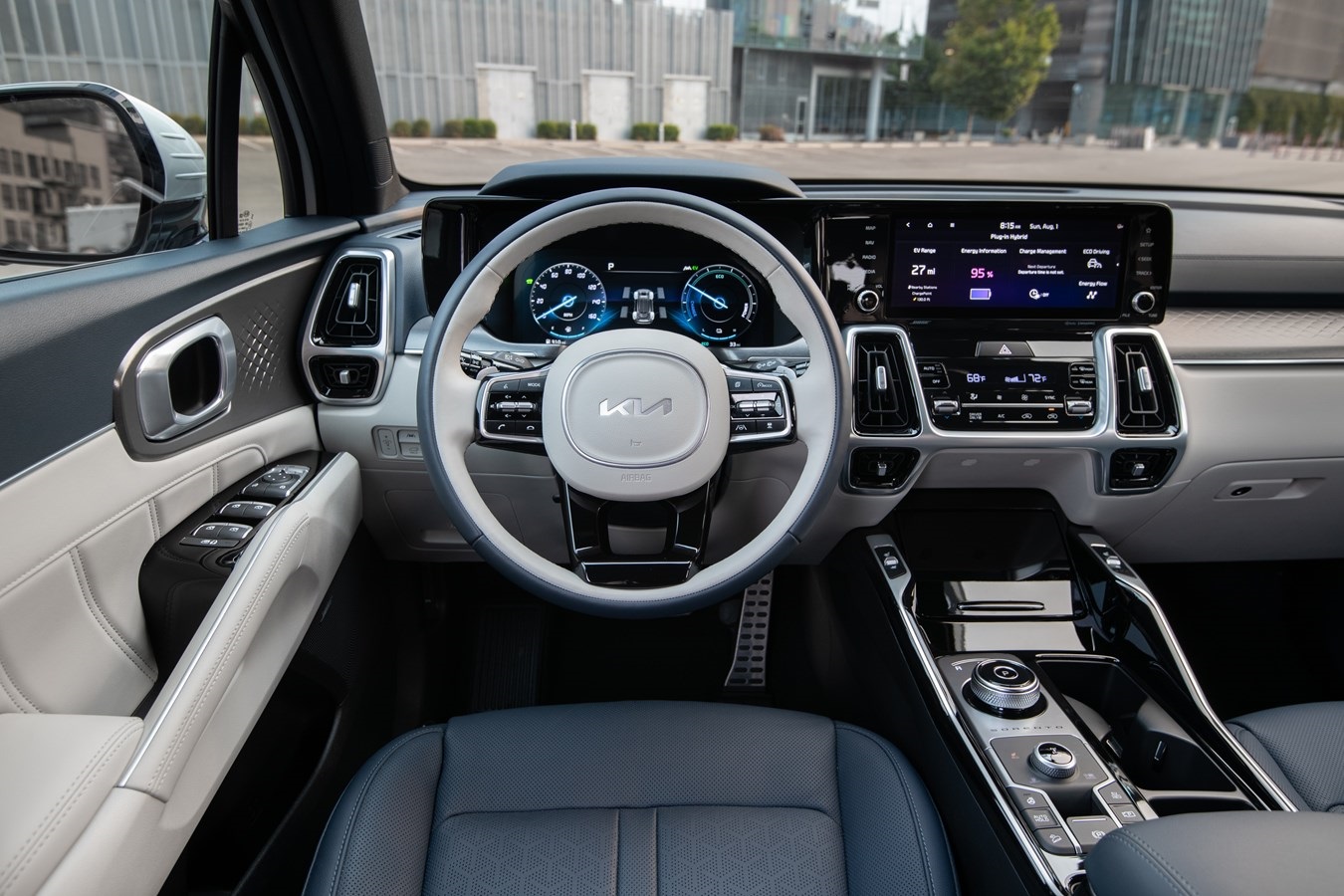
The front seats in the Sorento PHEV

The midsize cabin provides ample space for shoulder width and tall headroom.

For daylong driving, the suite of advanced driver-assist systems took away much of the stress in guarding my line. I grew to trust the system, which kept the Sorento well-centered in the lane, including the curves. Steering assist was reassuring and not invasive. And I drove the entire round trip with no dashboard warnings or loud safety alerts: the Sorento and its network of electronics performed flawlessly.

Besides its suite of advanced safety technologies, the Sorento PHEV has solid NHTSA safety ratings:
• 4 out of 5 stars overall
• 4 stars for frontal and rollover crashes
• 5 stars for side-impact protection
• 4.5 stars for rollover protection

Kia Sorento Overview

Redesigned last year, the fourth-generation Kia Sorento is nearly 1.4 inches longer than the previous model, adding to interior space. The body structure was made stronger, which Kia says improved ride, handling, noise, vibration, and harshness.

The body structure is designed with a multi-load path to distribute the impact forces of kinetic energy through the body. Seven air bags are standard with an array of standard and optional safety technologies and advanced driver-assist systems.

As a midsize SUV crossover, the Sorento is part of Kia’s “Plan S” electrification strategy. The lineup of Sorento trim levels is a triple play of four-cylinder powertrains: gasoline, gasoline-electric hybrid, and the plug-in-hybrid.

The base gas-powered Sorento ($31,000) has a choice of a 191-hp, non-turbocharged 2.5 liter or a 281-hp turbocharged version ($37,000); both with an eight-speed automatic transmission.

The Sorento Hybrid ($38,000) has a turbocharged 227-hp, 1.6-liter engine, and six-speed automatic. And the top-line Sorento PHEV has a 261-hp version of the 1.6-liter engine and six-speed automatic.

A driving gauge shows available miles of electric driving

The plug-in Sorento has an electric driving range of 31 to 34 miles.

Competing Midsize SUV Plug-in Hybrids

  • Hyundai Santa Fe, 31-mile EV range; $41,000-$47,000;
  • Jeep Grand Cherokee 4xe, 25-mile battery range; $61,000-$69,000;
  • Volvo XC60 Recharge, 19-mile EV range; $59,000-$69,000;
  • Volvo XC90 Recharge, 18-mile EV range; $73,000-$80,000;
  • Lincoln Aviator Grand Touring, 21-mile EV range; $71,000;
  • BMW X5 xDrive45e, 31-mile range; $66,000;
  • Porsche Cayenne E-Hybrid, 17-mile range; $88,000; and Porsche Cayenne Turbo S E-Hybrid, 15-mile range; $173,000.

*Above MSRPs include AWD and the freight charge.

2023 Kia Sorento Pricing

For 2023, there is just one well-stocked trim level of Sorento PHEV, the SX-Prestige with all-wheel drive. And it has a one size fits all starting price of $50,185, including the $1,295 freight charge from Korea. With two options for Snow White Pearl paint ($445) and carpeted floor mats ($210), the as-tested price was a reasonable $50,840 (though there likely will be pricing surcharges at the dealership and a possible “protection” package that could add more to the sticker price).

A cargo cover, $190, would be a smart addition, as would a cargo-area mat, $115, which might help with soundproofing in an open cargo area.

Kia Sorento warranties include 10-years/100,000-miles of coverage for the powertrain and hybrid battery. Bumper-to-bumper coverage is for 5-years/60,000-miles with roadside assistance.

Find current pricing and available lease or purchase offers here.

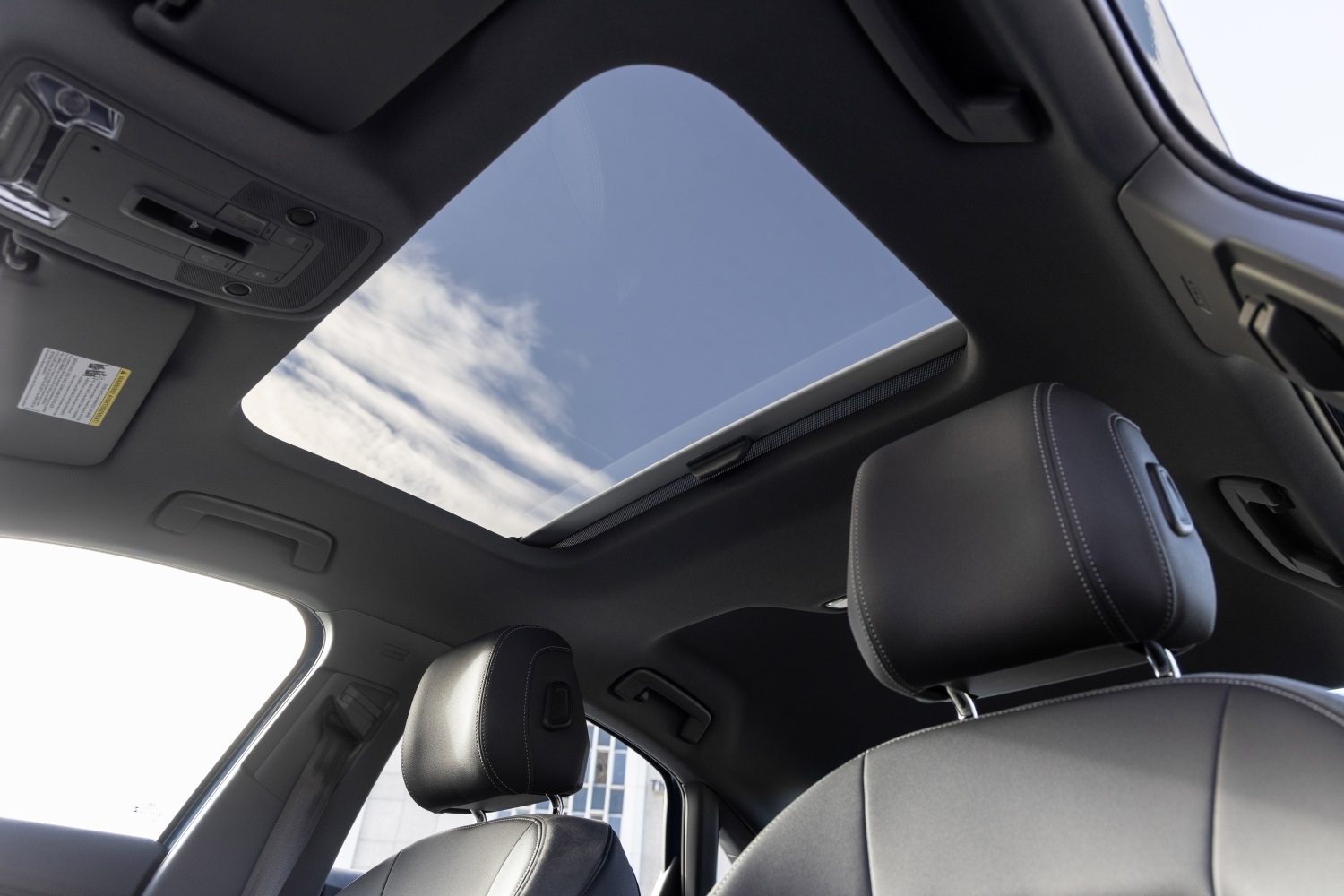
The Sorento's panoramic roof

The panoramic roof as skylight.

Sorento SX-P Upgrades

Kia loaded the 2023 Sorento PHEV SX-P with desirable standard features. Among them:

  • 3-row seating with second-row captain’s chairs;
  • Perforated leather seat upholstery;
  • All-wheel-drive with torque vectoring;
  • 19-inch alloy wheels;
  • 12.3-inch digital gauge cluster (a first for any Kia SUV);
  • Surround View Monitor, using four cameras to create a 360-degree perspective around the vehicle;
  • Blind View Monitor projects live video view of adjacent lanes in the instrument cluster, activated via the turn signal;
  • Electrochromic rearview mirror.

Other standard Sorento PHEV features include:
•Smart key with push-button start and remote start (from key fob).
•Eight USB charging ports.
•10.25-inch high-resolution color touchscreen display with navigation and Kia’s UVO telematics link.
•Satellite radio.
•Wireless smartphone charging pad.
•12-speaker Bose Centerpoint sound system.

The Sorento shift console is a multifunction desktop of organization.

A multifunction desktop of organization.

Sorento PHEV Performance

According to the EPA, the Sorento PHEV’s combined gasoline-electric driving range can be as high as 460 miles. But in my experience, the most driving range I achieved, according to the onboard computer, was 390 miles. That factored the 31 miles of a fully charged battery and 359 miles from the gas engine.

After switching from battery power to engine, the EPA mileage ratings, using 87 octane fuel, are 35 mpg city, 33 highway, and 34 mpg combined, or a combined 79 MPGe rating.

Filling the fuel tank of 12.4 gallons with 87 octane wasn’t overly painful. Gas prices ranged from $5.99 per gallon at the start of my trip to $6.59 and almost $7 by week’s end. The price of unleaded 87 octane had jumped by $1 since I’d filled up for the trip.

Finessing the Fuel

Kia’s plug-in hybrid system switches from battery power to engine intervention for more aggressive driving. And even with a depleted battery, the hybrid system functions as any other hybrid system, giving some short-range and low-speed acceleration, regenerative braking, and auto stop-start at idle.

Because Kia uses a traditional, stepped six-speed automatic transmission, there is no delay in forward motion.

Driving with battery power lifts the performance noticeably. Acceleration is more absolute off the line and continues quickly up to highway speeds. After the transition to gasoline, the turbocharged four-cylinder is quite capable at hefting the Sorento PHEV’s curb weight of 4,537 pounds, which includes 309 pounds for the hybrid battery.

Torque-vectoring all-wheel drive (cornering control) includes a locking center differential. If the system detects wheel slippage, it reroutes power between the front and rear axles and applies subtle braking pressure to the left and right wheels to help maintain traction.

A view of the open engine and hybrid features in the Sorento engine bay

The Sorento PHEV has a 66.9 kW electric motor and a 1.6-liter turbocharged engine that combine for 261 horsepower.

Charging the Hybrid Battery

The 14 kWh lithium-ion polymer battery can be recharged in two to three hours or more, Kia says. And all of my charging sessions for a depleted battery took four hours. That is too long for a stop during a road trip, so most of my driving was on gasoline with some input from the hybrid system. I tried to charge in Sonoma, but the public charging station I visited had four charge stations, three of which were “unavailable.” Two other EV drivers had pulled in, and we shared gripes about the poor maintenance of public charging in general. The one functioning charger was occupied by a fully charged car, but no owner was in sight.

For those over-the-river trips to friends and family, Kia includes a heavy-duty charging cable that can be plugged into a household outlet. Plan on nine hours for a full charge.

Driver-Assistance Systems

I am a hands-on driver when using driver-assist systems. It takes time to develop trust in these electronics. Still, Kia’s assistance calibrations were accurate and prevented the Sorento from drifting across lane lines, and it even tracked well when the lane lines were disrupted or decayed.

The Sorento PHEV has an expansive network of Kia Drive Wise Advanced Driver-Assistance Systems, including:

Blind Spot Collision Avoidance Assist — Rear with parallel exit: Under certain conditions, the system can detect vehicles traveling in the next lane. When a vehicle is “seen” in the blind spot, it brakes the outer wheel to help return the vehicle to its lane.

Forward Collision Warning: Designed to detect a vehicle ahead and to calculate distance and closing speed. The system will fire off an alert if it senses a potential frontal collision.

Forward Collision-Avoidance Assist — Junction Turning: As the driver brakes to prevent a collision, the system can lessen the effects when turning left and an oncoming vehicle is approaching.

Highway Driving Assist: Uses federal highway speed limit information from the navigation system and, under certain conditions, will automatically adjust speed to be within the posted speed limit.

Intelligent Speed Limit Assist: Automatically changes the set speed of Smart Cruise Control by using the speed limit information detected through the front camera or GPS navigation information.

Lane Following Assist: Follows lane markings with steering inputs to help maintain lane-centering.

Navigation-Based Smart Cruise Control — Curve: The system can reduce vehicle speed proactively before upcoming curves.

Rear Cross-Traffic Collision-Avoidance Assist: When approaching cross traffic is detected, the system alerts the driver and can apply the brakes.

A shot of the 19-inch tire and wheel package for the Sorento plug in hybrid

Alloy wheels and 19-inch all-season Continental CrossContact LX Sport tires are standard.

Sorento PHEV Ride and Handling

Sorento’s steel-spring suspension (front MacPherson struts with a multilink rear) capably handles the hefty curb weight. Straight-line ride quality is quite smooth, and I could sense the engineering for low friction and extended glide. However, there is noticeable head toss when turning into driveways or navigating speed bumps.

The 19-inch Continental CrossContact LX Sport 235/55 tires are very compliant with a comfortable treadwear rating of 480, which translates to a 50,000-mile warranty.

Four-wheel ventilated disc brakes have 12.8-inch rotors front and rear. Pedal response is refined and regeneration is well modulated without unexpected grabbiness.

Kia Sorento Interior Function

There appears to have been a generous budget to make the Sorento PHEV more luxurious than some entry-luxury vehicles. The cabin is rich in premium materials, neatly stitched leather, and soft surfaces for elbows. The black woven headliner is calming without making the cabin feel closed in.

Driver sightlines are open at the side mirrors by the small corner glass. Over-the-shoulder glances are compromised by the second-row headrests of the captain’s chairs. But the restricted view was of no consequence with the around-view camera system and Kia’s nifty turn-signal camera views, left or right.

Front headroom is tall at 40.3 inches with long legroom of 41.4 inches.

Fourteen-way power front seats are comfortably bolstered and well-stuffed to handle a tankful of road-trip driving. The seats include a newly added thigh extender, so tall drivers should be able to find an optimum position.

The center shift console is a multi-use desktop. The shift module anchors the rotary shift dial and performance-control selections (Eco, Sport, Smart). The wireless charging pad, two charging USBs, and a data-media USB are just ahead on the console.

Driver information is easily viewed on the 12-inch-wide screen, which can be configured to show a range of functions. But there is a lot of information to fit in the smallish gauge dials.

Infotainment selections are separated from the 10.25-inch touchscreen with AC and vent controls below.

Especially appreciated are the second-tier air vents, four of them across the dashboard. A female friend once told me that she bought her SUV because it had crotch-cooling vents, and the Sorento’s venting should have the same effect.

A door panel in the Sorento PHEV shows contemporary design and materials.

Sorento PHEV is rich in premium interior materials and contemporary design.

Kia Sorento Back Seats and Cargo Space

Legroom in the second row is impressively long at 40.3 inches with headroom of 39.1 inches. And the expansive pano roof creates an enjoyable space. But the seat bottoms of the captain’s chairs might feel downsized to upsized adults.

A flat second-row floor adds to a sense of openness. And the seats have several inches of fore-aft slide with seatback recline.

Second row legroom is long at 40.3 inches but seat bottoms are short.

Legroom is long at 40.3 inches but seat bottoms are short.

Third-row space is kid-class, but with easy access.

Third-row space is kid-class, but with easy access.

Access to the pair of third-row seats is by an easy-to-operate tilt and slide second row. Legroom is kid-class at 29.6 inches (or less if the second-row seats are not moved forward). However, the space is accommodating with a USB charge port on each side, and a cup-mug holder and a burger-snack slot.

Large corner glass is a humane child-tending addition for ambient light.

The cargo area has wide access of 44 inches with 30 ½ inches of entry height. Fold the third-row seats for 41 inches of square and flat cargo space. Handy straps on the back of the seats make them easy to pull back into position.

Or fold both rows of seats for almost 7 feet in length (if the front passenger seat is moved forward).

There is some subfloor storage, but it’s not large enough to stow the charging cable.
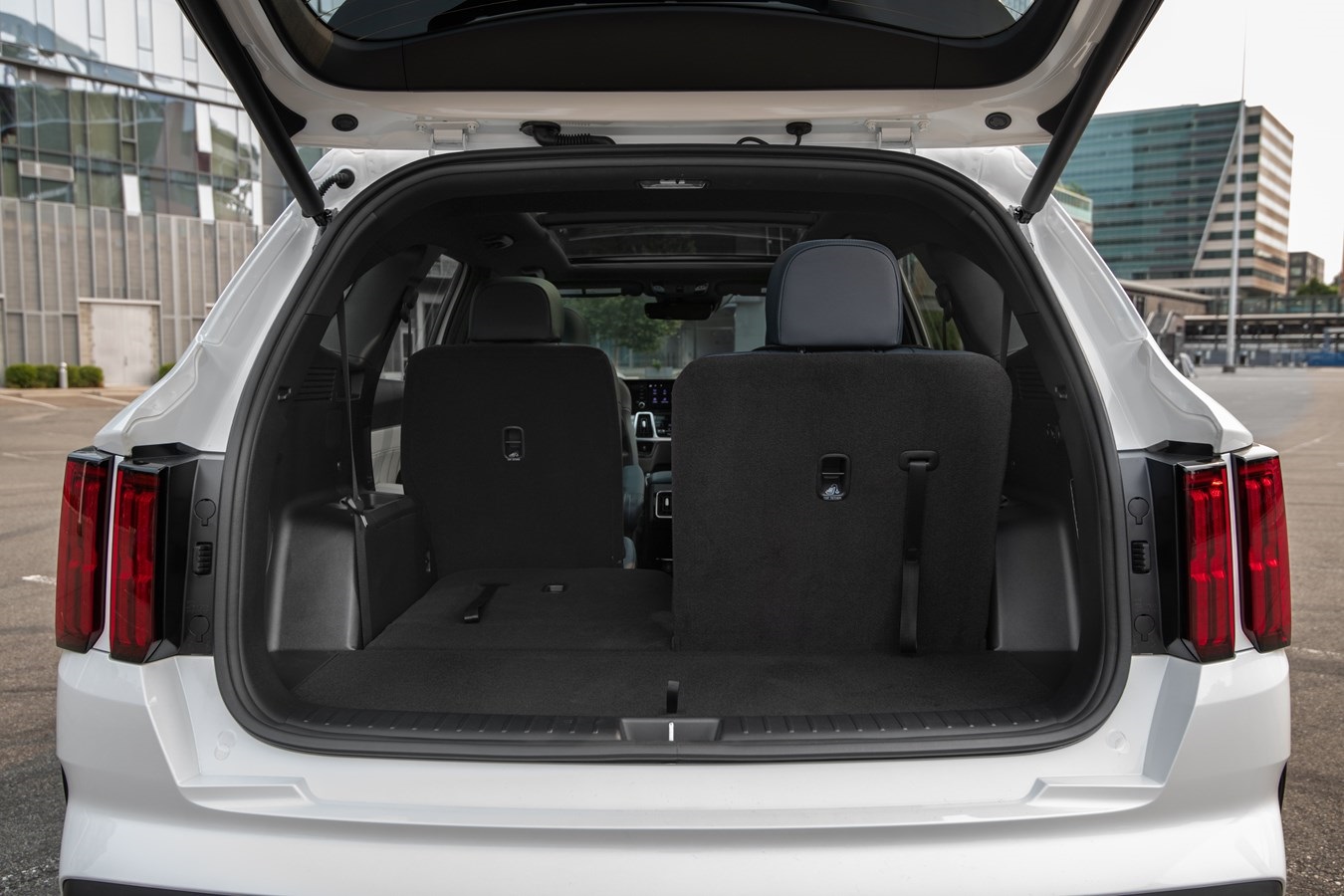
The Sorento’s third row that folds flat to the floor.

The Sorento’s third row that folds flat to the floor.

Why Buy the Kia Sorento PHEV?

A plug-in hybrid is a half-step to total battery-electric driving. For many drivers, a plug-in will be a smart choice until battery technology advances to provide more than 300 miles of cost-effective range.

The Kia Sorento Hybrid is also a good family choice. It is less expensive with fuel economy ratings of 39/35/37 mpg in front drive or 36/33/36 mpg AWD. But it does not have the value-added asset of fuel-price protection.

A range of 31 to 34 miles is almost like getting a free gallon of gas every day from the Kia Sorento PHEV. And for those owners with a home charger, there is the reassurance of always having a full “tank.”

the rear quarter panel for the charging port.

The Sorento PHEV plug port is at the rear quarter panel.

2023 Kia Sorento PHEV SX-AWD Specifications

Body style: midsize 6-seat, 5-door SUV with active on-demand 4WD

Engine: 177.2-hp turbocharged 1.6-liter 4-cylinder; 195.4 lb.-ft. torque from 1,500-4,500 rpm

Hybrid System: 89.8 hp permanent magnet motor with 360-volt, 14 kWh lithium-ion polymer battery

Total system power: 261 hp and 258 lb.-ft. torque

Transmission: 6-speed automatic

Battery-electric driving range: 31-34 miles

Total driving range: 460 miles, maximum (390 miles observed)

MPGe fuel economy equivalent: 54/48/52 mpge city/hwy/combined; regular unleaded fuel

Engine-only fuel economy: 35/33/34 mpg; 87 octane recommended

Top speed: 74.6mph in EV mode; 120 mph for ICE

0-62 mph acceleration: 8.7 seconds

Towing capacity: 1,654 pounds with an unbraked trailer

BY THE NUMBERS

Fuel tank: 12.4 gallons

Cargo space: 12.6 to 38.5 cubic feet

Front head/leg room: 40.3/41.4 inches

2nd-row head/leg room: 39.1/40.3 inches

3rd-row head/leg room: 36.8/29.6 inches

Length/wheelbase: 189.4/110.8 inches

Curb weight: 4,537 pounds (including 309 lbs. for the hybrid battery)

Turning circle: 37.9 feet

FEATURES

Standard Sorento equipment includes: smart-key entry with push-button ignition and remote start, power and heated front seats, 2nd-row captain’s chairs, one-touch slide and fold 2nd-row seats10.25-inch touchscreen with navigation and MapCare, Android Auto and Apple CarPlay apps; UVO link with a free trial; satellite radio 3-month free trial; 4.2-inch supervision cluster, USB charging in all 3 rows

Standard Sorento exterior equipment: 19-inch wheels; hands-free liftgate; roof rails; LED projector headlights, fog, and taillights; heated side mirrors with turn-signal indicators .

Sorento SX-P AWD features include: surround-view monitor, blind-spot view monitor, Bose premium audio, 12.3-inch digital instrument cluster, perforated leather upholstery, ventilated front seats, heated 2nd-row seats, auto-dimming rearview mirror, power-folding side mirrors, parking collision-avoidance assist-reverse, multi power adjustable driver’s seat with memory.

Safety features include: 7 air bags (including driver’s knee bag), rear occupant alert with ultrasonic sensors, stability and traction controls

Driver-assist technologies: forward collision avoidance (cyclist and junction turning), blind-spot collision avoidance assist-rear; rear cross-traffic collision avoidance assist, intelligent cruise control with stop and go; lane-keeping assist and lane-following assist, parking distance warning, forward and reverse

PRICING

Base Kia Sorento PHEV price: $50,185, including $1,295 freight charge; price as tested $50,840.

Options on test vehicle: Snow White Pearl paint $445; carpeted floor mats $210.

Where assembled: Hwasung, Korea

Warranties: 10-years/100,000-miles powertrain; 5-years/60,000-miles bumper-to-bumper coverage with roadside assistance.