Select Page

Corvette E-Ray Overview

Corvette E-Ray Overview

The 2024 E-Ray is the quickest production Corvette in history, clocking a 2.5-second 0-60 mph time before passing the quarter mile in 10.5 seconds

An exterior view of the E Ray

The 2024 Corvette E-Ray goes on sale later this year with an MSRP of $104,295 for the 1LZ coupe and $111,295 for the 1LZ convertible model. (Photos courtesy of Chevrolet)

BY MARK MAYNARD

The Corvette had a second day of infamy yesterday when Chevrolet released photos and many details for its 2024 Corvette E-Ray. It will be the first electrified Corvette with all-wheel drive and a gasoline-electric hybrid powertrain using the 6.2-liter V-8.

For Corvette enthusiasts, the E-Ray reveal on Jan. 17 is exactly 70 years after the 1953 Corvette debuted at Motorama in New York City.

“In 1953, the enthusiastic reaction to the Chevrolet Corvette concept kicked off seven decades of passion, performance and American ingenuity,” Mark Reuss, General Motors president, said in a statement. “E-Ray, as the first electrified, all-wheel-drive Corvette, takes it a step further and expands the promise of what Corvette can deliver.”

The 2024 E-Ray — available as a removable roof coupe or hardtop convertible — pairs two separate propulsion systems. The gasoline-electric hybrid system provides naturally aspirated V-8 power with a permanent magnet electric drive motor and a 1.9 kWh lithium-ion battery pack between the seats.

“The electrification technology enhances the feeling of control in all conditions, adding an unexpected degree of composure,” said Tadge Juechter, chief executive engineer, Corvette.

E Ray driver area with bright blue leather interior.

E-Ray’s interior choices include 2 carbon fiber trim packages, 3 seat choices, and 7 interior colors.

E-Ray Performance

The E-Ray is the quickest production Corvette in history, Chevrolet says. The E-Ray will accelerate to 60 mph in 2.5 seconds (a tenth of a second faster than the track-ready Corvette Z06) and complete the quarter-mile in 10.5 seconds.

Achieving such quickness and top speed is notable for the Corvette. According to Chevrolet, the E-Ray has a base dry weight of 3,774 pounds for the coupe and 3,856 pounds for the convertible. That is around 400 pounds heavier than the Stingray and about 300 pounds more than the Z06 equipped with carbon fiber wheels and the Z06 Performance package. The curb weight, with fuel, etc., will be higher.

Chevrolet is developing a fully battery-powered Corvette, but officials have not said when that model might arrive.

Driver side 3/4 view of 2024 Chevrolet Corvette E-Ray 3LZ convertible with Natural Tan Interior.

A 2024 E-Ray 3LZ convertible with Natural Tan Interior.

2024 Corvette E-Ray Pricing

The 2024 Corvette E-Ray goes on sale later this year with an MSRP of $104,295 for the 1LZ coupe and $111,295 for the 1LZ convertible model.

A base 2023 Corvette Stingray coupe starts at about $66,000 or $74,000 for the Stingray convertible. The Corvette Z06 starts at $110,00 for the coupe and about $117,000 for the convertible.

Z06 pricing includes $2,600 for the gas-guzzler tax. Will the E-Ray avoid the GGT?

E-Ray production will be at GM’s Corvette assembly plant in Bowling Green, Ky.

More information and specifications will be released closer to the on-sale date. Follow E-Ray developments at Chevrolet.com.

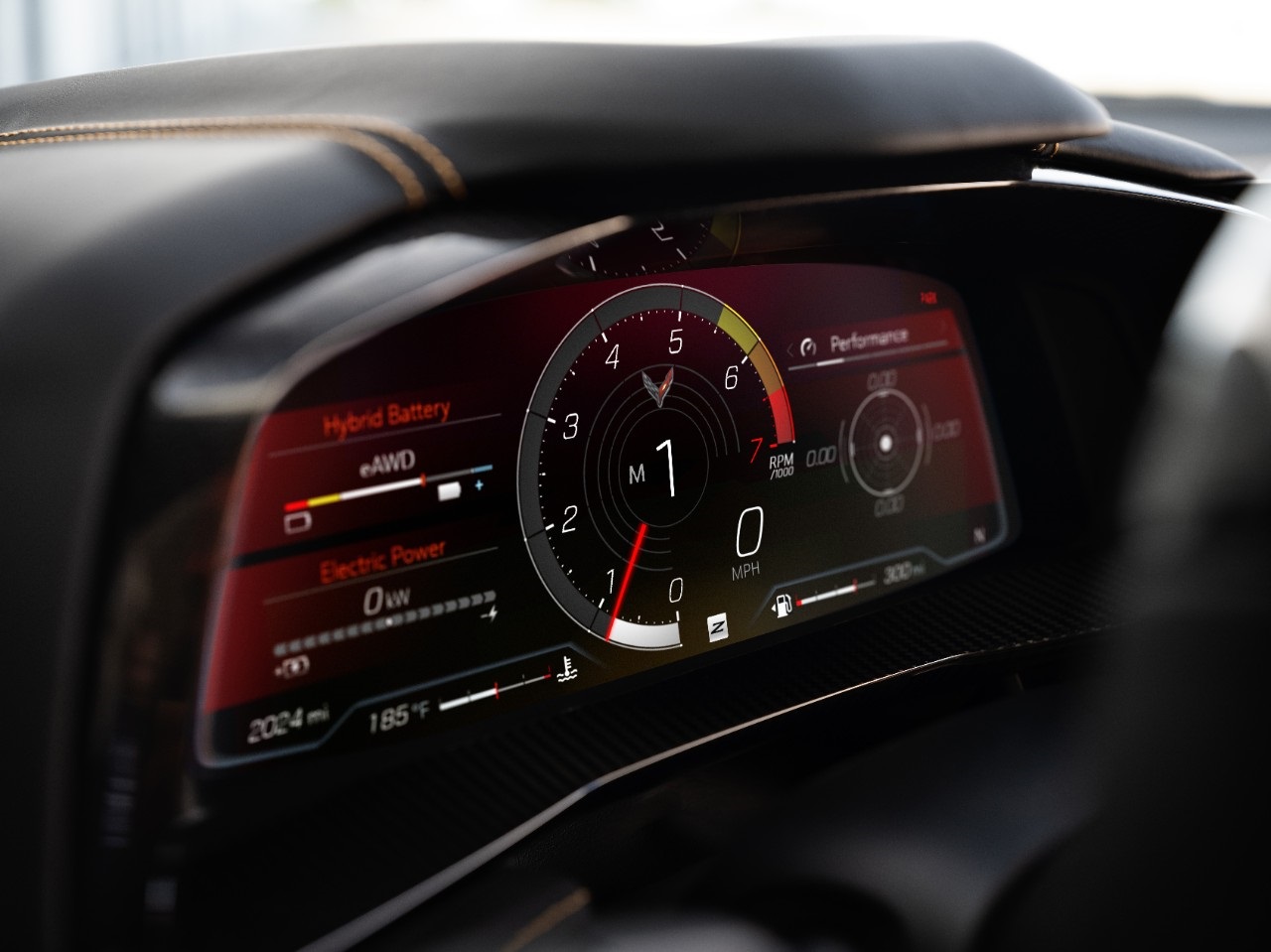
Close up view of gauges layout on E-Ray Performance App

The E-Ray Performance App on the infotainment screen.

E-Ray Hybrid Powertrain

The 6.2-liter LT2 small-block V-8 is paired with an eight-speed dual-clutch automated-manual transmission. The gas engine puts 470 foot pounds of torque at 5,150 rpm to the rear axle. The permanent magnet electric drive motor puts another 160-hp and 125 lb.-ft. of torque through the front wheels.

In total, E-Ray produces a combined 655 horsepower from the electric motor and V-8.

The engine’s Active Fuel Management system uses the electric motor to run on four cylinders, such as when coasting at highway speeds.

The amount of electric assist varies for the Corvette E-Ray’s six driver-selectable modes: Tour, Sport, Track, Weather, My Mode, and Z-Mode. Drivers can also select the Charge+ feature to maximize the battery’s state of charge.

Chevrolet says it has created a “visceral sound experience” for the combined powertrain. And to keep peace with neighbors, a Stealth Mode allows all-electric driving at start-up. The quiet mode will hold until the engine fires at 45 mph for everyday driving.

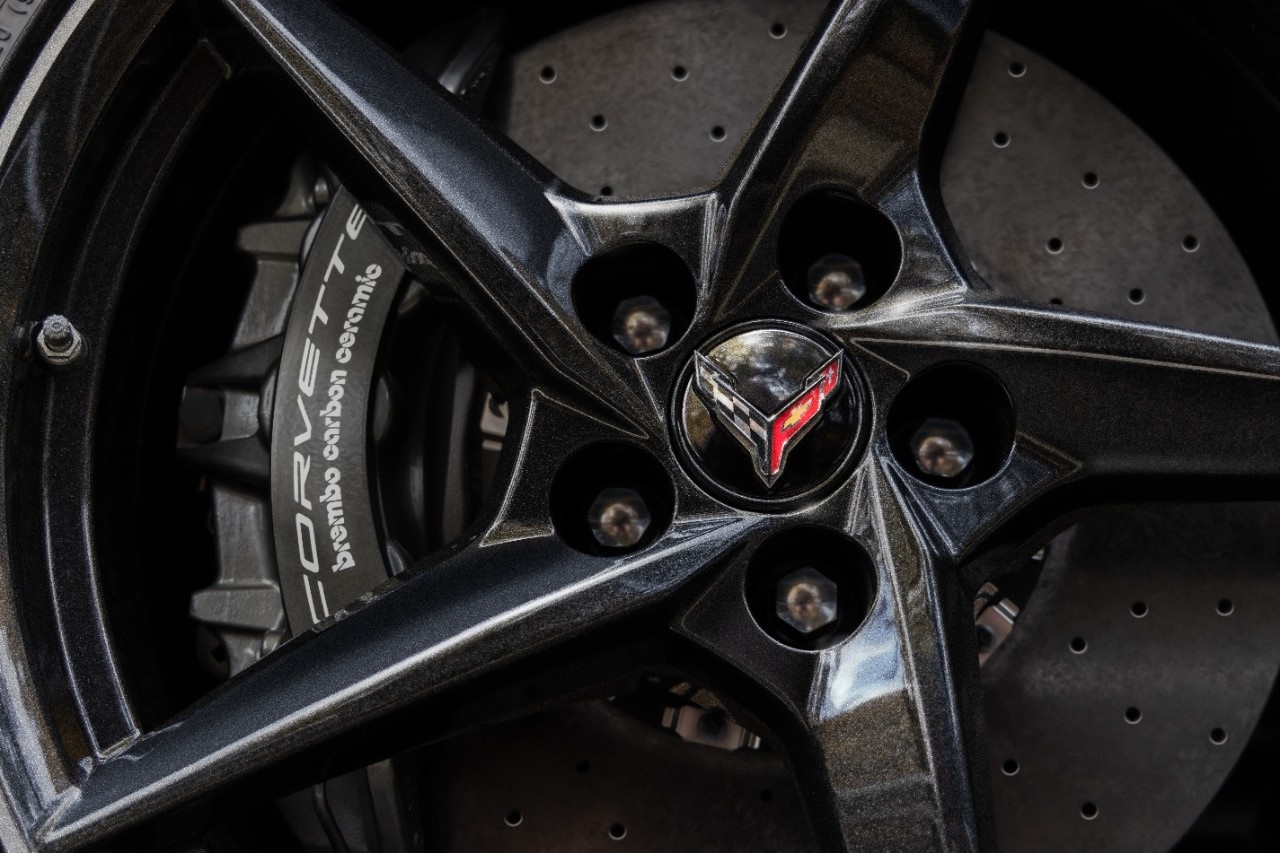
E Ray gloss black wheel finish

The E-Ray has 15.7-inch brake discs at the front and 15.4-inch discs rear.

Intelligent eAWD

E-Ray’s eAWD system continually learns the road surface, Chevrolet says. The so-called intelligent system seamlessly adapts to traction conditions and driver input. During enthusiastic driving and in low traction road conditions, E-Ray’s eAWD system enhances vehicle stability by directing additional power to the front wheels.

E-Ray Features and Technologies

  • New lightweight lithium-ion 12-volt battery for stop/start functionality
    of the gas engine;
  • Standard Brembo Carbon Ceramic brake system;
  • Standard Magnetic Ride Control 4.0 with three suspension settings;
  • Staggered 20- and 21-inch wheels with Michelin Pilot Sport all-season tires. (Michelin Pilot Sport 4S summer tires are available with an optional performance
    package.)

The E-Ray Performance App on the infotainment system provides the driver with technical insights into how the propulsion system is operating. There are three primary display layouts:

  • Gauges (displays dynamic power output from electric motor and V-8 engine);
  • Dyno (provides a graph of power/torque across selectable time intervals) ;
  • Data (showcases electrical system performance and efficiency).
Overhead view of the Silver Flare with Electric Blue stripe package.

The Silver Flare with Electric Blue stripe package.

E-Ray Exterior Design

The E-Ray is built from the wide-body Corvette Z06. The wider body accommodates wide staggered-width wheels to help manage the increased torque. The lightweight alloy wheels have a twisted five-spoke star design exclusive to E-Ray.

The Corvette E-Ray’s compact electric motor over the front axle preserves space in the front trunk.

Rear 7/8 view of an E-Ray coupe in Seawolf Gray parked in a parking garage.

The E-Ray’s low, wide stance is 3.6 inches wider overall than the standard Stingray model.

Corvette E-Ray Design Highlights

  • 4 aluminum wheel finishes;
  • 14 exterior color choices — including new for 2024 Riptide Blue, Seawolf Gray, and Cacti;
  • E-Ray-exclusive body-length stripe package in Electric Blue;
  • Standard carbon flash badging;
  • Available black exhaust tips and bright badging;
  • Available carbon fiber ground effects;
  • Optional carbon fiber wheels in carbon flash, visible carbon fiber finish or visible carbon fiber with a red stripe;
  • New  Artemis Dipped interior, available on 2024 Corvettes. The treatment features deep green tones throughout the cabin. Other options for interior design include two carbon fiber trim packages, three seat choices, seven interior colors, and more.

2023 Toyota Prius First Drive

2023 Toyota Prius First Drive

Sexy new 2023 Toyota Prius wrapped in PDA — Proactive Driving Assist to help save drivers from that “Oops” moment

A silver Prius parked along the ocean at north coastal San Diego

Designed in Japan, the new Prius offers a coupe-like exterior for a more athletic look, Toyota says. (Photos courtesy of Toyota)

Table of Contents

Overview
Pricing
Warranties
Safety Features
Powertrain and Performance
Fuel Economy
Drive Impressions
Why Buy the 2023 Toyota Prius?
Specifications

BY MARK MAYNARD

The redesigned and re-engineered 2023 Toyota Prius is a stunning improvement in almost every way over the previous model. Its sex-jet styling is a pronounced shift in attitude. But this gasoline-electric hybrid hatchback is also more powerful with better fuel economy than before. And its new body is smoother rolling, and the handling is as responsive as its sleek shape implies. The cabin is much quieter and interior materials and plastics are much improved and pleasing to the eye and touch.

Not sanitized in the redesign, however, is some Prius weirdness — its mild personality disorder that has helped make this small car a big icon.

The new Prius has a 2-inch lower roofline, and the body is 1 inch wider and lower. The wheelbase is 1.9 inches longer, now at 108.3 inches. The new length of 181.1 inches is about an inch longer than before.

Looking for a back-to-work commuter? The entry 2023 Prius LE has fuel economy ratings of 56 mpg on the highway and 57 mpg combined city and highway. Its pricing starts at a reasonable $28,545 for front-wheel drive, or add $1,400 for on-demand all-wheel drive (available on all trim levels).

The new Prius is expected to arrive at Toyota dealerships in January 2023.

A side view of the new Prius showing the 2 inch lower roofline

The roofline of the 2023 Prius is 2 inches lower.

Prius Media Drive in San Diego

Toyota brought its national media drive to Del Mar, Calif., just up the coast from downtown San Diego. Select journalists from the U.S. and Canada were given a deep dive into the 2023 Prius, its technologies and design.

There were test drives of XLE and Limited trim levels, in front- and all-wheel drive. I shared seat time with another journalist for about a 40-mile run into the area around Rancho Santa Fe and on the interstate.

The drive gave good input, but I was not able to test such features as the new and enhanced Advanced Park (a Toyota first) that helps drivers steer into a selected parking space. The system works for parallel parking or backing into a perpendicular slot. I also didn’t sample Proactive Driving Assist (details below) or how comfortable the seats would be for an extended commute.

The awkward function of the steering column and driver display screen.

The steering column is among the weird features of the new Prius.

2023 Toyota Prius Overview

Its nameplate needs no introduction — “Prius” is as representative of what it is as “Corvette,” “Mustang,” or “McDonald’s.” But its reputation is founded in its legacy as the world’s first mass-produced gasoline-electric hybrid car. It also is notoriously vilified for its many passionate drivers who feel it is their environmental responsibility to drive 63 mph in the fast lane of the interstate.

The Toyota Prius debuted in Japan in 1997 and was then exported to the U.S. and North America in 2000. But it was a sales dud in the States. It was too small and too weak to handle the interstate hustle. And its center-position driver display and controls in the dashboard were just weird. Cars sat on used lots until the first energy crisis hit in the early 2000s, followed by the Great Recession in 2008. But by 2004, Toyota had launched the second-generation design. This new styling was more palatable but still odd; however, it was a complete design study in aerodynamics, resulting in a very low 0.24 coefficient of drag. That Cd has only recently been surpassed by some new electric cars. And even the new Prius is not as slippery now, compromising Cd for style.

A color image of Satoki Oya, Toyota chief engineer for Prius.

Satoki Oya, Toyota chief engineer for Prius.

Prius Trim Levels and Pricing

The 2023 Prius will be sold in three trim levels: LE, XLE, and Limited. Gone is the L Eco model, which had been the city-mileage champ at 58 mpg.

The XLE is the sweet spot of features to price. The Limited fills in useful details, such as an interior liftback release button.

There are six paint colors, including the new Cutting Edge silver and Guardian Gray. Other choices include Wind Chill Pearl white, Midnight Black Metallic, Supersonic Red, or Reservoir Blue.

The 2023 pricing is about $2,300 more than the previous model. Here are some thumbnail details on the trim levels:

Prius LE, $28,545: standard dark gray 17-inch alloy wheels with wheel covers, an 8-inch audio multimedia touchscreen, six-way adjustable fabric front seats in black or gray, six USB type C charging ports, electric parking brake, SofTex steering wheel, and blind spot monitor with rear cross-traffic alert.

Optional features include front and rear parking assist with automatic braking.

Prius XLE, $31,990: adds 19-inch alloy wheels and eight-way adjustable heated power driver’s SofTex seat in black or gray. Also standard are rain-sensing wipers, smart key locking with push-button ignition, wireless charger, and front and rear parking assist with automatic braking.

Options include a 12.3-inch high-resolution touchscreen display ($735), fixed glass roof ($1,000), and Digital Key ($275), which works with a smartphone app.

Prius Limited, $35,560: adds a standard 12.3-inch JBL Premium Audio touchscreen display, fixed glass roof, SofTex heated and ventilated front seats, heated steering wheel, power liftback, and Digital Key.

Available options include a digital rearview mirror ($200), heated rear seats ($350), and Advanced Park ($1,085, includes panoramic view monitor).

The manufacturer’s Suggested Retail pricing includes the $1,095 freight charge from Japan.

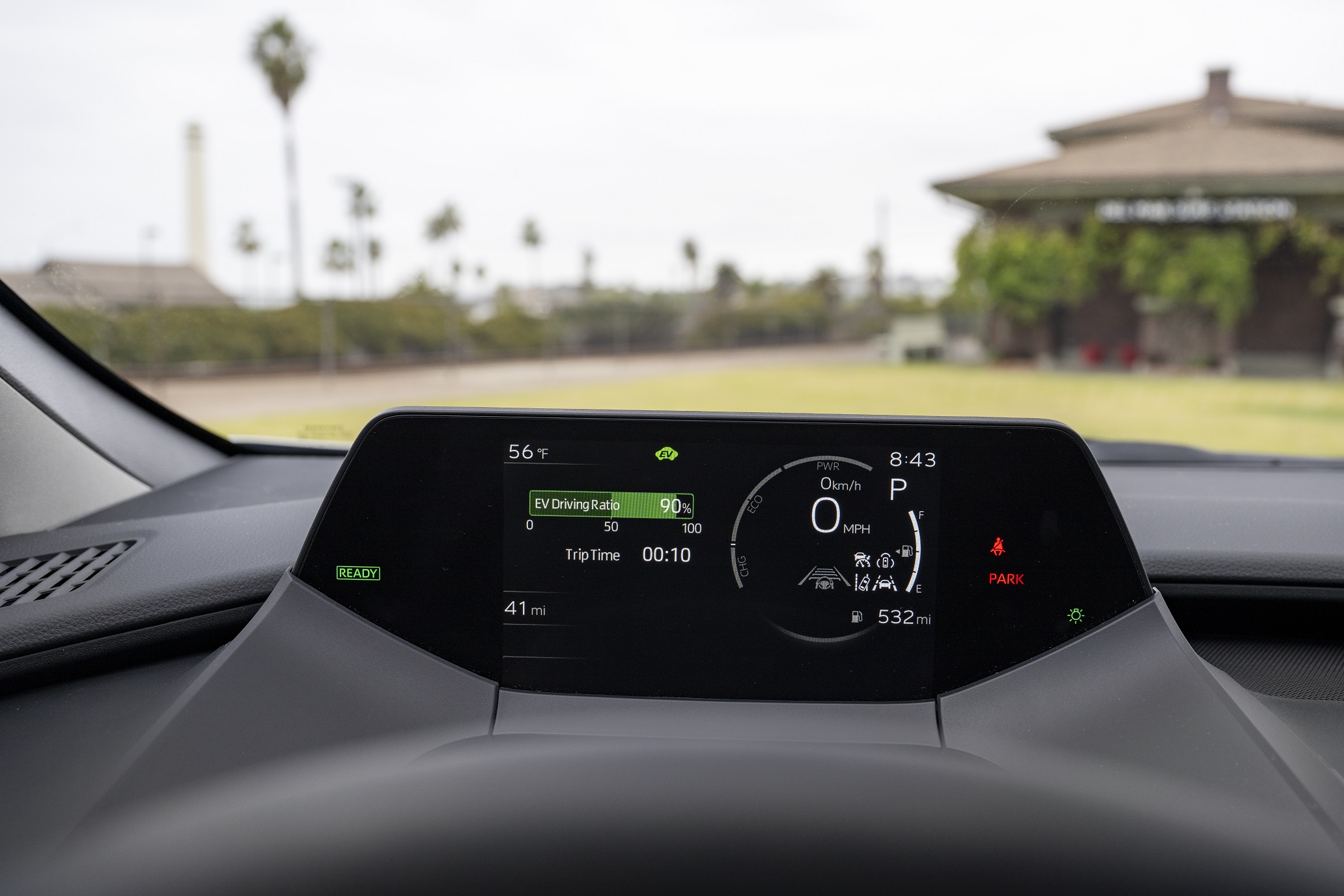
The driver the driver display screen is at the top of the instrument panel, not in the instrument panel.

The placement of the driver display screen is a little far from the driver’s seat.

Prius Warranties

Basic warranty coverage is for 3 years or 36,000 miles and 5 years or 60,000 miles for the powertrain. ToyotaCare provides free scheduled maintenance for 2 years or 25,000 miles, with 24/7 roadside assistance for 3 years (while other Toyota models receive 2 years) and unlimited mileage.

The lithium-ion hybrid battery is covered for 10 years from the date of first use or 150,000 miles, whichever comes first. And Hybrid-related components, including the battery control module, hybrid control module, and inverter with converter, have coverage of 8 years or 100,000 miles.

The Limited’s standard 12.3-inch JBL Premium Audio touchscreen display

The Limited’s standard 12.3-inch JBL Premium Audio touchscreen display.

Safety Features and Technologies

The 2023 Prius has eight air bags and the latest Toyota Safety Sense generation, TSS 3.0. This suite of active safety systems includes everything on the prior generation Prius, plus several driver-assist technologies. The Level 2 semi-autonomous driver-assist function still requires both hands on the wheel.

Among the added technologies are:

  • Pre-Collision System with Pedestrian Detection;
  • Lane Departure Alert with Steering Assist;
  • Full-Speed Range Dynamic Radar Cruise Control;
  • Lane Tracing Assist;
  • Road Sign Assist;
  • Automatic High Beams;
  • Proactive Driving Assist.

Proactive Driving Assist is interesting because it is an “Oops” monitor for everyday situations. Toyota said that the system functions without cruise control, but it is not a substitute for the Pre-Collision System.

PDA uses the vehicle’s camera and radar to provide gentle braking into curves or gentle braking and steering. The system helps with distance control between a preceding vehicle, pedestrian, or bicyclist.

A view of the gasoline-electric engine

Net hybrid-system horsepower is 194 hp for front-wheel drive and 196 hp with AWD.

Prius Powertrain

The 2023 Prius marks the fifth generation. And with it, Toyota hopes to overcome the car’s reputation as dowdy to drive and quirky. Prius chief engineer Satoki Oya made sure of it. And it was his approval of the fast styling that inspired a way to tuck the new hybrid system beneath the skin. And there were compromises.

Engineer Oya had the suspension and steering tuned for sporty driving, and he gave the powertrain 60 percent more horsepower. Indeed, the internal combustion engine is now a 2.0-liter, replacing the previous 1.8-liter four-cylinder. A newly developed lithium-ion battery has 14 percent more output.

The Atkinson-cycle 2.0-liter four-cylinder engine accounts for 150 horsepower and 139 foot-pounds of torque at 4,400 rpm. Net hybrid-system horsepower is 194 hp for front-wheel drive and 196 hp with AWD.

The transmission continues as an e-CVT, an electronically controlled continuously variable automatic. All-wheel-drive models have a rear motor that adds 40 hp and 62 lb.-ft. of torque. The transmission has drive modes of Normal, Eco, and Sport.

The redesigned model, however, has a 0.27 coefficient of drag (Cd), which compares to 0.24 Cd for the previous generations. Blame that shapely peak at the rear of the roofline, according to Oya. It was a sacrifice to maintain the design.

Aerodynamic features include front grille shutters to optimize the inflow of air, which also aids engine cooling. Underbody panels help reduce drag and road noise.

The XLE and Limited trim levels have new aero-tuned alloy wheels rather than steel wheels with aero wheel covers.

SofTex upholstery in black or gray for the XLE and Limited.

SofTex upholstery in black or gray for the XLE and Limited.

Prius Performance

Acceleration from a stop is quicker and less noisy when pressed hard. Toyota says the battery provides a subtle power boost to put less strain on the engine. It also eliminates the “rubber band” acceleration effect experienced with some CVTs.

Also new is an EV mode. Battery power can be used for short distances, such as when in parking lots or indoor parking garages. (This feature had long been available on Japanese market Prii.) When in EV mode, pedestrians will hear the whirring sound of the “Vehicle Proximity Notification.”

Four-wheel-disc brakes have one-inch larger rotors. Front-drive models have ventilated 11.1-inch rotors, and 12-inch rotors for AWD. The rear discs are solid 11-inch rotors, front- or all-wheel drive.

The fixed dual-pane sunroof in the Limited.

The fixed sunroof in the Limited.

2023 Prius Fuel Economy Ratings

Despite the bigger engine, fuel economy increased.

The entry, front-wheel-drive Prius LE gets the highest estimated fuel economy ratings of 57 mpg city, 56 highway and 57 mpg combined. Toyota says that careful driving (Eco mode) can push the mileage to 60 mpg. The other trim levels have ratings of:

  • 52/52/52 mpg, XLE and Limited FWD;
  • 53/54/54 mpg, LE AWD;
  • 49/50/49, XLE/Limited AWD.

Toyota recommends 87 octane fuel, but also says that using premium fuel will help achieve more power and (slightly) higher mileage ratings.

The fuel tank of 11.3 gallons should allow a cruising range of almost 600 miles, but careful driving can easily extend the range.

Though slightly larger, the 2023 Prius weighs about the same as its predecessor. Curb weights range from 3,097 pounds to 3,284 pounds for the top-line Limited AWD trim level; the Limited AWD is about 84 pounds heavier than before.

Maximizing shift-console space is the slot for wireless smartphone charging

Maximizing shift-console space is the slot for wireless smartphone charging.

 Prius Drive Impressions

From the first 500 feet driving the new Prius, there is exceptional feel to the solid body and fluid roll of the steering. The taut suspension is a welcome transition from comfy and soft of the previous design.

The tighter body, with reinforcements at the windshield pillars, midroof, and rear glass pillars, encourages enthusiastic driving. And the cabin is far more soundproofed now, but there is some tire harshness on the interstate.

The turning circle is still subcompact at 34.4 feet with 17-inch wheels or 35.4 feet with 19-inch wheels.

The low-slung design lowers the hip point by about an inch, making for no-struggle entry and exit. But veteran Prii owners might lament the open feel of the previous cabin architecture.

Headroom of 38 inches will suit a 6-foot-6-tall adult without leaning the seatback to an uncomfortable position. But that driver fills the seat area. Legroom is very long at 43.2 inches.

Sightlines over the fenders and hood are good, benefiting from small corner glass in the side windows. But the new driver display screen of speedometer and other gauge readouts is behind the steering wheel atop the instrument panel. In my orientation drive, the black display nagged as a visual obstacle to a clear view. In time, I might adjust. And tall drivers might have to adjust the wheel higher, which will crop the bottom quarter of the display.

Back Seat and Cargo Space

At least there is no more split rear window from the previous kammback body style. However, the new rear window is a slim ellipse, so rear views will be familiar to veteran Prius drivers.

Back seat dimensions are tight. Headroom of 36.4 inches and legroom of 34.8 inches will be adequate for the grade-schoolers carpool. But the space will be too cramped for ride-share use.

Cargo space is luggage capable at 20.3 cubic feet in the XLE and Limited, and 23.8 cu.ft. with the bilevel floor in the LE. Fold the back seat for about 5 feet in length.

The back seat is short on legroom room

Back seat head- and legroom will limit use as a ride-share vehicle.

Why Buy the 2023 Toyota Prius?

The Toyota Prius is weird. It’s always been weird. And the 2023 Prius is weird, too. But its weirdness has been an asset to distinguish this stalwart fuel miser.

The new model will sell easily for those ready for its 50s mpg ratings. It’s still just a gasoline-electric hybrid, with no charging needed, but the Prius Prime plug-in hybrid will go on sale next spring.

Toyota expects the new Prius to sell well, but it also cites a modest annual output of 35,000 cars. With what might be a shortage of new Prii, Toyota dealers will have the opportunity to charge “market pricing.”

Toyota now has 13 electrified models, and by 2025 the carmaker says 40 percent of its lineup with be electrified. That provides many choices for a hybrid Toyota, including the upcoming Crown hybrid sedan.

The Toyota Crown could become what the Prius had been; it is a more powerful hybrid and more expensive but with a 30-mpg combined city/highway fuel economy rating.

Will the Prius lose its crown?

Cargo space is luggage capable and the back seat folds for about 5 feet in length.

Cargo space is luggage capable and the back seat folds for about 5 feet in length.

2023 Toyota Prius Specifications

Body style: compact, 5-seat, 5-door liftback in front- or all-wheel drive

Engine: 150-hp 2.0-Liter 4-cylinder aluminum block and head, double overhead cam 16-valve VVT-I; 139 lb.-ft torque at 4,400 rpm

Hybrid System Net Horsepower: 194 hp FWD; 196 hp AWD

Motor generator: Drives front wheels, regeneration during braking

Motor: Permanent Magnet AC Synchronous Motor; max voltage DC 600-volts

Electric motor power output: 111 hp/83 kW

Torque: 152 lb.-ft.

Hybrid battery: Lithium ion, 222 volts, 4.8 Ah (ampere hour)

Transmission: Electronically Controlled Continuously Variable Transmission (eCVT); AWD, Rear Motor Interior Permanent Magnet (40hp, 62 lb.-ft.)

EPA-estimated fuel economy ratings:

  • 57/56/57 (LE FWD);
  • 52/52/52 (XLE/Limited FWD)
  • 53/54/54 (LE AWD)
  • 49/50/49 (XLE/Limited AWD)

0-60 mph acceleration: 7 seconds, AWD, estimated

Coefficient of drag: 0.27 (Cd) with 17-inch wheels

BY THE NUMBERS

Fuel tank: 11.3 gallons

Cargo space: 23.8 cubic feet LE; 20.3 cu.ft. (XLE and Limited grades)

Front head/leg room: 38/43.2 inches

Rear head/leg room: 36.4/34.8 inches

Length/wheelbase: 181.1/108.3 inches

Curb weights by trim level:

  • 3,097 pounds, LE
  • 3,164 pounds XLE;
  • 3,219 pounds Limited;
  • 3,230 pounds LE AWD;
  • 3,285 pounds XLE AWD;
  • 3,340 pounds Limited AWD

Turning circle: 34.4 feet w/17-inch wheels; 35.4 feet w/19-inch wheels

Tires: Bridgestone Ecopia EP422 Plus 215/45 17-inches; Limited,
Toyo Extensa A/S 195/50 19 inches

FEATURES

Safety features include: 8 air bags, enhanced vehicle stability and traction controls, brake-force distribution, brake assist, smarts stop technology, blind spot monitor with rear cross-traffic alert, hill start assist;

Toyota Safety Sense 3.0 includes: a pre-collision system with pedestrian detection, full-speed range dynamic radar cruise control, lane departure alert with steering assist, lane tracing assist, road sign assist, automatic high beams, proactive driving assist (PDA)

Where assembled: Japan

Warranties: 3-years/36,000-miles bumper to bumper; 5-years/60,000-miles powertrain;

Hybrid battery warranty: 10 years from date of first use or 150,000 miles, whichever comes first;

Hybrid-related components: The battery control module, hybrid control module, and inverter with converter are covered for 8 years or 100,000 miles.

ToyotaCare: Free scheduled maintenance for 2 years or 25,000 miles; 24/7 roadside assistance for 3 years (other Toyota models receive 2 years) and unlimited mileage.

Volvo EX90 Electric SUV Reveal

Volvo EX90 Electric SUV Reveal

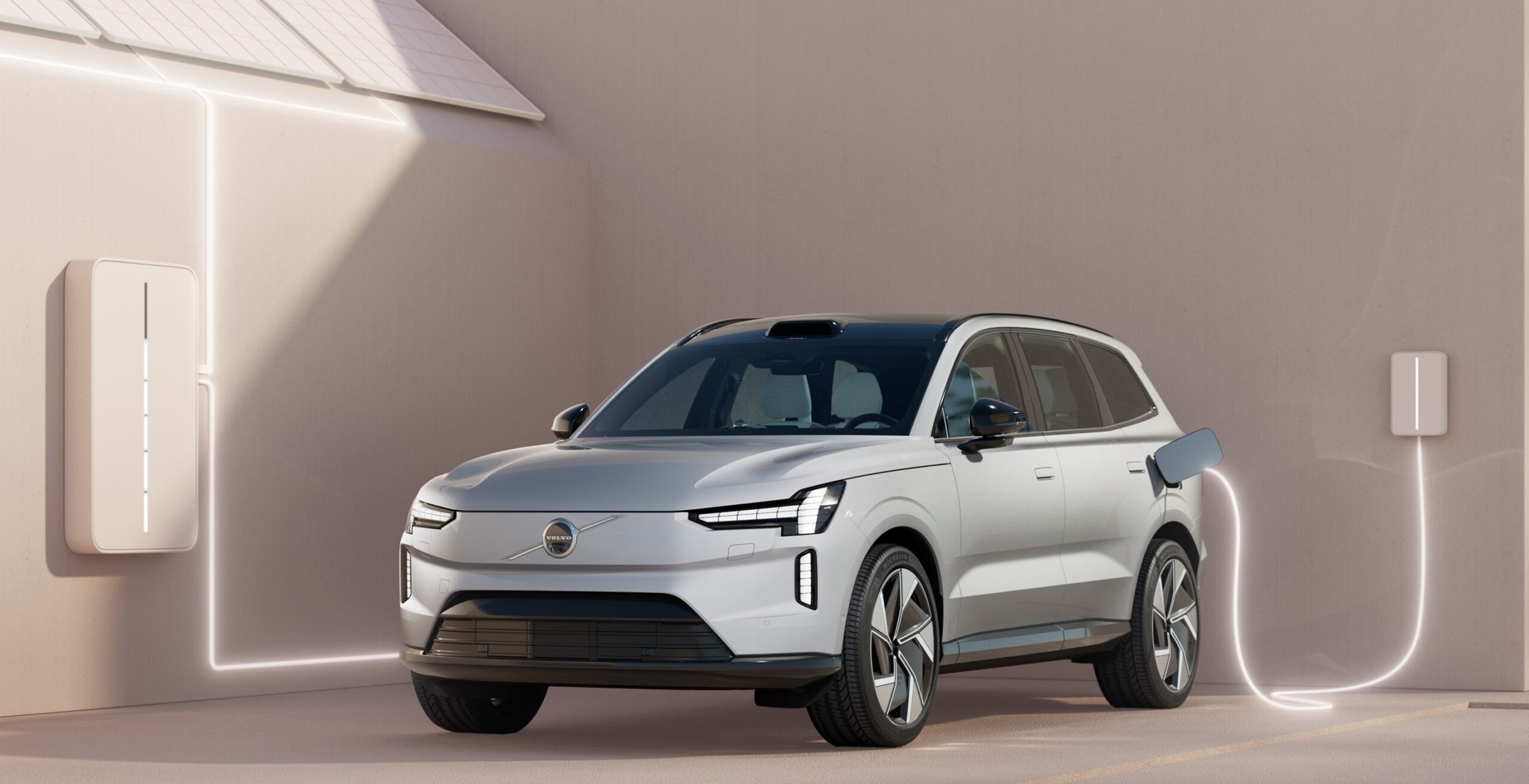
The 2024 Volvo EX90 is the company’s vision of a large family SUV in the electric age. Pricing will start at around $80,000.

The 2024 Volvo EX90 is the company’s vision of a large family SUV in the electric age. A home energy management system features a bi-directional wall box to power a home.

The 2024 Volvo EX90 is the company’s vision of a large family SUV in the electric age. A home energy management system features a bi-directional wall box to power a home. (Photos courtesy of Volvo Cars USA)

BY MARK MAYNARD

Volvo revealed its battery-electric EX90 SUV Nov. 9, 2022, in downtown Stockholm. The much-anticipated seven-seat SUV represents the start of a new era for Volvo as a carmaker of battery-electric vehicles.

Volvo has only one other battery-electric vehicle, the XC40 Recharge. However, the company plans to offer only battery-electric vehicles by 2030 and expects to be carbon-neutral by 2040. The Sweden-based carmaker is now owned by Geely Automobile, a major automotive brand based in China

Though the EX90 debuted in Sweden, U.S. models will be built in Charleston (Ridgeville), S.C., beginning next year.

Volvo CEO Jim Rowan said, “The Volvo EX90 is a statement for where we are, and where we are going. It’s fully electric with a range of up to 300 miles on a single charge, designed to further raise our safety standards, the first Volvo car to be truly defined by its software and part of a wider ecosystem, connecting to your home and your other devices. The Volvo EX90 is the start of something new for Volvo Cars in many ways.”

Rowan also said that EX90 would be sold online or by going to a retailer. “You decide how you access it,” he said, “whether that is through outright ownership, by subscribing to it, or by leasing it. Whatever works for you.”

Front seats with the large vertical infotainment screen

Interior materials are made of recycled plastics and bio-materials that Volvo calls Nordico. The 14.5-inch vertical center screen has Google built-in for apps and services.

Battery-Electric Powertrain

The powertrain at launch will be a twin-motor all-wheel drive version. It is powered by a 111kWh lithium-ion battery and two permanent magnet electric motors. Total power is up 496 horsepower and 671 foot-pounds of torque, though a lower horsepower version will be available.

The frunk, or front trunk

Charging cable storage in the “frunk.”

Volvo says that the battery pack can be charged from 10 percent to 80 percent in about 30 minutes. However, the release did not mention which level of pubic charger could supply that charge rate, whether 150kW, 250kW, or 350kW, or if that charge rate requires a Level 3 DC fast charger, which is hard to find.

Also advantageous is bi-directional charging. The battery pack in the Volvo EX90 can be tapped as an extra energy supply, such as to power a home, other electric devices, or another electric Volvo. The company says that bi-directional charging will be available in the future and in select markets.

A side view of the ex90 connected to a battery charger.

The 111kWh lithium-ion battery pack can be charged from 10 percent to 80 percent in about 30 minutes.

EX90 Safety Technologies

The Volvo EX90 is the smartest and safest vehicle the company has ever made. And it can get smarter and safer over time as it learns from new data and receives over-the-air updates.

The company says that the latest network of Volvo’s sensing technologies creates an invisible shield of safety. Cameras, radars, and lidar function through high-performance core

Thor's Hammer headlight design.

“Thor’s Hammer” lighting.

computers. NVIDIA DRIVE runs Volvo Cars’ in-house software to create a real-time, 360-degree view of the world.

The lidar system, by Luminar, can sense the road ahead, whether day or night, and at highway speeds, Volvo says. The system can see small objects hundreds of yards ahead, which gives more time to inform, act and avoid. Volvo’s Pilot Assist driving function has been improved with a new steering assist while changing lanes.

Unsupervised Driving

Volvo says the EX90 is hardware-ready for unsupervised driving in the future.

Inside, special sensors and cameras track eye-gaze concentration. The technology can determine when the driver is distracted, drowsy, or inattentive. And if that fails and there is a collision, the Volvo EX90 is designed to safely stop and call for help.

San Diego-based Qualcomm Technologies’ Snapdragon Cockpit Platforms runs most of the core interior functions, from safety and infotainment to battery management.

A 14.5-inch vertical center screen has Google built-in for apps and services, including hands-free help from Google Assistant and Google Maps. And the Volvo EX90 will also be compatible with wireless Apple CarPlay.

Digital phone key technology will function as the car key through a smartphone app.

The second row back seat area

New interior radar developed by Volvo is sensitive enough to detect the tiniest movements at the sub-millimeter scale — such as those of a sleeping toddler. The radar feature covers the entire interior of the car, including the trunk.

Volvo EX90 Preordering Now

Pricing for the 2024 Volvo EX90 will start at around $80,000. Vehicles can be preordered in the U.S. with a $500 deposit. Get the details at VolvoCars.com/us. Customers placing preorders will be asked to configure their cars in the fall of 2023 and will receive prioritization when deliveries begin in early 2024.

Other information and full specifications will be available closer to the on-sale date.

The EX90 cargo space with the tailgate raised

Flexible cargo capacity.

Chevrolet Bolt EUV Review

Chevrolet Bolt EUV Review

There is much to like about the simple usability of the 2023 Chevrolet Bolt EUV, especially its high-value pricing

A horizontal side view of the Bolt EUV somewhere on a beach

The 2023 Chevrolet Bolt EUV is sold in four front-wheel-drive trim levels. Starting prices range from about $28,000 to $33,190, including the $995 freight charge from Lake Orion, Mich. (Photos courtesy of Chevrolet or as noted)

Table of Contents

Overview
Range and Charging
Bolt Recalls
Pricing
Information About Bolt Tax Credits
Interior Function
Performance and One-Pedal Driving
Ride and Handling
Super Cruise Technology, Confusion
Why Buy the Chevrolet Bolt EUV?
Specifications

BY MARK MAYNARD

Six inches can be pretty satisfying when trying to make the best impression — especially when it’s in the back seat of a Chevrolet Bolt EUV.

The extended-length Bolt “Electric Utility Vehicle” was added for the 2022 model year, following the original Bolt’s debut in 2017. Both models share a battery-electric front-motor and front-wheel drive layout. The small SUV crossover has five seats, four doors, and a rear liftgate. The design of both models features a high-strength-steel frame and aluminum front fenders, hood, door, and liftgate.

Both versions of Chevrolet Bolt use the same powertrain:

• A 65-kWh nickel-lithium-ion high-voltage battery

• Variable-speed automatic transmission

• A permanent magnet 150-kWh drive motor

The shorter Bolt EV has an EPA-estimated driving range of 259 miles. The Bolt EUV, heavier by 90 pounds, has a range estimate of 247 miles.

Among the Bolt competitors for size, electric driving range, and pricing are the Kia Niro EV and Hyundai Kona EV.

The Bolt has roomy front seat area has tall headroom of 40 inches.

The roomy front seat area has tall headroom of 40 inches.

Chevrolet Bolt EUV Overview

Designing the Bolt EUV freshened the front-end styling which was also applied to the standard Bolt. But no exterior sheet metal parts are shared between the two vehicles.

The new body style is about 6 inches longer than the standard model on a wheelbase stretched by 2.9 inches. And back seat legroom grew by 3.1 inches, now at 39.2.

The new interior includes a flat-bottom steering wheel that incorporates the Regen on Demand paddle.
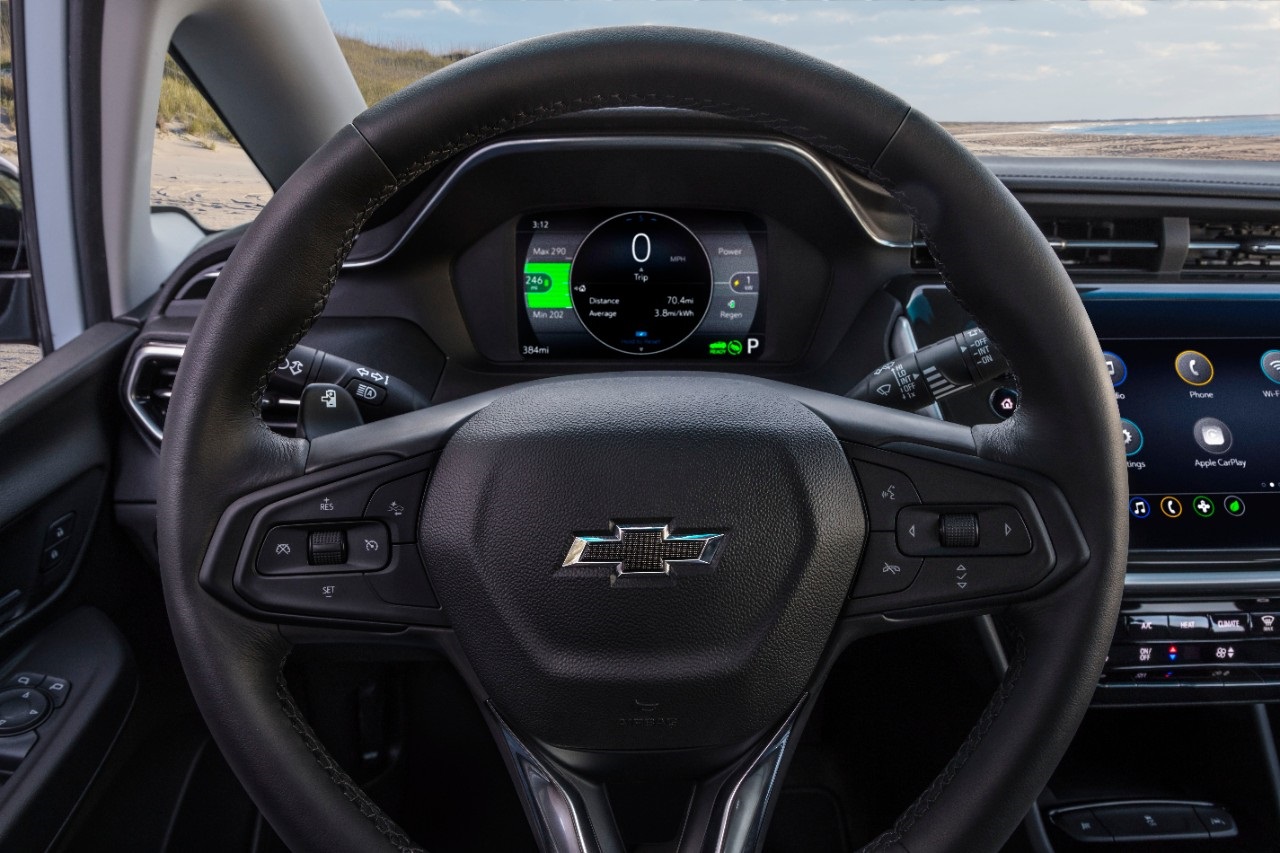
A view of the 8-inch color driver information center.

A view of the 8-inch color driver information center.

 Bolt Range and Charging

With every new Bolt EUV, Chevrolet includes a dual-level charge cord. It has a changeable plug that can be used with a household 120-volt three-prong outlet for Level 1 charging. Or change ends to plug into a 240-volt NEMA 14-50 amp outlet for 7.7kW Level 2 charging (the charge rate of many home EV chargers). For many Bolt owners, however, the dual cable function could eliminate the need to buy and install a home charger.

For maximum Level 2 charging speed, both Bolt models are capable of 11kW Level 2 charging, but only with a higher-capacity charger.

  • Level 1 120-volt charging will add about 4 miles of range per hour of charge.
  • Level 2 240-volt charging (with the dual-level charge cord) will add about 25 miles of range per hour of charge, with a full charge in about 10 hours.

Chevrolet will cover standard installation through Qmerit for Level 2 home charging. The offer is good whether leasing or purchasing a Bolt model.

And Chevrolet EV owners also have access to more than 80,000 chargers in North America through the Energy feature in the myChevrolet app. There are several other access points to the app, including:

  • Route planning and locations of available charging stations along the way.
  • Real-time alerts about range.
  • Click-to-charge payment for public charging.

Chevrolet Bolt Recalls

There is much to like about the simple usability of the Chevrolet Bolt or Bolt EUV, including their high-value pricing. Unfortunately, it was smacked down last year with a significant recall by the National Highway Traffic Safety Administration. GM had to recall all 143,000 Bolt and Bolt EUV models because of a battery manufacturing defect that increased fire risk. Korea-based LG Energy Solutions makes the lithium-ion batteries.

GM quickly found two manufacturing defects in the battery cells: a torn anode tab and folded separator. GM said that in some rare circumstances, the defects could lead to a battery fire.

The remedy is to replace entire battery packs or selected battery modules. Progress has been slow, and other occasional electrical glitches have been noted, according to comments on the many Bolt-owner websites. Among my sources were ChevyBolt.org and the Chevy Bolt Owners Facebook page.

Says General Motors: “We continue to prioritize battery module replacements for customers and are making progress every day. Customers who have completed the most recent software update can charge their [Bolt] battery to 100 percent capacity.”

Federal law requires automakers to provide hybrid battery warranty coverage of 8 years or 100,000 miles. But California requires a warranty length of 10 years or 150,000 miles.

Check here for Chevrolet information on the Bolt recall.

Owners may also contact the National Highway Traffic Safety Administration Vehicle Safety Hotline at 1-888-327-4236 or go to NHTSA.gov.

Chevrolet Bolt Pricing

For 2023, the 2023 Bolt EV is available in two trim levels: 1LT and 2LT, with starting prices of $26,595 and $29,795.

The 2023 Bolt EUV is available in four trim levels: LT, LT Redline, Premier, and Premier Redline. New for 2023, the Redline treatment includes black wheels with red accents, black leather-trimmed upholstery with red stitching, and a horizontal red line on exterior mirror caps. The Redline is available with no-cost paint colors of Mosaic Black Metallic, Silver Flare Metallic, or Summit White.

2023 Bolt EUV starting prices are $28,195 for the LT; $28,690 for the LT Redline; $32,695 for Premier, and $33,190 for Premier Redline. All Bolt MSRPs include the $995 freight charge from Lake Orion, Mich.

 Chevrolet Bolt Tax Incentives

Congress recently passed new legislation in the Inflation Reduction Act of 2022. The law changes credit amounts and requirements for clean energy vehicles, according to FuelEconomy.gov. Among the new requirements to qualify for a federal EV tax incentive, the vehicle’s final assembly has to be completed in North America.

In regard to the federal EV tax credit for the Chevrolet Bolt, General Motors is waiting on full Treasury guidance to determine vehicle eligibility. However, the IRA requirements make an important modification to the EV tax credit: It lifts the 200,000-vehicle-volume cap, which GM had already hit as an early mover on EVs.

According to GM’s latest statement on the federal EV tax credit provisions in the Inflation Reduction Act: “We think the legislation aligns very well with GM’s long-term plans, and over the life of the credit, we intend to offer a number of vehicles that should be eligible.

“While some of the provisions are challenging and cannot be achieved overnight, we are confident we can rise to the challenge because of the domestic manufacturing investments we are making to secure a supply chain for batteries and critical minerals,” GM said in the statement. “We will have more updates after the implementing guidance is finalized.”

For updates, check with your Chevrolet dealership or FuelEconomy.gov

Chevy Bolt Standard Equipment

There is no shortage of standard equipment on the base LT model. Among its safety features are 10 air bags, an electric parking brake, and Lane Keep Assist with Lane Departure Warning.

LT convenience features include keyless entry and starting with remote start, six-way manually adjusted front seats, wireless phone charging, USB type A and C charge ports, six-speaker audio system, HD rearview camera with guidance lines, and wireless capability for Apple CarPlay or Android Auto.

The 8-inch color driver-information center (gauges) has a choice of visual themes for Modern or Enhanced. And there is a screen that includes displays of vehicle efficiency with programmable charge times.

The Premier tester was $37,390 with the two major factory option packages of Sun and Sound ($2,495) and Super Cruise, $2,200. Details are below in the specifications chart.

Bolt EUV Premier adds such extras as perforated leather-trimmed upholstery, an eight-way power driver seat with two-way power lumbar, heated and ventilated front seats, heated steering wheel, and heated rear seats. Safety technologies include rear park assist, rear cross-traffic alert, rear camera mirror (digital), HD surround-view camera system, and lane change alert with side blind zone alert.

Find current pricing and special offers for the 2022 and 2023 Bolt EUV here.

A view of the Bolt shift console and upper infotainment system screen

Bolt electronics are not intimidating but facilitating.

Bolt EUV Interior Function

The Bolt EUV has big-and-tall head and leg room for a subcompact-class SUV.

Front headroom is large-vehicle tall at 40 inches as a hardtop or 39.1 inches with the dual-panel panoramic power sunroof, part of the $2,495 Sun and Sand package.

Legroom in the front seats is a lengthy 44.3 inches. There is comfortable seating for a 6-foot-6 passenger who has uncropped visibility out the windshield or having to steeply recline the seatback.

Back seat roominess benefits from a completely flat floor. While the rear legroom is long, the bench seat bottom is short for adult thigh support. But it works well for the school carpool or ride-hailing.

Cargo space is just a few tenths smaller than the standard Bolt. The space measures 16.3 cubic feet behind the back seat or 56.9 cu. ft. with the 60/40 back folded. The cargo entry opening is wide at 41 inches with multi-level capacity. Subfloor storage beneath the second level neatly stores the charging cables. Fold the back seat for 5 feet in length. And the roof rack is low enough to load bikes or other awkward-shaped gear that won’t fit inside.

Interior Design

Chevrolet interiors have a premium mix of plastics and other textured materials, all of which are in the Bolt.

The driver area is simply designed and straightforward to use. The technologies, such as the Chevrolet Infotainment 3 Plus touchscreen, are not intimidating but facilitating. Its 10.2-inch-wide screen is easily viewed, and there should be no frustration for tech beginners to page through the choices.

Especially welcome are physical switches for many cabin functions, such as fan speed, temp control, and seat heating and ventilation.

Driver sightlines are unencumbered at the side mirrors or over the shoulder. And in between, the Premier’s surround-view camera system gives overhead and front or rear views. It is salvation when inching out of tight parking to see when it is time to crank the steering wheel.

The Bolt EUV back seat

Short bench but long legroom of 39.2 inches in the Bolt EUV.

Performance and One-Pedal Driving

There is enjoyable kick to the Bolt EUV performance with its 200 horsepower and 266 foot-pounds of torque. For most of my test week, I nursed the battery reserve by driving in Normal mode. And then I found Sport mode, which changed my perspective. Sport mode adds a line-drive response to acceleration. It is not blunt-force fun, but Chevy cites an estimated acceleration to 60 mph in 7 seconds and 6.9 for the slightly shorter Bolt EV.

With a Level 2 charger at home and the freedom to charge at will, I felt empowered to enjoy the quickness of Sport mode. And, in my experience, it was not a significant drain on the battery. The quick zip is enjoyable around town and essential to guard your line in commuter traffic.

The 200-hp Bolt powertrain

The 200-hp Bolt powertrain. (Mark Maynard)

One-Pedal Driving

I especially enjoy the feature of one-pedal driving, the so-called e-Pedal. The driver can slow or stop the Bolt using only the accelerator pedal under most conditions. And at the same time, the system recaptures energy for the battery.

In time, drivers can anticipate their stopping distance and lift off the accelerator to stop precisely at the intersection. The function does not eliminate the need to use the brake pedal altogether, especially in emergencies. But using one-pedal driving reduces the switching back and forth between pedals, which can take away from the electric driving range.

The one-pedal function can be switched off at the shift-console button. Sometimes when inching along in heavy traffic or when parking, the e-Pedal operation can be jerky.

When one-pedal is not engaged, the driver can get manually applied regeneration by using the Regen on Demand paddle at the back of the steering wheel. Pulling the regen paddle activates the regeneration process, piping kinetic energy to the battery.

Bolt EUV Ride and Handling

For a tall and small SUV, the Bolt EUV rolls with uncommon smoothness and no choppiness on the interstate. The suspension is simple but well-engineered of front MacPherson struts with a solid stabilizer bar and a rear torsion beam with coil springs.

The driver might notice the heft of the curb weight, 3,715 pounds, with the 947-pound battery. But I experienced no bottoming-out in dips are sensitivity to chin scrapes at driveways.

The suspension has a comfort-ride composure, but the Bolt EUV is steady in evasive maneuvers or hard braking. Its turning circle of 38.3 feet is nimble enough in cramped parking or making a U-turn on a side street.

Regenerative four-wheel-disc braking has vented 11-inch front rotors and 10-inch solid rotors rear. There is good steering response and little noise or road harshness transmitted by the 17-inch Michelin Energy Saver Selfseal (215/50).

And the Bolts are dolly towable behind a motorhome.

Super Cruise Technology

The 2022 Bolt EUV is the first Chevrolet offered with Super Cruise, a so-called hands-free driver assistance technology for enabled roads. The assist system can be used on more than 200,000 miles of enabled roads in the U.S. and Canada.

Super Cruise employs many advanced technology features, including a Driver Attention System and precision LiDAR map data. The Driver Attention System uses a small camera on the top of the steering column. It works with infrared lights to determine where the driver is looking whenever Super Cruise is in operation.

If the Driver Attention System detects the driver’s gaze has turned away from the road ahead for too long, the steering wheel light bar will prompt the driver to return their attention to the road. If the system determines continued inattentiveness, it will use visible and audible alerts to notify the driver to take back control of the wheel.

I don’t like surprises while driving, and semi-autonomous or fully autonomous systems always inject a little surprise into the driving experience. In my experiences with Super Cruise, I consider it a good hands-on driver-assist system — and I always drive with my hands poised near the steering wheel.

Super Cruise Confusion

Like many driver-assist systems, Super Cruise is not precise in lane centering. At times, the system would issue alerts when the Bolt EUV crossed into the white lines of lane delineation — but it did not cross over completely.

It was a prior testing experience that really put me on guard. While testing a GMC Sierra with the hands-free system, Super Cruise misread the road ahead.

Along a section of Interstate 5 north of downtown San Diego near the state Route 52 exit toward La Jolla, the interstate runs beneath SR52 as it merges with the interstate. The divided highway of SR52 cast two bold shadows across I-5. Approaching the underpass at 65 mph, Super Cruise must have thought the dark shadows were solid objects. The system applied full braking force at the first shadow crossing the interstate. It could not have stopped the truck, as the Sierra crossed the first shadow, it resumed heavy acceleration. Then, just a few yards beyond it came upon the second shadow, and Super Cruise again slammed on the brakes.

Fortunately, in both incidents the highway behind was clear for several car lengths.

I took over steering as my pounding heart rate settled down. The Super Cruise system also shut down and gave a message that the dealership should examine the vehicle.

While testing Super Cruise in the Bolt EUV, I covered the same interstate route to see what would happen. It was a cloudy day, but the system still applied braking but less firmly at the lighter shadows.

If I were buying a Bolt EUV, I’d pass on the $2,200 Super Cruise option and enjoy the standard adaptive cruise control with stop-and-go.

Fold the Bolt's 60/40 folding back seat for about 5 feet in length.

Fold the 60/40 folding back seat for about 5 feet in length. (Mark Maynard)

Why Buy the Chevrolet Bolt EUV?

The Chevrolet Bolt EUV is not a lifestyle statement. It is a life choice — and a smart one. It has the familiar operation of a traditional car but elevated by electric power.

There are many compact SUV EVs that are theaters of dazzling electronic tech. And most of those can cost $50,000 and a lot more.

The Bolts are an uncompromising first step into the future of battery-electric vehicles.

The second level of Bolt subfloor storage.

The Bolt EUV’s second level of subfloor storage. (Mark Maynard)

The third level of Bolt subfloor storage for storing the charge cable

Charging cables and Super Cruise brain in the lowest cargo subfloor. (Mark Maynard)

Chevrolet Bolt EUV Specifications

Body style: subcompact, 5-door, 5-seat, front-wheel drive battery-electric SUV crossover

Transmission: 1-speed automatic with one-pedal drive and Sport mode

BATTERY SYSTEM

Battery: 65 kWh lithium-ion of 288 cells

Weight: 947 pounds

ELECTRIC DRIVE

Type: Single motor and gearset

Motor: 200-hp permanent magnetic drive motor; 266 lb.-ft. torque

Driving range: EPA-estimated 247 miles on a full charge

0-60 mph acceleration: 7 seconds, using Sport mode

CHARGING TIMES

120 volt: 4 miles of range per hour

240 volt, 32 amps (dual charge cord): 25 miles of range per hour; full charge in about 10 hours

240 volt, 48 amps: 37 miles of range per hour; full charge in about 7 hours

DC fast charge: up to 95 miles in 30 minutes

EPA fuel economy equivalent: 125/104 city/hwy MPGe

BY THE NUMBERS

Cargo space: 16.3-56.9 cubic feet

Front head/leg room: 39.1*/44.3 inches *40 inches w/o sunroof

Rear head/leg room: 37.8/39.2 inches

Length/wheelbase: 169.7/105.3 inches

Curb weight: 3,715 pounds

Turning circle: 38.3 feet

FEATURES

Standard equipment includes: smart key locking and push-button ignition, remote start, Chevrolet Infotainment 3 Plus with 10.2-inch wide HD color touch screen with voice recognition, electric parking brake, Bluetooth phone and audio, wireless Apple CarPlay and Android Auto capable, in-vehicle apps, wireless charging, efficiency display screens with programable charge times, perforated leather-trimmed upholstery, leather-wrapped steering wheel, 8-inch driver-information display, sliding visors with lighted vanity mirrors, 8-way power driver seat with 2-way lumbar, 6-way manual front passenger seat, heated and ventilated front seats, heated rear seats, adaptive cruise control, HD surround-view camera system, solar-absorbing glass, LED headlights-taillights-daytime running lights, 17-inch alloy wheels with carbon flash painted pockets, heated and power adjusted side mirrors with turn-signal indicators, rear wiper-washer.

Safety features include: 8 air bags; stability and traction controls; lane change alert with side blind zone alert, rear cross-traffic alert, and rear park assist (standard on Premier and available on LT).

Chevy Safety Assist includes automatic emergency braking, front pedestrian braking, lane keep assist with lane departure warning, following-distance indicator, forward collision alert, and IntelliBeam auto high beams.

PRICING

Bolt EUV Premier base price: $32,695 including $995 freight charge; price as tested $43,690

Options on test vehicle: Sun and Sound package, $2,495, includes 7-speaker Bose audio system, power dual-panel sunroof with power sunshade, Chevrolet Infotainment 3 Plus with navigation;

Super Cruise, $2,200, includes 3-years of Super Cruise connectivity and enhanced automatic emergency braking.

Where assembled: Lake Orion, Mich.

Warranties: 3-years/36,000-miles basic bumper to bumper; free first scheduled maintenance service; 8-years/100,000-miles electric propulsion components (but 10-years/150,000-miles in California); 5 years/60,000 miles roadside assistance and courtesy vehicle when serviced

Audi e-tron Sportback quattro Review

Audi e-tron Sportback quattro Review

Hallmarks of the 2022 Audi e-tron Sportback design are its vault-like cabin quiet and the svelte action of the adaptive air suspension

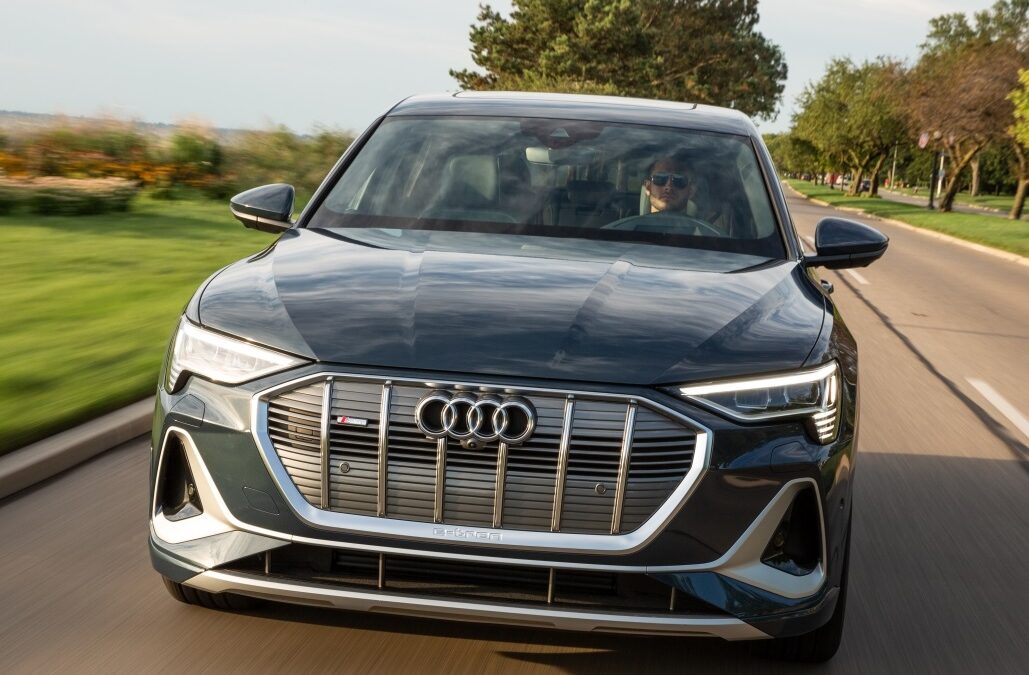
An exterior view of an e-tron sportback at a charging terminal. blue e-tron

The 2022 Audi e-tron Sportback has an EPA-estimated battery-electric driving range of 222 miles. (Photos courtesy of Audi USA)

Table of Contents

Pricing and Incentives
6 Cool Things
Powertrain and Charging
Performance
Ride and Handling
Interior Function
Back Seat and Cargo Space
2023 e-tron updates
Why Buy the Audi e-tron Sportback?
Specifications

BY MARK MAYNARD

In just three years, Audi has grown its all-wheel-drive e-tron battery-electric family to three distinct vehicles in five body styles in three class segments. And more Audi EVs are on the way.

The midsize e-tron SUV debuted in 2019 and is followed by the e-tron Sportback “coupe SUV.” And then, Audi added higher-performance S models to each of those body styles. Last year brought the compact-class Audi Q4 e-tron and Q4 Sportback e-tron. The lightning rods of the family are the e-tron G.T. and R.S. e-tron G.T. supersedans. They share an architecture with the Porsche Taycan.

Today’s tester is a 2022 Audi e-tron Sportback quattro with the top-line Prestige package. It has an EPA-estimated battery-electric driving range of 222 miles. However, that range becomes closer to 195 miles with the recommended charging to 88 percent to help preserve battery life. Charging to 100 percent is recommended for distance travel.

In either body style, the founding-father e-tron seems to have been tailored for the existing Audi owner. Much of the luxurious elements of the interior and the driving action are very Audi-like. But most of the new and competing electric SUVs strive for an out-there presence to make an EV statement, which often presents longer learning curves of the features. That’s not so with the Audi-familiar cockpits in the e-trons.

Hallmarks of the Audi e-tron Sportback design are its vault-like cabin quiet on the highway and the svelte action of the adaptive air suspension.

the e-tron Sportback front seats in gray leather

Eight-way power front seats are heated, ventilated and massaging.

Audi e-tron Pricing and Incentives

The 2022 Audi e-tron quattro SUV starts at $67,095, which is $3,200 less than the 2022 e-tron Sportback. As with other models in the lineup, the 2022 e-tron Sportback is sold in three trim levels of Premium, Premium Plus, and Prestige. The Prestige tester came to $92,140 with options and the $1,195 freight charge. The e-trons are built in a new battery-electric factory in Brussels, Belgium.

See the full list of the tester’s standard and Prestige equipment in the specs box at the end of the review.

Of the eight paint colors, only black is a no-cost choice; the others are $595 each. And there is a range of bespoke colors for $3,200 each.

The Black Optic package on the tester, $2,500, added 21-inch five-spoke turbine-design wheels with 265/45 Continental CrossContact all-season tires. The exterior kit included a black singleframe grille, window surrounds, and front and rear bumpers.

Here are starting prices for the rest of the Audi e-tron lineup, including the freight charge:

e-tron S, $85,995;

e-tron S Sportback, $88,595;

Q4 e-tron, $51,095;

Q4 Sportback e-tron, $53,895;

e-tron GT, $103,895, including a $1,495 freight charge.

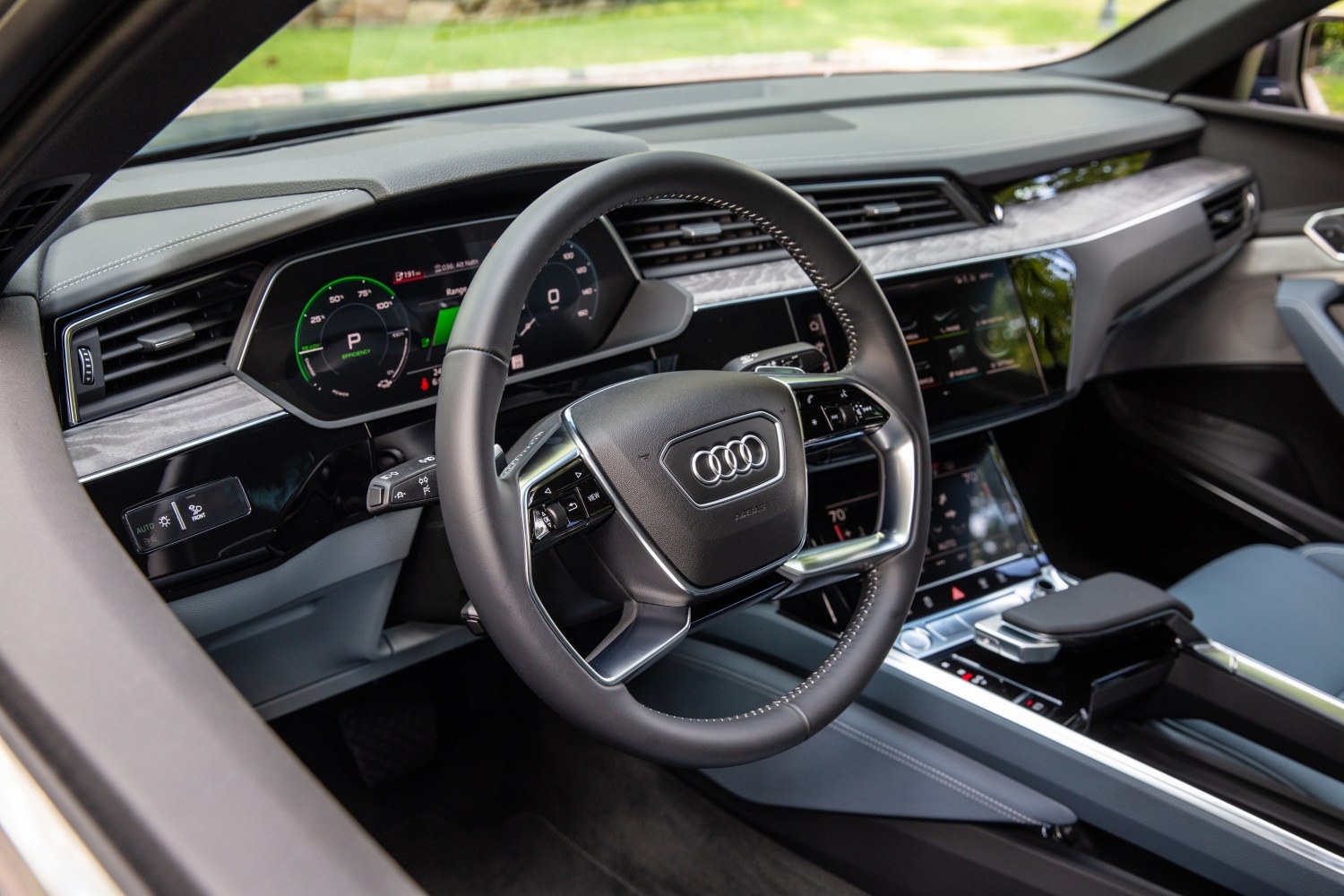
The e-tron driver area

The e-tron cabin is highly digital but not alienating to the uninitiated.

Incentives and Rebates

In California and some other states, the 2022 Audi e-tron Sportback qualifies for up to $10,250 in federal and state rebates or incentives.

Federal Electric Vehicle Tax Credit: $7,500. Find IRS tax forms here.

California Clean Fuel Reward: $750. Available toward the purchase or lease of a new electric vehicle with a battery capacity greater than 5kWh. The customer must register the vehicle in California and reside in California.

California Clean Vehicle Rebate: $2,000.  Participants are eligible based on gross annual income, as stated on their federal tax return.

Find federal and state laws or incentives here.

And the e-tron models qualify for High-Occupancy-Vehicle freeway access, $22, with the green DMV decal.

A closeup view of the Valcona leather upholstery

Valcona full leather in the Prestige has a delicious scent.

 6 Cool Things About e-tron

Dual charging ports. Premium-plus and Prestige models add a second charging port on the right front fender. (The standard placement is on the right front fender.) And what a smart idea it is to be able to nose into a public charging stall (or the home garage) and not have to wrestle the charging cable to reach.

Onboard power generator, known as Vehicle-to-Load (V2L) functionality. The e-tron is equipped with a charger cable that can be used as a power source at home or on the road. It has two possible plug options to allow for either 110- or 220-volt power outlets. The system does not allow for vehicle-to-grid inverse power.

Digital Matrix LED headlights. With 1.3 million micromirrors per headlight, the DML array creates a “light carpet” 164 feet wide (50 meters). The array keeps light within the driver’s lane and extends the carpet left or right when changing lanes. The electrostatically controlled micromirrors can adjust light-beam pixels up to 5,000 times per second.

Integrated Toll Module. Commuters can put that clunky toll transponder in the glove box. Audi’s ITM tech is a built-in transponder to collect toll fees. With a subscription, the ITM system allows drivers to use touchless transactions along compatible toll roads in the U.S.

Route planner. The e-tron system calculates the fastest route, considers traffic and road data, includes the driver’s driving style, calculates the duration of the charging stops, and incorporates them in planning the total travel time. Drivers receive information about the charging capacity or charging connections and plug types for the relevant charging stations. The system also identifies whether charging stations are vacant or occupied.

1,000kW hours of free charging. Audi’s partnership with Electrify America provides new buyers with about 2,000 miles of range.

Digital Matrix headlights

Digital Matrix headlights, a $3,000 upgrade.

e-tron Powertrain and Charging

The e-tron Sportback shares the e-tron driveline of front and rear asynchronous motors, single-speed reduction gear transmission (one per axle), and a 95 kWh lithium-ion battery pack. The net energy of the battery pack is 86.5 kWh, or about 88 percent of its capacity.

Under the hood at the front motor is a large storage box to carry the Level 2 charging cable.

The EPA-estimated driving range of 222 miles seems reserved when some luxury battery electrics boast a range of 300 to 600 miles. Audi says the e-tron battery is engineered to preserve performance and peak charging power during the charge cycle. It is also of interest that the Audi-developed battery modules can be replaced if needed, rather than replacing the entire battery pack.

The e-tron charge door connected to a charging handle.

The e-tron Prestige and Premium Plus trim levels add a second charging port on the right front fender.

e-tron Charging Times (estimated)

150kW (400V) rapid DC: Under ideal conditions, charging from 5 to 80 percent of the battery’s capacity takes about 30 minutes. Or 10 minutes for 54 miles;

250kW (800V) rapid DC: 18 minutes to 100 percent charge;

Level 2 240-volt: about 10 hours;

Onboard charger: 9.6kw; can be used with a home Level 2 (240 volt) charger or a 120-volt household outlet.

The e-tron front motor area and storage box

Under the hood at the front motor is a large storage box to carry the cables for Level 2 charging and onboard power generation.

e-tron Sportback Performance

As a five-seat midsize SUV, the e-tron Sportback has a hefty curb weight of 5,800 pounds or nearly 3 tons with a driver. The battery alone weighs 1,540 pounds.

Base horsepower of 355 hp has an adequate response for most daily driving. Acceleration of the e-tron Sportback is not quick off the line, but power will build rapidly with a harder press of the accelerator.

For more thrilling displays or passing power, a boost mode raises peak horsepower to 402 and max torque of 490 foot-pounds. When driving in Dynamic Sport mode, boost mode gives about an 8-second jolt of power for 8 seconds. Audi cites 0 to 60 mph acceleration in 5.5 seconds with boost and a top speed of 124 mph.

The high turbine whine of the motors makes an enjoyable statement.

The force of braking regeneration can be adjusted, but there is no actual one-pedal driving by using the accelerator. The so-called e-pedal function integrates regenerative braking and electric motors. By lifting the gas pedal, the driver can slow the car to a stop without using the brake pedal. It can even hold the vehicle on an incline. Some carmakers say one-pedal driving takes away driver focus. But I become more focused while using it as an efficiency device.

A robust and wide shifter console neatly packages the essentials.

A robust and wide shifter console neatly packages the essentials.

e-tron Sportback Ride and Handling

Audi’s engineering is masterful for the five-link suspension with adaptive air suspension. The front and rear system is self-leveling with automatic control logic for vehicle speed and driving style.

There are five driver-selectable ride height levels after the standard ride height. (A 26mm lift equals 1.02 inches):

Offroad, adds 35mm from standard;

Lift, plus 50mm;

Allroad, plus 17mm;

Dynamic, plus 13mm;

Efficiency, plus 26mm.

Handling

Some heavier midsize SUVs with an air suspension struggle to balance the weight. The ride can feel busy as the four-wheel sensors constantly adjust to road conditions. But not this Audi. The e-tron ride quality is organically lush with instantaneous adjustments. Head toss is so well controlled that the ride wouldn’t slosh a fishbowl.

In most driving situations, the Audi e-tron Sportback is rear-wheel drive (rear motor). When needed, the quattro system engages the front motor.

With a max towing weight of 4,000 pounds, the e-tron Sportback models have braking to handle the load. Four-wheel ventilated disc brakes have 14.8-inch front rotors and 13.8-inch rear rotors.

The Sportback’s long wheelbase (115 inches), wide stance (76.2 inches), and 21-inch tires help stretch the turning circle to a broad 40 feet. But the 360-degree camera with a top view is the great equalizer in cramped parking.

The 21-inch tires and orange brake caliper

The Black Optic package adds 21-inch five-spoke turbine-design wheels (and 22-inchers for 2023) with 265/45 Continental CrossContact all-season tires.

e-tron Interior Function

The e-tron cabin is very Audi-like and not like an alt subbrand electrified cousin. Assembly of materials and panels is precise and of high quality. And, oh, that heady scent of the Valcona leather in the Prestige package. Dual-pane acoustic glass amplifies the quiet but also adds curb weight.

As a midsize car, there is ample shoulder room and a broad instrument panel to place controls and switches ergonomically. It is a highly digital cabin space but not alienating to the uninitiated.

Sightlines over the hood and at the side mirrors are uncompromised.

A wide shifter console neatly packages the essentials. The center bin packages the side-mount wireless charging pad, a pair of cup holders, two USBs, and a 12-volt plug. A sliding rolltop cover allows secure space to drop a modest purse or to-go food.

The gearshift bar falls comfortably to the right hand for simple push engagements. The start button and an audio-volume control knob are just ahead of the shifter.

Moving up the center stack are a pair of digital screens. The lower 8.8-inch-wide screen for climate controls has large color graphics and text that are easy to aim for when driving.

The upper 10.1-inch-wide screen for Audi’s Multi Media Interface is low enough to avoid glare and at the correct angle for eyes-on-the-road selection. The MMI groups controls for radio and media, phone, navigation, phone apps, and preferred vehicle settings.

Cabin heating is by a heat pump to help preserve battery range, rather than traditional radiant heating; a heat pump is optional on many less-expensive EVs.

The e-tron’s 12.3-inch-wide Virtual Cockpit digital gauge array

Audi’s 12.3-inch-wide Virtual Cockpit digital gauge array

Headroom and Sightlines

Front headroom of 38 inches with the standard power sunroof and legroom of 40.8 inches might not be a roomy fit for the very tall driver. Seat comfort and fit are exceptional. The eight-way power front seats are heated, ventilated, and massaging with adjustable lumbar support.

The Sportback’s narrow back glass and sloped rear deck might appear as sightline problems, but it was no issue while driving. The 3D 360-degree camera system empowers visibility in tight parking situations with a top view. Front and rear parking sensors are standard.

An interior front door panel

Assembly of materials and panels are Audi precise and high quality.

Back Seat and Cargo Space

Passengers in the second row will appreciate an inch more headroom than those in front, and legroom is adult-class at 39.1 inches. The flat floor eases three-across seating, but feet will straddle the base of the front console. There is no seatback recline, but the angle is relaxed.

A small electronic screen in the console allows full vent directional controls (feet, head, or body) with fan speed and seat heaters. And two more USBs. Dual B-pillar vents give refreshing airflow to those prone to motion upset.

Other back-seat details include a broad fold-down armrest with covered but slim storage and a pair of can holders. And there is large-bottle storage in the doors.

Cargo capacity has significant cubic footage — 28.5 behind the back seat and 56.4 cu. ft. with 40/20/40 seatback folded. However, the slant of the liftgate crops space for big-box items but fold the seatback for 6-feet-plus in length.

The two-piece, hard package shelf is cleverly designed. One removable portion is positioned at the seatback and the second is affixed to the liftgate. Together, the pieces form a solid block of what might be in the bay.

Cargo area extras include dual side lights, usable underfloor storage, and a 12-volt plug.

The back seat has adult-class legroom of 39.1 inches.

The back seat has adult-class legroom of 39.1 inches.

e-tron Updates for 2023

There are no significant changes from 2022, but there are several new trim enhancements, and most are for the 2023 e-tron Sportback Prestige.

  • The optional black headliner has now been made standard for the 2023 e-tron Sportback.
  • Now standard are 22-inch five-spoke-turbine design bi-color wheels, orange front and rear brake calipers, rear side air bags with illuminated safety belt buckles, and Digital Matrix-design headlights.
  • The Black optic exterior package is now standard for Prestige.
  • e-tron S and e-tron S Sportback are updated with carbon inlays, and the LED interior lighting-plus package is standard.
  • Also, for the 2023 model year, the potential federal tax credit of up to $7,500 is still expected to be available for both models.
The e-tron cargo area

Cargo space is wide at 42 inches. Fold the seatback for 6-feet-plus in length.

Why Buy the Audi e-tron Sportback?

Audi engineering instills a sense of maturity and substance in the e-tron Sportback. The car is rich in luxurious details, which are reflected in the tester’s $90K price.

No carmaker makes a “sportback” design more compelling than Audi. The coupelike stance seems more sport sedan than family SUV, but I prefer the sturdy stance of the e-tron SUV and its more functional cargo space.

The 222-mile driving range will be a nonissue for owners who, in this pricing demographic, will have a Level 2 charger at home.

But the availability of Audi e-trons will be limited. As Audi posts on its consumer site: “Due to ongoing parts shortage issues impacting global production, the availability of some equipment, options or features may be limited.”

And be sure to verify the vehicle you purchase includes all expected features and equipment.

A rear view of the 2022 e-tron sportback

Audi’s partnership with Electrify America provides new buyers with 1,000kW hours of free charging, which is about 2,000 miles of range.

Audi e-tron Sportback Specifications

Body style: midsize, 5-seat, 5-door coupe SUV with standard quattro all-wheel drive

Motors: Front and rear asynchronous

Horsepower: 355 hp, or a max of 402 with boost; maximum torque 414/490 lb.-ft., w/boost

Battery: 95 kWh lithium-ion; net energy of 86.5 kWh; 36 cell modules with 12 60-amp pouch cells

Transmission: Single-speed reduction gear (one per axle)

EPA-estimated driving range: 222 miles

Fuel economy equivalent: 76/78/77 mpg-e city/highway/combined

Top speed: 124 mph

0-60 mph acceleration: 5.5 seconds, with boost

Towing capacity: 4,000 pounds w/braked trailer

CHARGING TIMES

Rapid DC 150kW (400V): charging from 5 to 80 percent takes about 30 minutes. Or 10 minutes for 54 miles.

Rapid DC 250kW (800V): 18 minutes to 100 percent charge

Level 2 240-volt: about 10 hours

Onboard charger: 9.6kw; with home Level 2 (240 volts) or household 120-volt capability

BY THE NUMBERS

Cargo space: 28.5/56.4 cubic feet

Front head/leg room: 38/40.8 inches

Rear head/leg room: 39/39.1 inches

Length/wheelbase: 193/115.3 inches

Curb weight: 5,787 pounds

Turning circle: 40 feet

FEATURES

Standard equipment includes: Smartkey locking and push-button start, leather-trimmed upholstery, power sunroof with electric sunshade, Audi virtual cockpit-plus (12.3-inch LCD fully digital instrument cluster with visual modes of Classic, Sport, and e-tron, navigation-plus with natural voice control system, MMI infotainment touch response, 4-zone automatic climate control with heat pump and preconditioning, heated 8-way power front seats with 4-way power lumbar adjustment, illuminated aluminum front and rear door-sill inlays, power tilt and telescoping steering column with memory, LED headlights with high-beam assist, LED turn signals, manual rear side window sunshades, power-folding and heated side mirrors, S line full paint finish with aluminum window surrounds, illuminated aluminum S line door sills front and rear, side windows and tailgate privacy glass, white LED interior lighting, cabin comfort pre-conditioning, in-vehicle trip planner

Prestige package ($13,200) features include: Valcona full leather package (upper part of the dashboard, door armrest and lower center console in artificial leather to match the color of the interior trim); 18-way heated and ventilated individual contour comfort front seats with power lumbar adjustment, massaging and seat memory; top view camera system with Virtual 360 view; air quality ionizer and aromatization (summer and winter); matrix-design headlights with high-beam assist; full LED taillights with dynamic indicators with sequential illumination; multi-color LED interior ambient and contour lighting; power soft-door closers; heated rear seats; 705-watt 16-speaker Bang & Olufsen 3D sound system with 15-channel amplifier; head-up display with navigation and assistance systems information

Safety features include: 8 air bags, forward collision warning and avoidance assist, lane-departure warning, blind-spot warning, rear cross-traffic warning, parking system-plus with front and rear acoustic sensors; optional rear side thorax air bags with illuminated seat-belt buckles

PRICING

Base e-tron Sportback: $70,295, including $1,195 freight charge; price as tested $92,140

Options on test vehicle: Navarra Blue metallic paint $595; Prestige package $13,200; Digital Matrix headlights $3,000; Black Optic package $2,500; trailer hitch and 7-pin connector; rear side air bags $400

Where assembled: Brussels, Belgium

Warranties: 8-year/100,000-mile high-voltage battery (10-years/150,000-miles in California); 4-years/50,000-miles bumper to bumper with roadside assistance.