The Ridgeline’s midcycle redesign features new exterior styling from the windshield pillars forward, including new fenders and hood, a squared off nose and upright grille. (Honda)
All-wheel drive now standard for all trim levels
By Mark Maynard
Honda announced today, Jan. 14, that the redesigned 2021 Ridgeline pickup will be in dealerships starting Feb. 2. Sold in four trim levels, with standard all-wheel drive for all trim levels, pricing starts at $37,665, including the $1,175 freight charge from Lincoln, Ala.
The midcycle redesign features new exterior styling from the windshield pillars forward, including a new hood with a pronounced power bulge, a new squared off nose and upright grille and new fenders.
Top trims (RTL-E is shown) have new dash, steering wheel and center console accents. (Honda)
A reshaped rear bumper exposes new twin exhaust outlets. All Ridgeline trims feature tougher looking 18-inch wheels and an additional 20mm of track width for a more planted stance. New tires have a more aggressive sidewall and shoulder design. Radiant Red Metallic is a new paint option.
Interior updates include an audio volume knob and wireless phone charging. There also is new contrast stitching on the seats and the Sport trims add new cloth seat inserts. Top trims have new dash, steering wheel and center console accents.
Interior updates include an audio volume knob and wireless phone charging. (Honda)
The carryover powertrain is the 280-horsepower, 3.5-liter direct-injected VTEC V-6 (262 foot-pounds of torque at 4700 rpm) and a nine-speed automatic transmission. Its fuel-economy ratings are 18 mpg city, 24 highway and 21 mpg combined, on 87 octane.
Payload capacity, depending on trim, ranges from 1,509-1,583 pounds with a max tow capacity of 5,000 pounds or all trims, with the optional tow package.
A new $2,800 HPD option group, shown on this RTL-E, adds a unique grille treatment, black fender flares, bronze-colored wheels and bedside HPD graphics. (Honda)
Ridgeline specialties include a fully independent suspension, an In-Bed Trunk lockable storage compartment and the Honda Sensing suite of safety and driver-assistive technologies. Among the suite features are Collision Mitigation Braking with Forward Collision Warning, Lane Keeping Assist, Road Departure Mitigation with Lane Departure Warning and Adaptive Cruise Control.
Starting prices range from $37,665 to $45,095. A new option group by Honda Performance Development ($2,800) adds a unique grille treatment, an HPD emblem, black fender flares, bronze-colored wheels and bedside HPD graphics. It is one of four new post-production option packages available on all Ridgeline trims that include Utility ($1,465), Function ($270) and Function+ ($1,315).
The 2021 Chevrolet Trailblazer is a social climber in a steep segment of small SUVs. The new Trailblazer expands the perception and function of a subcompact vehicle. It makes the most of a small space and scoots around on a choice of two turbocharged three-cylinder engines.
The new model revives the nameplate previously applied to the midsize model discontinued in 2009. However, the 2021 Chevrolet Trailblazer is a fresh start throughout. It fits in the lineup between the slightly smaller Chevy Trax and compact-class Equinox. It also shares much with the Buick Encore GX. While the Encore is a more “premium” choice, the Trailblazer is “sporty” with optional all-wheel drive and an Activ trim level that is toughened up for some trail driving.
Competitors include the Honda HR-V, Hyundai Kona, Jeep Renegade, Mazda CX30, Nissan Kicks, and Toyota C-HR.
The upright cabin design feels roomy, for a subcompact. (Chevrolet)
The 2021 Chevrolet Trailblazer is sold in five trim levels in front- or all-wheel drive: L, LS, LT, Activ and RS. The RS has street-sporty features of black trim elements, a black mesh grille and dual exhaust outlets with chrome tips. The Activ is burlier with 17-inch all-terrain-styled tires, a raised lower section for ground clearance, and underbody skid shields.
All front-drive models have a continuously variable transmission and 137-hp, turbocharged and direct-injected 1.2-liter Ecotec three-cylinder engine. Upgrading to AWD adds the nine-speed automatic and the 155-hp, 1.3-liter engine.
Driver controls are large and easily viewed. (Chevrolet)
2021 Chevrolet Trailblazer Pricing
Starting prices for front-drive Trailblazer models range from $19,995 to $24,695, including the $995 freight charge from Incheon, South Korea. The L and LS models are basic runabouts and couriers but ideal for the task with a large cargo area, a tall 40 inches of headroom, and a folding back seat; the L is available only in white paint with a black interior and 16-inch wheels with wheel covers.
At the time of this posting, there was a customer-cash incentive of $550 applied when building the 2021 Chevrolet Trailblazer online. Find current pricing incentives here for all Chevy models.
The seats are full-bodied and supportive. (Chevrolet)
Standard Trailblazer Features
The LT, RS, and Activ will have the desirable convenience and audio features expected of a car costing $26,000 and up. The RS and Activ with AWD and 1.3-liter engine start at $27,445. The Activ AWD tester was $32,995 with all three of the major packages, plus $645 for Iridescent Pearl Tricoat paint and Zeus Bronze metallic roof. (There are six other no-charge paint colors, including a non-metallic white and five metallic hues, including Blue, Dark Copper, and Zeus Metallic.
Standard equipment on the Activ includes smart-key locking and push-button ignition, 10-way power driver’s seat with lumbar, leatherette upholstery and leather-wrapped steering wheel, flat-folding front passenger seat, power (manually folding) side mirrors, LED taillights-foglights-running lights, IntelliBeam (auto-dimming) headlights, power windows, 60/40 folding back seat, rear center armrest, 17-inch sport-terrain tires and alloy wheels and underbody skid plates.
The Sun and Liftgate package, $1,770, includes a dual-pane panoramic sunroof. (Mark Maynard)
Safety features include 10 air bags with advanced technologies for Automatic Emergency Braking, Front Pedestrian Braking, Lane Keep Assist with Lane Departure Warning, Forward Collision Alert, Following Distance Indicator.
It is the option packages that run up the price, and the tester’s $33,000 sticker seemed plenty — but it created a car to enjoy for the long term.
The interior materials are of appealing quality, the design is contemporary, and so are the infotainment options. Among its clever features is a fold-flat front passenger seat, which will allow boards and gear up to 8.5 feet long. The four-wheel-disc brakes, 12.6-inch front, and 11.3-inches rear should be adequate for its 1,000-pound tow rating. And the Trailblazer can be dolly-towed behind a motor home.
Powertrain
I have not driven a 2021 Chevrolet Trailblazer with the 1.2-liter engine, but pulling around a 3,030-pound SUV with a 135-hp three-cylinder and CVT could be an experience of underpowered frustration of turbo spooling and CVT rubber-banding.
There’s not much of a fuel economy advantage, either. Front-drive models are rated for 28 mpg city, 31 highway, and 29 mpg combined on the recommended 87 octane. The 1.3-liter has mileage ratings of 29/33/31 mpg or 26/30/28 mpg with AWD.
The “big” engine has more force than you might imagine from a 1.3-liter, and the nine-speed automatic easily manipulates the engine’s 174 foot-pounds of torque from a reasonably low 1,600 rpm. Using sport mode can sharpen launch force and shift points, but I zipped around in the standard mode. My average fuel economy ranged from 21.3 to 34.3 mpg.
Compared to a four-cylinder, there is a little more engine vibration at idle, but it’s not concerning. And there is a more abrupt start-up after a stop-start at idle.
An impressive 155-hp from three turbocharged cylinders. (Mark Maynard)
Interior Function
The Trailblazer is a small SUV and will limit access to some drivers of the big-and-tall club, but front headroom of 38 inches, with the sunroof and legroom of almost 41 inches, will accommodate many in the height range of 6 feet.
A roomy back seat area has a long 39.3 inches of legroom. (Mark Maynard)
Sightlines are unobstructed over the hood, at the side mirrors, and over the shoulder. The turning circle of 37.3 feet is a little wide but not unwieldy in tight parking —and the wide rearview camera is empowering in tight parking situations.
The driver area is well-designed for the modern driver. The controls are large and easily viewed, and there are several areas for small-item storage. The shift console integrates a handy e-bin with wireless charging and two USB charging ports, one Type C.
It’s a tall lift to the two-level cargo floor. (Chevrolet)
Fold the 60/40 seatback for about 8.5 feet in length. (Chevrolet)
Ride and Handling
The Hankook tires look the part for off-roading but feel hard on the highway. (Mark Maynard)
The Trailblazer feels robust and durable, not dainty, with a trail pass for light-duty excursions. On road, the ride quality is sporty-firm but not rough, though there is head-toss when transitioning driveways or speed bumps.
The Hankook Dynapro AT2 (225/60) tires, with their all-terrain sidewall blocks and a hard 660 treadwear rating, can be noisy on concrete highways and you will feel every little seam. But a hard tire benefits fuel economy and the tires have a tread-life warranty of six years or 60,000 miles.
Why Buy the Chevrolet Trailblazer?
The Trailblazer is a puddle-jumper of fun, whether whomping along busted American streets or scrambling to a trailhead. It might be marketed to young drivers, but mature drivers will value the ride height, roomy cabin and range of conveniences and comfort features.
I liked the fold-flat front seat, two-level cargo floor, and the latest in device-charging ports.
Several of the subcompact SUVs sold in the U.S. have been sourced from global or Asian markets. And some of them aren’t always well retrofitted or redesigned for how American drivers prefer their vehicles. The 2021 Chevrolet Trailblazer was developed by GM Korea, and it seems to be a pure translation for an American audience, at least on the higher trim levels.
The 2021 Chevrolet Trailblazer can be dolly-towed behind a motor home. (Chevrolet)
2021 Chevrolet Trailblazer Activ AWD Specifications
Body style: subcompact, 5-seat, 5-door SUV crossover, with AWD
Engine: 155-hp, 1.3-liter direct-injection, turbocharged 4-cylinder with auto stop-start at idle; 174 lb.-ft. torque at 1,600 rpm
Standard equipment includes: smart-key locking and push-button ignition, 10-way power driver’s seat with lumbar, 4-way manual front passenger seat, leatherette upholstery and leather-wrapped steering wheel, flat-folding front passenger seat, power (manually folding) side mirrors, LED taillights-foglights-running lights, power windows, 60/40 folding back seat, rear center armrest, 17-inch sport-terrain tires, and alloy wheels and underbody skid plates
Safety features include: 10 air bags, Automatic Emergency Braking, Front Pedestrian Braking, Lane Keep Assist with Lane Departure Warning, Forward Collision Alert, Following Distance Indicator, IntelliBeam (auto-dimming) headlights
PRICING
Base price: $27,995, including $995 freight charge; price as tested $32,995
Options on test vehicle: Iridescent Pearl Tricoat paint $645; Sun and liftgate package, $1,770, adds a power dual-pane sunroof and hands-free power liftgate with LED logo lighting; Technology package, $1,620, includes wireless Apple CarPlay or Android Auto connectivity, wireless charging, adaptive cruise control, LED headlights, 7-speaker Bose audio system, HD rearview camera; Convenience package, $620, includes automatic air conditioning, auto-dimming rearview mirror, sliding visors with lighted and covered mirrors, a 120-volt power outlet, back seat charging USBs (A and C); Driver Confidence package, $345, adds rear park assist, rear cross-traffic alert and lane-change alert with side blind-zone alert
Where assembled: Incheon, South Korea
Warranty: 3-years/36,000-miles bumper to bumper with a free first scheduled maintenance; 5-years/60,000-miles powertrain and roadside assistance with courtesy transportation
The Toyota Land Cruiser is an institution of overlanding authority. It has been a global expedition vehicle since its launch in Japan in 1951 as the Toyota Jeep BJ, a small 4WD military vehicle. The name was changed by 1954 to Land Cruiser to avoid legal entanglements with the Willys brand and to tread lightly around the Land Rover.
The prototype BJ was not chosen for production, according to Toyota, but it went on to become the first motor vehicle to reach the sixth station on the trail to the top of Mt. Fuji.
In 1958, the updated 20-Series was one of the first Toyota exports to the United States. The next Land Cruiser iteration, the 40-Series (FJ-40), arrived in 1960 and became an all-terrain icon (and now a collector’s item). A larger station wagon model followed in the late-1960s, putting the Land Cruiser on a path toward family adventures.
By 1991, the 80-Series Land Cruiser was becoming a full premium model. A V-8 engine and an array of advanced chassis systems and luxury amenities were added in the late-1990s.
The current Land Cruiser, known internally as the 200-Series, is the most advanced and luxurious in the model’s history, Toyota says.
The Heritage Edition interior is luxurious but durable.
Land Cruiser Credentials
The Land Cruiser is not a station-wagon SUV. It is built expedition tough to get you out and back. Its protective armor includes full-time four-wheel drive, frame-mounted tow hooks front and rear and underbody skid plates (at the front suspension, radiator, fuel tank, transfer case).
After an all-new seventh-generation model debuted in 2008, the last major “refresh” was in 2016. That update would add a new front end (for Euro pedestrian crash standards), an eight-speed automatic transmission and a full suite of advanced safety technologies, such as low-speed frontal collision avoidance, lane departure alert and dynamic radar cruise control.
The cabin is outfitted with black leather-trimmed upholstery and bronze contrast stitching.
Land Cruiser Heritage Edition
To honor the Land Cruiser’s 60-plus years as an SUV icon, Toyota created the 2020 Land Cruiser Heritage Edition. The limited-edition model has a starting price of $89,070 and is only available in a five-seat, two-row configuration to maximize cargo space. (Its MSRP is about $2,330 more than the standard eight-seat Land Cruiser). Pricing includes the $1,325 freight charge from Toyota City, Japan. The tester was $89,369 with one option for a glass-breakage sensor, $299.
It is available in two paint colors, Midnight Black Metallic or Blizzard Pearl, both with a black-accented grille and bronze-colored BBS 18-inch forged aluminum wheels featuring a “TOYOTA” center cap. The vintage-style Land Cruiser badge is a tribute to its accomplished history.
With its mission of off-roading, the Heritage Edition has no running boards to interfere with high-centering and the usual chrome lower bodyside moldings were deleted to avoid trail rash. Other unique features include darkened headlight housings, fog lights with dark chrome surrounds, and side mirrors with darkened chrome.
The bronze stitching is carried onto the steering wheel, door trim, center stack, console, and seats.
Land Cruiser Safety Features
All Land Cruiser models come standard with 10 air bags and Toyota Safety Sense P (TSS-P), which uses radar and a camera sensor to detect a preceding pedestrian or a vehicle. The system is intended to automatically apply the brakes as needed to help mitigate or avoid collisions in certain conditions.
Integrated into the TSS-P system are Lane Departure Alert with Sway Warning, Dynamic Radar Cruise Control, and Automatic High Beams. Also standard are blind-spot monitoring and rear cross-traffic alert.
Toyota Safety Connect (with three years of free subscription service) uses onboard cellular technology, independent of the driver’s phone, to provide such services as Automatic Collision Notification, Stolen Vehicle Location, Emergency Assistance Button (SOS) and GPS-enhanced roadside assistance.
Off-roading armor includes a multiterrain camera with front, side or rear views, a full-size spare tire, roof rack, frame-mounted tow hooks front and rear with underbody skid plates at the front suspension, radiator, fuel tank and transfer case.
Special bronze-colored forged aluminum BBS wheels.
Ride and Handling
With its body-on-frame truck chassis, the Cruiser feels as tough as a railroad spike. But the ride quality is quite composed on all road surfaces I tested and without head toss in turns.
Its hydraulic Kinetic Dynamic Suspension works through the stabilizer bars to steady the on-road ride or to reduce resistance for more wheel travel off road to keep the rubber in contact with the trail. (It is not an air suspension and there is no ability to change the ride height, whether for loading people or cargo or raising it for off-road clearance.)
The full-time 4WD system has high- and low-range gearing and a Torsen limited-slip locking center differential. Active Traction Control works the brake and throttle to help control wheel spin. And the electronic multiterrain select system will fine-tune throttle and traction for a variety of surfaces, including a mogul mode.
Crawl Control takes over the accelerator and braking to wallow along at one of five low-speed settings (1 to 5 mph). It even works in reverse.
Four-wheel vented disc brakes have large 13.9-inch rotors front, 13.6-inch rear.
Endearing features include a manual hand brake and the power liftgate and manual fold-down tailgate (with storage panels) and a soft-close feature.
The 381-horsepower 5.7-liter V-8 has a trail churning 401 foot-pounds of torque.
Land Cruiser Powertrain
With a curb weight of 5,715 pounds, there is good power from the 381-horsepower 5.7-liter V-8 and a trail churning 401 foot-pounds of torque for forceful but not quick acceleration. The eight-speed automatic doles out easy shifts to stay in the powerband.
Fuel-economy ratings are 13 mpg city, 17 highway and 14 mpg combined on 87 octane. I was averaging a consistent 15.7 mpg, with much highway driving. The 24.6-gallon tank allows a decent cruising range.
The Heritage Edition is only available in a five-seat, two-row configuration to maximize cargo space.
Interior Function
The upright cabin, one of Toyota’s highest-quality interiors, is a vertical environment with a short dashboard, which simplifies sightlines over the hood. It is a traffic-calmed space that leaves the commotion outside and you comfortably seated with a clear view down the road. It is an empowering message that not all SUVs provide. My only gripe was sun glare on the touch screen.
The Heritage Edition interior is luxurious but durable. The cabin is outfitted with black leather-trimmed upholstery and bronze contrast stitching, which is carried onto the steering wheel, door trim, center stack, console and seats. With standard all-weather floor mats and cargo liner, it’s ready for the trail, or the commute to work.
Other Heritage Edition equipment includes heated and ventilated front seats, heated steering wheel, power moonroof, four-zone automatic climate control with 28 air vents throughout the cabin, and smart-key locking with push-button start. For deeper center console storage, the cool box has been deleted.
The 9-inch touch screen infotainment system has split-screen capability, advanced voice recognition and a 14-speaker JBL audio system with navigation and Bluetooth phone and music. There’s also Qi wireless phone charging.
The second row has a flat floor and adult-class support to the seats, which also recline.
Window seat occupants have overhead and pillar-mounted grab handles. The HVAC system includes a pollen and dust filter.
The full-time 4WD system has high- and low-range gearing.
Why Buy the Toyota Land Cruiser?
Big and heavy off-roading SUVs are getting more scrutiny by manufacturers seeking improved fuel economy and emissions for greenhouse-gas ratings.
The Land Cruiser typically sells fewer than 350 models a year, but the Toyota dealers want to keep it, or at least the nameplate. As of now, the Land Cruiser is slated for a redesign in 2023, which might bring a fresh new concept. Toyota isn’t saying which direction it might take, but a return to its more compact FJ roots would introduce fresh new competition for Jeep and the new Ford Bronco.
You will like the Land Cruiser if you are seeking a vehicle that feels vault-secure and safe. For those not sensitive to pricing and fuel costs, the Land Cruiser provides a feeling of calm invincibility on the road.
Standard equipment includes: smart key entry with push-button ignition, power moonroof with sunshade, multiterrain camera with front, side or rear views, 4-zone climate control with pollen-dust filter, semi-aniline perforated black leather-trimmed upholstery, 14-speaker JBL audio system with Entune app suite and 9-inch touch screen, navigation, bi-level covered center console, leather-wrapped and heated steering wheel, 10-way power driver’s seat, 8-way power front passenger seat, heated and ventilated front seats, 18-inch BBS alloy wheels with P285/60 tires, full-size spare, LED low and high-beam headlights, LED fog and running lights, folding side mirrors, power liftgate and manual tailgate with electric release, roof rack, frame-mounted tow hooks front and rear, underbody skid plates (front suspension, radiator, fuel tank, transfer case), 40/20/40 second row seating (with slide, recline, tumble), heated second-row seats, 2 12-volt power plugs, 1 120-volt household plug in cargo area, and front and rear parking alerts
Safety features include: include: 10 air bags, active traction control, multi-terrain ABS, trailer sway control, hill-start assist, crawl control with off-road turn assist
PRICING
Base price: $89,070, including $1,325 freight charge; price as tested $89,369
Options on test vehicle: Glass breakage sensor $299
Where assembled: Toyota City, Japan
Warranty: 3 years/36,000 miles bumper to bumper; 2 years/24,000 miles free scheduled maintenance; 5 years/60,000 miles powertrain
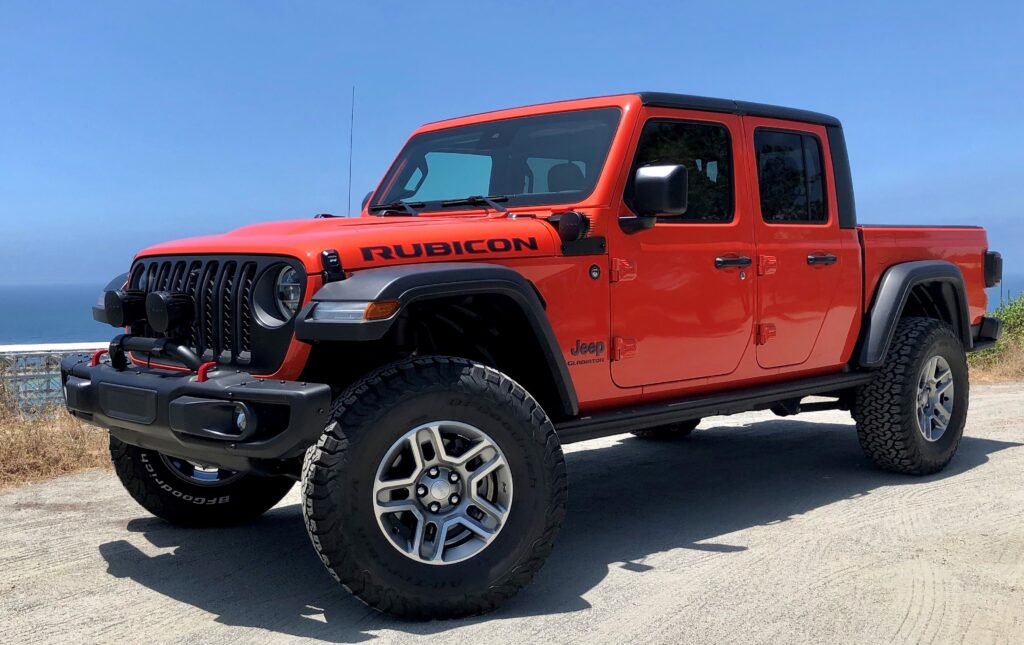
Starting at $45,370, the Jeep Gladiator Rubicon is the pinnacle of Trail Rated features for adventuring. But the Manufacturer’s Suggested Retail Price of a new vehicle is as vague as a stoplight in Boston — a suggestion, at best.
To spark some red mist for the buyer — while ratcheting up the cost — manufacturers have aggressively pursued their catalogs of personalization and performance accessories. If you can imagine it, it’s probably offered or will be.
A 2-inch lift kit, $1,495, to add bigger tires and wheels.
Jeep and Mopar have been masterful at providing factory-sanctioned upgrades that can be ordered with their new Jeep. And the upgrades are covered by the same new vehicle warranty protections.
Most new luxury cars or SUVs are bought with $10,000 in options or packages. And sometimes a package alone is $10,000, or more.
Fox 2.0 performance shocks are standard equipment on the Rubicon.
From unique paint colors to better leather, bigger wheels, lower-profile tires, crests, badges, colored seat belts, more gratuitous performance, LED lighting, and techno-marvelous infotainment systems to extended warranties, what the customer wants, the customer gets … for a price.
Jeep has long been a champion of choice with several versions of four-wheel-drive systems, soft and hard tops, street tires or adventure treads, audio and style perks.
And then there’s the Mopar catalog with more than 200 accessories. Mopar (MOtor PARts) is the parts, service, and primary accessory seller for Stellantis brands under the Mopar brand.
Katzkin leather seats, $1,750.
Jeep Performance Parts
Jeeps are basically a canvas and Jeep Performance Parts are the buyer’s paints for personalization. So far, there are 200 Mopar products available for the Gladiator.
I’ve just tested a Jeep Gladiator Rubicon, the top-line off-roader, that had $12,400 in Jeep/Mopar performance parts.
Rearview camera and front-facing trail cam, $595.
At $45,370 the Gladiator Rubicon is the pinnacle of Trail Rated features, including the 4:1 Rock-Trac heavy-duty four-wheel-drive system (with an Off-Road Plus mode), locking front and rear axles, disconnecting front stabilizer bar, steel rock rails, and an appetite for adventuring.
For those serious about getting there and back in demanding off-road adventures, this is the rig to consider. But access doesn’t come cheaply.
Decked truck-bed storage system, $1,295.Tri-fold hard tonneau cover, $950, and spray-on bedliner, $495.
With the Jeep Performance upgrades, by Chrysler FCA’s Mopar performance division, the tester had a sticker of $58,955, including the striking Punk’n Metallic paint ($245).
But there is a reprieve when buying new. The performance parts have the same basic, limited warranty as the vehicle — 3-years or 36,000-miles — and they can be rolled into the financing (with the cost of labor for parts installation).
Jeep-logo hood latches, $60.
The Jeep Gladiator Rubicon tester is a formidable pickup that includes city features. Commuters will value the adaptive cruise control with idle stop-and-go function in traffic and full-speed collision warning.
And this wide rig with a 44.8-foot turning circle benefited from the Jeep Active Safety Group, $895. The package adds blind-spot and cross-path detection and ParkSense rear park-assist system, which alerts to the nearness of an object.
Set of two 7-inch LED off-road lights, 8,000 lumens each, $725.Set of two 5-inch LED off-road lights, 4,800 lumens each, $475.
The 8.4-inch Uconnect infotainment touch screen is an upright and visible display for the rearview camera, with guidance lines. But it’s even better for the front-facing trail cam, $595.
JPP accessories
The tester also included $12,400 JPP accessories for:
A 2-inch lift kit lift, $1,495. Created by Jeep engineers and Fox shocks so owners can add bigger tires and wheels.
Military-grade 7-inch off-road LED lights, $725 two-light set. The lights have an 8,000-lumens output, each. Mounting brackets, $65
Tires. Mopar/FCA dealers have a “TireWorks program” that gives access to different tire brands. The dealer can source whatever brand, model, and size (up to 35 inches) the customer prefers depending on their intended use — whether on-road, off-road or a combination.
Black satin grille, $325
Heavy-duty rock rails, $950. To help slide across objects with high-centering potential. The heavy-gauge steel rock rails are thicker and wider than stock in a non-slip powder-coat finish.
Tri-fold tonneau system, $950.
Bed storage system, $1,295. A heavy-duty pair of lockable, sliding drawers (200-pound capacity) to secure gear, supplies and tools.
Seatback Molle design storage bags, $145 set of three.
Katzkin leather seats, $1,750. Embroidered with Jeep grille logo in Tungsten stitching.
Mopar grab handles, $39 each for first and second rows. hard-secured for increased grip.
T the Jeep Wrangler has long been forgiven for everything that made it a charming pain in the rough. But now, the redesigned 2018 Wrangler is a charmer, off-road or on main street. And the top-line Wrangler Rubicon is a standard-bearer of advanced technologies with its first use of a 48-volt mild-hybrid electrical system.
The 2018 redesign steered this symbol of “Don’t tread on me” from the endangered specie’s list, threatened by ever-increasing clean-air standards for engines and new safety regulations.
It is tougher and softer, in all the right ways making it the best performing Wrangler since the 1986-1995 YJ model with square headlights. The windshield still folds (with greater simplicity), the doors can still be removed and there’s still a manual hand-brake lever on the shifter console. But as with all new cars, it is the electronics technologies that are almost the bigger story of the redesign.
There are new engines, including a turbocharged four-cylinder with mild hybrid technology and an upcoming four-cylinder diesel in 2020. And the carryover V-6 is still the base engine.
The redesigned Wrangler still waves the flag of ‘Don’t tread on me.’
The JL Wrangler
Experienced Jeepers will know this new Wrangler, codenamed JL, from the first slam of the door. That’s when they will realize the doors don’t need to be slammed. And more soundproofing allows occupants to have a conversation without shouting — and that’s with the top up. There is still a mild maelstrom at highway speeds in the soft-top cabin, but it’s about a hundred decibels more tolerable.
The cockpit and driver area were completely reconfigured for a somewhat ergonomic arrangement. There are several stash areas and device-charging ports.
Even the two-door’s ride quality has been tamed.
Even the two-door’s ride quality is not a fearsome bucking bronco. The wider track lets the short-wheelbase model seem more free-wheeling and stable. And there is a much tighter turning circle now. Tighter turning is an asset off-road, but it is just one more engineering feat that makes the Wrangler ideal for the city, too.
The new boxed frame is much stiffer, which helps for stability when teetering among boulders or slogging through a highway commute. For anyone who knew a previous-generation Wrangler, refinement is not a word associated with any part of it.
Drafty, noisy, and rough riding were accepted parts of the lifestyle, but now we see that those qualities are not intrinsic to the concept.
Rubicon equipment includes remote locking, push-button ignition, rearview camera, and an 8-speaker Pioneer audio system.
Jeep Wrangler Pricing
There are three garden-variety levels of Wrangler in two- and four-door Unlimited models plus the trail-agility-champion Rubicon, and all have various levels of four-wheel drive.
Starting prices range from $29,440 for the entry two-door Sport to $39,790 for the four-door Sahara Unlimited. The top-line Rubicon starts at $39,440 and $42,940 two-door or four-door. Pricing includes the freight charge from Toledo, Ohio.
Braking is considerable from the large four-wheel discs.
Heavy-duty hardware
The two-door Rubicon tester was $49,555. That’s big money for a two-door Wrangler, but this one was the pinnacle of the line. It included Jeep’s most capable four-wheel-drive system with stability and rollover-mitigation controls.
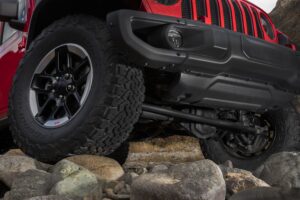
The Jeep Wangler tester also was equipped with heavy-duty, third-gen Dana 44 solid axles front and rear with Tru-Lock electronic locking. The high- and low-range Rock-Trac transfer case has a manual shift lever at the console and a 4.10 gear ratio. Hill-start assist is beneficial for controlled trail ascents or descents.
Braking is considerable from four-wheel vented discs. The front rotors are 12.9 inches with twin-piston calipers. The 13.4-inch rear discs have a single-piston caliper.
There are heavy-duty Dana 44 solid axles front and rear with Tru-Lock electronic locking.
Front and rear sway bars disconnect for more wheel travel. Gas-charged, multi-valve monotube shock absorbers help manage its husky 4,175-pound curb weight.
But being a Jeep means there is much heavy steel in the frame, differentials, and suspension. There are four steel skid plates to shield vulnerable elements such as the fuel tank, four-wheel-drive transfer case, and transmission). And tubular steel rock rails at the frame edge are a trail-riding essential.
Compensating for some of the Jeep Wrangler’s curb weight are high-strength aluminum doors, hinges, hood, fenders, windshield frame, and a magnesium swing gate.
Jeep Wrangler Powertrains
Fuel economy has never been a selling point for the upright Wrangler shape. The 285-hp, 3.6-liter V-6 (with auto stop-start at idle) still can be ordered with a six-speed manual transmission. It has mileage ratings of 17 mpg city, 23 highway 19 mpg combined on 87 octane. Two-door models have an 18.5-gallon tank and four-door models have 21.5 gallons.
Upgrading to the 270-hp, turbocharged and direct-injection 2.0-liter four-cylinder and the eight-speed automatic is a $3,000 upgrade. But it brings fuel economy ratings of 23/15/24 mpg; premium fuel is recommended but not required. And while the fuel economy isn’t a huge incentive, the power and acceleration can be brisk.
The two-door Jeep Wrangler Rubicon tester was $49,555 with many ‘on road’ conveniences.
eTorque technology
The new engine has Jeep’s so-called eTorque technology. The system applies hybrid functions of auto stop-start at idle, electric power assist, transmission shift management, intelligent battery charging, and regenerative braking. The engine and fuel flow can be turned off during stops, coasting, or when the engine is decelerating.
The electric motor gives a boost to the engine to get the rig moving and to smooth out shifts, Jeep says.
But inching forward for a foothold on a boulder might still require accelerator finesse to raise revs while awaiting the turbo to hit the peak 295 lb.-ft. torque at 3,000 rpm.
The 3.0-liter EcoDiesel engine (also with auto stop-start at idle) will be available in 2020 as an upgrade for four-door models. The engine has 260-hp but 442 foot-pounds of peak torque at a low 2,000 rpm and an eight-speed automatic.
Why buy the Jeep Wrangler?
The Wrangler is a cornerstone of Jeep heritage. The redesigned model is what happens when engineers and designers listen to owners and everybody works together.
SPECIFICATIONS
2019 Jeep Wrangler Rubicon
Body style: 2-door, 4-seat small SUV
Engine: 270-hp, turbocharged and direct-injection 2.0-liter 4-cylinder; 295 lb.-ft. torque at 3,000 rpm
Transmission: 8-spd automatic w/Rock-Trac 4WD
Fuel economy: 23/25/24 mpg city/hwy/combined; premium recommended, not required
BY THE NUMBERS
Ground clearance: 10.8 in.
Fuel tank: 18.5 gal.
Cargo space: 31.7-72.4 cu. ft.
Front head/leg room: 42.6/41.2 in. 42.6 in w/hardtop
Rear head/leg room: 40.2/35.7 in.
Length/wheelbase: 166.8/96.8 in.
Curb weight: 4,175 lbs.
Turning circle: 34.5 ft.
Tow capacity: 2,000 lbs.
FEATURES
Standard equipment includes: remote locking, push-button ignition, rearview camera, 8-speaker Pioneer audio system, 17-inch alloy wheels with 33-inch off-road all-terrain tires, locking front and rear Dana 44 axles, electronic front sway bar disconnect, steel rock rails, and skid plates,
Safety features include: 4 air bags, roll mitigation, trailer-sway damping, heavy-duty 4-wheel disc brakes, traction and stability controls
PRICING
Base price: $39,440, including $1,495 freight charge; price as tested $49,555
Options on test vehicle: black soft top $595; leather-trimmed bucket seats and premium door-panel trim $1,495; Cold weather group, $895, includes heated front seats, steering wheel; trailer tow group, $795, includes auxiliary switches and class II receiver hitch with 7- and 4-pin wiring harness; LED lighting, $895, includes reflector headlights, taillights and running lights; Uconnect 4C nav system, $1,495, includes GPS navigation, Alpine audio system and satellite radio; Active safety group, $795 adds ParkSensor rear park assist, blind-spot and rear cross-traffic alerts; 8-speed auto transmission $2,000; 2.0-liter engine $1,000; Premium black soft top $595


 The Ridgeline’s midcycle redesign features new exterior styling from the windshield pillars forward, including new fenders and hood, a squared off nose and upright grille. (Honda)


 The 2021 Chevrolet Trailblazer can be dolly-towed behind a motor home. (Chevrolet)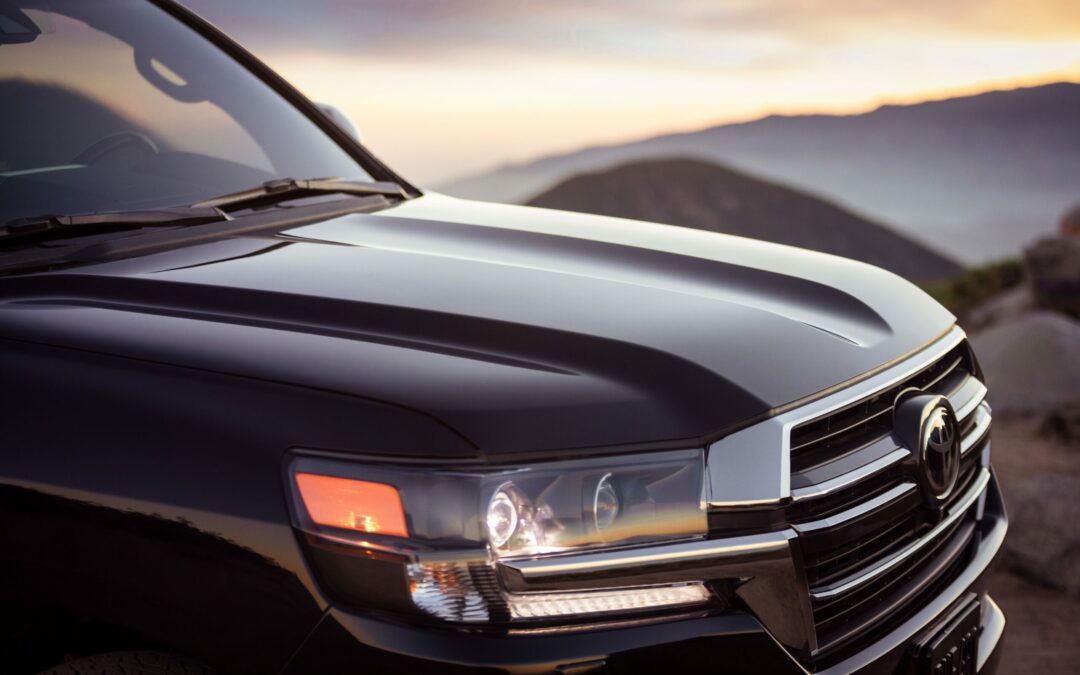




 Pedal kit, $105. All-weather (slush) floor mats, $165.


 Rubicon equipment includes remote locking, push-button ignition, rearview camera, and an 8-speaker Pioneer audio system.