Select Page

2026 Toyota RAV4 Overview

2026 Toyota RAV4 Overview

The king of the compact SUV hill evolves with an all-hybrid lineup, refined styling and materials, and a new high-performance RAV4 GR Sport
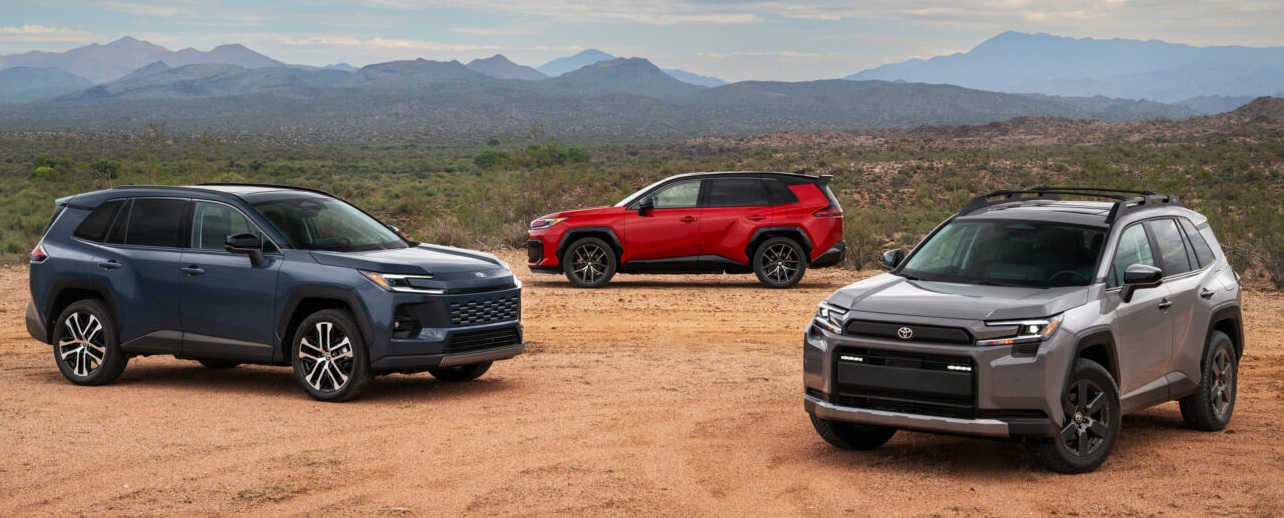
For 2026, the new RAV4 is offered in three exterior design treatment, emphasizing different lifestyles: Core, Rugged, and Sport.

The redesigned 2026 Toyota RAV4 is offered in three exterior design treatments, emphasizing different lifestyles: Core, Rugged, and Sport. (Photos courtesy of Toyota USA)

Jump To Special Features

3 RAV Personalities
2026 RAV4 Pricing
Battery and Hybrid Component Warranties
Hybrid and Plug-In Hybrid Powertrains
The New Digital Hub
The RAV4 By Grades
The RAV-ing Mad 324-hp GR Sport
Observations and Considerations
2026 Toyota RAV4 Limited AWD Specifications

BY MARK MAYNARD

Toyota appears to have gone all-in for the redesign and marketing of its 2026 RAV4, and for good reason. In the United States, 42 compact or subcompact SUV models were available for sale in 2025. The compact-class RAV4 is Toyota’s top-selling model. It was also the third-best-selling vehicle in the U.S. in 2025, behind the Ford F-150 (No. 1) and the Chevrolet Silverado.
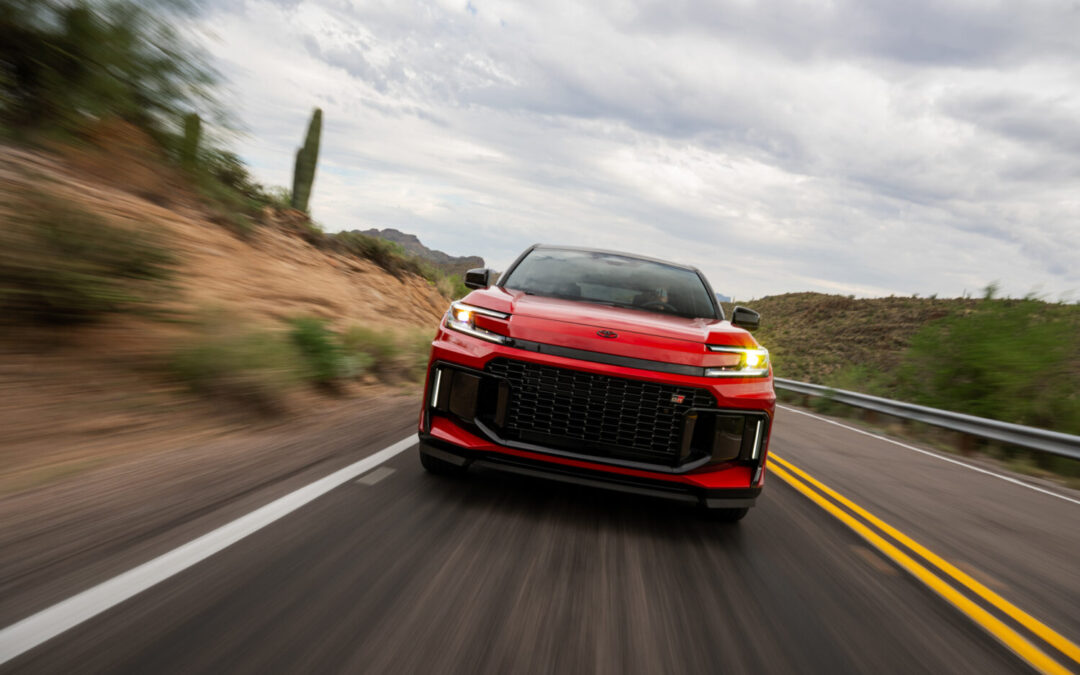
So, after three decades of dominating driveways and trailheads, the Toyota reworked the RAV4 from “rubber to roof.” It steps out with an all-hybrid lineup, including a 324-horsepower RAV4 GR Sport Plug-in Hybrid.

In a notable shift for the model line, all 2026 RAV4 Hybrid trims will be offered with front-wheel drive for the first time. Previously, the hybrid powertrain was paired with all-wheel drive in many configurations. Adding two-wheel drive boosts fuel economy and a lower starting price point.

Toyota expects a sales mix of 90 percent LE, XLE Premium, SE, XSE, and Limited grades. The remainder of the mix will fall to GR Sport and outdoorsy Woodland.

The 2026 RAV4 Hybrid models are now arriving at U.S. dealerships. The Plug-in Hybrid (PHEV) models will arrive this spring. U.S. RAV4 models are built in Georgetown, Ky. Batteries for North American-built models are increasingly supported by Toyota’s North Carolina battery plant.

Here is an overview of a RAV4 for which you might be shopping.
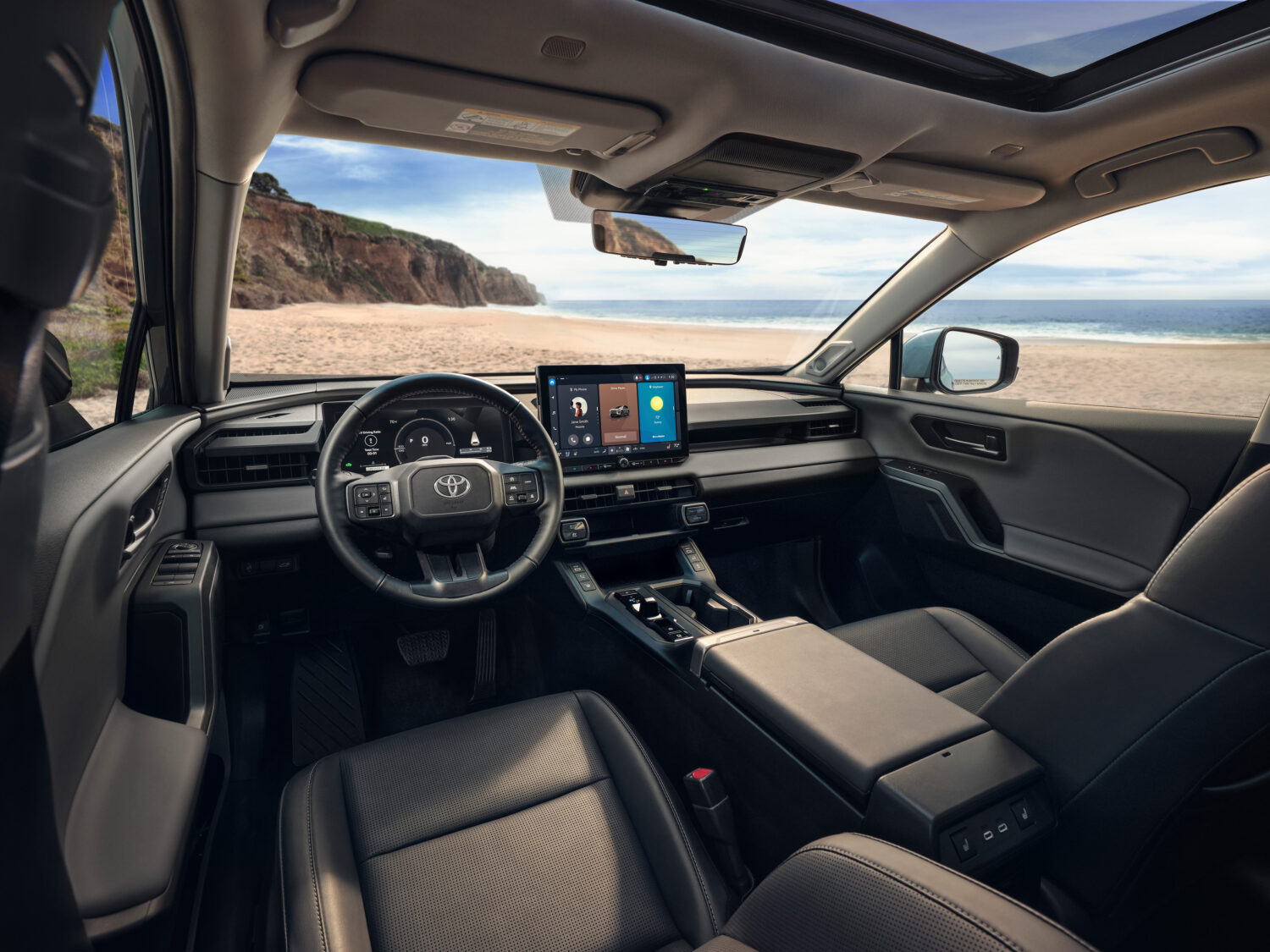
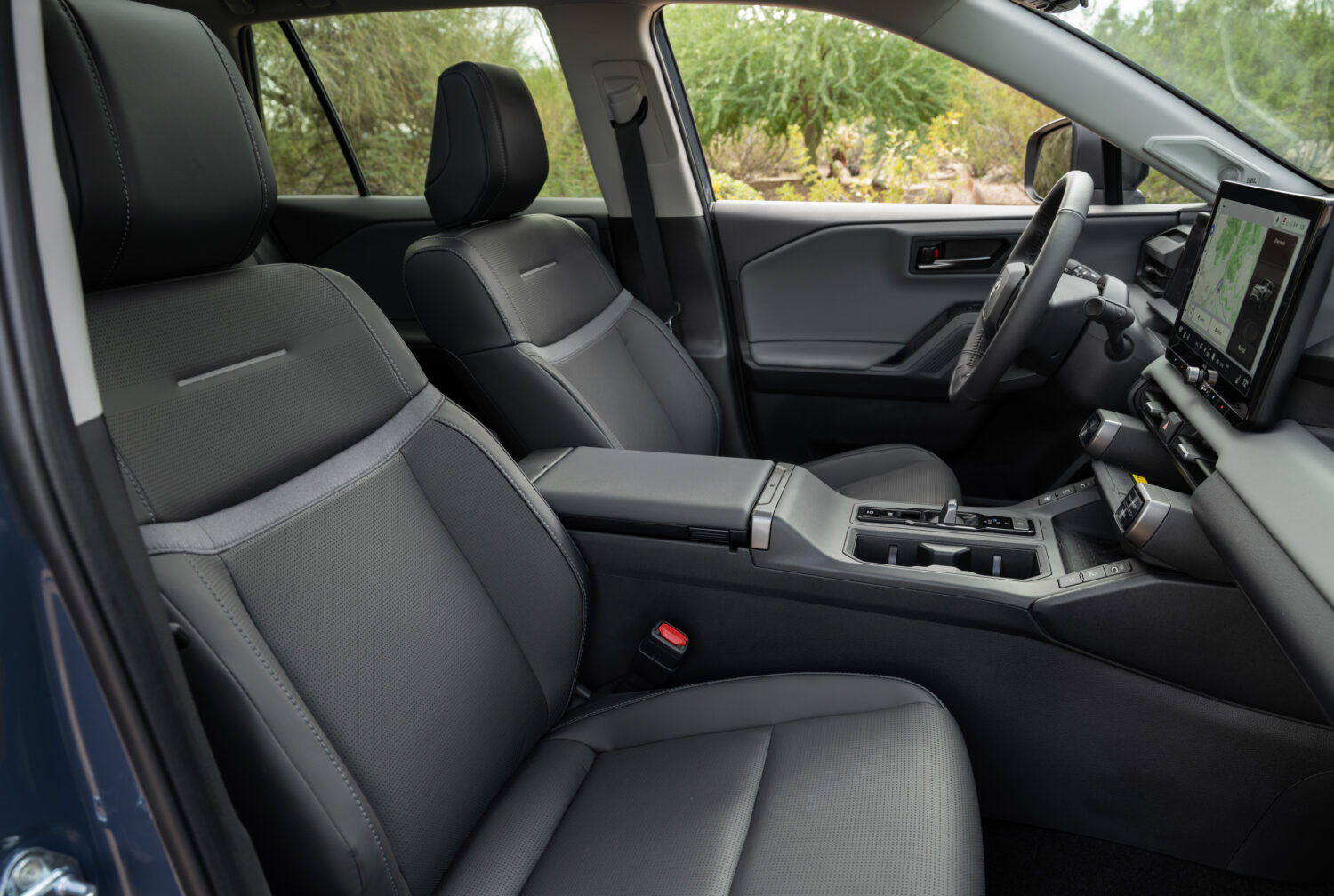
Seating materials and accents vary by grade to match the vehicle’s specific “personality.” A Storm Cloud Gray Limited model is shown.

Seating materials and accents vary by grade to match the vehicle’s specific “personality.” A Limited model is shown.

3 RAV Personalities

For 2026, the RAV4 offers three exterior design treatments aimed at different lifestyles: Core, Rugged, and Sport. All grades have standard Toyota Safety Sense 4.0.

Core: Designed for refined daily living, this includes the LE, XLE Premium, and Limited grades.

Rugged: Built for the trail, the new Woodland grade features the new Urban Rock exterior color and increased ground clearance of 8.6 inches (vs. 8.1 for standard grades).

Sport: Engineered for performance, this lineup includes the SE, XSE, and the first RAV4 GR Sport, only available as an AWD plug-in hybrid.

Woodland driving lights

Woodland driving lights.

2026 RAV4 Pricing

Toyota showed restraint in manufacturer retail pricing for the start of the 2026 model year. When freight is excluded, the 2026 RAV4 Hybrid LE AWD starts at the same price as the 2025: $31,900. However, the 2026 freight charge is now $1,450, up $55 from 2025.
Retail pricing below includes the $1,450 freight charge from Georgetown, Ky. Plug-in models are built in Japan; PHEV pricing will be announced in the first half of 2026.

2026 MSRP RAV4 starting prices, including freight charge:

  • LE FWD: $33,350
  • LE AWD: $34,750
  • SE FWD $36,150
  • SE AWD $37,550
  • Woodland AWD $41,350
  • XLE Premium FWD $37,550
  • XLE Premium AWD $38,950
  • XSE AWD $41,300
  • RAV4 Limited AWD $44,750
  • 2025 RAV4 Plug-in Hybrid SE $46,265, with AWD
  • 2025 RAV4 Plug-in Hybrid XSE $50,135, with AWD

Note: RAV4 GR SPORT pricing will be available in late February 2026.

Check current pricing and options here.
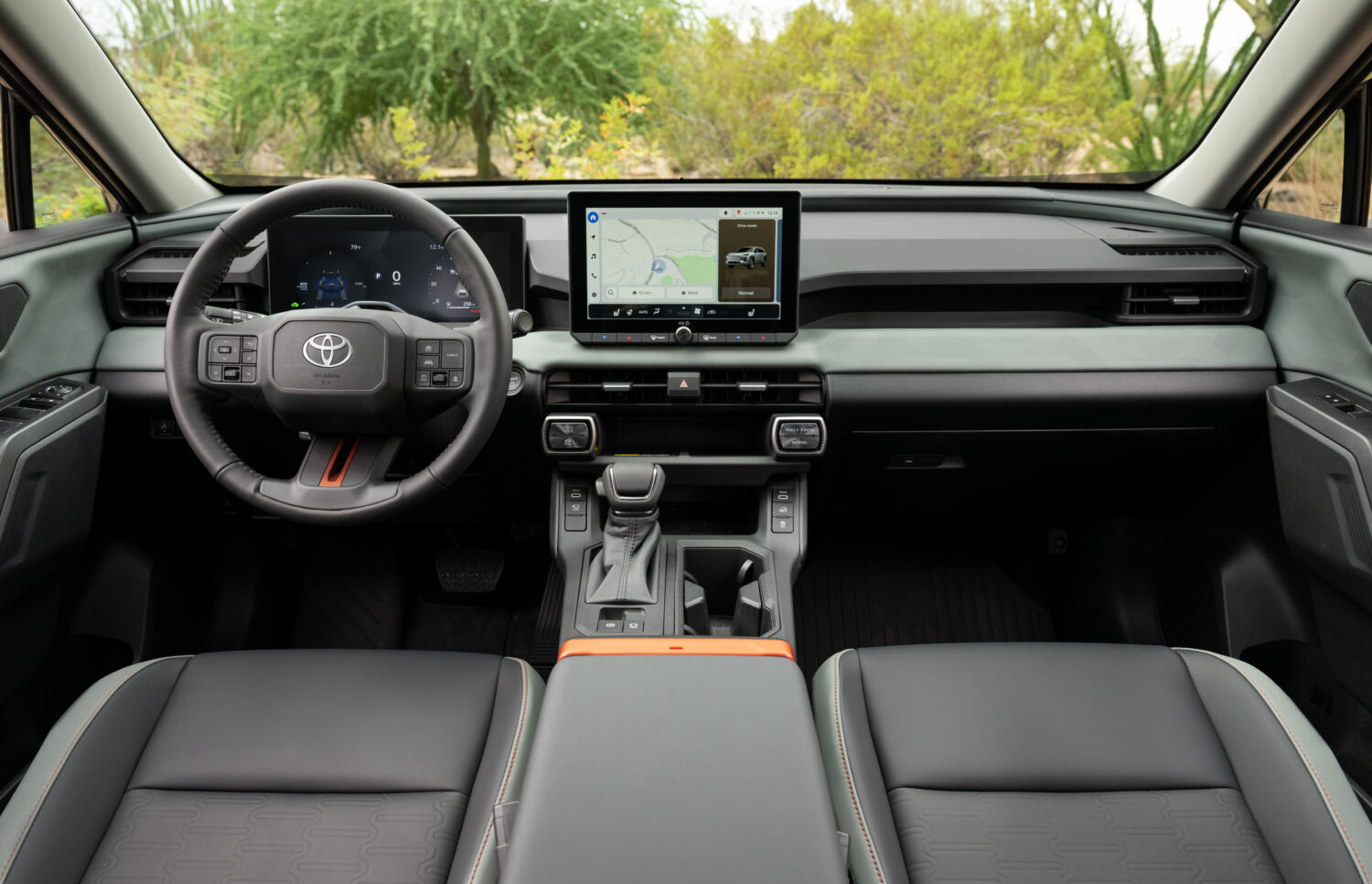
The exclusive Mineral SofTex interior of the Woodland with orange accents

The exclusive Mineral SofTex interior of the Woodland.

Expanded Color Palette

Toyota is also refreshing the visual lineup with 10 exterior color options, including four new distinct hues.

New Additions: Meteor Shower (metallic bronze-gray), Everest (dark green), and Storm Cloud (blue-gray), all at no cost.

 Exclusive Paint: The adventure-themed Woodland grade receives an exclusive (no cost) “Urban Rock” gray.

Two-Tone Options: The XSE grade adds a Meteor Shower with Black Roof combination ($500). GR Sport features a Supersonic Red with Black Roof pairing.

Carrying over for 2026 are Ice Cap, Wind Chill Pearl ($425), Midnight Black Metallic, Ruby Flare Pearl ($425), and Blueprint (deep midnight blue).

Interior colors are black SofTex, Light Gray SofTex, Harvest Beige SofTex (Limited only), or Mineral SofTex (Woodland only).
To blunt the transfer of noise and harshness to the cabin, high-damping adhesive has been applied to footwells and wheelhouses. Side mirrors and door seals have been reshaped to reduce wind noise.

To blunt the transfer of noise and harshness to the cabin, high-damping adhesive has been applied to footwells and wheelhouses. Side mirrors and door seals have been reshaped to reduce wind noise.

Battery and Hybrid Component Warranties

Toyota’s warranty coverage emphasizes long-term protection for new hybrid and plug-in hybrid components. For the powertrain and key battery systems, the limited warranty terms are extensive:

Hybrid Component Coverage: Coverage for hybrid components lasts up to 8 years or 100,000 miles, whichever comes first. This applies to repairs needed to correct defects in materials or workmanship.

Hybrid Battery Coverage: The core hybrid battery receives even longer protection, covered for 10 years or 150,000 miles, whichever comes first. This coverage is transferable to subsequent owners.

Powertrain Coverage: The conventional powertrain warranty remains at 60 months or 60,000 miles.

And the standard new-vehicle coverage:

Basic Warranty: 3-years/36,000-miles limited warranty covers all vehicle components except normal wear and maintenance items.

Corrosion Warranty: 60 months with no mileage limitation.

ToyotaCare: Normal factory-scheduled maintenance is covered for 2 years/25,000 miles. Roadside assistance is included for 2 years and unlimited mileage.
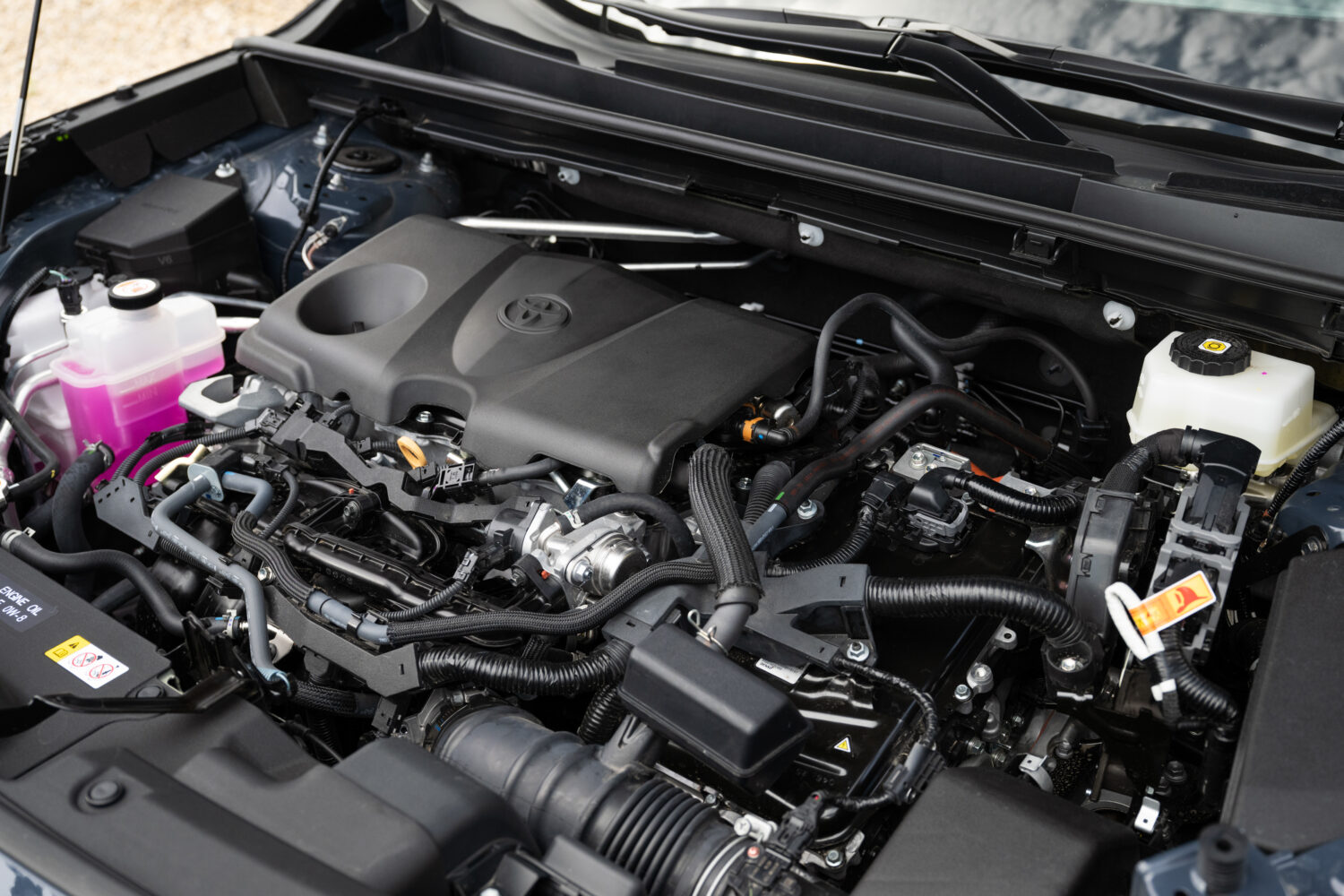
The 2026 RAV4 builds on the 5th Generation Hybrid (HEV) powertrain. It consists of a 2.5-liter inline-four gas engine with two motor-generators. The battery is a sealed lithium-ion of 247.5 volts and 4.1 ampere hour.

The 2026 RAV4 builds on the 5th Generation Hybrid (HEV) powertrain. It consists of a 2.5-liter inline-four gas engine with two motor-generators. The battery is a sealed lithium-ion of 247.5 volts and 4.1 ampere hour.

RAV4 Refined

Far from its 1996 origins as a Corolla-based compact, the 2026 Toyota RAV4 is much evolved for its sixth generation. Its exterior styling has a new “hammerhead” front end flanked by angular fenders and a contoured hood. The side profile shows a flat roofline and sculpted door panels. Creatively styled tech-forward LED signature taillights set off its wider, stouter rear end.

Size and Dimensions

The redesigned 2026 Toyota RAV4 maintains a similar footprint to the 2025 model. The 2026 model, however, is slightly heavier and wider because of its all-hybrid lineup and rugged features on some grades.

Exterior dimensions vary slightly by trim level, but the 2026 model retains the 105.9-inch wheelbase of the 2025 model. The turning circle grew by just 0.8 feet to 36.9 ft. curb to curb.

Length: Standard models remain at 180.9 inches, but Woodland and GR Sport trims are slightly longer at 181.8 inches due to aggressive bumper designs.

Ground Clearance: The 2026 Woodland Edition features a raised suspension with 8.5 inches of ground clearance, while the other hybrid trims have 8.1 inches;

Curb Weight Differences

Weight is the most notable change because Toyota has discontinued the gas-only engine for 2026.

2025 RAV4: The gas-only front-drive models were the lightest, starting at approximately 3,370 lbs.;

2026 RAV4: The base Hybrid front-drive model has a curb weight of 3,640 pounds, rising to 3,920 lbs. for the Limited AWD.
Interior Versatility;

Inside, Toyota says it has prioritized versatility. The cabin features a newly designed rear seatback that folds completely flat, maximizing cargo volume for larger hauls. Seating materials and accents vary by grade to match the vehicle’s specific “personality.”
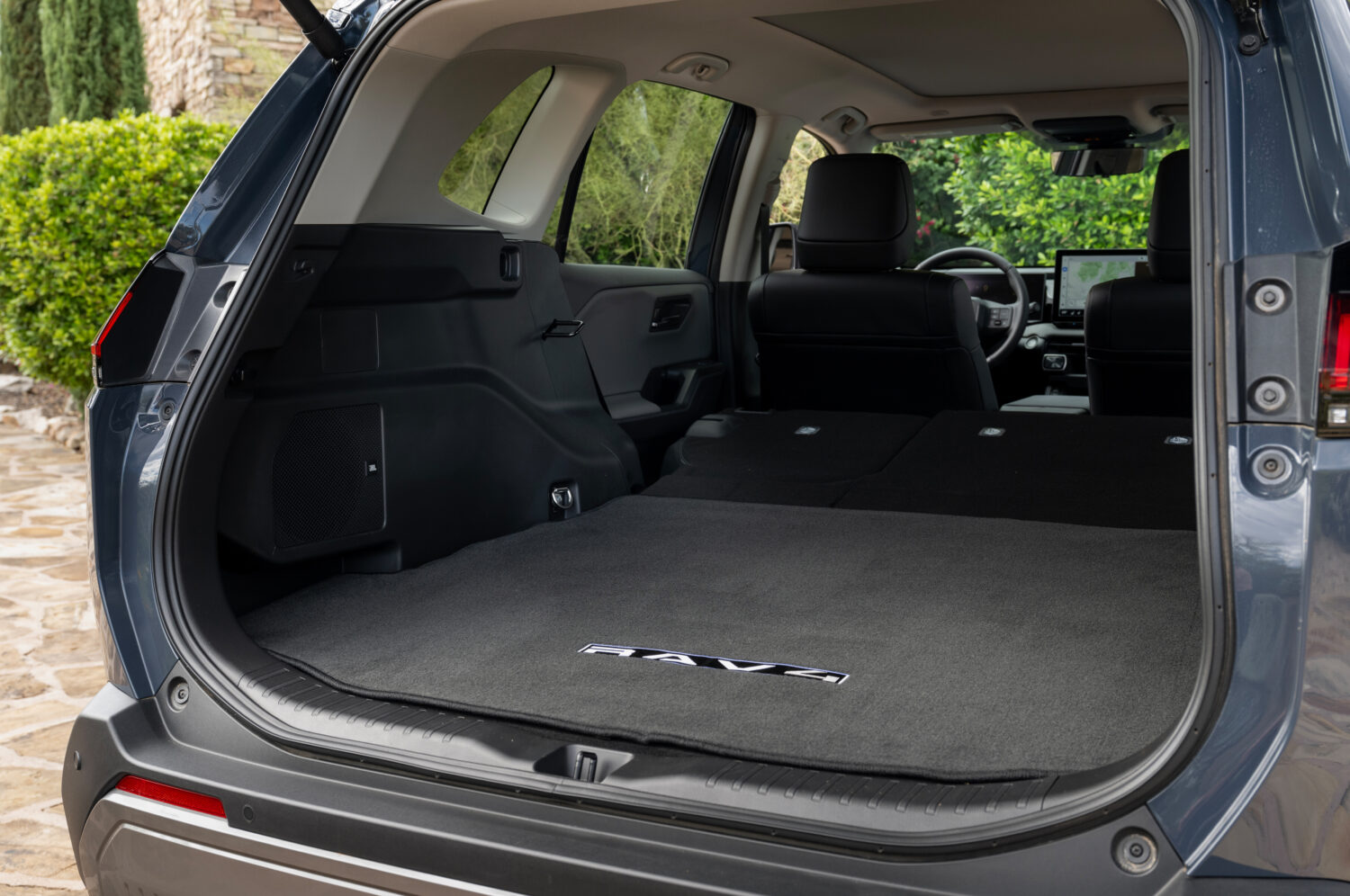
Interior Versatility

Inside, Toyota says it has prioritized versatility. The cabin features a newly designed rear seatback that folds completely flat, maximizing cargo volume for larger hauls. Seating materials and accents vary by grade to match the vehicle’s specific “personality.”

Interior utility remains nearly identical. Both generations offer roughly 37.6 cubic feet of space behind the second row and up to 69.8 cubic feet with the seats folded down.

Interior utility remains nearly identical. Both generations offer roughly 37.6 cubic feet of space behind the second row and up to 69.8 cubic feet with the seats folded down.

Cargo Capacity

Despite the redesign and new hybrid components, the interior utility remains nearly identical. Both generations offer roughly 37.6 cubic feet of space behind the second row and up to 69.8 cubic feet with the seats folded down.

Some grade levels of the new RAV4 have a height-adjustable deck board. Toyota also says the cargo opening has an expanded width of 4.9 feet at the entry.

Next-Gen Architecture

The 2026 RAV4 is built on the Toyota Next Generation Architecture-K (TNGA-K), a unibody platform. Toyota engineers have significantly increased frame rigidity by reinforcing suspension mounting points, the front cowl, and the A-pillars of the windshield.

To blunt the transfer of noise and harshness to the cabin, high-damping adhesive has been applied to footwells and wheelhouses. Side mirrors and door seals have been reshaped to reduce wind noise.

Driving dynamics were improved in several areas:

Retuned Suspension: Redesigned coil springs and shock absorbers for a flatter, smoother ride;

Aerodynamics: An active front aerodynamic spat adjusts based on speed and terrain;

Braking Innovation: A new electronically controlled brake system and Vehicle Braking Posture Control (VBPC) reduce body roll during cornering.
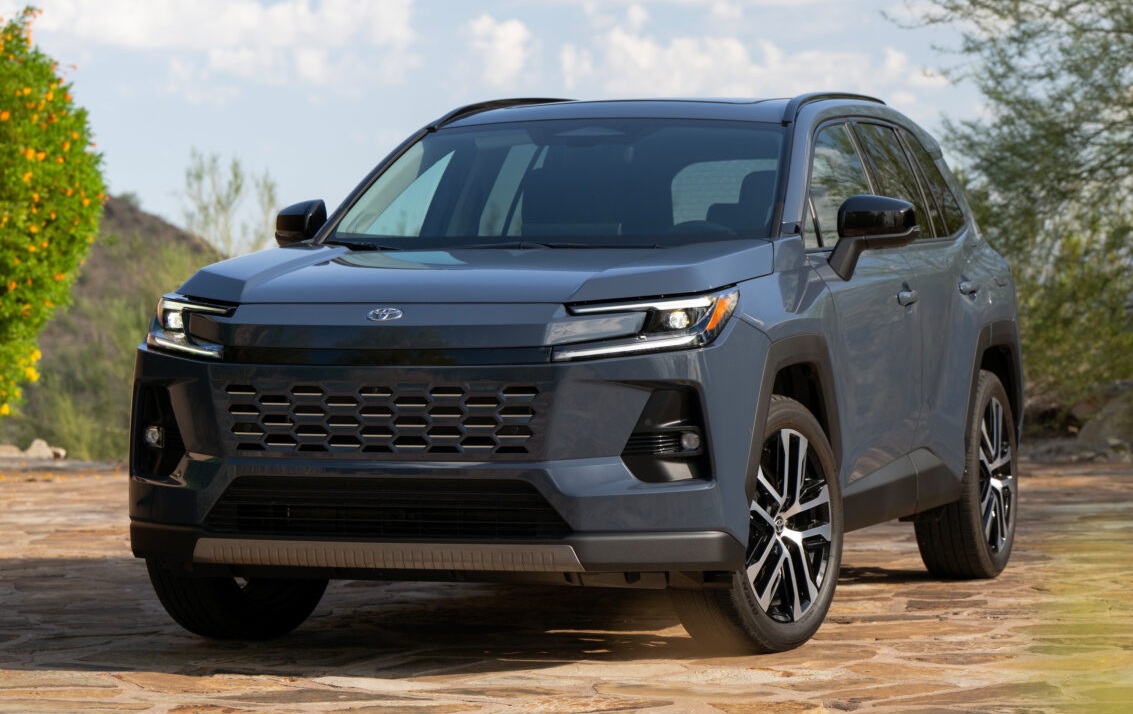
The 2026 RAV4 Hybrid in Storm Cloud gray.

The 2026 RAV4 Hybrid in Storm Cloud gray.

The Hybrid and Plug-In Hybrid Powertrains

The RAV4 builds on the 5th-generation Hybrid (HEV) powertrain, which has been substantially upgraded for 2026.
Engine: 2.5-liter inline-four with two motor-generators;

Transmission: Electronically controlled continuously variable automatic (ECVT) with sequential shift mode. Core grades have a traditional physical gear shifter; XSE and Limited grades have a new toggle switch shift-by-wire gear selector;

Battery: Sealed lithium-ion (Li-ion); 247.5 volts; 4.1 ampere hour;

Performance: 226 net combined hp with front-wheel drive, and 236 net combined hp with AWD. (2025 combined net hp was 219 with front-drive.);

Mileage: Up to 44 mpg combined for FWD, which compares to 40 mpg combined in 2025.

Hybrid Performance Modes

Every RAV4 has selectable drive modes, where hybrid or plug-in hybrid:

NORMAL: Factory default. All systems are calibrated for balanced, everyday driving.

ECO: Helps lower fuel consumption during trips that involve frequent acceleration and braking.

SPORT: Throttle and steering are more responsive, and transmission shifts at higher rpms.

CUSTOM: Adjusts vehicle systems to the driver’s preferred settings.

EV Mode: The RAV4 Hybrid EV mode enables battery-only driving for short distances at low speeds. How far depends on certain conditions, such as battery charge level. EV mode is useful for navigating parking lots and indoor parking garages, and for creeping along in commuter traffic.
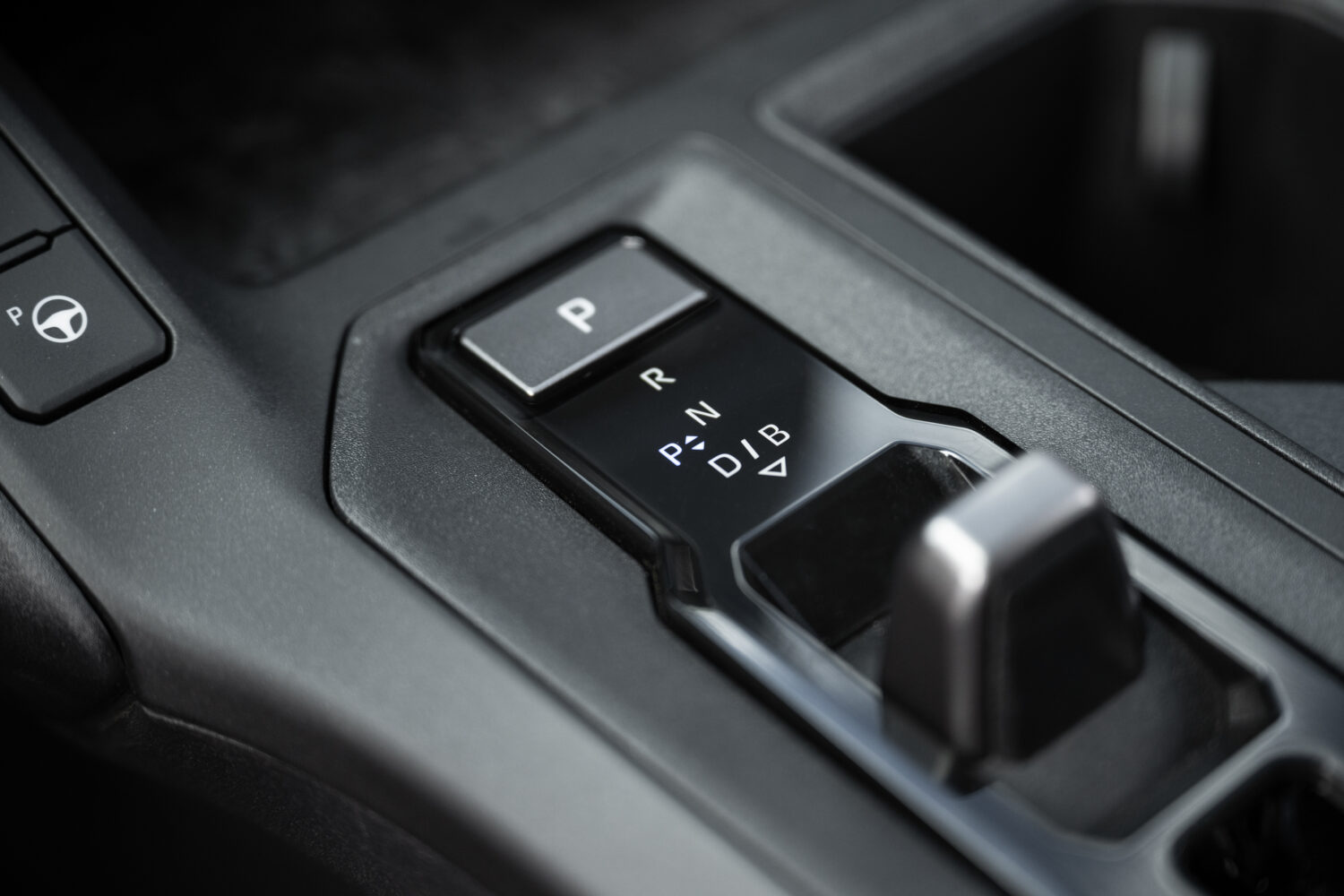
The Limited has a toggle switch shift-by-wire gear selector.

The Limited has a toggle switch shift-by-wire gear selector.

Electronic On-Demand AWD

The available electronic on-demand all-wheel drive system returns with sophisticated updates to power the rear wheels. Rather than heavy mechanical driveshafts, the RAV4 Hybrid and PHEV models use a high-output Interior Permanent Magnet (IPM) electric motor.

Intelligent Torque Distribution

Toyota’s so-called Intelligent Torque Distribution system is designed to be proactive rather than reactive. Using data from wheel speed sensors, steering inputs, and throttle position, the system preemptively distributes torque to the rear axle.

According to Toyota, the system creates precise electronic control over front-rear torque distribution. Doing so allows the RAV4 to instantly adapt to slippery road conditions or spirited driving without driver intervention.
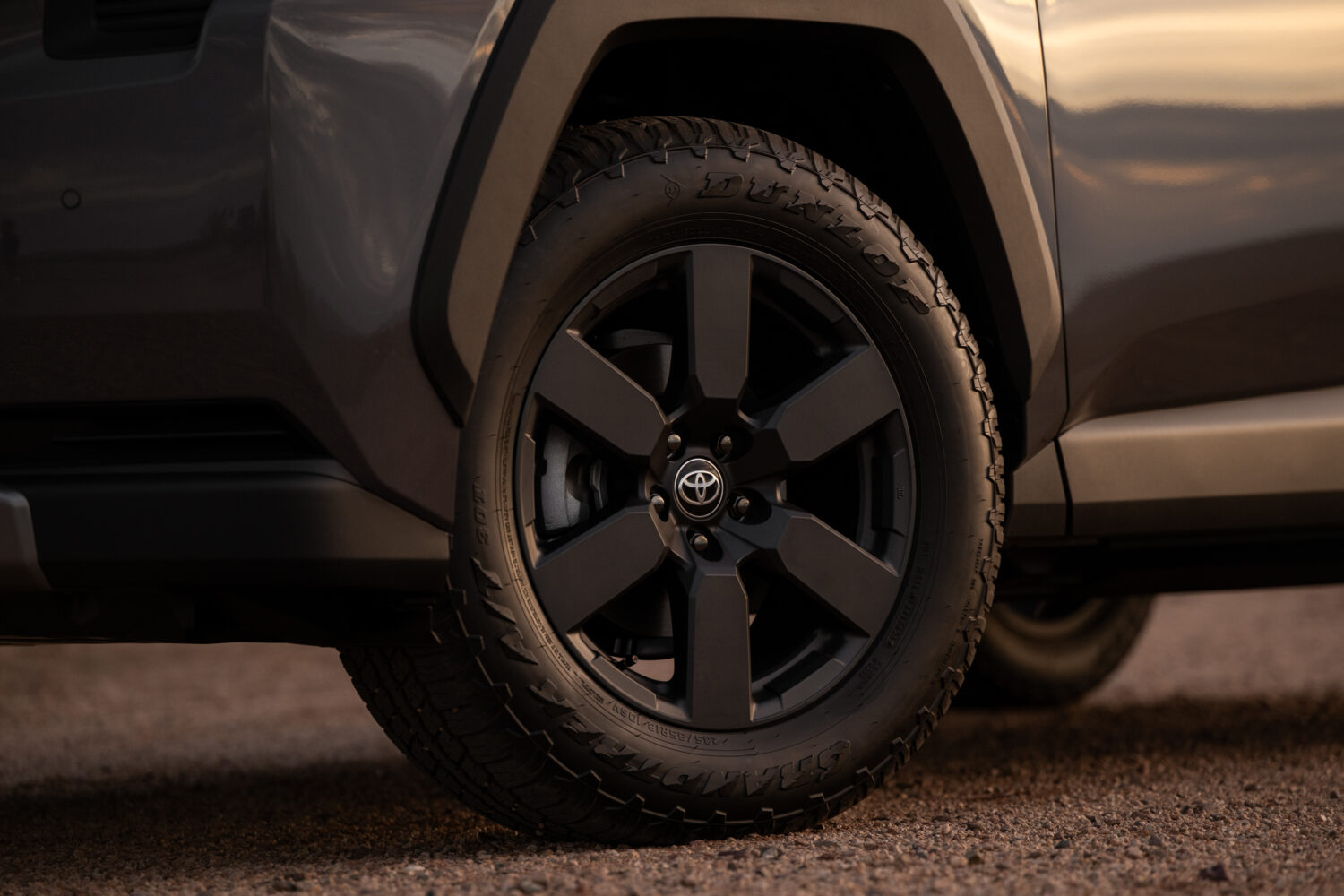
The RAV4 Woodland has Dunlop GrandTrek all-terrain tires on 18-inch matte metallic gray alloy wheels.

The RAV4 Woodland has Dunlop GrandTrek all-terrain tires on 18-inch matte metallic gray alloy wheels.

6th Generation Plug-in Hybrid (PHEV)

The heart of the plug-in hybrid system is the 2.5-liter four-cylinder engine, two front electric motors, and a rear motor. The result is a substantial jump in power: a net combined 324 horsepower. The electric drive motor (MG2) contributes 203 horsepower and 201 foot-pounds of torque. The rear motor adds another 91 lb.-ft. To support the added power and torque, Toyota uses silicon carbide semiconductors in the front axle. This bit of technology is used to miniaturize components and reduce energy loss.

Performance: 324 net combined hp (a 22-hp increase), but with as yet-unstated 0-60 mph acceleration;

EV-Driving Range: A 23 percent increase in all-electric driving range, now up to 52 miles on a charge. Due to its heavier weight, the Woodland grade has an estimated EV range of 49 miles and a combined 38 mpg. The performance-tuned GR Sport delivers 48 miles of EV range and 37 mpg combined, using 87 or higher octane fuel.

Mileage: Up to 41 mpg combined in hybrid mode.
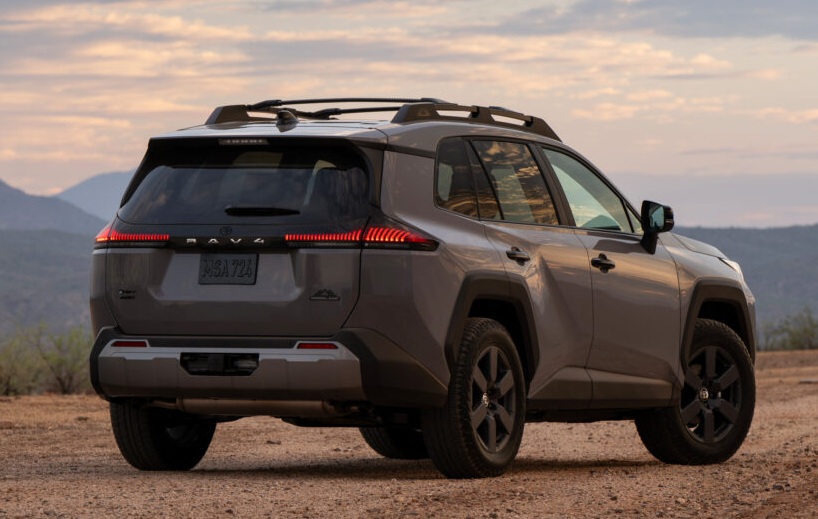
The RAV’s wider, stouter rear end is accented by tech-forward LED taillights.

The RAV’s wider, stouter rear end is accented by tech-forward LED taillights.

PHEV DC Fast Charging

Perhaps the most significant 2026 upgrade is the introduction of DC fast charging, a feature uncommon in plug-in hybrids. XSE and Woodland grades have an 11-kW onboard DC fast charger. Charging from 10 percent to 80 percent takes around 30 minutes, Toyota says. SE and GR Sport use a 7-kW charger with a standard J1772 port. Level Two charging (240 volt) will take approximately 4 hours to reach 80 percent capacity.

All models will include a dual-voltage charging cable compatible with standard 120v and 240v home outlets.

The New Digital Hub

The new 2026 RAV4 debuts Toyota’s most advanced connectivity and safety suite to date, Toyota says. Connectivity features integrate 5G network connectivity and debut the brand’s all-new, software-defined vehicle platform. Toyota calls it a fundamental shift for a fully integrated digital hub between the owner’s smartphone and digital life.

Next-Gen Multimedia and Arene Software, developed in North America, are the latest Toyota Audio Multimedia systems. Using AT&T’s 5G network, the software system allows Toyota to push over-the-air updates to improve safety features and infotainment. Updates will keep coming even after the car has been sold. The system uses a smartphone-like interface, customizable widgets, and an enhanced “Hey Toyota” voice assistant. Toyota says commands are processed more quickly than before.

Toyota’s safety and entertainment features have significant upgrades:

Drive Recorder: The standard built-in Drive Recorder functions as an integrated dashcam. Exterior cameras to capture 20-second clips of manual or triggered events;

Navigation: The turn-by-turn navigation system can now display full-screen directions in the digital gauge cluster, a first for Toyota Audio Multimedia;

Entertainment: Connectivity is enhanced with SiriusXM with 360L and newly available integrated streaming for Spotify (with a subscription);

The system includes standard wireless Apple CarPlay and Android Auto compatibility, as well as simultaneous dual Bluetooth phone connectivity.
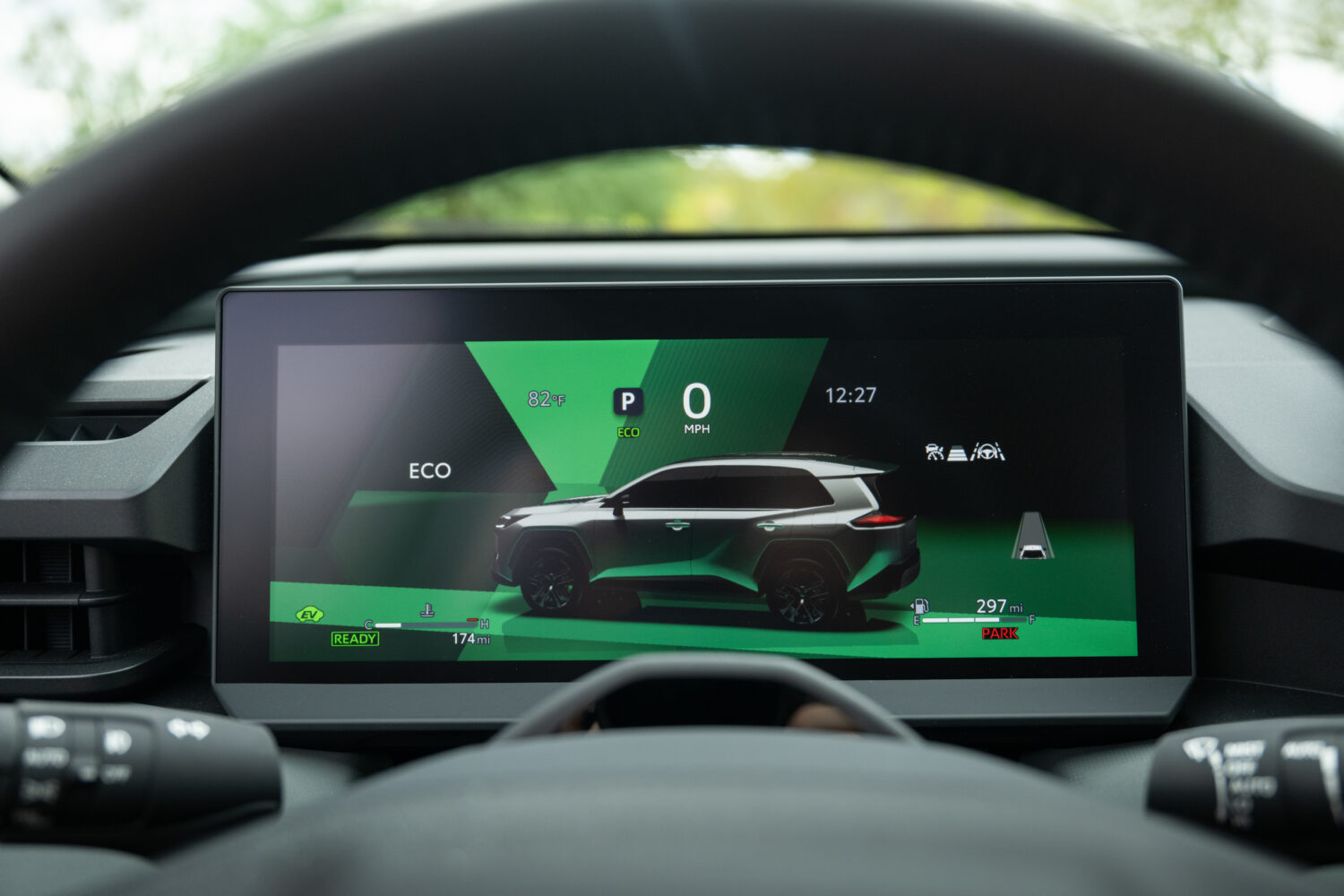
The Woodland has a 3D panoramic view monitor with multi-terrain monitor.

The Woodland has a 3D panoramic view monitor with a multi-terrain monitor.

Toyota Safety Sense 4.0

In addition to eight air bags, every 2026 RAV4 is equipped with the updated Toyota Safety Sense (TSS 4.0) suite. The system was updated with hardware improvements and enhanced detection capabilities. TSS 4.0 technologies include:

Proactive Driving Assist (PDA): Provides gentle braking and steering support for distance control in traffic;

Pre-Collision System with Pedestrian Detection (PCS w/PD): Enhanced detection of vehicles, pedestrians, bicyclists, and motorcyclists;

Full-Speed Range Dynamic Radar Cruise Control (DRCC): Adaptive cruise control capable of operating across the full speed range;

Lane Tracing Assist (LTA): To help keep the vehicle centered in its lane while using DRCC;

Road Sign Assist (RSA): Reads and displays road signs, such as speed limits.

Among other standard safety features are a blind-spot monitor with rear cross-traffic alert and a rear-seat reminder system. RAV4 options include a panoramic view monitor and front and rear parking assist with automatic braking.

Drivers will find the standard built-in dashcam and full-screen navigation useful.
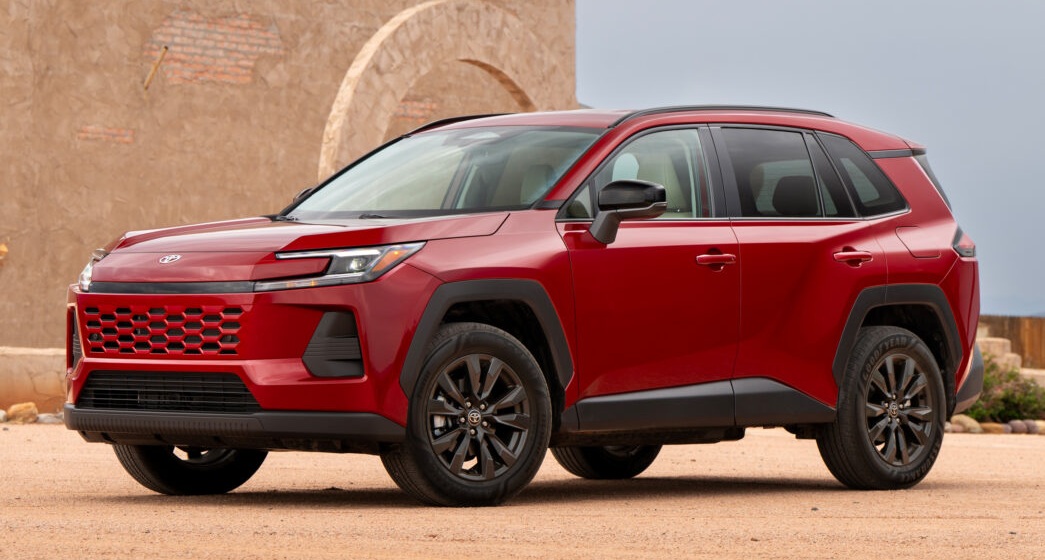
The XLE Premium adds more luxury features and dramatically increases the maximum AWD towing capacity to 3,500 pounds. Ruby Flare Pearl paint, shown on this RAV4, is a $425 upgrade.

The XLE Premium adds more luxury features and dramatically increases the maximum AWD towing capacity to 3,500 pounds. Ruby Flare Pearl paint, shown on this RAV4, is a $425 upgrade.

The RAV4 By Grades

Toyota is targeting mass-market appeal with the RAV4 “Core” models, which include the LE, XLE Premium, and Limited grades. These trims establish a new baseline for the segment, making the hybrid-electric powertrain standard across all three models.
Exterior Core design emphasizes classic SUV proportions with an elevated ride height and color-matched grilles. Standard exterior features on the base LE grade include 17-inch alloy wheels, low-profile roof rails, and Satin Black lower cladding and mirrors. LED projector headlights with DRL (Daytime Running Light) functionality are standard.

Significant Core grade technologies include:

Display: A standard 10.5-inch Toyota Audio Multimedia display is paired with a 12.3-inch digital gauge cluster (a size previously reserved for higher grades);

Connectivity: The LE has three USB-C charging ports and a media port in the center console.

Convenience: Standard features include push-button start, a tonneau cover for the cargo area, and fabric-trimmed seating.
Among the Toyota Safety Sense features are a backup camera with dynamic guidelines and a blind-spot monitor with rear cross-traffic alert.

Luxury Rises: RAV4 XLE Premium and Limited

Stepping up from the base LE, the RAV4 XLE Premium and Limited grades have a more luxury-focused interior. With AWD,

XLE Premium: The mid-tier XLE Premium grade with the standard hybrid powertrain has an increased AWD tow rating of 3,500 pounds. Other features include:

  • SofTex-trimmed seats with an eight-way power adjustable driver’s seat and standard heated front seats.
  • Leather-wrapped shift knob and steering wheel.
  • A Qi-compatible wireless phone charger and a total of five USB-C charging ports (front, console, and rear).

Exterior standard enhancements include 18-inch alloy wheels, a power liftgate, and heated, piano-black rearview mirrors with turn signal indicators. A helpful safety feature adds front and rear parking assist with automatic braking.

RAV4 Limited

The flagship luxury grade includes all-wheel drive and has a manufacturer-estimated combined fuel economy rating of 42 mpg. The Limited focuses heavily on luxury and distinct styling. The exterior is dressed up with a color-keyed grille in Satin Chrome and silver-painted lower bumper valances (front and rear). A revised rear spoiler has Piano Black sides.

  • Upgraded LED headlamps have distinctive LED DRLs (Daytime Running Lights) with integrated turn signals. LED front fog lights are standard.
  • A standard power tilt and slide panoramic glass roof and a hands-free power liftgate.
  • Power side mirrors are upgraded with a puddle lamp and camera functions.
  • Limited Grade Interior Features
  • 12.9-inch Toyota audio multimedia;
  • Nine-Speaker JBL audio with amplifier and subwoofer;
  • SofTex-trimmed seats with power eight-way adjustable front seats for driver and passenger;
  • Heated and ventilated front seats;
  • Heated rear window seats;
  • Toggle switch shift-by-wire gear selector;
  • Leather-wrapped heated steering wheel;
  • Digital rearview mirror with HomeLink garage door opener;
  • 5 USB-C Ports: 2 front USB-C charging ports, one center console media and charging port, and two rear USB-C charging ports;
    2 Qi-compatible wireless phone chargers;
  • Windshield deicer;
  • Automatic rain-sensing windshield wipers.
  • Limited Grade Safety Features

Toyota Safety Sense 4.0 with advanced driver assist systems, including:

  • 3D panoramic view monitor;
  • Advanced Park;
  • Front cross-traffic alert;
  • Lane change assist;
  • Traffic Jam Assist (requires an active Drive Connect trial or subscription, 1-year trial included).
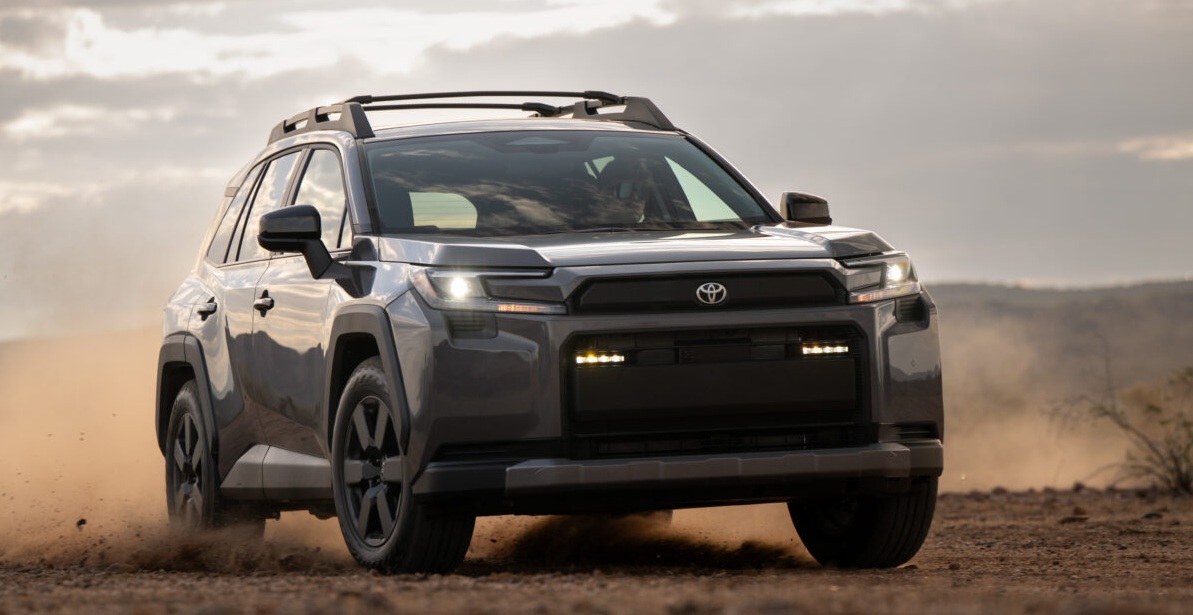
New exterior styling is punched up with a “hammerhead” front end, flanked by angular fenders and a contoured hood.

New exterior styling is punched up with a “hammerhead” front end, flanked by angular fenders and a contoured hood.

The Woodland Grade

For camping enthusiasts and off-road adventurers, Toyota offers the updated Woodland grade. A few specific engineering upgrades add to the capability and increased utility:

  • Ground clearance is increased to 8.5 inches for improved trail driving;
  • Dunlop GrandTrek All-Terrain Tires mounted on unique 18-inch matte metallic grey alloy wheels. (Note: a full-size spare tire is not available.);
  • Standard 2-inch rear tow hitch receiver with a wiring harness and a towing capacity of 3,500 pounds;Other Woodland Designs include:
  • Satin Black “hammerhead” grille;
  • Wide Satin Black overfenders;
  • Unique raised roof rails with cross bars.

Exclusive to the Woodland is the new Urban Rock exterior color.

Woodland Interior Features

  • SofTex-trimmed seats and an exclusive Black and Mineral color option.
  • Functional features for outdoor activities include:
  • A 120V 1500-Watt AC power outlet in the rear cargo area;
  • Red-Orange interior accents, including contrast stitching on the steering wheel and center console lid;
  • Woodland-branded all-weather floor mats and cargo mat are standard.

Woodland Safety and Driver Assistance

Along with the full suite of Toyota Safety Sense (TSS 4.0), the Woodland also gains several advanced driver assist systems:
Front and rear parking assist with automatic braking;

  • 3D panoramic-view monitor with multi-terrain mode. (It functions as a “virtual spotter,” providing real-time views of the ground and obstacles immediately surrounding the RAV4.);
  • Front cross-traffic alert and lane change assist. (When the system is engaged, the vehicle will provide steering input to physically move the car into the adjacent lane once it determines the path is clear;
  • Traffic Jam Assist (available via Drive Connect subscription).

Sport Grade Lineup

The 2026 RAV4 SE and XSE Sport grades have a mildly athletic appearance with dark chrome trim and blacked-out components. The SE features 18-inch multi-spoke black sport alloy wheels, Piano Black overfenders and rocker panels, and dark chrome grille accents. The interior features fabric-trimmed sport seats with blue stitching accents. AWD models have a 3,500-pound towing capacity, up from 1,750 lbs. for front-drive models.

The base SE grade is available with front- or all-wheel-drive powertrains: a 226-hp FWD or a 236-hp AWD. AWD is standard for the SE plug-in model.

SE PHEV Highlights: 324 net combined horsepower, a 52-mile all-electric range, and a 7-kW onboard AC charger.

Sport XSE Grade: The performance flagship XSE has standard AWD with either powertrain. The XSE can be optioned with two-tone paint (black roof) and larger 20-inch multi-spoke black sport alloy wheels. Also standard are a power moonroof and LED headlamps with distinctive DRLs.

Charging Advantage (XSE PHEV): The XSE PHEV upgrades to an 11-kW onboard AC charger and adds DC charging capability, significantly speeding up charging times.

RAV4 XSE Sport Interior

Inside, the XSE has premium Ultrasuede and SofTex trimmed seats, with heated and ventilated front seats. The front seats are power-adjustable with memory and a standard 12.9-inch Toyota audio multimedia display.

Convenience features include a hands-free power liftgate and an auto-dimming rearview mirror with HomeLink. The PHEV model can also be optioned with a 120-volt, 1500-watt AC power outlet in the cargo area.

Both Sport grades add a 3D panoramic view monitor, trailer sway control, front cross-traffic alert, and lane change assist. Traffic Jam Assist is available via subscription.
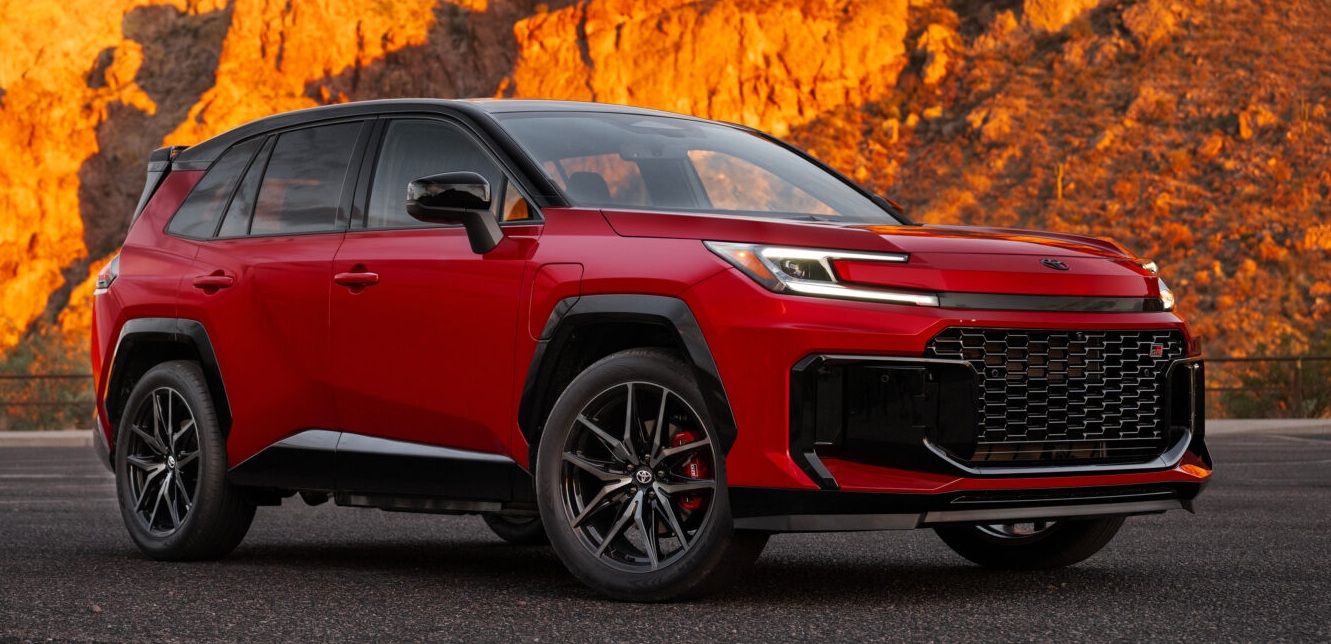
To differentiate the GR Sport from the standard RAV4 lineup, engineers focused on chassis rigidity and handling response.

To differentiate the GR Sport from the standard RAV4 lineup, engineers focused on chassis rigidity and handling response.

The RAV-ing Mad 324-hp GR Sport

With engineering from (Toyota) Gazoo Racing, the RAV4 GR Sport might be a helluva lotta fun. The performance icon traces its roots to Toyota Chair Akio Toyoda’s participation in the 24 Hours of Nürburgring. For a road-going SUV, GR engineers built on the endurance experience with hardware, lightweighting, and finesse.

More than an aesthetics package, the RAV4 GR Sport brings genuine mechanical enhancements to sharpen handling and driving dynamics. The model is available exclusively with the high-output plug-in hybrid powertrain.

With 324 horsepower, the GR Sport achieves a manufacturer-estimated 37 mpg combined rating and an all-electric driving range of 48 miles.
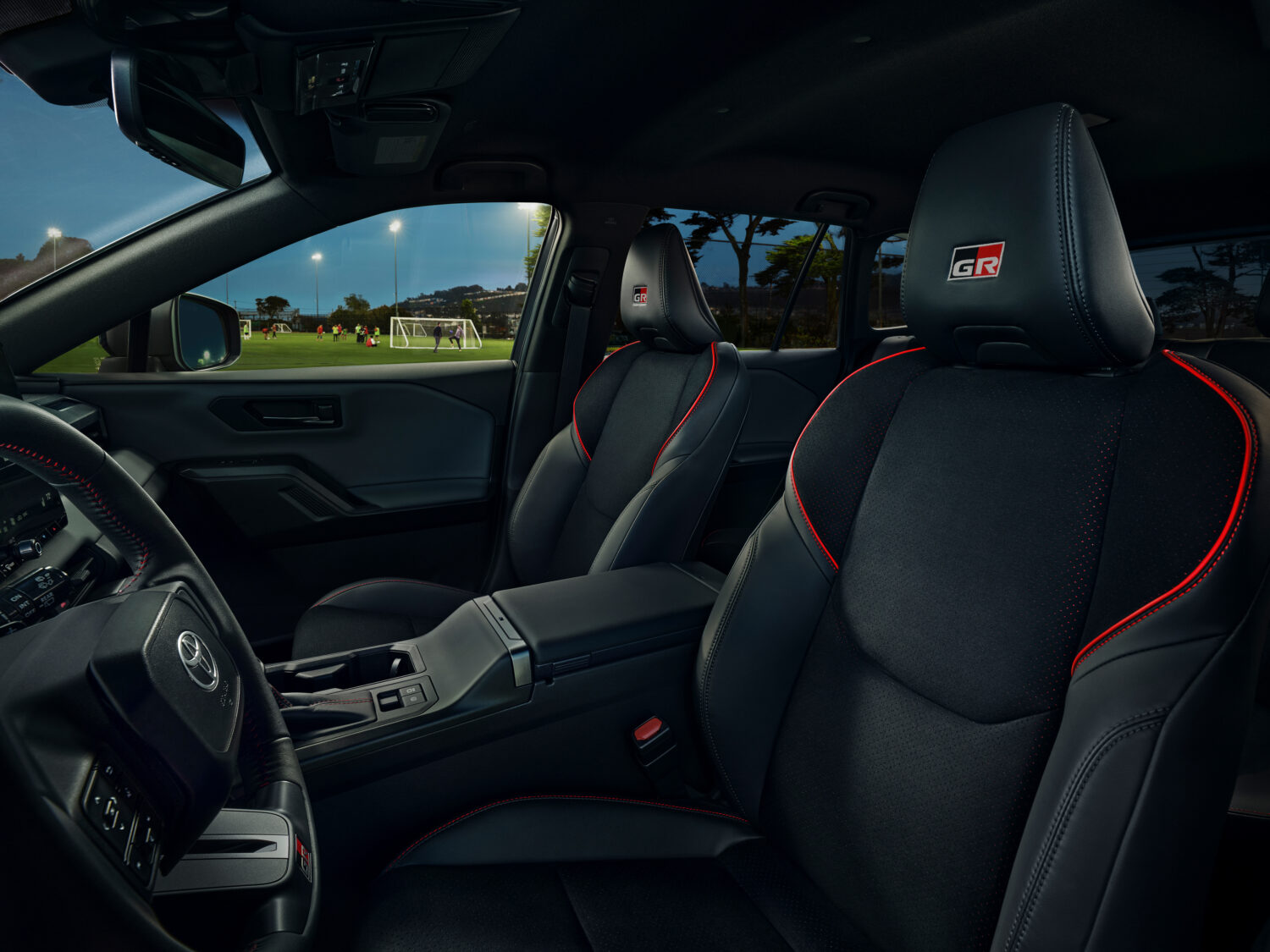
Wider bolsters hold occupants in place during a back-country run.

Wider bolsters hold occupants in place during a back-country run.

GR Sport Chassis and Suspension

To differentiate the GR Sport from the standard RAV4 lineup, engineers focused on chassis rigidity and handling response. Key mechanical updates include:

Tuned Suspension: Dedicated damper tuning, stiffer coil springs, and a front performance damper;

Lower Center of Gravity: The ride height has been lowered by 15mm (0.59 inch), resulting in 7.5 inches of ground clearance. Also, the placement of the hybrid battery was optimized for stability;

Reinforced Frame: The rear suspension cross-member is reinforced to stiffen the chassis;

Performance Tires: The GR Sport rides on offset 20-inch wheels with Dunlop Sportmaxx summer performance tires. The lightweight wheels are approximately 4.8 pounds lighter compared to the standard XSE model.
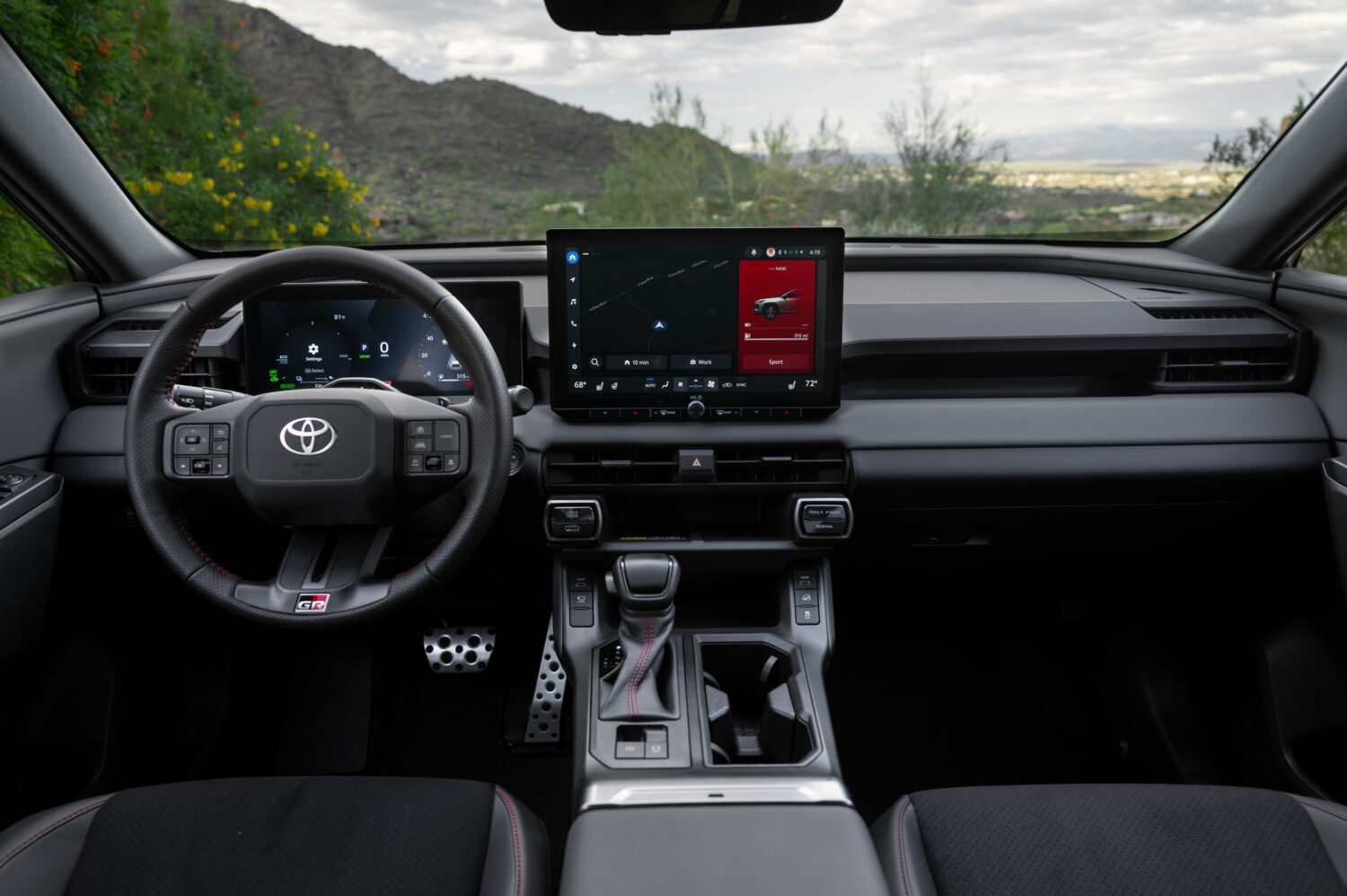
The GR Sport interior has “Brin Naub” synthetic suede and SofTex sport seats.

The GR Sport interior has “Brin Naub” synthetic suede and SofTex sport seats.

GR Sport Functional Aerodynamics

The exterior design changes are functional rather than purely cosmetic. The front fascia features a “GR Functional Matrix Grille” with active cooling ducts to manage airflow. A front lip spoiler, rear wing spoiler, and rear diffuser all help to balance downforce and reduce drag. The vehicle’s track is slightly wider due to aggressive fender flares, adding one inch to the overall width.

GR Sport Interior Appointments

Inside, the cabin reflects the GR brand’s motorsport heritage. The interior features “Brin Naub” synthetic suede and SofTex sport seats. Wider bolsters hold occupants in place during a backcountry run.

A 12.3-inch digital gauge cluster offers an exclusive GR start-up screen, while the leather-wrapped steering wheel includes sport paddle shifters.

The plug-in hybrid engine in the GR Sport has a net combined 324 horsepower. The system delivers 48 miles of EV range and 37 mpg combined, city and highway.

The plug-in hybrid engine in the GR Sport has a net combined 324 horsepower. The system delivers 48 miles of EV range and 37 mpg combined, city and highway.

Observations and Considerations

Though I have not yet driven any of the 2026 RAV4 grades, they all look good on paper. I like that the base 2026 RAV4 LE is still an economical choice for long-term reliability and reduced maintenance costs. Its features will be quite acceptable for many buyers, without feeling dumbed down. All-wheel drive can be added for $1,400.

Built-in drive recorder: Of interest is the new built-in drive recorder (on all grades), which captures video from exterior cameras. No more having to buy the optional CarMate camera systems, saving up to $570.

A high-performance Toyota RAV4?

I don’t know who asked for a high-performance RAV4, but their wish is granted. Coming online this spring will be the 324-hp 2026 RAV4 GR Sport. I look forward to a test drive to grab this rascal by the scruff of the neck and make its high-performance tires cry out.

Could a new RAV4 be for me?

I have been shopping for a compact SUV to replace our 2008 Ford Escape Hybrid, which has a Toyota hybrid powertrain. At 146,000 miles, it is time. I have replaced the hybrid battery and its cooling fans, costing more than $4,000. At my stage in life, my next new vehicle could be my last. But that still leaves room for fun, not-new cars.

For a few reasons, my pick of the 2026 RAV4 line would be the Limited grade in Wind Chill Pearl. The girlfriend-wife favors white cars. To keep happiness flowing, an eight-way power front passenger seat is mandatory for both of us. Power front seats are included with the Limited, but optional on the RAV4 XSE. I would also choose the Harvest Beige SofTex interior because neither of us is fond of gray or black interiors. And I would opt for the cargo mat package ($339) and carpet floor mats ($199).

With standard AWD and the freight charge, my Limited “build” came to $45,713.

I spec’d out the RAV4 XSE at the consumer website, but it would cost $615 more to match the Limited’s content.

Which 2026 RAV4 would you choose?

2026 Toyota RAV4 Limited AWD Specifications

Body style: 5-door, 5-seat all-wheel drive compact SUV

Fuel tank: 14.5 gallons

Cargo space: 37.8 cubic feet (behind back seat)

Front head/leg room: 37.9/41.0 inches

Rear head/leg room: 39.5/37.8 inches

Length/wheelbase: 181/105.9 inches

Width/height: 73/66.7 inches (with antenna)

Ground clearance: 8.1 inches

Curb weight: 3,920 pounds

Turning circle: 36.9 feet

CHASSIS COMPONENTS

Brakes: front, 12-inch power-assisted ventilated discs; rear, 11.1-inch solid discs; electronic parking brake

Steering: rack-mounted parallel-type, electric power steering (EPS); turning circle, 36.9 ft. (37 feet Woodland)

Tires-wheels: Standard 18-inch aluminum alloy wheels with 235/60R18 all-season tires; temporary spare

Suspension: Front, independent MacPherson strut front suspension with stabilizer bar; rear, multi-link with stabilizer bar

PRICING

Limited AWD base price: $44,750, including $1,450 freight charge; price as configured $45,71

Options on test vehicle: Wind Chill Pearl paint $425; all-weather liner package $339; carpet floor mats $199;

Where assembled: Georgetown, Ky.

Toyota RAV4 Prime Review

Toyota RAV4 Prime Review

The 2023 Toyota RAV4 Prime is a filling serving of meat and potatoes, just not prime rib

A side view of a Blueprint Blue 2023 RAV4 Prime

The 2023 Toyota RAV4 Prime has an electric driving range of 42 to 44 miles and a total driving range up to 600 miles. Today’s tester came to $52,227. (Photos courtesy of Toyota USA)

Table of Contents

Small Plug-In SUV Competitors
RAV4 Pricing
Performance and Powertrain
RAV4 PHEV or Gas-Electric Hybrid?
Ride and Handling
Interior Function
Safety Features and Technologies
Why Buy the 2023 Toyota RAV4 Prime?
Specifications

BY MARK MAYNARD

What the Toyota RAV4 Prime lacks in refinement, it makes up for it with horsepower and its 42 to 44 miles of battery electric driving range. But such plug-in efficiency comes at a price.

I considered a new plug-in hybrid to replace my 2008 Ford Escape Hybrid with 135,000 miles. I liked the idea of a plug-in because most of the driving for me and the girlfriend-wife is around town. I have a 240-volt Level 2 EV home charger, and there is an appeal to having a full “tank” every morning.

The 2023 Toyota RAV4 Prime was a strong contender, and after a test drive, its 302 horsepower was a selling point. But after some research and cost analysis, I decided that I could sacrifice a few battery miles for a more refined interior and more comfortable ride.

Front seats

Sightlines are open at the side mirrors.

Small SUV Plug-In Competitors

Including the Toyota RAV4 Prime, there are currently six mainstream small SUVs that have plug-in hybrid (PHEV) options:

2024 Dodge Hornet R/T, 32 miles of electric range, starting at $42,530;

2023 Ford Escape PHEV, 37 miles of electric range, $42,640 (including a $645 acquisition fee);

2023 Hyundai Tucson PHEV, 33 miles of electric range; $39,000 to $46,000;

2023 Kia Sportage PHEV, 34 miles of electric range; $40,000 to $45,000;

2023 Mitsubishi Outlander PHEV, 38 miles electric range; $40,000 to $50,000;

My preference of the lot is the 2023 Hyundai Tucson PHEV. I liked its rational and unexaggerated styling and its interior presence of premium materials and construction.

2023 Toyota RAV4 Pricing

The 2023 Toyota RAV4 Prime has starting prices of $44,425 to $48,310, including AWD. But the top-line XSE AWD tester model topped out at $52,227, including the $1,350 freight charge from Obu, Aichi, Japan.

The 2023 Hyundai Tucson PHEV Limited “as built” came to $46,820, including some cargo area extras and carpeted floor mats, and the $1,335 freight charge from Ulsan, South Korea (Tucson gas versions, however, are built in Alabama.

My thumbnail notes came down to this:

  • $52,000 RAV4 buys 44 miles of battery driving or $1,159.09 per mile of range;
  • $47,000 Tucson buys 33 miles of battery driving or $1,468.75 per mile of range
A vertical design to the LED running lights.

A vertical design to the LED running lights.

For the $5,000 price difference between the two PHEVs, the 2023 Toyota RAV4 Prime has the cost-per-mile advantage of $309.66 for the 11-mile range difference. But the $5,000 difference in starting prices buys a lot of gasoline, and the Hyundai Tucson has a more rewarding presence for the money.

(The Toyota RAV4 Prime does not qualify for the federal tax credit in 2023 because its final assembly is not in North America. Some state incentives for PHEVs range from $1,000 to $6,500, but with many qualifiers. Check here for details.)

Find current Toyota RAV4 pricing and offers here.

RAV4 Prime engine bay

The 302-hp gasoline-electric powertrain in the RAV4 Prime.

RAV4 Prime Powertrain

The gasoline-electric powertrain combines a 2.5-liter Dynamic Force four-cylinder engine, electric motors front and rear (for all-wheel drive), and a lithium-ion battery pack.

Only the new-for-2023 RAV4 Hybrid Woodland Edition still has a nickel-metal hydride battery pack, 244.8 volts. The 2023 RAV4 Hybrid Limited and Hybrid XSE have 259-volt lithium-ion cells.

The 18.1-kWh battery pack in the RAV4 Prime has an official battery-electric driving range of 42 to 44 miles. However, expect the battery-driving range to be less with more highway driving and closer to the 42-44 miles around town. A 6.6 kWh onboard charger is standard with Prime.

After a full charge at home, the onboard computer indicated 47 miles of potential EV range and 413 miles of combined gas and electric range. A full charge the second night brought 44 miles of EV range.

Toyota says it will take 2.5 hours to fully recharge on a 240-volt outlet. Charging times on a 120-volt household outlet would take about 12 hours (overnight).

The continuously variable transmission has performance modes of Sport, Eco, Normal, EV, HV, Auto EV/HV, Charge, and Trail. (The RAV4 Prime can be partially charged when the engine is running.)

The 2023 RAV4 Prime earns an EPA combined rating of 94 MPGe, or 38 mpg gasoline only, combined city/highway.

A view of the steering wheel and center stack of cabin controls

Driver controls are mostly just a finger’s reach away, with knobs for audio and climate control.

PHEV or Gas-Electric Hybrid?

The Toyota RAV4 Prime is an efficient tool for family duty, but it becomes less efficient for vacation trips when taking the time to charge is inconvenient. A standard gasoline-electric hybrid makes a better all-around choice. For example, the 2023 Toyota RAV4 Hybrid has peak mileage ratings of 41 mpg city, 38 highway, and 40 mpg combined; it has a full range of 580 miles on the recommended unleaded fuel. That mileage compares to 27/35/30 mpg for the gasoline RAV4.

Warranty coverage for the RAV4 Prime’s hybrid battery  is for 10 years or 150,000 miles, and EV drive components are covered for 8 years or 100,000 miles.

Ride and Handling

Black wheel and all-season, 19 inch tires

The RAV4 Prime XSE has 19-inch all-season tires and alloy wheels.

The ride quality of the RAV4 Prime feels somewhat coarse, tall, and almost tippy, not in cornering but in how the suspension must manage the curb weight of 4,300 pounds. Though heavy, the RAV4 Prime does not communicate the impression of being solidly built.

Acceleration uptake is smooth and measured. And brake pedal feel is smooth and reassuring. The steering force, too, is smooth but without any feedback. And there is noticeable wind noise at speed on the highway.

RAV4 Interior Function

Sightlines are open at the side mirrors. And driver controls are mostly just a finger’s reach away, with knobs for audio volume, tuning, and adjusting climate control. The access switch for the heated steering wheel is out of the way, below and left of the steering wheel.

There is reasonably tall front headroom of 37.7 inches with the sunroof. An asset for shorter drivers is the long reach of seat adjustment to the steering wheel. I have never been able to move a driver’s seat as far forward as in this RAV4.

Toyota loads up the RAV4 Prime XSE with a gratuitous list of standard features. The complete list is in the specs box below, but among the notable examples are:

  • Smart key locking with push-button ignition;
  • Rearview camera system with overhead 360 view;
  • 10-inch color head-up (windshield) display;
  • Heated and ventilated front seats;
  • Power adjustable driver seat;
  • Wireless charging pad;
  • 4 charging USBs;
  • Locking glovebox big enough to hold all the owner’s manuals;
  • Softex upholstery (which I prefer to Toyota leather) with red accents.

Back-seat passengers might comment about the odd hump in the second-row floor at the base of the front console. If the doors could open just a few degrees wider, it would benefit elbow room when loading toddlers into child seats, but there is adult head and leg room of 39.5 and 37.8 inches.

Cargo space is multifunctional with a 60/40 split reclining fold-flat rear seat and 33.5 cubic feet behind the second row, stacked to the headliner. The cargo opening is wide at 44 inches and tall at 33 inches; fold the second-row seatback for 6 feet in length.

The cargo area also has a height-adjustable deck board, side net, and tonneau cover.

An LED headlight

The Prime XSE has LED projector low- and high-beam headlights.

RAV4 Safety Technologies

The RAV4 might be compact, but it has a full complement of safety features and driver-assist technologies. Its basic safety features include eight air bags, a blind-spot monitor with rear cross-traffic alert, hill-start and downhill-assist controls, and active cornering assist.

Toyota’s Star Safety System adds enhanced stability and traction controls, brake-force distribution, brake assist, and Smart Stop technology;

Tying together those features is Toyota Safety Sense 2.5. This suite of systems integrates a precollision system with pedestrian detection, full-speed range dynamic radar cruise control, lane departure alert with steering assist, lane tracing assist, automatic high beams, and road sign assist.

The open cargo area

Cargo space is multifunctional with a fold-flat rear seat.

Why Buy the 2023 Toyota RAV4 Prime?

The Toyota RAV4 is an enduring model, debuting in North America in 1995 for the 1996 model year. The compact ute was born as a utility vehicle and continues with a utility foundation. After 28 years, The RAV4 is now in its fifth generation. Toyota is working to upgrade its dutiful RAV with more refined interior elements, just not all at once.

To date, the only plug-in hybrid vehicles with technology to charge the hybrid battery while driving are the 2024 Mazda CX-90 and two models of Volvo Recharge SUVs.

Until more manufacturers enhance the plug-ins with on-road charging ability, a plug-in is at its most efficient around town.

The Toyota RAV4 isn’t expected to have its next complete redesign until 2027, so the current generation is still full of life. If maximum range on battery power is your goal, then the Toyota RAV4 Prime is the obvious choice.

A rear view of the RAV

The Toyota RAV4 has a full complement of safety features and driver-assist technologies. Standard safety features include eight air bags, Toyota’s Star Safety System, and Toyota Safety Sense 2.5.

2023 Toyota RAV4 Prime Specifications

Body style: compact, 5-seat, 5-door SUV with electronic on-demand all-wheel drive

Engine: 2.5-Liter Dynamic Force 4-cylinder with dual direct- and port-injection

Power: 302 combined net horsepower; 177 hp at 6,000 rpm; 165 lb.-ft. 3,600 rpm

Electric motor: power output (front/rear) 179/53 hp front, 134/40 kW rear; torque 199/89 lb.-ft. (front/rear)

Transmission: Continuously variable-speed automatic with sequential shift mode simulating 8 speeds; performance modes of Sport, Eco, Normal, EV, HV, Auto EV/HV, Charge, and Trail

Emission rating: Super Ultra Low Emission Vehicle

Battery: 355.2-volt lithium-ion

Charging: 2.5 hours with 6.6kw onboard charger on a 240-volt Level 2 charger

EPA-estimated driving range: 42-44 miles

Fuel economy: 38 mpg combined

Fuel economy equivalent: 94 mpg-e; 38 mpg combined, gas engine only

0-60 mph acceleration: 5.7 seconds (per Toyota)

BY THE NUMBERS

Max towing capacity: 2,500 pounds, with standard trailer-sway control

Fuel tank: 14.5 gallons

Cargo space: 33.5 cubic feet

Front head/leg room: 37.7/41 inches

Rear head/leg room: 39.5/37.8 inches

Length/wheelbase: 180.9/105.9 inches

Curb weight: 4,300 pounds

Turning circle: 37.4 feet

FEATURES

Standard Prime equipment includes: power tilt-slide moonroof with one-touch open-close, electric parking brake with brake hold, lockable glove compartment, center armrest console with covered storage compartment, two front cup holders, sun visors with sliding extensions and illuminated vanity mirrors, 5 USB ports (one for media, two front and rear USB charging ports; 60/40 split reclining fold-flat rear seat with center armrest and cup holders, height-adjustable power liftgate with jam protection, height-adjustable rear cargo area deck board, cargo area side net, side and rear privacy glass, cargo area tonneau cover;

Exterior highlights: vertical LED front accent lights, dual chrome-tipped exhaust, low-profile black roof rails, black-painted (folded) heated power outside mirrors with turn signal and blind-spot warning indicators, LED projector low- and beams and auto on/off, color-keyed outside door handles with touch-sensor lock-unlock feature on front doors; one 12-volt 120-watt auxiliary power outlet in front instrument panel storage tray and one 12-volt, 120-watt auxiliary power outlet in cargo area;

Prime XSE Interior Features

Smart key locking and push-button start; backup camera with gridlines; leather-trimmed tilt-telescopic 3-spoke steering wheel with silver accents and redundant controls for audio, hands-free phone, voice-command, Qi-compatible wireless smartphone charging; Dynamic Radar Cruise Control, Lane Departure Alert, and Lane Trace Assist; power liftgate and remote illuminated entry; 6-speaker 10.5-inch infotainment system with wireless Apple CarPlay and Android Auto compatible, satellite radio with 3-month trial subscription; sunglass console with map lights, and Safety Connect button; dual zone automatic climate control system with dust and pollen filter and rear-seat vents; black fabric-trimmed headliner; red-accented interior, including stitching on dash, doors and seat, and black anti-slip in-dash storage trays with blue ambient lighting; SofTex-trimmed seats with red stitching and fabric seat inserts; heated front seats; 8-way power-adjustable front driver’s seat with lumbar support; 4-way adjustable front passenger seat with seatback pocket; heated front seats; soft-touch dash, door and armrests with stitched dash, door and center console accents, and anti-slip interior door grip; LED front-seat reading lights, dome light and cargo area light; rear liftgate window defogger, auto-dimming rearview mirror with HomeLink universal transceiver;

Hybrid-Specific Features: black diamond-patterned bar front grille; active grille shutters; silver-painted front lower spoiler; aerodynamic underbody panels with vortex generators; front and rear wheel spats; integrated rear spoiler; red-painted shock absorbers; blue ambient lighting for in-dash shelves, center console cup holders and in front footwells; acoustic noise-reducing front side windows;

RAV4 Safety Features

Standard 8 air bags; blind spot monitor with rear cross-traffic alert; hill start assist and downhill assist control; active cornering assist;

Star Safety System includes: Enhanced stability and traction controls, brake-force distribution, brake assist, and Smart Stop Technology;

Toyota Safety Sense 2.5, includes: precollision system with pedestrian detection, full-speed range dynamic radar cruise control, lane departure alert with steering assist, lane tracing assist, automatic high beams, road sign assist.

CHASSIS COMPONENTS

Brakes: Power-assisted ventilated 4-wheel disc brakes; 12.9-inch front rotors; 12.4-inch rear rotors;

Steering: Electric power-assisted rack-and-pinion; 37.4-foot turning circle;

Suspension: Independent MacPherson front struts with stabilizer bar; multi-link rear with stabilizer bar;

Tires-Wheels (XSE): All-season 235/55 19-inch; 5-spoke alloy wheels

2023 RAV4 PRIME XSE PRICING

Base price: $48,310, including $1,350 freight charge; price as tested $52,227

Options on test vehicle: Premium audio package $1,620; Weather package $375; Premium package $2,960; Roof rack cross bars $315; carpet floor mags and cargo mat $269; Door sill protector $199; Rear bumper applique $69; Mudguards $69; Wheel locks $65

Where assembled: Obu, Aichi, Japan

Warranties: 3-years/36,000-miles; roadside assistance 2-years/unlimited mileage; free scheduled maintenance 2-years/25,000-miles; Hybrid battery 10-years/150,000-miles; EV drive components 8-years/100,000-miles

2021 Toyota Venza Hybrid Crossover

2021 Toyota Venza Hybrid Crossover

The Toyota Venza Hybrid is a new urban crossover that focuses on technology, intuitive performance, and design

An exterior view of the 2021 Toyota Venza

The all-wheel-drive Toyota Venza has starting prices of $33,745 to $41,075. (Toyota)

Table of Contents

Overview
Pricing
Warranties
Safety Features
Interior
Performance
Ride and Handling
Why buy the Toyota Venza?
Specifications

BY MARK MAYNARD

On several levels, the new Toyota Venza hybrid is next-level transportation. Its advanced technologies are formidable but presented as a buffet to pick and choose, not to force-feed the user. It has user functionality for the electronically sophisticated or first-time user.

Venza is a very targeted vehicle in the popular sweet spot of midsize, five-seat crossover SUVs. Venza is more of an urban crossover that focuses on technology, intuitive performance and sophisticated design, Toyota says. The two-row Venza is positioned between the RAV4 and Highlander, which are considered more adventurous crossovers.

The Toyota Venza has an electrochromic

The electrochromic glass roof can switch views from transparent to frosted. (Toyota)

A Brought-Back Nameplate

The nameplate was brought back from a prior Toyota Venza that was sold in the U.S. from 2008-2015. The new 2021 Venza for North America shares a foundation with the Japanese-market Harrier crossover SUV. But the Venza is most comparable to the RAV4 Hybrid, with which it shares the majority of hybrid hardware.

Projector LED headlights on the Venza Limited.

Projector LED headlights on the Venza Limited. (Toyota)

2021 Toyota Venza Overview

For the U.S. the Venza is a hybrid-only model with standard on-demand all-wheel drive. The electronically smart system uses a separate rear-mounted electric motor to power the rear wheels when needed. The driver does nothing to engage the system, it’s all done through a multitude of sensors.

The gasoline-electric powertrain is comprised of a 2.5-liter direct-injection four-cylinder gas engine, three electric motors, and a lithium-ion battery pack.

Venza might be compared to such five-seat competition as the Ford Edge or Nissan Murano. But as an all-wheel-drive hybrid, it is in a class of its own. And with its high-quality interior materials, it is more of a premium choice than the Ford or Nissan.

Compared to the RAV4 hybrid, the Venza is 5.7 inches longer with a 1.3-inch lower roofline. And it is heavier by 133 pounds, which cuts about 1 mpg from fuel-economy ratings.

2021 Toyota Venza Pricing

Venza is sold in three all-wheel-drive trim levels. Starting prices range from $33,745 for the entry LE to $37,275 for the XLE and $41,075 for the Limited. Pricing includes the $1,175 freight charge from Aichi, Japan.

Today’s Limited tester was $43,200 with the Star Gaze panoramic roof ($1,400) and Advance Technology package ($725). The tech package includes a head-up windshield display with speed and hybrid-system indicators.

The expansive electrochromic Star Gaze roof is a unique luxury feature in this mainstream segment. The driver can switch the glass from a transparent view to a frosted one. Back-seat passengers will appreciate the softer light and reduced glare of direct sunlight. But it is a pricey courtesy that I’d like better for $400.

The Limited is well equipped with features like smart-key locking and push-button ignition, Softex-trimmed upholstery, a rearview camera with guidance lines, and a bird’s-eye view with perimeter scan. There’s even a rear camera lens washer.

Interior features include heated and ventilated front seats and heated steering wheel, digital rearview camera mirror, nine-speaker JBL premium audio, and a 12.3-inch touch screen and touch-capacitive controls. The dynamic navigation system features an enhanced 2D landmark display with lane guidance and freeway exit displays.

Connectivity features include Bluetooth phone and music, Apple CarPlay (with Siri), Android Auto (with Google Assistant), and Amazon Alexa.

Find lease and purchase pricing incentives here.

The capacitive touch screen in the Venza

The capacitive-touch controls for heat-fan-temp are logically grouped,  but it takes eyes from the road to make adjustments. (Toyota)

2021 Toyota Venza Warranties

Standard warranty coverage for Venza is 3 years or 36,000 miles bumper to bumper. It includes 2 years or 25,000 miles of factory scheduled maintenance with 24-hour roadside assistance. The powertrain is covered for 5 years or 60,000 miles.

Hybrid warranty coverage includes 10 years or 150,000 miles for the battery and 8 years or 100,000 miles for the hybrid system.

2021 Toyota Venza Performance

Venza’s gasoline-electric powertrain combines a 2.5-liter direct-injected four-cylinder engine with three electric motors. Two motors are at the front wheels and one at the rear for AWD.

The gas engine has 176 horsepower, which rises to an overall total of 219-hp with the 88-kW (118-hp) permanent-magnet synchronous motors. A rear 40 kW (54 hp) motor powers the AWD. The lithium-ion battery pack totals 252 volts among 70 cells at 3.6 volts per cell for 650 volts maximum.

The continuously variable transmission (eCVT) has a sequential shift mode and selectable driving modes of normal, eco, and sport. An EV mode allows electric-only driving at low speeds for short distances. There’s also a “downshift” feature to boost regenerative braking.

The regen-braking and EV modes will be engaging to some, but I did not feel the need.

The fuel economy ratings seem achievable at 40 mpg city, 37 highway, and 39 mpg combined, on 87 octane fuel. (That compares to the RAV’s 41/38/40 mpg.)

Setting cruise control at 68 mph, I quickly worked up to 38.4 mpg combined on highway runs. My around-town mileage was consistent at 32-35 mpg in my test week of 232 miles. When finished, the computer indicated 312 miles to empty. With the 14.5-gallon tank, a long-distance commuter could expect well over 500 miles to a fill-up.

The hybrid engine system in the Venza

Total system power is 219-hp with the gas engine and electric motors. (Toyota) 

Reading the Road

Among Venza’s advanced technologies is the driver-selectable Predictive Efficient Drive. It uses the navigation system to analyze driving habits and memorize road and traffic conditions to help optimize hybrid battery charging. The PED system learns repeating routes and can predict when and where the vehicle is likely to slow down or stop. Through so-called “optimum accelerator pedal release timing guidance” the system can help reduce fuel and battery consumption.

PED can also help optimize battery charging and discharge ahead of hills or traffic congestion. When approaching a downhill section, for example, the system is designed to apply more engine braking to boost the charge going to the hybrid battery.

Venza’s Driver-Assist Systems

The standard Toyota Safety Sense 2.0 allows Level 2 semi-autonomous driving. The system integrates all-speed dynamic radar cruise control and lane change assist, front cross-traffic alert, and pedestrian alert.

Always keep both hands on the wheel while using the semi-autonomous features.

The system capably keeps the car centered in the lane, but like most systems, it will randomly shut off. That might be due to variable light and road-surface conditions. This type of safety system will be beneficial for those drivers who have daily commutes in heavy traffic. The sensors are an extra six eyes on the road to watch for less-attentive drivers.

The safety system includes a pre-collision system with pedestrian detection, lane tracing assist, lane departure alert with steering assist, road sign assist, full-speed dynamic radar cruise control, and intelligent high beams.

2021 Toyota Venza Safety Features

Venza’s safety designs earn top stars from two testing agencies. The National Highway Safety Administration ranked it five stars overall, with five as the top rating. In frontal collisions, the Venza earned four stars for driver-side protection and five stars for the front passenger. It aced the overall side crash category with five stars each in side barrier and pole tests, front and rear seats. And four stars for rollover risk.

The Insurance Institute of Highway Safety gave it a Top Safety Pick for the XLE and Limited models with the LED projector headlights and high-beam assist.

Contributing to its high rankings is Toyota Safety Sense (TSS 2.0) active safety systems. Other standard safety features on all trim levels are eight air bags, stability and traction controls, brake-force distribution, brake assist, blind-spot monitor with rear cross-traffic alert.

Ride and Handling

The Venza might be considered a citified version of the RAV4 Hybrid, but I found it to be very different. The exterior styling is urban-attractive with the look of an electrified vehicle.

It is very quiet rolling over most highway surfaces even with the 19-inch Bridgestone Ecopia tires. These “green” tires have a fairly hard treadwear rating of 600, but that also translates to warranty coverage of 70,000 miles.

Braking is absolute with vented 12-inch front discs and 11.1-inch solid rear. It will take time for the driver to adjust to brake-pedal pressure. Stepping on the pedal can feel like an on-off switch as it passes through the inch or so of regen-gap to the actual grip of braking.

At 3,913 pounds, the Limited can feel weighty on lumpy road surfaces as the independent suspension works to control the heaves of imbalance. The ride quality is robust and secure, yet soft and comfortable. It’s more about easy driving than getting happy on a twisty road, but I’m sure that’s OK for this buyer.

2021 Toyota Venza Interior

Because Venza is an “electrified” platform, it needs some underfloor capacity for battery storage. The result is a high-riding vehicle but without tall interior space, which feels low and wide.

Aerodynamics are maximized by its sleek exterior design and sloping roof. Front headroom for some might be a bit low at 38.1 inches with the Star Gaze roof, or 38.6 inches without. The front legroom of 40.9 inches is competitive but potentially limiting to the big-and-tall set.

The Limited’s interior is well dressed in soft-touch materials. There is neat stitching and the plastics throughout have a quality appearance top to bottom.

A door panel in the Venza shows quality materials and assembly

The Limited’s interior is well-dressed. (Toyota)

All models have an eight-way power driver seat (with seat cushion tilt). The front passenger has just a four-way adjustment, but it should really be six-way, with height adjustment.

The power driver’s seat smartly includes an auto slide-away function, which automatically moves to the rearmost position. It will be a valued asset to drivers of all sizes. The rake of the windshield and roofline creates the potential for a duck-and-enter sequence.

There is a command-center design to the driver area, but it’s not all that efficient for small-item storage. The shift console is largely consumed by the shifter, but a row of shift buttons would allow more space for a place to lay a phone.

There is a charging e-bin just ahead of the shifter with a pair of USBs, an audio aux-in, and a wireless charging pad. But space might be slim for those with big hands.

The capacitive-touch controls for heat-fan-temp are logically grouped on a tier just above the shifter, but it takes eyes from the road to stab at raising the temp or adjusting the fan speed. Lower-trim models have a simpler pair of large dials for temp control and a tier of hard buttons for fan speed and vent flow.

Digital Mirror

The Limited also has a digital rearview mirror, which is intended to improve visibility behind the vehicle. It can be handy when passengers’ heads or stacked cargo gets in the way of rearward views. But because I wear glasses, my eyes struggle to focus quickly enough when I glance at the mirror, so I just flip it to manual mode.

Driver sightlines are generally open. There is a small corner glass at the windshield pillars for a snip of cornering view. Over-the-shoulder views are slightly crimped by the tapering rear side glass and the front seat’s broad upper shoulder bolsters also complicate peripheral views. But the wide bird’s-eye view camera system gives an around-view and a perimeter scan for fully functional parking.

The turning circle is tighter than many midsize sedans, at 37.4 feet with 19-inch tires or 36.1 ft. with 18s.

Back Seats and Cargo Area

The rear headroom isn’t bad at 36.9 inches or 38.1 without the pano roof. But it would help rear entry if the doors were engineered to open a few degrees wider or for easier access when buckling a child into a car seat.

Legroom of 37.8 inches is more than generous, but with long legs in front, the space seems almost cramped. A lowish exhaust tunnel benefits (occasional) three-across seating. But all passengers will enjoy the big pano roof and its light-switching mode.

The lithium-ion battery pack is small enough to be installed under the rear seats, so it does not take up any cargo or passenger space.

Cargo space is tight for a midsize SUV at 28.7 cubic feet behind the back seat. The roofline is low at 28 inches from floor to ceiling and the lift-up to the floor is tall at 32 ½ inches. The entry opening is wide at 39 inches. Fold the 60/40 back seat for 6 feet of long-item length.

There is some deep basement storage (where the standard tonneau cover can be stored) and there is an actual alloy wheel for the temporary spare.

The back seat in the Toyota Venza

Back seat legroom of 38.3 inches is generous unless someone tall is seated ahead.

Why Buy the Toyota Venza?

Carmakers can lead the public to fuel-saving vehicles, but the purchase rate is wildly variable. Toyota has been masterful at giving that cup of cold water rather than dumping a bucket of technology over the heads of buyers.

The Venza brings the number of 2021 Toyota hybrids to 10 – and the fuel-cell-powered Mirai makes it 11 electrified vehicles.

There is remarkable simplicity for the highly electrified Venza. Use as much or as little as you wish, while enjoying its forefront styling and upscale interior. It can be driven as “just a car” and still earn more than 35 mpg.

2021 Toyota Venza Hybrid Limited Specifications

Body style: midsize, 5-seat crossover SUV with on-demand all-wheel drive

Engine: 189-hp, direct-injection 2.5-liter 4-cylinder; 163 lb.-ft. torque at 5,200 rpm

Electric motors: 2 88-kW 118-hp, permanent-magnet synchronous front; 40 kW rear

Hybrid battery pack: Lithium ion; 252 volts; 70 cells; 3.6-volts per cell; 650 volts maximum

Combined net power: 219-hp

Transmission: eCVT with sequential shift mode

Fuel economy: 40/37/39 mpg city/hwy/combined; 87 octane

Base price: $41,075, including $1,175 freight charge; price as tested $43,200