Select Page

Innovative features about the 2021 VW ID4 EV

Innovative features about the 2021 VW ID4 EV

The five-seat battery-electric VW ID4 has an abundance of technology features that can simplify the driver’s life

The ID4 will be sold in two trim levels in rear- or optional dual-motor all-wheel drive, with three years of free fast-charging.

The ID4 will be sold in two trim levels in rear- or optional dual-motor all-wheel drive, with three years of free fast-charging. (Photos courtesy of Volkswagen)

BY MARK MAYNARD

The small, five-seat battery-electric VW ID4 is slightly smaller than VW’s compact Tiguan SUV. The  ID. has an 82-kWh lithium-ion battery and a driving range of 250 miles. The powertrain has 150 kW total power or 201 horsepower.

A front seat view out the  windshield of the ID4

The ID4 interior appears roomy, with 41.4 inches of headroom with the optional glass roof.

VW ID4 pricing

It will be sold in two trim levels in rear- or optional dual-motor all-wheel drive at launch, with three years of free fast-charging at an Electrify America station.

The 1st Edition (2,000 units), starting at $43,999, is already sold out.

The ID4 Pro — available midyear — starts at $39,995 or $44,495 for the Pro S (Statement). The Gradient package, $1,500, adds 20-inch wheels, a black painted roof, silver roof rails and trim, and more. The AWD dual-motor option adds $3,680.

The estimated lease price for an ID4 Pro is $379 per month for 36 months and $3,579 due at signing.

Reserve and build a vehicle here with a $100 deposit.

Two-level cargo utility.

Two-level cargo utility.

Interior

The inside of the ID4 has roomy dimensions, with 41.4 inches of headroom with the glass panoramic roof (optional). The back seat has long legroom of 37.6 inches and a flat floor for comfortable three-across footroom. Its turning circle is tiny at 33.5 feet.

Standard Features Include

Fabric upholstery, ID.Cockpit (digital gauge display), leather-wrapped (heated) multi-function touch steering wheel, rearview camera system, wireless smartphone charger, four-way manually adjustable and heated front seats with two-way power recline, keyless locking and push-button start, two front USB data ports and two rear USB charging ports, touchscreen navigation system with 10-inch color center display, 60/40 split folding rear seat, power-adjustable, heated side mirrors, eight-color customizable interior ambient lighting, illuminated door handles, dual-zone automatic climate control, auto-dimming rearview mirror, 110-volt charging cable, LED taillights, automatic LED reflector headlights with signature LED daytime running lights and DC fast charging capability.

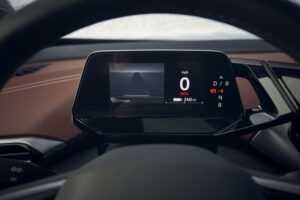
The digital gauge display moves up and down with the steering wheel.

The digital gauge display moves up and down with the steering wheel.

Connectivity

App-Connect with wireless capabilities, Bluetooth phone-audio streaming, dynamic road sign display, 5 years of Volkswagen Car-Net remote access, Volkswagen Car-Net Hotspot +Media with 1-month/1GB trial subscription, Volkswagen Car-Net Safe & Secure, with a paid subscription.

Safety features include

Six air bags, ID.Light bar, forward collision warning and autonomous emergency braking (front assist), pedestrian monitoring (included in front assist), blind-spot monitor (side assist), traffic alert, park distance control (front and rear),

VW ID4 warranties

8-years/100,000-miles high voltage battery; 4-years/50,000-miles bumper to bumper; 3-years/36,000-miles roadside assistance, including free towing to the nearest Electrify America station, with no limit to the number of uses.

A charging cable is plugged into the ID4 charge door on the right rear flank of the car

3 years of free fast-charging are included with each sale or lease.

Charging

Charging at home with a Level 2 charger would take 10 hours for a fully depleted battery. Using a fast-charger can add 179 miles in 30 minutes.

Light bar

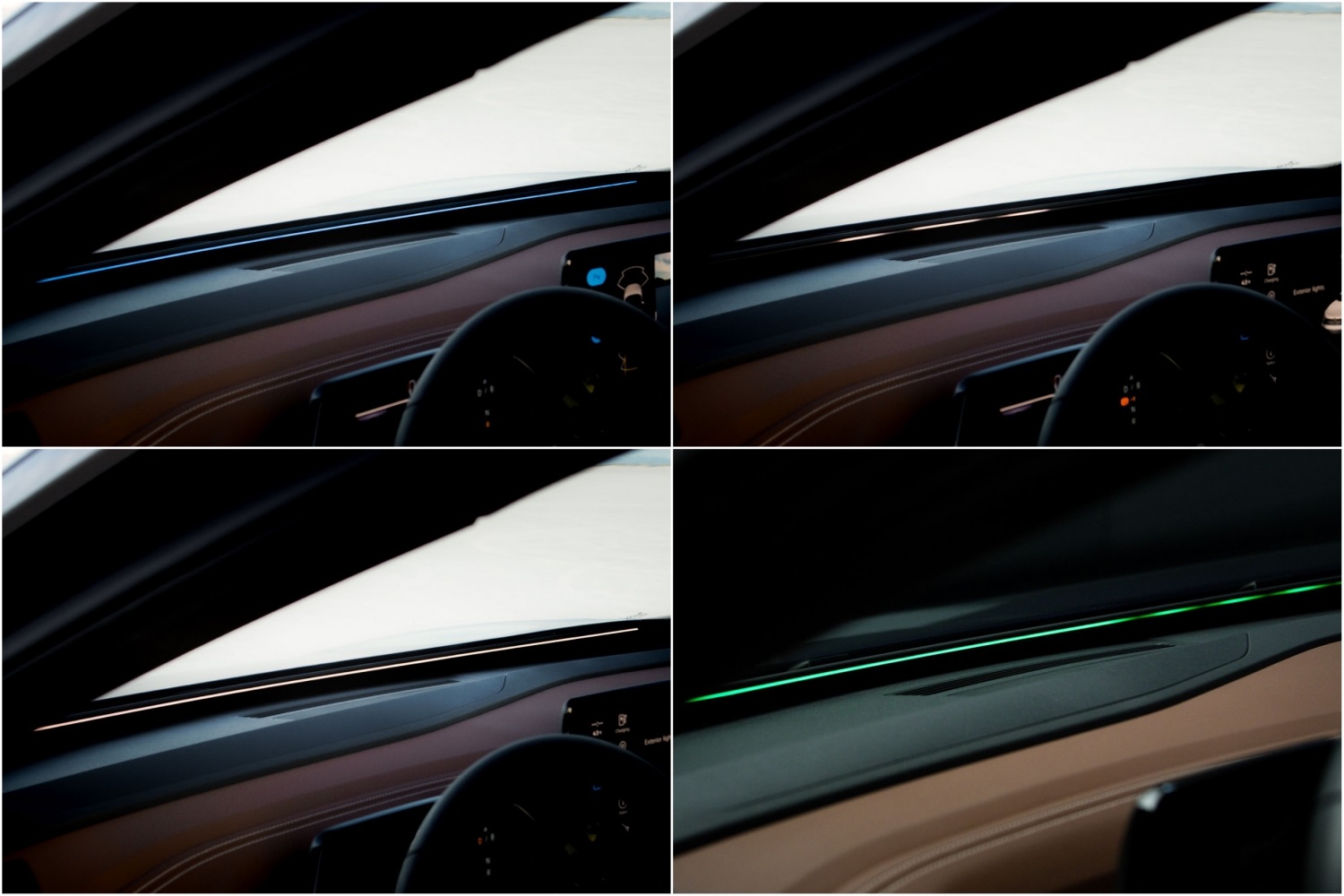
Standard on all ID4 models, the ID. Light is a thin line of 54 multi-colored LEDs at the bottom of the windshield behind the cockpit. Visible in a driver’s peripheral vision or at certain angles from outside the vehicle, the ID. Light communicates several types of messages through color and patterns. All of those have been carefully designed and engineered to help keep the driver focused on the road while giving key feedback.

Interior ambient lighting designs

How the  ID4 communicates with light.

The lighting communication begins when the driver sits in the ID4 with a “welcome” animation in white and blue, letting the driver know the ID4 is ready to go (because most EVs have no engine noise to indicate they’re powered up and a reverse of these colors displays when the driver leaves the car.

• When using the in-vehicle navigation system, the ID. Light shows upcoming directional prompts with an animated blue line, flowing to the left for left turns.

• If the driver or passenger want to engage the car’s voice commands, ID. Light responds in white in front of the speaking occupant.

• To help manage demands on the driver’s attention, incoming phone calls trigger a green flash in the center;

• And in an emergency braking event, ID. Light vividly flashes red.

VW ID4 specifications

Length/width: 180.5/108.9 in.

Drag coefficient: 0.28

Front head/leg room: 41.1 in. (with glass roof) / 41.2 in.

Rear head/leg room: 38.4 (with glass roof) / 37.6 in.

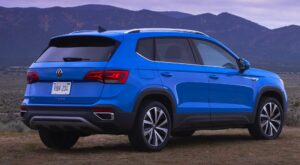
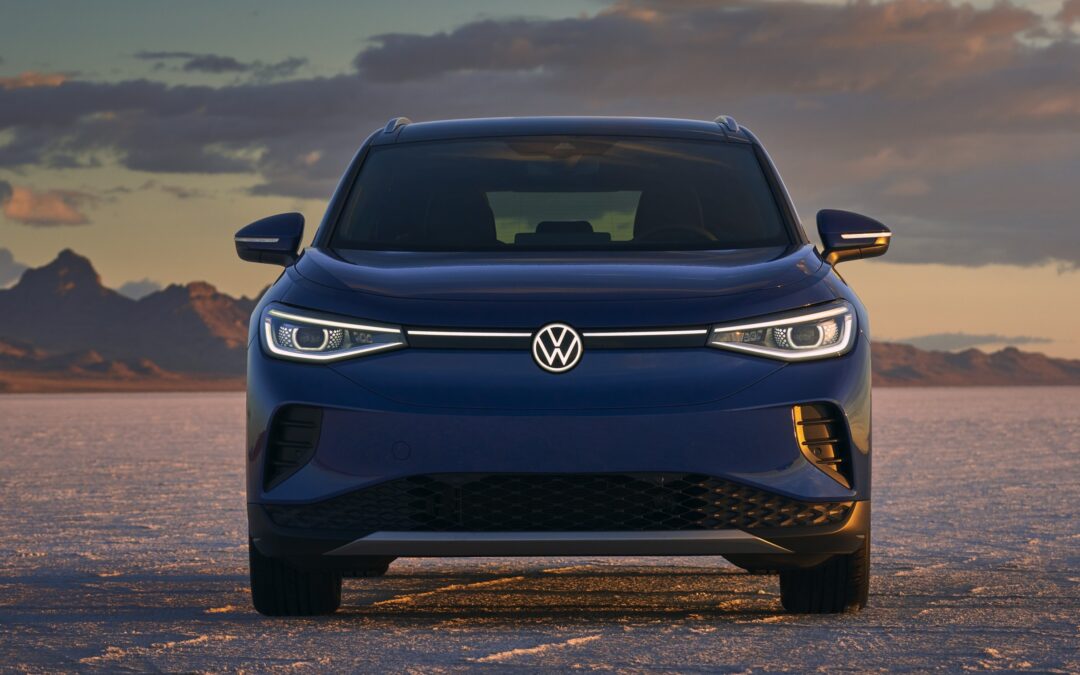
A rear view of a medium blue VW ID4

The VW ID4 EV is sold in two trim levels in rear- or dual-motor all-wheel drive.

2021 VW Arteon 2.0T Review

2021 VW Arteon 2.0T Review

Mild redesign fills in gaps for 2021 VW Arteon in its second model year 
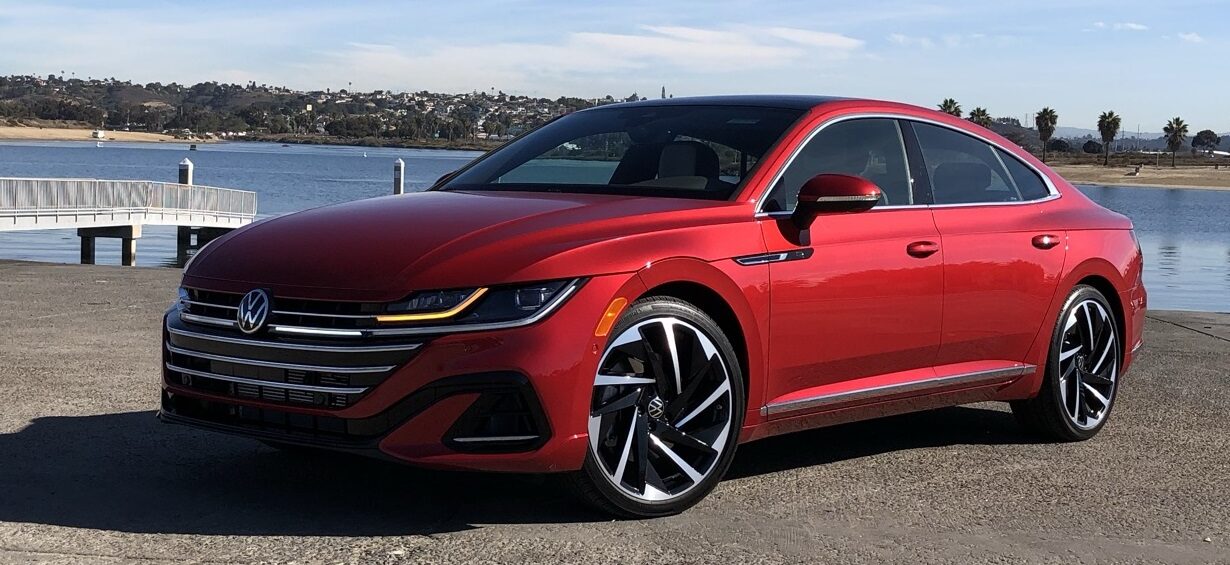
A front view of the 2021 VW Arteon

The 2021 VW Arteon has starting prices of $38,190- to $48,190, in front- or all-wheel drive. (Mark Maynard)

BY MARK MAYNARD

There is a unique presence to the driving characteristics of a German-engineered car. It telegraphs a message of confident control, which is present in a VW or a BMW — and it is an engaging spirit to just go out and drive. The redesigned 2021 VW Arteon is just such a purveyor of driving solidarity.

The large-midsize fastback Arteon is luxury-class but not luxuriously gilded. The VW Arteon debuted in the U.S. in 2019, but it barely caught the attention of SUV-hungry buyers.

Even I wasn’t overly excited about the first Arteon, but the speed-updating refresh for the 2021 model has made a vast improvement in subtle ways.

The European brands have improved their “large” or “executive” sedans, which are more of an American midsize but a few inches bigger all around. Consequently, there are few available choices, including the Acura TLX, Kia Cadenza, Nissan Maxima, and Toyota Avalon.

The Arteon driver area with Nappa leather upholstery

Standard SEL Premium equipment includes Nappa leather. (VW)

New for the VW Arteon

The refreshed Arteon features more refined front-end styling, Volkswagen says, with a redesigned cockpit. The interior has an updated dashboard design, décor trims, and Volkswagen’s Digital Cockpit. The all-new MIB3 infotainment system includes an updated navigation system and wireless app-Connect.

VW Arteon R-Line models were updated with a light bar in the grille and 30-color interior ambient lighting, wireless phone charging, and enhanced driver assistance technologies.

Other new technologies include:

  • Travel Assist, standard on R-Line models, for partially automated hands-on driving from 0 to 95 mph.
  •  Emergency Assist, also standard on R-Line, can bring the vehicle to a stop if the driver is incapacitated, or not keeping hands on the steering wheel.

And there are three new paint colors of Oryx White Pearl, Kings Red
Metallic and Lapiz Blue Metallic.

A look at the Arteon's contemporary interior styling

The cabin has a contemporary, coupe-like presence. (VW)

2021 VW Arteon Pricing

Sold in three trim levels in front- or 4Motion all-wheel drive, all VW Arteon models have a 268-horsepower, turbocharged and intercooled, direct-injection 2.0-liter four-cylinder engine. The transmission is an eight-speed Tiptronic automatic, with manual shifting.

Starting prices range from $38,190 for the front-drive SE, $42,790 for the SEL R-Line (plus $1,800 for 4Motion) to $48,190 for the SEL Premium R-Line with standard AWD; MSRP pricing includes the $1,195 freight charge from Emden, Germany.

All models feature 18-inch aluminum-alloy wheels, full LED headlights and an electronic adaptive suspension (DCC). Safety technologies include rear traffic alert, automatic post-collision braking system, forward-collision warning with autonomous emergency braking, side assist (blind-zone monitoring), and pedestrian monitoring.

Today’s tester is an SEL Premium R-Line 4Motion, $48,585 with one option for King’s Red paint, $395. VW’s warranty coverage of 4 years or 50,000 miles, includes the powertrain, with roadside assistance for 3 years or 36,000 miles.

Find current VW Arteon pricing here.

The Arteon's panoramic sunroof

A panoramic power sunroof is standard on SEL R-Line and SEL Premium R-Line models. (VW)

VW Arteon Architecture

The Arteon is now VW’s flagship sedan, though the company considers it a grand tourer. And as an architecture partner with Audi, there is some sharing of elements but without all the luxury content.

The R-Line cabin has a sporty coupe-like presence with contemporary design and horizontal lines to accentuate width.

Front headroom of 37.9 inches (with the sunroof) should accommodate those 6-foot-5 inches. And there is long front legroom of 41.6 inches. The R-Line front sport seats are firmly supportive with long thigh support. But the seats also have serious side and cushion bolsters for those drivers who push the limits of cornering.

Sightlines are clear at the side mirrors and down the hood, but the smallish back glass and sloped sides can be an issue. When parking, the wide-screen rearview camera with guidance lines enhances visibility.

Ergonomics and access to controls are smartly arranged with an easy-to-use 8-inch touch screen. As VW has stepped up to add more charging USBs, its wireless charging pad is a struggle to use. It occupies a shallow tray just ahead of the gearshift lever and it requires slender fingers to slip in a phone or pull it out, but it beats the tangle of a charging cord.

The 12.3-inch-wide digital gauge display (trickle down from Audi) is useful for its selectable elements, such as the navigation map as background or to highlight a digital speed readout or gear position.

Small storage areas include large door panels with space for bottles.

The Volkswagen Digital Cockpit (gauge array)

The Volkswagen Digital Cockpit (gauge array) is now standard. (VW)

VW Arteon Performance

The 268-hp spools up quickly for responsive acceleration with dependable passing power at 65 mph. Programmable driving modes can finesse the power and suspension settings. I frequently used Sport to keep the power on edge, but it can feel too edgy around town.

With 258 foot-pounds of torque at 1,950 rpm, few drivers would wish for a V-6. And with a potential driving range of more than 500 miles to a tank, a diesel option becomes unnecessary.

A look under the hood reveals elements of robust construction, including the plastic and rubber lines and rust-resistant connectors.

The Arteon 2.0-liter 4-cylinder engine

All models have a 268-hp, turbocharged 2.0-liter four-cylinder engine.  (Mark Maynard)

The eight-speed automatic has an electronic differential lock to keep AWD power flowing before wheel slip is detected. And there was no noticeable hesitation or electronic distraction in routing power four ways.

Fuel economy ratings of 20 mpg city, 31 highway and 24 mpg combined have improved an mpg or two since 2019, but premium fuel is required. I easily worked up to 33.9 mpg on an 80-mile highway run and continued at 24 to 26 mpg in combined driving. Oddly, front-drive models have an 18.2-gallon tank vs. 18.3 for AWD.

The AWD curb weight of 3,955 pounds (3,686 lbs. FWD) is husky and a little heavier than the competition.

VW insists the turning circle is 39 feet, but in my experience of making U-turns at my house, the arc seems more like 36 or 37 feet.

The Arteon’s drag coefficient of 0.29 is aerodynamically slick, which helps the long body slip through the air with little ruffling. Cabin soundproofing seems to have improved, too, at highway speeds with less wind and engine noise, and tire harshness.

The 20-inch Continental ProContact TX grand-touring tires, with a high treadwear rating of 500, can feel hard, but this application is well fitted for the Arteon.

The Arteon's gearshift console

The wireless charging pad, just ahead of the shifter. (VW)

Semi-autonomous driving

The addition of Travel Assist enables partially automated hands-on driving from 0 to 95 mph. The system works well to keep the vehicle centered in the lane, but like many systems, the guidance struggles to maintain the space when driving into direct sunlight on washed-out concrete highways (like all of them in California). And when the car crosses the line, the system blames the driver and gives a warning tone.

Arteon Ride and Handling

The chassis feels extremely rigid and secure, which helps the standard electronic damping system provide sharp, flat cornering. The ride quality is compliant but firm without jolt (or chin scraping) over lumpy intersections. The system manages the suspension rebound and compression at each wheel to adaptively adjust the damping force, Volkswagen says.

Braking is quite capable from 13.4-inch vented front discs and 12.2-inch solid rear rotors.

The tire and wheel package for the R-Line Arteon

The R-Line has 20-inch Continental ProContact TX touring tires. (VW)

Arteon Back Seat

Access to the back seat is a bend-and-drop sequence, but legroom is grand-touring comfortable at 40.2 inches — and the window seats have adult thigh support. The tall but narrow transmission tunnel helps center-seat legroom, but the window seats are far more comfortable. There is one 12-volt plug and one charging USB.

There is a fold-down armrest and ski pass-through to the cargo area, which is wide and deep (40 inches by 45 inches wide). Fold the seatback for about 6 ½ feet in length.
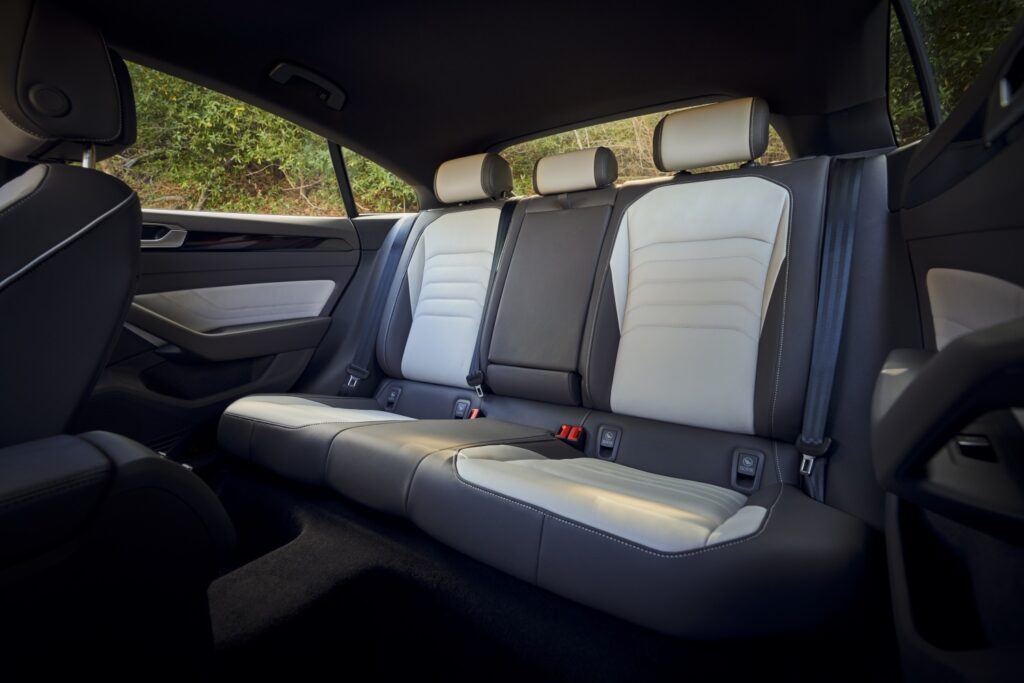
Back seats in the sedan

The Arteon’s long wheelbase allows generous rear legroom, at 40.2 inches. (VW)

The Sedan Dilemma

Federal fuel mandates have compromised the typical midsize sedan, once the top-selling mode of transportation. With the ever-steeper regulations to meet fuel economy and air-quality standards, the family sedan had to be made lighter, lower for improved aerodynamics and powered by mostly small-displacement, turbocharged engines.

As engine technologies improved to adequately move the basic sedan (weighing 3,200 pounds and more), it is the lower rooflines and lower stance that have taken away the user function from a midsize.

It is easy to track buyers’ migration from low and restrictive to the more upright SUV, in any size category. But SUVs are heavier than a sedan, do not get the same fuel economy and they cost several thousands more. And, of course, buyers want four-wheel drive, whether needed or not.

The opened cargo space of the liftback.

The wide and low cargo area spans 27.2 to 56.2 cubic feet. (VW)

Why Buy the VW Arteon?

While an SUV is an appliance, valued for its view from the inside outward, the Arteon has a sophisticated presence, seen from the outside in.

It is the purposeful and balanced German engineering that is the unspoken asset of the Arteon. It is a soaring grand tourer, built for 100 mph continental cruising and arriving at your destination with impeccable style.

Drivers will value its cabin size, power, and nimble footprint for the long term.

A rear side view of the sedan.

The word “Arteon” is taken from the Latin word “artem,” which means art. (VW)

2021 Volkswagen Arteon 2.0T SEL Premium R-Line 4-Motion

Body style: large midsize, 5-seat liftback sedan

Engine: 268-hp, turbocharged and direct-injection 2.0-liter 4-cylinder; 258 lb.-ft. torque at 1,950 rpm

Transmission: 8-speed automatic with 4Motion all-wheel drive with drive modes

Fuel economy: 20/31/24 mpg city/hwy/combined; premium fuel recommended

SPECIFICATIONS

Fuel tank: 18.3 gal.

Cargo space: 27.2-56.2 cu. ft.

Front head/leg room: 37.9*/41.2 in.

Rear head/leg room: 37.1/40.2 in.

Shoulder room f/r: 56.5/54.7 in.

Length/wheelbase: 191.6/111.9 in.

Curb weight: 3,955 lbs. (3,686 lbs. FWD)

Turning circle: 39 ft.

FEATURES

Standard SEL Premium equipment includes: smart key locking and push-button ignition, electronic multi-mode adaptive suspension control, Nappa leather upholstery, digital (configurable) gauge array, rearview camera with overhead view, wireless phone charging, power tilt-slide panoramic sunroof, electric parking brake, 8-inch navigation touch screen, Harman Kardon audio system, power (heated) side mirrors), adaptive (turning) headlights, fog lights, 20-inch alloy wheels, automatic high-beam dimming, 3-zone touch electronic touch climate control, lighted cargo area with an adjustable floor and power liftgate

R-Line content, includes: leather-wrapped and heated steering wheel with redundant controls, special interior features and black headliner; R-Line style grille, bumpers and exterior trim; stainless steel pedal caps and driver’s footrest, Travel Assist (enables partially automated hands-on driving from 0 to 95 mph), Emergency Assist (can bring the vehicle to a stop if the driver is incapacitated, or not keeping hands on the steering wheel)

Safety features include: 8 air bags, Automatic Post-Collision Braking, Forward Collision Warning, Autonomous Emergency Braking, Blind Spot Monitor, Rear Traffic Alert, stability and traction controls, dynamic road sign display, park assist with park-distance control (front and rear), brake-force distribution and hydraulic brake assist, electronic differential lock, semi-automatic driving assistance, adaptive cruise control with stop-and-go, lane-keeping system, emergency assist

PRICING

Base price: $46,995, including $1,195 freight charge; price as tested $48,585

Options on test vehicle: King’s Red metallic paint $395

Where assembled: Emden, Germany

Warranties: 4-years/50,000-miles bumper to bumper including powertrain; 2-years/20,000-miles free scheduled maintenance; 3-years/36,000-miles roadside assistance

VW Says Auf Wiedersehen To the Golf in U.S.

VW Says Auf Wiedersehen To the Golf in U.S.

Production in Puebla, Mexico, transitioning to new products, including the Taos small SUV

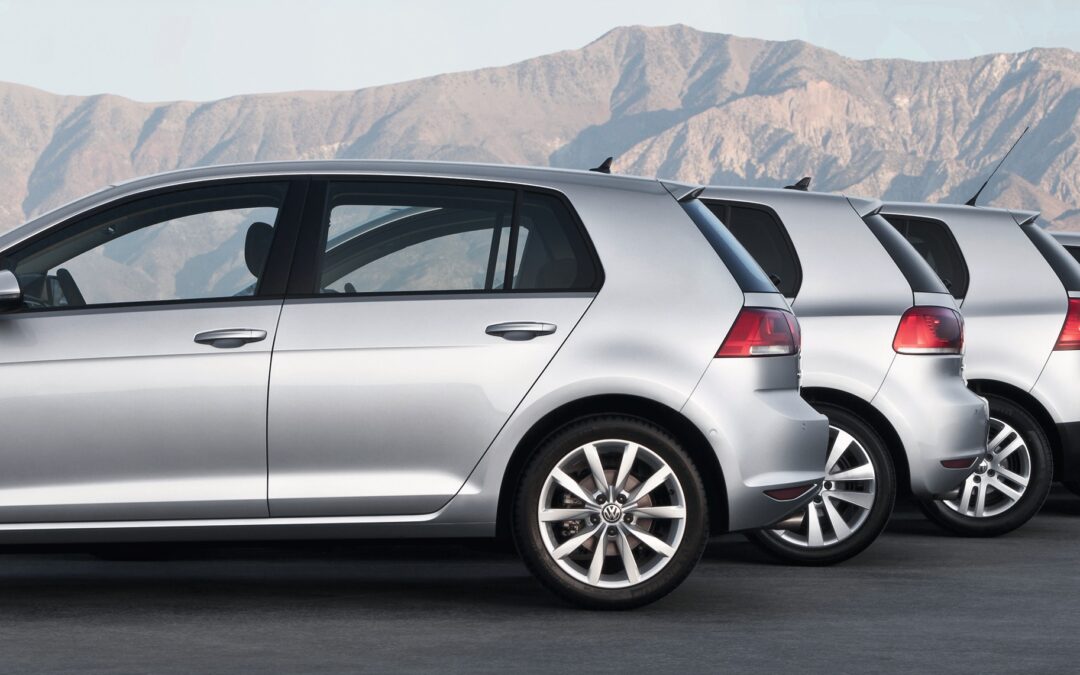
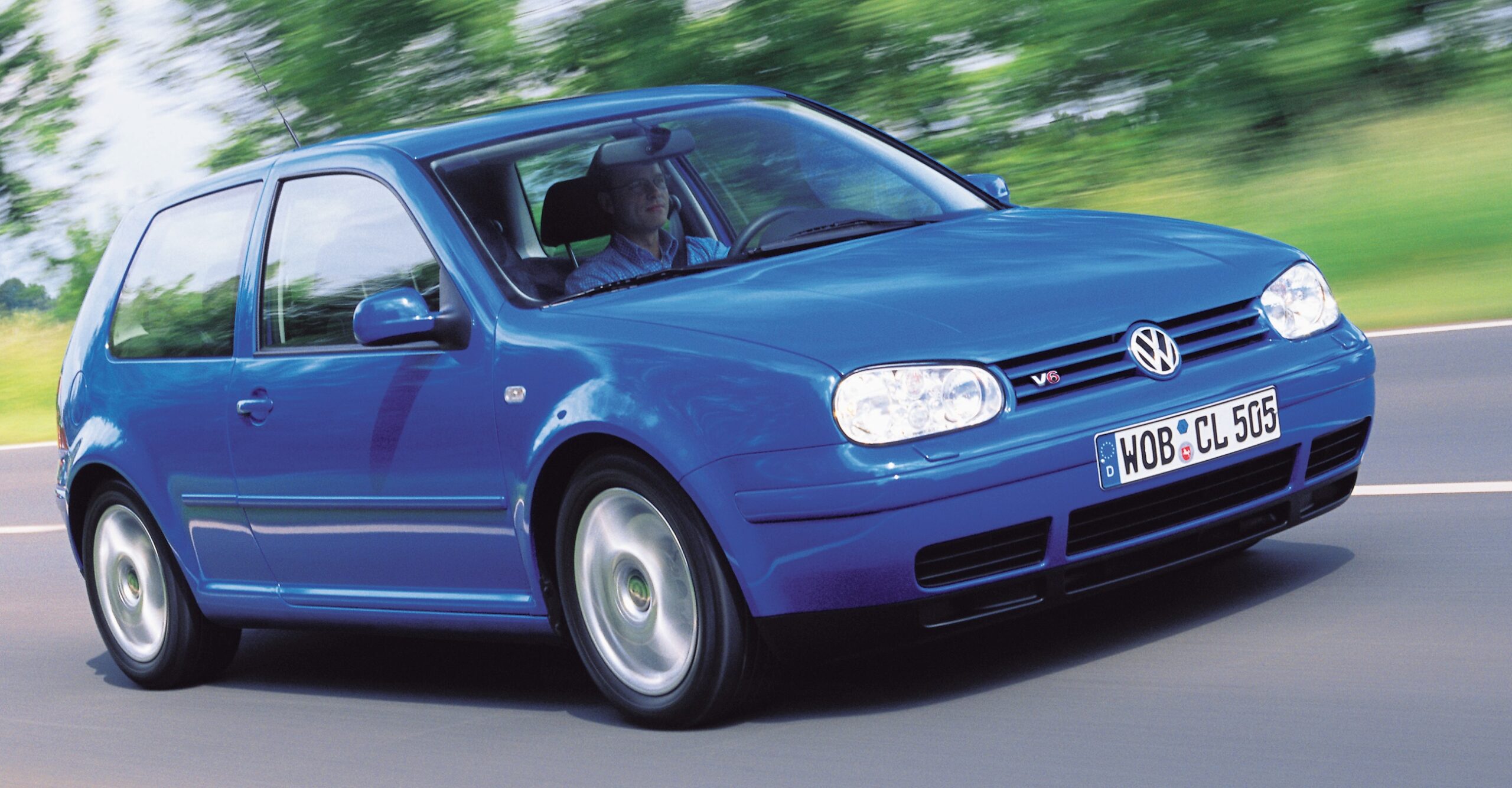
A row of VW Golf models.

Nearly 2.5 million VW Golf family models have been sold in the U.S. market. (Photos courtesy of Volkswagen USA)

BY MARK MAYNARD

Volkswagen of America announced today that its subcompact Golf hatchback ended production last week for the U.S. market. The VW Golf family name will carry on in model-year 2022 with the introduction of the all-new Mk 8 Golf GTI and Golf R, arriving this fall.

Volkswagen expects that the model year 2021 Golf models built at the Puebla, Mexico plant will sustain sales through year-end.

The Golf debuted in December 1974 as the “Rabbit” in the U.S. For more than four decades, the Golf exemplified what Volkswagen does best — melding dynamic driving characteristics with purposeful packaging and unmatched quality, said Hein Schafer, senior vice president, product marketing and strategy for Volkswagen of America, Inc.

“While the seventh-generation Golf will be the last of the base hatches sold here,” he said, “the GTI and Golf R will carry its legacy forward.”

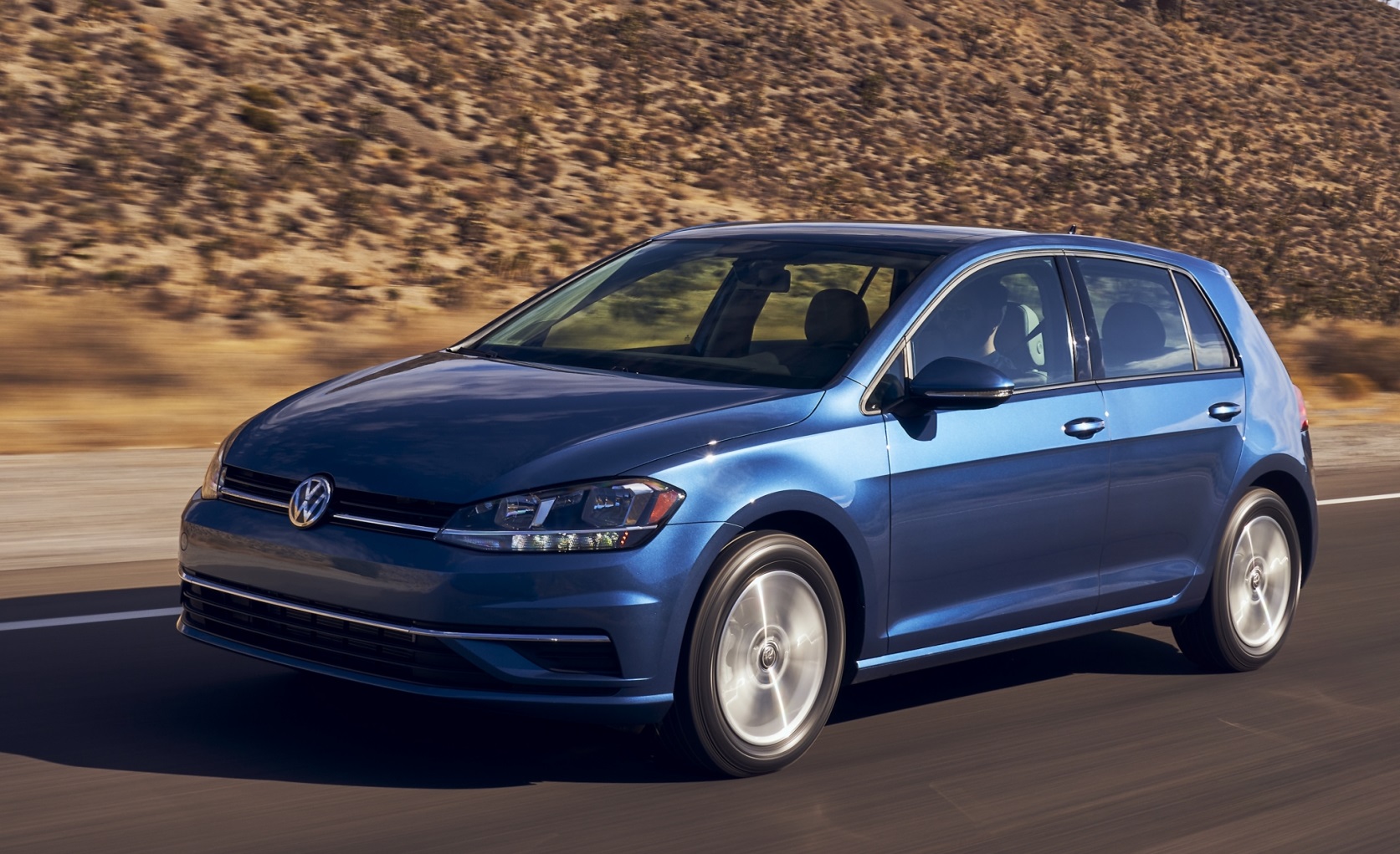
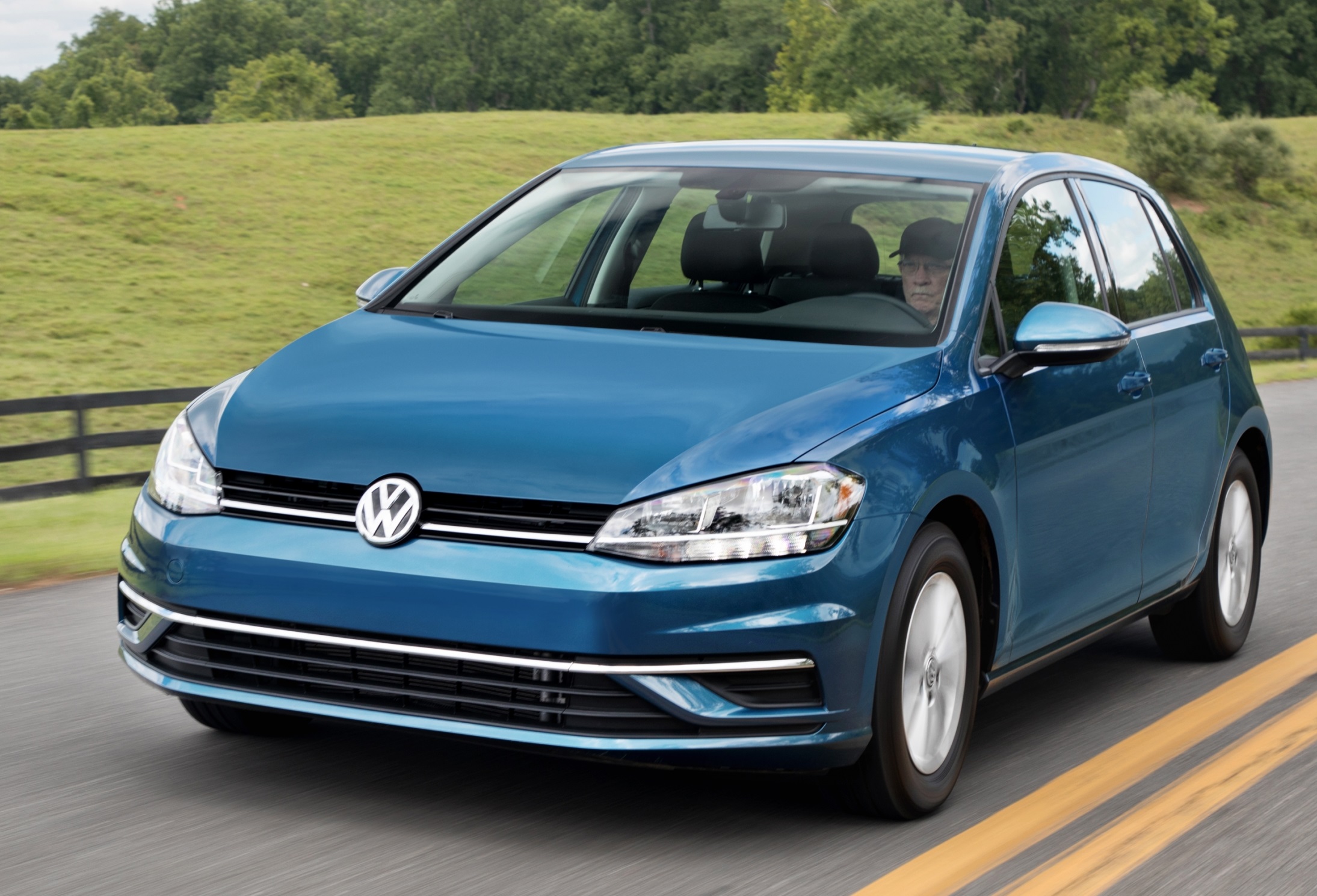
The Golf TSI model

The 2021 VW Golf is sold in only one TSI trim level. Pricing starts at $24,190.

U.S. Golf Family

In the U.S., nearly 2.5 million Golf family models have been sold since 1974. The current-generation Mk 7 Golf was named North American Car of the Year when it debuted for the 2015 model year.

The new eighth-generation 2022 Golf R and Golf GTI will be built in Germany as the Puebla plant transitions to new products, including the Taos subcompact crossover, according to VW.

The 2022 Volkswagen Taos

2022 Volkswagen Taos.

For 2021, the Golf is available in one well-equipped trim —TSI. It features a 147 horsepower, 1.4-liter turbocharged and direct-injection four-cylinder engine with a standard six-speed manual gearbox or optional eight-speed Tiptronic automatic transmission. EPA fuel-economy estimates are 29 mpg city, 39 highway and 33 mpg combine or 29/36/32 mpg with the automatic.

Golf TSI pricing starts at $24,190; add $800 for the Tiptronic. Pricing includes the $995 freight charge from Puebla, Mexico.

Standard features include 16-inch aluminum-alloy wheels with 205/55 all-season tires, smart-key locking and push-button ignition, panoramic tilt-and-slide sunroof, leatherette upholstery, and heated front seats. Driver assistance features include Forward Collision Warning and Autonomous Emergency Braking with Pedestrian Monitoring (Front Assist), Blind Spot Monitor and Rear Traffic Alert.

Seven Generations of Golf in the U.S.


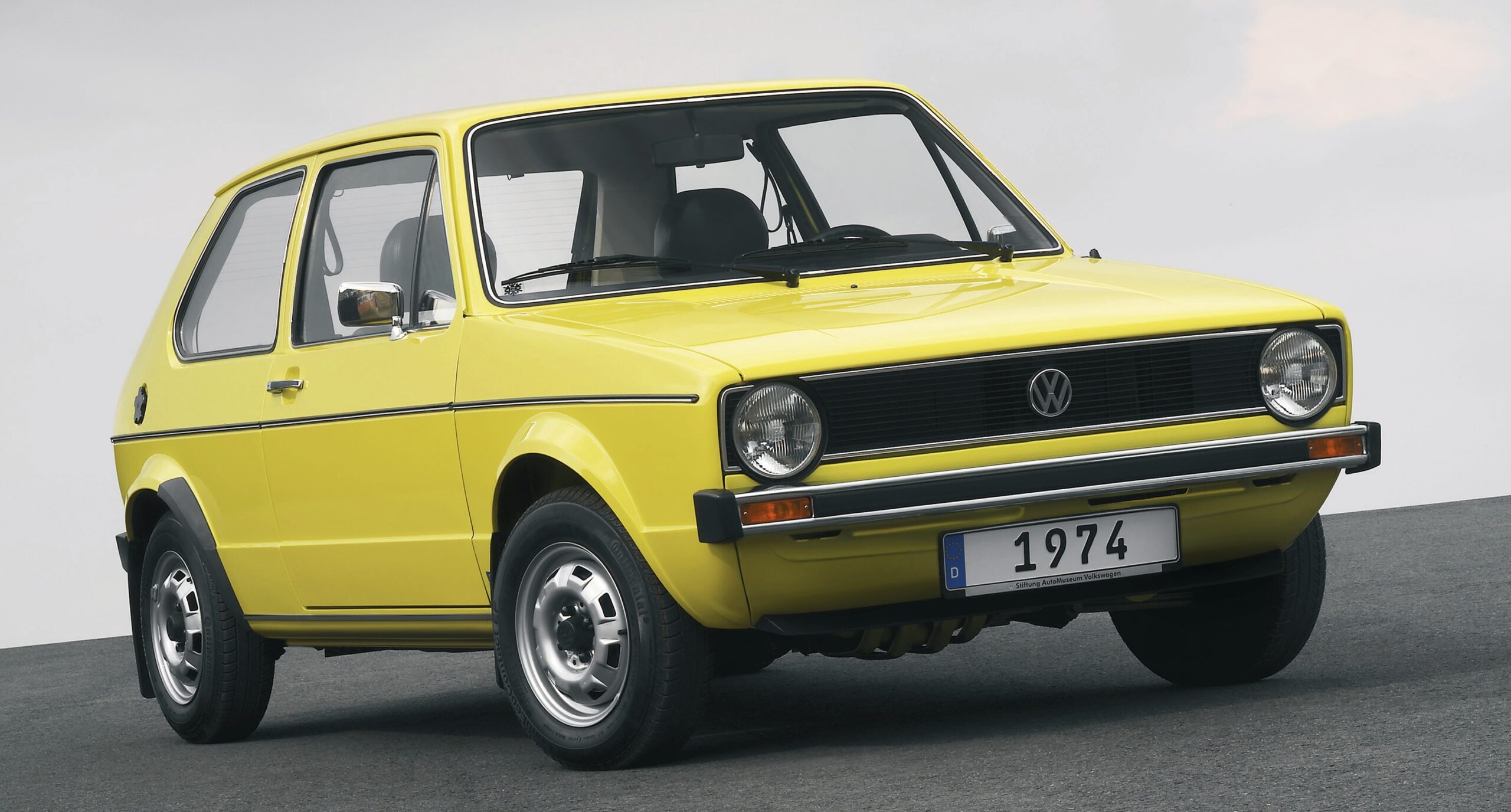
Golf I: 1975-1984

7 generations of the Gold in North America. This is Gen 1

  • First sold in December 1974 as the “Rabbit” with a 70-hp, 1.5-liter four-cylinder engine;
  • GTI was introduced in 1983 with a 90-hp, 1.8-liter engine.

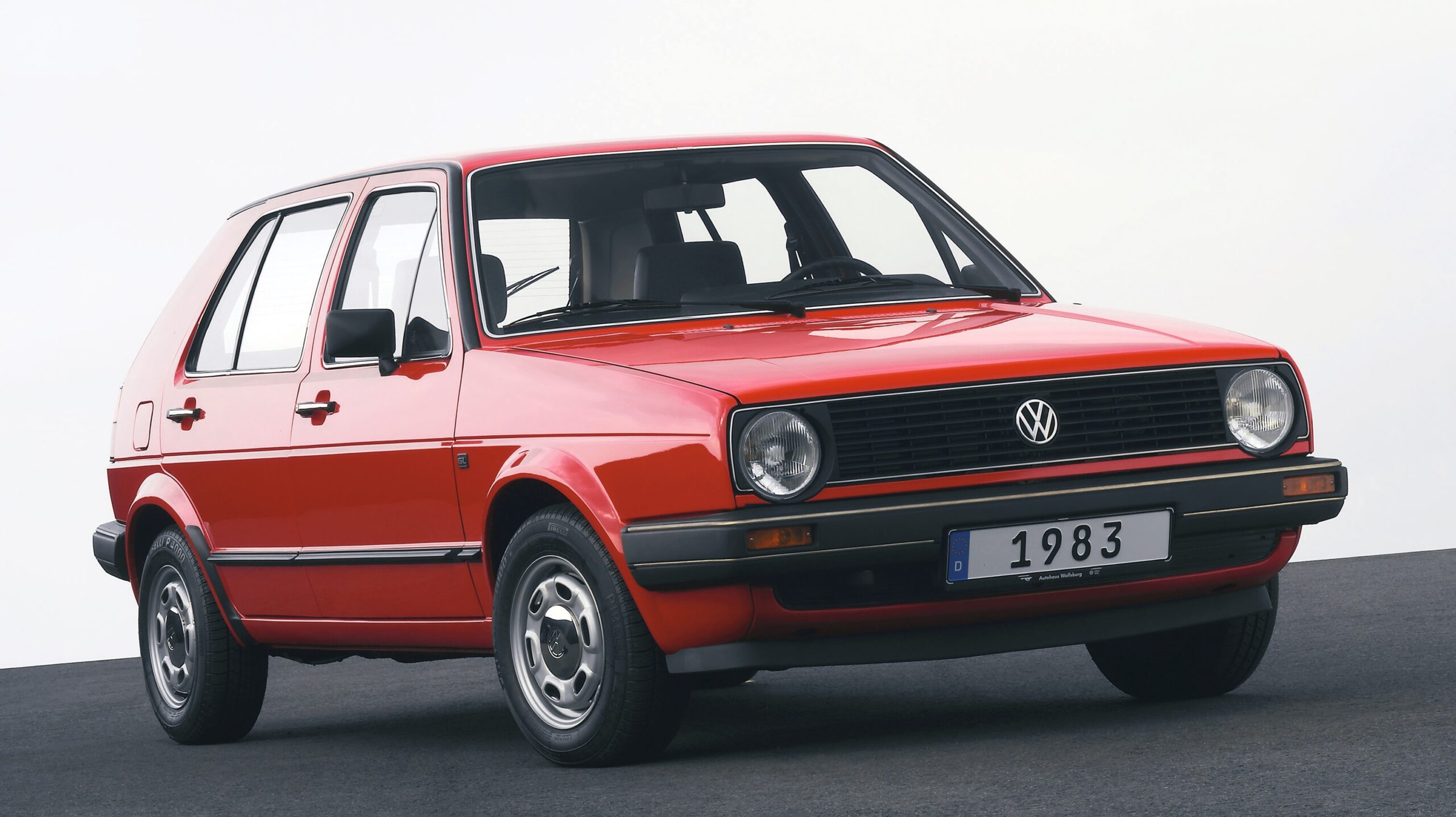
Golf II: 1985-1992

The second generation Golf

  • Nameplate shift to “Golf.” Dimensions grew by nearly 7 inches in length, 3 inches in wheelbase and 2 inches in width;
  • Standard engine is revised 85-hp,1.8-liter;
  • GTI introduces 131-hp, 2.0-liter engine;
  • Catalytic converter, anti-lock braking and power steering debut.

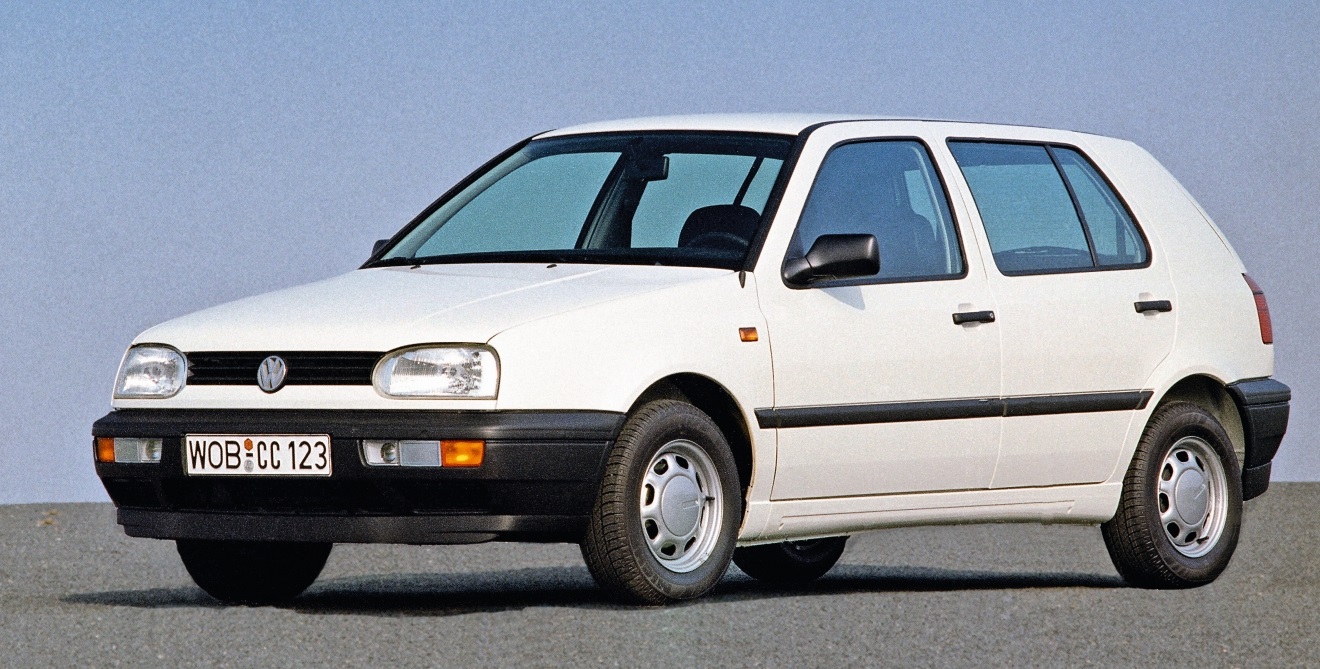
Golf III: 1993-1999

  • Exterior design shifts to wedge shape;
  • Base powertrain increased to 115-hp, 2.0-liter; GTI available with 172-hp, 2.8-liter VR6;
  • Front and side airbags debut; advances in body construction result in improved crash safety;
  • VR6 engine and cruise control offered for the first time.

Golf IV: 1999.5-2005

The Golf IV

  • All-new design with flatter windshield; roofline carried farther back with steeper rear window;
  • Electronic stability control and side curtain airbags debut;
  • 1.8T engine introduced for GTI, bringing turbocharging to this generation of GTI;
  •  R32 introduced for 2004 with 240 hp, six-speed manual, and 4MOTION all-wheel drive.

Golf V: 2006-2009

The Golf V: 2006-2009

  • New multi-link rear suspension; rain-sensing wipers introduced; sold as “Rabbit” again;
  • DSG dual-clutch automatic transmissions debuts as an option for GTI and the standard transmission for R32; Bi-Xenon headlights introduced on both models;
  • Base engine is 150-hp, 2.5-liter; GTI moves to 200-hp 2.0-liter turbocharged direct-injection engine;
  • R32 reintroduced for 2008 with 250 hp.

Golf VI:  2010-2014

The Golf VI:  2010-2014

  • “Golf” name returns;
  • Refreshed styling with prominent character line from headlights to taillights;
  • Base powertrain is 170-hp, 2.5-liter five-cylinder engine;
  • Golf R was introduced for 2012, with the VR6 engine replaced by a 2.0-liter turbocharged direct-injection engine pushing 256 hp.

Golf VII: 2015-2021

  • Now based on Modular Transverse Matrix (MQB) architecture;
  • Golf grows in size yet drops in weight, despite many new and upscale features;
  • Facelift in MY 2018 features included revised headlight and taillight designs, redesigned bumpers, and infotainment and driver assistance updates;
  • Base 170-hp, 1.8-liter TSI engine replaces 2.5-liter to gain an EPA-estimated 6 mpg highway, later replaced by the 1.4-liter TSI engine in 2019;
  • GTI and Golf R powered by new versions of the 2.0-liter TSI engine, with up to 228 hp for GTI and up to 288 hp for Golf R (using premium fuel);
  • Available driver-assistance technology includes Automatic Post-Collision Braking System, Forward Collision Warning, Park Distance Control.

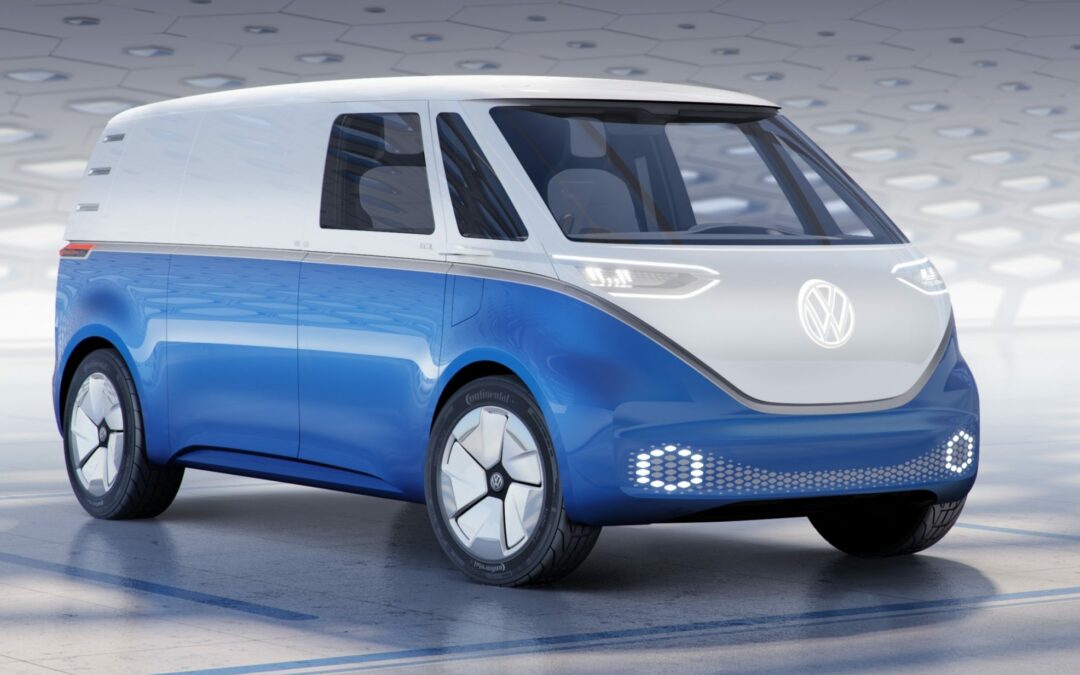
VW shows concept I.D. BUZZ Cargo van

VW shows concept I.D. BUZZ Cargo van

The cargo van is close to production level, Volkswagen said in a release. The van is rear-wheel drive but all-wheel drive is possible.

Volkswagen today debuted its I.D. BUZZ CARGO, an electrically powered commercial van that recalls the vintage Transporter bus. The concept vehicle offers a glimpse into the middle of the next decade, Volkswagen says, with its fully-automated I.D. Pilot driving mode (Level 4).
The transporter concept shown at the IAA Commercial Vehicles in Hannover is a sibling of the I.D. BUZZ concept, shown at the 2017 Detroit auto show. That concept is the people-carrier version of the van format.

The people or cargo vans can be configured with different lithium-ion battery sizes with driving ranges of about 200 (48 kWh battery) or 340 miles.

The cargo van is close to production level, Volkswagen said in a release. The van is rear-wheel drive but all-wheel drive is possible.

The people or cargo vans can be configured with different lithium-ion battery sizes according to the vehicle’s purpose and budget. Based on the Modular Electric Drive Kit, driving ranges of about 200 (48 kWh battery) or 340 miles (111 kWh), are possible. A large solar roof extends the driving range by up to 9.3 miles, Volkswagen said.

Because the rear overhang was extended by about 4 inches, the cargo version is significantly longer than the people carrier.

The cargo van is 77.8 inches wide and 77.3 inches tall, with a wheelbase of 129.9 inches. Because the rear overhang was extended by about 4 inches, the cargo version is significantly longer than the people carrier, VW said. The cargo van has a payload capacity of 1,760 pounds.

Compared to Nissan’s compact NV cargo can, the I.D. BUZZ cargo is 12.5 inches longer, substantially larger van is 198.7 inches long, 9.8 inches wider and 3.8 inches taller on a wheelbase that is 14.7 inches longer.
Automakers are in a rush to develop electric vehicles for many areas of Europe that plan to ban sales of new gasoline and diesel cars and vans by 2040.