Select Page

2020 Honda CR-V Hybrid Review

2020 Honda CR-V Hybrid Review

More power, more fuel economy, and more fundamental goodness

A forward view of the 2020 Honda CR-V Hybrid The 2020 CR-V Hybrid is the most powerful, fuel-efficient, and refined CR-V yet, Honda says. (Photos courtesy of Honda)

Table of Contents

Powertrain
Fuel economy
Pricing
Ride and Handling
Interior
Back Seats
Cargo Capacity
Why buy the Honda CR-V Hybrid?
Specifications

BY MARK MAYNARD

The Honda CR-V hits a sweet spot of wholesomeness among compact SUV crossovers. It is poised, comfortable and rich in clever engineering and function. And this year, the automaker raised its relevance with a gasoline-electric hybrid model, making it the most powerful and fuel-efficient CR-V in the lineup.

Launched in 1997, the CR-V has brought Honda 5 million sales and is currently the No. 2 retail-selling SUV in America, Honda says. With nearly 15 percent of compact CUV sales, the CR-V also has some of the lowest incentives in the segment and Honda’s focus on retail sales over fleet can mean a higher resale value for the customer.

Front seats in the CR-V

Headroom of 38.8 inches with the sunroof should accommodate most tall drivers.

CR-V Hybrid Powertrain

The CR-V Hybrid is Honda’s fourth gasoline-electric model (along with the Accord, Insight and Clarity sedans) and among just two mainstream hybrid competitors in the class of small SUVs: the Ford Escape and Toyota RAV4.

But its hybrid powertrain is a variation on those used by the competitors. Their more common “parallel hybrid” system uses the gasoline engine to assist the electric motors and hybrid battery.

The driver area

The driver area is well-focused for eyes-on-the-road access to controls.

Honda uses a two-motor hybrid system that is more electric in its application by using one motor to power a motor-generator that powers the CR-V while the other motor acts as a generator-starter. It has reduced complexity and frictional losses, Honda says, because there is no conventional transmission.

The system can operate as either a series or parallel hybrid. The gasoline engine, electric generator-motor and electric propulsion motor work together, routing power through the single-speed direct-drive transmission. It is a relatively lightweight and compact system that spends more time in EV-only mode, Honda says, which results in higher city fuel efficiency.

The front passenger side.

The CR-V Hybrid Touring includes leather-trimmed upholstery and heated seats.

Two Motors

The powertrain integrates a 143-horsepower, 2.0-liter DOHC i-VTEC Atkinson-cycle four-cylinder with a 181-hp permanent-magnet propulsion motor for a combined 212 hp. Total foot-pounds of torque totals 232 lb.-ft., with peak pull from 0-2,000 rpm. (That compares to the gas model’s turbocharged 1.5-liter four-cylinder with 190-hp and 179 lb.-ft. torque from 2,000-5,000 rpm.)

The majority of the time, the CR-V Hybrid operates as a series hybrid. Its 181-horsepower propulsion motor drives the wheels while the gasoline engine (connected to the electric generator-starter motor) functions as an onboard electrical generator, supplying power to the hybrid battery and the propulsion motor.

The system manages power by shifting through three drive modes — EV Drive (electric only), Hybrid Drive (series hybrid) and Engine Drive (parallel hybrid). The system automatically selects the best mode for the conditions with no input from the driver.

Depending on the state of battery charge, the hybrid system applies the usual hybrid assets of auto stop-start at idle, regenerative braking and steering-wheel paddle shifters to increase downhill braking regeneration in four increments of resistance.

The gasoline-electric engine

The powertrain integrates a 143-horsepower, 2.0-liter DOHC i-VTEC Atkinson-cycle four-cylinder with a 181-hp permanent-magnet propulsion motor for a combined 212 hp.

3 Drive Modes

EV Drive: All-electric driving occurs when starting from a stop, during light cruising and acceleration, and when braking. The gasoline engine is off when in EV Drive mode and is decoupled from the drivetrain to reduce friction; power is supplied by the 1.4 kWh lithium-ion battery pack.

Hybrid Drive: Operating as a series hybrid, the system uses the electric propulsion motor with the gasoline engine to supply electricity through the generator motor to the propulsion motor, and it helps charge the battery.

Engine Drive: During light-load cruising, the Atkinson-cycle engine provides propulsion, sending power directly to the drive wheels. This allows the hybrid system to use the gasoline engine and, if needed, the electric propulsion motor to boost power.

The power-flow meter

Drivers can monitor their driving via the power-flow meter.

CR-V Hybrid Fuel Economy

The CR-V Hybrid has fuel-economy estimates of 40 mpg city, 35 highway and 38 mpg combined, on the recommended 87 octane. (The gasoline CR-V with AWD has ratings of 27/32/29 mpg.) The 14-gallon fuel tank provides a good range and is the same size for gas or hybrid models.

My mileage average had been stuck at 33.4 mpg with much highway driving, but when I spent more in-town driving, the rating climbed quickly to 34 mpg. It likely would have gone higher with more in-town driving, but whether it would reach 38 mpg is a question owners can answer.

The two gasoline-electric hybrid competitors have slightly better EPA mileage ratings — 43/37/40 for the Escape AWD and 41/38/40 mpg for the RAV4 AWD.

But there is enough about the CR-V to overlook a few miles per gallon difference that can be made up with careful driving.

While the screen is reasonably large at 10 ¾ inches wide by 5 ¼ inches deep, the actual viewing area is much smaller, particularly for the rearview camera. 

CR-V Hybrid Pricing

The CR-V Hybrid is sold in four trim levels, same as the gasoline-powered model: LX, EX, EX-L, and Touring.

With standard all-wheel drive, starting prices range from $28,970 to $37,170, including the $1,120 freight charge from Greensburg, Ind. Depending on trim level, the CR-V Hybrid is $1,200-$2,320 more than the comparable gas model.

Standard Hybrid features include automatic climate control and automatic high beams, LED headlights, smart locking and push-button ignition, and a cargo roller cover.

Currently, the CR-V has a $500 customer loyalty offer for lease or purchase and other Honda offers are here.

The center stack of audio, climate controls

The shift-by-wire gear selector is flanked on the right by driver-selectable drive modes.

The top-line Hybrid Touring tester included such extras as leather-trimmed upholstery, nine-speaker audio system (with Apple CarPlay or Android Auto), wireless phone charger, heated seats and steering wheel, 12-way power-adjustable driver’s seat (but just four-way adjustable for the front passenger), power moonroof and 19-inch alloy wheels with Continental CrossContact LX Sport all-season touring tires.

In addition to six air bags, new this year is the Honda Sensing suite of safety and driver-assistive technologies, standard on all CR-Vs (and soon to be integrated on all Hondas). The suite includes Collision Mitigation Braking with Forward Collision Warning and pedestrian sensing capability, Road Departure Mitigation with Lane Departure Warning, Adaptive Cruise Control with low-speed follow, and lane-keeping assist.

Honda’s warranty coverage is 3 years or 36,000 miles bumper-to-bumper (with roadside assistance) and 5 years or 60,000 miles for the powertrain. Hybrid components are covered for 8 years or 100,000 miles.

Hybrid’s Soundproofing

The Hybrid model gets special attention for soundproofing. There is thicker insulation on the hood, dash and firewall, and additional sound-absorbing materials are used in the front wheel wells. The Active Noise Cancellation feature in the audio system reduces low-frequency booming at lower engine speeds.

Around town, the cabin environment is calmed with the whirring tone of the electrified sound machine when in EV Drive. On the highway, there is more wind and road noise, likely due to the ride height and tires.

The CR-V sunroof

The Touring model includes a power moonroof.

CR-V Hybrid Ride and Handling

The Hybrid’s driving experience will feel very much like the standard model, but with a more direct acceleration force. The regenerative braking engages with consistent pedal force, which in some systems can feel like an abrupt on-off switch at low speeds.

The direct-drive transmission is CVT-like in its mission but without the rubber-banding of power on takeoff.

The suspension was tightened to support the added 200 pounds of electrification components, raising the curb weight to 3,708 pounds. But the ride quality is uncommonly supple for a small SUV. It is not sport-tuned, but there is enough control and tire patch for enthusiastic carpooling or evasive maneuvers.

The turning circle is modest at 37.4 feet, curb to curb (compared to 39 feet in the Escape or 36.1 in the RAV4).

The elements of the Honda Sensing allow near Level 2 semi-autonomous driving. Though it is technically just an assist system, requiring hands on the steering wheel, the lane-keeping calibrations keep the CR-V well centered in the lane. Other such systems can allow the vehicle to drift across the lines — and then the system chides the driver with alarm tones for not paying attention.

The tires and wheels on the hybrid model

The 19-inch tires and wheels on the hybrid model.

Interior Function

The rest of the CR-V experience is Honda tidy, enhanced by smart engineering.

The upright cabin structure provides uncomplicated sightlines over the hood and over the shoulder. The leather-trimmed upholstery is high quality and soft to the touch with perforated centers for breathability.

The doors open a few degrees farther (than some mainstream vehicles) to ease entry and exit; and the back-seat doors open to nearly right angles, which is a huge help in loading toddlers in car seats.

The driver area is well focused for eyes-on-the-road access to controls. But there is room for improvement in the touch screen access. While the screen is reasonably large at 10 ¾ inches wide by 5 ¼ inches deep, the actual viewing area is much smaller. The image for the rearview camera, for example, is just 5 inches wide by 3 ¼ inches deep, but it includes wide angle and curb views.

A front interior door panel

Interior materials have a quality appearance and have manicured assembly.

Headroom of 38.8 inches with the sunroof (40.1 inches without) should accommodate most tall drivers, particularly with the Touring’s 12-way power driver seat. (Honda should at least provide a six-way seat, adding height adjustment, for the front-seat passenger, rather than just a four-way seat.)

Because the gear-shift lever has been replaced with a drive-by-wire button grouping (and easy to use), the floor console is put to more efficient use. The sliding-top armrest console has two-level storage, with a sliding shelf above the box, which has a 12-volt plug. The wireless charging pad is in clear sight and easy reach, with adjacent 1.5- and 1.0-amp USBs. Large visors slide and have large lighted and covered vanity mirrors.

The wireless charging pad is in clear sight and easy reach, with adjacent 1.5- and 1.0-amp USBs.  (Honda)

CR-V Hybrid Back Seat

There should be few complaints from those in the back seats, which seem to have more support and padding than others in the segment. The rear leg room is long at 40.4 inches and the seatbacks recline about 2 inches. The transmission tunnel is very low for more comfortable three-across seating when necessary. And there are two 2.5-amp charging USBs. The wide fold-down armrest has a pair of cup-can holders with generous bottle storage in the doors.

Rear leg room is long at 40.4 inches and the seatbacks recline about 2 inches. Below, In packaging the IPU (hybrid battery), engineers also maintained the capacity of the second-row seats to fold fully flat, unlike some competing models. 

CR-V Hybrid Cargo Capacity

The CR-V Hybrid loses some cargo capacity due to the placement of the hybrid battery under the floor, where a spare tire would go. And while it eliminates the two-level cargo floor and spare tire (and adds a tire-inflator system) there is still a lot of hauling space. The liftgate opening is 42 inches wide and 33 inches tall with a depth of 38 inches or up to 6 feet with the 60/40 seatback folded. There’s good access for bicycles and other large and awkward parcels. Extras include two seatback-release handles, two side lights, and a standard roller cover.

Looking into the open cargo area from the rear

Despite losing the two-level cargo floor, the usable space is large, with a wide and tall opening.

Why Buy the 2020 Honda CR-V Hybrid?

The basic gasoline-electric hybrid is a no-brainer experience of shift into Drive and go. The CR-V system applies some driver-selectable modes to squeeze more mpgs when fuel economy is the goal. I found it engaging to use the regen and other modes to recover lost tenths of a mile.

While there is a line of accessories and a couple of optional wheel styles, I like that the starting price is the as-tested price. There are no other factory option packages to add. And while the Touring is the loaded choice, the EX-L is close in its content at a cost savings of $3,200.

A big separator for the CR-V Hybrid is its fundamental goodness and refinement that reinforce a perception of long-term quality and durability.

A rear view of the Honda CR-V Hybrid

The CR-V Hybrid has such style separators as unique front and rear bumper designs. (Honda)

2020 Honda CR-V Hybrid Specifications

Body style: compact, 5-passenger, 5-door AWD sport-utility

Engine: 143 hp 16-valve DOHC i-VTEC Atkinson-cycle 2.0-liter 4-cylinder with 129 foot-pounds of torque at 3500 rpm

Propulsion motor: 181-hp, AC synchronous permanent-magnet; 232 lb.-ft. torque from 0-2,000 rpm

Total system power: 212 hp

Battery pack: 1.4 kWh, air-cooled lithium-ion

Transmission: single-speed direct drive

Fuel economy: 40/35/38 mpg city/hwy/combined; 87 octane

BY THE NUMBERS

Fuel tank: 14 gallons

Cargo space: 33.2-68.7 cu. ft.

Front head/leg room: 38.8*/41.3 in. *40.1 inches, w/o sunroof

Rear head/leg room: 39.1/40.4 in.

Length/wheelbase: 182.1/104.7 in.

Curb weight: 3,7008 lbs.

Turning circle: 37.4 ft.

Towing capacity: not recommended

FEATURES

Standard equipment includes: keyless locking and push-button ignition, leather-trimmed upholstery, power moonroof, multi-view rearview camera, 12-way power driver’s seat with 4-way lumbar, 4-way power front passenger seat, heated front seats, 7-inch touch-screen display audio, Apple CarPlay or Android Auto, 9-speaker audio system, wireless phone charging pad, automatic high beams, active noise cancellation, LED fog lights, power (heated) side mirrors with turn signals, conversation mirror with sunglasses storage, locking glove box, floor mats, hands-free power tailgate, walk-away auto lock, cargo area lights and roller cover, 60/40 folding back seat, 19-inch alloy wheels

Safety features include: 6 air bags; Collision Mitigation Braking with Forward Collision Warning and pedestrian sensing capability; Road Departure Mitigation with Lane Departure Warning; Adaptive Cruise Control with low-speed follow; lane Keeping Assist; hill-start assist; stability and traction controls; brake assist and brake-force distribution

PRICING

Base price: $37,170, including $1,120 freight charge; price as tested $37,070

Options on test vehicle: none

Where assembled: Greensburg, Ind.
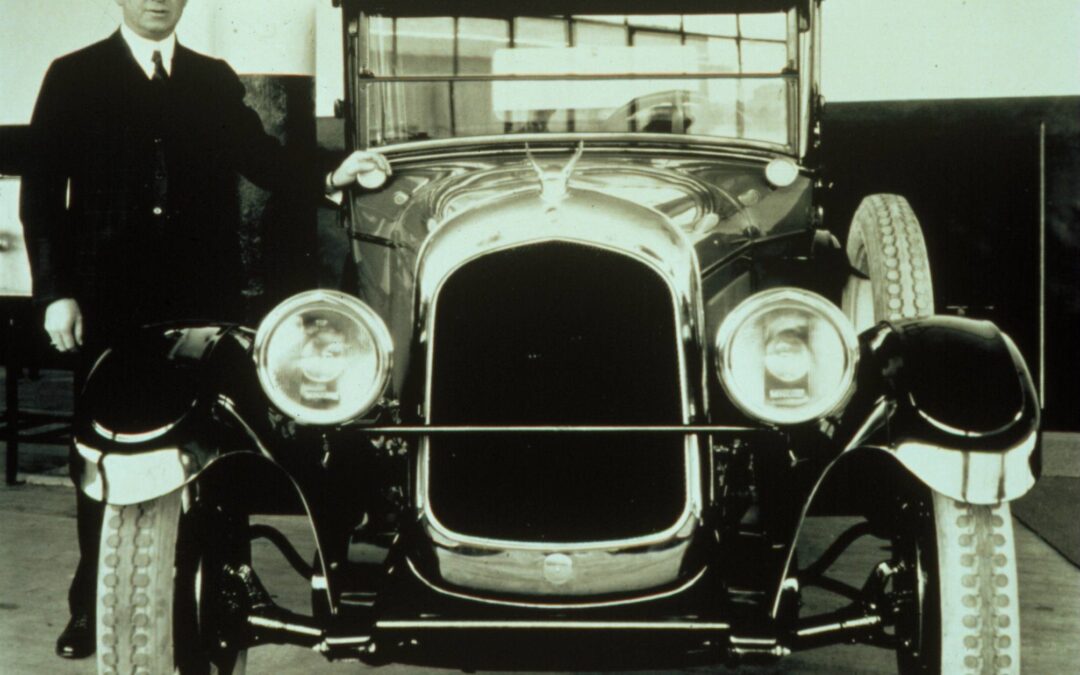
Vin Car Pic: Walter P. Chrysler

Vin Car Pic: Walter P. Chrysler
A black and white photo of Chrysler founder Walter P Chrysler standing along side a a1924 Chrysler Six

Walter P. Chrysler with his first eponymous named car in 1924. (FCA US archives)

BY MARK MAYNARD

On this day in automotive history, the founder of the Chrysler Corp., Walter Percy Chrysler, died on Aug. 18 1940 after succumbing to a cerebral hemorrhage.

According to AutomotiveHistory.org, Walter Chrysler was born in Kansas in 1875 and began his career as a machinist and mechanic in the railroad industry. His railroad career peaked as works manager of the Allegheny locomotive erecting shops of the American Locomotive Co., also known as Alco.

His introduction to the automotive business would come in 1911 when he was approached by James J. Storrow, an investment banker who was critical in the formation of General Motors just a few years prior.

Walter P. Chrysler with a 1924 Chrysler.

Walter P. Chrysler with a 1924 Chrysler. (FCA US archives)

Walter Chrysler made his final resignation from railroading to become works manager (in charge of production) at Buick in Flint, Mich., according to Wikipedia. He found many ways to reduce the costs of production, such as putting an end to finishing automobile undercarriages with the same luxurious quality of finish that the body warranted.

The Chrysler 70 debuted with a six-cylinder engine in January 1924. It was marketed as an advanced, well-engineered car at a more affordable price than the competition. (Elements of this car are traceable back to a prototype that had been under development at Willys when Chrysler was there.)

The original 1924 Chrysler included a carburetor air filter, a high-compression engine, full-pressure lubrication inside the engine, and an oil filter, at a time when most autos came without all these features.

a black white photo of a 1924 Chrysler Touring model

The 1924 Chrysler Touring. (FCA US archives)

Among the innovations in its early years would be the first practical mass-produced four-wheel hydraulic brakes, a system nearly completely engineered by Chrysler with patents assigned to Lockheed.

Chrysler pioneered rubber engine mounts to reduce vibration, Oilite bearings, and superfinishing for shafts.

Chrysler also developed a road wheel with a ridged rim, designed to prevent a deflated tire from flying off the wheel. The auto industry eventually adopted this safety wheel worldwide.

Hyundai Venue SEL Review

Hyundai Venue SEL Review

The subcompact Hyundai Venue SUV crossover is a fun ride loaded with features and priced for youthful buyers

An exterior view of the 2020 Hyundai Venue

The Hyundai Venue is sold in three trim levels with starting prices of $19,000-$23,000.(Photography by Hyundai and Mark Maynard)

Table of Contents

Pricing
Performance
Ride and Handling
Interior Function
Back Seat and Cargo Space
Why buy the Hyundai Venue?
Specifications

BY MARK MAYNARD

Hyundai’s newest and smallest SUV crossover, the Venue, makes the most of difficult choices.

Based on the Hyundai’s subcompact Accent sedan, the Venue is the boxy equivalent, but it’s not a penalty box. It’s a fun ride, aimed at buyers with youthful bank accounts and loaded for their necessities, such as rapid connectivity for music, phone, apps, and other connected services. It has no-brainer drivability, seating for friends, and manageable maintenance costs.

Subcompact SUV crossovers represent the new reality of doing more in a smaller but well-equipped “car.” The choices continue to evolve with competition from the (new) Chevrolet Trailblazer, Buick Encore, Fiat 500X, Ford EcoSport, Honda HR-V, Jeep Renegade, Kia Seltos, Mazda CX3, Nissan Kicks and Toyota’s C-HR.

Hyundai Venue front seats and driver area

The Venue driver area has intuitive placement of switches and dials.

But as sweetly packaged as it is, the Venue also provides a rich experience for mature drivers. Among the Venue’s assets are heated seats, no-nonsense placement of controls, comfortable entry and exit, and quick convertibility for cargo. And there are driver-assist technologies on the more expensive models.

With a tidy turning circle of 33.2 feet, the Venue is small enough to park anywhere. Consider this a selling point for urban dwellers who might have limited or no on-site vehicle parking.

The infotainment touch screen

The wide touch screen has a wide rearview camera.

Hyundai Venue Pricing

The Venue is sold in three trim levels of SE, SEL or Denim. All models are front-wheel drive with a 121-horsepower, 1.6-liter four-cylinder engine. There is a standard six-speed manual transmission or optional continuously variable automatic.

Starting prices range from $18,490 with manual transmission to $20,390 for the SEL; add $1,200 for the CVT. The Denim starts at $23,190 and features Denim blue paint with a white roof, Denim-influenced interior, 17-inch alloy wheels, and leatherette-and-fabric seats. All MSRP pricing includes the $1,140 freight charge from Ulsan, Korea.

Check current Hyundai Venue pricing here.

All new Hyundais include free scheduled maintenance for 3 years or 36,000 miles. And that is in addition to the bumper-to-bumper warranty of 5 years or 60,000 miles (with roadside assistance) and powertrain coverage of 10 years or 100,000 miles.

The Venue SEL tester with CVT was $23,445 with the two main factory packages. The convenience package ($1,150) adds a power sunroof, smart-key locking and push-button ignition, sliding armrest storage box (a desirable extra on these cheap cars), leather-wrapped steering wheel and shift knob, blind-spot collision, and rear cross-traffic collision warnings.

The Venue shift console

The shifter console is multifunctional.

The Premium package ($1,750) includes heated front seats and side mirrors, LED headlights-taillights-running lights, 17-inch alloy wheels, smart key locking and push-button ignition, 8-inch navigation touch screen display with Android Auto and Apple CarPlay. Carpeted floor mats added $155.

Even base models have six air bags and a full suite of advanced safety tech, including forward collision warning and pedestrian detection, and lane-keeping assist.

Hyundai Venue Performance

The performance of the 121-horsepower 1.6-liter isn’t overwhelming but shows its grit for right-now power. Sport mode will sharpen the response, but I found it too jittery and was content to manipulate acceleration through a heavier foot. The manual transmission might give more direct performance, but hurry, it is going away for the 2021 SE model.

Hyundai’s “intelligent” variable transmission — IVT rather than CVT — can match a gear ratio with the optimum engine speed, the engineers say. But to me, it still feels like a CVT, sometimes vague and tuned for fuel economy.

The EPA mileage ratings (CVT) are achievable: 30 mpg city, 34 highway and 32 mpg combined, on 87 octane. My driving returned an average of 32.3 mpg and up to 37.6 with more highway driving. 

Hyundai Venue Ride and Handling

The highway ride is surprisingly comfortable for a small SUV with a stubby 99.2-inch wheelbase. Often, these small and tall vehicles can be prone to choppiness on concrete freeway surfaces. The torsion beam rear axle isn’t sophisticated for sporty driving, but its flat design allows greater cargo capacity. The SEL adds rear disc brakes while the lower-trim models are fitted with the less-expensive drums.

On the highway commute, there was no objectionable wind noise or tire harshness from the 17-inch Nexen N’Priz all-season touring tires.

The Venue's engine

The 121-hp 4-cylinder engine has fuel economy ratings of 30 mpg city, 34 highway and 32 mpg combined. (Mark Maynard)

Interior Function

There is nothing “cheap car” about the interior materials of the Hyundai Venue. Though there is plenty of plastics, they have pleasing grains and finishes. 

It’s roomy inside with a tall 39.4 inches of headroom, which trims a bit with the sunroof. Legroom is large-car long at 41.3 inches. But the one-size-fits-most seat-belt anchor positioned the belt higher across my neck than was comfortable. And some will wish for some seat-bottom tilt, but that is uncommon in these less-expensive cars.

The tires on the Venue

Tire sizes range from 15- to 17-inches. (Mark Maynard)

Driver sightlines are open and the rearview camera provides wide coverage with guidance lines. There is an intuitive placement of switches and dials. The shifter console is multifunctional with a parking hand brake, cup-bottle holders, and charging bin with two USBs and a 180-watt 12-volt plug. Sliding visors have large, lighted vanity mirrors.

There is plenty of small-item storage, particularly with the optional armrest box. There’s a short shelf on the passenger side above the glove box, which makes a handy place to park a phone.

Back Seat and Cargo Space

The back seat is compact but with a low exhaust hump for occasional three-across seating.  Rear leg room of 34.3 inches will be snug for adults.

There is a generous two-level cargo space that has a wide opening of 37 ½ inches. Fold the 60/40 back seat for almost 5 feet of length.

The back seat in Venue

The back seat has a low exhaust hump for occasional three-across seating.

Why buy the Hyundai Venue?

As the Coronavirus sucks the spontaneity out of our daily routines, having to replace anything, especially a vehicle, gets new scrutiny. How much or how little is required? Do we make ourselves happy? Or do we settle?

The Hyundai Venue is an opportunity to downsize without settling. It will expand expectations for its interior roominess and quality of accommodations — with the peace of mind from free maintenance and long warranty protection.

A rear view of the Hyundai Venue

All new Hyundais include free scheduled maintenance for 3 years or 36,000 miles.

2020 Hyundai Venue SEL Specifications

Body style: compact, 5-passenger, 5-door front-wheel-drive SUV crossover

Engine: 121-hp, dual-port fuel injection 1.6-liter four-cylinder; 113 lb.-ft. torque at 4,500 rpm

Transmission: CVT w/sport, normal and snow modes

Fuel economy: 30/34/31 mpg city/hwy/combined; 87 octane

BY THE NUMBERS

Fuel tank: 11.9 gallons

Cargo space: 18.7-31.9 cu. ft.

Front head/leg room: 39.4*/41.3 in. *w/o sunroof

Rear head/leg room: 38.6/34.3 in.

Length/wheelbase: 158.9/99.2 in.

Curb weight: 2,738 lbs.

Turning circle: 33.2 ft.

FEATURES

Standard equipment includes: smart key locking with push-button ignition, 6-way adjustable driver’s seat, rearview camera, heated front seats and side mirrors, automatic temperature control, 8-inch color touch screen audio system with Android Auto and Apple CarPlay, 60/40 folding back seat, 2-stage cargo floor

Safety features include: 6 air bags, forward collision avoidance assist with pedestrian detection, lane-keeping assist, driver attention warning, stability and traction controls, hill-start assist

PRICING

SEL Base price: $20,390, including $1,140 freight charge; price as tested $23,445

Options on test vehicle: Convenience package, $1,150, adds a power sunroof, sliding armrest storage console, leather-wrapped steering wheel and shift knob, blind-spot collision and rear cross-traffic warnings;

Premium package, $1,750, adds heated front seats and side mirrors, LED headlights-taillights-running lights, 17-inch alloy wheels, proximity key with push-button ignition, 8-inch navigation touch screen with Apple CarPlay or Android Auto and Blue Link connected services for three years;

Carpeted floor mats $155

Where assembled: Ulsan, Korea

Warranties: free scheduled maintenance for 3 years or 36,000 miles; bumper-to-bumper 5-years/60,000-miles with roadside assistance; powertrain 10-years/100,000-miles

All-electric Mustang Mach-E 1400 showcased Aug. 8-9 in NASCAR Cup series broadcast

All-electric Mustang Mach-E 1400 showcased Aug. 8-9 in NASCAR Cup series broadcast
Vaughn Gittin, Jr., left, and Joey Logano, after driving the Mustang Mach-E 1400 prototype at Ford’s Proving Grounds in Romeo, Mich. (Ford)

NASCAR Cup Series Champion Joey Logano had a chance to feel the raw electric power of the Mustang Mach-E 1400 prototype along with Ford’s famed drift star Vaughn Gittin Jr. at Ford’s Romeo Proving Grounds in Michigan.

Logano and Gittin were on-track the week of Aug. 7 to make a short film to showcase the Mustang Mach-E 1400 — developed in collaboration with Gittin’s RTR (Ready to Rock) Vehicles — that will appear for the first time Aug. 8-9 during NBC’s televised coverage of the NASCAR Cup Series races at Michigan International Speedway.

The Mach-E 1400 prototype was developed in collaboration with Gittin’s RTR Vehicles. (Ford)

The one-off Mustang Mach-E has seven electric motors and an ultra-high-performance battery for a projected horsepower of 1,400 and more than 2,300 pounds of downforce at 160 mph.

Three motors are attached to the front differential and four are attached to the rear in pancake style, with a single driveshaft connecting them to the differentials, Ford said in a release. Power delivery can be split evenly between front and rear, or completely to one or the other.
Watch here to see the all-electric prototype in action.

Ford hopes the Mach-E 1400 will help clear the air about electric cars and horsepower. (Ford)

Watch here to see the all-electric prototype in action. 

The 56.8-kilowatt-hour battery is made up of nickel manganese cobalt pouch cells for ultra-high performance and high discharge rate. The battery system is designed to be cooled during charging using a di-electric coolant, decreasing the time needed between runs.

Using Brembo disc brakes, an electronic brake booster allows series regenerative braking, with ABS and stability control. A hydraulic handbrake system allows drifting.

“It was so cool to get a chance to drive the Mustang Mach-E 1400,” Logano said. “With all-wheel drive it just launches at the start and you have so much power it’s crazy. The Ford Performance guys with Vaughn and his team have built something special.”

MarkMaynard@cox.net

Vin Car Pic: 1954 Chevrolet Corvette Corvair concept

Vin Car Pic: 1954 Chevrolet Corvette Corvair concept
Dina Shore “See the USA” with the 1954 Chevrolet Corvette Corvair. (Chevrolet PR archvies)

It was 1956 when the “Dinah Shore Chevy Show” debuted on TV, with Shore singing “See the USA in your Chevrolet” at the close of each show. The show grew out of Shore’s earlier 15-minute programs and she was the first woman to host her own TV show. Shore had sung “See the USA” since the early 1950s and the song was used in Chevrolet advertising after Shore’s show ended in 1963.

Chevrolet is now recalling a version of that enduring tagline for its weeklong virtual festival Aug. 10-16, hosted on Chevy’s social media channels. “Cruisin’ the USA in your Chevrolet” will be a tribute more than a century of the brand’s automotive history, technological innovation, design and passion.

Each day of the festival will have a different theme and will highlight historic footage, guest appearances, trivia and more. Chevy experts will provide in-depth looks at some of the brand’s most iconic vehicles in the General Motors Heritage Center https://www.gmheritagecenter.com/ — and even some of their own custom builds.

The week will begin at the year 1911, when Chevy was founded by Louis Chevrolet and Billy Durant. The segment will feature rare archival photos and videos from the last 109 years.

Louis Chevrolet at the wheel of a racing car in 1911. (Chevrolet)

Schedule of events:

Aug. 10: The Origins and Innovations of Chevrolet 
Aug. 11: Chevy’s Most Iconic Designs
Aug. 12: The Proud Truck Tradition
Aug. 13: The Peak of Performance
Aug. 14: Team Chevy – A Culture of Winning
Aug. 15: Chevy’s Heritage – A Fan Celebration
Aug. 16: Race Day – Cheering on Team Chevy at NASCAR and the NHRA Nationals

To gear up for the event, fans can download a 18-by-24-inch high-resolution printable poster featuring a 1967 C10 CST pickup, 1957 Corvette convertible, 2020 Corvette C8.R and 2020 Camaro ZL1.

Follow for festival on Chevy’s social media channels: @Chevrolet on Twitter, Instagram and Pinterest, and @TeamChevy on Race Day.

And enthusiasts are encouraged to share their own fan photos using the hashtag #ChevyLove.

markmaynard@cox.net