Select Page

Jaguar XF Sportbrake: The runway model of modern wagons

Jaguar XF Sportbrake: The runway model of modern wagons

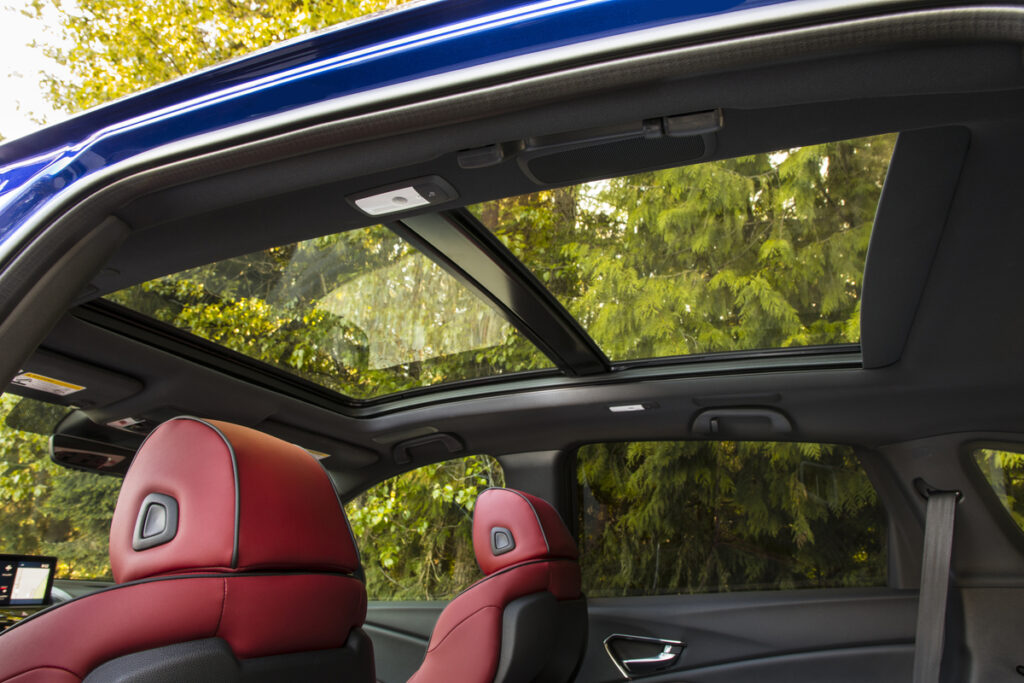
Based on the XF sedan, the Sportbrake is the same length but appears longer. And it is roomier inside, which is accentuated by the optional panoramic glass roof.

The ol’ station wagon ain’t what it used to be but it’s still as functional as it once was. This sedan-extension body style is finding new relevance that is not a minivan or an SUV and not looking like either while having more manners.

Wagon’s had become a universal gag reflex among those who grew up sliding around the back seats in the 1960s and ’70s. Even the European and import brands that continued with the body style created such descriptors as Sport Wagen, Touring or estate car.

But wagons have pushed back into the carscape in plentiful numbers, small and large. The styling trick is to avoid the squared off rear — then provide attitude in the stance and make sure it is sporty to drive.

Among the big wagon roundup are such choices as the Porsche Panamera Sport Turismo, Mercedes-Benz E- and S-Class, Volvo V60 and V90 (both in standard longroof or raised Cross Country) and the Buick Regal TourX.

The optional panoramic glass roof can handle 220 pounds.

And now Jaguar is testing the niche in the U.S. with its new XF Sportbrake with standard all-wheel drive. The moniker goes back to ye olde England when hunters boarded a “Shooting Brake” truck or wagon to be carted off to the countryside to harvest game.

If prestige and sex appeal sells wagons, then the XF Sportbrake is the runway model. The silver tester was a constant conversation starter all week with plenty of photos taken home on smartphones.

So far, the XF Sportbrake is sold in Jaguar’s sportiest S model configuration, which adds exterior elements of sportier front and rear bumpers, gloss black side sills and trunk lid spoiler. Pricing starts at $71,445, including the $995 freight charge from Castle Bromwich, U.K. The tester was $84,245 with four packages and the Indus Silver paint ($565).

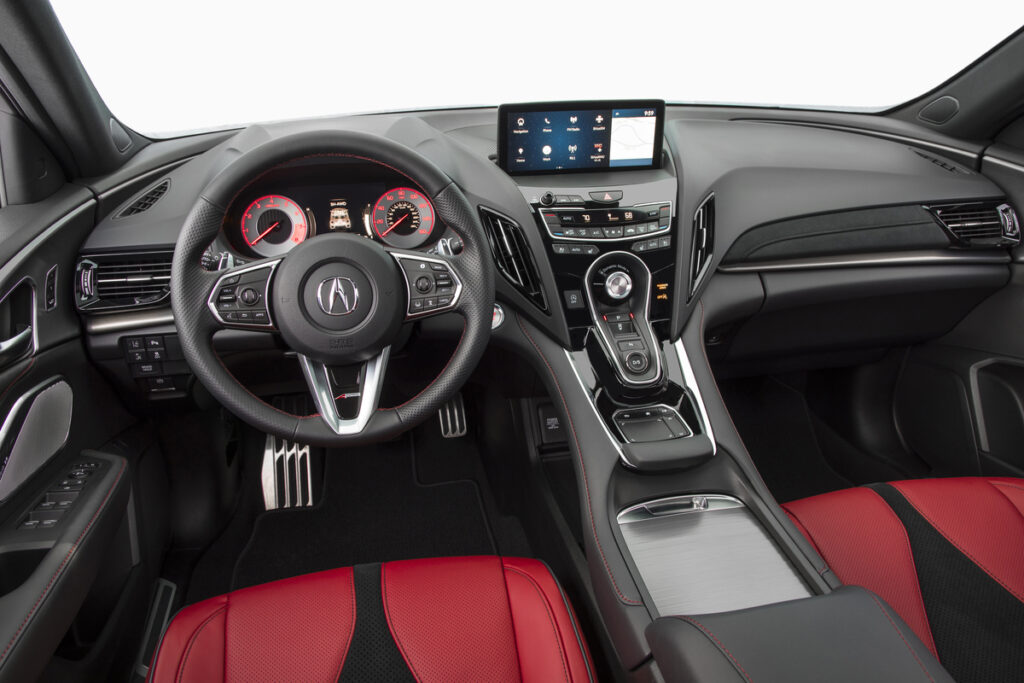
The driver area is simple but with many touch-screen controls.

XF DNA

The starting price of the Sportbrake is $3,585 more than the powertrain-comparable XF sedan.

While the XF sedan has engine choices of 2.0-liter turbodiesel and turbocharged gasoline four-cylinder, the Sportbrake gets Jaguar’s top XF engine:  the 380-horsepower supercharged 3.0-liter V-6 with 332 foot-pounds of torque at 4,500 rpm. All XF models have an eight-speed automatic transmission with steering wheel shifters. In addition to a Sport mode, which adjusts steering, transmission, throttle and suspension settings, there are configurable modes of Eco, Dynamic, Normal and Adaptive Surface Response (for low-grip situations).

The advanced AWD system puts most power to the rear until there is slippage and power is transferred as needed to the front wheels.

As old-school as the Jaguar brand once was, the modern re-incarnation is completely contemporary with compelling design and graceful interiors of fashionable arcs and bevels, solidly built and handsomely stitched.

The large cabin is rewardingly roomy.

Based on the XF sedan, the Sportbrake is the same length but appears longer. And it is roomier inside, which is accentuated by the optional panoramic glass roof.  And is a functional roof that can handle 220 pounds. The overall roof height is 57.4 inches (less than 5 feet) so it should be a simpler process to load bikes and other gear. And the Sportbrake can tow up to 4,408 pounds but the sedan is not rated for towing.

The large shifter dial rises from the console on ignition — for a little (too much) British theater.

Inside, there’s almost an inch more rear headroom (than the sedan) and the same comfortable rear legroom of 37.2 inches. The rear structure added 165 pounds, but you don’t feel it on the road because of the retuned front suspension and the S model’s self-leveling rear suspension.

With much aluminum throughout the body and architecture and a polymer (plastic) tailgate, the curb weight of 3,880 pounds is diminished by the big engine.

Fuel economy

But fuel economy does take a hit compared to the AWD sedan with the big motor: 18 mpg city, 25 highway and 21 mpg combined vs the sedan’s 20/28/23 mpg, using premium fuel.

I was averaging around 18.5 mpg and not sparing the Sport and Dynamic modes. But a 19.5-gallon tank gives a wide range.

The Sportbrake gets Jaguar’s top XF engine, the 380-hp supercharged 3.0-liter V-6.

Jaguar says the Sportbrake has a near-perfect 50/50 weight balance. While Sport mode has a desired effect, it is Dynamic mode that transforms the driving experience. It is easy to get hooked on its decisive launch acceleration among the faint whine of the supercharger. The ride stiffens but not harshly so and the steering is sensitized for minimal inputs when carving up blacktop roads. It just feels good to hold the nose to the apex and then roll on the power — and this much pleasure from a wagon.

Braking is absolute but never grabby from ventilated, four-wheel-disc brakes with 13.8-inch rotors front and 12.8-inches rear

Sightlines are mostly clear but the base of the righthand side mirror is wide and is worth a second look for pedestrians in crosswalks. The driver area is simple but with many touch-screen controls rather than switches and buttons.

The large cabin is rewardingly roomy, which also leaves room for many storage places. But there is a little too much British theater with the large shifter dial that rises from the console on ignition. It’s a cool detail for about a hundred times, then the owner might wish for a more functional e-bin charging area with an array of USB and 12-volt plugs.

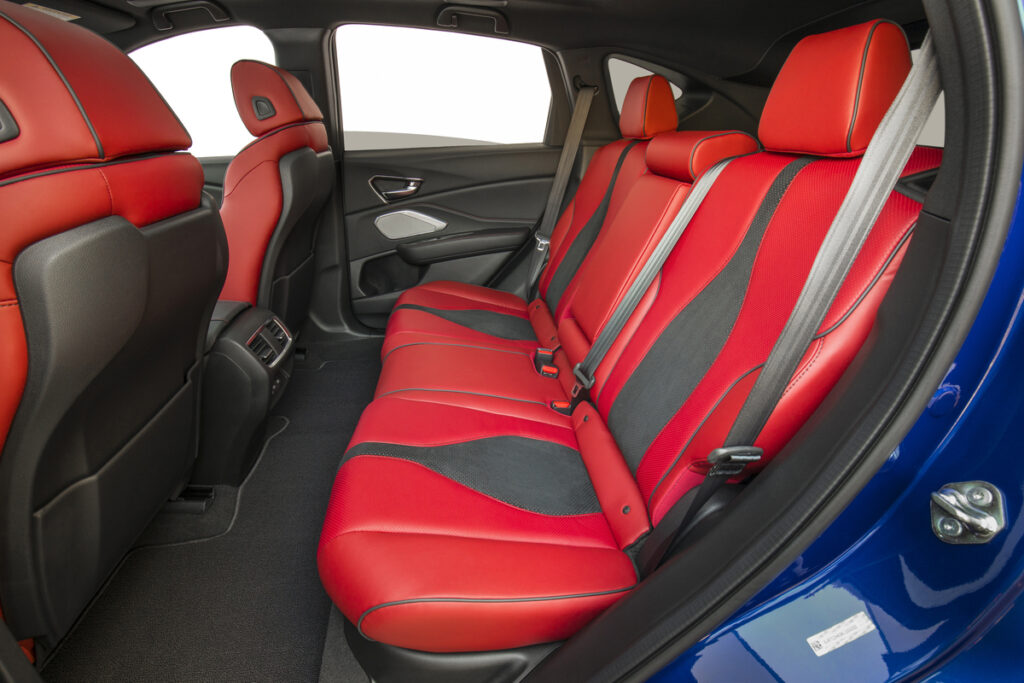
The back seat has wide and upright door openings for easy entry and exit. But the three-seat bench has a butts-down orientation to maximize foot and legroom.

I also griped about the noisy cabin fan at higher speeds and the maddening door-lock sensors that require massaging, gripping or slapping to coax into locking, and even that often didn’t work and I had to dig into my pocket for the fob. Just put a little button on the door handle to lock and unlock.

The big glass roof is barely noticed in the front seats, but it is majestic for back seat passengers.  The back seat has wide and upright door openings for easy entry and exit.  But the three-seat bench has a butts-down orientation to maximize foot and legroom. The center seat is compromised by the tall transmission tunnel and the 40/20/40 folding seatback leaves a narrow center position. Three air vents in the right places are a luxury.

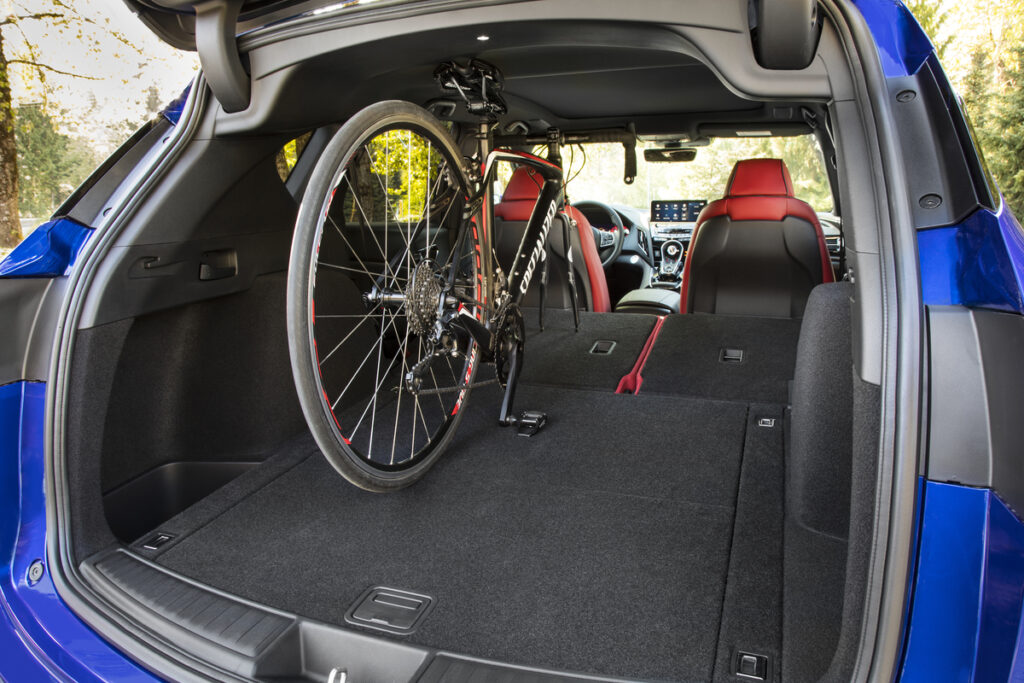
Cargo space is wide at 49.5 inches with about 6 ½ feet of length with the seat folded.

Cargo space, stacked to the headliner, spans 31.7-69.7 cubic feet. It is wide space at 49.5 inches with about 6 ½ feet of length with the seat folded.

Wagons were once a “life-stage” choice, but the XF Sportbrake is a lifestyle choice.

2018 Jaguar XF Sportbrake S AWD

  • Body style: large, 5-passenger, AWD wagon
  • Engine: 380-hp, supercharged 3.0-liter V-6; 332 lb.-ft. torque at 4,500 rpm
  • Transmission: 8-spd automatic with shift paddles
  • Fuel economy:  18/25/21 mpg city/hwy/combined; premium fuel
  • 0-60 mph: 5.3 secs
  • Drag coefficient: 0.30

SPECIFICATIONS

  • Fuel tank: 19.5 gal.
  • Cargo space: 19.1-31.3 cu. ft.
  • Front head/leg room: 39/41.5 in.
  • Rear head/leg room: 38.2/37.2 in.
  • Length/wheelbase: 195/116.5 in.
  • Curb weight: 3,880 lbs.
  • Turning circle: 38.1 ft.

FEATURES

  • Standard equipment includes: smartkey locking and push-button ignition, rearview camera, panoramic glass roof, LED headlights and running lights with high-beam auto assist, power heated and folding side mirrors, soft-grain heated steering wheel, metal sill plates, carpeted floor mats front and rear, 40/20/40 folding back seat, cargo-area cover, blue ambient interior lighting, foot-gesture activated tailgate, 380-watt Meridian audio system, front and rear parking tones, 8-inch touch infotainment screen,  S body kit with tailgate spoiler, 20-inch wheels
  • Safety features include: 6 air bags, lane-keep assist, driver drowsiness alert, blind-spot monitor, rear cross-traffic alert

PRICING

  • Base price: $71,445, including $995 freight charge; price as tested $84,245
  • Options on test vehicle: Indus Silver metallic paint $565; carbon fiber trim finisher $810; Tech package B, $3,265, includes 10-inch touch screen with navigation, WiFi hotspot, 825-watt Meridian surround sound system; Driver assistance package B, $3,495, includes adaptive cruise control with queue assist, traffic-sign recognition, 360-degree parking camera, blind-spot assist, parallel and perpendicular parking assist; Comfort and convenience package B, $1,805, includes heated and cooled front seats, heated rear seats, soft door closers; Premium interior package B, $2,860, includes four-zone climate control, manual rear sunshade, microsuede headliner, premium front and rear floor mats, lighted sill plates, 10-color ambient lighting
  • Where assembled: Castle Bromwich, U.K.
  • Warranty: 5-years/60,000-miles bumper to bumper with free scheduled maintenance and roadside assistance

Wagons were once a “life-stage” choice, but the XF Sportbrake is a lifestyle choice.

2019 Lexus ES 300h: Larger, more luxurious, more fuel efficient

2019 Lexus ES 300h: Larger, more luxurious, more fuel efficient

The fourth-generation ES 300 hybrid has starting prices of $42,335-$45,985, including the $1,025 freight charge from Kyushu, Japan.

The Lexus ES has been a consistent Golden Goose of sales since its debut in 1989. It found a fan base as a luxury-comfort midsize sedan that was not trying to be fast or flashy. And in today’s SUV-heavy car marketplace, the ES is still an enduring choice.

Re-engineered and redesigned for 2019, the seventh-generation Lexus ES went on sale in September in front-wheel-drive V-6 and hybrid models. Pricing starts at $40,525, a $550 increase over the outgoing model.

The fourth-generation ES 300 hybrid, also sold in three trim levels, has starting prices of $42,335-$45,985. All pricing includes the $1,025 freight charge from Georgetown, Ky., where the ES V-6 is built or from Kyushu, Japan, from where the ES hybrid hails.

The interior is handsomely designed with arrow-straight panel alignment.

The price difference between the gasoline and hybrid is just $1,810, which Lexus hopes will grow ES hybrid sales, which had been running at 15 percent of sales. Lexus would be happy with 20 percent, but isn’t expecting a big swing yet because its SUV crossovers are growing faster.

ES hybrid competitors include the Lincoln MKZ and the sport-infused Infiniti Q50 and plug-in versions of the BMW 330e and Mercedes C350e PHEV.

Also new for 2019 is the ES 350 F Sport, starting at of $45,060, which has a stiffer suspension, 19-inch wheels and tires, special aluminum interior trim, a rear spoiler and a dark lower valance.
Today’s tester is a midrange hybrid Premium model that starts at $43,510 and was $50,465 as tested.
The ES once left the impression of being an enhanced and pricier Camry, from which it shared the majority of its architecture, but the 2019 is more of a Lexus pureblood. It is built on Toyota’s global GA-K platform, which also is the foundation of the Toyota Camry and Avalon sedans. The new body has about the same dimensions as the new Toyota Avalon, which has an inch more front headroom and 1.2 inches more rear legroom. And the ES even beats the big LS flagship for a little more front head and leg room.

The wide multimedia display at the top of the dashboard includes a generous camera screen.

But the 2019 ES has more compelling exterior styling and is a definitive destination for luxury and prestige. The new body is 2 ½ inches longer, 1.8-inches wider and just a bit lower on a 113-inch wheelbase that is 2 inches longer than before. The wheels have been pushed closer to the corners and the stance is wider by 0.4 inch at the front axle and 1.5-inches rear.

There also are many buttons for quick adjustments of fan speed, temperature, audio volume and seat heat and ventilation.

The body is more rigid now with laser-screw welding and more industrial glue to secure (and silence) body panels. There is much more soundproofing throughout and the hybrid model gets a three-layer pad at the engine’s firewall to cut down on whirrs and whines from the motors and inverter. The aluminum hood and fenders help hold curb weight to 3,704 pounds, which is the lowest of the competing hybrids by a couple hundred pounds.

The hybrid powertrain (also used in Avalon) is a 176-horsepower, 2.5-liter Atkinson cycle four-cylinder gas engine (with Toyota’s direct and port injection) that is integrated with a 29.1 kw nickel-metal-hydride battery pack (204 cells) and two motor generators. One motor drives the front wheels, the other charges the battery and starts the car. Total system power is 215 hp, including the 39-hp battery. The transmission is a continuously variable automatic. Fuel economy ratings are an achievable 43 mpg city, 45 highway and 44 mpg combined, on 87 octane. I was averaging 42-44.3 mpg in my test week.


Mileage ratings of 43/45/44 mpg makes the ES 300h the most fuel-efficient luxury vehicle without a plug, Lexus says.

The battery is now under the passenger seat rather than below the trunk space, which is now fully functional at 16.7 cubic feet (for the gasoline model, too).

The ES 350 is powered by a 302-hp, 3.5-liter V-6 with direct and port fuel injection (D-4S) and an eight-speed automatic transmission. Fuel economy of 22 mpg city, 33 highway and 26 mpg combined is 2 mpg more than before with a larger car and 34 more horsepower.

While the V-6 has definite force, I never wished for more power — or more responsive power — from the hybrid tester. And its fuel thrift is a definite incentive.

All models have large four-wheel disc brakes with ventilated 12-inch rotors front, 11.1-inch solid rear.

The interior is handsomely designed with arrow-straight panel alignment. Unless you are 6-foot-5, the ES is very accommodating. The doors open quite wide (front and rear) and the seats that without overly sporty bolsters. The perforated NuLuxe leather-like upholstery is just as appealing as the real thing and more lightweight. But the lower roofline trimmed front headroom to 37.5 inches and the protruding ridge of the side-curtain air bags encroaches on the tall-person’s peripheral sense of space.

Every ES gets the new Lexus Safety System+ 2.0 technologies. Among the features are precollision warning with oncoming vehicle, all-speed dynamic radar cruise control with road-sign assist, lane-tracing assist and daytime bicyclist detection.

Other safety features include 10 air bags, parking assist (parallel and perpendicular), rear cross traffic alert and braking, lane-change assist, blind-spot monitor, LED cornering lights and Intelligent Clearance Sonar, which adds automatic braking to the rear cross traffic alert and intuitive park assist functions.

The center console packs a lot in a limited space to integrate a device-charging area with dual USBs, two cup holders (one of which has dual levels), the gear shift lever (stubby and handy to use) and a much more user-friendly touch-pad controller (less darty) to access features such as navigation, audio, phone and apps.

All models have large four-wheel disc brakes with ventilated 12-inch rotors front.

The wide multimedia display at the top of the dashboard includes a generous camera screen. There also are many buttons for quick adjustments of fan speed, temperature, audio volume and seat heat and ventilation.

And this is the first Lexus to offer Apple CarPlay infotainment and Amazon Alexa for Android devices, which allows voice commands to use car functions and connect with the home.

Back seat comfort, attention to detail and roominess are outstanding.

But there were some budget constraints at the rear trailing-arm suspension, which can be clunky over rough patches of road. And using the nickel-metal-hydride hybrid battery rather than the higher-tech (and higher cost) lithium-ion, seems a shortfall for a luxury-class car. But Toyota favors the lower cost, proven dependability and packaging capabilities of nickel-metal.

ES buyers are very loyal to the brand Lexus says. And those returning owners will have a more prestigious ES that is not an upscale Camry. You might be attracted to this car for its styling, but it will be a long-term destination for its accommodating efficiency.

Re-engineered and redesigned for 2019, the seventh-generation Lexus ES has just gone on sale in front-wheel-drive V-6 and hybrid models with a base price of $40,525, a $550 increase over the outgoing model.

2019 Lexus ES 300h Premium

Body style: midsize, 5-seat, front-drive sedan
Hybrid powertrain: 176-hp, 2.5-liter Atkinson cycle 4-cylinder gas engine with direct and port injection, integrated with a 29.1 kw nickel-metal hydride battery pack (204 cells)
Total system power: 215 hp, including 39-hp battery
Transmission: CVT
Fuel economy: 44/45/44 mpg city/hwy/combined; 87 octane
0-60 mph: 8.1 seconds

SPECIFICATIONS
Fuel tank: 13.2 gal.
Trunk space: 16.7 cu. ft.
Front head/leg room: 37.5/42.4 in.
Rear head/leg room: 37.4/39.2 in.
Length/wheelbase: 195.9/113 in.
Curb weight: 3,704 lbs.
Turning circle: 38 ft. *38.8 w/18-inch wheels

FEATURES
Standard equipment includes: smart key entry with push-button ignition, 10-way power adjustable front seats, Perforated NuLuxe upholstery, Bi-LED adaptive (turning) headlights and LED cornering lights, hands-free power trunk lid, 10-speaker Pioneer audio system, 12.3-inch color touch-screen infotainment, 7-inch multi-information (gauge) display, 3 USB ports, glass roof, 18-inch noise-reducing wheels, Enform app suite with Amazon Alexa, LED cornering lights
Safety features include: 10 air bags; precollision system with oncoming vehicle; all-speed dynamic radar cruise control with road-sign assist; lane-tracing assist; daytime bicyclist detection; parking assist (parallel and perpendicular); rear cross traffic alert and braking; lane-change assist; blind-spot monitor; and intelligent clearance sonar

PRICING
Base price: $43,510, including $1,025 freight charge; price as tested $50,465
Options on test vehicle: Navigation $1,920; blind spot monitor with panoramic view camera $1,900; triple-beam headlamps $1,515; 18-wheels $770; hands-free power trunk opener $550; wood steering wheel $300
• Where assembled: Kyushu, Japan.
Warranty: 4-years/50,000-miles bumper to bumper; 6-years/70,000-miles powertrain

The battery is now under the passenger seat rather than below the trunk space, which is now fully functional at 16.7 cubic feet (for the gasoline model, too).

Hot Wheels Immortalized In USPS Stamp Set

Hot Wheels Immortalized In USPS Stamp Set

The USPS will debut the stamp series Sept. 29 at the Goodguys 26th Summit Racing Lone Star Nationals at the Texas Motor Speedway.

Hot wheels stamp set of 20

BY MARK MAYNARD

The 50th anniversary of Hot Wheels is making yet another victory lap in its yearlong celebration. Toymaker Mattel’s tribute to its free-wheeling toy cars began April 28 with a 14-city tour to seek out crazy cars for a new series.

And now the U.S. Postal Service is honoring the diecast cars with a block of 20 Forever stamps showcasing some of the most outrageous designs from Hot Wheels history.

To be sure the stamps get a strong start, the USPS has chosen the Goodguys 26th Summit Racing Lone Star Nationals, Sept. 28-30, at the Texas Motor Speedway for the first-day-of-issue ceremony.

Five Hot Wheels cars will be on display all day Saturday, Sept. 29, and a postal-service booth will sell stamps. https://good-guys.com/lsn

Arranged in diagonal rows, the 20 stamps showcase photographer Len Rizzi’s images of 10 Hot Wheels cars — two of each design — speeding along a bright orange track.

Arranged in diagonal rows, the 20 stamps showcase photographer Len Rizzi’s images of 10 Hot Wheels cars — two of each design — speeding along the orange track.

Each stamp features the name of the vehicle shown in one of the top corners and the words “USA” and “Forever” in one of the bottom corners. The Hot Wheels logo appears in the top right corner of the pane. The back of the panel displays the Hot Wheels 50th anniversary logo. William J. Gicker was the project’s art director. Greg Breeding designed the stamps and was the typographer

Hot Wheels was born when Mattel co-founder Elliot Handler challenged his design team, which included a General Motors car designer and a rocket scientist, to create a toy car that was cooler and performed better than anything on the market.  Mattel soon introduced its orange tracks, which provided children unlimited ways to test out stunts and racing skills.   In 2011, Hot Wheels was inducted into the National Toy Hall of Fame.

Fans can view the ceremony live at www.facebook.com/usps.

Social media: www.hotwheels.com/Legends,  #HotWheelsLegends and #HotWheels50


NAME THE HOT WHEELS

Top row (left to right):

  • Purple Passion, 1990
  • Rocket-Bye-Baby, 1971
  • Rigor Motor, 1994
  • Rodger Dodger,  1974
  • Mach Speeder, 2018

Bottom row (left to right):

  • The Twin Mill, 1969
  • Bone Shaker, 2006
  • The HW40, 2008. Celebrating the 40th anniversary of Hot Wheels.
  • Deora II, 2000. The original surfboard-toting Deora was included in the first Hot Wheels line.
  • The Sharkruiser, 1987

Project ‘Marmite’: Electrified 1968 Jaguar E-Type reborn

Project ‘Marmite’: Electrified 1968 Jaguar E-Type reborn

The Jaguar E-Type Zero, will be available by summer 2020, hand-assembled at a 75,000 square-foot facility in Coventry, England. (David Shepherd photo)

It has the looks of a classic 1968 Jaguar E-Type, but under its long bonnet is an electric motor that delivers more performance than the six-cylinder iron lump with which it was born.

You might have seen the first completed E-Type Zero during the Royal wedding, in which Prince Harry and Meghan Markle drove to the ceremony at Windsor Castle. It was a brief showing of the car and Jaguar has been mum on how it occurred, nor did the loyal British brand seek publicity for the exposure.

What began as a one-off project to see if there was a future in electrifying its classic models has since become a new business model of Jaguar Classic. Completely restored electric E-Types, officially called the Jaguar E-Type Zero, will be available by summer 2020, hand-assembled at a 75,000 square-foot facility in Coventry, England.

There were two major areas of concern for even considering electric powertrains for its classics, said Tim Hannig, 40, director of Jaguar Classic. No. 1, he said, was that more metropolitan areas of England and Europe are considering a ban of the combustion engine. And No. 2 was concern for owners of vintage Jags, “What do people who love their cars do in that situation?”

The 295-hp electric motor is mated with a 40kWh lithium battery, which can be recharged in six to seven hours, depending on power source. The driving range is 170-200. (Jaguar Classic photo)

The classics market has changed, Hannig said, in an interview at the recent Quail Motorsports Classic in Monterey, Calif.

“What was once a segment dominated by older white males has evolved to multi-generations, multi-ethnicities and enthusiasts with near-luxury budgets not just the wealthy,” he said. “The majority who get into it [the classics market] now want to use their car as a convenience, a daily driver. The E-Type was not made for that. But now, we can make something that is a completely different animal.”

And that animal can now be purchased in a variety of stages and prices.

  • Jaguar Classic can find a good and solid, numbers-matching 1968 E-Type and restore it to as-new factory specs with the modern electric powertrain.
  • An owner can have the electric powertrain installed in his or her car and the original powertrain crated up to be saved.
  • Or, if you own a wreck, it can be built into a full electric.

It is not an inexpensive undertaking, but neither is restoring an E-Type. The electric powertrain alone is $75,000 and the completely electrified and restored Jaguar Classics E-Type will range from $300,000-$400,000.

The battery can be recharged in six to seven hours, depending on power source. (Jaguar Classic photo)

The conversion is a labor-intensive process, Hannig said. Considering that a quality restoration of an E-Type can cost $250,000 (above the cost of the car) there is some value in buying a restored Jaguar Classic.

“It’s all on us when we source a car because any problems are ours to fix,” he said.

Buying the factory-restored car, with matching numbers for engine and transmission, is expensive, Hannig said, “But you know exactly what you are getting.” And collectors know that every phone call from the restoration shop is $10,000, Hannig said, “and there will be five to eight of those. But we’ve turned around the bad moment.”

Project “Marmite”

Jaguar knows the E-Type is a precious collectible and treats it as such for all its restorations including the electric conversion. But not everyone in the company was on board with the electric idea.

It was so disputed, Hannig said, that the project was codenamed “Marmite,” for the British version of the yeasty sandwich spread (repurposed from brewing beer) that is loved or hated.

The seats, key-start ignition, steering wheel and hand-brake lever retain the classic’s design. The center console and dashboard (with modern toggle switches) are new. (Jaguar Classic photo)

“But after driving it, it feels exactly as an E-Type,” he said. “You feel every movement of the car and you don’t have engine noise. It’s a bit surreal.”

Hannig started with a convertible because it is a fair-weather car and ideal for EV-driving conditions (no freezing temperatures), but coupes also will be offered.

The project goals were many:

  • Above all, to cut no metal or alter the bodywork so the electric powertrain could be returned to a combustion engine.
  • The finished car had to have the same performance and driving characteristics.
  • And it could not be heavier and have the same weight distribution. The electric’s weight distribution is an ideal 51/49 front to rear, Hannig said.

“The XK engine is bloody heavy,” said Hannig, referencing the old 4.2-liter inline six-cylinder. “Removing it took out 360kg [about 794 pounds],” he said.

The original car’s curb weight was around 2,756 pounds and the electrified E-Type weighs about 100 pounds less, depending on how the owner equips the car. Performance, however, is throttled back to match the combustion model.

The transformation

The electrification process begins by removing the engine and transmission followed by complete body work and paint and then the installation of the electric powertrain. The interior is the last bit to be spruced up, Hannig said.

The cabin retains much of the classic style, including the seats, key-start ignition, steering wheel and hand-brake lever. The center console and dashboard (with modern toggle switches) are bespoke to the car, Hannig said, but the original style gauge pods can be used.

There are no cup holders, but there is no power steering, either, “so you won’t have a free hand to drink coffee,” Hannig said. And there is no air conditioning, either, but there is an option for it, he said.

The electric powertrain is a bespoke Jaguar system with an amalgam of parts from the new Jaguar iPace EV and other plug-in elements from Jaguar Land Rover.

The electric powertrain is a bespoke Jaguar system with parts from the new Jaguar iPace EV and other plug-in elements from Jaguar Land Rover. (David Shepherd photo)

The 295 horsepower electric motor is mated with a 40kWh lithium battery, which can be recharged in six to seven hours, depending on power source. The driving range is 170-200 miles on a charge. The top speed has been limited to 110 mph, in line with the original, Hannig said.

The battery pack has the same dimensions, and similar weight to the combustion engine and is in the same location.  The motor is sandwiched between the battery pack and the single-speed reduction gear transmission. A new propshaft sends power to a carry-over differential and final drive.

Jaguar is proceeding full speed with its Reborn Program (for Land Rovers, too) with a just-opened center in Essen, Germany, and a U.S. center in Savannah, Ga., is expected to open by summer 2019.

Electrifying the classic E-Type is a way to future-proof enjoyment of car ownership, Hannig said, to make it fit for another 50 years.

Info: www.jaguarlandroverclassic.com/workslegends

Pebble Beach Concours d’Elegance 2018 — Faces On the Green

Pebble Beach Concours d’Elegance 2018 — Faces On the Green
The 2018 Best of Show trophy went to this 1937 Alfa Romeo 8C 2900B Touring Berlinetta

The 2018 Pebble Beach Concours d’Elegance Best of Show trophy went to this 1937 Alfa Romeo 8C 2900B Touring Berlinetta, owned by David and Ginny Sydorick.

BY MARK MAYNARD

The Pebble Beach Concours d’Elegance is a long walk through automotive history, all of which could be considered “cars of tomorrow.” But there were two retrospectives that embraced the term: a line of a dozen Tucker 48s and a brightly colored lineup of the Citroen DS.

The official Pebble Beach poster featured a trio of Citroen’s DS 19 by British artist Barry Rowe.

According to one Tucker owner, this grouping was the largest gathering in one place since the debut of the movie in 1988, “Tucker: The Man and his Dream.” Among the cars was a bare test chassis and the 1947 prototype model, known as the “Tin Goose.”

Citroen Retrospective

The official Pebble Beach poster featured a trio of Citroen’s DS 19 by esteemed Brit artist (and car enthusiast) Barry Rowe. The DS nameplate is from the French word for goddess, Dé-esse.

Citroen introduced the DS in the fall of 1955 and production ran through spring of 1975. It, too, was a technology innovator and featured a number of firsts. Among them are inboard disc brakes and a hydropneumatic suspension with automatic leveling and adjustable ride height.

It was marketed as an “executive’s car” and it looked the part with its aerodynamic styling, power steering, semi-automatic transmission, and fiberglass roof.

Next year’s concours will be Aug. 18. Plan your visit here.

Here is a look at the friendly faces I saw on my walk through history:

A 12-car lineup of Tucker 48s was the largest gathering in one place since the debut of the 1988 film, “Tucker: The Man and his Dream.”

1965 Citroen DS Majesty, Chapron Limousine.

1961 Citroen DS 19, Cabriolet d’Usine. It was awarded the Center for Automotive Research at Stanford.

1961 Citroen DS 19, Cabriolet d’Usine. It was awarded the Center for Automotive Research at Stanford.

1966 Citroen DS 21, Chapron Le Leman coupe. 1st place Postwar Custom Citroën.

1953 Siata 208S Motto spyder.

1955 Maserati A6GCS Frua spyder. Awarded the Briggs Cunningham Trophy.

Shopping!

An affordable (somewhat) classic to bring home.

1953 Osca MT4 Frua spider.

1970 Ferrari 512S Modulo Pininfarina coupe. Winner for Most Elegant Sports Car.

1970 Ferrari 512S Modulo Pininfarina coupe.

Ford GT40.

1958 Scarab Mk II.

1953 Hudson Italia Prototype touring coupe.

1949 Delahaye 135M Pourtout Malmaison convertible.

1st place Postwar Grand Touring.

1948 Daimler DE36 Hooper convertible.

1951 Fiat 1400 Vignale cabriolet.

1948 Talbot Lago 26 Figoni fastback coupe.

Best of Show nominee and winner of The Vitesse ~ Elegance Trophy.

1957 Imperial Crown convertible.

Glorious script of the 1957 nameplate.

1927 Lanchester 21HP convertible tourer, from India.

1938 Peugeot 402 Darl’mat Pourtout roadster.

1964 Sheraton-Thompson Lotus 34 special.

And, of course, there is caviar.

1921 Fiat 502 S Corsa.

1956 Packard Caribbean convertible.

Rakish side lines of the And rakish lines of 1930 Rolls-Royce Phantom 1, Brewster Windblown.

1930 Rolls-Royce Phantom 1, Brewster Windblown coupe.

1932 Cadillac 452 B (V-16) Fisher all-weather phaeton.

1913 Stevens Duryea C-Six 5-seat touring.

1913 Stevens Duryea C-Six 5-seat touring, survivor.

1937 Lincoln K Brunn touring cabriolet.

1937 Pierce-Arrow 1703 limousine.

The Ruxton C, part 2.

1930 Ruxton C.

1959 Chrysler 300E convertible.

1953 Presidential Cadillac Eldorado.