Select Page

Hyundai Santa Cruz Review

Hyundai Santa Cruz Review

The 2022 Hyundai Santa Cruz is a cool-casual pickup and a thought-provoking reinterpretation of an American icon

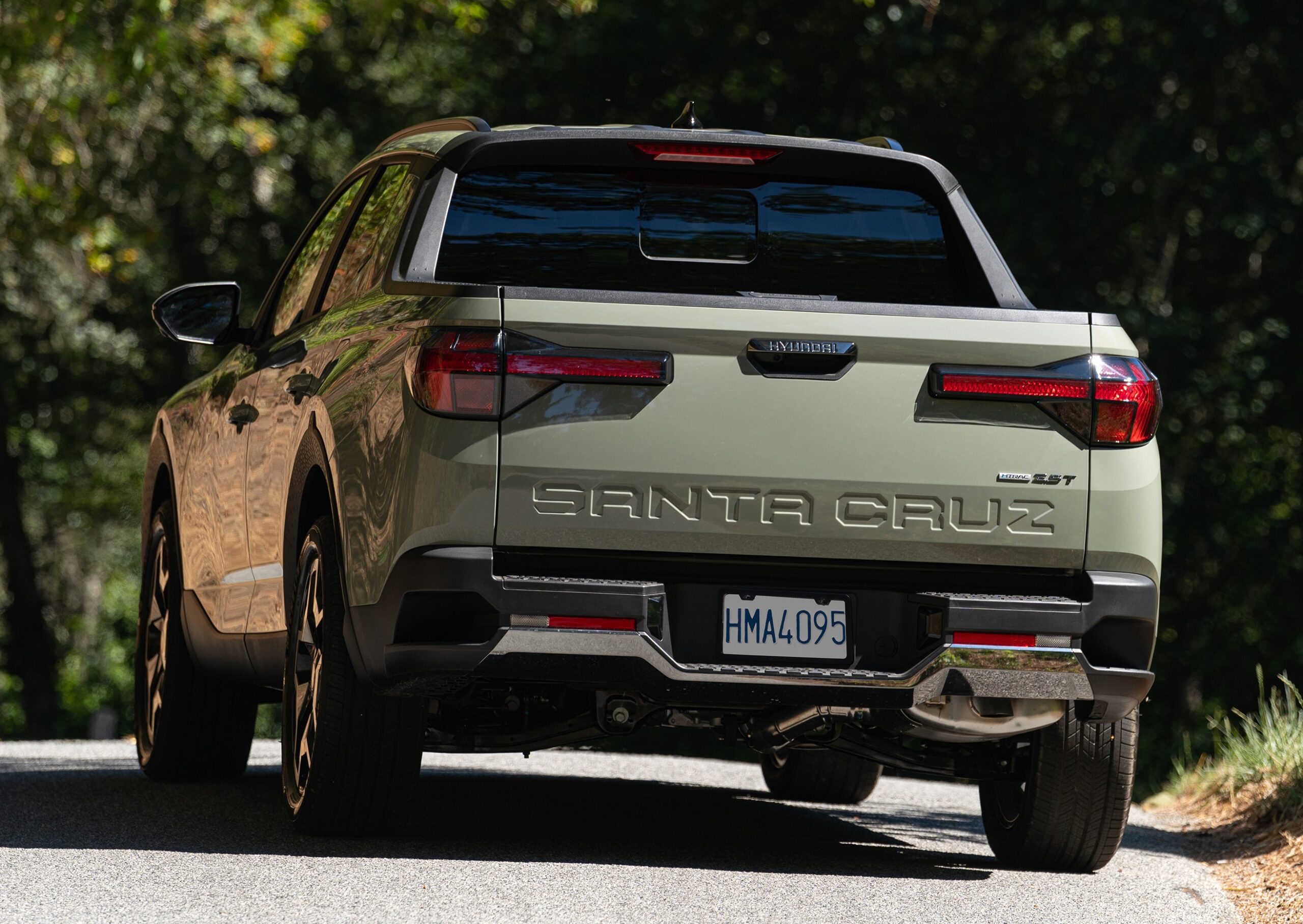
A Sage Green Hyundai Santa Cruz pickup

The Hyundai Santa Cruz is based on a longer and wider version of the compact-class Tucson SUV crossover. (Photos courtesy of Hyundai)

Table of Contents

Overview
The 4-Foot Bed
Pricing
Interior Function
Back Seat
Performance
Fuel Economy
Ride and Handling
Why Buy the Hyundai Santa Cruz?
Specifications

BY MARK MAYNARD

The Hyundai Santa Cruz is a cool-casual kind of pickup. Hyundai’s first pickup is a thought-provoking reinterpretation of an American icon. In tribute to Hyundai’s California-based design team, the Santa Cruz tail lights are embossed with: “Designed in California.”

The Santa Cruz is too lightweight to box with the big boys and to help avoid tired associations Hyundai considers the Santa Cruz a “Sport Adventure Vehicle.” It is similar to how BMW relabels its X5 SUV a “Sport Activity Vehicle.” Both makes are attempting to avoid a reference to just mere functional utility. But it is what it is, and the Hyundai Santa Cruz is quite well conceived for a pickup with a 4-foot bed.

There were similar vehicles in the past, even as far back as the mid-1930s. More recent examples are the Subaru Brat and Ford Sport Trac. The 1937 Chevrolet Master Deluxe Coupe Pickup, also known as the Foreman’s Pickup, wasn’t particularly stylish, but it was a hybrid choice for light-duty pickup work. And the bed could be removed and a trunk lid attached.

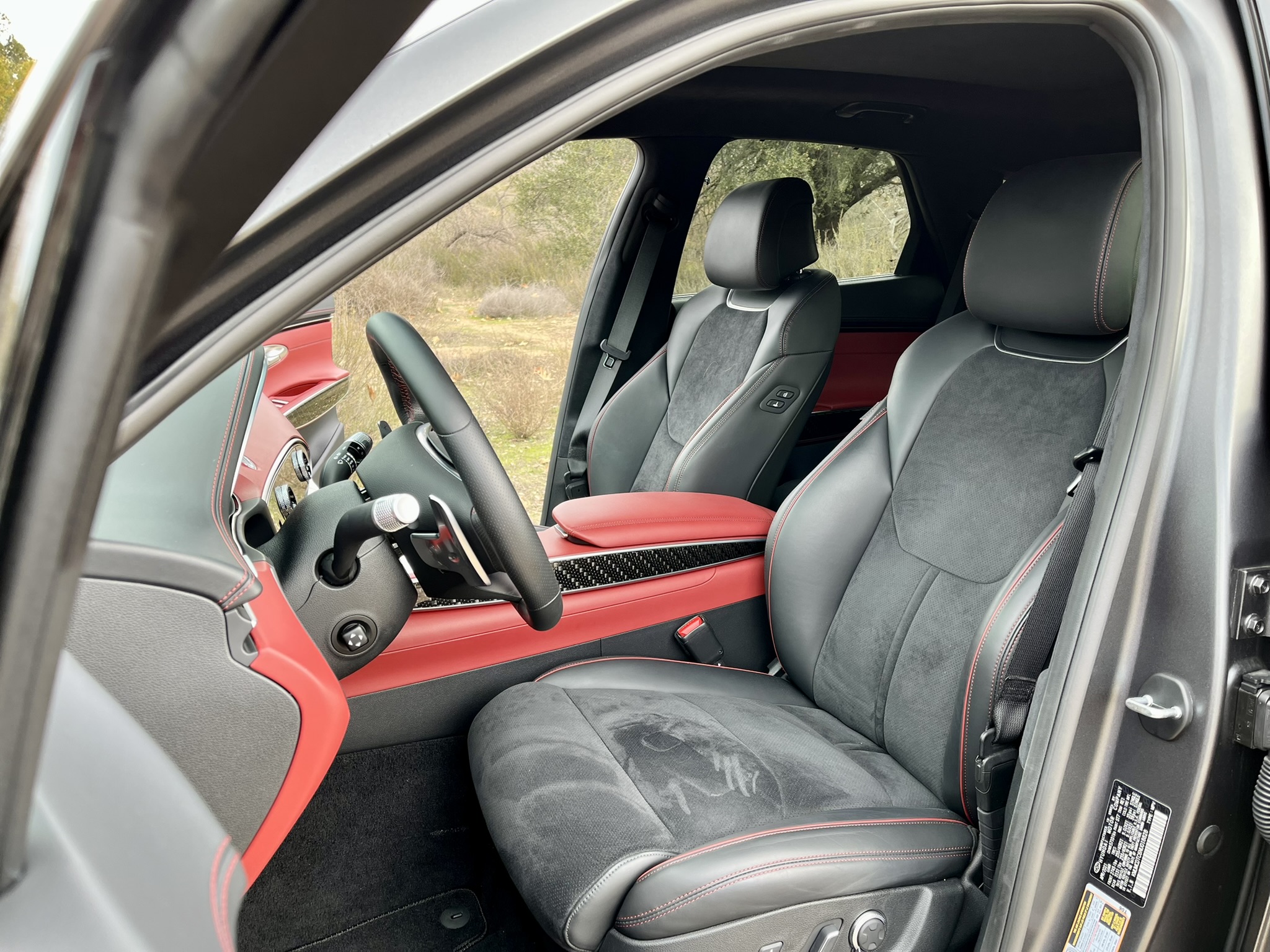
Santa Cruz Limited front seat area

Upgrades on the Limited include leather-trimmed upholstery and a 10.25-inch wide navigation display.

Hyundai Santa Cruz Overview

The Santa Cruz is based on a longer and wider version of the new Tucson SUV crossover. It has a unibody (carlike) chassis rather than a ladder frame used by heavier-duty pickup trucks. It has standard front-wheel drive and optional HTRAC on-demand all-wheel drive. Up to 50 percent of the drive power can be sent to the rear wheels by the lockable, clutched center differential.

Standard rear self-leveling shock absorbers keep the truck level when weight is in the bed or when pulling a trailer. Towing capacity is up to 5,000 pounds for trailers with brakes.

Santa Cruz has two powertrain choices: the standard 191-hp, 2.5-liter direct-injection four-cylinder with an eight-speed automatic transmission. Or a turbocharged version of the 2.5-liter with 281-hp and 311 foot-pounds of torque from 1,700-4,000 rpm. This engine uses an eight-speed dual-clutch automatic with paddle shifters.

The SE and SEL are available in front- or all-wheel drive. The Limited has standard HTRAC AWD, and a two-wheel-drive version will be added later in 2022.

Standard safety features and technologies are extensive and include: six air bags with rollover sensors, Forward Collision Avoidance-Assist with Pedestrian Detection, driver attention warning, lane-keeping and lane-follow assists, and automatic high beam assist.

Hyundai Santa Cruz front seats

Front headroom is tall at about 39.2 inches with the moonroof.

The 4-Foot Bed

The Santa Cruz is somewhat like two-thirds of an SUV with a 4-foot bed. And like many veteran pickup drivers will point out, a 4-foot bed is nearly useless. Until you start using this one, then this multifunctional, molded composite concept comes into focus.

Hyundai cherry-picked some successful pickup innovations and added its own to build an overachiever. Taking bullshit perception by the horns, here’s how features Hyundai applied to help the Santa Cruz:

  • Lockable roll-top tonneau cover;
  • In-bed “trunk” (ala Honda Ridgeline);
  • 115-volt AC power inverter;
  • Adjustable C-channel cleat rail system;
  • Heavy-duty cargo bed D-Rings and sliding cleats;
  • 2 sidewall bed storage compartments; one houses the 115-volt electric plug;
  • Bumper corner steps;
  • Dual side lights;
  • Rear sliding glass with defroster.
Above and below cargo capacity.

Above and below cargo capacity.

The tonneau locks with the tailgate. And because the roll-top tonneau can be locked in any position, it is possible to angle a surfboard or ladder out of the bed wedged in place by the tonneau and straps. And with the tonneau open, the front wheel of bicycles can be hung over the tailgate and strapped securely. And there is a full bed-length strap to pull the tonneau closed.

There is no cabin pass-through panel to the bed, but extra-long items can be fed through the back slider window. It is a small opening and manually opened and closed.

Hyundai Santa Cruz Pricing

The entry Santa Cruz is sold in SE and SEL trim levels with starting prices of $25,385 and $28,585; add $1,500 for all-wheel drive. Fuel economy ratings for front-drive are 21 mpg city, 26 highway and 23 mpg combined, and 21/27/23 mpg AWD.

Santa Cruz SEL Premium and Santa Cruz Limited get the turbocharged engine with the eight-speed wet, dual-clutch automated manual transmission. Its all-wheel-drive starting prices are $37,075 and $41,115. Fuel economy ratings are 19/21/27 mpg, and both engines run on 87-octane fuel.

All Santa Cruz MSRPs include the $1,245 freight charge from Montgomery, Ala.

Today’s Limited tester was $41,710 with Sage Gray metallic paint ($400) and carpeted floor mats ($195).

Check this link for current pricing and incentives.

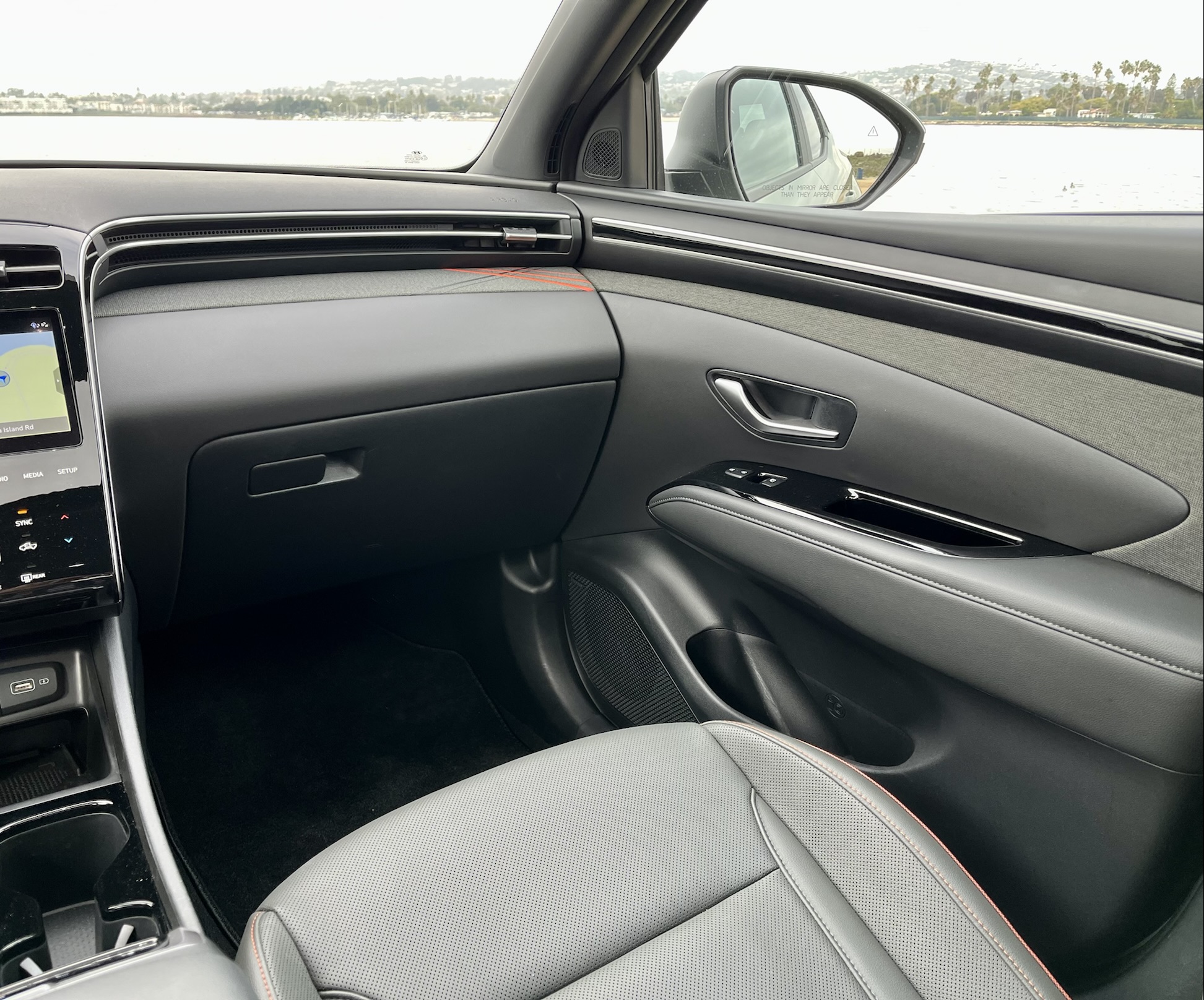
The artful interior design.

Artful interior design.

The Pricing Breakout

Every Santa Cruz has a bedful of standard features in true Hyundai style, including self-leveling rear shock absorbers and heavy-duty cargo bed D-Rings.

SE FWD: Rearview camera with parking guidance lines; dual front USB charge ports; rear bumper side step and sidewall bed storage compartments; electric parking brake; sliding sun visors; tilt-and-telescopic steering wheel with audio, cruise and phone controls; removable under-second row storage bin; 18-inch alloy wheels; LED taillights, daytime running lights and center brake light with LED cargo light; stain and odor resistant cloth seating; six-way manual driver seat with manual height adjustment; rear privacy glass; 4.2-inch color multi-information gauge display; body-colored power exterior mirrors; a six-speaker audio system with Bluetooth phone and audio connectivity and an 8-inch display audio screen; Android Auto and Apple CarPlay infotainment and apps.

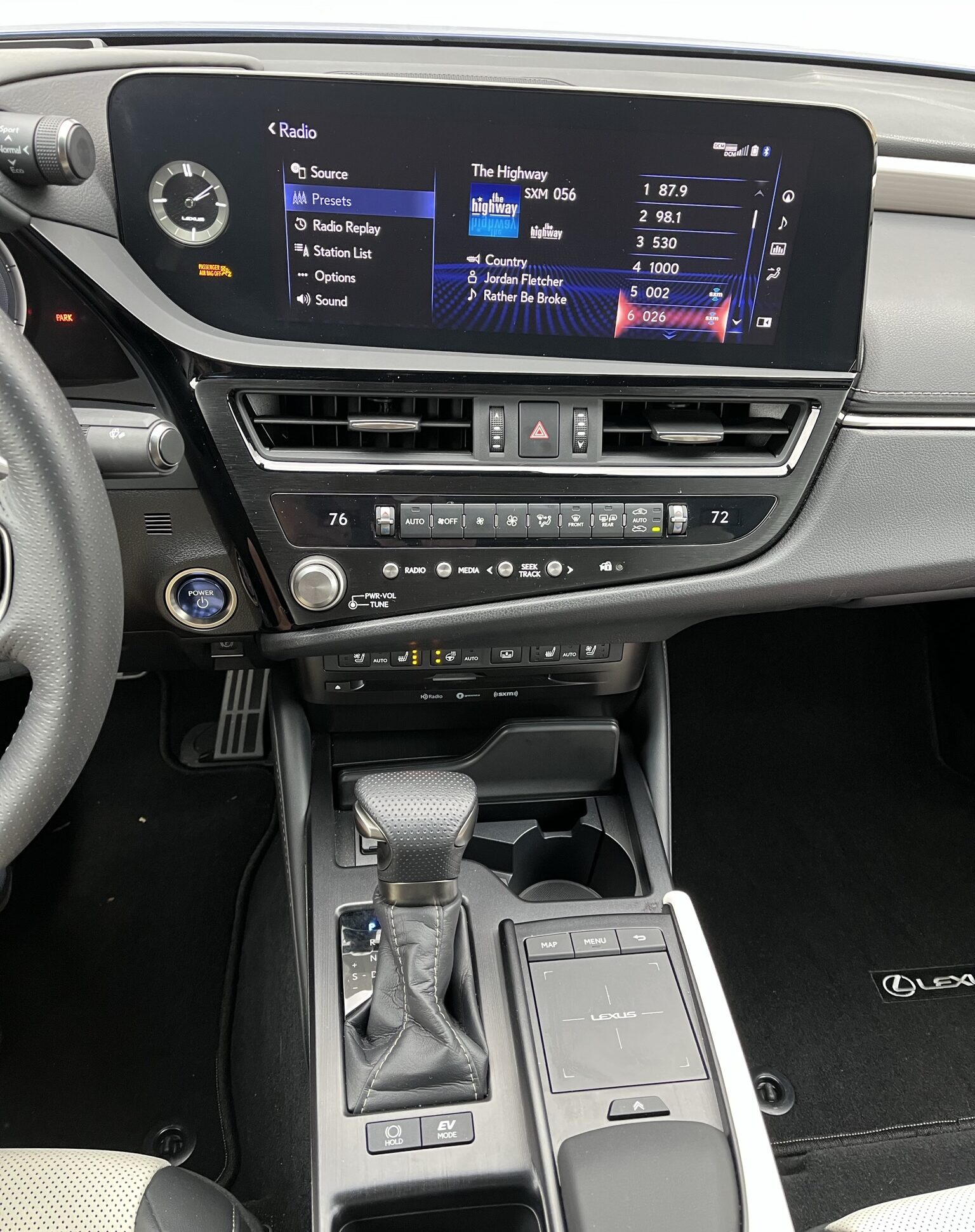
The infotainment screen in the Santa Cruz

The 10.25-inch edgeless infotainment screen.

SEL upgrades include: blind spot collision-avoidance assist; side mirrors with turn-signal indicators; rear cross-traffic collision-avoidance assist; remote engine start (on key fob); eight-way power driver seat with two-way lumbar support; heated side mirrors and heated front seats; proximity key entry with push-button ignition; lighted sun-visor mirrors; Blue Link connected car system; front auto-down and up power windows; and satellite radio.

Limited AWD additions include: dark chrome grille and tailgate handle trim; 20-inch alloy wheels; intelligent cruise control with idle stop/start; Highway Driving Assist; Intelligent Speed Limit Assist; leather-trimmed upholstery; heated steering wheel and ventilated front seats; surround-view monitor; Bose premium audio system; rear air conditioning vents; dual rear USB charge ports; ambient lighting; and 10.25-inch wide navigation display with dynamic voice recognition.

Paint colors: Ice White, Phantom Black, Hampton Gray, Sage Gray ($500), and Blue Stone.

The 10-inch digital gauge cluster Santa Cruz Limited Interior

The interior plastics have a high-quality appearance, from top to bottom. And every panel was joined precisely in the test vehicle. Together, the presentation is refined and rewarding and not the usual for a pickup truck.

A dual-cockpit treatment has an attractive dual-bead line of satin metallic trim separated by a band of piano black. The treatment flows into the doors. Also, a dark sage-colored fabric swath carries along with the trim lines.

While the fan is noisy at higher speeds, the front air vents have a diffuse mode to waft airflow.

A large and deep e-bin includes a wireless charging pad, charging USBs, a data USB, and a 180-watt, 12-volt outlet.

The front headroom is tall at about 39.2 inches with the moonroof.

There isn’t a physical button or switch on the 10.25-inch, edgeless center stack infotainment screen.

The Limited’s digital gauge cluster display also measures 10.25 inches.

Santa Cruz Back Seat

There is plenty of back-seat space for children and teens, but legroom of 36.5 inches is short for adults. The seatback does not recline, but it is at a comfortable angle. The low hump to the transmission tunnel helps with three-across footroom, but the window seats are the most accommodating. Rear air conditioning vents add to the comfort level.

Flip up the seat bottom for some usable bin storage. And other conveniences include two USBs, overhead grab handles, and a hook for a jacket or dry cleaning.

Santa Cruz Limited Performance

The base engine might be power-challenged for towing, with the entry models’ curb weights of 3,700 to 3,879 pounds.

A turbocharged version of the 2.5-liter in the SEL Premium and Limited is eager for responsive driving or towing, even with all-wheel drive. The engine’s 311 foot-pounds of peak torque are steady from 1,700-4,000 rpm. There is good launch force and urgent power for passing or keeping up with the Interstate pack on long uphill grades. Motor Trend clocked 0-60 mph acceleration in 6.3 seconds, which it reports was a tenth quicker than the Honda Ridgeline in its long, figure-eight test loop.

No auto stop-start at idle is needed to help meet government fuel economy or emissions ratings.

HTRAC AWD is an on-demand system. But it includes a locking differential, which is necessary for true four-wheel traction in snow or on the trail.

Four-wheel disc brakes are up to towing with 12.8-inch vented rotors front and solid 12.8-inch rotors rear.

20-inch tire and wheel of the Santa Cruz Limited

20-inch wheels and Michelin Primacy LTX tires, 245/50 on the Limited.

Santa Cruz Limited Fuel Economy

There isn’t much incentive to buy an entry model with the non-turbo engine, except for the price difference. It has fuel economy ratings of 21 mpg city, 26 highway and 23 mpg combined on the recommended 87 octane fuel.

The turbo engine has ratings of 19/27/21 mpg, with all-wheel drive. And the 27 mpg highway rating is not a typo — the AWD Santa Cruz gets 1 mpg better highway mileage than the FWD model.

I was impressed when my highway driving clicked over to 28 mpg, and it kept advancing until I reached my exit at 28.9 mpg. Some reviewers have clocked 30 mpg on the highway. That’s not bad for an all-wheel-drive curb weight of 4,057 pounds. Around town, I recorded a consistent 18 mpg.

The 17.7-gallon tank could provide a cruising range of nearly 500 miles with careful driving.

Ride and Handling

It feels tough and durable but never harsh, even on hard-packed gravel roads. But the body shape kicks up wind noise at highway speeds.

The Santa Cruz does not have a beefy ride height and glaring disposition. Instead, it is a smooth roller, kind and gentle. The smoothness is a hallmark of Hyundai engineering to eliminate friction for improved fuel economy.

Ride quality is quite civilized and controlled from the independent suspension. At the front are MacPherson struts with coil springs and gas-pressurized shock absorbers. The rear multilink has self-leveling gas-pressurized shock absorbers.

A long wheelbase of 118.3 inches helps with a settled highway ride, and the Michelin Primacy light-truck tires (245/50) are also quiet and smooth-rolling.

The Santa Cruz is an easy driver, but the turning circle of 39.6 feet can feel wide in tight parking situations. However, the Limited’s around-view monitor helps the driver keep it centered in the parking slot.

Why Buy the Hyundai Santa Cruz?

The Santa Cruz is a precision piece, from refined engineering and friction-free drivability to artful interior design. The closer you examine the Santa Cruz, the more potential you’ll realize.

The Limited tester was an example of “fully loaded,” but the SEL Premium with the same options would save nearly $4,000. If you can live with 18-inch wheels and fabric upholstery

As $70,000 has become the new $50,000 for full-size pickups, is a $41,000 compact truck considered a good buy? It is, with everything that Hyundai builds into it.

A rear view of the Santa Cruz

Standard rear self-leveling shock absorbers keep the truck level.

 Santa Cruz Limited AWD Specifications

Body style: compact-class four-door unibody pickup constructed of advanced high strength steels and high tensile steel with 4-foot cargo bed made of sheet molded composite

Engine: 281-hp, turbocharged and direct-injected 2.5-liter 4-cylinder; 311 lb.-ft. peak torque from 1,700-4,000 rpm

Transmission: 8-speed wet dual-clutch automated manual with steering-wheel paddle shifters

Maximum trailer weight: 5,000 lbs. AWD; 3,500 FWD w/ trailer brakes; with trailer sway control and auto-leveling rear suspension

Fuel economy: 19/27/22 mpg city/hwy/combined; 87 octane fuel recommended

BY THE NUMBERS

Fuel tank: 17.1 gallons

Cargo space: 12-33 cubic feet

Front head/leg room: 40.7*/41.4 in. *w/o sunroof

Rear head/leg room: 40.1/36.5 inches

Length/wheelbase: 195.7/118.3 inches

Curb weight: 4,057 lbs.

Turning circle: 39.6 ft.

FEATURES

Limited model standard equipment includes: smart-key locking with push-button ignition, 10.25-inch digital instrument cluster, 10.25-inch infotainment screen, surround-view rearview monitor with guidance lines, navigation system with Android Auto and Apple CarPlay, leather-trimmed upholstery, Bose audio system, 3 years of Blue Link Connected Services and Blue Link remote start, electric parking brake, dual front USB ports, wireless device charging, 8-way power driver’s seat with lumbar, heated and ventilated front seats, leather-wrapped steering wheel and shift knob, rear air vents, 60/40 folding back seat with storage bins below, 115-volt power inverter in the bed

Exterior Limited features: sheet-molded composite 4-foot bed, self-leveling rear suspension, heated side mirrors with turn-signal indicators, HTRAC AWD, 20-inch alloy wheels, automatic LED headlights with high-beam assist, dark chrome tailgate and grille, power sunroof, roof side rails, LED bed lighting, adjustable C-channel cleat rail system, rear sliding glass with defroster, integrated and lockable hard tonneau cover, under bed and sidewall storage compartments, rear bumper corner steps

Safety features include: 6 air bags, forward collision avoidance assist, lane-keeping assist and lane-following assist, blind-spot collision avoidance assist, rear cross-traffic collision avoidance assist, downhill brake control, hill-start assist, driver-attention warning

PRICING

Base price: $41,115, including the $1,245 freight charge; price as tested $41,540

Options on test vehicle: Sage Gray paint $400; carpeted floor mats $195

Where assembled: Montgomery, Ala.

Warranty: 5-years/60,000-miles basic coverage with roadside assistance; 3-years/36,000-miles free scheduled maintenance; 10-years/100,000-miles powertrain

2022 Mitsubishi Eclipse Cross Review

2022 Mitsubishi Eclipse Cross Review

The 2022 Eclipse Cross was redesigned for a sportier and more futuristic appearance, Mitsubishi says. (Photos courtesy of Mitsubishi)

Mitsubishi gave its 2022 Eclipse Cross an uptown redesign that added 5 inches in length, new styling front and rear, more standard safety features, and simplified infotainment systems

Table of Contents

Overview
Pricing and Warranties
Exterior and Interior Redesign
Safety Features
Interior Function
Back Seats and Cargo
Ride and Handling
Performance and Fuel Economy
Why Buy the Mitsubishi Eclipse Cross?
Specifications

BY MARK MAYNARD

Mitsubishi gave its 2022 Eclipse Cross an uptown redesign for it to be more relevant in the growing subcompact segment of SUV crossovers. The major midcycle update added 5 inches to accommodate new styling front and rear, more standard safety technologies, a new interior color, and simplified infotainment systems.

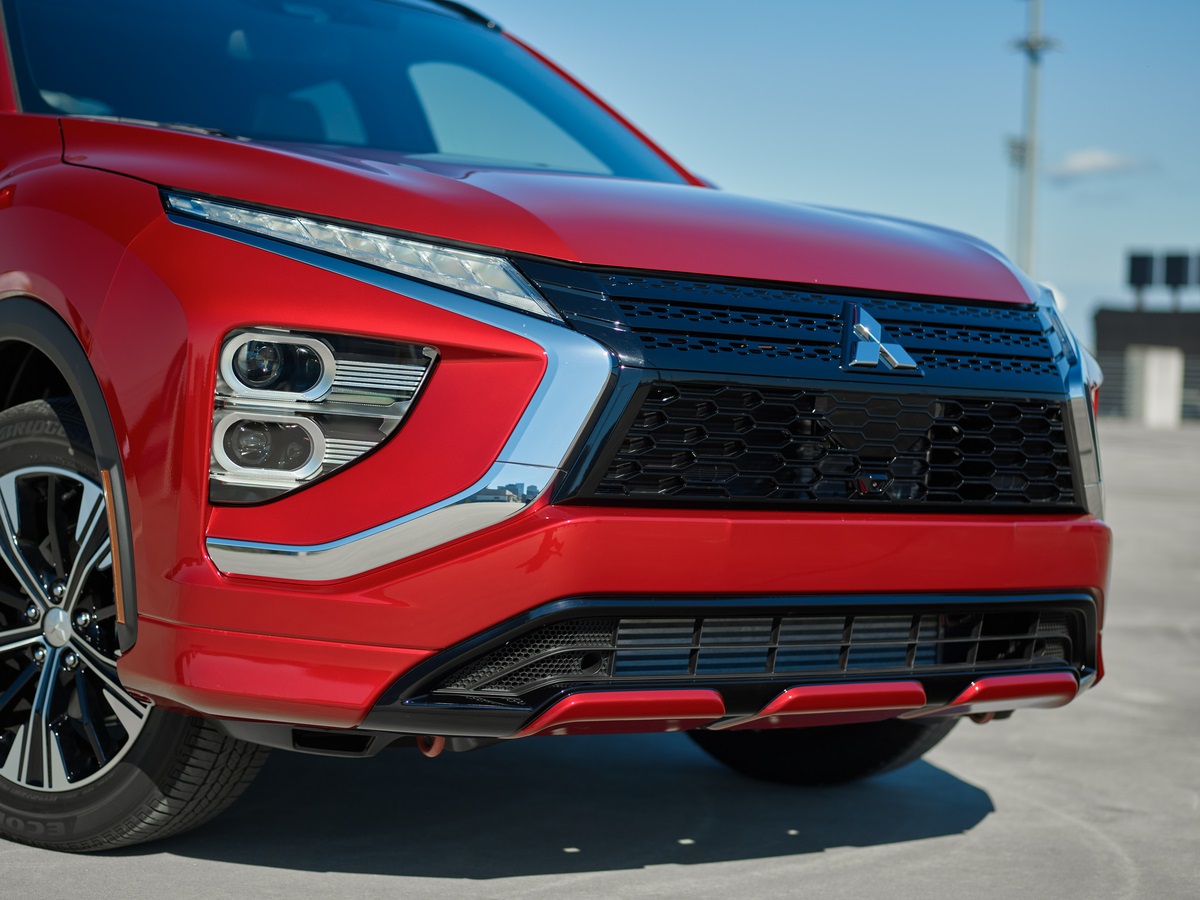
Most notable in the redesign is the “Dynamic Shield” face and tailgate styling, which eliminates the split-window hatch that was dramatically bisected by the taillight bar.

While Mitsubishi considers the Eclipse Cross a subcompact SUV, it is a tweener-compact in its size — but priced more as a subcompact. Competitors include Chevrolet Trailblazer, Honda HR-V, Mazda CX-30, Kia Seltos, Toyota Corolla Cross, and VW Taos.

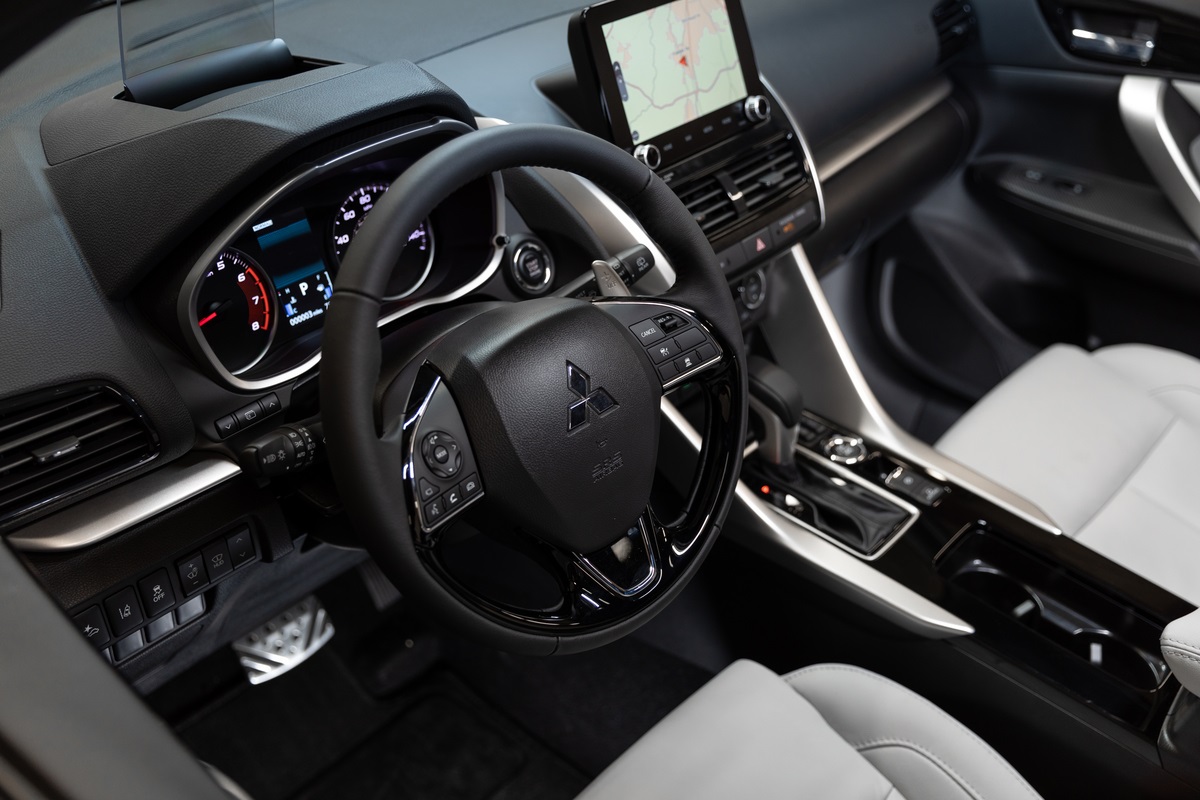
The driver area

Standard SEL features include leather-trimmed upholstery, fast-key entry with push-button ignition, multiview camera system, 8-inch navigation system with smartphone link, and 8-way power front seats.

Mitsubishi Eclipse Cross Overview

The Eclipse Cross is a thrifty SUV crossover powered by a 152 horsepower, turbocharged 1.5-liter four-cylinder engine. Its continuously variable transmission has an eight-step, manual-shift sport mode.

Starting prices range from about $25,000 to $31,000. Mitsubishi is not stingy with the standard features, and the comprehensive new-vehicle warranty is a convincing purchase incentive.

With the North American debut of the Eclipse Cross in 2018, there were a few updates for 2020. But the pandemic and resulting supply shortage canceled the 2021 model year. Mitsubishi is making up lost time with the 2022 major redesign, but more still needs to be done.

The extensive redesign of the 2022 Mitsubishi Eclipse Cross added more than 5 inches in overall length, now measuring 178.9 inches long. The length provides about another cubic foot of cargo space.

Vehicle width and height carryover at 71.1 inches wide and 66.3 or 66.5 inches tall in 2WD or 4WD. And the wheelbase remains unchanged at 105.1 inches.

Also new is an optional 8-way power passenger seat

Also new is an optional 8-way power passenger seat, available on SEL models.

Eclipse Cross Pricing and Warranties

The 2022 Mitsubishi Eclipse Cross is sold in four trim levels in standard front-wheel drive or optional Super All Wheel Control all-wheel drive. All models have one powertrain of a 152 hp, turbocharged and direct-injected 1.5-liter 4-cylinder, and continuously variable automatic transmission with eight-step sport mode and paddle shifters.

All MSRP pricing includes the $1,245 freight charge from Okazaki, Japan. Add $1,600 for all-wheel drive.

  • ES 1.5T $24,940;
  • LE 1.5T $26,290;
  • SE 1.5T $27,690;
  • SEL 1.5T $28,940.

(Since the 2022 model went on sale a year ago Feb. 2021, starting prices have increased by $300 and the freight charge by $50.)

Today’s Eclipse Cross SEL S-AWC tester was $34,425. Find options and accessories in the specifications box at the end of this story.

Find current Mitsubishi pricing and incentives here.

Mitsubishi New-Vehicle Warranties

Mitsubishi provides one of the most comprehensive new-vehicle warranties:

  • 10-years/100,000-miles for the powertrain;
  • 5-years/60,000-miles basic bumper to bumper coverage;
  • 5-years/unlimited mileage roadside assistance;
  • 7-years/100,000-miles anti-corrosion/perforation limited warranty.

Interior and Exterior Redesign

Mitsubishi says the exterior makeover of the 2022 Eclipse Cross creates a sportier and more futuristic appearance.

At the front is a new bumper and the latest version of the brand’s Dynamic Shield grille. New bisected lighting features thin, high-mounted LED daytime running lights at the leading edge of the hood with integrated turn signal lamps just below. The stacked-and-recessed lighting combines headlamp and fog lamp in a low-mounted position for optimal visibility, Mitsubishi says.

The rear end has a completely restyled hatch and window — cleaning up the initial split window design. The single-piece rear window and new hatch design added almost 2 cubic feet of space. Available space now is still shy of some competitors, but there is a maximum of 50.1 cubic feet with the second row folded and 23.4 cubic feet behind the second row.

The shift console of the Eclipse Cross

The CVT has an eight-step, manual-shift sport mode.

New Interior Design

The updated Eclipse Cross interior is now available with a light gray leather seat option with black accents. But the interior color choice is only available on the SEL trim.

Mitsubishi says that the gray trim package helps create a more refined interior aesthetic. Previously, black-on-black was the interior color theme. Also new is an optional power passenger seat, available on SEL models.

Driver and front passenger heated seats are standard on LE, SE, and SEL trims. In addition, a heated steering wheel is standard on the SEL trim, while the SEL with Touring package adds heated rear seats. The reclining rear seats have nine positions.

The 8-inch infotainment touchscreen

The touchscreen has been moved 2 inches closer to the driver.

Redesigned Infotainment

Highlighting the upgraded interior is a new 8-inch Smartphone-link display audio system, available on LE, SE, and SEL trims. The touchscreen has been moved 2 inches closer to the driver and features volume and tuning knobs for easier use. The previous center console touchpad is gone.

Apple CarPlay and Android Auto integration are included with the 8-inch screen. ES trims have a 7-inch display audio touchscreen.

An onboard navigation system with embedded “what3words” integration is standard on Eclipse Cross SE and SEL. Mitsubishi says the 2022 Eclipse Cross is the first production vehicle to be offered with what3words embedded directly into its navigation system.

The navigation screen

The navigation system is embedded with ‘what3words’ integration.

As a global addressing system, what3words divides the world into a grid of 3-meter-by-3-meter squares. Each square is assigned a unique what3words address. Mitsubishi says that the system allows pinpoint navigation, even in remote, unpopulated areas. The system allows greater accuracy than systems using street addresses.

The optional navigation system includes TomTom live traffic information and mapping.

Revised Suspension and Handling

The longer Eclipse Cross required some suspension finesse to maintain balance and control. As a result, the suspension was re-engineered with retuned shocks and springs, including larger rear shock shafts for better ride control. Engineers also addressed bounce and rebound control for more consistent ride quality.

Additional changes include connecting the rear suspension cross member to a double vibration insulator. Mitsubishi says that the more rigid connection provides a more planted feel than the previous bushing setup.

18-inch all-season Bridgestone Ecopia H/L tires (225/55) and two-tone wheels on the Eclipse Cross SEL.

18-inch  Bridgestone Ecopia tires (225/55) and two-tone wheels on the SEL.

Eclipse Cross Safety Features

The 2022 Mitsubishi Eclipse Cross recently received the highest-possible 5-Star Overall Safety Rating from the National Highway Traffic Safety Administration.

All 2022 Eclipse Cross models receive standard advanced driver assistance systems, including Forward Collision Mitigation with Pedestrian Detection and Lane Departure Warning.

Automatic high-beam-assist headlights and rain-sensing wipers are standard on LE, SE, and SEL trim levels. SE and above trims also include Blind Spot Warning with Lane Change Assist and Rear Cross-Traffic Alert.

Other standard safety features include seven air bags, active stability and traction controls, and hill-start assist.

A new bisected lighting design features thin, high-mounted LED daytime running lights.

A bisected lighting design features thin LED daytime running lights.

Eclipse Cross SEL Interior Function

The cabin space is quite tall and accessible. The doors open wide (wider than some economy vehicles), and headroom is a generous 39.5 inches with the panoramic roof.

Sightlines are good at the fenders and side mirrors but very cropped over the shoulder at the rear window pillars. Fortunately, the SEL includes a multiview camera system that takes the guesswork out of parking or backing up.

Both SEL front seats are eight-way power adjustable and heated, with a heated steering wheel.

The instrument panel and center console stack are tight on space, but most controls are intuitive to figure out. I found the optional head-up-display screen too much in my line of sight, but the screen can be switched off and lowered. The clear plastic panel rises from the back of the gauge array and highlights the speed and other elements. (The head-up display is part of the $2,100 SEL Touring Package.)

Eclipse Cross Back Seat and Cargo

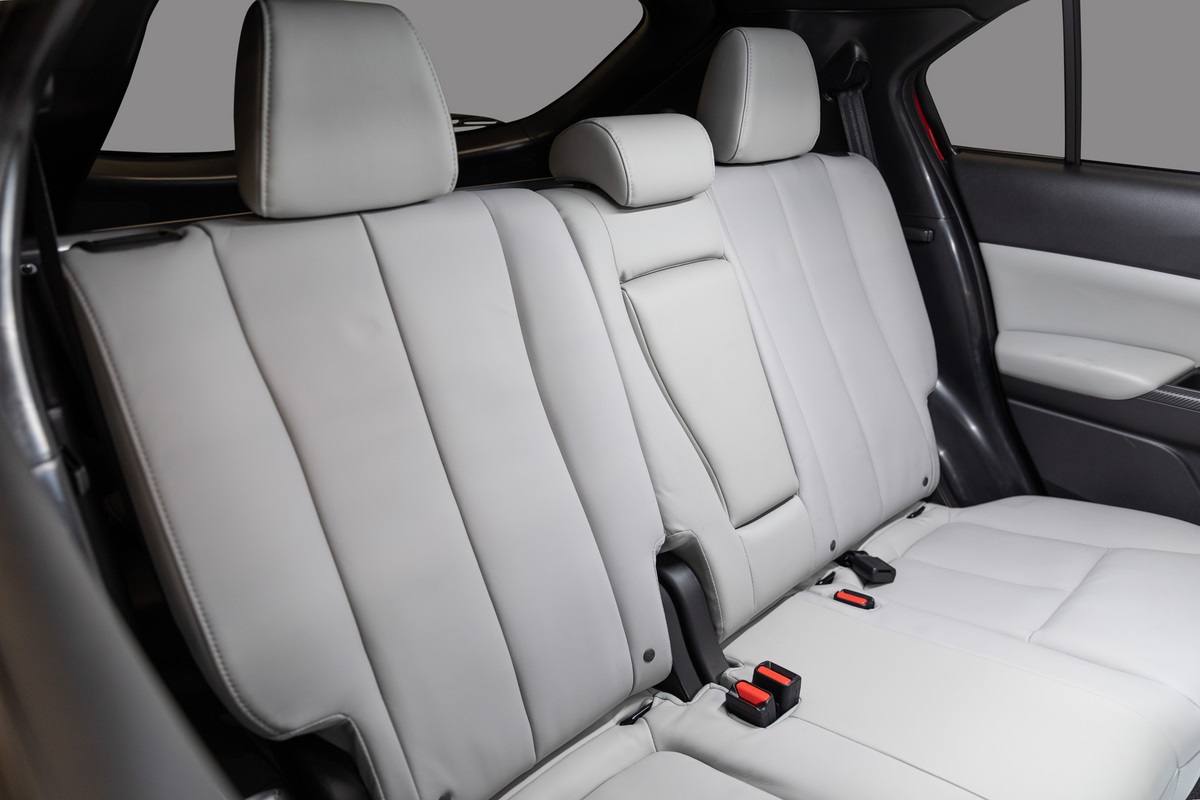
The back seat space is upright with decent legroom of 35.3 inches. However, tall occupants in front will significantly cut the leg space. The transmission-exhaust tunnel is a low hump, which helps with three-across footroom. The broad fold-down center armrest is an asset, as are overhead grab handles with a coat hook. In addition, the SEL model includes heated window seats.

The new liftgate might be heavy for some to raise and the lift to the cargo floor is tall. Cargo space is broad and deep, but the sport-roof design crops space for large and square items. Bicycles and other such gear will have to be mounted on the roof.

The back seat.

The back seat space feels upright but with legroom of 35.3 inches.

Eclipse Cross Ride and Handling

The Eclipse Cross is more of a people-mover than a people play toy despite many new suspension adjustments. The ride quality for a weekend drive is smooth and comfortable, but it also can be bouncy. And sections of rough road can provoke the occasional clunk. Around town, there is some stiff head tossing when crossing speed bumps or pulling into driveways with an angled approach.

It is not the most soundproofed highway ride. Some of that is wind noise from the upright stance, but the tires have some harshness. The 18-inch Bridgestone Ecopia H/L all-season tires (235/55) have a wear-like-iron treadwear rating of 700. The higher the rating (UTQG), the harder the rubber compound, which here qualifies for about a 70,000-mile warranty.

The four-wheel disc brakes are large to handle the 1,500-pound tow rating: 11.6-inch front ventilated rotors and solid 11.9-inch rotors rear.

Performance and Fuel Economy

The Eclipse Cross has the power to cruise at 80 mph all day. And with 184 foot-pounds of torque from 2,000-3,500 rpm, there is adequate zip to get out of trouble, but with slight turbo and CVT delay. There are Normal and Eco performance modes, but the fuel-sipping Eco gives such slow CVT uptake that I resorted to flipping gears with the paddle shifters. It would have been more fun with more horsepower, but I was missing the point of eco-driving.

Official fuel economy estimates with all-wheel drive (S-AWC) are 25 mpg city, 26 highway, and 25 combined, on the recommended 87 octane fuel. My around-town mileage was around 20 mpg, and on the highway, I progressed to 30.3 mpg, but one stretch was a 6 percent downhill grade for more than 10 miles.

The 15.8-gallon tank is above average in size for the segment.

Why Buy the Mitsubishi Eclipse Cross?

The Eclipse Cross is easy to enjoy with a teacup turning circle of 34.8 feet. Its price and small footprint will appeal to younger, socially connected buyers who like to pack up friends and gear for a weekend outing. Buyers in high-density urban areas with limited parking will appreciate its nimbleness.

It might be of interest that the Eclipse Cross won AutoPacific’s 2021 Vehicle Satisfaction Award in the compact crossover SUV segment. Owners of the 2020 model-year Mitsubishi Eclipse Cross rated their cars higher overall than owners of any other vehicle in the segment.

AutoPacific’s Vehicle Satisfaction Award measures owner satisfaction within individual categories ranging from driving performance and usability of features to seat comfort and interior design.

The Mitsubishi Eclipse Cross equaled or surpassed competitors in 32 of the 36 measured attributes. In addition, it received strong praise for safety features and safety ratings, and owners’ perception of durability and quality.

While the AutoPacific award was for the 2020 model, the company believes the redesigned 2022 Eclipse Cross will repeat this success.

There are many critics of new vehicles, but no evaluation is so valued as that of an owner.

New three-dimensional taillights create a broad and stable presence, Mitsubishi says.

New three-dimensional taillights create a broad and stable presence.

2022 Mitsubishi Eclipse Cross SEL Specifications

Body style: subcompact, 5-seat, 5-door SUV crossover

Engine: 152 hp, turbocharged and direct-injected 1.5-liter 4-cylinder; 184 lb.-ft. torque from 2,000-3,500 rpm

Transmission: CVT with 8-step sport mode with paddle shifters; Super All-Wheel Control with yaw control

Fuel economy: 25/26/25 mpg city/hwy/combined; 87 octane

BY THE NUMBERS

Towing capacity: 1,500 pounds.

Fuel tank: 15.8 gallons

Cargo space: 23.4 to 50.1 cubic feet

Front head/leg room: 39.5*/40.9 inches *w/panoramic roof

Rear head/leg room: 37.3/35.3 inches

Length/wheelbase: 179/105.1 inches

Curb weight: 3,428 pounds

Turning circle: 34.8 feet

FEATURES

Standard SEL equipment includes: Fast-key entry system with push-button ignition, multiview camera system, dual front USB ports, 8-inch navigation system with smartphone link, Apple CarPlay and Android Auto, 6-speaker audio system with satellite radio and Bluetooth phone and audio, steering wheel controls for voice recognition, audio-phone leather-trimmed upholstery, micron air filter, extended front (lighted) sun visors with mirrors, black headliner and roof pillars, LED exterior lighting (headlights, taillights, fog lights, and running lights), automatic headlights, tilt-telescopic steering wheel, 8-way adjustable front seats, heated front seats and steering wheel, leather-wrapped steering wheel, faux-leather wrapped shifter, 60/40 folding back seat, 18-inch two-tone alloy wheels with 225/55 all-season tires

Standard safety features include: 7 air bags, active stability control, Forward Collision Mitigation with Pedestrian Detection, hill-start assist, lane-departure warning,

PRICING

SEL base price: $30,540, including $1,245 freight charge; price as tested $34,425

OPTIONS ON TEST VEHICLE:

Popular Value Package $295, include metal-trimmed sport pedals, rear bumper step protector, and roadside assistance kit (includes jumper cables, tools, reflective triangle, and other items);

Hood nameplate in black $110;

Welcome Package $190 ;

SEL Touring Exterior Package $995, adds black front and rear corner extensions and side extensions;

SEL Touring Package $2,100, includes Forward Collision Mitigation with High Speed Braking capability with Pedestrian Detection, head-up display, heated rear seats, adaptive cruise control, 8-speaker Mitsubishi Power Sound System, auto-dimming rearview mirror with HomeLink, body-colored front and rear bumpers with body-color side door trim, power panoramic sunroof, and black roof rails;

Tonneau cover $195;

Where assembled: Okazaki, Japan

Warranties: 5-years/60,000-miles bumper to bumper with unlimited mileage roadside assistance; 10-years/100,000-miles powertrain

2022 Nissan Frontier Review

2022 Nissan Frontier Review

The best thing about the new Nissan Frontier is its purity of truckness that was not sanitized in the redesign.

A front-side view of the 2022 Nissan Frontier Pro-4X off-road model

The 2022 Nissan Frontier is available in King and Crew Cab body styles in rear- or four-wheel drive with a V-6 powertrain. Shown is the PRO-4X Crew Cab. (Nissan photography)

Table of Contents

Overview
Pricing
Safety Features
Interior
Back Seats and Cargo
Performance
Ride and Handling
‘Best Off-Road Truck’ Award
Why Buy the Nissan Frontier?
Specifications

BY MARK MAYNARD

The redesigned and re-engineered 2022 Nissan Frontier has not been such a compelling midsize pickup since the “Hardbody” of the mid-1980s to mid-1990s. But the Frontier’s catchup to the competition has been a long time coming — and worth the wait. The Frontier’s last complete makeover was in 2005 for the second-generation.

Its timing is right for the resurgence of midsize and compact pickups. The Frontier is midsize and will compete with the Chevrolet Colorado, Ford Ranger, Jeep Gladiator, and Toyota Tacoma. And the compact pickup segment is on the move with such just-released pickups as the Hyundai Santa Cruz and Ford Maverick.

PRO-4X and PRO-X models have the interior option for charcoal with Lava Red.

The optional Charcoal with Lava Red interior.

Nissan Frontier Overview

The 2022 Nissan Frontier is about the same size as before but a complete re-engineering with some exterior styling cues from Nissan’s full-size Titan pickup. Look for its “brutally vertical face” and interlocking-style grille.

Also new is a simplified build order. The new Frontier has just one V-6 powertrain and nine-speed automatic transmission, in two- or four-wheel drive. And there are two body-style configurations of King Cab and Crew cab body styles, in short- or long-wheelbase lengths.

A 5-foot bed is standard on all Crew Cab models, with a 6-foot bed available on Crew Cab SV Long Wheelbase models. A 6-foot bed is also standard on all King Cab models. The King Cab has four seats, the Crew Cab has five.

The exterior styling is sturdy and handsome, but it is not covering a delicate beauty queen. The Frontier’s workhorse foundation is a heavy-duty, fully boxed ladder frame. The front suspension is a double-wishbone with twin-tube shock absorbers, and at the rear are multi-leaf springs and a solid Dana axle.

Put it all together and the Frontier has a 6,720-pound maximum towing capacity. Payloads range from a maximum of 1,480 pounds on some 2WD models to 1,230 lbs. for the top-line Pro-4X.

There are tire and wheel packages of 16 or 17 inches with tires sizes of 265/70R16, 265/65R17, or 265/70R17.

The Frontier's front seats

It is a hands-on driver area with smart organization to cabin controls.

Nissan Frontier Pricing

The Frontier is available in four trim levels in two- or four-wheel drive:

  • King Cab: S, SV;
  • Crew Cab: S, SV;
  • PRO-X (2WD) and PRO-4X 4WD
  • Crew Cab long wheelbase: SV 2WD and 4WD

Starting prices range from $29,365 for the King Cab S to $38,595 for the Crew Cab Pro-4X. MSRPs include the $1,225 freight charge from Canton, Miss.

Today’s Frontier Pro-4X Crew Cab was $47,145. The PRO-X and PRO-4X feature 17-inch painted aluminum-alloy wheels, all-terrain tires, Bilstein Off-Road shock absorbers, an electronic locking rear differential. Three steel skid plates shield the underside, and fender flares fend off some trail scouring. LED lighting includes headlights, daytime running lights, and fog lights. And standard interior features include a 9.0-inch color touchscreen, Nissan Door to Door Navigation, and NissanConnect with Wi-Fi hotspot.

Check here for current incentives and pricing.

The 9.0-inch color touchscreen is a big screen for the Around View monitor, with 'trail cam.'

The 9.0-inch color touchscreen is a big screen for the ‘trail cam.’

Nissan Frontier Safety Features

With the complete redesign came a new integration of safety features and technologies.

Most notable is the optional Nissan Safety Shield 360. The group includes Automatic Emergency Braking with Pedestrian Detection, Blind Spot Warning, Rear Cross-Traffic Alert, Lane Departure Warning, High Beam Assist, and Rear Automatic Braking. The $990 package is available on all models.

With all of the available driver-assist technologies, the Frontier’s tech suite lacks steering-assist to provide semi-autonomous driving.

Standard safety features include eight air bags, Intelligent Forward Collision Warning, Automatic Emergency Braking with Pedestrian Detection, hill-start assist and hill-descent assist, and trailer sway control.

The LED headlight

The Pro models have LED exterior lighting.

Nissan Frontier Pro-4X Interior

Starting with a blank box gave the designers space to design the needs of the North American driver. The front seat area feels spacious with a tall headroom of 39.1 inches, with a moonroof. Switches and controls are within easy reach and in logical placement.

Soundproofing the cabin was a priority. There is more insulation, improved rear carpet structure, and new front-door acoustic laminated. Overall, Nissan says engine noise was reduced by 5 decibels during acceleration, road noise has reduced by 3 decibels, and wind noise was trimmed by 2.5 decibels.
The interior plastics have a quality appearance and feel solid and durable with good panel alignment.

The digital dashboard (gauges) is bold with large text and graphics. And the various modes are easy to page through from the steering wheel controls. The 9-inch color infotainment screen is almost clipboard size and is not affected by washout from sunlight. The touch controls are simple to navigate.

The center stack of controls below the touchscreen has an easy-to-reach tier for climate controls. And a lower deck for seat heaters, parking assist, and the USBs. There are four USBs throughout, of which two are the C type.

Large sliding visors actually do a complete job of blocking even that sliver of light that typically gets through at the windshield pillars.

The wireless phone charging pad is conveniently placed on the shift console. Unfortunately, wireless charging is available only on the Pro models, in the $1,990 Pro Convenience package.

The shift console with wireless charging pad

The shift console with wireless charging, grab handles, and large cup holders.

Cabin Access

Nissan says that the front Zero Gravity seats are designed for initial softness with lateral support to help reduce long-range fatigue. And the seat support is excellent, but the eight-way power driver seat does not have seat-bottom tilt, and the manual lumbar is not quite adequate for some. Also, the lumbar lever on the seatback side is not easy to move and feels prone to breakage.

The front passenger gets a handy grab handle at the windshield pillar to hoist aboard. But then the passenger gets only four-way manual seat adjustment, which is no fun for the buddy when out on a trail run. And it’s just wrong on a $47K vehicle.

There are several areas for small-item storage, including the locking (and deep) glove box, a deep armrest console box with a 12-volt plug, and door panels with a 32-ounce bottle slot.

The Frontier’s raised hood complicates sightlines across the fenders, but the front doors have a cut-down at the side mirrors that significantly helps in cornering. In addition, the Around View monitor with a front view (trail cam) is an empowering assist when pulling into a parking slot, the home garage or when cresting the spine of a rock run.

Frontier back seat space is snug.

The back seat has snug legroom and a very upright seatback.

Back Seat and Cargo Function

Stepping into the back seat feels more compact than midsize, and the seatback is very upright without any recline. A low hump to the exhaust-trans tunnel aids center seat footroom, but legroom is short at 33 inches, and worse if there’s a tall driver ahead.

Details include a helpful B-pillar grab handle and an overhead grip, a wide fold-down center armrest with cup holders, bottle storage in the doors, and dual USBs with a 400-watt 120-volt household plug.

The tester’s 5-foot bed is nicely accommodated by the Pro Convenience Package, $1,990. It includes a spray-in bedliner, 12-volt plug, side lights, and the Utili-track system with four adjustable tie-down cleats. (Full package features in the specifications chart at the end of the story.)

An underview of the Frontier's front skid plates.

Steel and aluminum front skid plates.

Frontier Performance

Nissan’s 310-horsepower, 3.8-liter V-6 has welcome thrust when needed, but throttle tip-in can feel abrupt when starting out from the light. Engine torque (the pulling force) is substantial at 281 foot-pounds, but its power peak is high at 4,400 rpm. Consequently, passing power can take a second to engage. But the nine-speed automatic rolls easily through upshifts, and, mercifully, there are no paddle shifters.

Fuel economy is competitive with the other V-6 trucks in the segment, even a click better than the Toyota Tacoma, at least on paper.

The Frontier’s EPA mileage ratings are 17 mpg city, 22 highway, and 19 mpg combined, on the recommended 87 octane fuel. My driving over a couple of hundred miles returned 12 to 16 mpg around town and overachieved on the highway at 22.3 mpg. The 21-gallon tank will provide a comfortable cruising radius of nearly 400 miles and possibly many more on a long highway run.

The Frontier's off-road wheels and Hankook tires

The Pro-4X tester had 17-inch beadlock-style wheels and all-terrain tires.

Frontier Pro-4X Ride and Handling

The Pro-4X might have an intimidating appearance, but the suspension does an excellent job of not beating-up occupants.

The long, 126-inch wheelbase helps steady the highway ride, but my favorite addition is the Bilstein shocks at the rear, which make every vehicle ride smoother. You will feel the body rigidity with some head toss when swinging into a driveway, but Nissan finessed the spring rates for compliance with control.

Still, the turning circle is wide at 42.4 feet, which can require four-point turns on the trail or in the parking structure. And arms get a workout from the overly stiff Pro-4X steering weight. An electronic driver-selectable mode for steering weight would be welcome when negotiating a trail or in close parking conditions.

Stopping power is substantial for all models from four-wheel vented disc brakes. Here are two-piston, 11.7-inch rotors at the front and 11.3-inch single-piston rotors rear.

The underside is protected by steel and aluminum skid plates at the front, with steel plates at the transfer case and fuel tank. And there are two robust front tow hooks.

The $750 step rails appear to be of heavy-gauge steel and include bolt-on footpads at each door. It’s smart to make the footpads removable because they can easily be snapped off on rocks or other trail outcrops. Also, if the off-roader wants to take the time to unbolt the steps, the rails are snug to the body and will make good rock rails when negotiating rugged terrain.

A side view of the Frontier Pro-4X

The 2022 Nissan Frontier is about the same size as before but a complete re-engineering with styling cues from Nissan’s full-size Titan pickup.

‘Best Off-Road Truck’

I couldn’t get to the desert or trail to test the traction of the Frontier Pro-4X, but the editors of TFLtruck.com (TheFastLaneTruck.com) did. And their teamed awarded it “Best Off-Road Truck” of 2022.

TFL testing included off-road prowess, technology, performance, trailer towing, and efficiency. Their team evaluated the Frontier against three other new 2022 model pickups — the Ford Maverick, Hyundai Santa Cruz, and Toyota Tundra.

Because off-road trail conditions are ever-changing, opinion comes into play when choosing the best of the bunch, according to the TFL crew.

“We compare all of the off-road specifications: ground clearance, approach and departure angles, tires, turning radius, off-road modes, transfer cases, and differential lockers,” wrote the reporting editor.

During the multi-venue evaluation, the Frontier got a workout in such areas as Colorado’s Webster Pass and Tombstone Hill trails. “Its midsize proportions shone through on narrow trails — while the Bilstein shock absorbers and aggressive all-terrain tires on the PRO-4X made ‘short work of most obstacles,’ the editors said.

All Frontier models have the same powertrain: 310-hp, direct-injected 3.8-liter V-6 and 9-speed automatic.

All Frontier models have a 310-hp, 3.8-liter V-6. (Mark Maynard photo)

Why Buy the Nissan Frontier?

Nissan has built small pickups since its first one in 1959. The Frontier has endured through good times and bad, and now the 2022 model reinstates its badge of honor.

For its reinterpretation, Nissan had many good trucks to cherry-pick great ideas while maintaining its engineering integrity. There aren’t any segment-separator features, but neither does the Frontier lack any utility features.

As tough as is the Frontier Pro-4X, it still is a comfortable and accommodating daily driver.

But the best thing about the new Nissan Frontier isn’t its hardware or software. It is its pure truckness that hasn’t been sanitized in the redesign. If you prefer a carlike pickup, consider the Honda Ridgeline.

An off-road Frontier scrambles up a dirt track.

The PRO-X and PRO-4X feature 17-inch painted aluminum-alloy wheels, fender flares, all-terrain tires, Bilstein Off-Road shock absorbers, an electronic locking rear differential, and three steel underbody skid plates.

Nissan Frontier Pro-4X Crew Cab Specifications

Body style: midsize, LWB 4-door, 5-seat pickup with 5-foot cargo bed

Engine: 310-hp, direct-injected 3.8-liter V-6; 281 lb.-ft. torque at 4,400 pm

Transmission: 9-speed automatic with 7-position drive mode and tow-haul mode; part-time 4WD with high and low gearing transfer case; 4-wheel limited slip

Fuel economy: 17/22/19 mpg city/hwy/combined; 87 octane recommended

BY THE NUMBERS

Fuel tank: 21 gallons

Max payload: 1,230 lbs. 4×4;

Max towing: 6,720 lbs. with trailer-sway control

Front head/leg room: 39.1*/42.3 in. *w/moonroof

Rear head/leg room: 38.6/33.2 in.

Length/wheelbase: 224.1/126 in.

Height/width: 72.9/74.7 in.

Curb weight: 4,708 lbs.

Ground clearance: 9.5 in. front differential; 9.4 in. rear differential

Turning circle: 42.4 ft.

FEATURES

Pro-4X standard equipment includes: Intelligent key locking with push-button ignition, rearview monitor, PRO unique leather-wrapped steering wheel and shifter, PRO unique leather seat stitching, 7-inch driver gauge display, 9-inch color touch screen, 10-speaker audio system with satellite radio and Apple Car Play and Android Auto, voice recognition for navigation and audio, Bluetooth phone and audio, NissanConnect with Wi-Fi hotspot, 4 USBs (2 C type), 60/40 folding back seat with under-seat storage

Off-roading features: Bilstein rear off-road shocks, electronic locking rear differential, rear suspension stabilizer, 17-inch PRO alloy wheels and 265/70 all-terrain tires, shift-on-the-fly 4×4

Exterior features: LED headlights and high beams, LED running lights and fog lights, aluminum front skid plate and 3 steel underbody plates, sliding rear window, locking (and damped) tailgate, bed-rail protectors, high-mounted cargo light, 4 cargo tie-downs, LED rear lights, over-fender flares.

Standard safety features include: 8 air bags, hill-start assist, hill-descent assist, trailer sway control, Intelligent Forward Collision Warning, automatic emergency braking with pedestrian detection, brake-force distribution, brake assist, dynamic stability and traction controls.

PRICING

Pro 4-X Crew Cab 4×4 base price: $38,595, including $1,225 freight charge; price as tested $47,145

Options on test vehicle: Tactical Green metallic paint $395; Off-road style step rails $750; Bed Access package $540; Sport bar $1,095

Pro Convenience package, $1,990, includes spray-in bedliner; Util-track system with 4 adjustable tie-down cleats; heated side mirrors; heated steering wheel and front seats; LED under-rail lighting; remote engine start; trailer hitch with wiring harness; Intelligent Around View Monitor with moving object detection and front trail view; wireless charging

Pro Premium package, $2,790, includes Fender 10-speaker audio system; leather-trimmed front and rear seats; auto-dimming rearview mirror with Homelink universal transceiver; auto tilt-and-slide sunroof with manual shade; 17-inch beadlock-style alloy wheels.

Technology package, $990, includes lane-departure warning; blind-spot warning; rear cross-traffic alert; rear sonar system; automatic rear braking; high-beam assist; intelligent cruise control; traffic sign recognition.

Where assembled: Canton, Miss.

Warranty: 3-years/36,000-miles bumper to bumper; 5-years/60,000-miles powertrain

2022 Audi Q5 Review

2022 Audi Q5 Review

There is a lot to unwrap for the 2022 Audi Q5. This compact SUV is sold in two body styles with choices of gasoline engines or a plug-in hybrid

The Audi Q5 is sold with a choice of three models: the Q5 45 TFSI 4-cylinder (today’s tester), Q5 55 TFSI e plug-in hybrid, and the SQ5 turbocharged V-6.The Audi Q5 is sold with a choice of three models: the Q5 45 4-cylinder (today’s tester), Q5 55 e plug-in hybrid, and the SQ5 turbo V-6. (Photography by Mark Maynard)     

Table of Contents

What’s new for 2022?
Pricing
Performance and Fuel Economy
Safety Features
Ride and Handling
Quattro AWD
Interior Function
Back Seats and Cargo
Why Buy the Audi Q5?
Specifications

BY MARK MAYNARD

There is a lot to unwrap about the 2022 Audi Q5, and not just that it shares a celebrity lineage with the Porsche Macan — and has heated and cooled cup holders. This compact SUV crossover is Audi’s top-seller and packs an abundance of five-star NHTSA safety ratings. And it is sold in two body styles, including the rakish Sportback, and with choices of gasoline engines or a plug-in hybrid.

What’s New for the 2022 Audi Q5?

The Q5 has powertrain choices of a gasoline-powered 45 TFSI and the 55 TFSI e plug-in hybrid. Both have standard quattro all-wheel drive. (TFSI stands for the turbocharged and direct-injected engine.) Next, choose from three trim choices: Premium, Premium Plus, and Prestige.

Following a styling, decor, and infotainment update in 2021, the 2022 Q5 45 TFSI was upgraded to a standard S line exterior. The treatment includes aluminum front door-sill inlays with an illuminated S logo. There is also a new 18-inch wheel design for the Premium trim.

Additionally, a power-adjusted steering column is now standard in the Premium Plus trim. And the performance-oriented SQ5 and SQ5 Sportback get real Atlas Carbon fiber inlays as standard.

A new Black optic package ($1,300) is available for all models, including black exterior trim and 20-inch wheels with all-season tires.

The plug-in Q5 55 e gets standard sport seats to create an SQ5-lite variant. The plug-in hybrid model also receives a battery upgrade to a 17.9 kWh battery, which adds 3.8 kWh. Q5 55 e has an electric driving range of around 19 miles.

The driver area of the Q5

Front headroom is a tall 39.6 inches even with the moonroof.

Audi Q5 Pricing

Starting prices for the Q5 45 range from $46,695 to $51,695 to $57,395. The powertrain is the 261-horsepower, 2.0-liter turbocharged and direct-injected four-cylinder with a seven-speed direct-shift (automated manual) automatic transmission. Audi cites 0-60 mph acceleration in 5.7 seconds. All MSRPs include the $1,095 freight charge from San Jose Chiapa, Mexico.

The 55 e plug-in hybrid uses the 2.0-liter engine with an electric motor and 17.9 kWh lithium-ion battery. With power ratings of 362 hp and 369 foot-pounds of torque, Audi cites 0-60 mph acceleration in 5 seconds. Starting prices range from $55,695 to $65,145.

The high-performance SQ5 quattro has a 349-hp 3.0-liter V-6 with 369 lb.-ft. of torque. Audi cites 0-60 acceleration in 4.7 seconds with its eight-speed Tiptronic automatic. The SQ5 also has three trim choices with starting prices ranging from $56,695 to $66,095.

The fastback Sportback models, with cropped cargo space, are available only with the 45 TFSI powertrain and the same basic content as the full SUV model. The Sportback price premium ranges from $2,300 to $4,300, depending on trim choice.

The Audi Q5 S Line 45 quattro Prestige tester was $59,290 with options including the $595 Glacier White metallic paint and the Black optic package, $1,300.

Ibis white paint is the only non-premium color. Another six hues are offered for $595 each, and there are exclusive colors for $3,900.

Check here for current pricing and incentives.

The handsome tricolor theme with the tester’s Atlas Beige leather-trimmed and perforated upholstery

The handsome tricolor theme with the tester’s Atlas Beige leather.

Performance and Fuel Economy

The Q5’s turbocharged and direct-injection 2.0-liter four-cylinder has an impressive 261-horsepower and 273 foot-pounds of torque from 1,500-4,200 rpm.

All Q5 engines feature a 12-volt “mild hybrid” system that engages auto stop-start at idle. The MHEV system also can recover energy under braking or coasting. A lithium-ion battery powers auxiliaries when coasting with the combustion engine shut off. The 12-volt belt-alternator starter system adds 13 horsepower.

Going pedal-down for full launch force creates quite the road show, factoring an all-wheel-drive curb weight of 4,079 pounds. But initial acceleration can be delayed as the turbo spools power and the dual-clutch (an automated manual) engages a gear.

In normal drive mode, the fuzzy logic calibrations to the transmission dole out shifts according to how the driver has been working the accelerator. Easy, around-town driving has a conservative response. But when get-me-outta-here force is needed, the sensors fire off imminent-danger alerts and then there is liftoff. I learned to finesse the “logic” by being a little more aggressive on the accelerator or just driving in Sport mode.

Official fuel-economy ratings are 23 mpg city, 28 highway, and 25 mpg combined on the recommended premium fuel. The good news is that I worked up to a combined 30.3 mpg in a 180-mile highway run. And with the 18.5-gallon fuel tank, the cruising range can be more than 500 miles.

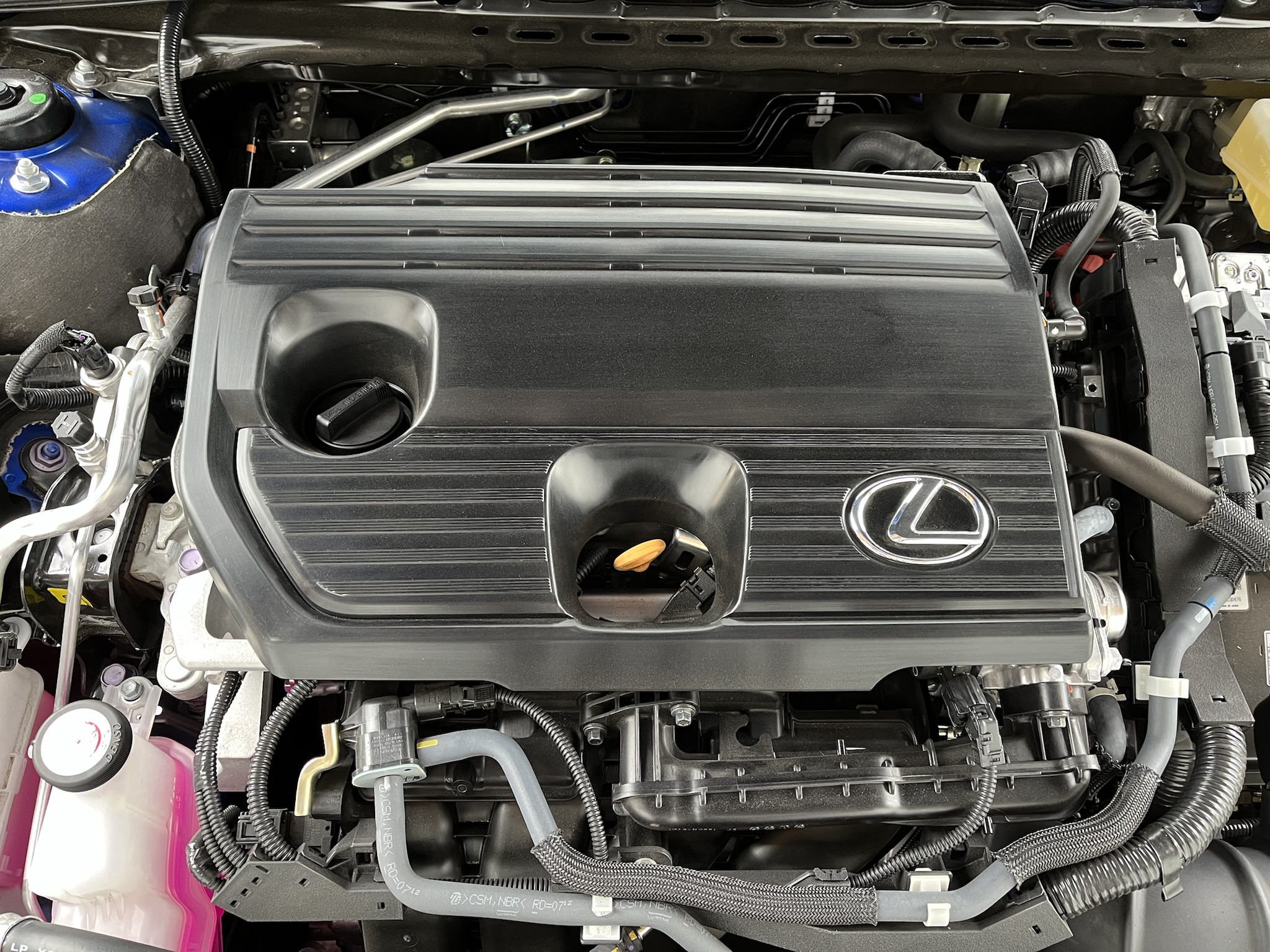
The Audi engine.

The turbocharged and direct-injection (TFSI) 2.0-liter has an impressive 261-horsepower and 273 foot-pounds of torque.

Audi Q5 Safety Features

The safety stars shine for the Audi Q5 in either body style. According to the National Highway Traffic Safety Administration, the Q5 earns the top five stars in the overall category with five stars for frontal and side crashes and four stars for rollover protection.

Standard Q5 safety features include:
•Six air bags.
•Forward collision warning and avoidance assistance.
•Lane-departure warning.
•Blind-spot warning.
•Rear cross-traffic warning.

The Prestige package links the standard driver-assist technologies with adaptive cruise control with traffic-jam assist, Navigation Plus, and active lane assist.

The top-view camera system on the 10.1-inch touchscreen.

The top-view camera system on the 10.1-inch touchscreen.

Q5 45 Ride and Handling

As with any good German-engineered vehicle, the Q5 has born-with drivability. It is felt in how well the suspension compensates for road conditions and how the tires transmit feedback through the steering wheel and seat.

The Q5’s five-link front and rear independent suspension is never harsh and neatly dips a shoulder into cornering maneuvers. Of course, that engineering is more important for the higher-performance and Sportback models, but the Q5 45 reaps the reward.

Stopping power is substantial from four-wheel ventilated disc brakes, 13.3-inch rotors at the front wheels and 13-inch rotors rear.

The cabin is well soundproofed and the chassis seems to filter out road harshness. The Prestige upgrade includes 20-inch Continental CrossContact XL Sport (255/45) all-season tires.

Continentals can be noisy with a grainy sizzle at highway speeds, but this tire’s compliance and low rolling noise are notable, especially at 20 inches. The comfort factor is the moderate treadwear rating of 480, which is a softer formula than the harder 600 or 700. The higher ratings have a longer tread life and are common on small SUVs.

There is a “space-saving” spare with an inflation system rather than a temporary spare (for such a large wheel).

The Black optic package added 20-inch tri-color finish wheels with Continental CrossContact XL Sport all-season tires.

The Black optic package added 20-inch tri-color finish wheels with Continental CrossContact XL Sport (255/45) all-season tires.

Quattro AWD System

Audi’s sophisticated AWD system decouples the driveshaft to the rear wheels when all-wheel drive is not needed. Essentially the vehicle becomes front-wheel drive when cruising or in other driving situations where the vehicle’s computers determine all-wheel traction is not required.

Audi claims the system can re-engage power to the rear wheels within milliseconds of the system detecting or predicting slip or when the driver accelerates aggressively.

Audi Q5 Interior Function

Clean lines, tidy organization, and rich materials describe Audi’s cabin design. There are no gimmicky electronic displays. Instead, it’s all about the business of driving — and those heated and cooled cup holders.

The tester’s tricolor interior theme is handsome and contrasts nicely with the tester’s Atlas Beige leather-trimmed and perforated upholstery with granite-gray stitching. The front sport seats are firm but comfortably bolstered and 10-way power-adjustable, including seat-bottom tilt.

While the Q5 is compact class, the cabin doesn’t feel small. The SUV body style has the benefit of squared-off proportions, not the raked rear roofline of the Sportback.

Entry and exit are comfortable and uncomplicated by design swoops. Front headroom is a tall 39.6 inches, even with the moonroof. Sightlines are open across the fenders and made better by some open space between the side mirror and windshield pillar.

The Q5 is among about nine new vehicles that offer heated and cooled front cup holders. Add that perk to the other humanizing features of heated back seats, heated steering wheel, heated and ventilated seats, and heated side mirrors.

A wireless phone charging pad is just below the center armrest with a USB port. And there is another charging USB and 12-volt plug at the head of the shift console.

Cabin controls are easily viewed in three levels of graduating sizes. At the top is the 10.1-inch color touchscreen. Climate controls are below, followed by a tier of less-often adjusted elements; these include the drive-select performance modes, hill-descent control, parking assist, and the cancel switch for the engine’s stop-start.

There are several areas for small-item storage with bottle-holding capacity in the door panels and a lockable glove box of usable dimensions.

The wireless phone charging pad on a shelf below the center armrest.

The wireless phone charging pad on a shelf below the center armrest.

Audi Q5 Back Seat and Cargo

There is no shortage of accommodations for the Prestige trim.

Headroom is tall at 39.3 inches with a long 38 inches of legroom unless there are tall people in the front seats. The 40/20/40 folding back seat is short on thigh support, and the tall transmission-exhaust tunnel takes from the center seat foot room. But the seatbacks have a couple of inches of recline and the beautiful leather upholstery is a sweet distraction.

Among the accommodations are side-window sunshades, two charging USBs, a 12-volt plug, and a fold-down armrest with can holders. Window seats have overhead grab handles and a dry-cleaning hook, plus sport-coat hooks on both B pillars.

Cargo space is the big separator between the Sportback and SUV body styles. The square space is 44 inches wide with 33 inches from floor to ceiling. Fold the seatback for a max length of 6 feet for a bike or boards.

The cargo area is 44 inches wide with 33 inches from floor to ceiling. Fold the seatback for a max length of 6 feet for a bike or boards.

The cargo area is 44 inches wide with 33 inches from floor to ceiling.

Why Buy the Audi Q5?

As the luxury division of Volkswagen and under the umbrella of Volkswagen Group, the Audi brand is in good corporate company with subsidiaries Bentley, Bugatti, and Lamborghini, among other European marques. That the Porsche Macan uses the Q5 architecture as a foundation is validation for its structural integrity and powertrain technologies.

The Audi Q5 is a smart choice for its stylish simplicity and robust engineering. Its interior design is artful, well assembled, and its level of luxury is rewarding without being precious.

The future is electric for Audi. And with the Q5’s redesign for 2021, the next and likely final redesign is expected for 2025. The Q5 is a complete package now, but expect an evolution revolution as Audi tends to its next-generation best-seller.

Follow the journey here.

A rear three-quarter view of the Q5

The 2022 Q5 now has a standard S line exterior, which includes aluminum front door-sill inlays with an illuminated S logo.

2022 Audi Q5 45 TFSI Specifications

Body style: compact, 5-seat, 5-door AWD SUV crossover

Engine: 261-hp, turbocharged and direct-injected 2.0-liter 4-cylinder; 273 lb.-ft. torque from 1,500-4,200 rpm

Transmission: 7-speed S tronic dual-clutch automatic with paddle shifters

0-60 mph acceleration: 5.7 seconds

Fuel economy: 23/28/25 mpg city/hwy/combined; premium fuel recommended

BY THE NUMBERS

Fuel tank: 18.5 gallons

Cargo space: 26-54 cubic feet, with moonroof

Front head/leg room: 39.6*/40.9 in. *w/moonroof

Rear head/leg room: 39.3/38 inches

Length/wheelbase: 184.3/111 inches

Curb weight: 4,079 pounds

Turning circle: 39.4 feet

Tow capacity: 4,400 pounds

FEATURES

Standard equipment includes: heated front seats, power (heated) side mirrors, high-beam assist, 8-way power front seats, 7-inch driver gauge display, a garage-door opener, brown walnut wood inlays, smartphone interface and Audi audio system, 10-inch MMI touch display, Audi Drive Select (performance modes), aluminum roof rails with crossbars, space-saving spare tire with sealer and inflation system

Prestige package, $10,700, includes smart-key entry with push-button ignition, top-view camera system, ventilated front sport seats with power lumbar, panoramic sunroof, heated and cooled front cup holders, heated steering wheel, heated rear seats, leatherette covered center console and door armrests, adaptive cruise control with traffic-jam assist, Navigation Plus, active lane assist, LED interior lighting, head-up display with sign recognition, Audi virtual cockpit, park assist, matrix design LED headlights with headlight washers, driver-seat memory settings, satellite radio with a 3-month trial subscription, auto-dimming and power-folding side mirrors, Bang & Olufsen audio with 3D sound, 19-inch all-season tires and bi-color finish alloy wheels

Safety features include: 6 air bags, front and rear parking sensors, forward collision warning and avoidance assistance, lane-departure warning, blind-spot warning, rear cross-traffic warning

PRICING

Base price: $46,695, including $1,095 freight charge; price as tested $59,290

Options on test vehicle:

  • Glacier White metallic paint $595;
  • Prestige package, $10,700 (see content above);
  • Black optic package, $1,300;
  • Audi Guard protection kit $315;
  • Cargo roller cover $275;
  • Audi Beam rings (projected from side mirrors) $275

Where assembled: San Jose Chiapa, Mexico

Warranty: 4-years/50,000-miles bumper to bumper including powertrain with roadside assistance

1958 Chevrolet Bel Air Impala Sport Coupe

1958 Chevrolet Bel Air Impala Sport Coupe
1958 Chevrolet Bel Air Impala Sport Coupe.

The 1958 Impala was the top model for the Chevrolet Bel Air line of hardtops and convertibles. (Photos from GM Media Archive)

BY MARK MAYNARD

In the recession year of 1958, GM promoted its 50th year of production. In tribute, the company introduced anniversary models for each brand: Cadillac, Buick, Oldsmobile, Pontiac, and Chevrolet.

According to the Impala’s Wikipedia page, the 1958 models shared a common appearance on the top models for each brand: the Cadillac Eldorado Seville, Buick Limited Riviera, Oldsmobile Starfire 98, Pontiac Bonneville Catalina, and the Chevrolet Bel Air Impala.

“The 1958 Impala was the top model for the Bel Air line of hardtops and convertibles.

“From the windshield pillars rearward, the 1958 Bel Air Impala differed structurally from the lower-priced Chevrolet models. Hardtops had a slightly shorter greenhouse and a longer rear deck.

“The wheelbase of the Impala was longer than the lower-priced models, although the overall length was identical. Interiors held a two-spoke steering wheel and color-keyed door panels with brushed aluminum trim. No other series included a convertible.

The 1958 Chevrolet Bel Air Impala

The 1958 Chevrolet Bel Air Impala helped Chevrolet regain the No. 1 production spot in this recession year.

“The 1958 Chevrolet models were longer, lower, and wider than their predecessors. And this was the first model year for dual headlamps.

“Deeply sculptured rear fenders replaced the tailfins of the 1957. In addition, impalas had three taillights on each side, while lesser models had two and wagons just one.

Impalas included crossed-flag insignias above the side moldings, bright rocker moldings, and dummy rear-fender scoops.

The 1959 Chevrolet Impala logo and nameplate

The Chevrolet Impala was identified by the image of a leaping African antelope in some form or another since its debut in 1958.

Chevrolet Impala Powertrains

A 283 cubic-inch V-8 was standard. Its power ratings ranged from 185 to 230 horsepower. When upgraded with Rochester Ramjet fuel injection, power output increased to 250 hp.

Two versions of Chevrolet’s first big-block 348-cubic-inch (5.7-liter) V-8 were optional:

  • A single four-barrel carburetor, producing 250;
  • Three two-barrel carburetors, 280 hp.

55,989 Impala convertibles and 125,480 coupes were built, representing 15 percent of Chevrolet production. In addition, the 1958 Chevrolet Bel Air Impala helped Chevrolet regain the number-one production spot in this recession year.

2022 Mitsubishi Outlander Review

2022 Mitsubishi Outlander Review

The redesigned and re-engineered 2022 Mitsubishi Outlander packs about everything that can be expected into a compact family-duty SUV

Exterior view of the 2022 Mitsubishi Outlander

The 2022 Mitsubishi Outlander has starting prices that range from $27,500 to $35,645 for the top-line SEL trim level with all-wheel drive. (Mitsubishi photos)

Table of Contents

Outlander Overview
Most-Improved Brand
What’s New for 2022?
Outlander Redesign
Pricing
Performance and Fuel Economy
Ride and Handling
Safety Features
Interior
Back Seats and Cargo
Why Buy the Mitsubishi Outlander?
Specifications


BY MARK MAYNARD

The redesigned and re-engineered 2022 Mitsubishi Outlander packs about everything that can be expected into a midsize, family-duty SUV, including a third row of seats.

The compact-class Outlander has long been a hallmark of refined engineering. And the redesigned 2022 Outlander appears to have had a development budget beyond meeting the lowest price point.

The 2022 Outlander has been named a Wards 10 Best Interiors Winner for 2021. Mitsubishi says that the all-new Outlander is the best-equipped, most connected vehicle Mitsubishi has ever sold in the U.S. and signals a new direction for the brand.

The driver area is a well-organized and ergonomic command center

The driver area is a well-organized and ergonomic command center.

Outlander Overview

Now starting its fourth generation, the Outlander arrived in 2003 in North America and replaced the Mitsubishi Montero Sport. A 2018 redesign made the Outlander slightly larger than the previous model, but most of the size increase went to cabin space, which was widened by 2 inches. A plug-in hybrid model was added then and is still available.

The Outlander is the brand’s flagship SUV crossover, but it is more super-compact in size and almost midsize in its new, slightly larger proportions. In addition, a new-generation, plug-in hybrid 2023 Outlander PHEV will roll out in the U.S. in the second half of 2022.

The quilted leather upholstery

The SEL Touring package includes semi-aniline leather-trimmed upholstery with quilted black-and-tan trim.

Most-Improved Brand

Mitsubishi Motors North America was the most improved U.S. brand in the “2021 Automotive Reputation Report” from Reputation, an online analytical research firm. The annual report included an analysis of 35,000 automotive OEM brands, dealer groups, and dealerships across the United States, Canada, and Europe. Graded on a 1,000-point scale, Mitsubishi Motors ranked fourth in 2021 among 19 non-luxury automotive brands. In addition, the carmaker improved from 17th place in 2020, posting a 58-point improvement.

A front door panel pocket in the Outlander What’s New for 2022?

For 2022, the cabin space was reshuffled to provide a third row. Outlander is the only compact-class SUV with a third row and seats for seven.

The added 1.5 inches in body length was just enough to add the third row. Its legroom is kid-class, but the 50/50 divided seats fold flat into the floor for substantial cargo space of 33.5 cubic feet (stacked to the headliner). The 11.7 cubic feet behind the third-row seats is plenty to corral bags of groceries. And there is underfloor storage, such as to stow the standard cargo roller cover.

A wider stance bolstered drivability; the front track is 2.1 inches wider and the rear is 2.5 inches wider. Alloy wheels and all-season tires are standard on all models. Entry-level models have 18-inch 235/60 tires, with 20-inch 255/45 tires on upper trims.

For improved visibility, the space between the windshield pillars and the side mirrors was expanded for better cornering views. In addition, the washer nozzles are now built into the wiper arms, which gives more consistent spray action and saves on fluid.

The 9-inch infotainment touchscreen

The 9-inch infotainment touchscreen.

2022 Outlander Redesign

The Outlander’s exterior styling was amped to the next level with the so-called “Bold Stride” design theme. It is intended to show width and stability, Mitsubishi says. The face is unmistakable. The prominent headlight nacelles are “Godfather” bold and intend to convey a fearless expression, Mitsubishi says.

2022 Outlander Pricing

The gasoline-powered Outlander is sold in three trim levels of ES, SE, and SEL. Front-wheel drive is standard, but Mitsubishi’s sophisticated Super All-Wheel Control 4WD is an affordable $1,800.

Starting prices range from $27,500 to $35,645 for the top-line SEL trim level with all-wheel drive. MSRP pricing includes the $1,245 freight charge from Okazaki, Japan.

Premium paint colors of White Diamond, Black Diamond, and Red Diamond are a $395 upgrade.

All trim levels have the same powertrain: a 181-horsepower, direct-injected 2.5-liter four-cylinder engine and continuously variable transmission. The CVT masterfully imitates an eight-speed stepped transmission.

Today’s tester is an Outlander SEL 2.5 S-AWC that was $38,345, including the SEL Touring package, $2,700. The package includes:

  • Heated steering wheel;
  • Synthetic leather door inserts with quilted black-and-tan trim elements;
  • Semi-aniline leather-trimmed upholstery;
  • 10.8-inch head-up windshield display;
  • 10-speaker Bose audio system;
  • Power panoramic sunroof;
  • Rear side door pull-up sunshades.

Also included in the tester’s price is a roller tonneau cover ($195) and the Welcome Package ($160), which adds carpeted floor mats, a touch-up paint pen, and a mat for the center console tray.

The 2022 Outlander PHEV has a starting price of $38,400. Pricing for the 2023 Outlander PHEV will be announced closer to the on-sale date.

Mitsubishi provides an excellent warranty package of 5 years or 60,000-miles for basic coverage with roadside assistance and 10 years or 100,000-miles for the powertrain. Also included is a 2-year subscription for Mitsubishi Connect for remote and safeguard services.

Find current pricing and incentives here.

The shift console in the Outlander

The wide shift console.

Outlander Performance and Fuel Economy

A look under the hood can reveal much about the construction of a vehicle, whether the hoses, connectors, and various lines feel flimsy or tenuous. The Outlander’s assembly, parts, and plastics appear robust, and the metals are treated to resist rusting. Still, pennies were saved by not adding a dress-up engine kit.

The Outlander’s 2.5-liter engine (replacing a 2.4 liter) is newly developed by the Alliance, meaning the newly formed auto group of Renault, Nissan, and Mitsubishi. The global triumvirate allows shared costs for design, engineering, and technology. And looking closely at the Outlander, you might see a resemblance to the Nissan Rogue (but not its powertrain).

With 181 foot-pounds of torque, the four-cylinder engine has good force without turbocharging. The acceleration was so responsive that I did not feel the need to exercise the paddle shifters.

Braking is confident and controlled from ventilated four-wheel disc brakes. The front rotors are 13.8 inches, with 13-inch rotors at the rear.

Somehow, the Mitsu engineers trimmed 441 pounds from the 2022 curb weight, now at 3,803 pounds, and lighter weight is better for fuel economy.

The Outlander AWD has impressive, if difficult to achieve, mileage ratings of 24 mpg city, 30 highway, and 26 mpg combined on 87 octane fuel. In my week of testing, I worked up to 25.5 mpg combined, and it might have gone higher with a longer commute. The 14.5-gallon tank is good for up to 400 miles of range.

The Outlander's panoramic sunroof

The panoramic sunroof is part of the SEL package.

Mitsubishi Outlander Ride and Handling

The independent suspension (front MacPherson struts and rear multilink with stabilizer bars) can feel stiff with the occasional jolt. But that firmness also adds to a feeling of stability and security in fast cornering and evasive maneuvers.

Despite sound-insulating glass in the front doors and windshield, the cabin can be noisy at highway speeds. The white noise could be induced in part by the 20-inch Bridgestone Ecopia H/L 422 Plus all-season tires. Bridgestone tires wear like iron, but the Ecopia is a low rolling resistance tire to maximize mileage. Consequently, it has a hard treadwear rating of 600. The good news is that the tire has a tread life warranty of five years or 70,000 miles.

The Outlander's second row

Second-row legroom is quite comfortable at 39.9 inches.

Driver-Assist and Safety Features

Nearly all trim levels of Outlander include a full set of advanced safety technologies and features. Among the driver-assist features is MI-Pilot Assist for semi-autonomous driver-assist driving. Pilot assist is intended for long-distance driving and in the stop-and-go commute. The system uses Navi-Link adaptive cruise control with stop and go, lane-keep assist, lane-departure prevention, and traffic sign recognition.

The Mitsubishi system is well calibrated for lane centering, and Pilot Assist can be a welcome drive partner, but always keep hands on the steering wheel. It is the highway markings that determine — and undermine — effectiveness. Faded white lines on light gray California Interstates can cause confusion and a random shutoff. Low sunlight into the grille sensor also can cause a shutoff, as can driving alongside a white semitrailer.

Standard Outlander safety features include 11 air bags, forward collision mitigation, blind-spot warning with lane-change assist, rear cross-traffic alert and rear emergency braking, and trailer-stability assist.

The 20-inch Outlander alloy wheel and all-season tire.

20-inch 255/45 all-season tires are standard on upper trim levels.

Outlander Interior Function

Outlander’s driver area is well-organized and has an ergonomic command center. Front headroom is tall at 38.8 inches with the panoramic sunroof or 40.6 inches without. A 12.3-inch digital driver gauge display is bold, bright, and easily readable with large text and graphics. And, the 9-inch infotainment touchscreen is upright in the instrument panel but not prone to glare; large graphics make the screen easy to read in all lighting conditions.

Sightlines are mostly unhindered over the front fenders and over the shoulder. Small corner windows at the rear tailgate pillars help with a peek of visibility. The glass also helps the third row feel more spacious.

The bigger enabler to visibility is the SEL’s multiview camera that displays the vehicle’s front, rear, and sides. I found the curb view especially helpful to avoid scraping the wheels. In addition, the Outlander’s tight turning circle of 36.1 feet is nimble in close parking structures or making a quick U-turn.

Eight-way power seats are standard for the SEL driver, but the passenger gets just a four-way power seat. Mitsubishi says the two-layer seat construction provides a soft initial touch while preventing fatigue on long drives.

The wide shift console could have been designed for more drop space, such as for the passenger’s phone. Wireless phone charging is standard on most trim levels, and the e-bin area includes two USB ports (1 C-type), an aux-in and a 12-volt plug. The armrest console has a small storage box.

Sun visors are deep and slide for more coverage, but their effectiveness is shorted at the windshield pillars.

The Outlander's third row of seating.

The third row is as-needed seating. But the seats fold flat when not needed.

Rear Seats and Cargo Space

Second-row legroom is quite comfortable at 39.9 inches. The seats recline and have several inches of fore-aft slide, which is helpful to add a bit more legroom to the third row. In addition, a lowish exhaust-AWD tunnel helps with three-across seating.

The front seatbacks have a clever arrangement of two small storage pockets above the larger main pocket. Other conveniences include:
•Seat heaters and temperature control.
•Side-glass manual sunshades.
•Reading lights on either side of the pano roof.
There is bottle storage in the doors, and the center fold-down armrest also has cup holders.

The third row is as-needed seating, primarily for kids on the school commute or the grandkids. Legroom is a squeeze at 18.7 inches and headroom is low at 34.5 inches.

The third row has an easy sequence of manual fold and pull-back from the cargo area.

The cargo-area opening is wide at 45 inches by 31 inches tall. Fold the second and third rows for 6 feet of length. And there is subfloor storage for the roller cover.

The open cargo area in the Outlander

Fold the second and third rows for 6 feet of cargo length.

Why Buy the 2022 Mitsubishi Outlander?

The redesigned Outlander pushes its size limits. It looks large from the outside and is roomy inside, but it drives small.

The assembly and materials have a satisfying quality, and the well-equipped SEL tester has luxury appeal with enduring family function.

The Outlander’s small-is-large format will work for young families or empty-nesters ready to downsize — but with room for the grandkids.

My most significant takeaway from this test is Outlander’s long list of technologies, standard safety features, and the pile-on of lux-class extras —  for the as-tested price of $38,700. Put the same level of content on a compact luxury SUV and the sticker would be $58,000 to $65,000.

A rear view of the Outlander

The tailgate design is meant to mimic the image of the spare tire mounted on the back of SUVs past.

2022 Mitsubishi Outlander SEL Specifications

Body style: midsize, 7-seat, 5-door SUV with Super All-Wheel Drive

Engine: 181-hp, direct-injection, DOHC 2.5-liter 4-cylinder; 181 lb.-ft. torque at 3,600 rpm

Transmission: 8-speed CVT with Sport mode and paddle shifters

Fuel economy: 24/30/26 mpg city/hwy/combined; 87 octane

BY THE NUMBERS

Towing capacity: 2,000 lbs.

Fuel tank: 14.5 gallons

Cargo space: 11.7-33.5 cubic feet

Front head/leg room: 38.8*/41.7 in. *40.6 w/o sunroof

2nd-row head/leg room: 37.4*/39.9 in. *39.1 w/o sunroof

3rd-row head/leg room: 34.5/18.7 in.

Length/wheelbase: 185.4/106.5 in.

Curb weight: 3,803 lbs.

Turning circle: 36.1 ft.

FEATURES

Standard equipment includes: SmartKey locking and push-button ignition, MI-PILOT Assist with navigation with traffic sign recognition, adaptive cruise control with stop-and-go, 9-inch navigation screen with smartphone link, wireless charging, multiview camera system, electric parking brake, 4 USBs (including 2 C-type), 8-way power driver’s seat, 4-way power front passenger seat, 6-speaker audio system with wireless Apple CarPlay and Android Auto, heated front and 2nd-row seats, front parking sensors, 20-inch alloy wheels with 255/45 all-season tires, 40/20/40 folding 2nd row, LED headlights-running lights-fog lights, automatic headlights, heated and power-folding side mirrors, front wiper de-icer, and a hands-free power liftgate

Safety features include: 11 air bags, lane-keep assist, forward collision mitigation, lane-departure prevention, blind-spot warning with lane-change assist, rear cross-traffic alert and rear emergency braking, brake-force distribution, brake assist, hill-start assist, active stability control, trailer-stability assist

PRICING

Base price: $35,645, including Mitsubishi Connect Subscription for 2 years and $1,245 freight charge; price as tested $38,700

Options on test vehicle: SEL Touring Package, $2,700, includes a heated steering wheel, synthetic leather door inserts with black and tan quilting, semi-aniline leather-trimmed upholstery, 10.8-inch head-up display, 10-speaker Bose audio system, panoramic sunroof, rear side window sunshades

  • Tonneau cover $195
  • Welcome package $160, includes carpeted floor mats, touch-up paint pen, center console tray mat

Where assembled: Okazaki, Japan

Warranty: 5-years/60,000-miles basic coverage with roadside assistance; 10-years/100,000-miles powertrain