Select Page

2020 Infiniti QX80 Review

2020 Infiniti QX80 Review

A quiet place in turbulent times

An action view of the Infiniti QX80

The 2020 Infiniti QX80 is sold in Luxe and Limited trim levels. Starting prices range from $68,145 to $92,845. (Photos courtesy of Infiniti)

BY MARK MAYNARD

In this era of little houses and downsized lifestyles, the appeal of a big body-on-frame SUV is enduring. The major players in the mainstream segment are the Lincon Navigator, Cadillac Escalade, and today’s tester, the 2020 Infiniti QX80.

The QX80 might not be the most evolved big SUV, but I found an unexpected quiet place among its 17 1/2 feet of length and three tons of refined utility.

Part of the popularity of a truck-based SUV is a foundational sense of security on the road, a substantial towing capacity, and the potential for long-term ownership. 

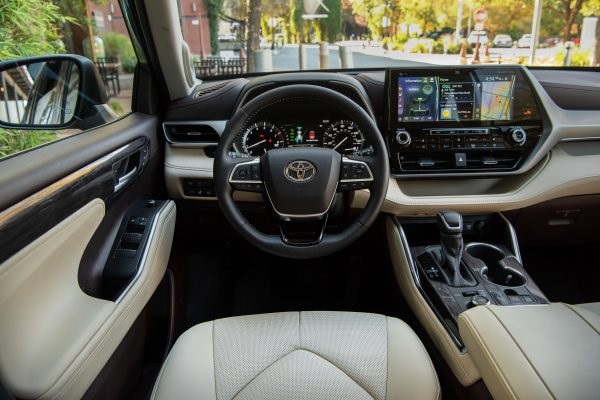
The luxury interior of the QX80

The Limited is well dressed in attractive open-pore matte-finish wood trim and neatly stitched semi-aniline leather.

But the appeal is more than brawn, Infiniti says, the QX80 has a significant percentage of female buyers versus the segment average. Motivators, no doubt, are its cohesive exterior styling and an elegant interior design that looks and feels more carlike than a repurposed truck. And the QX80 can pull a boat, horse, or travel trailer weighing up to 8,500 pounds.

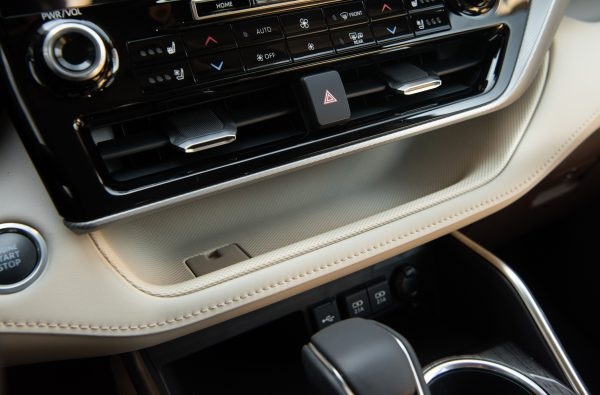
The new InTouch infotainment system with upper and lower twin screens

New for 2020 is a new generation InTouch infotainment system with upper and lower twin screens.

Infiniti QX80 Pricing

The Infiniti QX80 is sold in Luxe and Limited trim levels, in two- or four-wheel drive. All models have a powertrain of a 400-horsepower, direct-injected 5.6-liter V-8 and a seven-speed automatic transmission.

Starting prices range from $68,145 (add $3,100 for 4WD) to $92,845, including the $1,395 freight charge from Kyushu, Japan. Today’s Limited tester with standard 4WD had one option package of all-season floor mats and cargo mat ($355) for an as-tested price of $93,200.

Check current Infiniti QX80 pricing and incentives here.

Infiniti QX80 Overview

The QX80 V8 engine

The QX80 powertrain is a 400-hp, 5.6-liter V-8 and seven-speed automatic transmission.

The QX80 had a significant “facelift” redesign for 2018. And new for 2020 are a new generation InTouch infotainment system with upper and lower twin screens, 7-inch gauge display and a revised center stack of cabin controls. Apple CarPlay and Android Auto are now standard with standard technology systems of lane departure warning, backup collision intervention, and blind-spot warning.

Opting for the Limited model adds appreciable standard features. Among them, smart-key locking and push-button ignition, semi-aniline leather-trimmed upholstery, navigation system with lane guidance, 10-way power driver’s seat with two-way power lumbar support, eight-way power passenger’s seat with two-way power lumbar, heated and ventilated front seats, 17-speaker Bose audio system, auto-leveling rear suspension, 22-inch wheels and all-season tires (275/50) and the Hydraulic Body Motion Control suspension system.

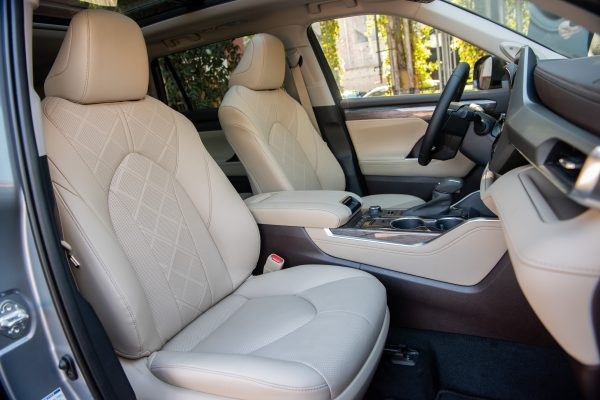
he open-pore leather-trimmed upholstery

The leather-trimmed upholstery is supple and elegantly designed.

30-Years’ Package

Infiniti is celebrating 30 years in America with a special Edition 30 package. For $3,500, adds 22-inch, dark forged aluminum-alloy wheels with 275/50 all-season tires, black front grille mesh, dark chrome exterior trim and mirror caps and a graphite black headliner, sun visors, sun shades and pillars. Other features include EDITION 30 stainless steel kick plates, a smart rearview (video) mirror and driver-assist technologies of lane departure prevention, intelligent full-speed cruise control, distance control assist, blind spot intervention.

Keeping It Simple

For those who can resist the siren-song of overwhelming advanced technologies, the QX80 does not require higher education to learn and appreciate its ease of ownership.

The driver area could benefit from a redesign for more open-concept usability and, particularly, a larger rearview camera screen. But the systems in place will assist and inform without intrusion or frustration.  And it might cost less to maintain when it’s out of warranty compared with its European counterparts, such as the Mercedes-Benz GLS or BMW X7.

The machine-finished 22-inch forged aluminum wheels

The Limited has dark, machine-finished 22-inch forged aluminum wheels.

QX80 Powertrain

With the Limited’s curb weight of 6,098 pounds (or 5,679 lbs. for 2WD) the V-8’s 413 foot-pounds of torque at 4,000 rpm are almost required for respectable performance. Acceleration can be quite brisk when needed, but the overall performance seems tuned for fuel economy.

The seven-speed automatic rolls easily through the gears and even has rev-matching downshifts, for those bold enough to attempt.

EPA mileage ratings are 13 mpg city, 19 highway and 15 mpg combined, on premium fuel. I worked up to 17.4 mpg on a long highway run. The 26-gallon fuel tank provides a decent vacation cruising range.

The Hydraulic Body Motion Control suspension system is a magic act in how it smooths, settles and balances the ride; a self-leveling rear suspension is standard. Braking force is reassuring from 13.78-inch vented four-wheel disc brakes, but I wasn’t hauling a travel trailer down a mountain grade in summer.

The back seat can be configured with captain’s chairs or a three-position bench

The back seat can be configured with captain’s chairs or a three-position bench.

QX80 Cabin Features

While fuel economy is challenged, there are stronger selling points. Infiniti is masterful at interior finesse with refined materials — and the Limited, Infiniti says, is its best effort yet for luxurious surroundings. The enormity of the QX80 cabin is calmed with a wraparound instrument panel. The design is set off by matte silver ash wood trim, supple (semi-aniline) leather upholstery neatly stitched, and a black Ultrasuede headliner and roof pillars.

QX80 second-row climate controls

Back-seat occupants have access to heated seats and controls to adjust temp and fan speed.

The QX80 is a high-riding SUV and the running boards and big grab handles at the windshield pillars are helpful when hoisting aboard. The front seats are full-bodied, elegantly designed, and not excessively bolstered but with perforated centers for breathability (ventilated) and heated.

A grand armrest console with deep storage separates the captain’s seats; and its well-padded console lid is also rear-hinged for an upper storage area for second-row occupants to use.

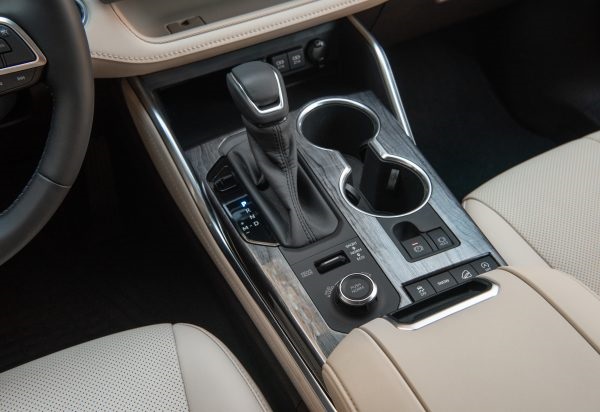
A wide shift console has covered cup holders and an e-bin, but with no wireless charging.

Sightlines are generally open, but the wide base of the side mirrors can complicate cornering views. The Around View camera system provides rear views and an overhead view to help with parking in tight quarters. It also alerts with tones to moving objects, front or rear. The front view is a huge asset when nosing into a parking slot.

The Limited has puddle lighting and illuminated kick plates.

The Limited has puddle lighting and illuminated kick plates.

Driver-Assist Technologies

While some SUVs can be a handful in small-space maneuverability, the Infiniti QX80 drives much smaller than might appear and it is not intimidating. The steering is light and its turning radius of 41.3 feet is reasonable, and not much wider than some midsize sedans.

Standard safety features include six air bags, forward emergency braking with pedestrian detection, rear-collision avoidance, lane-departure warning and lane-departure prevention, predictive collision warning, and blind-spot warning and intervention.

The QX80 has supportive driver-assist technologies but not the complete Level 2 semi-autonomous drive mode that Nissan does so well. This system uses the intelligent cruise control navigation system, which integrates lane guidance, forward emergency braking with pedestrian detection and predictive forward collision warning. And for 2020, the system adds blind-spot warning, lane departure warning, and backup collision intervention.

When activated, the system will steer and brake the vehicle, but two hands on the wheel are required. The system will let the Q80 wander over the highway Botts dots and road lines before making course corrections. But it will be a helpful support in heavy commuting traffic.

2nd-Row Seating

The back-seat area looks like a road-trip lounge with captain’s chairs that are almost as large as those in front. Legroom of 39.6 inches is a stretch, but not limo-like depending on who is sitting up front. The seatbacks recline a few inches, but there is no seat-track slide; grab handles at the B-pillars are a smart addition to ease entry.

Overhead side vents help with airflow that has controls for temp and fan speed. A large armrest console has deep storage for the video headphones. Amenities include heated seats, two charging USBs, and a 150-watt household plug.

Third Row and Cargo Space

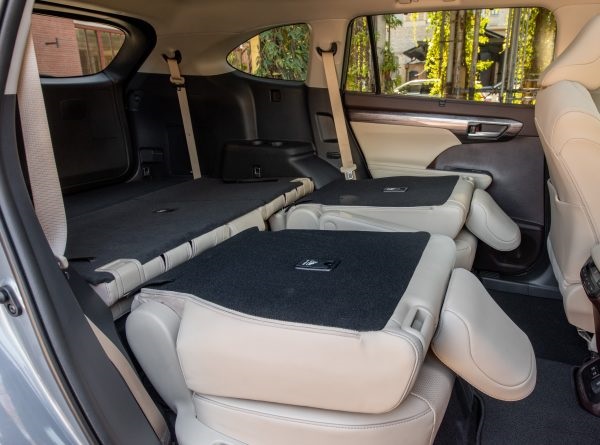
Access to the third row is by a one-handle release to flip and tumble the second-row seats. The space is kid-class with short legroom of 28.8 inches, but the flat-folding seats make it more functional as expanded cargo space.

The QX80 third row seating

Third-row space is kid-class.


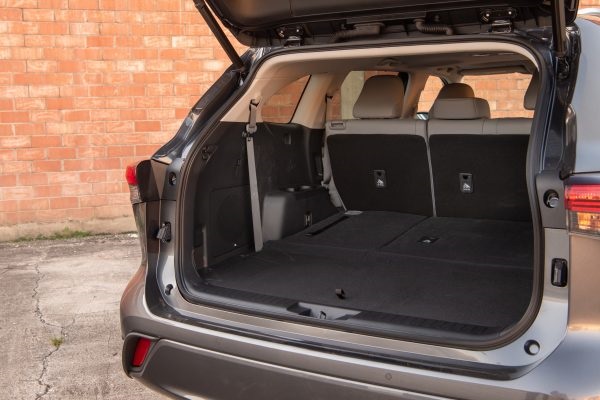
The cargo area has a wide 50-inch opening with an entry opening of 33 ½ inches, but it is a tall lift-up to the cargo floor. There is slim space of 16.6 cubic feet behind the third row, but it is convenient to corral grocery bags.

Power fold the second-row seats for a square space of 49.6 cu. ft. or about 4 feet in length. Or fold both rows for about 7 feet to carry a surfboard, skis, or a ladder.

Why Buy the Infiniti QX80?

The $93K tester was a showpiece, but the $75K Luxe model brings all the hallmarks of the QX80. Its hushed cabin and sound-isolated ride communicate safety and security. The QX80 is a big ride ready to brave a pandemic or at least the natural elements of hail, hell, or high water.

2020 Infiniti QX80 Limited 4WD Specifications

Body style: large, 7-seat, body-on-frame SUV with 4WD

Engine: 400-hp, direct-injection 5.6-liter V-8; 413 lb.-ft. torque at 4,000 rpm

Transmission: 7-speed automatic, with rev-matching downshifts in sport mode; high- and low-range transfer case; hill-start assist, and snow and tow mode functions

Fuel economy: 13/19/15 mpg city/hwy/combined; premium fuel

Tow capacity: 8,500 lbs., with 7-pin trailering harness

BY THE NUMBERS

Fuel tank: 26 gallons

Cargo space: 16.6-49.6 cu. ft.  

Front head/leg room: 39.9*/39.6 in. *w/sunroof

2nd row head/leg room: 40/39.6 in. 

3rd row head/leg room: 36.8/28.8 in.

Length/wheelbase: 210.2/121.1 in. 

Height/width: 75.8*/79.9 in. *w/roof rack

Curb weight: 6,098 lbs.

Turning circle: 41.3 ft.

FEATURES

Standard QX80 Limited equipment includes: smart-key locking and push-button ignition, semi-aniline leather-trimmed upholstery, navigation system with lane guidance, 10-way power driver’s seat with 2-way power lumbar support, 8-way power passenger’s seat with 2-way power lumbar, heated and ventilated front seats, 17-speaker Bose audio system, auto-leveling rear suspension, twin-tube shock absorbers, 22-inch all-season tires (275/50), high-beam headlight assist

Safety features include: 6 air bags, forward emergency braking with pedestrian detection, rear-collision avoidance, lane-departure warning and lane-departure prevention, predictive collision warning, blind-spot warning, and intervention

PRICING

Infiniti QX80 Limited base price: $92,845, including $1,395 freight charge; price as tested $93,200

Options on test vehicle: all-season package, $355, of floor mats and cargo pad

Where assembled:  Kyushu, Japan

Warranty: 4-years/60,000-miles with 24-hour roadside assistance; 6-years/70,000-miles powertrain

A rear view of the QX80

The QX80 Limited features satin chrome exterior trim and 22-inch wheels and tires.


The Redesigned Volkswagen Logo

The Redesigned Volkswagen Logo
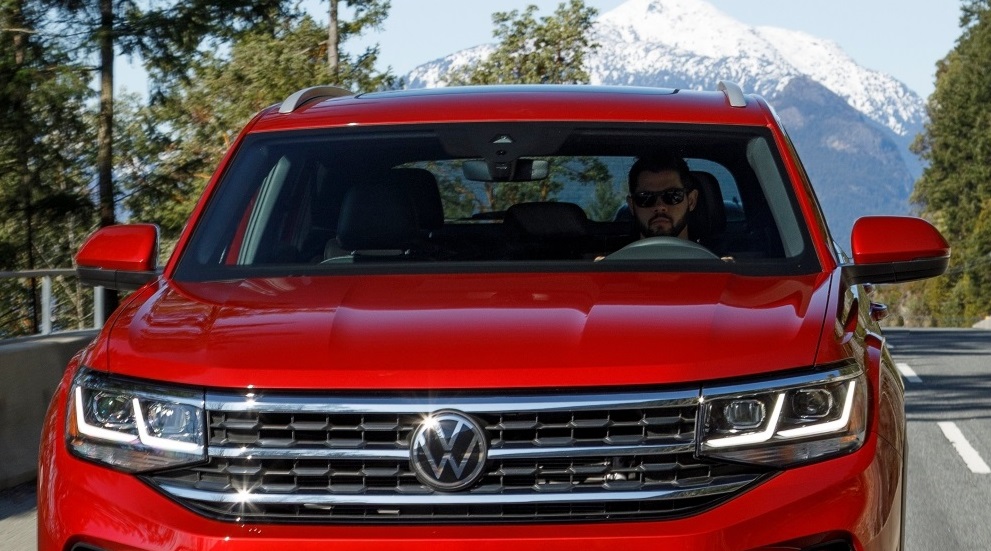
The new VW logo on the grille of a  red VW 2020 Atlas Cross Sport

The new logo makes its debut on the 2020 Atlas Cross Sport. (Photos courtesy of Volkswagen)

BY MARK MAYNARD

Volkswagen revealed a new logo design today, April 9, as part of an international rollout that will include the transition of more than 70,000 logos globally. First up for the U.S. is on the 2020 Atlas Cross Sport. Last year, around 6.2 million vehicles were built worldwide with a VW on their grilles. Those two letters have come to represent one of the most recognizable brands on Earth.

The refreshed and digitally friendly design is a minimalist take on the classic logo, allowing for more flexibility and versatility when it comes to the signature symbol, VW said in a statement. It’s a modern and simpler version of the previous logo, which has identified the brand for over 70 years.

A closeup of the new logo

The ‘digital first’ redesign is intended to reduce the logo to essential elements.

‘Digital First’ Design

Led by Volkswagen Chief Designer Klaus Bischoff, the new design was intended to be versatile, “digital first” and to reduce the logo to essential elements, which now presents as flat and two-dimensional.

“My personal drive in this redesign was to make the W float, bringing a new lightness to the Volkswagen brand,” Bischoff said.

The reimagined logo will function on small scales like a smart watch or phone and also in big formats, such as factories and assembly facilities.

The new logo is a symbol and trademark

The new logo is a symbol and trademark.

“We have created a new holistic global brand experience on all channels and across all touchpoints,” Jochen Sengpiehl, chief marketing officer of Volkswagen, said in a statement. “As a general principle, our aim will not be to show a perfect advertising world; we want to become more human and livelier, to adopt the customer’s perspective to a greater extent, and to tell authentic stories.”

The redesign also brings other significant changes. The familiar blue and white colors of the predecessor have been refreshed with a new deep blue tone, allowing for additional color variants, Sengpiehl said in a statement.

By mid-2020, VW plans to complete the rollout of the rebrand across the 10,000 dealers in 171 markets in 154 countries.

The reimagined logo will function on small scales like a smart watch or phone or in big formats, such as on assembly facilities.

The reimagined logo will function on small scales like a smart watch or phone or in big formats, such as on assembly facilities.

Kia Niro PHEV Review

Kia Niro PHEV Review

The 2018 Kia Niro PHEV is an urban runabout and a comfortable commuter — and it fulfills both jobs 

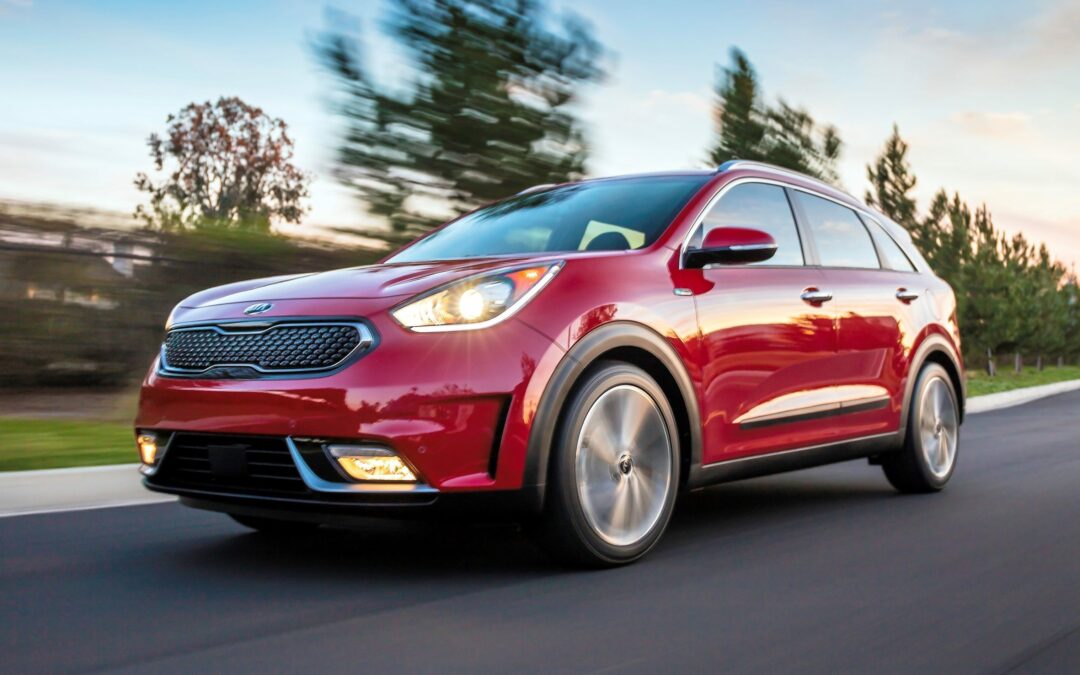
The Kia Niro exterior

The 2018 Kia Niro is available as a gasoline-electric hybrid, a plug-in hybrid, or battery electric. (Photo courtesy of Kia America)

BY MARK MAYNARD

?T/dropcap]he beauty of the Kia Niro plug-in hybrid sneaks up on you. It’s not in its function-over-form body but in how easily this compact-class crossover wagon-hatchback fits into a busy lifestyle.

With around 26 miles of battery driving, it is quick to dispense with errand-running and with engine assist there are more than 500 miles of total driving range; it is an EV that doesn’t fiddle around.

The Niro PHEV is an urban runabout and a comfortable commuter — and it does both jobs well.

The Niro driver area

The Niro driver area is smartly designed as an intuitive command center with a tall 40 inches of front headroom.

A Family of Electrified Cars

The Niro is a family of electrified cars under Kia’s EcoDynamics sub-brand of alternative-fuel vehicles. It is now available as a gasoline-electric hybrid, a plug-in hybrid or battery electric.

Today’s tester is the Niro PHEV, sold in three trim levels with starting prices of $28,840-$35,440, including the freight charge from Hwasung, Korea.  The top-line EX Premium tester had just one factory option of carpeted floor mats ($135) for a total of $35,575.

 Cabin controls are neatly arranged in two tiers.

Cabin controls are neatly arranged in two tiers.

The Niro PHEV qualifies for a $4,543 federal tax rebate, $1,500 from the state’s Clean Vehicle Rebate and San Diego Gas & Electric offers an annual credit of $200 to those who own or lease a plug-in vehicle. The credit is available to qualified customers through 2020. (Details at Cleanvehiclerebate.org.)

In case you’d not heard, Kia has earned the No. 1 ranking by J.D. Power among non-premium auto brands in its 2018 Initial Quality Study. The Korea-based carmaker has claimed the top spot in this category for the last four years and last year’s scoring was the same for 2018, a reported 72 problems per 100 vehicles. The Sorento midsize SUV and Rio small car are in the lead positions with the Optima midsize sedan, Sportage small SUV and Sedona minivan placing second and the Forte compact car in third, for their segments.

Unique Niro

Kia has a safe niche for Niro, so far, in the non-premium segment of small PHEVs. There is only about one true competitor in the Ford C-Max hybrid and PHEV and it is on its way out of production. There are luxury-class offerings in the Mercedes-Benz GLC350e, XC40,
A3 e-tron and Maserati Levante.

Niro back-seat legroom is generous at 37.4 inches.

Back-seat legroom is generous at 37.4 inches.

The body styling has some compact cuteness that wraps around an upright format as tidy and functional as an American Tourister roller bag — ready to travel with a hard shell that feels secure and refined.

The Niro is a sturdy vehicle weighing 4,409 pounds (about a hundred pounds heavier than Kia’s midsize Sorento 4WD SUV), which makes its battery driving range all the more impressive. But there were many weight-saving tricks applied, such as using advanced high strength steel in more than half of the structure with aluminum for the hood, tailgate, brake calipers and many suspension pieces.

You can ID the Niro PHEV by its slightly modified front grille, hybrid blue exterior accents and the charge-port door on the left front fender.

The multifunction steering wheel in the Kia Niro.

Standard EX Premium features include a heated steering wheel, keyless entry and push-button ignition.

Kia Niro PHEV Performance

The performance is adequate for daily driving and there is a Sport mode that dips quicker into engine power. The hybrid powertrain is comprised of a 104-horsepower, 1.6-liter Atkinson-cycle four-cylinder engine, a 360-volt (60-hp) electric motor and a 59-kW lithium ion polymer battery with a six-speed dual-clutch automatic transmission. The system has a total of 139 hp with fuel economy ratings of 48 mpg city, 44 highway and 46 mpg combined on 87 octane. The EPA gives the mileage a 105 mpg-e rating. The 11.4-gallon fuel tank is large for a plug-in and should allow 560 miles of range, but some drivers will get far more range.

A full charge takes about 2.5 hours using a 240-volt (Level 2) charger or around nine hours with the onboard 120-volt (Level 1) charger. I was able to drive mostly on battery power in a week of testing because I’d top off whenever I got home. Shame on me for not using off-peak electricity, but every time I got back into the car, the driving range was 500 miles. About the only time the engine kicked in is when I floored it for merging or evasive power.

Stopping force felt confident to control the weight with the four-wheel-disc regenerative brakes; 11-inch vented front rotors and 11.2-inch solid rotors rear.

The open cargo area of the Niro

The cargo area has a tall floor (because of the batteries), but fold the 60/40 back seats for 5 1/2 feet in length by 39 inches wide.

Interior Function

The interior plastics in Niro have an appealing appearance and are free of rough edges. The contemporary décor uses contrasting hues of shale and black plastics with (reserved) piano-black accents and the blue stitching (on the door trim, seats, steering wheel, and shift boot.

The driver area is smartly designed as an intuitive command center with a tall 40 inches of front headroom. Cabin controls are neatly arranged in two tiers for audio and AC-vent-fan with an 8-inch touch screen for navigation, phone, radio, apps. And there is a custom button to preset direct access for phone or Kia’s UVO subscription e-services.

The front seats have firm comfort but are short on thigh support for the big-and-tall driver. The EX Premium includes a six-way power driver’s seat with lumbar (but no separate seat-cushion tilt) and a four-way manual front passenger seat with height adjustment. Other useful features are a large driver’s footrest and large sliding visors with covered and lighted mirrors.

Sightlines are basically unimpeded but drivers will want to take a second look right where the wide base of the windshield pillar meets the broad base of the side mirror. The wide rearview camera with guidance is quite helpful.

The hybrid engine in the Niro

Niro’s hybrid powertrain is comprised of a 104-horsepower, 1.6-liter Atkinson-cycle four-cylinder engine, a 60-hp electric motor, and a 59-kW lithium-ion polymer battery.

The shifter console is large with a charging bin that includes a charging pad, USB port, aux-in and two 180-watt 12-volt plugs. And there is another USB charging port in the armrest-console box.

The only low-tech oddity in this very electrified vehicle is the mechanical foot-pumper parking brake.

Back Seat and Cargo Capacity

There are no apparent budget cuts to the back seat and no weirdly tall seat height, even with the batteries below. The space is made roomier by a low exhaust tunnel, which will ease the occasional crunch of three-across seating. The center seat has a head restraint that can be lowered when not needed.

The cargo area does have a tall floor (because of the batteries), which lowers the load-in ceiling height to about 27 ½ inches. But fold the 60/40 back seats (nearly flat) and there is 5 1/2 feet of length by 39 inches wide. The aluminum liftgate is about the lightest I’ve experienced for one-handed opening and closing.

Why Buy the Kia Niro?

The detailed engineering that went into the Kia Niro has created a plug-and-play device that makes our daily lives a little easier, a little quieter and a little more efficient.

A rear view of the Kia Niro PHEV

The Niro PHEV has around 26 miles of battery driving.

2018 Kia Niro PHEV EX Premium

Body style: compact, 5-seat, front-wheel-drive 5-door crossover

Engine: 104-hp, 1.6-liter Atkinson-cycle 4-cylinder with auto stop-start at idle; 109 lb.-ft. torque at 4,000 rpm

Electric motor: AC synchronous permanent magnet with 360-volts, 60-hp, 129 lb.-ft. torque

Battery: Lithium-ion polymer; 8.9 kWh, 59 kW, 24.7-amp hours

Total system power: 139-hp, 195 lb.-ft. torque

Transmission: 6-speed dual-clutch automatic

Electric driving range: up to 26 miles

Fuel economy: 48/44/46 mpg city/hwy/combined or 105 mpg-e; 87 octane

Total driving range: 560 miles

BY THE NUMBERS

Fuel tank: 11.4 gallons

Cargo space:  19.4-54.5 cu. ft.

Front head/leg room: 40.1/41.7 inches

Rear head/leg room: 39.1/37.4 inches

Length/wheelbase: 171.5/106.3 inches

Curb weight: 4,409 pounds

Turning circle: 34.8 feet

FEATURES

Standard equipment includes: keyless entry and push-button ignition, navigation system with 8-inch touchscreen, rearview camera, UVO infotainment, Android Auto or Apple CarPlay, heated and ventilated front seats, heated steering wheel, LED headlights, LED running lights and front fog lights, power-folding (heated) side mirrors with turn signals, 16-inch alloy wheels with 205/60 all-season tires

Safety features include: 7 air bags, hill-start assist, stability and traction controls, autonomous emergency braking, forward collision warning, lane-keep assist, smart cruise control, blind-spot detection, rear cross-traffic alert

PRICING

EX Premium base price: $35,440, including $940 freight charge; price as tested $35,575

Options on test vehicle: carpeted floor mats $135

Where assembled: Hwasung, Korea

Warranty: 10-years/100,000-miles lithium-ion battery and powertrain; 5-years/60,000-miles bumper to bumper with roadside assistance

2019 Toyota Corolla Hatchback: The shape of things to come

2019 Toyota Corolla Hatchback: The shape of things to come

The 2019 Toyota Corolla Hatchback is now a benchmark in this segment of compact five-door, non-sedans that includes the Chevrolet Cruze, Ford Focus, Honda Civic and VW Golf.

Forget everything you once knew about the Corolla nameplate being synonymous with boring but dependable transportation. The redesigned 2019 Corolla Hatchback is updating the 52-year-old nameplate with youthful styling, sophisticated interior materials, a full integration of safety technologies and a new attitude of sporty drivability.

It might now be the benchmark in this segment of compact, five-door non-sedans, which includes the Chevrolet Cruze, Ford Focus, Honda Civic, Hyundai Accent, Kia Forte, Mazda3, Nissan Versa Note and VW Golf.

It is an enjoyably nimble car to drive with a well soundproofed cabin and a forgiving independent suspension this is firm enough for fun but comfortable for everything else.

The completely re-engineered hatchback replaces the previous Corolla iM hatch and is on Toyota’s new global platform for cars. The chassis is 60 percent stiffer and the footprint is a little lower and a wider and about a half inch shorter.

The hatchback’s speed-line body styling might compromise some cargo capacity, but it is a head-turning trade off. And it follows through to the rear with a pair of horizontal dual-exhaust outlets that are integrated into the fascia. It’s not about performance but it does look cool at the curb.

The Corolla Hatchback is sold in two well-equipped trim levels in front-wheel drive with one powertrain of a 2.0-liter four-cylinder engine and a manual transmission or continuously variable automatic. Starting prices range from $20,820 for the entry SE with six-speed manual to $25,010 for the XSE with CVT. Today’s tester is an SE with CVT that was $23,410 with the SE preferred package ($1,400), which adds a blind-spot monitor and Entune 3.0 audio upgrade with app suite.

The cabin has contemporary styling with reserved piano black trim.

The hatchback is a step up in content from the basic Corolla four-door and includes such standard equipment as smartkey locking and push-button ignition, six-way manually adjusted driver seat, electric parking brake, seven air bags and Toyota Safety Sense 2.0, LED headlights and taillights, an 8-inch multimedia touch screen and six-speaker audio system, a phone-accessed Scout GPS Link and 16-inch alloy wheels.

The XSE is a tech-step upward with adaptive (turning) headlights, LED foglights, leather-and-fabric upholstery, heated front seats, eight-way power driver’s seat, 18-inch wheels and more soundproofing.

There are only four factory option packages: adaptive front headlights $415; the SE preferred package, $1,400, includes a blind-spot monitor and Entune 3.0 audio upgrade with app site Toyota Connected Services; the XSE preferred package, $1,600, includes a navigation system, wireless phone charging pad and 800-watt, eight-speaker Entune JBL audio upgrade.

The shift console includes a handy place to lay a phone with adjacent USB and audio input ports. 

The 168-hp engine has 31 more horsepower than the 1.8-liter it replaces and 25 more foot-pounds of torque, now at 151 lb.-ft. torque at 4,800 rpm. The entry SE with CVT gets the top mileage ratings of 32/42/36 compared to 28/37/31 mpg for the manual and 30/38/33 for the XSE CVT. I was averaging 27.7-30 mpg in mostly city driving.

It is an enjoyably nimble car to drive with a well soundproofed cabin and a forgiving independent suspension that is sporty enough for fun, but comfortable for everything else. Braking is well executed with four-wheel discs, 11.5-inch vented rotors front and 10.5-inch solid rear.

The Dynamic-Shift CVT is groundbreaking for its fixed first gear for a solid launch from the traffic light without a wail of motorboating as the transmission tries to catch up with the engine revs. The transmission simulates 10 sequential steps and has a Sport mode and paddle shifters with rev-matching downshifts. With active cornering assist there is more grip in hot turns and the transmission will downshift on hard braking.

Back seat space has a comfortable seatback angle but requires a limber squeeze through the door.

And with the addition of Toyota Safety Sense as standard equipment, the Corolla hatch outdistances the competition and most of those in the luxury class, too. Yet, blind-spot alert is still an option.

The safety-sense suite is the foundation for semi-autonomous driving and it features several driver-assist aids. The pre-collision and pedestrian-detection system uses a forward-facing camera and monitors the road for a preceding vehicle or pedestrian — day or night — or a daytime bicyclist. The adaptive radar cruise control has been enhanced to match speed and distance control and to watch for cut-in by other drivers.

The safety-sense suite is the foundation for semi-autonomous driving and includes:

Pre-Collision System with Pedestrian Detection. It uses a forward-facing camera to detect a preceding vehicle or pedestrian — day or night —or a daytime bicyclist. If the driver does not respond to audible and visual alerts, the system will hit the brakes to help avoid a collision with the help of forward collision warning, brake assist and automatic emergency braking. 

There is a lot of open space in the cargo capacity when the seats are folded, which form a contiguous flat space.

Full-Speed Range Dynamic Radar Cruise Control: For use on the highway, the adaptive system works between 0 to 110 mph and allows stopping and acceleration. It is a well-calibrated aid that has been enhanced to match speed and distance control and to watch for cut-in by other drivers.

Lane-tracing assist keeps drivers between the white lines of sweeping highway curves and exit ramps. While Road Sign Assist identifies signage for speed, stop, yield and do not enter.

The light steering touch, braking refinement and gentle dip of the suspension will be the first hints that the new Corolla hatchback does not share much with its econobox sibling.

The cabin has contemporary styling with a charcoal-tone fabric headliner, reserved use of piano black trim and a neatly stitched dash top, seats and door trim. All controls are easy viewed and adjusted. The little sliding-top armrest has a storage box with a charging USB (2.1 amp) and a 12-volt plug. The shift console includes a handy place to lay a phone with adjacent USB and audio input ports. Visors have extenders and covered, lighted mirrors.

It is an enjoyably nimble car to drive with a well soundproofed cabin and a forgiving independent suspension this is firm enough for fun but comfortable for everything else.

Sightlines are good at the side mirrors, which have a quarter pane for a snip more cornering view (rather than a solid panel at the wide base of the mirror). Rearward views are more complex at the wide wrap of the rear roof pillars, but the head restraints can be folded for a better view and the rearview camera is helpful with guidance lines.

Back seat space has a comfortable seatback angle but requires a limber squeeze through the door.  There are no USBs for guests to use but a fold-down armrest has cup holders and there is a cup holder in each door.

There is a lot of open space in the cargo capacity when the seats are folded, which form a contiguous flat space. The 60/40 seatback folds for about 5 ½ feet of length by 41 inches wide. The cargo floor is somewhat shallow at 23 ½ inches at the opening, but there is room below the floor for a temporary spare.

Toyota appears hopeful that young drivers will pay up for a car that supports their lifestyle without killing their paycheck. But what works for young people, works for all.

2019 Toyota Corolla Hatchback

  • Body style: compact, 5-pass., front-drive 5-door hatchback
  • Engine: 168-hp, direct- and port-injection 2.0-liter 4-cylinder; 151 lb.-ft. torque at 4,800 rpm
  • Transmission: CVT
  • Fuel economy:  30/38/33 mpg city/hwy/combined; 87 octane

Starting prices range from $20,820 to $25,010.

SPECIFICATIONS

  • Fuel tank: 13.2 gal.
  • Cargo space: 18 cu. ft.
  • Front head/leg room: 38.4/42 in.
  • Rear head/leg room: 38/29.9 in.
  • Length/wheelbase: 169.9/103.9 in.
  • Curb weight: 3,060 lbs. *base model
  • Turning circle: 37.4 ft.

FEATURES

  • Standard equipment includes: keyless entry and push-button ignition, rearview camera, 4.2-inch multi-information gauge display, power mirrors with turn signals, power windows (with auto up-down for all), acoustic laminated windshield, LED running lights, bi-LED combination headlights
  • Safety features include: 7 air bags, brake assist, brake-force distribution

PRICING

  • Base price: $22,010, including $920 freight charge; price as tested $23,410
  • Options on test vehicle: SE preferred package $1,400
  • Where assembled: Takaoka, Japan


2018 Nissan Leaf EV, Electric Vehicle Review

2018 Nissan Leaf EV, Electric Vehicle Review

Simple Nissan Leaf EV green without the gimmicks

A front view of the 2018 Leaf EV

The Nissan Leaf EV has about 160 miles of range, but a higher-capacity (60 kWh) model is planned for 2019. (Nissan)

BY MARK MAYNARD

Critics of electric cars point to the obvious downsides of range, range anxiety, and price. But few realize the upsides until they own an EV. The Nissan Leaf EV is a good usher to introduce the simple pleasure of electric driving.

Among the assets of driving a battery-electric vehicle is not having to pump gas. Then there are the obvious incentives of reduced vehicle maintenance and an ever-topped-off tank after an overnight charge. And somewhere on the list of assets will be reduced tailpipe emissions.

There are several mainstream battery-electric models now, including the Chevrolet Bolt, Ford Focus EV, Hyundai Ioniq, VW eGolf, and today’s tester, the 2018 Nissan Leaf.

Chevrolet gave the EV segment a jolt with its 250-mile Bolt. This little hatchback can work as a commuter (with HOV-lane access) to those who have long daily commutes.

The Leaf EV interior

The Nissan Leaf EV provides simple efficiency without gimmicks. (Mark Maynard)

2nd generation Nissan EV Leaf

The second-generation 2018 Nissan Leaf EV debuted with a boost in battery power in a complete redesign. The new Leaf has about 160 miles of range, but a higher-capacity (60 kWh) model is planned for 2019.

A Leaf door panel with bottle holder.The Leaf format seems to be simple efficiency in a mainstream package. It provides useful advanced technologies without the fuss of “premium” add-ons or gimmicky EV tricks.

The five-seat, front-wheel-drive hatchback is about the same size as before. In my week of testing, it did not matter if I was sitting on a battery capable of 160 miles or 250. I seldom drive more than 100 miles in a day, and I’d just plug in when at home. The car can chart a course to a public fast-charging station, but there can be wait times.

The Nissan Leaf EVcenter stack of cabin controls is smartly arranged. (Mark Maynard)

Nissan Leaf EV Pricing

The Nissan Leaf EV is sold in three trim levels with starting prices that range from $30,875-$37,085, including the $885 freight charge from Smyrna, Tenn. Standard equipment includes keyless locking with push-button start, Bluetooth phone and audio connection, and automatic emergency braking.

Today’s tester is the midrange SV that was $36,855, including the all-weather and technology packages. Pricing does not include the federal tax credit of $7,500 or California’s $2,500 EV rebate. (Details at DriveClean.ca.gov).

All models have the same driving range and powertrain: a 110-kW AC electric motor and 40 kWh lithium-ion battery of 192 cells. Its 147 horsepower with 236 foot-pounds of torque provides instant forward thrust.  The transmission is a continuously variable automatic.

The new lithium-ion battery design packs 67 percent more power but is the same size as before, stored in the floor.

Standard on all models is a 6.6 kW onboard charger and portable trickle-charge cable (120-volt) and a charging timer. A dead battery can take up to 35 hours to charge on 110-volt (household current), but it drops to 7.5 hours on the 220-volt home charger. Or use a public fast charger for an 80 percent charge in 40 minutes.

The new lithium-ion battery design packs 67 percent more power.

And as with other EVs, a smartphone app can monitor the state of charge. The owner can also set a charging schedule or pre-heat or cool the cabin.

The heavy and heavy-duty Level 2 charging cable. (Mark Maynard)

The ePedal

One of the Leaf’s more engaging innovations is the e-Pedal accelerator. It is an electronic function to recapture more braking-energy regeneration on deceleration. The system felt heavy-footed at first, but it didn’t take long to modulate acceleration. The driver can lift gently to decelerate or let the car come to a complete stop.

I quickly learned to anticipate the distance to stopping by just lifting the accelerator pedal to come to a gentle stop.

Acceleration force is quick when needed with a hard push on the pedal. But always use the brake pedal when immediate stopping power is needed. The electric power steering is well calibrated for a “real steering feel.”

Ride and handling

Ride quality is comfortably firm and the car does not feel heavy in its handling; the curb weight of 3,468 pounds is 112 pounds less than the Bolt.

The interior has midsize-car dimensions. The front headroom is tall at 41.2 inches and the legroom is also long at 42.1 inches.

The rear legroom is tight at 33.5 inches and the bench seat is short on thigh support for adults. There is no center position head restraint, so it is a better four-seater than five.

Cargo capacity is large at 23.6 cubic feet and the 60/40 back seat folds for longer items.

Cargo capacity is large at 23.6 cubic feet, or fold the 60/40 back seat for longer items and up to 30 cu.ft.

The roomy front seat space benefits from a cab-forward layout. The large dashboard and outstretched windshield pillars fork at the base of the side mirrors to give more cornering visibility. The fork is helpful, but drivers will need to take a second look for pedestrians in crosswalks. The wide rear roof pillars restrict the rearview, which can complicate watching for traffic at the rear three-quarter.

The wide rear roof pillars restrict the rear view. (Mark Maynard

The EPA calculates that the annual Leaf “fuel” cost is $600. The cost of gasoline for a comparably sized gasoline-powered vehicle would be double or triple that cost.

A driving range of 250 miles is good for bragging rights. But the Leaf’s reasonable price point might be the more reassuring numbers.

SPECIFICATIONS

2018 Nissan Leaf SV

  • Body style: midsize, 5-passenger, front-drive hatchback EV
  • Electric motor: 110-kW AC synchronous electric motor
  • Battery: 40-kWh laminated lithium-ion, 192 cells
  • Power: 147-hp; 236 lb.-ft. torque from 0-3,283 rpm
  • Transmission: CVT
  • Estimated driving range: 150-160 miles
  • Charging:   6.6-kW onboard charger; 35 hours on 110-volt (household current); 7.5 hours 220-volt; quick charge in 40 minutes to 80 percent

BY THE NUMBERS

  • Cargo space: 23.6-30 cu. ft.
  • Front head/leg room: 41.2/42.1 in.
  • Rear head/leg room: 37.3/33.5 in.
  • Length/wheelbase: 176.4/106.3 in.
  • Co-efficient of drag: 0.28
  • Curb weight: 3,468 lbs.
  • Turning circle: 36.1 ft.

FEATURES

Standard equipment includes: keyless locking and push-button starter, 17-inch all-season 215/50 Michelin Energy Saver tires and alloy wheels, a rearview camera with guidance lines, portable trickle charge cable, HVAC timer to heat or cool cabin, 60/40 folding back seat, leather-wrapped steering wheel, Nissan Connect with navigation

Safety features include: 6 airbags, stability and traction controls, automatic emergency braking, blind-spot warning, rear cross-traffic alert, driver-awareness alert

PRICING

Base price: $33,375, including $885 freight charge; price as tested $36,885

Options on test vehicle: All-weather package, $900, includes heated front seats, steering wheel, and side mirrors; SV Tech package, $2,200, includes 8-way power front seat with 2-way lumbar, universal garage opener, auto-dimming rearview mirror, LED headlights and running lights, portable charge cable (120v, 240v), automatic emergency braking, blind-spot warning, rear cross-traffic alert, ProPilot Assist with steering assist, intelligent cruise control, electric parking brake, high-beam assist, lane intervention; splash guards $190; carpeted floor mats and cargo mat $190

Where assembled: Smyrna, Tenn.

Li-ion battery pack warranty:  8-years/100,000-miles against defects and excessive capacity loss.


Ride quality is comfortably firm and the car does not feel heavy in its handling. (Nissan)

2019 Subaru Forester Review

2019 Subaru Forester Review

The new Subaru Forester is a complete redesign and roomier with more power and loaded with safety technologies

The improvements to the fifth-generation Subaru Forester are a new North Star for the brand. (Photos courtesy of Subaru)

BY MARK MAYNARD

There have always been good reasons to buy a Subaru Forester, but its exterior styling was never among them — until the redesigned 2019 model. The new Forester is a complete remake and roomier with more power and loaded with safety technologies, including the watchful DriverFocus camera to monitor for distracted or drowsy driving.

The exterior styling is familiar but more appealing, especially at the rear. But it is Subaru’s attentive engineering that is the real beauty in Forester.

Sold in five trim levels, starting prices range from $25,270-$35,270, including the $975 freight charge from Gunma, Japan. Today’s tester is the top-line Touring that was loaded with luxury-class features for a reasonable price. All models except base include a power panoramic moonroof, but Subaru’s EyeSight driver-assist safety suite is now standard on all trim levels.

Check current Subaru Forester pricing and incentives here.

Forester’s driver controls are intelligently placed for access and heads-up control.

All models have Subaru’s symmetrical all-wheel drive and an updated 182-hp, 2.5-liter flat four-cylinder engine and CVT transmission with seven-speed manual shift mode with steering wheel shifters.

Subaru Forester Safety Features

Subaru has been an e-pioneer in protecting its owners, first with a robust body and then with its EyeSight driver-assist technology. The suite of technologies includes adaptive cruise control, pre-collision braking, lane departure warning, lead vehicle start alert (vehicle in front) and lane-keep assist.

The DriverFocus feature uses facial recognition software to identify signs of driver fatigue or distraction and gives a quick and subtle three-tone beep to alert the driver. Of course, I tried to fake it out by deliberately turning my head left then right, while trying to keep an eye on the road. But it was smarter than that. It did ding me a couple of times when it caught me in distracted glances at some roadside phenomenon I just had to check out.

All of the EyeSight monitoring, however, does so without intrusion or constant tones of alarms. It’s in the background, but a certified lifeguard when needed.

The cargo area has a little more cubic footage, but the space is more squared off and the load floor lies flatter when the back seats are folded.

And the Forester has long been an overachiever in official crash-test rankings. It has been named an Insurance Institute for Highway Safety Top Safety Pick for 12 years running (2007–2018) and earns the institute’s highest rating of “Superior” for front crash prevention from when equipped with EyeSight. And the National Highway Traffic Safety Administration gave the 2018 model its top score of five stars overall. The 2019 testing had not been completed as of press time.

Subaru expects equally strong or better results for the 2019 Forester, which it says has a stiffer and stronger chassis and with the EyeSight system and LED low and high beam headlights as standard equipment, with seven air bags.

Subaru Forester Overview

The slightly larger, compact Forester seems more midsize inside. And it could be the new leader on the SUV mountain with at least nine competitors. Among them, the Chevrolet Equinox, Ford Escape, Honda CR-V, Hyundai Tucson (refreshed for 2019), Jeep Cherokee, Mazda CX-5, Mitsubishi Outlander, Nissan Rogue and Toyota RAV4 (also redesigned for 2019).

The open cargo space has 6 feet of length with the seatbacks folded.

The body is only an inch longer and a half-inch wider and the same height at 68 inches (including roof rack), but cabin space improved by stretching the wheelbase 1.2 inches, to 105.1 inches. The back-seat area benefitted with max legroom of 39.4 inches, or an inch and quarter more than before. But also significant is front headroom of 40 inches with the big sunroof or 41.2 inches without.

The cargo area, too, has a little more cubic footage, but the space is more squared off and the load floor lies flatter when the back seats are folded. The cargo opening is wider, 51.2 inches, and there is six feet of length with the 60/40 seatbacks folded, which will be handy for camp-out sleeping or bike, board or big-box transport.

Interior Function

Inside, there is a heaping helping of no-nonsense Subaru utility and function, but with more style than ever. The tall glass and upright cabin provide unrestricted views over the hood and fenders or over the shoulder.  Driver controls are intelligently placed for access and heads-up control.

There are many clever design and engineering elements that add utility and function.  The shift console is large with plenty of room for a charging bin with USB charge ports and a place to rest a phone. There’s another 12-volt plug in the two-level armrest storage box and a ledge on the outside for a phone. 

The large visors (a Subaru specialty) have covered mirrors and a pull-out extender with covered and lighted mirrors. Door panels have deep bottle holders and stash space.

The front seats — leather-trimmed and heated with perforated centers — are comfortably firm with side bolsters that support without restricting. The driver’s seat adjusts 10 ways and the passenger has eight-way adjustment.

Back Seat

Back seat space is limo long and open with good footroom. The seatbacks recline and the angle is comfortable. The driveshaft tunnel is a low hump and the center seat is reasonably wide and supportive without the occupant feeling perched on a skinny pad. The doors open to almost 90 degrees and to further help feet through the opening the designer shaved a scallop of plastic from the lower door pillar. Very smart.

Conveniences include a pair of charging USBs and seat heaters, on this model. The seatback pockets are smartly divided with a lower outside pocket and the usual deep pocket behind it. Another smart idea, which should be copied by others. 

Amenities include overhead lights, grab handles above the doors, bottle storage in the doors, and a pull-down center armrest with cup holders.

Subaru Forester Powertrain

The sole engine choice now is the 182-horsepower, 2.5-liter four-cylinder with horizontally opposed pistons, the so-called “boxer.” It was the base engine last year — with the step-up turbo 250-hp, 2.0-liter flat-four. The 2019 Forester engine is updated with direct injection, which added another 12 hp. Torque increased by 2 foot-pounds of torque, now at 176 lb.-ft. at 4,000 rpm.

The power flow is better and while I’m not fond of the sometimes-vague performance of CVTs, Subaru’s Lineartronic is quick to hook up power without noisy motorboating of the engine. There is a seven-speed manual mode, but I never felt the need. Subaru’s SI-Drive sport mode sharpens performance enough to fill the gap at low speeds, which is a help for commuters to hold their line on the daily commute. SI-Drive adjusts only throttle response, which, at times, can seem abrupt.

Fuel economy estimates are 26 mpg city, 33 highway and 29 combined on 87 octane. I was averaging 24.7-27.4 mpg. With those numbers, there is a cruising range of around 400 miles with the 16.6-gallon tank. 

The tall glass and upright cabin provide unrestricted views over Forester’s hood and over the shoulder.

Ride and Handling

The Touring tester was not particularly sporty to drive, but it has confident handling. The 18-inch Falken Ziex ZE001 all-season tires were quiet rolling and were dutiful in sporty maneuvers. (The Sport model has a Sport Sharp performance mode, but no other performance enhancements.)

The suspension is quite accommodating with barely any head toss when tromping across speed bumps and steep driveways. The cabin, too, is well soundproofed with little wind noise at the mirrors.

You don’t have to be an outdoor adventurer to appreciate this fifth-generation Subaru Forester. It is a smart remodel that preserves its traditional SUV ability and shines as a new North Star to guide through the cluster of competitors.

2019 Subaru Forester Touring

Body style: midsize, 5-passenger AWD SUV

Engine: 182-hp, direct-injection 2.5-liter horizontally opposed “boxer” 4-cylinder; 176 lb.-ft. torque at 4,400 rpm; active grille shutters and auto stop-start at idle

Transmission: CVT with 7-speed manual mode; with symmetrical all-wheel drive

Fuel economy: 26/33/29 mpg city/hwy/combined; 87 octane

BY THE NUMBERS

Fuel tank: 16.6 gal.

Cargo space: 33-71* cu. ft. w/moonroof; *35.4-76.1 w/o moonroof

Front head/leg room: 40.2*/43.3 in. *41.2 w/o moonroof

Rear head/leg room: 37.7/39.4 in.

Length/wheelbase: 182.1/105.1 in.

Width/height: 71.5 in. w/o mirrors; 81 in. w/mirrors

Curb weight: 3,588 lbs. *Touring

Turning circle: 35.4 ft.

Tow capacity: 1,500 pounds, with trailer sway assist

FEATURES

Standard equipment includes: smartkey entry and push-button ignition, power panoramic moonroof, sound-insulated windshield, height adjustable driver seat, 7 air bags, electric parking brake, LED headlights (low and high beam), Starlink multimedia infotainment with 6.5-inch touch screen for Apple CarPlay or Android Auto smartphone integration, carpeted floor mats, power (folding) side mirrors, 60/40 folding back seat

Safety features include: all-speed traction control, rollover sensor, brake assist, torque vectoring, trailer-stability assist

PRICING

Base price: $35,270, including $975 freight charge

Options on test vehicle: none

Where assembled: Gunma, Japan

Warrranty: 3-years/36,000-miles bumper to bumper; 5-years/60,000-miles powertrain