Select Page

1949 Mercury Eight Convertible

1949 Mercury Eight Convertible
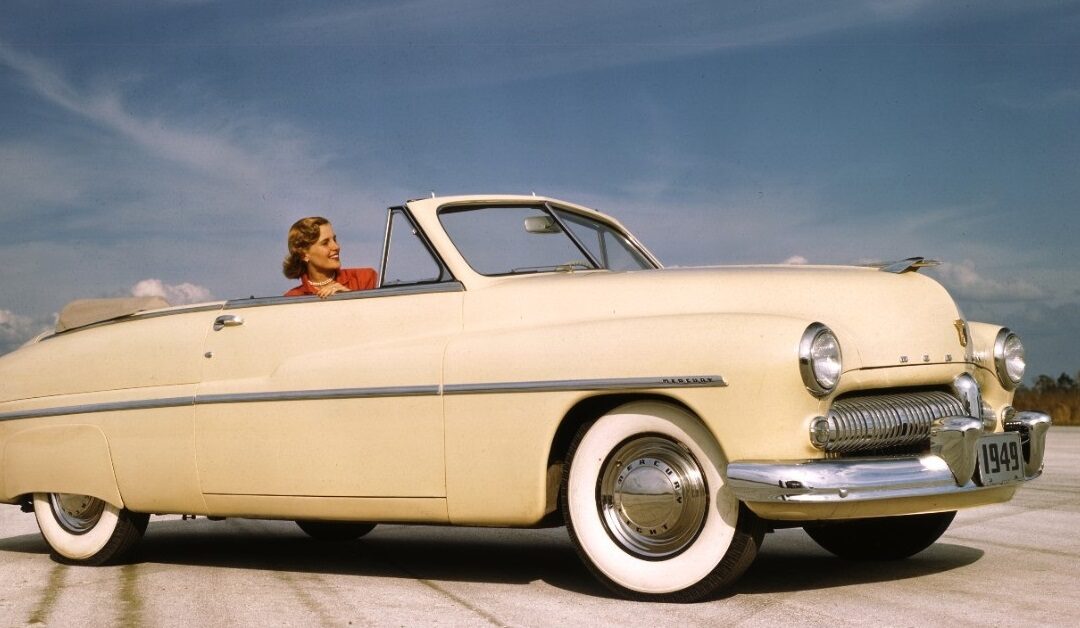
A color vintage cars photo of a 1949 Mercury convertible.

The post-war 1949 Mercury had breakaway styling. (Ford archives)

The third-generation 1949 Mercury was the first new design following World War II, according to Wikipedia.

The so-called “ponton” or pontoon styling helped differentiate it from its Ford cousin. The ’49 also became the definitive “lead sled” for customizers, including the Barris brothers, Sam and George.

The all-new postwar Mercurys were introduced toward the end of the 1948 model year, on April 29,1948, according to a report by the Automotive History Preservation Society. The cars did not look like fancy Fords but instead shared Lincoln styling and basic body shells.

“The engine was still a flathead V-8 now upped to 255 CID with 110 horsepower. A new and optional overdrive system was  activated by a handle under the dash.

“The Mercury Eight used full instrumentation in round dials. There were two dials on either side of the large central speedometer. An optional eight-tube radio and electric clock were centered on the dashboard.

“The transverse leaf spring suspension was gone. The front suspension was independent coil-spring with telescopic-type shock absorbers mounted inside front springs. A stabilizer bar was fitted to reduce body roll. The rear suspension had longitudinal, semi-elliptic leaf springs with telescopic shock absorbers. A semi-floating rear axle with hypoid-type ring gear and pinion was fitted.

“The ’49 Merc grille resembled a shiny coil. It was divided in the center by a large vertical chrome “Eight” stamped.

“A nearly full-length, mid-body chrome spear stretched across the sides. The 1949 Mercury also had wraparound front and rear bumpers. 

Paint Colors

There more than a dozen paint choices: Alaska Gray, Cairo Gray, Midland Maroon, Black, Alberta Blue, Royal Bronze Maroon, Dakota Gray, Lima Tan, Biscay Blue, Berwick Green, Tampico Red,  Haiti Beige, Bermuda Cream and Banff Green

“The 1949 Mercury Eight production totaled an astounding 301,307 units. It was far and away Mercury’s best ever year.”

See more vintage car photos here.
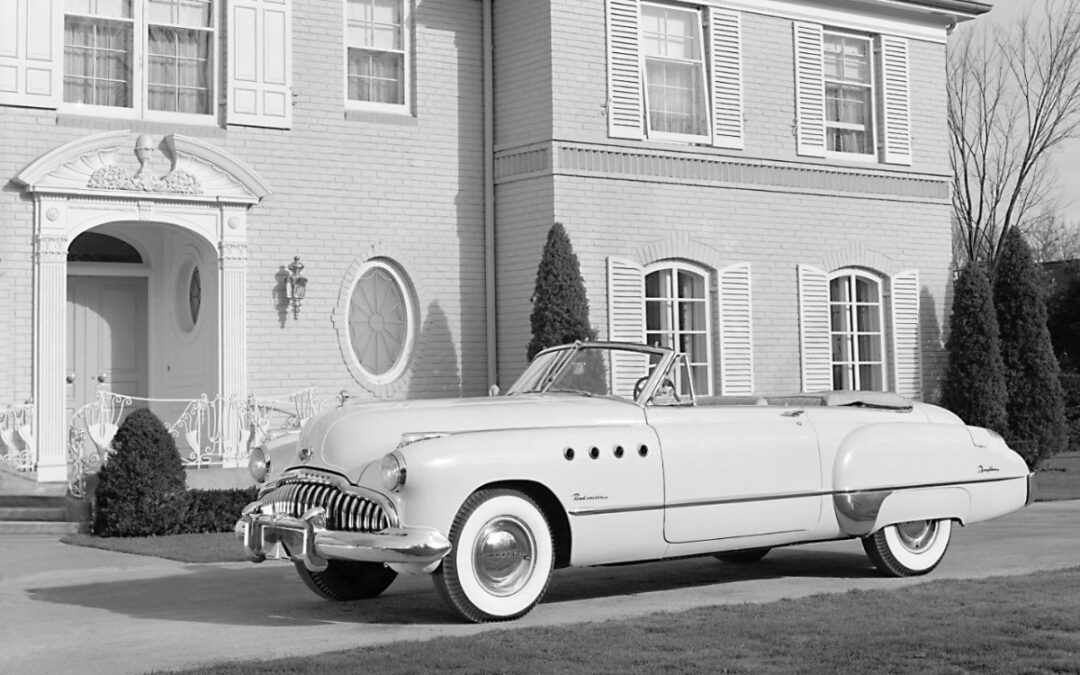
Vin Car Pic: 1949 Buick Roadmaster Riviera Convertible

Vin Car Pic: 1949 Buick Roadmaster Riviera Convertible
1949 was the first year for the “VentiPorts.” (GM PR archives)

The Buick Roadmaster received its first major postwar restyling in 1949, according to Wikipedia. Its wheelbase and overall length were reduced but its weight was actually marginally increased. The biggest change was a much larger two-piece, curved glass windshield that the sales brochure described as like an “observation car.”

It was also in 1949 that Buick introduced “VentiPorts.” Four were displayed on each of the Roadmaster’s front fenders, with three on the fenders of the Super, Century and Special.

The Riviera joined the body-style lineup in midyear, selling 4,314 units. Featuring power windows as standard equipment, the two-door Buick Roadmaster Riviera, along with the Cadillac Series 62 Coupe de Ville and the Oldsmobile 98 Holiday, was among the first hardtop coupes ever produced.

The Riviera was also notable for its popular optional “Sweepspear” chrome body-side molding, which would soon become a Buick trademark.

The name Riviera, Latin for coastline, was chosen to evoke the allure and affluence of the French Riviera. Its new two-door pillarless hardtop styling was described in advertising as “stunningly smart.”

Vin Car Pic: 1953 Corvette

Vin Car Pic: 1953 Corvette
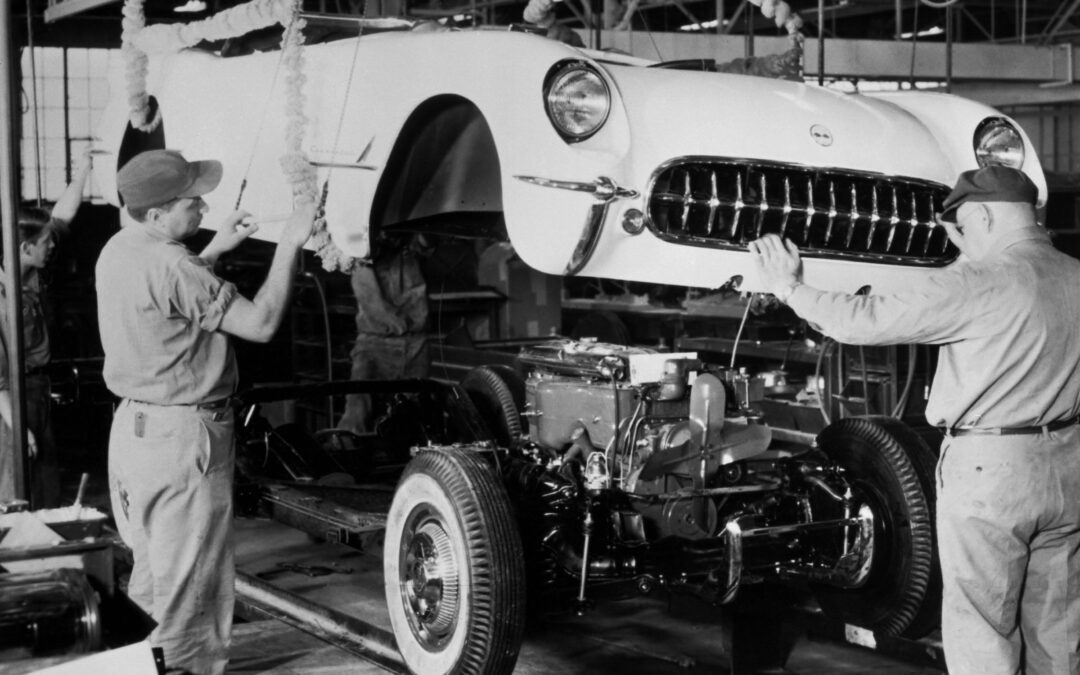
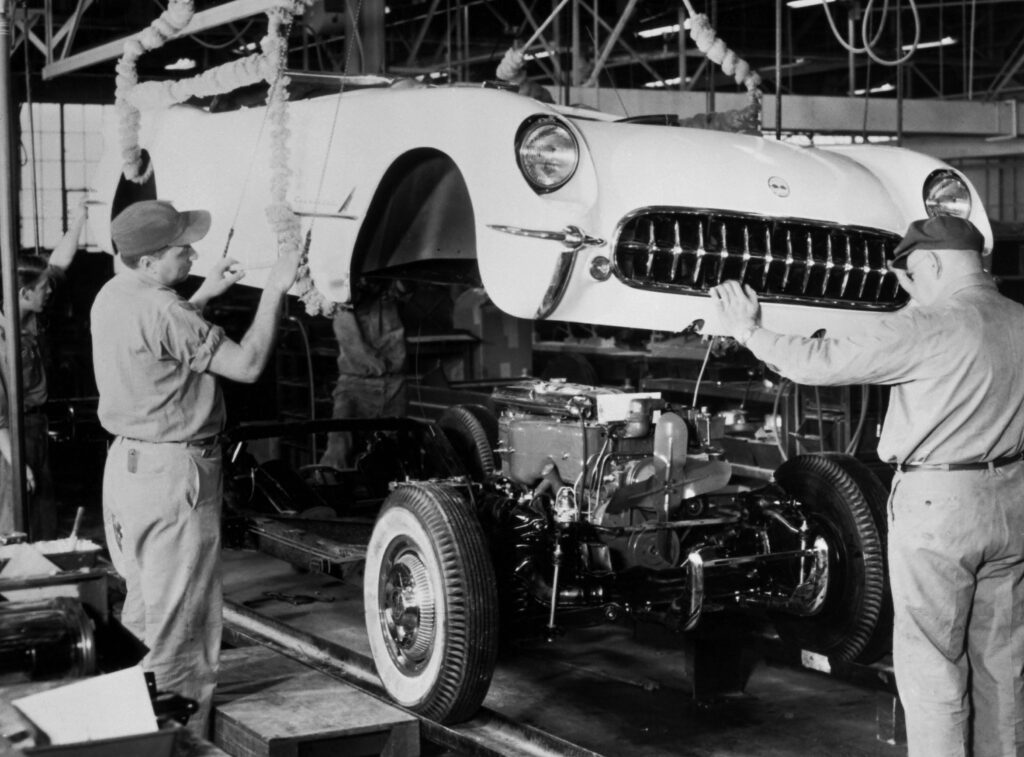
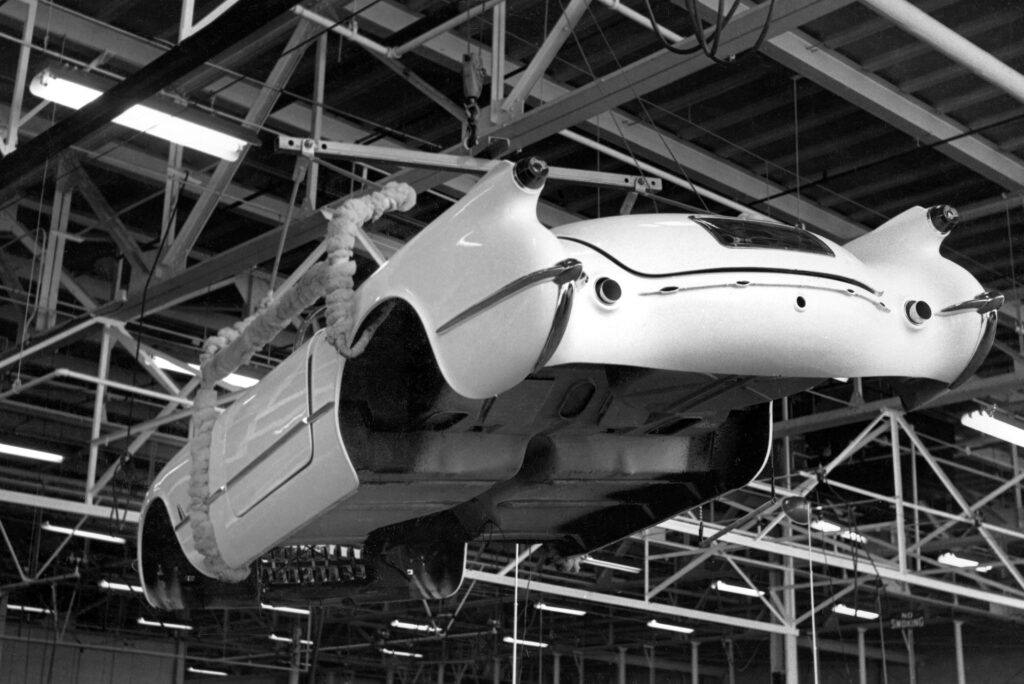
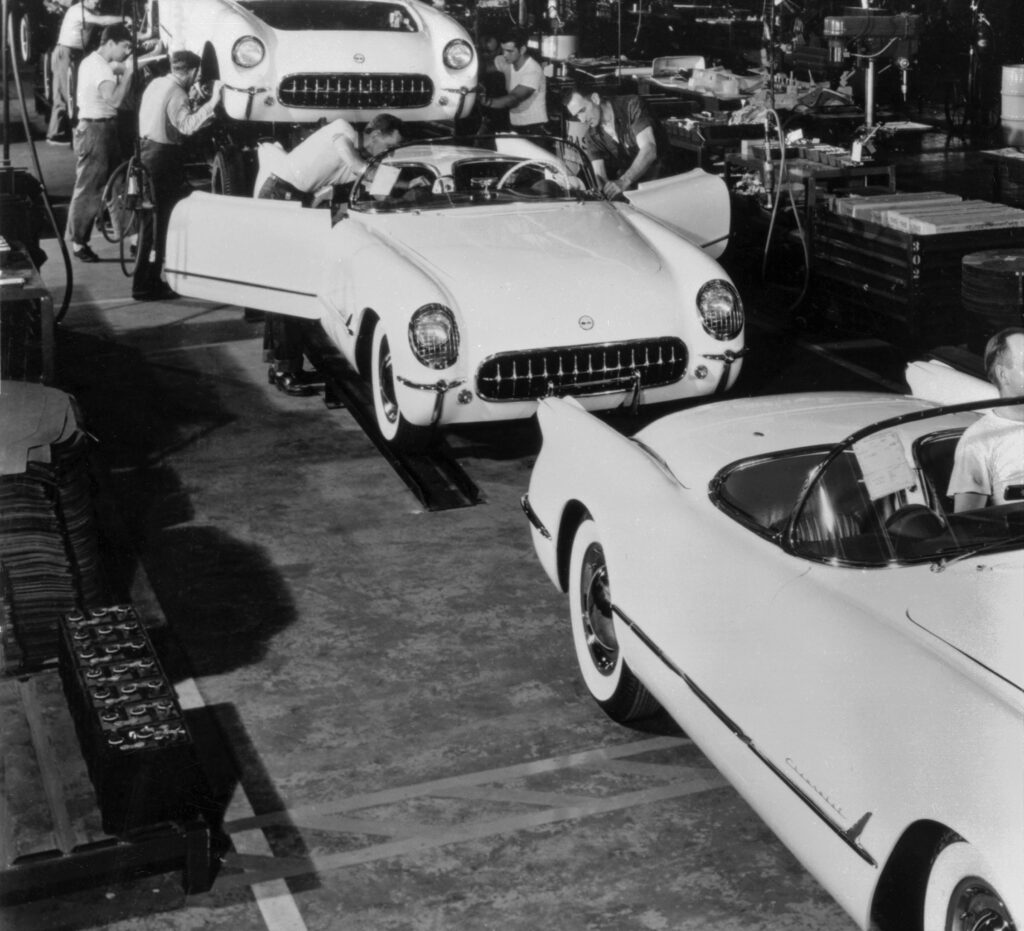
The first 300 Corvettes were largely hand-assembled. (GM archives)

The first Corvette rolled off the assembly line in Flint, Mich., on June 30, 1953, according to a report in AutomotiveHistory.org. Only 300 Corvettes were made for the 1953 model year — all Polo White with red interiors.

The first generation of the Corvette was produced through 1962 and is commonly referred to as the “solid-axle” generation, according to Wikipedia.

All 300 1953 C1 Corvettes were Polo White with red interiors. (GM archives)

“The Corvette was rushed into production for its debut model year to capitalize on the enthusiastic public reaction to the concept vehicle, but expectations for the new model were largely unfulfilled. Reviews were mixed and sales fell far short of expectations through the car’s early years. The program was nearly canceled, but Chevrolet would ultimately stay the course.

The C1 assembly line. (GM archives)

“To keep costs down, GM executive Robert F. McLean mandated off-the-shelf mechanical components, and used the chassis and suspension design from the 1949–1954 Chevrolet passenger vehicles.

“The drivetrain and passenger compartment were moved rearward to achieve a 53/47 front-to-rear weight distribution. It had a 102-inch wheelbase. The engine was a 235 cubic-inch (3.85-liter) inline six-cylinder, similar to the 235 engine that powered all other Chevrolet car models, but with a higher-compression ratio, three Carter side-draft carburetors, mechanical lifters and a higher-lift camshaft. Output was 150 horsepower.

The C1 Corvette assembly line. (GM archives)

“Because there was currently no manual transmission available to Chevrolet that was rated to handle 150 horsepower, a two-speed Powerglide automatic was used. 0-60 mph acceleration was 11.5 seconds.

1953 Chevrolet Corvette Mororama Show Car. (GM archives)

Today, the 2020 Corvette Stingray is back in normal production at the Bowling Green, Ky., assembly facility following the shutdown due to the pandemic.

According to a Chevrolet spokesman, production of the 2020 model has been extended through fall to meet demand. The MSRP for the 2021 will remain the same, he said.

An advertising image for the 1953 Chevrolet Corvette. (GM archives)

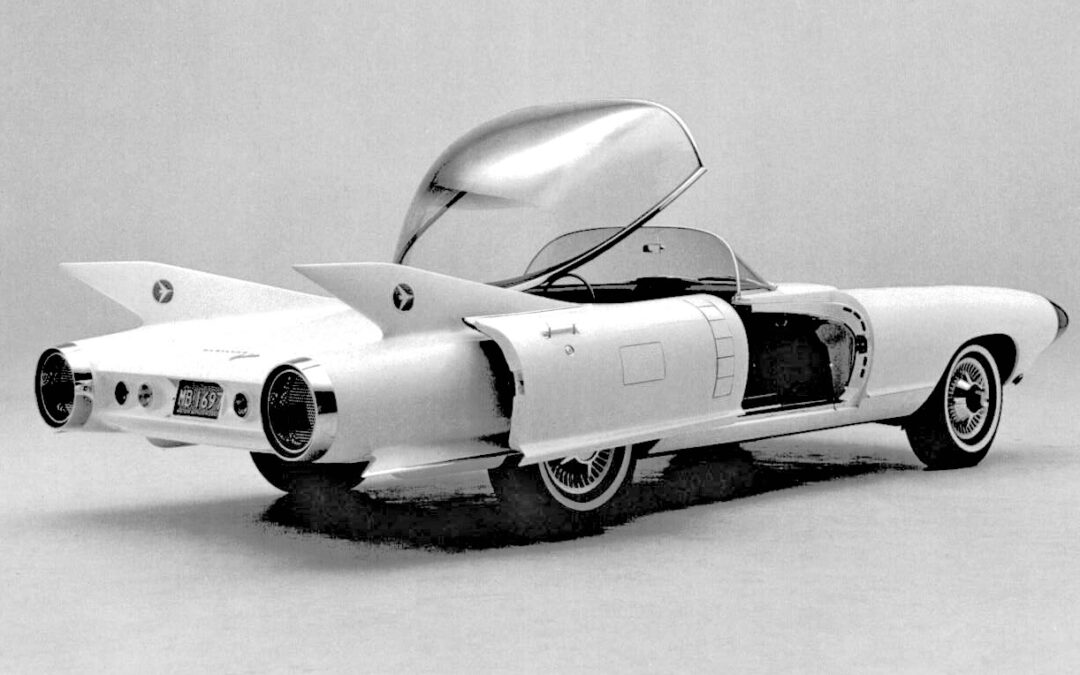
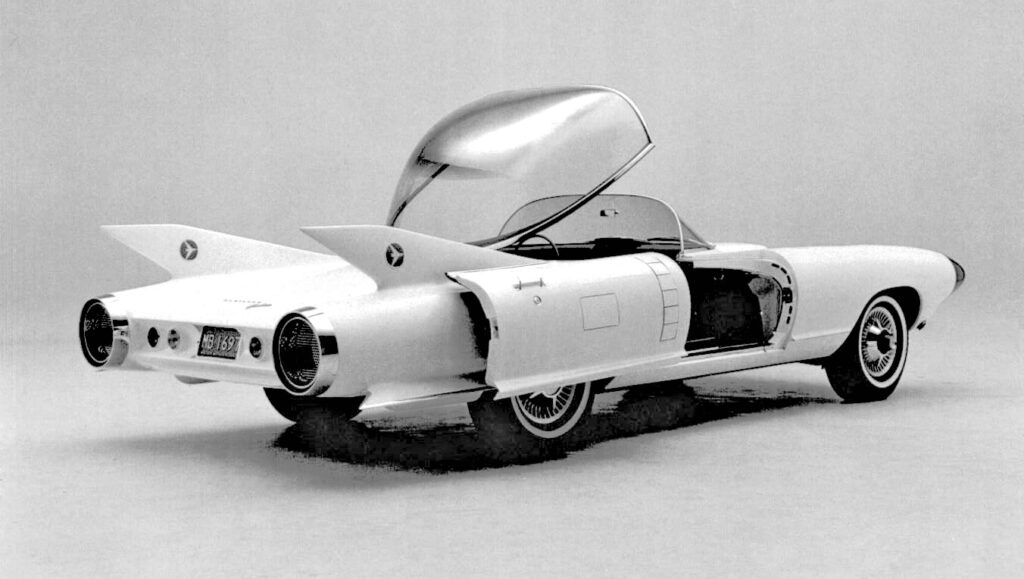
Vin Car Pic: 1956 Cadillac Cyclone concept

Vin Car Pic: 1956 Cadillac Cyclone concept
The Cadillac Cyclone featured a radar-operated collision avoidance system . (GM PR archives)

One of the last cars designed by Harley Earl, the 1956 Cyclone concept was a test-bed for futuristic styling and technology, according to Wikipedia. The design was heavily inspired by the aviation and rocket designs of the 1950s.

The Cyclone was built on a 104-inch wheelbase chassis and featured a front-mounted 390-cubic-inch V-8 engine, rear-mounted automatic transaxle and an all-wheel independent suspension.

A unique design was the engine exhaust that was ported out just ahead of the front wheels. It also featured a radar-operated collision avoidance system, with the radar sensors mounted in twin “nose-cones” on the front of the car.

The bubble-top canopy, silver coated for UV protection, automatically opened along with the sliding electrically operated doors. The canopy could also be stowed in the rear compartment, where it rested on a special air-bag base.

The original design of the Cyclone included larger tailfins (similar looking to the 1959 Cadillac lineup), adorned with the logo of the General Motors Air Transport Section (GMATS). The fins were reduced in size in 1964 (and the GMATS logo removed) to look more like the 1963-64 Cadillac range.

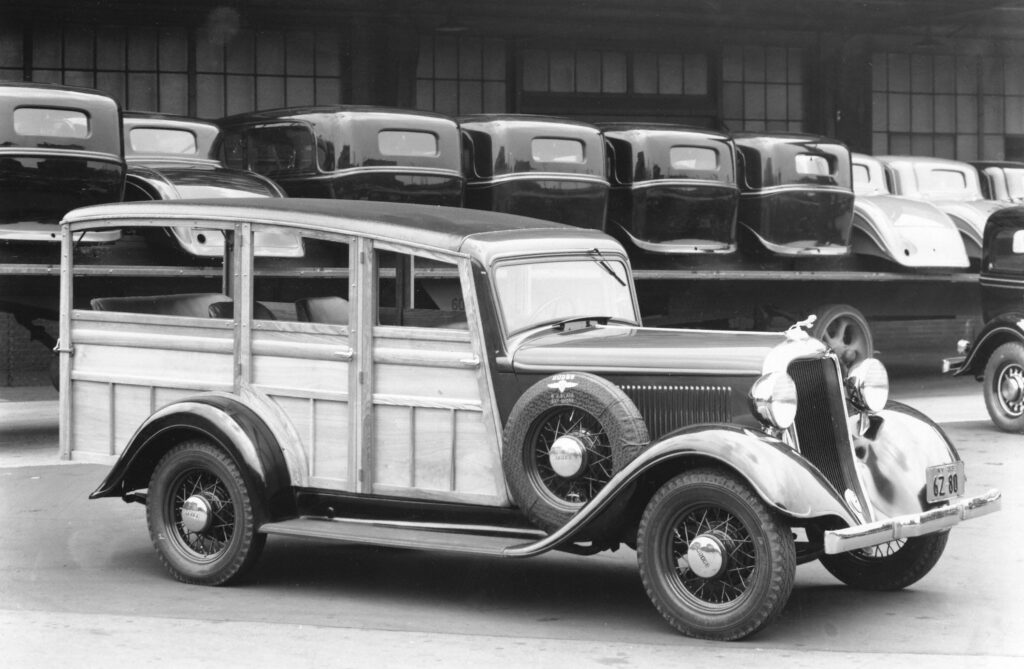
1933 Dodge Westchester Suburban

1933 Dodge Westchester Suburban
The 1930s Dodge Westchester woodie wagon.

The 1930s Dodge Westchester woodie wagons were all custom built. (Stellantis PR archives)

BY MARK MAYNARD

Not much is known about the Dodge Westchester Suburban woodies, according to an online report at SignificantCars. Research can confirm that Dodge and Plymouth offered similar models. None of the Plymouth woodies are known to have survived the ages and perhaps only one 1934 Dodge Westchester Suburban long-wheelbase woodie has survived.

Beginning in 1933 Dodge struck a relationship with U.S. Body and Forging Company in Tell City, Ind. Dodge would send commercial chassis to USBF where a custom-made wooden body would be assembled to the commercial 109-inch chassis.

Each vehicle was a custom order. Many were attractively finished and used as station wagons by the civilian population, but the versatile vehicle was found to be useful to the U.S. Army.

True production numbers are unknown as records were not kept on custom-built non-Dodge factory offerings. However, it is widely believed that the production figures are very low perhaps fewer than 40 units.

According to the Dodge Series D8 page in Wikipedia, there were 375 1938 “semi-custom ‘Westchester Suburban’ four-door woodie station wagon built. 

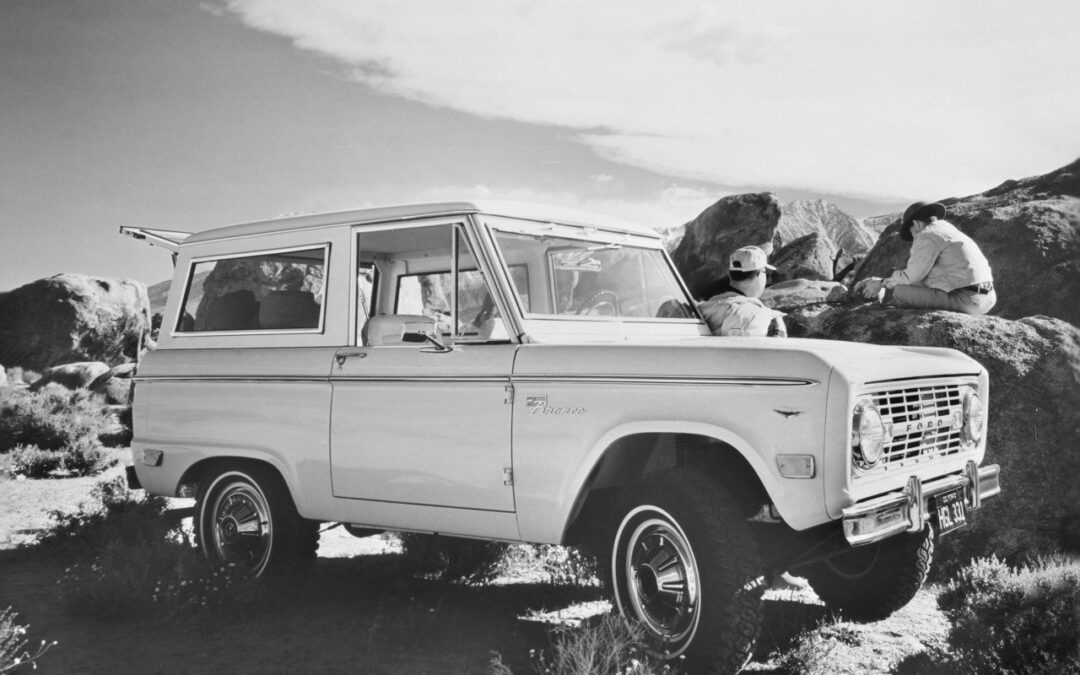
1968 Ford Bronco

1968 Ford Bronco
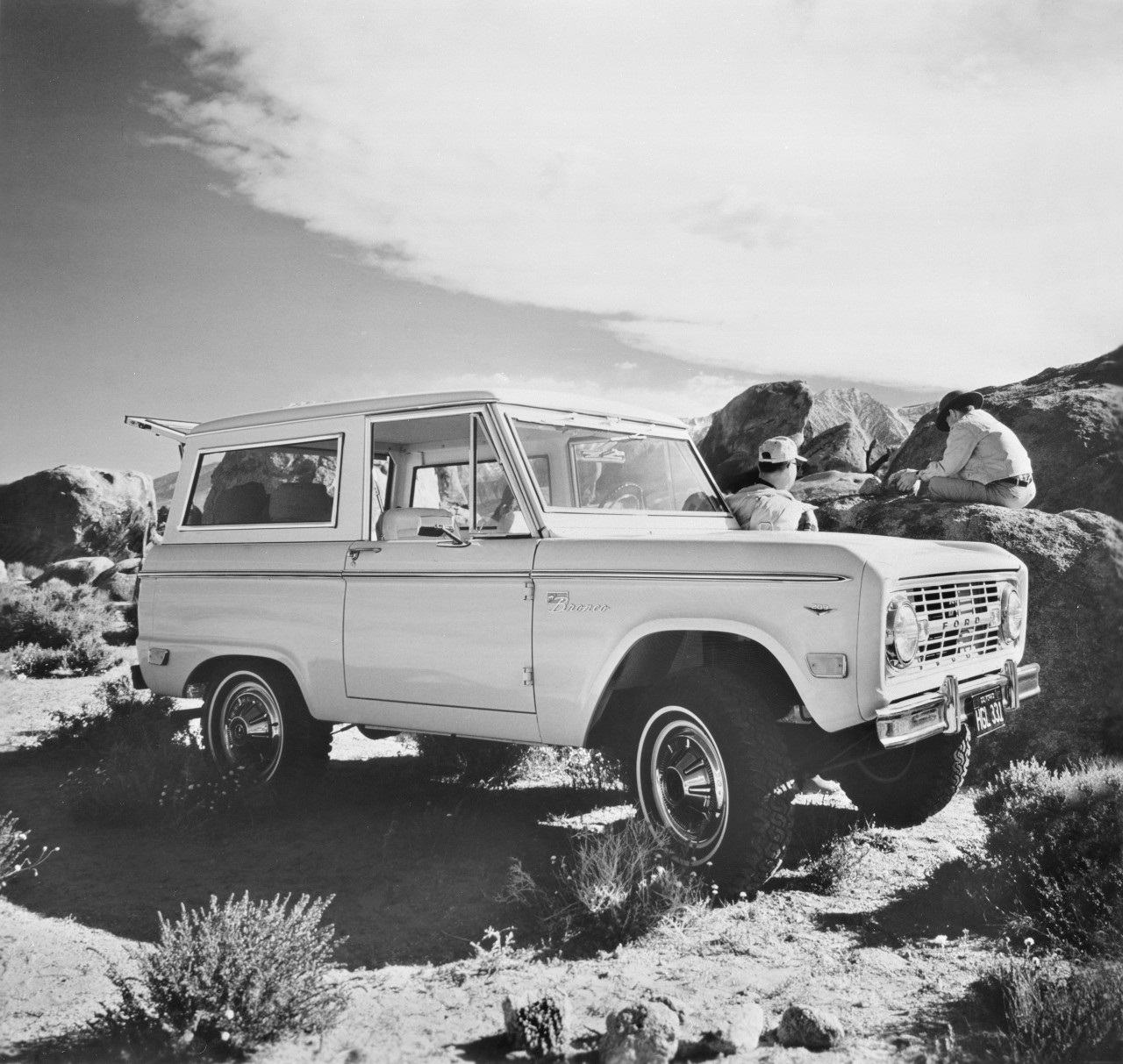
The first-generation of Broncos ran from 1966 to 1977.

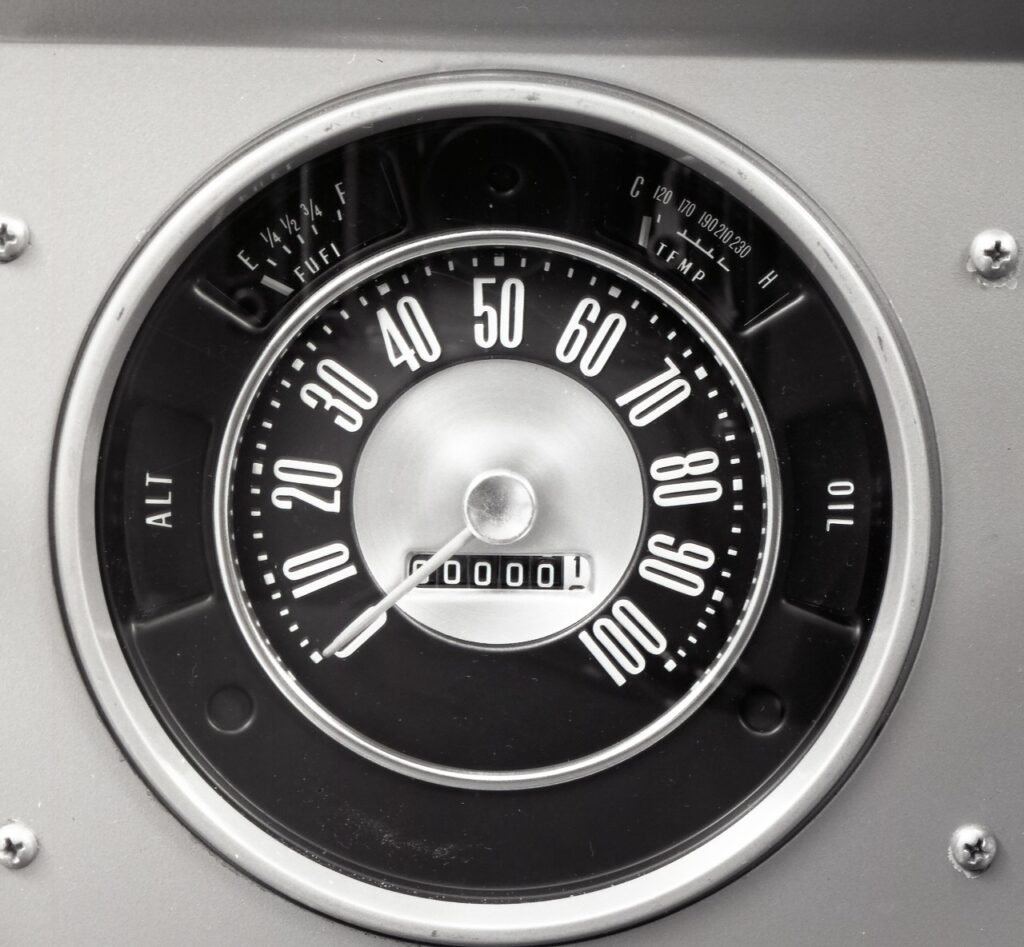
The first generation of Broncos ran from 1966 to 1977. A 1968 model is shown. (Photos courtesy of Ford Motor)

BY MARK MAYNARD
Since Ford vowed in 2017 to bring back the Bronco, fans have eagerly awaited its return. Based on a foundation from the current-generation Ford Ranger, the reveal of the new midsize Ford Bronco is expected this July.

There were five generations of Ford Bronco, built from 1966 to mid-1996 when Ford announced the discontinuation of the Bronco to make way for the Expedition. The second generation was moved to a larger F-150 chassis to better compete with the Chevrolet K5 Blazer, Dodge Ramcharger, and Jeep Cherokee.

The first-generation of Broncos, from 1966 to 1977, had their own box-section, body-on-frame chassis, according to Wikipedia. Built on a 92-inch wheelbase it was sized between the Jeep CJ-5 and International Scout, the major competitors of its day.

To simplify production, all examples were sold with four-wheel drive, a shift-on-the-fly Dana 20 transfer case, and locking hubs. The rear axle was a Ford 9-inch axle with Hotchkiss drive and leaf springs. The front axle was a Dana 30, replaced by a Dana 44 in 1971.

All generations of Bronco to date have been built at Ford’s Michigan Truck Plant in Wayne, Mich. And the 2021 Ford Bronco, offered in two- and four-door body styles, also will be built at the nameplate’s birthplace, alongside the Ranger.

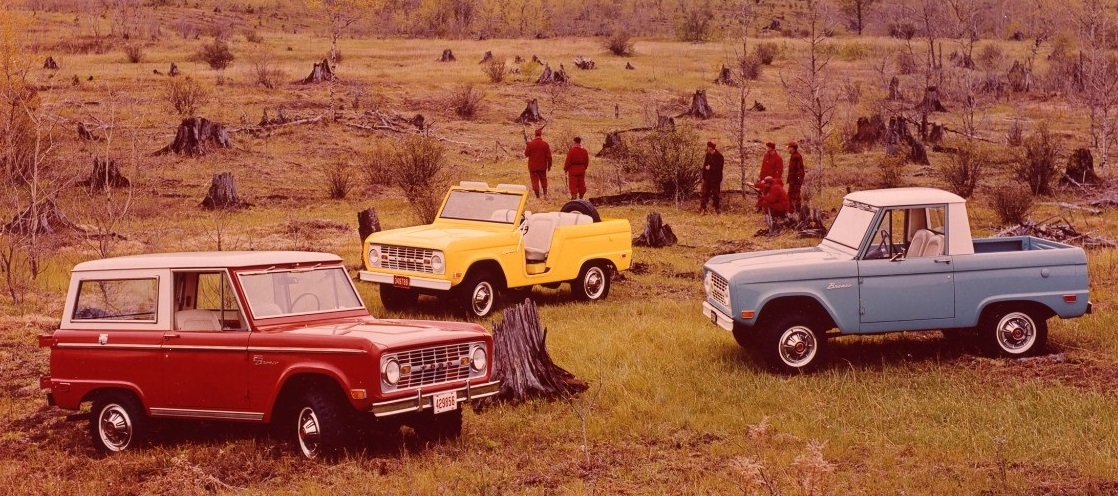
The first-generation Bronco was sold in three body styles: two-door wagon, half-cab pickup and open-body roadster. 

The first-generation Bronco was sold in three body styles: two-door wagon, half-cab pickup, and open-body roadster.