Select Page

2020 Infiniti QX80 Review

2020 Infiniti QX80 Review

A quiet place in turbulent times

An action view of the Infiniti QX80

The 2020 Infiniti QX80 is sold in Luxe and Limited trim levels. Starting prices range from $68,145 to $92,845. (Photos courtesy of Infiniti)

BY MARK MAYNARD

In this era of little houses and downsized lifestyles, the appeal of a big body-on-frame SUV is enduring. The major players in the mainstream segment are the Lincon Navigator, Cadillac Escalade, and today’s tester, the 2020 Infiniti QX80.

The QX80 might not be the most evolved big SUV, but I found an unexpected quiet place among its 17 1/2 feet of length and three tons of refined utility.

Part of the popularity of a truck-based SUV is a foundational sense of security on the road, a substantial towing capacity, and the potential for long-term ownership. 

The luxury interior of the QX80

The Limited is well dressed in attractive open-pore matte-finish wood trim and neatly stitched semi-aniline leather.

But the appeal is more than brawn, Infiniti says, the QX80 has a significant percentage of female buyers versus the segment average. Motivators, no doubt, are its cohesive exterior styling and an elegant interior design that looks and feels more carlike than a repurposed truck. And the QX80 can pull a boat, horse, or travel trailer weighing up to 8,500 pounds.

The new InTouch infotainment system with upper and lower twin screens

New for 2020 is a new generation InTouch infotainment system with upper and lower twin screens.

Infiniti QX80 Pricing

The Infiniti QX80 is sold in Luxe and Limited trim levels, in two- or four-wheel drive. All models have a powertrain of a 400-horsepower, direct-injected 5.6-liter V-8 and a seven-speed automatic transmission.

Starting prices range from $68,145 (add $3,100 for 4WD) to $92,845, including the $1,395 freight charge from Kyushu, Japan. Today’s Limited tester with standard 4WD had one option package of all-season floor mats and cargo mat ($355) for an as-tested price of $93,200.

Check current Infiniti QX80 pricing and incentives here.

Infiniti QX80 Overview

The QX80 V8 engine

The QX80 powertrain is a 400-hp, 5.6-liter V-8 and seven-speed automatic transmission.

The QX80 had a significant “facelift” redesign for 2018. And new for 2020 are a new generation InTouch infotainment system with upper and lower twin screens, 7-inch gauge display and a revised center stack of cabin controls. Apple CarPlay and Android Auto are now standard with standard technology systems of lane departure warning, backup collision intervention, and blind-spot warning.

Opting for the Limited model adds appreciable standard features. Among them, smart-key locking and push-button ignition, semi-aniline leather-trimmed upholstery, navigation system with lane guidance, 10-way power driver’s seat with two-way power lumbar support, eight-way power passenger’s seat with two-way power lumbar, heated and ventilated front seats, 17-speaker Bose audio system, auto-leveling rear suspension, 22-inch wheels and all-season tires (275/50) and the Hydraulic Body Motion Control suspension system.

he open-pore leather-trimmed upholstery

The leather-trimmed upholstery is supple and elegantly designed.

30-Years’ Package

Infiniti is celebrating 30 years in America with a special Edition 30 package. For $3,500, adds 22-inch, dark forged aluminum-alloy wheels with 275/50 all-season tires, black front grille mesh, dark chrome exterior trim and mirror caps and a graphite black headliner, sun visors, sun shades and pillars. Other features include EDITION 30 stainless steel kick plates, a smart rearview (video) mirror and driver-assist technologies of lane departure prevention, intelligent full-speed cruise control, distance control assist, blind spot intervention.

Keeping It Simple

For those who can resist the siren-song of overwhelming advanced technologies, the QX80 does not require higher education to learn and appreciate its ease of ownership.

The driver area could benefit from a redesign for more open-concept usability and, particularly, a larger rearview camera screen. But the systems in place will assist and inform without intrusion or frustration.  And it might cost less to maintain when it’s out of warranty compared with its European counterparts, such as the Mercedes-Benz GLS or BMW X7.

The machine-finished 22-inch forged aluminum wheels

The Limited has dark, machine-finished 22-inch forged aluminum wheels.

QX80 Powertrain

With the Limited’s curb weight of 6,098 pounds (or 5,679 lbs. for 2WD) the V-8’s 413 foot-pounds of torque at 4,000 rpm are almost required for respectable performance. Acceleration can be quite brisk when needed, but the overall performance seems tuned for fuel economy.

The seven-speed automatic rolls easily through the gears and even has rev-matching downshifts, for those bold enough to attempt.

EPA mileage ratings are 13 mpg city, 19 highway and 15 mpg combined, on premium fuel. I worked up to 17.4 mpg on a long highway run. The 26-gallon fuel tank provides a decent vacation cruising range.

The Hydraulic Body Motion Control suspension system is a magic act in how it smooths, settles and balances the ride; a self-leveling rear suspension is standard. Braking force is reassuring from 13.78-inch vented four-wheel disc brakes, but I wasn’t hauling a travel trailer down a mountain grade in summer.

The back seat can be configured with captain’s chairs or a three-position bench

The back seat can be configured with captain’s chairs or a three-position bench.

QX80 Cabin Features

While fuel economy is challenged, there are stronger selling points. Infiniti is masterful at interior finesse with refined materials — and the Limited, Infiniti says, is its best effort yet for luxurious surroundings. The enormity of the QX80 cabin is calmed with a wraparound instrument panel. The design is set off by matte silver ash wood trim, supple (semi-aniline) leather upholstery neatly stitched, and a black Ultrasuede headliner and roof pillars.

QX80 second-row climate controls

Back-seat occupants have access to heated seats and controls to adjust temp and fan speed.

The QX80 is a high-riding SUV and the running boards and big grab handles at the windshield pillars are helpful when hoisting aboard. The front seats are full-bodied, elegantly designed, and not excessively bolstered but with perforated centers for breathability (ventilated) and heated.

A grand armrest console with deep storage separates the captain’s seats; and its well-padded console lid is also rear-hinged for an upper storage area for second-row occupants to use.

A wide shift console has covered cup holders and an e-bin, but with no wireless charging.

Sightlines are generally open, but the wide base of the side mirrors can complicate cornering views. The Around View camera system provides rear views and an overhead view to help with parking in tight quarters. It also alerts with tones to moving objects, front or rear. The front view is a huge asset when nosing into a parking slot.

The Limited has puddle lighting and illuminated kick plates.

The Limited has puddle lighting and illuminated kick plates.

Driver-Assist Technologies

While some SUVs can be a handful in small-space maneuverability, the Infiniti QX80 drives much smaller than might appear and it is not intimidating. The steering is light and its turning radius of 41.3 feet is reasonable, and not much wider than some midsize sedans.

Standard safety features include six air bags, forward emergency braking with pedestrian detection, rear-collision avoidance, lane-departure warning and lane-departure prevention, predictive collision warning, and blind-spot warning and intervention.

The QX80 has supportive driver-assist technologies but not the complete Level 2 semi-autonomous drive mode that Nissan does so well. This system uses the intelligent cruise control navigation system, which integrates lane guidance, forward emergency braking with pedestrian detection and predictive forward collision warning. And for 2020, the system adds blind-spot warning, lane departure warning, and backup collision intervention.

When activated, the system will steer and brake the vehicle, but two hands on the wheel are required. The system will let the Q80 wander over the highway Botts dots and road lines before making course corrections. But it will be a helpful support in heavy commuting traffic.

2nd-Row Seating

The back-seat area looks like a road-trip lounge with captain’s chairs that are almost as large as those in front. Legroom of 39.6 inches is a stretch, but not limo-like depending on who is sitting up front. The seatbacks recline a few inches, but there is no seat-track slide; grab handles at the B-pillars are a smart addition to ease entry.

Overhead side vents help with airflow that has controls for temp and fan speed. A large armrest console has deep storage for the video headphones. Amenities include heated seats, two charging USBs, and a 150-watt household plug.

Third Row and Cargo Space

Access to the third row is by a one-handle release to flip and tumble the second-row seats. The space is kid-class with short legroom of 28.8 inches, but the flat-folding seats make it more functional as expanded cargo space.

The QX80 third row seating

Third-row space is kid-class.


The cargo area has a wide 50-inch opening with an entry opening of 33 ½ inches, but it is a tall lift-up to the cargo floor. There is slim space of 16.6 cubic feet behind the third row, but it is convenient to corral grocery bags.

Power fold the second-row seats for a square space of 49.6 cu. ft. or about 4 feet in length. Or fold both rows for about 7 feet to carry a surfboard, skis, or a ladder.

Why Buy the Infiniti QX80?

The $93K tester was a showpiece, but the $75K Luxe model brings all the hallmarks of the QX80. Its hushed cabin and sound-isolated ride communicate safety and security. The QX80 is a big ride ready to brave a pandemic or at least the natural elements of hail, hell, or high water.

2020 Infiniti QX80 Limited 4WD Specifications

Body style: large, 7-seat, body-on-frame SUV with 4WD

Engine: 400-hp, direct-injection 5.6-liter V-8; 413 lb.-ft. torque at 4,000 rpm

Transmission: 7-speed automatic, with rev-matching downshifts in sport mode; high- and low-range transfer case; hill-start assist, and snow and tow mode functions

Fuel economy: 13/19/15 mpg city/hwy/combined; premium fuel

Tow capacity: 8,500 lbs., with 7-pin trailering harness

BY THE NUMBERS

Fuel tank: 26 gallons

Cargo space: 16.6-49.6 cu. ft.  

Front head/leg room: 39.9*/39.6 in. *w/sunroof

2nd row head/leg room: 40/39.6 in. 

3rd row head/leg room: 36.8/28.8 in.

Length/wheelbase: 210.2/121.1 in. 

Height/width: 75.8*/79.9 in. *w/roof rack

Curb weight: 6,098 lbs.

Turning circle: 41.3 ft.

FEATURES

Standard QX80 Limited equipment includes: smart-key locking and push-button ignition, semi-aniline leather-trimmed upholstery, navigation system with lane guidance, 10-way power driver’s seat with 2-way power lumbar support, 8-way power passenger’s seat with 2-way power lumbar, heated and ventilated front seats, 17-speaker Bose audio system, auto-leveling rear suspension, twin-tube shock absorbers, 22-inch all-season tires (275/50), high-beam headlight assist

Safety features include: 6 air bags, forward emergency braking with pedestrian detection, rear-collision avoidance, lane-departure warning and lane-departure prevention, predictive collision warning, blind-spot warning, and intervention

PRICING

Infiniti QX80 Limited base price: $92,845, including $1,395 freight charge; price as tested $93,200

Options on test vehicle: all-season package, $355, of floor mats and cargo pad

Where assembled:  Kyushu, Japan

Warranty: 4-years/60,000-miles with 24-hour roadside assistance; 6-years/70,000-miles powertrain

A rear view of the QX80

The QX80 Limited features satin chrome exterior trim and 22-inch wheels and tires.
 

2019 Infiniti QX50: More luxury, more sophistication, more complexity

2019 Infiniti QX50: More luxury, more sophistication, more complexity

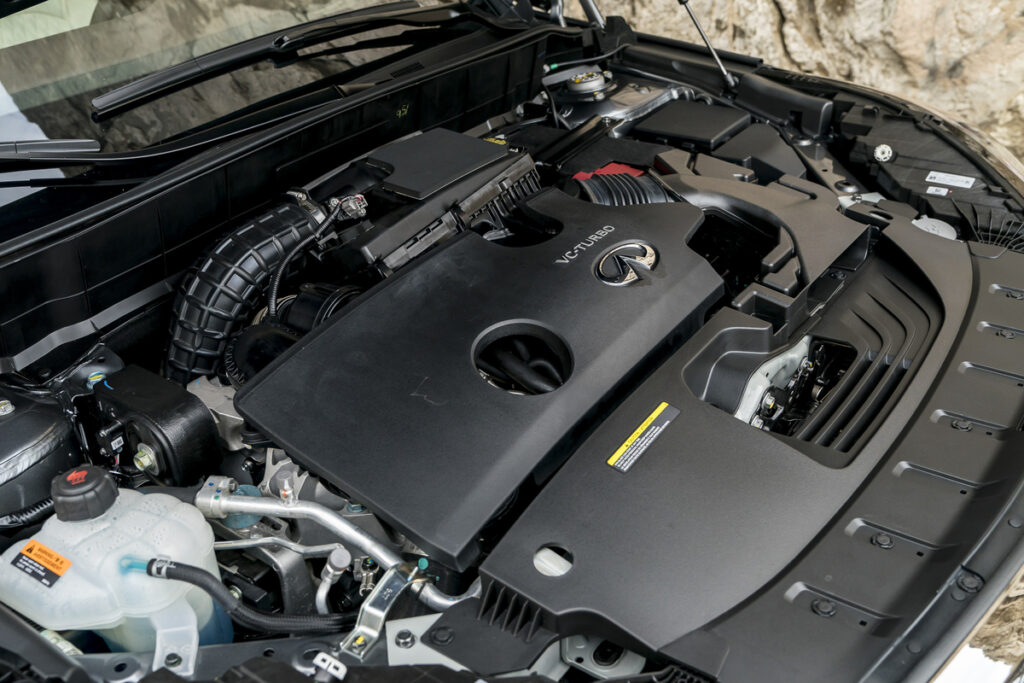
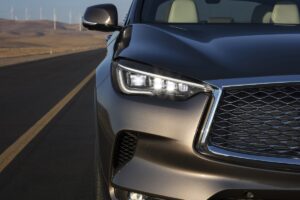
The QX50’s new 2.0-liter VC-Turbo four-cylinder engine is getting much attention in advertising and in road-test evaluations, but not all of it is progressive.

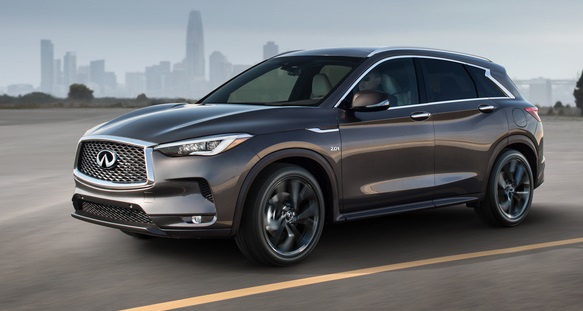
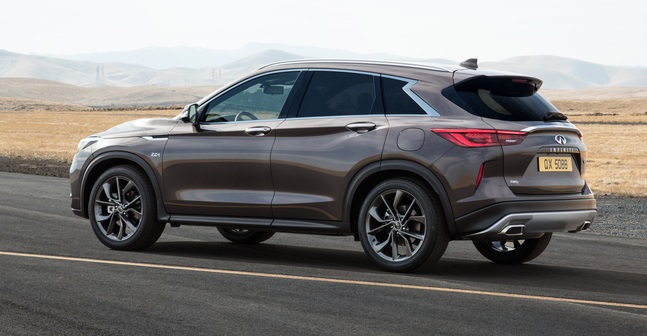
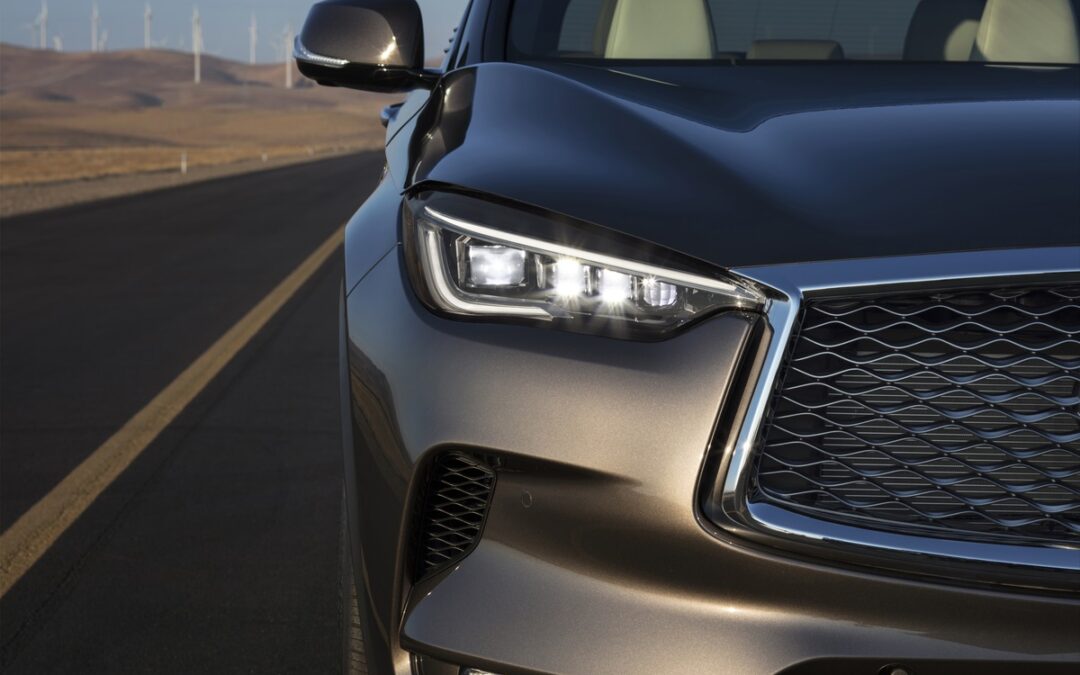
The 2019 Infiniti QX50 is fresh start with striking exterior styling, a more luxurious presentation, Level 2 semi-autonomous driving and a first-of-its-kind engine with variable compression.

There are a lot of moving parts to the redesigned QX50, the brand’s midsize five-passenger SUV crossover. Its new 2.0-liter VC-Turbo four-cylinder engine is getting much attention in advertising and in road-test evaluations, but not all of it is progressive.

Infiniti says the engine’s variable compression ratio technology is a breakthrough in combustion-engine design. But it is a complex engineering design that took about 20 years to exorcise the demons for mainstream application.

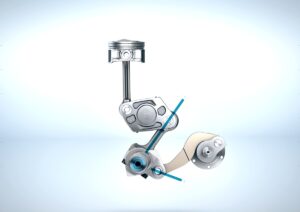
The once-simple engine piston gets sophisticated bottom-end internals, with a multi-link connector at the crankshaft that connects with another control shaft then an actuator arm and an electric motor-controlled rotating unit called the Harmonic Drive.

Cabin materials are immaculate, but the traditional cabin layout does not set any new standards for functionality or creativity.

The movement is robotic-like syncopation to continually adjust the engine’s compression ratio by raising or lowering the reach of the pistons. The consumer benefit is more power and fuel efficiency from a four-cylinder engine — and it does have impressive power numbers.

The 2.0-liter VC-Turbo replaces a 3.7-liter V-6 with 325-hp and 267 foot-pounds of torque at 5,200 rpm. With a seven-speed transmission, it had mileage of 17/24/20 mpg city/hwy/combined.

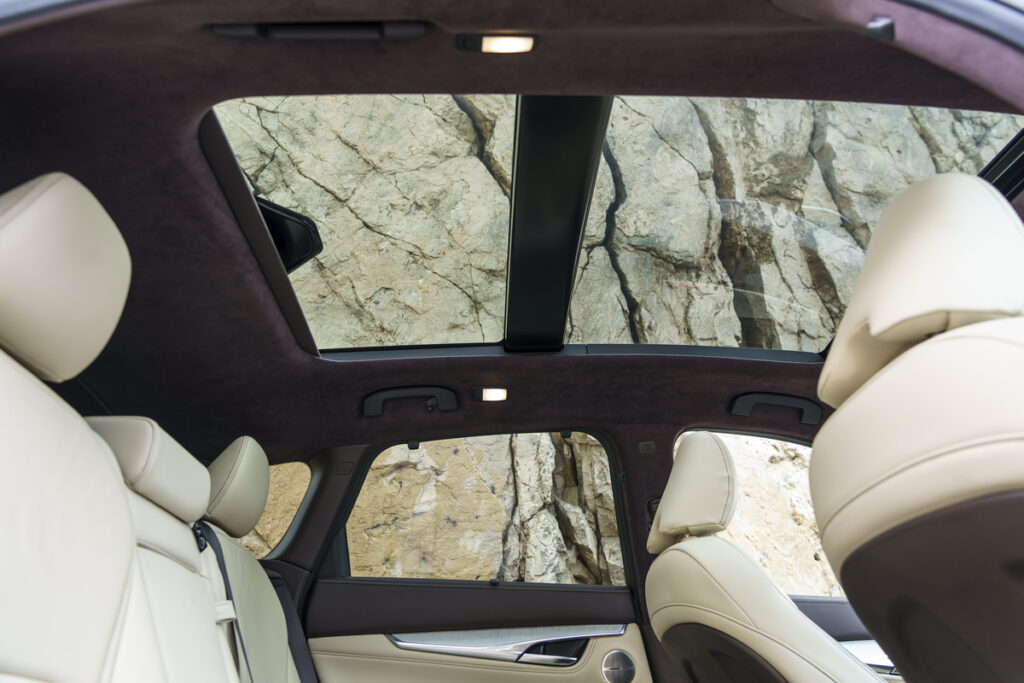
Headroom is tall at 40 inches — with the panoramic roof — and driver controls are reasonably intuitive.

The VC-Turbo, with direct-and-port injection, has 268 horsepower and 280 lb.-ft.  torque from 1,600-4,800 rpm. All-wheel-drive fuel economy ratings are 24 mpg city, 30 highway and 26 mpg combined on the recommended premium fuel. I was averaging just 16.9 mpg in a week with little freeway driving and much use of Sport mode. Oddly, there was no auto stop-start at idle, but I don’t think there’s much mileage benefit for the driver with that feature.

The panoramic roof is wide and long.

The efficiency gains are apparent on paper, but my driving experience was variable and made somewhat annoying by the continuously variable automatic transmission. At times the power delivery was quick and assertive, mostly around town, and at times the spooling of the turbo (as the engine reached 1,600 rpm) and the rubberbanding uptake of the CVT had the feel of a small powertrain trying to move a heavy vehicle. But the QX50 is not heavy at 3,857 pounds. At speed, the engine response is quicker and almost frenzied.

Only AWD models are recommended for towing and have a 3,000-pound rating.

The steering weight is very light, which I like when tooling the city, and the overall drivability is comfortable, not sporty, particularly with the Bridgestone Ecopia 19-inch runflat tires. There is noticeable road noise on concrete Interstate despite a well-soundproofed cabin.

The VC-Turbo, with direct-and-port injection, has 268 horsepower and 280 foot-pounds of torque from 1,600-4,800 rpm.

The QX50 is sold in three trim levels with front- or all-wheel drive. Pricing starts at $38,540 and ranges to $46,145 for the top-line Essential AWD; pricing includes the $995 freight charge from Aguascalientes, Mexico. The Essential tester was $59,585 with four major packages and three stand-alone options for premium paint ($500); illuminated kick plates ($465); and welcome lighting ($425), which shines at the ground from below the door opening.

The once-simple engine piston gets sophisticated bottom-end internals. The electronics of the variable compression ratio engine can detect the car’s driving condition and driver inputs, and seamlessly select the most suitable compression ratio, Infiniti says. The engine is able to offer any compression ratio between 8:1 (for high performance) and 14:1 (for high efficiency).

Competitors include the Acura RDX, Audi Q5, BMW X3, Cadillac XT5 or XT4, Lexus NX, Mercedes-Benz GLC and Porsche Macan.

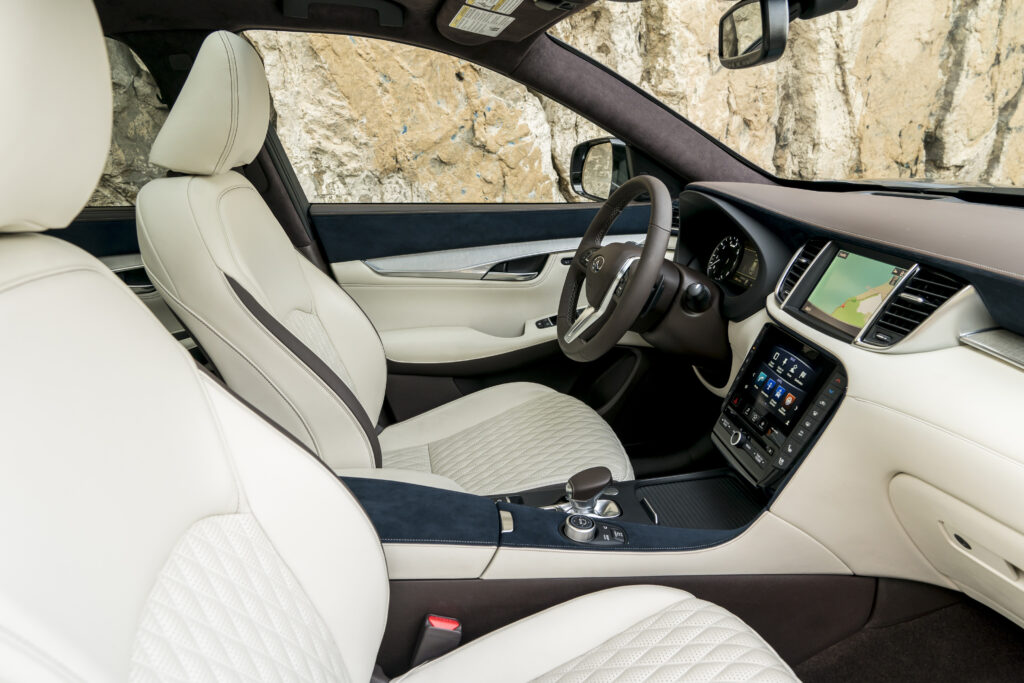
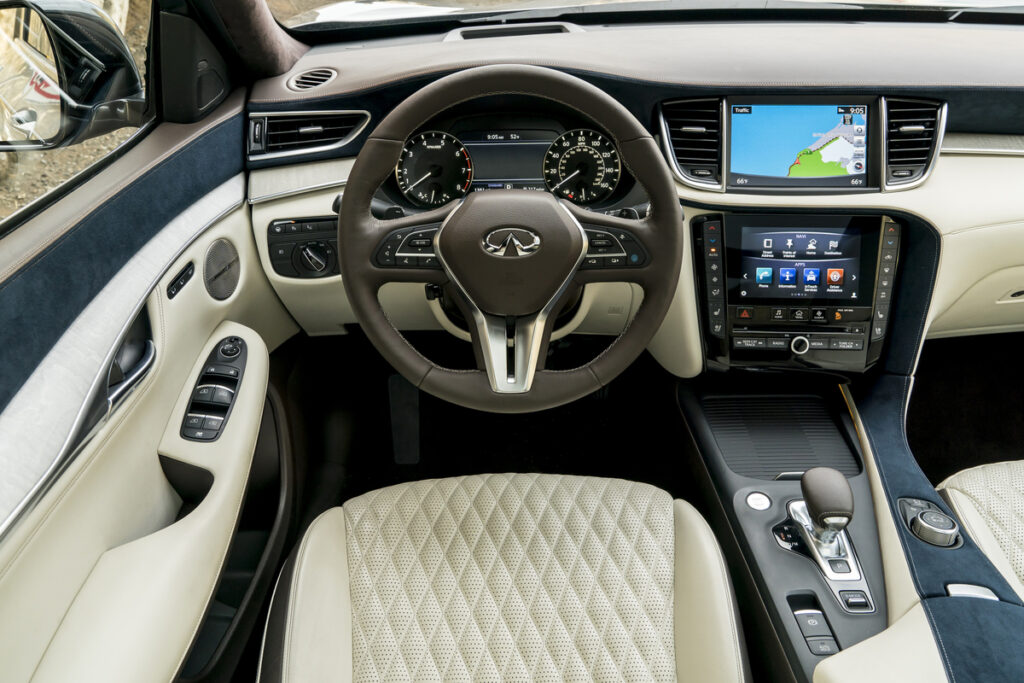
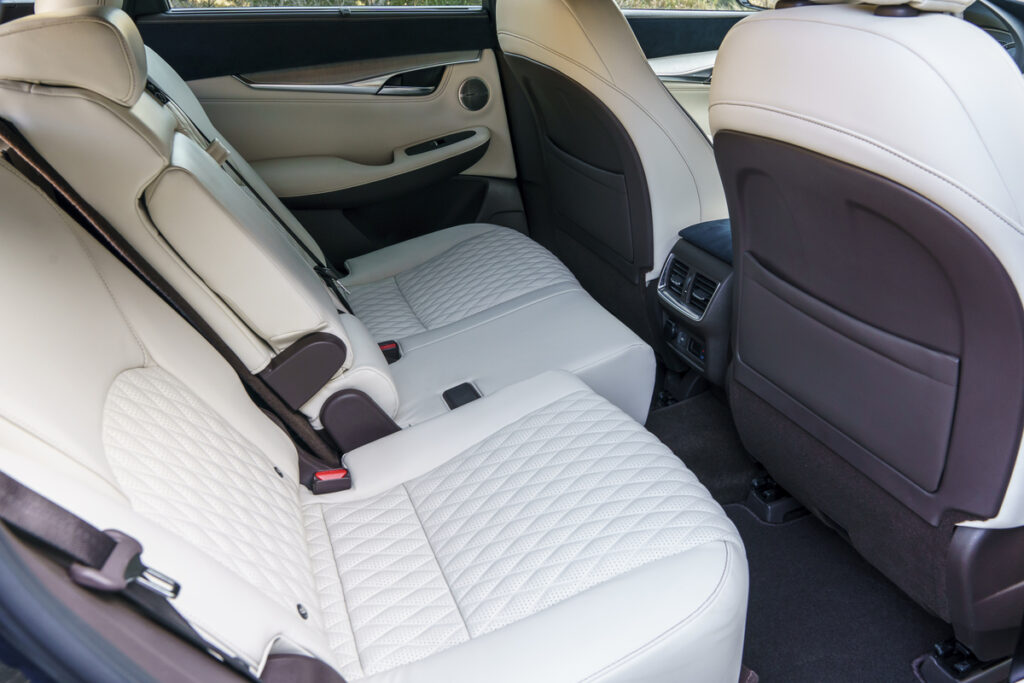
The traditional cabin layout does not set any new standards for functionality or creativity, but Infiniti is a master tailor at high-luxury interiors. The tester’s three-tone cabin was neatly dressed in white perforated and quilted leather upholstery, etched metallic trim and a brown Ultrasuede headliner with accent swaths of blue Ultrasuede across the instrument panel and upper doors. All of the plastic pieces felt sturdy with spot-on panel fit.

The tight turning circle of 36.4 feet is empowering, as is the around-view monitor, which shows all sides of the vehicle. Braking is confident with light pedal pressure from vented four-wheel disc brakes, 13-inch discs front and 12.1-inch rear.

The ride height is ideal for command of road visibility without a big step-up to the cabin. Sightlines are open over the shoulder, but the wide base of the windshield pillars at the side mirrors can block views of pedestrians in crosswalks. Eight-way power front seats are firmly supportive and not overly bolstered; but only the driver gets two-way lumbar adjustment.

The back seat is quite functional with fore-aft slide and a reclining seatback.

Headroom is tall at 40 inches with the panoramic roof. Driver controls are reasonably intuitive, but the dual stacked screens in the center console are low and not conducive for parallel eye movement from screen to road. The 8.8-inch navigation screen is at the top but there is no ability to swap the screen functions to have the more used 7-inch infotainment screen in the upper position.

The back seat is quite functional with fore-aft slide and a reclining seatback. There is almost adult-class thigh support and the low center exhaust tunnel improves center-seat footroom. Extra features include temperature control (but no fan speed), a charging USB and 12-volt plug and a fold-down padded center armrest with cup holders.

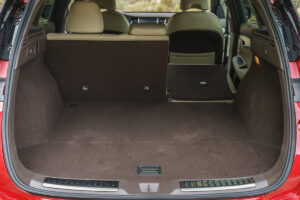
The cargo area is deep and wide with room for three golf bags, Infiniti says.

The cargo area is deep and wide with 31.1 cubic feet of storage that will fit three golf bags. Or fold the seats for about six feet of length and up to 64.4 cubic feet. Extras include usable basement storage, two lights, dual seatback releases and a bag hook.

The QX50 has glints of engineering brilliance in a setting rich in luxury. The next evolution should include a brilliant transmission.

2019 Infiniti QX70 Essential AWD 

  • Body style: midsize, 5-passenger, AWD SUV crossover
  • Engine: 268-hp, turbocharged and direct-and-port injection 2.0-liter 4-cylinder; 280 lb.-ft. torque from 1,600-4,800 rpm
  • Transmission: CVT w/manual shift mode and rev-matching downshifts
  • Fuel economy:  24/30/26 city/hwy/combined; premium fuel
  • 0-60 mph: 6.2 secs

SPECIFICATIONS

  • Fuel tank: 16 gal.
  • Cargo space: 31.4-65.1 cu. ft.
  • Front head/leg room: 40*/39.6 in. *41 in. w/o moonroof
  • Rear head/leg room: 38.4/38.7 in.
  • Length/wheelbase: 184.7/110.2 in.
  • Curb weight: 3,857 lbs.
  • Turning circle: 36.4 ft.

FEATURES

  • Standard equipment includes: smartkey locking and push-button ignition, around-view monitor, power panoramic roof with sunshade, LED headlights, leather-trimmed upholstery, 8-way power adjustable front seats, 2-way power lumbar for driver, electric parking brake, around-view camera, navigation and infotainment apps, 4 USB ports, 19-inch runflat Bridgestone Ecopia tires
  • Safety features include: 8 air bags, forward collision warning, forward emergency braking with pedestrian detection, blind-spot warning, hill-start assist 

    The 2019 Infiniti QX50 is fresh start with striking exterior styling, a more luxurious presentation, Level 2 semi-autonomous driving and a first-of-its-kind engine with variable compression.

  • PRICING
  • Base price: $46,145, including $995 freight charge; price as tested $59,585
  • Options on test vehicle: lighted kick plates $465; premium paint $500; welcome lighting $425; ProASSIST package, $550, includes backup collision Intervention, distance control assist, intelligent cruise control, rear cross traffic alert;

ProASSIST Package, $2,000, adds ProPILOT Assist with steering assist and intelligent cruise control with full-speed range, blind-spot intervention, lane departure warning, lane departure prevention, high-beam control;

Autograph package, $2,000, adds, white, quilted semi-aniline leather upholstery, blue Ultrasuede upper door, upper instrument panel and center console lid accents, seat quilting stitch; blue piping between white leather and blue Ultrasuede;

Sensory package, $7,500, adds 20-inch dark painted wheels with 255/45R20 all-season run-flat tires, climate-control seats; 2-way passenger power lumbar, motion-activated liftgate, rear side window sunshades, advanced climate control system, cube design LED headlamps (LED high-low beam), adaptive front lighting system, open pore maple wood trim, black Ultrasuede upper door, upper instrument panel and center console lid accents, Ultrasuede headliner, metallic cargo-area finishers

  • Where assembled: Aguascalientes, Mexico
  • Warranty: 4-years/60,000-miles bumper to bumper with roadside service and a free loaner car for scheduled service;6-years/70,000-miles powertrain

With a 3,857 pound curb weight, the QX50 feels heavy when leaving the stoptlight until power builds.

2019 Maserati Levante S GranSport: Precision-tooled ingot of wealth

2019 Maserati Levante S GranSport: Precision-tooled ingot of wealth


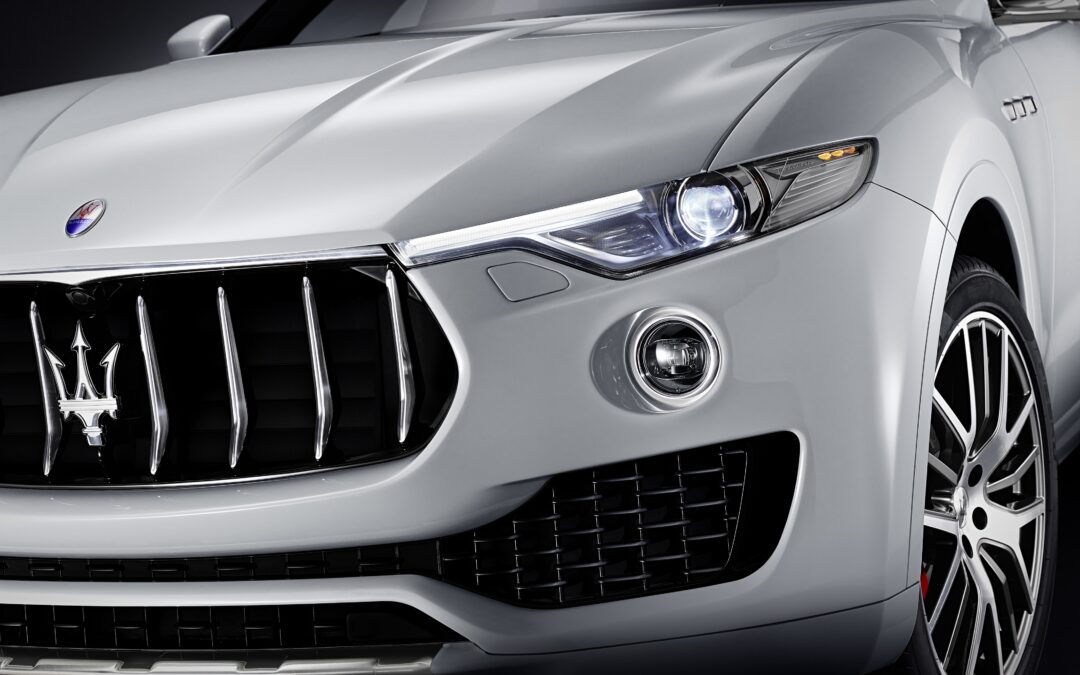
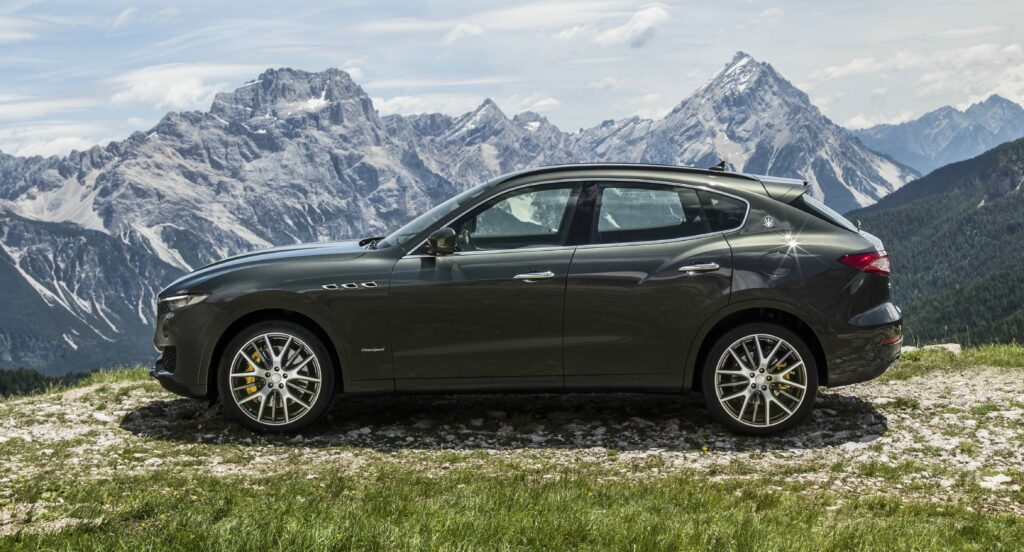
You’ll know this ingot of wealth when you see its sleek body, all muscular and bulging with anticipation — and the Trident logo.

There is nothing subtle about the sound of a Maserati Levante V-6 on startup. It is an ideal way to start the day — and startle the unexpecting.

The Levante is a precision tool in the working class of superluxury SUVs. Most of the competing brands in this $100,000-plus segment of so-called utility vehicles — Bentley Bentayga, Porsche Cayenne Turbo, Range Rover Sport SVR — begin with a family-oriented SUV that is turned into a leather-lined, overperforming SUV. The Levante, however, is more of a sports sedan that sort of looks like an SUV but has a little more cargo capacity than the midsize Ghibli sedan from which it begins life.

If you are shopping a superluxury SUV, the Levante has exclusive credentials as an ingot of wealth. Ferrari is the engineering division for Maserati’s family class of functional fast movers — with a smattering of parts-bin content from parent company Fiat Chrysler. (You know it when you see it, but it does not detract from performance or design.)

It is built the old-fashioned way, on an assembly line of skilled technicians at each station to guide the assembly in a handcrafted way.

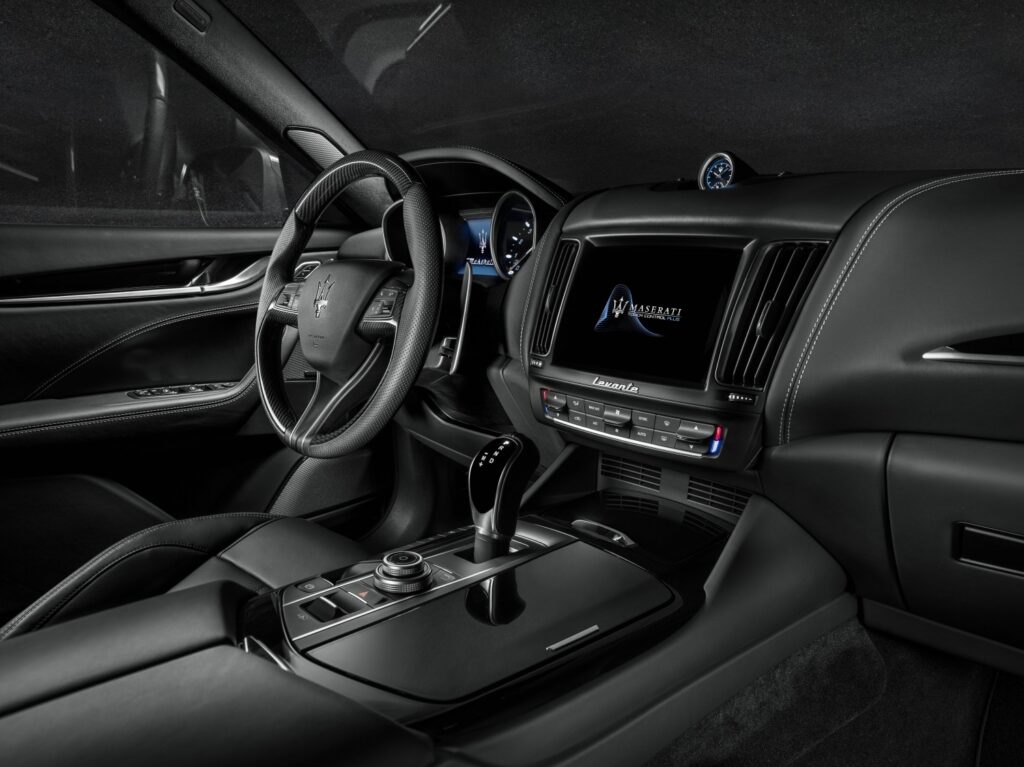
The driver area, with 40 inches of headroom without the wide panoramic roof, has complete function, free of flashy gimmicks or over-exaggerated sport seats.

The front part of the chassis is an aluminum casting with a reinforcing cross strut for rigidity. The rear section is rolled steel and the doors, hood and the cargo area aluminum, plus a magnesium dashboard brace.

The five-seat Levante was engineered for off-road function using Maserati’s Q4 Intelligent all-wheel-drive system and air suspension with Skyhook shock absorbers. But the electronic ride is more about competent handling, with the occasional dirtying of tires on the way to a glade. The system can route power 50/50 front to rear wherever it is needed, whether off road, on road or on track. The air suspension allows an adjustable ride height from 3 to 3.5 inches, for passenger entry to off-road clearance.

I doubt many owners will hook up the tent trailer for a family adventure, but the Levante can tow up to 5,952 pounds. In my test week, I stopped at a garden nursery and freaked when the large pot I bought left some dirt and debris on the back-seat floor. It just looked wrong in the carpeted terrain more suitable to Ferragamo loafers.

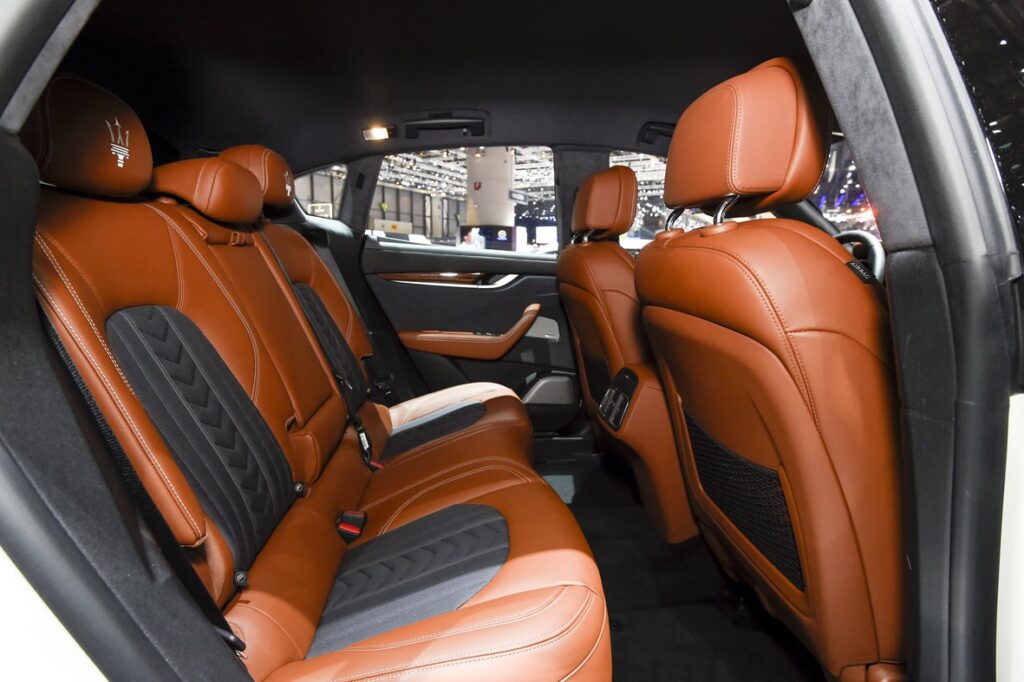
The back seat is more comfortable than in any midsize sedan.

The lean exterior styling has a sleek 0.31 coefficient of drag — for an SUV shape. Its low center of gravity and balanced 50/50 weight distribution make it handle as a prancing horse. The ride quality even in Sport mode was composed and jiggle free on California’s concrete highways. Sport mode adjusts everything from accelerator response to shift points and suspension.

Six-piston Brembo brakes will get you out of trouble faster than you can get into it. Aluminum monobloc calipers grip 15-inch drilled rotors at the front and 13-inch platters rear.

There are four Levante models, with two choices of 3.0-liter twin-turbocharged V-6 engines and two with the Ferrari-assembled 3.8-liter twin-turbocharged V8. All with eight-speed automatic transmissions and pronghorn-like steering-column paddle shifters.

And Maserati just announced the 550-hp V8 Levante GTS, capable of 0-60 mph in 4 seconds and a top speed of 181 mph. Starting at $120,000, it slots just below the top-of-the-line 590-hp Levante Trofeo, starting at about $170,000.

The entry Levante and Levante S are V-6 powered, with starting prices of $76,840 and $88,230, including the $1,250 freight charge from Turin, Italy. And then add $5,560 for either the GranLusso or GranSport trim treatments. The Levante S GranSport tester was $104,800 with nine options or packages. And more “bespoke” treatments are offered.

The base engine has 345 horsepower and 360 foot-pounds of torque from 4,000-5,000 rpm, making it capable, Maserati says, of 0-60 mph in 6 seconds. Its fuel economy is just one tick better than the upgrade 3.0-liter at 14 mpg city, 20 highway and 16 mpg combined, on premium fuel.

The engines are assembled by Ferrari in Maranello, Italy, and the 3.0-liter V-6 engine shares most of its core components with the V-8 found in the Quattroporte GTS – same bore dimensions, variable valve technology and very similar turbocharging, manifold and engine block technology.

Levante was named for a wind in the western Mediterranean.

The 424-hp Levante S has 428 lb.-ft. torque at 5,000 rpm — making it a second quicker to 60. And those potent engine and exhaust tones are real, not sound generated.

The S model has fuel economy ratings of 14/29/16 mpg, but I was averaging a surprising 22.9 mpg. Despite not using the I.C.E. mode (Increased Control and Efficiency), I attribute my exemplary mileage to learning how to play the exhaust notes like a pipe organ, though I hot-rodded the Levante only when safe to do so and have no idea how I ended up with better-than-EPA numbers. I won’t let it happen again. But I never wished for more power.

Available safety technologies include adaptive cruise control with stop and go, forward collision warning plus, advanced brake assist system and lane departure warning system.

Also new is an advanced driver-assist package of highway (steering) assist, lane keeping assist, active blind spot assist and traffic sign recognition.

 The Levante might be the best morphing of an SUV into a midsize sports sedan, yet. The design and layout have confidence without trial and error. The driver area, with 40 inches of headroom without the wide panoramic roof, has complete function, free of flashy gimmicks or over-exaggerated sport seats. There are useful cup holders, charging ports, storage areas and even a cooled box in the armrest console. Sightlines are good over the hood and not as bad as might appear at the rear three-quarter angle.

The back seat is more comfortable than in any midsize sedan. And the cargo capacity looks to have plenty of capacity for two or three hefty golf bags.

My only gripe-observations were the doors that clattered on closing and the shifter is notchy to select a gear.

This is the second year of production for the Levante and examples are still seldom seen, even in ZIP codes where superlux cars reside. There is exclusivity in ownership, when big Range Rovers, Cayenne Turbos and Teslas are now mundane sightings.

2019 Maserati Levante S GranSport

  • Body style: midsize, 5-passenger AWD SUV with adaptive air suspension
  • Engine: 424-hp, turbocharged and direct-injection 3.0-liter V-6; 428 lb.-ft. torque at 5,000 rpm
  • Transmission: 8-spd automatic
  • Fuel economy:  14/19/16 mpg city/hwy/combined; premium fuel
  • 0-62 mph: 5 seconds; top speed 164 mph
  • Drag coefficient: 0.31
  • Tow capacity: 5,952 lbs.

SPECIFICATIONS

  • Fuel tank: 21.1 gal.
  • Cargo space:  19.4-57.4 cu. ft.
  • Front head/leg room: 40.2/NA in.
  • Rear head/leg room: 39.1/NA in.
  • Length/wheelbase: 197/118.3 in.
  • Curb weight: 4,650 lbs.
  • Turning circle: NA ft.

FEATURES

  • Standard equipment includes: smartkey entry and push-button ignition, 8.4-inch touch screen display, surround-view camera, bi-xenon and LED headlights, piano black trim, 8-speaker audio system, 12-way power (heated and ventilated) front seats, 60/40 folding back seat, park-assist alerts,
  • Safety features include: 6 air bags, torque vector control, stability and traction controls, hill descent control, brake assist, engine brake torque control (to prevent wheel lock in downshifts), trailer sway control, rollover mitigation, hill-start assist

PRICING

  • Base price: $91,980; price as tested $104,800, including $1,250 freight charge
  • Options on test vehicle: Driver assistance package $3,000; high gloss carbon trim $2,850; full natural and perforated leather $2,500; tailgate kick sensor $100; Bowers & Wilkins audio system $1,300; ventilated front seats $900; lighted steel door sill plate $200; 20-inch gray wheels $300; Pirelli Pzero summer tires $420
  • Where assembled: Turin, Italy
  • Warranty: 4-years/50,000-miles bumper to bumper with roadside assistance

The Levante borrows a rib from the Maserati’s midsize Ghibli (pronounced GIB-lee) sedan and adds some headroom and a modicum of cargo capacity.